Category: Units

  • Institute of Jazz Studies Archival Fellowship Program Participants Reflect on Their Experiences

    The Institute of Jazz Studies Archival Fellowship Program was established in 2011 to support archival career development, as well as to promote diversity in the archival field. Each year, three Fellows are selected from among dozens of applicants, who are either currently enrolled in, or recent graduates of, an MLIS program, have a special interest in jazz and or African American culture, and aspire to careers as archivists. Fellows receive a stipend to cover travel, hotel, and miscellaneous expenses. The Fellowship Program is funded by longtime IJS supporter John Van Rens.

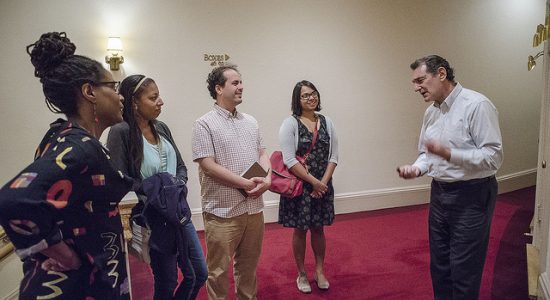
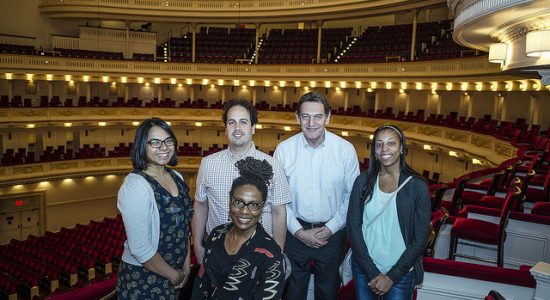
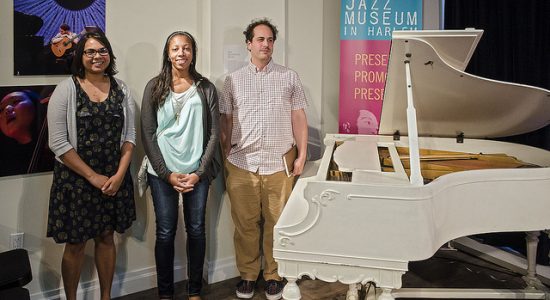
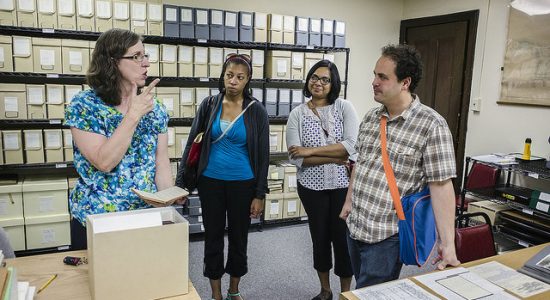
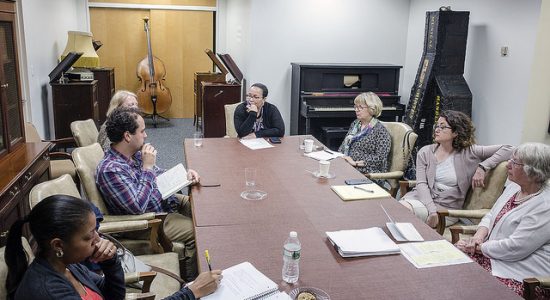
    The Fellows spend two weeks on campus working closely with IJS archivists and staff. Participants gain hands-on experience processing one of the Institute’s multi-faceted collections and preparing a related digital project that can be shared with colleagues and prospective employers. There are also seminars with RUL as well as Newark campus administrators, who provide an overview of Rutgers-Newark as the nation’s most diverse university, as well as role of an archive within an urban university library. The Program also involves two days of visits to other area archives and institutions, which have included the Schomburg Center for Research in Black Culture, The New York Public Library Archival Processing Center, the Louis Armstrong House Museum and Archive, the Jazz Museum in Harlem, the Carnegie Hall Archive, and the New York Philharmonic Archive at Lincoln Center. There are also several social gatherings with IJS staff and area librarians and archivists.

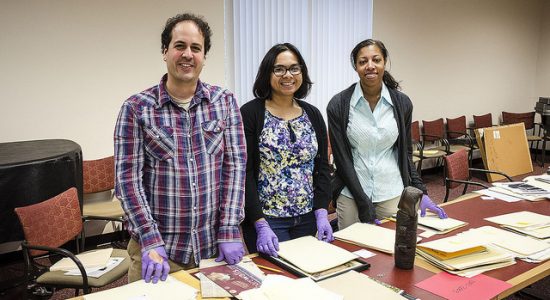
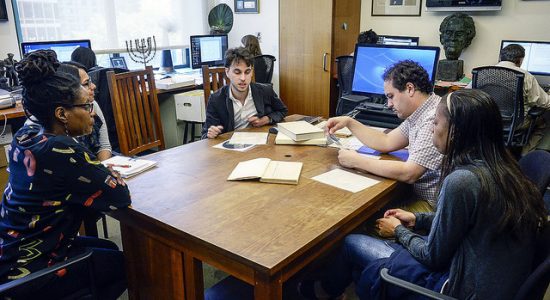
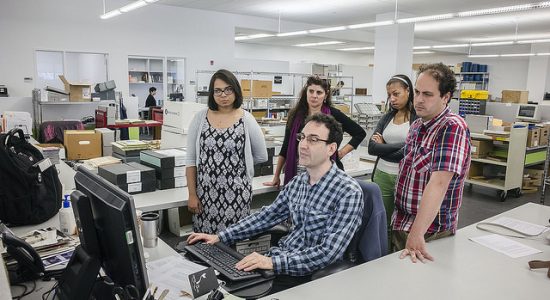
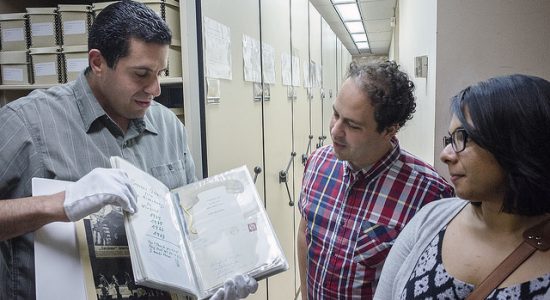
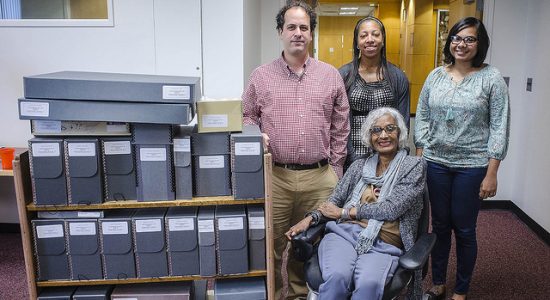
    This year’s fellows were Veronica Johnson (MLIS student at Wayne State Univ.), Treshani Perera (MLIS student at Univ. of Wisconsin-Milwaukee), and Brad San Martin (MLIS student at Univ. of North Carolina-Chapel Hill), who were on campus from June 6 to June 17. In collaboration with IJS archivists Elizabeth Surles, Angela Lawrence, and Tad Hershorn, and Digital Humanities Librarian Krista White, they processed the collection of pianist/composer and NEA Jazz Master Andrew Hill (1931-2007). Hill as both player and composer was a unique figure, who forged an original style that was at once part of the jazz tradition while extending its boundaries. On the last day of the fellowship program, Hill’s widow, Joanne, and donor of the collection, visited IJS to meet with the Fellows and to examine the newly processed collection she had donated as well as to view digital presentations by the fellows covering selected aspects of her husband’s distinguished career.

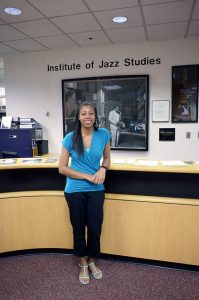
    Veronica Johnson, photo by Ed Berger.
    Veronica Johnson, photo by Ed Berger.

    VERONICA JOHNSON:

    Completing the IJS fellowship at Rutgers was an amazing experience and one that I will forever be grateful for. I learned so much about processing and the steps it takes to make a collection available to users. Working on the Andrew Hill Collection was great, and it really gave me the opportunity to process a larger collection, which I had never done before. I learned a lot about Hill and quickly became a fan of his work, which was very innovative. My favorite part of the program was learning about EAD and being able to create a finding aid using Oxygen. EAD was an area I did not have much experience in outside of school, so having Elizabeth and Angela show me how to use the software and create this awesome finding aid for the collection was very enlightening. I also really enjoyed visiting the other archives like the Jazz Museum of Harlem and the New York Philharmonic in order to see how other archives both large and small operate. The IJS Fellows program really gives graduate students the opportunity to be archivists for two weeks and get a real sense of the day to day tasks of the profession. The IJS staff is awesome and really made me feel welcome and a part of the team. I also developed some great friendships with the other fellows and am so thankful that I was able to take advantage of this great opportunity.

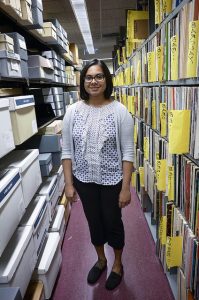
    Treshani Peterson, photo by Ed Berger.
    Treshani Perera, photo by Ed Berger.

    TRESHANI PERERA:

    I’m really thankful that I was chosen as a 2016 IJS Fellow. Throughout my two-week experience, I was so impressed with the work ethic and collegiality of the IJS staff, and their willingness to make every moment a teachable one during and outside of processing the collection. I was thrilled for the opportunity to process jazz pianist Andrew Hill’s collection, and discover his genius and creative thought captured in his music. The icing on the cake was meeting Mrs. Hill at the end of the experience, and talking to her about Mr. Hill as a musician and spouse. My favorite part of the experience was visiting music archives in the Greater New York area, and learning about how each archives does things differently. Throughout the two week internship, I was able to put into practice what I had learned in the classroom, and process the collection as a group, which was a unique experience. I’m truly grateful for this opportunity, and can honestly say that it was a transformative experience!

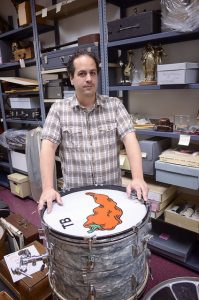
    Brad Martin, photo by Ed Berger.
    Brad San Martin, photo by Ed Berger.

    BRAD SAN MARTIN:

    The greatest strength of the Institute of Jazz Studies Fellowship was in the way it provided well-rounded insight into nearly all facets of an archives’ operations. While processing a collection at a fairly granular level (as we did with Andrew Hill’s papers) gave us invaluable experience in the most fundamental archivist tasks, our meetings and discussions with administrators, directors, historians, and even a donor offered much-needed perspective into archives role in the larger arts community – and the associated challenges entailed with maintaining and evolving that presence. It didn’t hurt that the people we met were all passionate, thoughtful, accomplished professionals who were willing to both share their time and speak candidly about the pleasures and pressures of the field. The two weeks flew by, and I’m sure that, when I look back, I’ll find my time at the IJS to have been a perfect (and much-needed) enrichment to my formal library and archive science studies.

    Photos by Ed Berger. More photos from the Fellowship Program are available here: https://www.flickr.com/photos/eebeephoto/sets/72157669425866802


  • The Research and Content Department in New Brunswick Libraries

    NR07ChangLibrary4288The newly formed Research and Content Department in New Brunswick has been actively organizing itself and beginning its work, which involves 37 New Brunswick personnel at present. The Research and Content Department is designed to develop and implement services and resources that support the researchers of the Rutgers-New Brunswick community–faculty, grad students, undergrads, and community users engaged in research.
    As a result of input from last year’s planning process and several open meetings, six working teams were formed: Content, Graduate and Faculty Services, Research Collaborations, Research Data Outreach, Research Spaces, and Scholarly Communication and Open Access. These teams cover a range of research-related functions and allow library faculty and staff to come together in their areas of interest to develop future services for the Libraries in New Brunswick, in collaboration with systemwide and other university initiatives.

    Since these teams were newly formed in January, their initial work has mostly involved planning for upcoming activities. A brief summary of each teams’ early activities and plans is presented below:

    Content (Kevin Mulcahy, team leader)

    The Content team oversees New Brunswick collections and has made an initial priority of weeding and stacks management activities to make more room in the New Brunswick libraries. The Content team will work closely with the Collections Analysis Group and the Holdings Management Team.

    Graduate and Faculty Services (Karen Hartman, team leader)

    The Graduate and Faculty Services team is responsible for developing services and programs of interest to graduate and faculty researchers. In the Spring, the team collaborated with the Graduate Student Association to offer Lightning Talks by grad students on their research. Future plans include working with other teams on a series of workshop presentations for the 2017 academic year, developing a LibGuide targeted to grad students, and taking charge of contacting new faculty in NB with information about the Libraries.

    Research Collaborations (Marty Kesselman, team leader)

    This team explores potential collaborations at Rutgers that the Libraries can help to foster. Near-term goals for the group include working on a listing of social networks that promote collaborations among researchers, which could be shared as a LibGuide, and developing a workshop for faculty on social networking for collaboration. Studying the costs and benefits of implementing a tool like VIVO is also a possibility.

    Research Data Outreach (Laura Palumbo, team leader)

    This team supports researchers by providing information and training related to data management, data handling and sharing, and other research data needs. The team has identified two action items for the next academic year. The first is to create an online “Research Data Toolkit” that would be more simple and streamlined than a libguide, but would still provide information for researchers in one place about resources pertaining to the entire data lifecycle. The group is already prototyping this site. The second is to produce a plan for systematic outreach to students and faculty in New Brunswick about the research data services and expertise available to them through the Libraries.

    Research Spaces (Francesca Giannetti, team leader)

    The Research Spaces Team explores researcher needs and plans services for new and re-imagined spaces that enable research-focused training and collaboration. Its first steps have been to inventory Rutgers University Libraries and selective locations at Rutgers more generally about the kinds of spaces supporting advanced training and collaboration that already exist. The group has also studied leading examples of research spaces at peer institutions and provided input into the Master Space Planning process on the kinds of spaces that would support advanced researcher needs in the future.

    Scholarly Communication and Open Access (Laura Mullen, team leader)

    The implementation of the Rutgers Open Access policy and SOAR have impacts across Rutgers, but particularly in Rutgers-New Brunswick as the largest community of faculty and graduate students affected. There is a lot to do in terms of hands-on outreach and support for SOAR locally, which this team plans to take on. This team plans to meet with local stakeholders and support SOAR through tabling and other educational events. One of its largest roles can be working on the implementation of SOAR for the doctoral students and postdocs in New Brunswick/Piscataway. This is largely uncharted territory, since Rutgers will be the first university to work toward the goal of early career researchers’ making their work open access. This team will coordinate its work with Graduate and Faculty Services while Laura Mullen in on sabbatical in the Fall.

    Setting a large reorganization of this kind in motion will always be a work in progress and we will be evaluating and reevaluating our structure to find what is most effective as time goes on.  Melissa Just and the Steering Team for the New Brunswick Libraries are overseeing the process as well, so that we can coordinate all of the moving parts that must work smoothly together.

    Please reach out to me or any of the team leaders with ideas, questions, and possibilities for collaboration!

  • Gary Golden Retires after 30 Years with the Libraries

    • Gary Golden retired on June 30 after 30 years with Rutgers University Libraries.

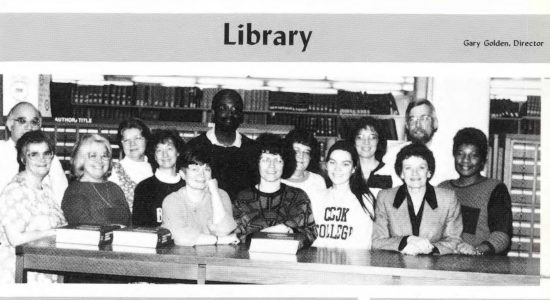
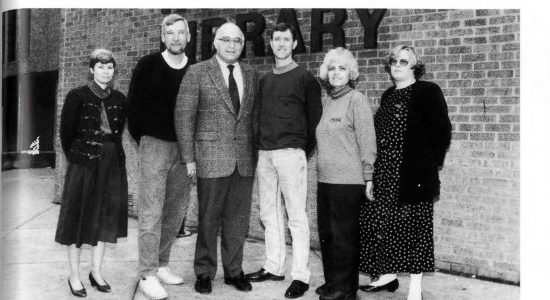
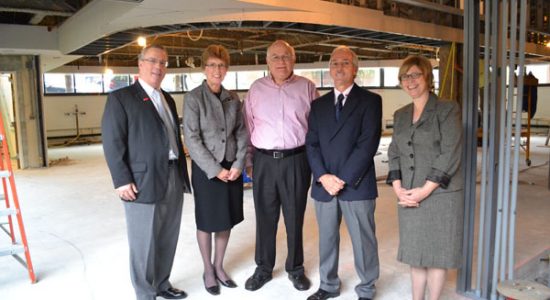
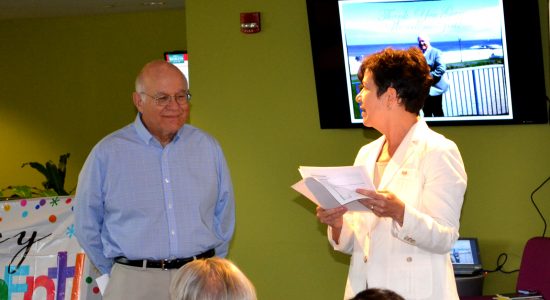
    On June 30, Gary Golden retired from his long-time position as director of Paul Robeson Library. His colleagues at Rutgers University-Camden held a retirement party earlier in June and assembled these photos to document some highlights from his time with Rutgers. I hope you enjoy the photo slide show.

    Here is the text Krisellen circulated earlier this year because it is a story that bears repeating.

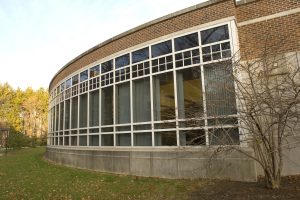
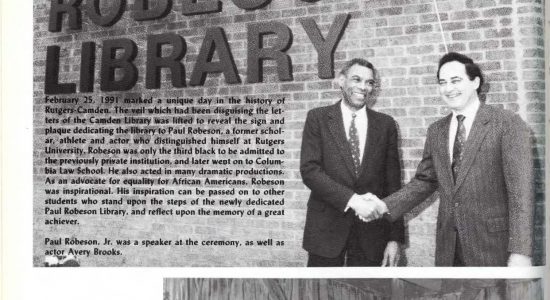
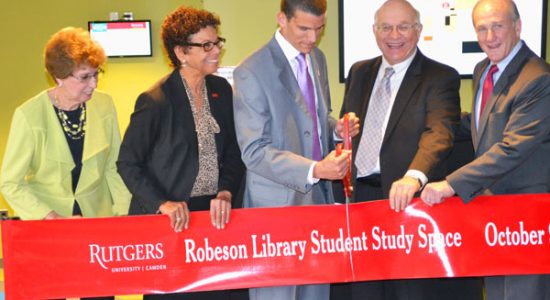
    Gary started working at Rutgers in June of 1986, shepherding the Camden Library through many transitions—new technology; new building; a new name as the Paul Robeson Library; and, most recently, a $3 million dollar, four-year renovation that completed in 2015. Throughout these changes, Gary has maintained a steadfast eye on the student user experience, made smart financial and technological decisions, and created links to the Camden community.

    Starting in 1986, Gary strived to create a safe, comfortable, and functional space for students to study and research. Between an addition in 1995 and, more recently, the 2015 renovation, he has successfully met the demands of the students at Rutgers University—Camden. Gary tells me nearly every square foot of public and 80% of work space has been renovated during his tenure, and I believe it. You can see the results for yourself if you visit: the libraries look great, the furniture is comfortable, the computer labs are top notch. Because of Gary’s efforts, the Paul Robeson Library is truly a 21st-century institution that Rutgers University can be proud to call its own.

    Under Gary’s guidance, the Paul Robeson Library has invested wisely in exciting partnerships like the ongoing one with Camden County Library and Rowan University that not only expand the service of the library, but have also yielded good financial results—money that that has been invested back into the Library to continue to improve and expand services. His efforts have kept the Library on the cutting edge of technology—from introducing the first computer labs of the late 1980s and phasing out the paper card catalog in 1992 to bringing wireless access to all areas of the library in 2000 and, just last year, creating a 10,000 square foot OIT computer lab.

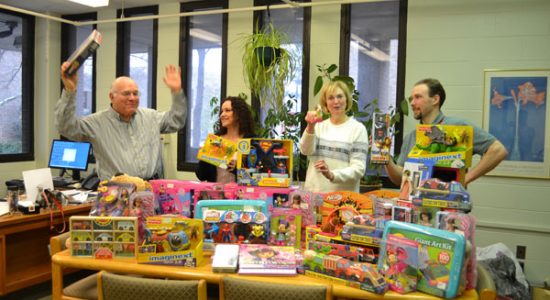
    Additionally, Gary has forged important connections with Rutgers University–Camden and the greater Camden community. He and his colleagues have collected toys and donations for the Camden Rescue Mission, organized conferences and events that span town and gown, and created Camdenbase, an online database of citations to newspapers and periodicals about Rutgers Camden and Camden City.

    As if these accomplishments were not enough, Gary is also a wonderful colleague—smart, thoughtful, kind, and creative.We wish him all the best in this next chapter.

  • New Brunswick Libraries Examines Service Points and User Experience

    In the seven library buildings located across New Brunswick, we have more than 15 service points where we provide circulation, reference, and specialized services. These desks are staffed by undergraduate students, graduate student reference/information assistants, and library staff and faculty. We know that each desk serves a different role and that the staff at each desk are trained to answer different questions. But we also know that when users have a question, they are not interested in the differences between the desks functions—they just want help.

    I am leading the Service Points Team, one of the new groups in the New Brunswick Libraries (NBL) organization, as we start examining services points (physical and virtual) across NBL in order to improve the user experience. Potential areas for exploration include hours, staffing, triage, training, and use analysis, as well as determining how physical service points best complement online services including live chat and Ask a Librarian.

    To start our work, the team hosted a series of forums for the NBL staff and faculty during the spring semester. The forums were designed to bring together all of the people who work at the various service points to talk about what works in our current environment and to identify areas where there are opportunities for improvement. The team also gathered feedback online from student workers and those who were unable to attend a forum in person. More than 50 people participated and provided input.

    Participants were asked to respond to these three questions:

    • When thinking about the service points in the New Brunswick Libraries, what barriers or challenges do you think our users encounter?
    • What do you think works well in our current service desk environment?
    • From the patron’s point of view, describe an enjoyable/satisfying experience at a library service point.

    Service Points Team members took notes during the rich and engaging conversations. We coded more than 400 comments and identified themes that emerged across the sessions. The team will also review the themes identified here along with the LibQUAL survey results, paying particular attention to the general satisfaction, policies, reference, spaces, and staff comments and the “affect of service” ratings to set goals for their work in the coming year.

    The full summary from the Service Points Forum will be discussed at the upcoming NBL ALL meetings, and then shared widely across the organization. Generally speaking, we believe our staff and faculty working at service points are our greatest assets—they are friendly, knowledgeable, and helpful. We provide a wide range of services through a variety of delivery methods and have experts available to refer specialized questions. However, the number and variety of service points is confusing to our users. They must often visit more than one desk to get the help they need. They have trouble navigating between our desks, in part because we lack clear and jargon-free signage. And although we have experts available for referral, the refer process itself does not always results in a seamless handoff or escalation.

    Over the next year, the Service Points Team will gather additional information, particularly about usage patterns, and will begin working on projects to address some of the identified challenges. I welcome any feedback or suggestions you have!

  • Kicking off Annual Planning and Budget Process with LibQUAL+ Results

    Kicking off Annual Planning and Budget Process with LibQUAL+ Results

    Welcome to July!

    For me, summer has always been a time to catch up, tidy loose ends, reflect, and prepare for the upcoming academic year. As with so many other things, I am learning that at Rutgers things are different.

    As a cost-center, the summer is a time of planning. Our budgets and plans for the following fiscal year have to be ready by October. That means that our plans for 2018 have to be in place this summer. This month, there will be two Cabinet retreats to begin to establish priorities, look at potential projects, and consider budget requests. There will be many conversations in the coming months.

    As we move into planning, one of the most important issues that we will address is the LibQUAL+ results. I talked about these a bit at the Spring Town Hall, but since these will be at the heart of our planning efforts, it is worth spending more time studying these.

    Overall, our results were good. However, there was a consistent finding, across libraries and universities, that the Information Control dimension did not meet faculty expectations. This graph from the LibQUAL+ results shows the combined results for all 1,200 faculty respondents:

    lib qual survey graph
    This graph is from section 6.2 – Core Questions Summary for Faculty (page 73 of 13501-2 Rutgers University Libraries.pdf available on T:\CENTRAL\Assessments\LibQUAL 2016 Reports).

    Here is a table form of the same information:

    lib qual chart
    The first column represents the minimum mean, the second is the desired mean, the third is the perceived mean, and the fourth is the adequacy mean.

    But what does this mean? LibQUAL+ does a good job of showing us where we are doing well and where we might improve. However, LibQUAL+ doesn’t tell us why and understanding why is the first step in solving the problems.

    When we look at IC-1 and IC-8 together, it is not clear if the problem is lack of collections or difficulty finding the collections. How do the website (IC-2) and access tools (IC-6) contribute to the perception that our collections are below expectations? These are not problems that are simply solved by purchasing more collections or by making improvements to the search functions of our website. They require a multi-pronged approach that balance collections needs and ease of discovery.

    This year, using both one-time funding and new funding from the chancellors, we have made some substantial additions to our collections. These additions include:

    • SWANK Digital Campus subscription: 250 feature films selected by instructors
    • UpToDate: an evidence-based clinical resource
    • Sage Journals: Approximately 180 additional Social Sciences, Health Sciences and Science Journals
    • Wiley Journals: Approximately 880 Science, Technology, Medicine, Social Sciences and Humanities Journal
    • EBSCO e-books: 850 e-book titles selected by faculty and students
    • Springer e-books: Approximately 2300 Biomedical/Life Sciences, Engineering, and Medicine
    • American Institute of Physics (AIP) Digital Archive: Digital backfiles of 12 journals and conference proceedings
    • Oxford Journal Archive: Backfiles of about 150 Science and Medicine Journals
    • Wiley Journal: Digital backfiles of about 800 Science, Technology, Medicine, Social Sciences and Humanities Journals

    In addition, we eliminated the fees charged for requesting articles through ILL.

    In the coming year, we need to continue to make smart decisions about new collections and resources and I am confident that the Collection Analysis Group and the Selectors are moving in the right direction. But we must also look more deeply into our access infrastructure, making it easier for faculty to find the information they need. Moving in this direction will take a large amount of coordination, an effort kicked off by the new discovery working group charge.

    The LibQUAL+ results provide us with a tremendous amount of information and highlight opportunities for improvement. I expect that looking deeper at these issues will be a priority in the upcoming year and look forward to seeing what we can accomplish together.

    Save

  • Joyce Watson Retires from Dana Library

    Dana Library colleagues of longtime Circulation Desk supervisor Joyce Watson joined her in celebrating her retirement after 15 years with Rutgers University Libraries, effective June 30. From left: Maggie Harris-Clark, Alex and Doris Arencibia, Natalie Borisovetz (foreground), Andrea Lakios, Ka-Nang Au, Linda Becker, Joyce Watson (foreground, seated), Amber Judkins, Bonnie Fong, Robert Nahory, Dorothy Grauer, Janet Giorgio, and Library Director Consuella Askew. Photograph by Mark Papianni.
    Dana Library colleagues of longtime Circulation Desk supervisor Joyce Watson joined her in celebrating her retirement after 15 years with Rutgers University Libraries, effective June 30. From left: Maggie Harris-Clark, Alex and Doris Arencibia, Natalie Borisovetz (foreground), Andrea Lakios, Ka-Nang Au, Linda Becker, Joyce Watson (foreground, seated), Amber Judkins, Bonnie Fong, Robert Nahory, Dorothy Grauer, Janet Giorgio, and Library Director Consuella Askew. Photograph by Mark Papianni.

    The apple will not fall far from the tree after Joyce Watson retires from Dana Library on June 30 after 15 years of service. The longtime circulation desk supervisor expects to continue sharing her knowledge of libraries and information technology as a volunteer with the public libraries in Asbury Park and nearby Neptune, in addition to spending more time with family and church work.

    “For me, retirement means continuing to expand my level of knowledge and ability to encourage students’ desires to learn beyond their wildest dreams in libraries,” Watson said recently.

    Her first position with Rutgers University Libraries, in 2001, was with the Library of Science and Medicine in Piscataway before transferring to Dana. Passionate about working with students and technology–putting a world of knowledge at patrons’ fingertips–Joyce dug in as an adult learner to earn an MLIS at Rutgers between 2005 and 2009.

    Watson, a native of New Smyrna in central Florida, arrived in New Jersey in 1966 and spent nearly a decade and a half doing factory work in the pharmaceutical industry in New Brunswick. Along the way, she earned a journalism degree from Rutgers University. “I liked writing and wanted to tell stories,” she said. “Then I wanted to roam.”

    Her cross-country travels with daughter Tynyetta in tow over the next several years began in Florida and made their way to Atlanta, Houston, Denver, and Los Angeles, where she found work at colleges and universities. Her daughter made the trip as far as Los Angeles, where she has a long and successful career as a hair stylist and now resides with her family, including husband Joe, four sons, and two step-children. All combined, Joyce has nine grandchildren upon whom she can lavish her attention.

    Combining her backgrounds in storytelling, libraries, and archives, Joyce was the onetime historian for Mount Zion A.M.E Church in New Brunswick and currently is archivist for St. Stephen’s A.M.E. Church in Asbury Park.

    She cites former Dana Library director Lynn Mullins and current director Consuella Askew as “gems who encouraged me in all my endeavors.”

    Join us as we wish Joyce happiness and further intellectual “endeavors” in her retirement!

  • Middle School Art on Display at Rutgers Art Library

    Middle School Art on Display at Rutgers Art Library

    • “Winter Night” by Carson He (6th Grade Art Cycle, teacher Antonia Germanos)

    This summer, Rutgers Art Library will host a free public exhibit of artwork by the sixth and seventh grade students at Hammarskjold Middle School in East Brunswick, NJ. Art teachers Anna Deacon, Antonia N. Germanos and Lisa Gombas hope the exhibit—on display from June 1 to August 31, 2016—will open students’ eyes to the world of artistic and educational possibilities outside their school classroom.

    Antonia N. Germanos, sixth grade art teacher at Hammarskjold Middle School, describes the motivation behind the exhibit saying, “I hope that placing Hammarskjold Middle Schools students’ work on exhibit at the collegiate level will help our students realize their talent and creativity. I want them to understand that art is part of life and that it can, and should, be taken outside the classroom walls.”

    For Megan Lotts, working with community partners to bring local artists of all ages to her exhibit space serves multiple purposes. “For many of these students, this will be their first and perhaps only art exhibition, but by inviting students and parents to visit Rutgers Art Library, we are giving them insight into what life and research is like at a leading university,” explains Lotts.

    “These very well could be future Rutgers students and many students this age have no idea that art libraries even exist. It can be empowering at a young age to see a space of this nature, as well as have your art work shown in a gallery space.”

    A Mason Gross alumna, Germanos is no stranger to the artistic scene at Rutgers University. She credits strong bonds between the East Brunswick community and Rutgers University with the decision to bring the exhibit to Rutgers Art Library.

    “As a neighboring community, East Brunswick embraces and supports Rutgers University activities and many of our graduates have attended the university,” says Germanos. “Displaying our students work at Rutgers Art Library will hopefully strengthen the bonds between primary, secondary, and collegiate education; honor our students’ hard work and dedication to the fine arts; and create opportunities for students to explore grander aspects of the fine arts.”

    The Hammarskjold Middle School art exhibit will feature a variety of pieces in different mediums, including:

    • Hand cut collages inspired by the Japanese term notan, used to describe the concept of dark versus light. Students embrace contrast through the use of symmetry, asymmetry, color, and shape to create balance. Don’t miss “Winter Night” by Carson He (6th Grade Art Cycle, teacher Antonia Germanos) which draws on associations of winter and white alongside black and night to conjure the feeling of a cold evening.
    • Drawings of objects from life, divided into four sections that use different art materials to create layers of color and value. Don’t miss “Deconstructed Still Life” by Amanda Lee (7th Grade Art Elective, teacher Anna Deacon) featuring playroom and household objects in oil pastels, graphite pencil, colored pencil, and Sharpie pens.
    • A series of Pop Art-inspired oil pastel drawings in which students pay close attention to their chosen light source and the effects of highlights and shadows to pay homage to the confectionery creations of painter Wayne Thiebaud and the bright patterns and thick lines of Andy Warhol and Keith Haring. Don’t miss “Rainbow Cupcake” by Katherine Mu (7th Grade Art Cycle, teacher Lisa Gombas) which depicts a realistic cupcake set off by a dramatic background and lighting.
  • Rutgers University Libraries at the American Library Association Meeting

    ALA logo

    The American Library Association Meeting will take place later this month in Orlando, Florida. Here are highlights from the program that feature our colleagues:

    Research, Writing, and Publishing Fair

    June 25. 2016
    10:30 a.m. – 11:30 a.m.
    Are you interested in publishing? Would you like to learn about a variety of opportunities to publish, resources to help you get started with writing an article or a book, and tools that will make research and writing for publication better and easier? Please join us for the Research, Writing, and Publishing Fair, where you’ll have the opportunity to meet with ALCTS editors, the Library Research Round Table, learn about publishing mentoring opportunities in ALA, and more. Sponsored by ALCTS Leadership Development Committee. Co-Sponsored by ALA Library Research Round Table (LRRT), ALCTS New Members Interest Group (ANMIG), and ALA New Members Round Table (NMRT).

    Speaker: Mary Beth Weber (Rutgers University Libraries)

    ACRL Arts Publications and Research Committee Annual Discussion Forum

    June 25. 2016
    3:30 p.m. – 4:30 p.m.
    Join ACRL Arts Publications and Research Committee for their Annual Discussion Forum! This year’s forum will feature the following presentations:

    • “Artists as Scholars: The Research Behavior of Dance Faculty” by Shannon Marie Robinson (Drexel University)
    • “Building Bridges, Creating Partnerships and Elevating the Arts: the Rutgers University Art Library Exhibition Spaces” by Megan Lotts (Rutgers University Libraries)
    • “You Say Tomato, I Say Tomato: Collection Format Preference of Music Faculty” by A. Carey Huddlestun (Kennesaw State University)


    If there are additional Rutgers University Libraries highlights I should include here, leave a comment below or let me know.

  • “Spring Sutras” Exhibit at Dana Library

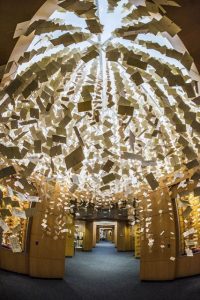
    spring sutras on exhibitSpring Sutras, a work of renewal and hope by installation and book artist Karen Guancione, took shape while she was caring for Mary Guancione, her elderly mother who was suffering from dementia.

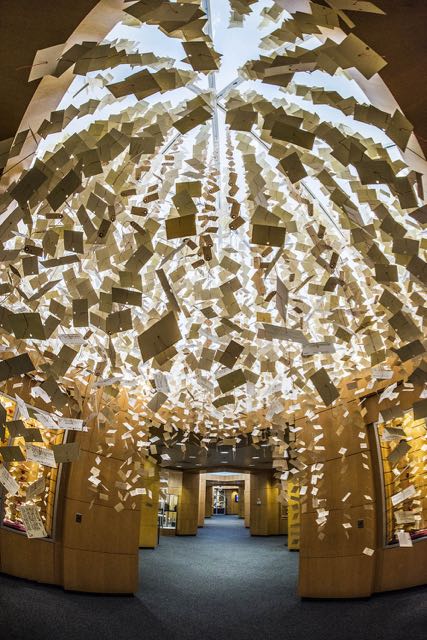
    On display now on the fourth floor of the John Cotton Dana Library at Rutgers University–Newark, Spring Sutras features thousands of recycled catalog cards that cascade in hand-sewn, brilliantly translucent strands from a two-story-high skylight, surrounding and touching viewers as they move through the space.  Hundreds of faux flowers suspended in the accompanying display cases fill the gallery with swaths of vibrant color.

    In stark contrast to the environment in which it was created—what Guancione described as “an endless, exhausting, all-consuming caregiving hell”—Spring Sutras exudes a sense of tranquility and solace. “While caregiving around the clock in the house where my mother had lived for 65 years, I was able to work near her and string together the thousands of pieces of paper—a repetitive, meditative act that enabled me to continue making art,” said Guancione, who was recently awarded a 2016 Individual Artist Fellowship from the New Jersey State Council on the Arts for Works on Paper.

    Funded by a Rutgers–Newark cultural programming grant, the exhibition is one of several projects commemorating the city’s 350th anniversary by drawing inspiration from the nation’s largest and most varied collection of Japanese cherry trees in Newark’s Branch Brook Park. Spring Sutras accompanies a display in the library’s lobby, on loan from the Essex County Parks Department, that details Branch Brook Park’s first planted trees; it is also a fitting prelude to Cherry Blossoms in Winter, a forthcoming multimedia public art project spearheaded by the Rutgers–Newark College of Arts and Sciences that will invite amateur and professional artists from throughout the region to install works in the bare branches of the park’s cherry trees.

    More than just a product of the artist’s personal struggles, the installation also celebrates bringing new life to things we discard or forget. Drawing upon the literal Sanskrit meaning of sutra, or a thread of knowledge sewn over time, Guancione chose to work with hand-typed catalog cards—a tool long since abandoned by libraries as a means of indexing their collections. “In an age of digital information, I have relished holding in hand the many singular pieces of paper that once spoke of a vast and impressive array of accumulated knowledge,” she said. “The strung flower garlands celebrate new life and honor the old and departed.”

    For Michael Joseph, rare book librarian at Rutgers University Libraries, Guancione’s installation celebrates the way in which libraries as institutions are able to constantly reinvent themselves. “Spring Sutras reaches toward a vision of ecstatic renewal,” explained Joseph. “Intriguingly, the catalog cards suspended like leaves or stars have been assembled in roughly alphabetical order, preserving and transforming not only the librarian’s tools of organization, but the original library vision: it, too, changes and becomes part of what is renewed and endures.”

    Spring Sutras runs through the fall. The exhibition is free and open to the public, and an opening reception will be held on Thursday, June 2, from 7-9 p.m. in the Dana Gallery on the fourth floor of the library.

  • RBHS Librarians Present Eight Posters at Medical Library Association

    • Author: Yini Zhu

    Rutgers University Libraries were well represented at the poster session for the annual meeting of the Medical Library Association (MLA). A total of eight posters were presented by librarians from RWJ and Smith Libraries that capture a range of activities from access services and event assessment to systematic review and participation in medicine rounds. The posters were selected by juries comprised of association members and RBHS bears the distinction of having the most posters from a single library system in the show.

    Held from May 13 – 18, 2016, In Toronto, this year the meeting was a collaboration by MLA, the Canadian Health Libraries Association/Association des bibliotheques de la santé du Canada (CHLA/ABSC), and the Clinical Librarians Conference (CLC).

    Peruse the posters in the slideshow at the top of this page (click on the images to see PDFs). You can also view the posters & abstracts at the links below, on the meeting app, or in the official online program.


    RBHS Posters from MLA

    Title Author(s)
    Reflective Practice for Professional Development through a Collaborative Systematic Review Project Misa Mi, Jie Li, Lin Wu, Wendy Wu, Yingting Zhang
    Librarian Participation in “Hands-On” Evidence-Based Medicine Rounds with Pediatric Residents Pamela Hargwood
    Introducing EBM Concepts to Academic Librarians: A New Model for Instruction Roberta Bronson Fitzpatrick, Margaret Rush Dreker
    SHARE the Info: Spreading Health Awareness with Resources and Education: A National Network of Libraries of Medicine-Funded Program Yini Zhu, Mina Ghajar, Ermira Mitre
    Library Services and Cultural Competency in Health Professions Education and Patient Care Misa Mi, Yingting Zhang
    Counting the Colorful: The Events Assessment Task Force Roberta Bronson Fitzpatrick, Leslin Charles, Ann Watkins, Zara Wilkinson, Megan Lotts
    Adding More Tiles to the Mosaic: The Library and EBM in a Time of Curriculum Revision Margaret Rush Dreker, Roberta Bronson Fitzpatrick
    Teach and Tell: Access Services’ Role in the Big Picture Yini Zhu