Category: Units

  • The Final Report on Latino Americans: 500 Years of History

    Latino Americans: 500 Years of History was made possible through a grant from the National Endowment for the Humanities and the American Library Association.
    Latino Americans: 500 Years of History was made possible through a grant from the National Endowment for the Humanities and the American Library Association.

    Rutgers University Libraries recently concluded the ALA-funded program Latino Americans: 500 Years of History. Over the course of a year, Rutgers and other scholars led 17 PBS film screening discussions about the experience of Latinos in New Jersey in collaboration with Rutgers University Libraries, the Nilsa L. Cruz-Perez Branch of the Camden County Library, New Brunswick Free Public Library, and the Newark Public Library.

    Beyond the film showings in Spanish and English, project partners offered exhibits, book talks, lectures, and special celebrations. Highlights include A Day of the Dead Celebration and Cinco de Mayo festivities in New Brunswick showcasing a variety of performances and children’s activities; a Cuban musical concert by renowned singer Gema Corredera; the exhibit “Beyond Exile: Cubans in New Jersey” at the Newark Public Library, including a keynote address by Lisando Pérez; and two separate exhibitions at the Rutgers Art Library, Ilya Genin’s “Photographs of Cuban Revolution 50 Years Later,” and “From Island to Ocean: Caribbean and Pacific Dialogues by Fidalis Buehler and Juana Valdes.”

    As project director Nancy Kranich notes in the final report on this initiative, this program allowed Rutgers University Libraries to become “a catalyst for bringing together scholars and organizations involved with the New Jersey Latino American experience and encouraging more attention to documenting it. The grant enabled us to take a more assertive role in building and strengthening relationships with local Latino communities and the scholars, organizations, and public libraries that interact with them.”

    Kranich also lists several other outcomes that may be of interest to our colleagues:

    • Several new items were added to Special Collections, including several leaflets of unpublished poetry by Newark poet Pablo Le Riverend, clippings of anti-Castro activities in Hudson County, Sarah Hirschman’s papers covering People & Stories/Gente y Cuentos.
    • The publisher and owner of Impacto, published in the 1960s, donated 99 issues of the publication to Rutgers University.
    • 15 Latino clubs are Rutgers are planning to learn how to organize and preserve their own records in conjunction with Rutgers University Libraries’ archivists.
    • Two possible books are in discussion: a history of Latinos in NJ and an anthology of unpublished documents about Latino migrant workers in NJ and the United States.
    • The New Brunswick Free Public Library and Rutgers University Libraries are discussing partnering again on another ALA public programming grant proposal.
    • A deeper understanding of the Latino collections in the state and increased participation in depositing scholarly works into our Rutgers Inclusion and Diversity Research Portal.

    For additional information about this program, please visit the project LibGuide

    Save

  • Introducing Full Text Finder

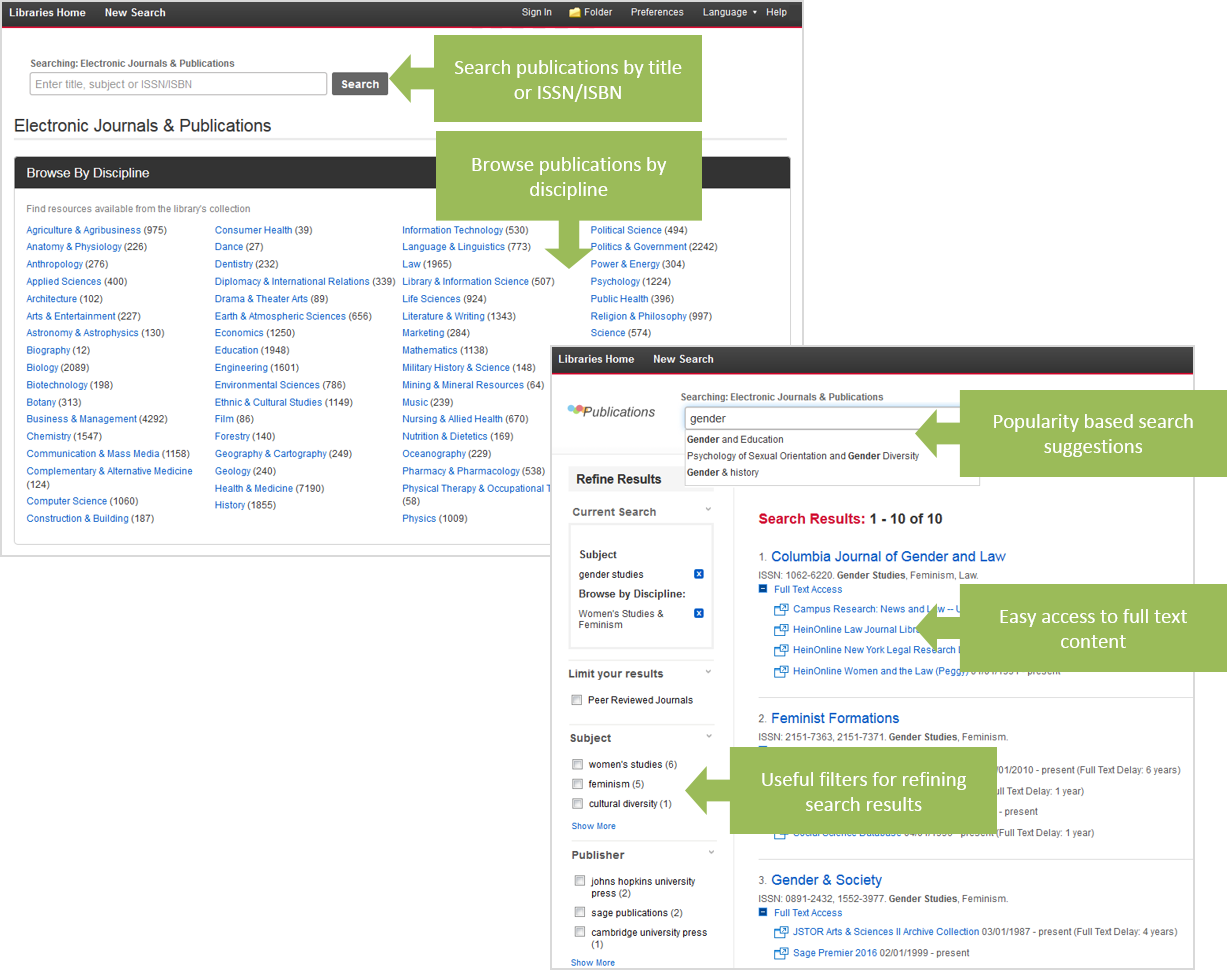
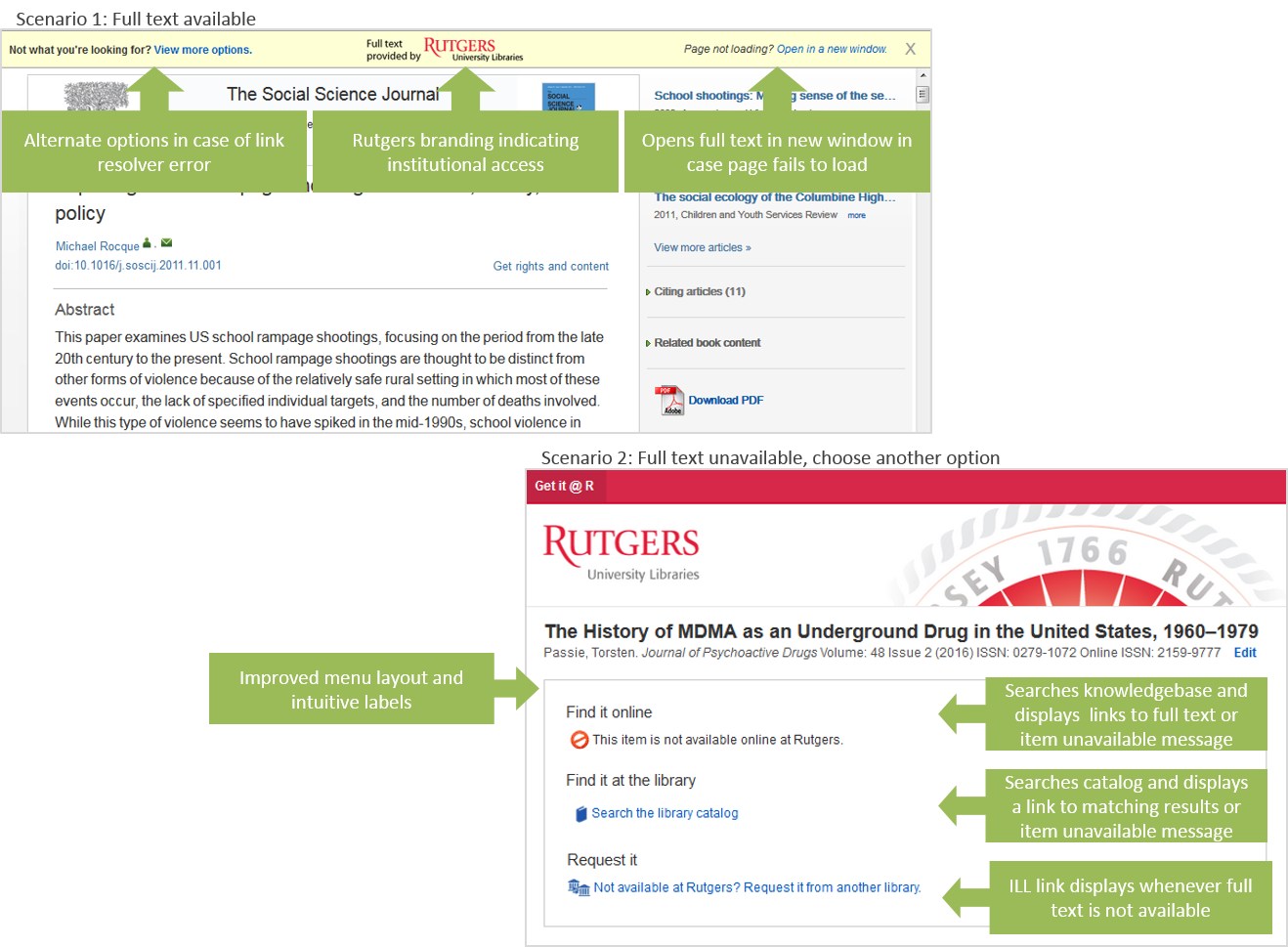
    On August 18 the Libraries upgraded to Full Text Finder, EBSCO’s newest holdings and link management tool designed to replace its A-to-Z and LinkSource services, which are being phased out. A-to-Z is the product that powers the Libraries’ electronic journals search. LinkSource is the product that powers its link resolver service (locally known as “Get it @ R”). You may notice some changes to these interfaces. Below is a quick summary of what to expect.

    The new e-journals search interface is a little cleaner, better organized, and offers a variety of new features including:

    • Responsive autocomplete to facilitate known title searching
    • Discipline-specific browsing to help users identify titles in their subject area
    • Filters to refine results by subject, format, or publisher
    figure1
    Click to enlarge.


    The new link resolver menu has been streamlined to help users determine the availability of an item faster, more efficiently, and with less confusion. New features include:

    • Improved menu layout and design
    • Intuitive labels and icons
    • Real-time catalog lookup for print holdings
    • Fail-safe options in case of link resolver error
    figure2
    Click to enlarge.

    Please be sure to update any guides or tutorials that refer to these products. Links to the old A-to-Z Journals and Citation Linker pages have automatically been updated in LibGuides, but you may want to double check your guides just to be sure.

    As with any software migration, you may notice some irregularities as we work to resolve temporary glitches. If you have any questions or wish to report a technical problem, please contact serials@rutgers.libanswers.com.

    Special thanks to the Serials Team for their work migrating our holdings data as well as the Web Team for their help customizing the design of the interface.

  • Changes to the Rutgers University Photo Gallery Policy

    A recent policy change means that high resolution images from the Rutgers University Photo Gallery are now available free of charge for Rutgers projects.

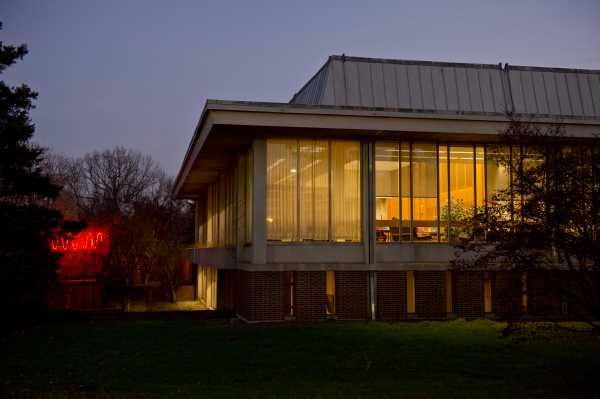
    Douglass Library
    Douglass Library. Nick Romanenko/Rutgers University

    The gallery offers access to professional images of Rutgers buildings, faculty, staff, and students. Previously, low resolution images (72 dots per inch, suitable for projects such as PowerPoint presentations, email newsletters, and webpages) were available for free download, while high resolution images (300 dots per inch, suitable for print projects such as flyers, posters, and brochures) had to be purchased for $20 each. Now, however, because of changes due to RCM, the high resolution images are also available at no cost to the Rutgers community.

    Finding the perfect image for your project is as simple as following these three easy steps:

    1. Log in to the gallery using your NetID and password.
    2. Browse through the categories to identify a photo you like.
    3. For low resolution images, read and accept the terms and conditions to download the image immediately; or, for high resolution images, contact photo archivist Jane Hart with the file name and how you intend to use the photo.

    In the event that you can’t find an image you like in the gallery, you may request access to the University Communications and Marketing Photo Archive, which contains thousands of additional photos for your perusal. Contact Jane for access to the archive.

    For more information, visit University Communications and Marketing’s guide to finding photos.


    Save

  • New Honors Living-Learning Community to Be Based at Dana Library

    Dana exterior sunny, credit Ed Berger
    Credit: Ed Berger.

    Rutgers University-Newark’s Honors Living-Learning Community (HLLC) is an initiative intended to go beyond high SAT scores or high school rankings. The goal is to identify and blend an international group of traditional and non-traditional students into a curriculum based on themes of “Local Citizenship in a Global World,” and focusing on academic, social, and personal development.

    Among the targeted student populations are high school graduates, first-generation college students, transfer students, veterans, older students, General Education Development (GED) recipients, student parents, and financially independent students. Dana librarians will be important liaisons in building the effort, according to Bobbie Tipton, the library’s point person who recently met with Marta Esquilin, the associate dean of HLLC and assistant professor of professional practice. HLLC will be divided into “cohorts,” each containing about ten students, which may be mentored by a librarian. The curriculum will be a mixture of core classes specific to HLLC, as well as a capstone project, filled in by required classes to earn an undergraduate degree.

    Among the areas of instruction librarians would provide to new and transfer students through workshops are finding their subject librarian; finding core databases in the subject area; using a citation manager; determining the correction citation style for the subject; and avoiding plagiarism.

    “This is intended to be a holistic learning experience with a strong emphasis on social justice and community,” Tipton said. “It is definitely an expanded definition of ‘honors’ that goes beyond academic performance. The intention is to educate movers and shakers in social engagement.”

  • Quick Takes on Events & News – August 2016

    Libraries’ Wordsmith Wins National Slogan Contest

    Mary Beth Weber won the ALCTS Slogal Contest for her slogan, “Creating the future, preserving the past.” This slogan will be used during the 60th anniversary celebration of ALCTS in 2017. In addition to bragging rights, Mary Beth also received a prize of registration for CE webinars valued at $350. Congratulations Mary Beth!


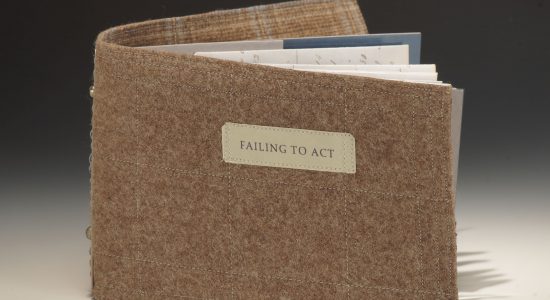
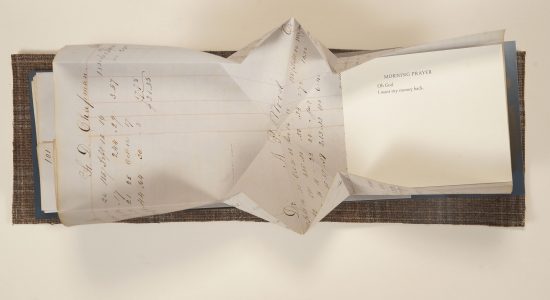
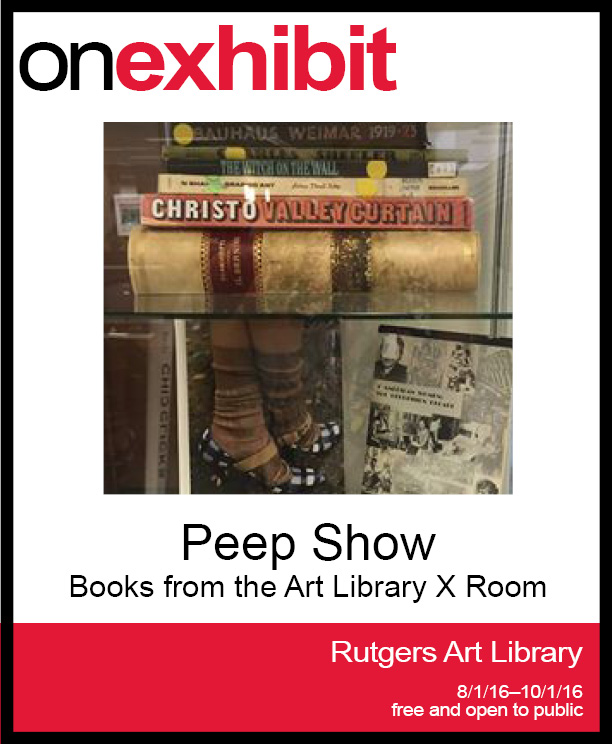
    Peep Show large image“Peep Show: Books from the Art Library X Room” Exhibit at Rutgers Art Library

    Megan Lotts has raided the X Room to put on a case display of beautiful, surprising, amusing, and impressive books.

    Stop by to get a taste of the treasures that reside in the Rutgers Art Library’s archives.

    Location: Rutgers Art Library


    It’s Getting Hot in Here

    Late in July, America faced record temperatures outside and Smith Library in Newark was no exception. With the A/C out for several days, the librarians and staff had to come up with new ways to keep their cool. Here, a short haiku on the experience:

    The books are burning!
    Librarians are weeping…
    The heat is too much.

    – Sarah Jewell


    Communications Tip – Using Rutgers Go to Shorten URLs

    1Want a short, trackable URL to use in an email or social media post? There are many URL shorteners on the market including goo.gl, bitly, and ow.ly, but go.rutgers.edu offers something the others can’t–an actual Rutgers URL to make your link appear official and trustworthy. This service allows Rutgers users to quickly and easily shorten a URL and track how many times that URL is viewed.

    For example, in a social media post over the weekend, I shortened a URL for a news story in the Keene Sentinel from http://www.sentinelsource.com/news/local/in-a-wired-world-local-libraries-turn-page-to-the/article_615d127a-ac0a-5f4e-904d-fb0a595a39ea.html to http://go.rutgers.edu/rhuu643k. Checking in today, I can see that link has been used 129 times since July 30.

    While I used the same shortened URL on both Facebook and Twitter, I could have created separate shortened URLs for each social media site to track the relative traffic. I did this for an earlier post about the New Brunswick Music Scene Archive, which allowed me to see the number of views on each platform (162 for Twitter, 7 for Facebook).

    I highly recommend you try out go.rutgers.edu if you have not already done so.

    –Jessica Pellien

    New Brunswick Music Scene ArchiveNew Brunswick Music Scene Symposium Planned for October 27, 2016

    Save the date. Special Collections and University Archives will hold the next New Brunswick Music Scene Archive symposium on October 27, 6 p.m. in the Teleconference Lecture Hall at Alexander Library. Stay tuned for more information, including the participants. In the meantime, here’s a look back at the 2015 symposium, featuring a who’s who of New Jersey music (http://www.libraries.rutgers.edu/news/symposium-local-notables-inaugurate-new-brunswick-music-scene-archive).
     

    Full Text Finder Training

    ftf_logoThis fall the Rutgers Libraries will be migrating to Full Text Finder, EBSCO’s newest holdings and link management tool designed to replace its A-to-Z and LinkSource services, which are being phased out. A-to-Z is the product that powers the Libraries’ electronic journals search. LinkSource is the product that powers its link resolver service (locally known as “Get it @ R”). Although the basic functionality of these tools has not changed much, we have taken the opportunity to introduce a few custom modifications that we hope will simplify the process of finding full-text articles and improve the overall user experience. If you’d like to learn more about Full Text Finder and the upcoming changes, feel free to attend one of the 30 minute drop-in sessions scheduled in August. Videoconferencing to Dana, Robeson, and Smith is available upon request.

    Full Text Finder Information Sessions

    • August 4 @ 2 p.m. — LSM Conference Room, Library of Science & Medicine
    • August 8 @ 2 p.m. — Pane Room, Alexander Library
    • August 11 @ 2 p.m. — Pane Room, Alexander Library


    Buttons! Buttons for Everyone!

    Sample buttons v2
    Custom buttons are now available from the Communications Department.

    The buttons we mentioned in the July issue of The Agenda proved a popular giveaway at the New Student Orientations in New Brunswick. This is a relatively low-cost and fun way to run a promotion or to market something at the Libraries. If you are interested in borrowing our machine for a project, please make sure to purchase the supplies that are available here. We’re happy to train you or your student workers on how to create buttons.


    You’ve Got People, Now What?

    August 3, 2016
    9 a.m. – 1 p.m.NEW DATE!
    This course is ideal for new and experienced managers, supervisors, and administrators who have direct reports and would like to apply their knowledge of personal styles to flexibly manage their staff.

    Location:  Pane Room, 1st floor, Alexander Library

    RSVP: Erica Parin on behalf of the Professional Development Committee

    Manager as Leader – Developing Staff

    August 30, 2016
    9 a.m. – 12 p.m.
    This course is ideal for managers, supervisors, and administrators who would like to sharpen their situational leadership skills and discover how flexible and effective they are in a variety of situations with staff.

    Location:  Pane Room, 1st floor, Alexander Library

    RSVP: Erica Parin on behalf of the Professional Development Committee


  • MSNJ 250th: A Night of History, Medals, and Coins

    image2
    Credit: Robert Vietrogoski

    Rutgers is not the only major New Jersey institution celebrating its 250th anniversary this year!

    On Saturday May 23, I attended the Medical Society of New Jersey’s 250th Anniversary Celebration and Inaugural Gala. The celebration was held at the Heldrich Hotel in New Brunswick, on the actual 250th anniversary of the Medical Society of New Jersey’s first ever meeting, also held in New Brunswick (at Duff’s Tavern!). The Medical Society of New Jersey (MSNJ) is America’s oldest state medical society, and has over 5000 members. RBHS–Special Collections holds a nearly complete run of MSNJ journal publications from 1848 to 2005, as well as substantial archival holdings of its constituent Burlington, Essex, Hudson, Monmouth, Passaic, and Warren County Medical Societies. We also hold the records of the Medical Alliance of the Medical Society of New Jersey (formerly the Women’s Auxiliary).

    image1
    Credit: Robert Vietrogoski

    At the gala, I joined Dr. Peter Carmel, the emeritus chair of the Department of Neurological Surgery at New Jersey Medical School. Dr. Carmel is also the current president of the Medical History Society of New Jersey and a recent past president of the American Medical Association! During the program, Dr. Carmel presented a well-received illustrated historical retrospective on the MSNJ’s founding and its centennial and bicentennial celebrations. Some of the images used by Dr. Carmel were drawn from RBHS–Special Collections materials.

    For the gala, Dr. Carmel also organized an exhibit on Dr. Wells P. Eagleton, the first New Jersey neurosurgeon, and a medical luminary who received the first Edward J. Ill award from the Academy of Medicine of New Jersey in 1939. Thanks to Dr. Carmel’s generous restoration efforts, Eagleton’s actual Edward J. Ill medal was on display. This artifact was rediscovered last summer in storage at Robert Wood Johnson Medical School and is now part of the holdings of RBHS–Special Collections. Dr. Carmel’s exhibit and the Eagleton artifacts will soon be on display in the lobby of Smith Library.

    image3
    Credit: Robert Vietrogoski

    If the Eagleton name seems familiar at Rutgers, Dr. Eagleton’s wife Florence Peshine Eagleton was a founding member of the board of managers of the New Jersey College for Women (now Douglass College) and a Rutgers trustee from 1932 to 1946. She made the bequest in 1956 that established Rutgers University’s Eagleton Institute of Politics, which itself is celebrating its 60th anniversary this year.

    The newest addition to the RBHS–Special Collections artifact collection is the commemorative 250th anniversary “challenge coin” given to gala attendees by Captain Joseph P. Costabile, the incoming MSNJ president. The gala was a most enjoyable event and I hope to extend the relationship between the Medical Society of New Jersey and RBHS–Special Collections. (And for those familiar with my normal mode of dress, here is photographic proof of me in a tuxedo!)

  • The New Brunswick Libraries Host Rutgers Future Scholars for a Week

    Future Scholars at Art Library 7-14-2016
    Rutgers Future Scholars use Legos at the Art Library to learn about teamwork and libraries. Photo credit: Megan Lotts.

    The Rutgers Future Scholars program places rising High School juniors in an internship for one week during the summer. This summer, the New Brunswick Libraries hosted two internships. Ryan Womack hosted 5 students and worked with them on Big Data, and Jill Nathanson hosted 5 students working on gamification.

    For those unfamiliar with the Rutgers Future Scholars Program, here is the description from its website:

    The goal of the Rutgers Future Scholars program is to increase the numbers of academically ambitious high school graduates who come from less-advantaged communities, inspire and prepare them meet the standards to be admitted to colleges and universities, and then provide tuition funding to those who are admitted and choose to attend Rutgers University.

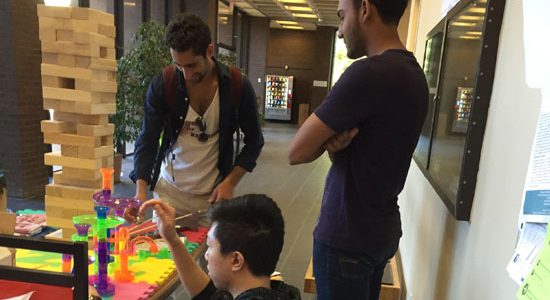
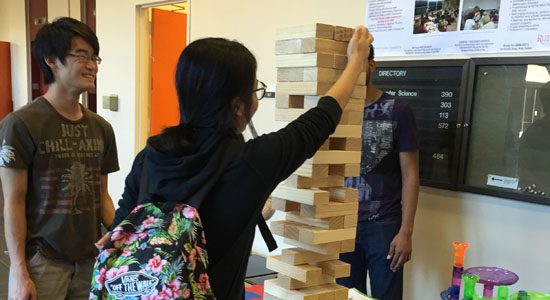
    In addition to working on their respective projects, the interns were provided an overview of the Libraries and had an opportunity to meet a variety of faculty and staff. Snack breaks were hosted each day by librarians, access services staff, and the communications team. The interns also traveled to the Art Library one day to participate in using Legos to learn about teamwork and libraries.

    The students working with Jill Nathanson created an event for transfer students. The challenge was to create an event that reinforced the library instruction transfer students received in their library sessions while also making it fun and giving them an opportunity to interact with other transfer students. The students worked together to create a team based activity that will be used this fall at the Alexander Library.

    The students working with Ryan Womack explored data science with R, working through exercises on data wrangling, data analysis, and data visualization using the R open source statistical software environment. By working with real-world College Scorecard data, the students gained understanding of the challenges and possibilities of working with live, raw data sources.

  • Prepare for the Launch of Research Administration and Proposal Submission System (RAPSS) on August 8

    On July 25, the office of research and economic development announced the impending launch of the Research Administration and Proposal Submission System (RAPSS) Phase II on August 8. The text below is taken directly from that announcement. As this system is implemented, our ability to work in an informal manner will be eliminated. In order to successfully submit a grant, we must follow the correct RAPSS process. If you have any questions about RAPSS and how it applies to your work at the Libraries, please bring those questions to your director or AUL.

    What you need to know:

    • Faculty and staff need to complete training on the new system before it goes live.
    • On August 8, RAPSS will become mandatory for all new submissions of research proposals, corporate contracts, and associated items. Paper submissions will no longer be possible.
    • Information about RAPSS user training and the schedule of training sessions are posted here.
    • There is helpful material on the RAPSS website, such as Quick Reference Guides and Video Guides.
    • Important: The Department listed in the workflow descriptions is the Libraries, not the submitter’s department (e.g. NBL, SCUA, Dana, IJS, etc).

    Some of the benefits of RAPSS are that it will:

    • Streamline and bring transparency to the submission of proposals, contracts, and associated items
    • Eliminate paper documents and the tasks associated with creating, conveying, and storing hard copies
    • Replace the cumbersome paper-based endorsement process and allow for electronic routing and approvals
    • Integrate the pre-award process with the post-award financial management process

    Additional information will be supplied throughout the fall as the RAPSS system is launched.


  • New Student Orientations across the Libraries

    Zara Wilkinson provides information about the Libraries to new students at the Raptor Welcome.
    Zara Wilkinson provides information about the Libraries to new students at Raptor Welcome.

    Faculty and staff across the entire system of libraries at Rutgers University participated in numerous events over the summer to welcome students to the campus.

    The Paul Robeson Library is a longtime participant in Raptor Welcome, a fun and interactive orientation program for first-year and transfer students at Rutgers University-Camden. Raptor Welcome includes a full day of programming and a campus information fair with over 80 tables representing university departments, student support services, and student organizations. Robeson will host a table at the event, welcoming over 700 new students with information, candy, and giveaways. As a result of the Bridging the Gap financial aid program, Rutgers-Camden is expecting the biggest incoming class it has ever had!

    In addition to Raptor Welcome, Robeson participates in orientation programs for graduate students, teaching assistants, international students, and resident assistants. This year, library faculty and staff are also looking forward to being part of Rutgers-Camden’s brand new Raptor Passport Program, which is designed as an extra-curricular first-year experience with helpful workshops, social events, and the potential to earn prizes.

    June 30 NSO, credit Jessica Pellien
    As hosts of the fair, the New Brunswick libraries get a prime spot at the front of the space. Giveaways include pens, highlighters, post-it pads, water bottles, and sunglasses. We also distribute informational flyers on undergraduate services and special collections.

    Over the summer, the New Brunswick Libraries hosted the resource table fair for new and transfer students for the second year at Kilmer Library. There were 22 sessions, which were attended by around 4000 or so students and families. The libraries engaged participants with interesting facts about library services and facilities, as well as popular giveaways, such as sunglasses and water bottles.

    This event was staffed by library faculty and staff who provide students information about printing, library hours and facilities, technology, and getting research help.

    This fall, the New Brunswick Libraries is distributing a special mystery gift to new students who visit Alexander Library or Kilmer Library on the first day of classes, September 6. To promote this giveaway, flyers will be posted in first-year dorm common areas and the communications department will run a social media campaign. Hopefully this encourages more students to stop in and say “hi.”

    While we don’t have specifics just yet, Dana Library also participated in numerous student welcome days at Rutgers University-Newark. They distributed goodies and had a special brochure with information about Dana Library to distribute.


    Save

    Save

    Save

    Save

    Save

    Save

  • A Previously Unrecorded Letter by Charles Dickens (1812–1870), Recovered from Rutgers University Libraries’ Special Collections and University Archives

    Image showing first page of letter addressed to Dear Sir.
    Click to enlarge. Photo credit: Michael Joseph, Rutgers University Libraries.

    In preparing a pop-up exhibition for the Northeast Victorian Studies Conference in April, we turned up a previously unknown and unrecorded letter from Charles Dickens bound into one of the Libraries’ books. Written by Dickens on 24 November 1849 to the Reverend John Dufton, the 3 p. letter responds to Dufton’s pamphlet, The Prison and the School: a Letter to Lord John Russell, M.P. (London: John W. Parker, 1848). Dickens writes warmly in support of the pamphlet, though he registers a disagreement with Dufton’s apparent enthusiasm for the “reformatory influences” of the new “model prisons,” noting, with a Dickensian touch, that the reformatory spirit cannot “[survive] the unnatural air of the solitary cell.”

    Penal reform was a complex and pressing topic, then as now. The skepticism of the reforming capacities of prison Dickens shared with Dufton anticipates his 1850 essay “Pet Prisoners,” as well as David’s cynical views of the “model prison” in chapter 61 of David Copperfield, which Dickens would begin writing in 1849. Despite their disagreement on what Dickens calls a “momentous”—and Phillip Collins in Dickens and Crime (1968) a “blood-heating”—issue, Dickens concludes his letter on amiable terms by inviting Dufton to visit him in London. Quite familiarly, he invites himself to visit Dufton: “if I should find myself near Ashford as I generally do, sometime in the autumn I shall make bold to remind you for a few minutes, of our correspondence.” No such visit has been recorded.

    Dickens thought well enough of Dufton’s pamphlet to keep and annotate it, and it has survived into our time. Regrettably, however, it is currently unavailable to scholars. In 2010, it was sold by Henry Sothern Limited to a private collector in Switzerland (see Piccadilly Notes 56 [2010] item 100, no. 11). [i]

    image showing the address and postage for this letter
    Click to enlarge. Photo credit: Michael Joseph, Rutgers University Libraries.

    Dickens and Dufton were not strangers. Elsewhere in the volume housing the Dickens letter (noted below) is a manuscript note, dated 1846, from George Cruikshank to Dufton, written on behalf of Dickens and the Committee of the Ashford Mechanics’ Institution, thanking Dufton for sending a lecture, as requested.

    The letter is captioned “Devonshire Terrace.” Dickens lived at 1 Devonshire Terrace (now 15-17 Marylebone Road, Marylebone), near Regent’s Park, from December 1939–1851.

    John Dufton was rector of Warehorne, in the Ashford Borough of Kent and the author of other ephemeral publications including National Education, What it is and What it Should be (1848).

    The letter has escaped detection because it was all but buried within an extra-illustrated copy of Blanchard Jerrold’s Life of George Cruikshank (1882). As Ron Becker discovered in a search of the archives of the Journal of the Rutgers University Libraries, Don Sinclair recorded the acquisition of the volume in 1956:

    Image showing the last page of the letter and Dickens' signature
    Click to enlarge. Photo credit: Michael Joseph, Rutgers University Libraries.

    Without doubt the most striking single gift is that of the Class of 1933, which had presented earlier an extra-illustrated set of Benjamin West material. The present gift, preserved in the same form, is the Jesse Metcalf collection of George Cruikshank prints and manuscripts. It is interleaved in a first edition of Blanchard Jerrold’s Life of George Cruikshank (1882), published originally in two octavo volumes, here expanded to seven gilt-edged, large folio volumes

    bound in scarlet crushed Levant morocco. The items have not been counted, but a careful estimate places the number of prints at nearly a thousand, with perhaps six dozen manuscript letters. Virtually all types of Cruikshank’s artistic work are represented (oil paintings excluded): etchings, some in color, woodcuts, at least one original watercolor, etc.; caricatures, book illustrations for Dickens and others. His well-known Temperance series, The Bottle (1847) and The Drunkard’s Children (1848), are present. The first volume also contains his famous Specimen of a Bank Note—not to be imitated (1818), a bitter, effective caricature inspired by the hanging of several women convicted of passing counterfeit notes. Engraved in banknote style, it shows eleven hooded figures hanging by the neck, and other macabre decorations. (19:2)

    George Cruikshank (1792–1878) was an important caricaturist, illustrator, and print-maker, perhaps best known now for his illustrations of Sketches by Boz (1836) and Oliver Twist (1838). In George Cruikshank, Life, Times and Art: Volume 1, 1792–1835, Robert E. Patton notes that Ruskin thought him second only to Rembrandt in etching (8). “He infused his pictures with a humor at times bawdy, crude, sentimental, inconsequent, grotesque, bathetic, or pathetic. Like Dickens, to whom he was frequently compared, he was both a ‘special correspondent to posterity,’ focusing a journalist’s eye on the rapidly changing world around him, and a visionary humanist, outraged by injustice, greed, and folly, sympathetic to the defenseless and neglected,moralistic toward those who abused their power, their prerogatives, their neighbors, or their bodies.” (8)


    Michael Joseph

    Kevin Mulcahy


    [i] Andrew McGeachin, e-mail message to M. Joseph, March 31, 2016.