Category: Units

  • Rutgers Connect Migration: Next Steps

    rutgersConnect_dev7-apps_5_2Most of you have, by now, visited the Rutgers Connection Migration Support website. I hope you are finding a lot of useful information there, but if anything is missing, please let us know using the Submit Your Questions form. This story is meant to update everyone on the newest pieces of the migration plan. Most importantly, to let you know that everyone’s email in Rutgers University Libraries will be migrated August 23–25, 2016. The exact grouping will be worked out in collaboration with AULs and library directors.

    Kickoff meeting:

    A successful kickoff meeting was held on Friday, July 22, with four representatives of OIT, all UCSs; and all IIS staff, joined by a special Migration Representative from the Health Sciences Libraries. A four-hour recording of that discussion is available with RUL NetID authentication–but you are hereby warned: It is heavy on technical jargon! Unless you want to delve into every detail, you would be better off perusing the support site and attending the upcoming information sessions and subsequent training.

    Prepping for the migration:

    But first, as the most important part of preparations, we must collect information about all existing accounts, as only one account per Rutgers employee can be migrated automatically. Content from other accounts should be first transferred to the primary account, or migrated later.

    For this purpose, IIS has developed an instrument with half a dozen questions and a lot of help on how to respond to them. Please use your NetID to log in (each RUL member needs to fill it out personally or with the help of their UCSs) and provide the required information about the Rutgers email accounts you currently hold. The more accurate the data we receive, the more efficient and more painless the migration will be.

    Since the new email and calendaring tools will appear quite different from what Zimbra users are used to, IIS will offer a series of 90-minute information sessions August 8–19 in several libraries covering all three geographic regions. The schedule for these sessions will soon follow via RUL_Everyone messages, and will be available on the support site’s calendar by August 5.

    The plan for the migration:

    All three hundred email users at RUL will be migrated over a three-day period August 23–25. Groups of account holders will be scheduled for each day based on organizational, geographic, and logical criteria. When you come to work on your assigned day of the migration, all your email and calendar appointments will be ready for you in the new system. You can immediately access them and continue working with them in the new interface called OWA (Outlook Web Access) by logging in through any browser using the link connect.rutgers.edu and your new email address [NetID]@libraries.rutgers.edu. (Please see details about account names in the Questionnaire and at the support site.)

    Throughout the days of the migration, IIS staff and UCSs will be “roaming the halls” in the libraries to help users access their mailboxes using the client of their choice: The desktop version of Microsoft Outlook, available on every RUL workstation, is the preferred client for work in the office, while any browser may be used to log into OWA away from your desk.

    Training opportunities:

    Two-hour-long introductory, instructor-led, classroom-based, hands-on training will be offered in several sessions over two days of the migration. If you cannot make it during those days, the training sessions will come back after Labor Day, including more advanced training later on. Individual introductory sessions will also be available for those who learn best that way. Please check back to the support site’s calendar around August 15 for the exact schedule and to sign up.

    In the first wave of training sessions we will focus on the communication tools included with Rutgers Connect (which is, as you know, a customized version of Microsoft’s Office 365 running in the Microsoft cloud): OWA (and Outlook on the desktop), Calendar, People, Tasks, OneDrive for Business (cloud-based file storage), and Skype for Business. But the rest of the Office 365 tools will also be immediately available to everyone from the same online interface: Word, Excel, PowerPoint, and OneNote. At the same time, the respective applications can be downloaded and installed on your home computer and mobile devices, while you will have them installed on your RUL desktops in the Office 2016 version that is fully interchangeable with the cloud-based apps.

    Questions or concerns:

    Much more information will continue to become available as we approach the migration week. In the meantime, please let IIS know of any concerns or questions you might have by writing to support@rulhelp.rutgers.edu or using the support site’s Submit Your Questions form.

  • New Library Resources for a New Academic Year

    Like most other people, I cringe at the very thought that the fall semester is only a month away. Didn’t the summer just start? Where did all the time go? Why couldn’t we have a summer that is all year long? Oh well, such is life. But here is the good news, if there is good news in contemplating that the summer days are numbered: in September when tens of thousands of students return to or come to Rutgers for the first time, the Libraries will have a better collection of information resources waiting for them.

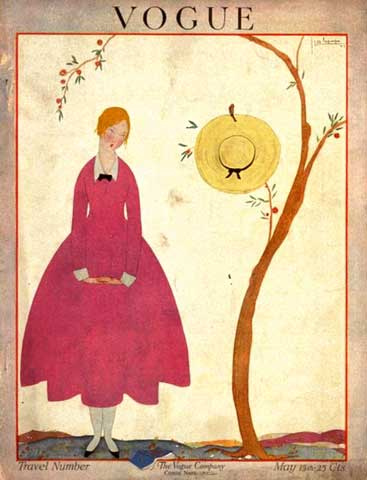
    Cover of 1917 Vogue
    Cover of the May 1917 issue. (American Vogue) https://commons.wikimedia.org/wiki/File:Vogue,_portada_de_mayo_de_1917.jpg

    Fiscal Year 2016 that ended on June 30 started off as a very challenging year for collection development, due to the loss of about $1 million of purchasing power in the collections budget in the previous year. Thanks to the strong support and guidance from the new Libraries administration and the tireless work of all the colleagues involved in collection development, we have more or less turned a corner. The University Librarian’s Report from the July issue of the newsletter includes a summary of major acquisitions that the Libraries made in FY16. Additionally, at the end of FY16 we purchased the British Periodicals collections and Vogue archive, two valuable humanities resources that have been on our wish list for a very long time. It is fair to say that, since last year, the Libraries have been making considerable progress to improve access to all kinds of scholarly resources (online journals, e-books, and primary sources) that the entire Rutgers community can benefit from.

    Our collection development program is continuing the upward trend that began last year. Since July 1, which is when the new fiscal year started, we have been focusing on acquiring and upgrading resources essential to the education mission of the University, in anticipation of the beginning of the new academic year. These new resources include:

    • ProQuest ebrary Academic Complete: a collection of about 140,000 current scholarly e-books on all academic subjects.
    • Springer Nature STM (Science, Technology, and Medicine) and social sciences frontlist e-books: over 7000 newly published titles from the largest STM e-book publisher, paid for with a funding increase from the universities.
    • Academic Video Online: Premium (AVON): over 50,000 videos on Social Sciences, Arts & Humanities, Science & Engineering, and Health Sciences topics from many reputable producers such as BBC and PBS.
    • ProQuest Dissertations and Theses (PQDT) Global: 1.7 million full-text dissertations and theses from both American and international institutions.
    • Clinical resources: In the spring, the Libraries received a funding increase from the universities for five new clinical resources. UpToDate and Bates’ Visual Guide are already available. VisualDx, DynaMed Plus, and JAMA Evidence will be added soon.

    Some of the resources are available now and others will be available later in the fiscal year. We are confident that these new resources will greatly enhance the Libraries’ support for undergraduate, graduate, and medical education at Rutgers. Yes, even when summer is ending, there will be a lot to look forward to in the fall!

  • A Two-day Cabinet Retreat Initiates Discussion of Libraries-wide Priorities

    We are at a strange point of the year where, like time travelers, we must work and plan in three different fiscal years. The close of FY16 necessitates the activities of closure and assessment; FY17 is already galloping along with its own demands; and in some circles, we are already planning for the priorities FY18 in anticipation of State of the Libraries meeting in November.

    In order to get a handle on that last item, I invited members of cabinet to join me for a two-day retreat to discuss where we see our priorities in the future. Over the course of two days, we reviewed SWOT analyses, LibQUAL+ survey results, budgets, previous State of the Unions, and on. We considered the impact of changes in the Libraries’ environment ranging from the master space plan to the needs of the Giddings collection. And we assessed the priorities we established at State of the Libraries in November 2015, asking what have we accomplished this year? And how do these accomplishments provide opportunity for further refinement and, in some cases, expansion of these priorities?

    While I don’t have a finalized list of priorities to share at this time, I want to give you a sense of the tone and the focus of these discussions. Much of our discussion centered on the priorities established at the last State of the Libraries:

    • Enhance undergraduate support
    • Conduct a holistic review of special collections
    • Optimize Collection development and management
    • Clarify communication and decision-making
    • Define the Libraries role in and identify resources for advanced research support

    We have made tremendous strides in each of these areas, but what became clear through our discussion was that each “accomplishment,” was also a new beginning. For example, we considered the report of the completed special collections holistic review (an executive summary is available here), but this brought up questions about strategy, resources, and next steps.

    So, I suspect when all is said and done, our priorities will fall into similar areas as last year, but with shifts in focus or additional avenues to explore. The one exception is that we will undoubtedly add a priority related to strengthening information control. Additional threads running through our conversations included the impact of the RCM budget model and the use of assessment in decision-making and planning.

    I anticipate sharing the outcome of this retreat with you all in the coming weeks. We will all benefit from a set of clearly articulated, aspirational, and achievable priorities to guide our activities in the following year. The discussions initiated during the retreat will continue in cabinet and within units before the priorities are finalized. I thank you in advance for your participation and support during this process.


  • Quick Takes on Events & News – July 2016

    Critical Thinking & Creative Decision Making

    July 15. 2016
    9 a.m. – 12 p.m.
    This course is ideal for staff, managers, supervisors, and administrators who recognize the need to improve their ability to generate ideas, see old ideas in new light, and make decisions that are innovative yet founded on strong grounds.

    Location:  Pane Room, 1st floor, Alexander Library with teleconference to Smith Library, Dana Library and Robeson Library

    RSVP: Erica Parin on behalf of the Professional Development Committee

    Leading Staff through Change & Transition

    July 21. 2016
    9 a.m. – 12 p.m.
    This course is ideal for managers, supervisors, and administrators who are experiencing departmental change and would like insight, guidance, models, and tools to assist them in moving their departments forward.

    Location:  Pane Room, 1st floor, Alexander Library

    RSVP: Erica Parin on behalf of the Professional Development Committee

    Digital Humanities Summer Institute

    Bart Everts attended the Digital Humanities Summer Institute at the University of Victoria in Victoria, BC June 12-16th and participated in a week-long workshop titled Critical Pedagogy and Digital Praxis in the Humanities. The workshop “built an open course as a playground, letting participants experiment with critical digital pedagogy in a class-created online course that [they] co-designed, built, deployed, promoted, and assessed.” Learn more at the website they designed: http://www.digitalpedagogylab.com/dhsi2016/.

    Dana Library Media Services Department Restructure

    The Dana Media Services department is transitioning from its location on the fourth to better concentrate on how today’s students access physical and online media. Photograph by Ed Berger.
    Photograph by Ed Berger.

    The fourth floor Dana Library Media Services Department is being restructured in recognition of how the library’s patrons access sound and video for education and entertainment. The transition will be completed by August 1 well in advance of the fall semester.

    Patrons will find a selection of some 1,700 DVDs, VHS tapes, and audio CDs currently available from Media Services publicly accessible on the lower level of the library, where the journals and bound periodicals are housed. Faculty requests to purchase new titles to support their teaching will continue to come through Dana’s department liaison librarians.

    Congratulations to Our Colleagues Who Worked on an Award-Winning Book!

    Rutgers: A 250th Anniversary Portrait received the Gold Award in the Circle of Excellence Awards given by the Council for Advancement and Support of Education (CASE).Many of our Libraries’ colleagues contributed to the success of this book: University archivist Tom Frusciano served as one of the primary authors, co-authoring the opening chapter on “History and Politics,” with GSE professor Benjamin Justice, constructing the extensive historical “Timeline” that appears in the back of the book, and writing—in partnership with archival associate Erika Gorder—many, many photo captions. This was a true group effort with dozens of contributors, including Gorder on musical concerts at Rutgers, archivist Fernanda Perrone on the activities of visiting Japanese students at Rutgers in the 1870s, David Fowler, an independent researcher with close ties to Special Collections and University Archives, on the life and impact of Henry Rutgers, and former university librarian Marianne Gaunt on, of course, the libraries themselves! Lastly, former associate director of the Institute of Jazz Studies Ed Berger contributed many photographs.

    Custom Buttons Now Available from the Communications Department

    Sample buttons v2
    Custom buttons are now available from the Communications Department.

    The Communications Department recently purchased a custom button maker and we are happy to now make buttons available to all of our colleagues for events or outreach activities. These 1.5 inch buttons feature a glossy, professional-quality finish and the designs can be customized to suit your needs. We are currently piloting a small “See You @ the Library” campaign for New Student Orientations in New Brunswick and welcome ideas for other ways to take advantage of this new equipment. Please contact us with project ideas or to request a sample.

  • Spring Sutras Artist Statement and Acknowledgments

    Spring Sutras Artist Statement and Acknowledgments

    Spring Sutras, an art installation by Karen Guancione that features thousands of recycled catalog cards from Rutgers libraries, officially launched on June 2 and is on display through the fall at Dana Library. The artist statement, remarks, and acknowledgments below are mounted on a poster accompanying the exhibition. Congratulations to all Libraries faculty and staff who helped make this installation a success!

    Spring Sutras
    Artist Statement

    “The Sanskrit word sutra literally means a thread, string or line that holds things together. It derives from the root siv- (to sew), and is related to suere in Latin, sew in English, and the medical term suture. It refers to Hindu or Buddhist texts, sometimes described as threads of wisdom or knowledge strung together.” (Wikipedia 2013)

    Spring Sutras, credit: Ed Berger
    Spring Sutras, credit: Ed Berger

    Sutra began in 2013 when I was caring for my ninety year old mother who suffered with severe dementia. Normally, it takes months and marathon days of work to make an installation for a public space, but I could not leave my mother’s living room; I was well into an endless, exhausting, all-consuming caregiving hell. With the help of Rutgers University librarians I obtained boxes and boxes of the long discarded and forgotten hand-typed catalogue cards that I wanted to recycle for an installation. While caregiving around the clock in the house where my mother had lived for sixty-five years, I was able to work near her and string together the thousands of pieces of paper—a repetitive, meditative act that enabled me to continue making art. I named the installation Sutra. Caregiving is a process that requires compassion and, like art, sometimes tests the limits of patience and endurance. As I sewed, I was reminded of the piecing together of segments of all people’s lives, who, depending on individual or social circumstance, may themselves become long discarded and forgotten. The first installation using catalogue cards was created for the Noyes Museum and prominently displayed from 2013 to 2015.

    In 2016 with the support of Rutgers University Libraries and Rutgers-Newark I was invited to create Spring Sutras, a site-specific installation in the John Cotton Dana Library. The public art project celebrates the nation’s largest and most varied collection of Japanese cherry trees in Newark’s Branch Brook Park and commemorates the city’s 350th anniversary. Thousands of recycled catalogue cards from Rutgers Libraries and hundreds of faux flowers were hand-sewn and suspended beneath a two-story-high skylight and throughout the fourth-floor space, which is also home to the Institute of Jazz Studies. Viewers are literally surrounded and touched by pieces of the hanging installation; the large-scale work transforms an entire area of the Dana Library.

    In an age of digital information I have relished holding in hand the many singular pieces of paper that once spoke of a vast and impressive array of accumulated knowledge. The strung flower garlands celebrate new life and honor the old and departed.

    Special thanks to librarians: Ann Watkins, Yoshiko Ishii, Michael Joseph and Grace Agnew for their help in procuring the cards from Dana Library, Alexander Library, Special Collections and Rutgers Law Library.

    Karen Guancione

    About the Artist

    Karen Guancione has been awarded a Mid Atlantic Arts Foundation Artists and Communities Grant, four New Jersey State Council on the Arts Fellowships, a Ford Foundation Grant, a Puffin Foundation Grant and an Arts and Culture Exhibition Grant from the Nathan Cummings Foundation. Her work has been exhibited worldwide and is in numerous public and private collections. Her interdisciplinary art includes large scale installations, public art projects, performance, sculpture, printmaking, papermaking, bookarts and video. She has curated many exhibitions, is an adjunct professor of art at the State University of New York (SUNY Purchase), Montclair State University and Middlesex County College and has been a visiting artist and lecturer at Pratt Institute, Rutgers University and numerous schools and institutions in the United States and abroad. For over a decade she has served as artistic director / guest curator of the annual New Jersey Book Arts Symposium and Exhibition. She is the first time recipient of the Erena Rae Award for Art and Social Justice. She collaborated on the critically acclaimed production of Cuatro Corridos, a multidisciplinary chamber opera about human trafficking that has been continually traveling throughout the USA and Mexico since 2013. She has just received a 2016 Fellowship from the New Jersey State Council on the Arts for Works on Paper.

    A Note on the Art of Karen Guancione

    An artist, educator, curator, and longtime Artistic Director of The New Jersey Book Arts Symposium, Karen Guancione has been making books for over fifty years, and collaborating with artists and workers all over the world on installations that adapt traditional book making techniques. Spring Sutras continues a thread of her work that investigates the seam between art and value, here working with discarded catalog cards and plastic flowers to reach toward a vision of ecstatic renewal. Intriguingly, within the work’s central assemblage, a mobile hung from the Dana Library atrium, the catalog cards suspended like leaves or stars have been assembled in roughly alphabetical order, preserving and transforming not only the librarian’s tools of organization, but the original library vision: it, too, changes and becomes part of what is renewed and endures.

    Michael Joseph

    Acknowledgments

    The artist gratefully acknowledges the support of Rutgers University Libraries and its staff for making this exhibition possible. This project was generously funded through a Rutgers-Newark Cultural Programming grant. Special thanks to Consuella Askew, Director, John Cotton Dana Library and Ann Watkins, Dana Arts Coordinator and Librarian for their administrative support and cultural commitment. A special note of appreciation to Jeff Baxter and Rutgers Physical Plant for expert installation assistance, Bob Nahory for technical advice, Bruce and Beverly Riccitelli for beautiful photography, Tad Hershorn for printing expertise, Mark Papianni and Yoshiko Ishii for lending a hand during installation, Michael Joseph for insightful writing and Roseann Reilly for help and comradery during many long sewing sessions.

    Heartfelt thanks to those who have contibuted to this project in many ways: Grace Agnew, Mary Apikos, Matt Badessa, Isaiah Beard, Donny Bruno, Asha Ganpat, Gary Guancione, Angela Hidalgo, Liz Koepplinger, Susan Narucki, Jessica Pellien, Suzanne Reiman, Carol Van Savage, Lauren Vitiello and Sally Willowbee. Sincere thanks to the skillful Rutgers-Newark Physical Plant workers: Tony Sharo, Rob Pellicone, Bob Conklin and Dave Barbara, the Dana Library Custodial staff, and Rugers-Newark Campus Security officers.

  • Libraries Partner with Office of Summer and Winter Sessions on Author Events

    For the second year in a row, the New Brunswick Libraries and the communications department have partnered with the Office of Summer and Winter Sessions on the AuthorTalks series. This year, the Libraries will host three Rutgers faculty author events during the summer session.The authors read or discuss their book, take questions from the audience, and sign copies. Rutgers’ Office of Summer & Winter Sessions sponsors a door drawing for 10 copies and Rutgers University Bookstore is on-hand to sell books, as well.

    Greenberg AuthorTalk 300 pxThe first event with novelist Tisha Bender took place in June and was well attended. Her book, P.U.N.C.H., is a satirical take on online learning programs in academia. Though the novel is humorous, Bender writes from a position of authority, as she is also the author of  two editions of Discussion-Based Online Teaching to Enhance Student Learning: Theory, Practice, and Assessment (Stylus 2003, 2012) and has trained instructors in online teaching at the SUNY Learning Network, NYU, Cornell, the New School, and in the Writing Program at Rutgers University. She also teaches hybrid courses in the Rutgers Writing Program, and has taught online for the New School and Cornell.

    The next AuthorTalks event takes place at Alexander Library on July 6, 2016 at 4:00 p.m. and will feature history professor David Greenberg, reading and discussing his new, topical book Republic of Spin: An Inside History of the American Presidency. His book, arriving in time for the 2016 election, moves beyond cynicism to ask more probing questions about the convergence of politics and public relations in the Oval Office—how has spin affected the landscape of American democracy in the last century, and are we right to regard it as manipulative and deceitful?

    Our final AuthorTalks event will be our very own Janet Brennan Croft discussing Perilous and Fair: Women in the Works and Life of J.R.R. Tolkien at Alexander Library on July 27 at 4 p.m. Croft takes on critics who claim the works of J. R. R. Tolkien seem either to ignore women or to place them on unattainable pedestals and focuses attention on views that interpret women in Tolkien’s works and life as enacting essential, rather than merely supportive roles.

    We are delighted to partner with the Office of Summer and Winter Sessions on these events and hope you will join the fun if you are available. If you have suggestions for future AuthorTalks events, please let the communications department know.

  • Highlights from the Center of Alcohol Studies Library

    The Center of Alcohol Studies (CAS) Library had the unique opportunity to meet with Jeffrey Beall at his office in Denver. The first part of the interview is featured in their most recent newsletter, (http://library.alcoholstudies.rutgers.edu/sites/library.alcoholstudies.rutgers.edu/files/documents/newsletters/Spring2016_May.pdf) entitled Predatory Publishers: An Interview with Jeffrey Beall, Pt. 1. The second part will soon be available in the newsletter of the Substance Abuse Libraries and Information Specialists (SALIS), freely available for a brief time after publication.

    Also, join us as we celebrate a milestone in the historical research at the Center of Alcohol Studies Library. One of the most important founders of alcohol and addiction studies, E. M. Jellinek, also laid down the foundations of the current CAS Library. The most recent issue of the Journal of Studies on Alcohol and Drugs, published at CAS, features three open-access articles with CAS Library’s contributions to the history of alcohol studies. CAS Library staff has compiled Jellinek’s most comprehensive bibliography to date based on their original research that discovered new biographical data and articles. His seminal articles have also become freely available on the JSAD website. See the reintroduction of Jellinek to current addiction science at: http://www.jsad.com/page/bunkybundle

  • Guidelines for Libraries’ Use of Photography and Photos in and of Libraries’ Facilities, Events, and People

    Cabinet recently approved a new set of guidelines for the use of photography at the Libraries. These guidelines endorse and support the guidelines for the university as a whole, but also add a few tweaks specifically for the Libraries. If you are photographing events, people, or spaces of the Libraries, it is important that you familiarize yourself with thees guidelines and obtain all the necessary model releases. Three groups of subjects require special attention: children, Rutgers student athletes, and medical patients.

    Also, if you are in the position of having your photograph regularly taken at Library events and wish to avoid having to sign a new release each time, we have made available an extended model release for library faculty and staff only. If you would like to complete this one-time form, please right click and download the Extended Model Release Template RUL Faculty and Staff only (also available on the new central drive: T:\CENTRAL\Procedures and Resources\Communications\model releases for photography), complete, sign, and return to the communications department.

    The guidelines also cover how to handle videotaping and photographing events. If you are taking photos that might be useful to your colleagues or for publication on our website or in our print materials, please be sure to upload the photos and scanned copies of the signed model releases to the Photos and Media network location, too.

    There is a lot of confusion about when model releases are necessary. Some situations are clear–as when you are taking a photo of a single person or a group of people–but other scenarios aren’t as obvious.  A guiding mantra is that if you want to identify someone in the written caption for the photography, you will need a model release. Hopefully the examples below will help clarify how to deal with different types of situations.

    Model Release Examples (arrows require model release, circles are optional depending on circumstance)

    1 No photo release would be necessary for this type of group photo as everyone is facing away.

    Before photographing this group, the photographer should announce that s/he is taking a photograph and provide time for people to move out of the frame if necessary.

    2 You would not need a photo release for a photo like this of a subject looking away and not identifiable.
    3 Even though you might be able to pick out and identify individuals because you know them, this scene would not require any photo releases as there is no “subject” per se.

    However, there should be a notice in the program and a sign at the entrance indicating photography will take place and to notify the event staff if they don’t want to be included.

    4 You would get a model release from the gentleman in the foreground of the photo, but not from the others in the room. You would also need a model release if you want to mention the teacher by name.
    5 In a photo like this, you would need releases from the library staff behind the table, but not from the standing person. However, this is a case, where you would likely want the name of the person for the caption, in which case you would need a release.
    6 The primary subject of the three is the man facing the camera. Even though the man in the back is blurred and facing sideways—a model release is required. The woman is facing away so a release is not required. If you planned to mention their names in the caption, then you would need model releases.
    7 This is a scenario where you would want to identify all subjects in the caption. So, even though only two people are identifiable and require a model release, you would want to get model releases from all five.
    8 A straightforward photograph that requires model releases even if these individuals work at the library or have given permission to use photographs on another occasion.


  • Announcing New Shared Drive – Central

    USA-NYC-Grand_Central_Terminal_Clock
    Image credit: IngfbrunoOwn work, CC BY-SA 3.0, https://commons.wikimedia.org/w/index.php?curid=27955753

    The Libraries now have a Central drive (T:\CENTRAL) where shared items of interest to all areas of the Libraries can be stored. The plan is to eventually store shared resources, information, procedures, and manuals in this location. Currently, it contains folders for Assessments, Collection Development and Management, Communications and Marketing, Photos and Media, Procedures and Resources, and Visual Identity, but more folders will be added as needed. Some of the folders are read-only, while others like Photos and Media are available to all for adding materials.

    Please take some time to peruse the folders:

    • Jeanne Boyle recently sent an invitation to view the LibQUAL+ survey results now stored in the Assessments folder.
    • Under Visual Identity, you will find resources that are useful if you are making flyers, advertisements, or website graphics, such as the colors, fonts, logos, and letterheads that are approved by University Communications and Marketing.
    • Photos and Media is a one-stop place to find images of our spaces, our events, and faculty & staff.
    • The communications department has also moved their folders from the ALEX drive to Central location Communications and Marketing.
    • Procedures and Resources currently holds the recent communications policies for photography and fielding requests to photograph in the Libraries, but will be populated with other materials, procedures, and FAQs in the future.

    These changes are partly philosophical–these are resources we all share and shouldn’t be housed on one of the unit server locations–but they are also intended to surface important materials and provide a single authoritative place to look for procedural information and guidance. If you have feedback, suggestions for how to further improve this shared drive, or materials you would like added to this drive, please speak with your unit director or supervisor.

  • Carey Library Hosts Visitors from Catherwood Library at Cornell University

    Carey Library interior
    The Carey Library has been recently redesigned with comfortable seating, functional work spaces, bright lighting, and fun colors.

    On June 8th, the James B. Carey Library at School of Management and Labor Relations (SMLR) hosted librarians from the Martin P. Catherwood Library of the Cornell University School of Industrial and Labor Relations (ILR). As part of a “Liaison Exchange Travel Award” program, Suzanne Cohen, collection development librarian, and Aliqae Geraci, ILR research librarian, were given the opportunity to visit liaison universities in order to connect with and learn from institutions with similar programs and public mission. The program focused on liaison roles in the areas of collection development, reference, instruction, outreach services, scholarly communication, and assessment.

    The agenda for the day consisted of a tour of the Labor Education Center on the Cook Campus, followed by lengthy discussions covering Carey Library projects, the structure of the Rutgers University Libraries, and information about the library’s collection development, reference, and instruction services. Meetings were arranged to provide more insight on Carey Library outreach services with SMLR’s director of undergraduate & master’s programs in labor education and employment relations, with SMLR’s career management specialist, and with the director of assessment, research, and writing support from Rutgers University. These key positions were selected in order to showcase the Carey Library’s involvement in student and faculty success, career services, and the writing centers.

    Suzanne summarized the Cornell visit stating that “We were excited to visit the James B. Carey Library, which has many parallels to the Martin P. Catherwood Library at Cornell University’s ILR School. Both libraries serve the academic missions of schools studying and teaching management and labor relations; both have faculty, staff, and students distributed across multiple locations; and both have public missions, serving labor relations and human resource management professionals, working people, employers and government agencies of their states. We came away from our visit with a lot of great ideas related to library spaces, services, and potential partnerships with other school/library departments. One of the most important outcomes was developing a stronger relationship with Julie. As there are fewer librarians specializing in the subject areas served by our libraries, it is more important than ever that we create a network of ILR information professionals. It was a great day!”

    Overall, the visit was a success. It not only built a stronger relationship between the James B. Carey Library and the Catherwood Library, but opened the lines of communication between the two libraries and sparked many new ideas for future collaboration. A standing invitation to visit Ithaca was offered, which I will gladly take advantage of.