Category: Units

  • Smith Library Stressbusters: Anatomy Rare Book Show and Tell

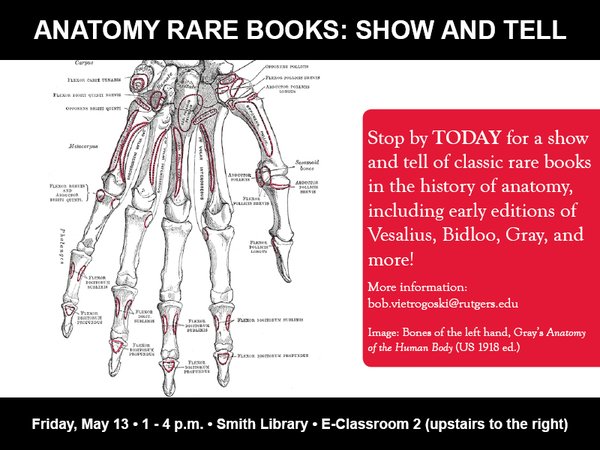
    anatomy inviteIn addition to bubble-popping and “make your own squeeze ball” stressbuster activities, the George F. Smith Library of the Health Sciences hosted its first “Anatomy Rare Book Show and Tell” on Friday, May 13. Over the afternoon, 18 attendees (15 students, 2 librarians, and a regular library visitor) dropped by to see, touch (supervised!), and learn about:

    • Andreas Vesalius, De Humani Corporis Fabrica (2nd edition, 1555 – a gorgeous book with renowned illustrations, with our copy featuring a magnificent 1572 binding)
    • G. Bidloo, Anatomia Humani Corporis (1st edition, 1685 – folio size with awesome and gruesome giant plates)
    • Henry Gray, Anatomy: Descriptive and Surgical (1st British edition, 1858, and 1st American edition, 1859 – fantastic pedagogical illustrations, and thanks to television, probably the best-known textbook title)

    Librarian lessons learned:

    Patron serendipity: A first-year medical student recently visited Special Collections and expressed interest in the rare books. She was concluding gross anatomy studies, and really liked the idea of a show and tell of classic anatomical works. She was happy to post news of the event on the private Facebook page of the first year students.  So if one patron is interested, it’s reasonable to conclude that maybe more than one will be interested!

    Location location location: Instead of using the Special Collections reading room, the books were displayed in E-Classroom 2, a recently renovated room closer to where students congregate on Smith Library’s upper floor.  A sign taped to a chair and an open door worked to draw some second-year students temporarily away from their USMLE Step 1 studies. Prompted by a Vesalian illustration, some even recalled which bone in the human body is the only bone not connected to another.

    If it works, do it again:  Attendees showed interest and stayed longer than originally anticipated. (By the end, my voice was shot.) So I intend to make similar rare book, manuscript, or even historical object show and tell events a regular end of semester activity.


  • Behind the Scenes of the Historic Commencement of 2016

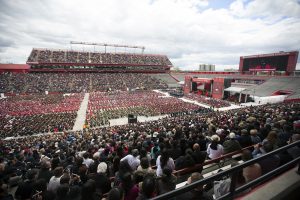
    The view on commencement day. Photo credit: Nick Romanenko, University Photographer, Creative Services
    The view on commencement day. Photo credit: Nick Romanenko, University Photographer, Creative Services

    On September 27, 2005 at the opening of the exhibition of the newly purchased East Jersey materials held at Morven Museum and Gardens in Princeton, Richard P. McCormick, distinguished professor of history at Rutgers, presented remarks on the extraordinary acquisition of colonial New Jersey documents from Christie’s. “What a glorious day!” McCormick stated at the beginning of his address. I’m sure that, as a Rutgers University historian, he would have felt the same way about Commencement in 2016.

    Indeed, it was a “glorious day” for the entire university community. To have the first sitting President of United States present the Commencement address was perhaps the signature event in the year-long celebration of Rutgers’ 250th anniversary.

    As a member of the Executive Planning Committee for Rutgers 250, I was involved in early discussions and was delighted to hear Matt Weismantel, Senior Director of Rutgers 250, was considering extending an invitation to President Barack Obama. We knew it was likely a far-fetched idea, given the complexity of scheduling and the number of invitations a president receives for such occasions, but there were numerous factors that weighed in favor of Rutgers, particularly its celebration as the eighth oldest college in the nation and its distinctly diverse student population. A three-year campaign, as highlighted in President Obama’s commencement remarks, resulted in a last-minute acceptance and dramatic preparations for a presidential visit to the Banks of the Old Raritan.

    I was fortunate to contribute to the events of this remarkable day. On the Friday preceding commencement, I received a call from Greg Trevor, director of media relations, asking if I would do an interview with WNYC (NPR) about Rutgers history. I told Greg that I would be more than willing to participate and that evening I participated in a five-minute conversation for a segment of “All Things Considered” that aired the following day at 5:30 p.m.

    During our preparations for the “All Things Considered” interview, I mentioned to Greg that I did not have a ticket for Sunday’s ceremony. If anything, I thought he might be able to get me a ticket as a professional courtesy, so I could observe this historic moment in my capacity as the university archivist. But Greg went one step further and added me to the Media Relations team that assembled in the press box at High Point Solutions Stadium.

    So, in addition to being a spectator, I also contributed to the event by informing the media about Rutgers past. During commencement, I was interviewed by both print media (the Star Ledger, Home News, Bergen Record, among others) as well as broadcast media (WCTC and WRSU).

    As I sat in the box at the 50-yard line looking at the crowd and listening to a wonderful commencement address, I kept thinking about Richard P. McCormick and wondering what his reaction would have been. To me, it was one of the most significant days in Rutgers history and I’m sure Richard McCormick would have agreed!

    “What a glorious day!” indeed.

  • National Library of Medicine Biomedical Informatics Fellows Named from Rutgers

    NLM
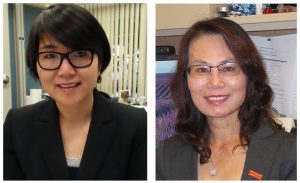
    Yingting Zhang from RWJ Library (l) and Yini Zhu from Smith Library (r) were both named to the prestigious Medicine Medical Informatics Fellowship.

    Yini Zhu (Smith Library) and Yingting Zhang (RWJ Library) were both named to the National Library of Medicine’s (NLM) Biomedical Informatics Fellow program through a competitive application process. Yini attended a week-long medical informatics workshop held at Augusta University, Augusta, GA, in April 2016. Yingting will attend the same program in fall 2016.

    This program introduces participants to the fundamental concepts and application areas of biomedical informatics with components including principles of controlled terminology/vocabulary, standards, mathematical modeling, bioinformatics, natural language processing, and more.

    NLM’s program recruits from health sciences educators, librarians, administrators, clinical practitioners, and faculty who can become agents of change in their respective institutions by becoming a “field force” to train other on these concepts.

    The benefits of attendance at the fellowship program were immediate. Following her participation in the NLM program, Yini Zhu joined Minglu Wang and Bonnie L. Fong to present a Data Management Plan workshop to a group of Rutgers Newark and RBHS faculty, researchers, and staff on May 3, 2016. Yini covered the fundamentals and best practices of data sharing plans required by the National Institutes of Health (NIH) while Minglu and Bonnie addressed data management plans.

    Click here to learn more about the Biomedical Informatics program.


  • News from The New Brunswick Libraries’ Undergraduate Experience Team

    Lily Todorinova and Rose Barbalace describe some of the activities the New Brunswick Libraries’ Undergraduate Experience Team have undertaken in recent months or have planned for the summer.

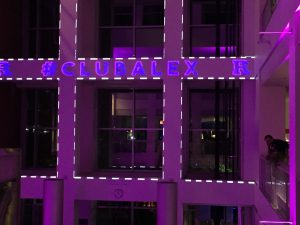
    #ClubAlex

    IMG_7530The Libraries partnered with Student Affairs once again to bring Club Alex back to Alexander Library during Senior Days. This much-anticipated annual event, which sold out within minutes, saw hundreds of graduating seniors and their guests descend upon the library-turned-nightclub on the day following the conclusion of finals. Alexander was transformed with all the trappings one would expect of an actual club: mood lighting and pipe and drape walls helped set the tone in the reference room—which featured a DJ, dance floor, and bar—and an R&B lounge was installed on the ground floor for those who preferred a more intimate atmosphere. A photo booth allowed partygoers to capture the excitement of the evening, and a massive Pac-Man-themed light show was projected onto the atrium walls to the delight of all in attendance.  The buzz on social media was considerable, with many students expressing their gratitude and enthusiasm—and perhaps even more alumni wishing that they had had the chance to party at the library when they were still at Rutgers! Club Alex is a great opportunity for us to create an impression of the Libraries that will last in students’ minds well beyond graduation, and we are grateful to be a partner in this event each year.
    Aresty Undergraduate Research

    The Summer Science Program of the Aresty Research Center offers sophomores an intensive research experience with a dedicated faculty adviser, as well summer  housing and a $3000 stipend. This year, students are working on a diversity of fascinating topics, from cancer prevention, to wearable devices and impact on dietary behaviors, to cataloging emission lines from simulated galaxies. Recognizing the importance of information literacy to the success of these students, the Center has recently reached out to Lily Todorinova, Undergraduate Experience Librarian, to lead several research sessions for the students. With the help of Laura Palumbo, Chemistry & Physics Librarian and Science Data Specialist, we will hold several active learning-based workshops for the 60 or so students in the program, which will focus on finding, evaluating, and using scholarly sources. We are excited to support these students and help them navigate the wealth of academic research resources available to them.

    -Lily Todorinova

    Undergraduate Experience Team Exam Week Stressbuster Report

    IMG_7438
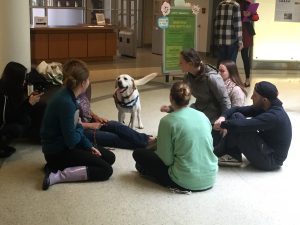
    Students relax with therapy dogs in the lobby of Douglass Library during Spring 2016 Stressbusters.

    During the spring semester exam period (May 2 – May 11) the New Brunswick libraries hosted over 22 stressbuster events and activities, engaging with hundreds of students. New this semester we expanded our stressbuster activities to the Art Library, Math/Physics Library, and Chang Science Library each offering snacks and bottled water. The students expressed their thanks and appreciation as they waited patiently in line for their cookie or coffee. The pet therapy sessions were also extremely popular with many students staying nearly the whole hour with their favorite dog.

    Here are some of the highlights of items distributed during finals week:

    • 1480 bottles of water
    • 1000 ear plugs
    • 768 cookies
    • 675 sandwiches
    • 500 cups of coffee
    • 480 granola bars
    • 388 bags of chips
    • 160 packs of fruit snacks
    • 126 packages of cookies
    • 20 gallons of iced tea
    • 20 gallons of lemonade
    • 7 pet therapy sessions
    • 5 lbs. of chocolate
    • brunch at the Library of Science and Medicine serving coffee, orange juice, bagels, croissants, muffins, and pound cake. (Tried something new, students loved it!)
    • hundreds of coloring pages, stickers, stamps, and other craft supplies offered at two de-stress stations.

    Special thanks to Bright and Beautiful Therapy Dogs, RU Seeing Eye Puppy Raising Club, Creature Comfort Pet Therapy, Jimmy John’s, New Brunswick Libraries Administration, and Rutgers Health, Outreach, Promotion and Education for sponsoring these events.

    -Rose Barbalace

  • Annual Celebrations for Staff and Faculty of Rutgers University Libraries (2016)

    Recently, the University convened two events to recognize faculty and staff who are celebrating a decade increment of employment at Rutgers. We are delighted to announce that more than 25 of our colleagues were included in the festivities and hope you join us in congratulating them on these accomplishments:


    10 Fay Austin (TAS)

    Ashwin Bijur (TAS)

    Kevin Conover (RIS)

    Eric Fizur (Robeson Library)

    Qun Luo (RIS)

    Holly Muller (RIS)

    Alfreda Richardson (RIS)

    Christopher Singh (Dana Library)

    Li Sun (TAS)

    William Torres (RIS)


    20 Stephanie Bartz (RIS)

    Barbara Grau (RIS)

    Charlene Houser (Central administration)

    Yoshiko Ishii (Dana Library)

    Mei Ling Lo (RIS)

    Andres Martinez (RIS)

    Fernanda Perrone (SC/UA)

    Julie Still (Robeson Library)


    30 Ka-Neng Au (Dana Library)

    Gary Golden (Robeson Library)

    David Hoover (TAS)

    Martin Kesselman (RIS)

    Kenneth Kuehl (Central administration)

    Linda Langschied (TAS)

    Julianna Ritter (TAS)

    James Robinson (RIS)


    40 Natalie Borisovets (Dana Library)


    Save

  • Dana Library Staff Development Day 2016

    NR04DanaLibrarySpringNewark01On May 13th, 2016, Dana Library hosted its second annual staff development day which was centered on exploring the question, “What does it mean to be a user centered academic library in the 21st century?” A “user centered” library was defined as one that optimizes the library experience around how users can, want, or need to use it, rather than forcing the users to change their behavior to accommodate it. Impending renovations to our third floor and the concurrent Rutgers University Library master facilities planning process for an overall building renovation prompted the need for us to take a critical look at where we are now in terms of services, collections and space and where we envision ourselves to be in the future. The full day agenda included invited speakers from the Rutgers University–Newark (RU-N) Division of Student Affairs representing the Office of ADA Services and Veteran Affairs, Counseling Services, and Judicial Affairs, and Student Development/Educational Programming, along with the Rutgers University Center for Organizational Leadership and Development.

    After a brief welcome and introduction to the day, the RU-N Division of Student Affairs started the program of events off with a highly informative and engaging session on student wellness and campus safety. The Dana faculty and staff learned more about the resources and processes concerning our students’ care and well-being while attending RU-N. Topics covered include the Campus Awareness Response and Education (CARE) Team, ADA Services, and understanding student behaviors. The latter portion of the presentation included an interactive role play activity based on the five basic styles for conflict management. This experiential activity, was entertaining—we identified a number of potential Emmy award winning actors amongst us—and allowed us to more easily identify conflict styles, along with potential methods to manage them.

    The Dana faculty had already been engaged in a data gathering process to inform our self-analysis. The remainder of the morning consisted of presenting the data collected and compiled, sharing demographic information about the community we serve, and getting a detailed look at the services we provide, along with usage data. The information shared in the presentations served as background and context for the facilitated small group discussions regarding our services that took place in the afternoon. Recognizing that our services are for the most part centralized with little room for experimentation, faculty and staff discussed services that we would continue, those that might be discontinued or tweaked, and the potential for creating new services. The afternoon was full of rich and seemingly robust discussion evidenced by the resulting recommendations.

    The activities of the 2016 Dana Staff Development Day serve to move us closer to the user centered library we aspire to be, as we become more aware and self-reflective of how we interact with our users and each other. Our work continues as we take action on those recommendations that can be easily realized in the short turn and enfolding those with long term implications into future goals for our library.

  • From Townhall to Rutgers Day, We Have a Lot to Celebrate

    From Townhall to Rutgers Day, We Have a Lot to Celebrate

    Hello all –

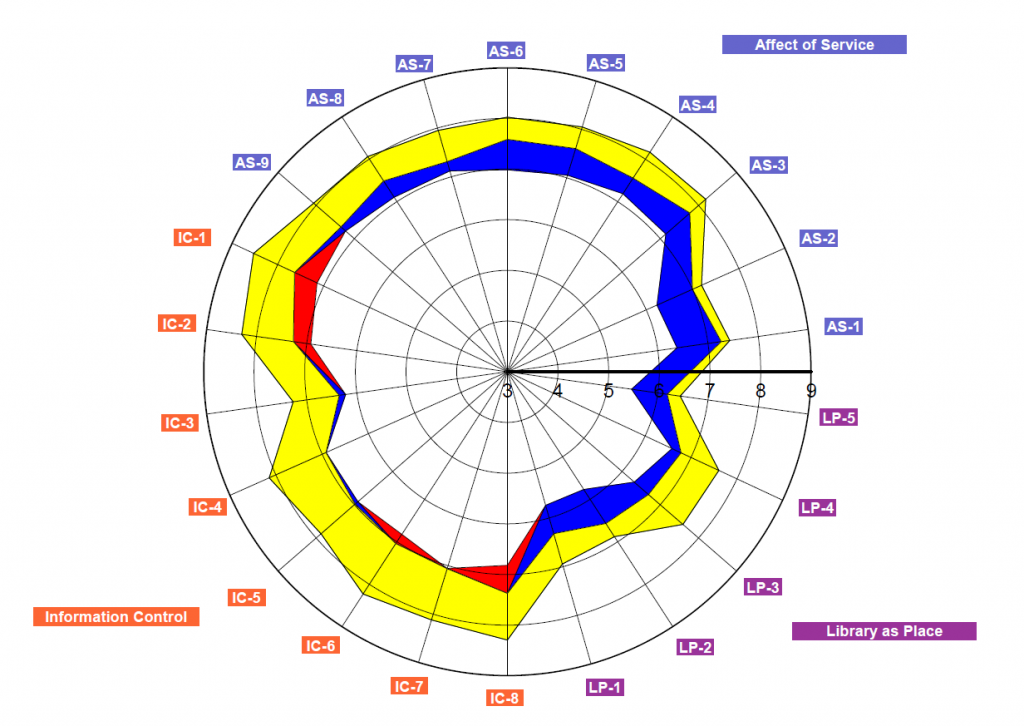
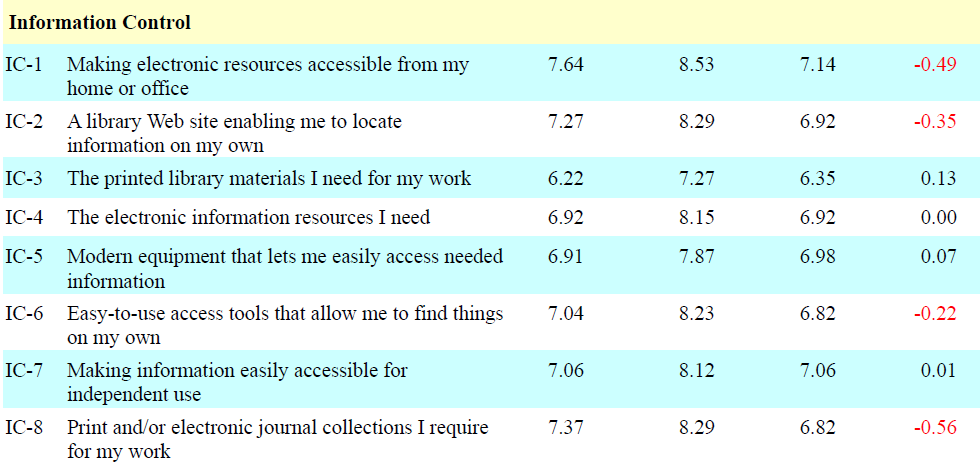
    I hope you all enjoyed the Townhall meeting last week. It was great to see so many of our colleagues virtually and in-person and to review all the ways we’ve moved forward on the priorities we identified at the State of the Libraries in the fall. The presentation by the architects provided us with a glimpse of how the spaces in our libraries are currently configured providing a baseline for planning for the changes that will meet the needs of the students and faculty. The LibQUAL+ survey results give us insight into what our users really think of the services we provide – which are necessary or optional, where we meet their expectations and where we don’t.  Together, these provide us with a strong foundation for planning.

    We are coming up with ways to share all the graphs and comments from LibQUAL+ with the Libraries’ faculty and staff, so look for this soon. I expect this will generate a lot of discussion and activity for us all, but in the meantime, with Memorial Day behind us and the summer yawning ahead, I wanted to take a breather and look back at one of the most popular and fun events the Libraries take part in…Rutgers Day!

    As you all know, Rutgers Day was expanded to Newark and Camden this year, in addition to sites in New Brunswick at Busch and College Ave. Each site celebrated the day a little differently, but across the board, I heard nothing but praise for our displays and activities. Thank you for taking the time to make the Libraries’ contributions to Rutgers Day exceptional in every way.

    From Newark bringing a bona fide Star Wars actor to campus and showcasing the activities of the archivists and IJS, to Camden collaborating with the public library branch to bring touches of superhero whimsy to campus, to New Brunswick inviting some impressive student athletes to read in our children’s reading corner—major effort went into making sure the Libraries’ booths and stands stood out from the crowd. Thank you to all of the volunteers who took time out of a sunny weekend day to participate in Rutgers Day and a special thanks to the members of the Rutgers Day committee who put it all together!

    Most of us only get to see one part of Rutgers Day, so I hope you enjoy the photographs below.

    Thank you,

    Kris


    • Hands-on Rutgers Day activities on the Busch campus.


    Thank you to our Rutgers Day volunteers:

    Busch:

    Students:

    Jenali Patel

    Jacek Zmuda


    Faculty & Staff:

    Mei Ling Lo (Chair)


    Camden:

    Students:

    Amanda Deptula

    Alex Carrigan


    Faculty & Staff:

    Zara Wilkinson (Chair)

    Julie Still

    Vibiana Cvetkovic

    Monique Whittle

    John Gibson

    Melinda Aviles

    Theresa Macklin


    New Brunswick:

    Joe Abraham

    Matt Badessa

    Marty Barnett

    Isaiah Beard

    Jeanne Boyle

    Stacey Carton

    Henry Charles

    Judith Cohn

    Peggy Dreker

    Melissa Gasparatto

    Marianne Gaunt

    Mina Ghajar

    Erika Gorder

    Bela Gupta

    Pam Hargwood (co-chair)

    Zachary Johnson

    Melissa Just

    Kim Kaiser

    Rob Krack

    Linda Langschied

    Tara Maharjan

    Jackie Mardikian

    Jim Niessen

    Erica Parin (co-chair)

    Jessica Pellien

    Tonie Perkins

    Roselyn Riley

    Kati Ritter

    Sheridan Sayles

    Connie Wu

    Tao Yang

    Katrina Zwaaf


    Newark:

    Consuella Askew

    Dorothy Grauer

    Maggie Harris-Clark

    Tad Hershorn (chair)

    James McElroy (Graduate student, assistant to IJS Associate Director Adriana Cuervo)

    Mark Papianni

    Vincent Pelote

    Marlene Reilly

    Chris Singh

    Wen-Hua Ren

    Elizabeth Surles

    Ann Watkins

    Krista White


    If your name does not appear on this list and you volunteered at Rutgers Day, please email Jessica Pellien to have it corrected.


  • Teach and Tell: Access Services’ Role in the Big Picture [MLA Poster]

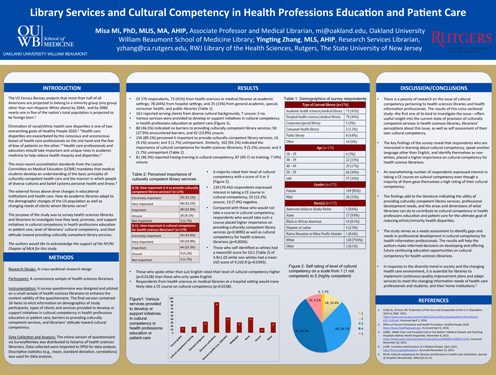
    Author: Yini Zhu
    Author: Yini Zhu

    Objectives

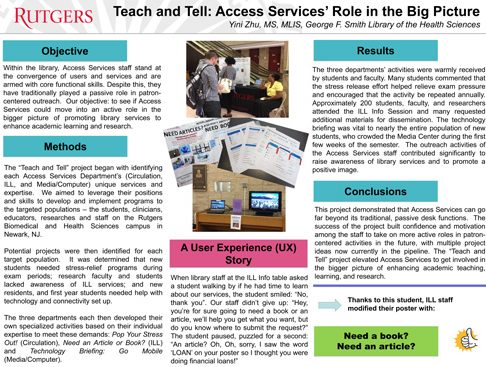
    Within the library, Access Services staff stand at the convergence of users and services and are armed with core functional skills. Despite this, they have traditionally played a passive role in patron-centered outreach. Our objective: to see if Access Services could move into an active role in the bigger picture of promoting library services to enhance academic learning and research.

    Methods

    The “Teach and Tell” project began with identifying each Access Services Department’s (Circulation, ILL, and Media/Computer) unique services and expertise. We aimed to leverage their positions and skills to develop and implement programs to the targeted populations – the faculty, students, clinicians, educators, and staff on the Rutgers Biomedical and Health Sciences campus in Newark, NJ.

    Potential projects were then identified for each target population. It was determined that new students needed stress-relief programs during exam periods; research faculty and students lacked awareness of ILL services; and new residents, and first year students needed help with technology and connectivity set up.

    The three departments each then developed their own specialized activities based on their individual expertise to meet these demands: Pop Your Stress Out! (Circulation), Need an Article or Book? (ILL) and Technology Briefing: Go Mobile (Media/Computer).

    Results

    The three departments’ activities were warmly received by students and faculty. Many students commented that the stress release effort helped relieve exam pressure and encouraged that the activity be repeated annually. Approximately 200 students, faculty, and researchers attended the ILL Info session and many requested additional materials for dissemination. The technology briefing was vital to nearly the entire population of new students and crowded the Media Center during the first few weeks of the semester. Via these outreach activities, the Access Services staff contributed significantly to raising awareness of library services and promoting a positive library image.

    Conclusions

    This project demonstrated that Access Services can go far beyond its traditional, passive desk functions. The success of the project built confidence and motivation among the staff to take on more active roles in patron-centered activities in the future, with multiple project ideas now currently in the pipeline. The “Teach and Tell” project elevated Access Services to get involved in the bigger picture of enhancing academic teaching, learning, and researching.

  • Adding More Tiles to the Mosaic: The Library and EBM in a Time of Curriculum Revision [MLA Poster]

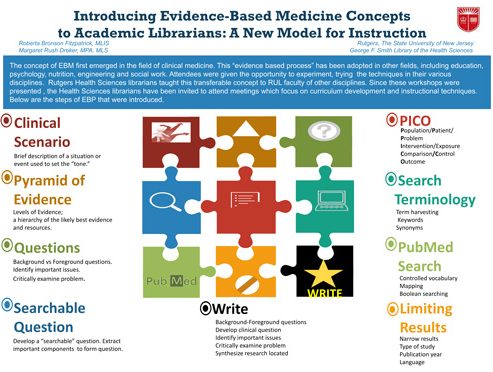
    Authors: Margaret Rush Dreker, Roberta Bronson Fitzpatrick
    Authors: Margaret Rush Dreker, Roberta Bronson Fitzpatrick

    Objectives
    Librarians contributed evidence-based medicine curriculum. The CATs project provides instruction on basic EBM concepts: the evidence pyramid and levels of evidence, formulating a searchable clinical question, using the PICO format, searching PubMEd. Articles were read, synthesized, and turned into a CAT. These skills will be used in clinical rotations and residency. The resulting CATs would populate a database/institutional repository.

    Methods
    Medical students enrolled in their “Foundations” course were simultaneously enrolled in an “Evidence Based Medicine” Moodle course. Module 2 covers developing searchable clinical questions, breaking them into a PICO format and selecting from among the available library resources when conducting a search. Librarians have embedded exercises within the course. Students are divided into small groups and paired with a partner. The small groups convene in the library for one hour for more focused training on searching PubMed, as well as a quick review of concepts covered in the Moodle course. Students work with their partner to write a focused clinical question, break it down into PICO, connect to PubMed, execute a search, identify at least four relevant articles. They obtain the articles, read and synthesize them, and write a CAT with a clinical bottom line.

    Results
    An online form was developed and is used to write the CATs, which are submitted directly to the library and to the course director. The completed CATs are presented by each pair to their small group and preceptor. Medical school faculty preceptors have commented on the quality of scholarship exhibited, students’ facility with PubMed, and their understanding of article types and the PICO format exhibited during small group discussions. The library developed a relational database to house the completed CATs but is in discussion to import them into RUCore, the institutional repository.

    Conclusions
    There is a high degree of interest in this project. Students feel that they are developing a skill that has application for the duration of their career. Faculty and administrators are enthusiastic about the fact that this is not EBM in a vacuum, but for lifelong learners.

  • Counting the Colorful: The Events Assessment Task Force [MLA Poster]

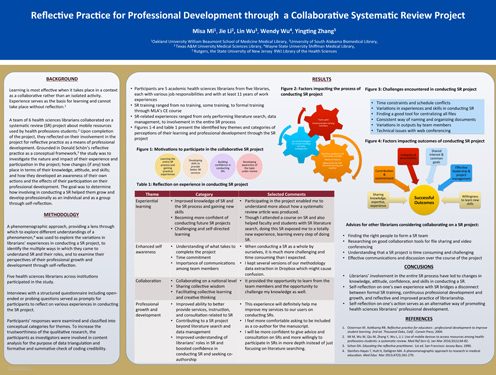
    Authors: Roberta Bronson Fitzpatrick, Leslin Charles, Ann Watkins, Zara Wilkinson, Megan Lotts
    Authors: Roberta Bronson Fitzpatrick, Leslin Charles, Ann Watkins, Zara Wilkinson, Megan Lotts

    Objectives
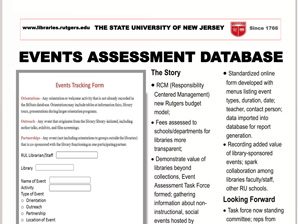
    With the advent of RCM, Responsibility Center Management, as a new financial/budgeting model, fees assessed to schools or departments are more transparent. To demonstrate the value of the libraries beyond collections, an Events Assessment Task Force was formed to gather information about the non-instructional, more social, events hosted by the university libraries.

    Methods
    The Task Force began by establishing definitions for what constituted an “event”. Members solicited suggestions for event types, such as art shows, Lego building contents, book clubs, exhibits, guest lectures, health information fairs, stress buster activities, and more. There was discussion about the information that was useful to capture for each event, such as number attending, co-sponsorship with another group, time/date/location. An online form was developed. It has drop-down menus which list event types, duration, and other common elements, which make recording easier. The data will be imported into a database capable of report generation. The database is modeled after one currently in use for collecting bibliographic instruction data and reflects both AAHSL and ARL needs At each step of the process, Task Force members solicited comments from library faculty and staff who were involved with various events.

    Results
    As of this writing, the Events Assessment Task Force presented both the data collection form and the events database to USC, the User Support Council. Both were approved. The next step is to conduct local training sessions to familiarize library faculty and staff with the form and the database in order to acquaint them with all involved procedures and to gain their participation in the data collection.

    Conclusions
    In the process of developing the online data collection form and the database, it was interesting to note the many types of events hosted by Rutgers University Libraries. By recording the added value that the libraries bring to the university, it may spark more collaborative ventures among members of the libraries staff and with other schools/departments within the university.