Category: Rutgers University–Camden

Faculty and staff news from the Paul Robeson Library at Rutgers University-Camden.

  • Annual Celebrations for Staff and Faculty of Rutgers University Libraries (2017)

    The University is recognizing faculty and staff who are celebrating a decade increment of employment at Rutgers. We are delighted to announce that 14 of our colleagues were included in the festivities and hope you join us in congratulating them on these accomplishments:

    10 Joseph Abraham (NBL)

    Martha Barnett (Shared User Svs)

    Abigail DiPaolo (Admin Svc.)

    Jie Geng (TAS)

    James Hartstein (NBL)

    Robert Vietrogoski (Smith)


    20 Roman Frackowski (TAS)

    Stephen Modica (Smith)


    30 Tracey Meyer (TAS)

    Nita Mukherjee (NBL)

    Robin Pastorio-Newman (TAS)

    Jeffrey Teichmann (NBL)

    Drue Williamson (NBL)


    40 Dianne Hamlette (RBHS)


    Save

    Save

  • Rutgers Day in Photos

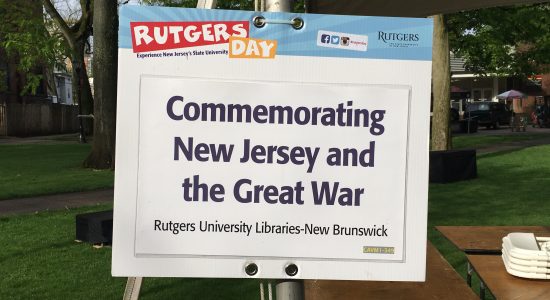
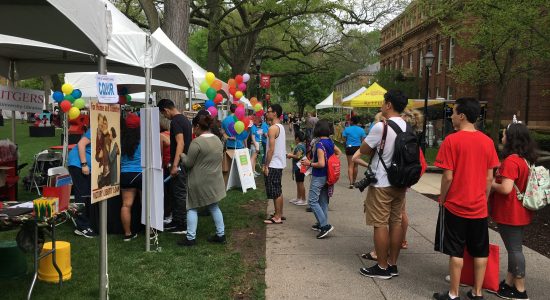
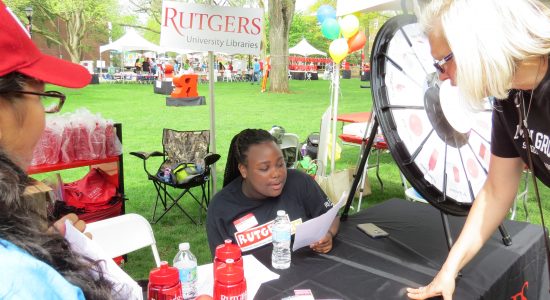
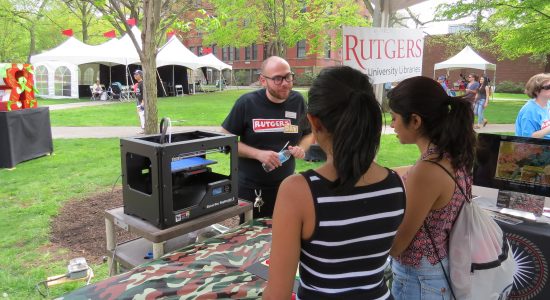
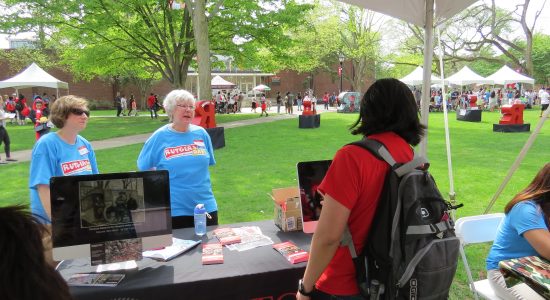
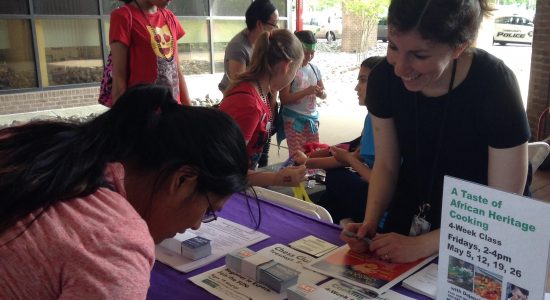
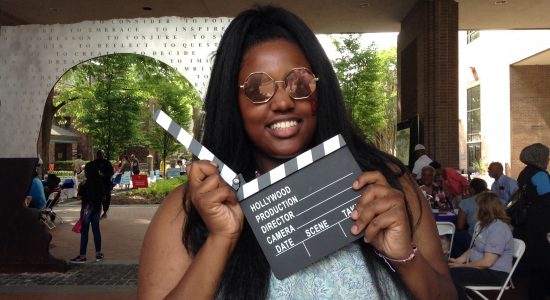
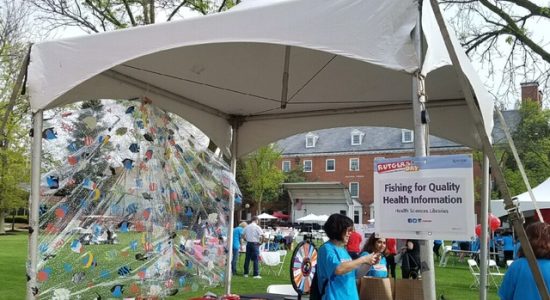
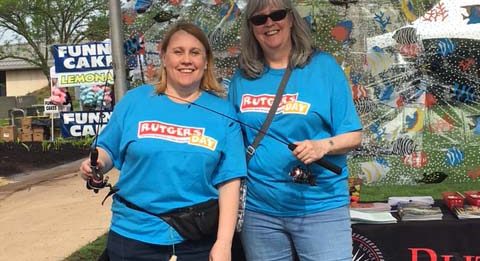
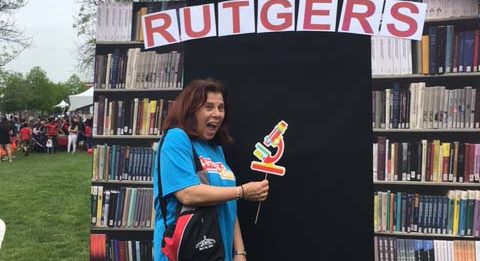
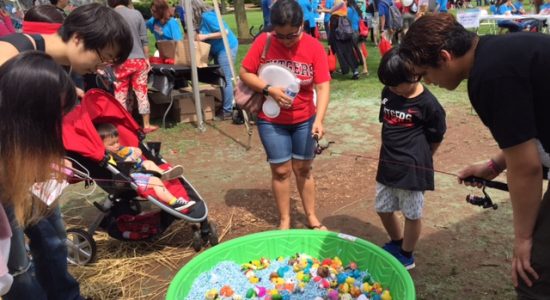
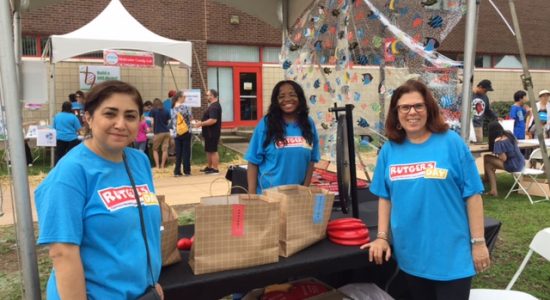
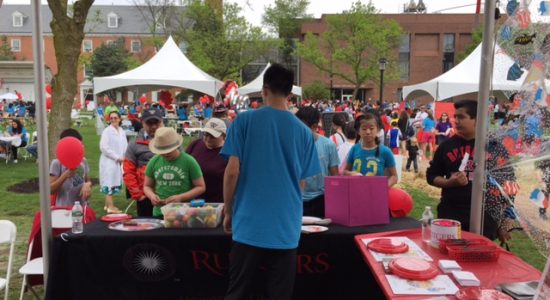
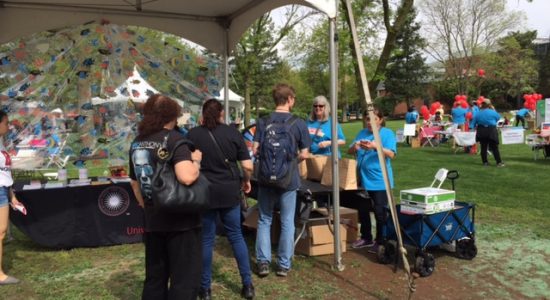
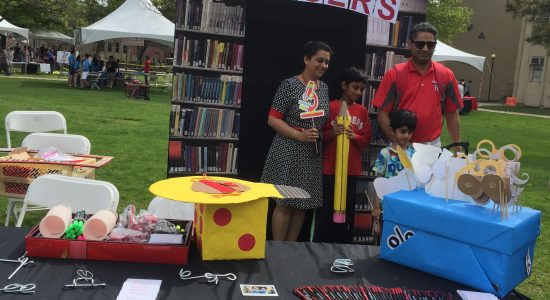
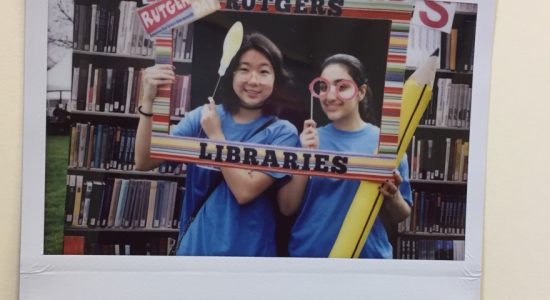
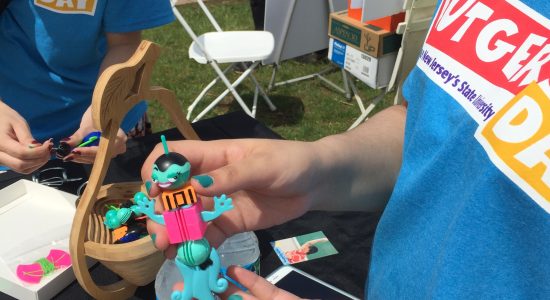
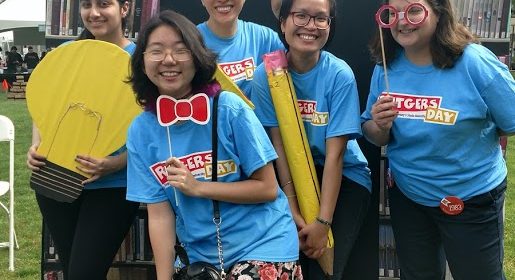
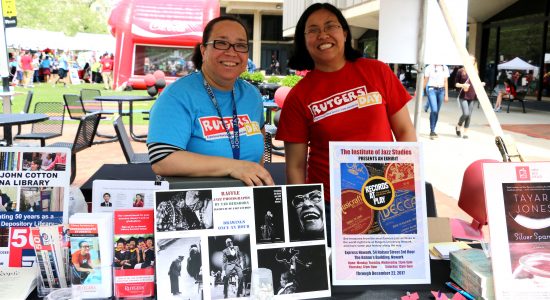
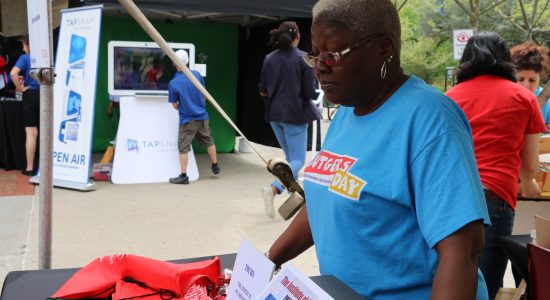
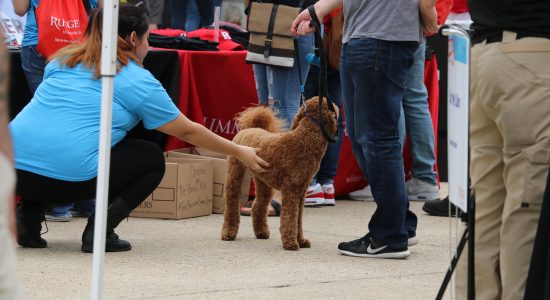
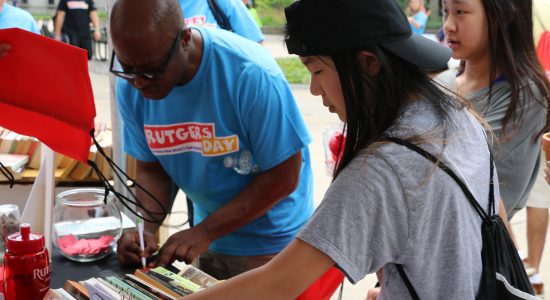
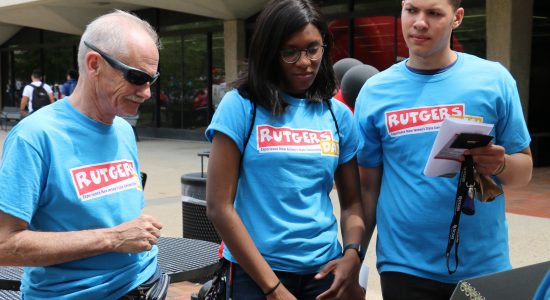
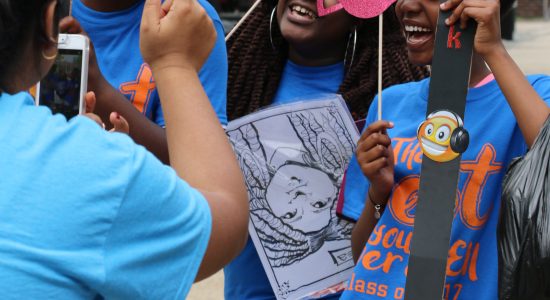
    Rutgers Day this year was a huge success thanks to the efforts of all the local committees. Each location put their own spin on the day’s events as you can see in the photos below. Whether they were strutting the red carpet in Camden, fishing for health with RBHS, learning about WWI with New Brunswick, building robots in Piscataway, or discovering jazz in Newark, our visitors were treated to spectacle, activities, and fun!

    Thank you to all the committee chairs and members who made this awesome day possible in five locations across four cities! This is one of the biggest events in which the Libraries participate and it requires a lot of hands on deck. If you didn’t participate this year, please consider volunteering to help out next time.

    If you like the photos here, there are more on our photo server (T:\CENTRAL\PHOTOS AND MEDIA\Event Photos\Rutgers Day\Rutgers Day 2017\).

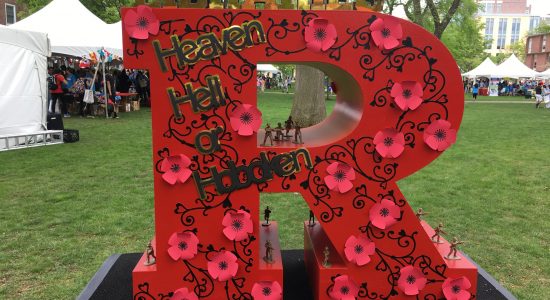
    • The Voorhees Mall location highlighted the WWI Centennial and the new SCUA exhibit.


  • Rutgers Connect Tips and Tricks

    How to create a calendar appointment from an email message


    With so many events publicized via distribution lists like RUL_Everyone and other University-wide lists, it may be difficult to keep track of meetings, webinars, training sessions, speakers, and other events you might wish to attend.  The best way to make sure you do not miss these opportunities is to add them as appointments on your Rutgers Connect calendar.

    It is very easy to create an appointment on your Rutgers Connect (OWA or Outlook) calendar without having to retype the details from the email message. We have prepared step-by-step instructions to show you how.

    If you have questions, or need assistance with Rutgers Connect, please contact IIS via email at support@rulhelp.rutgers.edu, or by phone at 848-445-5896, option 7.


    Tracey Meyer, Information Specialist, Integrated Information Systems

  • The Results of Our Budget Request for FY2018

    The Results of Our Budget Request for FY2018

    In recent months, we have spent a lot of time talking about organizational changes and the advantages of breaking down silos. This month, I want to discuss a shining example of what we accomplish when we work together—the outcome of our FY2018 budget request.

    As noted in the meeting minutes for cabinet on April 11, we recently received our FY18 permanent budget allocation and there is a lot of good news to share. Overall our budget is increasing, even if the increases are small. There are, of course, also some disappointments, so let’s delve into the specifics.

    Let’s start with the very good news: we received a commitment of $500,000 to purchase Elsevier backfiles. This is a major collections purchase—possibly the largest in the Libraries’ history—and it required a lot of effort from Tao Yang, Gracemary Smulewitz, Abbey DiPaolo, and others to make it happen. Having these backfiles will dramatically expand our support for the university’s academic programs and bring us in line with our Big Ten peers.

    Each year, at minimum we ask for two budget items: funds to cover inflation for subscriptions to journals and databases and funding to cover negotiated salary increases. These items are areas where we have annual contractual increases in expenses. When our expenses increase in these areas and our budget does not, we must find other places to cut. The difficult problem is that both the contractual salary increases and inflation are ongoing, so we have to cut an ongoing expense. Here, we got a mixed response.

    We finally received funding for inflation. This is good news for us and even better news for our faculty and students. As you know, the costs of journal and database subscriptions go up each year, but in previous years, we have had to accommodate these increases within our existing budget. With inflation costs covered, we won’t have to have to cut existing subscriptions in order to cover the higher ongoing costs. We have new ongoing funding to cover the higher costs for materials.

    Unfortunately, we did not get funds to cover salary increases. This means that we will have to permanently use funding from some open positions. The total number of positions that will be affected is small with most having been open for a long time. The good news is that we remain committed to supporting salary increases for the excellent faculty and staff that we have, even if we have a small reduction in the number of employees.

    Lastly, a surprise! In addition to our requests to cover expenses, we also ask for additional funding to cover new services in the libraries. We limit these requests to items where the campus administrations have indicated support. This year we asked for funding for archives in Dana Libraries. Initially, we were disappointed to learn that our funding request was denied. However, we just received a revised budget from Rutgers University-Newark and they have decided to fund a full-time archivist and the renovations necessary to create an archive space. In addition, they are providing $100,000 to purchase new furniture for Dana Library

    This reversal is the result of the work of Consuella Askew and many of the faculty and staff in Newark in developing strong local relationships and an understanding of local needs, as well as their conscientious and creative use of earlier funds. The RU-N administration is committed to building an archive in Newark. Consuella recognized the need and was able to make a case for archives being in the library rather than in a separate unit. The resources that will come to Dana to create an archive will relieve some of the pressure that we have across the university for stewarding this important content. However, in order to benefit, all of the units with special collections must work together to create infrastructure that supports the broader system. I expect that this will be one of the priorities that come from our planning this year.

    Our initial budget request was deliberately targeted on items that would bring a demonstrable improvement or impact to our constituents. And as we continue to shift our priorities and strategies toward addressing the unique local needs of our libraries, it becomes more important than ever for us to find ways to work together to build common, reusable infrastructure that has noticeable benefits for our campuses.


  • Quick Takes on Events and News — May 2017

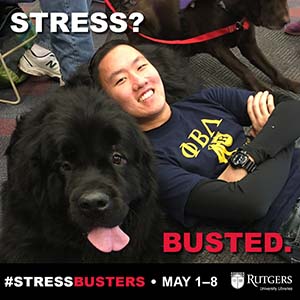
    StressbustersThe New Brunswick Libraries announced their schedule of #Stressbusters events for the spring exam period. Highlights include a photo booth at the Math/Physics Library, button making at the Art Library, and pet therapy sessions at Alexander, Douglass, Kilmer, and LSM.


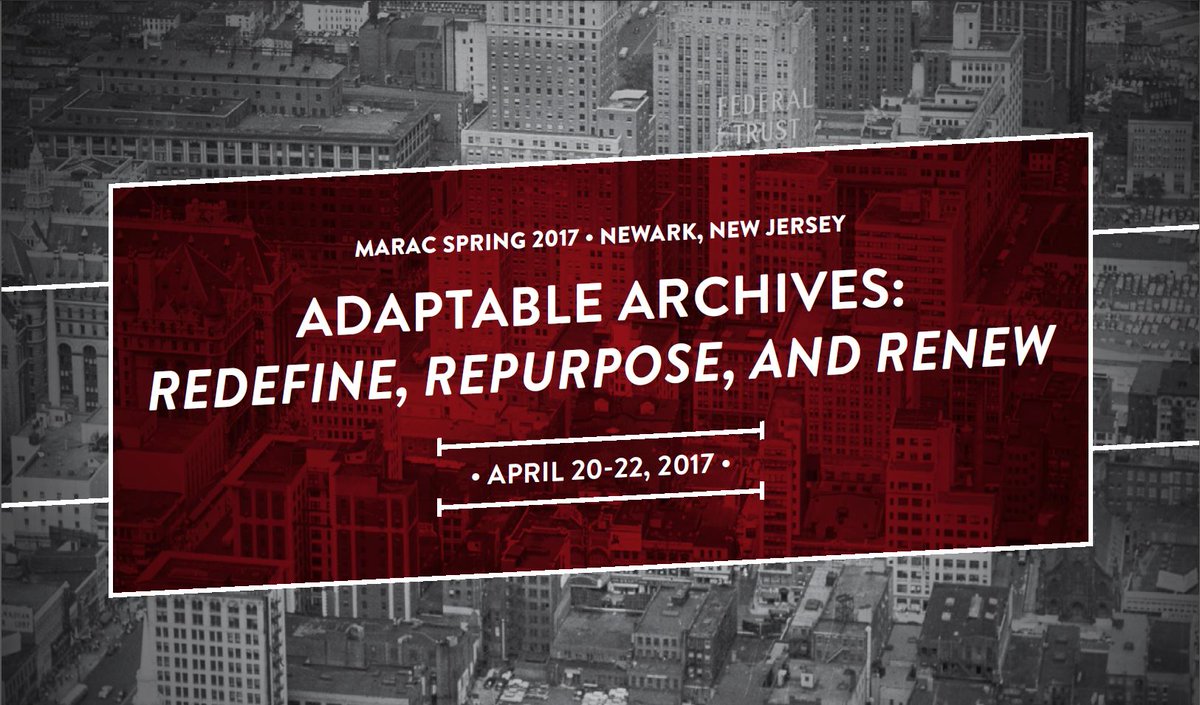
    MARAC Spring 2017 was held April 20–22 in Newark.

    Don’t despair if you happened to miss out on the recent Mid Atlantic Regional Archives Conference in Newark, as Tara Maharjan put together a comprehensive Storify of the event (titled Adaptable Archives: Redefine, Repurpose, and Renew) that’s the next best thing to having been there in person.


    Several new exhibits opened across the Libraries this past month:

    At the Art Library, a display of undergraduate student work from the Environmental Planning Studio of the Department of Landscape Architecture will be on view through May 31. Students in the studio were challenged to create a master plan for the Bergen County park system, and the exhibit communicates their creative solutions and work through large-scale posters.

    There's a Run in My Tights

    At Paul Robeson Library, There’s a Run in My Tights: Classic Comic Book Covers from the Golden Age and Beyond is on display through May 4. This display, which opened in advance of the 2017 Camden Comic Con, highlights superheroes such as Bat Girl, Aquaman, Luke Cage and the X-Men, as well as villains like Cat Woman and misunderstood monsters like Werewolf By Night.

    A group exhibition of works by students in the Women, Gender, and Creativity House of Douglass Residential College is on display now at Douglass Library. Students in this community explore topics of gender, sexuality, identity, creativity, perception, and visual communication of women in the arts. The exhibition highlights the self-portraits, sculptures, video performances, and written works produced by the student artists during the course of the academic year. It closes on May 1, so be sure to check this one out while you can.


    Finally, many new resources were announced in April:

    • The Andrew Hill Collection at the Institute of Jazz Studies contains the papers, music, and audiovisual recordings of acclaimed pianist, composer, bandleader, and educator Andrew Hill (1931–2007). The collection was processed as part of the 2016 Jazz Archives Fellows residency.
    • Attitude Check - Independent voices
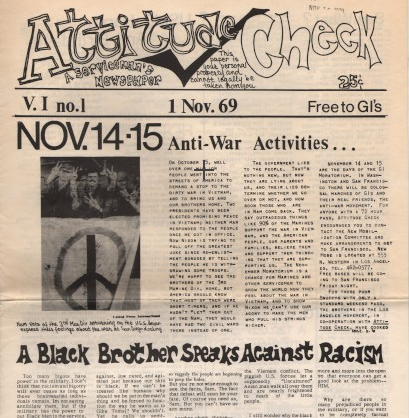
      Attitude Check (vol. 1 no. 1, 1969) via Independent Voices.

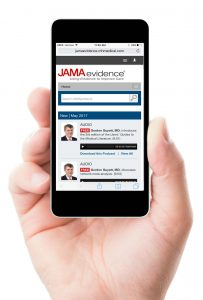
      JAMAevidence provides guides to the systematic consideration of validity, importance, and applicability of problems and outcomes in health care. It consists of three textbooks, user tools, and forms useful to the critical appraisal process. See more in our deep dive.

    • Academic Video Online Premium provides access to over 50,000 videos from reputable producers such as BBC and PBS, mostly on the subjects of social sciences, American history/American studies, music and performing arts, science and engineering, and health sciences.
    • Independent Voices is a full-text database of alternative press periodicals published in the U.S. in the second half of the 20th century. It includes publications like Aegis (1978-87), Death Ship Times (Fat Albert’s) (1972-74), The Feminist Voice (1971-72), Meatball (1969-71), Off Our Backs (1970-76), The People’s Voice (1980-1983), San Francisco Good Times (1969-72), Up from the Bottom (1971-74), Where It’s At (1968-70), the Yardbird Reader (1972-76), and Zeitgeist (1965-69), among dozens of others.

    Save

  • The Numbers Are in! Rutgers Giving Day Final Report

    Back in November, we reported on the preliminary Rutgers Giving Day results and the news was good. Now the final numbers from the Rutgers Foundation are in, and we are proud to say that the news is even better!
    Our initial goal was to roughly double our number of donors from the inaugural Rutgers Giving Day and reach 50 donors this year, but we wound up seeing an outpouring of support that greatly exceeded expectations—thanks in no small part to your support.

    According to the final reports, the Libraries raised a total of $16,544.22 with gifts from 172 donors—a 647% increase in the number of donors and an 829% increase in the total amount of funds raised over the previous year. These numbers include the early give phase, the day-of-phase, and the challenge money leaderboard.

    The leaderboard was used to determine how $80,000 in challenge money would be awarded across the university ($20,000 each for Rutgers–Camden, Rutgers–Newark, Rutgers–New Brunswick, and RBHS). A unit’s standing on the leaderboard was based on the number of individual donors for that unit during the day-of phase compared to the total number of donors for its “parent institution.” So, in other words, if there were 100 gifts total to Rutgers–Camden and Robeson Library received 10 gifts, it would receive a bonus 10% of the $20,000 in challenge money, or $2,000. Here’s how the leaderboard numbers broke down:

    Unit Total distinct donors Total dollars Percentage of “parent institution” leaderboard donors Challenge money awarded (of $20,000)
    Robeson Library 9 $170.00 1.66% $331.49
    Dana Library 19 $1,433.08 2.61% $521.26
    Institute of Jazz Studies 2 $65.00 0.27% $54.87
    New Brunswick Libraries 95 $11,609.99 3.21% $641.46
    RBHS Libraries 6 $300.00 0.78% $156.05

    As you can see, we have much to be proud of. Many thanks to everyone who went out of their way to set up a donation station, make support sheets available to their patrons, or give a gift of their own to support the Libraries. Our tagline for this year’s campaign was “We can do great things together,” and you’ve all made it abundantly clear that there is real meaning behind those words. Thank you!

  • Quick Takes on Events and News — April 2017

    Rutgers University Libraries are cosponsoring two high-profile events in New Brunswick this month:

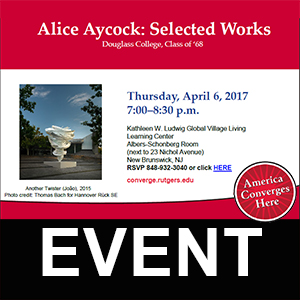
    Alice Aycock: Selected Works
    Douglass Dean’s Colloquia: Conversations

    In partnership with Jacquelyn Litt, dean of Douglass Residential College, the Libraries are delighted to welcome Rutgers alumna Alice Aycock to the Douglass Dean’s Colloquia: Conversations with Extraordinary Women on April 6, 7 – 8:30 p.m. at the Kathleen W. Ludwig Global Village Living Learning Center. RSVP here.

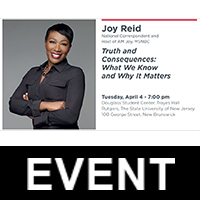
    Joy Reid
    “Truth and Consequences: What We Know and Why It Matters”
    Senator Wynona Lipman Chair in Women’s Political Leadership

    The Libraries are proud to partner with the Center for American Women and Politics and others to welcome Joy Reid, national correspondent and host of AM Joy on MSNBC to Rutgers University-New Brunswick on April 4 at 7 p.m. at the Douglass Student Center. RSVP is required. See website for details.


    Two WWI-themed exhibits opened last month:

    Camden, World War I & the New York Shipbuilding Corporation at Robeson Library
    This exhibit relates the history of the New York Shipbuilding Corporation (or New York Ship for short), an American shipbuilding company that operated from 1899 to 1968, ultimately completing more than 500 vessels for the United States Navy, the United States Merchant Marine, the United States Coast Guard, and other maritime concerns.

    “Heaven, Hell, or Hoboken!”: New Jersey in the Great War at SCUA in Alexander Library
    This exhibit focuses on the individual experiences of these Jersey doughboys and servicewomen who bravely went “Over There,” and the families and neighbors who remained behind, “Over Here.” The exhibit includes loans of 29th “Blue and Gray” Division artifacts and souvenirs from the National Guard Militia Museum of New Jersey, wartime medical supplies from the Johnson & Johnson Archives, and postcards from the Special Collections of the George F. Smith Library of the Health Sciences at Rutgers Biomedical and Health Sciences.


    Journal of the Rutgers University Libraries – Vol 68(2) now available

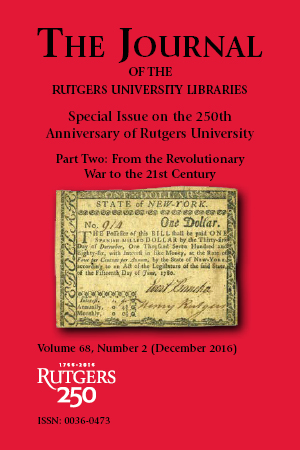
    The second part of the Journal of the Rutgers University Libraries’ special issue on the 250th anniversary of Rutgers University is now available. Entitled “From the Revolutionary War to the 21st Century,” this issue completes the discussion of Rutgers’ early history begun in “The Life and Times of Henry Rutgers” and turns its focus to the present day. David Fowler contributes the second and third installations of “Benevolent Patriot: The Life and Times of Henry Rutgers,” the most comprehensive biographical investigation of the university’s namesake to date. Additional articles explore the early history of Livingston College and the history of the Rutgers University Police Department from its roots as a parking authority to its current status as a professional law enforcement agency.


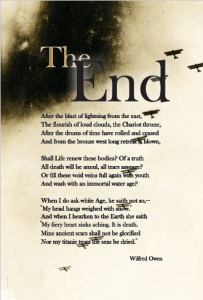
    WWI Poetry Reading – April 18

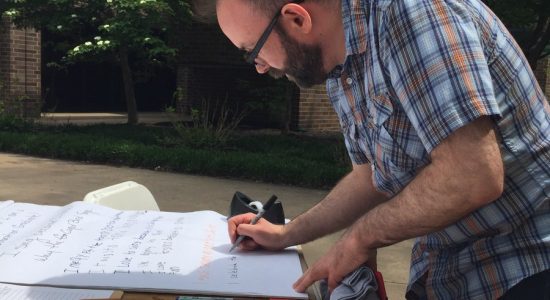
    Mary Ann Koruth designed beautiful broadsides like this for the exhibit.

    Michael Joseph is planning a WWI poetry reading event for April 18 to complement the themes and poetry included in the “Heaven, Hell, or Hoboken!”. If you are interested in attending or participating in the event, please check in with Michael.

    Save

    Save

    Save

    Save

  • Crash Courses in bioPreprint and GrantForward

    The worlds of scholarly grants and publication are changing rapidly in response to new technology and shifts in funding. Fortunately, the Libraries have resources to help scholars meet the demands of these new landscapes. This month, Smith Library’s Roberta Fitzpatrick Bronson offers a crash course on two services that are particularly timely and useful for researchers/scholars. Follow the links below for the who/what/where/why/how of using bioPreprints and GrantForward.


    bioPreprints

    The NIH recently announced that it will now accept (and encourage) researchers to include preprints in applications for funding:

    “The NIH encourages investigators to use interim research products, such as preprints, to speed the dissemination and enhance the rigor of their work. This notice clarifies reporting instructions to allow investigators to cite their interim research products and claim them as products of NIH funding.”

    So, we may see an uptick in interest in how to use and find preprints. bioPreprints allows users to search several preprint databases and to solicit and respond to feedback from their peers. It is focused primarily on STEM areas of study.

    More from Roberta on bioPreprints.


    GrantForward

    In the coming years, it will be more important than ever for researchers to find outside sources of funding, and it is entirely likely that competition for these funding sources will grow. GrantForward can make this process quite a bit simpler for Rutgers researchers. Traditionally,  they would have to search multiple databases to find all applicable federal, state, and local grants. GrantForward offers a leg up by simplifying this process into a single comprehensive search of more than 25,000 funding opportunities. Users can set up a user profile and request that GrantForward automatically run searches and send them results, too. Read more from Roberta on how to access and use this resource.

    More from Roberta on GrantForward.


    If you have new resources to share with our colleagues, please reach out to Jessica Pellien.

    Save

  • GrantForward offers an efficient way to find funding opportunities

    GrantForward contains information on over 25,000 funding opportunities for over $50 billion. These awards are available from federal, state, and foundation funding sources. Users of GrantForward can search this database of funding opportunities in order to retrieve information on what is available and how to apply. Individuals may create personal research profiles. Automatic searches of the funding opportunities database can also be established and run on a routine basis, with the results sent to the user via e-mail. GrantForward is based on the University of Illinois IRIS service, combined with data harvesting technology.

    Instructional videos are available on the GrantForward home page that walk users through limiting search results, sorting search results, creating users profiles, and more.

    A toolbar with the following links appears at the top of the GrantForward home page: Grants, Sponsors, Researchers, and Support. Users should hover their mouse over the link of interest and click accordingly.

    Create Account

    To create a personalized user profile, follow the steps listed below. Rutgers University users are accessing an institutional subscription of this product, which allows RU users to create individual profiles. Please note: RU users need to use a rutgers.edu e-mail address with this product.

    1.  On the GrantForward home page, click on the “Sign Up” link located in the upper right corner of the page;
    2. Enter your Rutgers University e-mail address when prompted, e.g. bob.smith@rutgers.edu;
    3. Create a password;
    4. When prompted to enter account type, select “institutional;”
    5. Click on “Create” to complete the initial process;
    6. Confirm the account via the e-mail sent to your RU e-mail address.

    Find Funding Opportunities

    Search for funding opportunities by mousing over “Grants” on the toolbar and clicking on “Search Grants.” Type relevant terms in the text box, just as you would when executing a Google search. An Advanced Search feature is available which can assist users with limiting results that appear to be too broad. User can choose from the following: any words (same as what is typed in to the text box), exact phrase, all of the words (functions like a Boolean AND – requires that all words appear, regardless or word order), and none of the words. Search filters are also available and appear on the left side of the page. They include:

    1.  Sponsor – type in terms or choose from the alphabetic list provided;
    2. Academic Category – type in terms or choose categories and subcategories from the alphabetic list;
    3. Status – Open. Continuous, or Closed. The system default is set for the first two options;
    4. Sponsor Type – Includes federal, state, or foundation; users may select any/all of the types available;
    5. Grant Type – Filter by types listed, including awards/prizes, fellowships, conference, travel, and more;
    6. Applicant Type – allows users to filter results by awards intended for specific categories of applicant.

    Users can scroll down to view search results. Each funding opportunity has four tabs: Amount, Submission Dates, Eligibility, and Submission Information. To view more detailed information about an available funding opportunity, users can click on the title. Buttons that link to application forms are also available.

    It is possible to sort and export search results. In addition, search strategies may be saved and executed in the database at specified intervals, with the results sent via e-mail.

    Research Profiles

    More about personalized researcher profiles are found under the “Researcher” link on the toolbar. Users will enter basic information (name, institution, department, etc.) in an area for basic information. They can also designate research interests and upload their CV or link to a web page containing lists of their publications.

    Learn More

    Instructional videos are available at the bottom of the home page and provide basic information on how to create a profile or execute a search.

    Save

    Save

  • What Can We Learn from Toy Story? Toward an Open and Collaborative Culture

    What Can We Learn from Toy Story? Toward an Open and Collaborative Culture

    March 29th, Cabinet had our first of three retreats designed to set priorities for [2017-2019] and action plans for 2018. The time we spent together reminded me of how important and at times challenging collaborative work is. In the face of rapid changes in higher education, the scholarly information environment, and user expectations, the kind of problem solving and innovation that comes from working together is more important than ever.

    Working together is not new for those of us working in the libraries. We have decades of experience with councils, committees, and task forces that have made libraries examples of organizational cooperation within the broader higher education community. Almost everything we do in the libraries requires expertise from multiple units.

    I have challenged myself to come up with examples of services that we provide that do not benefit from multiple perspectives and can’t think of one. Everything from designing the discovery interface to making a sign is improved when people with different ideas and points of view work together.

    Unfortunately, the same forces that make working together so important also create organizational and logistical challenges. These include the need for clarity related to decision-making; accountability and authority to assign work; group norms that enable productive work; and time. Each of these could (and may) be its own topic for The Agenda. But for today, I want to reaffirm the value of and need to work together.

    A few years ago, I went in search of examples of effective teams from outside of libraries. During that search, I read Creativity Inc.: Overcoming the Unseen Forces that Stand in the Way of True Inspiration by Ed Catmull and Amy Wallace. Ed Catmull is (among other things) the cofounder of Pixar Animation Studios. In the book, he describes how teams worked together to create Oscar-winning movies like the Toy Story series and Up.

    When I began reading the book, I thought that there would be little that libraries could learn from an animation studio. As I read, I saw many parallels between the unseen forces that the folks at Pixar faced and what we face as an organization. I realized that the similarities made perfect sense—providing information resources and support for faculty and students in a time of such rapid change require true inspiration.

    Toy Story happened to come out at a period in my life where I was following Disney animation. It was interesting to hear the messy, non-linear process that went into developing the movie. When I watched Toy Story and other animated films, I assumed that they began with a script and added animation and voices. They don’t. They start with an idea (a loosely define goal) and the details of the story emerge through a collaborative development process.

    Catmull’s idea for a script seems to map well to the libraries’ goal for a project or the purpose of an initiative. The book describes the approach that Pixar used to move from an idea to a complex and convincing story. What I liked about the book was that he didn’t just describe ‘what they did good’ at Pixar. He talked in depth about serious challenges and how the group worked together to produce consistently excellent results. It was shocking to me that the didn’t start a project knowing what the outcome would be.

    He talked a lot about the importance of sharing expertise, valuing perspectives, and still making progress. He believes that the ability for groups to have open, honest discussions ultimately results in the best outcomes. At one point in the book, Catmull states that “The healthiest organizations are made up of departments whose agendas differ but whose goals are interdependent. If one agenda wins, we all lose.”

    In this time of rapid change, many of the carefully designed formal communication structures and group processes that we have developed over the years may be a thing of the past. But we still need to work together. We live in a time of multiple competing priorities, continuous reexamination of goals against our intentions, and digging deep to ensure that we understand the evolving information and education landscape. We need the kind of creativity and problem-solving that can only happen with active exploration of problems from multiple perspectives.

    Our challenge will be to develop an organizational culture that supports the way we need to function in this environment. We can’t feel like we are always stumbling into the future. We have to appreciate that we are learning to do new work that lacks established models and best-practices and to value openly exploring issues and group problem-solving. Catmull’s approach “is to accept that we can’t understand every facet of a complex environment and to focus, instead, on techniques to deal with combining different viewpoints. If we start with the attitude that different viewpoints are additive rather than competitive, we become more effective because our ideas or decisions are honed and tempered by that discourse.”

    We addressed some difficult issues at the Cabinet retreat. We had multiple perspectives at the table and we had some difficult but productive discussions. We didn’t make any decisions, but I think we made progress toward developing a clearer understanding of the issues that we are facing. We will be looking for your insight as we make decisions regarding priorities. These may be small steps towards creating a more open and collaborative culture, but I think we are heading in the right direction.


    Save