Category: Department

  • Teaching and Learning: LibGuides

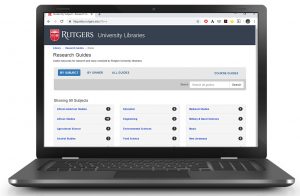
    Did you know that our LibGuides have been viewed over 240,000 times just in the fall 2019 semester? Keeping our LibGuides free of errors and up to date is an important part of our services at Rutgers University Libraries. With the help of some awesome student workers, we’ve made great progress in recent months to reduce the number of broken links from more than 4,600 to fewer than 1,800. As we move into the spring semester, now is a good time for LibGuide authors to make sure that your content is current and accurate! Taking the time to do some “spring cleaning” will make ongoing maintenance easier.

    Here are some suggestions to prepare your LibGuides for the start of the semester:

    LibGuide authors who have questions about LibGuides may contact Maria Breger at maria.breger@rutgers.edu

  • Library Reading Lists Created within Multiple LMSs

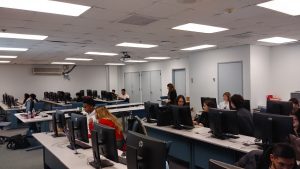
    Students in electronic classroomThe Ex Libris Leganto Reading List Management tool is now available for use in Blackboard, Canvas, and Sakai. The reading list tool can help instructors create impactful resource lists using library content and integrate a variety of materials into one, easy-to-use list. The tool is accessible from inside the learning management system, so students can access the reading list, along with other course resources. Instructors and librarians can collaboratively create and process reading lists for students from all types of resources.

    Because the reading lists tool is integrated in Blackboard, Canvas, and Sakai, access to materials is easy and streamlined for students.

    Here are some of the key features:

    • Instructors can create reading lists from books, articles, streaming media, and other resources held by the Libraries or add their own content. Reading lists integrate with the saved favorites feature on QuickSearch and lists can be used for multiple sections of a course or copied into new courses.
    • Reading lists can be divided into sections, by chronology, or by citation type.
    • Instructors and students can view information about each citation such as availability and status.
    • Instructors can collaborate with peers to enrich reading lists and keep them up to date.
    • Instructors can access usage data about their reading lists.

    The tool is now available in the external tools sections of the learning management systems. For more information, or if you have any questions, contact me at maria.breger@rutgers.edu.

  • Reservations Accepted for One Button Studio

    One button studio at Alexander Library
    The One Button Studio at Alexander Library.

    Students, faculty, and staff now can reserve the One Button Studio in Alexander Library to create high-quality digital video recordings in a studio setting. The studio does not require users to have prior video production knowledge. Lighting, audio, and video configurations have been pre-set for ease of use.  With support and funding from Ben Sifuentes-Jáuregui, vice chancellor for Undergraduate Academic Affairs at Rutgers University–New Brunswick, this space will enable students to present their research as a high-quality video, an alternative to the more static conventions of the poster or long-form essay. The room is set up for one to three people to create a video with only a FAT formatted flash drive. It really is as simple as 1-2-3-4: insert your USB drive into the dock, press the large silver button to begin recording, press the button to stop recording, and remove your USB drive to deactivate the studio camera and lights. Shared User Services provided support to list the One Button Studio on the Group Study Rooms web page and link to a user guide/reservation page. Reserve the room online and visit the Circulation Desk in Alexander Library to check out the key with your Rutgers ID card.

  • Robert Moevs Audio Archive

    Robert Moevs at piano
    Robert Moevs (1920–2007) served on the faculty of Rutgers University from 1964 to 1991, and as chair of the Music Department from 1974 to 1981.

    The Robert Moevs Audio Archive now features publicly available streaming clips of all of its 193 pieces and is one of the libraries’ featured Digital Collections. The audio was digitized from reel-to-reel and cassette tapes to preserve the material while making it more easily accessible. The metadata is visible to anyone, and the complete audio can be accessed from computers in Douglass Library.

    An accomplished composer and beloved teacher, Robert Moevs (1920–2007) served on the faculty of Rutgers University from 1964 to 1991, and as chair of the Music Department from 1974 to 1981. Accolades include fellowships, residencies, and awards from the American Academy in Rome, Guggenheim, the National Institute of Arts and Sciences, ASCAP, and the Stockhausen International Prize in Composition. The creator of a rich body of orchestral, chamber, vocal, and instrumental music, Moevs’s work received major performances by George Szell and the Cleveland Orchestra, Erich Leinsdorf and the Boston Symphony, and Leonard Bernstein and Symphony of the Air. He was also a revered professor whose students include Richard Wilson at Vassar College and Judith Shatin at the University of Virginia.

    The Robert Moevs Audio Archive ensures the preservation of the composer’s music and the style he represents for generations to come. Modernist composers sought to challenge and expand the horizons of the listener; as teachers, they significantly impacted the scholarly study of music. Digitization and metadata creation was possible thanks to the Moevs endowment, which generously supports conferences and concerts on 20th-century modernist music.

    I’d like to thank everyone who worked on this project, especially Kalaivani Ananthan, Marty Barnett, Isaiah Beard, Thomas Izbicki, Lila Kwederis, Rachael Lansang, Rhonda Marker, Sam McDonald, Janice Pilch, Geoffrey Wood, and Esther Zenzele.

  • Library Tutorials Made Available in Multiple LMSs

    The NimblyWise courses on Communication, Critical Thinking, and Information Literacy are now available for use in Blackboard, Canvas, and Sakai.  A new Credo Reference course – Health Science – is in the process of being set up and soon will be available in Canvas.  As an easy way to reference these courses while conveying the wide range of library instruction topics, we refer to them as Library Tutorials.

    The Library Tutorials are for use by Rutgers University instructors on all campuses.  Librarians will be interested to know that the lessons are mapped to instructional standards including the AAC&U (American Association of Colleges and Universities) VALUE Rubrics (Information Literacy and others), the ACRL Framework for Information Literacy, and the ACRL Visual Literacy Standards.

    Here are some of the ways that instructors may use these lessons:

    • In a first-year or transition class, to help students appreciate the overall importance of information literacy, strong research and evaluation, and communication skills.
    • As a flipped classroom, assigning students to view a video or work through a lesson before they attend a specialized library instruction class.
    • At various points during a scaffolded assignment, courses are broken down into individual lessons so that they may be deployed to students at various points in their process.
    • At the beginning of a class project, the multimedia lessons cover topics essential to success in research, from choosing a topic to evaluating sources.
    • At point of need, the lessons and videos provide just-in-time learning resources that are available to students throughout the semester.

    Instructors who have questions about the Library Tutorials content, or who want to supplement the online instruction with in-person or other modes of library instruction, are being directed to contact their library liaison.  Library liaisons can also help instructors select the most relevant lessons for their course.

    Librarian liaisons who need information about the tutorials may contact Maria Breger at maria.breger@rutgers.edu.

  • Making Room for (Space) Improvement

    Last month the Central unit completed a series of relocation projects within Alexander Library and the Libraries Technical Services Building in order to maximize the efficient use of space and prepare for future improvement projects.

    We were pleased to welcome Communications, Shared User Services and Digital Projects to the administrative offices on the third floor at Alexander: Matt Badessa, Rhonda Marker, Marty Barnett, and Isaiah Beard are now located at 169 College Avenue, and may be reached at their same telephone lines. Business Operations, including Abigail DiPaolo, Amanda Presler and Jodi Costeira, have relocated within the administrative suite, so their address and telephone lines will not change.

    We are also excited to welcome Gracemary Smulewitz to the SCC space on the fourth floor of Alexander. Web services librarian Amy Kimura and discovery services librarian Joseph Deodato have now relocated to TSB, near to their frequent collaborators in IIS and TAS, and can be reached at their same telephone lines at 47 Davidson Road.

    These new arrangements are partly the result of achieving certain goals and priorities for FY2019, namely, the addition of Jeffrey Carroll, our new AVP of scholarly communications and collections, who joins Rutgers on July 15. In the coming year, both Alexander Library and TSB will undergo limited renovation projects to include more collaborative space for staff and students, and to co-locate School of Communication and Information faculty in Alexander Library.

    The Libraries are accustomed to the strengths and challenges of working together across 16 buildings and three campuses, and effective workspace is always in demand. More news about ongoing space improvements will follow as we work on the functionality and use of the Technical Services Building. We look forward to the next phase of enhancements!

    Want more exciting news about spaces and places at RUL? Read about the Dana Library Transformation Project and track its progress on its dedicated blog.

  • Where in the World is SUS?

    The new SUS space on the third floor of Alexander Library.

    Shared User Services has moved, both spatially and virtually. In June, virtually all (pun intended) of the SUS employees relocated. Our email addresses and phone numbers are the same, but for those who value a spatial identifier, here is where you can find us:

    Technical Services Building
    • Amy Kimura
    • Cathy Pecoraro
    • Elizabeth York
    • Joseph Deodato
    • Michele Best

    Alexander Library 3rd floor (Library Admin suite)
    • Isaiah Beard
    • Marty Barnett
    • NJEDL project staff and students
    • Rhonda Marker

    Alexander Library 4th floor
    • Laura Costello

    SUS has also moved their staff resources information to the “new” staff resources page. You can find information about a variety of digital projects, discovery services, electronic resources, virtual reference, and Web Improvement Team at https://staff.libraries.rutgers.edu/sus. We will soon be expanding our Teaching and Learning section here, too. We’re excited to be the first unit to officially move over to this new site.

  • Dana Library Transformation Project

    3D render of building
    An architectural rendering of the exterior addition.

    These are exciting times for Dana Library. Last month, we began a series of renovations that will address the highest priorities for improving the library that were identified through the Rutgers University–Newark strategic planning process several years ago. The changes will make the library more user friendly in numerous ways, including finally fitting out the third floor, which has been shell space since the construction of that wing decades ago.

    The results of this project involve enhancements that will create new study and learning spaces for students, facilitate ease of access to the collections and departments within, and the construction of a new center to support teaching faculty:

    Construction fence around building
    Construction on the library began in March and is scheduled to be completed in April 2020.
    • An addition to the library is being built to better facilitate the flow of traffic to all five floors of the building. A larger stairwell and high-capacity, high-speed elevator are being installed to allow for large groups of people to move up and down the stairwell with ease, as well as shorten elevator wait time and accommodate more people.
    • The centerpiece of this project is the construction that will take place on the third floor. This includes additional quiet study space for our students and the new P3 Collaboratory for Pedagogy, Professional Development, and Publicly-Engaged Scholarship at Rutgers University–Newark. This open study space will provide an additional 60+ seats, along with numerous conveniently located outlets for devices.
    • This construction will also allow us to enhance our archives spaces and services. A space will be created to house the new Dana Archives departments providing our local university archives collections with a formal home. The Dana Archives and IJS will share the newly created reading room that will accommodate a larger number of classes and independent researchers at one time.
    • This is topped off by an iconic architectural feature on the plaza side of the building that will serve as a beacon to campus visitors, students, faculty, and staff alike.

    Construction has already begun and is scheduled to be completed in April 2020. I’ll plan to deliver updates from time to time in the Agenda, but if you want the latest information as it’s available, head over to the Dana Library Transformation Project blog, where we post updates at least once a week after our meetings (and don’t forget to sign up for the email list to receive alerts when new posts are published).

    Thank you for following along on this journey toward the future of Dana Library!

  • Celebrating National Citizen Science Day

    woman giving presentation
    Mary Catherine Lundquist, Director of the COPSA Institute for Alzheimer’s Disease and Related Disorders, presents at the Piscataway Public Library.

    April 13 marked National Citizen Science Day for 2019, and all libraries in the country were encouraged to host events to celebrate the day. Because this year’s theme of Citizen Science Day was related to Alzheimer’s disease and target audiences were the general public, the Library of Science and Medicine worked with Piscataway Public Library to co-host an event titled Myths and Realities of Alzheimer’s Disease. The event was sponsored by the COPSA Institute for Alzheimer’s Disease and Related Disorders at Rutgers. This joint event by LSM, RBHS, and the local public library was well received by our audiences. Below are some remarks from the speaker, public library librarian, and a manager at one RBHS center:

    • Thank you Connie for inviting me. This was a wonderful group! Your efforts were so much appreciated by everyone. Please keep us in mind for future events.
    • Thank you so much for including Piscataway Public Library in Rutgers’ National Citizen Science Day. I am especially appreciative as the topic of Alzheimer’s is near and dear to my heart. I am truly grateful to have partnered with you on this event and I look forward to creating more programs with you.
    • Librarians are some of my very favorite people! And I’ve received a lot of help from our RU librarians in the past, so I’m happy to help out in return.
  • Libraries before the Age of Google

    floppy disks
    This collection of storage disks is among the many items on display in the “Libraries before the Age of Google” exhibit.

    Librarians constantly embrace change.  Some of the tools or equipment used in the library were considered state-of-the-art innovations and were indispensable in the daily work of librarians.  Have you heard of a library fines calculator? Have you seen the thermal paper that recorded the search results of online searching done by the librarians? Have you ever wondered why you would find some punch cards in the back of library books?  As librarians are retiring, we have begun collecting the vintage items in their offices, and are inviting the librarians to tell us the stories behind each item. Now you can see these items in a display of Libraries Before the Age of Google in the conference room at the Library of Science and Medicine.  The contents of the display are also available as pictures in a digital gallery.

    If you would like to share any interesting vintage library items, please contact Mei Ling Lo (mlo@rutgers.edu) or Tara Maharjan (tara.maharjan@rutgers.edu).  We will be honored to share your stories with the rest of the world.

    I hope that you will enjoy seeing the items and learning the stories behind them!