Category: Department

  • Government Documents Repatriation Project

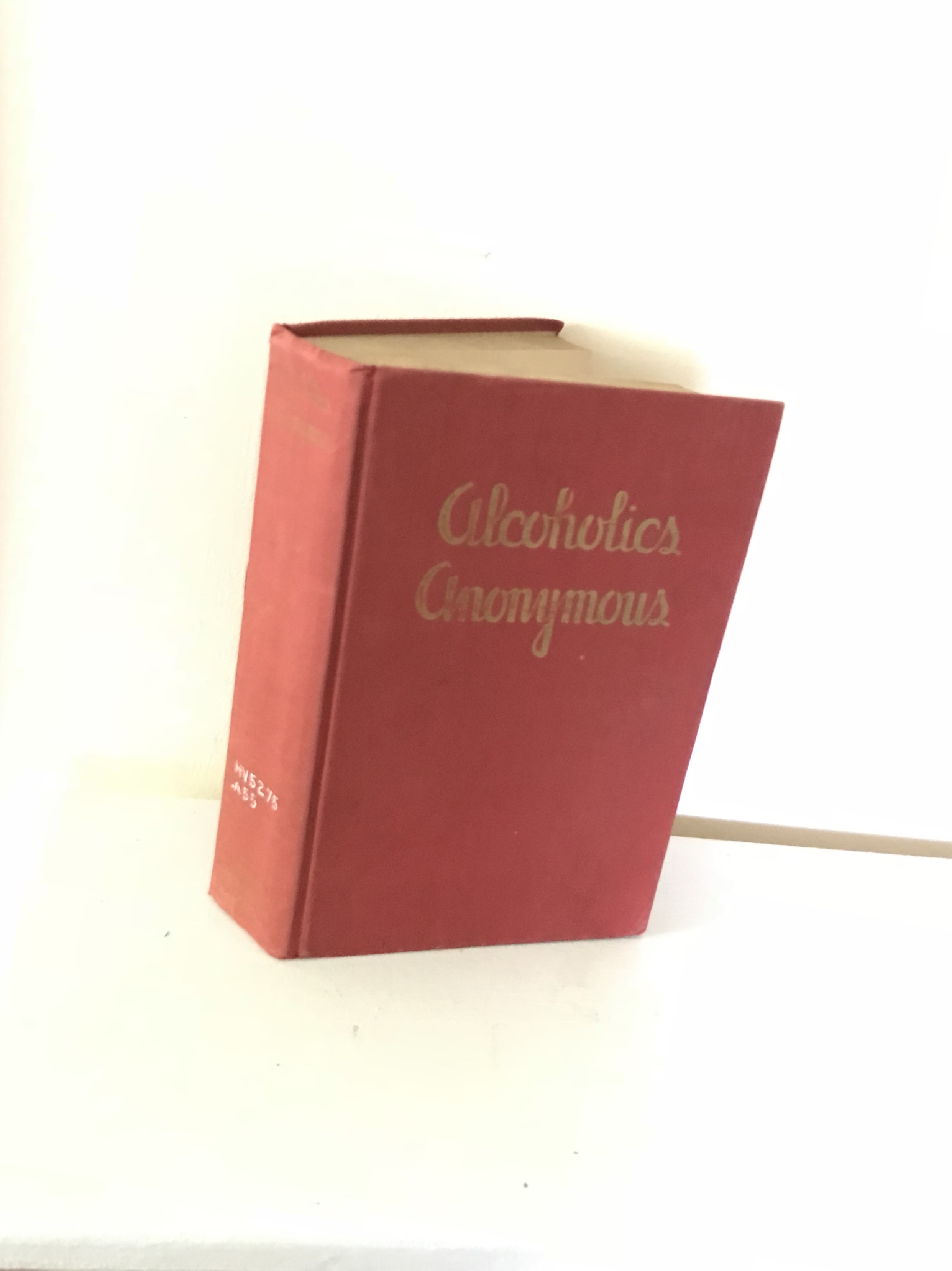
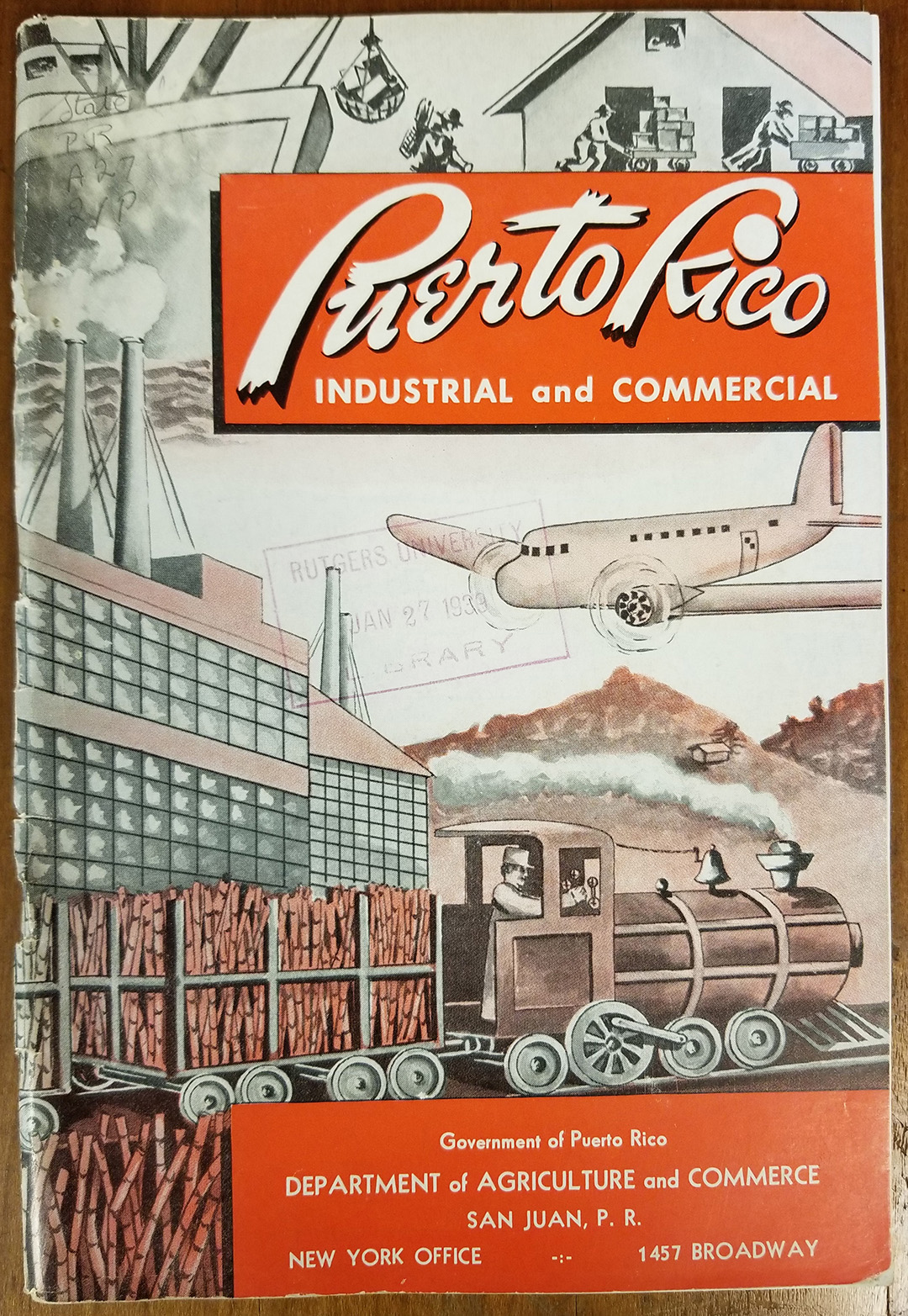
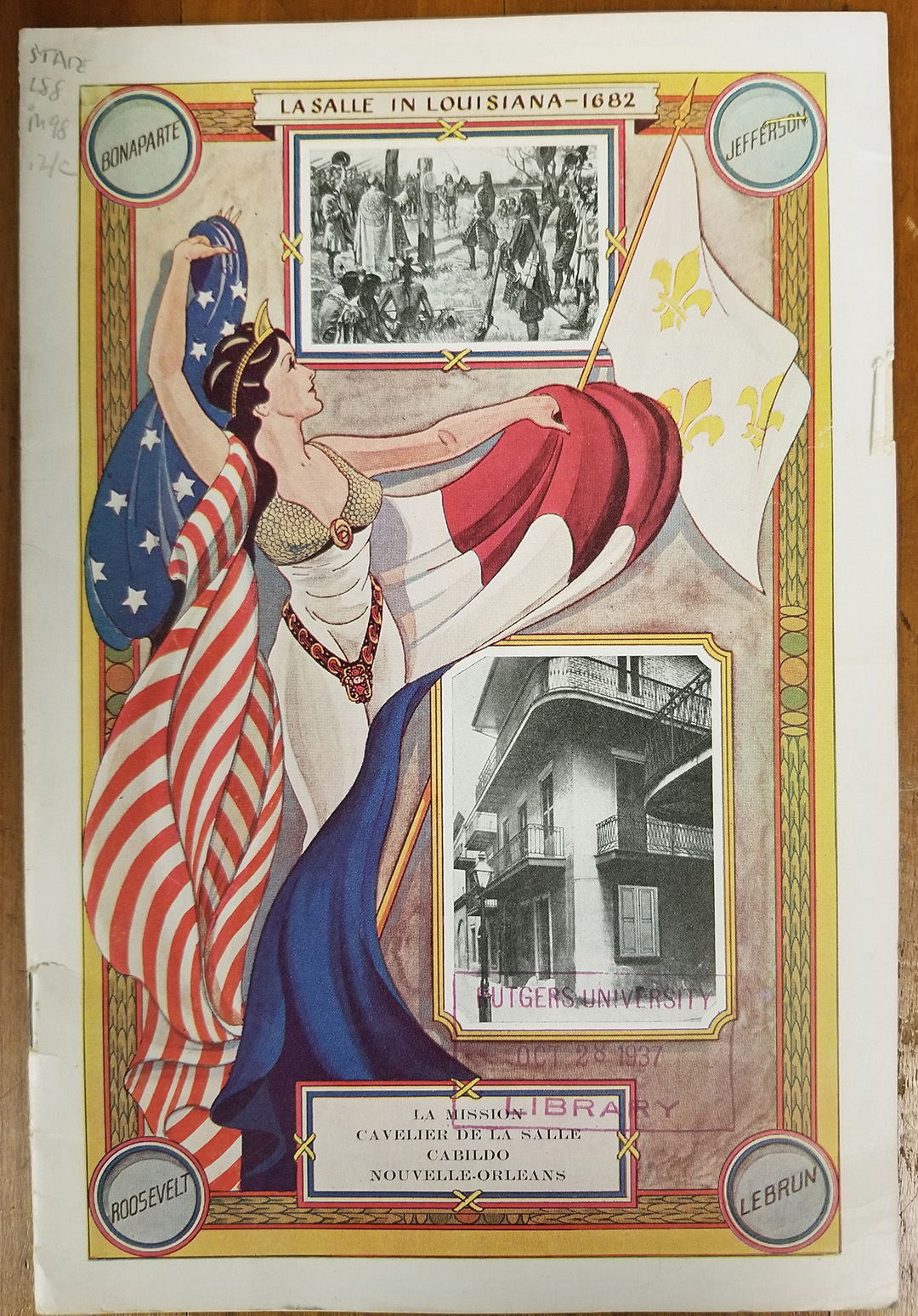
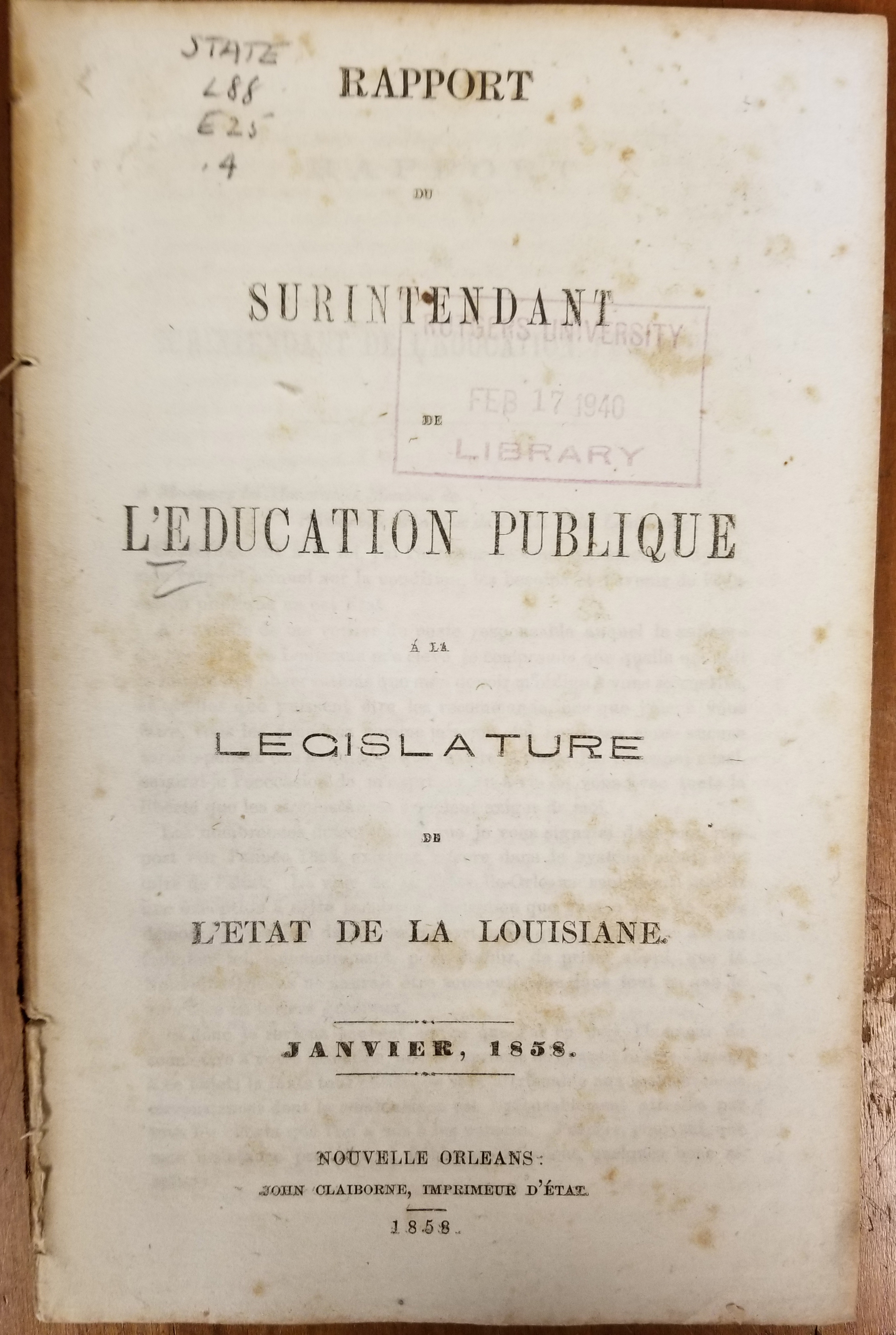
    Puerto Rican government documentAlexander Library’s collection of uncatalogued government documents from Puerto Rico has found a new home… in Puerto Rico. Along with a small amount of related material from the equivalent collection at the Library of Science & Medicine, similar groups of documents from states like Louisiana and Hawaii have also been offered to libraries in those states. I conceived of this repatriation project in response to the natural disasters that have affected libraries across the United States and its territories.

    Jane Canfield, a librarian at Puerto Rico’s Biblioteca Encarnación Valdés at Pontificia Universidad Católica, was the first name that came to mind when the project was considered. Canfield has given multiple presentations to the government documents community about the damages and conditions in Puerto Rico following Hurricane Maria in 2017. Her response to the initial contact about the project was enthusiastic, and she ultimately accepted all of the items that were offered. Ranging from a 1905 edition of the Register of Porto Rico to a 1990 Bibliografia fitopatologica Puertorriquena, 1878-1989, 178 individual items were sent.

    Louisiana government documentHurricane Katrina, the floods of 2016, and other storms made Louisiana the first candidate in the continental United States to be considered for the project. A list of material from Louisiana and New Orleans was shared with a librarian at the University of New Orleans (UNO), who in turn shared it with other Louisiana libraries. While not all of the documents found a new home, more than 78% of the publications were requested and subsequently sent to UNO for dissemination. The University of New Orleans, the University of Louisiana at Lafayette, Loyola University, Nicholls State University, and the State Library of Louisiana were all able to fill gaps in their collections.

    A final response from the library at the University of Hawaii in Manoa, which suffered major damage in a 2004 flood, is forthcoming. Additional states, including Texas and Florida, may be considered when time permits.

    Although the original source of the documents may be lost to history, many were likely obtained via mailing lists or gift and exchange programs. Returning them to their points of origin is a small effort to assist in the rebuilding of collections damaged by hurricanes, floods, and other disasters.

    Special thanks go to Tom Glynn for reviewing the historical material before it was offered; to Elena Schneider, and others in the Shipping & Receiving department, who investigated shipping options, packed the boxes, and delivered the materials to the university department that handles US postal mail; and to Dee Magnoni, who graciously agreed to fund the shipping costs.

    The forgotten collection of state documents is a little less forgotten. The hope is that we run out of disasters before we run out of documents.

  • QuickSearch marketing materials for fall campaign

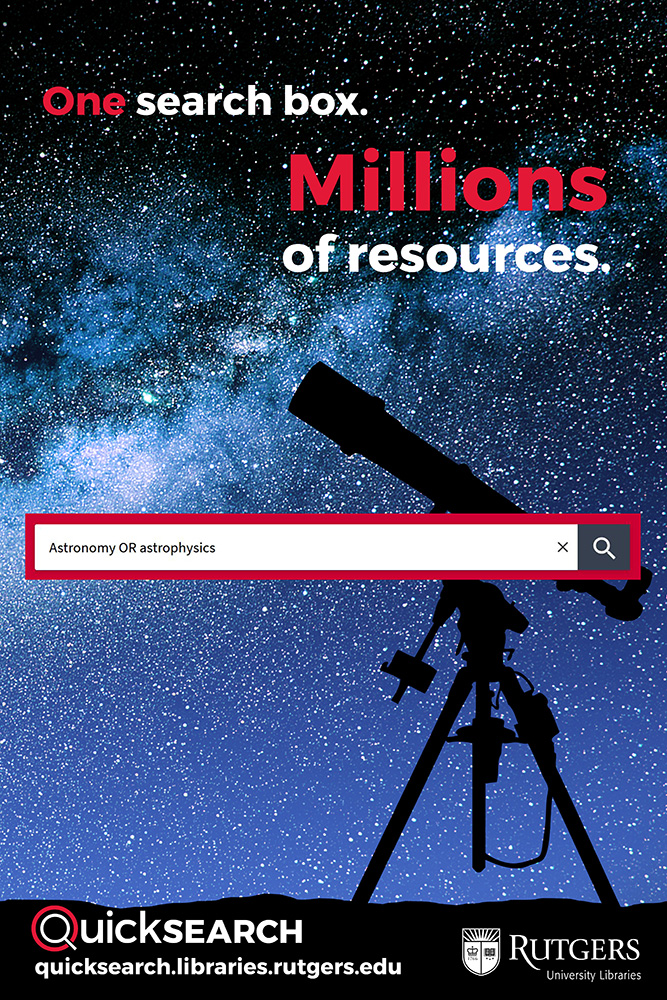
    For Fall 2018, we will have new marketing materials for QuickSearch. While our summer campaign was designed to raise awareness of the name of our search engine, this campaign will highlight the breadth of our collection and what QuickSearch enables users to do.

    The tag line is One Search Box, Millions of Resources. The images suggest the breadth of our resources and how they can be used for discovery and research. The search box terms also incorporate a soft approach to introducing advanced search technique using Boolean terms.

    This campaign is designed to be flexible — it will be used on posters, postcards, bookmarks, and social media. It also allows us to tailor the messaging to different disciplines. In addition to these materials, we will also have some new promotional items to distribute — pens, highlighters, and maybe even flashlights.

    Download copies of the finished materials as PDFs.

    We also hope you will send along additional suggestions for imagery that we should use for different disciplines. Matt Badessa and Mary Ann Koruth have contributed to this design and we owe a big thank you to Sarah Jewell for recommending the astronomy/universe image which helped us to conceptualize this campaign.

    Please send suggestions and comments to Jessica Pellien.

  • Introducing the Rutgers Health Sciences Libraries on Social Media

    Facebook page
    The @RutgersHSL Facebook page.

    Matthew Bridgeman and Sarah Jewell are leading the teams behind the new Facebook and Instagram pages representing the Rutgers Health Sciences Libraries. Matthew Bridgeman, an information and education librarian at Robert Wood Johnson, has both professional and personal experiences with Instagram. He began the Instagram account at Middlesex County College. In two years he grew the library’s presence and even had a post shared by the New York Public Library. The NYPL also has a great article on creating Instagram posts to be engaging called 20 Ways to Make People Fall in Love with your Instagram. He sees Instagram as a way to begin a discussion with students and faculty with creative photography.

    Sarah Jewell, an information and education librarian at the George F. Smith Library of the Health Sciences, primarily has experience doing social media for organizations outside the professional sphere. In the past, she has volunteered to do Facebook, Instagram, and WordPress work with writing and meditation-based organizations. “I see social media as a great vehicle for expressing passion about important work,” Sarah says. “When you express enthusiasm through this media, it is contagious, and it gets others excited about the work to be done.”

    Instagram
    The @RutgersHSL Instagram page.

    Some resources that Sarah uses to guide her social media efforts include the Rutgers Libraries Social Media Resources (which she helped create) and Young and Rossmann’s book titled Using Social Media to Build Library Communities. As the Rutgers Health Sciences Libraries staff is just getting the Facebook and Instagram accounts off the ground, she has been reaching out to her regular contacts to spread the word about the new way to communicate with the libraries. She was thrilled to see the Rutgers School of Public Health post on both Facebook and Instagram a promotion of the Rutgers Health Sciences Libraries pages.

    The primary goals of the Facebook and Instagram accounts are to promote library resources, services, and events to the Rutgers University community and to engage with the students, faculty, and staff of the seven schools under RBHS. The new Rutgers Health Sciences Libraries Facebook and Instagram accounts are off to a running start. The accounts’ plans are to keep a constant scheduled flow of content celebrating the students, faculty, and libraries from the schools of Rutgers Biomedical and Health Sciences. If you have not already followed them, connect with them now as they begin this adventure.

    Matthew Bridgeman and Sarah Jewell

  • Glenn Sandberg Retiring After 30 Years

    ILL staff
    Glenn with ILL staffers Mary Belasco (l.) and Lilly Miller (r.) in 2005.

    Glenn Sandberg will retire on August 1, 2018, after 30 years of service to the university. His last day in the office is June 1.

    Glenn’s career at the Libraries began in 1988, when he was hired as the supervisor of the Media Department within the Laurie Music Library (now part of the Douglass Library) in New Brunswick. He became the supervisor of Access Services at the Library of Science and Medicine in Piscataway in 1999. Among his many contributions to the Libraries, Glenn has the distinction of having created “The place to go, when you need to know!”—a slogan for the Libraries he developed as a member of the Marketing/PR Team.

    promo photo
    Glenn poses for a promotional photo in 2007.

    Since 2004, Glenn has been the supervisor of Interlibrary Loan Services. Beginning his tenure in ILL at about the same time as the start of the E-ZBorrow service, Glenn is proud of the role he has played in bolstering Rutgers’ standing within the E-ZBorrow community. After Rutgers joined the CIC (now BTAA) in 2013, Glenn contributed to the adoption of the UBorrow service. In the last three years, Glenn has helped ensure the successful implementation of several major improvements to ILL services, including removal of copyright fees charged to ILL users, adoption of ReprintsDesk as an alternative article delivery service, and further integration into the Get it @ R service. Glenn also contributed his knowledge of ILL services to the ongoing implementation of Alma and Primo.

    glenn with slogan
    Glenn shows off the Libraries slogan he coined in 2008.

    Glenn has deep ties with the university. He graduated from Rutgers College in 1980 with a bachelor’s degree in German and music and received his doctoral degree in German from Rutgers University in 1995. He taught in the German Department as an adjunct faculty in New Brunswick from 1994 to 1997 and worked as a manager at the Rutgers University Foundation from 2001 to 2004.

    Glenn served in the U.S. Army from 1984 to 1988 and received a certificate in Czech from the Defense Language Institute in 1985. Last, but not least, Glenn is a talented musician—he received a master’s degree in trumpet from the Julliard School in 1983.

    Please join us in thanking Glenn for his decades-long service to the Libraries and wishing him all the best in his new adventure!

  • Quick Takes on Events and News – May 2018

    Honoring a Great-Great Legacy
    Chantel Harris at the ceremony honoring her great-great grandmother, Ethel Hedgeman Lyle, who founded the Alpha Kappa Alpha sorority.
    Chantel Harris (l.) at the ceremony honoring her great-great grandmother, Ethel Hedgeman Lyle, who founded the Alpha Kappa Alpha sorority.

    Chantel Harris, library associate and student coordinator at the Paul Robeson Library, Rutgers–Camden, was a special guest at the ceremonial dedication and unveiling of a school bench at Charles Sumner High School in St. Louis, Missouri, in honor of her great-great-grandmother, Ethel Hedgeman Lyle. Lyle was the originator and founder of Alpha Kappa Alpha Sorority, Incorporated (AKA). Chantel received a proclamation from the mayor of St. Louis, as well as a resolution from the Board of Aldermen naming April 5, 2018 “Ethel Hedgeman Lyle Day.”

    Lyle graduated from Sumner High School in 1904 and founded AKA in 1908 at Howard University. Chantel is pictured with the sorority’s international president, Dr. Dorothy Buckhanan Wilson, central regional director Kathy Walker-Steele, and members of the Board of Directors.

    The USPS is considering an Ethel Hedgeman Lyle 2019-2020 USPS Forever Postage Stamp.

    You can read more here.

    Jazz Ambassadors Premieres on PBS May 4 
    men at acropolis
    IJS founder Marshall Stearns and Quincy Jones at the Acropolis.

    A new PBS documentary featuring archival material from the Institute of Jazz Studies is slated to premiere at 10 p.m. on Friday, May 4. Here’s a quick synopsis from PBS.org:

    “The Cold War and civil rights collide in this remarkable story of music, diplomacy and race. Beginning in 1955, when America asked its greatest jazz artists to travel the world as cultural ambassadors, Louis Armstrong, Dizzy Gillespie, Duke Ellington and their racially diverse band members faced a painful dilemma: How could they represent a country that still practiced Jim Crow segregation?”

    Congratulations to Tad Hershorn, Adriana Cuervo, and all of our IJS colleagues who contributed to this project. We can’t wait to see the premiere!

    Special Collections News Roundup
    children's book
    Helene van Rossum’s new children’s book is titled “The Best Mom in the Universe.”

    Lots of great news coming out of Special Collections and University Archives lately:

    • The finding aid for the New Brunswick Music Scene Archive is now live. The collection continues to grow, and the finding aid will be updated periodically.
    • Speaking of which, the New Brunswick Music Scene Archive has a brand new Facebook page! Be sure to head over and give them a like.
    • A new finding aid is also available for the New Brunswick Vertical File in the Sinclair New Jersey collection. This collection of primarily printed material documents a vast array of aspects of New Brunswick history, mostly between 1935 and 1960 and arranged by subject. Special thanks go to School of Communication & Information graduate student Louise Lobello for her work on the finding aid.
    • The latest children’s picture book by public services and outreach archivist Helene van Rossum has just been published. Written in Dutch, it’s titled The Best Mom in the Universe. Check it out (along with her other children’s books) over on Helene’s blog.
    Busting Students’ Stress
    flyer
    New Stressbusters flyer templates are available from the Communications Department.

    It’s finals week, which of course means that #STRESSBUSTERS are back at libraries across Rutgers–New Brunswick. But Rutgers–Camden is joining in the fun this semester, too, with the first-ever pet therapy session at Paul Robeson Library slated for Friday, May 4. Good luck to our colleagues at Robeson! Hopefully this is the beginning of a long and successful tradition.

    Are you planning your own stress-relieving finals activities? The Communications Department has created new flyer templates to help promote your events. Check them out here: T:\CENTRAL\Templates\Signage Templates\stressbusters\word templates


  • Simplifying Routine Digital Projects

    poster
    The Digital Projects Template Working Group presented an interim report poster at the last State of the Libraries.

    Digital projects have been an integral part of the services that Rutgers University Libraries have provided over the past decade. Making some of our resources available online adds to the discovery and accessibility of those holdings, providing a valuable service to our patrons. The digitization of physical items also provides an additional layer of preservation, protecting the original item from additional wear, while ensuring the content lives on.

    In light of this, the Digital Projects Template Working Group was formed in September 2017 to streamline and simplify the process for individual units, empowering them with the knowledge to embark on their own routine digital projects as their resources permit.  We’ve worked hard during this time to document what types of items and collections make up a potential “routine” project; provide technical information on file formats and digitization standards; offer up minimum required descriptive metadata; and provide recommendations on rights statements. With this simplification documentation, we hope that there will be less of a bottleneck for routine digitization projects.

    While the Digital Projects Template Working Group has completed their work, we realize that libraries also need guidance about the process to begin carrying out this work. Cabinet determined that a group will develop a workflow for routine digital projects.  That effort is already under discussion.

    Central units will provide support for these routine digital projects in the areas of digital preservation assessment, accessibility, and search portal and website creation. Shared User Services can consult with directors and project managers to answer questions about whether a digital project is routine, or perhaps more complex. We encourage everyone to visit our website and review the recommended guidelines for digital projects.

  • Founded in 1766: An Exhibit and an Event Celebrating the Archives of the Medical Society of New Jersey

    • Bob Vietrogoski receives a plaque commemorating the donation from MSNJ president Christopher Gribbin.

    In 2016, Rutgers University was not the only major New Jersey institution celebrating its 250th anniversary. On July 23, 1766, at Duff’s Tavern in New Brunswick, a group of physicians met and formed the Medical Society of New Jersey (MSNJ). The MSNJ is America’s oldest state medical society, and indeed, is America’s oldest professional society.

    The George F. Smith Library of the Health Sciences, Rutgers University Libraries, is pleased to announce that the MSNJ has donated its 20th- and early 21st-century records to Smith Library’s Special Collections in the History of Medicine. The donation consists of 52 archival boxes of records, and 85 volumes of MSNJ Board of Trustees minutes from 1931 to 2005. These valuable historical records will be preserved and made available to MSNJ administrators, members, and officers; Rutgers University students and faculty; historians of medicine; and local and family historians.

    Special Collections already holds a nearly complete run of MSNJ journal publications from 1848 to 2005, as well as substantial archival holdings of its constituent Bergen, Burlington, Essex, Hudson, Monmouth, Passaic, and Warren County Medical Societies, and the records of the Medical Society of New Jersey Alliance (formerly the Women’s Auxiliary).

    An exhibit of materials from this accession was curated by Bob Vietrogoski, with the help of Nancy Blankenhorn, medical student Stephanie Yuen, and Tim Corlis and his preservation team. On display are a selection of artifacts related to the 200th and 250th anniversaries of the MSNJ; Board of Trustees minutes discussing physicians joining the military during World War II, plans for a New Jersey medical school in 1952, the introduction of the polio vaccine in 1955, and the discouragement of smoking in hospitals in 1967; photographs from two issues of New Jersey Medicine on the history of New Jersey’s pioneering women physicians; and meeting posters from the Essex County Medical Society from 1954 to 1979 concerning the perpetual topic of “New Legislation Affecting the Medical Profession.”

    The exhibit opening on April 19 was attended by MSNJ administrators including its past, present, and future presidents; members of the Medical History Society of New Jersey; Rutgers New Jersey Medical School faculty and students; and Rutgers librarians. At this reception, MSNJ President Christopher Gribbin presented Special Collections librarian Bob Vietrogoski with a plaque commemorating the MSNJ archival donation. This donation brings together Rutgers and the MSNJ, two New Jersey institutions founded in 1766.

  • Sharing Rare Books and Artists’ Books with the Blind and Visually Impaired

    On March 14, we hosted a visit from the Joseph Kohn Training Center for the Blind (130 Livingston Avenue, New Brunswick). The idea for the visit originated in a phone conversation initiated by Amo Musharraf, an instructor at the center, with Christie Lutz, the New Jersey regional studies librarian and head of public services. Since Amo expressed a desire for his class, consisting of 15 blind and visually impaired students and three sighted aids, to look at some of our rare books, Christie put him in touch with me. I remembered meeting Amo several years ago when he dropped by to look at copies of early editions of Paradise Lost, and I was delighted to be back in touch and to be included in what promised to be an adventure. In my 26 years at Rutgers, I had never addressed a class comprised of blind and visually impaired students. Seeing feels indispensable to me, and a lot of the pleasure I find in rare books and art derives from the visual. The question was, what would a blind class find pleasurable in our collection?

    Without sight, other senses—like touch and sound—would be more important. We started by gathering volumes that had interesting tactile elements, for example, a brace of bindings in various animal skins—goatskin, calf, sheep, and vellum. Snakeskin, cowhide, and velvet were suggestions from our rare book cataloger, Silvana Notarmaso, who agreed to speak about them. Not only is Silvana knowledgeable about these materials, but it seemed to us that the class might benefit from hearing different voices.

    It also seemed a good idea to refine the touch experience. Feeling the difference between rough sheep and smooth goatskin would be a nice introduction, because everyone would easily know what they were supposed to be feeling; but touching and analyzing differently finished grains of goatskin would be more challenging and rewarding. After a second or two, students were engrossed in contrasting the milky smoothness of a flat grain finish (which feels like the arm of a leather couch or car seat) with the grooves of a straight grain finish (resembling the surface of a vinyl record, only slightly softer). We told them that, like writers, bookmakers made an effort to appeal to all of the senses. Bookbinders wanted their customers to luxuriate in the sense of touch, and that historical bookbinding was a complex trade.

    To these books we added 15th-century wooden bindings, and 19th-century cloth. As well as helping the students to connect sensually with the objects, we wanted to engage them intellectually by sharing some of their history and contents. So, we talked a little bit about binding history, pointing out that the earliest printed books were bound simply in durable wooden boards with tough leather spines, or workaday vellum, and we shared notes about the texts themselves and our personal experiences with them. For example, we explained that the small octavo book with wooden boards (knuckles rapping for emphasis) and the remnants of a scallop shell clasp was a 1480 edition of the first cookbook ever printed (the same book the great French chef Julia Childs had handled when she came to Rutgers to accept her honorary doctorate); and we noted that the grooved finish of the clothbound first edition of Cooper’s The Song of Hiawatha represents the trade binder’s attempt to manufacture for a wider audience an imitation of the surface of the elegant bespoke goatskin bindings handmade for the wealthy collectors.

    This turn of the discussion led into an aside about book collecting in which we explained that historically, books finely-bound with gold decorations were prestige items acquired by the wealthy and powerful, generally male—a cultural phenomenon that went back to the great Renaissance libraries of collectors like the Medicis—and that the spines of these books were often lavishly tooled in gold because they would be showcased glittering on private library shelves. The boards were less often or more humbly adorned because the books would seldom be taken down and hardly ever read. One of the older students, an African American female whose eyes were almost completely white, commented insightfully, “Oh, that’s why there were so many power paintings of men holding books.”

    Other students made similarly perceptive comments, so that the class often resembled an extended conversation or symposium. And we were constantly reminded of the students’ range of experience: when Silvana talked about the snakeskin and crude cowhide bindings used on Argentine publications, and mentioned that SC/UA holds three copies of Martin Fierro (el Gaucho), a 2,316-line epic poem by the Argentine writer José Hernández, all bound in cowhide, one of the Latina students spoke briefly about Fierro’s popularity.

    We also selected books of unusual proportions and mass. Bodies respond in different ways to books of different size. The highlight of a group of large, tall, and chunky books was a massive early volume of musical notation hand-drawn on parchment sheets measuring approximately three feet in height bound in stiff, well-wormed leather over wooden boards decorated with metal bosses and the remnants of heavy, metal clasps. The students were taken by the sweep of the vellum pages, by the harsh, lumpy, pitted surface of the boards, and by the immense weight of the thing. They congregated around this book, and continually asked questions about it, such as what causes worming (one of the students was surprised and delighted to learn that bookworms were an actual thing), what purpose the clasps served, how such an immense book was used and by whom, and whether anyone who could read the musical notation ever came by. The commanding dimensions of the volume made it the focal point or perceptual center of the class, and I pointed out the obvious fact that it would have been so in a church or monastery. The auratic power of the book, realized in this particular volume, was a cultural reality, one we forget when we examine texts on computer screens.

    And we talked about how the authority of the book could be subverted for artistic purpose in a discussion of artists’ books. Most of the students had never heard of artists’ books and some expressed reservations about the concept (they laughed when I pointed out that they were frowning), but they regarded the objects with a great deal of intense interest and open-mindedness.

    Recently acquired glass books by Amanda Thackray were passed around gently, almost reverently. The students showed great respect for the integrity of the object and thoughtfully considered the artist’s statement that books are bodies and she wanted her artists’ books to be held. To contrast Amanda’s weighty, artistically rounded glass, I handed them a book by Anna Pinto consisting of calligraphy on light driftwood shaped by the sea. The diverse non-traditional materials used in Suellen Glashausser’s artists’ books (margarine wrappers, aluminum foil, pieces of metal from a Sprite soda can, cigar labels, cardboard collars, brown paper bags, etc.) provoked side conversations. The students were impressed by Suellen’s ability to find the voice in virtually any material, as well as her belief that every material has something valuable to say. One of the aids intensified our sense of communing with the artist by telling us she had studied with Suellen at Montclair State University and that she had been a fabulous teacher.

    The class responded thoughtfully to Buzz Spector’s elegant single sheet work Cage. Buzz deliberately printed Cage on a handmade paper that crackles when handled. (I passed the sheet around for the students to hear.) His intention seems to have been for beholders of the work to have an acoustic experience to facilitate a connection with John Cage’s famously silent 4’ 33”.

    The most popular artists’ book was Marcia Wilson’s provocative All the Men I Ever Slept With, a coffin-shaped wooden book with a metal screw through the bottom that serves as a binding agent. The joke of the screw poking through the images and becoming a three-dimensional extension of the imagery is immediately comprehensible (the students were eager to feel the book and explain the joke to each other as they passed it around). Having already handled driftwood and glass books, they grasped the idea that form is information, and laughed at the fresh ingenuity of the object; they responded to my reading a page of the author/artist’s text by pointing out that while it was amusing, it was also wistful—that the book wasn’t the cartoon (my word) it first appeared to be.

    Naturally, since Paradise Lost inspired Amo to arrange the visit, we featured it in a selection of iconic texts including our editio princeps of Homer (1488), the second folio of Shakespeare (1634), and The King James Bible (1611). It seemed important to say that according to legend, the great Homer was also blind, and we sought to emphasize its importance by processing around the room with the book in hand inviting everyone to touch the cover. The students asked us to open the book so they could feel the pages as well.

    The class was intensely responsive, engaging, inquisitive, and astute. Their visit to our library was clearly important to them, as it was to us, and midway through, the director of the program, Dell Bashar, drove over to be a part of it. One of the students, Dave, who was graduating at the end of the week, caught him up on some of what he’d missed, summarizing a good 40 minutes of our talk in about five minutes. Another student wanted us to discuss a book we had overlooked (a multivolume edition of Lawrence Sterne’s Tristram Shandy housed in a slipcase with a false front that resembled the curved spines of three substantial volumes side-by-side). She had found the object on her own and she couldn’t work out by touch what it could be. She wanted to know.

    Although we had arranged in advance to take photographs, the demands of the class made it impossible. The photographs here were taken by Amo and by one of his aids. When Amo texted the photos he jokingly captioned one of me looking surprised: “Your reaction when three vans full of blind people showed up looking for you :)”

    Amo deemed the visit successful, calling it “history,” and Dell said he would like to bring future classes to see our collections.

  • WebEx Conferencing Available to All

    WebEx Conferencing Available to All

    webex screenshotThere are so many ways for video/web conferencing. Why should I use WebEx?

    Who: All RUL faculty and staff can initiate a WebEx call to hold virtual meetings.

    What: A WebEx meeting is an online meeting that allows you to meet and collaborate with other people. Attendees will need a computer, a laptop, a mobile device with Internet access, or even just a telephone to participate. For a full experience, use a webcam with a microphone. Videoconference endpoints can also be added to the meeting.

    When: WebEx is recommended for use in formal, informal, or even ad hoc situations involving small groups or large audiences, with both Rutgers employees and external participants.

    Where: WebEx can be used from any location with Internet, cellular, or telephone connectivity. Most of the RUL conference rooms are equipped to participate. When conference rooms are booked or when you would like to conference from your own office, or from the road, WebEx is the solution for you.

    Why: WebEx is ideal for easily connecting with internal or external participants, since invitees do not have to have any special software beyond a browser. To compliment your collaboration, Through WebEx, you can share your screen and present applications, share lectures, or co-edit documents. Meetings can be recorded through the click of a button and made available later.

    How:  Request the use of one of RUL’s WebEx licenses by emailing webex@rulhelp.rutgers.edu or by creating an RULHelp ticket. Bookroom also integrates the option to request a WebEx meeting when scheduling your conference location. Your local UCS, or IIS staff will then create your WebEx meeting, supply you with directions for using WebEx, and provide you with email invitations to send out to your participants. We can also provide a hands-on training session for anyone in RUL.

    Once the WebEx meeting is set up, you can join from any browser using a link found in the meeting invitation. In seconds, your browser will automatically download a plugin or app (if needed) after which you will be directly connected to the meeting. When joining by phone, call the WebEx number and enter the meeting number supplied in the meeting invitation.

    Want to know more? Contact IIS or your local UCSs. We are here to help!

    Save

    Save

  • This Month in the Agenda: March 2000

    This month we take a look at the Agenda in the aughts. Is it just me, or does 2000 not feel like almost two decades ago?

    Survey Says
    The Agenda 22, no. 4 (March 5, 2000)
    Reader survey from the Agenda 22, no. 4 (March 5, 2000).
    Systematic Thinking

    MESSAGE FROM THE UNIVERSITY LIBRARIAN

    At the last Cabinet meeting we discussed what it means to be a system. This might seem needless for an organization that has described itself as operating system-wide for many years, but it’s always useful to step back and take stock. This is especially important as we continue to develop our long-range plan, the Digital Library Initiative (DLI), and seek ways to be more effective.

    Typically, a system shares the same vision, philosophy, and goals. It shares common infrastructure and operates with system-wide policies and practices. There is considerable interdependency among units and a heightened need for communication. There’s also a shift to systems thinking, where operations are examined across the system rather than just locally. This helps to improve and expand the entire system’s capabilities to be effective. Each unit is each other unit’s best customer and best supporter. Information and expertise are shared readily, so that everyone in the organization benefits.

    As we implement the DLI we need to ensure that we are all working towards system-wide goals, using our resources effectively, thinking strategically, collaborating across units, and present a consistent, quality presence to our users. Communication and open discussion will be important as we gain new understandings in what it means to sustain and enhance a system in the digital environment.

    The Agenda 22, no. 5 (March 19, 2000)

    Getting Medieval

    The Medieval Studies Program and the Friends of the
    Rutgers University Libraries invite you to

    The Dedication of the
    Ernest McDonnell
    Medieval Culture Seminar Room
    in Alexander Library

    featuring a talk by
    Barbara Newman,
    Professor of English and Religion
    at Northwestern University

    “You Can’t Speak To Men
    Until You’ve Spoken With God:
    Medieval Women And The Church”

    Thursday, March 23, 2000
    4:00–6:00 p.m.
    Alexander Library

    The Agenda 22, no. 4 (March 5, 2000)