Category: Department

  • Libraries Add 300 Volumes to the JSTOR Print Archive

    I recently read in the email newsletter of the Center for Research Libraries about the JSTOR Print Archive at CRL. This is a fallback collection of the print volumes whose digital surrogates are available in the JSTOR database. Surprisingly, the archive at CRL is only 57% complete; they are seeking donations. So I contacted CRL with the list of the bound periodical titles that we are withdrawing from Alexander Library (to gain collections space) because they have become superfluous because of our secure access to digital backfiles in JSTOR for these titles. It turned out that CRL was interested in parts (mostly all) of our holdings for 23 titles. We counted the approximate number of volumes (our electronic holdings information was incomplete) and it amounted to roughly 300 volumes. CRL provided us with a UPS code for mailing of the volumes. With the help of a few librarian colleagues, I pulled the volumes from the bound periodicals section and packed them into 26 boxes. The shipping department applied the shipping labels, and the Libraries’ contribution to the JSTOR Print Archive is on its way to Chicago.

  • Self-Appraisal Reminder

    In anticipation of an announcement from University Human Resources regarding the performance appraisal program, managers and supervisors should remind URA-AFT staff to begin a self-appraisal. Managers and supervisors should also ensure that employees have a self-appraisal form that includes an accurate list of key duties. Self-appraisals should be completed and returned to supervisors by April 5, 2019. Managers and supervisors must complete performance evaluations and notify eligible employees of the appraisal by April 30, 2019.

    Here is a link to the UHR webpage to assist you in the appraisal process.

    If you have any questions, please do not hesitate to contact Libraries HR.

  • Introducing Libraries HR’s New Website

    I’m happy to announce the launch of Libraries HR’s new staff resources website at https://apps.libraries.rutgers.edu/hr.

    The goal of this page is to be your new one-stop shop for all things related to human resources at the Libraries. It contains need-to-know information for managers, from position management to onboarding and integration; guides to tenure, benefits, and applying for research leave; and a library of useful forms and other documents including CARFs and APPs. There is also a collection of links to resources available via UHR, such as the REHS reporting portal and the university’s holiday closing schedule.

    I hope you’ll have a look and let us know what you think. And don’t forget to update your bookmarks!

  • Dana Library and Institute of Jazz Studies Host Society of American Archivists Workshops

    workshop photo
    The SAA workshops provided free training on archival basics to non-professionals who work or volunteer at institutions that cannot afford to employ professional archivists.

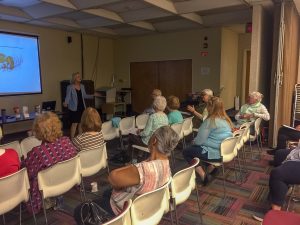
    In November and December 2018, Dana Library and the Institute of Jazz Studies hosted a series of five workshops presented by the Society of American Archivists (SAA) via SAA’s “Lone Arranger” Section. The workshops provided free training on archival basics to non-professionals who work or volunteer at institutions that cannot afford to employ professional archivists. The overall goal was to help preserve and provide access to archival collections in New Jersey, hidden due to limited access to information on professional archival practice. Similar workshops were held across the state in Atlantic City, Trenton, and Chester, including one led by the Libraries’ Tara Maharjan. Special thanks to Adriana Cuervo for arranging for refreshments and to Mark Papianni for setting up the workshop space.

  • Introducing Browzine

    Rutgers University Libraries are pleased to introduce BrowZine, a current awareness tool that allows users to find, read, and monitor the top scholarly journals in their field from almost any device.

    BrowZine improves discovery of current issues of academic journals and provides streamlined access to full-text via PC, tablet, or smartphone. It also offers useful personalization features so users can keep current with their favorite publications.

    BrowZine users can:

    • Browse thousands of top academic journals by subject, title or ISSN; review current tables of contents, and download full-text articles published since 2005
    • Follow and receive new article notifications for their favorite journals by creating a personal bookshelf
    • Save and export articles to services such as DropBox, Mendeley, RefWorks, EndNote, and Zotero

    Although it provides access to thousands of titles from major academic publishers, BrowZine does not include every journal available at Rutgers or cover issues published before 2005. It also does not include non-scholarly periodicals such as newspapers, magazines, and trade publications. Access to the Libraries’ complete periodical holdings is available via QuickSearch.

    For more information, see What is BrowZine?

  • Ninja Warrior Report

    Participants in this program, from the School of Arts and Sciences’ Students in Transition Seminar, were walked through a series of library related activities including five minutes of copyright, playing a memory game to learn about Special Collections & University Archives (SCUA), making a button to learn more about copyright and SCUA, playing a game to learn about what is available for check out at the circulation desk, how to find an article and a PDF, and more. Over 160 transfer students participated in this project and 105 assessment surveys were collected.

    From a quick analysis of the assessment spreadsheet, each activity was mentioned more than once as a positive experience. Many students enjoyed button making, copyright, finding a PDF, and the unique items found in SCUA. Many students liked the overall feel of this interactive experience.  Also, it was noted multiple times that many students’ favorite aspect of the library was the people who work there. Last but not least, many students—including the passport stamper from the STS program—expressed during the event that the library event was the best so far and many participants thanked us for the opportunity to learn while having fun.

    Should you have further questions about this event, please contact Mei-Ling Lo mlo@rutgers.edu or Megan Lotts megan.lotts@rutgers.edu.

  • Designing Storage Architectures for Digital Collections

    Digital storage meeting at the Library of CongressStoring and preserving digital content continues to be a significant expectation of libraries and cultural centers around the country. To better understand these needs, as well to see what digital archivists around the country are doing to meet this challenge, the Library of Congress holds an annual meeting called “Designing Storage Architectures for Digital Collections.” The DSA meeting brings together technical and industry experts, IT and subject matter experts, government specialists with an interest in preservation, decision-makers from a wide range of organizations with digital preservation requirements, and recognized authorities and practitioners of digital preservation. The meeting is by invitation only, and for the past two years Rutgers has been invited to take part in the conversation. The most recent meeting was held on September 17 and 18.

    The first thing glaringly clear from our discussions was the increasing need for digital storage across all of our peers. From the few terabytes of data that Rutgers Libraries store in our repository, to the dozen or so petabytes stored by the Library of Congress, our digital collections continue to grow, and the demands for storage increase. This is driven by an increasing appetite for digital data from our patrons, but is also the effect of researchers and artists having greater access to digital authoring tools. We are now in the age where smartphones and tablets already in the hands of our user base can capture images, documents, and video in stunning quality—but with a cost in terms of larger file sizes.

    To meet this challenge, storage makers continue in the short term to refine the technologies we are already familiar with. Reasonably-priced tablets and laptops are now shipping with solid state drives reaching a terabyte in capacity. Fourteen-TB traditional hard drives are now hitting the market. And for long-term backups, tape continues to rule, with 30TB tape cartridges costing about $200 each. At the institutional level, libraries are beginning to cooperate and pool resources to distribute their storage needs across multiple datacenters, for redundancy and additional capacity.

    The not-too-distant future holds some different approaches, as well. In particular, research is ongoing to move beyond hard drives and tapes, and to begin storing data at the molecular level, using polymer chains. Even DNA sequencing is showing significant promise as a long-term method for archiving and preserving data.

  • Latino New Jersey History Project

    New Jersey has a remarkably diverse, though largely understudied, Latino population.  In 2016, according to the American Community Survey, people who identify as Hispanic or Latino were estimated to number over 1.7 million making them nearly 20 percent of all New Jersey residents.  Yet we know very little about their roots. Who are the Garden State’s Latinos? What is their history? This summer, seven Rutgers undergraduates and history Ph.D. student Carie Rael worked with Lilia Fernandez, Henry Rutgers Term Chair in Latino & Caribbean Studies and History, to find out as part of the Latino New Jersey History Project.  Their goal was to research, document, and record the history of New Jersey’s diverse Latino populations. Along the way, they received important assistance on digital tools and platforms from New Brunswick Libraries personnel Stacey Carton, Jan Reinhardt, and Francesca Giannetti.

    The students used a variety of sources and methods. They gathered census data, for example, to produce maps and tables enumerating Latinos throughout the state, its counties, and its main cities and towns. Some were surprised at what they learned. While we might expect Newark, Elizabeth, and Paterson to have large Latino enclaves, few realized that New Brunswick is 56 percent Hispanic and West New York is 78 percent Hispanic (both as of 2016).  The town of Bridgeton in South Jersey has one of the largest concentrations of Mexican immigrants in the state. Census data revealed unexpected trends and unlikely settlement destinations.

    Hudson county map

    With training from Francesca Giannetti, digital humanities librarian, students learned how to create thematic maps in Social Explorer and multimedia narratives integrating images, text, and multimedia embeds in ArcGIS’s Story Maps.  They learned about theories of place and space in spatial narratives, as well as elements of data and visual literacy through the strategic exploration of Social Explorer’s data sources, spatial geometries, and visualization types. Through the students’ mapmaking efforts, they were able to trace demographic changes over time, settlement patterns, and the migration stories of individuals and entire communities.

    Aguada

    Students also visited the Puerto Rican Community Archives (PRCA) at the Newark Public Library to learn about how the PRCA has collected more than one hundred oral histories over the past two decades and has gathered many archives and records of New Jersey’s Puerto Rican communities.

    Perhaps the most exciting part of the summer was completing oral histories with local residents. Shaun Illingworth and Kathryn Rizzi of the Rutgers Oral History Archives (ROHA) provided training and guidance on ethical and practical considerations in conducting oral histories.  After extensive training, background research, and preparation, students went out and recorded oral history interviews with various Latino residents and community leaders. Some were able to interview members of their own communities, while others interviewed important figures like Board of Governors member and Rutgers alum Martin Perez, or Irving Linares, the publisher of a Spanish language newspaper in Newark for the past 40 years.

    Since the group created audio or video recordings of their oral histories, they also benefited from basic video editing training at the Douglass Media Library with Stacey Carton. Students attended a workshop that focused on Adobe Premiere video editing software (available at the Fordham spaces in Douglass Library), but also covered topics relating to storytelling, project organization, and the history of editing. They later utilized the Fordham spaces to continue working on their projects.  Jan Reinhart provided support with audiovisual equipment as well.  Using their video training, two groups of students were able to produce short videos—one on the history of New Brunswick and another on the Latino populations of Union City.  These will be posted online, along with the oral histories and map projects, so they can be made available to public audiences.

    The students and Professor Fernandez learned a great deal about New Jersey’s rich history. They discovered that the state’s sizeable Latino population is relatively recent, having grown mostly since the mid-1980s through migration waves that brought Mexicans, South Americans, Central Americans, and Dominicans to the Garden State. In 1970, for example, the census counted only 135,656 people of “Spanish origin” (what today we generally refer to as “Latinos” or “Hispanics”), compared to the 1.5 million the census counted in 2010. The largest subgroups, as of that year, include Puerto Ricans (27% of all Latinos), Mexicans (14%), Dominicans (13%), Spaniards (7.7%), Colombians (6.5%), and Ecuadorians (6.5%). Today, one in five Jersey residents identifies with some type of Hispanic or Latino ancestry.

    The project team included Amy Castillo (Criminology and Latino and Caribbean Studies ’20), Tania Mota (Journalism and Media Studies and Latino and Caribbean Studies ’20), Aracely Ortega (Sociology and Africana Studies ’20), Aziel Rosado (Mathematics and Latino and Caribbean Studies ’20), Kevin Rosero (History and Political Science ’19), Laura Sandoval (Sociology ’20), and Luz Sandoval (History and Public Health ’19).

    Their work is beginning to be shared online. The following are links to individual projects built using the Story Maps platform.

    Mota, Tania. “Mexican Settlement in New Jersey.”

    Rael, Carie. “Latinx of Hudson County, New Jersey.”

    Rosado, Aziel. “Puerto Ricans in New Jersey: A Grandfather’s Story.”

    Rosero, Kevin. “A Grandmother’s Journey.”

    Sandoval, Laura. “Latino History of New Brunswick.”

    Professor Fernandez plans to continue the Latino New Jersey History Project in the future to keep exploring and documenting the diverse and varied origins of the state’s Hispanic communities. The maps, oral histories, and other digital humanities elements will help make this history accessible to audiences beyond the university and beyond the state.

    Lilia Fernandez, Stacey Carton, and Francesca Giannetti

  • Special Collections Librarians Take the Reins of NJSAA

    New Jersey Studies Academic Alliance logoFounded in 1992, the New Jersey Studies Academic Alliance (NJSAA) is a 501c3 educational organization promoting research and teaching in the multidisciplinary field of New Jersey studies. The NJSAA’s approximately 100 members include teachers (primary school through college), historians, geographers, museum and historical organization personnel, archivists, and librarians. Membership is open to anyone interested in the study of New Jersey, and membership dues are $5 annually. (Yes, $5.)

    The NJSAA regularly meets four times a year in Alexander Library’s Pane Room to hold business meetings, present awards, and hear presentations in New Jersey studies. Meetings are open to all.

    Among its central activities, the NJSAA recognizes notable work in New Jersey studies by presenting awards in the following categories:

    Starting on September 1, 2018, three Rutgers University special collections librarians will be assuming leadership roles in NJSAA for three-year terms. The incoming chair is Bob Vietrogoski, the special collections librarian for the history of medicine at George F. Smith Library in Newark. He currently serves as chair of the NJSAA’s Roger McDonough Librarianship Award. As chair, he is succeeding Maxine Lurie, professor emerita of history at Seton Hall University. Dr. Lurie is a co-founder of NJSAA and has served as chair or co-chair since NJSAA’s founding 26 years ago. She is the author and editor of several award-winning works in New Jersey studies, including New Jersey: A History of the Garden State (2012), and the Encyclopedia of New Jersey (2004).

    The incoming secretary is Christie Lutz, New Jersey regional studies librarian and head of public services for Special Collections and University Archives at Alexander Library in New Brunswick. She has been acting secretary for the past year, and is succeeding Marc Mappen, the former executive director of the New Jersey Historical Commission and a historian whose books include There’s More to New Jersey Than the Sopranos (2009) and Prohibition Gangsters: The Rise and Fall of a Bad Generation (2013).

    The incoming membership chair is Tara Maharjan, processing archivist for Special Collections and University Archives at Alexander Library. She currently serves as the NJSAA’s webmaster. As membership chair, she is succeeding Karl Niederer, the former director, state archivist, and chief records administrator in the former state Division of Archives and Records Management, and current coordinator of outreach and strategic partnerships at the New Jersey Historic Preservation Office.

    The next NJSAA meeting will be held on Tuesday, October 16, 2018 in the Pane Room. The business meeting will begin at 3pm, and at 4:15pm, William Kroth, president of the Sterling Hill Mine Museum in Sussex County, will speak on the “Great Zinc Mines of Sussex County” and will have samples on hand to view.

    For more information about the NJSAA, see its website here, along with News of NJSAA’s recent activities and its Calendar of Events. The NJSAA is also on Facebook, and “likes” are strongly encouraged.

  • New Brunswick Libraries Acquire “The Big Book”

    Alcoholics Anonymous bookThe New Brunswick Libraries have acquired a first edition of “The Big Book,” the popular name for Alcoholics Anonymous: The Story of How More Than One Hundred Men Have Recovered from Alcoholism, written by the A.A. founder, Bill Wilson (or Bill W).

    Since it was first published in 1939, in an edition of 4,650 copies, “The Big Book” has sold over 30 million copies, making it one of the best-selling regularly updated books of all time. The Library of Congress named it one of the 88 “Books that Shaped America.” The fellowship, Alcoholics Anonymous, took its name from the book’s title.

    The Rutgers copy of “The Big Book,” so called for the thickness of the paper in the original edition, was probably the one reviewed by E.M. Jellinek through a project, also launched in 1939, funded by a Carnegie Corporation grant that essentially birthed the field of alcohol studies. As Jellinek reflected in a piece written for AA Today,

    One day that year, I found on my desk a book with a yellow and red dust cover. Its title was Alcoholics Anonymous. With a sigh, picked it up and said to myself: “some more crank stuff.” But I hardly read a few pages when I realized that I had one of the precious gems before me.

    After the Center of Alcohol Studies (CAS) moved from Yale to Rutgers in 1962, the book became part of the McCarthy Collection, named after Raymond McCarthy, the director of education and training at CAS. The annotations are believed to be in his hand.

    An unassuming trade book bound in red cloth, “The Big Book” hardly resembles the “precious gem” it is. From across the room, it might be mistaken for a copy of Webster’s Desk Dictionary. However, due to its historical significance, copies of the first edition regularly sell for five and even six figures. For comparison,  a copy of Webster’s A Compendious Dictionary of the English Language,  a first ed. of Webster’s first dictionary (1806), is priced at $4,063, a Babylonian clay tablet from Syria, ca. 1600-1500 BC, which provides a list of fish used for teaching purposes, is valued at $1,500-$2,500 and a Coptic-Greek glossary, written on vellum in Egypt in the sixth or seventh century, likely intended for use by a professional scribe in the civil service, is estimated at between $12,000 and $18,000. Moreover, the profound emotion “The Big Book” stirs in the A.A. fellowship surpasses the admiration of even the most devoted logophile.

    William Bejarano, former senior information specialist at CAS, recalls preparing for the center’s annual Summer School of Addiction Studies, which traditionally included an open Alcoholics Anonymous meeting. “John,” who was running the meeting, asked if the rumor that the center owned a copy of “The Big Book” was true, and if he might see it.

    “We were taken aback by his response — jaw agape, he treated the item almost as a sacred text, going so far as to kiss the cover and speak in hushed tones.”

    After being cataloged and preserved in a conservation housing, “The Big Book” will safely repose in Special Collections and University Archives, along with The King James Bible, and the editio princeps of Homer.

    Michael Joseph, Judit Ward

    Further reading:

    Bejarano, W., & Ward, J. (2015). AA and the Center of Alcohol Studies: Our story. SALIS News, 35(3), 10-12.

    Bejarano, W., 2015. CAS Archives: A First Edition of the AA “Big Book”. CAS Information Services Newsletter, 9(3) 6-10.

    Ward, J. H., Bejarano, W. & Allred, N. (2016). Reading for Recovery (R4R): Bibliotherapy for addictions. Substance Abuse Library and Information Studies, 3, 50-69.