I’d like to start my article this issue by thanking all of you who attended our State of the Libraries meeting in June. It was a great opportunity for us to network with colleagues we don’t often get to see in person, celebrate our collective accomplishments from the past year, and look forward to the challenges ahead. I hope you found it a useful and productive event.
For those of you who stayed behind, I invite you to review the slides from my presentation as well as the videos from the poster session below.
As I reflect back on Kathleen Fitzpatrick’s presentation about Generous Thinking, a key takeaway for me was the challenges inherent to developing academy-driven, community-supported infrastructure that provides open access to scholarly material in a sustainable manner. In order to realize this vision, academic institutions need to commit in earnest to the idea of collaboration, and take seriously a sense of shared responsibility to our collective enterprise.
Deep collaboration is difficult. It requires trading control and specialization for efficiency. In a recent short essay appropriately titled “Library Collaboration is Hard; Effective Collaboration is Harder,” Lorcan Dempsey summarizes his recent presentations and blog posts and ends with the recommendation that “There should be active, informed decision-making about what needs to be done locally and what would benefit from stronger coordination or consolidation within collaborative organizations.” At Rutgers, we collaborate all the time, every day, all day. Nearly every project that we undertake involves collaboration across separate parts of our complex organization. We have talked about the importance of a collaborative approach in other contexts as well, such as Dempsey’s notion of the collective collection and how the continuum of consolidation applies to the Libraries’ services framework.
Recently, we’ve seen the fruits of collaboration bear initiatives like CADRE, the shared big data gateway we’ve partnered with Indiana University and others to develop, which is further evidence of what is possible when institutions work together to address common needs. We are also exploring a transformative license agreement of Oxford Scholarship Online backfiles and frontlists, the terms of which were negotiated by PALCI. Even more opportunities, such as shared infrastructure for journal publishing, are on the horizon as well, thanks to our membership in the Big Ten Academic Alliance.
With these examples in mind, it becomes clear to me that forward-thinking academic institutions need to be open to participating in these new, cooperative models in order to maximize our impact. And I believe the way forward for all libraries—including our own—is to accept this challenge to collaborate deeply across institutional boundaries. As we know from experience, there are bound to be some tradeoffs, and compromises will have to be made. But only by committing to working together in a meaningful way can we truly advance our mission of contributing to the public good.
The last several months have been a flurry of activity. In addition to the day-to-day demands of a busy spring semester, it’s also the most planning-intensive period of the year, as we assess our standing at the close of the current fiscal year and plan in earnest for FYs 2020 and 2021.
I received a lot of feedback during town hall season and in continued conversations with the library directors that we could do a better job of clarifying the different stages in the planning process and of describing central’s role in supporting local priorities. In an organization like ours, it is definitely a complex puzzle and it can be difficult to see how all the pieces fit together.
We’ve made some updates to the University Librarian page on our staff resources website to provide a resource that brings more transparency to the planning process and illustrates how local and central priorities work together. The page includes a broad overview of the annual planning process as well as links to the local units’ plans and a list of major central infrastructure projects. Hopefully this will help demonstrate how we prioritize our collective work, and I invite you to review this information and continue to provide feedback to me and the library directors.
At the Cabinet retreat in April, we had very productive discussions about the unit plans and the different tradeoffs we’d have to consider between local priorities and central capacity to support those activities. It became clear to me that we’re becoming better at navigating these conversations and seeing the local plans not as competing sets of priorities, but as opportunities to identify the activities that will bring the most benefit to the most users, while still allowing us to serve our individual communities in ways that will best suit their unique needs.
As we move toward the next retreat in May, during which we’ll finalize our local plans and our Librarieswide goals and metrics, I’m optimistic that we will continue to build toward an environment where the “One Library – Four Missions” approach can flourish.
As we learned in Lorcan Dempsey’s presentation in January, collections are one area where academic libraries face strategic choices along a continuum that ranges from cooperation (weakest) to consolidation (strongest), with collaboration in the middle. When does it make sense to consolidate infrastructure? What are the advantages of offering access collaboratively versus locally? And what are the tradeoffs that come with these decisions?
It was somehow reassuring to see that libraries in general are grappling with these issues, since asking these questions is something we do every day at Rutgers. When Cabinet developed our Services and Planning Framework, we thought about what aspects of our work it would be beneficial to consolidate centrally, where our efforts would require shared coordination, and which services were best left to local discretion.
At this point, the majority of our Foundational services are consolidated. These include activities related to acquisitions, cataloging, and discovery, for example, which are all handled centrally. Services that benefit from having a consolidated infrastructure are typically large-scale and have substantial startup and operation costs—especially in terms of faculty and staff time, with the recent Alma/Primo implementation being a prime example. Once implemented, changes to these services have wide ranging impact and need to be carefully planned and communicated.
Of course, there are pros and cons to consolidation. On the plus side, it increases operational efficiency and lowers the long-term cost of providing the core services that reach the most faculty and students. The biggest drawback is that in order to gain efficiencies, some local features and specializations can be lost.
In other areas, like reference and instruction, our activities are coordinated. We decide collectively on a tool or service like Credo or Leganto, but how it is deployed locally is up to the individual unit. Then there are the truly local activities. Education and consulting services, from workshops to systematic reviews, can be tailored to meet the specific needs of our local communities. There is a lot of freedom and flexibility in this area to use the available infrastructure in your own unique way.
Whether in the BTAA or OCLC, the trending discussion is about these tradeoffs between efficiency and autonomy. At Rutgers, we’re fortunate to have experience navigating these same issues. As the larger academic library environment continues to evolve, we will be well-positioned to contribute meaningfully to these discussions.
Happy New Year, everyone! I hope you’ve had a restful winter break and are ready to tackle all the challenges of the upcoming semester.
Though we are between terms and the activity on campus may have slowed a bit, this is actually a busy time in the Libraries’ planning cycle. The library directors have just completed progress reports on their 2018-2019 plans, adjusting them to reflect progress as well as any changes in their goals for the rest of the year. In addition, the Discovery Working Group, Web Improvement Team, and Virtual Reference Group have updated their annual plans. We have now received news about our 2020 budget, so we will have solid information as we move into the 2019-2021 planning cycle.
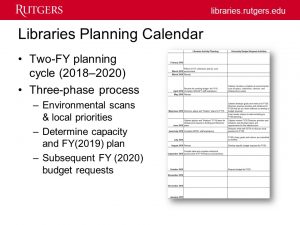
We are also in Town Hall season. Last month the central units had a Town Hall, yesterday was Camden’s, later this week will be New Brunswick’s, and RBHS will hold theirs in February. This year, my Town Hall presentation has focused on our planning cycle. Although some of you have already seen the presentations, and others will soon, it is worth seeing a few times. Like all things Rutgers, the process is a bit complicated but the results are worth the effort. Here are the slides that I’ve been presenting:
As you can see, the Libraries operate on a two-year planning cycle that is tied closely to the budget activities of the university overall. It’s a three-phase, iterative process that includes establishing local priorities, taking stock of central capacities to support those priorities, and looking ahead to solidify a plan and develop related budget requests. This helps us stay focused on our core services while maintaining the flexibility to respond to important new requests as they come in.
Our priorities document for 2018-2020 has been added to our mission page and I invite you to read through to get a sense of where we’re headed in the months to come. And, if they haven’t already, your library director will soon be updating you on the local implications of the 2020 budget.
I know that it seems like a lot to juggle all at once, but sound planning ensures that we continue to build on the momentum we’ve gained and can make the best choices on behalf of all our users. I look forward to seeing all we will accomplish together in 2019.
As you probably know, last week was International Open Access Week, a time when trends and issues related to open access are on the minds of many in the academic community. I was no exception, and found myself thinking back to Open Science by Design: Realizing a Vision for 21st Century Research, a report published over the summer by the National Academies of Sciences, Engineering, and Medicine.
According to the report, real progress has been made toward open science in the last number of years, and we are beginning to see the benefits of researchers having free access to the latest publications, data, and other research products in their fields. Open science encourages cross-disciplinary collaboration, accelerates the dissemination of knowledge, achieves efficiencies in the use of resources, and much more.
That said, the research community still faces a number of challenges, both economic and cultural. Many of the most prestigious venues adhere to traditional, closed publishing models, and it is difficult for academic institutions to adequately incentivize and reward open science practices. Moreover, significant cost and infrastructure barriers remain.
In response to this ecosystem, the authors of the report propose a framework for open science by design. They lay out a series of practices and principles aimed at helping researchers share and collaborate more effectively, contributing to and benefitting from open science at each stage of the research process.
But what does this mean for us here at the Libraries?
As the report notes, libraries are a key stakeholder in the scholarly communication process. We have a responsibility to facilitate open science, from training researchers in best practices such as compliance with FAIR data principles to ensuring the long-term preservation and stewardship of research products.
At Rutgers, we have established a reputation on campus as being at the forefront of open access, playing leadership roles in establishing the university’s Open Access Policy, publishing and providing a platform for gold open access journals, spearheading the university’s ORCID initiative, and managing SOAR, the university’s green open access repository.
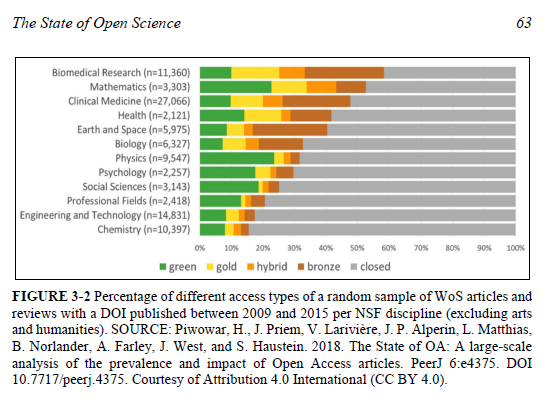
Of particular interest to us, however, is the report’s discussion of the high cost related to green open access repositories. While they are a useful first step in the move toward a fully open system, green repositories are costly to build and maintain, present ongoing challenges in terms of content storage, and are impacted by continuing discussions about bibliographic metrics. Moreover, “compliance involving deposits in a repository requires time, which necessitates education, assistance, and incentives,” the authors write. And so it is unsurprising to see that comparatively little of the scholarly literature is available through these avenues.While we are well-positioned at Rutgers to effect change in this area, clearly we can’t do it alone. In order for us to be successful, we need to canvass key partners on campus for their support and promote a unified approach to open access. We have to scale up and develop new methods to acquire content. And we must use the findings of reports like Open Science by Design as guidance to ensure we are facilitating open scholarship in an effective and sustainable way that realizes the vision articulated by the National Academies.
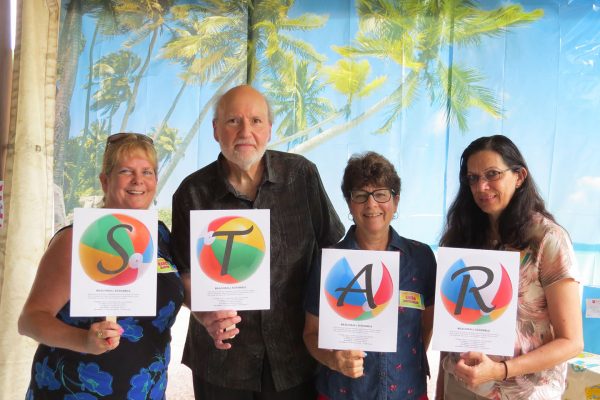
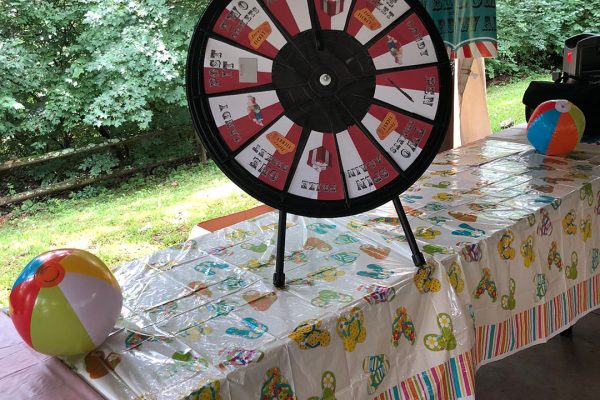
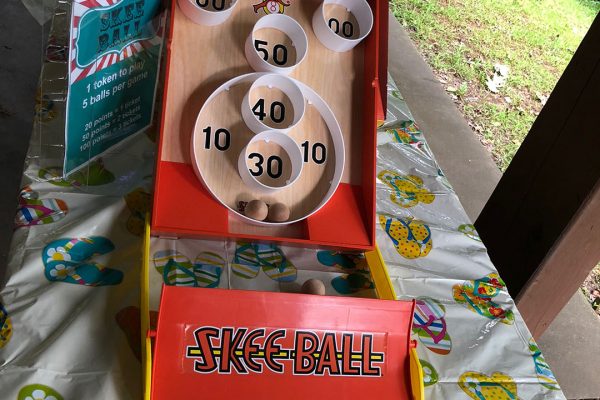
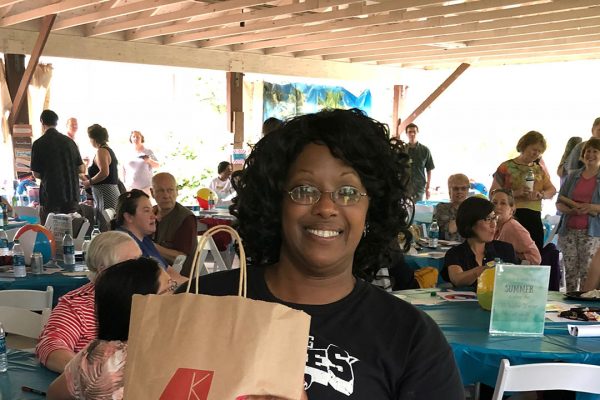
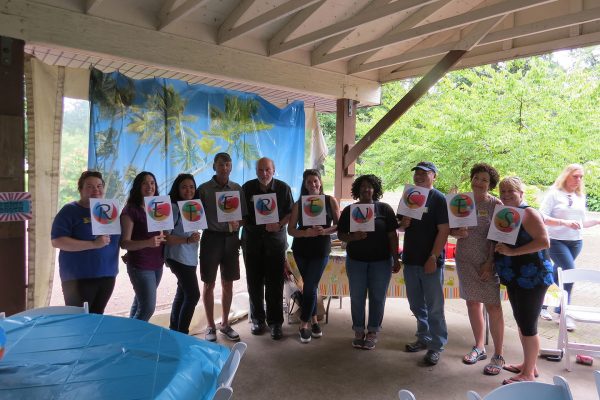
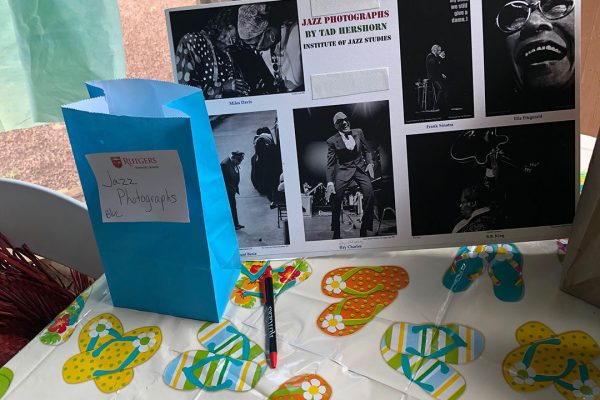
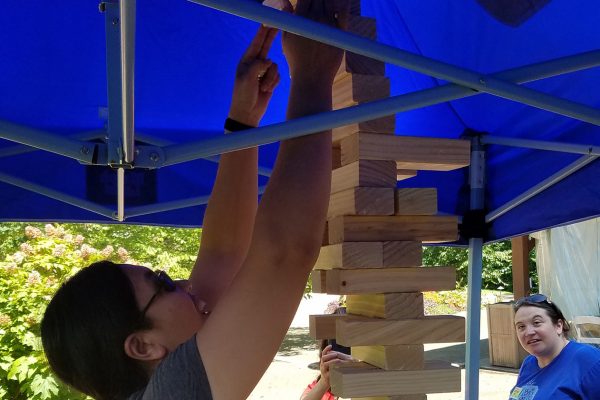
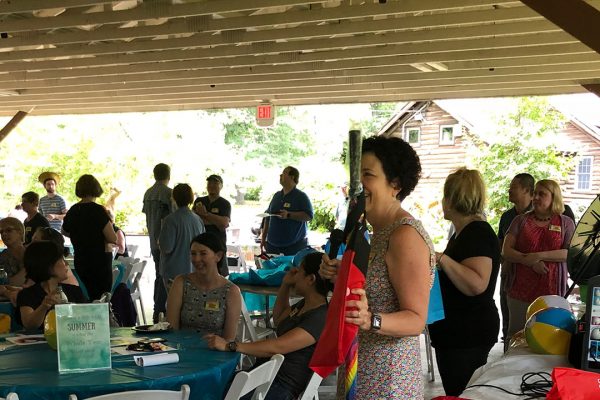
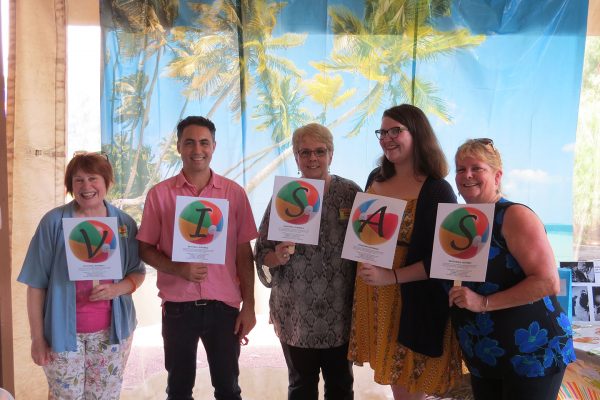
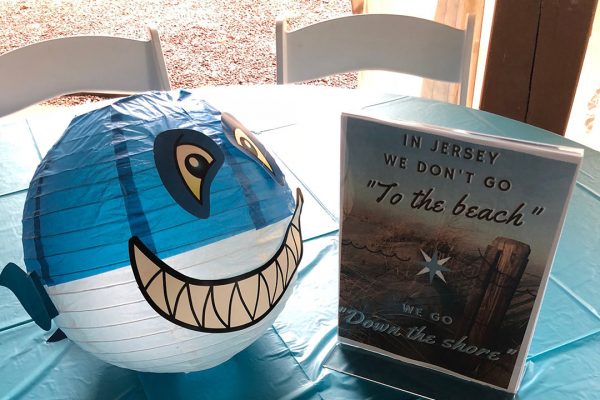
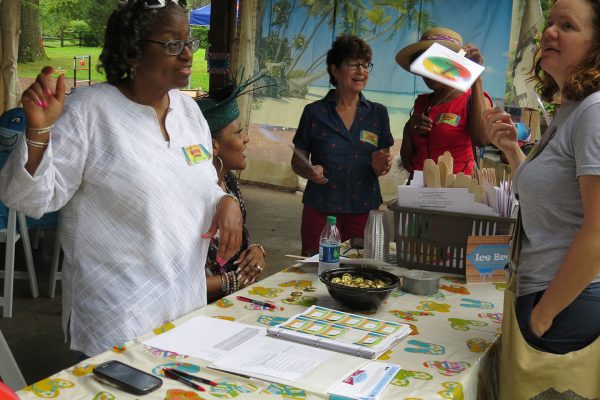
Before we get swept away in another fall semester, I’d like to take one last opportunity to thank everyone who attended the faculty/staff picnic in August. It was a fantastic event–dry despite the forecast of rain–and the catering, games, and decorations all came together beautifully to make it feel like we were really enjoying an afternoon spent down the Jersey shore.
As I mentioned during the picnic, I’d had some remarks prepared but decided not to deliver them lest I distract too much from the festivities. So I thought that my contribution to the Agenda this month should include a brief list of the many achievements we’ve had cause to celebrate in the past year:
The successful implementation of QuickSearch, which was a true all-hands effort and impacted the work of just about everyone throughout the Libraries. I’m impressed with the way we came together to make the rollout happen and how diligently the Ex Libris Implementation Team has worked since then to make improvements in response to user feedback.
The OAT Program continued into its second year, bringing the total savings for Rutgers students up to $2.1 million.
The ORCID program exceeded its first year benchmark, facilitating over 1,800 ORCID connections at Rutgers.
We took major strides to bolster our collections, including the addition of the complete Elsevier
We began the extensive redesign of our website to make it more accessible and user friendly.
And there have been countless local programs and initiatives that made sure you were meeting the unique needs of your users. To name a few:
RBHS hosted traveling exhibits from the National Library of Medicine in Piscataway and Newark
Dana held award-winning boot camps for graduate students and celebrated its 50th anniversary
The States of Incarceration conference and institute brought together partners from across Rutgers–New Brunswick and New Jersey
We spearheaded a campus-wide celebration of Paul Robeson’s 120th birthday in Camden
The IJS made the news with its acquisition of the Count Basie Collection, as did the New Brunswick Music Scene Archive, which earned an Innovative Archives Award from MARAC.
Though they are really just the tip of the iceberg, these achievements are important not only because they support the local missions in Camden, New Brunswick, Newark, or RBHS, but because they also position the Libraries as a good collaborator on university-wide initiatives.
I know there is plenty of work on the horizon—from improving QuickSearch and running a new round of OAT awards to enhancing our instructional technology support with the launch of products like Credo, Pressbooks, Leganto, and illumira—but we should be extremely proud of what we’ve accomplished together so far and excited about all that’s yet to come.
Of course, the picnic would not have been possible without the thoughtful planning of the major events committee, so I’d like to recognize them all for their hard work and creativity—Matt Badessa, Matt Bridgeman, Janie Fultz, Chantel Harris, Tad Hershorn, Tara Kelley, Megan O’Connor, Erica Parin, Jessica Pellien, Antoinette Perkins, Daphne Roberts, and Rich Sandler—and thank all those who volunteered on the day of the event.
Congratulations, Irina, on winning the desk duty prize!
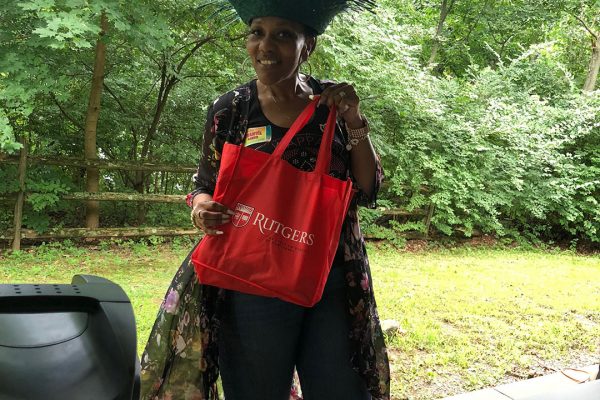
Last but not least, I want to acknowledge our colleagues who stayed behind to keep the libraries open while we enjoyed the party. As I mentioned in an earlier email, we held a special “desk duty” prize drawing this year, and I’m delighted to announce that Irina Loutchkina, library assistant at Alexander Library, was selected as our winner. Irina has received a prize pack including four football tickets from Rutgers Athletics, an RWJ Medical School tote bag, a beautiful hardbound Zimmerli exhibition catalog, a drink coozie and ID holder from the Division of Continuing Studies, a Libraries coffee mug, and more. Congratulations, Irina!
Thanks again to each and every one of you for all that you do on behalf of the Libraries. I can’t wait to see what we can accomplish in the 2018–2019 academic year and beyond.
It has been more than a year (March 2017) since I wrote an Agenda post about one of my favorite books on organizational success, Creativity Inc.: Overcoming the Unseen Forces that Stand in the Way of True Inspiration by Ed Catmull and Amy Wallace. What impressed me most about the success of Pixar was the approach to planning and problem solving that they used. The animated movies didn’t begin with a script; they started with an idea, which I think maps well in our environment for the purpose of an initiative.
It isn’t the release of The Incredibles 2 that has me thinking again about Pixar. (Although these hot, humid days of summer would be a perfect time to go to the movies.) What has me thinking about Pixar, and the creative process they use, is the release of our new library services platform.
I watched the implementation process unfold and realized that it had a lot in common with the way Pixar made films. The Ex Libris Implementation Team was not given a script for the implementation. They had a list of deliverables but were never given quite enough of the plot to decide what exactly to do. Primo/Alma is a platform, and configuration decisions vary depending on factors such as your current environment and the workflows you are trying to establish.
We had an idea of what we wanted: integrated workflows for staff, improved ability to generate statistics and assess our collection, and the reduction of silos for our users. The problem is that there is no single right way to implement Primo/Alma. The decisions that the Ex Libris Implementation Team made along the way depended on the workflows and functions we were trying to support. We had some idea of what those would be but were not quite sure how they would fit together. To make matters more complicated, the timeline for implementation was only six months (by comparison, The Incredibles 2 was 12 years in the making!). Finally, the implementation team brought together people from different backgrounds. Although each person has an area of specialty, no one person had the expertise to solve the problem alone.
The group worked together to develop the plot and the script. I will say that, from the sidelines, there were times when it was stressful for the group members as they struggled to determine how best to move forward. Like the folks at Pixar, they worked together and solved problems quickly. In the words of Catmull, “…if you put your faith in slow, deliberative planning in the hopes it will spare you failure down the line—well, you’re deluding yourself.” The group planned, but at some point (perhaps much earlier than any of them wanted) they had to test their plans. There were definitely mistakes along the way but again, as Catmull says, “Mistakes aren’t a necessary evil. They aren’t evil at all. They are an inevitable consequence of doing something new.”
The original group consisted of:
Tao Yang (co-lead)
Interim AUL for Collection Development and Management
Resource Sharing
Chad Mills
Digital Library Architect
Digital Collections, Data Migration & Systems Integration
Abbey DiPaolo (co-lead)
Director of Financial Planning and Business Operations
Acquisitions
Gracemary Smulewitz
Head of Collection Services and Resources Sharing
Electronic Resources
Chris Sterback
Integrated Information System Administrator
Data Migration & Systems Integration
Joseph Deodato
Discovery Services Librarian
Discovery
Mary Beth Weber
Head of Central Technical Services
Resource Management
Because of identified gaps, several other people were later added to the group.
Laura Costello
Virtual Reference Services Librarian
Fulfillment
Amy Kimura
Web Services Librarian
Website Design and Updates
Jessica Pellien
Director of Communications and Web
Communications & Marketing
I have to say that I am completely impressed by the team. The breadth and depth of knowledge in the group will provide the Libraries with a strong foundation for the future. They all know how the pieces fit together and how they can continue to make the system better. And each member of the team has worked with other groups to implement aspects of the platform, drawing on a broader range of expertise while exponentially increasing the reach of this knowledge. As an organization, we are not reliant on a few gurus with all of the answers.
This is only the beginning. There are plenty of issues to address, some we know about and more that will be uncovered. Borrowing one last time from Catmull’s insights on Pixar, I like to think that what makes the Libraries special “is that we acknowledge we will always have problems, many of them hidden from our view; that we work hard to uncover these problems, even if doing so means making ourselves uncomfortable; and that, when we come across a problem, we marshal all of our energies to solve it.” This is the new world in which we live, and—thanks to the work of the Ex Libris Implementation Team and the lessons we’ve learned along the way—we are now better prepared to thrive in it.
With the pending release of Alma and Primo, this seems like a good time to continue the discussion of Frameworks. In March, I talked about the local components of a service Framework. Items described in the ‘Local’ and ‘Local Infrastructure’ rows of the Framework are the aspects of our work that directly relate to our users and include Services and Projects. Services are ongoing and can be described as:
Foundation—directly related to finding, evaluating, and using information.
Boutique—designed by a small number of stakeholders to serve either a small group of scholars within Rutgers or broader community.
Education—for the purposes of this Framework, providing information for a wide range of faculty and students about scholarly communication (beyond Foundation)
Consulting—providing recommendations and information directly to an individual or group based on their specific need.
In addition to the categories of Services, there are also two categories of Projects. Projects are short-term and require extensive expertise. Projects that fall under the ‘Creating’ column are designed to create new Boutique services, and projects in the ‘Innovating’ column are designed to develop new or improve existing Foundation services.
The local portions of our services and projects are often just the tip of the iceberg. In order for the local units to be successful, there is a lot that goes on behind the scenes. We have seen this first-hand over the last six months during the Ex Libris implementation. The complete Framework includes two additional levels beyond local services: Shared Coordination and Central Infrastructure.
Click the image to download a PDF of the Framework.
Shared Coordination: Here in the Libraries, teams, working groups, and committees coordinate and prioritize the resources and work of Central Infrastructure. These groups are usually led by a central coordinator and include representation from all of the local units. This structure encourages transparency and equity in how work is assessed and prioritized and ensures that local needs and priorities are fully considered.
In my April Agenda post, I talked about the results of the Cabinet planning retreat. As one of its primary roles, Cabinet provides high-level coordination between local and central units and develops the Libraries-wide priorities for the upcoming year. In addition to Cabinet, there are several other coordinating groups, including Discovery Working Group, Web Improvement Team, Virtual Reference Group, Collections Analysis Group, and more. These groups are responsible for not only making recommendations for how to prioritize the work, but also for completing approved work as needed.
Coordination is essential in all complex organizations, but it is particularly important for us since a single Central Infrastructure has to support the unique missions of four local units. The shared infrastructure includes basic organization functions such as budget oversight, human resources, and communications. It also includes library specific functions such as collections, acquisitions, cataloging, and discovery. Server-based information technology including websites, the library system, and RUCore, are also central. In the Framework, central infrastructure is accurately depicted as spanning and supporting ALL areas of service and all types of projects.
The Framework provides an overview of the components of our services and projects and the dependencies. Through Shared Coordination, we are constantly looking at how best to prioritize and use the Central Infrastructure, but the activities in the Shared Coordination row respond to and reflect the needs and priorities of local services and infrastructure thanks to our planning processes.
I hope you will take a minute to review the Framework and think about where and how your own work is positioned and how it contributes to or is supported by the other parts of the organization. In an organization as large and geographically dispersed as the Libraries, it is easy to feel like our work is isolated, but the Framework demonstrates the opposite is true. If you have thoughts or suggestions for improvement of the Framework, please let me know.
For the last two months, I have used the Agenda to provide updates about a framework we are developing to provide us with a common vocabulary and a shared understanding of the relationships and dependencies between local and central services. Last month I focused on the local aspects of the framework, with the intent of talking about the central aspects this month.
However, two weeks ago Cabinet had a retreat to discuss local priorities and to begin developing realistic expectations of what would be possible for the Libraries to accomplish with our shared infrastructure. Before continuing the framework discussion, I think it will be useful to review the outcomes of the retreat, including the overarching themes that emerged from our discussions.
Now that we have filled the Library Director positions, our planning processes are in full swing. The Library Directors came to the retreat prepared to discuss their most pressing needs and how best to use the shared infrastructure. The conversations were good because they were based on the needs of the campuses and communicated with a strong sense of collaboration and common purpose.
By the end of the day, several themes emerged that describe opportunities and constraints that are common to all units.
Access to Collections: It is clear that the Alma/Primo implementation will be a catalyst for organizational change. The new systems will provide a platform to strengthen foundation services and will help us to better assess our effectiveness. They will also drive changes in workflows in every unit of the Libraries. It is easy to see how this implementation will result in changes for people working directly with the system (e.g., cataloging, acquisition, circulation), but what may be less obvious are the effects for those with less direct daily interaction with the system. Discovery will change, driving changes in the broader website. Links to our resources will change, meaning that every research guide and instructional object that directs users to a specific resource will need to be updated. Needless to say, the Alma/Primo implementation will be a big part of all of our lives in the coming year.
Library Instruction: There is a need for us to build course-related infrastructure to support student success and to improve access to open and affordable resources within courses. We have begun this process with the implementation of PressBooks, but it appears that changes on the horizon may also include Leganto, an advanced Alma module related to course reserves, and Credo Education, customizable information literacy modules. We will have to determine the balance between central coordination and local autonomy in the coming year. Student success is such an important part of the library mission that we have to take the time to invest in shared infrastructure.
Discovery and Website modifications: There were many requests for new features related to discovery and the website. In the coming year, most of the attention of the Discovery Working Group and Web Improvement Team will be focused on integrating new features related to the Alma/Primo implementation and to integrating the emerging course-related infrastructure. It will be necessary to focus our attention on foundation services this year; however, the strong platform that we are establishing will allow us to continue to develop boutique services in the coming years.
I started this article with a mention of the effective discussions we had at this year’s retreat which is in and of itself a strong indicator of the final theme that emerged. The Libraries have succeeded for many years in an environment of grassroots endeavors that eventually coalesced into larger themes. The environment in which we find ourselves is moving far too quickly for this approach. In the coming year, it will be necessary to acknowledge and support the roles of managers in prioritizing and effectively advancing the missions of the Libraries. Over the past few years, we have focused on the importance of Library Directors in setting priorities for their libraries that meet the needs of and support the unique priorities of the campus environments in which they operate. For an example of how that is happening, take a look at the Framework for Change established for Dana Library and the Institute of Jazz Studies in response to Rutgers-Newark priorities. In order to support robust local plans and Librarieswide priorities, we need to focus on infrastructure and strengthen the role of the manager in understanding the priorities of the Libraries and prioritizing work accordingly. The Alma/Primo implementation is the perfect catalyst for this change.
This is an exciting time for the Libraries. We are recognized as a unit that provides leadership at Rutgers and is focused on the mission(s) of the University. I can see the progress we are making. Although we have a lot to do, this will be a productive year and will result in a stronger and more flexible organizational structure. Next month, we are back to frameworks!
Last month I introduced the idea of using Frameworks to describe our increasingly complex environment. As a reminder, Frameworks provide a way to divide complex processes into manageable chunks while retaining information about relationships and dependencies between the components. Developing a Service and Project Framework will give us a common vocabulary and a better understanding of the relationships and dependencies between local and central services.
Over the past two Cabinet meetings, we have worked to establish a Framework by using a matrix to describe components of a range of our services, including items like instruction, reference, or access to collections, and projects like ExLibris and OAT implementation. With each pass, we identified areas for improving the Framework and developed better ways to describe the work we do within our unique environment.
This matrix expands on the service categories outlined in the OCLC Research Library Partnership Reports on the Realities of Research Data Management—education, expertise, curation—to accommodate the full range of work done at Rutgers University Libraries. The matrix continues to evolve, but the important thing to note is that it breaks down our work into components related to Service Category or Project and Type of Support.
The best way to read this draft of the matrix is to start with a Service category and read down the column. Each of the cells describes one component of a service or project, with the lower cells describing the infrastructure required to deliver the service or complete the project.
Click this image to download and view a PDF version of the matrix.
About Service Categories
There are many different ways that we could describe the categories of service that we provide, but based on our discussions, we found it most useful to group our services based roughly on the breadth of the audience; whether it serves mostly Rutgers faculty and students or external scholars and the public; and the number of stakeholders we work with to design of the service or resource. The Service Categories include:
Foundation:Services directly related to finding, evaluating, and using information in all forms. Typically, we design these services for a wide range of faculty and students. These are sometimes referred to as “core” library services.
Boutique: Focused services and resources that are designed by a small number of stakeholders (often outside of the Libraries) and that primarily serve a targeted audience within Rutgers, the needs of scholars outside of Rutgers, or the community.
Education: Providing information about aspects of scholarly communication (beyond Foundation instruction like information literacy) designed for a wide range of faculty and students.
Consulting:Providing specialized recommendations and information to an individual or group based on their specific scholarly communication need.
About Projects:
These projects are planned, intentional activities that span local and central units and expertise to change our infrastructure, create new services, or generate new information resources. Our central infrastructure has to support four unique missions, so we need to ensure that changes to our services and resources work to advance all of these goals.
Innovating: Projects that lead to the design and development of new Foundation services, including improvements to existing Foundation services. Upon completion, the long-term operation and maintenance of these projects shifts to the Foundation service category.
Creating:Projects that require extensive expertise and central and local infrastructure to develop Boutigue services and knowledge products. These are usually collaborative projects with non-library units and involve a small number of stakeholders. Upon completion, the long-term operation and maintenance of these projects shifts to the Boutique service category.
Local: Direct support to faculty and students. Examples include library instruction, material selection, and reference support.
Local Infrastructure: Services that support the work of others in the library and that are provided by local faculty and staff. Examples include gathering local statistics, scheduling classes, and the repair and preservation of materials.
So how does this impact the Planning Process?
The Framework will need refinement, but even the process of creating this matrix has resulted in important conversations and clarification of the work we do, the locus of responsibility for processes, and how we identify and distinguish between local-level and Libraries-wide priorities. Although I am asking library directors to provide a comprehensive list of priorities for the coming years, the central planning process will only focus on priorities that need central coordination or changes in the central infrastructure.
Foundation services represent the bulk of what we do. Ongoing work and even some improvements in these services can be completed at the local level, but changes that need support from central infrastructure—for example coding, non-routine digital projects, changes to a website, or programming—require coordination to ensure that they do not cause unexpected problems. Modifications that may seem small on the surface can have a big impact on the workflows in the central units. During the planning process we will distinguish between priorities that can be completed on the local level and those that require new Innovating projects to ensure that services are coordinated and effectively use the shared infrastructure.
Boutique services also come with their own quirks. Because these projects are expensive—they use a lot of expertise and library infrastructure to complete and to maintain—the bar is particularly high for new priorities. The consideration here will be how significant is the impact of this proposal? What audiences or needs does it address? During the planning process we will prioritize projects and assign resources to Creating projects to develop new services and resources.
There is a circular movement between Foundation services and Innovating projects—significant changes to Foundation services are accomplished via Innovating projects; and once complete, Innovating projects shift to Foundation services. This flow is also present in the movement between Boutique services and Creating projects.
By definition, Education and Consulting services are local and should only use existing shared infrastructure. There are many ideas for improvement—workshops for graduate students or consultations on data management—that are worthy initiatives and can be coordinated within the local units.
Next month, I will include the portions of the matrix that describe how central infrastructure, coordination, and expertise interacts with the other parts of the matrix. In the meantime, please explore the matrix (the best way, as I mentioned earlier is to read down the columns). Think about how your work would fit into these columns–which of our services would fit into each category? How are services delivered to our users at the local level? How are they supported by local infrastructure? Are there services that don’t fit into this matrix?
This is an evolving document and I encourage you to talk to your library director or AUL and to send in feedback and suggestions.