Category: Feature

  • New Brunswick Welcome Days

    The New Brunswick Libraries hosted several events to welcome students to the new semester, as part of the campus-wide Welcome Days activities, which are organized by New Student Orientation and Family Programs (a division of Student Affairs).

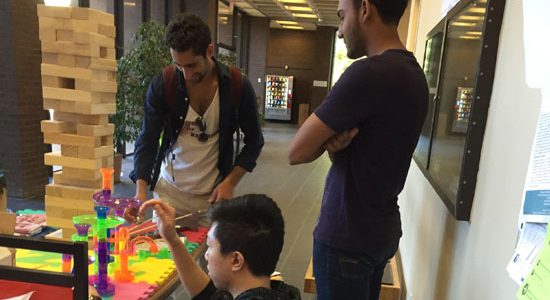
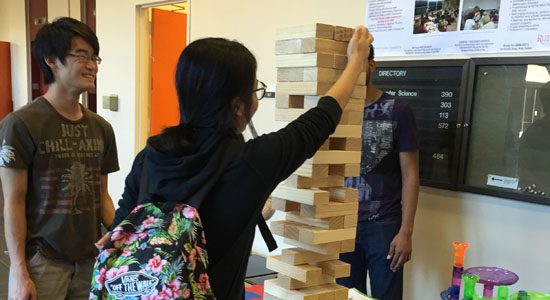
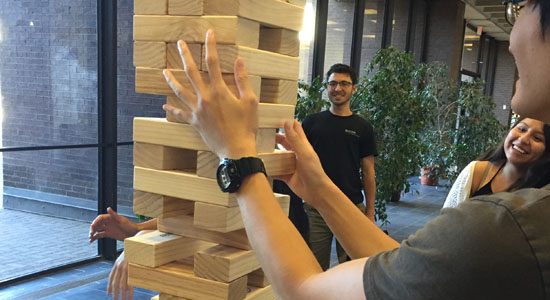
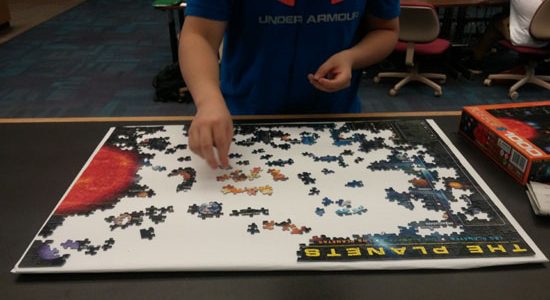
    This year, staff and librarians at the Mathematical Sciences and Physics Library in Hill Center challenged students with a giant tumbling tower, while the Library of Science and Medicine offered free snacks and science puzzles. At the Alexander Library, students enjoyed cookies and the chance to spin a wheel for prizes after successfully answering library trivia. Kilmer Library offered carts of granola bars and other treats popcorn was handed out at the steps of the Art Library on College Avenue, and the Douglass Library offered students a much-appreciated coffee/cookie break.

    All of these activities were made possible through the annual Senior Class gift, which is offered in appreciation to the library for hosting the wildly popular ClubAlex dance. The Undergraduate Experience Team sends a HUGE thank you to all of the staff and librarians who made these events possible and helped to create a warm welcoming atmosphere at the libraries.

  • Alexander Library Will Host New Jersey Book Arts on November 4, 2016

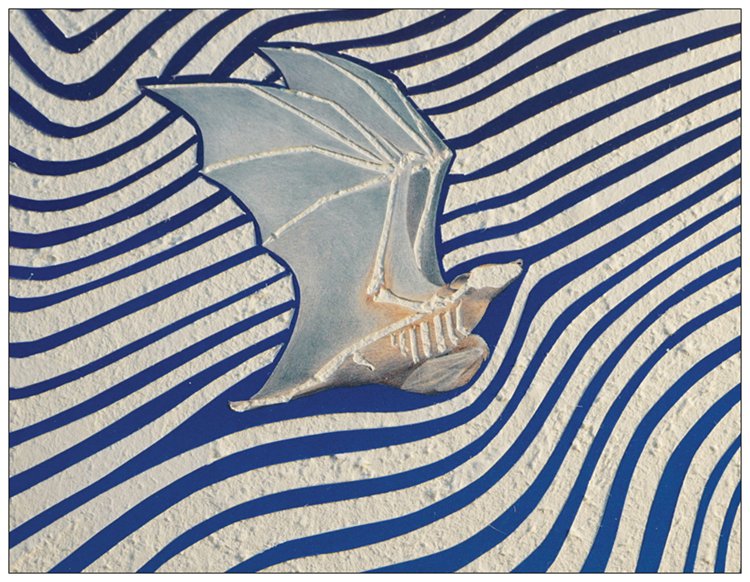
    Slicing The Air Carved Board Book, Asha Ganpat
    Slicing The Air Carved Board Book, Asha Ganpat

     We take pleasure in announcing the 22nd annual New Jersey Book Arts Symposium. “From Here to . . . There: Concept and Technique in Artists’ Books,” will be held on November 4th, 2016, at the Alexander Library.

    The full day program might be described as a carnivalesque,  multi-media extravaganza for everyone curious about the field of artists’ books, including students, scholars, artists, librarians, writers, musicians, administrators, procrastinators, cowboys and farmers, fanboys and fangirls, private citizens, as well as the general public.

    The program for “From Here to . . . There” is the most ambitious we–by which I mean the New Jersey Book Arts Committee–have ever planned in New Brunswick, consisting of brief illustrated presentations by nine accomplished artists, two morning workshops open to all attendees, an artists’ book registry organized by one of two artists-in-residence, two lunchtime readings by artist/writers, a book arts jam for everyone to show off, sell, barter, or donate their own book fabrications, an open mic for cultural announcements about ongoing or upcoming events (exhibitions, workshops, classes, projects, solo and collaborative performances) broadly pertinent to the field of book arts and artists’ books in New Jersey and environs, and a pop-up exhibit featuring examples of work by all participating artists. And there’s food!

    All are welcome – students are free; discounted registration for staff and faculty.

    See http://www.libraries.rutgers.edu/rulib/spcol/bookarts/symp22.html for details.

    Save

    Save

    Save

    Save

  • Transforming the Way We Work at Rutgers

    cornertstoneThe new administrative information systems under Cornerstone are scheduled to go live over the next week. Cornerstone is the University’s strategic approach to unify, upgrade, and streamline its administrative information systems for Finance, Human Resources and Payroll, Procurement, etc. Upgrading and improving these systems will significantly improve how we work and collaborate across the university. These projects are also particularly exciting to the library because they will enable all of our units to finally utilize the same systems for administrative functions.

    Be on the look-out for future announcements about process updates and training opportunities related to this implementation. If you have any questions about how the new systems may or may not impact you, please see your local business staff.

    Save

  • Predatory Publishing: Rutgers Alcohol Library in Conversation with Jeffrey Beall

    crocFaculty are inundated with email invitations to publish in scholarly journals or to serve on their editorial boards. Many of these solicitations are completely valid, but an increasing number of these journals are engaging in predatory publishing practices.

    Predatory publishing, a term coined by Jeffrey Beall, a librarian and associate professor at the University of Colorado, Denver, is an unwanted and undesirable side effect of the open access movement and Beall has become widely known as the “go-to guy” when it comes to checking the validity, authenticity, or value of these invitations.

    Beall maintains several resources that are great tools for promotion boards, hiring committees, and, as it turns out, librarians. The renowned Beall’s List of predatory publishers lists “potential, possible, or probable predatory scholarly Open-access publishers,” on his Scholarly Open access blog. Additionally, Beall maintains a list of standalone journals and a list of criteria—covering everything from editors, staff, and business management to transparency, integrity, journal standards, and publishing practices—for identifying predatory Open-access publishers.

    The Rutgers Center of Alcohol Studies (CAS) has been a frequent users of Beall’s list, since nationally and internationally recognized researchers at the Center are primary targets of invitations to participate in scholarly communication in various ways. Addiction science has been experiencing an influx of new journals and conferences, akin to health sciences.

    Judit Ward and William Bejarano have been monitoring this trend in the field at CAS and had the opportunity to interview Beall at the annual conference of the Substance Abuse Librarians & Information Specialists and the Association of Mental Health Librarians in May 2016 in Denver.

    In the July issue of The Agenda, we invited you to read part one of this interview in the Center of Alcohol Studies Information Services Newsletter, in which Beall explains how he became involved in the growing area of predatory publishing, discusses the most vulnerable groups in academia, and gives an update of the current situation. Part two, focusing on topics of greater interest for librarians, is now available in SALIS News. Beall advocates for educating users about not only predatory publishing, but also the various forms of open access and publishing standards, so that they can avoid the traps of predatory publishers.

    – RU Alcohol Library


    Save

    Save

  • Michael Joseph’s Beautiful Books

    • Failing to Act Photo credit Nell Ytsma.

    In the July staff news, you may have noticed this announcement: “A poem of Michael Joseph‘s will be part of the Vispo Art Exhibition of poetry and art sponsored by the German state of Northrhine-Westphalia (NRW). The exhibition, scheduled for Spring 2017, will conclude in Burgau…” His brilliantly and beautifully conceived books are now a reality.

    Shown above in the slideshow are SPICA, a poem by Michael Joseph, Failing to Act, a collaborative artists’ book, and Dream Dirt, a book unlike any other. All three books were conceived and fabricated by Sarah Stengle.


    Details:

    SPICA
    Poem by Michael Joseph 2016
    Art by Sarah Stengle 2016
    Silkscreen on etched and drilled found glass autoclave windows with steel brass and neoprene rubber fittings.
    Edition of 2
    14 x 12 x 26 centimeters (height x depth x width)

    Failing to Act
    Collaborative artists’ book
    Four Poems: Michael Joseph 2016
    Book Art: Sarah Stengle 2016
    Twelve pages as follows: six turkish map-folded spreads, each containing text on one side.
    This book was typeset in Aldus and Aldus SC by Hermann Zapf, and printed on Crane Crest Natural White Cotton Wove. The endpapers are Rives Smoke Cover with Western Blot antibody test result films mounted with 3M 568 adhesive. The text appears inside mid-nineteenth century pale blue ledger-paper folded with a Turkish map-fold. The outer covers are sewn wool with printed pale celadon colored silk title labels applied. The covers are attached with waxed blue linen thread and vintage Erector Set hardware from the 1950’s.
    Edition of 8.

    Dream Dirt
    Text by Michael Joseph 2016
    Art by Sarah Stengle 2016
    A wooden train carrying two vials of dirt, 30 vials containing paper scrolls (28 short stories, 2 signatures).
    The text is available in a trade edition, titled Juvenile Fantasies and Innocent Dreams. The vials contain short stories about childhood and dirt, each one sentence in length, as well as an equivalent number of single-sentences critiques and responses to the stories. Two of the vials contain sterilized dirt from the past of the author and artist.

  • The Final Report on Latino Americans: 500 Years of History

    Latino Americans: 500 Years of History was made possible through a grant from the National Endowment for the Humanities and the American Library Association.
    Latino Americans: 500 Years of History was made possible through a grant from the National Endowment for the Humanities and the American Library Association.

    Rutgers University Libraries recently concluded the ALA-funded program Latino Americans: 500 Years of History. Over the course of a year, Rutgers and other scholars led 17 PBS film screening discussions about the experience of Latinos in New Jersey in collaboration with Rutgers University Libraries, the Nilsa L. Cruz-Perez Branch of the Camden County Library, New Brunswick Free Public Library, and the Newark Public Library.

    Beyond the film showings in Spanish and English, project partners offered exhibits, book talks, lectures, and special celebrations. Highlights include A Day of the Dead Celebration and Cinco de Mayo festivities in New Brunswick showcasing a variety of performances and children’s activities; a Cuban musical concert by renowned singer Gema Corredera; the exhibit “Beyond Exile: Cubans in New Jersey” at the Newark Public Library, including a keynote address by Lisando Pérez; and two separate exhibitions at the Rutgers Art Library, Ilya Genin’s “Photographs of Cuban Revolution 50 Years Later,” and “From Island to Ocean: Caribbean and Pacific Dialogues by Fidalis Buehler and Juana Valdes.”

    As project director Nancy Kranich notes in the final report on this initiative, this program allowed Rutgers University Libraries to become “a catalyst for bringing together scholars and organizations involved with the New Jersey Latino American experience and encouraging more attention to documenting it. The grant enabled us to take a more assertive role in building and strengthening relationships with local Latino communities and the scholars, organizations, and public libraries that interact with them.”

    Kranich also lists several other outcomes that may be of interest to our colleagues:

    • Several new items were added to Special Collections, including several leaflets of unpublished poetry by Newark poet Pablo Le Riverend, clippings of anti-Castro activities in Hudson County, Sarah Hirschman’s papers covering People & Stories/Gente y Cuentos.
    • The publisher and owner of Impacto, published in the 1960s, donated 99 issues of the publication to Rutgers University.
    • 15 Latino clubs are Rutgers are planning to learn how to organize and preserve their own records in conjunction with Rutgers University Libraries’ archivists.
    • Two possible books are in discussion: a history of Latinos in NJ and an anthology of unpublished documents about Latino migrant workers in NJ and the United States.
    • The New Brunswick Free Public Library and Rutgers University Libraries are discussing partnering again on another ALA public programming grant proposal.
    • A deeper understanding of the Latino collections in the state and increased participation in depositing scholarly works into our Rutgers Inclusion and Diversity Research Portal.

    For additional information about this program, please visit the project LibGuide

    Save

  • Introducing Full Text Finder

    On August 18 the Libraries upgraded to Full Text Finder, EBSCO’s newest holdings and link management tool designed to replace its A-to-Z and LinkSource services, which are being phased out. A-to-Z is the product that powers the Libraries’ electronic journals search. LinkSource is the product that powers its link resolver service (locally known as “Get it @ R”). You may notice some changes to these interfaces. Below is a quick summary of what to expect.

    The new e-journals search interface is a little cleaner, better organized, and offers a variety of new features including:

    • Responsive autocomplete to facilitate known title searching
    • Discipline-specific browsing to help users identify titles in their subject area
    • Filters to refine results by subject, format, or publisher
    figure1
    Click to enlarge.


    The new link resolver menu has been streamlined to help users determine the availability of an item faster, more efficiently, and with less confusion. New features include:

    • Improved menu layout and design
    • Intuitive labels and icons
    • Real-time catalog lookup for print holdings
    • Fail-safe options in case of link resolver error
    figure2
    Click to enlarge.

    Please be sure to update any guides or tutorials that refer to these products. Links to the old A-to-Z Journals and Citation Linker pages have automatically been updated in LibGuides, but you may want to double check your guides just to be sure.

    As with any software migration, you may notice some irregularities as we work to resolve temporary glitches. If you have any questions or wish to report a technical problem, please contact serials@rutgers.libanswers.com.

    Special thanks to the Serials Team for their work migrating our holdings data as well as the Web Team for their help customizing the design of the interface.

  • Changes to the Rutgers University Photo Gallery Policy

    A recent policy change means that high resolution images from the Rutgers University Photo Gallery are now available free of charge for Rutgers projects.

    Douglass Library
    Douglass Library. Nick Romanenko/Rutgers University

    The gallery offers access to professional images of Rutgers buildings, faculty, staff, and students. Previously, low resolution images (72 dots per inch, suitable for projects such as PowerPoint presentations, email newsletters, and webpages) were available for free download, while high resolution images (300 dots per inch, suitable for print projects such as flyers, posters, and brochures) had to be purchased for $20 each. Now, however, because of changes due to RCM, the high resolution images are also available at no cost to the Rutgers community.

    Finding the perfect image for your project is as simple as following these three easy steps:

    1. Log in to the gallery using your NetID and password.
    2. Browse through the categories to identify a photo you like.
    3. For low resolution images, read and accept the terms and conditions to download the image immediately; or, for high resolution images, contact photo archivist Jane Hart with the file name and how you intend to use the photo.

    In the event that you can’t find an image you like in the gallery, you may request access to the University Communications and Marketing Photo Archive, which contains thousands of additional photos for your perusal. Contact Jane for access to the archive.

    For more information, visit University Communications and Marketing’s guide to finding photos.


    Save

  • New Honors Living-Learning Community to Be Based at Dana Library

    Dana exterior sunny, credit Ed Berger
    Credit: Ed Berger.

    Rutgers University-Newark’s Honors Living-Learning Community (HLLC) is an initiative intended to go beyond high SAT scores or high school rankings. The goal is to identify and blend an international group of traditional and non-traditional students into a curriculum based on themes of “Local Citizenship in a Global World,” and focusing on academic, social, and personal development.

    Among the targeted student populations are high school graduates, first-generation college students, transfer students, veterans, older students, General Education Development (GED) recipients, student parents, and financially independent students. Dana librarians will be important liaisons in building the effort, according to Bobbie Tipton, the library’s point person who recently met with Marta Esquilin, the associate dean of HLLC and assistant professor of professional practice. HLLC will be divided into “cohorts,” each containing about ten students, which may be mentored by a librarian. The curriculum will be a mixture of core classes specific to HLLC, as well as a capstone project, filled in by required classes to earn an undergraduate degree.

    Among the areas of instruction librarians would provide to new and transfer students through workshops are finding their subject librarian; finding core databases in the subject area; using a citation manager; determining the correction citation style for the subject; and avoiding plagiarism.

    “This is intended to be a holistic learning experience with a strong emphasis on social justice and community,” Tipton said. “It is definitely an expanded definition of ‘honors’ that goes beyond academic performance. The intention is to educate movers and shakers in social engagement.”

  • MSNJ 250th: A Night of History, Medals, and Coins

    image2
    Credit: Robert Vietrogoski

    Rutgers is not the only major New Jersey institution celebrating its 250th anniversary this year!

    On Saturday May 23, I attended the Medical Society of New Jersey’s 250th Anniversary Celebration and Inaugural Gala. The celebration was held at the Heldrich Hotel in New Brunswick, on the actual 250th anniversary of the Medical Society of New Jersey’s first ever meeting, also held in New Brunswick (at Duff’s Tavern!). The Medical Society of New Jersey (MSNJ) is America’s oldest state medical society, and has over 5000 members. RBHS–Special Collections holds a nearly complete run of MSNJ journal publications from 1848 to 2005, as well as substantial archival holdings of its constituent Burlington, Essex, Hudson, Monmouth, Passaic, and Warren County Medical Societies. We also hold the records of the Medical Alliance of the Medical Society of New Jersey (formerly the Women’s Auxiliary).

    image1
    Credit: Robert Vietrogoski

    At the gala, I joined Dr. Peter Carmel, the emeritus chair of the Department of Neurological Surgery at New Jersey Medical School. Dr. Carmel is also the current president of the Medical History Society of New Jersey and a recent past president of the American Medical Association! During the program, Dr. Carmel presented a well-received illustrated historical retrospective on the MSNJ’s founding and its centennial and bicentennial celebrations. Some of the images used by Dr. Carmel were drawn from RBHS–Special Collections materials.

    For the gala, Dr. Carmel also organized an exhibit on Dr. Wells P. Eagleton, the first New Jersey neurosurgeon, and a medical luminary who received the first Edward J. Ill award from the Academy of Medicine of New Jersey in 1939. Thanks to Dr. Carmel’s generous restoration efforts, Eagleton’s actual Edward J. Ill medal was on display. This artifact was rediscovered last summer in storage at Robert Wood Johnson Medical School and is now part of the holdings of RBHS–Special Collections. Dr. Carmel’s exhibit and the Eagleton artifacts will soon be on display in the lobby of Smith Library.

    image3
    Credit: Robert Vietrogoski

    If the Eagleton name seems familiar at Rutgers, Dr. Eagleton’s wife Florence Peshine Eagleton was a founding member of the board of managers of the New Jersey College for Women (now Douglass College) and a Rutgers trustee from 1932 to 1946. She made the bequest in 1956 that established Rutgers University’s Eagleton Institute of Politics, which itself is celebrating its 60th anniversary this year.

    The newest addition to the RBHS–Special Collections artifact collection is the commemorative 250th anniversary “challenge coin” given to gala attendees by Captain Joseph P. Costabile, the incoming MSNJ president. The gala was a most enjoyable event and I hope to extend the relationship between the Medical Society of New Jersey and RBHS–Special Collections. (And for those familiar with my normal mode of dress, here is photographic proof of me in a tuxedo!)