Category: Feature

  • Gary Golden Retires after 30 Years with the Libraries

    • Gary Golden retired on June 30 after 30 years with Rutgers University Libraries.

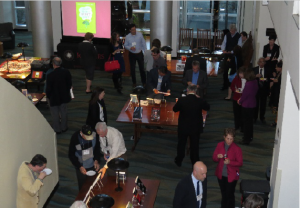
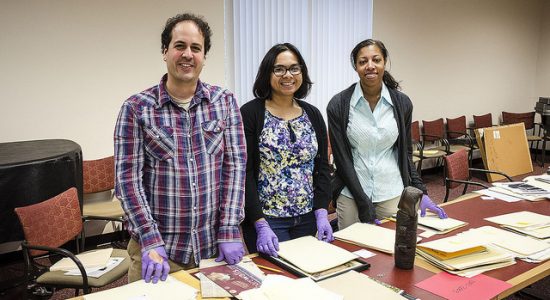
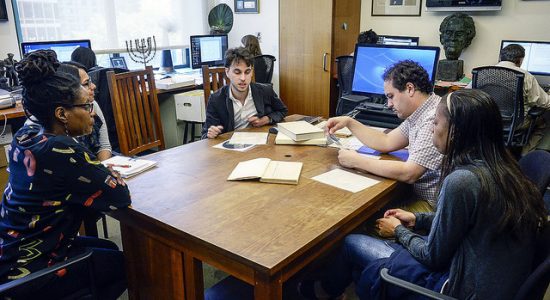
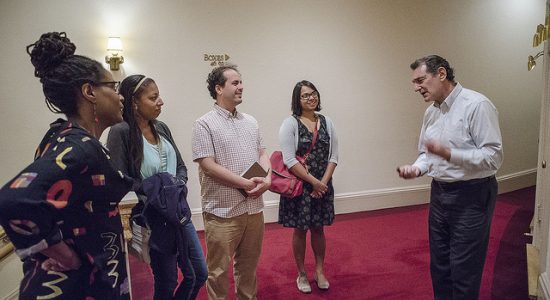
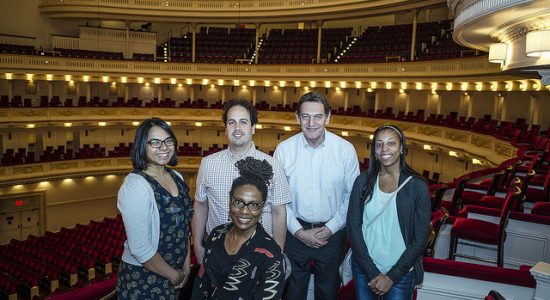
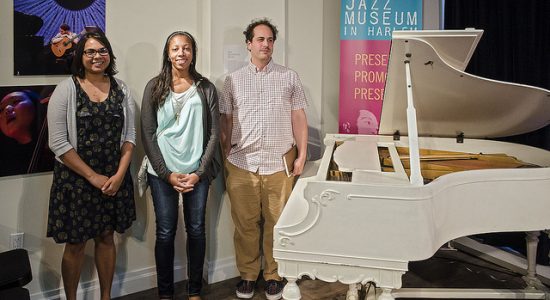
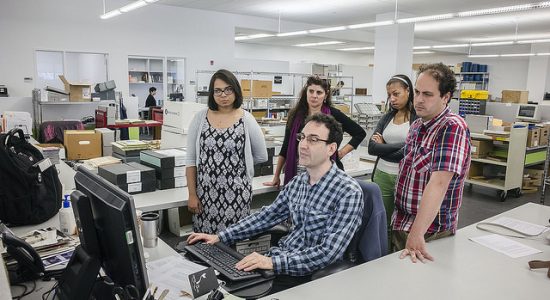
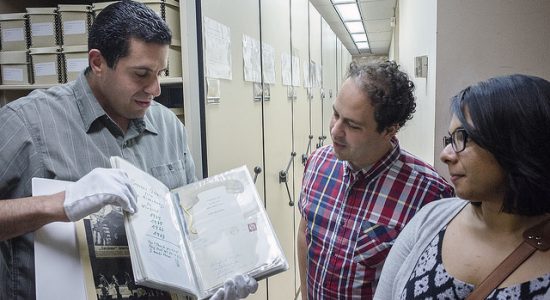
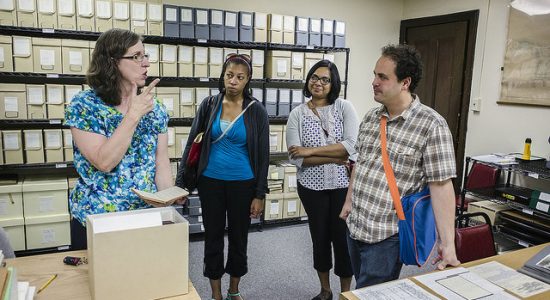
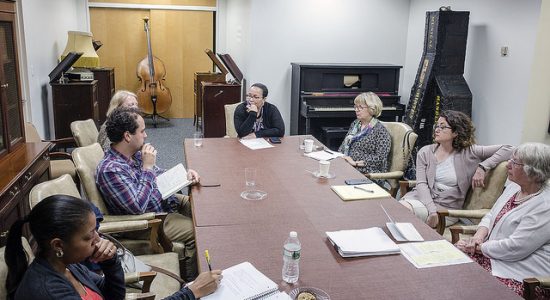
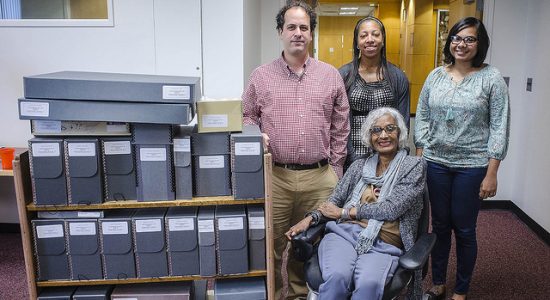
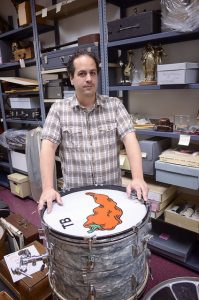
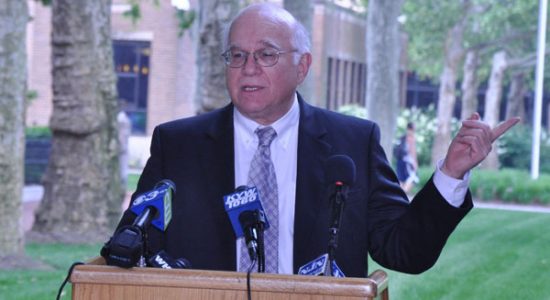
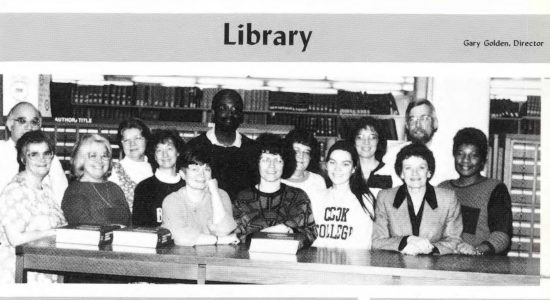
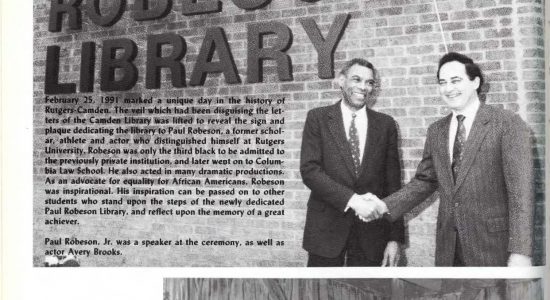
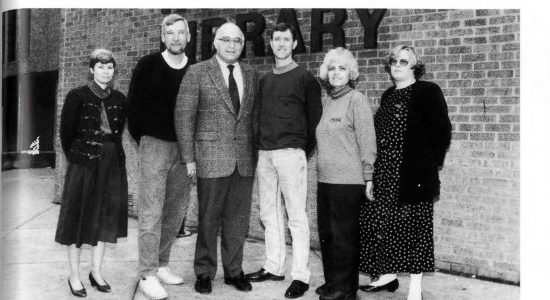
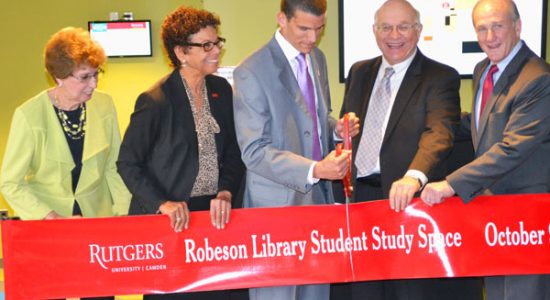
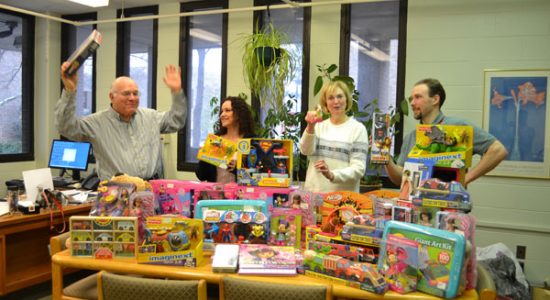
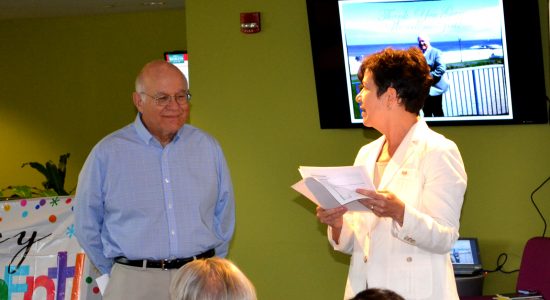
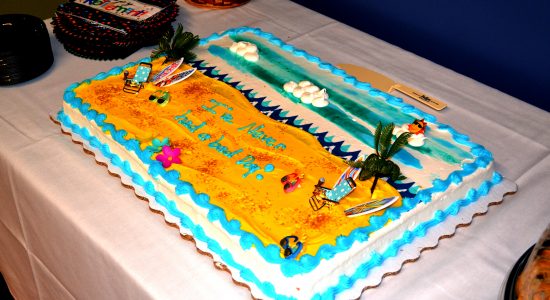
    On June 30, Gary Golden retired from his long-time position as director of Paul Robeson Library. His colleagues at Rutgers University-Camden held a retirement party earlier in June and assembled these photos to document some highlights from his time with Rutgers. I hope you enjoy the photo slide show.

    Here is the text Krisellen circulated earlier this year because it is a story that bears repeating.

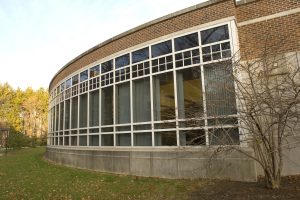
    Gary started working at Rutgers in June of 1986, shepherding the Camden Library through many transitions—new technology; new building; a new name as the Paul Robeson Library; and, most recently, a $3 million dollar, four-year renovation that completed in 2015. Throughout these changes, Gary has maintained a steadfast eye on the student user experience, made smart financial and technological decisions, and created links to the Camden community.

    Starting in 1986, Gary strived to create a safe, comfortable, and functional space for students to study and research. Between an addition in 1995 and, more recently, the 2015 renovation, he has successfully met the demands of the students at Rutgers University—Camden. Gary tells me nearly every square foot of public and 80% of work space has been renovated during his tenure, and I believe it. You can see the results for yourself if you visit: the libraries look great, the furniture is comfortable, the computer labs are top notch. Because of Gary’s efforts, the Paul Robeson Library is truly a 21st-century institution that Rutgers University can be proud to call its own.

    Under Gary’s guidance, the Paul Robeson Library has invested wisely in exciting partnerships like the ongoing one with Camden County Library and Rowan University that not only expand the service of the library, but have also yielded good financial results—money that that has been invested back into the Library to continue to improve and expand services. His efforts have kept the Library on the cutting edge of technology—from introducing the first computer labs of the late 1980s and phasing out the paper card catalog in 1992 to bringing wireless access to all areas of the library in 2000 and, just last year, creating a 10,000 square foot OIT computer lab.

    Additionally, Gary has forged important connections with Rutgers University–Camden and the greater Camden community. He and his colleagues have collected toys and donations for the Camden Rescue Mission, organized conferences and events that span town and gown, and created Camdenbase, an online database of citations to newspapers and periodicals about Rutgers Camden and Camden City.

    As if these accomplishments were not enough, Gary is also a wonderful colleague—smart, thoughtful, kind, and creative.We wish him all the best in this next chapter.

  • Historians on the Internet, Twenty Years Later

    h-netIn 1996 I was History and Foreign Languages Librarian at Texas Tech University in Lubbock, Texas. While in library school at the University of Texas at Austin two years earlier, I discovered the fledgling internet organization for historians, H-Net, and became a volunteer editor for one of its mailing lists, the HABSBURG group for East European history. At the time it seemed like an ideal combination of my former career as a history professor and my new one in librarianship. During a trip to Hungary that year, I toured the innovative university library in Szeged with a publicly engaged librarian, Károly Kokas. When the editor of the scholarly journal Debreceni Szemle invited him to join the group of respondents to a recently published discussion about the internet, he offered the editor my name as an additional contributor.

    The theme of the recent discussion in the economic weekly Heti Világgazdaság was the desirability of commercializing the internet. Rather than addressing this controversy directly, I chose to highlight the uses of the internet for historians, taking the title: “Historians on the internet, or: How can an Historian become a Cybernaut?” Yes, even in those ancient times “cybernaut” was a thing!

    Now, twenty years later, I have been invited to update the story of historians on the internet with an examination of today’s state of affairs.

    As I wrote in the original article, the historian’s skepticism toward the internet had its foundation in the discipline’s reliance upon authentic, unchanging documentation; whereas, the internet is constantly changing. Library budgets could barely keep pace with the proliferation of monographic publications for this book-centered discipline. I proceeded to demonstrate, however, the value of the internet for information sharing, chiefly in interlibrary loan, noting that OCLC’s database contained an impressive 30 million records. Reading this today, I suspected a typo, but that was the figure in 1996—compared to 361 million in 2016.

    The crisis of scholarly communication, a prominent theme in 1996, is of course still with us. The scale of interlibrary loan is now incomparably greater, but even at the writing of my original article, the trajectory was already becoming evident with the advent of patron-initiated interlibrary loan from WorldCat records, of which Texas Tech was an early adopter. Historians have now fully integrated the distributed national collection of print books and journals into their research routine. We are all feeling the consequences of the commercialization of the internet and the impact of the price structures of profit-based journals and databases on library budgets. In twenty years the portion of library collection budgets dedicated to journals and databases has skyrocketed, while the portion dedicated to books has plummeted.

    H-Net was enjoying a period of dramatic growth in 1996. From its birth in 1993 with three lists and 500 subscribers, it had reached 51 lists (the preferred H-Net term is networks) with 43,000 subscribers from 68 countries in 1996. Subscribers posted research queries, pedagogical experiences, and announcements, with list moderators or editors responsible for enforcing standards of appropriateness. H-Net editors had begun to commission book reviews, receiving review copies from the publishers who had learned to appreciate the rapid dissemination of scholarly reviews of their new publications.

    The American Historical Association (AHA) seemed to view H-Net with some trepidation, considering that the thousand-some reviews published yearly in its flagship journal were at least as attractive to its readership as its articles. In that original article, I accurately predicted that H-Net might soon equal the review production of the American Historical Review. Now, as already at that time, H-Net distributes these reviews over freely accessible email lists and archives them on the open World Wide Web.

    H-Net has not become commercialized, but has faced managerial and financial challenges as the result of its growth. The original institutional home, the University of Illinois at Chicago, was unable to support the growing computer network, so H-Net accepted an invitation to move computer operations to Michigan State prior to 1996. This move made possible a more robust technical infrastructure with one of the largest list servers in the US and an office able to manage the receiving and re-mailing to reviewers of book review copies.

    The institutional move and associated managerial challenges caused a crisis in the democratic governance structure of H-Net during its internal election in 1997. As a result of a hard fought election that was reported in the Chronicle of Higher Education, I became a member of H-Net’s ruling body and the coordinator of its reviewing policies. It was by virtue of its reviews that H-Net became one of the leading open access publishers.

    I initiated the office of H-Net Vice President for Research and Publications and held it for several years. In this capacity, I became one of the first signers of the Budapest Open Access Initiative in 2002 and successfully sponsored the introduction of Creative Commons licensing for H-Net Reviews. H-Net organized a panel about Open Access at the annual meeting of the AHA in which it challenged the determination of the AHA to maintain the commercial character of its journal. Of course H-Net itself is not immune to financial reality, and in particular the challenges that Michigan State University faces in reductions of budgetary allocations from the state of Michigan. H-Net consequently supplements university support with a regular fundraising campaign and has begun to charge a fee for the placement of job ads; however, all of H-Net’s content remains freely accessible.
    habsburgThe HABSBURG list was born as an unedited list on the bitnet server of Purdue University in 1991. With the promise of improved technical and managerial infrastructure, the founder, Charles Ingrao, and I brought the list into H-Net in 1994 with its fifty-some subscribers. By 1996 the list subscribers numbered 389.

    Thanks to connections I developed with publishers in the US and in Europe, review copies were flowing in and I was commissioning and editing enough reviews to distribute as many as one per week in the late 1990s. I scanned the first few primary source publications for the HABSBURG website’s source collection and managed a growing collection of syllabi for our field. The source collection anticipated, in a small way, the tremendous volume of research material now available on the free internet and in licensed resources.

    There is a tremendous quantity of freely available resources now available to researchers. But commercial publishers have established a strong foothold in the lives of researchers, not only in the publication of journals and monographs but also in the provision of online access to journal and newspaper backfiles and primary source material. Ironically, history librarians are today more likely to hear requests for subscriptions to full text databases than for the purchase of books—even though history continues to be a book-centered discipline—because books are available via interlibrary loan, while the databases are not.

    H-Net and HABSBURG have continued to grow. The full organization today boasts 185 networks with 175,342 unique subscribers and HABSBURG has 1648 subscribers. The technical infrastructure has been transformed in recent years. While still a collection of moderated email lists with associated websites, H-Net increasingly foregrounds a new platform called the H-Net Commons. The Commons is less wedded to email, more web-based in the distribution of messages, and better able to accommodate multiple character sets and languages, images, blogs, Twitter, and rss feeds. Historians on H-Net can choose not to have their email inboxes overwhelmed by colleagues’ messages every day and many of them make this choice. H-Net continues to commission and produce close to one thousand reviews per year and all (40,715 to date) are archived on the free internet at http://www.h-net.org/reviews/home.php .

    The impact of the internet and, less directly, of H-Net on historians is reflected in the stance of the AHA toward internet media today. Twenty years ago the AHA viewed the free internet skeptically, whereas H-Net championed an alternative culture of online networking, discussion, and sharing. Today the internet is a central component of how the association interacts with its members. The AHA journal’s book reviews are still behind a pay wall, but its articles are now freely accessible online, as is the newsletter of the association. The AHA website hosts ongoing blogs that are communicated via email to members and even retains a staff member dedicated to social networking who reports on members’ tweeting at the annual meeting.


    Jim Niessen is World History Librarian at Rutgers University Libraries.


  • Making an Impact: Bringing the Spring 2017 Mid-Atlantic Regional Archives Conference Meeting to Newark

    MARAC newarkUnder the leadership of Chancellor Nancy Cantor, Rutgers University—Newark (RUN) is implementing a number of initiatives to advance the role of RUN as an anchor institution in the city. In the spirit of these efforts, in June 2014 I organized an informal group, the Brick City Archivists and Friends (BCAF), to bring together local archivists, librarians, and community members who care for and support historic collections.

    With help from Natalie Borisovets and Gayle Malmgreen of the Newark Archives Project, I obtained contact information for potential Brick City members and convened an initial happy hour to coincide with the Institute of Jazz Studies’ (IJS) Jazz Archives Fellowship residency. The event was well-attended, so I continued to organize regular gatherings. Having the support of RUL’s Angela Lawrence, Bob Vietrogoski, and Adriana Cuervo has been particularly invaluable in the growth and sustenance of the BCAF, and I am grateful for their support. In all, fifteen archivists and other interested folks have come to events, and we’ve toured four area institutions along the way.

    I began to announce upcoming BCAF meetings via the Mid-Atlantic Regional Archives Conference’s (MARAC) New Jersey caucus listserv, and evidently, MARAC noticed. In late 2014 MARAC leadership decided that New Jersey deserved a turn as a meeting host, and given that Newark had not hosted a MARAC meeting since the 1970s, it was selected as the location for the spring 2017 conference. I like to think that the BCAF also played a role in this decision.

    We announced the exciting news to a joint meeting at the IJS of MARAC’s New Jersey caucus and the BCAF in January 2015. Shortly before this meeting, I was asked to serve as a Local Arrangements Committee (LAC) tri-chair, a position that I gladly accepted. Becoming a tri-chair appealed to me because it offers me the opportunity to serve MARAC’s membership and the archives profession, represent RUL in a leadership role, and support RUN’s efforts to make an impact in Newark. Seven of the twenty-two LAC members have been active in the BCAF, and RUL is also well-represented on the LAC through the service of Natalie Borisovets, Tim Corlis, Angela Lawrence, Tara Maharjan, and Bob Vietrogoski.

    Bringing MARAC to Newark provides opportunities to give back to the Newark community and to showcase Rutgers University Libraries:

    • To support local historical collections, the LAC is planning a “Day of Service” through which MARAC members will help a Newark institution with a hands-on archives project.
    • RUN and the IJS are sponsoring the all-attendee reception on April 21st, which will be held in the Great Hall at 15 Washington Street in Newark, adjacent to the IJS-sponsored and soon-to-open “Clem’s Place,” a lounge and performance venue dedicated to the late Dr. Clement Price currently being developed for RUN faculty and special guests.
    • The IJS will showcase its most ambitious exhibition to date, Records at Play: A Century of Jazz from New Orleans to Newark, which is scheduled to open in January 2017 and run through the end of the semester. Records at Play will be the inaugural exhibit in RUN’s Express Newark, a university-community collaboratory under development in the former Hahne and Company Department Store. Stay tuned for more information about the exhibit in a future edition of The Agenda!

    The meeting will be April 20th through 22nd at the Robert Treat Hotel, and we expect between 350-400 conference-goers. Even though the conference is a year away, the LAC is currently recruiting volunteers to work during the meeting, so please contact me at elizabeth.surles@rutgers.edu if you have an interest in getting involved.

  • Libraries Get Social at Social Media Summit

    The Libraries’ first Social Media Summit was held on Tuesday, April 19. More than 20 of our colleagues gathered at Alexander Library or attended remotely for a day-long program focused on all things social media at the Libraries and beyond.

    The morning began with a presentation by Karen Smith, assistant director of new and emerging media for Rutgers University. Smith discussed the key elements of building an effective social media strategy as well as the most popular social media platforms and their uses. She also shared best practices developed from the experience of managing the university’s primary social media accounts (RutgersU on Facebook, Twitter, Instagram, and Snapchat).

    The emphasis for RutgersU social media is encouraging conversation — asking questions, posting interactive materials, highlighting student contributions (everyone likes their 15 minutes, and the RU Speaks campaign featured below is a good example of this). Some takeaways:

    • Rutgers invites a student to guest post on their Instagram each week – creates lots of student-friendly content and interest.
    • Tease out big news by asking “Guess who?” or “Guess what?” questions. We tried this for our Rutgers Day John Morton reveal and it generated a lot of chatter and feedback.
    • Run lots of contests for prizes like mugs (they will do person on the street — “show us your follow on any social media and you can win a prize”)
    • Try to create an accessible, authentic space by avoiding overly moderating contributions and academic language and jargon.

    The afternoon was highlighted by a presentation from Aaron K. Ginoza, social media and community engagement coordinator for the University of Maryland Libraries (UMDLibraries on Twitter, Instagram, and Snapchat). Ginoza gave an overview of the evolving social media landscape at the University of Maryland, provided case studies of UMD Libraries’ most successful social media campaigns, and offered his own set of best practices for generating online engagement.

    umd
    During Exam Wars, UMD Libraries hosted yoga classes.

    Some of the social media campaigns UMD has run in recent months are

    • Parody music videos
    • Light painting (great for nighttime study breaks!)
    • Exam Wars campaign (utilizing Star Wars visuals for reading time promotions and stressbuster activities)
    • Throwback recess (complete with potato sack and three-legged races)
    • Zombie, Pokemon, and Game of Thrones-inspired scavenger hunts to encourage exploration of the libraries
    • An extensive campaign for Alice in Wonderland exhibit.

    The program was wrapped up by Jessica Pellien, director of communications, who discussed a proposal for a Social Media Taskforce that was recently reviewed and approved by Cabinet. The Taskforce members will be selected with input from the Libraries’ Cabinet and will hopefully begin work over the summer.

  • Rutgers University Libraries at NJLA Conference, May 16 – 18

    njla

    Many of our colleagues will attend or participate in the 2016 Annual NJLA Conference this month. The conference will run from May 16-18 and will take place at Harrah’s Waterfront Conference Center in Atlantic City. Perusing the program, it looks like the following sessions will feature people from Rutgers University Libraries. If I’ve missed one, please send me a note and I’ll update this post.
    Tuesday, May 17:

    Poster Sessions
    “Embracing Challenges in Times of Change: NJ Academic Librarians Identify Opportunities Presented by the ACRL Framework for Information Literacy for Higher Education”
    Leslin Charles
    11:15 a.m. – 12:15 p.m.

    Best Practices in Internal Communications
    Jessica Pellien
    11:30 a.m. – 12:20 p.m.

    Awesome Outreach by Academic Libraries
    Megan Lotts
    3:10 p.m. – 4 p.m.

    Music Advisory: Connecting Books, Music & Readers
    Jonathan Sauceda
    4:10 p.m. – 5 p.m.

    Wednesday, May 18:

    College & University Section Research Award Forum
    Gracemary Smulewitz
    2:30 p.m. – 3:20 p.m.

    Training Tips & Tricks: Templates and Strategies for Training New Staff
    Zara Wilkinson, Moderator
    3:40 p.m. – 4:30 p.m.

    Some of our colleagues from Rutgers SCI will be presenting as well:

    Tuesday, May 17:

    The Changing Face of Education for Information Professionals
    Ross Todd, PhD, Rutgers University
    Lilia Pavlovsky, PhD, Rutgers University
    Joyce Valenza, PhD, Rutgers University
    Chirag Shah, PhD, Rutgers University
    3:10 – 5 p.m.

    Wednesday, May 18:

    Will Librarians be Ready When Professors and Students Move from Print Research Papers to Multimedia Presentations?
    11:30 – 12:20
    Dan O’Connor, Rutgers LIS
    GoUn Kim, Rutgers LIS


  • The Winner of Our Giveaway Is…

    reading publicThank you to everyone who entered our giveaway for a copy of Tom Glynn’s new book, Reading Publics: New York City’s Public Libraries, 1754-1911. We are delighted to announce that our winner is:

    Stephanie Bartz

    We hope you enjoy the book, Stephanie, and congratulations again to Tom on publishing such an important new, award-winning book!

  • Tara Maharjan’s visit to Kaiser Library in Nepal [Photos]

    Special collections and university archives processing archivist, Tara Maharjan, recently traveled to Nepal, almost one year after the 7.8 magnitude earthquake. While in Nepal, she took a trip to the 120-year old Kaiser Library, the oldest library in the country. The library building, as well as one-third of the 28,000 books, were damaged. The books from the four floors have all been moved to the ground level, the only part of the building which is somewhat structurally sound, and are now in plastic bags until the building can be reopened to the public. In the mean time, the small library staff serves patrons from a tent outside the building, where people can view newspapers and a few books.

    Here are just a few of Tara’s images from the Kaiser Library:

    • OLYMPUS DIGITAL CAMERA
  • Call for Submissions to Featured Collections

    featured collections
    What would you feature in this spot on our homepage?

    In order to better represent the magnitude and diversity of materials the Libraries hold, we are opening up the Featured Collections block on the Rutgers University Libraries homepage to submissions. We can include a photograph and a brief description of a physical or digital collection or other materials you think will be of interest to our users.

    To be included, please send Mary Ann Koruth an image with a caption and a description with a link (if available) to any item that you feel deserves to be showcased on the homepage. These could include photographs, prints, videos, maps, books, collections, items relating to science and medicine, oddities from the archives–you name it.

    We’d like to extend a special thanks to Caryn Radick and Tara Maharjan in Special collections in Alexander, for the wealth of material they have brought to our notice over the past years.

    Please take some time to peruse through collections in your specialty and send in a submission that grabs your eye and piques your interest!

  • Win a copy of Tom Glynn’s award-winning book, Reading Publics

    Win a copy of Tom Glynn’s award-winning book, Reading Publics

    reading public

    As you may have noticed in the Staff News, Tom Glynn’s new book, Reading Publics: New York City’s Public Libraries, 1754-1911, has won three major awards:

    His publisher, Fordham University Press, was kind enough to give us a review copy of his book for a giveaway. This giveaway is only for faculty, staff, student workers, interns, and other employees of Rutgers University Libraries. See below for details on how to enter. You can receive up to 3 entries if you complete all three actions:
     

    a Rafflecopter giveaway

  • New research impact panel

    New research impact panel

    altmetricsCheck out the new Research Impact panel on the Information for Researchers and Scholarly Communications website: http://www.libraries.rutgers.edu/services_researchers. Intended for the libraries users, it includes an overview of traditional citation analysis tools and metrics, as well as an Altmetrics description and useful links.

    Send any questions about scholarly metrics to: scholarlyimpact@rulmail.rutgers.edu.