Category: Feature

  • Honoring Paul Robeson’s Legacy

    A person speaks at a podium.
    An event celebrating the enduring impact of Paul Robeson was facilitated by Dr. Jason L. James, Director, Strategy and Operations Support Initiatives for Rutgers–Camden Student Academic Success.

    On February 19, Robeson Library hosted an evening that honored the enduring impact of Paul Robeson, the distinguished Rutgers alumnus, activist, artist, and scholar. The program highlighted Robeson’s powerful legacy through curated reflections and engaging dialogue, offering a rich exploration of his contributions to social justice, culture, and intellectual life.

    Facilitated by Jason L. James, Director, Strategy and Operations Support Initiatives for Rutgers–Camden Student Academic Success, the event celebrated a shared commitment to scholarship, leadership, and cultural impact. Librarian John Powell spoke about the life of Paul Robeson, including his time spent as a scholar and athlete at Rutgers in New Brunswick, where he was a two-time All-American in football. While at Rutgers, Robeson was also inducted into the Phi Beta Kappa Society and Rutgers’ Cap and Skull Honor Society and was valedictorian of his graduating class in 1919.

    The evening was co-sponsored by the Division of Diversity, Inclusion and Community Engagement (DICE), Alpha Phi Alpha Fraternity Inc. – Nu Gamma Lambda Chapter, and NAACP Rutgers University-Camden Chapter.

  • Staff Advisory Committee Town Hall: March 2026

    line-drawn illustration of chat bubbles with the words "Town Hall Meeting"

    Andy Martinez, Corinne Suarez, and Eddie Suarez also contributed to this report.

    Summer Leadership Transition of the Executive Council

    John Gibson began the meeting by announcing that he will step down as chair of the Staff Advisory Committee Executive Council as his term ends in June.  Jeff Teichmann will take over as chair on July 1, 2026.

    Report of the VPUL/UL

    Gibson shared some updates on behalf of Consuella Askew. The AI Symposium, which was a partnership with Libraries leadership and Mary Beth Weber, was a success with a lot of attendees and robust participation. Rutgers University Libraries Engagement Day is happening this May. Staff are encouraged to attend as it’s a great opportunity to get together, talk with one another, and learn new things about the Libraries.  Lastly, an offer was made to the selected candidate for the New Brunswick AUL position.  Stay tuned for more updates.

    Progress Updates

    Gibson gave an overview of SAC’s accomplishments for the year. He reminded the group of how far we’ve come, from having a small voice on system-wide discussions to now having representation in high-level discussions alongside faculty leadership. Gibson stated, “The SAC is not just the Executive Council. It is our standing committees, our unit representatives, and it is every staff member who chooses to engage, whether by attending a town hall, completing a survey, submitting a proposal, or serving on a committee. Through collective effort, we have participated in system-wide strategic planning and leadership retreats, advanced conversations around mentorship and professional development, developed and delivered staff-focused safety and de-escalation training with strong engagement, and contributed staffers to core services discussions.” He concluded by thanking staff for their outstanding work and encouraged them to continue to bring up new ideas and proposals and complete the feedback forms as they are vital in helping the SAC move forward.

    Standing Committee Reports

    The standing committee chairs gave their group reports highlighting each committee’s key contributions from the staff.

    The Governance Committee, led by Tracey Meyer, will ask for nominations for positions that are open for election in the next few weeks. Key positions open for nominations include the chair-elect of the SAC Executive Council, the governance committee chair, the secretary, and unit representatives. Meyer thanked everyone who voted for the bylaw’s amendment, which passed with 23 votes in favor and 0 against. The amendment will allow meeting minutes to be approved in-between meetings so they can be distributed before the next meeting.

    Gibson spoke on behalf of Andy Martinez of the Communications Committee. The committee continues to ensure that SAC documentation and minutes are posted to the Libraries staff site. They wrote an article for The Agenda and have collected feedback forms for the SAC town halls.

    The Enrichment Activities Committee, led by Andrew Ruggiero, thanked everyone who attended the recent De-Escalation Training hybrid session. It was one of their most well-attended events with a lot of in-person participation. The experience of working with RUPD Community Affairs and Community Policing allowed the committee to tailor training to fit their specific needs. This partnership will develop a proposal for additional programming on the topic of mental health first aid as well as further sessions focused on promoting faculty and staff safety.

    Ruggiero thanked Elena Schneider Kerr and the rest of the Enrichment Activities Committee for working on an internal assessment initiative where we analyze how we spend our time in the office.

    Gibson thanked Human Resources and the Communications Committee for their contributions toward The Agenda, including writing articles and announcing work anniversaries and birthdays.

    Unit Representative Updates

    The town hall continued with some updates from each unit representative.

    Jennifer Reiber of Robeson Library shared that they will have a new part-time library assistant to help with Access Services. They have moved equipment around in the library to comply with ADA regulations. Edward Robinson has organized monthly game nights to provide more engagement with the users in the building. Robinson and Ann Marie Latini, head of access services, are meeting with the Instructional Design and Technology department to discuss electronic reserves and copyright policies to ensure their instructors are better informed.

    For Central, Isaiah Beard shared that Midnight Tech successfully held 12 book chats since its launch in March 2024. Book chats are held every other month, with staff taking turns choosing selections, preparing a few questions, and leading the discussion. Beard thanked all his colleagues in Central for giving him the opportunity to represent them on the SAC.

    Jamey Silverstein, representing Rutgers–New Brunswick, thanked everyone who helped elect him for the opportunity to represent New Brunswick, as well as those who have provided him with unit updates. He shared that there have been staff shortages in the last couple of years due to many retirements. Units will rely on cross-training of positions to support the demand.

    Beginning in mid-February, Alexander Library is open until 2 am, five days a week, and Carr Library is open until 2 am, 4 days a week. Douglass Library installed a chess station for students to utilize during study breaks. The Library of Science and Medicine had a meet-and-greet session with librarians from LSM and Robert Wood Johnson Library. They plan on having more sessions.

    Chris Singh of Dana Library announced a social mobility poster exhibition hosted by the Office of the Provost at Dana Library. The opening ceremony had about 75 guests in attendance, and Chancellor Tanya Smith-Jackson of Rutgers–Newark made opening remarks. Dana staff are also working on putting together a break room on the first floor that will be accessible for all library personnel.

    For the Rutgers Health libraries, Jonas Desir shared that Robert Wood Johnson Library staff are having weekly meetings with the Helix Relocation Logistics team, with a tentative move date expected during the second week of May. Additionally, as part of the Robert Wood Johnson Library move, Maria Deptula (Smith Library) is working on integrating 70 boxes of journals into the library system. Robert Wood Johnson Library also celebrated 12 work study students becoming full medical students. At Smith Library, Ermira Mitre created a presentation and video highlighting their crocheting and knitting events for the Rutgers Health Joy at Work Mini-Grant program.

    The town hall concluded with a breakout session in which staff discussed two topics.

    • Name a small improvement that would make your day-to-day work feel smoother or more enjoyable?
    • Who or what would you like to give a quick shout-out to from your unit (or beyond)?
  • New Digital Collection: Rutgers Meets Japan

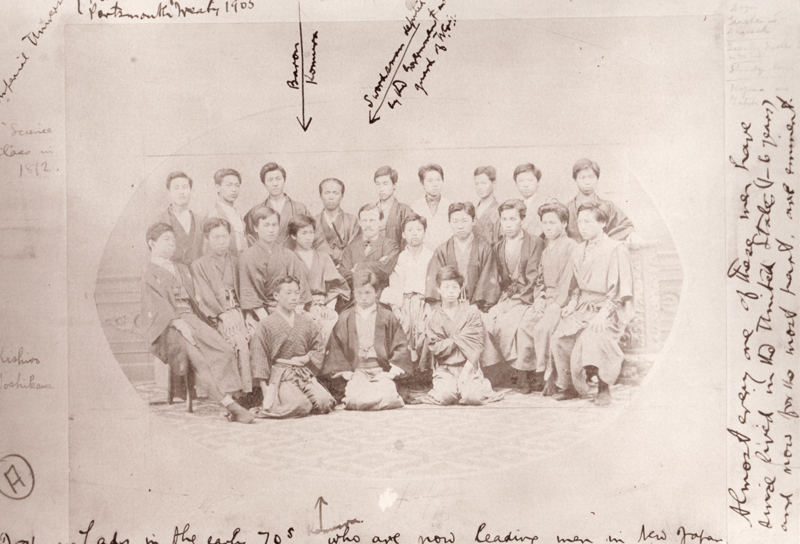
    Old, sepia-toned portrait of a group of people
    The Rutgers Meets Japan digital collection invites users to explore the people and places that shaped a pivotal moment in global education and cultural exchange.


    We are pleased to announce the launch of Rutgers Meets Japan, a new digital companion collection that brings to life a remarkable trans-Pacific story of intellectual exchange, cultural connection, and shared history. Developed in conjunction with the book Rutgers Meets Japan: A Trans-Pacific Network of the Late Nineteenth Century, this digital collection expands upon the book’s narrative by providing open access to a rich set of historical photographs drawn from the William E. Griffis Collection.

    The collection features portraits of some of Rutgers’ earliest Japanese students, as well as images of alumni who traveled to Japan as teachers and missionaries during the late 19th century. These photographs offer a rare visual window into a formative period of U.S.-Japan relations, capturing individuals, institutions, and everyday scenes across locations such as Fukui, Yokohama, Tokyo, and Shizuoka. In addition to images reproduced in the book, the digital companion includes many photographs that could not be published due to space constraints, significantly broadening access to these materials for researchers, students, and the public.

    Funded by a grant from the New Jersey Historical Commission, the project involved the careful digitization, transcription, and annotation of materials, ensuring both accessibility and scholarly value. By pairing rigorous historical scholarship with digital access, Rutgers Meets Japan invites users to explore the people and places that shaped a pivotal moment in global education and cultural exchange.

    The launch of this digital collection also coincided with an event held on April 17, Rutgers Meets Japan: In Conversation with the Authors. This event was held in the Alexander Library Pane Room and featured presenters Haruko Wakabayashi and Fernanda Perrone, with Janet Walker moderating.

  • Erosion of Truth: A Workshop on Mis/Disinformation in the Age of AI

    Two people are seated in high chairs at the front of a room. One smiles and gestures with her hands while talking.
    The highlight of the workshop was a Q&A session with New York Times technology journalist Tiffany Hsu, who specializes in misinformation reporting.

    On April 1, librarians at Dana Library hosted The Erosion of Truth: How to Protect Yourself from Mis/Disinformation in the Age of AI, a hybrid virtual/in-person workshop. Mis- and disinformation in society’s information landscape is not new; however, the proliferation of generative artificial intelligence has compounded its impact on individuals, society, and our democracy. This workshop introduced foundational information literacy strategies for critically evaluating news and media content, along with available online tools to support this work. Students, faculty, and staff explored the rapid development of AI-generated deepfake videos, manipulated images, and viral misinformation, and tested their ability to distinguish between AI-generated and authentic content. Attendees were also introduced to real-world examples and professional fact-checking techniques, leaving with a personal toolkit for verifying information. 

    The highlight of the workshop was a Q&A session with New York Times technology journalist Tiffany Hsu, who specializes in misinformation reporting. Hsu fielded questions on topics including how New York Times reporters verify images and video, the challenges posed by AI-generated content to investigative journalism’s ability to establish credibility and truth, and the role that social media platforms play in the spread of misinformation. Participants enthusiastically expressed appreciation for her insights into these critical issues. 

    We hope to continue this discussion as technologies used to fabricate, manipulate, and mislead grow increasingly sophisticated, with the library planning additional workshops and learning opportunities to strengthen our community’s information resilience in the age of generative AI. 

    Co-Organizers of the event: Joanne Dera, Diane Biunno, and Naomi Gold 

  • Data for Change: Women in STEM Wikidata Edit-a-Thon

    Two people pose smiling in front of a large screen with an image projected that reads, "AMPLIFYING WOMEN IN STEM IN WIKIDATA: Why representation in open knowledge matters - especially in the age of AI
    Diane Biunno and Joanne Dera were among the co-organizers of the Women in STEM Wikidata Edit-a-Thon.

    On March 4, Dana Library hosted a Wikidata mini edit-a-thon focused on Women in STEM in collaboration with librarians from NJIT. The event brought together 13 participants ranging from beginner to advanced contributors, including students, librarians, and experienced Wikipedians. Attendees represented Drew University, NJIT, Smith Library, and Dana Library, along with members of the regional Wikimedia community. We were especially fortunate to have leadership from Wikipedia NYC and the Philadelphia Wikisalon in attendance. Their expertise was invaluable in supporting participants who were new to Wikidata and helping guide the editing process throughout the session. 

    During the edit-a-thon, participants expanded and strengthened approximately 30 Wikidata entries related to Rutgers and NJIT graduates. Contributors added new data points, improved existing information, and incorporated reliable references to support the entries. Participants also drew on Rutgers University Libraries and NJIT Libraries resources to enhance the records, demonstrating how library collections and research materials can be used to improve structured data and increase the visibility of our libraries’ collections and resources. 

    In addition to the hands-on editing work, participants learned what Wikidata is, how it functions as structured linked data, and why contributing to it matters. The session highlighted how improving data about women in STEM helps make their contributions more visible and discoverable. Because major platforms, such as Google, and large generative language models, such as ChatGPT and Google Gemini, draw on Wikipedia and Wikidata, expanding these records helps broaden public knowledge and address systemic gaps and biases in how women’s achievements are represented online and in AI-driven systems. 

    The event was a strong success and demonstrated significant growth potential. As a result, we are now in conversations with Wikipedia NYC and NJIT about organizing additional events and expanding this collaboration. With greater support from the Wikimedia community, future edit-a-thons could scale to larger participation and further leverage Rutgers and NJIT library collections to enrich Wikidata entries, both strengthening the global knowledge graph and helping drive researchers and readers back to our library resources and collections. 

    Co-organizers of the event:
    Dana Library Team: Joanne Dera, Diane Biunno, and Angela Lawrence
    NJIT Libraries Team: Bob Vietrogoski and Jill Lagerstrom

  • When Data Speaks: Stories from People, Places, and Time

    Display cases filled with various objects are lined up against the wall of a room.
    A new exhibition at Carr Library explores how qualitative research methodologies can be used to uncover and address complex cases such as campus food insecurity.

    Xu Guo, graduate specialist for qualitative methods at the Rutgers–New Brunswick Libraries, contributed to this report and to the development of the exhibition.


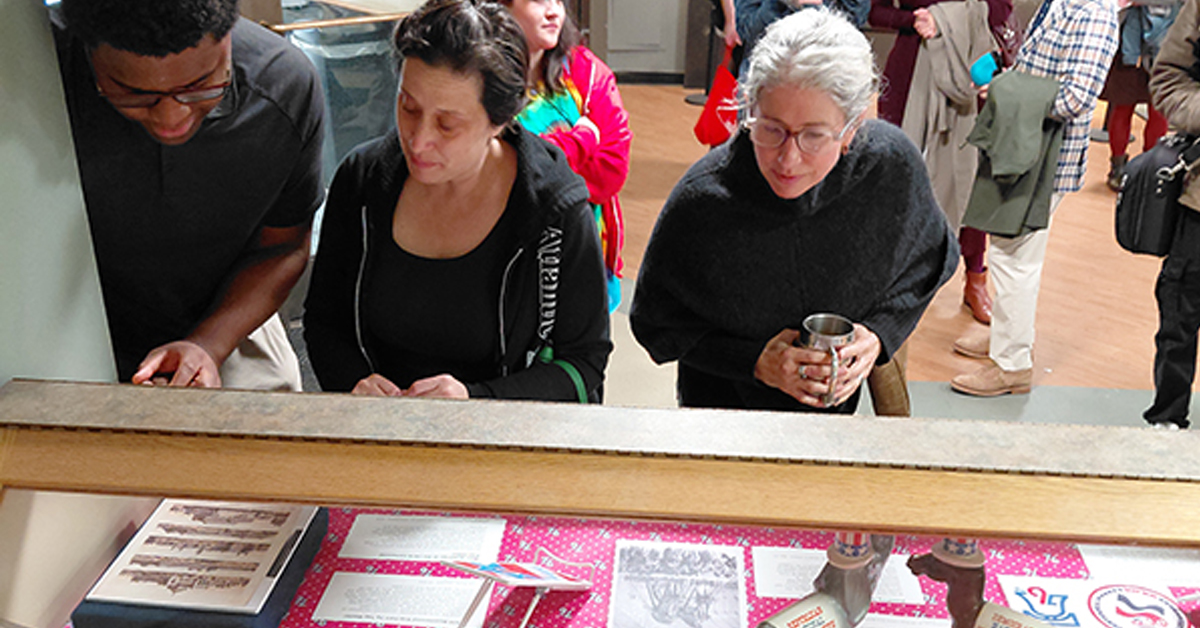
    In celebration of International Love Data Week, a new exhibition opened on February 9 at Carr Library. When Data Speaks: Stories from People, Places, and Time aims to show how qualitative research methodologies can be used to uncover and address complex cases such as campus food insecurity. Centered around a comprehensive introduction, the multidimensional display utilizes three curated cases to transition between theoretical frameworks and the lived experiences of a college campus.

    The installation employs a diverse array of media to engage visitors’ senses and intellect. Academic rigor is represented through illustrated texts on qualitative methods and peer-reviewed journals featuring interview scripts, participant responses, and ethnographic field notes. These are juxtaposed with hyperrealistic food models and everyday tableware to symbolize the basic human needs at the heart of the study. Visual data, such as infographics regarding Rutgers-specific food security statistics and a detailed campus map, help ground the research in a local context.

    Beyond static displays, the exhibition incorporates digital storytelling through curated podcasts and videos, offering a deeper dive into the systemic challenges of student basic needs. To bridge the gap between researchers and the public, a visitor interactive board was integrated, inviting the community to share their reflections and foster a dialogue.

    The exhibition will remain in the library for the duration of the spring semester.

  • Unearthing Treasures in the Archives


    A weathered document reads, "The last will and testament of Joseph Bonaparte, Count De Survilliers."
    The last will and testament of Joseph Bonaparte, the former King of Naples, King of Spain and the Indies, and the older brother of Napoleon.

    As the metadata archivist at Special Collections and University Archives (SC/UA), I have had the privilege of working with our collections on a daily basis. Though I’ve just been able to scratch the surface of our ample and unique holdings, I’ve had the joy of making old records publicly accessible while creating new records for materials that were never previously described. This undertaking has allowed me to unearth and publicize various collections that I would consider treasures, and I’m happy to share just a few of those with you here.

    Legacy Finding Aids

    The first part of my endeavor involved getting previously written finding aids, known as “legacy finding aids,” into our collection management system, ArchivesSpace. Many of these legacy finding aids were decades old, written by staff and faculty members that no longer work here, and only exist as PDFs, their physical counterparts long since gone. These documents were published by creating a new, base-level finding aid in ArchivesSpace for each collection and then attaching the legacy finding aid to the resource record as a digital object hosted through RUCore. Among the dozens of legacy finding aids published via this route are the Joyce Kilmer papers (MC 1547) and the Nicholas F. Brady senatorial papers (MC 660).

    Joyce Kilmer was a New Brunswick-born writer and poet, best known for his work “Trees,” published in 1913. He was killed just five years later in France during World War I. Here at SC/UA, we have scrapbooks of his writings created by his parents over a century ago.

    The Nicholas F. Brady senatorial papers relate to the work Senator Brady undertook while in Congress. Brady served as a United States senator for eight months in 1982 following the resignation of Harrison A. Williams. As of February 2026, Brady is the oldest living former U.S. senator.

    New Finding Aids Published

    Since publishing the legacy finding aids that hid on our internal servers for so many years, I’ve been able to turn my attention to new collections that were never described in any format. In order to find out which boxes fit this criteria, I’ve been creating an inventory of our spaces, particularly of Room 022 (B-Level, Alexander Library). This comprehensive account of our collections allows me to easily discover which materials have been sitting dormant on our shelves and are in need of archival description.

    Comparable to how legacy finding aids were handled, new finding aids are created in a similar fashion. Generally, only a basic, box-level finding aid is written, as we’re prioritizing the publication of many finding aids rather than the thorough description of substantially fewer collections. This has led me to publishing almost 100 new finding aids to date. Favorites of mine include the Delaware and Raritan Canal Commission records (MC 1331), the Emerson B. Garrison photographs (MC 1620), and the Joseph Bonaparte papers (MC 1624).

    The Delaware and Raritan Canal was a feat of engineering when it was completed in 1834, shortening the journey from New York City to Philadelphia by a hundred miles. The collection at SC/UA consists of land agreements between townships and residents that made it possible for this transportation system to be built.

    The Emerson B. Garrison photographs contain images of Cumberland County and adjacent areas of New Jersey dating back to at least the early 20th century. The style of some of the photographs suggest that some of the undated prints might have been created as early as the 1890s!

    Perhaps the jewel that I’ve found in Room 022 is the one-box collection on Joseph Bonaparte, the former King of Naples, King of Spain and the Indies, and the older brother of Napoleon. Following the fall of Napoleon and his subsequent exile, Joseph fled Europe and settled in Bordentown, NJ; the papers we hold primarily relate to the affairs of his estate and other legal matters, including a printed version of his last will and testament.

    Benefits of the Project

    The initiative to publish these finding aids offers many benefits to SC/UA. Not only are we providing our patrons with information on collections that have never before been accessible in a digital format, but the push to publish box-level finding aids has allowed us to gain intellectual control over our holdings and free up physical space in our storage areas. When surveying a collection, I am able to consolidate materials into fewer boxes, as oftentimes half-full boxes appear on our shelves, taking up unnecessary space that should be designated for other materials. This will undoubtedly help us as our collections are returned from off-site storage facilities so that we may more quickly and efficiently assist our patrons.

    In the coming months, I know I will uncover many more treasures that SC/UA has to offer; I’m looking forward to sharing those with you in the future.

  • Introducing the Clement Alexander Price Archive and Circulating Collection

    A long bookshelf against a wall with various artifacts displayed on top and tightly grouped framed images on the wall above.
    The Clement Alexander Price Archive and Circulating Collection was unveiled at Dana Library in October.

    On October 24, the John Cotton Dana Library hosted a reception for the grand opening of the Clement Alexander Price Archive and Circulating Collection. The event featured an exhibition of items from Price’s archival collection and personal library. It also kicked off a year of programming called Clement@80, which is taking place around what would have been the 80th year of Price’s life. Speakers at the event included Amanda Clay Powers, associate university librarian for Rutgers University–Newark; Mary Sue Sweeney Price, Clement’s wife and Director Emerita of the Newark Museum; and Spencer Crew, Robinson Professor of American History at George Mason University, who coauthored a book with Price.

    Price was an eminent professor, renowned scholar, and dedicated citizen. His influence can still be felt in the very fabric of Rutgers–Newark, the city of Newark, and the entire nation. He was the Board of Governors Distinguished Service Professor of History at Rutgers–Newark; the founding director of the Institute on Ethnicity, Culture, and the Modern Experience (now the Price Institute); the vice chair of President Barak Obama’s Advisory Council on Historic Preservation; the chair of Obama’s transition team for the National Endowment for the Humanities; a member of the Scholarly Advisory Committee of the Smithsonian’s National Museum of African American History and Culture; and a trustee of the National Trust for Historic Preservation. You can read more about his tremendous legacy in this story on the Rutgers website.

    The Dana Library faculty and staff are pleased and proud to make the Price archive and collection available. Special recognition goes to two former associate university librarians for Rutgers–Newark, Consuella Askew and Rhonda Marker, for the acquisition of the collection, and to Mary Sue Sweeney Price for making it available.

  • Staff Advisory Committee Town Hall: November 2025

    Andy Martinez, Chiaki Mills, and Corinne Suarez also contributed to this report.

    Powerpoint slide showing two silhouettes of human profiles, with the words, "Welcome. Purpose: Update, Engage, Listen. Responsibilities: Amplify staff voice, Advise leadership, Foster transparency.
    The Staff Advisory Committee Town Hall in November aimed to emphasize the importance of staff voices in shaping the committee’s initiatives.

    The Staff Advisory Committee (SAC) held a town hall on November 6. The purpose of the event was to emphasize the importance of staff voices in shaping the committee’s initiatives by encouraging participation from the Rutgers University Libraries staff. The committee hopes to amplify staff voices to advise leadership and foster transparency between the Libraries’ units.

    Report of the VPUL/UL

    Consuella Askew, vice president for university libraries and university librarian, began the meeting with an update on the Libraries’ strategic planning progress. She thanked Tony Nguyen and the faculty and staff who served on the Strategic Goal Writing Task Force for producing a comprehensive report and hosting a town hall. As a next step, the Libraries Leadership Team will take the task force’s recommendations and develop a more refined set of goals, objectives, and activities, along with an accompanying narrative to flesh out the strategic plan.

    Askew updated the group on the Libraries’ core services. A small group from the Libraries Leadership Team will develop documents that communicate these core services visually. The team will draft internal documents, which will be used to help inform operational decision-making, as well as external documents for advocacy to stakeholders.

    Mary Beth Weber’s work in her new role as coordinator for training and mentorship was also highlighted by Askew. Weber is working with a host of internal and external stakeholders, including SAC leadership, Planning Committee leadership, and the Libraries’ human resources manager, to create and deliver enrichment programming. She’s also charged with launching an internal leadership program, as well as externally focused educational programming that centers the Libraries as the intellectual hub of the university. The University Librarian’s Symposium Series on AI in Higher Education, launched on November 10, is a prime example of this external programming.

    Askew concluded her report with her thoughts on how the staff can demonstrate the Libraries’ contributions to the academic and research priorities of the university. She stressed how the SAC has played a vital role in building an inclusive work environment to further these goals.

    SAC Overview and Highlights

    John Gibson, SAC chair, gave an overview of SAC’s accomplishments for the year. He highlighted the development of the governance foundation, a staff resources page, and an anonymous feedback form. He also mentioned the group’s participation in workforce planning, DEI initiatives, and the AI task force. In addition, the committee is looking to launch mini-town halls, discuss enrichment proposals, and explore mentorship opportunities.

    Gibson also acknowledged the work of Secretary Roselyn Riley-Ryan and Ex Officio Hadiyah Sellers.

    Standing Committee Reports

    The standing committee chairs gave their group reports, highlighting each committee’s key contributions from the staff.

    The Governance Committee, led by Tracy Meyer, focused on bylaws, elections, and nomination cycles. The group is now preparing for Spring 2026 elections and is seeking new members to help with the committee.

    Andy Martinez of the Communications Committee reported on the workflow development of posting SAC minutes and the creation of a procedural manual. The group’s future goals include content writing and new stories published on the staff website and in The Agenda.

    The Enrichment Activities Committee, chaired by Andrew Ruggiero, reported on its goals of promoting wellness, leadership, and professional development. Current projects include safety training, tech learning, and staff recognition.

    Ruggiero concluded with some complimentary words for fellow committee member Grace McGarty. Ruggiero talked about how she brings out her best to serve others and that this was a guiding vision of the work of the Enrichment Activities Committee.

    Unit Representative Updates

    The town hall then moved on to some general updates from the individual units.

    Rutgers–Camden, represented by Jennifer Rieber (Robeson Library), asked if anyone with questions or feedback could please reach out to her as the unit representative.

    Isaiah Beard from Central acknowledged the work of retiring staff member Renee Clark. She has served in a range of roles in the Technical Services Building (TSB). Working for Rutgers since 1979, she had been in TSB making sure our materials reach our sites and the community we serve.

    Rutgers–New Brunswick, represented by Jamey Silverstein (Carr Library/Annex), acknowledged his fellow staff colleagues who, like him, are wearing many hats due to staffing shortages. He provided an update on Douglass Library, where work is in progress to renovate the Media Service Point for use by University Online Education Services.

    Video of the full town hall is accessible here:

    Staff Advisory Committee Town Hall – November 10, 2025


  • Realigning Library Services to Scale Research Support

    close-up of a hand holding research notes on top of a desk
    The Research Support Services group was formed to coordinate the development and delivery of library services that support research across the life cycle.

    In 2022, Rutgers University Libraries embarked on a comprehensive review of their organizational structure with the goal of improving operational efficiency, clarity, and communication. Part of this process involved the identification of service areas that could benefit from greater system-wide coordination and support. One of those areas was research support, which encompasses a broad range of specialized, high-touch services such as managing research data, conducting systematic reviews, and evaluating research impact.

    While traditional services like reference and borrowing have been centrally coordinated for years, research support evolved much more opportunistically in response to local needs, resources, and expertise as well as rapidly changing technologies, funding expectations, and modes of scholarship. While this approach allowed for the development of responsive and innovative services, it also led to inconsistencies in quality, coverage, and integration. It therefore became necessary to explore ways of scaling these services to meet growing demand across the university and ensure their sustainability.

    To help address this challenge, the Research Support Services (RSS) group was formed in the fall of 2025 to coordinate the development and delivery of library services that support research across the life cycle. Under the direction of the coordinator for research support services, this group is responsible for providing training, outreach, and support to researchers on topics such as:

    • Artificial intelligence
    • Copyright
    • Evidence synthesis
    • Open access
    • Research data
    • Researcher identity and impact
    • Scholarly publishing

    Reporting to the associate vice president for campus libraries, the goals of RSS are to:

    • Support researchers at all stages of the research life cycle, from project design to publication and beyond
    • Increase campus awareness and use of library research support services
    • Build capacity among library faculty to provide specialized research support
    • Foster a culture of open, ethical, and impactful scholarship
    • Continuously evaluate and adapt services to emerging research needs and trends

    RSS is composed of library specialists across the Libraries and organized in the following teams:

    Artificial Intelligence

    Members: Katie Anderson, Joanne Dera, Triveni Kuchi, Mei Ling Lo, Jonathan Torres, Sonia Yaco, Yingting Zhang

    Supports researchers in understanding how to use and responsibly integrate artificial intelligence (AI) tools into their research workflows, including guidance on:

    • Identifying and evaluating AI tools appropriate for research
    • Writing effective prompts, evaluating outputs, and documenting use of AI
    • Understanding the technical limitations and ethical implications of AI
    • Ensuring ethical and transparent AI use in compliance with academic integrity, intellectual property, and data privacy standards

    Evidence Synthesis

    Members: Matthew Bridgeman, Maria Deptula, Bart Everts, Mina Ghajar, Pam Hargwood, Samantha Kannegiser, Mei Ling Lo, John Maxymuk, Stephen Modica, Yingting Zhang

    Supports researchers in performing scoping, systematic, and other structured literature reviews, including guidance on:

    • Formulating a viable research question
    • Choosing an appropriate review methodology
    • Selecting relevant databases
    • Developing an effective search strategy

    Research Data

    Members: Francesca Giannetti, Triveni Kuchi, Laura Palumbo, Susan Oldenburg, Jonathan Torres, Ryan Womack, Sonia Yaco, Yingting Zhang

    Supports researchers in collecting, analyzing, documenting, and sharing research data, including guidance on:

    • Finding and accessing specialized datasets
    • Using data analysis and visualization tools
    • Creating data management plans
    • Selecting a repository for data sharing

    Researcher Identity and Impact

    Members: Joanne Dera, Mei Ling Lo, Jonathan Torres, Yingting Zhang

    Supports researchers in promoting their scholarly work and evaluating its reach, influence, and engagement, including guidance on:

    • Creating researcher profiles and identifiers
    • Interpreting bibliographic metrics like citation count, impact factor, and h-index
    • Using bibliographic tools to perform citation analyses
    • Using scholarly networking tools to promote their research and identify potential collaborators

    Scholarly Publishing, Open Access, and Copyright

    Members: Jeffrey Carroll, Maria Deptula, Rhonda Marker, Janice Pilch, Zara Wilkinson, Yingting Zhang

    Supports researchers in navigating the complex landscape of scholarly publishing, open access, and copyright, including guidance on:

    • Identifying reputable, high-impact journals for publication
    • Understanding author rights and negotiating publisher agreements
    • Identifying funding for article processing charges (APCs)
    • Ensuring compliance with funder and institutional open access policies
    • Navigating copyright and licensing issues

    Each team has a designated team representative who serves as a member of the RSS Steering Committee, which meets monthly to coordinate the delivery of research support services across libraries, develop standardized policies and best practices, and act as the primary decision-making and strategic advisory body for RSS. Additional information, including the group’s charter and meeting minutes, can be found on the staff website.

    To support this exciting work, a new Research queue has been created in LibAnswers. The queue can be used to direct questions on any of the aforementioned topics to the appropriate library specialists. Patrons can also send their questions directly to the queue by emailing ask_research@libraries.rutgers.edu.

    Library faculty and staff interested in learning more about the work of RSS are invited to attend an information session to be held in early spring. Details will be distributed via email. In the meantime, feel free to send any questions to me at jdeodato@rutgers.edu.