Category: Universitywide

  • Ex Libris Implementation Team Update: March 2021

    As we approach the anniversary of the COVID-19 pandemic and our move to online instruction, we are taking a moment to reflect on the past year in reserves. Throughout this year, we have made the leap from primarily physical reserves to a fully digital workflow that is solidly grounded in Alma processes and provided to users through Leganto. This effort included almost everyone in the libraries and was possible only through the hard work of our reserves units, public-facing staff and librarians, directors, and nearly every central unit.

    Over the summer, Cabinet approved the Redesigning Reserves proposal to begin this transition. A few highlights from the completed work on this proposal include:

    • Modifying reserves workflows to make use of new metadata fields in Alma to manage evolving reading list and citation statuses added through Leganto
    • Moving and suppressing physical reserves items and the implementation of a chapter scanning workflow in QuickSearch to provide access to portions of these materials to users
    • Adding the Reading Lists tool to the default course shell in Canvas and integrating a Canvas course load into Alma to facilitate the connection between these two systems
    • Developing a focus group centered on improving fulfillment workflow processes, which reviewed the course reserves workflows and suggested modifications to improve efficiency and user experience
    • Forming a copyright queue to address internal course reserves copyright approvals
    • Changing the reserve workflow to center user communications in the local units and include liaisons and selectors at the correct points in the process
    • Sunsetting the course reserves scope, which was centered around print reserves discovery, in favor of the reading lists tool and the Leganto Search, which includes reserves materials in all formats

    While we are now successfully providing fully digital reserves for instructors and students, there are still ongoing changes. Some projects in process include:

    • The Fulfillment Working Group and volunteer reserves units from Camden, Newark, and New Brunswick Douglass are testing a new reports strategy in Alma to help reserves units manage reading list and citation statuses.
    • The Instructional Support Group is working on developing new documentation to help instructors create and populate their own reading lists and roll over their existing reading lists each semester to new courses.
    • The Alma Digital Steering Group is creating an outline for how we might implement Alma Digital. This tool would change the reserves process in several important ways including integrated digitization processes, a move away from local server storage for reserves materials, the opportunity to review our reserves content for accessibility, and the potential to provide controlled digital lending.
    • Cabinet will be reviewing a proposal focusing on student usage data collection in Leganto.

    Thanks to all the work across the organization on reserves this year, we have not only successfully transitioned the course reserves process to digital instruction, but have improved on it in many significant ways. Though this was a year full of uncertainty and change, we have been able to build new connections across Rutgers and continue our mission to support teaching and learning through course reserves.
  • Registration Now Open: BIG Collection Convenings for the Libraries of the BTAA

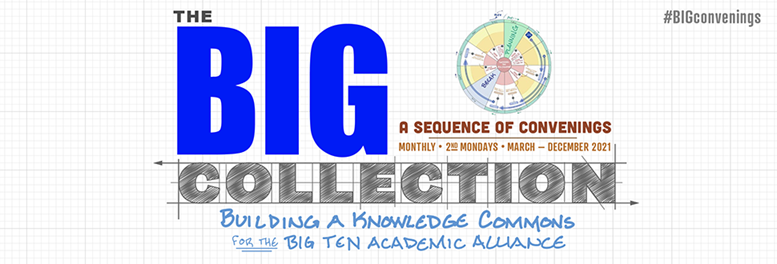
    Registration is now open for the Big Ten Academic Alliance monthly series of keynotes, panels, and conversations centered on the BIG Collection. All staff from across BTAA libraries are warmly invited to this “Sequence of Convenings,” which will focus on generating broad community engagement with the vision, themes, and practical direction for the BIG Collection. 

    Convening the 2nd Monday of each month throughout 2021, the program will include large plenary sessions about the strategic themes of the BIG Collection, alternating with focused conversations about how we reimagine our work as a community to collectively design and build the future we want to see. You can register for as many sessions as you like, and registration will remain open and editable throughout the year. Selected content will be recorded and made available following each session.

    The series launches on March 8th (10am CT / 11am ET) with “Envisioning the BIG Collection: Building a Knowledge Commons for the Big Ten” and an opening keynote from Maurice York, Director of Library Initiatives for BTAA. Panelists include the three library deans who sit on the BIG Collection Steering Committee.

    Featured plenary sessions will include:

    • April 12: “Collective Action and the Common Good: The Cornerstone of the Knowledge Commons” with Kathleen Fitzpatrick (Professor of English, Michigan State University) 
    • June 14: “Interdependence: The Pillars of the Knowledge Commons” with Greg Eow (President, Center for Research Libraries) 
    • September 13: “Open Knowledge: The Dome of the Knowledge Commons” with Evviva Weinraub (Vice Provost for Libraries, University at Buffalo)
    • November 8: “Equity and Inclusion: The Light and Air of the Knowledge Commons” 

    Conversation sessions with your peers will include:

    • May 10: Community Action in Practice: Networks of Trust in BTAA Library Initiatives
    • July 12: Shared Services, Shared Infrastructure, & Shared Strategy: Coherence of Activity in BTAA Library Initiatives
    • October 11: Open Content & Open Infrastructure: Alignment of Purpose in BTAA Library Initiatives

    For further background reading on the BIG Collection, this recent article in Library Journal contains an excellent overview.

    Register today for these sessions, and please share this announcement widely with colleagues at your library. All events are free, but registration is required. The hashtag for the sequence of events is #BIGconvenings.

  • The BIG Convenings: Why Now?

    As you may already have seen elsewhere in this issue of the Agenda, the BTAA has scheduled a series of BIG Collection Convenings for all faculty and staff of member libraries. This series of keynotes will focus on generating broad community engagement with the vision, themes, and practical direction for the BIG Collection.

    As a member of the BIG Collection Steering Committee, I invite you all to register to attend. But further, I thought I’d use this month’s column to give a bit of additional context about these events and discuss why now is a great time for us to be engaging in these conversations as a community.

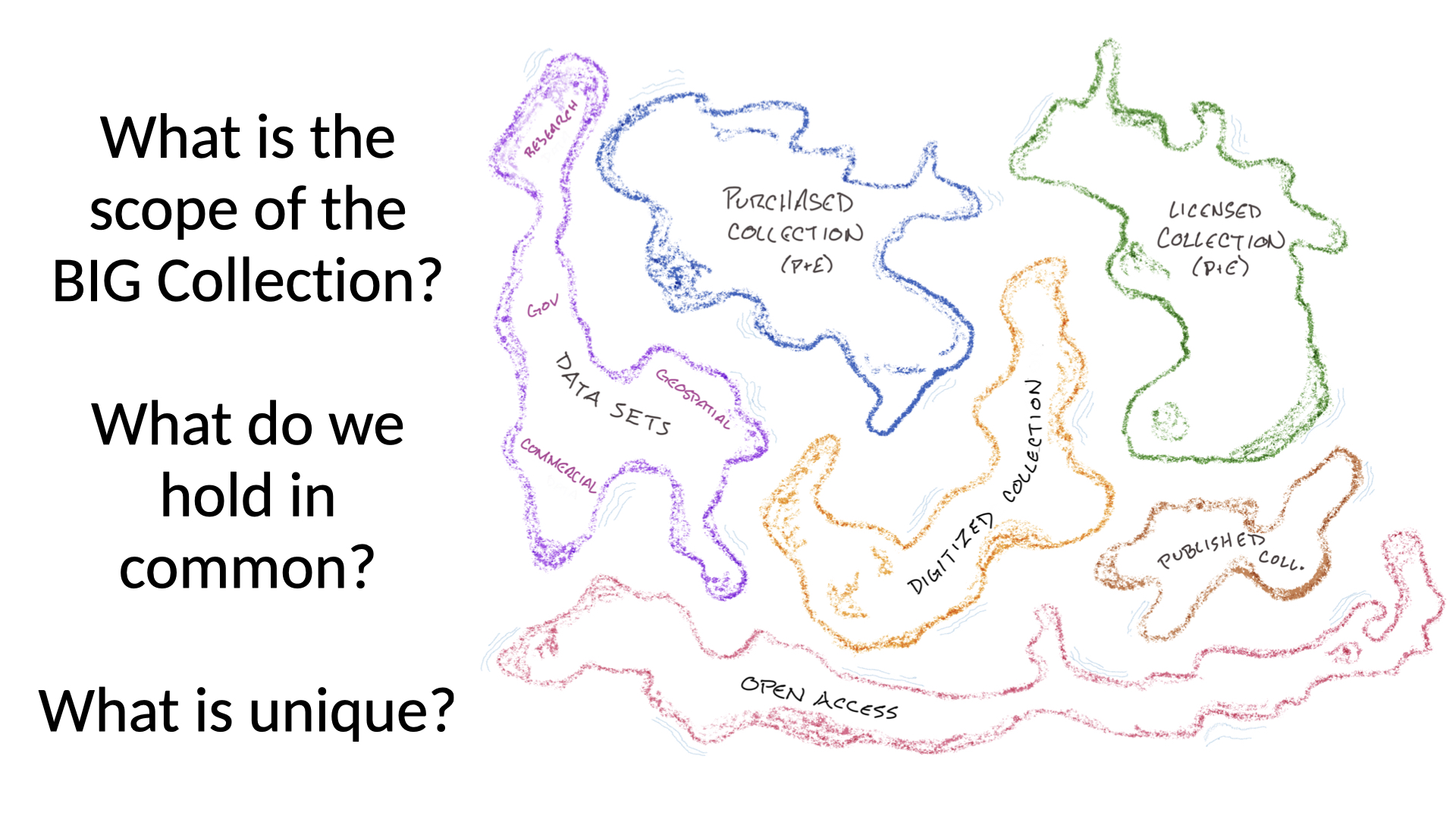
    In a recent presentation, BTAA’s director of library initiatives Maurice York described our current operating environment as a sort of “Pangea,” with each of the self-contained land masses representing a distinct element of the member libraries’ collections and operations—our purchased collections versus our licensed collections, for instance, or the material we digitize from our physical holdings versus that which we make available as part of our various publishing initiatives.

    From my perspective as a member of the Steering Committee, the issue with the way this landscape has developed over time is that each area has grown in isolation from the others. Until very recently, no one had taken a step back to survey the environment holistically, to consider these elements as interconnected and interdependent, and to imagine the possibilities that can emerge when treating our Pangea not as a loosely related set of activities, but as a single entity with a unified purpose.

    The Convenings are our first step toward getting the people on all these separate land masses to see a common future—of moving us closer toward that unified purpose. They are also a way for us to hear from representatives of all these different groups, to understand them better and learn both what they can offer the BIG Collection and what they might need from the BIG Collection to be successful.

    As I have written several times over the last number of months, the scholarly communication landscape is evolving, precipitated in part by changes brought about by the pandemic and the shift to an online-centric model of teaching and research. At the same time as our users’ expectations shift to demanding access to materials “at the speed of now,” pressure is being put on academic libraries across the country to maximize their budgets and achieve efficiencies of scale. Set against this backdrop, how do we align resources and activities across BTAA libraries to work toward a “knowledge commons” and maximize our impact? How can we work together—leveraging shared services, infrastructure, and strategy—to better serve all our communities? These are the questions that we will begin to explore throughout the BIG Convenings. I hope you will plan to join us!

  • Diversity, Equity, and Inclusion Committee Update – January 2021

    On December 2, 2020 the Diversity, Equity, and Inclusion (DEI) committee formally introduced itself to the Libraries’ faculty and staff by email to share its purpose and vision. The committee was charged this past summer by Cabinet to, among other things, develop a learning journey for the Libraries that will raise awareness of issues related to DEI and create an environment where we all contribute to a culture of diversity, equity, and inclusion.

    A learning journey does not have deadlines or an end-date; it’s a continuing process and requires all of us to build awareness, knowledge, and skills to support DEI initiatives. As Dr. Caprice Hollins reminded us in her workshop earlier this month, the educational journey for even the most expert researchers and facilitators is never over. While we may be on different parts of our own personal learning path, the work to educate should operate with a view to building a foundation for lifelong learning beyond our time here at the Libraries. Because of our varying identities and experience we will have different levels of readiness to act and advocate to make the Libraries a more diverse, equitable, and inclusive workplace. Many of us are just starting out on the journey to build awareness and increase our knowledge of the systemic issues and injustices present in our society. This is why we call it a learning journey. No matter where you are on this journey, it’s important to recognize the work is not easy. We welcome everyone to join in to build a culture of diversity, equity, and inclusion, and a workplace where we want to show up, work together, and serve our communities.

    This work cannot be done by the DEI committee alone and we all will need to contribute. As a group, the committee will bring speakers, plan programs, develop a DEI inventory and environmental scan, and serve as a source for other DEI activities. Individually, we all can reflect on what we are learning, where we fall short, check our biases, root out inequities, and have difficult conversations when needed. Together, we strive to create a community that:

    • Fosters mutual respect and diverse perspectives that reflect varying backgrounds, identities, roles, and their intersections.
    • Create and support structures and behaviors that promote equality, fairness, and justice.
    • Promote an environment of belonging, respect, opportunity, and empowerment.

    We invite you to visit our committee site on the Libraries’ staff pages to read the charge and review our meeting minutes or to contact us at diversity_equity_inclusion@libraries.rutgers.edu.

    We are also pleased to share that a new anonymous feedback form has been created and posted to our staff page so that Libraries faculty and staff can confidentially share their questions, concerns, ideas, and experiences with the team.

    We look forward to bringing more programs and resources to the libraries in the coming months.

  • Quick Takes on Events & News – January 2021

    PTRC at LSM Co-sponsored a Successful Zoom Event at the University

    On December 1, 2020, a one-of-a-kind webinar took place on Zoom. The webinar, titled “The Future of American Innovation & the Role of the University,” a talk by the Director of United States Patent and Trademark Office followed by a Rutgers faculty and student panel discussion, attracted 238 participants. Dr. David Kimball, Senior Vice President for Research, delivered the opening Remarks. Dr. Tatiana Litvin-Vechnyak, Associate Vice President, Innovation Ventures at Rutgers served as a moderator for the panel discussion. Many attendees have expressed their gratitude for this eye-opening session and would like to join our initiative’s call to action: “Inclusive Innovation and Equitable Entrepreneurship Coalition at Rutgers.”

    The Patent and Trademark Resource Center (PTRC) at LSM was one of co-sponsors for this event. Connie Wu contacted Dr. Prabhas V. Moghe, Executive Vice President for Academic Affairs, when she learned about USPTO’s special University Outreach initiative. Then she contacted School of Engineering, RBHS, SEBS, Business school, the IDEA team, Patents and Licensing division and Research & Innovative Strategies Office to build a planning task force for this event. The task force will continue the effort to the future university Innovation and invention endeavors.

    Submitted by Connie Wu


    Megan Lotts in Qatar

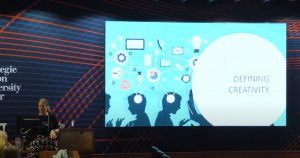
    Last February, Megan Lotts gave a lecture in Doha, Qatar for Carnegie Mellon University, Qatar. The lecture, titled “Fostering a Culture of Creativity and Play in Libraries,” is based on a forthcoming book project with ALA. Watch the video here.


    High Praise for Zara Wilkinson’s Guide

    Zara Wilkinson received a request to use her So You Want To Talk About Race research guide as part of a book discussion being held by ActionHoco, an organization based in Howard County, MD. Zara agreed, of course, and the guide has been posted to the Facebook page set up for the event. Congratulations, Zara!


    Krista White Blogs about Teaching with Digital Projects

    Krista White recently authored a guest post for the “Teaching Tuesdays” series on the P3 Collaboratory’s blog. Check it out to learn how digital pedagogy can be enhanced with creative, active learning digital projects as course assignments.


    Libraries Get Steppin’

    Some of us participated in a 10,000 step team challenge sponsored by our medical plan. It was really fun and we all motivated each other. It ran all December and into January. There were five rounds and my team won four, and I believe we’ll win the last one. My team was 12th out of 358 teams! My team was two people from Central, 2 from Newark and one from Camden, so we had a decent representation of people. The team building and encouragement was wonderful and it was also something healthy for all of us.

    Submitted by Mary Beth Weber


    Tips for Planning Virtual Events

    The Rutgers Event Planners Network (REPN) recently hosted a REPN Café with tips for planning virtual events. You can view the recording here.


    Great Things to Know about Rutgers

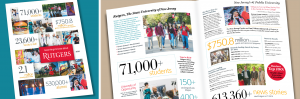
    Earlier this semester, President Holloway wrote to the university community to express his enthusiasm for the good news about Rutgers highlighted in the Great Things to Know about Rutgers brochure. In his email, he encouraged the Rutgers community to share his Rutgers pride and to spread the word about our remarkable university.

    Great Things to Know about Rutgers conveys what makes Rutgers an academic, health, and research powerhouse and a highly respected institution. Produced by the Department of University Communications and Marketing, this complimentary publication is available as a PDF download, as an ebook, and in print. You can order printed copies using the brochure order form. We hope you make good use of the brochure and thank you in advance for your patience as our department makes it available to the Rutgers community under the current challenging circumstances.


    Serving CCC during the Pandemic

    Robeson Library serves as the library for Rowan University and Camden County College’s Camden campuses. Although the Rowan and CCC computer lab was shut down in March to ensure social distancing, John Gibson, instructional technology specialist, and Ann Marie Latini, head of Access Services, worked with me to ensure these students continued to have access to the all of Rutgers resources and the Rutgers Computer Lab. In addition, I worked with Rowan and CCC teaching and library faculty to create new course guides, pivot to online library instruction, and direct Rowan and CCC students to use online chat.

    Submitted by Bart Everts

  • Snapshot Day 2021

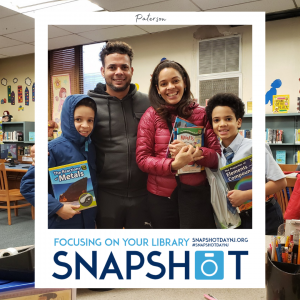
    NJLA has announced that the 2021 New Jersey Library Snapshot Day will begin on February 1 and be held throughout the month of February. Snapshot Day is an annual celebration where the New Jersey library community comes together to document the wonderful people, places, events, materials, and experiences that make up a day in the life of the library.

    Snapshot Day started in New Jersey libraries in 2007 as a response to the simple question: “what would happen if libraries went away, even for a day?”

    Snapshot Day’s focus has shifted to sharing images and stories on social media. While statistics help quantify what is happening in libraries, stories make these numbers personal. Stories put a human face on library usage that helps legislators, administrators, voters, and other library stakeholders identify with the essential work that New Jersey libraries do every day.

    And this mission has a new urgency. Since the COVID-19 pandemic began in March 2020, New Jersey libraries have pivoted, and found innovative and thoughtful ways to continue to meet the needs of communities throughout the Garden State. From virtual story times to curbside pickup and parking lot WiFi, libraries have continued to answer the calls in their communities. Now it’s time to share those stories.

    The pictures and stories that you post, share, and submit will help us advocate for increased resources for New Jersey libraries. Statistics help quantify results. But pictures and stories show impact. Library stakeholders throughout the state need to see the impact of library services, so they know what they stand to lose if they do not continue to support and fully fund libraries.

    If you would like to support this initiative, please send your images/stories to mbadessa@libraries.rutgers.edu and they will be considered for our social media accounts. For more information, visit the Snapshot Day website.

  • Consent to Receive Electronic W-2 Statements

    Dear Rutgers Colleagues,

    Here’s a reminder that W-2 wage statements for calendar year 2020 will be available later this month and that the University encourages all employees to take advantage of the paperless option and opt-in to receive electronic W-2 statements.  The electronic W-2 statement is identical to the paper format – and it is easy to access and print.

    If you elected the paperless option in the past, your consent remains in effect – you do not need to take any actionTHANK YOU!

    If you want to join your fellow employees in receiving electronic W-2 statements, you must submit your consent by Monday, January 18, 2021.  Log in to the myRutgers portal, and within the My Paycheck section, click on the “W-2 Online Consent” link.  After you submit the form, you will receive an email confirming your consent.  When the electronic W-2 statement is available for you to view/print, we will notify you via email.

    If you choose not to submit a consent form, a paper W-2 statement will be mailed to your home address on file.

    Please take this opportunity to verify your home address.  If necessary, update your address by logging in to the myRutgers portal and clicking on the Personal Information icon located within the second block.

    If you have questions, please contact OneSource Rutgers Faculty and Staff Service Center at 732-745-SERV (7378) or OneSource@rutgers.edu.

    Regards,
    Ernie DiSandro
    Associate Vice President and University Controller

  • IIS Updates – January 2021

    Skype for Business Retiring on July 31, 2021
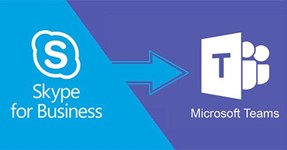
    Effective July 31, 2021, Skype for Business will no longer be provided as part of Rutgers Connect (Office 365).

    Effective July 31, 2021, Skype for Business will no longer be provided as part of Rutgers Connect (Office 365) and a three-phased transition to retirement is already underway. Microsoft Teams, the suggested product for voice and video conferencing in the Office 365 suite is already available to all users and is the replacement product for Skype for Business.

    Phase 1: New Rutgers Connect accounts will no longer have Skype for Business and it has already been removed from users who have never used the product.

    Phase 2: On Monday, February 1, 2021, Skype for Business will be turned off for any user who has not used the product within 90 days.

    Phase 3: On Monday, May 3, 2021, Skype for Business will be turned off for all users.

    OIT advises that these dates are tentative and subject to change. IIS will provide additional notices closer to the dates mentioned to ensure all affected users are prepared for the upcoming changes.

    If you use Skype for Business and have concerns or questions about the transition, please contact IIS at support@rulhelp.rutgers.edu.


    How to Identify and Report Phishing Scams

    Cyber scams targeted at university email accounts are more sophisticated than ever. It’s important to remain vigilant and aware of typical internet fraud in order not to be fooled into clicking on a malicious link, replying to a scam email message, or even making a purchase, supplying identifying information or credit card or bank account numbers to hackers or scammers. The Rutgers Office of Information Technology (OIT) has created Phish Bowl, a comprehensive resource with quick tips to spot and avoid scams, information on latest threats, and other tips.

    What should I do if I receive a suspicious email message?

    If you receive a message that appears to be a scam or phishing attempt, or are simply unsure, please forward the message and the Message Details to support@rulhelp.rutgers.edu and IIS will review them and report it to OIT if necessary.

    What happens next?

    If OIT deems the message to be a scam or otherwise dangerous, they will block the sender from sending additional messages to university members and block any links contained in the message. They will often remove the messages in bulk from all recipients’ mailboxes. Further actions, such as scrambling NetID passwords may also be taken when a user has clicked on a link or attachment or replied to an email message. If you find yourself suddenly unable to access your email account or other resources requiring authentication, this is the cause even if you did not realize that you may have received a scam email message.

    What is Duo and how will it help?

    OIT is implementing a staged rollout of two-factor login using Duo for enhanced security and all Rutgers Connect users who are off campus will have to start using it as of February 3, 2021. Duo will help protect your account by adding a second layer of security beyond your password. Your identity will be verified using a second factor, such as your phone, mobile device, or hardware token, and will prevent anyone but you from logging in even if your password has been compromised.

    If you have concerns or questions about phishing or the transition to Duo, please contact IIS at support@rulhelp.rutgers.edu.


    Help Guides for Web conferencing tools available in the Staff Resources Site

    Rutgers University offers three different web conferencing tools to faculty, staff, and students. Want to learn more about these tools? Take a look at the help guides and other training materials that provide detailed information about choosing the best tool and on best practices for security when using these tools. If you have any questions, send an email to support@rulhelp.rutgers.edu.

  • NJ Vaccine Scheduling System Registry

    The State of New Jersey has established a NJ vaccine scheduling system registry. COVID-19 vaccinations will be made available in phases to ensure those most at risk are prioritized. The registry is designed to send an email to individuals about the status of vaccination availability.
    https://covidvaccine.nj.gov/

  • Announcing the BTAA BIG Collection Steering Committee

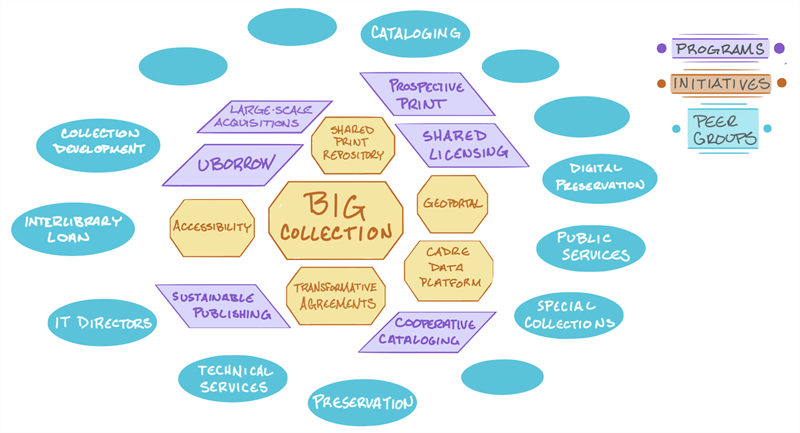
    The Library Directors of the Big Ten Academic Alliance (BTAA) are pleased to announce the appointment of the BIG Collection Steering Committee. The objective of the BIG Collection is to create a coherent knowledge environment for Big Ten faculty and students, with content universally available to all without regard to which institution produced or purchased it. The BIG Collection will be supported by interoperable services and systems at scale that rest on a foundation of shared infrastructure.

    The Steering Committee will act as the umbrella for the initiative and the executive steward of resources and strategy.  It will guide the BTAA in implementing successful infrastructure and policy to bridge the fifteen separate libraries of our universities toward being experienced and managed as one collection, fully networked–the BIG Collection.

    As the overarching initiative to advance the commitment to a shared, interdependent future for the research libraries of the Big Ten, the BIG Collection is the lead idea, the center of gravity to align resources and activities across BTAA library initiatives. “The convening of the Steering Committee represents a significant step toward bringing shape and form to the vision of the BIG Collection,” said Maurice York, Director of Library Initiatives for the Big Ten Academic Alliance. “As a community and an alliance, we will collectively design the future that we want to see. This group is charged with thinking on behalf of the whole and holding the collective strategy. There is much more to come.”

    For more information, see “Historic Move: Big Ten Libraries Commit to Managing Separate Collections as a Single Collection (The BIG Collection)” on INFOdocket.