I am pleased to announce the re-launch of The Agenda, a newsletter first issued in February 1979 to improve internal communication within Rutgers University Libraries. At that time, The Agenda was a weekly printed newsletter, and it has since taken on many revised formats.
Today, of course, we have many more technologies and platforms to keep us connected across campuses – but I firmly believe in the importance of continuing to produce a publication through which we can stay informed as a community and celebrate our successes. From this point forward, The Agenda will publish as an online newsletter once every two months.
This has been and will continue to be a period of great change for Rutgers University Libraries. I mean “great” in multiple senses of the word: huge, remarkable, and excellent.
First, it goes without saying that in our lives and work, we have faced huge changes for many years – whether we are talking about a global pandemic, political and social unrest, rapid technological advancements, or many levels of transitions in leadership – from the Libraries to Rutgers to world leaders. In the past year alone, we have faced a rapid succession of federal orders impacting Rutgers, and Jonathan Holloway, a well-respected and historic president, left the university at the end of June. At Rutgers University Libraries more specifically, we have undergone remarkable changes in moving toward our One Libraries model and a reorganization.
We need to give ourselves space to acknowledge how unsettling all this change can be. This is why, through Engagement Day and a virtual professional development leading up to it, we chose to focus on post-crisis leadership and wellness.
“Great” change also can mean “excellent” change. Our reorganization and One Libraries focus will help us work smarter and serve our communities better. We also can look forward to the opportunities presented by new leadership as President William F. Tate IV ushers Rutgers into its next chapter, and as Tonya Smith-Jackson takes over as chancellor of Rutgers University–Newark, effective August 1. Multiple new leaders, faculty, and staff members have recently joined us or taken on new roles at Rutgers University Libraries. I encourage you to read about them on the Faculty and Staff News page.
I hope you enjoy this new issue and iteration of The Agenda. Your thoughts on future content for this publication are always welcome! Please send your ideas to Lara De Meo Hoyt at lara.hoyt@rutgers.edu.
Megan Lotts installed a “Lil’ Zine Vending Machine” in the ALA Connect Lounge.
Rutgers University Libraries were well represented at the ALA Annual Conference & Exhibition, held in Philadelphia’s Pennsylvania Convention Center from June 26 to June 30. In a preview article, American Libraries Magazine characterized the theme of the conference as follows:
“As the Association – and the nation – approach monumental anniversaries, library workers will reaffirm and celebrate what it means to run institutions foundational to democracy, equity, and civic discourse. Many sessions in this year’s program reflect the issues currently weighing on the profession, such as intellectual freedom, access, advocacy, and funding.”
Here are the Rutgers University Libraries faculty who presented at ALA:
Katie Anderson, reference and instruction librarian based at Robeson Library, was part of a panel discussion on AI Ethics and the Library. The session was highlighted in articles covering the conference by Publishers Weekly and by the Library Journal.
Maria Deptula, health sciences collections librarian, and Mina Ghajar, education and research librarian, both based at Smith Library, presented their poster, Open Access & Transformative Agreements – Awareness, Perception, Experience.
Ann Marie Latini, head of access services at Robeson Library, and Zara Wilkinson, reference and instruction librarian based at Robeson Library, presented their poster, Night at the Museum: Curating a Museum Pass Program at an Academic Library.
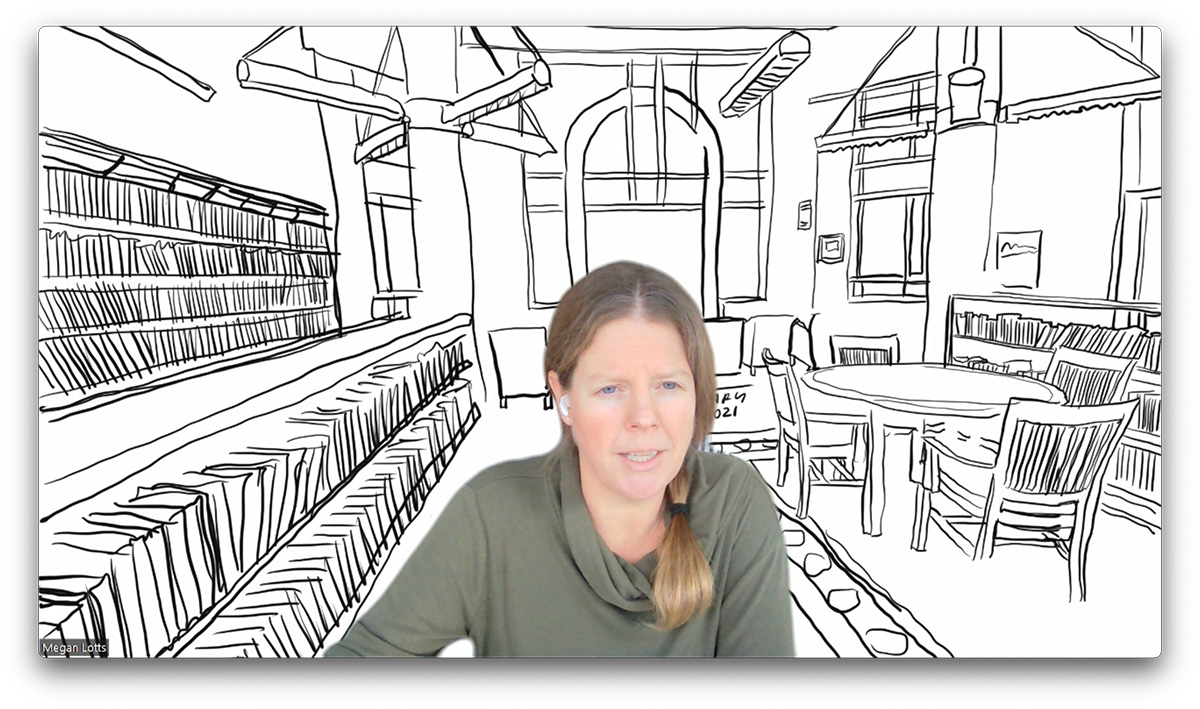
Megan Lotts, art librarian based at the Art Library, installed a “Lil’ Zine Vending Machine” in the ALA Connect Lounge. Publishers Weekly wrote about the zine vending machine and quoted Lotts in its event coverage. Lotts is the author of The Playful Library: Building Environments for Learning and Creativity (ALA Editions, September 2024).
Julia Maxwell, who was a social sciences librarian based at Alexander Library until June 30, co-presented a poster, Public Libraries & Older Adults: An Evidence-Based Annotated Bibliography for Social Workers & Librarians. Her co-presenter was Marybeth Baisden, a graduate assistant in the School of Social Work.
Sungmin Park, resource description librarian based at TSB, co-presented a poster, Uncovering Systemic Bias in Library of Congress Subject Headings: A Comprehensive Study on Gendered Headings. Her co-presenter was Yuji Tosaka, assistant director in the library at The College of New Jersey.
Li Sun, continuing resources and Asian languages catalog librarian based at TSB, presented her poster, Automating the Management of Cataloging Records with AI.
Sonia Yaco, digital initiatives librarian based at Alexander Library, was part of a panel presentation, Old Pages, New Tricks: AI-Powered Discovery and Instruction in Special Collections.
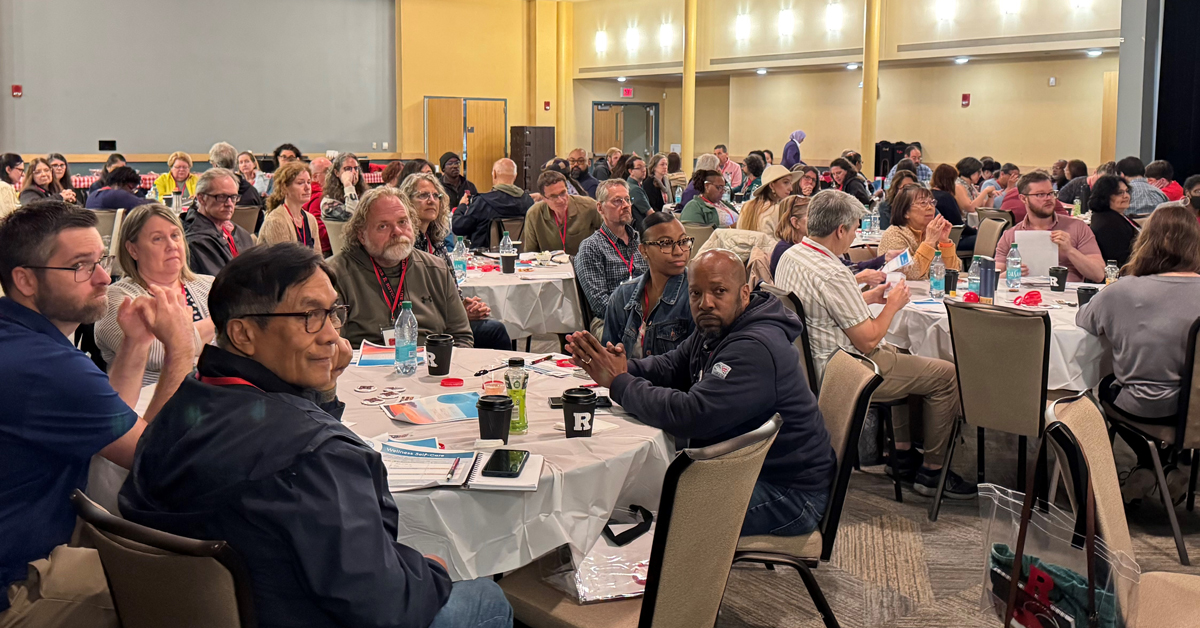
Engagement Day was held on May 30 at Livingston Student Center.
On Friday, May 30, more than 100 Rutgers University Libraries faculty and staff gathered for the Libraries’ first organization-wide Engagement Day. The full-day, in-person event was held at Rutgers University–New Brunswick’s Livingston Student Center. All library locations were closed for the day.
Professional Development Focused on Well-being
Engagement Day featured two professional development sessions focused on emotional and psychological well-being. The first was held virtually, earlier in the week. On May 27, Ralph Gigliotti, assistant vice president for organizational leadership in University Academic Affairs, led a virtual talk framed by his book, Post-Crisis Leadership: Resilience, Renewal, and Reinvention in the Aftermath of Disruption.
Then, the morning of May 30 featured an interactive two-hour wellness session provided by ScarletWell, a holistic wellness initiative dedicated to bolstering the health and wellness of Rutgers–New Brunswick students, faculty, and staff. The session introduced participants to the Pause, Breathe, Move, and Nourish framework—an accessible approach to integrating self-care into daily life. Components of the session included guided meditation, reflective activities, group discussion, and movement. The presenters were Dr. Amy B. Spagnolo, senior program coordinator for ScarletWell and former associate professor in the Department of Psychiatric Rehabilitation and Counseling at Rutgers School of Health Professions; psychologist and mindfulness expert Patrick Connelly; and Peggy Swarbrick,director of ScarletWell and a professor in the Rutgers Graduate School of Applied and Professional Psychology’s Applied Psychology Department and director of ScarletWell.
Afternoon of Team Building
The afternoon of Engagement Day featured a variety of team building options. Hourly Tai Chi lessons on Livingston Lawn were offered by John Gaddy of John Gaddy’s Karate and Boxing Studio in High Bridge. Inside, the Rutgers University Libraries Major Events Committee provided both organized and self-paced activities, including Bingo, balloon race games, trivia, raffles, giant Jenga, Tetris Tumble, board games, and coloring.
Game prizes were generously donated by the Rutgers University Libraries unit heads: Consuella Askew, Abbey DiPaolo, Regina Koury, Caroline Muglia, Tony Nguyen, and Amanda Clay Powers.
Raffle prizes were a variety of Rutgers swag items provided by units from throughout the university.
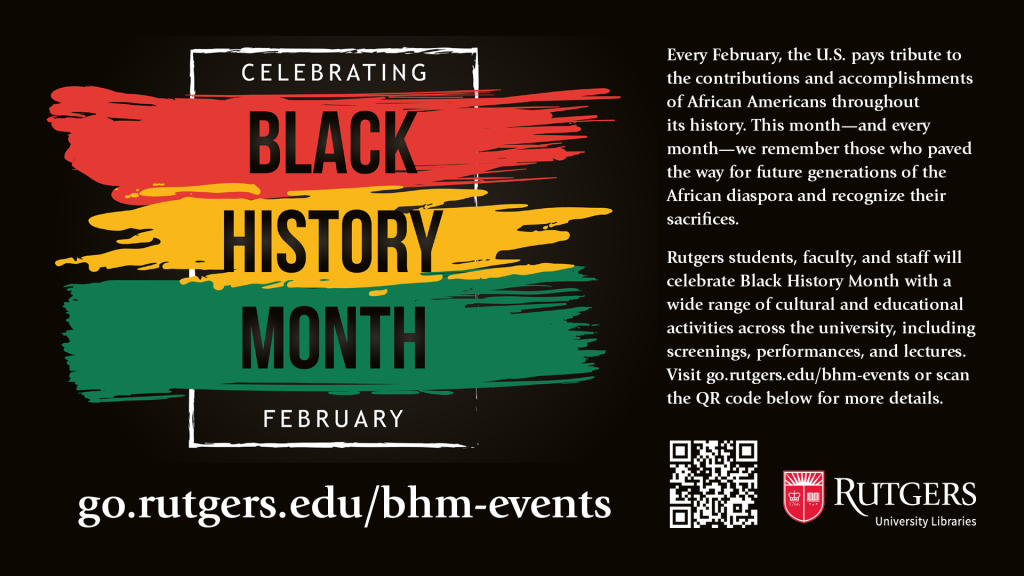
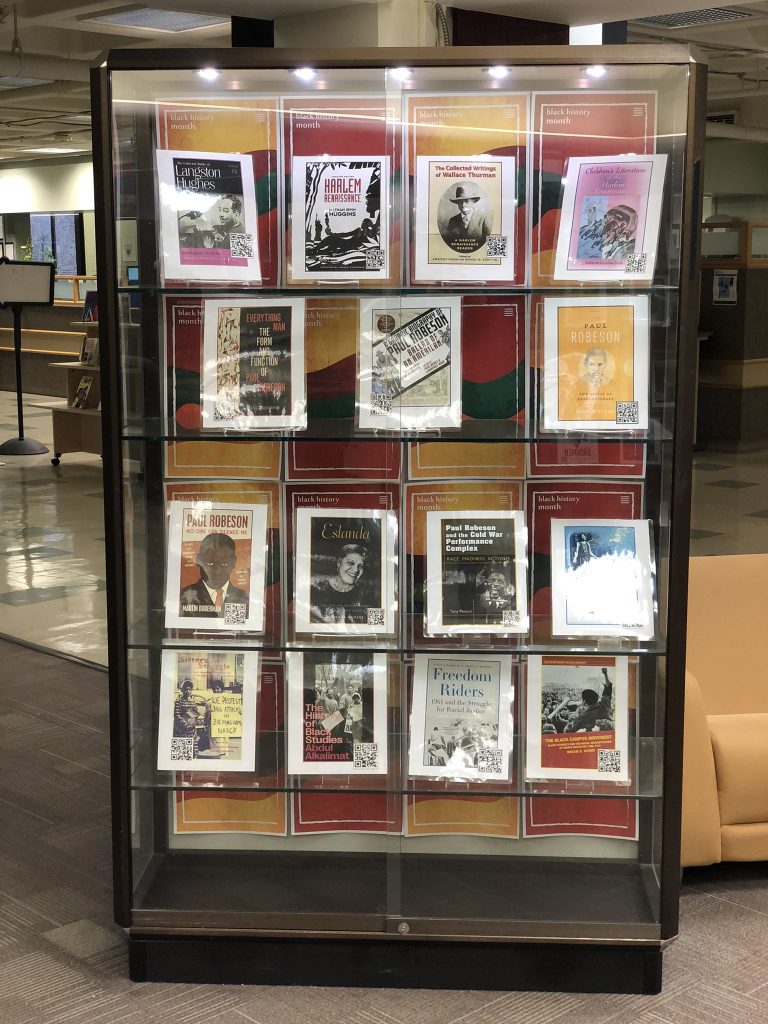
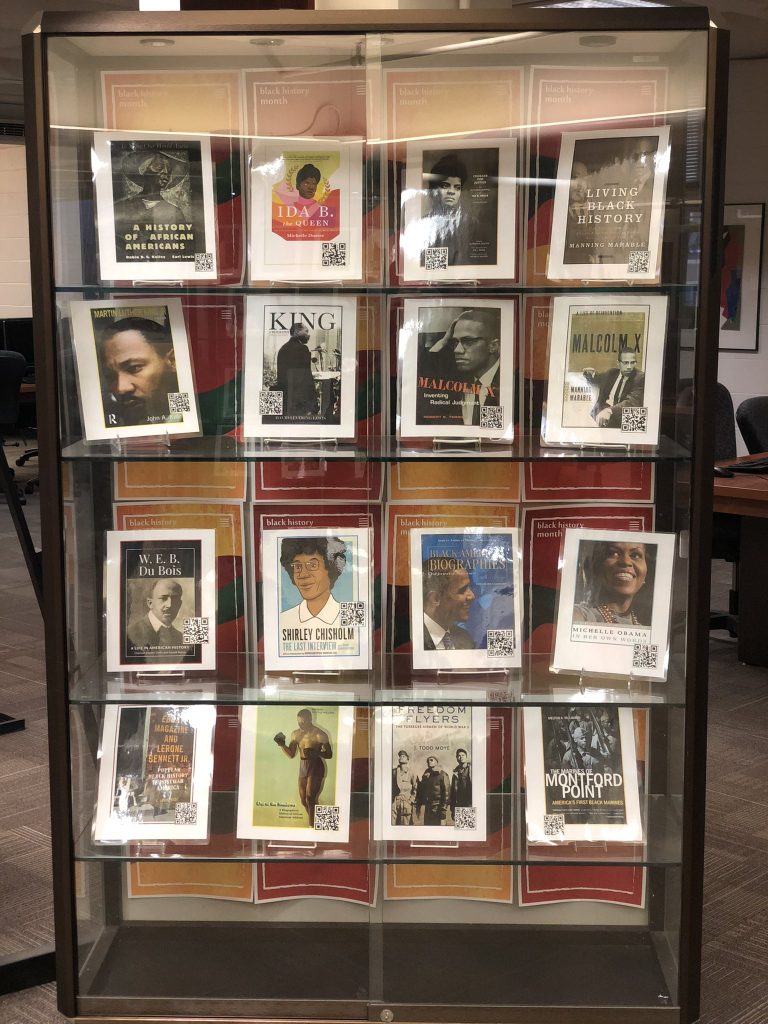
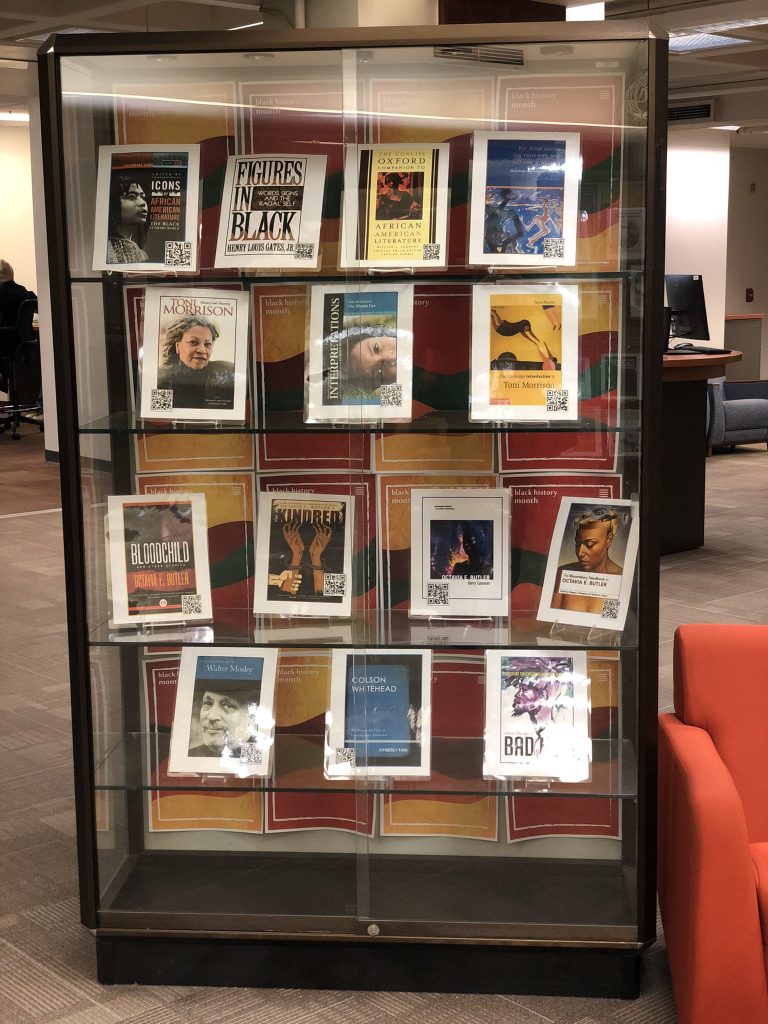
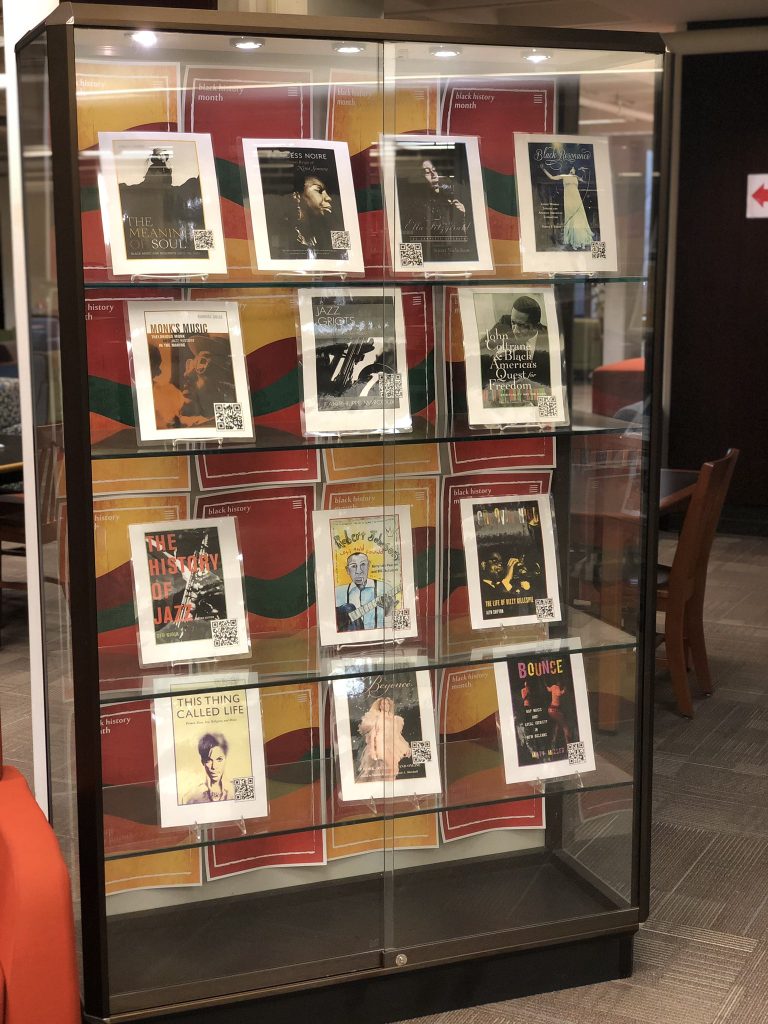
The Libraries commemorated Black History Month with webinars, exhibits, and social media posts. Below are some highlights:
African American History Resources:Julie Still discussed the Libraries’ rich and varied collections in African American history, including print, online indexes and collections, and archival sources.
PHL17’s In Focus:John Maxymux discussed Black quarterbacks in the National Football League (NFL) and Super Bowl LVII, which featured two Black starting quarterbacks for the first time in NFL history.
“History in the Huddle“: Rutgers–Camden interviewed John Maxymuk for their article about the first-ever Super Bowl matchup between two Black starting quarterbacks.
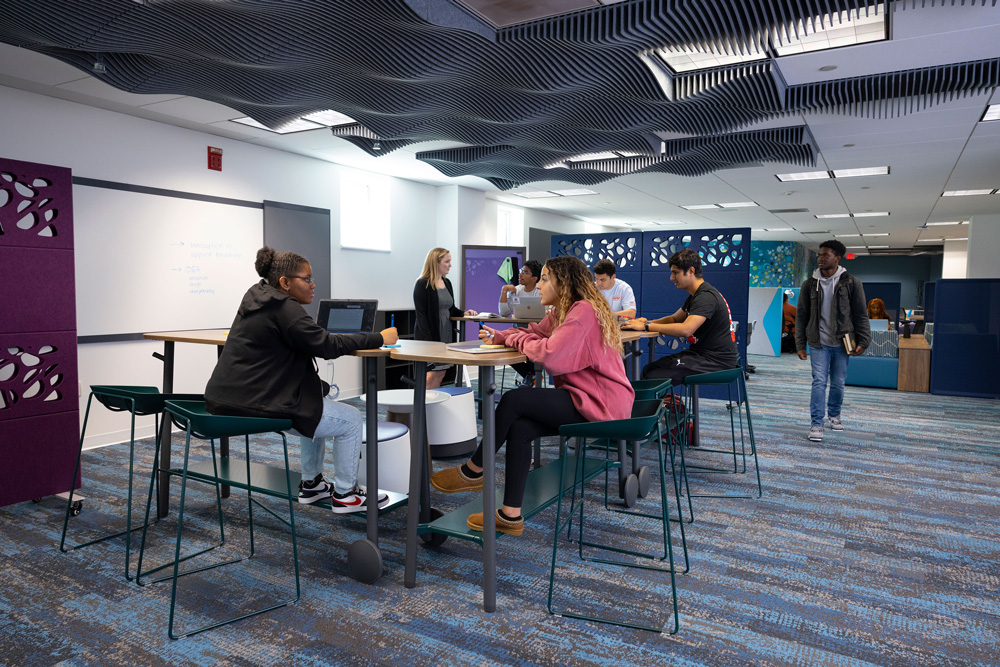
IDEA students discuss a project in the Hatchery’s Learning Bar (Area 10). Photo by John Emerson.
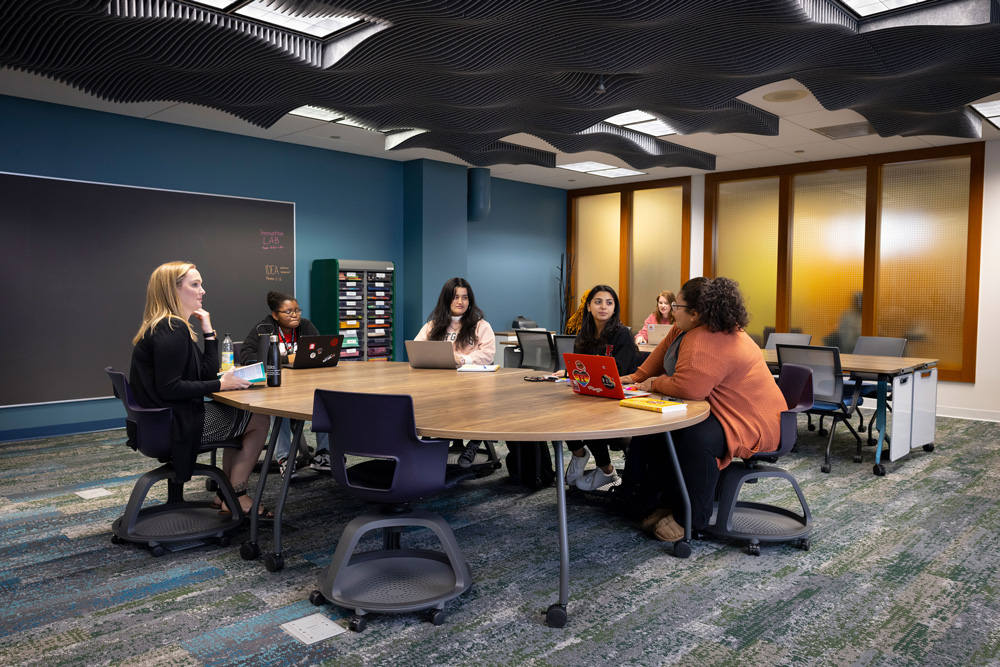
Rutgers University Libraries are proud to announce the opening of the Hatchery Innovation Studio, an innovation and creation center located in Alexander Library on the College Avenue campus. This new library space is the first of its kind at Rutgers and offers students a wide range of flexible, collaborative spaces to work on projects, practice pitches, and explore design and entrepreneurship ecosystems.
The Hatchery provides a stimulating environment where students can ideate; learn from each other, faculty, and industry innovators; and discover passions, challenges, and solutions. The 4,000-square-foot studio can accommodate up to 85 people and features 11 flexible meeting and creative areas; multimedia equipment, including a television, entertainment system, and computers; contemporary, modular furniture; dry-erase boards and art supplies; and a ping pong table.
IDEA students collaborate in the Hatchery’s Hub (Area 1). Photo by John Emerson.
The Hatchery is a strategic partnership between Rutgers–New Brunswick Libraries and Rutgers’ Innovation, Design, and Entrepreneurship Academy (IDEA). The mission of IDEA is to integrate design and entrepreneurial thinking into the student experience. During the program, students participate in research, design challenges, and entrepreneurial thinking, as well as contribute to interdisciplinary projects focused on solving complex societal challenges.
To learn more about the Hatchery and to take a virtual tour, please visit libraries.rutgers.edu/hatchery.
Grand Opening Celebration
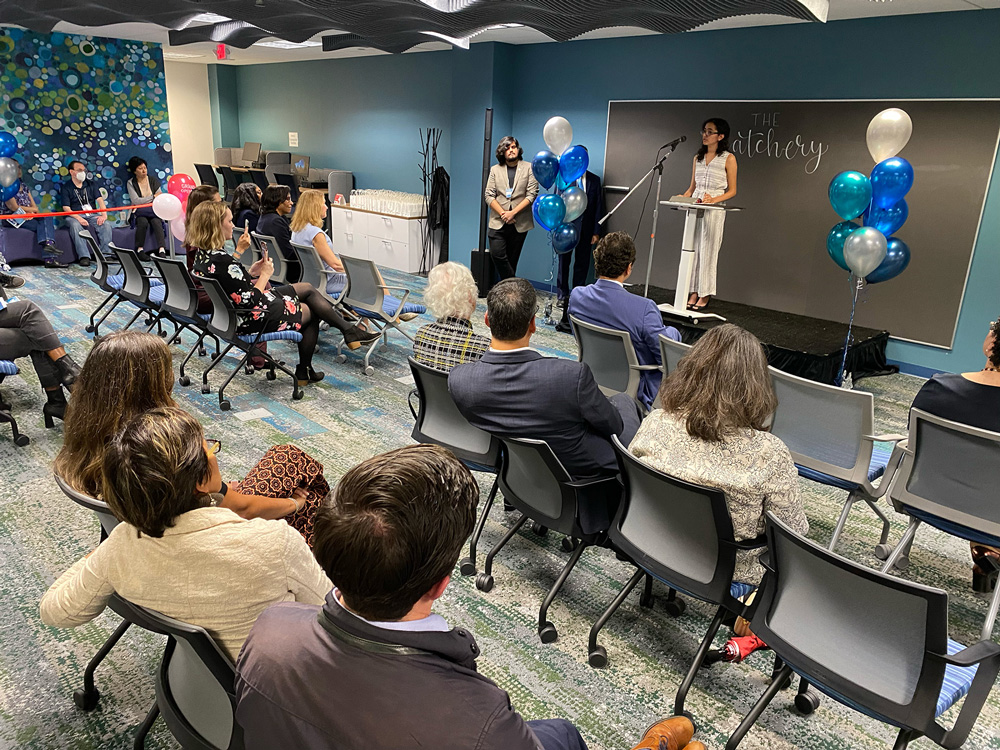
On October 25, 2022, the Libraries celebrated the Hatchery’s grand opening with more than 60 guests. IDEA staff provided tours of the space, and IDEA students offered live project demonstrations.
Rutgers officers, staff, and faculty cut the ceremonial ribbon at the Hatchery’s grand opening celebration. Pictured from left: Abby Kucks, IDEA Program Coordinator; Veronica Armour, IDEA Director; Prabhas Moghe; Dee Magnoni; Francine Conway; Sunita Kramer, former Associate Vice President for Research and Experiential Education; Saundra Tomlinson-Clarke, Senior Vice Provost for Academic and Faculty Affairs; and Consuella Askew.
Consuella Askew, Vice President for University Libraries and University Librarian, delivered welcome remarks, together with Prabhas Moghe, Executive Vice President for Academic Affairs; Francine Conway, Chancellor-Provost of Rutgers–New Brunswick; and Dee Magnoni, Associate University Librarian at Rutgers–New Brunswick Libraries. Three IDEA students—Fauzan Amjad ’24, Kritika Singh ’24, and Scott Rubin ’24—shared their experiences about the Hatchery and the IDEA program.
Consuella Askew.
“The Hatchery is a unique space that developed from a partnership between the Rutgers University Libraries, Rutgers University Leadership, and IDEA,” Askew said. “It provides a dynamic environment serving as a third space for our students to connect with our library and disciplinary faculty members, and our community members, to engage in the innovation process.”
Askew noted, “The Hatchery would not have been possible without the generosity and support from University Academic Affairs and Rutgers–New Brunswick. I thank Prabhas and Francine for their ongoing contributions and advocacy of this unprecedented space and the Libraries.”
Prabhas Moghe.
Moghe recounted the history of the Hatchery’s development and expressed his excitement for the new space and its potential for innovation.
Francine Conway.
Conway discussed the Hatchery’s role within the university: “The Hatchery is directly aligned with Rutgers–New Brunswick’s Academic Master Plan in its vision of bringing students together from diverse schools and disciplines for valuable, hands-on problem-solving.” She added, “I am excited for this partnership that will help students unlock new skills, explore the subjects that most deeply interest them, and build valuable experience that will propel them into the future.”
Dee Magnoni.
Magnoni expressed her gratitude to the university and the IDEA community: “The Hatchery is an innovation space that began with a conversation, took shape through a design process with IDEA students and staff, teaching faculty, and Division of Continuing Studies personnel. Consuella Askew provided the runway to proceed, Prabhas Moghe championed the effort, and Fran Conway supplied the scaffolding for our future success with the Rutgers–New Brunswick Academic Master Plan. Cheers to our tremendous collaborators, supporters, and partners!”
Veronica Armour, Director of IDEA, said, “We are excited for this partnership—IDEA is a first-year program that provides space for students to explore the innovation process by thinking about what problems they would like to solve. There is no better place for us to be situated than in the library to be able to build this community of student scholars, faculty, and industry mentors towards the discovery and exploration of interesting ideas.”
IDEA students gave presentations at the Hatchery’s grand opening.
Prabhas Moghe, Dee Magnoni, and Mukesh Patel, Assistant Professor of Professional Practice at Rutgers and Director of the Collaborative for Tech Entrepreneurship & Commercialization (CTEC), RSVP and Innovation Lab, with IDEA students in the Hatchery.Abby Kucks, Dee Magnoni, Sunita Kramer, and Veronica Armour at the Hatchery entrance.
Experienced editors and authors discussed the fundamentals of research, writing, and publishing. They addressed topics such as turning an idea into a publication, dealing with deadlines and writer’s block, and collaborating with co-authors.
Laura Costello is the director for strategic planning and assessment for Rutgers University Libraries. Laura has authored and co-authored three books, seven book chapters, and over 20 peer-reviewed articles and other publications. Her research focuses on assessment in diverse areas of the library, including reference and user services, collections, and library spaces. She serves as a regular peer reviewer for the open-access journal Evidence Based Library and Information Practice (EBLIP). Her most recent publication is a co-authored article on the impact of the COVID-19 pandemic on virtual reference services published in The Journal of the Association for Information Science and Technology (JASIST).
Melissa De Fino is the special collections and formats metadata librarian for Rutgers University Libraries. Melissa is the co-author of the recently published book Virtual Technical Services: A Handbook, which stemmed from her experiences during the COVID-19 quarantine period and has led to conference presentations and an interview invitation for the Lucidea “Think Clearly” blog. She served as the editor of the Technical Services Quarterly column “Tech Services on the Web” for five years. Melissa has published peer-reviewed articles about the changing nature of technical services librarianship and has served as a peer reviewer for several articles. Melissa was an ALA Emerging Leader in 2008 and was RUL’s first Emerging Leader.
Megan Lotts is the art librarian at the Art Library of Rutgers University Libraries. Megan teaches research workshops, builds collections, facilitates programming and events, and closely engages with students and faculty researching in the arts. She has presented her research nationally and internationally and published articles in portal: the Libraries and the Academy, Art Documentation, Journal of Library Administration, College and Research Libraries News, and more. In 2021, the American Libraries Association published her book Advancing a Culture of Creativity in Libraries: Programming and Engagement. Her research interests include creativity, outreach and engagement, makerspaces, play, and the work of library liaisons. She is known for her work in implementing LEGO® play, creating a culture of creativity, and curating the exhibition spaces at the Rutgers University Art Library. She also teaches a semester-long seminar, “Playing to Learn in Higher Education.”
Caryn Radick is the digital archivist for Special Collections and University Archives of Rutgers University Libraries. Caryn was a Special Collections and University Archives processing archivist from 2004 until 2011, when she assumed her current role. She oversees the New Jersey Digital Newspaper Project, which provides digitized historic newspapers. Her research interests include the intersection of archives and fiction and surfacing mysteries and puzzles found in archives. She has published articles in The American Archivist, Archivaria, and Nursing-Clio. Caryn served as an associate editor for the Journal of Archival Organization and the Journal of the Rutgers University Libraries. She is the 2021 recipient of the New Jersey Studies Academic Alliance’s Teaching Award for her Byrne Seminar class “Only in New Jersey! New Jersey’s History in Newspapers.”
Yingting Zhang is the research services librarian at the Robert Wood Johnson (RWJ) Library of the Health Sciences of Rutgers University Libraries and an adjunct assistant professor in the RWJ Medical School Department of Medicine, Rutgers University. Yingting also serves as the liaison librarian to the School of Public Health and the Cancer Institute of New Jersey. She is a Distinguished Member of the Academy of Health Information Professionals. She serves on the Rutgers Health Sciences Institutional Review Board (IRB) and the Executive IRB. Yingting has authored and co-authored 14 peer-reviewed journal articles and six non-peer-reviewed papers. She is currently working on a book chapter related to research on digital identity and writing an article on her experience providing systematic reviews for the past seven years.
Editors Panel Panelists
Marianne Ryan is the dean of University Libraries at Loyola University Chicago. Since 2015, Marianne has served as the editor of portal: Libraries and the Academy, published by Johns Hopkins University Press and part of its Project Muse collection. Marianne also served as the Management column editor of Reference and User Services Quarterly and on the editorial board of Library Leadership & Management. She has published numerous articles, including “How to Get Your Article Published: Twenty Tips from Two Editors.”
Ken Varnum is the senior program manager and discovery strategist at the University of Michigan Library. Ken’s research and professional interests include discovery systems, library analytics, and technology in the library setting. He has been the editor of Information Technology and Libraries (ITAL) since 2017 and has edited five books, the most recent being New Top Technologies Every Librarian Needs to Know, published in 2019. ITAL is one of ALA Core’s three official journals and is open access.
Adriana Cuervo is the head of Archival Collections and Services at the Institute of Jazz Studies in the John Cotton Dana Library, Rutgers University–Newark. Adriana oversees the day-to-day operations of the Institute of Jazz Studies—the world’s largest and most comprehensive jazz research facility. She has had a long career in music and performing arts special collections and previously worked at the Sousa Archives and Center for American Music at the University of Illinois at Urbana-Champaign. She enjoys working in the preservation, access, and promotion of cultural heritage and has published several articles. Adriana served on the editorial board of American Archivist for four years.
Nancy Kranich teaches at the Rutgers University School of Communication and Information and conducts special projects for Rutgers University Libraries. She served as President of the American Library Association in 2000–2001, focusing on the role of libraries in democracies. Nancy is currently editing a special issue on reimagining the civic role of libraries for Library Quarterly. She serves on the editorial boards of Library Quarterly: Information, Community and Policy and the Journal of Information Policy. She is also a frequent pre-publication peer reviewer for several scholarly journals. She has published countless articles and has served as editor and contributor to Libraries and Democracy for ALA Editions.
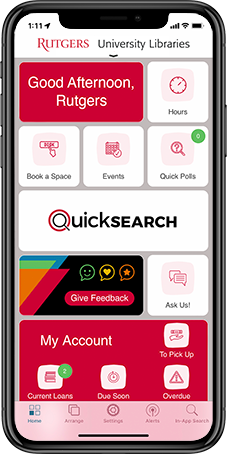
Rutgers University Libraries is pleased to announce the launch of Library Mobile, an innovative app designed to enhance the Rutgers community’s library experience. The new app delivers seamless integration with the Libraries’ vast resources and services, providing an intuitive interface with personalized content.
Library Mobile can be downloaded at libraries.rutgers.edu/app and is available for iOS and Android. After logging in with their Rutgers NetID, users can quickly access hours, study space reservations, course reading lists, and research assistance. The feature-rich app also allows users to conveniently search for content, manage their accounts, and stay up to date with library events.
Rutgers is proud to be the first North American institution to release the Library Mobile app, developed in partnership with Ex Libris, a leading global provider of cloud-based solutions for higher education and research. Feedback submitted through the app helps the Libraries to improve not only the app but also the resources and services it provides.
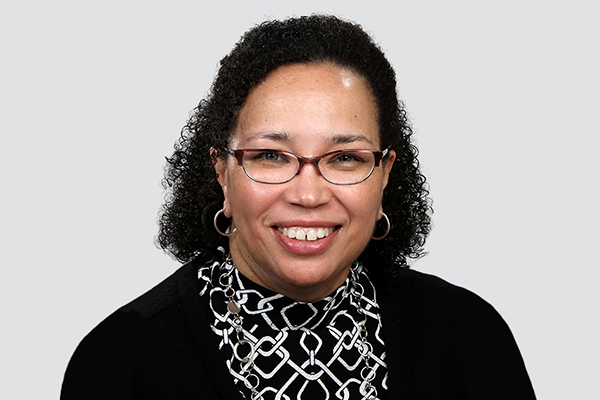
I am honored and excited to be appointed Rutgers’ 15th University Librarian. One of the most gratifying aspects of this role is the opportunity to witness your skills and talents in action at the Libraries. Your loyalty to RUL is admirable, and your determination to work with grace and dignity and in the university’s best interests is inspiring.
This letter for The Agenda comes at a time of evolution and opportunity. We continue our initiatives designed to address your concerns about RUL’s organizational clarity, culture, and communication. The RUL Affirmation group has worked diligently to define our aspirations and reframe our mission statement. They are incorporating your input from their recent town halls into final statements that will provide a common framework from which we can springboard. We are close to formally establishing the Staff Advisory Committee (SAC), which will serve as a counterpart to the Faculty Planning Committee. Thanks to the stellar work of the SAC Planning Task Force, bylaws have been drafted and are undergoing final revisions. Once that is completed, the task force will focus on stewarding the adoption of the bylaws and conducting the committee’s initial elections process. The goal is to have the SAC up and running by year’s end. We are also reviewing the Libraries’ organizational structure and how our core services are best delivered. We want to ensure we offer comprehensive student and research support across the university’s broad footprint in the most efficient and responsive manner possible.
We aspire to be the intellectual and creative center of the Rutgers community and recognized as essential to the university’s academic mission. It is a noble and obtainable goal. The future holds great promise if we continue to work smart, act with intent, listen to our colleagues and constituents, and pivot to meet the needs of today’s dynamic academic environment.
Since my arrival at RUL, I have been impressed by your ability to imagine and implement creative solutions, often in the midst of change. While things continually evolve, I know your willingness and desire to collaborate and meet challenges with intelligence and good humor will serve us well. I look forward to us working together for the benefit of the faculty, students, and staff of Rutgers University and the broader New Jersey community.
President Jonathan Holloway and Executive Vice President Prabhas Moghe make historic appointment for new leader of Rutgers University Libraries
Rutgers University has selected Dr. Consuella Askew as its new Vice President for University Libraries and University Librarian. On July 18, 2022, she became Rutgers’ 15th University Librarian and the first person of color in the institution’s 256-year history to hold the position.
“President Holloway and I believe that under Dr. Askew’s leadership, Rutgers is well suited to chart a strategic direction for Rutgers University Libraries, especially with a view to closely aligning the libraries to enhance the goals of academic units,” Executive Vice President for Academic Affairs Prabhas Moghe said. “A part of this work will involve centering the Libraries at the heart of our community and our commitment to diversity, equity, inclusion, and belonging; optimizing the Libraries’ collections, personnel, and services to enrich the teaching, learning, and research that occur across the University; establishing organizational coherence across the Libraries; and developing a strategic plan—all values that President Holloway has articulated.”
Rutgers University Libraries is a core component of the University’s academic mission. The Libraries’ faculty and staff provide access to vast and unique resources, archives, and expertise to foster interdisciplinary collaboration, advance faculty and student teaching and research, and empower student success. Rutgers University Libraries rank among the nation’s top research libraries with more than five million volumes, over one million digital resources, and 26 integrated libraries, centers, and reading rooms throughout Rutgers campuses and chancellor-led units.
Leading the Way to Library Excellence
Askew brings to Rutgers a rich set of experiences and a library career that spans nearly 30 years. She is a forward-looking academician who has served as Interim Vice President for University Libraries and University Librarian since May 2021. In her previous role as the Associate University Librarian for Rutgers–Newark, Askew led Dana Library through a strategic planning process, a multimillion-dollar renovation, and an organizational restructuring to encourage innovation, community engagement, and operational excellence.
A Commitment to Higher Education
Prior to Rutgers, Askew worked in various educational settings, such as public schools, Historically Black Colleges and Universities (HBCUs), Hispanic Serving Institutions (HSIs), community colleges, and private and public institutions. Askew served as the Associate Dean for Public Services at Florida International University Libraries and held leadership positions at the City University of New York (CUNY), where she was appointed the inaugural Chief Librarian for the CUNY Graduate School of Journalism. She was also a member of the research and development team that created LibQUAL+ for the Association of Research Libraries. This industry-standard tool is used to assess user perceptions of library service quality and has been adopted by over 1,300 libraries worldwide, including Rutgers. An active contributor to the academic libraries profession, Askew serves on the executive board of the HBCU Libraries Alliance and the editorial board for the award-winning journal portal: Libraries and the Academy. Askew has published and presented widely on cultivating library leadership, developing a culture of library assessment, and adapting library services to meet evolving user needs.
Askew holds a bachelor’s degree in English from Spelman College and a master’s degree in library and information studies from the University of North Carolina. She earned her doctoral degree in higher education from Florida International University. She is also an alumna of multiple prestigious library leadership programs, including UCLA’s Library Senior Fellows Program, the longest-standing formal leadership development program for librarians in the country.
As promised, my contribution to the Agenda this month focuses on our action plan for the current fiscal year. Please view the PDF to read the plan, titled Resetting the Rutgers University Libraries, in its entirety.
Inside, you will find further discussion about our focus areas for the year to come—communications, organizational structure, and organizational clarity—as well as the next steps for moving us forward in all of these areas. These activities will help lay a strong foundation for the next University Librarian and allow us to better align ourselves with President Holloway’s vision for Rutgers.
I want to take this opportunity to thank everyone who has participated in our information gathering activities thus far. Whether through the faculty/staff climate survey, the EHE conversations, or the various listening sessions I’ve conducted throughout the Libraries, your input was invaluable and helped give shape to this plan.
Please read the document carefully and let me know if you have any questions or concerns. I look forward to continuing my work with you all as we carry out the steps detailed in the plan.