Category: Rutgers Biomedical and Health Sciences

Faculty and staff news from the libraries at Rutgers Biomedical and Health Sciences.

  • Special Collections Librarians Take the Reins of NJSAA

    New Jersey Studies Academic Alliance logoFounded in 1992, the New Jersey Studies Academic Alliance (NJSAA) is a 501c3 educational organization promoting research and teaching in the multidisciplinary field of New Jersey studies. The NJSAA’s approximately 100 members include teachers (primary school through college), historians, geographers, museum and historical organization personnel, archivists, and librarians. Membership is open to anyone interested in the study of New Jersey, and membership dues are $5 annually. (Yes, $5.)

    The NJSAA regularly meets four times a year in Alexander Library’s Pane Room to hold business meetings, present awards, and hear presentations in New Jersey studies. Meetings are open to all.

    Among its central activities, the NJSAA recognizes notable work in New Jersey studies by presenting awards in the following categories:

    Starting on September 1, 2018, three Rutgers University special collections librarians will be assuming leadership roles in NJSAA for three-year terms. The incoming chair is Bob Vietrogoski, the special collections librarian for the history of medicine at George F. Smith Library in Newark. He currently serves as chair of the NJSAA’s Roger McDonough Librarianship Award. As chair, he is succeeding Maxine Lurie, professor emerita of history at Seton Hall University. Dr. Lurie is a co-founder of NJSAA and has served as chair or co-chair since NJSAA’s founding 26 years ago. She is the author and editor of several award-winning works in New Jersey studies, including New Jersey: A History of the Garden State (2012), and the Encyclopedia of New Jersey (2004).

    The incoming secretary is Christie Lutz, New Jersey regional studies librarian and head of public services for Special Collections and University Archives at Alexander Library in New Brunswick. She has been acting secretary for the past year, and is succeeding Marc Mappen, the former executive director of the New Jersey Historical Commission and a historian whose books include There’s More to New Jersey Than the Sopranos (2009) and Prohibition Gangsters: The Rise and Fall of a Bad Generation (2013).

    The incoming membership chair is Tara Maharjan, processing archivist for Special Collections and University Archives at Alexander Library. She currently serves as the NJSAA’s webmaster. As membership chair, she is succeeding Karl Niederer, the former director, state archivist, and chief records administrator in the former state Division of Archives and Records Management, and current coordinator of outreach and strategic partnerships at the New Jersey Historic Preservation Office.

    The next NJSAA meeting will be held on Tuesday, October 16, 2018 in the Pane Room. The business meeting will begin at 3pm, and at 4:15pm, William Kroth, president of the Sterling Hill Mine Museum in Sussex County, will speak on the “Great Zinc Mines of Sussex County” and will have samples on hand to view.

    For more information about the NJSAA, see its website here, along with News of NJSAA’s recent activities and its Calendar of Events. The NJSAA is also on Facebook, and “likes” are strongly encouraged.
  • 2018 Faculty Staff Picnic

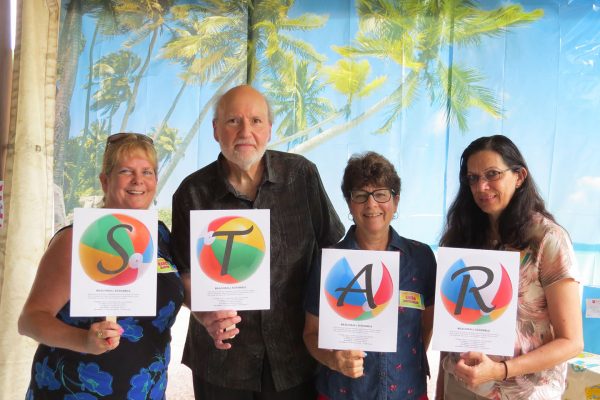
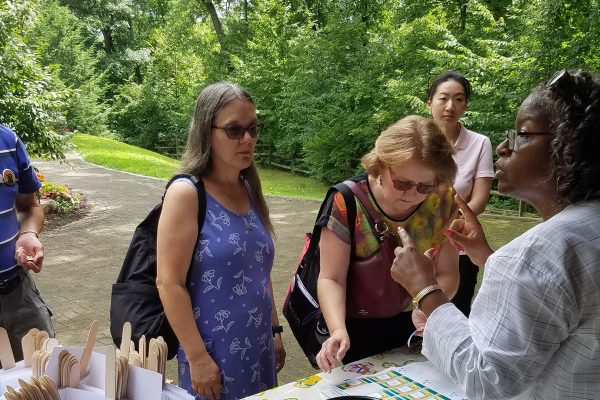
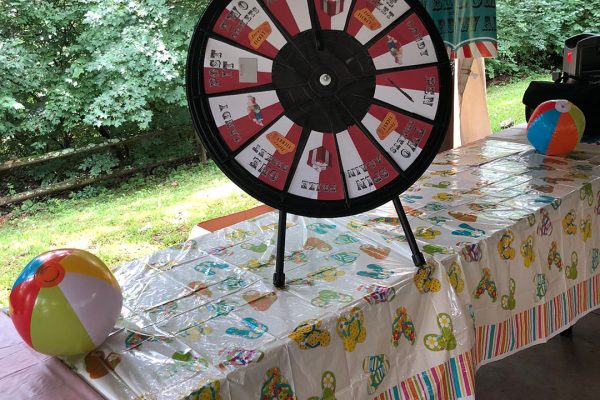
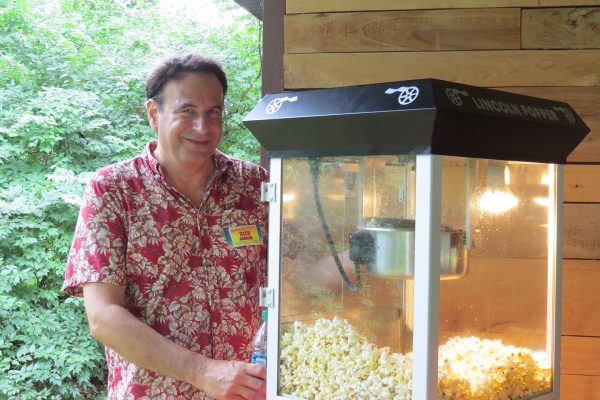
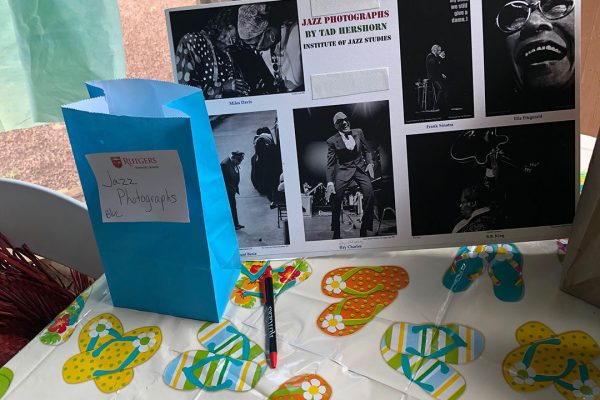
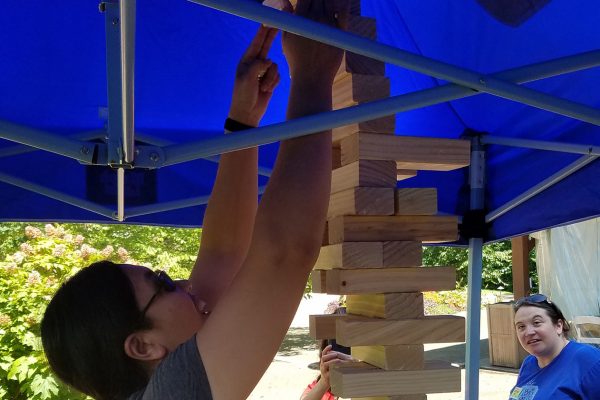
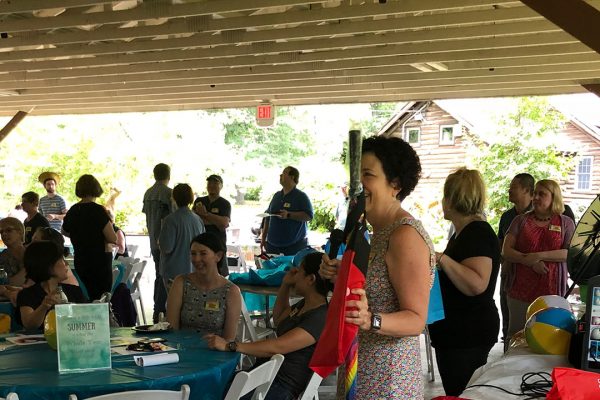
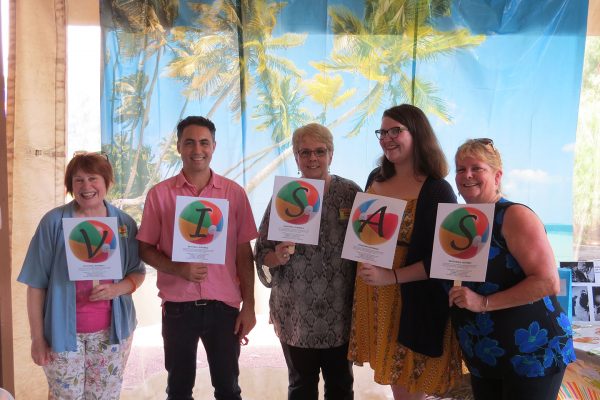
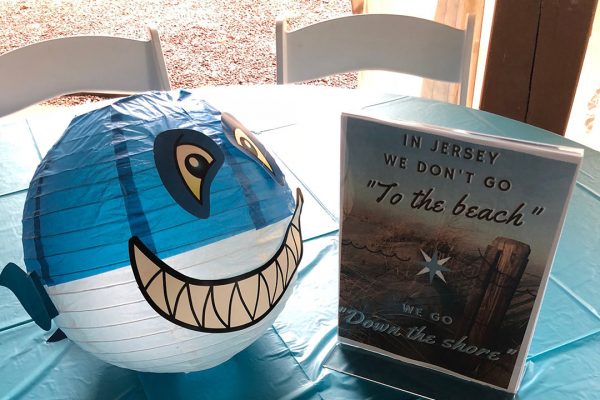
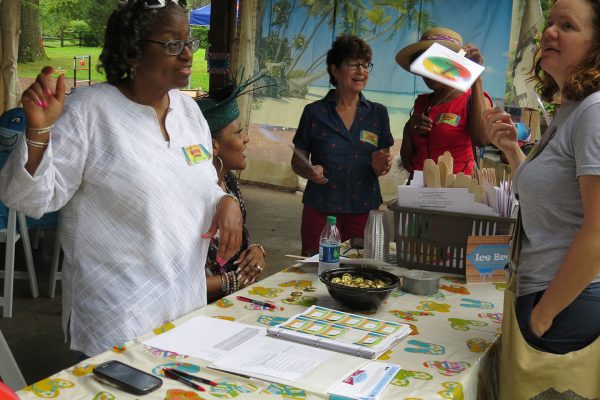
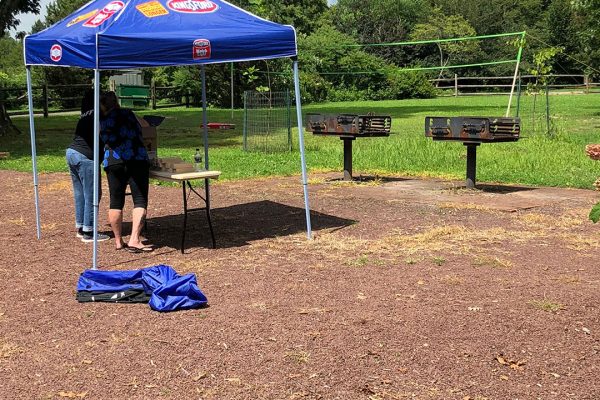
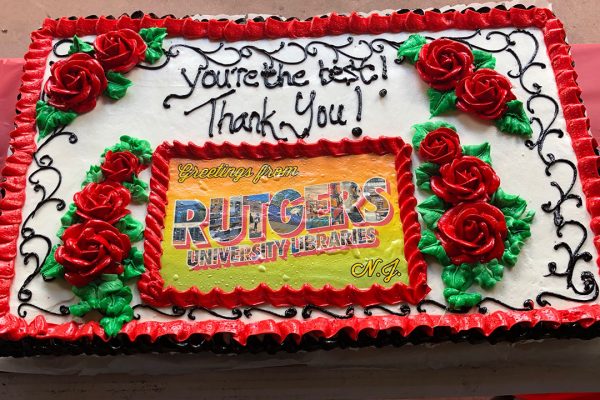
    Before we get swept away in another fall semester, I’d like to take one last opportunity to thank everyone who attended the faculty/staff picnic in August. It was a fantastic event–dry despite the forecast of rain–and the catering, games, and decorations all came together beautifully to make it feel like we were really enjoying an afternoon spent down the Jersey shore.

    As I mentioned during the picnic, I’d had some remarks prepared but decided not to deliver them lest I distract too much from the festivities. So I thought that my contribution to the Agenda this month should include a brief list of the many achievements we’ve had cause to celebrate in the past year:

    • The successful implementation of QuickSearch, which was a true all-hands effort and impacted the work of just about everyone throughout the Libraries. I’m impressed with the way we came together to make the rollout happen and how diligently the Ex Libris Implementation Team has worked since then to make improvements in response to user feedback.
    • The OAT Program continued into its second year, bringing the total savings for Rutgers students up to $2.1 million.
    • The ORCID program exceeded its first year benchmark, facilitating over 1,800 ORCID connections at Rutgers.
    • We took major strides to bolster our collections, including the addition of the complete Elsevier
    • We began the extensive redesign of our website to make it more accessible and user friendly.
    • And there have been countless local programs and initiatives that made sure you were meeting the unique needs of your users. To name a few:
      • RBHS hosted traveling exhibits from the National Library of Medicine in Piscataway and Newark
      • Dana held award-winning boot camps for graduate students and celebrated its 50th anniversary
      • The States of Incarceration conference and institute brought together partners from across Rutgers–New Brunswick and New Jersey
      • We spearheaded a campus-wide celebration of Paul Robeson’s 120th birthday in Camden
      • The IJS made the news with its acquisition of the Count Basie Collection, as did the New Brunswick Music Scene Archive, which earned an Innovative Archives Award from MARAC.

    Though they are really just the tip of the iceberg, these achievements are important not only because they support the local missions in Camden, New Brunswick, Newark, or RBHS, but because they also position the Libraries as a good collaborator on university-wide initiatives.

    I know there is plenty of work on the horizon—from improving QuickSearch and running a new round of OAT awards to enhancing our instructional technology support with the launch of products like Credo, Pressbooks, Leganto, and illumira—but we should be extremely proud of what we’ve accomplished together so far and excited about all that’s yet to come.

    Of course, the picnic would not have been possible without the thoughtful planning of the major events committee, so I’d like to recognize them all for their hard work and creativity—Matt Badessa, Matt Bridgeman, Janie Fultz, Chantel Harris, Tad Hershorn, Tara Kelley, Megan O’Connor, Erica Parin, Jessica Pellien, Antoinette Perkins, Daphne Roberts, and Rich Sandler—and thank all those who volunteered on the day of the event.

    Congratulations, Irina, on winning the desk duty prize!

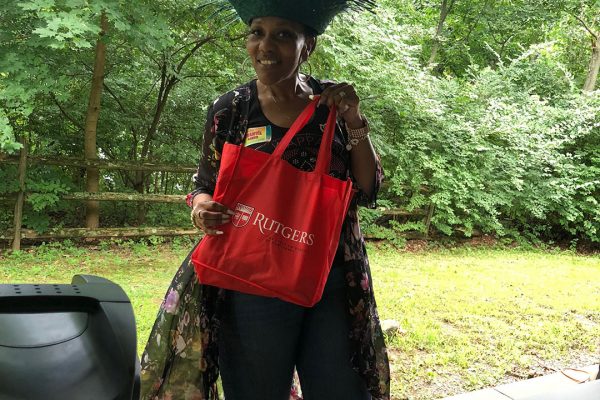
    Last but not least, I want to acknowledge our colleagues who stayed behind to keep the libraries open while we enjoyed the party. As I mentioned in an earlier email, we held a special “desk duty” prize drawing this year, and I’m delighted to announce that Irina Loutchkina, library assistant at Alexander Library, was selected as our winner. Irina has received a prize pack including four football tickets from Rutgers Athletics, an RWJ Medical School tote bag, a beautiful hardbound Zimmerli exhibition catalog, a drink coozie and ID holder from the Division of Continuing Studies, a Libraries coffee mug, and more. Congratulations, Irina!

    Thanks again to each and every one of you for all that you do on behalf of the Libraries. I can’t wait to see what we can accomplish in the 2018–2019 academic year and beyond.

  • Introducing the Rutgers Health Sciences Libraries on Social Media

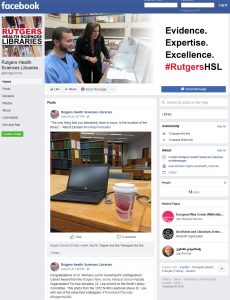
    Facebook page
    The @RutgersHSL Facebook page.

    Matthew Bridgeman and Sarah Jewell are leading the teams behind the new Facebook and Instagram pages representing the Rutgers Health Sciences Libraries. Matthew Bridgeman, an information and education librarian at Robert Wood Johnson, has both professional and personal experiences with Instagram. He began the Instagram account at Middlesex County College. In two years he grew the library’s presence and even had a post shared by the New York Public Library. The NYPL also has a great article on creating Instagram posts to be engaging called 20 Ways to Make People Fall in Love with your Instagram. He sees Instagram as a way to begin a discussion with students and faculty with creative photography.

    Sarah Jewell, an information and education librarian at the George F. Smith Library of the Health Sciences, primarily has experience doing social media for organizations outside the professional sphere. In the past, she has volunteered to do Facebook, Instagram, and WordPress work with writing and meditation-based organizations. “I see social media as a great vehicle for expressing passion about important work,” Sarah says. “When you express enthusiasm through this media, it is contagious, and it gets others excited about the work to be done.”

    Instagram
    The @RutgersHSL Instagram page.

    Some resources that Sarah uses to guide her social media efforts include the Rutgers Libraries Social Media Resources (which she helped create) and Young and Rossmann’s book titled Using Social Media to Build Library Communities. As the Rutgers Health Sciences Libraries staff is just getting the Facebook and Instagram accounts off the ground, she has been reaching out to her regular contacts to spread the word about the new way to communicate with the libraries. She was thrilled to see the Rutgers School of Public Health post on both Facebook and Instagram a promotion of the Rutgers Health Sciences Libraries pages.

    The primary goals of the Facebook and Instagram accounts are to promote library resources, services, and events to the Rutgers University community and to engage with the students, faculty, and staff of the seven schools under RBHS. The new Rutgers Health Sciences Libraries Facebook and Instagram accounts are off to a running start. The accounts’ plans are to keep a constant scheduled flow of content celebrating the students, faculty, and libraries from the schools of Rutgers Biomedical and Health Sciences. If you have not already followed them, connect with them now as they begin this adventure.

    Matthew Bridgeman and Sarah Jewell

  • Ex Libris Implementation Project Update – July 2018

    quicksearch logo
    The team is planning to visit each campus where we will hold open Q&A sessions. This will be an open forum where you can bring any questions or concerns you have about QuickSearch, Alma, or related processes.

    After much planning and preparation from all of the Libraries, QuickSearch and Alma went live on June 5. It’s so hard to believe that we are already almost four weeks past go live! The implementation team would like to thank everyone for your hard work in making go live a success. Each and every person in the Libraries has helped move us forward, be it by serving on a working group, attending a training, or by submitting a help ticket to point out a concern. We couldn’t have done it without you!

    Of course, we also continue to experience bumps along the way, but this is expected with an implementation this large. The team has spent much of the time since our last post focused on those bumps… addressing critical post-go live activities, implementing fixes, and responding to help tickets. In addition, we are reviewing our lists of known issues and possible future improvements in order to prioritize items for completion. The website will be updated with this information as soon as the process is complete.

    The team is also planning to visit each campus where we will hold open Q&A sessions. This will be an open forum where you can bring any questions or concerns you have about QuickSearch, Alma, or related processes. Be on the lookout for an announcement about dates in the very near future. Your feedback is critical and we really hope that you will join us.

    Lastly, as Tao steps away from the team, I would like to thank him for his contributions to the group and to the project. I know that we will all miss working with him as we continue to forge ahead.

    Abbey

  • This Month in the Agenda – July 1997

    Twenty-one years ago, all hands were on deck as the Libraries were gearing up for the implementation of a new library system. Sound familiar? Here’s a snapshot of the Agenda from July 1997.

    With a Little Love from Our Friends
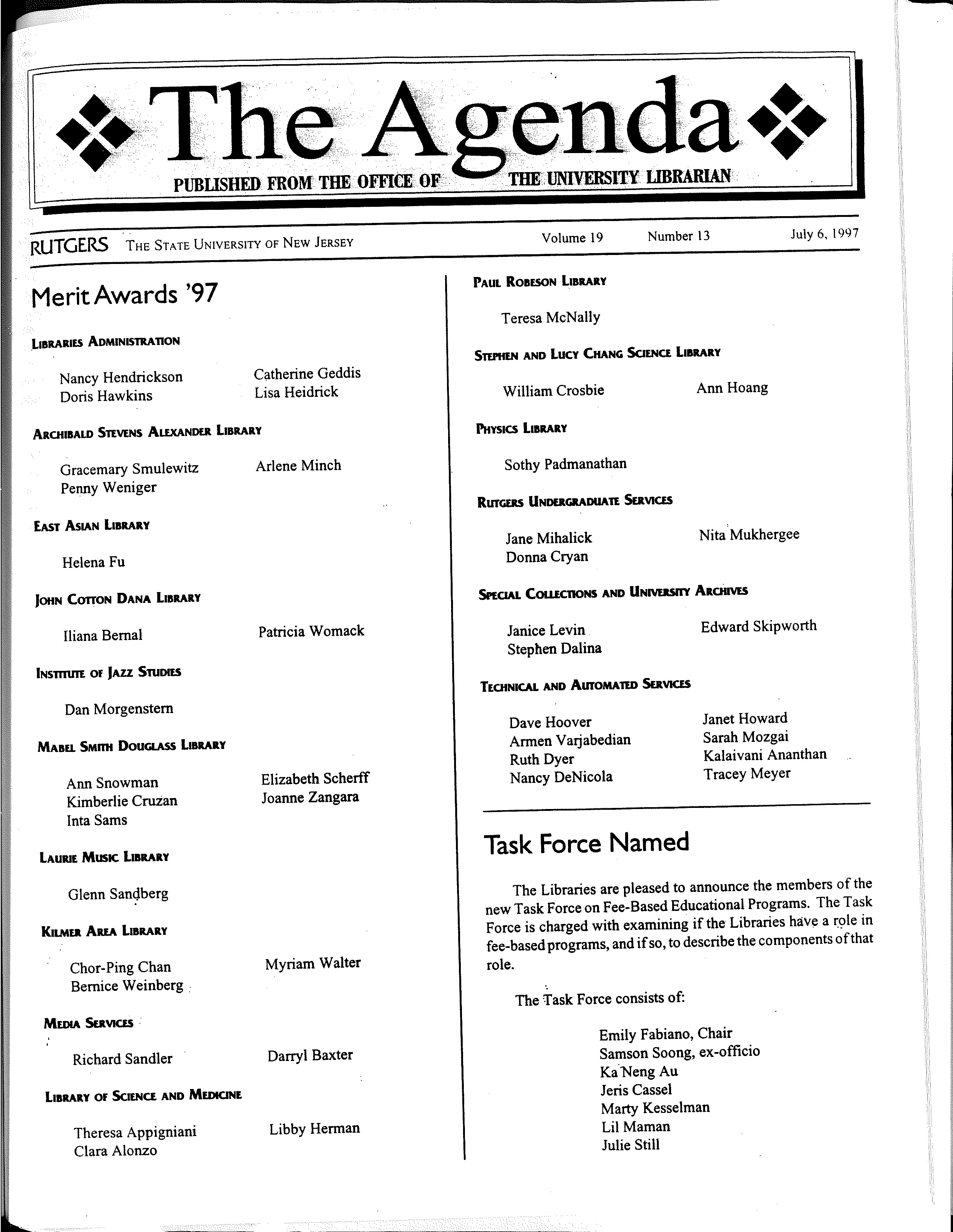
    Agenda July 1997
    Merit awards for 1997. See any names you recognize?

    Below are some notes we recently received from members of the Friends of the Rutgers University Libraries. We thought you might like to see them too!

    Letter #1

    Yesterday (Sunday, May 25th) I walked in the rain to the Alexander Library. Absolutely everything was closed – the caravans at the bus stop, the food shop further up, clearly all the teaching buildings. I met not one person on College Avenue.

    But the library was open, and there were people going in and out, using it.

    We get a publication from the Library of the University of Michigan, which announces the library to be the center of the university. Truly, I believe yours is, and truly I thank you for acting as though it is!

    Letter #2

    I have been a Friend of the Library for several years….

    I continue to actively use several branches of the Library on a regular basis. I have been particularly impressed with the caliber of the reference librarians at the Dana Library. It has been a satisfying association for me.

    Thank you for your assistance.

    The Agenda 19, no. 13 (July 6, 1997)

    LIS Teams, Assemble!

    We have had a wonderful response to the several calls for people to become involved with the training program for the new LIS coming later this summer. Nearly seventy people from all over the library system have volunteered to participate in some aspect of the training program.

    We have compiled all the information from the completed “LIS Training Committee Questionnaires” returned to us by the volunteers and have worked with each of the LIS Implementation Chairs to place volunteers into the training teams for the Circulation/Reserves, Cataloging and OPAC modules. The remaining teams, Acquisitions/Fiscal Control and Serials Control, will be announced shortly.

    Based on volunteer’s questionnaire responses, each team will be divided into smaller working groups to write documentation, develop scripts, test scenarios, conduct sessions and assist trainees at the computers.

    The Agenda 19, no. 13 (July 6, 1997)

    Connie Abroad

    Partially funded by “Chun Hui Plan,” a government grant from China, Connie Wu at LSM went to China for a lecture tour in June. She and four presenters from other universities and information companies visited three top ranking universities in China: Fudan University, Zhejiang University and Hangzhou University. Connie presented three topics: (1) Internet Overview and Its Applications and Resources; (2) Electronic Publishing and Its Impacts; and (3) Challenges to Librarianship. More than 400 academic and public library directors and librarians from several provinces attended these workshops. Since her presentations interested the audience Connie has already received several invitations for next year’s lectures after she came back.

    The Agenda 19, no. 14 (July 20, 1997)

  • Sunsetting the Library Catalog Committee

    LCC wordle
    The LCC began as the Public Access Committee when the Libraries were planning to implement the new Unicorn library information system from Sirsi in 1997.

    With the implementation of Alma and Primo, the Rutgers University Libraries bid a fond farewell to the Library Catalog Committee. Recent LCC “emeriti” are: Stephanie Bartz (New Brunswick Libraries, chair), Natalie Borisovets (Rutgers–Newark/Dana), Melissa De Fino (Central Technical Services), Joseph Deodato (Shared User Services), John Maxymuk (Rutgers–Camden/Robeson), Bob Warwick (Integrated Information Systems, retired), and Yini Zhu (Rutgers Biomedical and Health Sciences/Smith).

    The committee began as the Public Access Committee (shortened to PAC) when the Libraries were planning to implement the new Unicorn library information system (LIS) from Sirsi in 1997, which replaced an aging Geac catalog and Innovative (III) acquisitions system. At that time, “PAC” was one of several subcommittees of the LIS Committee tasked with implementing the new system.

    The first meeting of the Public Access Committee was held in April 1997. Although the name of the chair was not recorded in the meeting minutes, in attendance were the following.

    • Emily Fabiano, Alexander Library
    • Harriet Hemmasi, Cataloging
    • Rhonda Marker, Cataloging
    • Tracey Meyer, Database Management
    • Pat Piermatti, Library of Science & Medicine
    • Bob Warwick, Systems Department
    • Mark Witteman, Systems Department (Unicorn systems administrator)

    By fall 1998, Ann Scholz-Crane (Robeson Library) was chair of the group and it was Ann who asked Sam McDonald to place PAC meeting notes on the web. Minutes from October 1998 through the final meeting in July 2017 were made available in Staff Resources.

    In 2000, the committee was revitalized and reconstituted under Harriet Hemmasi, then acting associate university librarian for Technical & Automated Services. It became the IRIS Public Access Committee (IPAC). A new charge was issued and new members were added. Just two years later, in 2002, the charge was once again revised as the committee was moved from technical services to public services under the aegis of Jeanne Boyle, associate university librarian for Public Services & Communications.

    The final major transition for the committee took place in 2011, when the Libraries discontinued the name “IRIS” for the library catalog. The committee, which had been under the leadership of Stephanie Bartz since 2005, received a revised charge and changed its name to Library Catalog Committee.

    During its long tenure and multiple transitions, there have been many, many others who have served on this committee. Thank you, each one!

    Stephanie Bartz and Rhonda Marker

  • Shared and Central Components of the Rutgers University Libraries Service Framework

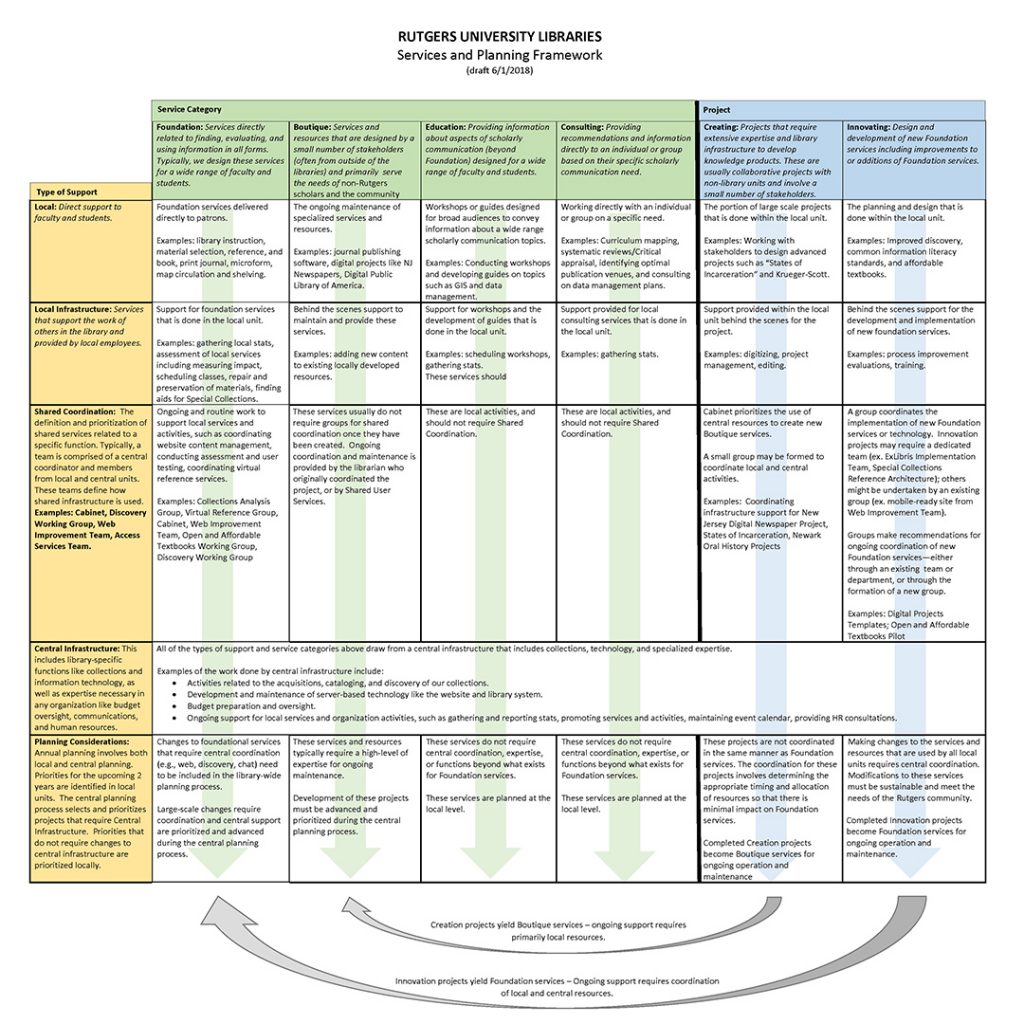
    With the pending release of Alma and Primo, this seems like a good time to continue the discussion of Frameworks. In March, I talked about the local components of a service Framework. Items described in the ‘Local’ and ‘Local Infrastructure’ rows of the Framework are the aspects of our work that directly relate to our users and include Services and Projects. Services are ongoing and can be described as:

    • Foundation—directly related to finding, evaluating, and using information.
    • Boutique—designed by a small number of stakeholders to serve either a small group of scholars within Rutgers or broader community.
    • Education—for the purposes of this Framework, providing information for a wide range of faculty and students about scholarly communication (beyond Foundation)
    • Consulting—providing recommendations and information directly to an individual or group based on their specific need.

    In addition to the categories of Services, there are also two categories of Projects. Projects are short-term and require extensive expertise. Projects that fall under the ‘Creating’ column are designed to create new Boutique services, and projects in the ‘Innovating’ column are designed to develop new or improve existing Foundation services.

    The local portions of our services and projects are often just the tip of the iceberg. In order for the local units to be successful, there is a lot that goes on behind the scenes. We have seen this first-hand over the last six months during the Ex Libris implementation. The complete Framework includes two additional levels beyond local services: Shared Coordination and Central Infrastructure.

    Framework
    Click the image to download a PDF of the Framework.

    Shared Coordination: Here in the Libraries, teams, working groups, and committees coordinate and prioritize the resources and work of Central Infrastructure. These groups are usually led by a central coordinator and include representation from all of the local units. This structure encourages transparency and equity in how work is assessed and prioritized and ensures that local needs and priorities are fully considered.

    In my April Agenda post, I talked about the results of the Cabinet planning retreat. As one of its primary roles, Cabinet provides high-level coordination between local and central units and develops the Libraries-wide priorities for the upcoming year. In addition to Cabinet, there are several other coordinating groups, including Discovery Working Group, Web Improvement Team, Virtual Reference Group, Collections Analysis Group, and more. These groups are responsible for not only making recommendations for how to prioritize the work, but also for completing approved work as needed.

    Coordination is essential in all complex organizations, but it is particularly important for us since a single Central Infrastructure has to support the unique missions of four local units. The shared infrastructure includes basic organization functions such as budget oversight, human resources, and communications. It also includes library specific functions such as collections, acquisitions, cataloging, and discovery. Server-based information technology including websites, the library system, and RUCore, are also central. In the Framework, central infrastructure is accurately depicted as spanning and supporting ALL areas of service and all types of projects.

    The Framework provides an overview of the components of our services and projects and the dependencies. Through Shared Coordination, we are constantly looking at how best to prioritize and use the Central Infrastructure, but the activities in the Shared Coordination row respond to and reflect the needs and priorities of local services and infrastructure thanks to our planning processes.

    I hope you will take a minute to review the Framework and think about where and how your own work is positioned and how it contributes to or is supported by the other parts of the organization. In an organization as large and geographically dispersed as the Libraries, it is easy to feel like our work is isolated, but the Framework demonstrates the opposite is true. If you have thoughts or suggestions for improvement of the Framework, please let me know.

  • QuickSearch Logo

    quicksearch logo
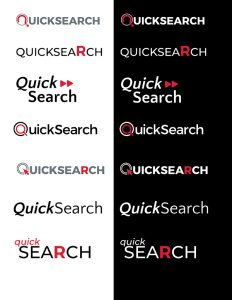
    Help us select the new QuickSearch logo! Click the image to take the survey.

    Hello all –

    I know I said we’d return to Frameworks this month, but events of the day (or month) have once again intervened. As we’ve seen from recent communications from the ExLibris Implementation Team, we are moving ahead full steam toward the June 1 go live date. I know many of you are preparing for the technical freeze and helping to communicate these changes to our users, but I write today with a different purpose.

    We recently announced that the name of our search interface will be QuickSearch, and I am writing today to invite you to help us with the selection of a graphic to build recognition and visibility for our new service.

    We want your input. You know your users and the Rutgers community – what they

    like and dislike and what works for them.

    We want to use this visual on our website and in marketing materials, so it has to be eye-catching and work in multiple formats. It will be used alongside messaging that emphasizes that QuickSearch allows users to search across our collections with greater efficiency, accuracy, and relevancy. With the help of the ExLibris Implementation Team, we have managed to whittle the options down to a top 7. We need your help to get this down to the final graphic.

    So, with that in mind, please let us know:

    • What would be most appealing to Rutgers faculty and students?
    • What communicates the excitement of QuickSearch most clearly to you?
    • Which graphic most clearly matches your vision of what QuickSearch does?

    Conversely, let us know:

    • What visuals simply don’t work in your opinion?
    • Which ones aren’t clear or don’t match the function of QuickSearch?
    • Is there anything confusing about the graphics? Would you mix and match any elements of the graphics to create a new graphic?
    • Or do you have a completely new concept you would like to share?

    Please click here to let us know what you think of our leading QuickSearch graphics so far. We are in a time crunch, so please get your comments in by Tuesday, May 8 at 5 p.m.

    Thanks in advance! We’ll announce the QuickSearch graphic next Wednesday!

    if you prefer to email your comments, please send them to me or Jessica Pellien.


  • Ex Libris Implementation Project Update – May 2018

    ExLibris graphicMigration Milestones 

    The implementation project continued to move forward as scheduled in April. We submitted the final migration form and link resolver form to Ex Libris. To address issues encountered during the Alma/Primo testing, we have been having weekly functional calls with Ex Libris and communicating with them constantly via the project’s Basecamp site. The Data Migration and System Integration Working Group has also been working hard on the third-party integration issues. The extract of Sirsi data for the final data load to Alma will start on May 5.  

    QuickSearch Announcements and News Page 

    Primo will be known as QuickSearch to the Rutgers community after we go live on June 1. In her recent messages to the university and RUL communities, Krisellen announced the release date of QuickSearch (June 1) and its impact on students and faculty. The Libraries also created a QuickSearch news page for the public. Please use the news page as a resource to answer user inquiries. Students and faculty can also submit questions or comments about QuickSearch directly to reference@rutgers.libanswers.com 

    Upcoming Service Changes 

    In her message to RUL everyone, Krisellen also highlighted the following service changes that are coming up:  

    • Acquisitions: There will be a freeze of acquisitions and cataloging activities (except reserve purchases) between May 5 and June 1. Normal acquisitions functions will resume after June 1, but we will prioritize the purchase of course reserves and faculty requests. The process of allocating funds for selector-initiated acquisitions will resume in the fall, which is in line with previous years. 
    • Reserves: Starting May 5, we will have a special process in place to accept and place reserve orders, but we anticipate the turnaround time will be longer than usual. Reserves that are placed after May 5 will not transfer automatically to Alma and will be manually transferred after June 1. Additional summer programs like EOF may be similarly affected. 
    • Circulation and ILL: From May 29 to May 31, we will transition to an Alma offline client for circulation. This step is necessary to populate Alma with existing circulation data prior to launch. Users will not experience down time, but during this three-day period, Access Services staff will stop using Sirsi and instead work with the Alma client. On June 1, the data from the offline client will be merged back into Alma, so there will be no data loss and everything will be synced. This will also impact Interlibrary Loan, as there will be potential delays and interruptions in processing loans and borrows of physical items. More information on these workflows and training opportunities will be available soon. 

    These temporary or short-term service changes are necessary for the successful implementation of Alma and Primo. We thank all the library faculty and staff for the help to minimize disruption.  

    Primo Training Schedule 

    Discovery Services Librarian Joseph Deodato recently announced a Primo/QuickSearch training schedule (see following) for public services librarians and staff. Many library faculty and staff have registered to attend the training sessions. Even though the registration is now closed, Joseph welcomes colleagues who did not register to attend any of the sessions. Please contact Joseph if you have any questions.  

    Primo Training Schedule (as of April 25, 2018) 

    Date  Location  Time 
    May 1  Dana Electronic Classroom II  2 p.m. – 4 p.m.
    May 2*  Robeson Electronic Classroom  2 p.m.. – 4 p.m.
    May 4*  Alexander SCC Lecture Hall  2 p.m. – 4 p.m.
    May 8  RWJ Electronic Classroom  2 p.m. – 4 p.m.
    May 9  Dana Electronic Classroom II  10 a.m. – 12 p.m.
    May 11  Smith Electronic Classroom I  10 a.m. – 12 p.m.
    May 15*  Carr Conference Room  2 p.m. – 4 p.m.
    May 18  Alexander Pane Room  10 a.m. – 12 p.m.

    *indicates a new session or change of location 

    Submitted by Tao Yang and Abbey DiPaolo.

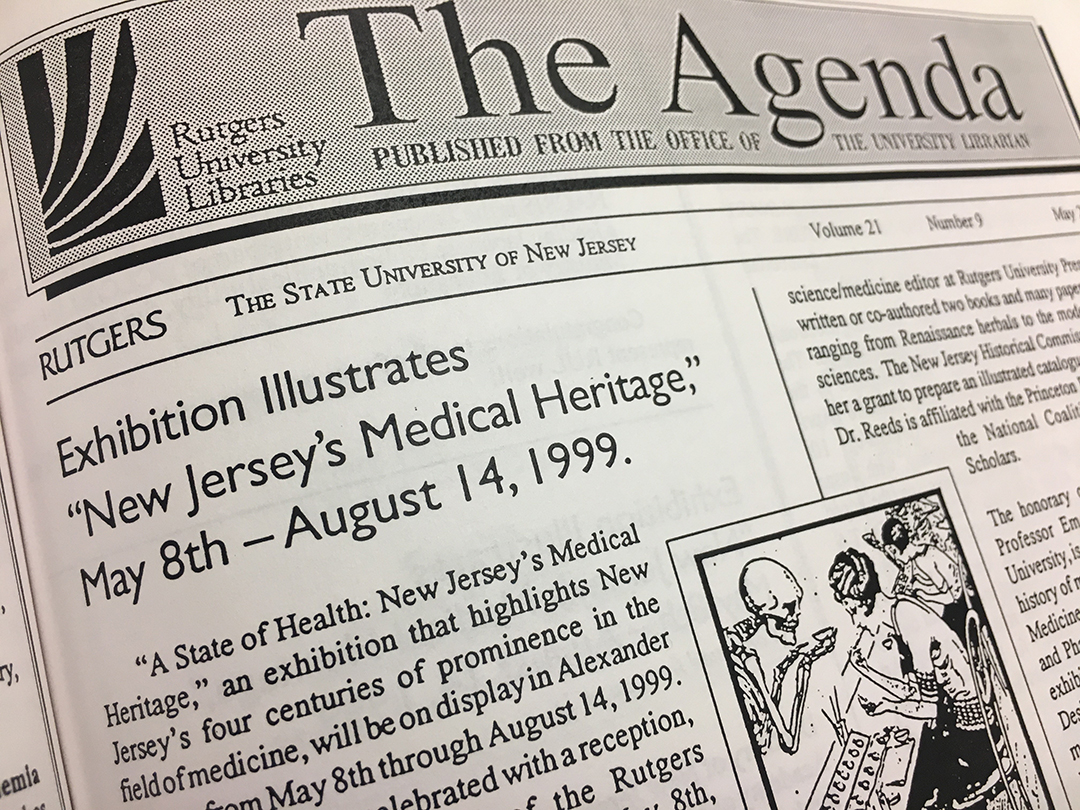
  • This Month in the Agenda: May 1999

    Coming Full Circle
    newsletter
    The Agenda, May 2, 1999.

    As many of you know, a group called the Web Advisory Committee (WAC) has been working to redesign the Rutgers University Libraries’ website…. The Rutgers Libraries’ web pages provide information about library collections, services, and personnel and facilitate communication and work among library faculty and staff. The redesign of our website will produce the flexibility we need to accommodate our current and future digital library and give our users an information tool that is more intuitive to use. Specifically, WAC expects the new website to provide important new features such as the following: 1) better integration with the university’s recommended “look & feel” for websites, resulting in a shorter learning curve, 2) improved and more intuitive navigation, and 3) new sources such as the “Digital Library Projects” and “Friends and Supporters” pages.

    The Agenda 21, no. 9 (May 2, 1999)

    Destined for Success

    We are pleased to report that Fernanda Perrone of Special Collections and University Archives (SC/UA) has been awarded an undergraduate research fellow from the Vice President for Undergraduate Education’s Rutgers Undergraduate Research Fellows Program.

    The Undergraduate Research Fellow, Carlos J. Ron, will work with Fernanda on the “Documenting Inter-American Cooperation Project” and specifically on the Frances Grant Papers, which include the archives of the Inter-American Association for Democracy and Freedom and the Pan-American Woman’s Association.

    The Agenda 21, no. 9 (May 2, 1999)

    Lending a Hand

    Libraries Essay Contest #3 Winner
    Student Category

    This semester I am working on my Senior thesis. I had never really spoken to a Librarian at Dana and was, at first, a bit reluctant because they always seem so busy. I decided to approach the reference desk with a question on obtaining an obscure government pamphlet that was going to be helpful in writing my paper. Their pleasant attitude hit me like a tidal wave of fresh air. Two big smiles greeted me and I immediately felt very comfortable. I was so pleasantly surprised!

    I am used to living in a society where everyone is in a rush and not many people sincerely want to help. The Rutgers Librarians that helped me, that day, were quite the opposite. They showed great eagerness to help me and that’s something I really appreciate.

    The Agenda 21, no. 10 (May 16, 1999)

    Have a Reservation?

    The Electronic Reserves Working Group is happy to announce that RUL will start to provide electronic access to some documents on reserve this summer….. We will begin by providing electronic access to photocopies of sample exams, overheads, syllabi, problem sets, and lecture notes submitted by instructors for Reserves. Documents will be scanned on the Minolta PS 3000 in the Copy Center in New Brunswick, set up on the library’s web server, and delivered as Adobe PDF (Portable Document Format) files in the Reserve module of IRIS. All Rutgers libraries will participate in the electronic reserve services….. Some libraries may scan and process documents for electronic reserves on-site in the future.

    The Agenda 21, no. 11 (May 30, 1999)