Category: Rutgers Biomedical and Health Sciences

Faculty and staff news from the libraries at Rutgers Biomedical and Health Sciences.

  • University Librarian’s Report – July 2019

    I’d like to start my article this issue by thanking all of you who attended our State of the Libraries meeting in June. It was a great opportunity for us to network with colleagues we don’t often get to see in person, celebrate our collective accomplishments from the past year, and look forward to the challenges ahead. I hope you found it a useful and productive event.

    For those of you who stayed behind, I invite you to review the slides from my presentation as well as the videos from the poster session below.

    As I reflect back on Kathleen Fitzpatrick’s presentation about Generous Thinking, a key takeaway for me was the challenges inherent to developing academy-driven, community-supported infrastructure that provides open access to scholarly material in a sustainable manner. In order to realize this vision, academic institutions need to commit in earnest to the idea of collaboration, and take seriously a sense of shared responsibility to our collective enterprise.

    Deep collaboration is difficult. It requires trading control and specialization for efficiency. In a recent short essay appropriately titled “Library Collaboration is Hard; Effective Collaboration is Harder,” Lorcan Dempsey summarizes his recent presentations and blog posts and ends with the recommendation that “There should be active, informed decision-making about what needs to be done locally and what would benefit from stronger coordination or consolidation within collaborative organizations.” At Rutgers, we collaborate all the time, every day, all day. Nearly every project that we undertake involves collaboration across separate parts of our complex organization. We have talked about the importance of a collaborative approach in other contexts as well, such as Dempsey’s notion of the collective collection and how the continuum of consolidation applies to the Libraries’ services framework.

    Recently, we’ve seen the fruits of collaboration bear initiatives like CADRE, the shared big data gateway we’ve partnered with Indiana University and others to develop, which is further evidence of what is possible when institutions work together to address common needs. We are also exploring a transformative license agreement of Oxford Scholarship Online backfiles and frontlists, the terms of which were negotiated by PALCI. Even more opportunities, such as shared infrastructure for journal publishing, are on the horizon as well, thanks to our membership in the Big Ten Academic Alliance.

    With these examples in mind, it becomes clear to me that forward-thinking academic institutions need to be open to participating in these new, cooperative models in order to maximize our impact. And I believe the way forward for all libraries—including our own—is to accept this challenge to collaborate deeply across institutional boundaries. As we know from experience, there are bound to be some tradeoffs, and compromises will have to be made. But only by committing to working together in a meaningful way can we truly advance our mission of contributing to the public good.
  • 2018 Scholarly Publishing Symposium

    The latest addition to the Libraries’ Digital Collections page is the 2018 RBHS Scholarly Publishing Symposium. Here, Ela Sosnowska describes the event and reflects on lessons learned.

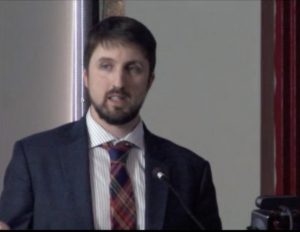
    George Woodward presents at the Scholarly Publishing Symposium.
    About the 2018 Scholarly Publishing Symposium 

    The symposium, held on March 14, 2018 in Newark and March 15, 2018 in New Brunswick was organized by the RBHS Provosts Office and Rutgers Libraries as a part of the RBHS Provosts Faculty Development Series. 

    The main goal of this event was to inform and educate RBHS faculty and graduate students about the complexities of the publishing process and to introduce them to the resources and services supporting scholarly publishing provided by Rutgers’ libraries. Topics covered included advice on preparing and submitting manuscripts, navigating the peer-review process, finding the right scholarly journals and publishers, and avoiding predatory publishers.

    The symposium featured three lectures (I-III) and a panel discussion (IV):

    1. An overview of the scholarly publishing process was delivered by George Woodward, the symposium’s keynote speaker and a professional editor at Elsevier. It included details of the peer-review process, an outline of the most common mistakes authors make that impact the success or failure of their manuscript submissions and practical advice on steps needed for a successful submission of manuscripts.
    2. A view from a faculty editor delivered by the RBHS chancellor Brian Strom presented a view on the editor’s role in the journal editorial process. The presenter provided recommendations to authors on adhering to the submission criteria set by the journal and emphasized importance of recognizing the established policies on conflicts of interest by all involved in the publication process.
    3. Librarians’ perspective on scholarly publishing presented by Yingting Zhang, research services librarian, began with an overview of the publishing market, including pros and cons of open access journals. It provided instructions on how to assess journal value and how to recognize journals that may be questionable or predatory. It also introduced tools and resources used for the proper selection of journals and available at Rutgers’ libraries.
    4. A panel discussion focused on three faculty editors’ experiences with the editorial process and resulted in practical advice to early career authors. It envolved into a question and answer format and resulted in a spirited and informative discussion on topics of greatest concern to the attendees.

    Statistical highlights:

    The overall evaluation of the symposium was very positive, with 95% of Newark and 96.3% of New Brunswick participants agreeing that the symposium was satisfactory or very satisfactory in providing value to their work.

    The strength of both sessions was demonstrated further by very high marks given to all three presenters, where 92-97% for responders rated their presentations satisfactory or very satisfactory.

    97.5% of attendees in Newark and 92.6% of participants in New Brunswick declared interest in attending future workshops/symposia on other scholarly topics.

    The most popular topics identified for future sessions were:

    1. Instruction on using citation management tools
    2. Ways of identifying quality journals suitable for publishing
    3. Tools for measuring faculty research/publishing impact

    Participation:

    A total of 61 people attended the Newark session on March 14. Fifty-one of them were faculty representing the following RBHS schools: NJMS, RSDM, SHP, SON and RWJMS. Two NJMS and one GSBS students and 7 representatives from the Health Sciences Libraries and Elsevier also attended.

    The New Brunswick session on March 15 attracted 50 attendees, 40 of whom were faculty members and two of whom were students from the following RBHS schools and centers: RWJMS, SPH, SHP, NJMS, Pharmacy, SON and EOSHI. Eight health sciences librarians and Elsevier representatives also participated.

  • This Month in the Agenda – May 1993

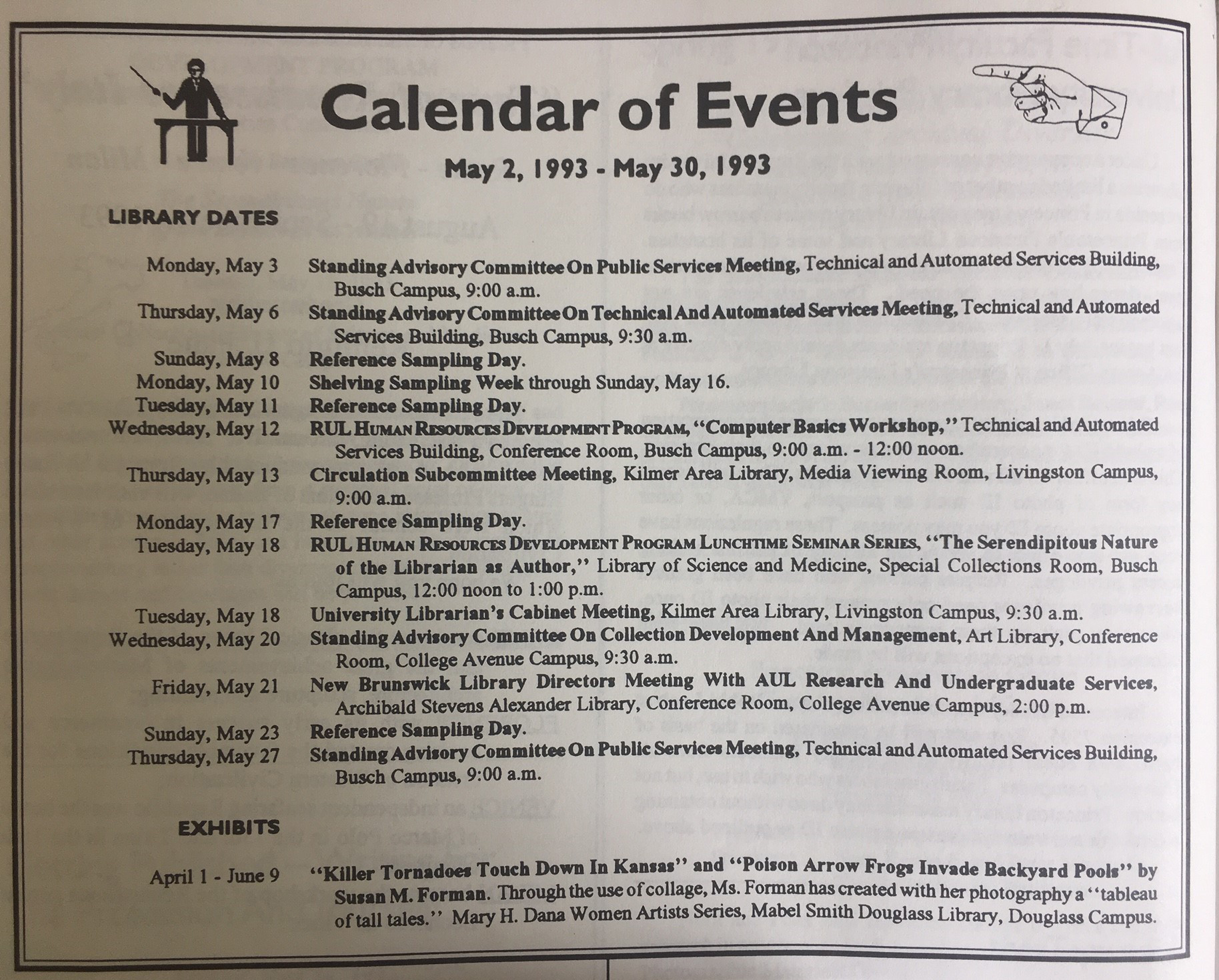
    Calendar of Events, May 2 - May 30, 1993.
    Calendar of Events, May 2 – May 30, 1993.
    How To

    Mary Beth Fecko, Technical and Automated Services, has written Cataloging Nonbook Resources: A How-To-Do-It Manual for Librarians.

    Cataloging is the starting point for access to nonbook materials, especially important for media which cannot be browsed in the manner of books. Cataloging Nonbook Resources offers the cataloger guidance and practice with nonbook materials. It covers the major formats: visual materials, sound recordings, maps, computer files, kits, and electronic resources. The text is meant to be used in conjunction with AACR2R. Each chapter includes examples of bibliographic records, examples of MARC tagging for various formats, and AACR2R rules for MARC tagged records along with Library of Congress Rule interpretations. This manual brings catalogers up to speed on “nontraditional” formats.

    Congratulations, Mary Beth!

    The Agenda 15, no. 9 (May 2, 1993)

    Holdings and Pieces

    The System and Database Management Department is scheduled for a major upgrade at the end of the summer. Because of the high interest in the upgrade the plans are as follows:

    Holdings and Pieces Management is coming soon to our IRIS catalog. Why, you may ask, is Holdings and Pieces necessary? How will it affect our daily operations, and is the transition worth it?

    Holdings and Pieces is Geac’s name for the software they developed to streamline management of individual items in the system, while retaining summary information. In this context, holdings refers to summary holdings, and pieces refers to the individual items.

    Currently holdings information is kept in two separate sets of files: those for circulation and those for BPS. In the OPAC, information is drawn from both of these components. Holdings and Pieces Management (HPM) will integrate information that is now kept in separate files. For example, from either Circ or BPS, you will be able to determine circulation status and the date an item was added to the system. Staff will be able to change information in either function and will be able to record item-level notes.

    The Agenda 15, no. 9 (May 2, 1993)

    A Bit of Trivia

    Patrons recalled 5,430 books from September to December, 1992. On average that’s 45 recalls placed per day!

    The Agenda 15, no. 9 (May 2, 1993)

    Phone-a-Friend

    A special thank you is extended to all the volunteers from the library community who participated in the Annual Giving Phonothons for ’92 – ’93. By your volunteering to call alumni and parents you have helped to ensure the libraries continued growth as an intellectual resource for our Rutgers students.

    Treadwell Atkins Alexander Library
    Karen Barrella Fiscal Control/Library Admin.
    Ron L. Becker Special Collections and Archives
    Renza Chendak Library Administration
    Amos Danube Library of Science and Medicine
    Rose Deland Technical and Automated Services
    James Doele Dana Library
    Margie Epple Library Administration
    Delores Evans Library Administration
    Betty Fry Technical and Automated Services
    Jeanne Garrison Robeson Library
    Marianne Gaunt Library Administration
    Gary Golden Robeson Library
    Bonita Grant Special Collections and Archives
    Harriette Hemmasi Music Library
    Michael Joseph Special Collections and Archives
    Marty Kesselman Library of Science and Medicine
    Linda Langschied Alexander Library
    Bobbi Loeb Library Administration
    Jackie Mardikian Library of Science and Medicine
    Sondra Marsh Robeson Library
    Nita Mukherjee Technical and Automated Services
    Stan Nash Alexander Library
    Judy Odom Robeson Library
    Carol Paszamant Alexander Library
    Francoise Puniello Douglass Library
    Halina Rusak Art Library
    Charlene Shults Alexander Library
    Ruth Simmons Special Collections and Archives
    Jane Sloan Douglass Library
    Gracemary Smulewitz Alexander Library
    Peter Stern Alexander Library
    Marilyn Tankiewicz Business Office/Library Admin.
    Ryoko Toyama Alexander Library
    Nancy Wiencek Library Administration
    Myoung Wilson Alexander Library
    Carole Wolfe Technical and Automated Services
    Connie Wu Library of Science and Medicine
    Beth Ann Zambella Kilmer Library

    The Agenda 15, no. 10 (May 16, 1993)


  • Celebrating National Citizen Science Day

    woman giving presentation
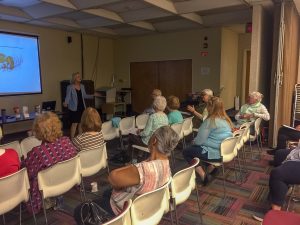
    Mary Catherine Lundquist, Director of the COPSA Institute for Alzheimer’s Disease and Related Disorders, presents at the Piscataway Public Library.

    April 13 marked National Citizen Science Day for 2019, and all libraries in the country were encouraged to host events to celebrate the day. Because this year’s theme of Citizen Science Day was related to Alzheimer’s disease and target audiences were the general public, the Library of Science and Medicine worked with Piscataway Public Library to co-host an event titled Myths and Realities of Alzheimer’s Disease. The event was sponsored by the COPSA Institute for Alzheimer’s Disease and Related Disorders at Rutgers. This joint event by LSM, RBHS, and the local public library was well received by our audiences. Below are some remarks from the speaker, public library librarian, and a manager at one RBHS center:

    • Thank you Connie for inviting me. This was a wonderful group! Your efforts were so much appreciated by everyone. Please keep us in mind for future events.
    • Thank you so much for including Piscataway Public Library in Rutgers’ National Citizen Science Day. I am especially appreciative as the topic of Alzheimer’s is near and dear to my heart. I am truly grateful to have partnered with you on this event and I look forward to creating more programs with you.
    • Librarians are some of my very favorite people! And I’ve received a lot of help from our RU librarians in the past, so I’m happy to help out in return.
  • Rutgers Day 2019

    Thank you to all the volunteers who braved the wind last weekend to work our Rutgers Day tents and spread the word about everything the Libraries have to offer. If you missed out on all the prize-wheeling, button-making, selfie-taking fun, enjoy this collection of #RutgersDay social media posts!


    View this post on Instagram


    Come win some prizes at the library table at Rutgers Day!!! #rutgersday #rutgersday2019 #rutgerslibraries #rutgersuniversity

    A post shared by Rutgers HSL (@rutgershsl) on


    View this post on Instagram


    Kids winning prizes by fishing for quality health information. #rutgerslibraries #rutgersday #rutgersday2019 #rutgersuniversity

    A post shared by Rutgers HSL (@rutgershsl) on

  • Ex Libris Implementation Project Update – May 2019

    quicksearch logo

    Rutgers Law Libraries to Join Alma/Primo

    The Rutgers Law Libraries are joining our Alma and Primo instances in January 2020! Project planning for appending the Law libraries catalog has begun. We are currently participating in bi-weekly planning meetings with Ex Libris and the Law libraries. Progress will be communicated through the Ex Libris Implementation team. This is an exciting opportunity for us and the faculty and students that we serve. 

    Leganto Update

    The Leganto implementation team is preparing to go live with 16 pilot courses from the School of Social Work. This summer, social work graduate students will be able to access their course reserves, including electronic course reserves, live links to the physical reserves holdings, and access to our journal and database subscription content, directly from their course in Canvas. The team is planning a soft launch for fall, so if you know of a department that would be interested in this comprehensive course reserves solution, please contact your campus representative to the Leganto team or the Ex Libris Team at exlibris@rutgers.libanswers.com 

    FRBRization disabled for music materials 

    FRBRization refers to the process by which different versions of the same work are grouped together. Generally speaking, FRBRization is a useful feature that allows researchers to easily find and identify related works (e.g., different editions of the same book). However, in some cases, unrelated works are mistakenly grouped together, which causes confusion and makes these resources more difficult to find. This is especially true for musical scores and audio recordings where heavy use of generic titles, complex statements of responsibility, and variations of performance can lead to erroneous matches. Accordingly, FRBRization has been disabled for these materials. This decision was made in consultation with and based on feedback from experts in public services, cataloging, and the music department. The exemption applies to scores and audio recordings only. All other types of materials will continue to be FRBRized.

    Improved metadata for Academic Video Online (AVON)

    Academic Video Online (AVON) is a large streaming video collection of documentaries, interviews, performances, and feature films spanning a wide variety of subjects. However, the metadata provided by Ex Libris for this collection suffered from a number of limitations impacting its discoverability in QuickSearch. Accordingly, these records have been replaced with vendor-supplied MARC records. The new records are not only of higher quality but also offer more reliable linking, less duplication, and improved result filtering. However, in order to keep the collection up-to-date, the records must be reloaded every six months. Since record permalinks will change every time the records are reloaded, it is recommended that librarians and instructors who wish to link to this content use direct links to the platform rather than link to the record in QuickSearch. To do this, simply click “Embed/Link” below the video player in AVON (see screenshot).

    Where did all the ISSNs go?

    Standard identifiers such as ISBN, ISSN, and OCLC number are currently not being displayed in QuickSearch. This information typically appears in the “Identifier” field of the detailed record. Although this data is still searchable, it is currently not being displayed to the public. The issue has been confirmed by Ex Libris to be related to a known defect that is scheduled to be fixed in the July 2019 release. Until a fix is released, the only way to view this information in QuickSearch is to click the “View Source Record” link at the bottom of the record and look for it in the appropriate MARC field.

    Primo 2019 Roadmap

    Related reading? Citation trails? Enhanced personalization? Want to know what new features and functionality are coming to Primo this year? Check out the 2019 Primo Roadmap.

  • University Librarian’s Report – May 2019

    The last several months have been a flurry of activity. In addition to the day-to-day demands of a busy spring semester, it’s also the most planning-intensive period of the year, as we assess our standing at the close of the current fiscal year and plan in earnest for FYs 2020 and 2021.

    I received a lot of feedback during town hall season and in continued conversations with the library directors that we could do a better job of clarifying the different stages in the planning process and of describing central’s role in supporting local priorities. In an organization like ours, it is definitely a complex puzzle and it can be difficult to see how all the pieces fit together.

    We’ve made some updates to the University Librarian page on our staff resources website to provide a resource that brings more transparency to the planning process and illustrates how local and central priorities work together. The page includes a broad overview of the annual planning process as well as links to the local units’ plans and a list of major central infrastructure projects. Hopefully this will help demonstrate how we prioritize our collective work, and I invite you to review this information and continue to provide feedback to me and the library directors.

    At the Cabinet retreat in April, we had very productive discussions about the unit plans and the different tradeoffs we’d have to consider between local priorities and central capacity to support those activities. It became clear to me that we’re becoming better at navigating these conversations and seeing the local plans not as competing sets of priorities, but as opportunities to identify the activities that will bring the most benefit to the most users, while still allowing us to serve our individual communities in ways that will best suit their unique needs.

    As we move toward the next retreat in May, during which we’ll finalize our local plans and our Librarieswide goals and metrics, I’m optimistic that we will continue to build toward an environment where the “One Library – Four Missions” approach can flourish.

  • This Month in the Agenda – March 2003

    DIY Courseware

    Congratulations to Ronald Jantz of the Scholarly Communication Center and Rutgers history Professor Rudy Bell, who wrote the article “Do it Yourself Courseware: How We Built A Reusable Web Platform for Studying World Cultures,” published in the February 2003 issue of Syllabus magazine.

    In the article, Ron and Professor Bell explain that they created an online platform that allows the professor to engage students in locating and evaluating the usefulness of websites to aid their students in an “Italy’s Peoples” course. Students submit their selections for inclusion in a class database, with the professor reviewing and modifying entries as necessary before they are incorporated into the database.

    The authors state that they modified the technology framework developed for the course so it may be used by others courses that focus on studying distinct groups of people. The article invites readers to download the generic platform, free of charge, from the SCC website and provides a narrative of how it was developed.

    The Agenda 24, no. 23 (March 16, 2003)

    All that Jazz

    The Institute of Jazz Studies has added three new programs to the Jazz Research Roundtables schedule. These programs are:

    • May 8: Julia Scott: Wynton Marsalis and Jazz at Lincoln Center, and Jeff Lovell: Joe Henderson (students in Rutgers Masters Program in Jazz History present their research)
    • June 12: Dan Morgenstern: “Just Jazz” Rediscovered
    • July 17: Christopher Meeder: Cecil Taylor

    All programs are free and open to the public and take place Thursday evenings from 7:00 – 9:00 pm in the Dana Room, on the 4th floor of the John Cotton Dana Library. Refreshments will be served. For more information, please call the Institute of Jazz Studies at 973-353-5595.

    The Agenda 24, no. 23 (March 16, 2003)

    Everyday I’m Publishin’

    We are pleased to announce the following publications, by librarians at the Paul Robeson Library.

    Vibiana Bowman and Donna Wertheimer wrote “Stacks in the City: A Case Study of an Urban Library Cooperative,” published in Urban Library Journal, vol. 12, #1, Fall 2002. The article discusses the cooperative library agreement among the Camden campuses of Rutgers University, Rowan University, and Camden County College.

    The Accidental Webmaster, a new book by Julie Still, is designed for those who manage websites as a volunteer or as only a small part of their job. The focus is on nonprofit, community-based, or small business sites. The book covers the process from setting up and designing the site to maintenance, policy, content, and legal issues. Specialized sites, such as advocacy, political, school and educational, and church or religious sites, are also included.

    Congratulations to Vibiana, Julie, and Donna, for finding suitable platforms to share your worthwhile experiences and perspectives with others in the field.

    The Agenda 24, no. 24 (March 30, 2003)

    Where Is He Now?

    Congratulations to Neera Sondhi of Alexander Library collection services, whose son Puneet was part of the winning team of students that participated in the Second Fed Challenge at the Federal Reserve Bank of New York on March 3rd.

    Puneet Sondhi was one of two first year students on the seven person team, representing the Rutgers University department of economics against six other schools from the New York/New Jersey area. Other schools represented in the competition included Barnard/Columbia, Stern School of Business at NYU, and Pace University. The focus of the competition was to test each team’s “ability to assess current economic conditions and offer an opinion on the appropriate interest rate policy for the Federal Reserve Open Market Committee to pursue.” Judges from the Federal Reserve Bank assessed the teams’ presentations.

    The Agenda 24, no. 24 (March 30, 2003)

  • What’s Happening around Rutgers – March 2019

    Art Together

    Sunday, March 3, 2019 1 p.m. – 3 p.m.
    Zimmerli Art Museum

    Art Together invites families to get creative, side-by-side, on art projects inspired by works from the Zimmerli Art Museum. Explore the wonderful world of art on select Sundays throughout the year. Children and parents, grandparents, or guardians work side-by-side on arts and crafts projects. Each session includes a brief, instructor-led tour through one of our galleries. The interactive workshops, led by Mason Gross MFA students and teaching artists, allow families quality time to be creative together. This is a FREE, drop in program. (Children must be accompanied by an adult.)

    Book and Author Fundraiser featuring Rachel Devlin
    Tuesday, March 5, 2019 7 p.m. – 9 p.m.
    Kathleen W. Ludwig Global Village Learning Center

    Associate Professor of History at Rutgers University, Rachel Devlin, will be discussing her new book: A Girl Stands at the Door regarding the generation of young Women who Desegregated America’s Schools. The cost is $20 for non-students, $5 for students. Admission proceeds benefit the Women’s League of Rutgers University.

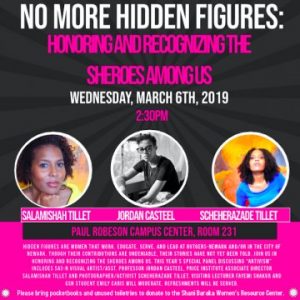
    No More Hidden Figures Women’s History Month Celebration
    Wednesday, March 6, 2019 2:30 p.m. – 4 p.m.
    Paul Robeson Campus Center

    Hidden figures are women that work, educate, serve and lead at Rutgers–Newark and/or in the city of Newark. Though their contributions are undeniable, their stories have not yet been told. Join us in this special panel to honor and recognize the sheroes among us.

    Red Talk Series: Women and Gender Equality
    Tuesday, March 12, 2019, 6 p.m.
    Rutgers–Camden Campus Center, Multi-Purpose Room

    This RED talk—Raptors Engaging in Discussion—focuses on topics relevant to women and gender equality. This discussion is part of the Rutgers–Camden Women’s History Month celebration.

    Letters Home: Writing Workshop for Veterans with Warrior Writers
    Tuesday, March 26, 2019 5:30 p.m. – 7.30 p.m.
    Writers House, 305 Cooper Street

    As part of the Letters Home project, the national nonprofit Warrior Writers is facilitating a series of free writing workshops for veterans in 2018-19. An experienced facilitator will guide participants through a series of generative writing prompts that engage veterans’ experiences. All veterans are invited to sign up, whether or not they are affiliated with Rutgers.

  • Quick Takes on Events and News – March 2019

    Did You Know?

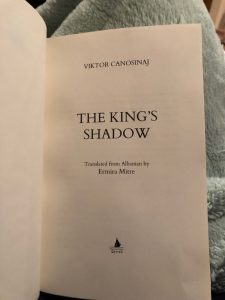
    Did you know that Ermira Mitre, library technician at Smith Library, is an accomplished writer, poet, and translator—both in the States and in her home country of Albania? Viktor Canosinaj’s The King’s Shadow, which Ermira translated from the original Albanian, is available on Amazon, and her poem “Dust from a Green Leaf” was recently published in the Montclair Write Group’s 2018 sampler.

    That’s Honorable!

    Kudos to Robeson librarians Bart Everts and Julie still, who will both be serving as judges for New Jersey History Day during the South Jersey regional competition at Rutgers–Camden this weekend. Congrats, Bart and Julie!

    Krista Gets Cinematic

    Krista White will give a talk at the Rutgers Cinema on March 12 at 7:30 p.m. for Douglass Residential College’s screening of Captain Marvel. Her talk will be called, “Further, Higher, Faster: Women as Action Heroes in Hollywood.”

    Hopper Expert Coming to Rutgers

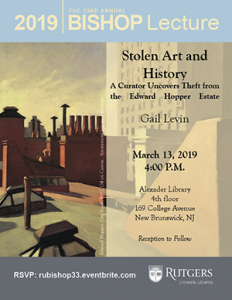
    The 33rd annual Bishop Lecture will be held at Alexander Library on March 13. Gail Levin, Distinguished Professor at the City University of New York and Rutgers alumna, is the acknowledged authority on the American painter Edward Hopper. Her lecture focuses on her discovery of a major theft from the Hopper estate before it reached the Whitney Museum, where she formerly served as curator of the Hopper Collection. RSVP on Eventbrite.

    New Databases

    Check out these new resources: Medieval Travel Writing and African American Communities.

    Just for Fun

    Check out this list of 12 Tales of Librarian Badassery from The Booklist Reader!