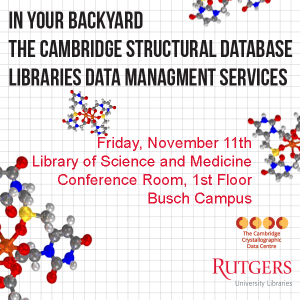
The New Brunswick Libraries Data Outreach Team held a successful workshop for students and faculty on Data Management Services available through the Libraries, and introduced users to the Cambridge Structural Database, a database of crystal structures curated by the Cambridge Crystallographic Data Centre (CCDC). The workshop took place at the Library of Science and Medicine, and was attended by students and faculty from the Chemistry and Chemical Biology department, the Center for Integrative Proteomics Research, several Engineering departments, and the School of Pharmacy. Presentations were given by Dr. Amy Sarjeant, a crystallographer and Education and Outreach Manager for the CCDC, and Laura Palumbo, who represented the NBL Data Outreach Team. The workshop was a collaboration between the New Brunswick Libraries and the CCDC, who generously provided lunch for the attendees. Feedback from the session was positive, with attendees citing new knowledge of the Libraries data services and resources.
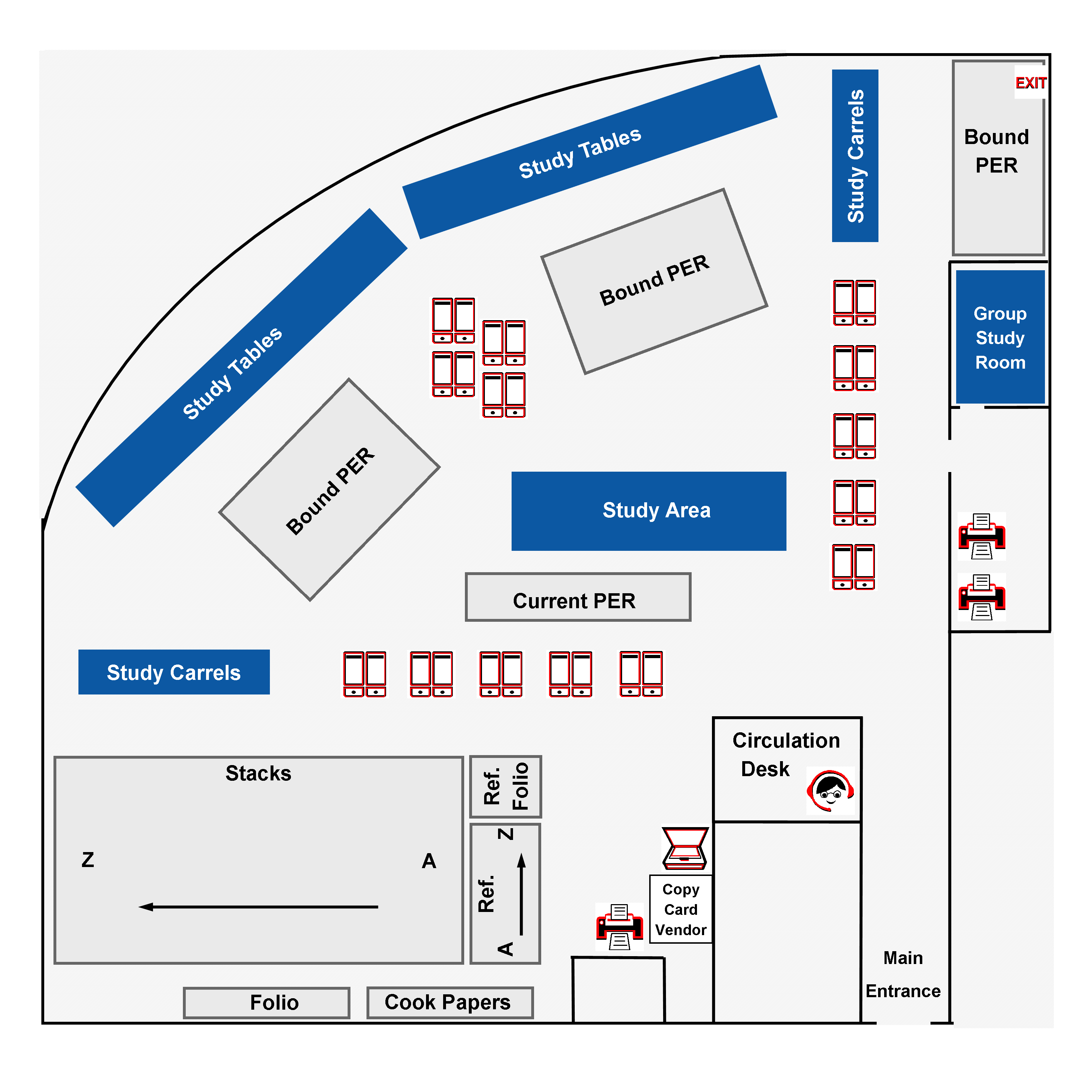
What Library is this?
New Up-to-date Maps for Every Library
Thanks to some incredible teamwork led by Robert Krack, designer Mary Ann Koruth, Devin Gingery, Soo Lee, and Sam McDonald, we now have online maps for every Rutgers library available on both our main website and our mobile site. Access these maps at http://www.libraries.rutgers.edu/maps_directions.
In Case You Missed It…
What an exciting and energizing time to be a librarian with the swearing-in of Dr. Patty Brennan as Director of the National Library of Medicine and the subsequent swearing-in of Dr. Carla Hayden as the Librarian of Congress earlier this fall. If you weren’t able to view the ceremonies live, the archived versions of the webcasts are available here.
My message this month is simple. I wish you all the happiest of holidays and the joy of the New Year as we enter this festive season.
As you all know, 2016 has been an incredibly productive and busy year and I am grateful for all of your efforts in moving the Libraries plans and priorities forward. In a few weeks, we will circulate our annual report which paints a vibrant picture of our accomplishments of the last 12 months. The theme of the annual report is “Transform,” which is a nod to the internal changes the Libraries have undertaken in 2016, as well as a reflection of the transformative effect our activities have on our students, faculty, and the university at large. We have truly made a difference this year and our good work will continue in the coming months.
I hope you enjoy time with your family and friends this month and look forward to seeing all the good things 2017 brings our way.
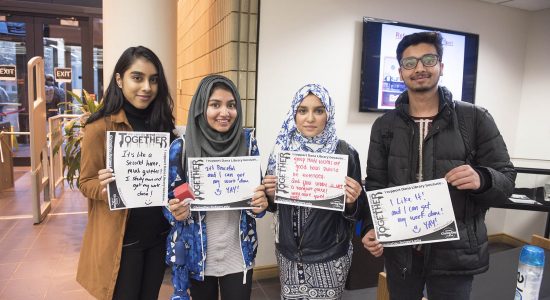
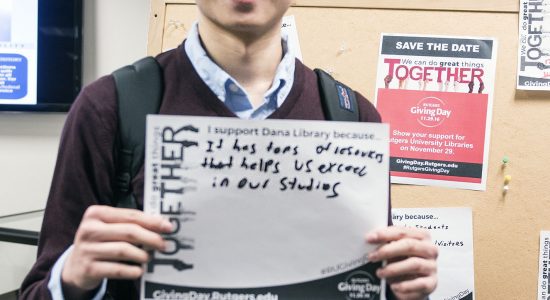
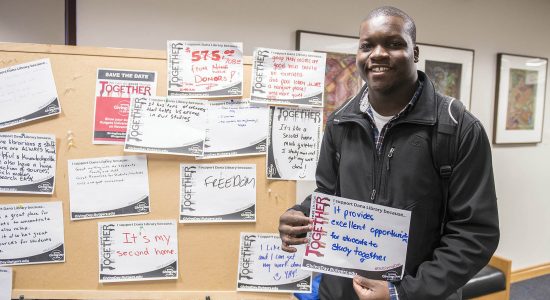
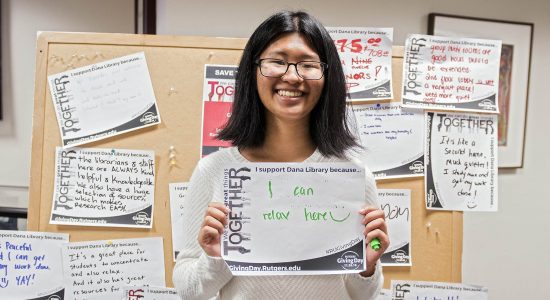
Rutgers-Newark students show their support for Dana Library. Credit: Ed Berger.
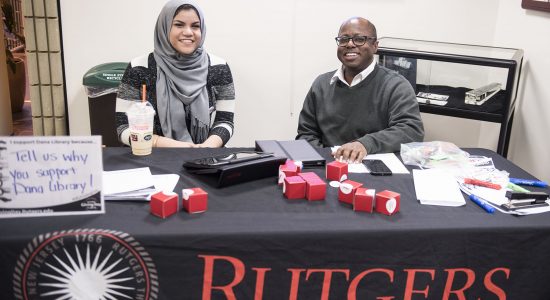
Dana Library had some little red boxes from the Giving Day planning team to distribute. Credit: Ed Berger.
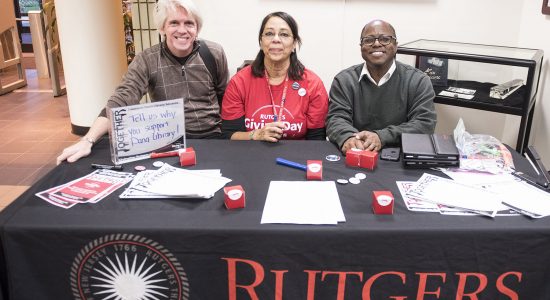
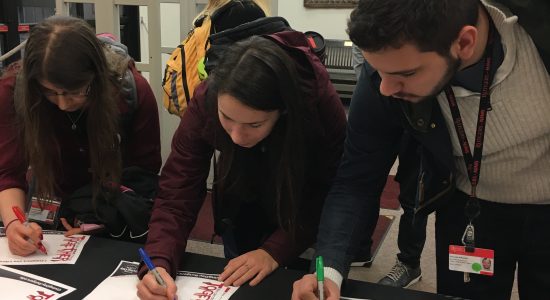
Dana Library had a table set aside for Giving Day activities. Credit: Ed Berger.
Dana Library had a lot of support throughout the day. Credit: Ed Berger.
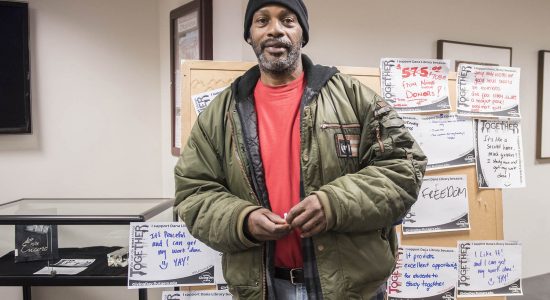
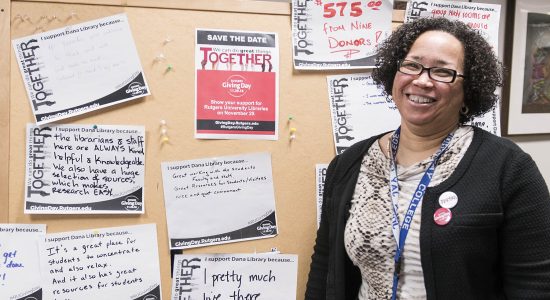
Consuella Askew stands in front of the Giving Day board where Dana Library tracked their leaderboard stats. Credit: Ed Berger.
One last student support sheet photo from Dana Library. Credit Ed Berger.
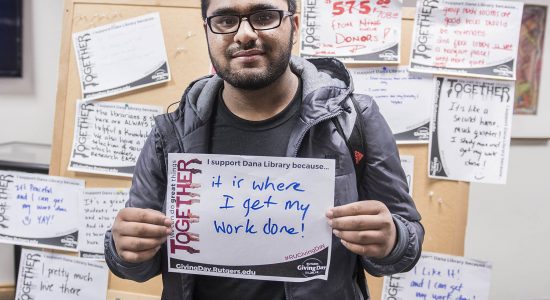
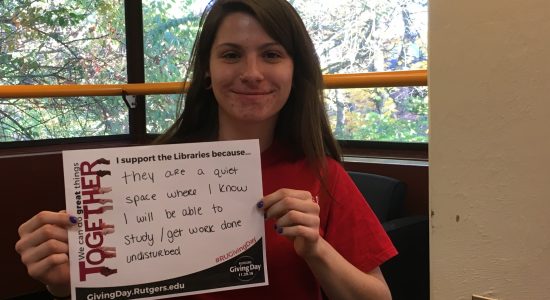
We couldn’t agree more — Dana Library is a place to get stuff done! Credit: Ed Berger.
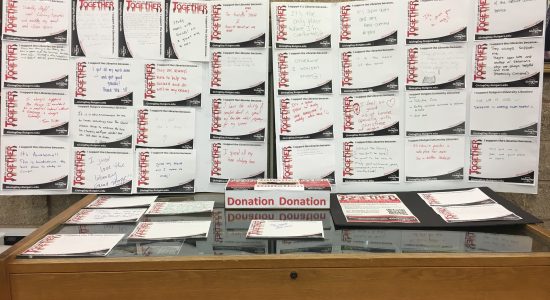
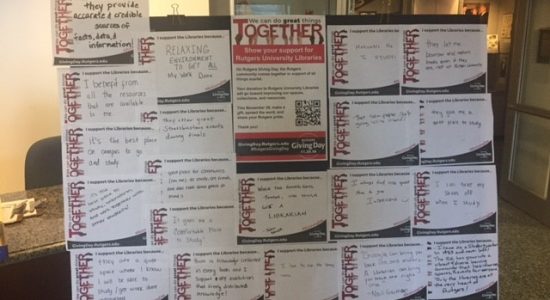
An informal bulletin board showcased all the support sheets. credit: Ed Berger.
Dana Library gathered support sheets from students. credit: Ed Berger.
More medical students showing their support for the RBHS Libraries!
Smith Library had steady traffic throughout Giving Day.
The table at Smith Library was in a prominent location right near the front door which made it hard to miss!
What a great display for the support sheets and a self-serve station.
The display of support sheets in Alexander Library’s lobby.
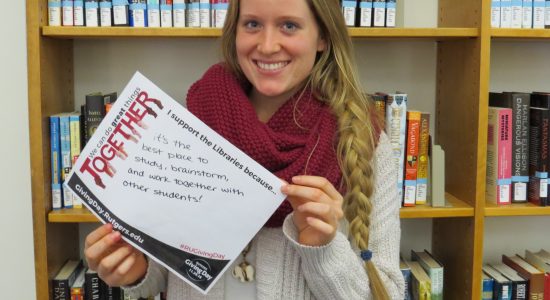
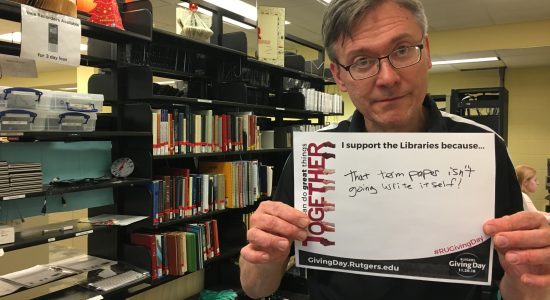
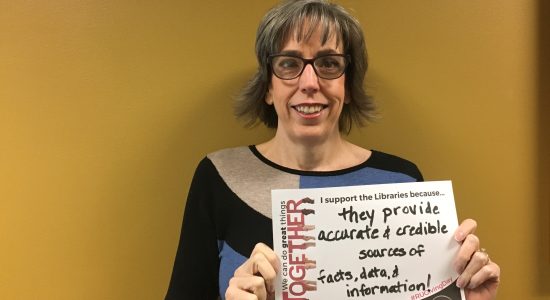
Prior to Giving Day, we got these photos for our social media campaign to show donors what they are giving to support.
Prior to Giving Day, we got these photos for our social media campaign to show donors what they are giving to support.
Prior to Giving Day, we got these photos for our social media campaign to show donors what they are giving to support.
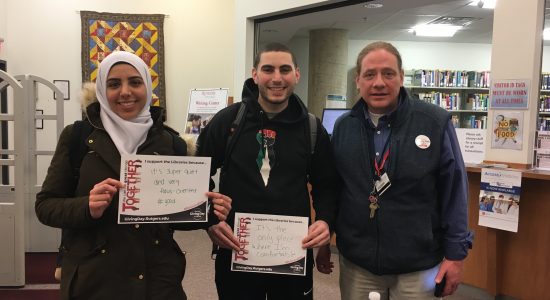
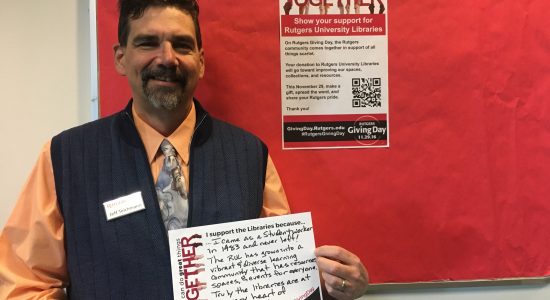
Nice to see our faculty and staff lending a hand to make Giving Day a success!
Nice to see our faculty and staff lending a hand to make Giving Day a success!
Nice to see our faculty and staff lending a hand to make Giving Day a success!
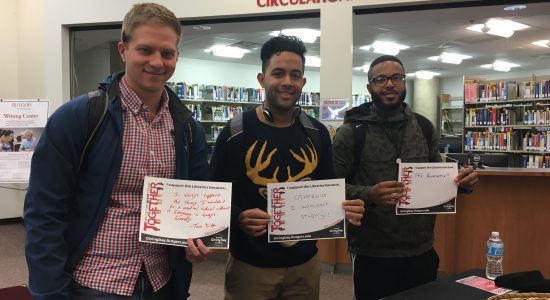
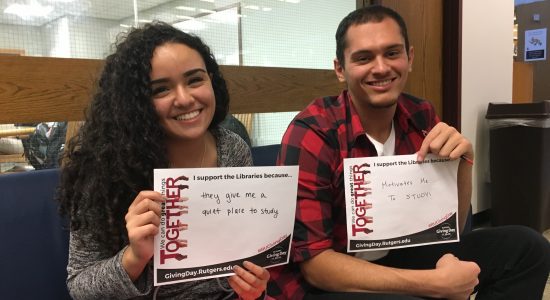
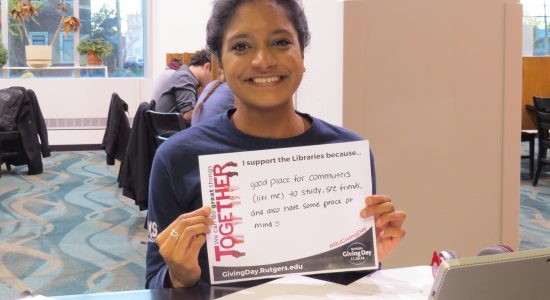
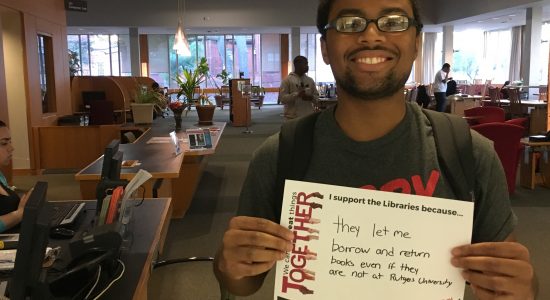
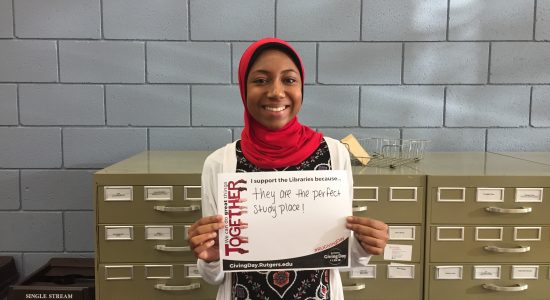
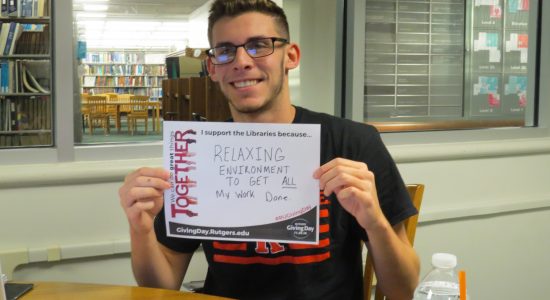
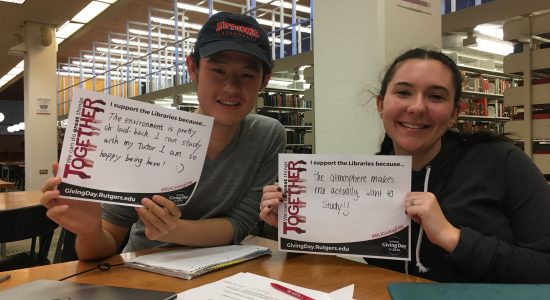
We had dozens of photos of students showing why they care about the Libraries!
We had dozens of photos of students showing why they care about the Libraries!
We had dozens of photos of students showing why they care about the Libraries!
We had dozens of photos of students showing why they care about the Libraries!
We had dozens of photos of students showing why they care about the Libraries!
Thanks to all of your efforts and support, the Libraries greatly exceeded our goals for Giving Day this year. Last year, we had 22 donors and our goal this year was to slightly more than double this with 50 donors. We blew our goal out of the water with 134 donors and the Libraries are on the Top Ten leaderboards for both Rutgers-Newark and Rutgers-New Brunswick. We raised a total of $13,375.00. Here are the specifics for each location:
#11 – RBHS Libraries, 6 donations, $300.00
#12 – Camden Libraries, 10 donations, $170.00
#7 – Newark Libraries, 18 donations, $1433.00
#9 – New Brunswick Libraries, 100 donations, $11,472.00
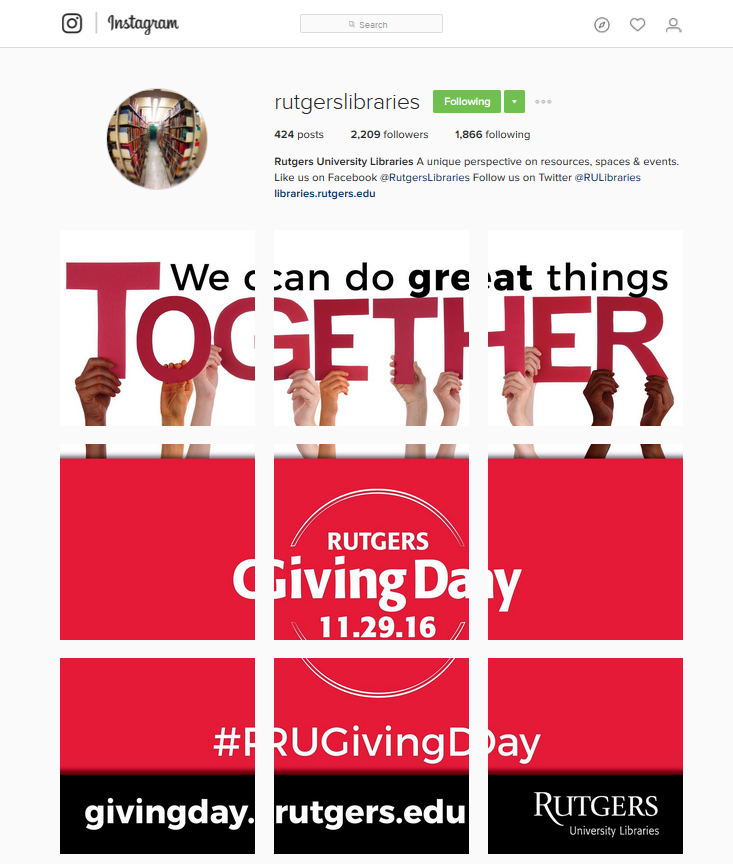
This banner ran on Instagram on Giving Day.
The figures above may shift slightly as the Foundation does their final accounting, but clearly, we did a great job!
Thank you to everyone who took time to set up donation computer stations or to sit at tables and solicit support sheets and donations in their libraries. I hope you all had a chance to see the fantastic social media campaign we ran on Twitter, using many photos of our real students and colleagues sounding off on matters most to them. Matt Badessa also created our first Instagram banner/photo grid.
If you have photos of Giving Day at your location, send them to jessica.pellien@rutgers.edu and I’ll add them to the slideshow!
Grace Agnew, associate university librarian for digital library systems , photo credit: Isaiah Beard.
Rutgers University Libraries is a key part of a team that won a $4 million grant to establish a regional data-sharing network called the Virtual Data Collaboratory. This is a huge grant that involves other departments at Rutgers University, as well as several regional university partners. We shared a press release about this initiative on our website in October, but I recently sat down with Grace Agnew who is coordinating the Libraries’ participation, to get a better sense of what it means for the Libraries and for Rutgers.
Jessica Pellien: You are part of a team that has won a multimillion dollar grant from the National Science Foundation. What is the grant for?
Grace Agnew: The grant will build an infrastructure where research data created at Rutgers and other collaborating universities can be stored, discovered, and reused. Rutgers is among the nation’s top 20 public universities in terms of obtaining research grants and number 7 among Big Ten universities, yet the university lacks a cohesive strategy for efficiently managing research data. Research data often ends up silo-ed in individual departments where it is not easily discovered and reused. Also, because we do not have a shared infrastructure that can be easily repurposed, financial and personnel resources that could be dedicated to the research itself are instead expended on duplicating infrastructure that exists in silos around Rutgers. A large scale research data infrastructure is critical for Rutgers to continue to advance as a research institution, which is part of the university’s three-fold mission.
JP: This grant involves many units at Rutgers and other regional universities. What role will Rutgers University Libraries play?
GA: The Libraries are uniquely positioned because we engage with and support Rutgers users across the spectrum, from incoming first year students to faculty members engaged in groundbreaking research. What we bring to the table is understanding and representing user needs. We are tasked with designing the data services layer which is the user-facing part of the project. Our design encompasses adding, discovering, and reusing data. We took a unique approach to ensuring the discoverability and reuse of data by designing an interface that links data with the person who created it, the tools used to analyze it, and the intermediate research products–analyses, reports, etc.–that are created around the data before the peer-reviewed publications begin. In other words, we designed a strategy that not only supports the workflow of the researcher but helps other researchers, perhaps in other disciplines, understand the context of the data and how it is used, as part of the discovery process. We will work with the lead department, Rutgers Discovery Informatics Institute (RDI2) to implement the data services layer according to our design. In addition to myself, Ron Jantz is helping to design the architecture for the data services layer and Ryan Womack will be working closely with the two use cases, the Protein Data Bank with Helen Berman, Center for Integrative Proteomics Research at Rutgers and Vasant Honavar of Penn State and with Jie Gong. Civil and Environmental Engineering at Rutgers, to ensure that the design of the data services layer meets their research and workflow needs. Other librarians involved in the data services design are Karen Estlund at Penn State and Joe Lucia at Temple University.
JP: So, what is the Virtual Data Collaboratory?
GA: The Virtual Data Collaboratory is intended, ultimately, as a “one stop shop” for the storage, discovery and reuse of data. It is immediately collaborative because we are building parallel facilities at Rutgers and Penn State. Other participating universities in Pennsylvania, include Drexel and Temple. The VDC will ultimately be available to other universities in both states through the Internet2 high speed networking facilities, KINBER in Pennsylvania and NJEdge in New Jersey. The term collaboratory references both the universities involved in the design, as well as the opportunities for collaboration that the data services layer will promote. The VDC is also designed to bridge to existing collaboratories, such as the Protein Data Bank, so much of the data in the VDC will be “virtual” because they exist in other collaboratories but are accessible via the VDC.
JP: There are existing places to store data. What will distinguish our effort from others?
GA: Other universities have collaboratories. We believe the VDC has a unique focus on both robust storage and preservation of data and a user focus on multidisciplinary discovery and reuse of data. Also, the existing places are largely single university initiatives or single discipline initiatives. They are very well designed and very supportive of their users, particularly those with a disciplinary focus. The VDC will work with existing facilities and will bring new users and increased impact from other disciplines through bridges to those facilities.
JP: You note that the VDC will integrate with other regional and national efforts. Can you paint a picture of what this actually means for your average researcher? If I am a scientist doing research on X, how would VDC help me?
GA: VDC is leveraging the technologies already funded in the NSF DIBBS initiative, so the design is inherently collaborative with other large scale data facilities. What the VDC will provide is an infrastructure that the researcher can use to ensure her data is preserved, is accessible, and can be analyzed and reused by the researcher and by others. Currently, researchers at Rutgers have to build an infrastructure according to granting agency requirements to ensure that data is preserved and made openly available to others or they can deposit in disciplinary repositories. Once deposited in a disciplinary repository, the researcher generally cannot continue to work with the data, unless the data is downloaded for use. VDC is envisioned as a workflow-oriented repository with a suite of tools for reusing data and the ability to store and link data products, such as analyses, which otherwise reside on the researcher’s local server or desktop. So the VDC is somewhat unique in designing full integration in merging storage and working space for the active scientist.
JP: Will faculty and researchers at non-participating universities have access to the VDC?
GA: It is open to everyone for discovery of data. I don’t think policies for membership in the collaboratory have been developed yet. Membership enables you to upload your data, use tools, etc. The Advisory Board will assist with the development of policies for membership.
JP: When will the VDC be available?
GA: This is a four year grant that began in September 2016. The goal is to use agile methodologies to build a prototype and layer on functionality, so hopefully there will be something real to show early in 2018.
So there you have it, the team behind the VDC is already hard at work. Currently, their focus is on designing a collaboratory for sciences, though Grace was quick to point out that social sciences and humanities wouldn’t be turned away if they were interested.
When it is completed, the VDC will meet or exceed requirements for open access data management by granting agencies and will be a tremendous accomplishment for Rutgers.
We’re all attending lots of videoconferences and there are ways to make the experience better for both the host and remote sites. Here are some tips to insure everyone can see, hear, and participate regardless of where they are.
Courtesy and empathy are the key factors of a successful video conference. Hosts and participants at the host site are responsible for removing all barriers to participation for remote attendees. Remote attendees need to be engaged and inform the host if they encounter any difficulties in their abilities to participate.
Host:
Please share any documents remotely at least one day before the scheduled meeting. All participants need to have all documents that will be discussed and it can disenfranchise participants at a remote location to hand out and discuss materials only to those physically present in the room.
A few minutes before the meeting starts do an audio-visual check with participants at the remote sites.
Check the placement of the furniture and positions of the participants at the host site. Everyone should be facing the screen and should be able to be seen and heard by the Video conferencing attendees.
Host should begin the meeting by going around the table and clearly identifying the people in the room of the host location. Host should also greet teleconferencing participants.
Check with the remote attendees throughout the meeting to see if they have questions or comments.
If “pushing screens” make sure to return to room view ASAP so that remote attendees can once again see their colleagues and join the discussion. If during a presentation a lengthy discussion ensues switch back to room view to bring the remote attendees back into the conversation.
Attendees at Host Sites:
Speak clearly and audibly. Be aware of the position of the microphones in the room.
Be aware of the line of sight of remote colleagues.
Refrain from noise near the microphones such as tapping and paper shuffling.
Attendees at Remote Sites:
Arrive several minutes early for an audio-visual check and to confirm connection.
Alert the host ASAP to any audio-visual problems.
Mute the microphone when not speaking to diminish distracting noise.
Upon leaving take leave of the host and the other participants.
If unable to attend, let the host know ASAP so as the meeting is not broadcast into an empty room.
Richardson, Nicole Marie. Inc. “11 Dos & Don’ts of Video Conferencing Etiquette.” January 13, 2011. Available http://www.inc.com/ss/video-conferencing-best-practices.
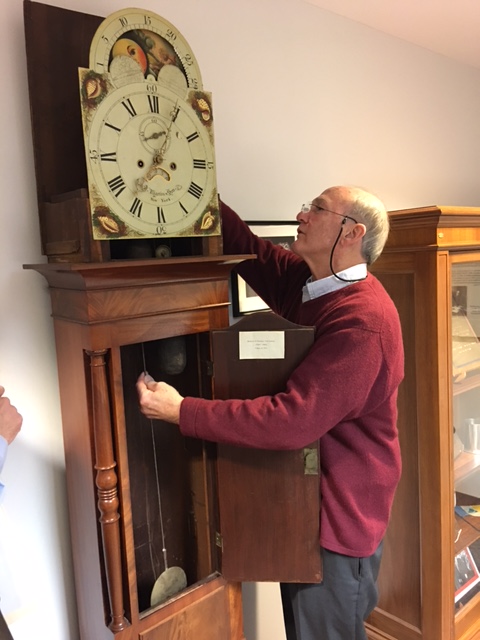
President Robert Barchi adjusts a tallcase clock in the Rutgers University Libraries Special Collections and University Archives.
A couple of weeks ago, Special Collections and University Archives hosted a special visitor — President Robert Barchi.
A big fan of tallcase clocks (AKA grandfather clocks), President Barchi saw all of four of the clocks in SCUA’s collection and even took a moment to perform an on-the-spot repair to an early nineteenth-century clock that was donated by the family of Wallace Todd Eakins (1889-1968), RC’11. After a quick adjustment, the clock was once again happily tick-tocking away.
In honor of this visit, we’re proud to highlight this collection of tallcase clocks. Read below for photos of the beautiful clock faces and information about their provenance and donation.
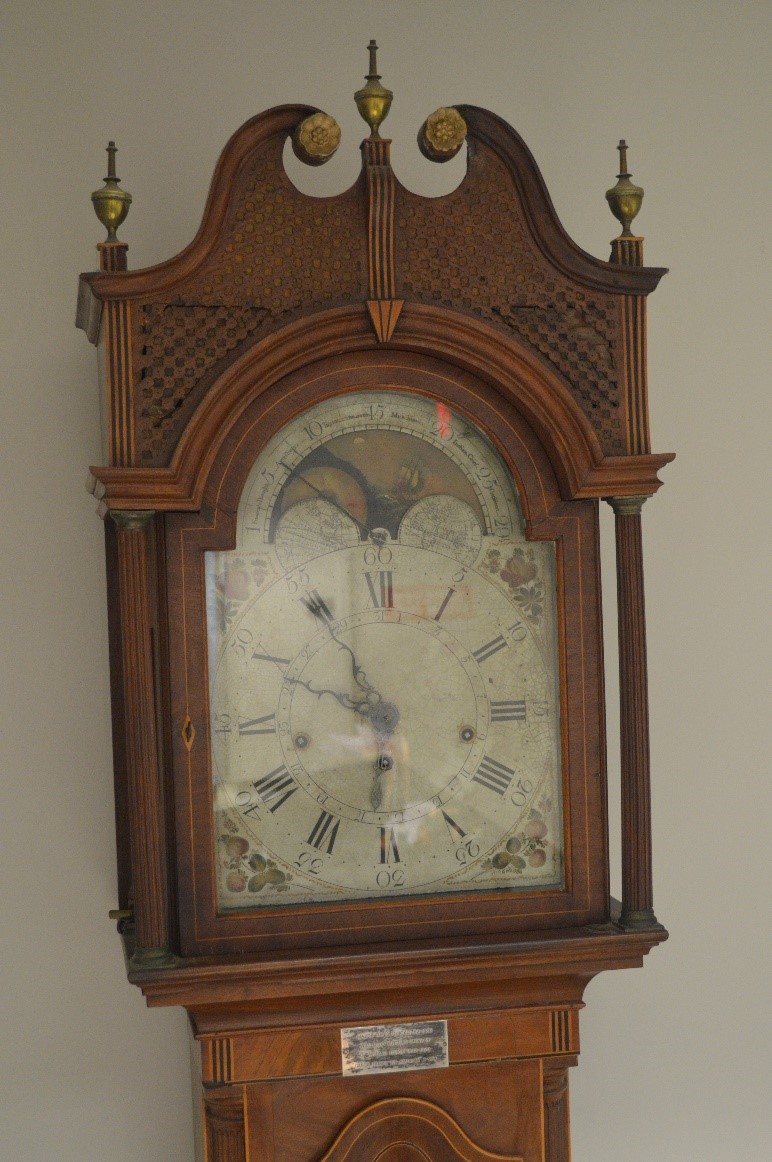
Movement: 8-day clock; square clock face not signed
Case: intended for a (later) clock movement with an arched clock face; attributed to Nicholas Williamson Parsell (1797-1877) by the donor and is likely the same clock cited by Margaret E. White in Early Furniture Made in New Jersey, 1690-1870 ([Newark, N.J.]: The Newark Museum Association, c1958): “A tall clock with case attributed to Nicholas Parsell is owned by Catharine Schneeweiss.”
Location: Special Collections and University Archives reading room (behind sign-in desk), Alexander Library
Donor: Ralph Heyboer (1918-2011) of Linden, New Jersey
Provenance: movement created in 18th century; case created in 19th century; evidently owned at one time by Catharine Hardenbergh Schneeweiss (1893-1977), the daughter of Henry P. Schneeweiss; per donor: “from estate of Henry P. Schneewiess family”
Note: per Somerset County Historical Quarterly (vol. 8): Nicholas W. Parsell had a daughter Mary who married F.M. Schneeweiss, the father of a Henry Schneeweiss. Per Rutgers University Biographical Files: Alumni (Class of 1877): Henry P[arsell] Schneeweiss (1856-1930), who served as the treasurer of Rutgers from 1915 to 1928, was the son of Franz Maxmillion Schneeweiss and Mary (Parsell) Schneeweiss. He married Mary Cornelia Hardenbergh, a descendant of the first president of Queens College [now Rutgers University], and resided at 56 College Avenue at the time of his death.
Received: 1992; acquired, from the same donor, with other items (e.g., monogrammed china, said to be from the Parsell family, and a mahogany secretary bookcase) identified as having the same provenance
Movement: 8-day musical clock; arched clock face not signed, but movement perhaps by Leslie & Williams, per similar musical clock at Monmouth County Historical Association [see: William E. Drost, Clocks and Watches of New Jersey (c1966)]
Case: Federal era; includes linear inlay; attributed to Matthew Egerton, Jr., New Brunswick, N.J., per similar clock cases with cabinetmaker’s labels [in addition to Drost, see, for example: “Silver Jubilee Exhibitors,” Antiques, LX (October 1951)]
Location: Special Collections and University Archives office area, Alexander Library
Donor: G. Willard Quick (1892-1970) [bequest]
Provenance: per donor: belonged to Tunis Quick (1762-1836), Readington Township, Hunterdon County; per donor’s widow: “moved from the Quick home in Hunterdon County, New Jersey to Loudon County, Virginia, in 1871”
Note: Also per donor’s widow: “Restored to its present condition and put in running order, early in 1940.” Weights augmented at this time?
Received: December 1987 [from Florida, evidently following the death of the donor’s surviving spouse]
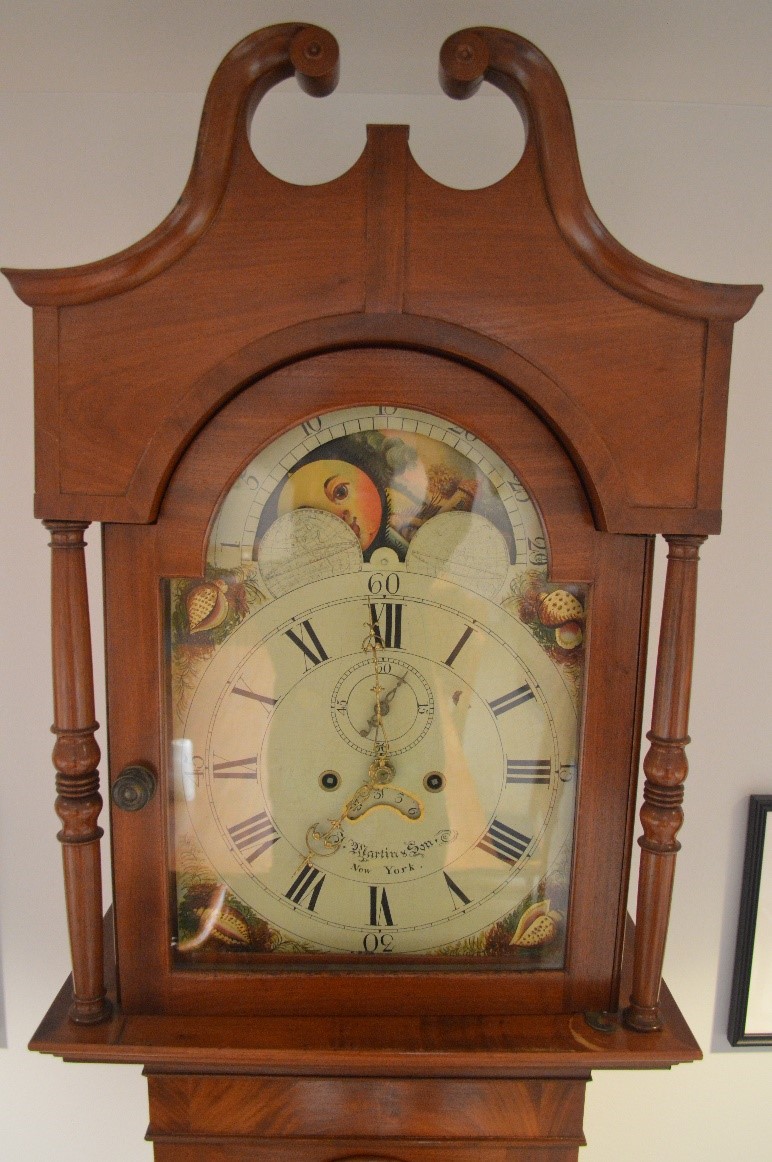
Movement: 8-day clock; presumably by “J. Martin & Son, New York” as stated on the arched clock face
Case: Mahogany?; maker unknown
Location: Clifford P. Case Room, Special Collections and University Archives, Alexander Library
Donor: Wallace Todd Eakins (1889-1968), a member of the Rutgers College Class of 1911 [bequest]
Provenance: created about 1825; “the Eakins family grandfather clock” per donor
Received: destined for or received in Special Collections by March 1970
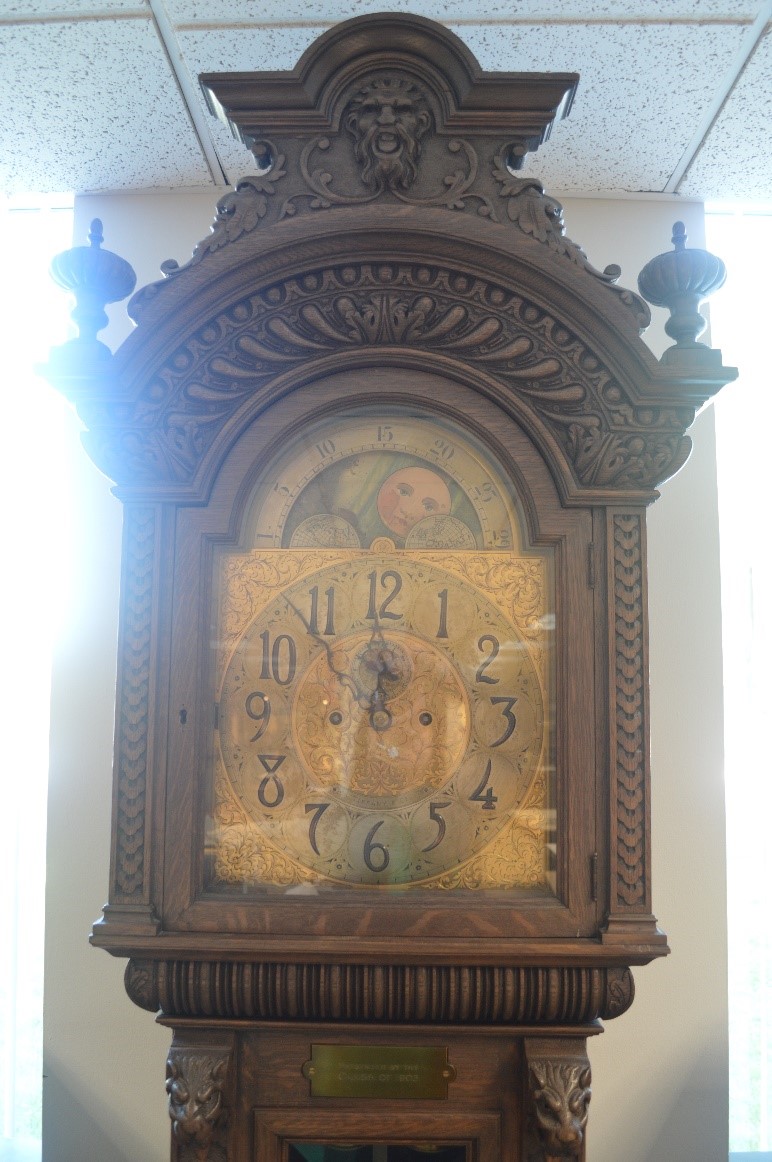
Movement: 8-day clock; arched clock face signed by retailer (Tiffany & Co.), but movement itself (likely to name a maker such as Korfhage) not examined
Case: likely German
Location: Special Collections and University Archives reading room (between windows), Alexander Library
Donor: per small metal plaque: “Presented by the Class of 1903”
Provenance: created about 1900; per Hand-Book of the Grounds and Buildings . . . of Rutgers College ([New Brunswick, N.J.]: The College, 1904): “presented to the College on Class Day, June 16th, 1903, on behalf of the Class of 1903. The clock is a large ‘grandfather’s’ clock, in an oak case, and is the work of Messrs. Tiffany & Company. It is placed in the reading room of the Ralph Voorhees Library” [a building dedicated in 1903]; presumably transferred to new library building [now Alexander Library] about 1956; in Libraries’ central administrative offices immediately prior to 2016 transfer to Special Collections and University Archives
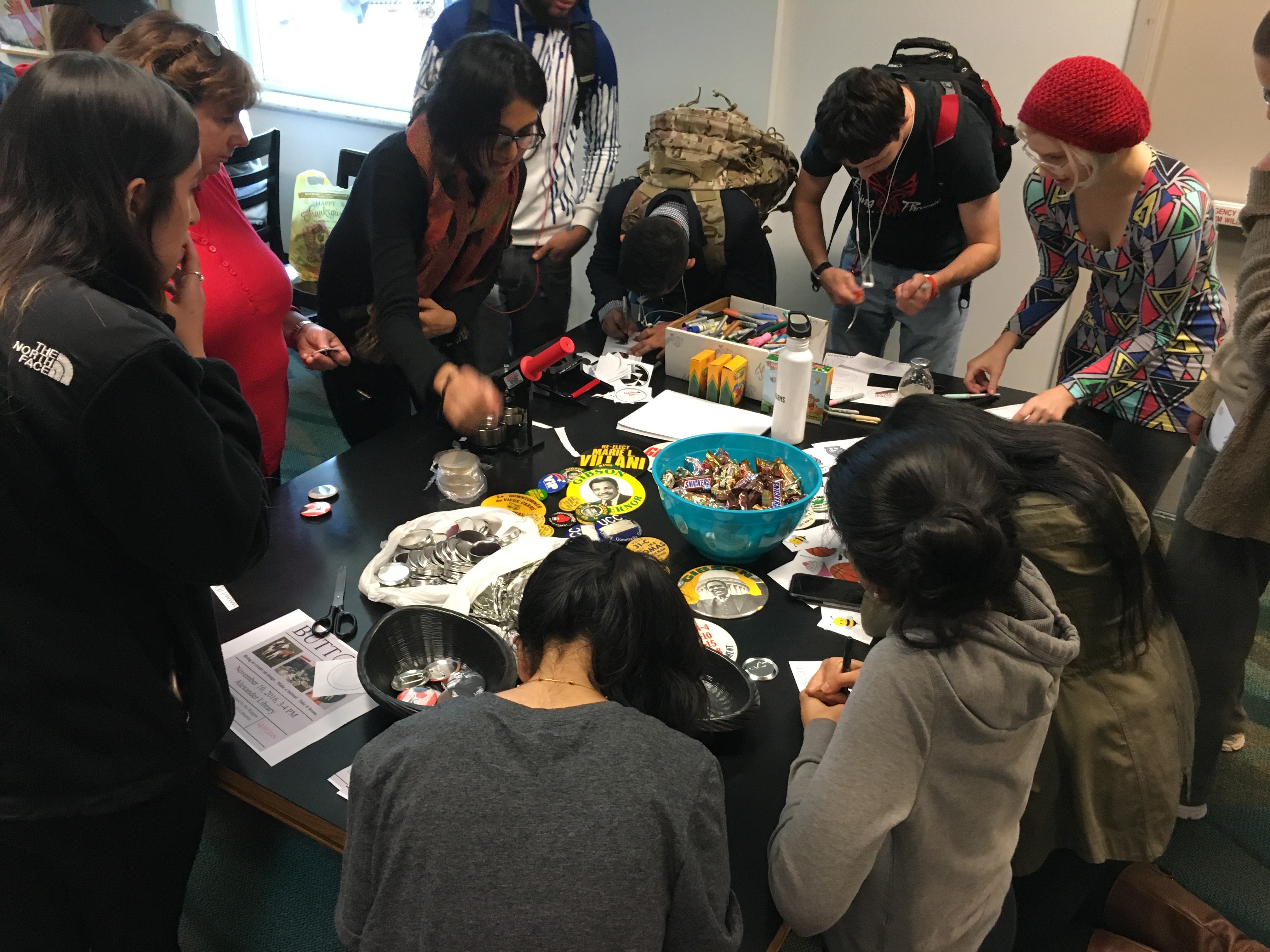
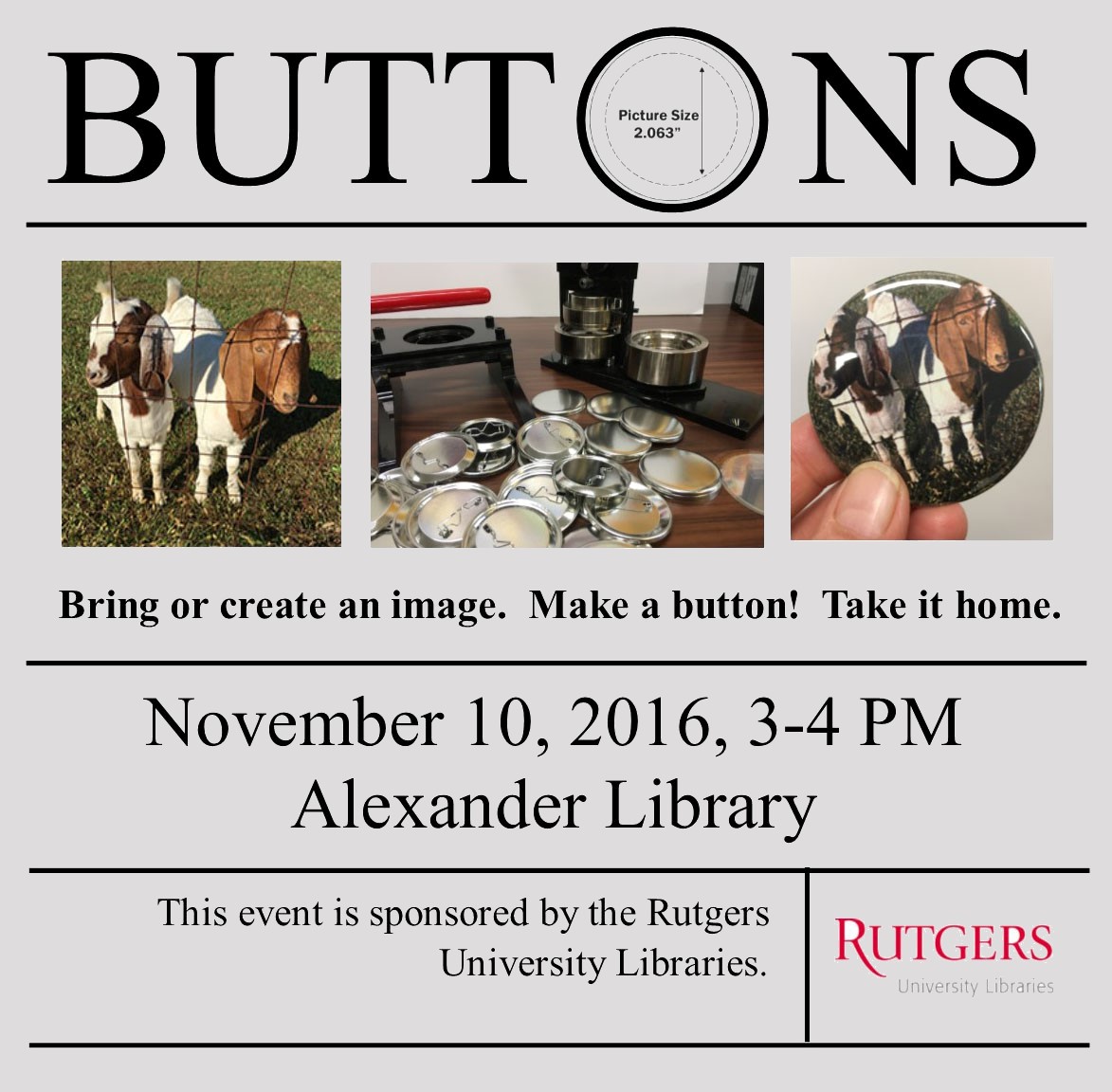
On Thursday, November 10th, 2016, Tara Maharjan, Processing Archivist, Janki Patel, Undergraduate, Art History & Art Library reference assistant, and Megan Lotts, Art Librarian, hosted a pop-up button making space in the lobby of Alexander Library. At this event patrons had the opportunity to create and make their own button, take a pre-made button of an image from Rutgers University Libraries Special Collections and University Archives, and view a vintage button collection, discovered in a basement, in Edison, NJ.
The inspiration for purchasing a button maker came from the Association of College & Research Libraries (ACRL) annual conference in 2013, when Char Booth, current Associate Dean, Library at California State University San Marcos, spoke about libraries building good will within their communities and noted that the button maker they purchased was worth its weight in gold.
Button making can be a low-cost pop up making space that addresses the idea of object, from concept to consumption. In the case of a button, a wearable item is the outcome. Creating a button can strengthen ones’ creative thinking and problem solving skills. Furthermore, it also addresses finding and using images and understanding copyright laws.
Throughout the event many positive comments were made by Rutgers students, faculty, staff, alum, and non-affiliate patrons. Multiple reference questions were asked, and a few patrons inquired about other making opportunities available at the Rutgers University Libraries. Also during the event, the hosts connected with a new student, who was uncertain about navigating the Rutgers systems, and we could share with her information about the libraries, the campuses in general, and what to do in the local area. Lastly, following the event a student reached out from a Rutgers Learning Living Communities (LLC), to ask for 23 Paul Robeson buttons. The LLC is currently researching Robeson, and they all wanted this image from the RUL collections to wear proudly.
Retirement is defined as “withdrawal from one’s position or occupation or from active working life”. Retirement is the goal most employees look forward too. Others not so much. There are a lot of decisions to make and for many the process can be daunting! Educating yourself on this important process is extremely important. To help explain the vital steps, please take note of the following info below:
1.) Attend a retirement seminar here at Rutgers
Retirement seminars are offered through UHR: You can register for a session through the UHR Learning and Development Course Registration System under the Human Resources Development tab: https://hrservices.rutgers.edu/crs/ then Employee Benefit and Work Life Programs drop down
PERS members – Tuesday, December 6, 2016 -10-NOON
ABP members – Wednesday, January 25, 2017 – 10-11:30
2.) Review accumulated leave balances (must take all accumulated leave prior to retirement date) with supervisor or Libraries HR to figure out last physical day at work
3.) Choose a retirement date (must be 1st of the Month)
4.) Write a brief letter to advise your supervisor of your retirement plans, making sure the letter includes your retirement date (i.e. 3/1/2017) and last physical day at work
5.) Complete and submit PERS or ABP pension paperwork to UHR
6.) Libraries HR finalizes retirement and confirms pension paperwork completed
New Brunswick Chancellor Edwards gifted each faculty and staff member of the Libraries with a small commemorative bell and provided us with funds toward an event to recognize the efforts of our colleagues throughout the anniversary year. So, we planned a picnic!
Thanks to his generosity and additional funds from the central administration of the Libraries, we were able to rent the log cabin and picnic area of Rutgers Gardens for the afternoon. Our colleagues donated their time for set up and break down of the event; supplied lawn games for us to enjoy; and led short nature walks through the gardens. And of course, the ice breaker BINGO gave us all opportunities to meet our colleagues and a chance to win a wonderful prize package of Libraries’ swag. It was truly a group effort and we owe a big thank you to everyone who helped to plan and make this day incredibly special. We had well over 150 of our colleagues in attendance and every unit was well-represented. Thank you especially to our colleagues in Camden and Newark for making the trip.
We were also honored to have Chancellor Edwards in attendance and to give a few words of thanks to the Libraries. He is a big fan of what we do and that was evident in his short remarks.
I hope you enjoy this slideshow of photos from the picnic.
Save the date for Open Textbook Network Workshop – November 18, 2016
Rutgers University Libraries are excited to host a two-hour workshop for faculty which will be led by the Open Textbook Network, which is a national alliance of higher education institutions committed to improving access, affordability, and academic success through the use of open textbooks. The workshop will take place in New Brunswick, but teleconferencing will be available to other locations. Faculty who attend this workshop will learn more about the pedagogical benefits of open textbooks, as well as discover open textbooks in their field. They will also have the opportunity to review an existing open textbook and receive a stipend ($200).
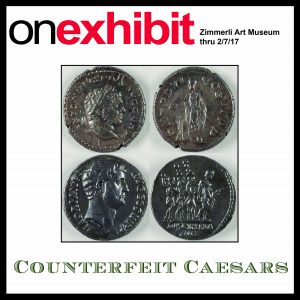
Counterfeit Caesars at the Zimmerli
Tim Corliss teamed up with classics professor Corey Brennan on a new display of counterfeit coins from the Ernst Badian Collection of Roman Republican Coins. Counterfeit Caesars: The Criminal Genius of Coin Forger Carl Wilhelm Becker (1772–1830) is on display at the Zimmerli Art Museum through February 6, 2017.
Buttonmaking event at Alexander Library
On Thursday, November 10th, Alexander Library will host a buttonmaking event for students and the Rutgers community from 3 to 4 p.m. Using our new buttonmakers, they can create a button and take it home. Students can bring an image or color one on-site. Paper & coloring utensils will be available to create customized designs at the event. Pre-made buttons will also be available for taking home. This event is co-sponsored by the Learning & Engagement Team, the Art Library, and Special Collections and University Archives.
Cambridge Structural Database and RUL Data Management Services
Co-sponsored by the CCDC and Rutgers University Libraries in New Brunswick, this workshop will present information about the Cambridge Structural Database, as well as data management best practices and data management services available through the Libraries. The second half of the presentation will be a hands-on demonstration of the uses of the CSD. Please register for one or both parts of the workshop.
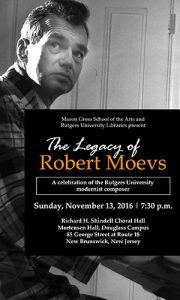
The Legacy of Robert Moevs concert
Jonathan Sauceda has teamed up with the Mason Gross School of the Arts to plan a celebratory concert of the modernist composer who taught at Rutgers University from 1964 to 1991. The Legacy of Robert Moevs is a free event taking place Sunday, November 13, 2016 at 7:30 p.m. at Richard H. Shindell Choral Hall, inside Mortensen Hall on the Douglass Campus. It will feature the music of Moevs, as well as composer and sound artist Judith Shatin and Steven Kemper.
Mary H. Dana Women Artists Series Galleries Welcomes “Laura Anderson Barbata: Collaborations beyond Borders”
This fall, the Mary H. Dana Women Artists Series Galleries in the Mabel Smith Douglass Library will welcome the 2016-17 Estelle Lebowitz Endowed Visiting Artist Exhibition, Laura Anderson Barbata: Collaborations Beyond Borders. The exhibit contains selected highlights of textile, sculptural, 2-dimensional, and video works from the traveling exhibition Transcommunality.


 Hello all –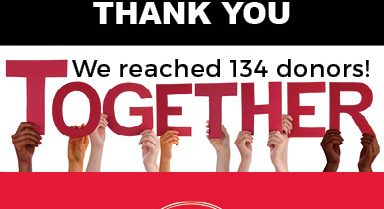

![Movement: 8-day clock; square clock face not signed Case: intended for a (later) clock movement with an arched clock face; attributed to Nicholas Williamson Parsell (1797-1877) by the donor and is likely the same clock cited by Margaret E. White in Early Furniture Made in New Jersey, 1690-1870 ([Newark, N.J.]: The Newark Museum Association, c1958): “A tall clock with case attributed to Nicholas Parsell is owned by Catharine Schneeweiss.” Location: Special Collections and University Archives reading room (behind sign-in desk), Alexander Library Donor: Ralph Heyboer (1918-2011) of Linden, New Jersey Provenance: movement created in 18th century; case created in 19th century; evidently owned at one time by Catharine Hardenbergh Schneeweiss (1893-1977), the daughter of Henry P. Schneeweiss; per donor: “from estate of Henry P. Schneewiess family” Note: per Somerset County Historical Quarterly (vol. 8): Nicholas W. Parsell had a daughter Mary who married F.M. Schneeweiss, the father of a Henry Schneeweiss. Per Rutgers University Biographical Files: Alumni (Class of 1877): Henry P[arsell] Schneeweiss (1856-1930), who served as the treasurer of Rutgers from 1915 to 1928, was the son of Franz Maxmillion Schneeweiss and Mary (Parsell) Schneeweiss. He married Mary Cornelia Hardenbergh, a descendant of the first president of Queens College [now Rutgers University], and resided at 56 College Avenue at the time of his death. Received: 1992; acquired, from the same donor, with other items (e.g., monogrammed china, said to be from the Parsell family, and a mahogany secretary bookcase) identified as having the same provenance](https://agenda.libraries.rutgers.edu/wp-content/uploads/2016/11/clock-schneeweiss.jpg)