Category: Rutgers University–New Brunswick

Faculty and staff news from the libraries at Rutgers University-New Brunswick.

  • What’s Happening around Rutgers – June 2018

    The NJ International Film Festival’s summer run is June 1–10.
    New Jersey International Film Festival

    Friday, June 1–Sunday, June 10
    Rutgers–New Brunswick

    The Rutgers Film Co-op/New Jersey Media Arts Center and the Rutgers University Program in Cinema Studies present the New Jersey International Film Festival Summer 2018. All films screened as part of the festival are New Jersey or area premieres! For the full schedule and more information, visit the NJ Film Festival website.
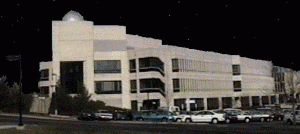
    The Schommer Astronomical Observatory hosts open nights on three Thursdays in June.
    Robert A. Schommer Astronomical Observatory Public Open Nights

    Thursdays, June 14, 21, and 28, 9:30–11:30 p.m.
    Rutgers–New Brunswick

    Get lost in the wonders of the night sky with the 20-inch optical telescope at the Robert A. Schommer Astronomical Observatory. Celestial bodies able to be viewed include:

    • June 14: Arcturus, M5, Antares, M13, Vega, Deneb, Albireo, M57, M11, Venus, Jupiter, and Saturn
    • June 21: Arcturus, M5, Antares, M13, Vega, Deneb, Albireo, M57, M11, Venus, Jupiter, Saturn, and the Moon (first quarter)
    • June 28: Arcturus, M5, Antares, M13, Vega, Deneb, Albireo, M57, M11, Venus, Jupiter, Saturn (near opposition), and the Moon (full)

    For more information and updates on potential closures due to weather, low visibility, etc., visit the observatory’s website.

    A car show promoting Alzheimer’s research and prevention rolls through Rutgers–Newark on June 23.
    Car Show Promoting Alzheimer’s Disease Research and Prevention

    Saturday, June 23, noon to 2:30 p.m.
    Rutgers–Newark

    Come for the cars and free food tastings from local Newark restaurants and food stores. Join a raffle drawing for free gifts from community businesses. You will also learn to strengthen your brain and reduce your risk for Alzheimer’s disease, and how to sign up to participate in important community-based studies of aging, brain health, and Alzheimer’s disease at Rutgers University–Newark. Learn more.
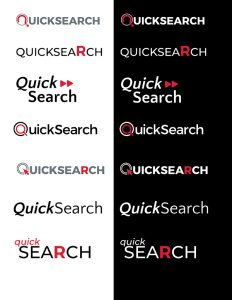
  • QuickSearch Logo

    quicksearch logo
    Help us select the new QuickSearch logo! Click the image to take the survey.

    Hello all –

    I know I said we’d return to Frameworks this month, but events of the day (or month) have once again intervened. As we’ve seen from recent communications from the ExLibris Implementation Team, we are moving ahead full steam toward the June 1 go live date. I know many of you are preparing for the technical freeze and helping to communicate these changes to our users, but I write today with a different purpose.

    We recently announced that the name of our search interface will be QuickSearch, and I am writing today to invite you to help us with the selection of a graphic to build recognition and visibility for our new service.

    We want your input. You know your users and the Rutgers community – what they

    like and dislike and what works for them.

    We want to use this visual on our website and in marketing materials, so it has to be eye-catching and work in multiple formats. It will be used alongside messaging that emphasizes that QuickSearch allows users to search across our collections with greater efficiency, accuracy, and relevancy. With the help of the ExLibris Implementation Team, we have managed to whittle the options down to a top 7. We need your help to get this down to the final graphic.

    So, with that in mind, please let us know:

    • What would be most appealing to Rutgers faculty and students?
    • What communicates the excitement of QuickSearch most clearly to you?
    • Which graphic most clearly matches your vision of what QuickSearch does?

    Conversely, let us know:

    • What visuals simply don’t work in your opinion?
    • Which ones aren’t clear or don’t match the function of QuickSearch?
    • Is there anything confusing about the graphics? Would you mix and match any elements of the graphics to create a new graphic?
    • Or do you have a completely new concept you would like to share?

    Please click here to let us know what you think of our leading QuickSearch graphics so far. We are in a time crunch, so please get your comments in by Tuesday, May 8 at 5 p.m.

    Thanks in advance! We’ll announce the QuickSearch graphic next Wednesday!

    if you prefer to email your comments, please send them to me or Jessica Pellien.


  • What’s Happening around Rutgers? May 2018

    Opening Day at the Rutgers Gardens Farm Market is May 4.
    Rutgers Gardens Farm Market

    Friday, May 4, 11 a.m. – 5 p.m.
    Rutgers–New Brunswick

    Opening day of the farmers market. Stop by for the fun including the Lettuce Festival and cooking demonstration. See which of your favorite vendors are back and who is new. Click here for more information.

    BOS
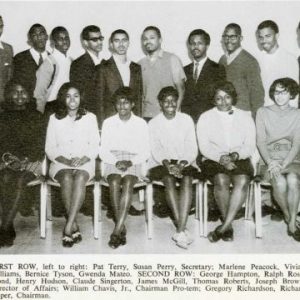
    The Black Organization of Students Celebrates their 50th anniversary on May 5.
    Kick Off Celebration: Reflections on the Founding of BOS

    Saturday, May 5, 5 – 9 p.m.
    Paul Robeson Campus Center – Essex Room
    Rutgers–Newark

    The Black Organization of Students Alumni Association (BOSAA) is celebrating the 50th anniversary of the founding of the Black Organization of Students (BOS) with a dinner and awards ceremony. Alumni, students, and friends are invited to join in an evening of acknowledging the sisterly and brotherly love, respect, and struggles that the pioneers of diversity demonstrated during the late 1967-1968 historic event. Click here for more information.

    tour
    Learn about battlefield preservation with the Mid-Atlantic Regional Center for the Humanities on May 5.
    History Preservation Workshop: Battlefield Preservation

    Saturday, May 5, 9 a.m. – 3 p.m.
    Historical Society of Princeton and Princeton Battlefield State Park

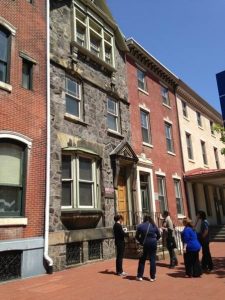
    “Landscapes of Conflict: Battlefield Preservation” will examine national, state, county, and municipal efforts at recognizing and preserving America’s fields of conflict. The day will include a morning of presentations from historians, archaeologists, and county planners and an afternoon battlefield tour. Part of the Continuing Education Program of the Mid-Atlantic Regional Center for the Humanities (MARCH) at Rutgers University–Camden.

    meditation
    Practice mindfulness meditation at free noontime workshops across Rutgers–New Brunswick
    Mindfulness Meditation

    Tuesday, May 8, noon – 1 p.m.
    Busch Student Center

    Wednesday, May 9, noon – 1 p.m.
    Student Activities Center

    Thursday, May 10, noon – 1 p.m.
    Douglass Student Center

    Rutgers–New Brunswick

    Mindfulness is the art of being a compassionate observer of your own experience. Meditation practice helps us to achieve mindfulness and reduce stress. All are welcome – faculty, staff, and students. No previous experience required. Click here for more information.

    photograph
    The Shadows of Houses is on display at the Paul Robeson Galleries through May 26.
    The Shadows of Houses

    Through Saturday, May 26
    Paul Robeson Galleries
    Rutgers–Newark

    The Shadows of Houses is a three-person show featuring black and white photographs from Terry Boddie, Shakia Lewis, and Cesar Melgar. The title of exhibition is taken from Newark native Amiri Baraka’s poem “Legacy,” a mediation on history and home. Melgar’s street photography cast a sharp eye on the inhabitants and city of Newark. Click here for more information.

    Dougls Lowy, MD, deputy director of the National Cancer Institute.
    2018 Annual Retreat on Cancer Research in New Jersey

    Thursday, May 24, 8 a.m. – 4 p.m.
    College Ave Student Center
    Rutgers Biomedical and Health Sciences

    Rutgers Cancer Institute of New Jersey and the New Jersey Commission on Cancer Research host a forum for clinicians, researchers, faculty and students to learn about the latest in cancer research and treatment. Click here for more information.


  • Ex Libris Implementation Project Update – May 2018

    ExLibris graphicMigration Milestones 

    The implementation project continued to move forward as scheduled in April. We submitted the final migration form and link resolver form to Ex Libris. To address issues encountered during the Alma/Primo testing, we have been having weekly functional calls with Ex Libris and communicating with them constantly via the project’s Basecamp site. The Data Migration and System Integration Working Group has also been working hard on the third-party integration issues. The extract of Sirsi data for the final data load to Alma will start on May 5.  

    QuickSearch Announcements and News Page 

    Primo will be known as QuickSearch to the Rutgers community after we go live on June 1. In her recent messages to the university and RUL communities, Krisellen announced the release date of QuickSearch (June 1) and its impact on students and faculty. The Libraries also created a QuickSearch news page for the public. Please use the news page as a resource to answer user inquiries. Students and faculty can also submit questions or comments about QuickSearch directly to reference@rutgers.libanswers.com 

    Upcoming Service Changes 

    In her message to RUL everyone, Krisellen also highlighted the following service changes that are coming up:  

    • Acquisitions: There will be a freeze of acquisitions and cataloging activities (except reserve purchases) between May 5 and June 1. Normal acquisitions functions will resume after June 1, but we will prioritize the purchase of course reserves and faculty requests. The process of allocating funds for selector-initiated acquisitions will resume in the fall, which is in line with previous years. 
    • Reserves: Starting May 5, we will have a special process in place to accept and place reserve orders, but we anticipate the turnaround time will be longer than usual. Reserves that are placed after May 5 will not transfer automatically to Alma and will be manually transferred after June 1. Additional summer programs like EOF may be similarly affected. 
    • Circulation and ILL: From May 29 to May 31, we will transition to an Alma offline client for circulation. This step is necessary to populate Alma with existing circulation data prior to launch. Users will not experience down time, but during this three-day period, Access Services staff will stop using Sirsi and instead work with the Alma client. On June 1, the data from the offline client will be merged back into Alma, so there will be no data loss and everything will be synced. This will also impact Interlibrary Loan, as there will be potential delays and interruptions in processing loans and borrows of physical items. More information on these workflows and training opportunities will be available soon. 

    These temporary or short-term service changes are necessary for the successful implementation of Alma and Primo. We thank all the library faculty and staff for the help to minimize disruption.  

    Primo Training Schedule 

    Discovery Services Librarian Joseph Deodato recently announced a Primo/QuickSearch training schedule (see following) for public services librarians and staff. Many library faculty and staff have registered to attend the training sessions. Even though the registration is now closed, Joseph welcomes colleagues who did not register to attend any of the sessions. Please contact Joseph if you have any questions.  

    Primo Training Schedule (as of April 25, 2018) 

    Date  Location  Time 
    May 1  Dana Electronic Classroom II  2 p.m. – 4 p.m.
    May 2*  Robeson Electronic Classroom  2 p.m.. – 4 p.m.
    May 4*  Alexander SCC Lecture Hall  2 p.m. – 4 p.m.
    May 8  RWJ Electronic Classroom  2 p.m. – 4 p.m.
    May 9  Dana Electronic Classroom II  10 a.m. – 12 p.m.
    May 11  Smith Electronic Classroom I  10 a.m. – 12 p.m.
    May 15*  Carr Conference Room  2 p.m. – 4 p.m.
    May 18  Alexander Pane Room  10 a.m. – 12 p.m.

    *indicates a new session or change of location 

    Submitted by Tao Yang and Abbey DiPaolo.

  • Quick Takes on Events and News – May 2018

    Honoring a Great-Great Legacy
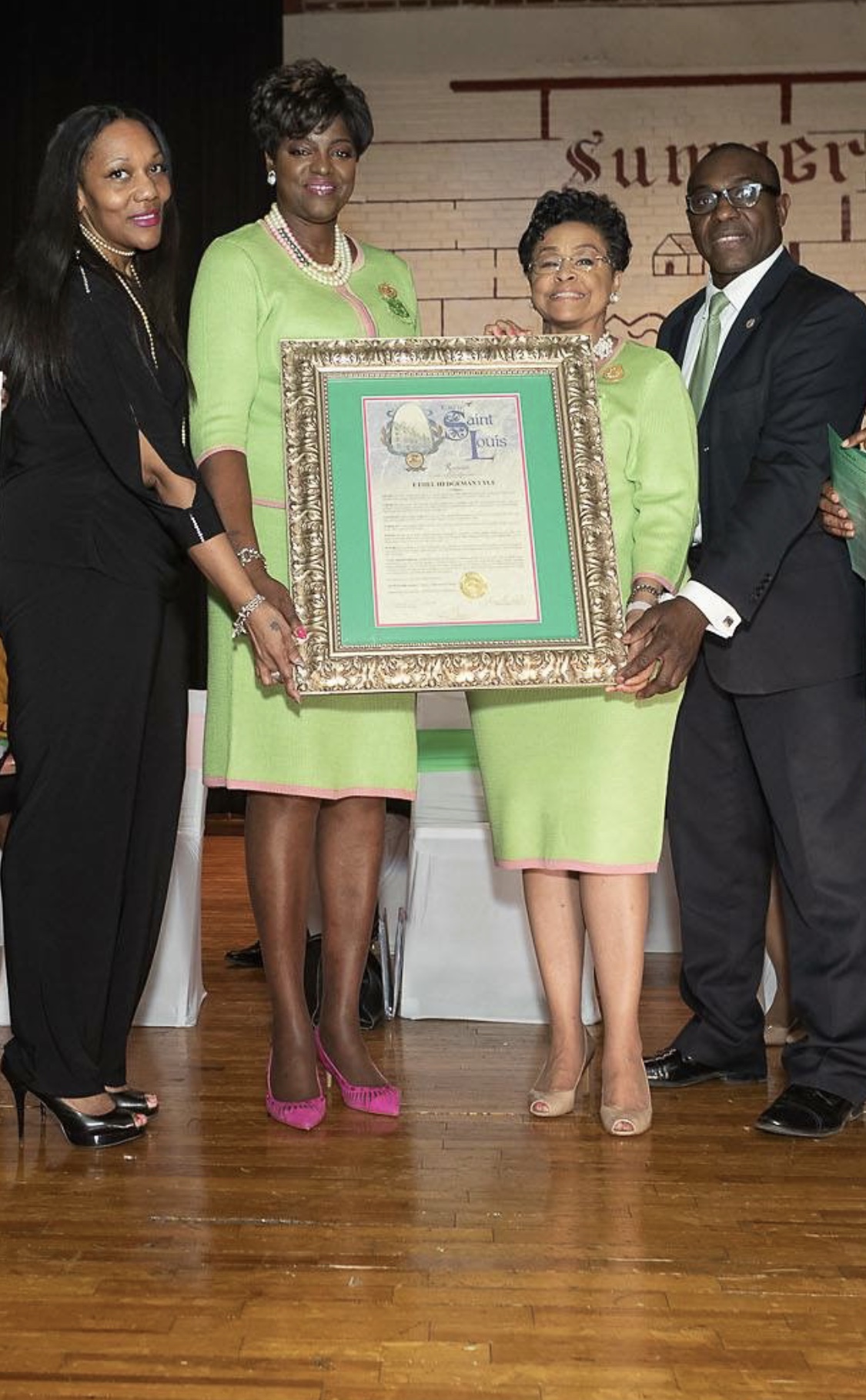
    Chantel Harris at the ceremony honoring her great-great grandmother, Ethel Hedgeman Lyle, who founded the Alpha Kappa Alpha sorority.
    Chantel Harris (l.) at the ceremony honoring her great-great grandmother, Ethel Hedgeman Lyle, who founded the Alpha Kappa Alpha sorority.

    Chantel Harris, library associate and student coordinator at the Paul Robeson Library, Rutgers–Camden, was a special guest at the ceremonial dedication and unveiling of a school bench at Charles Sumner High School in St. Louis, Missouri, in honor of her great-great-grandmother, Ethel Hedgeman Lyle. Lyle was the originator and founder of Alpha Kappa Alpha Sorority, Incorporated (AKA). Chantel received a proclamation from the mayor of St. Louis, as well as a resolution from the Board of Aldermen naming April 5, 2018 “Ethel Hedgeman Lyle Day.”

    Lyle graduated from Sumner High School in 1904 and founded AKA in 1908 at Howard University. Chantel is pictured with the sorority’s international president, Dr. Dorothy Buckhanan Wilson, central regional director Kathy Walker-Steele, and members of the Board of Directors.

    The USPS is considering an Ethel Hedgeman Lyle 2019-2020 USPS Forever Postage Stamp.

    You can read more here.

    Jazz Ambassadors Premieres on PBS May 4 
    men at acropolis
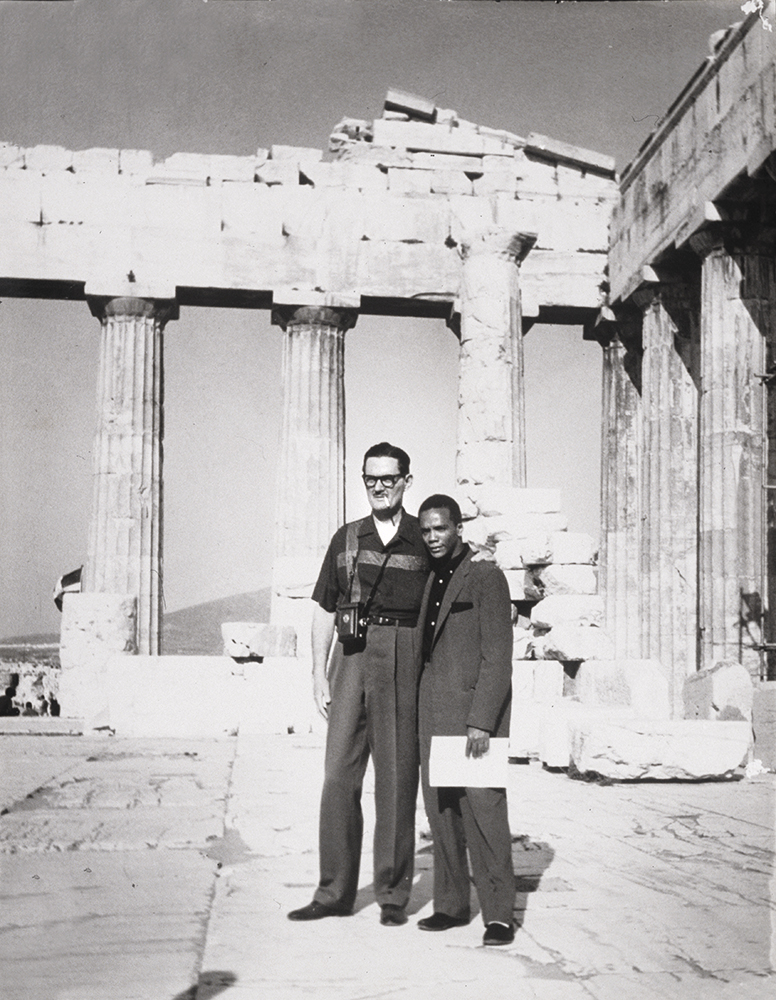
    IJS founder Marshall Stearns and Quincy Jones at the Acropolis.

    A new PBS documentary featuring archival material from the Institute of Jazz Studies is slated to premiere at 10 p.m. on Friday, May 4. Here’s a quick synopsis from PBS.org:

    “The Cold War and civil rights collide in this remarkable story of music, diplomacy and race. Beginning in 1955, when America asked its greatest jazz artists to travel the world as cultural ambassadors, Louis Armstrong, Dizzy Gillespie, Duke Ellington and their racially diverse band members faced a painful dilemma: How could they represent a country that still practiced Jim Crow segregation?”

    Congratulations to Tad Hershorn, Adriana Cuervo, and all of our IJS colleagues who contributed to this project. We can’t wait to see the premiere!

    Special Collections News Roundup
    children's book
    Helene van Rossum’s new children’s book is titled “The Best Mom in the Universe.”

    Lots of great news coming out of Special Collections and University Archives lately:

    • The finding aid for the New Brunswick Music Scene Archive is now live. The collection continues to grow, and the finding aid will be updated periodically.
    • Speaking of which, the New Brunswick Music Scene Archive has a brand new Facebook page! Be sure to head over and give them a like.
    • A new finding aid is also available for the New Brunswick Vertical File in the Sinclair New Jersey collection. This collection of primarily printed material documents a vast array of aspects of New Brunswick history, mostly between 1935 and 1960 and arranged by subject. Special thanks go to School of Communication & Information graduate student Louise Lobello for her work on the finding aid.
    • The latest children’s picture book by public services and outreach archivist Helene van Rossum has just been published. Written in Dutch, it’s titled The Best Mom in the Universe. Check it out (along with her other children’s books) over on Helene’s blog.
    Busting Students’ Stress
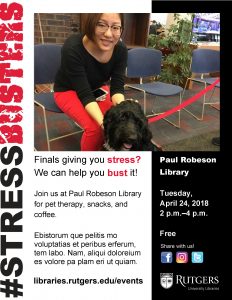
    flyer
    New Stressbusters flyer templates are available from the Communications Department.

    It’s finals week, which of course means that #STRESSBUSTERS are back at libraries across Rutgers–New Brunswick. But Rutgers–Camden is joining in the fun this semester, too, with the first-ever pet therapy session at Paul Robeson Library slated for Friday, May 4. Good luck to our colleagues at Robeson! Hopefully this is the beginning of a long and successful tradition.

    Are you planning your own stress-relieving finals activities? The Communications Department has created new flyer templates to help promote your events. Check them out here: T:\CENTRAL\Templates\Signage Templates\stressbusters\word templates


  • This Month in the Agenda: May 1999

    Coming Full Circle
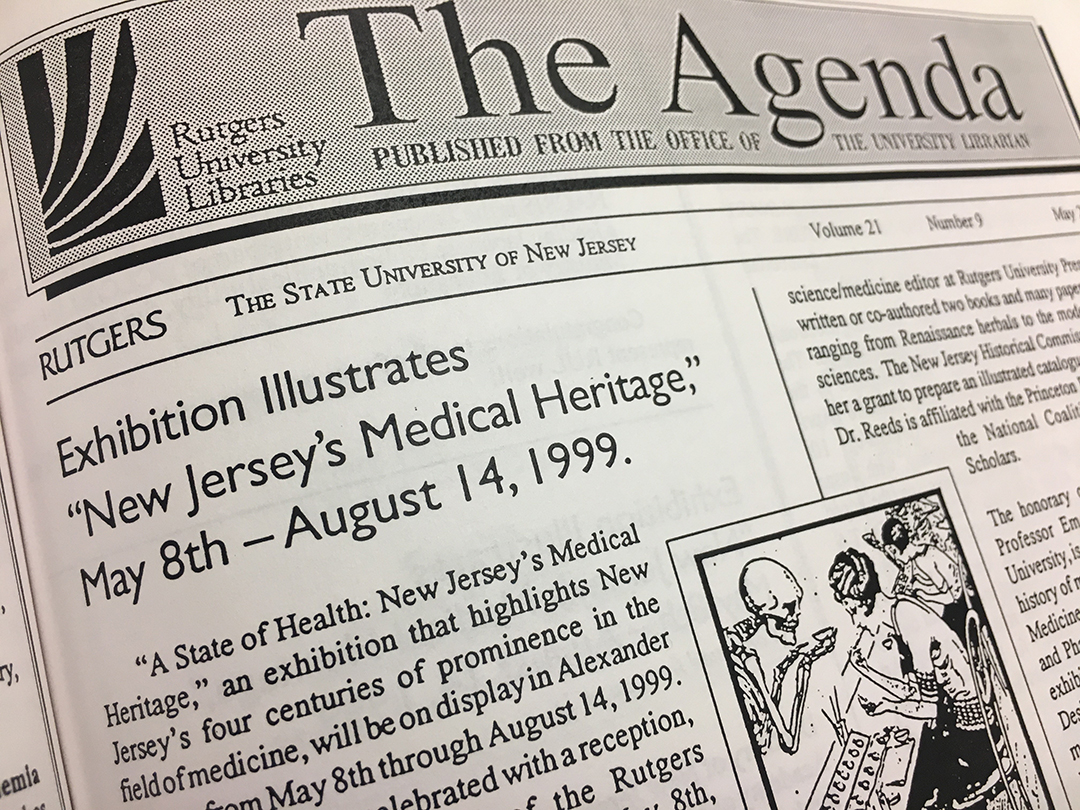
    newsletter
    The Agenda, May 2, 1999.

    As many of you know, a group called the Web Advisory Committee (WAC) has been working to redesign the Rutgers University Libraries’ website…. The Rutgers Libraries’ web pages provide information about library collections, services, and personnel and facilitate communication and work among library faculty and staff. The redesign of our website will produce the flexibility we need to accommodate our current and future digital library and give our users an information tool that is more intuitive to use. Specifically, WAC expects the new website to provide important new features such as the following: 1) better integration with the university’s recommended “look & feel” for websites, resulting in a shorter learning curve, 2) improved and more intuitive navigation, and 3) new sources such as the “Digital Library Projects” and “Friends and Supporters” pages.

    The Agenda 21, no. 9 (May 2, 1999)

    Destined for Success

    We are pleased to report that Fernanda Perrone of Special Collections and University Archives (SC/UA) has been awarded an undergraduate research fellow from the Vice President for Undergraduate Education’s Rutgers Undergraduate Research Fellows Program.

    The Undergraduate Research Fellow, Carlos J. Ron, will work with Fernanda on the “Documenting Inter-American Cooperation Project” and specifically on the Frances Grant Papers, which include the archives of the Inter-American Association for Democracy and Freedom and the Pan-American Woman’s Association.

    The Agenda 21, no. 9 (May 2, 1999)

    Lending a Hand

    Libraries Essay Contest #3 Winner
    Student Category

    This semester I am working on my Senior thesis. I had never really spoken to a Librarian at Dana and was, at first, a bit reluctant because they always seem so busy. I decided to approach the reference desk with a question on obtaining an obscure government pamphlet that was going to be helpful in writing my paper. Their pleasant attitude hit me like a tidal wave of fresh air. Two big smiles greeted me and I immediately felt very comfortable. I was so pleasantly surprised!

    I am used to living in a society where everyone is in a rush and not many people sincerely want to help. The Rutgers Librarians that helped me, that day, were quite the opposite. They showed great eagerness to help me and that’s something I really appreciate.

    The Agenda 21, no. 10 (May 16, 1999)

    Have a Reservation?

    The Electronic Reserves Working Group is happy to announce that RUL will start to provide electronic access to some documents on reserve this summer….. We will begin by providing electronic access to photocopies of sample exams, overheads, syllabi, problem sets, and lecture notes submitted by instructors for Reserves. Documents will be scanned on the Minolta PS 3000 in the Copy Center in New Brunswick, set up on the library’s web server, and delivered as Adobe PDF (Portable Document Format) files in the Reserve module of IRIS. All Rutgers libraries will participate in the electronic reserve services….. Some libraries may scan and process documents for electronic reserves on-site in the future.

    The Agenda 21, no. 11 (May 30, 1999)

  • Communicators Network Social Media Panel

    Last month, I attended a panel discussion hosted by the Rutgers Communicators Network titled Social Media – Industry and Platform Trends for Owned and Paid Content. You can check out a recording of the event below:

    While some of the discussion may not be directly applicable for units with limited or nonexistent budgets for social media advertising, here are some of my broader takeaways for social media at the Libraries:

    • Developing a voice and building relationships. Ultimately, social media needs to be social. Developing a friendly and authentic voice can help us seem more approachable and available, and allow us to cultivate a sense of community around our accounts. Attending to this may, in the long run, prove more effective for our strategy than the successful implementation of any given campaign. We might even get a research question or two out of it!
    • Leveraging influencers. While there may not be many opportunities for us to develop formalized, paid partnerships with influencers such as those discussed in the panel (see here for an example of one of Mary Chayko’s students advertising for a hair product), we should still think about creatively leveraging user-generated content in our approach to social media. We also have a unique resource—namely, expertise—at our disposal. Is there a way for us to position our librarians and their research as influencers in the broader academic community on social media?
    • Understanding your audience and goals. As with any form of communication, understanding your audience is a key to success. Who are you trying to reach, and where are they likely to hang out online? What are the actions you ultimately want them to take? What would return on social media investment look like for your unit? Identifying the answers to these questions can help make your effort worthwhile.
    • Benchmarking. You may be interested in reading RivalIQ’s 2018 Social Media Industry Benchmark Report, which was discussed during the event. It has some useful information on best practices and trends in social media for higher education.

    Do you have your own ideas for how we can improve social media at the Libraries? Feel free to reach out and let me know.

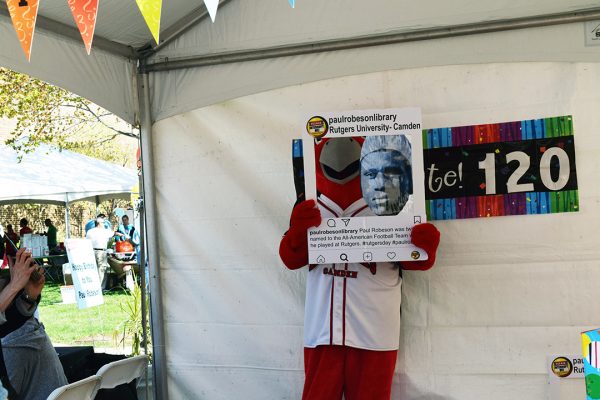
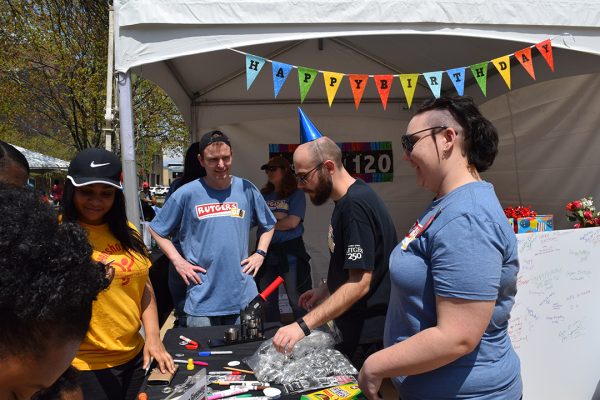
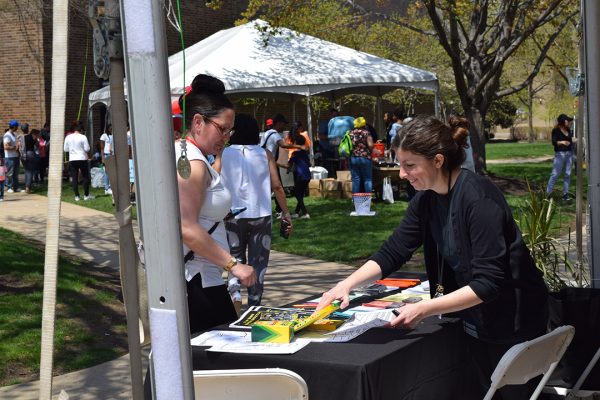
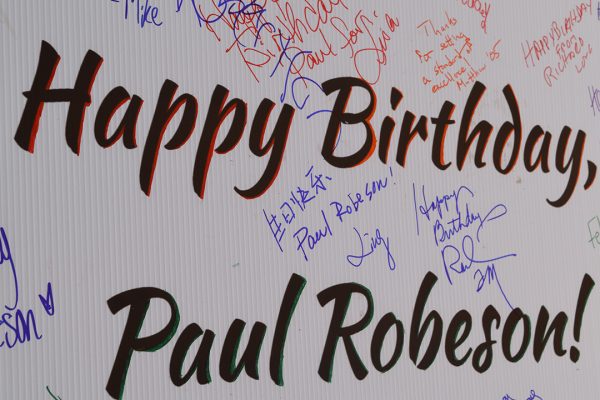
  • Rutgers Day 2018

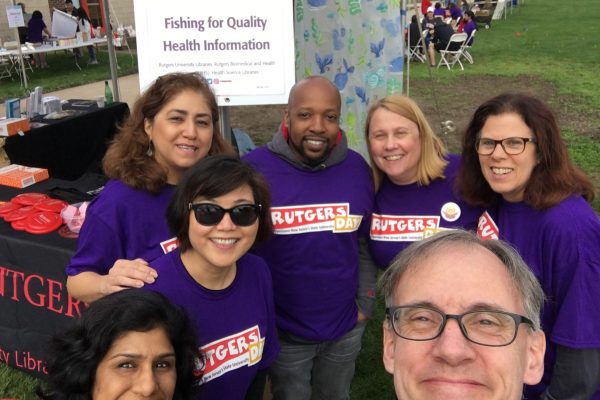
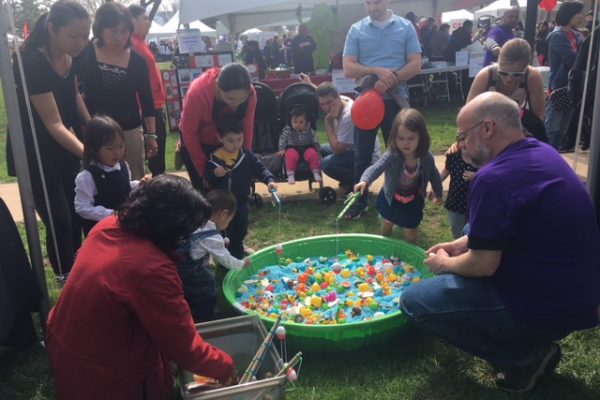
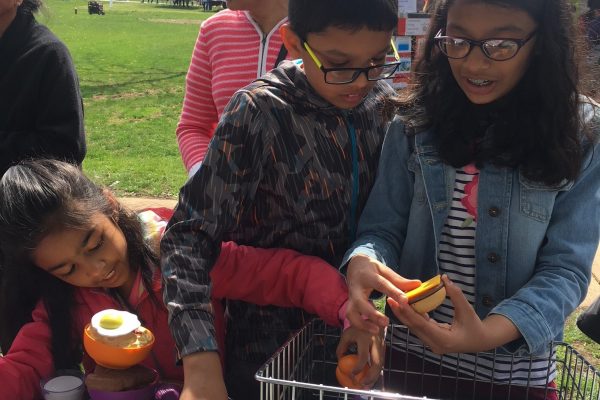
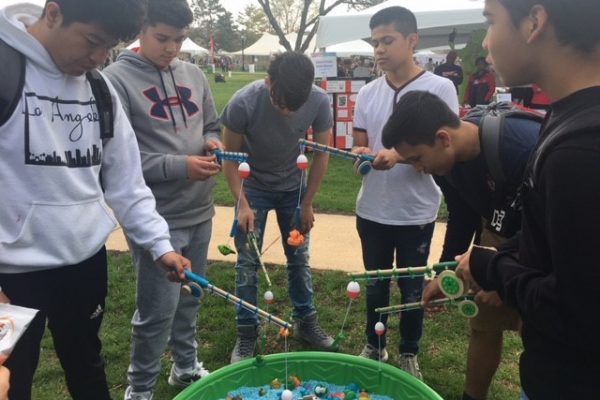
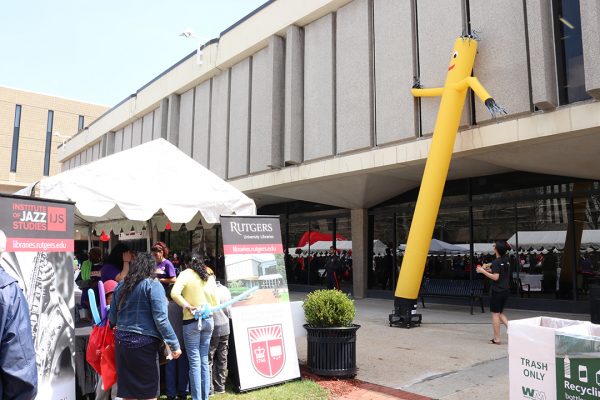
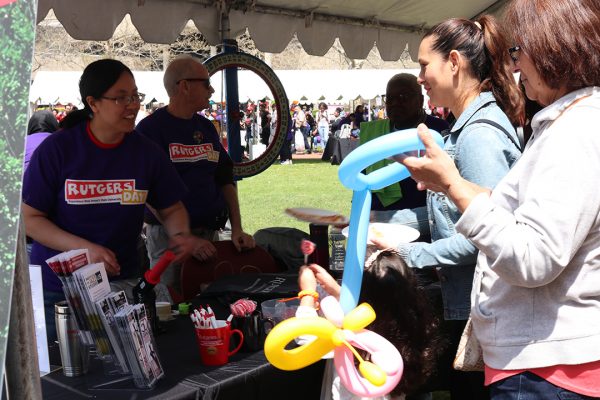
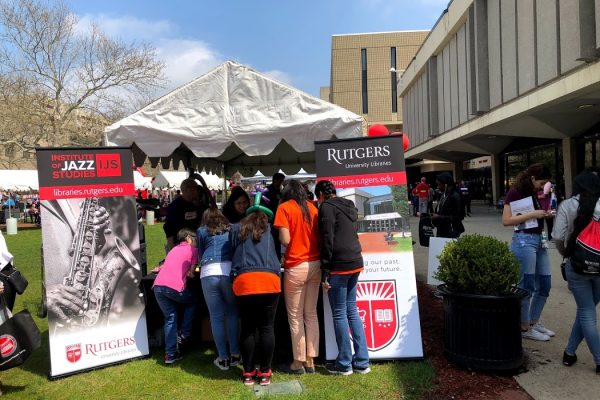
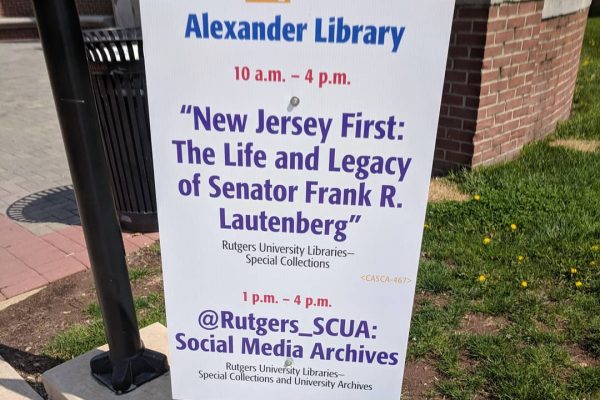
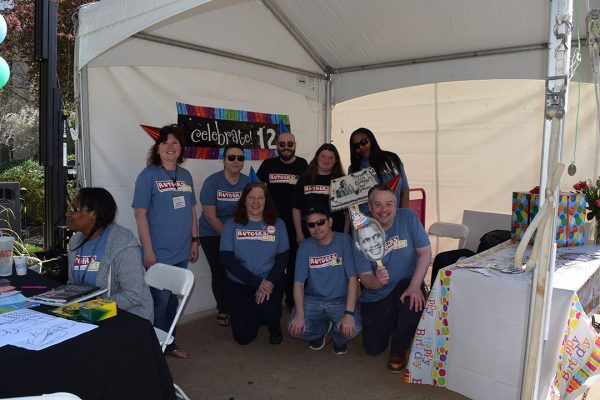
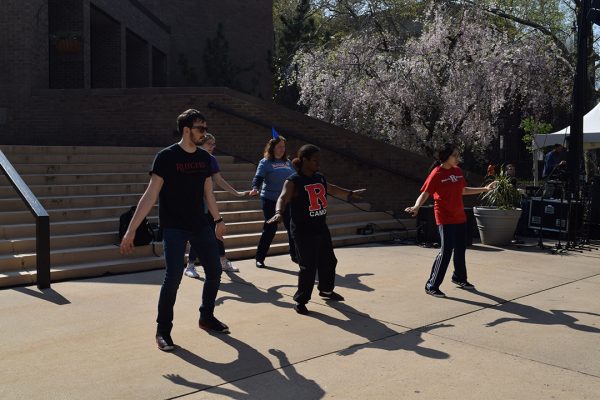
    Rutgers Day was last weekend and, by all accounts, it was another tremendous success. Thank you to all the volunteers who helped pull these great activities off! If you missed out on the fun, enjoy this collection of sights from our different locations.

    • group photo
      The theme of the RBHS booth this year was “Fishing for Quality Health Information.” Credit: Yingting Zhang.
  • Simplifying Routine Digital Projects

    poster
    The Digital Projects Template Working Group presented an interim report poster at the last State of the Libraries.

    Digital projects have been an integral part of the services that Rutgers University Libraries have provided over the past decade. Making some of our resources available online adds to the discovery and accessibility of those holdings, providing a valuable service to our patrons. The digitization of physical items also provides an additional layer of preservation, protecting the original item from additional wear, while ensuring the content lives on.

    In light of this, the Digital Projects Template Working Group was formed in September 2017 to streamline and simplify the process for individual units, empowering them with the knowledge to embark on their own routine digital projects as their resources permit.  We’ve worked hard during this time to document what types of items and collections make up a potential “routine” project; provide technical information on file formats and digitization standards; offer up minimum required descriptive metadata; and provide recommendations on rights statements. With this simplification documentation, we hope that there will be less of a bottleneck for routine digitization projects.

    While the Digital Projects Template Working Group has completed their work, we realize that libraries also need guidance about the process to begin carrying out this work. Cabinet determined that a group will develop a workflow for routine digital projects.  That effort is already under discussion.

    Central units will provide support for these routine digital projects in the areas of digital preservation assessment, accessibility, and search portal and website creation. Shared User Services can consult with directors and project managers to answer questions about whether a digital project is routine, or perhaps more complex. We encourage everyone to visit our website and review the recommended guidelines for digital projects.

  • Themes from the March Cabinet Retreat

    Themes from the March Cabinet Retreat

    For the last two months, I have used the Agenda to provide updates about a framework we are developing to provide us with a common vocabulary and a shared understanding of the relationships and dependencies between local and central services. Last month I focused on the local aspects of the framework, with the intent of talking about the central aspects this month.

    However, two weeks ago Cabinet had a retreat to discuss local priorities and to begin developing realistic expectations of what would be possible for the Libraries to accomplish with our shared infrastructure. Before continuing the framework discussion, I think it will be useful to review the outcomes of the retreat, including the overarching themes that emerged from our discussions.

    Now that we have filled the Library Director positions, our planning processes are in full swing. The Library Directors came to the retreat prepared to discuss their most pressing needs and how best to use the shared infrastructure. The conversations were good because they were based on the needs of the campuses and communicated with a strong sense of collaboration and common purpose.

    By the end of the day, several themes emerged that describe opportunities and constraints that are common to all units.

    • Access to Collections: It is clear that the Alma/Primo implementation will be a catalyst for organizational change. The new systems will provide a platform to strengthen foundation services and will help us to better assess our effectiveness. They will also drive changes in workflows in every unit of the Libraries. It is easy to see how this implementation will result in changes for people working directly with the system (e.g., cataloging, acquisition, circulation), but what may be less obvious are the effects for those with less direct daily interaction with the system. Discovery will change, driving changes in the broader website. Links to our resources will change, meaning that every research guide and instructional object that directs users to a specific resource will need to be updated. Needless to say, the Alma/Primo implementation will be a big part of all of our lives in the coming year.
    • Library Instruction: There is a need for us to build course-related infrastructure to support student success and to improve access to open and affordable resources within courses. We have begun this process with the implementation of PressBooks, but it appears that changes on the horizon may also include Leganto, an advanced Alma module related to course reserves, and Credo Education, customizable information literacy modules. We will have to determine the balance between central coordination and local autonomy in the coming year. Student success is such an important part of the library mission that we have to take the time to invest in shared infrastructure.
    • Discovery and Website modifications: There were many requests for new features related to discovery and the website. In the coming year, most of the attention of the Discovery Working Group and Web Improvement Team will be focused on integrating new features related to the Alma/Primo implementation and to integrating the emerging course-related infrastructure. It will be necessary to focus our attention on foundation services this year; however, the strong platform that we are establishing will allow us to continue to develop boutique services in the coming years.

    I started this article with a mention of the effective discussions we had at this year’s retreat which is in and of itself a strong indicator of the final theme that emerged. The Libraries have succeeded for many years in an environment of grassroots endeavors that eventually coalesced into larger themes. The environment in which we find ourselves is moving far too quickly for this approach. In the coming year, it will be necessary to acknowledge and support the roles of managers in prioritizing and effectively advancing the missions of the Libraries. Over the past few years, we have focused on the importance of Library Directors in setting priorities for their libraries that meet the needs of and support the unique priorities of the campus environments in which they operate. For an example of how that is happening, take a look at the Framework for Change established for Dana Library and the Institute of Jazz Studies in response to Rutgers-Newark priorities. In order to support robust local plans and Librarieswide priorities, we need to focus on infrastructure and strengthen the role of the manager in understanding the priorities of the Libraries and prioritizing work accordingly. The Alma/Primo implementation is the perfect catalyst for this change.

    This is an exciting time for the Libraries. We are recognized as a unit that provides leadership at Rutgers and is focused on the mission(s) of the University. I can see the progress we are making. Although we have a lot to do, this will be a productive year and will result in a stronger and more flexible organizational structure. Next month, we are back to frameworks!