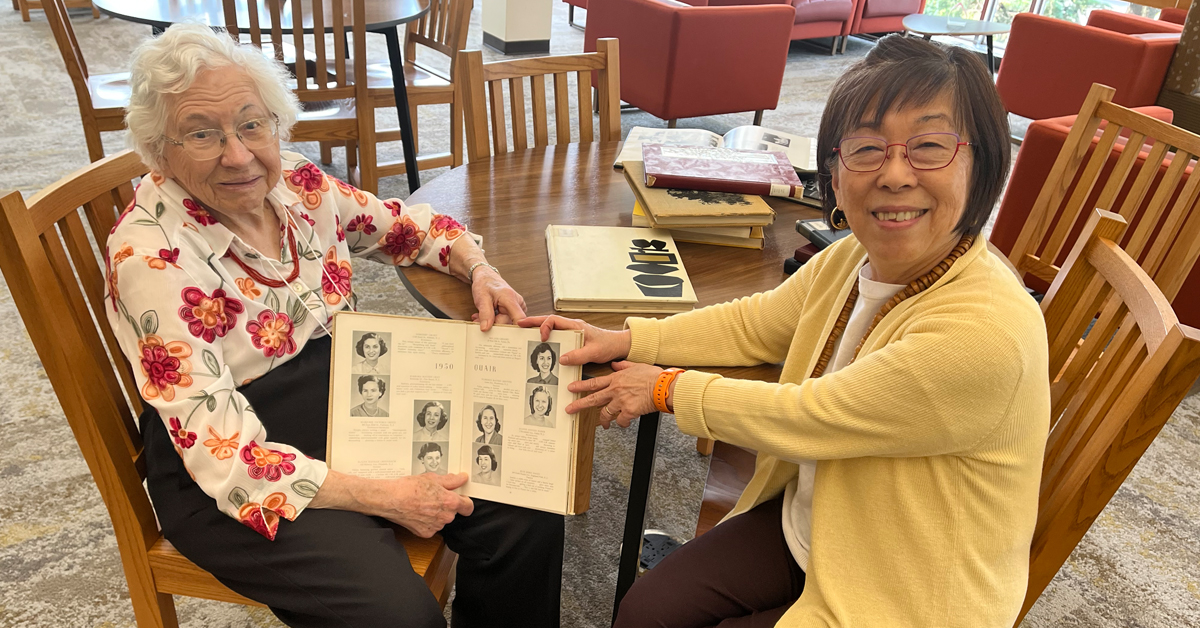
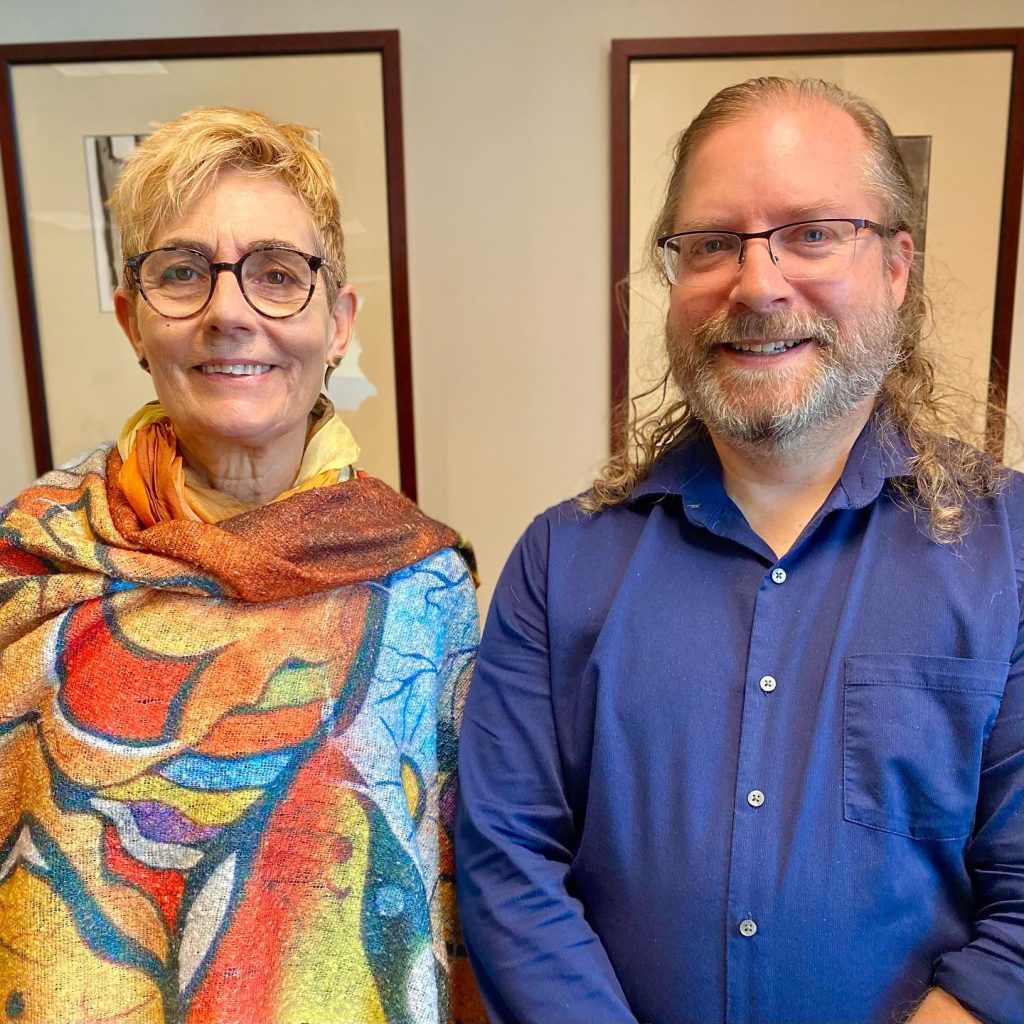
Barbara Gray Nicholson, a 1950 graduate of the New Jersey College for Women, with Kayo Denda at Douglass Library.
On June 6, during the Associate Alumnae of Douglass College reunion, multiple alumnae visited Douglass Library. As an indication of the meaning Douglass Library holds for Douglass alumnae, the library is consistently an option on the reunion’s list of activities.
The highlight of this year’s visit was Barbara Gray Nicholson, a 1950 graduate of the New Jersey College for Women (NJC), which later became Douglass College. While at NJC, she met her husband, a Rutgers College of Agriculture student, also from the class of 1950. They married after graduation, settling in North Carolina, where she lived from 1956 to 2019, studied library science, and worked in a small public library. For the last five years, she has lived in Nebraska, close to her son.
Nicholson talked about visiting the library, then located in the basement of Recitation Hall (now Ruth Adams Hall, having been renamed in honor of a former Douglass College dean), and about the professors she admired. They include renowned English constitutional law historian Margaret Judson and seeds specialist Jessie Gladys Fiske, who later became chair of the Department of Biological Sciences. She had fond memories of the dances on campus, through which she met her husband, and the old Packing Box gym next to Voorhees Chapel with an open floor furnace. The students in the mandatory modern dance class had to dance gingerly, navigating around the metal fence surrounding the opening, to avoid getting burns.
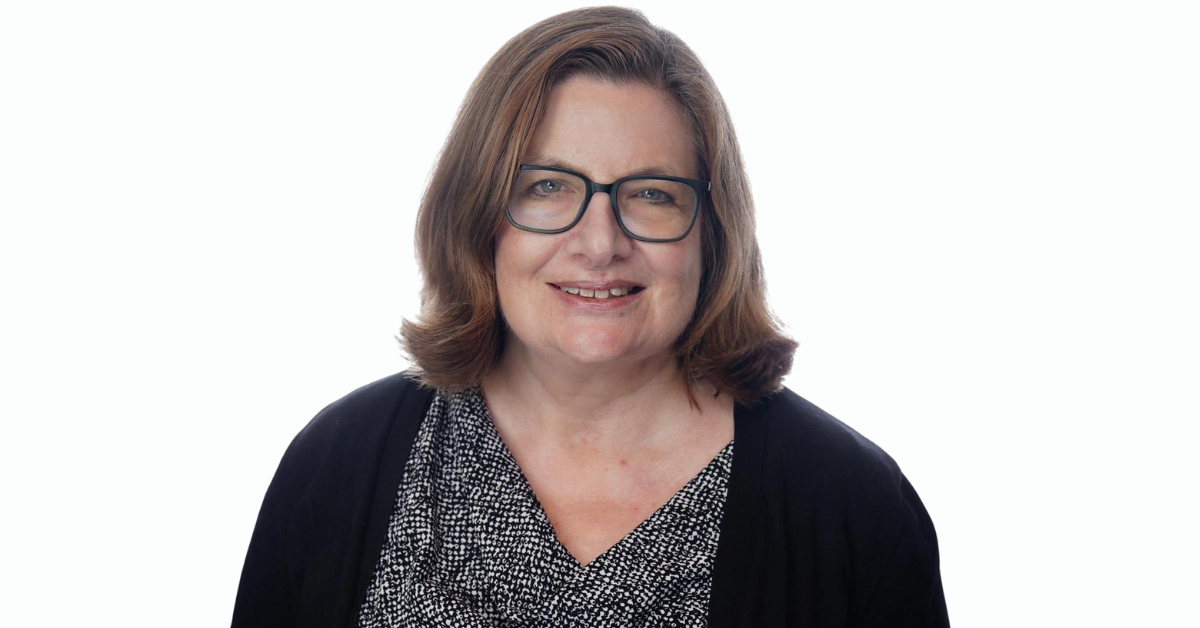
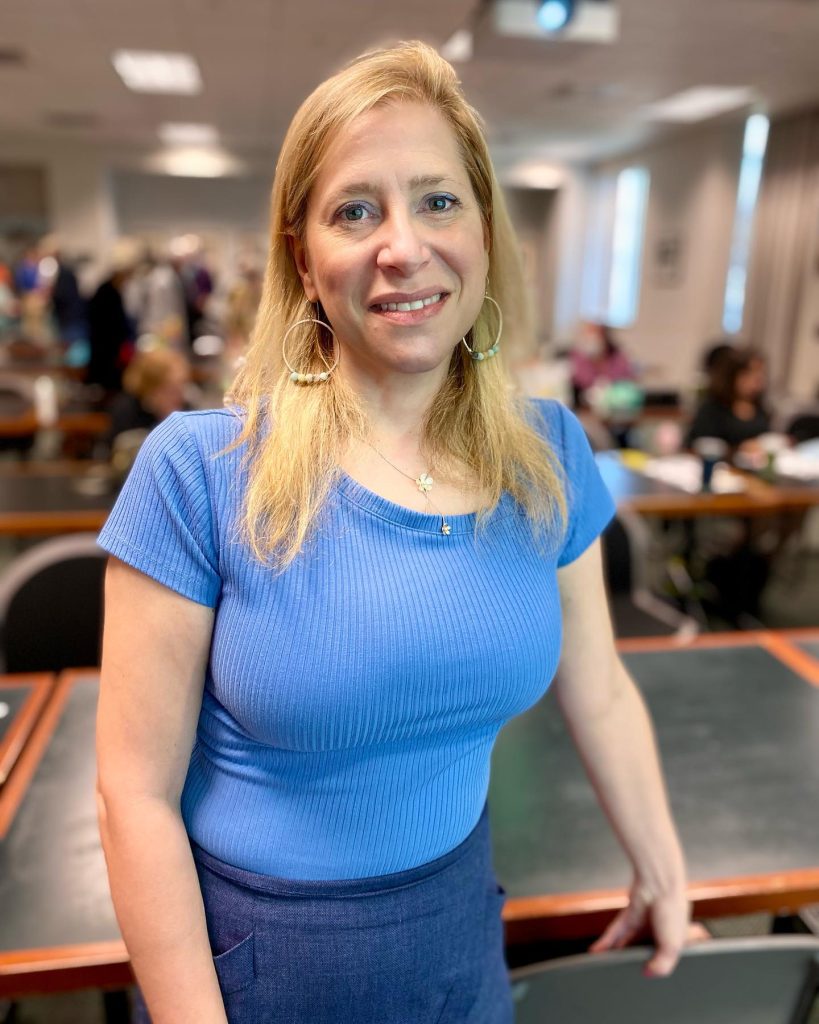
Fernanda Perrone’s career has been marked by significant contributions to the archival profession, particularly in documenting underrepresented groups, mentoring emerging archivists, and fostering international collaborations.
Fernanda Perrone, archivist and head of the exhibitions program for Special Collections and University Archives, will be inducted later this month as a Fellow of the Society of American Archivists (SAA) during an awards ceremony at the 89th Annual Meeting of the Society of American Archivists in Anaheim, California. The distinction of Fellow is the highest honor bestowed on individuals by the SAA and is awarded for outstanding contributions to the archives profession.
A distinguished archivist with over 30 years of experience, Perrone earned a PhD from Oxford University, where she focused her research on women’s education. This laid the groundwork for her professional focus on women’s history throughout her career. She has spent her decades-long career at Rutgers University Libraries, beginning as an assistant in the manuscript department at SCUA and eventually earning a full professorship. Since 2003, she has served in her current role of archivist and head of the exhibitions program.
Perrone’s career has been marked by significant contributions to the archival profession, particularly in documenting underrepresented groups, mentoring emerging archivists, and fostering international collaborations. In her position at Rutgers, she has developed diverse subject expertise in women’s history, gender studies, the history of Rutgers, and the history of westerners in Japan during the late 19th and early 20th centuries.
Her work curating and promoting the William Elliot Griffis Collection, which documents the experience of Westerners in Japan during the late 19th and early 20th centuries, has led to the development of international partnerships. Through her outreach, a group of scholars who studied Korean materials in the Rutgers collections discovered a set of unique photographs. Due to the destruction of many rare historical objects during the Korean War, photos like these represent an important cultural recovery. This discovery led to a collaboration with the National Archives of Korea to digitize the recovered photographs. Currently, Perrone is co-authoring an edited volume entitled Rutgers Meets Japan: A Trans-Pacific Network of the Late Nineteenth Century. For the book, coming out from Rutgers University Press this year, she invited scholars in art, history, and Asian studies to analyze the early transnational relationship between Rutgers University and Japan.
Perrone is particularly recognized as an expert on the archives of women’s religious communities. Her scholarly output includes numerous publications on women’s religious education, state-level voting rights history, and women artists’ archives, with notable works such as The Douglass Century: Transformation of the Women’s College at Rutgers University and On Account of Sex: Women’s Suffrage in Middlesex County, New Jersey. In 2013, she contributed a chapter to Perspectives on Women’s Archives (SAA). Her chapter, as well as the book, has spanned disciplines to reach historians, librarians, and other scholars thinking about the effect and importance of women’s archives. Her broad impact is also evident through her international and interdisciplinary speaking engagements: from New Jersey and Texas state and regional historical associations to MARAC and SAA to the Universities of Keio and Rikkyo in Tokyo, Japan.
Speaking about Perrone’s work, one supporter wrote that she has an “unwavering dedication to researching, preserving, and advocating for the archival record of women. She has remained steadfast in her commitment to ensuring that SAA recognizes and includes women’s experiences in the historical record.” Another supporter remarked, “Dr. Fernanda Perrone represents the best that the archival profession has to offer. She is a leading figure who unselfishly gives her time and energy to promote her profession.”
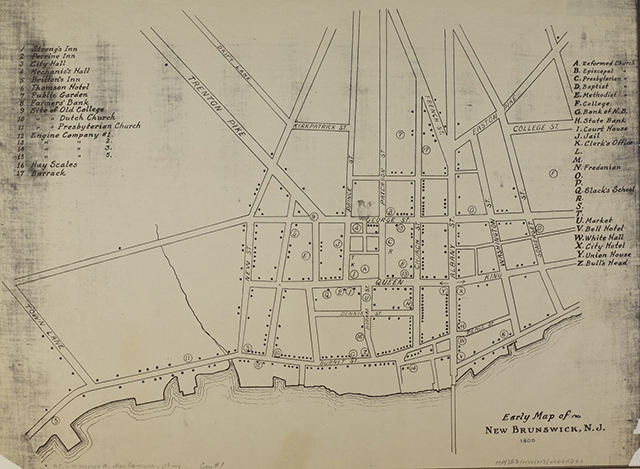
Included in the Rutgers collection are some rare and unique items from Special Collections and University Archives, such as this “Early Map of New Brunswick,” which Francesca Giannetti, digital humanities librarian at Rutgers University Libraries, often uses in her mapping workshops to invite discussion about the similarities and differences with Google Maps, with which familiarity can generally be assumed. The comparison surfaces the ahistoricity of Google’s interface as well as its slightly different prioritization of markers for commercial interests over public institutions and churches. Less frequently noticed is the fact that north is actually to the right in the historical map. Probing the reasons why New Brunswick might have been positioned above the Raritan River can be used as an invitation to examine the motivations and ideological underpinnings behind other cartographic conventions, such as meridians and projections.
The Libraries’ participation in the BTAA Geoportal will help increase exposure to the Rutgers cartographic and GIS collections and open the geospatial door to the state of New Jersey. To better serve their users, the Libraries are gradually updating older JPEG presentation files with IIIF-compatible pyramidal TIFFs.
Special thanks are owed to Karen Majewicz, Melinda Kernik, and members of the BTAA-GIN Metadata Committee for their assistance with data cleanup, the addition of bounding boxes, and IIIF troubleshooting. The metadata and digital library work of many Libraries employees is now visible in the BTAA Geoportal, including that of Rhonda Marker, Isaiah Beard, Chad Mills, Al King, and Sue Oldenburg.
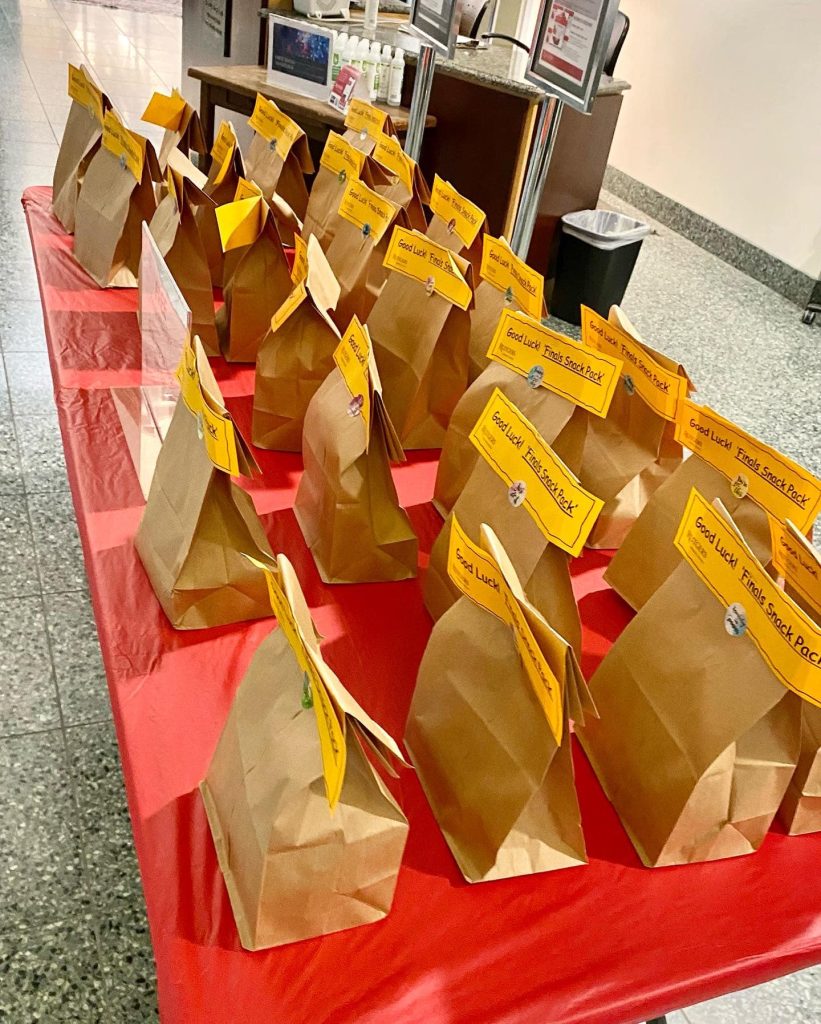
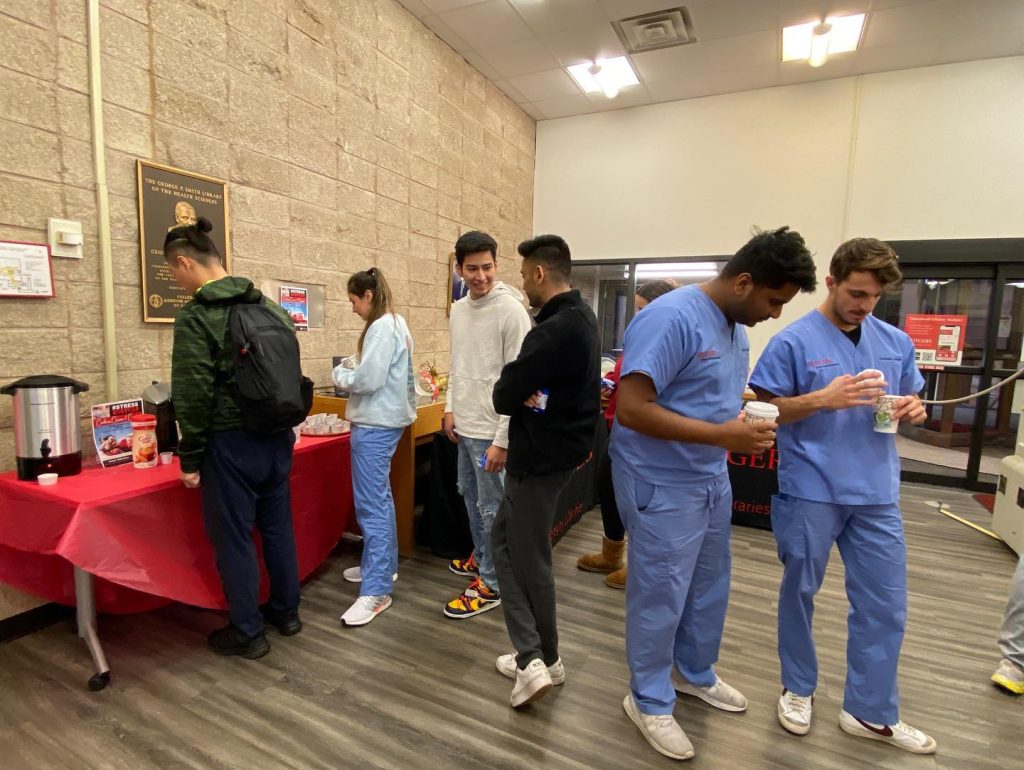
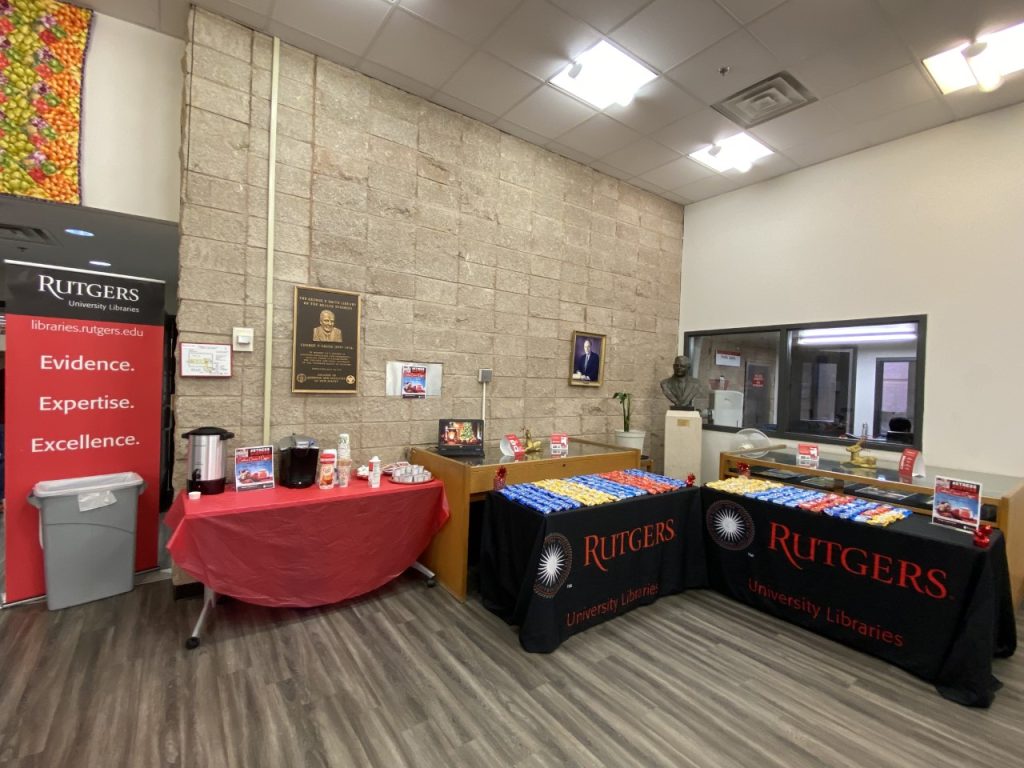
Rutgers University Libraries hosted numerous stressbuster events to help students destress during finals week. Students enjoyed copious free snacks and activities during their study breaks.
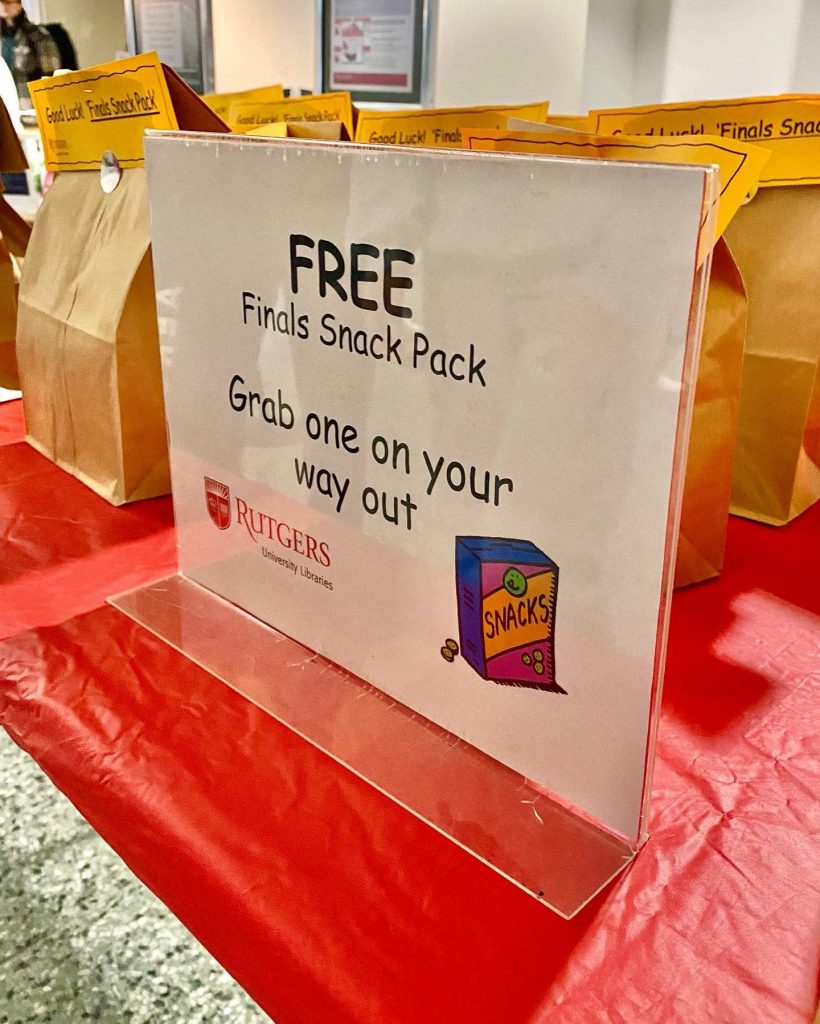
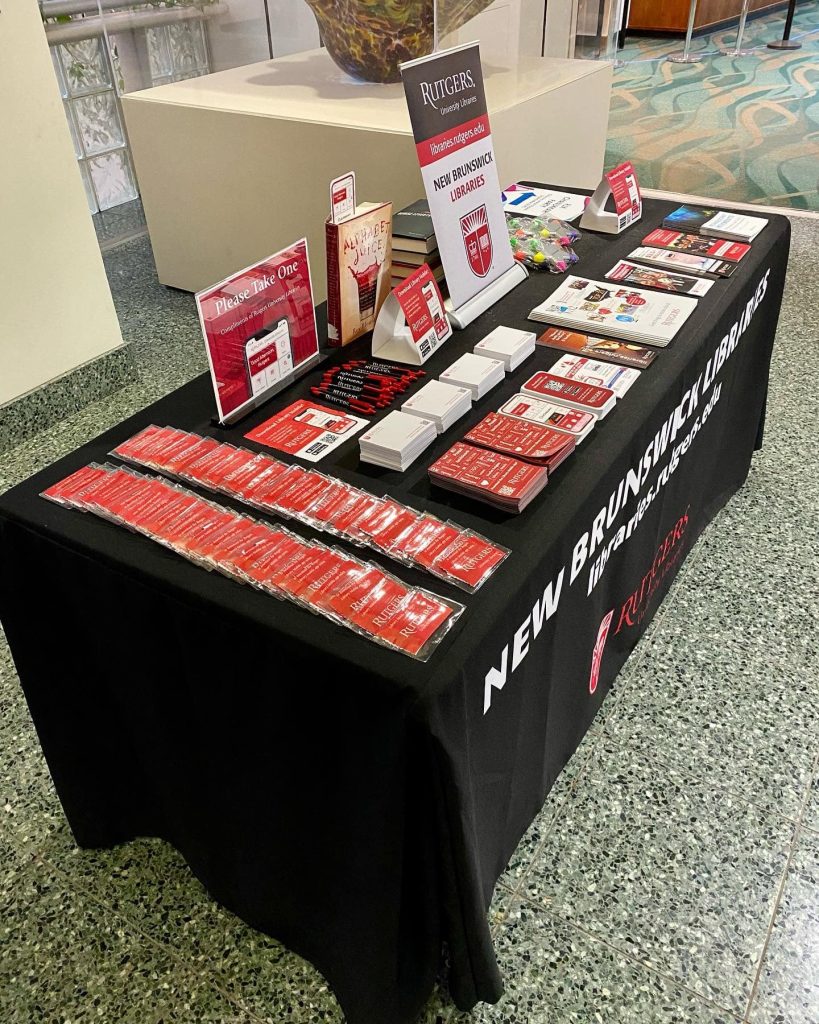
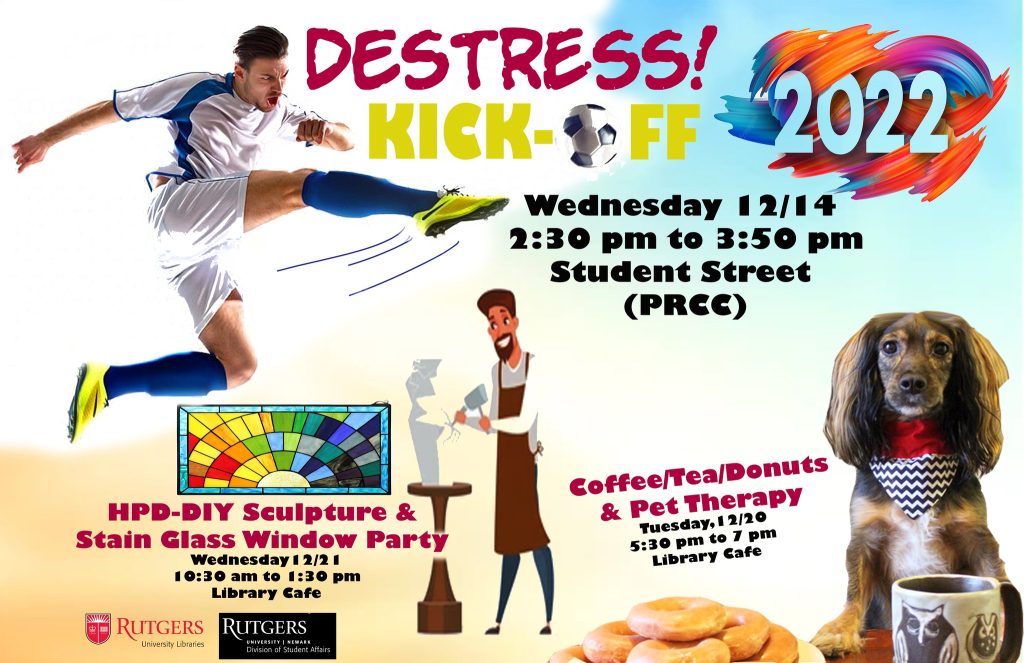
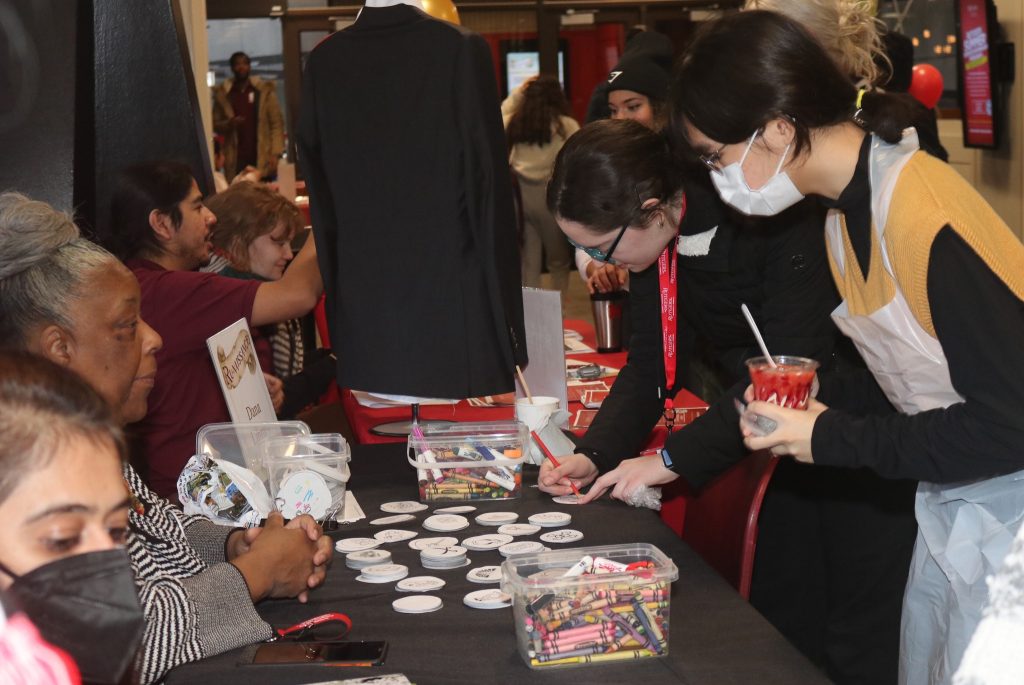
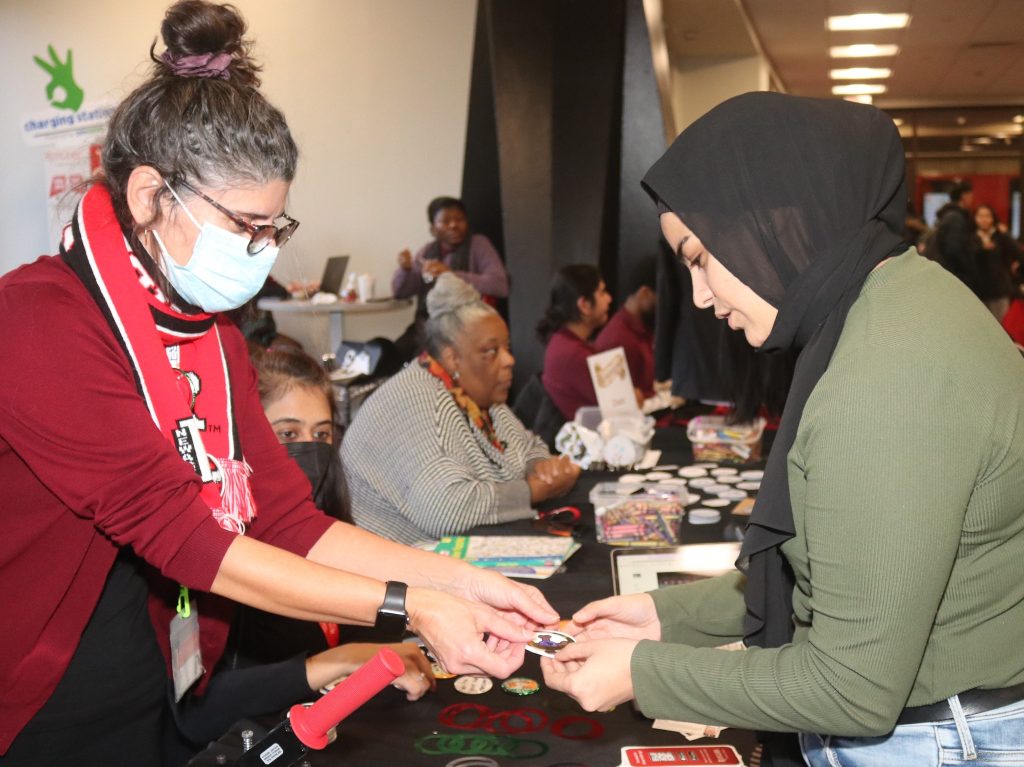
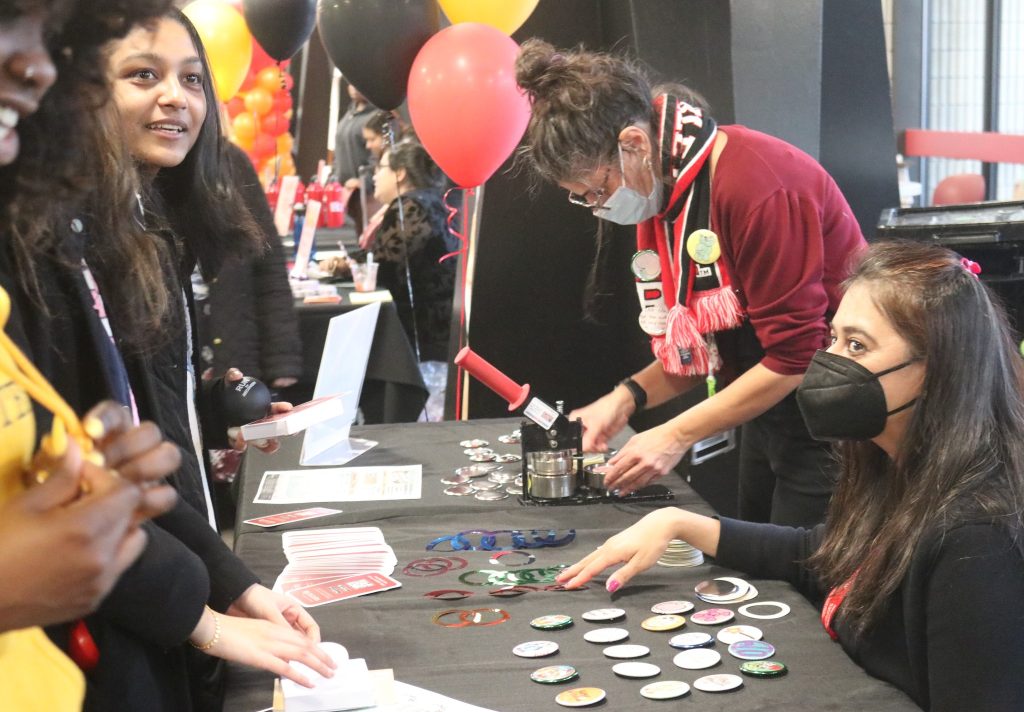
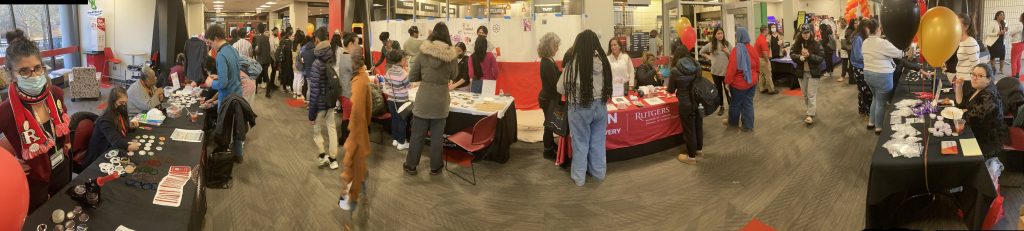
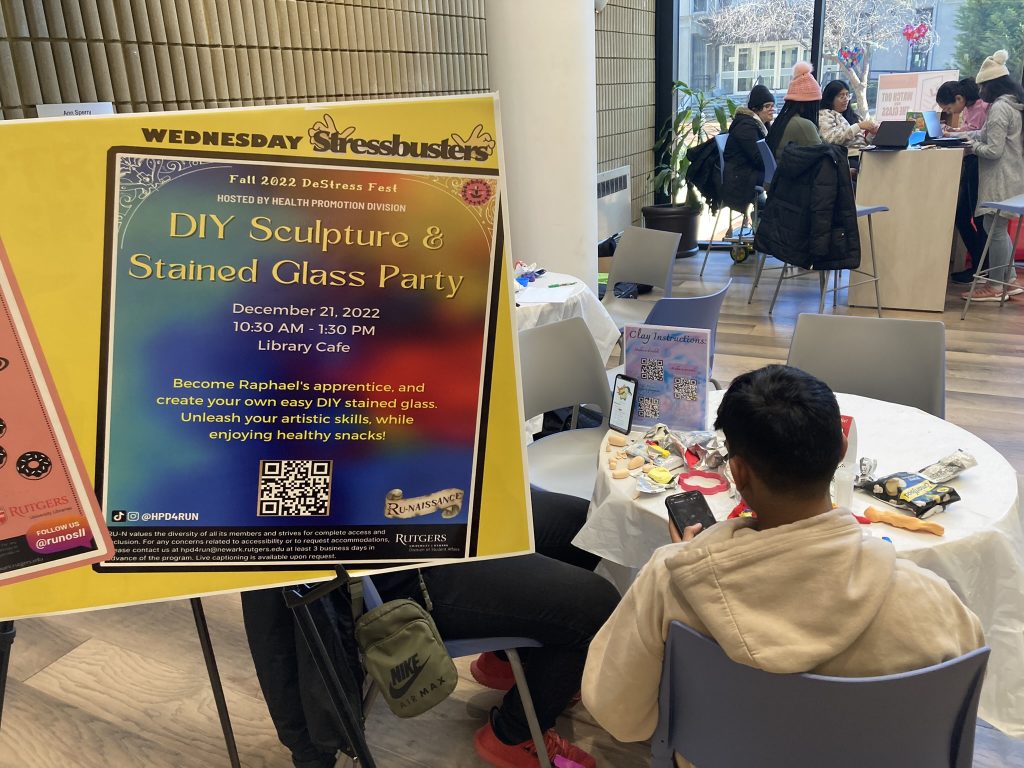
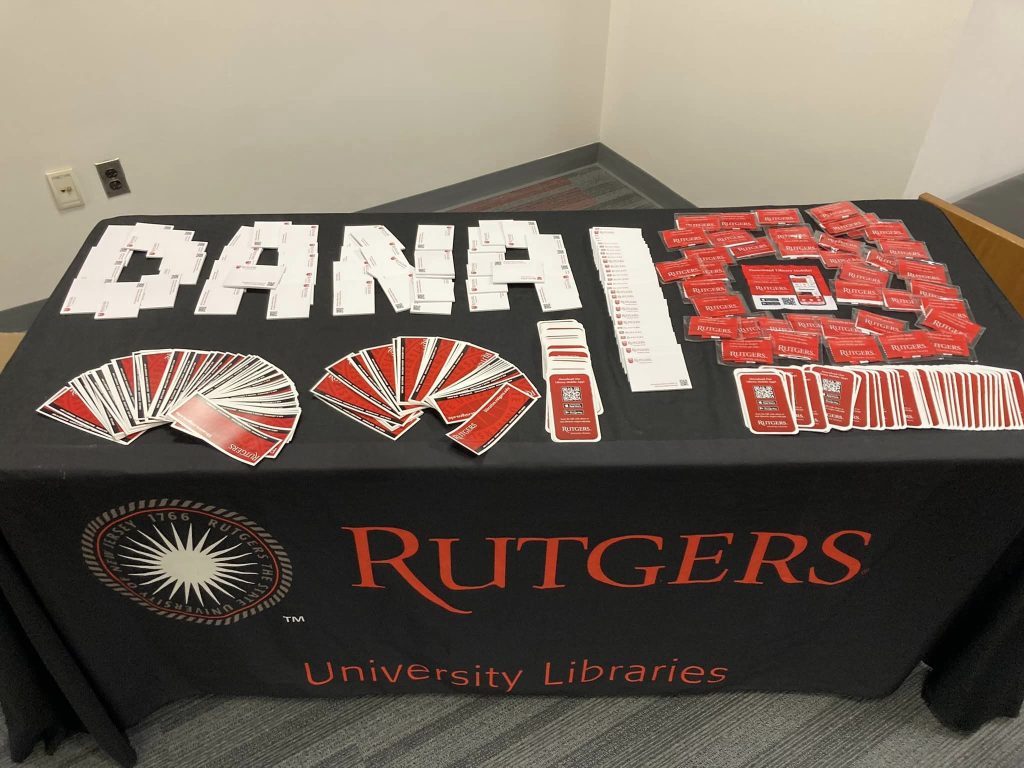
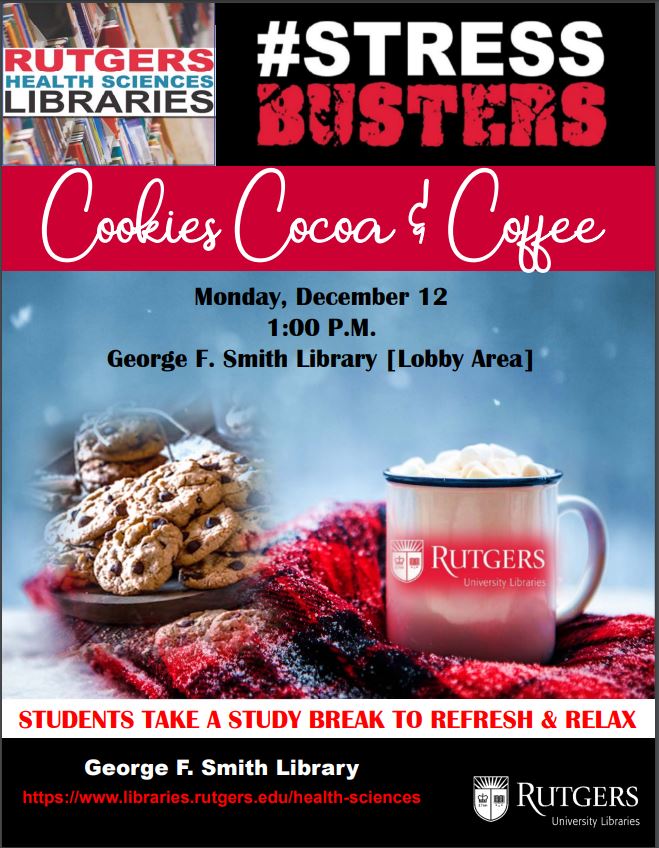
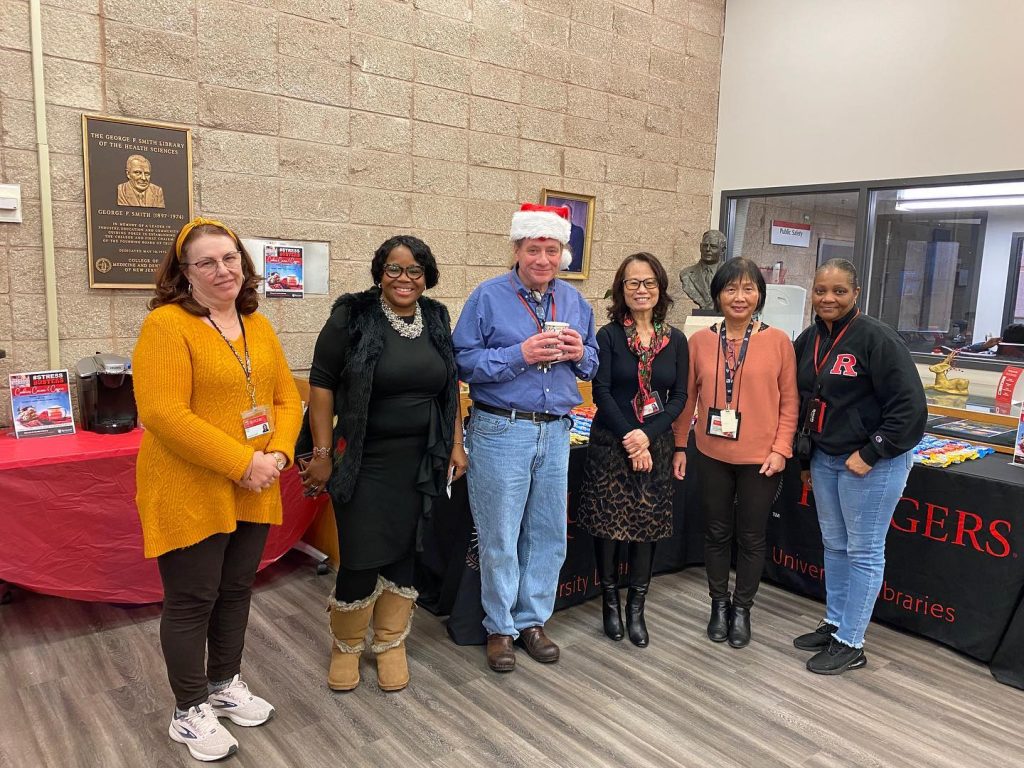
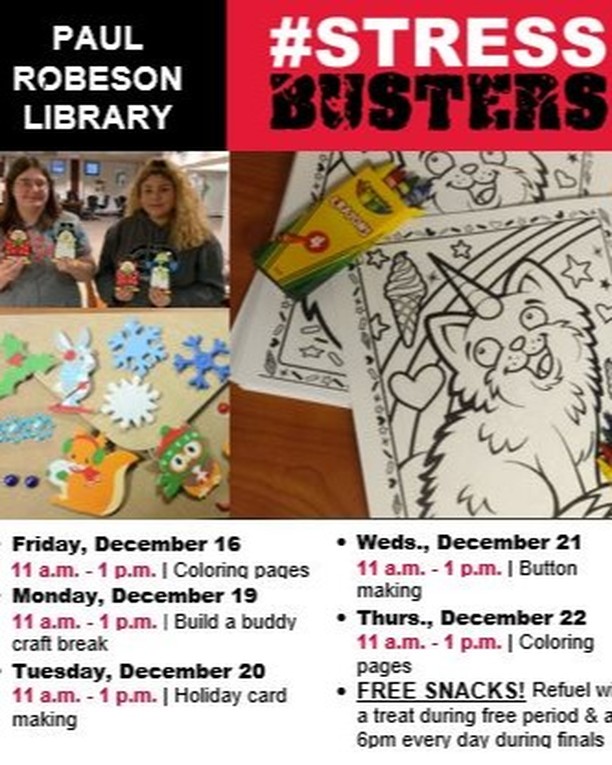
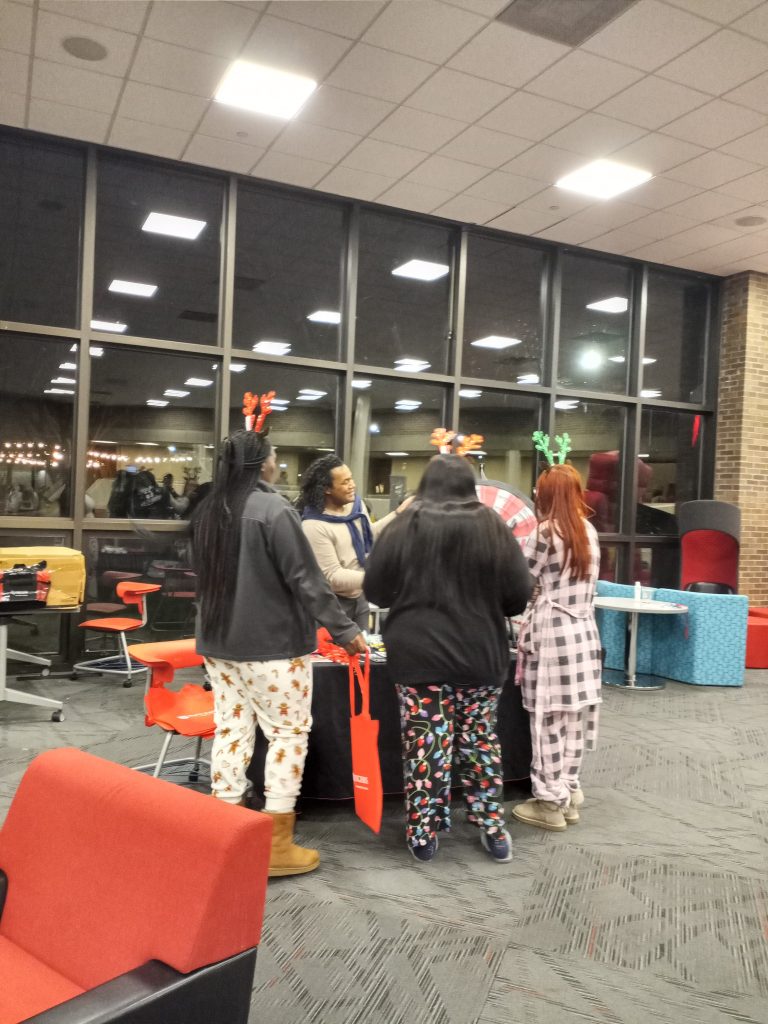
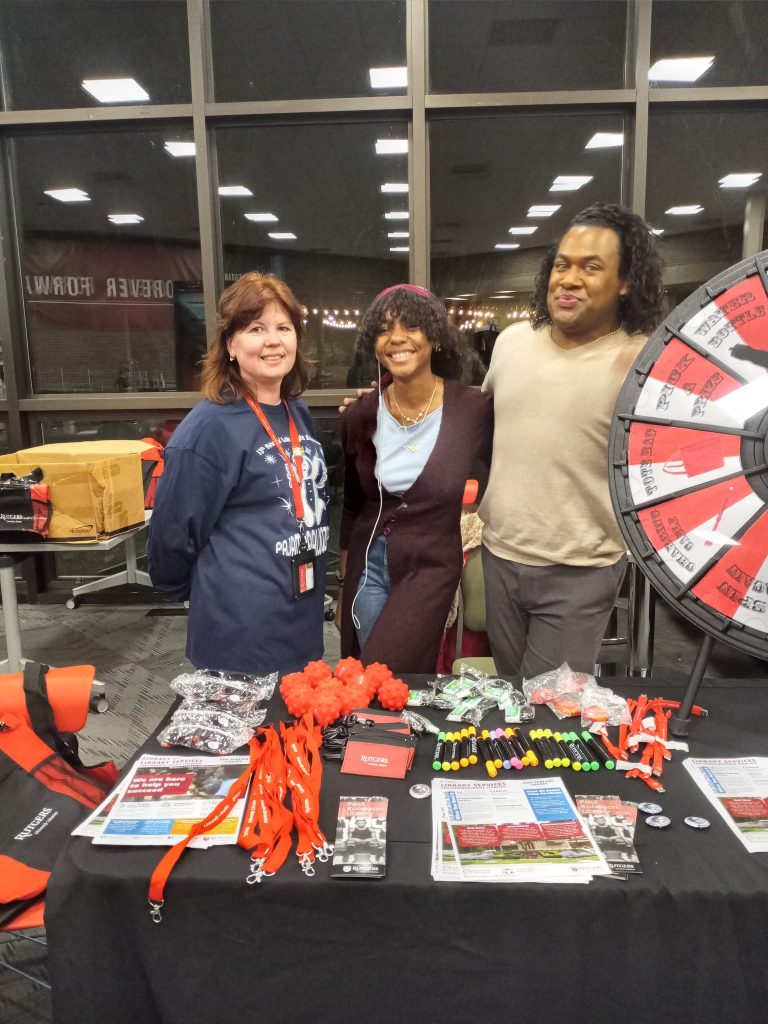
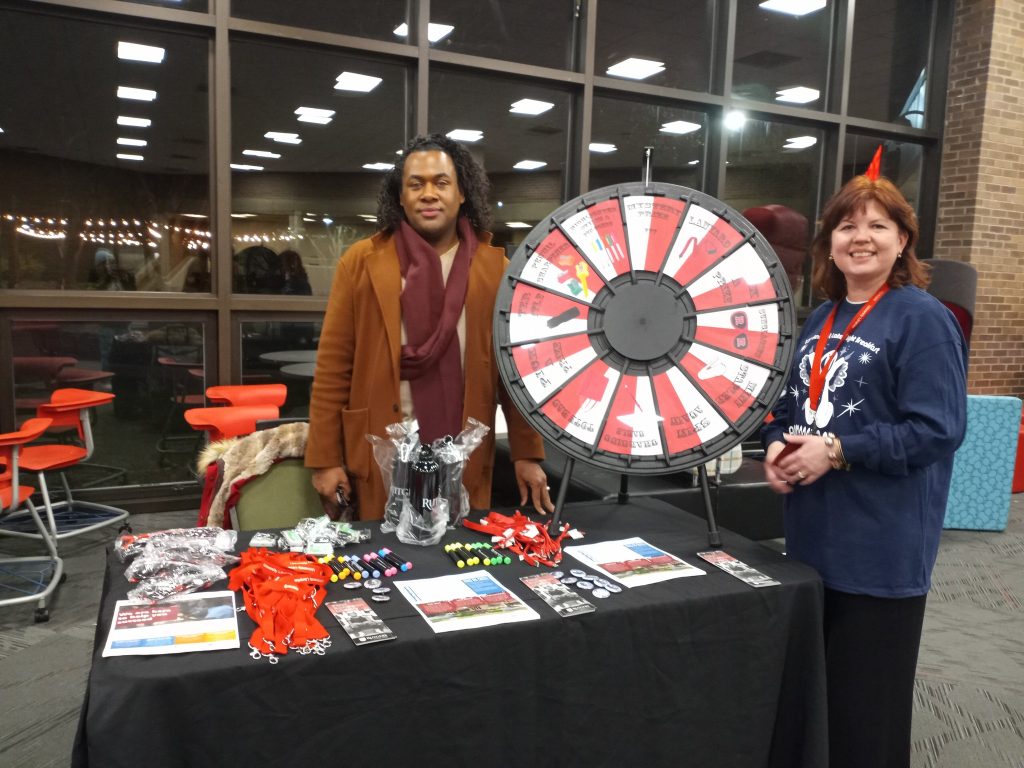
Finals week stressbusters promotional graphic.Bags with delicious treats were given away at Alexander Library throughout finals week.Free snack packs sign.Library Mobile swag on the Alexander Library lobby table during finals week.Dana Library participated in Rutgers–Newark’s annual Destress Fest at the Paul Robeson Campus Center.Students engage with Dana Library staff during RU–N’s Destress Fest.Dana Library staff offered button-making activities at RU–N’s Destress Fest.Dana Library staff make buttons at RU–N’s Destress Fest.A panoramic view of RU–N’s Destress Fest in the Paul Robeson Campus Center.Students gather in the Dana Libary Café for stressbuster activities.Students enjoy stressbuster activities in the Dana Libary Café.Sign for the DIY Sculpture and Stained Glass Party at Dana Library.Library Mobile swag table at Dana Library.Health Sciences Libraries’ “Cookies, Cocoa, and Coffee” stressbuster promotional graphic.Health Sciences Libraries staff await students at the “Cookies, Cocoa, and Coffee” stressbuster at Smith Library.Health Sciences students enjoy the “Cookies, Cocoa, and Coffee” stressbuster at Smith Library.The “Cookies, Cocoa, and Coffee” stressbuster setup.Robeson Library stressbuster ad.Robeson Library’s “Pajamapalooza” stressbuster.
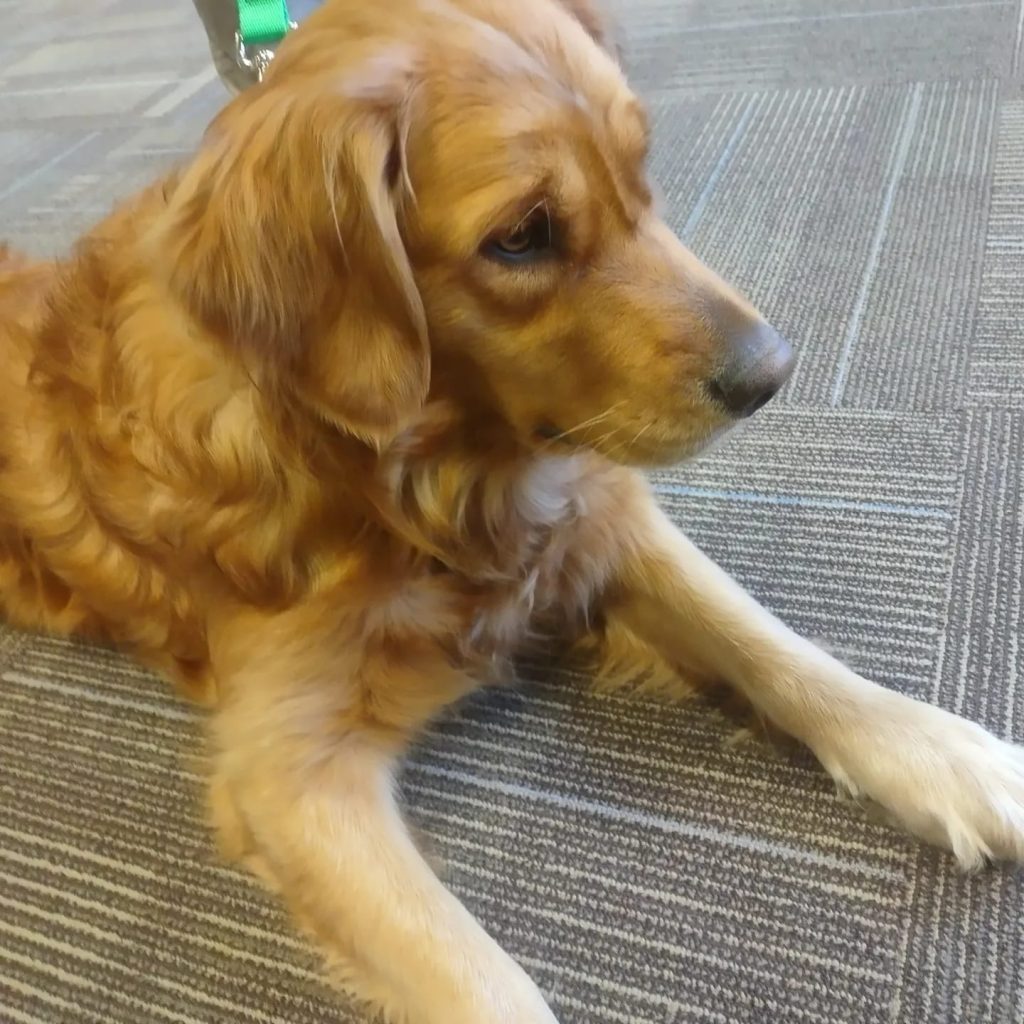
Robeson Library staff at their table for the “Pajamapalooza” stressbuster.Robeson Library staff with the prize wheel at the “Pajamapalooza” stressbuster.Gizmo dresses up as a reindeer during Robeson Library’s “Woof Wednesday” event.Marly helps students destress during Robeson Library’s “Woof Wednesday” event.
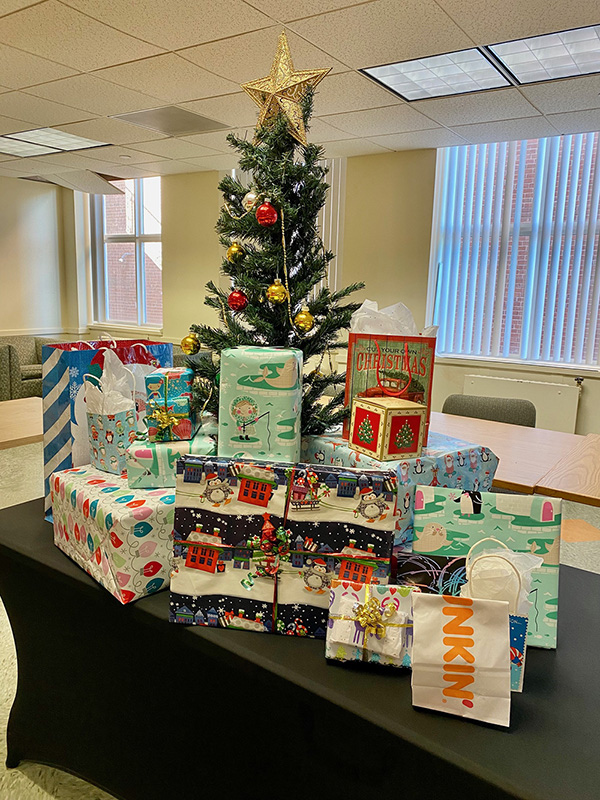
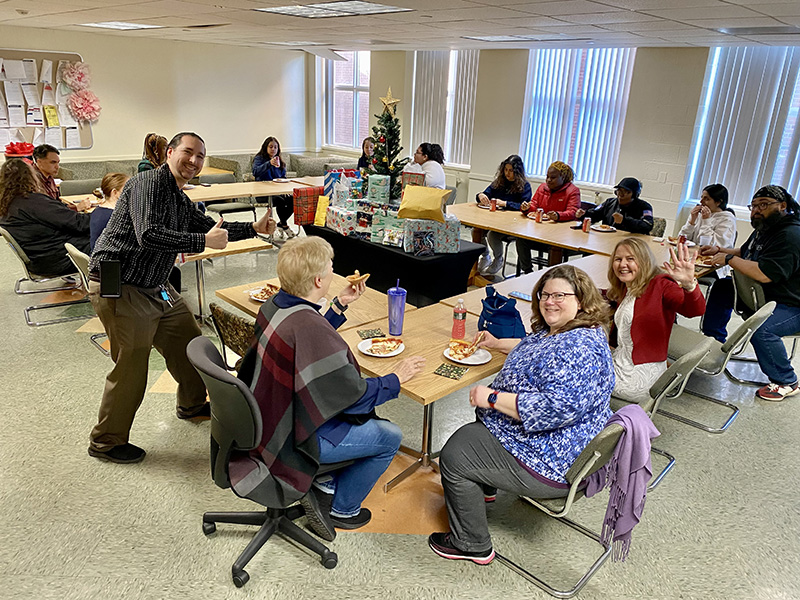
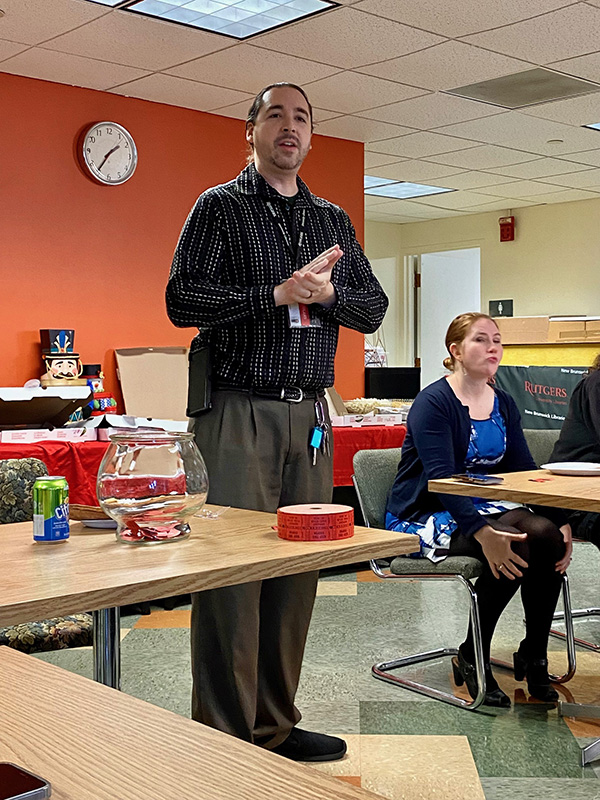
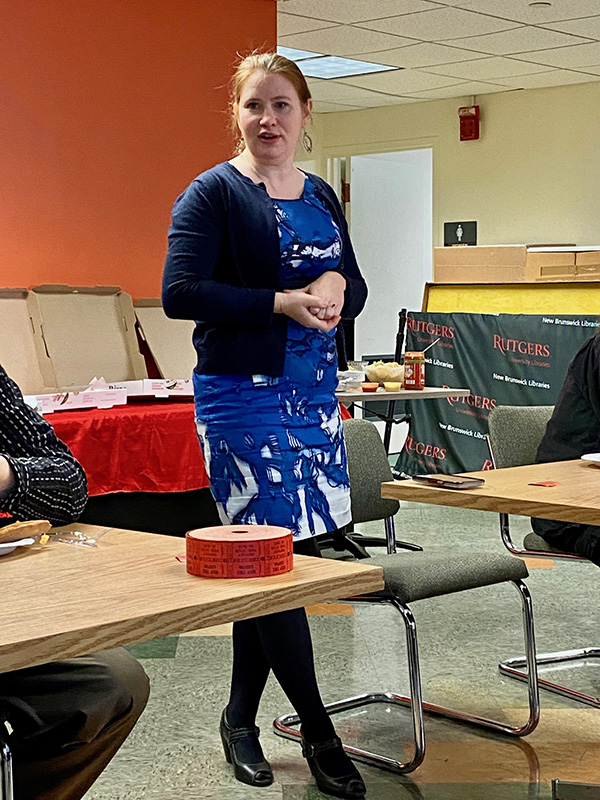
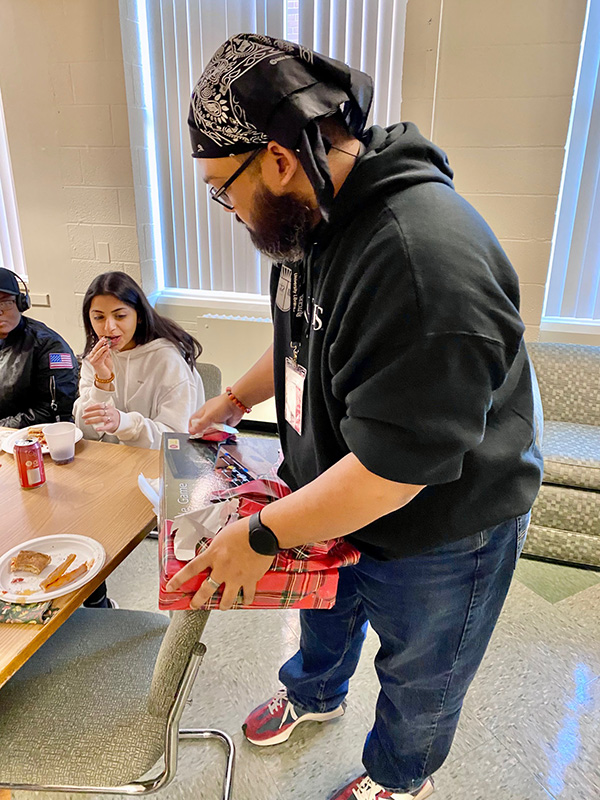
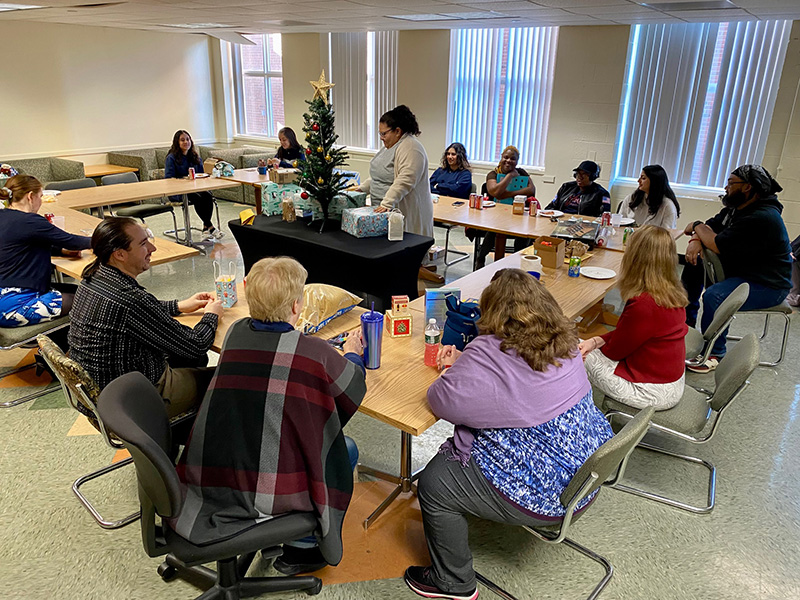
On December 9, the New Brunswick Libraries’ Shipping, Logistics, and IT departments held their annual holiday party and white elephant gift exchange. Guests enjoyed pizza, snacks, refreshments, and dessert in Alexander Library’s break room. The always-entertaining gift exchange featured many amusing and unusual items, encouraging much wheeling, dealing, and stealing. A good time was had by all!
White elephant gifts of many shapes and sizes surround the festive holiday tree.Guests enjoy pizza, snacks, and refreshments before the white elephant gift exchange.Luke Sangiamo, coordinator of shipping and receiving, explains the white elephant gift exchange rules.Elena Schneider, events and program manager, thanks guests for attending the holiday party.Ray George, shipping assistant, unwraps his gift.Guests eagerly await their turn to choose or steal a white elephant gift.
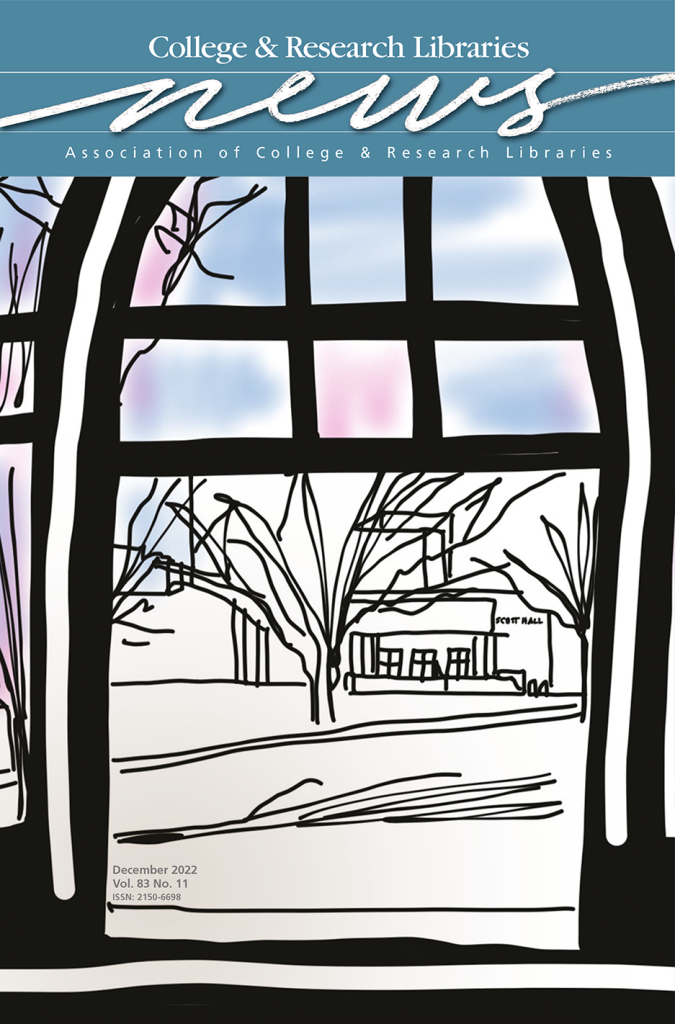
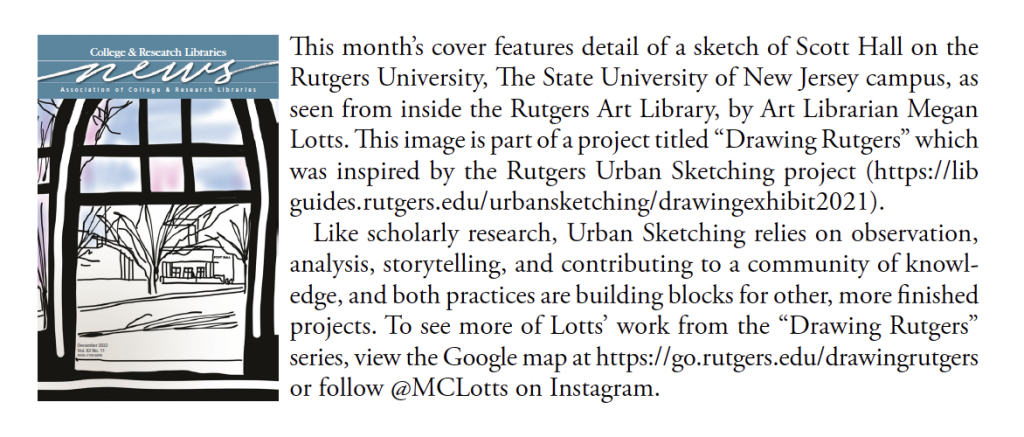
Congratulations to Art Librarian Megan Lotts for having her drawing of Scott Hall (from inside the Art Library) selected for the cover of this month’s C&RL News! Read the newsletter at this link.
Stop by the following NBL locations for finals week/stressbuster events:
Alexander Library
Thursday, December 15, to Friday, December 23
Stop by Alexander Library for a treat during finals week! At various times, Stressbuster Grab n’ Go snack bags will be placed in the lobby (while supplies last).
Art Library
Thursday, December 15, to Friday, December 23
Visit the Art Library during finals week for a Stressbuster Grab n’ Go snack bag (while supplies last).
Carr Library
Thursday, December 15, 3–4 p.m.
Tuesday, December 20, 3–4 p.m.
Visit Carr Library during finals week for Stressbuster Grab N’ Go snack bags (while supplies last).
Chang Library
Thursday, December 15, 11 a.m.
Take a study break at Chang Library and refuel for finals with delicious snacks (while supplies last).
Douglass Library
Thursday, December 15, noon–2 p.m.
Monday, December 19, 10 a.m.–noon
Wednesday, December 21, noon–2 p.m.
Thursday, December 22, 10 a.m.–noon
Stop by Douglass Library for snacks and water bottles (while supplies last).
Math and Physics Library
Thursday, December 15, 1–4 p.m.
Friday, December 16, 1–4 p.m.
Warm up at Math and Physics Library with coffee, cocoa, or apple cider (while supplies last).
LSM
Thursday, December 15, 11 a.m.
Good luck with finals! Stop by LSM for a snack break and games.
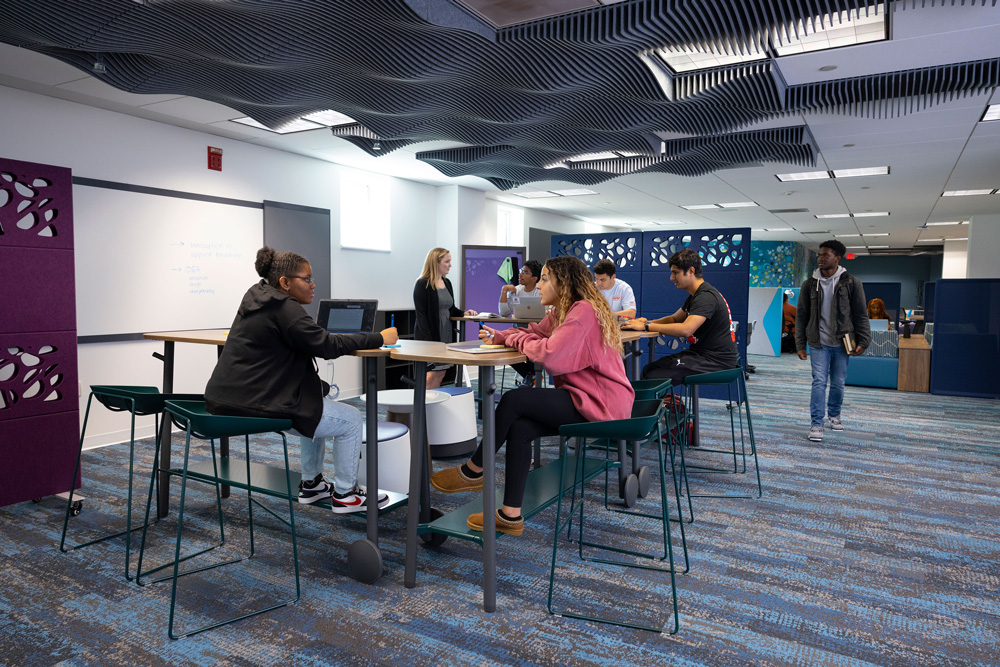
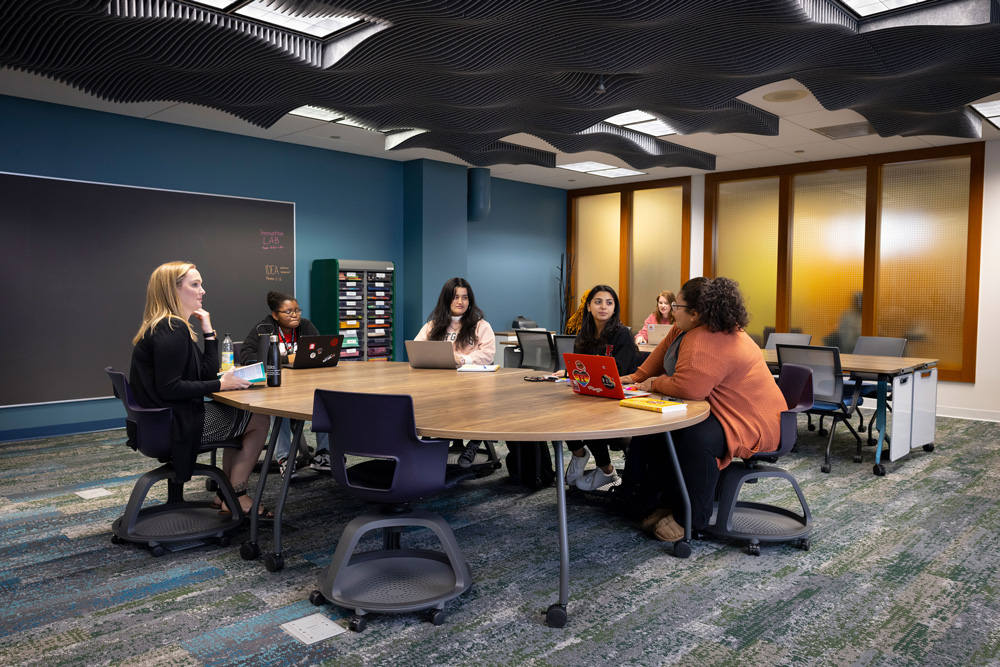
IDEA students discuss a project in the Hatchery’s Learning Bar (Area 10). Photo by John Emerson.
Rutgers University Libraries are proud to announce the opening of the Hatchery Innovation Studio, an innovation and creation center located in Alexander Library on the College Avenue campus. This new library space is the first of its kind at Rutgers and offers students a wide range of flexible, collaborative spaces to work on projects, practice pitches, and explore design and entrepreneurship ecosystems.
The Hatchery provides a stimulating environment where students can ideate; learn from each other, faculty, and industry innovators; and discover passions, challenges, and solutions. The 4,000-square-foot studio can accommodate up to 85 people and features 11 flexible meeting and creative areas; multimedia equipment, including a television, entertainment system, and computers; contemporary, modular furniture; dry-erase boards and art supplies; and a ping pong table.
IDEA students collaborate in the Hatchery’s Hub (Area 1). Photo by John Emerson.
The Hatchery is a strategic partnership between Rutgers–New Brunswick Libraries and Rutgers’ Innovation, Design, and Entrepreneurship Academy (IDEA). The mission of IDEA is to integrate design and entrepreneurial thinking into the student experience. During the program, students participate in research, design challenges, and entrepreneurial thinking, as well as contribute to interdisciplinary projects focused on solving complex societal challenges.
To learn more about the Hatchery and to take a virtual tour, please visit libraries.rutgers.edu/hatchery.
Grand Opening Celebration
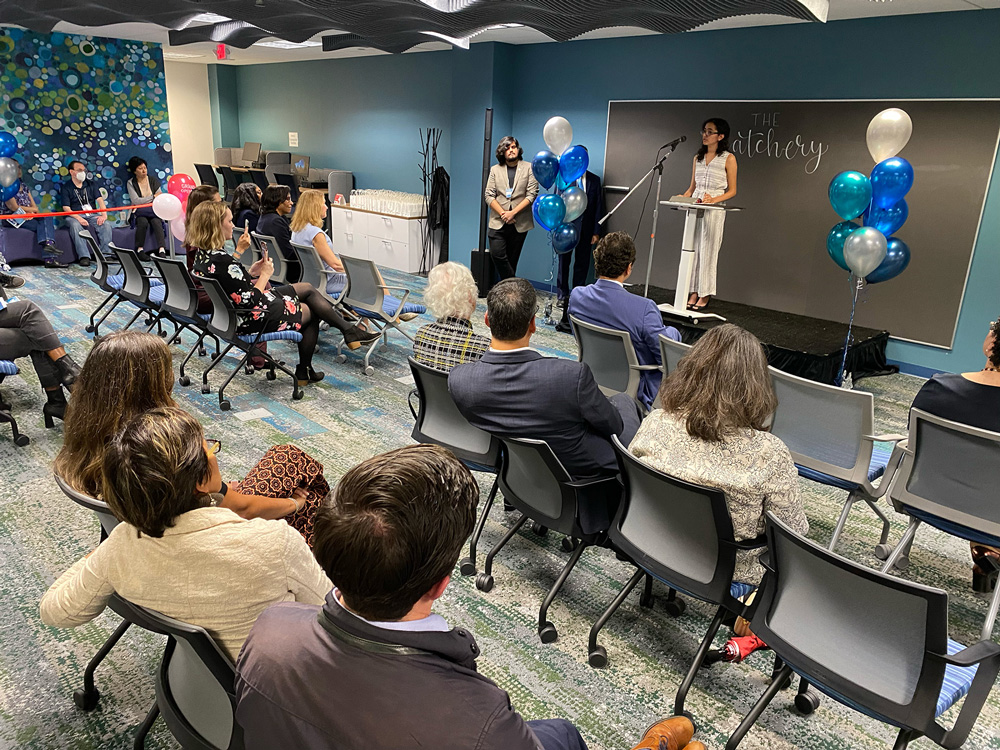
On October 25, 2022, the Libraries celebrated the Hatchery’s grand opening with more than 60 guests. IDEA staff provided tours of the space, and IDEA students offered live project demonstrations.
Rutgers officers, staff, and faculty cut the ceremonial ribbon at the Hatchery’s grand opening celebration. Pictured from left: Abby Kucks, IDEA Program Coordinator; Veronica Armour, IDEA Director; Prabhas Moghe; Dee Magnoni; Francine Conway; Sunita Kramer, former Associate Vice President for Research and Experiential Education; Saundra Tomlinson-Clarke, Senior Vice Provost for Academic and Faculty Affairs; and Consuella Askew.
Consuella Askew, Vice President for University Libraries and University Librarian, delivered welcome remarks, together with Prabhas Moghe, Executive Vice President for Academic Affairs; Francine Conway, Chancellor-Provost of Rutgers–New Brunswick; and Dee Magnoni, Associate University Librarian at Rutgers–New Brunswick Libraries. Three IDEA students—Fauzan Amjad ’24, Kritika Singh ’24, and Scott Rubin ’24—shared their experiences about the Hatchery and the IDEA program.
Consuella Askew.
“The Hatchery is a unique space that developed from a partnership between the Rutgers University Libraries, Rutgers University Leadership, and IDEA,” Askew said. “It provides a dynamic environment serving as a third space for our students to connect with our library and disciplinary faculty members, and our community members, to engage in the innovation process.”
Askew noted, “The Hatchery would not have been possible without the generosity and support from University Academic Affairs and Rutgers–New Brunswick. I thank Prabhas and Francine for their ongoing contributions and advocacy of this unprecedented space and the Libraries.”
Prabhas Moghe.
Moghe recounted the history of the Hatchery’s development and expressed his excitement for the new space and its potential for innovation.
Francine Conway.
Conway discussed the Hatchery’s role within the university: “The Hatchery is directly aligned with Rutgers–New Brunswick’s Academic Master Plan in its vision of bringing students together from diverse schools and disciplines for valuable, hands-on problem-solving.” She added, “I am excited for this partnership that will help students unlock new skills, explore the subjects that most deeply interest them, and build valuable experience that will propel them into the future.”
Dee Magnoni.
Magnoni expressed her gratitude to the university and the IDEA community: “The Hatchery is an innovation space that began with a conversation, took shape through a design process with IDEA students and staff, teaching faculty, and Division of Continuing Studies personnel. Consuella Askew provided the runway to proceed, Prabhas Moghe championed the effort, and Fran Conway supplied the scaffolding for our future success with the Rutgers–New Brunswick Academic Master Plan. Cheers to our tremendous collaborators, supporters, and partners!”
Veronica Armour, Director of IDEA, said, “We are excited for this partnership—IDEA is a first-year program that provides space for students to explore the innovation process by thinking about what problems they would like to solve. There is no better place for us to be situated than in the library to be able to build this community of student scholars, faculty, and industry mentors towards the discovery and exploration of interesting ideas.”
IDEA students gave presentations at the Hatchery’s grand opening.
Prabhas Moghe, Dee Magnoni, and Mukesh Patel, Assistant Professor of Professional Practice at Rutgers and Director of the Collaborative for Tech Entrepreneurship & Commercialization (CTEC), RSVP and Innovation Lab, with IDEA students in the Hatchery.Abby Kucks, Dee Magnoni, Sunita Kramer, and Veronica Armour at the Hatchery entrance.
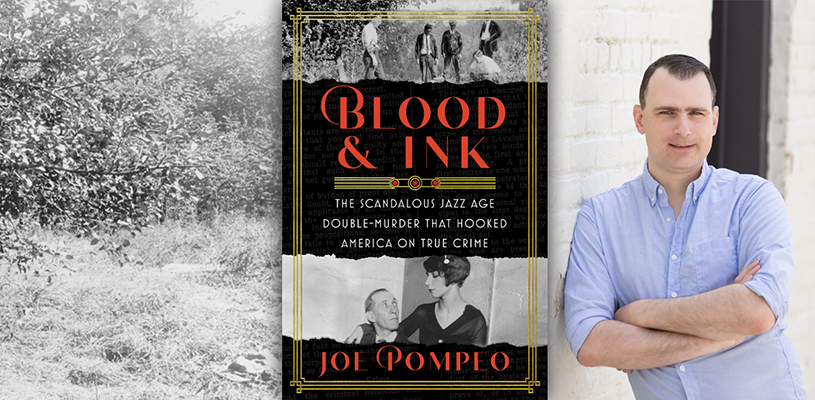
Blood & Ink explores the slayings of star-crossed New Jersey lovers and how the century-old cold case fed America’s obsession with true crime stories. While conducting his research for the book, Pompeo relied heavily on Special Collections and University Archives (SC/UA), which he says houses the definitive academic archive on the murders. Pompeo used SC/UA’s Hall-Mills Collection, Wallace Conover Papers, and Stevens family letters. This presentation forms part of SC/UA’s Research Salon series, which features researchers who have used SC/UA’s resources in their work. The series is co-sponsored by the New Jersey Studies Academic Alliance.
Blood & Ink was published by William Morrow in September 2022, marking the 100th anniversary of the double murder of Reverend Edward Hall, rector of St. John the Evangelist Episcopal Church in New Brunswick, and Eleanor Mills, a singer in the church choir. The couple was reputedly having a scandalous affair, and their bodies were discovered artfully posed on a notorious lover’s lane on the border of New Brunswick and Somerset. Edward Hall’s wife, Frances, who was related to the wealthy Johnson family, and Eleanor Mills’ husband, Jim, were early suspects in the case. The bungled investigation by the police took years and failed to bring the criminals to justice. The trial featured eccentric characters such as Jane Gibson, a pig farmer who came forward with a purported eyewitness account of the murder and, at one point, testified from a stretcher brought into the courtroom. As well as investigating the fascinating details of the case, Pompeo shows how the rise of New York tabloid journalism and the resulting wars between papers of the 1920s kept the story alive. In an epilogue, Pompeo suggests his own theories on the still-unsolved case.
Over the years, many authors have tried to solve the case, including famed attorney William Kunstler, whose The Minister and the Choir Singer: The Hall-Mills Murder Case (1964) attributed the murders to the Ku Klux Klan. Another theory was offered by former dean Mary S. Hartman, who lived in Frances Hall’s house, now the residence of the Douglass Dean, in “The Hall-Mills Murder Case: The Most Fascinating Un-solved Homicide in America,” The Journal of the Rutgers University Libraries, 1984. The case has also inspired novels and plays, most recently Thou Shall Not, performed at St. John the Evangelist Church by Thinkery & Verse. Blood & Ink is unique in placing the case in the context of the rise of tabloid journalism and the popularity of true crime in the 1920s.
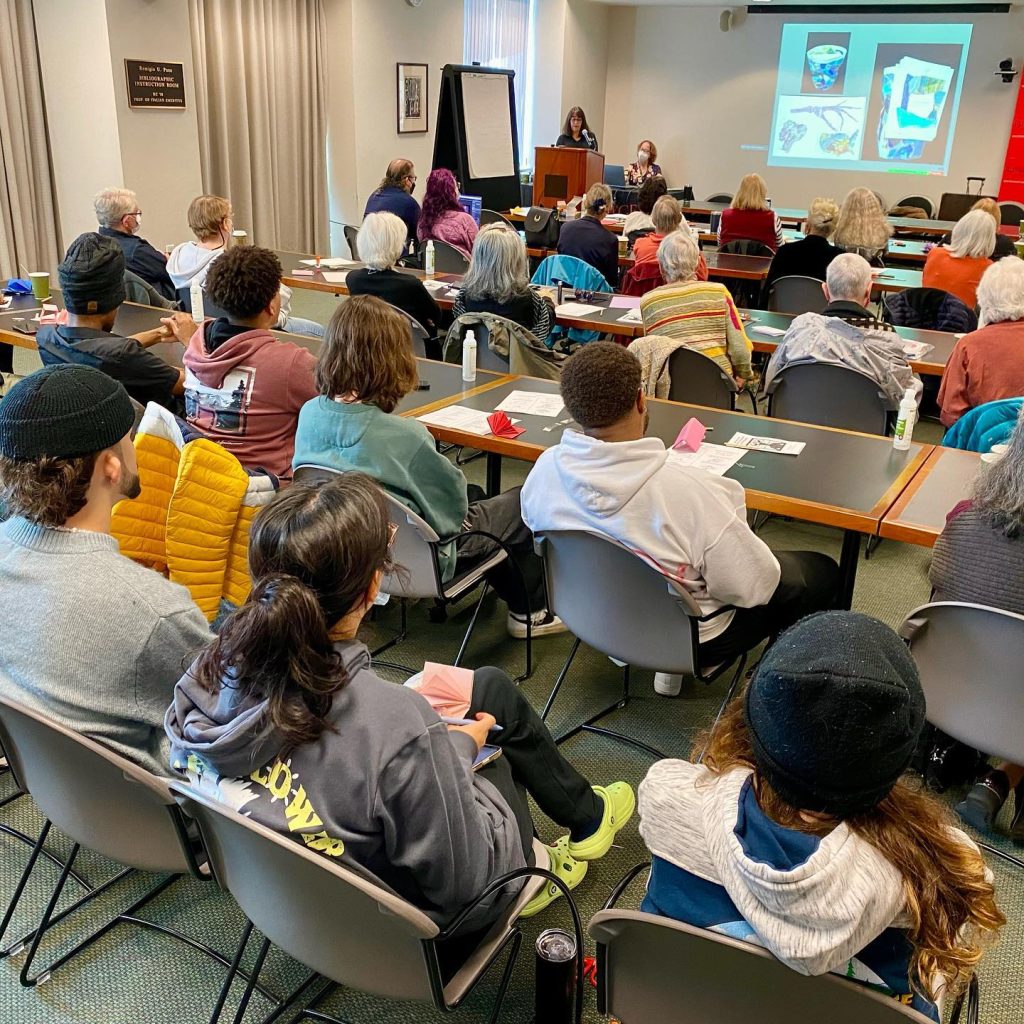
Symposium attendees enjoy Sandra Fernández’s artist presentation.
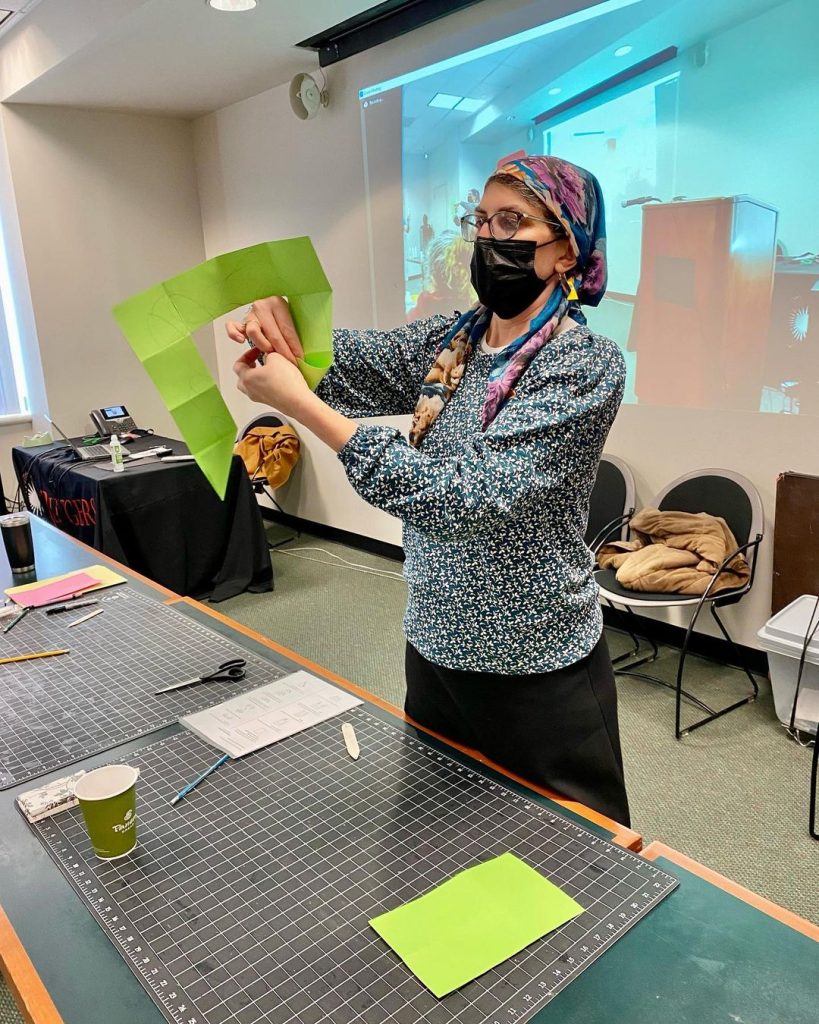
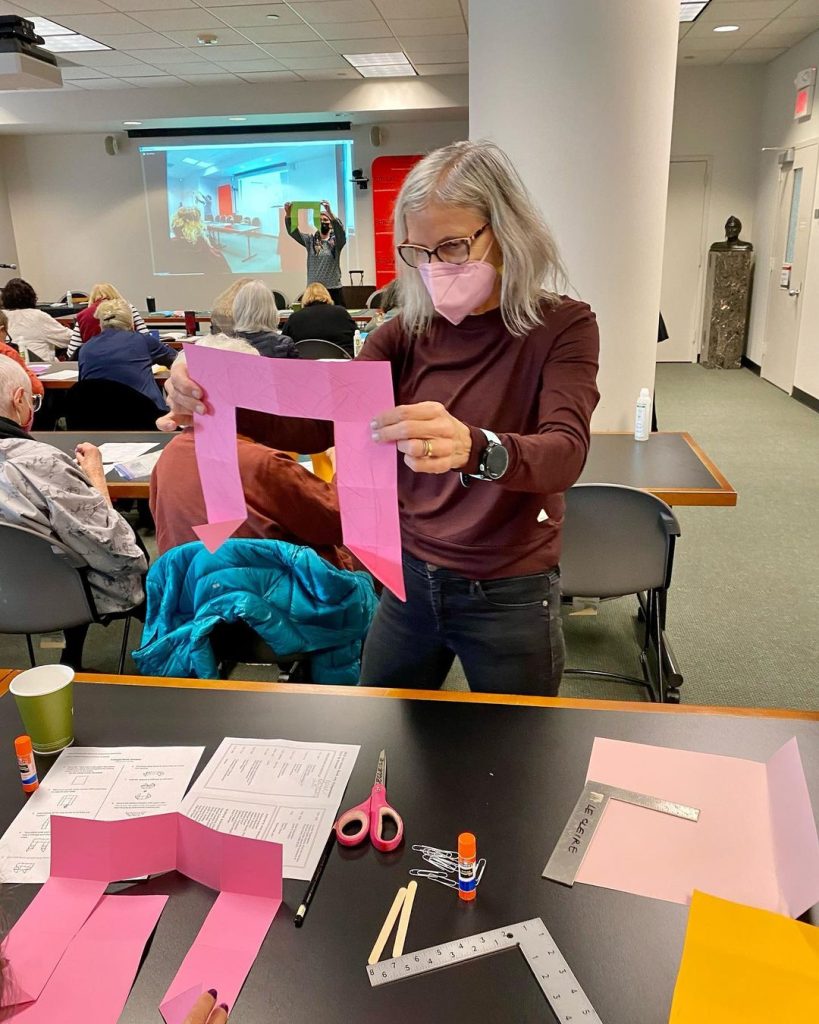
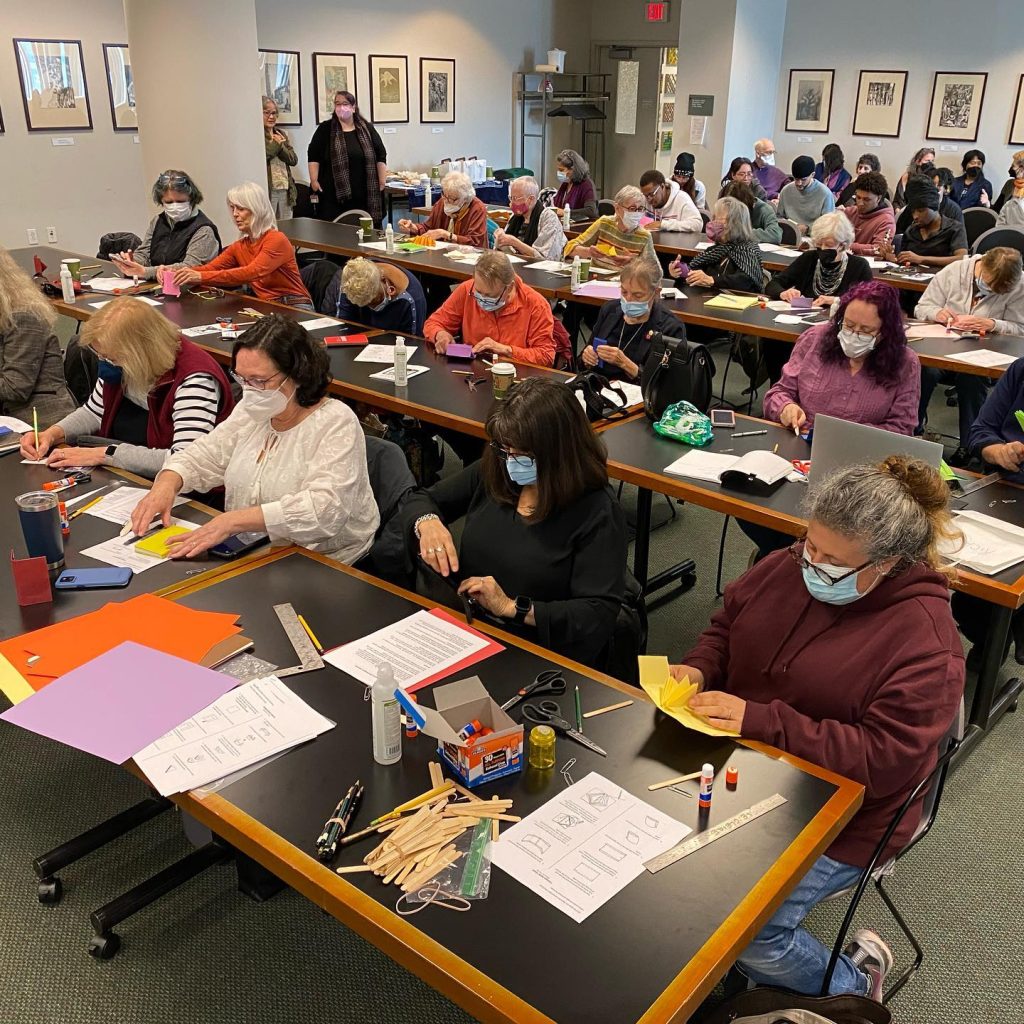
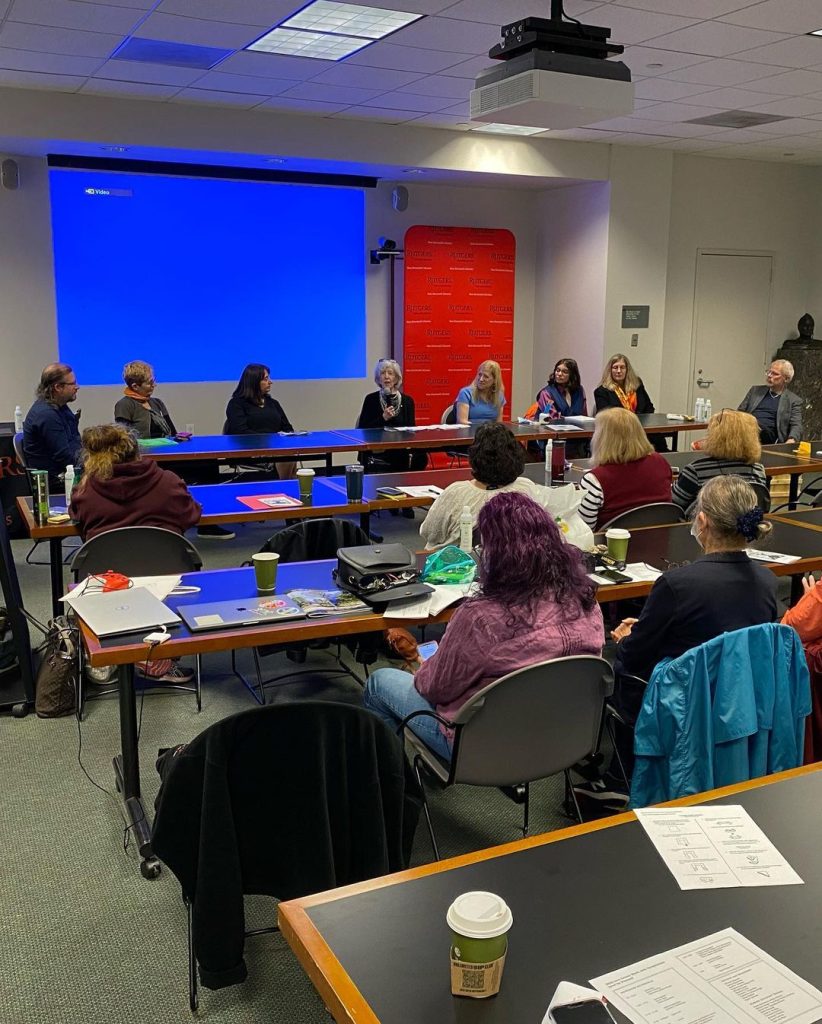
Special Collections and University Archives (SC/UA) hosted the 28th Annual New Jersey Book Arts Symposium (NJBAS) on November 4. The free event drew a capacity crowd in Alexander Library’s Pane Room and featured a workshop, artist presentations, and a panel discussion conducted by notable artists, curators, historians, and technologists. The program included:
To learn more about the NJBAS, please visit exhibits.libraries.rutgers.edu/nj-book-arts. Grant funding for the New Jersey Book Arts Symposium was provided by the Middlesex County Board of County Commissioners through a grant award from the Middlesex County Cultural and Arts Trust Fund. The NJBAS Advisory Board members are Karen Guancione, artistic director; Michael Joseph, founding director; Sonia Yaco, executive director; Martin Antonetti; Judith K. Brodsky; Fernanda Perrone; Amanda Thackray; Suzie Tuchman, and Kate Van Riper.
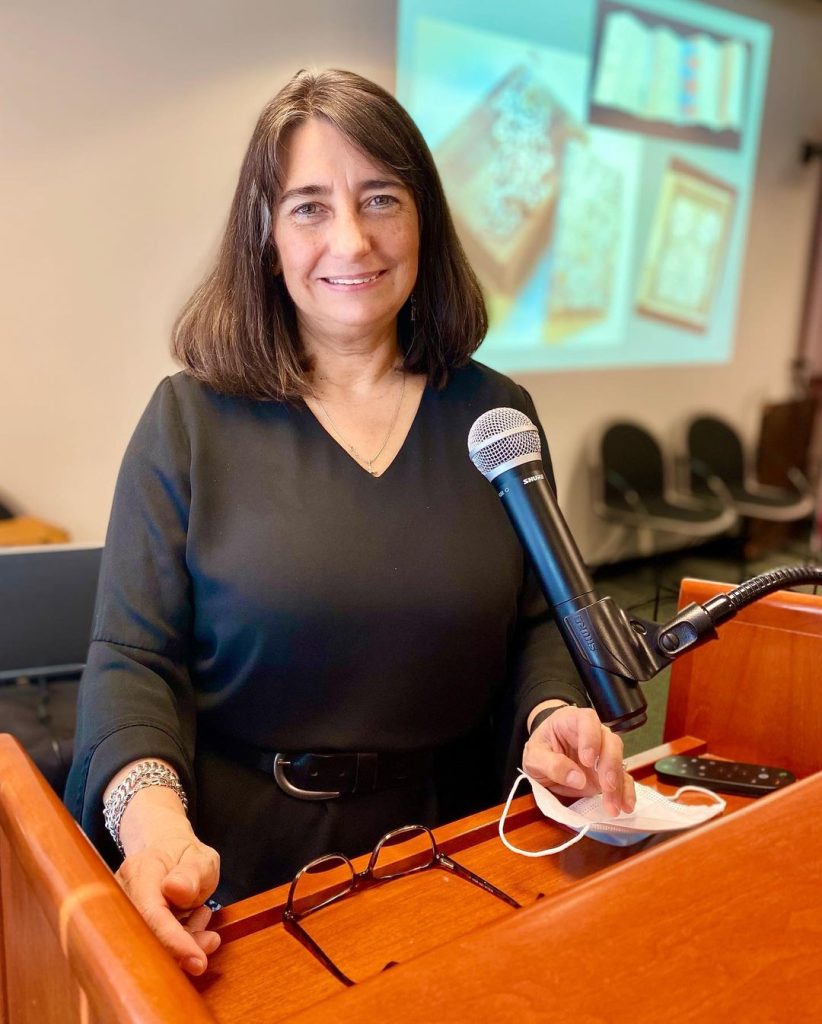
Suzie Tuchman conducts the triangle bookmaking workshop.Catherine LeCleire Wright shows symposium attendees how to create a triangle book.NJBAS attendees make triangle books during the workshop.Artist Sandra C. Fernández delivered a moving presentation about her life and work. Fernández is an Ecuadorian American artist currently living in New Jersey. Her work is rooted in the transborder experiences of exile, dislocation, relocation, memory, and self-conscious identity construction/reconstruction.Béatrice Coron, a renowned paper-cutting artist, and Rick Anderson, Director of Virtual Worlds at Rutgers, are collaborating on The Identity Project, an experiment both in form and content using technology to create an interactive artist book. This collaboration allows words and images to interact and behave in new and exciting ways. The Identity Project is presented by SC/UA. Learn more about the project at go.rutgers.edu/coron.Amee Pollack is a mixed-media and book artist and Senior Advisor and Student Success Counselor in the Department of Art & Design at the Mason Gross School of the Arts. She spoke about her art, which includes three-dimensional, fold-out book sculptures she had created with her artistic partner and close friend, Laurie Spitz, who passed away in 2017. Works by Spitz & Pollack, as their collaboration was known, are in the permanent collections of over 50 organizations, including the Brooklyn Museum, Cooper Hewitt Smithsonian Design Museum, New York Public Library Print Collection, and Yale University. Read more at masongross.rutgers.edu/why-i-made-this-amee-pollack and ameejpollack.com.Featured artist and historian Javiera Barrientos presented “A Personal Catalogue: Bookwork in Contemporary Latin America” and highlighted works by Carlos Oquendo, Maria Lucia Cattani, Francisca Prieto, Isol, Javiera Pintocanales, and Mariana Tocornal.During her curator presentation, Virginia Fabbri Butera interviewed Michael Cooper about the late Rocco Scary’s bookwork. Rocco Scary (1960–2022) was a multidisciplinary artist whose work on paper, in sculpture, and with artist books explored the concept of the identifiers or “triggers” for memory. To learn more about Scary, please visit roccoscary.com. Butera is the director of the Therese A. Maloney Art Gallery. She is also chairperson of the art, dance, and music program and a tenured professor of art history at @saintelizabethuniversity. Cooper is the creative director at Altech Corporation and principal of Cooper Graphics and Cooper Art Works LLC. He has over 40 years of fine art and commercial art experience.NJBAS executive director Sonia Yaco (left) and noted artist and art educator Judith K. Brodsky. Brodsky led the engaging panel discussion that concluded the New Jersey Book Arts Symposium. The lively discussion offered attendees an opportunity to hear more from the guest artists and ask questions. Brodsky highlighted the commonalities between the topics, including technology, social issues, and a sense of play, and encouraged the artists to share their thoughts and processes and talk about the future of books and bookmaking. Brodsky is a Distinguished Professor Emerita in the Mason Gross School of the Arts Department of Visual Arts and the Founding Director of the Rutgers Center for Innovative Print and Paper, which was renamed the Brodsky Center in her honor in 2006 (now The Brodsky Center at PAFA).Panel discussion with the NJBAS’ guest speakers.From left: Karen Guancione, Sandra Fernández, and Sonia Yaco. Guancione is the NJBAS’ artistic director. She creates a vision of the symposium each year and moderates the event. Michael Joseph (below) is the founding director of the NJBAS. He and Karen guide the selection of the artists and help to shape the event. As executive director, Yaco coordinates the event, secures funding, and with Karen and Michael, connects with the New Jersey book arts community.Michael Joseph, founding director of the NJBAS.