Category: Rutgers University–New Brunswick

Faculty and staff news from the libraries at Rutgers University-New Brunswick.

  • Ex Libris Implementation Project Update – January 2019

    quicksearch logoAs we move into spring semester, the Ex Libris Implementation Team is working towards optimizing our workflows and resolving remaining issues in the systems. We passed a major milestone in December with the end of our subscription to Symphony. Integrated Information Systems (IIS) has archived our data and will make it available on request. The Ex Libris Fulfillment Team has also transformed in the New Year and will continue in a new form as the Fulfillment Working Group, addressing central coordination for systems and processes for access services. The Ex Libris Implementation Team moved to a new schedule and will be meeting every other week during spring semester as we address the remaining implementation issues. Some other updates from our work include:

    Updates to QuickSearch

    We made several updates to QuickSearch in early January based on feedback from user testing and from system enhancements provided by Ex Libris. These updates include direct linking through Get it @ R, increased clarity in the display of some menus and options, and search improvements.

    Six-Month Health Check

    Megan Drake, a representative from Ex Libris, visited onsite in January to review workflows and address system issues. Representatives from each working group brought lingering problems for review and Megan suggested alternative strategies and optimizations that will help improve efficiency in Alma.

    Analytics Training for Selectors

    We held our first analytics training session for selectors on January 7. This active training session focused on learning the analytics platform and testing queries related to circulation and fund information. Future sessions are planned for 1–3 p.m. on January 17 and January 22 in New Brunswick and via WebEx and 9–11 a.m. on January 18 in Newark. Prior registration is not necessary, but if you have questions, please contact Laura Costello.

    Ex Libris Identity Service

    At the end of January, Ex Libris will debut an identity management service that will improve security for our barcode and password users. New security standards will ensure better privacy protection and users will be able to change their own password and retrieve a lost password via “My Account.” This update will not impact our users that authenticate via NetID.

  • Introducing Browzine

    Rutgers University Libraries are pleased to introduce BrowZine, a current awareness tool that allows users to find, read, and monitor the top scholarly journals in their field from almost any device.

    BrowZine improves discovery of current issues of academic journals and provides streamlined access to full-text via PC, tablet, or smartphone. It also offers useful personalization features so users can keep current with their favorite publications.

    BrowZine users can:

    • Browse thousands of top academic journals by subject, title or ISSN; review current tables of contents, and download full-text articles published since 2005
    • Follow and receive new article notifications for their favorite journals by creating a personal bookshelf
    • Save and export articles to services such as DropBox, Mendeley, RefWorks, EndNote, and Zotero

    Although it provides access to thousands of titles from major academic publishers, BrowZine does not include every journal available at Rutgers or cover issues published before 2005. It also does not include non-scholarly periodicals such as newspapers, magazines, and trade publications. Access to the Libraries’ complete periodical holdings is available via QuickSearch.

    For more information, see What is BrowZine?

  • What’s Happening around Rutgers? November 2018

    A "VOTE" pin or button on a flag of the United StatesThe Morning After

    Wednesday, November 7 | 9:30 a.m.
    Live-streaming on Facebook

    Hosted by the Eagleton Institute of Politics, The Morning After panel discussion will feature analysis of the results and implications of the 2018 elections.

    Panelists include:

    • Mike DuHaime, Partner, Mercury Public Affairs; Republican Strategist
    • Michael Hill, Correspondent, NJTV
    • Herb Jackson, The Record/USA Today Network New Jersey
    • Julie Roginsky, President, Optimus Communications; Democratic Strategist
    • Debbie Walsh, Director, Center for American Women and Politics, Eagleton Institute of Politics

    Moderator: John Weingart, Associate Director, Eagleton Institute of Politics

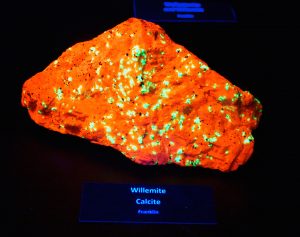
    mineralMineral Late Night

    Wednesday, November 7 | 4 to 8 p.m.
    Rutgers Geology Museum | Rutgers–New Brunswick

    Visit the Rutgers Geology Museum for their Mineral Late Night on November 7. Re-use your Halloween costume and come dressed as your favorite super hero while learning about some powerful minerals!

    Demonstrations, arts and crafts, and educational activities will be set up around the museum and people are welcome to come and go as they please. The event is free and open to visitors of all ages. Visit the museum website for more information.

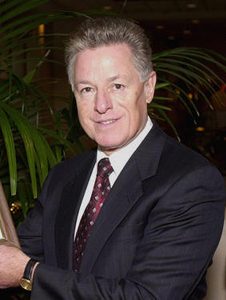
    A Conversation with Gov. James Florio

    Thursday, November 8 | 6 to 8 p.m.
    Campus Center | Rutgers–Camden

    James J. Florio, a former New Jersey governor and an alumnus of the Camden location of Rutgers Law School, will discuss topics from his new book, Standing on Principle: Lessons Learned in Public Life. This free event will feature a conversation between Governor Florio and retired Philadelphia Inquirer reporter George Anastasia. Copies of the book will be available for purchase at the event. Register to attend.

    Behind the Magic of Disney: Is It Really Happily Ever After?

    Wednesday, November 28 | 2:30 to 3:50 p.m.
    Paul Robeson Campus Center | Rutgers–Newark

    This event is an open discussion on how gender roles, violence, and oppression have been masked in magic. Join the Rutgers Office for Violence Prevention and Victim Assistance to explore the hidden messages in classic Disney films. Visit the Rutgers–Newark website for more information.

  • Ninja Warrior Report

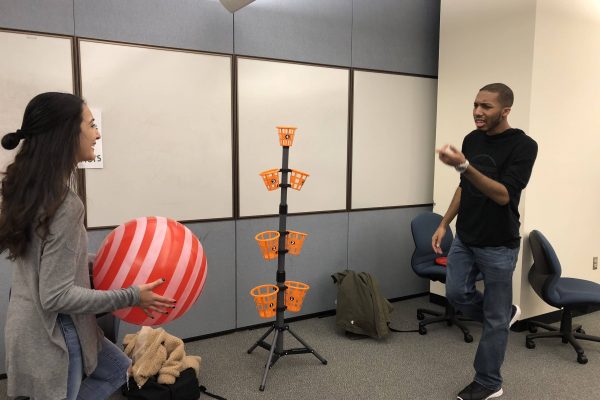
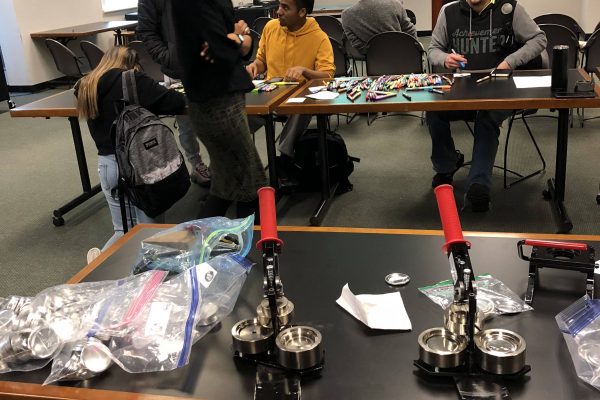
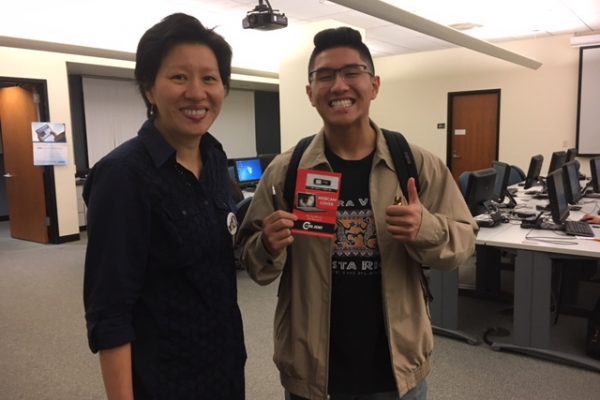
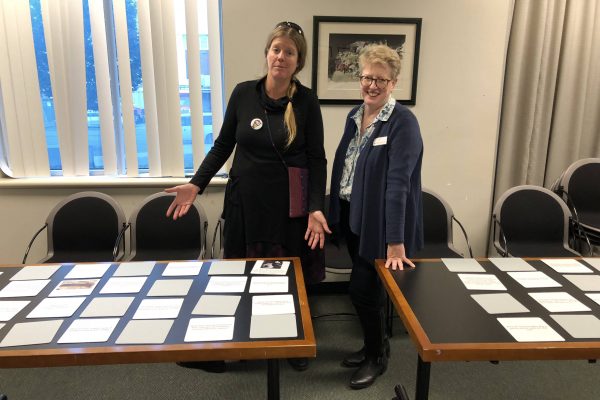
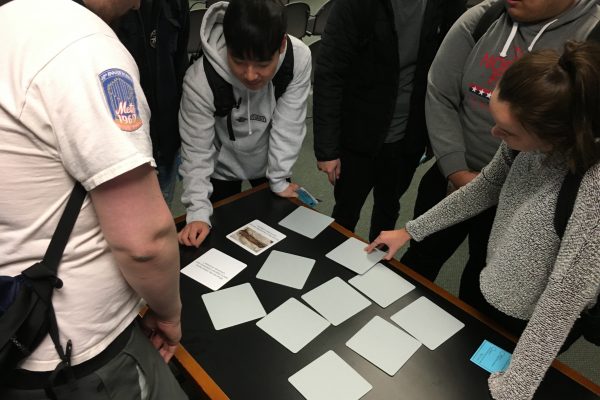
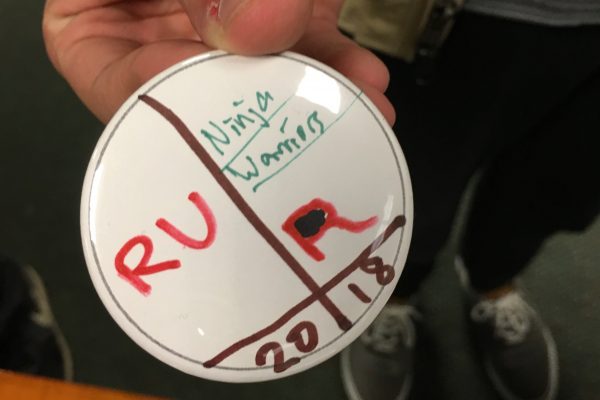
    Participants in this program, from the School of Arts and Sciences’ Students in Transition Seminar, were walked through a series of library related activities including five minutes of copyright, playing a memory game to learn about Special Collections & University Archives (SCUA), making a button to learn more about copyright and SCUA, playing a game to learn about what is available for check out at the circulation desk, how to find an article and a PDF, and more. Over 160 transfer students participated in this project and 105 assessment surveys were collected.

    From a quick analysis of the assessment spreadsheet, each activity was mentioned more than once as a positive experience. Many students enjoyed button making, copyright, finding a PDF, and the unique items found in SCUA. Many students liked the overall feel of this interactive experience.  Also, it was noted multiple times that many students’ favorite aspect of the library was the people who work there. Last but not least, many students—including the passport stamper from the STS program—expressed during the event that the library event was the best so far and many participants thanked us for the opportunity to learn while having fun.

    Should you have further questions about this event, please contact Mei-Ling Lo mlo@rutgers.edu or Megan Lotts megan.lotts@rutgers.edu.

  • Help Us Help You Better!

    New technology and better solutions keep coming, as we all know. By joining the University’s central Rutgers Active Directory as the Libraries’ Windows domain, we are expanding the ability to log in anywhere with a single username. But it obviously comes with new issues as many have noticed.

    IIS is inviting everyone in the Libraries to submit such issues and any other computing concerns and requests using the RULhelp trouble ticket system. It is the best way to keep track of issues, make sure that every one of them is addressed in a timely manner, and develop our knowledge base to speed up resolution. Instead of emailing or calling UCSs or other IIS staff, please use this address to submit a ticket: support@rulhelp.rutgers.edu It will be automatically channeled to the IT support closest to you.

    IIS is working on transforming the RULhelp database to use NetIDs (instead of old Windows usernames) just like most other platforms. Soon, you will be able to log into the trouble ticket system with your NetID to check the status of your issue.

  • Ex Libris Implementation Project Update – September 2018

    quicksearch logoThe fall semester has started, and September 5 marks the third month of Alma and QuickSearch implementation. We have focused on rectifying known problems in preparation for the new school year, and have made many improvements to the system and the services it provides. Thanks to feedback from users and library staff, we are continually making improvements to the system. We encourage and welcome your input and questions—submit them by visiting https://apps.libraries.rutgers.edu/ex-libris/contact.

    As reported in the July update, the Implementation Team visited all four campuses in August. During those meetings, the team reported on the respective working groups and held discussions with library personnel. We appreciate the fact that people took the time to participate in these sessions and provided thoughtful feedback and questions. The discussions were lively and productive.

    The Implementation Team would like to take this opportunity to share the following updates:

    • A QuickSearch tutorial has been created and will be available this fall. An announcement is forthcoming.
    • The library names facet in Primo has been revised to reflect abbreviated and more commonly known library names, making it more usable for patrons. For example, Archibald S. Alexander Library will now display as “Alexander Library”.
    • 856 links to finding aids and other materials are now available in the “Links” section of QuickSearch records.
    • Sign in has been improved to allow users to sign in with fewer actions and to more easily access account options such as loans, requests, and favorites.
    • Database lookup has been enabled so that users who enter database names (PubMed, JSTOR, Factiva) in the search box get a direct link to that resource at the top of their search results.
    • An open access filter is now available in QuickSearch, enabling users to limit results to content published in open access publications.
    • A number of fields are now available in QuickSearch record displays, including uniform title, language, identifier, related work, and several local note fields (e.g., general, bound with, performer, production credits, donor, and finding aid). Additionally, the donor note is now searchable, making it easier to identify specific gift collections and to retrieve records for items in those collections.
    • Harvard has been added to the list of citation options and MLA has been updated to the 8th edition.
    • Users can now save records to Zotero.
    • Users are now able to pick up materials from off-site delivery locations, such as the law libraries.
    • A new marketing campaign for QuickSearch will be unveiled this fall.

    The Implementation Team’s website is available at https://apps.libraries.rutgers.edu/ex-libris. It includes the various teams and working groups associated with the implementation, a timeline for the project, resources, an FAQ, and a list of known issues for Alma and QuickSearch (alias Primo). The team is working through both lists of issues, and the lists are updated as progress is made and issues are resolved.

    We are fully aware that our experience with QuickSearch and Alma is one of learning and trial and error. The Implementation Team values input and collaboration from the Libraries as well as our user community to continually refine and improve this service.

  • Quick Takes on News & Events – September 2018

    Conceiving New Tools for Public Health Researchers

    In April 2018, JSTOR and Rutgers University convened a workshop of scholars, librarians, and students to brainstorm new ways to support public health researchers. Using a series of design thinking activities, they conceived a number of new tools and services, which were subsequently user-tested with both students and faculty. This video describes that work, shares the ideas that emerged, and presents the findings from the users tests.

    Exploring the Rutgers Female Institute

    A new post on the Rutgers Classics Department’s blog by professor T. Corey Brennan explores the classical roots of the Rutgers Female Institute, and also gives a nice shout out to our colleagues Kayo Denda and Fernanda Perrone for their work on The Douglass Century. Read the blog here.

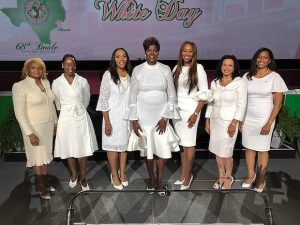
    Chantel
    Chantel Harris (third from left) was recently named an honorary member of Alpha Kappa Alpha, the sorority her great-great-grandmother founded. Photo: Houston Style Magazine.
    Congratulations to AKA’s Newest Honorary Member

    Chantel Harris was named an honorary member of the Alpha Kappa Alpha Sorority this summer. Chantel is the great-great granddaughter of the sorority’s founder, Ethel Hedgeman Lyle. “Mrs. Harris’ commitment to helping others started at a young age. Through her church she served the homeless and worked with the Circle of L.O.V.E (Let’s Overcome Violence Everywhere) program that was started by her grandmother and member of Alpha Kappa Alpha, Muriel “Puff” Lyle- Smith. Mrs. Harris continues to advocate for women and children in her community. She is currently working to eliminate hostile work environments and workplace bullying,” wrote Houston Style Magazine in its report in July. Congratulations, Chantel!

    Tweeting in Defense of Libraries Everywhere

    Katrina Zwaaf’s tweets were featured in articles from Gizmodo and Inside Higher Ed following the Forbes article (subsequently removed) that stated Amazon stores should replace libraries to save taxpayers money. Thank you, Katrina, for taking this stand on behalf of libraries and the people we serve.


    NJDNP Awarded Second NEH Grant

    The New Jersey Digital Newspaper Project recently received a second grant, totaling $216,609, from the National Endowment for the Humanities. The additional funding will allow for the digitization of additional historical newspapers for the Library of Congress’s Chronicling America website. Read more in this report from NJ101.5. Congratulations to project director Caryn Radick and the entire NJDNP team!

    Krista White Making Waves

    Kudos are in order for Krista White, who has had two pieces of good news come across her desk recently. First, she has received another Rutgers–Newark Chancellor’s Seed Grant to expand her Digital Scholarship as 21st Century Scholarship project. The second grant—totaling $33,130, more than three times the initial award—will support Digital Scholarship as Modular Pedagogy, allowing Krista to develop curricular materials to share with faculty members and train them so that they can add digital scholarship and ACRL Framework elements into courses.

    Next, Krista reports that the special issue of College & Undergraduate Libraries titled “The Digital Humanities: Implications for Librarians, Libraries, and Librarianship”—which includes an article she contributed—has been so well-received that Taylor & Francis has decided to publish it as a monograph through Routledge. Keep an eye out for it in January 2019. Congratulations, Krista, on all this fantastic recognition!

    bike routeMapping Philadelphia’s Historical Bike Routes

    Julie Still’s article in Hidden City Philadelphia details her project to digitize the Philadelphia Inquirer’s column “Trips Awheel: Where to Go and How to Get There,” which appeared in 1897 and 1898. In addition to hand-drawn maps of each route, the column, written by Alphonse Estoclet, featured a unique blend of commentary and narrative. “The routes themselves read much as modern travel blogs do, with reference to historical, cultural, culinary, and financial aspects of the area,” Julie writes. View the research guide she created to document the project here.

    Inspiring Librarians across the Country–with Buttons!

    Megan Lotts and Tara Maharjan got a nice shout out on the Library Think Tank Facebook group last week for their recent article on button making: “Due to some major semester reorganization, our library lost a freshmen orientation event that we loved. We brainstormed an alternative Welcome event. We read the article about button making at Rutgers in College and Research Libraries News. My husband just happens to be the proud owner of a 40 year old button maker. We bought supplies and printed some images from our Archives. Our FTE is about 1200 and we made over 90 buttons yesterday (not everyone wanted a button). Students, faculty and staff all requested buttons. It was a blast,” wrote Mary Jackson, research and instruction librarian at Milligan College in Tennessee. Congratulations, Megan and Tara!

    All that Jazz

    Finally, Clement’s Place has announced a full schedule of events for the fall, including NJPAC Jam Sessions, the IJS Concert Series, and a new monthly series on Wednesdays called “Jazz973,” which focuses on local and emerging musicians. Clement’s is a really fantastic space and with all these events on tap, there’s never been a better time to check it out!

  • What’s Happening around Rutgers? September 2018

    New Exhibits at the Zimmerli

    On September 1, the exhibition Self-Confessed! The Inappropriately Intimate Comics of Alison Bechdel, which encompasses the decades-long career of the illustrious cartoonist and graphic memoirist, opens at the Zimmerli Art Museum at Rutgers. It explores Bechdel’s work as a writer, an artist, and an archivist of the self, someone who constantly mines and shares her own experiences as a way to communicate something vitally human: the quest for love, acceptance, community, and social justice. Bechdel will speak at Rutgers on October 10.

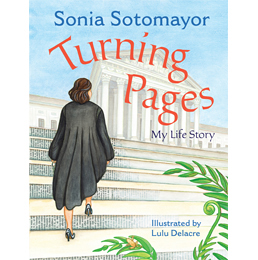
    In conjunction with U. S. Supreme Court Justice Sonia Sotomayor’s first memoir for young people, the Zimmerli Art Museum at Rutgers is pleased to announce the opening of The Art of Turning Pages: Illustrations by Lulu Delacre for Sonia Sotomayor’s Life Story on September 15. Justice Sotomayor shares her inspiring story about growing up and her deep love of reading inTurning Pages: My Life Story, which will be published by Philomel Books on September 4, along with a Spanish version, Pasando páginas: La historia de mi vida. The exhibition features nearly 30 objects on loan from award-winning children’s author and illustrator Lulu Delacre, including her oil and collage art, preparatory drawings, and research material, on public view for the first time. Bilingual labels, in English and Spanish, accompany the works. Ms. Delacre will speak at Art After Hours: First Tuesdays on October 2.

    Halsey Fest
    Thursday, Septebmer 6, 4 p.m.
    Halsey Street, Downtown Newark

    We’re shutting down Halsey from Central to New Streets with tons of activities, arts, games, food, drinks, mascots and more! Come one, come all, bring a friend, and enjoy a night and get a taste of why everyone is buzzing about Newark! This is going to be epic! Rain date: September 13. For more information, click here.

    Panel Discussion: Child Separations at the Border
    Thursday, September 13, 12:45 to 1:45 p.m.
    401 Penn Classroom, Rutgers–Camden

    This free, public panel discussion will address the topic of children being separated from their parents at the United States-Mexico border. Panelists are: Ann Adalist-Estrin, director of the National Resource Center on Children and Families of the Incarcerated at Rutgers–Camden; Joanne Gottesman, clinical professor and director of the Immigrant Justice Clinic at Rutgers Law School; Lorrin Thomas, professor of history and chair of the Department of History; and John Wall, professor of religion and childhood studies and chair of the Department of Philosophy and Religion. For more information, click here.

    Fall Fest
    Saturday, September 22, 10 a.m. to 3 p.m.
    Woodward Lawn, Rutgers–Newark

    Come out and enjoy food, games, and activities on the Woodward Lawn with the rest of your fellow Rutgers University-Newark students. For more information, click here.

    Finding and Facing Facts in Campaigns and Government w/ Eugene Kiely
    Monday, September 24, 7 to 8:30 p.m.
    Eagleton Institute, Rutgers–New Brunswick

    Eagleton Institute of Politics presents its 2018 Arthur J. Holland Program on Ethics in Government lecture, “Finding and Facing Facts in Campaigns and Government” with Eugene Kiely, director of FactCheck.org and Rutgers alumnus. Monday, September 24 at 7:00 PM. Free, but registration is required. Click here to RSVP. For more information, click here.

    An Evening with Colson Whitehead
    Wednesday, September 26, 7 p.m.
    Walter K. Gordon Theater, Rutgers–Camden

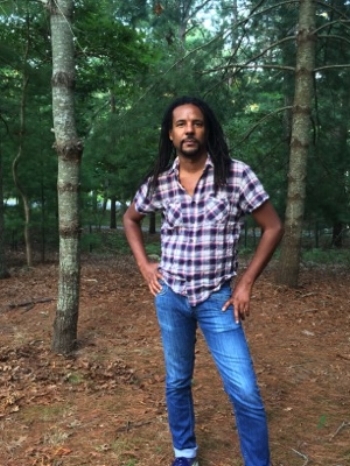
    Colson Whitehead, author of the New York Times bestselling novel The Underground Railroad, will give a free, public lecture. His novel is the 2018 selection for the Rutgers Reads program, which introduces incoming first-year students to academic life at Rutgers–Camden by reading and discussing one designated book. Register for this free event to reserve your seat. Email Rutgers Reads to be placed on a mailing list for more information, or click here.

  • Latino New Jersey History Project

    New Jersey has a remarkably diverse, though largely understudied, Latino population.  In 2016, according to the American Community Survey, people who identify as Hispanic or Latino were estimated to number over 1.7 million making them nearly 20 percent of all New Jersey residents.  Yet we know very little about their roots. Who are the Garden State’s Latinos? What is their history? This summer, seven Rutgers undergraduates and history Ph.D. student Carie Rael worked with Lilia Fernandez, Henry Rutgers Term Chair in Latino & Caribbean Studies and History, to find out as part of the Latino New Jersey History Project.  Their goal was to research, document, and record the history of New Jersey’s diverse Latino populations. Along the way, they received important assistance on digital tools and platforms from New Brunswick Libraries personnel Stacey Carton, Jan Reinhardt, and Francesca Giannetti.

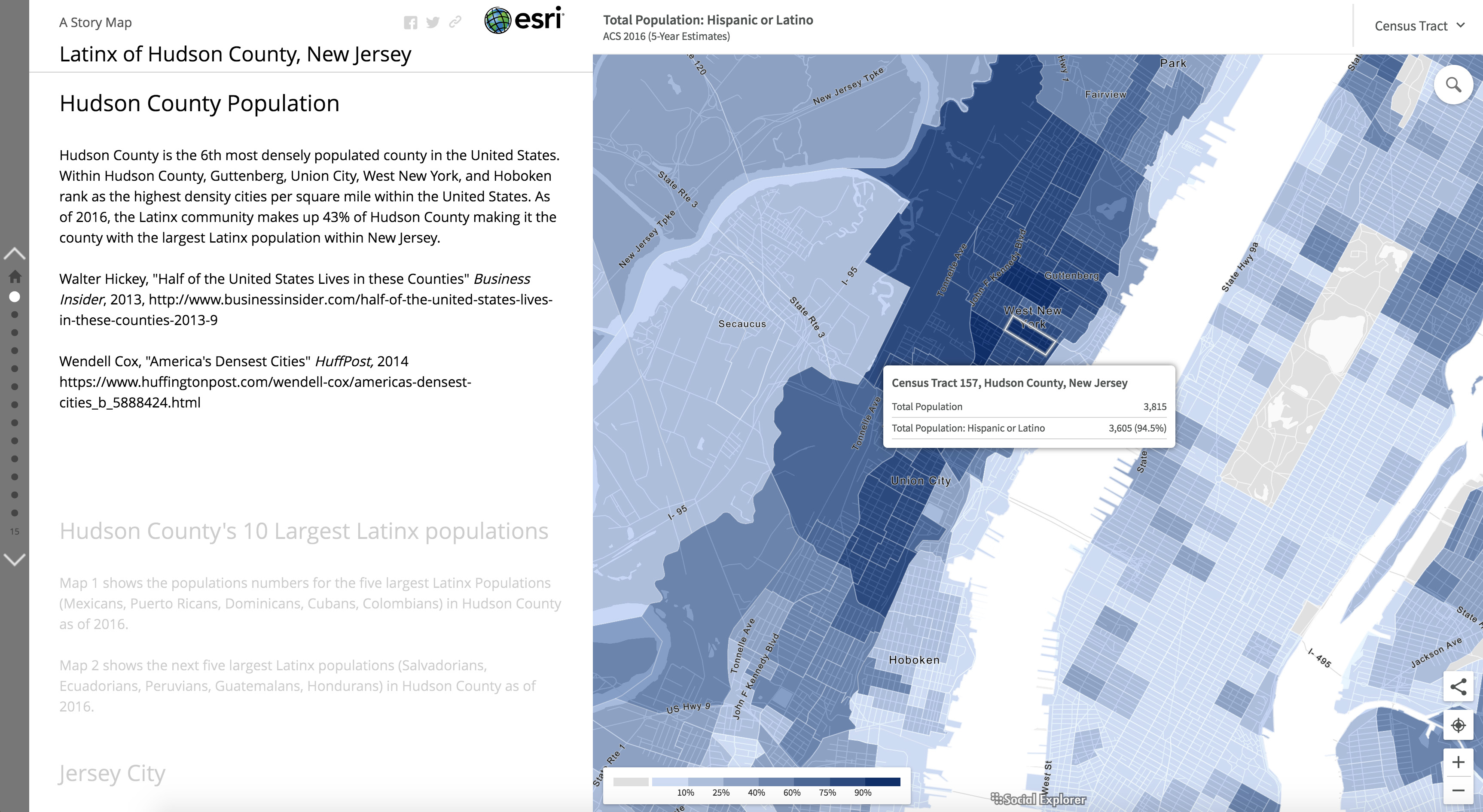
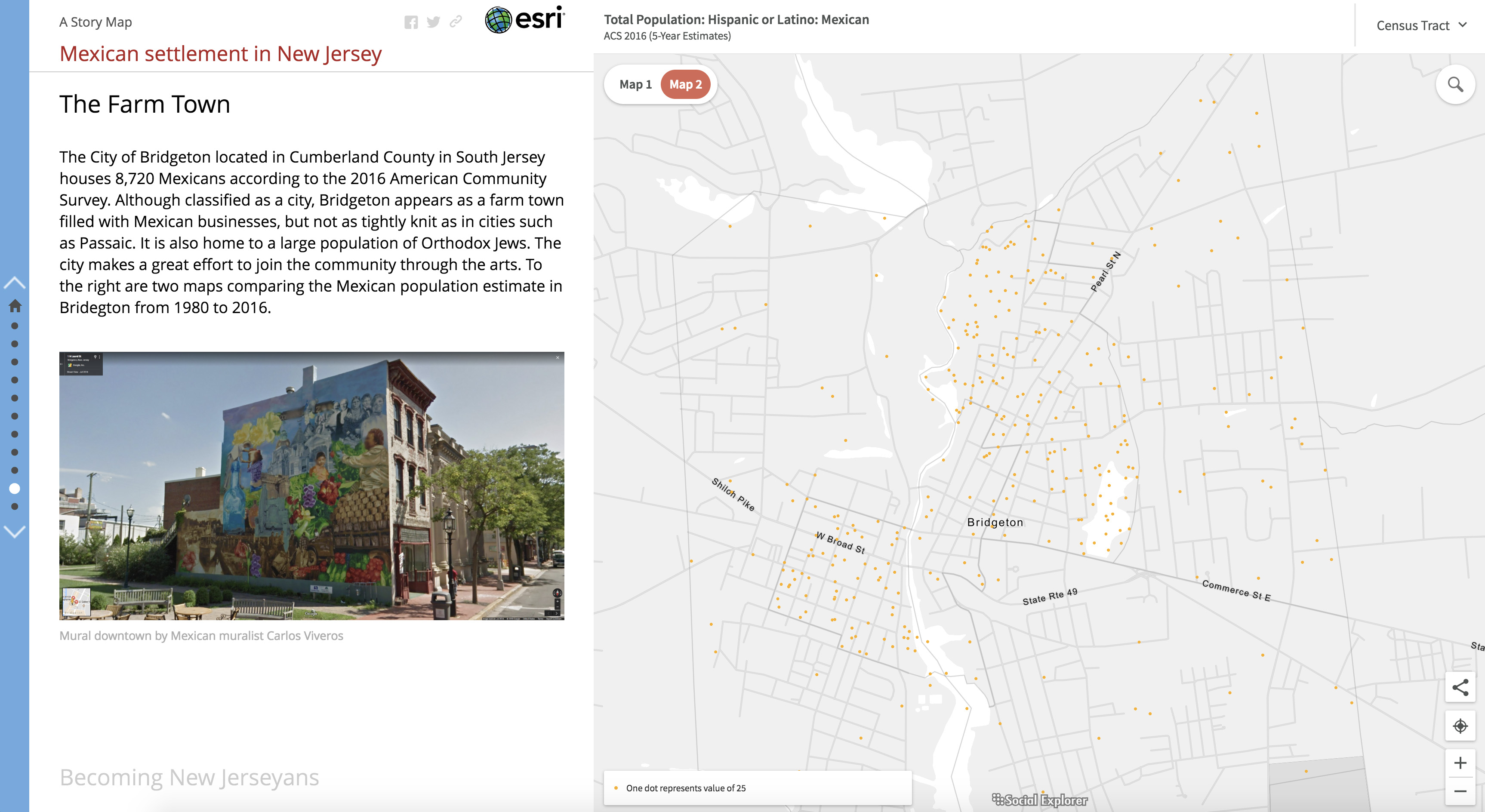
    The students used a variety of sources and methods. They gathered census data, for example, to produce maps and tables enumerating Latinos throughout the state, its counties, and its main cities and towns. Some were surprised at what they learned. While we might expect Newark, Elizabeth, and Paterson to have large Latino enclaves, few realized that New Brunswick is 56 percent Hispanic and West New York is 78 percent Hispanic (both as of 2016).  The town of Bridgeton in South Jersey has one of the largest concentrations of Mexican immigrants in the state. Census data revealed unexpected trends and unlikely settlement destinations.
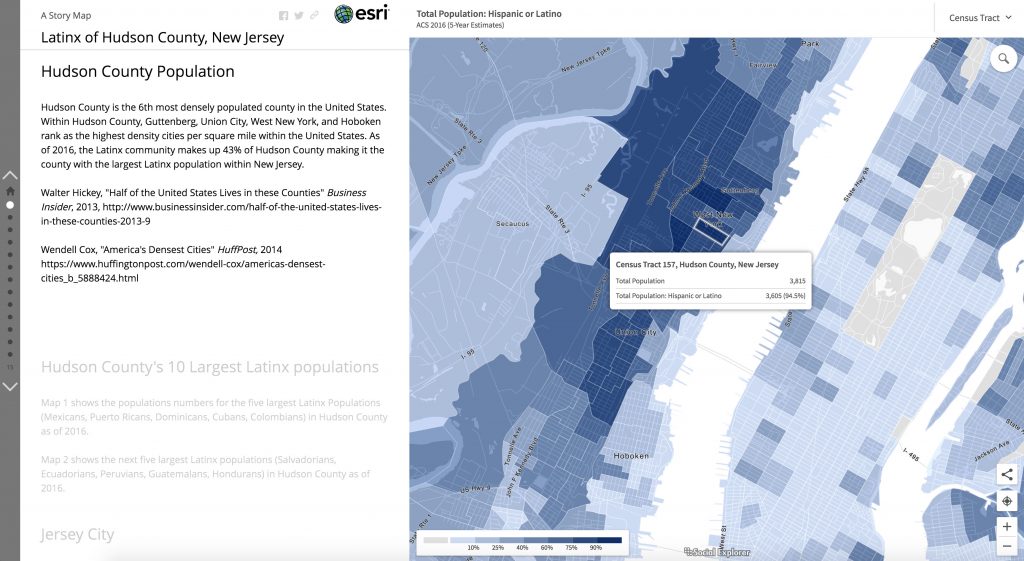
    Hudson county map

    With training from Francesca Giannetti, digital humanities librarian, students learned how to create thematic maps in Social Explorer and multimedia narratives integrating images, text, and multimedia embeds in ArcGIS’s Story Maps.  They learned about theories of place and space in spatial narratives, as well as elements of data and visual literacy through the strategic exploration of Social Explorer’s data sources, spatial geometries, and visualization types. Through the students’ mapmaking efforts, they were able to trace demographic changes over time, settlement patterns, and the migration stories of individuals and entire communities.
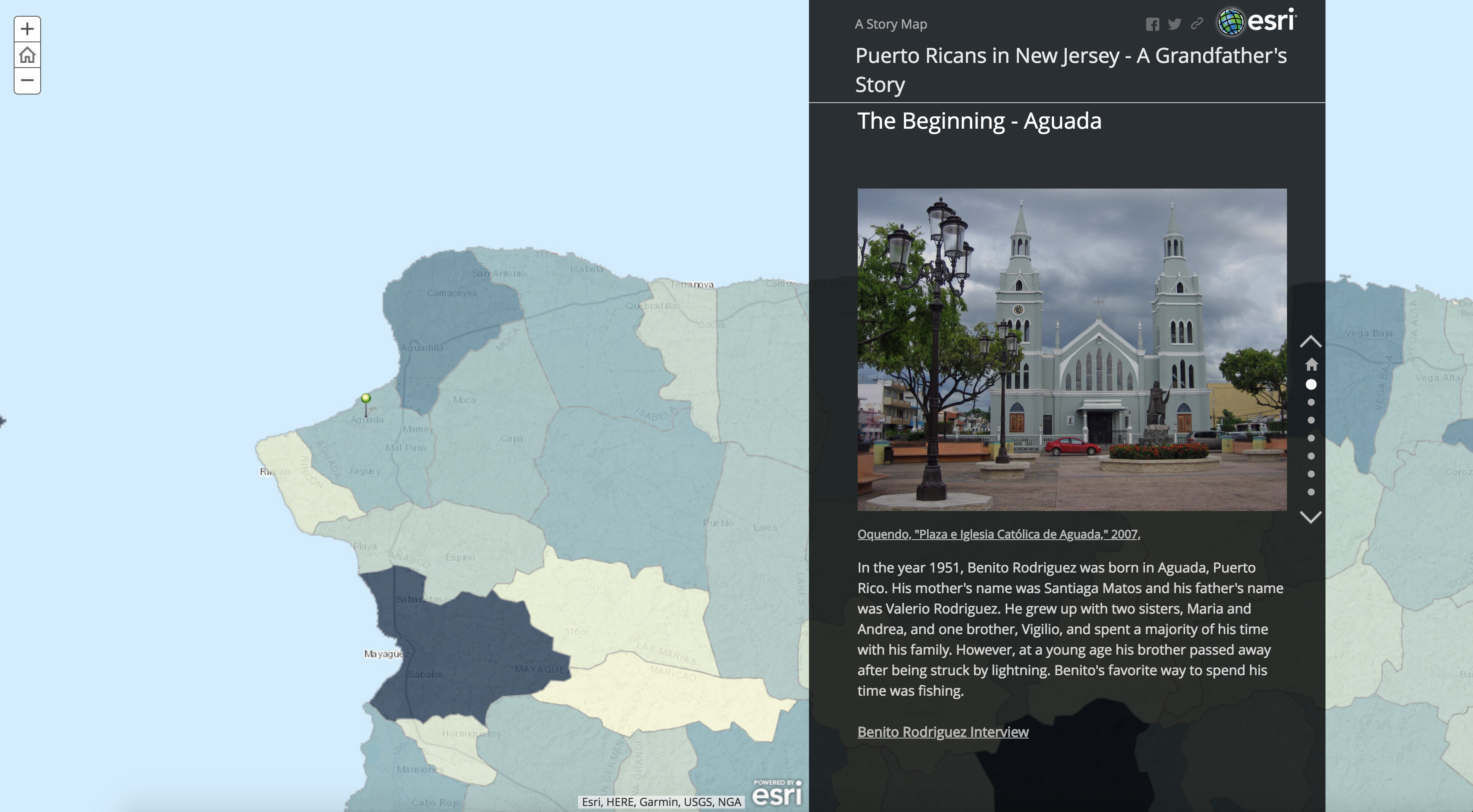
    Aguada

    Students also visited the Puerto Rican Community Archives (PRCA) at the Newark Public Library to learn about how the PRCA has collected more than one hundred oral histories over the past two decades and has gathered many archives and records of New Jersey’s Puerto Rican communities.

    Perhaps the most exciting part of the summer was completing oral histories with local residents. Shaun Illingworth and Kathryn Rizzi of the Rutgers Oral History Archives (ROHA) provided training and guidance on ethical and practical considerations in conducting oral histories.  After extensive training, background research, and preparation, students went out and recorded oral history interviews with various Latino residents and community leaders. Some were able to interview members of their own communities, while others interviewed important figures like Board of Governors member and Rutgers alum Martin Perez, or Irving Linares, the publisher of a Spanish language newspaper in Newark for the past 40 years.

    Since the group created audio or video recordings of their oral histories, they also benefited from basic video editing training at the Douglass Media Library with Stacey Carton. Students attended a workshop that focused on Adobe Premiere video editing software (available at the Fordham spaces in Douglass Library), but also covered topics relating to storytelling, project organization, and the history of editing. They later utilized the Fordham spaces to continue working on their projects.  Jan Reinhart provided support with audiovisual equipment as well.  Using their video training, two groups of students were able to produce short videos—one on the history of New Brunswick and another on the Latino populations of Union City.  These will be posted online, along with the oral histories and map projects, so they can be made available to public audiences.

    The students and Professor Fernandez learned a great deal about New Jersey’s rich history. They discovered that the state’s sizeable Latino population is relatively recent, having grown mostly since the mid-1980s through migration waves that brought Mexicans, South Americans, Central Americans, and Dominicans to the Garden State. In 1970, for example, the census counted only 135,656 people of “Spanish origin” (what today we generally refer to as “Latinos” or “Hispanics”), compared to the 1.5 million the census counted in 2010. The largest subgroups, as of that year, include Puerto Ricans (27% of all Latinos), Mexicans (14%), Dominicans (13%), Spaniards (7.7%), Colombians (6.5%), and Ecuadorians (6.5%). Today, one in five Jersey residents identifies with some type of Hispanic or Latino ancestry.

    The project team included Amy Castillo (Criminology and Latino and Caribbean Studies ’20), Tania Mota (Journalism and Media Studies and Latino and Caribbean Studies ’20), Aracely Ortega (Sociology and Africana Studies ’20), Aziel Rosado (Mathematics and Latino and Caribbean Studies ’20), Kevin Rosero (History and Political Science ’19), Laura Sandoval (Sociology ’20), and Luz Sandoval (History and Public Health ’19).

    Their work is beginning to be shared online. The following are links to individual projects built using the Story Maps platform.

    Mota, Tania. “Mexican Settlement in New Jersey.”

    Rael, Carie. “Latinx of Hudson County, New Jersey.”

    Rosado, Aziel. “Puerto Ricans in New Jersey: A Grandfather’s Story.”

    Rosero, Kevin. “A Grandmother’s Journey.”

    Sandoval, Laura. “Latino History of New Brunswick.”

    Professor Fernandez plans to continue the Latino New Jersey History Project in the future to keep exploring and documenting the diverse and varied origins of the state’s Hispanic communities. The maps, oral histories, and other digital humanities elements will help make this history accessible to audiences beyond the university and beyond the state.

    Lilia Fernandez, Stacey Carton, and Francesca Giannetti

  • Special Collections Librarians Take the Reins of NJSAA

    New Jersey Studies Academic Alliance logoFounded in 1992, the New Jersey Studies Academic Alliance (NJSAA) is a 501c3 educational organization promoting research and teaching in the multidisciplinary field of New Jersey studies. The NJSAA’s approximately 100 members include teachers (primary school through college), historians, geographers, museum and historical organization personnel, archivists, and librarians. Membership is open to anyone interested in the study of New Jersey, and membership dues are $5 annually. (Yes, $5.)

    The NJSAA regularly meets four times a year in Alexander Library’s Pane Room to hold business meetings, present awards, and hear presentations in New Jersey studies. Meetings are open to all.

    Among its central activities, the NJSAA recognizes notable work in New Jersey studies by presenting awards in the following categories:

    Starting on September 1, 2018, three Rutgers University special collections librarians will be assuming leadership roles in NJSAA for three-year terms. The incoming chair is Bob Vietrogoski, the special collections librarian for the history of medicine at George F. Smith Library in Newark. He currently serves as chair of the NJSAA’s Roger McDonough Librarianship Award. As chair, he is succeeding Maxine Lurie, professor emerita of history at Seton Hall University. Dr. Lurie is a co-founder of NJSAA and has served as chair or co-chair since NJSAA’s founding 26 years ago. She is the author and editor of several award-winning works in New Jersey studies, including New Jersey: A History of the Garden State (2012), and the Encyclopedia of New Jersey (2004).

    The incoming secretary is Christie Lutz, New Jersey regional studies librarian and head of public services for Special Collections and University Archives at Alexander Library in New Brunswick. She has been acting secretary for the past year, and is succeeding Marc Mappen, the former executive director of the New Jersey Historical Commission and a historian whose books include There’s More to New Jersey Than the Sopranos (2009) and Prohibition Gangsters: The Rise and Fall of a Bad Generation (2013).

    The incoming membership chair is Tara Maharjan, processing archivist for Special Collections and University Archives at Alexander Library. She currently serves as the NJSAA’s webmaster. As membership chair, she is succeeding Karl Niederer, the former director, state archivist, and chief records administrator in the former state Division of Archives and Records Management, and current coordinator of outreach and strategic partnerships at the New Jersey Historic Preservation Office.

    The next NJSAA meeting will be held on Tuesday, October 16, 2018 in the Pane Room. The business meeting will begin at 3pm, and at 4:15pm, William Kroth, president of the Sterling Hill Mine Museum in Sussex County, will speak on the “Great Zinc Mines of Sussex County” and will have samples on hand to view.

    For more information about the NJSAA, see its website here, along with News of NJSAA’s recent activities and its Calendar of Events. The NJSAA is also on Facebook, and “likes” are strongly encouraged.