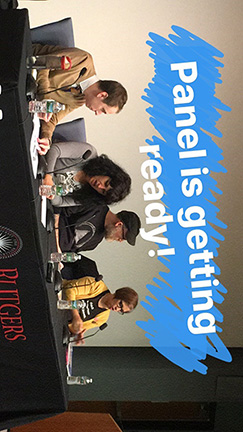
We’re all attending lots of videoconferences and there are ways to make the experience better for both the host and remote sites. Here are some tips to insure everyone can see, hear, and participate regardless of where they are.
Courtesy and empathy are the key factors of a successful video conference. Hosts and participants at the host site are responsible for removing all barriers to participation for remote attendees. Remote attendees need to be engaged and inform the host if they encounter any difficulties in their abilities to participate.
Host:
- Please share any documents remotely at least one day before the scheduled meeting. All participants need to have all documents that will be discussed and it can disenfranchise participants at a remote location to hand out and discuss materials only to those physically present in the room.
- A few minutes before the meeting starts do an audio-visual check with participants at the remote sites.
- Check the placement of the furniture and positions of the participants at the host site. Everyone should be facing the screen and should be able to be seen and heard by the Video conferencing attendees.
- Host should begin the meeting by going around the table and clearly identifying the people in the room of the host location. Host should also greet teleconferencing participants.
- Check with the remote attendees throughout the meeting to see if they have questions or comments.
- If “pushing screens” make sure to return to room view ASAP so that remote attendees can once again see their colleagues and join the discussion. If during a presentation a lengthy discussion ensues switch back to room view to bring the remote attendees back into the conversation.
Attendees at Host Sites:
- Speak clearly and audibly. Be aware of the position of the microphones in the room.
- Be aware of the line of sight of remote colleagues.
- Refrain from noise near the microphones such as tapping and paper shuffling.
Attendees at Remote Sites:
- Arrive several minutes early for an audio-visual check and to confirm connection.
- Alert the host ASAP to any audio-visual problems.
- Mute the microphone when not speaking to diminish distracting noise.
- Upon leaving take leave of the host and the other participants.
- If unable to attend, let the host know ASAP so as the meeting is not broadcast into an empty room.
Sources:
Lifesize “Video Conferencing Best Practices.” 2016. Available: https://www.lifesize.com/~/media/Documents/Related%20Resources/Briefs/Video%20Conferencing%20Best%20Practices.ashx.
Richardson, Nicole Marie. Inc. “11 Dos & Don’ts of Video Conferencing Etiquette.” January 13, 2011. Available http://www.inc.com/ss/video-conferencing-best-practices.
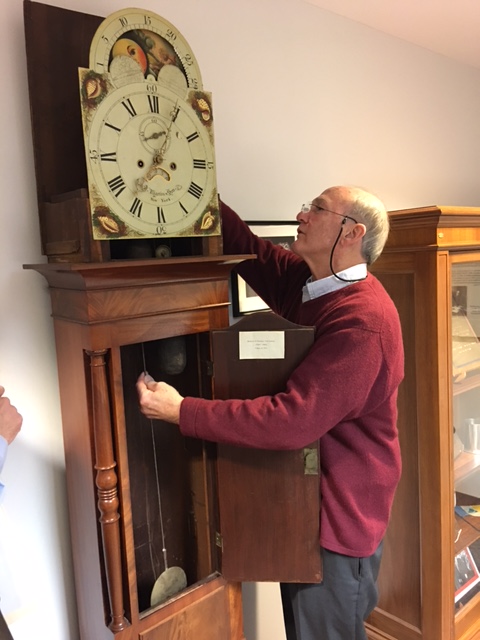
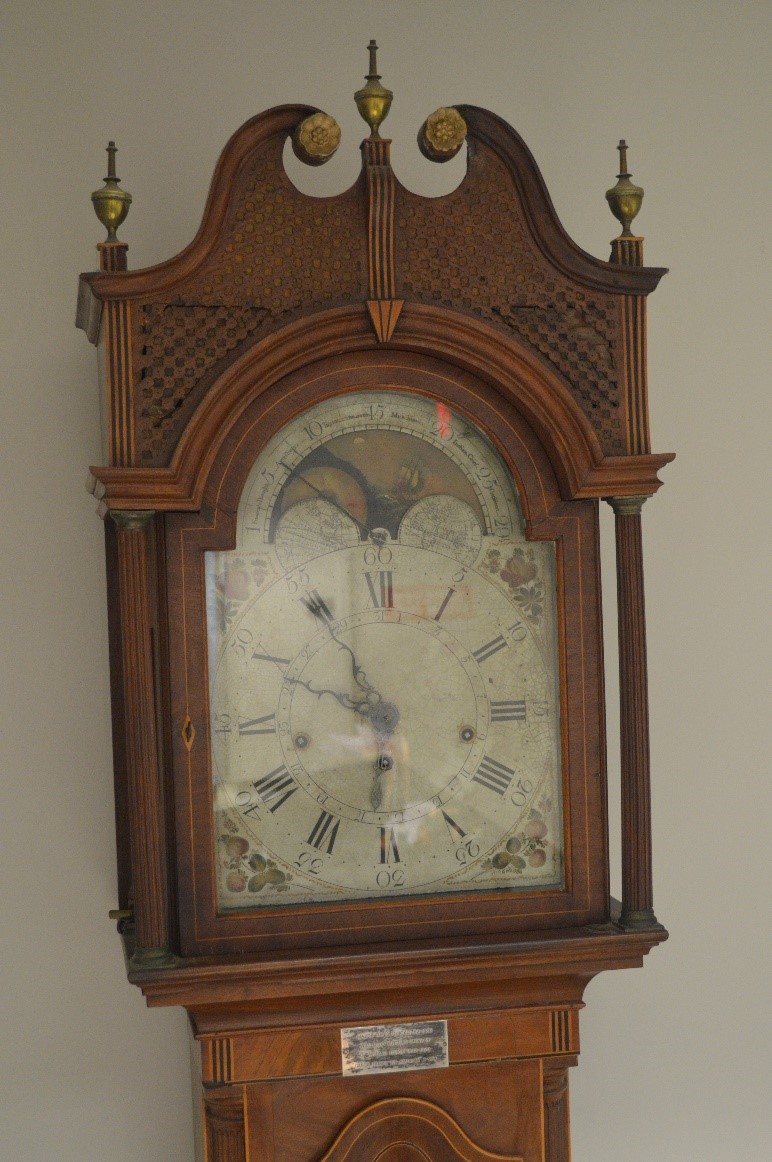
![Movement: 8-day clock; square clock face not signed Case: intended for a (later) clock movement with an arched clock face; attributed to Nicholas Williamson Parsell (1797-1877) by the donor and is likely the same clock cited by Margaret E. White in Early Furniture Made in New Jersey, 1690-1870 ([Newark, N.J.]: The Newark Museum Association, c1958): “A tall clock with case attributed to Nicholas Parsell is owned by Catharine Schneeweiss.” Location: Special Collections and University Archives reading room (behind sign-in desk), Alexander Library Donor: Ralph Heyboer (1918-2011) of Linden, New Jersey Provenance: movement created in 18th century; case created in 19th century; evidently owned at one time by Catharine Hardenbergh Schneeweiss (1893-1977), the daughter of Henry P. Schneeweiss; per donor: “from estate of Henry P. Schneewiess family” Note: per Somerset County Historical Quarterly (vol. 8): Nicholas W. Parsell had a daughter Mary who married F.M. Schneeweiss, the father of a Henry Schneeweiss. Per Rutgers University Biographical Files: Alumni (Class of 1877): Henry P[arsell] Schneeweiss (1856-1930), who served as the treasurer of Rutgers from 1915 to 1928, was the son of Franz Maxmillion Schneeweiss and Mary (Parsell) Schneeweiss. He married Mary Cornelia Hardenbergh, a descendant of the first president of Queens College [now Rutgers University], and resided at 56 College Avenue at the time of his death. Received: 1992; acquired, from the same donor, with other items (e.g., monogrammed china, said to be from the Parsell family, and a mahogany secretary bookcase) identified as having the same provenance](https://agenda.libraries.rutgers.edu/wp-content/uploads/2016/11/clock-schneeweiss.jpg)