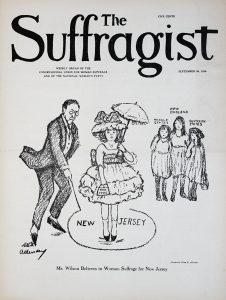
Category: Units

  • Website Redesign Project Update – November 2020

    The website redesign project team has completed baseline usability testing and analysis, and we’ve combined that with other research from the discovery process and are now moving into wireframing. Using the ideas generated during prototyping sessions last month with each of the local library groups, we’re developing an architecture for the site that will balance each unit’s desire for flexibility with the need for a sustainable infrastructure that provides our users with streamlined, easy access to our most popular resources.

    Over the coming weeks and months, our team will be busy reviewing wireframes and revisions from the team at NewCity. Once the wireframes are approved, we’ll go through the same process with mockups, which will incorporate more of the look and feel of the pages along with example content. The new site will be built out of components, rather than templated pages – this is a different way to think about building web pages that puts greater power in the hands of content creators and managers. It will allow for greater flexibility and easier updates than our current setup, and each unit will be able to create and maintain beautiful, useful, up-to-date pages that reflect their users’ needs. The project team will be learning about how to work with a component library during the wireframing/mockup phase, and more people will be brought in for training once the component library is fully developed and we’re building out the actual site content.

    As always, you’re welcome to reach out anytime with questions or comments. Send us an email: webservices@libraries.rutgers.edu.

  • Ex Libris Implementation Team Update – November 2020

    Alma Analytics Upgrade

    Alma Analytics will be upgraded the week of November 1. Users who want to retain their personal reports in My Folders after the upgrade will need to save a copy in the Analytics shared folder’s Migration directory by October 31. Instructions to save your reports for the upgrade can be found here.

    New Alma Layout

    Ex Libris has introduced a new layout for Alma and items such as the main menu and persistent search box have moved to new locations on the screen. The new layout is currently in a testing phase. Users who want to familiarize themselves with the new layout can toggle it on themselves by following the instructions found here. The new layout becomes the default on November 1.

    Esploro Update

    The Esploro implementation is proceeding apace. All of our research assets have now been migrated from RUcore to Esploro. Next steps will include data cleanup, system and UI configuration, staff and user training, and integration with the library website. The Esploro research portal is scheduled to be released in January 2021. The rollout will be accompanied by the creation of a new support channel in LibAnswers to answer inquiries related to using the repository, depositing works, and the open access policy.

    Chapter Delivery Button

    The Chapter Delivery button is now available on many monograph collections in QuickSearch. At a time when access is limited, the addition of button raises awareness of this service and provides our patrons with expedient access to our monograph collection. These requests are being brokered by ILLiad and filled electronically via Document Delivery.  Patrons can also continue to access the Book Chapter Request form via their ILLiad account to place requests.

    Click and Collect Statistics

    Click and Collect usage rose from an average of 211 items per week during the summer to an average of 320 items per week during the semester. The week with the most requests so far was the first week of the semester (August 31-September 6) with 368 requests completed. Graduate students are the most frequent users of Click and Collect at 48% followed by faculty and staff at 36% and undergraduates at 17%. Thanks to the work of our onsite fulfillment teams we have circulated over 3,000 items to users via Click and Collect since the program began on August 3rd.

    Fulfillment Workflow Review and Redesign

    Efforts to review and redesign workflows supporting Course Reserves, Chapter and Article Delivery, ILL, etc. have begun. High level process mapping is being completed along with preparation for the impending switch to Leganto. Meetings with each campus will be scheduled to discuss the efforts and potential new workflows in more detail. Be on the lookout for more info!

  • Serving the Post-Pandemic University

    It has been eight months since the university moved online and it is still difficult to believe that it is real. The sudden change that we experienced is gradually transitioning to a new normal, along with the insight that it is unlikely that we will ever return to the operations that we left in April. We are beginning to understand that we have the opportunity to build a future that combines the best of the past with the elements of our current environment that work well.

    In a blog post related to the pandemic, Lorcan Dempsey writes about the ways in which the pandemic is accelerating changes in library collections that previously had been slowly evolving. Dempsey discusses three pandemic effects that have contributed to this acceleration and will shape our environment going forward:

    • Budget reductions and the possibility that recovery will not come quickly
    • The rapid shift to online learning and research that most likely will only be partially reversed
    • The need for libraries to visibly and proactively align their services with the mission of the university

    As we develop strategies, it is imperative that we continue to look closely at how these pandemic effects are changing both higher education in general and Rutgers in particular, to try to discern how we use our strengths in the new environment. Some collection-related trends that I believe will be most relevant for us include:

    • The need to advance undergraduate student success. Student success is a critical element for the future of Rutgers. We have seen that—perhaps surprisingly—certain courses like traditionally large lectures can actually work better in an online format, creating more opportunities for participation and engagement than would previously be possible. We also know that students and their families are facing unprecedented financial struggles because of the pandemic, and the economic ramifications of the virus are still not even fully understood. I expect that these factors will cause the delivery of some of the undergraduate curriculum to change, even after it is safe to return to classroom settings. Accordingly, we should expand our efforts to replace traditional textbooks with open and affordable information resources. We have been successful in this area with OAT and Leganto, but we should be asking ourselves what this could mean for how we develop our collections, offer instruction, and participate in shared activities moving forward.
    • The continued erosion of the scholarly communication system. Academic libraries have worked on multiple fronts to develop new models of scholarly communication that center the researcher and the scholarship rather than the publisher. Fueled by the success of the University of California system in breaking the Big Deal, for the first time libraries are seriously considering large-scale cancellation of packages as viable option. Publishers, in collaboration with libraries, have responded with transformative license agreements that may simply shift who pays for publications without solving the underlying problem of unsustainable costs. Library budgets have also supported other forms of academic publishing. Over the past few decades, libraries have systematically reduced the number of monographs purchased from university presses, creating—for all but a few large presses—the need for substantial university subsidies. Now scholarly associations are facing a similar future. Together, these changes represent substantial shifts in the scholarly communication environment and will require responses much broader than a single library. As such, we should join our institutional partners in continuing to advocate for a sustainable and open ecosystem of publication, one that recognizes and rebalances the contributions that authors, institutions, and publishers make.
    • The rise of multiple formats. Libraries have always dealt with multiple formats, and this trend only continues to grow. In addition to print and online journals and books, we also provide access to multiple forms of audio, video, data, and other media. Print continues to be an essential part of our collections; however, the rapid shift online has exposed the costs of acquiring and managing print collections and has changed the calculations that determine what format is optimal. Moving forward, we should look carefully at how we optimize the Libraries’ collection budget to provide access to content, balancing the diverse needs of the various disciplines with overall trends and preferences toward the use of digital media.

    Taken together, I see these trends pushing us further in the direction of interdependence and collaboration among libraries. For instance, the cancellation of “Big Deals” requires unprecedented levels of collaboration and reliance on borrowing networks. Strong and established partnerships with PALCI, BTAA, and VALE position us well in this environment, as do our membership with HathiTrust and leadership in the BTAA Collective Collection initiative. As we invest in these efforts, we will be forced to navigate the tradeoffs between local control versus participating in shared activities at the consortial level to achieve efficiencies of scale in purchasing, licensing, and sharing resources.

    At this moment, we have the opportunity to look more holistically at our collections, to ask important questions about our priorities and approach, and to begin charting a course forward that will help us address not only the difficulties we are facing in the immediate present, but also the shifting landscape of scholarly communication and higher education more broadly moving into the future. We have an informed and engaged library faculty who can share their insights and expertise with discipline-specific perspectives on these issues, as well as a faculty planning committee who are tasked with helping the Libraries develop a more focused long-term vision that will allow us to flourish in the face of the many challenges before us. It may be difficult, but with the willingness and flexibility to adapt to a rapidly changing environment, the courage to make bold decisions, and a genuine commitment to deep collaboration (both within the Libraries and across our many external partnerships), I am confident that we can position ourselves to provide excellent service to the post-pandemic university.

  • Ann D. Gordon to Give Presentation on Women’s Suffrage in New Jersey

    2020 marks the 100th anniversary of the Nineteenth Amendment (1920) granting women the right to vote. In celebration of this milestone, Rutgers Research Professor Emerita of History Ann D. Gordon will give a presentation, “Bringing the Story Home: Agitating for Woman Suffrage in New Jersey,” on Thursday, September 24, 2020 at 4 p.m.
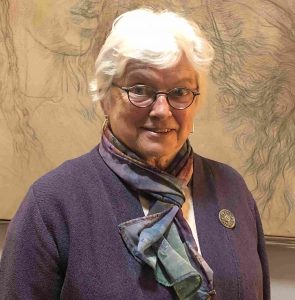
    Activists organizing for women to gain voting rights were everywhere across the United States, island territories included.  The struggle to win the right to vote is a national story chock full of local details, highlights of which will be explored in this presentation.

    Ann D. Gordon is Research Professor Emerita of History at Rutgers University. She has studied the movement for woman suffrage for nearly four decades as an author, editor, and lecturer. Her six-volume edition of the Selected Papers of Elizabeth Cady Stanton and Susan B. Anthony was published from 1997 to 2013. Toward celebrating woman suffrage at this centennial, her essay on the 19th Amendment appears in the National Park Service’s website publication, 19th Amendment and Women’s Access to the Vote Across America; she served as a historical advisor to the National Archives in preparing its suffrage centennial exhibit, Rightfully Hers; and, until the pandemic, she lectured often on the history of voting rights.

    This program marks the opening of the Special Collections and University Archives online exhibition, On Account of Sex: The Struggle for Women’s Suffrage in Middlesex County, New Jersey. More details about the exhibition will be forthcoming.

  • Rigged: The Voter Suppression Playbook

    Rutgers University Libraries to Screen Rigged: The Voter Suppression Playbook
    Followed by Panel of Experts
    National Voter Registration Day
    Tuesday, September 22, 7 pm – 8:30 pm

    “When you deprive people of the right to vote, the vote being the very fiber of this wonderful quilt we call a democracy…When you begin to tear away the threads, saying this person can’t vote, that person can’t vote…the next thing know, you will not have a democracy.” Rep. Elijah Cummings (D-MD)

    The Rutgers University Libraries (New Brunswick) are observing National Voter Registration Day, September 22, by airing the documentary film Rigged: The Voter Suppression Playbook, an award-winning documentary that exposes the nefarious tactics used to suppress the vote and serves to spark discussion on the actions needed to protect our democracy. This event is part of a fall series to encourage campus-wide dialogue about the 2020 election. The American Issues Institute, producer of the film, will host the RU screening via its Zoom Webinar platform for a week prior to the screening, then from 6 – 7 pm on September 22, followed by a panel discussion from 7 – 8:30 pm about the issues. We encourage students, faculty, staff and community members to join the conversation.

    Discussion panelists will include:

    • Mac Heller and Tim Smith, the film’s producers
    • Lorraine Minnite, Associate Professor of Public Policy and Department Chair at Rutgers Camden and expert on voting rights. Author of The Myth of Voter Fraud, and Keeping Down the Black Vote: Race and the Demobilization of American Voters
    • David Greenberg, Professor of Media Studies and History, Rutgers-New Brunswick and author of a forthcoming book on John Lewis
    • Christabel Cruz, director of NEW Leadership® at the Center for American Women and Politics.
    • Chenjerai Kumanyika, Assistant Professor, Journalism and Media Studies, Rutgers, Peabody winning producer of Uncivilpodcast and social justice advocate
    • David Goodman, Vice Chair, Andrew Goodman Foundation

    Following the event, the library will provide a link to a recording of the session and make it available to the Rutgers community.  It’s an opportunity for all of us to energize students, faculty and staff at this critical moment in our nation’s history when we’re isolated from each other but eager to join in discussions about the issues that will shape our collective future.

    Sherrilyn Ifill, President and Director-Counsel of the NAACP Legal Defense Fund, says of RIGGED, “I cannot think of a better moment for this powerful film. It reinforces the reality of voter suppression, which I think so many more Americans have begun to recognize and understand.”

    To register to watch the video and participate in the Zoom event, click here.

    To learn more about Election 2020, see the Library’s new LibGuide, produced by Sherri Farber and Nancy Kranich.

    For more information, contact Nancy Kranich, nancy.kranich@rutgers.edu

    RIGGED Trailer – 2 mins.
    https://vimeo.com/296045604 

    Rigged: The Voter Suppression Playbook – with Jeffrey Wright (NOV 2019)
    70 Minutes
    https://vimeo.com/371681258
    password: rigged

  • New Content for Library Tutorials!

    The NimblyWise and Credo Reference Library instruction tutorials have undergone some changes and enhancements for the fall.

    For Credo Reference:

    • The addition of APA Citations 7th edition tutorial.
    • The addition of AMA Citations – A tutorial, which includes a video and checkpoint assessments for practice, on American Medical Association (AMA) style has been added to the Understanding and Using Research Sources section.
    • The addition of Gray Literature – The Health Science Resources section has a new tutorial, which includes a video and checkpoint assessments for practice, on gray literature (information from non-commercially published sources that can have use in research, such as conference proceedings and dissertations).
    • The Revisions of PubMed Material – the PubMed tutorial, including the screencasts, has been refreshed where relevant to reflect PubMed’s redesign.

    Quiz questions on the new topics of AMA and gray literature have been added to appropriate assessment libraries.

    For NimblyWise:

    For the Library Tutorials web page:

    • Citation Styles – New tutorial on APA Citations 7th
    • New quiz on Chicago Manual of Style 17th
    • Getting Started with Research
    • New video on “Framing a Problem” and a new quiz on “Research Strategies”.
    • Presenting Research and Data -The previous video, tutorial, and quiz on Synthesizing Information have been replaced by a video on “Synthesis” and a tutorial and quiz on “Synthesizing Information for Academic Writing”.
    • Using Critical Thinking and Logic – New video on “Why Thinking Matters” and new tutorials on “Logical Reasoning” and “Analyzing Information”.

    Evaluating Information – The video “How to Identify and Debunk Fake News” and the quiz on “Fake News” have been retired by the vendor.

    For questions about Library tutorials, contact Maria Breger at maria.breger@rutgers.edu

    View the complete list of the Libraries Teaching & Learning topics.

  • Communications Department Site Overhaul

    One of my projects for the summer was transferring the Communications Department site off the old apps.libraries platform and over to the new Staff Resources site. It is now located here: staff.libraries.rutgers.edu/communications.

    On the site you will find a variety of useful resources, from logo files and presentation templates, to flyers and signage, to style guidelines, to helpful tips and tricks. You may be particularly interested in the new Event Planning Guide (updated with a section on best practices for online events!) and the downloadable Zoom/WebEx backgrounds.

    Please have a look around and let me know what you think. I’m always looking for feedback on improvements and suggestions for new content. Thanks!

  • Recapping Summer SAPAC

    In a year of many firsts, this summer saw RUL’s first Summer SAPAC talk series. After a discussion in the Spring Central Forum, SAPAC co-chairs Janet Croft and Bart Everts decided to send out a call for summer talks. SAPAC talks are a way for library faculty and staff to discuss research, programming, innovations, and more with a friendly audience of colleagues, and Summer SAPAC turnout was high. Bart Everts from the Robeson Library hosted the talks.

    6/9: A Modest Proposal: Trusted Pick-Up Points for Interlibrary Loan for Distant Users
    Janet Brennan Croft

    6/23 An Environmental Scan of Artists’ Book Collections: An Ontology for Visualization
    Sonia Yaco

    7/22 Digital Badging
    Grace Agnew, Mei Ling Lo, Ryan Womack

    8/11 The Library Freedom Institute: Becoming a Privacy Advocate
    Katie Anderson

    8/14 Closing the Transactional Distance in an Online Graduate Course through the Practice of Embedded Librarianship
    Leslin H. Charles

    8/18 “Agitation of the Question”: James McCune Smith’s Nomination for Fellowship to the New York Academy of Medicine, 1847
    Robert Vietrogoski

    8/25 From Digital to Computational: The Current and Near-Future State of Technology and Data Storage and How We Manage our Virtual Lives
    Isaiah Beard


  • Personal Librarian Program Enters Its Second Year

    Student success librarian Samantha Kannegiser of the Paul Robeson Library kicked off the Personal Librarian Program, now in its second year, on August 28 with a “Meet Your Personal Librarian” event. The Personal Librarian Program is run in collaboration with the Student Success Coach office, part of the Department of Student Academic Success on the Camden campus. Through this program, the library personally connects with over 400 students per year.

    As part of this program, our Scarlet Scholar students have a dedicated librarian throughout their first academic year. Personal Librarians Katie Anderson, Samantha Kannegiser, Julie Still, and Zara Wilkinson are each paired with a Student Success Coach to provide targeted outreach to a select cohort of students, sending timely emails with tips, tutorials, library updates, and events. Library processes, terminology, resources, and services can overwhelm new students who are unfamiliar with academic libraries. Our goal is to relay information to students when it is most needed, making them comfortable asking questions of librarians, navigating library resources, and attending library events with their peers.

    We are looking forward to another year connecting with our students through the Personal Librarian Program and hope to eventually expand the initiative to include more of our first-year undergraduates.

  • Rutgers Connect: Recent Changes and Enhancements

    Some recent changes and enhancements in Rutgers Connect have been announced by OIT. Several are highlighted and described here. Please do not hesitate to contact IIS at support@rulhelp.rutgers.edu if you have questions or comments about these enhanced or new features, or anything related to Rutgers Connect. 

    Login Upgrade:

    Rutgers Connect now allows you to log in with any of your aliases. You are no longer limited to logging in with NetID@libraries.rutgers.edu, and can now use any of the email addresses connected to your account including NetID@libraries.rutgers.eduNetID@rutgers.edu, or firstname.lastname@rutgers.edu 

    Send Later Option in OWA:

    Microsoft has added a new “Send later” feature for Outlook on the web (OWA) that allows you to schedule your messages to be sent later. This feature was previously only available in the Outlook Desktop Client. To access this feature while composing a message, navigate to the dropdown arrow beside the Send button, click on the ‘Send later’ option, and you will see a pop-up that will allow you to choose the date and time for scheduling the email. Until the message is sent, it will appear in your Drafts folder where you may change or cancel the message.

    End Meetings and Appointments Early in OWA:

    Already available in the Desktop Client, Microsoft is now adding the “end appointments and meetings earlier” setting to Outlook on the web. This setting allows you to end all the events you schedule earlier, with a pre-determined time for events that are under or over 60 minutes. This buffer helps you take breaks in back-to-back meetings. This can be enabled in calendar settings, under the “Events and Invitations” tab.

    OneDrive File Size Increase:

    Microsoft has increased the maximum size from 15GB to 100GB for files uploaded to OneDrive. For uploading very large files, Microsoft recommends using its OneDrive Desktop client. 

    Microsoft Teams New Meeting Experience:

    Several new features have been implemented in the new Teams experience. To enable them, select your profile picture at the top of the Teams app, then Settings > General. Select “Turn on new meeting experience” and restart Teams. The new experience includes features such as pop-out meetings by default, meeting control changes, user interface changes, large gallery view (up to 49 streams), and Together mode. Detailed information about these changes can be found here.

    Screen Recording Now Available in Stream:

    Directly from Microsoft Stream, you can now create short screen recordings of up to 15 minutes, including your camera and microphone, without additional software. To utilize this feature, Select Create > Record screen in Microsoft Stream. More details can be found here.

    View Sign-ins:

    Microsoft now lets you view your sign-ins via https://mysignins.microsoft.com/. Though this information has always been logged, you can now view your own recent activity.