Category: Special Collections and University Archives

  • Ann D. Gordon to Give Presentation on Women’s Suffrage in New Jersey

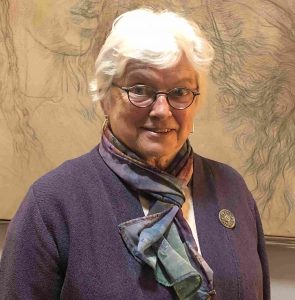
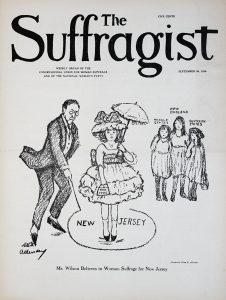
    2020 marks the 100th anniversary of the Nineteenth Amendment (1920) granting women the right to vote. In celebration of this milestone, Rutgers Research Professor Emerita of History Ann D. Gordon will give a presentation, “Bringing the Story Home: Agitating for Woman Suffrage in New Jersey,” on Thursday, September 24, 2020 at 4 p.m.

    Activists organizing for women to gain voting rights were everywhere across the United States, island territories included.  The struggle to win the right to vote is a national story chock full of local details, highlights of which will be explored in this presentation.

    Ann D. Gordon is Research Professor Emerita of History at Rutgers University. She has studied the movement for woman suffrage for nearly four decades as an author, editor, and lecturer. Her six-volume edition of the Selected Papers of Elizabeth Cady Stanton and Susan B. Anthony was published from 1997 to 2013. Toward celebrating woman suffrage at this centennial, her essay on the 19th Amendment appears in the National Park Service’s website publication, 19th Amendment and Women’s Access to the Vote Across America; she served as a historical advisor to the National Archives in preparing its suffrage centennial exhibit, Rightfully Hers; and, until the pandemic, she lectured often on the history of voting rights.

    This program marks the opening of the Special Collections and University Archives online exhibition, On Account of Sex: The Struggle for Women’s Suffrage in Middlesex County, New Jersey. More details about the exhibition will be forthcoming.

  • Dorothy Gillespie Papers Digitization Project

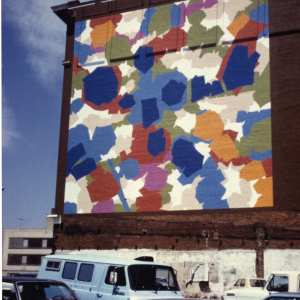
    Dorothy Gillespie papers, box 13 folder 12 (Site Specific, City Wall, Roanoke, 8 x 10″, 1979) https://doi.org/doi:10.7282/t3-kpk6-n764

    We are delighted to announce that the first phase of the Dorothy Gillespie Papers digitization project is now completed and ready to be used by researchers at https://collections.libraries.rutgers.edu/dorothy-gillespie-papers

    Dorothy Gillespie (1920-2012) was an abstract sculptor and painter whose archives are part of the Miriam Schapiro Archives on Women Artists at Special Collections and University Archives. Born in Roanoke, Virginia on June 29, she attended the Maryland Institute College of Art in Baltimore. Moving to New York City in 1943, she continued her studies at the Art Students League and at Atelier 17, a printmaking studio that emphasized experimentation. In 1946 she married Bernard Israel, and subsequently had three children. Soon afterwards, she began painting in a completely gestural style influenced by Abstract Expressionism. In the 1950s, she and her family moved to Miami, Florida, where she secured group exhibitions and a solo exhibition at the Miami Museum of Art in 1962. As a young married woman, Gillespie encountered discrimination in the art world, finding herself labeled a “housewife painter.” These early experiences helped raise her consciousness as a feminist.

    In the mid-1960s, Gillespie and her family moved back to New York City. Gillespie’s use of oil paint began to diminish as she experimented with paper, pastels, and acrylic. The Gillespies owned Gallery Champagne, a champagne nightclub located in Greenwich Village, which provided a space for Gillespie to display her art. In the 1970s, Gillespie became involved in the feminist art movement. She organized exhibitions, created a collection of women’s art, compiled statistics, and took part in protests against galleries. The bright and whimsical style of her sculptures created various public art opportunities for her in the 1980s. In the 1980s and 1990s, she donated many pieces from her own art collection, as well as her own artwork, to various universities in order to create university art collections.

    Since her death in 2012, her son Gary Israel has been dedicated to preserving her legacy. This digital project, which foregrounds a selection of images of Gillespie’s work, was made possible by a generous gift from the Dorothy M. Gillespie Foundation. The donation funded two students from the Douglass Residential College, Talia Lang and Ana Couto Barbosa, to scan and create metadata for the images in Summer 2019.

    Couto was inspired by the project to pursue a degree in library science: she will begin the Master of Information program at Rutgers in September. “During this experience, I learned about digitization, metadata, archival standards, and the importance of information organization. The internship opened my eyes to the vastness of library science and its career opportunities,” she said.

    The Dorothy Gillespie digitization project will resume next summer. We would like to express special thanks to Isaiah Beard, Geoffrey Wood, Marty Barnett, and Sam McDonald for helping make this project a reality.

  • Rutgers Meets Japan

    The planned exhibit was converted to a digital exhibit, which will be mounted on the course website.

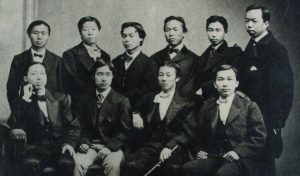
    In 1867, Kusakabe Tarō (1844-1870), a samurai from Fukui in the remote west of the country, left Japan to study at Rutgers. After his untimely death in 1870, his mentor and friend, William E. Griffis (1843-1928) of the Rutgers Class of 1869, was invited to teach Western-style education in rapidly modernizing Japan. Griffis would spend his life writing and speaking about Japan and collecting books and archival material. His collection came to Rutgers Special Collections and University Archives (SC/UA) after his death. This spring, Haruko Wakabayashi of the Department of Asian Languages and Cultures, is teaching “Rutgers Meets Japan: Revisiting Early U.S.-Japan Encounters,” an interdisciplinary honors seminar based on the Griffis Collection. This seminar examines this crucial moment of early U.S.-Japan relationship and cultural exchange as we commemorate the 150th year since William E. Griffis left for Japan. As curator of the William Elliot Griffis Collection at SC/UA, I am supporting the class through helping them access books, documents, and images from the collection. Assignments are based on primary sources and prints from the Griffis Collection and the Zimmerli Art Museum, which are posted on the course website. For the final project, students planned to curate an exhibition at the Alexander Library using materials from the Griffis Collection. The culmination of the course was meant to be a two-week field trip, “The Japan that Griffis Saw,” where the students along with Professor Wakabayashi and myself would visit in Fukui, Yokohama, and Tokyo.

    On March 10, the class visited SC/UA to use maps and city directories to try to envision what New Brunswick was like at the time Griffis and Kusakabe were students. When we learned the next day that all Rutgers courses were going online after spring break, we had to adapt quickly. The planned exhibit was converted to a digital exhibit, which will be mounted on the course website (https://sites.rutgers.edu/rutgers-meets-japan). The trip to Japan was postponed until January.

    Access to the Griffis Collection was an even more difficult problem. In 2000, the Griffis Collection was microfilmed through an agreement with Adam Matthew, a company in the U.K. In 2017, Rutgers contracted with Adam Matthew to digitize this material, with a stipulation that Rutgers would get free access. When it became apparent that we would have no physical access to the Libraries for the rest of the semester, I followed up with Adam Matthew Digital regarding the status of the project. Thanks to Jeff Carroll, Elizabeth York, and their teams, the digital version of the Griffis Collection is now available through the database Area Studies: Japan, enabling students to access digitized primary source documents from the collection. Class discussion now takes place on the Canvas site. According to student Raj Malhotra, SAS ’22, “The transition to this digital classroom environment has come with its expected difficulties, but has shown us how to stay connected through the vast digital libraries and resources available for class meetings and teachings.” All are looking forward to the trip, which we hope will still take place.

  • Quick Takes on Events and News – January 2020

    Targum Documentary Spotlights NBMSA

    Islamic Art Wiki-a-Thon Returns to Dana Library 

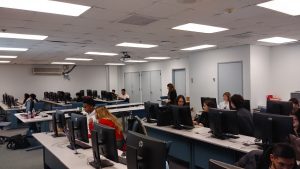
    Dana Library hosted its second Islamic Art Wiki-a-Thon last semester. Professor Alex Seggerman’s Islamic Architecture course was one of a group of classes participating in the December 9 Islamic Art Wiki-a-Thon. Students spent the semester learning how to do research and edit Wikipedia pages. They prepared and wrote drafts, updating current Wikipedia articles on various Islamic architecture sites. During the event, they came together and made official changes to articles. They were joined asynchronously by students at Temple University and the University of Texas. 

    On Exhibit at Douglass Library 

    MARY H. DANA WOMEN ARTISTS SERIES GALLERIES
    Gendering Protest: Deborah Castillo and Érika Ordosgoitti
    Exhibition: January 21April 3, 2020
    Curator: Tatiana Flores, Associate Professor of Latino & Caribbean Studies and Art History
    Gallery Hours: M-F 9 a.m.–10 p.m.
    Public Event
    Reception and Artist’s Lecture: Wednesday, March 25 | 5:006:45 p.m.
    RSVP: womenart@cwah.rutgers.edu
    Galleries and event are free and open to the public.
    cwah.rutgers.edu @CWAHatRutgers #GenderingProtest 


  • Special Collections Open House

    You’re invited to an open house at

    Special Collections and University Archives

    Thursday, January 9

    1 – 4 PM

    Alexander Library

    Featuring snacks, demonstrations, and tours.

    RSVP

    Sign up for a tour of our galleries and vast storage areas

  • Special Collections Librarians Take the Reins of NJSAA

    New Jersey Studies Academic Alliance logoFounded in 1992, the New Jersey Studies Academic Alliance (NJSAA) is a 501c3 educational organization promoting research and teaching in the multidisciplinary field of New Jersey studies. The NJSAA’s approximately 100 members include teachers (primary school through college), historians, geographers, museum and historical organization personnel, archivists, and librarians. Membership is open to anyone interested in the study of New Jersey, and membership dues are $5 annually. (Yes, $5.)

    The NJSAA regularly meets four times a year in Alexander Library’s Pane Room to hold business meetings, present awards, and hear presentations in New Jersey studies. Meetings are open to all.

    Among its central activities, the NJSAA recognizes notable work in New Jersey studies by presenting awards in the following categories:

    Starting on September 1, 2018, three Rutgers University special collections librarians will be assuming leadership roles in NJSAA for three-year terms. The incoming chair is Bob Vietrogoski, the special collections librarian for the history of medicine at George F. Smith Library in Newark. He currently serves as chair of the NJSAA’s Roger McDonough Librarianship Award. As chair, he is succeeding Maxine Lurie, professor emerita of history at Seton Hall University. Dr. Lurie is a co-founder of NJSAA and has served as chair or co-chair since NJSAA’s founding 26 years ago. She is the author and editor of several award-winning works in New Jersey studies, including New Jersey: A History of the Garden State (2012), and the Encyclopedia of New Jersey (2004).

    The incoming secretary is Christie Lutz, New Jersey regional studies librarian and head of public services for Special Collections and University Archives at Alexander Library in New Brunswick. She has been acting secretary for the past year, and is succeeding Marc Mappen, the former executive director of the New Jersey Historical Commission and a historian whose books include There’s More to New Jersey Than the Sopranos (2009) and Prohibition Gangsters: The Rise and Fall of a Bad Generation (2013).

    The incoming membership chair is Tara Maharjan, processing archivist for Special Collections and University Archives at Alexander Library. She currently serves as the NJSAA’s webmaster. As membership chair, she is succeeding Karl Niederer, the former director, state archivist, and chief records administrator in the former state Division of Archives and Records Management, and current coordinator of outreach and strategic partnerships at the New Jersey Historic Preservation Office.

    The next NJSAA meeting will be held on Tuesday, October 16, 2018 in the Pane Room. The business meeting will begin at 3pm, and at 4:15pm, William Kroth, president of the Sterling Hill Mine Museum in Sussex County, will speak on the “Great Zinc Mines of Sussex County” and will have samples on hand to view.

    For more information about the NJSAA, see its website here, along with News of NJSAA’s recent activities and its Calendar of Events. The NJSAA is also on Facebook, and “likes” are strongly encouraged.

  • New Brunswick Libraries Acquire “The Big Book”

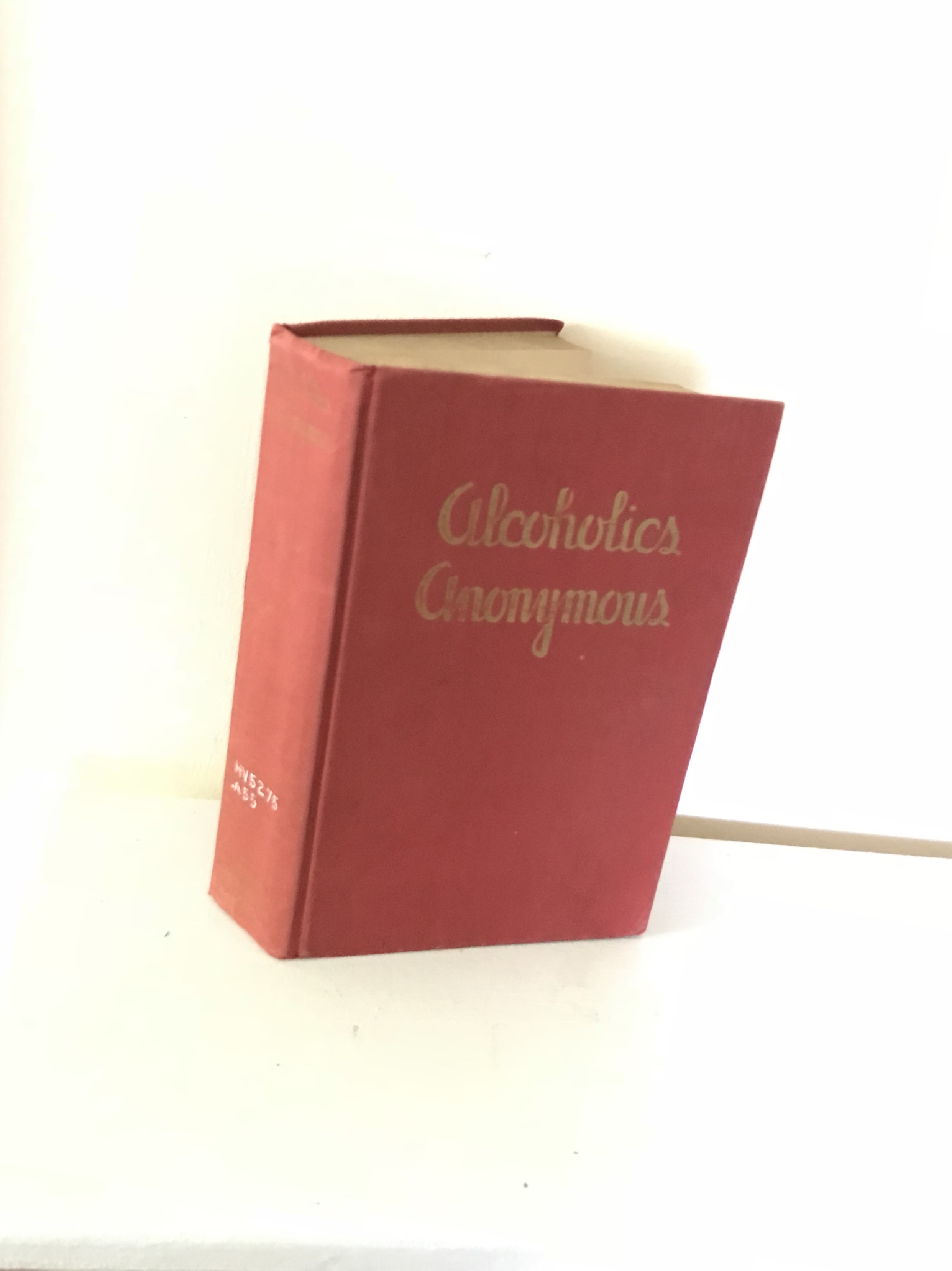
    Alcoholics Anonymous bookThe New Brunswick Libraries have acquired a first edition of “The Big Book,” the popular name for Alcoholics Anonymous: The Story of How More Than One Hundred Men Have Recovered from Alcoholism, written by the A.A. founder, Bill Wilson (or Bill W).

    Since it was first published in 1939, in an edition of 4,650 copies, “The Big Book” has sold over 30 million copies, making it one of the best-selling regularly updated books of all time. The Library of Congress named it one of the 88 “Books that Shaped America.” The fellowship, Alcoholics Anonymous, took its name from the book’s title.

    The Rutgers copy of “The Big Book,” so called for the thickness of the paper in the original edition, was probably the one reviewed by E.M. Jellinek through a project, also launched in 1939, funded by a Carnegie Corporation grant that essentially birthed the field of alcohol studies. As Jellinek reflected in a piece written for AA Today,

    One day that year, I found on my desk a book with a yellow and red dust cover. Its title was Alcoholics Anonymous. With a sigh, picked it up and said to myself: “some more crank stuff.” But I hardly read a few pages when I realized that I had one of the precious gems before me.

    After the Center of Alcohol Studies (CAS) moved from Yale to Rutgers in 1962, the book became part of the McCarthy Collection, named after Raymond McCarthy, the director of education and training at CAS. The annotations are believed to be in his hand.

    An unassuming trade book bound in red cloth, “The Big Book” hardly resembles the “precious gem” it is. From across the room, it might be mistaken for a copy of Webster’s Desk Dictionary. However, due to its historical significance, copies of the first edition regularly sell for five and even six figures. For comparison,  a copy of Webster’s A Compendious Dictionary of the English Language,  a first ed. of Webster’s first dictionary (1806), is priced at $4,063, a Babylonian clay tablet from Syria, ca. 1600-1500 BC, which provides a list of fish used for teaching purposes, is valued at $1,500-$2,500 and a Coptic-Greek glossary, written on vellum in Egypt in the sixth or seventh century, likely intended for use by a professional scribe in the civil service, is estimated at between $12,000 and $18,000. Moreover, the profound emotion “The Big Book” stirs in the A.A. fellowship surpasses the admiration of even the most devoted logophile.

    William Bejarano, former senior information specialist at CAS, recalls preparing for the center’s annual Summer School of Addiction Studies, which traditionally included an open Alcoholics Anonymous meeting. “John,” who was running the meeting, asked if the rumor that the center owned a copy of “The Big Book” was true, and if he might see it.

    “We were taken aback by his response — jaw agape, he treated the item almost as a sacred text, going so far as to kiss the cover and speak in hushed tones.”

    After being cataloged and preserved in a conservation housing, “The Big Book” will safely repose in Special Collections and University Archives, along with The King James Bible, and the editio princeps of Homer.

    Michael Joseph, Judit Ward

    Further reading:

    Bejarano, W., & Ward, J. (2015). AA and the Center of Alcohol Studies: Our story. SALIS News, 35(3), 10-12.

    Bejarano, W., 2015. CAS Archives: A First Edition of the AA “Big Book”. CAS Information Services Newsletter, 9(3) 6-10.

    Ward, J. H., Bejarano, W. & Allred, N. (2016). Reading for Recovery (R4R): Bibliotherapy for addictions. Substance Abuse Library and Information Studies, 3, 50-69.

  • Quick Takes on Events and News – May 2018

    Honoring a Great-Great Legacy
    Chantel Harris at the ceremony honoring her great-great grandmother, Ethel Hedgeman Lyle, who founded the Alpha Kappa Alpha sorority.
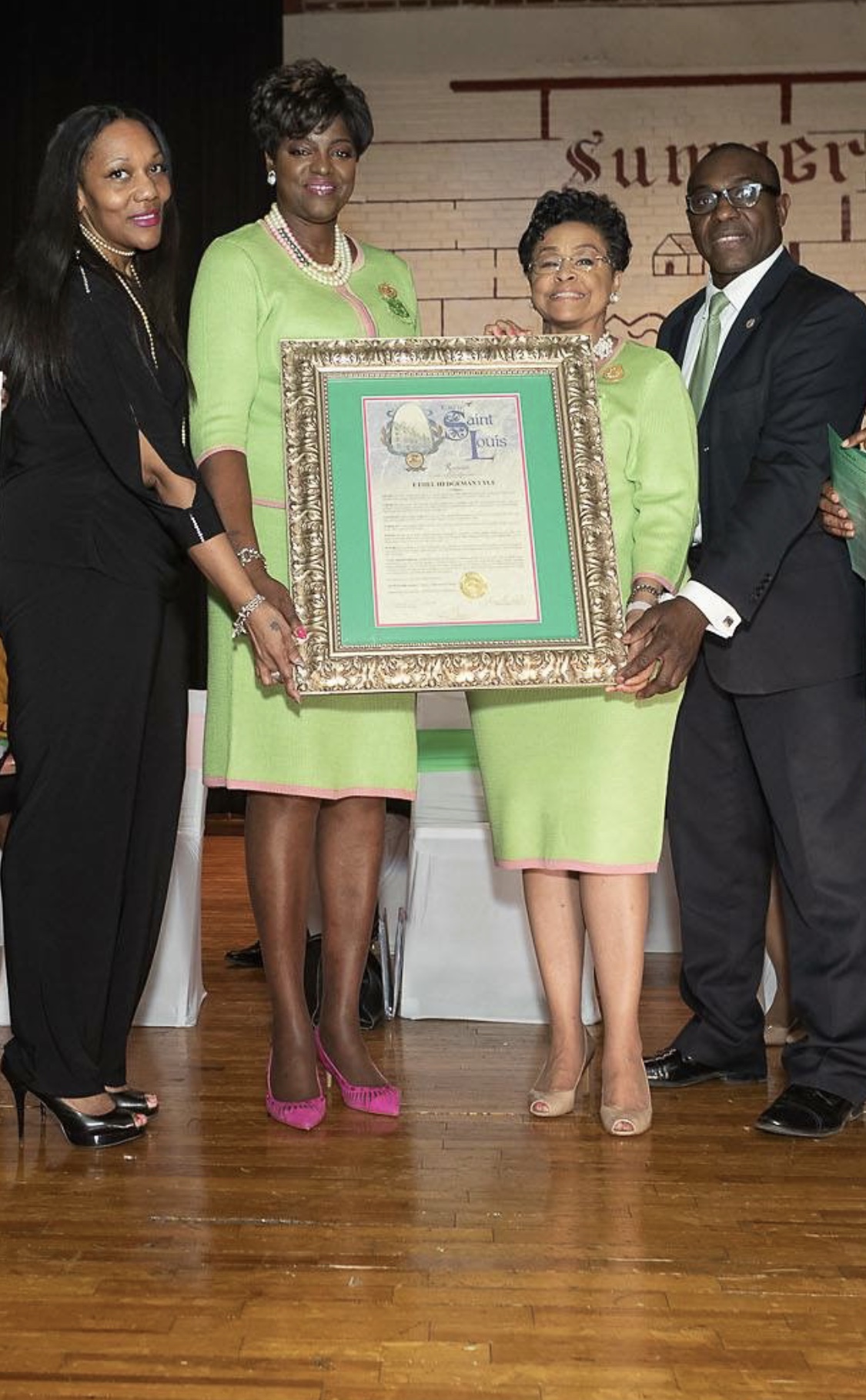
    Chantel Harris (l.) at the ceremony honoring her great-great grandmother, Ethel Hedgeman Lyle, who founded the Alpha Kappa Alpha sorority.

    Chantel Harris, library associate and student coordinator at the Paul Robeson Library, Rutgers–Camden, was a special guest at the ceremonial dedication and unveiling of a school bench at Charles Sumner High School in St. Louis, Missouri, in honor of her great-great-grandmother, Ethel Hedgeman Lyle. Lyle was the originator and founder of Alpha Kappa Alpha Sorority, Incorporated (AKA). Chantel received a proclamation from the mayor of St. Louis, as well as a resolution from the Board of Aldermen naming April 5, 2018 “Ethel Hedgeman Lyle Day.”

    Lyle graduated from Sumner High School in 1904 and founded AKA in 1908 at Howard University. Chantel is pictured with the sorority’s international president, Dr. Dorothy Buckhanan Wilson, central regional director Kathy Walker-Steele, and members of the Board of Directors.

    The USPS is considering an Ethel Hedgeman Lyle 2019-2020 USPS Forever Postage Stamp.

    You can read more here.

    Jazz Ambassadors Premieres on PBS May 4 
    men at acropolis
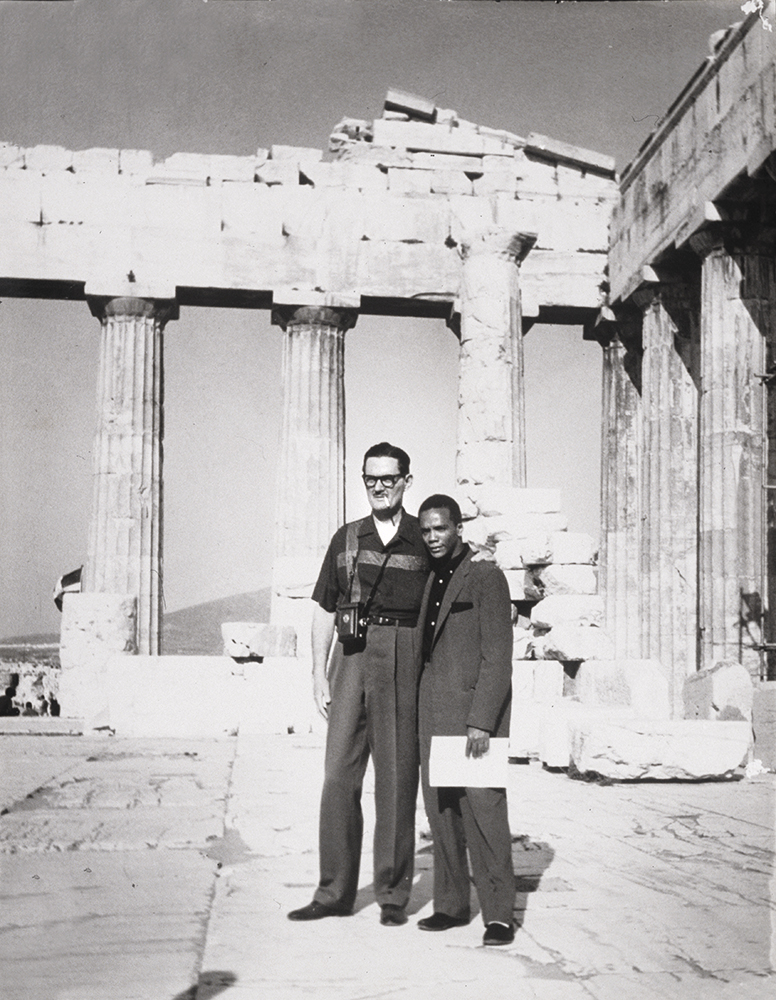
    IJS founder Marshall Stearns and Quincy Jones at the Acropolis.

    A new PBS documentary featuring archival material from the Institute of Jazz Studies is slated to premiere at 10 p.m. on Friday, May 4. Here’s a quick synopsis from PBS.org:

    “The Cold War and civil rights collide in this remarkable story of music, diplomacy and race. Beginning in 1955, when America asked its greatest jazz artists to travel the world as cultural ambassadors, Louis Armstrong, Dizzy Gillespie, Duke Ellington and their racially diverse band members faced a painful dilemma: How could they represent a country that still practiced Jim Crow segregation?”

    Congratulations to Tad Hershorn, Adriana Cuervo, and all of our IJS colleagues who contributed to this project. We can’t wait to see the premiere!

    Special Collections News Roundup
    children's book
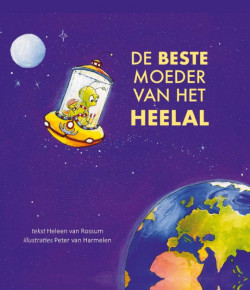
    Helene van Rossum’s new children’s book is titled “The Best Mom in the Universe.”

    Lots of great news coming out of Special Collections and University Archives lately:

    • The finding aid for the New Brunswick Music Scene Archive is now live. The collection continues to grow, and the finding aid will be updated periodically.
    • Speaking of which, the New Brunswick Music Scene Archive has a brand new Facebook page! Be sure to head over and give them a like.
    • A new finding aid is also available for the New Brunswick Vertical File in the Sinclair New Jersey collection. This collection of primarily printed material documents a vast array of aspects of New Brunswick history, mostly between 1935 and 1960 and arranged by subject. Special thanks go to School of Communication & Information graduate student Louise Lobello for her work on the finding aid.
    • The latest children’s picture book by public services and outreach archivist Helene van Rossum has just been published. Written in Dutch, it’s titled The Best Mom in the Universe. Check it out (along with her other children’s books) over on Helene’s blog.
    Busting Students’ Stress
    flyer
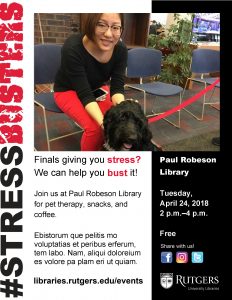
    New Stressbusters flyer templates are available from the Communications Department.

    It’s finals week, which of course means that #STRESSBUSTERS are back at libraries across Rutgers–New Brunswick. But Rutgers–Camden is joining in the fun this semester, too, with the first-ever pet therapy session at Paul Robeson Library slated for Friday, May 4. Good luck to our colleagues at Robeson! Hopefully this is the beginning of a long and successful tradition.

    Are you planning your own stress-relieving finals activities? The Communications Department has created new flyer templates to help promote your events. Check them out here: T:\CENTRAL\Templates\Signage Templates\stressbusters\word templates


  • Sharing Rare Books and Artists’ Books with the Blind and Visually Impaired

    On March 14, we hosted a visit from the Joseph Kohn Training Center for the Blind (130 Livingston Avenue, New Brunswick). The idea for the visit originated in a phone conversation initiated by Amo Musharraf, an instructor at the center, with Christie Lutz, the New Jersey regional studies librarian and head of public services. Since Amo expressed a desire for his class, consisting of 15 blind and visually impaired students and three sighted aids, to look at some of our rare books, Christie put him in touch with me. I remembered meeting Amo several years ago when he dropped by to look at copies of early editions of Paradise Lost, and I was delighted to be back in touch and to be included in what promised to be an adventure. In my 26 years at Rutgers, I had never addressed a class comprised of blind and visually impaired students. Seeing feels indispensable to me, and a lot of the pleasure I find in rare books and art derives from the visual. The question was, what would a blind class find pleasurable in our collection?

    Without sight, other senses—like touch and sound—would be more important. We started by gathering volumes that had interesting tactile elements, for example, a brace of bindings in various animal skins—goatskin, calf, sheep, and vellum. Snakeskin, cowhide, and velvet were suggestions from our rare book cataloger, Silvana Notarmaso, who agreed to speak about them. Not only is Silvana knowledgeable about these materials, but it seemed to us that the class might benefit from hearing different voices.

    It also seemed a good idea to refine the touch experience. Feeling the difference between rough sheep and smooth goatskin would be a nice introduction, because everyone would easily know what they were supposed to be feeling; but touching and analyzing differently finished grains of goatskin would be more challenging and rewarding. After a second or two, students were engrossed in contrasting the milky smoothness of a flat grain finish (which feels like the arm of a leather couch or car seat) with the grooves of a straight grain finish (resembling the surface of a vinyl record, only slightly softer). We told them that, like writers, bookmakers made an effort to appeal to all of the senses. Bookbinders wanted their customers to luxuriate in the sense of touch, and that historical bookbinding was a complex trade.

    To these books we added 15th-century wooden bindings, and 19th-century cloth. As well as helping the students to connect sensually with the objects, we wanted to engage them intellectually by sharing some of their history and contents. So, we talked a little bit about binding history, pointing out that the earliest printed books were bound simply in durable wooden boards with tough leather spines, or workaday vellum, and we shared notes about the texts themselves and our personal experiences with them. For example, we explained that the small octavo book with wooden boards (knuckles rapping for emphasis) and the remnants of a scallop shell clasp was a 1480 edition of the first cookbook ever printed (the same book the great French chef Julia Childs had handled when she came to Rutgers to accept her honorary doctorate); and we noted that the grooved finish of the clothbound first edition of Cooper’s The Song of Hiawatha represents the trade binder’s attempt to manufacture for a wider audience an imitation of the surface of the elegant bespoke goatskin bindings handmade for the wealthy collectors.

    This turn of the discussion led into an aside about book collecting in which we explained that historically, books finely-bound with gold decorations were prestige items acquired by the wealthy and powerful, generally male—a cultural phenomenon that went back to the great Renaissance libraries of collectors like the Medicis—and that the spines of these books were often lavishly tooled in gold because they would be showcased glittering on private library shelves. The boards were less often or more humbly adorned because the books would seldom be taken down and hardly ever read. One of the older students, an African American female whose eyes were almost completely white, commented insightfully, “Oh, that’s why there were so many power paintings of men holding books.”

    Other students made similarly perceptive comments, so that the class often resembled an extended conversation or symposium. And we were constantly reminded of the students’ range of experience: when Silvana talked about the snakeskin and crude cowhide bindings used on Argentine publications, and mentioned that SC/UA holds three copies of Martin Fierro (el Gaucho), a 2,316-line epic poem by the Argentine writer José Hernández, all bound in cowhide, one of the Latina students spoke briefly about Fierro’s popularity.

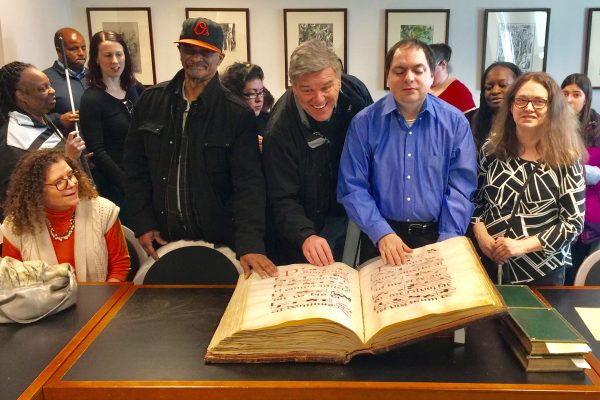
    We also selected books of unusual proportions and mass. Bodies respond in different ways to books of different size. The highlight of a group of large, tall, and chunky books was a massive early volume of musical notation hand-drawn on parchment sheets measuring approximately three feet in height bound in stiff, well-wormed leather over wooden boards decorated with metal bosses and the remnants of heavy, metal clasps. The students were taken by the sweep of the vellum pages, by the harsh, lumpy, pitted surface of the boards, and by the immense weight of the thing. They congregated around this book, and continually asked questions about it, such as what causes worming (one of the students was surprised and delighted to learn that bookworms were an actual thing), what purpose the clasps served, how such an immense book was used and by whom, and whether anyone who could read the musical notation ever came by. The commanding dimensions of the volume made it the focal point or perceptual center of the class, and I pointed out the obvious fact that it would have been so in a church or monastery. The auratic power of the book, realized in this particular volume, was a cultural reality, one we forget when we examine texts on computer screens.

    And we talked about how the authority of the book could be subverted for artistic purpose in a discussion of artists’ books. Most of the students had never heard of artists’ books and some expressed reservations about the concept (they laughed when I pointed out that they were frowning), but they regarded the objects with a great deal of intense interest and open-mindedness.

    Recently acquired glass books by Amanda Thackray were passed around gently, almost reverently. The students showed great respect for the integrity of the object and thoughtfully considered the artist’s statement that books are bodies and she wanted her artists’ books to be held. To contrast Amanda’s weighty, artistically rounded glass, I handed them a book by Anna Pinto consisting of calligraphy on light driftwood shaped by the sea. The diverse non-traditional materials used in Suellen Glashausser’s artists’ books (margarine wrappers, aluminum foil, pieces of metal from a Sprite soda can, cigar labels, cardboard collars, brown paper bags, etc.) provoked side conversations. The students were impressed by Suellen’s ability to find the voice in virtually any material, as well as her belief that every material has something valuable to say. One of the aids intensified our sense of communing with the artist by telling us she had studied with Suellen at Montclair State University and that she had been a fabulous teacher.

    The class responded thoughtfully to Buzz Spector’s elegant single sheet work Cage. Buzz deliberately printed Cage on a handmade paper that crackles when handled. (I passed the sheet around for the students to hear.) His intention seems to have been for beholders of the work to have an acoustic experience to facilitate a connection with John Cage’s famously silent 4’ 33”.

    The most popular artists’ book was Marcia Wilson’s provocative All the Men I Ever Slept With, a coffin-shaped wooden book with a metal screw through the bottom that serves as a binding agent. The joke of the screw poking through the images and becoming a three-dimensional extension of the imagery is immediately comprehensible (the students were eager to feel the book and explain the joke to each other as they passed it around). Having already handled driftwood and glass books, they grasped the idea that form is information, and laughed at the fresh ingenuity of the object; they responded to my reading a page of the author/artist’s text by pointing out that while it was amusing, it was also wistful—that the book wasn’t the cartoon (my word) it first appeared to be.

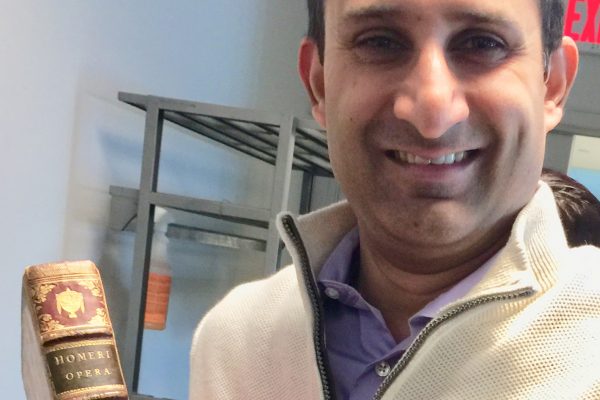
    Naturally, since Paradise Lost inspired Amo to arrange the visit, we featured it in a selection of iconic texts including our editio princeps of Homer (1488), the second folio of Shakespeare (1634), and The King James Bible (1611). It seemed important to say that according to legend, the great Homer was also blind, and we sought to emphasize its importance by processing around the room with the book in hand inviting everyone to touch the cover. The students asked us to open the book so they could feel the pages as well.

    The class was intensely responsive, engaging, inquisitive, and astute. Their visit to our library was clearly important to them, as it was to us, and midway through, the director of the program, Dell Bashar, drove over to be a part of it. One of the students, Dave, who was graduating at the end of the week, caught him up on some of what he’d missed, summarizing a good 40 minutes of our talk in about five minutes. Another student wanted us to discuss a book we had overlooked (a multivolume edition of Lawrence Sterne’s Tristram Shandy housed in a slipcase with a false front that resembled the curved spines of three substantial volumes side-by-side). She had found the object on her own and she couldn’t work out by touch what it could be. She wanted to know.

    Although we had arranged in advance to take photographs, the demands of the class made it impossible. The photographs here were taken by Amo and by one of his aids. When Amo texted the photos he jokingly captioned one of me looking surprised: “Your reaction when three vans full of blind people showed up looking for you :)”

    Amo deemed the visit successful, calling it “history,” and Dell said he would like to bring future classes to see our collections.

  • Tom Frusciano Receives McDonough Award

    Tom Frusciano accepts the 2017 Roger McDonough Librarianship Award from Bob Vietrogoski.

    On October 24, at a meeting of the New Jersey Studies Academic Alliance, the 2017 Roger McDonough Librarianship Award was presented to Thomas J. Frusciano, the university archivist of Rutgers, The State University of New Jersey. This award is named for Roger H. McDonough, New Jersey state librarian from 1947 to 1975. Beginning in 2002, the New Jersey Studies Academic Alliance, together with the New Jersey Historical Commission, Mid-Atlantic Regional Archives Conference-New Jersey Caucus, and the New Jersey Library Association History & Preservation Section, has given this award annually to a librarian, archivist, or manuscript curator for excellence in service to the New Jersey history research community and/or the general public.

    A New Jersey native, Tom Frusciano is a tenured member of the library staff at Rutgers University Libraries’ Special Collections and University Archives. He began his professional career as an archivist at Educational Testing Services in Princeton. He then became the first professionally trained university archivist at New York University, and later coauthored New York University and the City: An Illustrated History. At Rutgers since 1989, Frusciano has written or edited histories of the presidents of Rutgers, Douglass College, and the Rutgers Scarlet Knights football team, among many other subjects. In recent years, he played an integral role in the 2016 Rutgers 250th celebration, library exhibit, and commemorative historical volume entitled Rutgers: A 250th Anniversary Portrait. Starting in 2015, he also served on the Rutgers Committee on Enslaved and Disenfranchised Populations, which produced the report Scarlet and Black. This committee’s important work has led to the new naming of James Dickson Carr Library (formerly Kilmer Library), now named in honor of Rutgers’ first African American graduate.

    Beyond Rutgers, Frusciano has long been professionally active, particularly in the Society of American Archivists (SAA) and in the Mid-Atlantic Regional Archives Conference (MARAC). He was elected to the SAA Council from 2009 to 2012, coedited the SAA manual Archival Arrangement and Description (2013), and was named an SAA Fellow in 2002. He has taught archival courses at both New York University’s Archival Management and Public History program, and the Rutgers School of Communication and Information. Some of his former students are now archivists and librarians at archives, libraries, and historical societies throughout New Jersey and elsewhere. He has also served on several editorial boards and coedited the Journal of Archival Organization.

    Tom is the fourth recipient of the McDonough Award from Rutgers University Libraries’ Special Collections and University Archives, following Bonita Craft Grant (2011), Janet Riemer (2014), and Ron Becker (2015).