Category: Department

  • Button Making Events: A Magnet for Engagement

    Button Making Events: A Magnet for Engagement

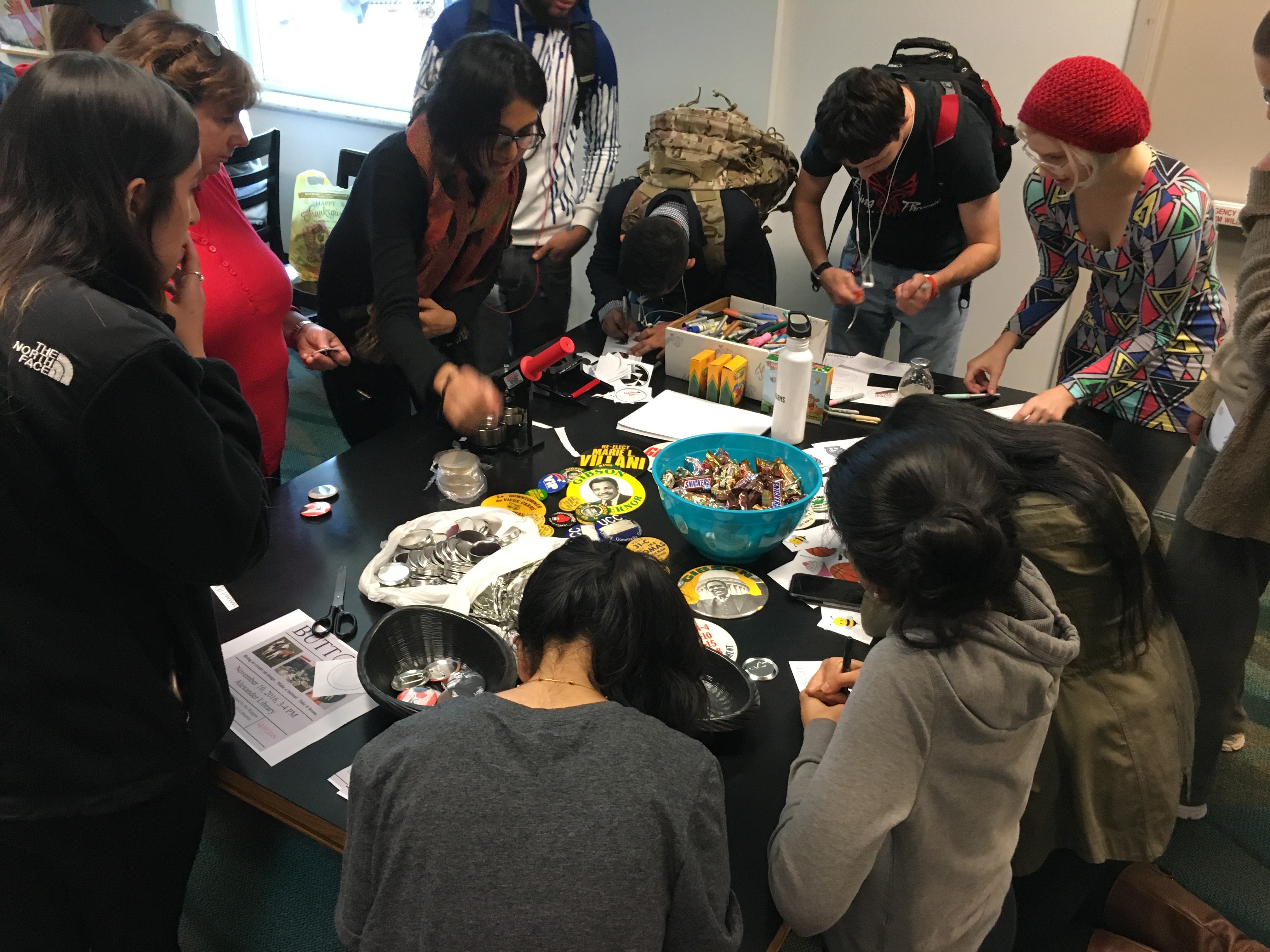
    buttonsOn Thursday, November 10th, 2016, Tara Maharjan, Processing Archivist, Janki Patel, Undergraduate, Art History & Art Library reference assistant, and Megan Lotts, Art Librarian, hosted a pop-up button making space in the lobby of Alexander Library.  At this event patrons had the opportunity to create and make their own button, take a pre-made button of an image from Rutgers University Libraries Special Collections and University Archives, and view a vintage button collection, discovered in a basement, in Edison, NJ.

    The inspiration for purchasing a button maker came from the Association of College & Research Libraries (ACRL) annual conference in 2013, when Char Booth, current Associate Dean, Library at California State University San Marcos, spoke about libraries building good will within their communities and noted that the button maker they purchased was worth its weight in gold.

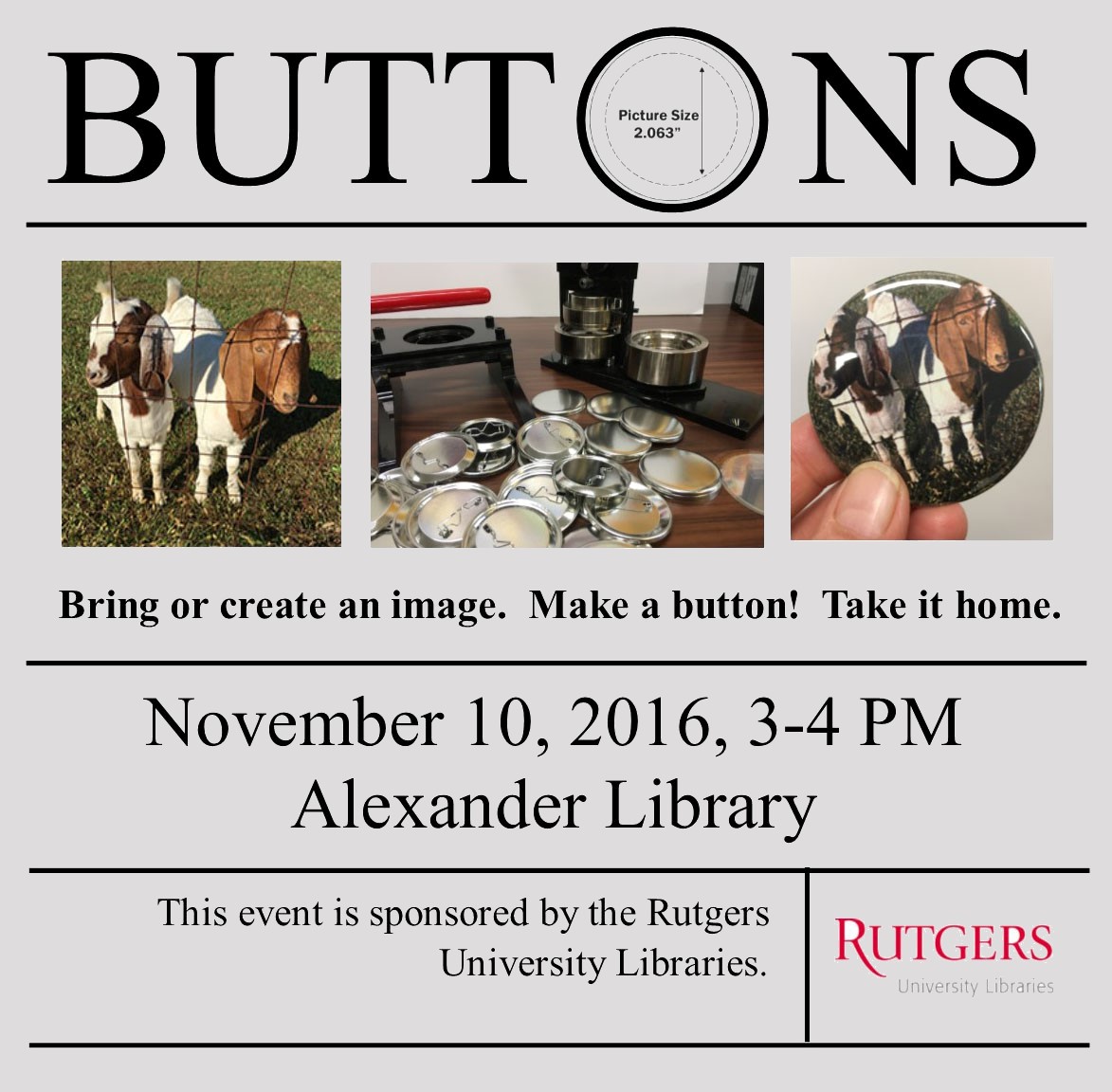
    button-flyerButton making can be a low-cost pop up making space that addresses the idea of object, from concept to consumption. In the case of a button, a wearable item is the outcome.  Creating a button can strengthen ones’ creative thinking and problem solving skills. Furthermore, it also addresses finding and using images and understanding copyright laws.

    Throughout the event many positive comments were made by Rutgers students, faculty, staff, alum, and non-affiliate patrons. Multiple reference questions were asked, and a few patrons inquired about other making opportunities available at the Rutgers University Libraries.  Also during the event, the hosts connected with a new student, who was uncertain about navigating the Rutgers systems, and we could share with her information about the libraries, the campuses in general, and what to do in the local area. Lastly, following the event a student reached out from a Rutgers Learning Living Communities (LLC), to ask for 23 Paul Robeson buttons.  The LLC is currently researching Robeson, and they all wanted this image from the RUL collections to wear proudly.


    Save

  • Halloween fun at the Mathematical Sciences and Physics Library

    The Mathematical Sciences and Physics Library included separate prizes for their student workers and library users.
    The Mathematical Sciences and Physics Library included separate prizes for their student workers and library users.

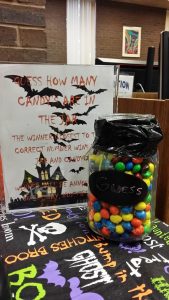
    This Halloween season the Mathematical Sciences and Physics Library asked and answered an important question: how many mathematics, engineering, or pharmacy students does it take to figure out how many peanut and peanut butter M&M’s are in a jar?

    From October 17 to October 31 the library held a candy guessing contest for both their student employees and library users–6 lucky winners in total were declared on November 1.

    According to L. Melanie Miller, the students have used many different methods and tools to put forward their best guess.

    “What is most fascinating, is watching how a number of students have used ruler’s, calculators and several different calculations to figure out how many pieces of candy there are in the jars,” said Miller.

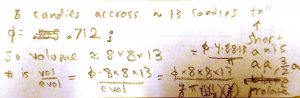
    She also notes that a number of the student workers collaborated to help each other figure it out. Miller describes the scene, saying, “they measured the width, length and circumference of the Jars and even went so far as to include the size and shape of the candy into their calculation.”

    An example of one student's candy counting equation taking into account the diameter and height of the jar measured in candy.
    An example of one student’s candy counting equation taking into account the diameter and height of the jar measured in candy.

    Needless to say, this has been a fun activity for both users and staff. From funny discussions about the choice of candy — what was it about peanut M&Ms? Why not choose plain ones? To last ditch efforts to coerce or persuade the librarians to reveal the correct number of M&M’s, the users and students workers who participated made this a great program.

    So, what were the prizes that were on the line?

    Student Staff Prizes

    1st Prize – $15.00 Amazon Gift Card

    2nd Prize – the Jar of Candy

    3rd Prize – $5.00 Cash


    User Prizes

    1st Prize – the Jar of Candy

    2nd Prize – Library Gift Bag

    3rd Prize – Library Gift Bag

    Save

    Save

    Save

  • A rare find in the Rutgers Art Library

    albers
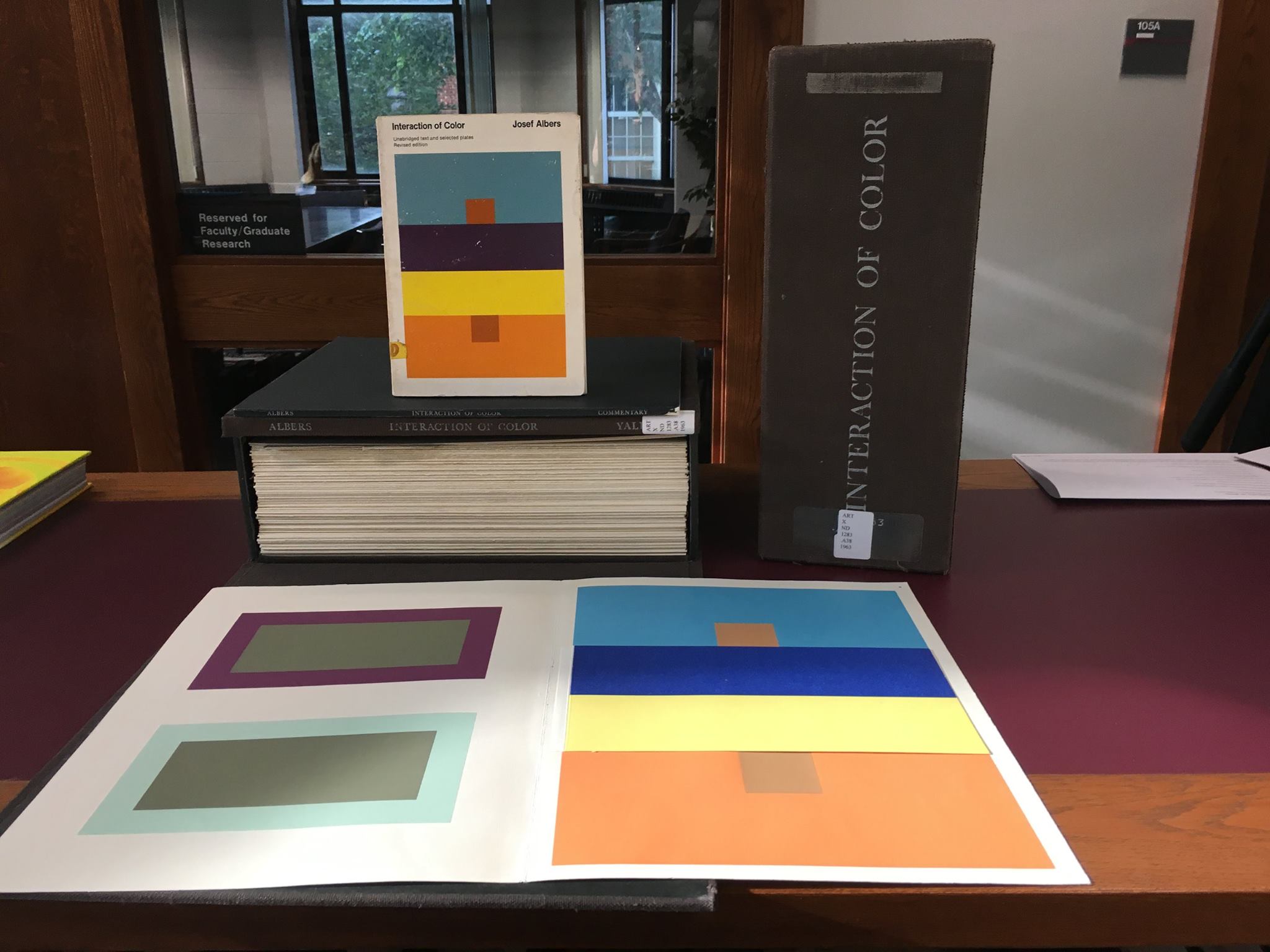
    Interaction of Color on display at Rutgers Art Library. Photo credit: Megan Lotts.

    Rutgers Art Library recently unearthed a 1963 copy of a book by Josef Albers, Interaction of Color. The 1963 copy is special, in part, because of its size and format. It was, according to Yale University Press, originally published “as a limited silkscreen edition with 150 color plates.” There were only 2000 original copies made and they sold out quickly. Some copies of this valuable book have made it to auction in recent years.

    Following this limited run, Interaction of Color was released in smaller format books (shown in the photo above is art librarian Megan Lotts’ version from the 1990s) and eventually an app from Yale University Press.

    The book was on display at the Art Library as part of the launch for the coloring book and will be put to good use in several courses in the spring, according to Lotts.

    “I personally feel that this is a spectacular example of the evolution of a book, and will definitely be showing this off to my Byrne seminar in the spring, as well as the Color classes out of Mason Gross Visual Arts. I’ve been fortunate to show this book off to many people from the Zimmerli, MGVA, and arts enthusiasts since we have found it. This book really leaves a lot of mouths dropping.”

    For a complete history of Interaction of Color, see this interesting article from The Amherst College Press.


    Save

  • Piloting Stories on the Libraries’ Instagram Account: A Case Study

    Back in August, Instagram announced a new feature called Stories. Similar to their counterparts on Snapchat, Instagram stories allow users to create a “slideshow” of images and/or videos that is viewable for 24 hours before disappearing.

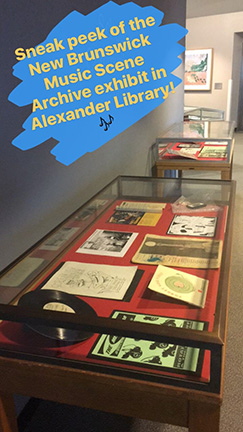
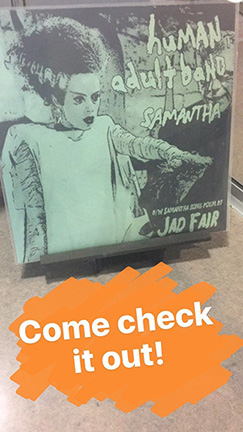
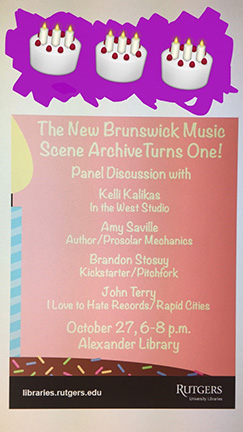
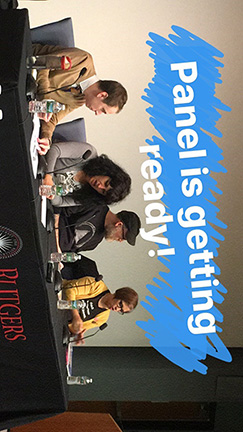
    Last week, we (@rutgerslibraries on Instagram) published our first story to help promote the New Brunswick Music Scene Archive anniversary panel and exhibit. Following are some reflections after our first foray into using this new feature.

    Pros

    • As is suggested by their name, stories allow you to shape a narrative around your subject in a way that a single image or video may not.
    • Much like Snapchat stories, Instagram stories are well-suited to capturing action as it is happening. This allows you to leverage the “fear of missing out” to generate excitement around your programming.
    • When you post or update a story, your account appears in a list that runs across top of others’ Instagram feeds. This extra visibility is a welcome boon given recent changes to the platform’s timeline algorithm.
    • You can experiment with the story-based approach to social media without having to build a new audience from scratch on a different platform.

    Cons

    • While you can download your story content to your camera roll as it is published, the preferred portrait orientation makes it difficult to repurpose your content elsewhere. Shooting in landscape orientation requires your viewers to either turn their heads awkwardly or rotate their phones, an inconvenience that puts your content at risk of being skipped over.
    • The 10 second limit on video clips presents some challenges. For example, a speaker’s comments can easily run over and get cut off, necessitating additional takes.
    • Viewing statistics disappear along with the image or video they are attached to, complicating assessment.
    • Instagram’s story editing tools (basic text and drawing) are limited compared to Snapchat’s, especially its robust filter system.

    Next Steps

    • Identifying more story opportunities to allow for additional testing. (If you have any ideas, please get in touch!)
    • Incorporating stories into the Instagram content schedule.
    • Formalizing the procedure for recording and reporting story viewing statistics.
  • Digitization Project at IJS Part of International Effort to Preserve Music Journals

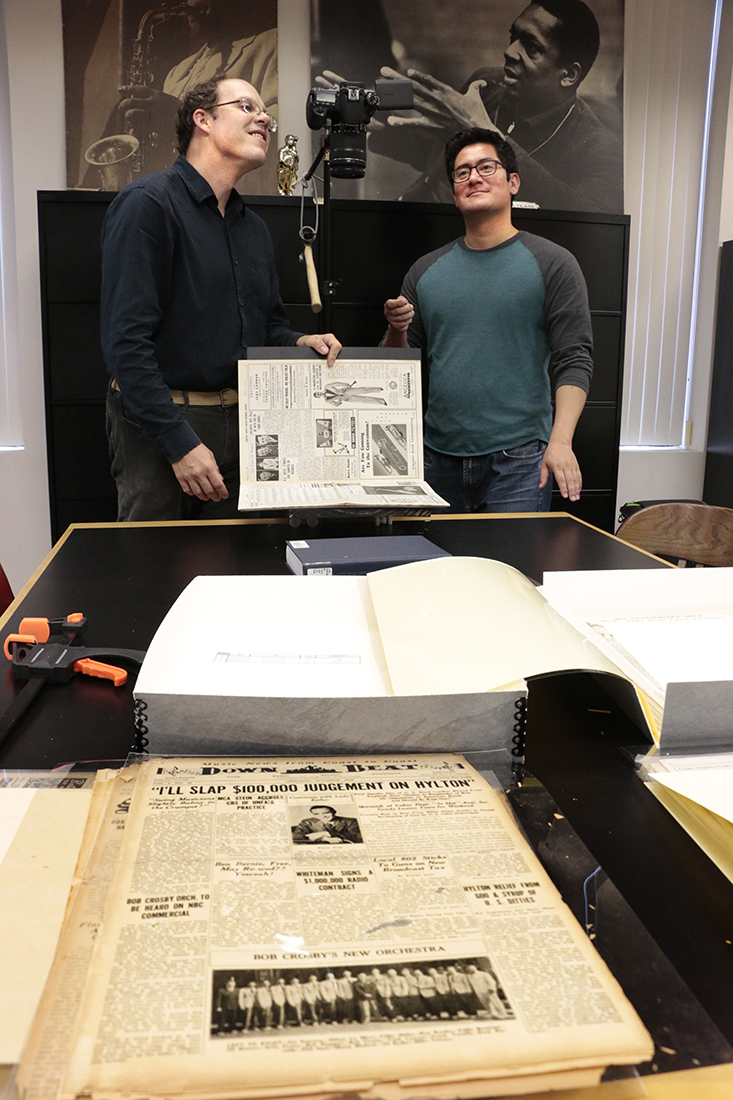
    Ben Knysak, left, of RIPM and assistant Gabriel Caballero scanning 1930s issues of Down Beat in October. The effort at IJS is part of an international project to digitize music publications going back to the eighteenth century. Photograph by Mark Papianni.
    Ben Knysak, left, of RIPM and assistant Gabriel Caballero scanning 1930s issues of Down Beat in October. The effort at IJS is part of an international project to digitize music publications going back to the eighteenth century. Photograph by Mark Papianni.

    For two weeks in October, the Baltimore-based research center RIPM set up a scanner in the reading room of the Institute of Jazz Studies. The main objective was scanning the first few years of the venerated magazine Down Beat and a few others of the hundreds of jazz, pop and related periodicals and journals collected by IJS since its founding in 1952.

    RIPM (Retrospective Index to Music Periodicals) was founded in 1980 by H. Robert Cohen at the behest of the International Association of Music Libraries (IAML) and the International Musicological Society (IMS). The goal was access to some 5,000 international music journals and publications published from 1760 through the 1960s.

    “The goal was to create access to journals both for historians and lovers of music,” said Benjamin Knysak, managing associate director of RIPM. “Through these publications, people can put themselves in places where music history happened.”

    Knysak said digitizing jazz periodicals face some of the same issues as other periodicals. Some issues are more unique to jazz, such as relative scarcity.

    “Many jazz journals are very rare sources of documentation,” he said. “They may have been printed in the limited numbers and had limited distribution because they were not published by large corporations. Many were published by individuals: musicians, aficionados, critics and collectors.”

    In many cases, RIPM has tracked down those solo publishers or their heirs who he said have been uniformly thrilled to have their labors of love preserved for posterity.

    The Jazz Database will be online in 2017. It will provide fully searchable text and photos based on technology developed by RIPM.

    Knysak hopes the relationship between RIPM and the Institute will continue for many years.

    “IJS is amazing, simply amazing,” Knysak said. “The breadth and depth of publications held there is unique. We are honored to work with the collection and wonderful colleagues.”

    “For many years jazz researchers have been dreaming of having the kind of access to the jazz periodical literature that RIPM will be providing,” said IJS director of operations Vincent Pelote. “I am both proud and happy to have had a part in making that happen.”

    In addition to Pelote, associate director Adriana Cuervo and collections manager Elsa Alves are coordinating the project on behalf of the Institute.

    Save

  • Visit of Cape Town Mayor presents international opportunities for Institute of Jazz Studies

    img_2723-100
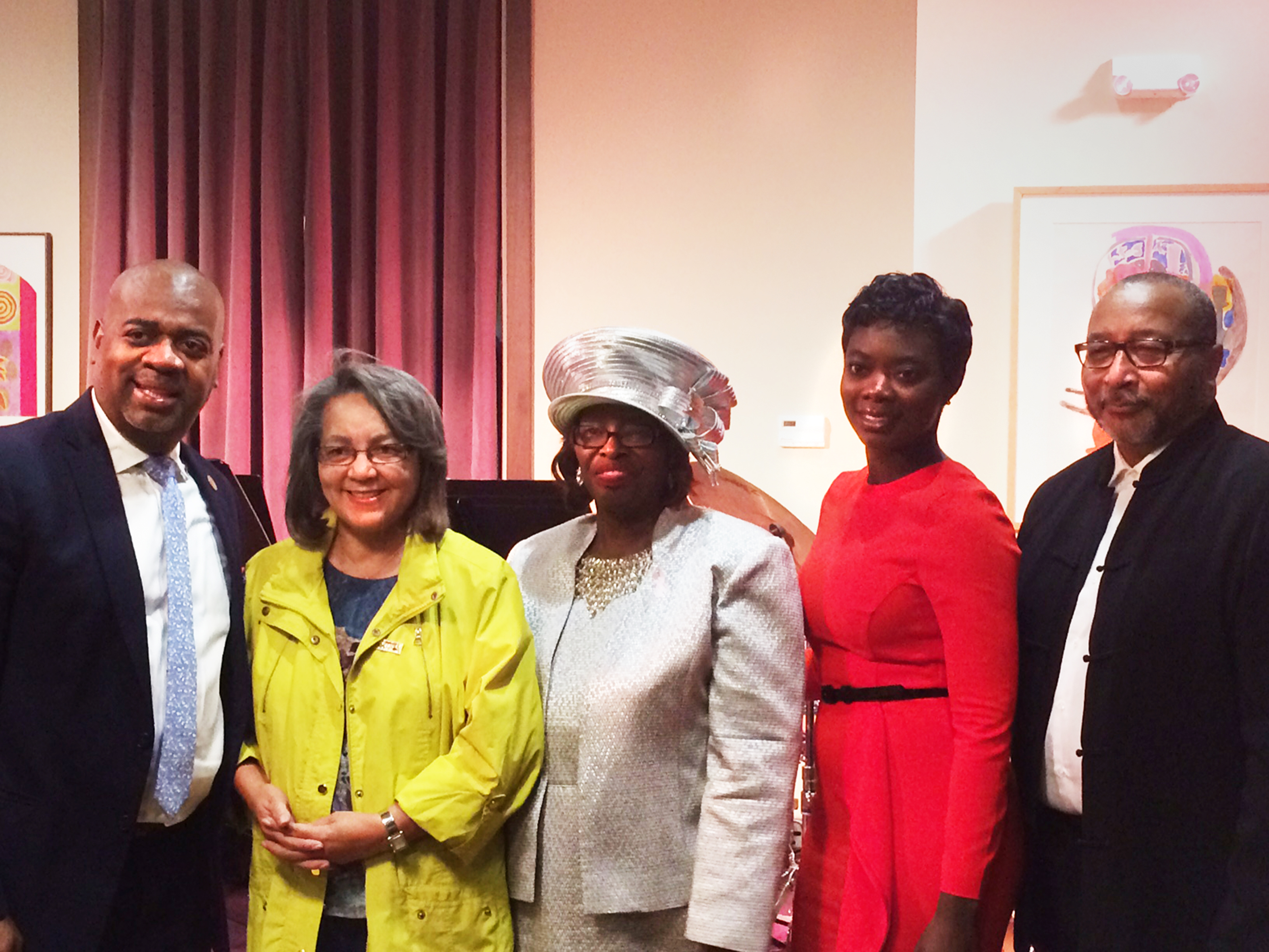
    On October 9, Capetown Mayor Patricia de Lille was feted during a reception at Clement’s Place, a new jazz venue operated by the Institute of Jazz Studies and the Office of the Chancellor of Rutgers University-Newark. From are Newark Mayor Raz Baraka, de Lille, City Council President Mildred Crump, Linda Juma, and IJS Executive Director Wayne Winborne. Photograph by Bronwyn Douman.

    The recent visit of Cape Town, South Africa Mayor Patricia de Lille furthers a relationship to the Institute of Jazz Studies that began in June when IJS Executive Director Wayne Winborne paid a two-week visit to the city.

    De Lille arrived in Newark on October 9 and went immediately to a dinner reception held at Clement’s Place. There she was greeted by city officials–led by Mayor Raz Baraka and City Council President Mildred Crump–and Rutgers-Newark Chancellor Nancy Cantor. Music was provided by a sextet led by drummer T.S. Monk, son of the legendary pianist and composer Thelonious Monk. The following morning de Lille attended a breakfast in the Special Collections Room at the Dana Library.

    Winborne said de Lille’s visit to Newark was one stop in a tour that also included New York, Los Angeles, and Atlanta. Among the topics of discussion were democratic institutions, civil society, and jazz.

    On his trip to Cape Town, Winborne was dazzled by the diverse music scene he encountered. He visited such local clubs as The Crypt, The Drawing Room, and Straight No Chaser, and met with musicians, students and educators at the University of Cape Town and the University of Western Cape Town.

    “I heard everything from straight ahead jazz to South African to pop-oriented fusion,” said Winborne. He also pointed to the success of the Cape Town International Jazz Festival which has brought in such mainstays on the American jazz scene as pianists Chick Corea and Herbie Hancock and saxophonist Gary Bartz as well as well-known local and regional musicians.

    Winborne might return to Cape Town as early as January to meet with the mayor, as well as the regional minister of culture to set up some exchange programs between IJS and the city. He predicts IJS will host performances of South African musicians.

    Cape Town jazz enthusiasts have already spoken to him about their interest in establishing an archives there to preserve the history of the music. This may result in workshops given by IJS staff members to help get the project off the ground.

    “I think this idea has huge potential,” Winborne concluded.

    Save

  • It’s Official: Dana Marks 50th Anniversary as Federal Depository

    federal-depositoryWhere do you find population figures from a century ago? Health statistics over time in Newark, New Jersey or the U.S. as a whole? Business and economic or other information for those studying small business development or wanting to go into business for themselves?

    Valuable information such as this can be summed up in two words: government publications.

    In December, Dana Library celebrates 50 years since it obtained its status as a Federal Depository Library for the 10th Congressional District of the State of New Jersey. It has been a boon to faculty, students, the general public and the business community. It promises to continue to be a major resource at Dana even as most of the government publications are now available online. Dana also serves as a depository for many, but not all, publications of the State of New Jersey.

    One enhancement that accompanies their presence at the libraries are classes in which library faculty reaches out to faculty and students to educate them on the use of publications distributed by the Government Publishing Office (GPO) and online resources issued by the Federal Government.

    “The subjects covered by government publications go from the general to the specific, essential for researchers as well as the general public. Most importantly, government publications are available to all users regardless of affiliation or age,” said Wen-Hua Ren, the documents librarian who supervises government publication collections at Dana.

    New Jersey is home to as many as 25 federal depositories. Each of Rutgers University campuses, including New Brunswick and Camden, has a designated federal depository library. RU-Newark has two, the other being the Law Library which receives depository materials that support legal research and study.

    Programs in recognition of the fiftieth anniversary will be held in December and possibly also in January 2017. In addition to a display, there will community instruction programs offered to educate the public on the usefulness of the collections and service.

  • Exhibit and Tours to Emphasize Modernist Aspects of Dana Library and Rutgers-Newark Campus

    docomomo-005
    Dana Library was the centerpiece for modernist buildings erected on the Rutgers University-Newark which are highlighted in an exhibit opening and tours at the library on October 15. Dana Library Archive.

    In 1959 Rutgers president Dr. Mason Gross fired a blunt shot across the bow in the pages of the New York Times in his quest to pass a $75 million bond issue. His plea was as much about expansion of the facilities as adding depth to the university’s core mission of education, culture, and social mobility for the burgeoning Baby Boom generation.

    Gross referred to New Jersey as educationally “impoverished” and culturally “almost bankrupt” in advocating Rutgers’ power to make a difference. The funding package passed and its impact on the Newark campus with construction of seven new buildings over the course of the 1960s was profound.

    Part of that legacy—the Newark campus’s inventory of significant modernist architecture and spatial concept—is the subject of an exhibit opening October 15 at the John Cotton Dana Library, Making a Place: Rutgers University-Newark as a Microcosm of 1960s America. Programming will also feature hour-long campus tours led by Newark-based architects, preservationists, and historians; in addition to tours of the world-renowned Institute of Jazz Studies, located on the fourth floor of the library. For additional details, see: http://docomomo-us.org/architecture_urbanism_rutgers_university_newark

    Cultural historian Dr. Eva Giloi, an associate professor of history at Rutgers University-Newark who is organizing the festivities, said Newark figured prominently in Gross’s plans.

    “Buildings here were designed and situated on the campus as part of a coherent vision of modernist mid-century architecture, with Dana Library the center of student life and community involvement,” said Giloi. “It was a humanistic concept in the way it used open space.”

    dana-plaza-001
    October 15, 2016 has been designated a DOCOMOMO US Tour Day. Dana Library Archive.

    The project’s supporters go way beyond the Rutgers community. The campus will enter the registry of DOCOMOMO, the world’s leading modernist preservation organization located in Barcelona, Spain.

    Giloi describes the exhibit as a “multisensory exhibit about the campus history and architecture in Dana Library,” using original architectural blueprints, photographs, yearbooks, and other artifacts bearing on the campus and student life during socially tumultuous times.

    Dr. Askew, director of Dana Library, said of Giloi’s research, “The campus plan from 50 years ago all started with a library building. Therefore, it is befitting that Dana Library, in addition to being a stop along the tour, also has a central role in this event.”

    The exhibit and programs are sponsored by the Dana Library, the Institute of Jazz Studies, Rutgers University-Newark Department of History, The Clement A. Price Institute, and DOCOMOMO, which has designated the events as an official U.S. Tour Day.

    Activities this month will be amplified when the fiftieth anniversary of Dana Library gets underway next year.


    Save

    Save

  • Dana Library Transformation into 21st-Century Knowledge Center Heading from the Drawing Board into Reality by 2018

    Dana Library Transformation into 21st-Century Knowledge Center Heading from the Drawing Board into Reality by 2018

    Floor-plan of the P3 Collaboratory which is expected to be in operation on the third floor of Dana Library by 2018. Click to enlarge.
    Floor-plan of the P3 Collaboratory which is expected to be in operation on the third floor of Dana Library by 2018. Click to enlarge.

    Imminent plans to develop the third floor of the John Cotton Dana Library by 2018 are integrated with a farsighted and sweeping reconceptualization of the role of libraries at the juncture where 21st-century pedagogy and information delivery meet. These were among topics addressed in an initial report and recommendations released September 26 by the New Professoriate Study Group, co-chaired by Dr. Bonita Vesey, vice chancellor for planning and implementation, and Dr. Consuella Askew, director of Dana Library.

    The P3: A Collaboratory for Pedagogy, Professional Development and Publicly-Engaged Scholarship is designed to meet the needs of educators from preparation of graduate students for high impact, publicly engaged scholarship and leadership skills. Attracting promising scholars to a curriculum offering broad strategies for career-long activities in the world of academe and beyond holds the keys to success of the concept.

    Programming in support of the P3 Collaboratory is getting underway this fall with offices located on the second floor of the library. In addition, Rutgers-Newark chancellor Nancy Cantor is convening a two-day conference on the new professoriate October 28-29. The initiative is also the motivation behind $2 million in seed grants through the chancellor’s office to encourage creative cross-disciplinary, high impact, sustainable and innovative programs.

    Dr. Vesey said that while aspects of the P3 Collaboratory are not new, the combination and depth of the programs on the Rutgers-Newark campus is unusual and ideal for the diversity of students, faculty, and staff of Rutgers-Newark.

    “Under this plan, the library will be less of a repository of books, but the intellectual center of the campus, a role Dana Library already fulfills,” she said. “Consuella really understands and supports the mission of libraries in the 21st century.”

    Save

    Save

  • Welcome to the New Shared User Services Department

    Welcome to the New Shared User Services Department

    Krisellen Maloney, Vice President for Information Services and University Librarian

    I recently announced the formation of the Shared User Services Department, headed by Rhonda Marker as director of shared user services. This month, I want to provide a bit more context for this shift and how it fits into the priorities for the Libraries.

    To begin, it is best to look at the budgetary issues and priorities that we discussed at the State of Libraries in 2015, what we have learned, and how what we have learned is shaping our actions and the priorities for this year.

    A major priority—because it is at the heart of everything that we do—has been to clarify decision-making within the libraries. At the State of the Libraries, we talked about several ways in which we would do this, but the two that are most relevant to this discussion are the roles and decision-making authority of the AULs and directors and improving budget transparency.

    Throughout the year, as we began to define roles, it became apparent that having the coordinating function for shared public services and the leadership of the New Brunswick Libraries combined under one AUL was causing confusion. This is the same structural problem that the University addressed when they separated the executive vice president for academic affairs position into two positions: a senior vice president for academic affairs and the chancellor of Rutgers–New Brunswick. Following the university structure, we knew that we needed to separate the coordinating function and the leadership of New Brunswick Libraries.

    Budget transparency is also a driver for clearly defining central and university functions. We are now in the thick of the RCM budget process, and we know that the four chief financial officers expect us to accurately report expenses. A clearly defined central unit would bring more clarity to our accounting. The RCM budget model and our funding levels brought in another factor. With no funds available to create a new unit, the function of an existing unit would need to be modified.

    Two more priorities from the State of the Libraries provided us with ideas of how we could redefine our central units to support the changing university environment: the need to better understand and imporove our collections and the need to clearly articulate our vision for advanced research support, including scholarly communication.

    This year, we have begun to address collection management and development. We’ve used central and New Brunswick reserves to make large purchases that fill some holes in our collection. However, the results from our recent LibQUAL+ survey indicate that the negative perceptions of our collections are linked to discovery issues and problems with the website. Based on these findings, we have set a new priority for this year to improve information control which we will discuss more fully at the 2016 State of the Libraries.

    We are pioneers in the areas of advanced research support and scholarly communication, but internally we lack the infrastructure—organizational structure, connection to Cabinet, clear sources of funding—to support a path forward. This is something that we will study over the next year.

    With a need for improved information control and a lack of direction for scholarly communication priorities, we looked at the Scholarly Communications Center to see if there was an opportunity to restructure. Over many weeks this summer, I worked with a team to tease out the various functions of the Scholarly Communications Center, assessing each responsibility and aligning it with the appropriate unit or department. These were not easy decisions because advanced research support and discovery are complex aspects of what we do as a library system.

    Our goal was to create a department that could play a central coordinating role and be a single point of entry to access ongoing scholarly communications projects and to bring new projects into the fold.  The Shared User Services Department will also coordinate discovery, the website, and the shared components of reference. The Libraries have put a great emphasis on transparency and accountability over the previous year and SUS will work closely with University Library Directors and Cabinet to prioritize projects and communicate with infrastructure units to make sure that resources are available and requirements are clear. In essence, they will be the one-stop shop for project management on these larger initiatives.

    I noted this in my earlier announcement, but it is worth reiterating that this transition also involves significant changes in the role of the directors, IIS and RIS.  I will explore each of these in upcoming issues of the Agenda.

    These are exciting changes for the Libraries and I anticipate the work of the SUS department will further shift and mold our priorities over the coming year. During this period of transition and change, I encourage you to speak with the directors and AULs if you have concerns, suggestions, and ideas that will help us move forward in a smart, efficient way.


    Save