This month, What Exit? from Special Collections and University Archives featured two long forgotten New Jersey heroes, using materials from the Rutgers College War Service Bureau and the Terradell Family Papers.
Excerpt:
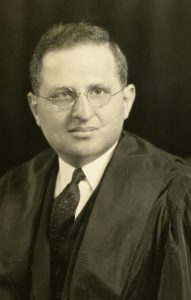
Portrait of Theodore Rosen. Undated, ca. 1926.
With a growing number of Rutgers men in Uncle Sam’s olive drab, Earl Reed Silvers (RC 1913) established the Rutgers College War Service Bureau (RCWSB) in August 1917 to keep the 800 men in service up to date with frequent news of the college and each other. “As far as can be ascertained, no college or university in the United States kept in such close touch with her alumni and undergraduates in the army or navy,” reflected Silvers, “nor has any college the mass of material, war letters and relics, which were sent to old Rutgers by her appreciative sons.”
Counted among the alumni who corresponded with Silvers and the RCWSB was Theodore “Theo” Rosen (1895-1940), Rutgers College Class of 1916, who served as First Lieutenant in the 315th Infantry, 79th Division.
Creeping and crawling toward the German line in search of a machine gun nest on the early morning of November 4, 1918, Rosen found himself in the path of fire. One bullet rendered his right arm useless; the other tore through his left cheek, filling his mouth with blood and taking out seven teeth. The 23-year-old would lose the top of his left thumb, break his left wrist, have his right arm amputated, and suffer impaired hearing and vision before the onslaught was over. He only recovered consciousness as a P.O.W. on the operating table at Longwy, where he remained prisoner for the eight days before the Armistice in November 1918.
How to create a calendar appointment from an email message
With so many events publicized via distribution lists like RUL_Everyone and other University-wide lists, it may be difficult to keep track of meetings, webinars, training sessions, speakers, and other events you might wish to attend. The best way to make sure you do not miss these opportunities is to add them as appointments on your Rutgers Connect calendar.
It is very easy to create an appointment on your Rutgers Connect (OWA or Outlook) calendar without having to retype the details from the email message. We have prepared step-by-step instructions to show you how.
If you have questions, or need assistance with Rutgers Connect, please contact IIS via email at support@rulhelp.rutgers.edu, or by phone at 848-445-5896, option 7.
Tracey Meyer, Information Specialist, Integrated Information Systems
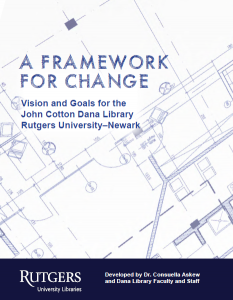
As the nexus of a dynamic university in the midst of transforming and reinventing its brand, Dana Library/Institute of Jazz Studies is poised to move into its next iteration. Our goal is to become a user-centered library that can nimbly respond to our users’ continually changing needs in innovative ways. The Dana Library/IJS faculty and staff embarked on a six-month process in order to identify our priorities and objectives needed to achieve this goal. The resulting document, Framework for Change: Vision and Goals for the John Cotton Dana Library Rutgers University–Newark, provides readers with a high-level view of our path to success.
We began our work in spring 2016 by identifying three high priority focus areas–services, collections and space. These focus areas supported not only the Rutgers University Libraries priorities, but also the Rutgers University–Newark Strategic Plan. Each priority area was given individual attention and consideration by a dedicated group of Dana faculty and staff who volunteered to compile and consider available data about the area, add their valuable expertise on the area topic, and provide recommendations for how we can enhance these areas to better meet the needs of our users in the 21st century. The resulting compilation of this work led to a 30+ page document which detailed specific services enhancements, space needs, and collection management activities. This document will serve as our road map for next several years.
The Framework for Change document presents a broad overview of the detailed steps necessary for us to achieve success. This document will be used as an advocacy tool for our local university administrators and could also be used as a fundraising tool for donors. No matter how this document might be used externally, Dana Library has charted its course and is ready to embark on a journey to success!
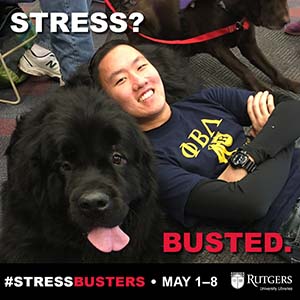
The New Brunswick Libraries announced their schedule of #Stressbusters events for the spring exam period. Highlights include a photo booth at the Math/Physics Library, button making at the Art Library, and pet therapy sessions at Alexander, Douglass, Kilmer, and LSM.
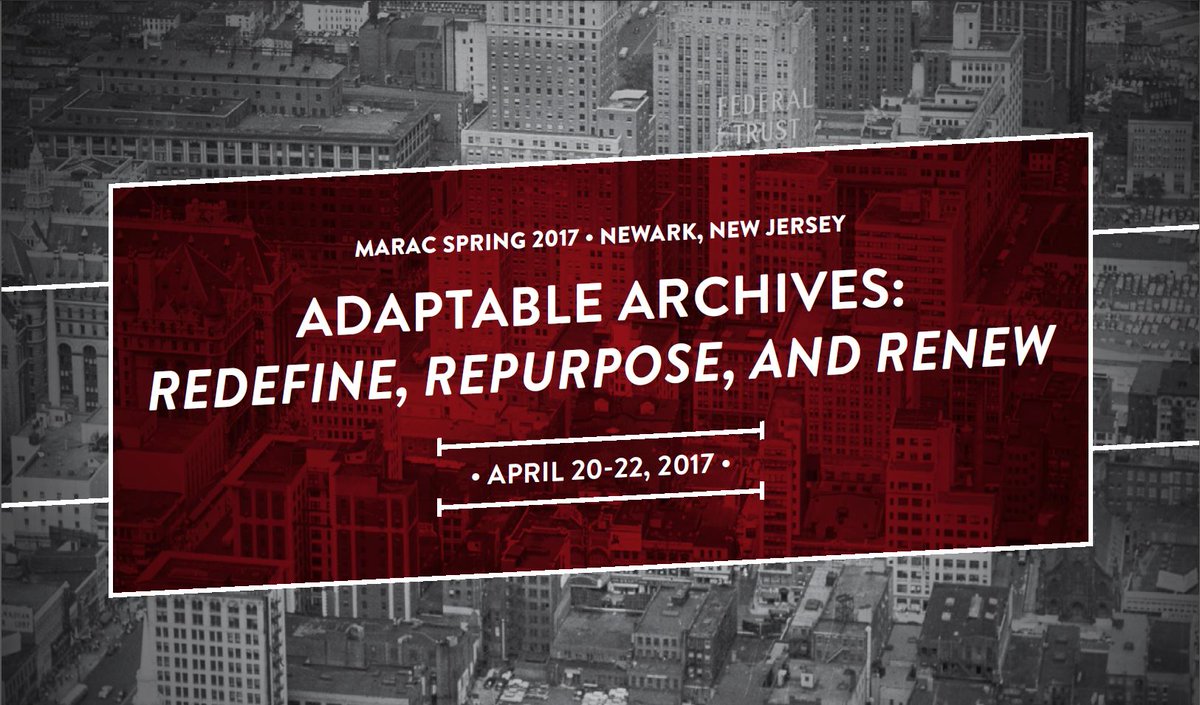
MARAC Spring 2017 was held April 20–22 in Newark.
Don’t despair if you happened to miss out on the recent Mid Atlantic Regional Archives Conference in Newark, as Tara Maharjan put together a comprehensive Storify of the event (titled Adaptable Archives: Redefine, Repurpose, and Renew) that’s the next best thing to having been there in person.
Several new exhibits opened across the Libraries this past month:
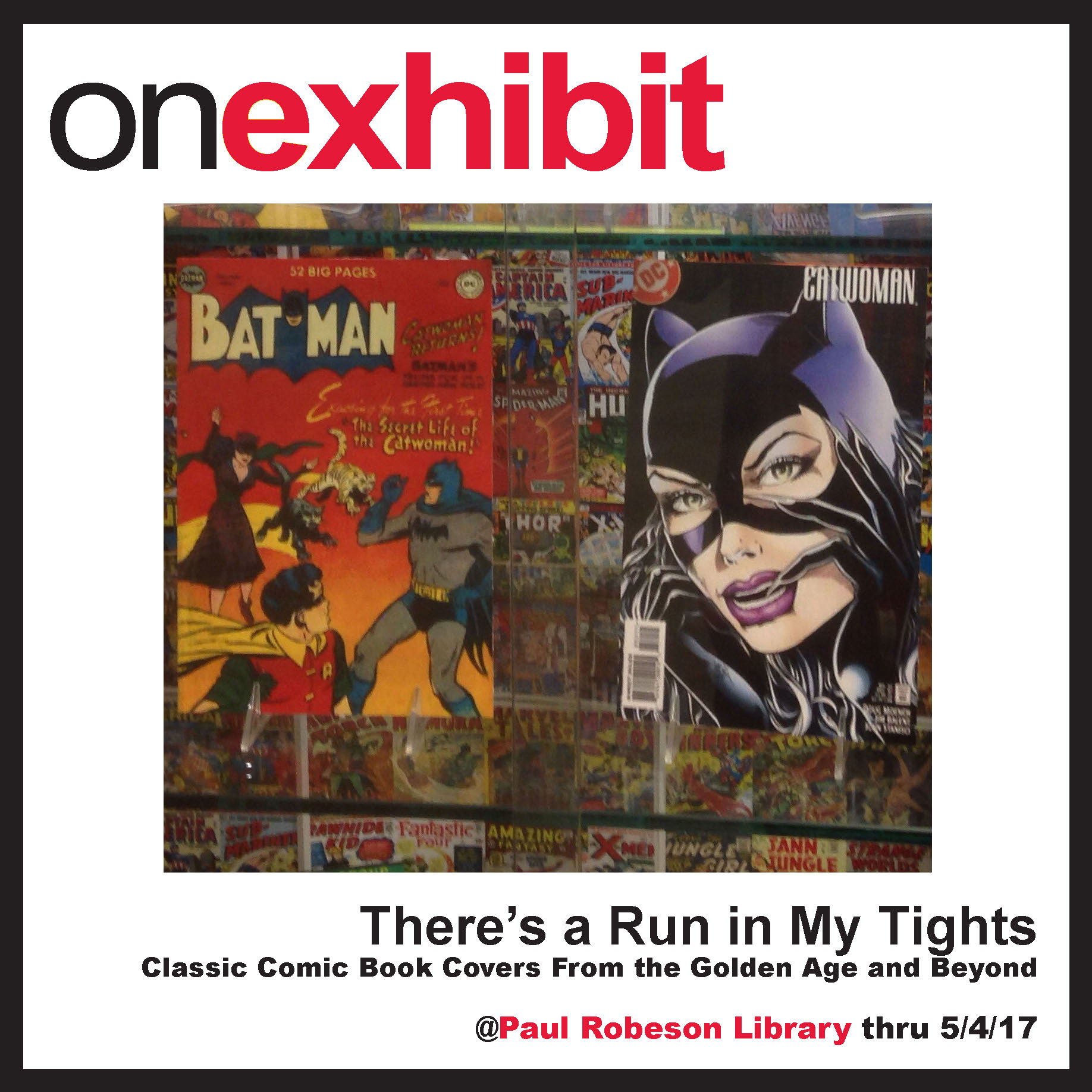
At Paul Robeson Library, There’s a Run in My Tights: Classic Comic Book Covers from the Golden Age and Beyond is on display through May 4. This display, which opened in advance of the 2017 Camden Comic Con, highlights superheroes such as Bat Girl, Aquaman, Luke Cage and the X-Men, as well as villains like Cat Woman and misunderstood monsters like Werewolf By Night.
A group exhibition of works by students in the Women, Gender, and Creativity House of Douglass Residential College is on display now at Douglass Library. Students in this community explore topics of gender, sexuality, identity, creativity, perception, and visual communication of women in the arts. The exhibition highlights the self-portraits, sculptures, video performances, and written works produced by the student artists during the course of the academic year. It closes on May 1, so be sure to check this one out while you can.
Finally, many new resources were announced in April:
The Andrew Hill Collection at the Institute of Jazz Studies contains the papers, music, and audiovisual recordings of acclaimed pianist, composer, bandleader, and educator Andrew Hill (1931–2007). The collection was processed as part of the 2016 Jazz Archives Fellows residency.
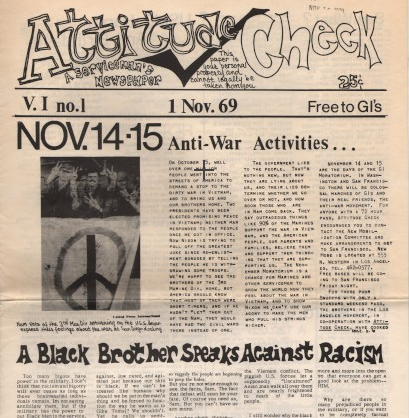
Attitude Check (vol. 1 no. 1, 1969) via Independent Voices.
JAMAevidence provides guides to the systematic consideration of validity, importance, and applicability of problems and outcomes in health care. It consists of three textbooks, user tools, and forms useful to the critical appraisal process. See more in our deep dive.
Academic Video Online Premium provides access to over 50,000 videos from reputable producers such as BBC and PBS, mostly on the subjects of social sciences, American history/American studies, music and performing arts, science and engineering, and health sciences.
Independent Voices is a full-text database of alternative press periodicals published in the U.S. in the second half of the 20th century. It includes publications like Aegis (1978-87), Death Ship Times (Fat Albert’s) (1972-74), The Feminist Voice (1971-72), Meatball (1969-71), Off Our Backs (1970-76), The People’s Voice (1980-1983), San Francisco Good Times (1969-72), Up from the Bottom (1971-74), Where It’s At (1968-70), the Yardbird Reader (1972-76), and Zeitgeist (1965-69), among dozens of others.
Back in November, we reported on the preliminary Rutgers Giving Day results and the news was good. Now the final numbers from the Rutgers Foundation are in, and we are proud to say that the news is even better!
Our initial goal was to roughly double our number of donors from the inaugural Rutgers Giving Day and reach 50 donors this year, but we wound up seeing an outpouring of support that greatly exceeded expectations—thanks in no small part to your support.
According to the final reports, the Libraries raised a total of $16,544.22 with gifts from 172 donors—a 647% increase in the number of donors and an 829% increase in the total amount of funds raised over the previous year. These numbers include the early give phase, the day-of-phase, and the challenge money leaderboard.
The leaderboard was used to determine how $80,000 in challenge money would be awarded across the university ($20,000 each for Rutgers–Camden, Rutgers–Newark, Rutgers–New Brunswick, and RBHS). A unit’s standing on the leaderboard was based on the number of individual donors for that unit during the day-of phase compared to the total number of donors for its “parent institution.” So, in other words, if there were 100 gifts total to Rutgers–Camden and Robeson Library received 10 gifts, it would receive a bonus 10% of the $20,000 in challenge money, or $2,000. Here’s how the leaderboard numbers broke down:
Unit
Total distinct donors
Total dollars
Percentage of “parent institution” leaderboard donors
Challenge money awarded (of $20,000)
Robeson Library
9
$170.00
1.66%
$331.49
Dana Library
19
$1,433.08
2.61%
$521.26
Institute of Jazz Studies
2
$65.00
0.27%
$54.87
New Brunswick Libraries
95
$11,609.99
3.21%
$641.46
RBHS Libraries
6
$300.00
0.78%
$156.05
As you can see, we have much to be proud of. Many thanks to everyone who went out of their way to set up a donation station, make support sheets available to their patrons, or give a gift of their own to support the Libraries. Our tagline for this year’s campaign was “We can do great things together,” and you’ve all made it abundantly clear that there is real meaning behind those words. Thank you!
It’s Performance Appraisal time again! The program has two components: performance evaluation and merit increases.
In anticipation of an announcement from University Human Resources regarding the performance appraisal program for URA-AFT employees, managers and supervisors should remind their URA-AFT employees to begin a self-appraisal. To be eligible for the Staff Compensation Program (SCP), URA-AFT employees must be in a program-eligible title on or before January 1, 2017 and remain employed in a URA position through the payment date of the merit increase. The SCP runs from May 1, 2016 through April 30, 2017. Self-appraisals should be completed by April 15, 2017. Managers and supervisors must complete performance evaluations and notify eligible employees of the appraisal by April 30, 2017 and provide the employee an opportunity to comment in writing by June 1. Any employee comments are attached to the appraisal.
Staff are evaluated against performance standards that were established during the previous evaluation process and include any additions or modifications that have been communicated to the employee during the year. The two rating categories are Meets Standards and Does Not Meet Standards. At the completion of the evaluation, supervisors establish standards for the next year’s evaluation process and discuss with each employee.
Please note: For RBHS staff, evaluations for CWA Local 1031 are due in November. HPAE Local 5094 and Teamsters Local 97 evaluations are due in the anniversary month.
Additional information will be forwarded when the official appraisal and merit programs are announced.
Below are links to the UHR webpage to assist you in the process.
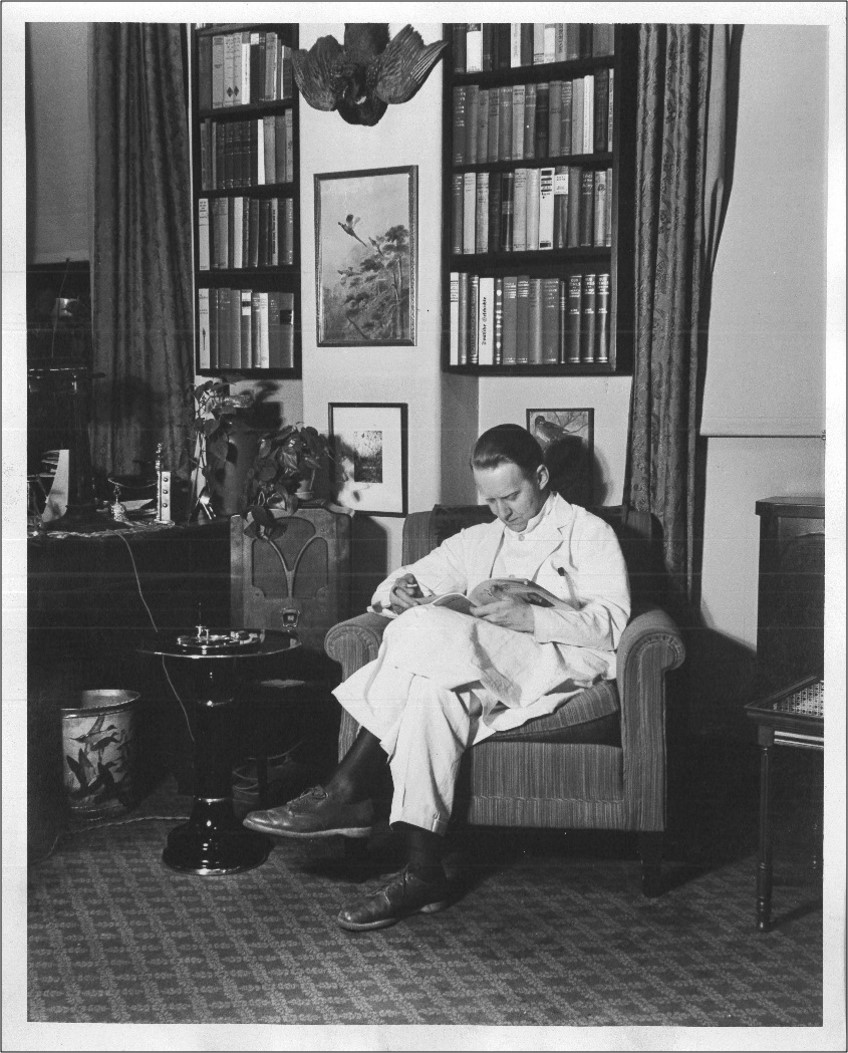
Dr. Edgar Burke in his penthouse apartment at the Jersey City Medical Center.
On February 8, 2017, the Medical History Society of New Jersey (MHSNJ) and Rutgers University Libraries co-hosted the MHSNJ’s fifth annual Lunar Society winter meeting, held in the Pane Room at Alexander Library. Over 30 MHSNJ members, surgeons, librarians, and even an art history graduate student attended.
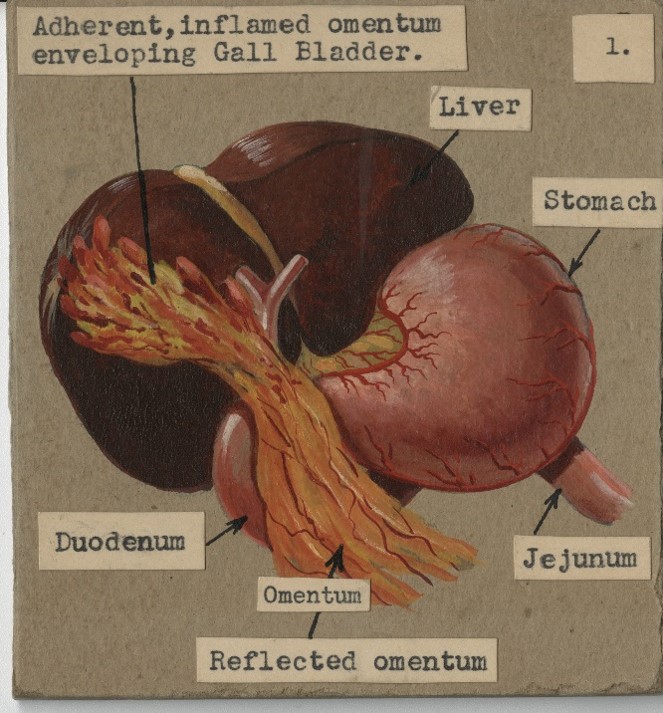
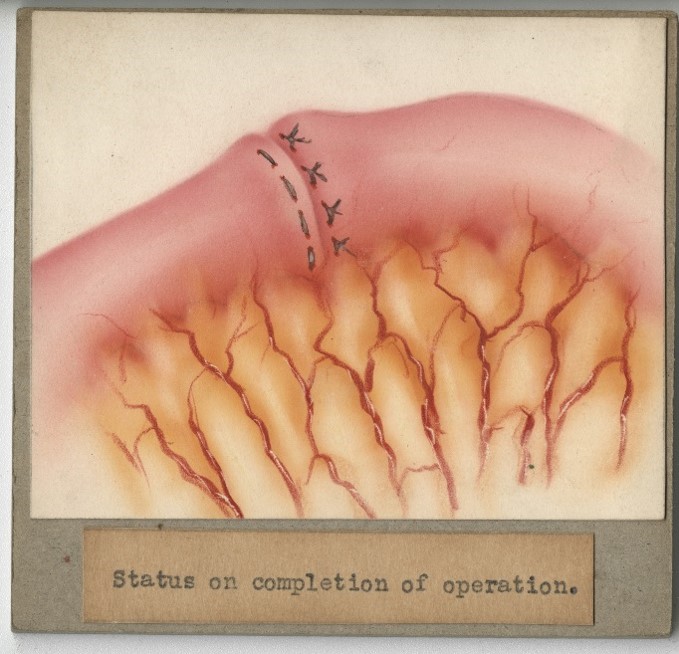
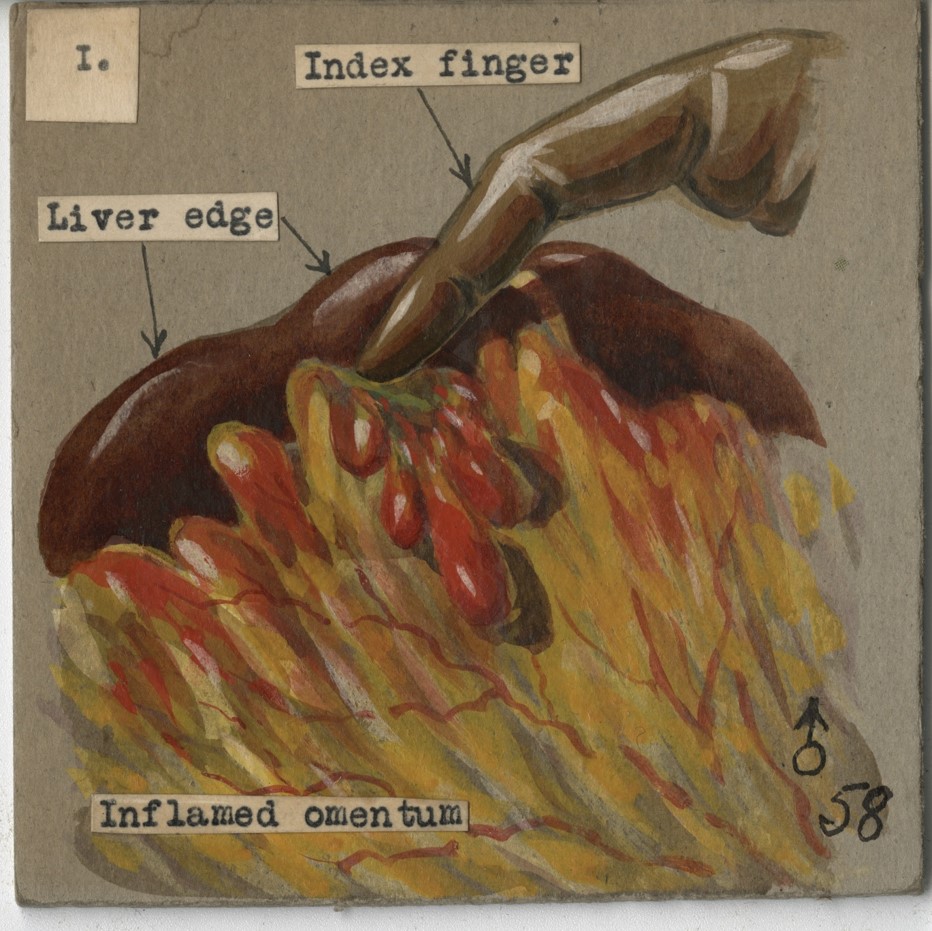
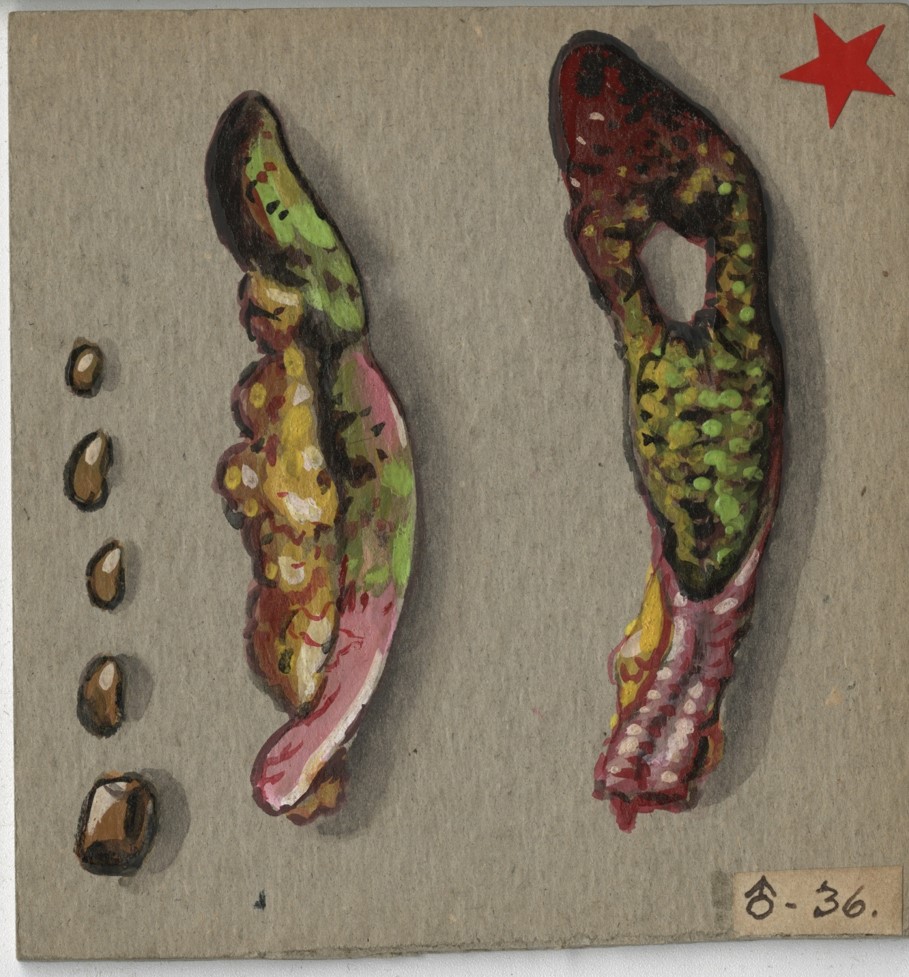
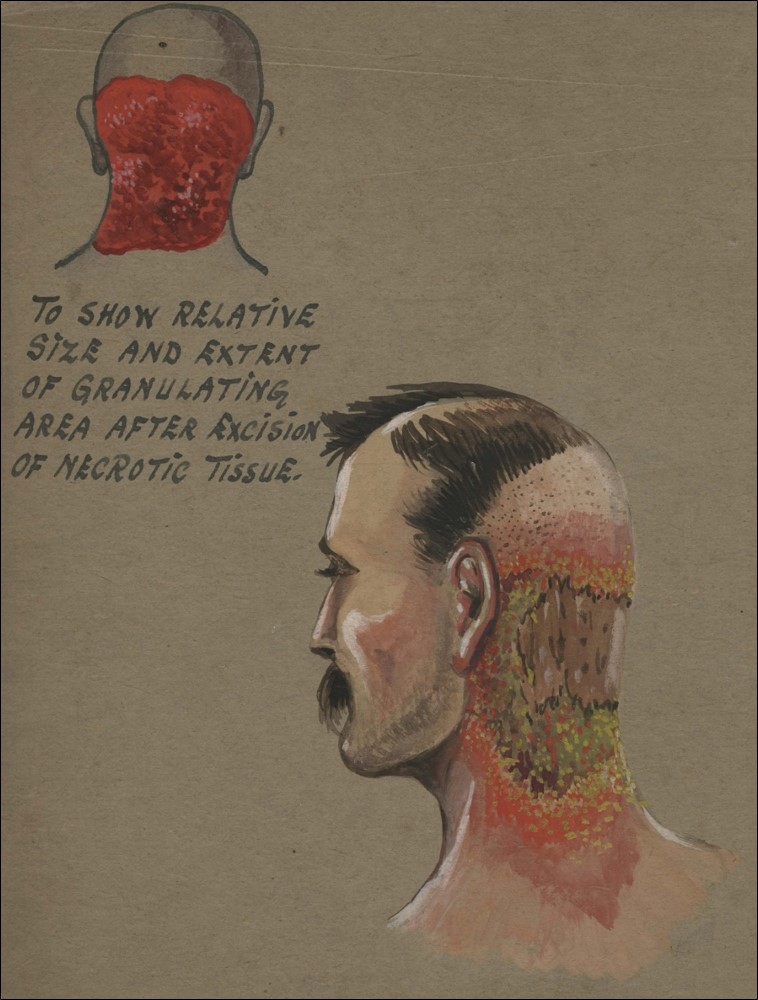
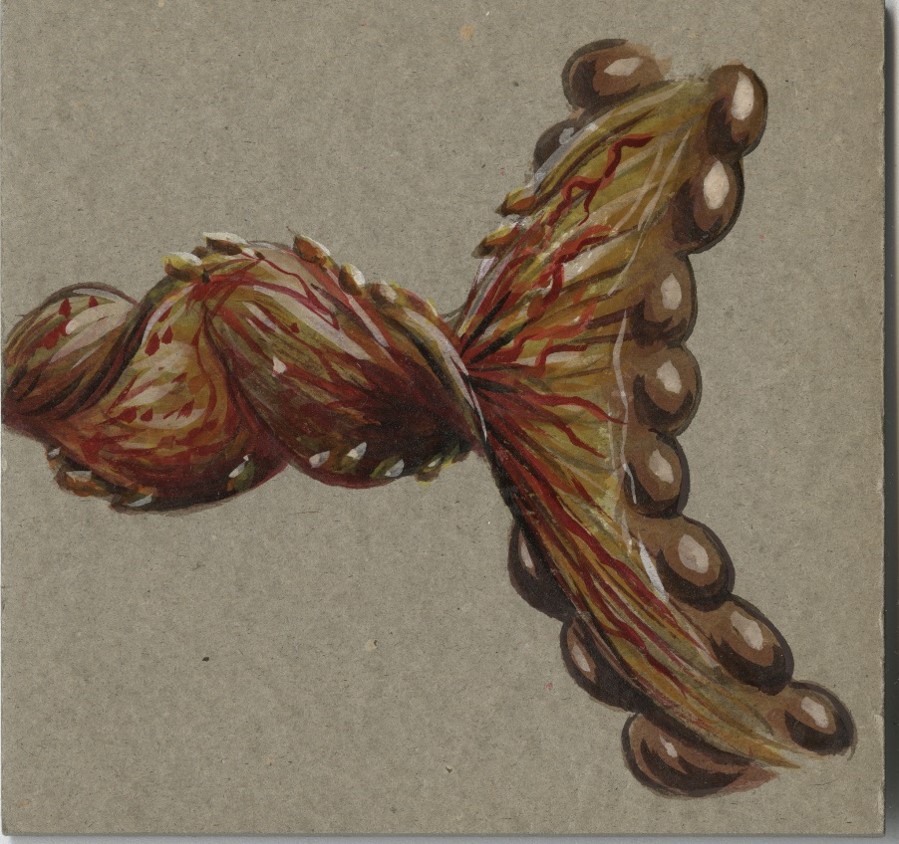
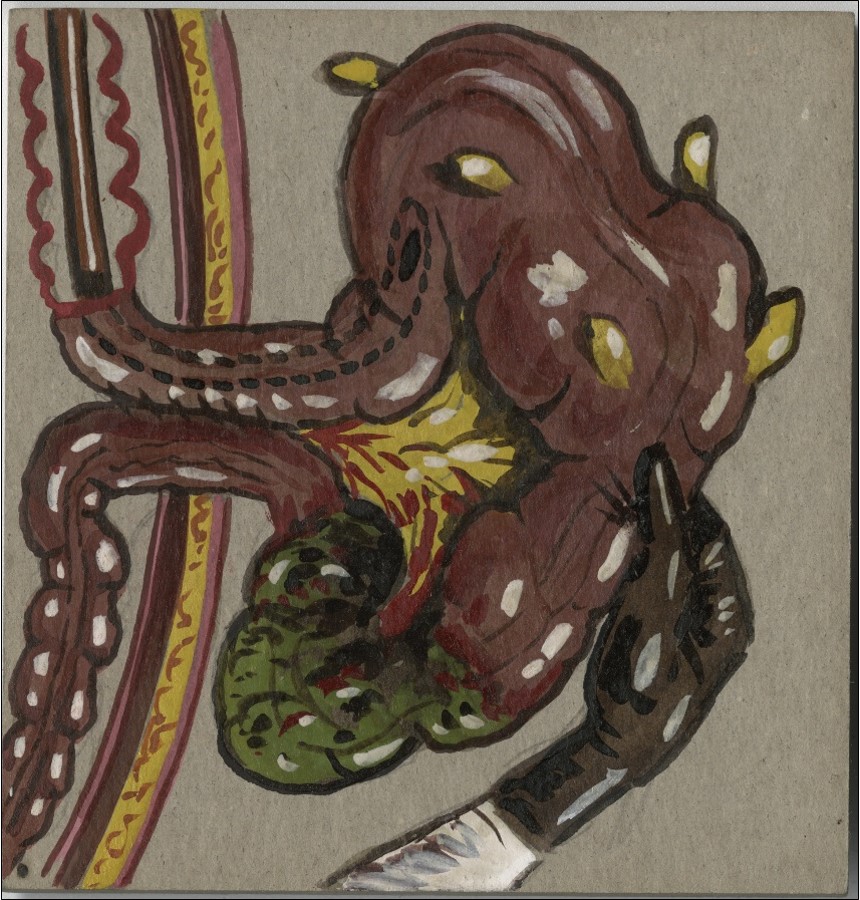
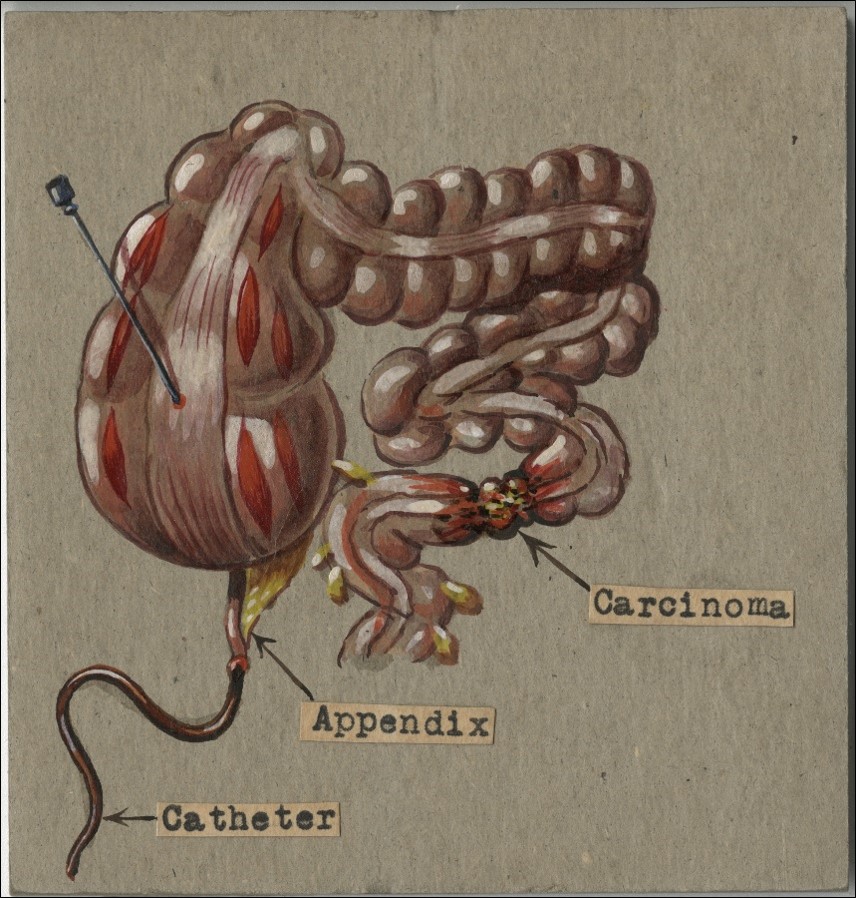
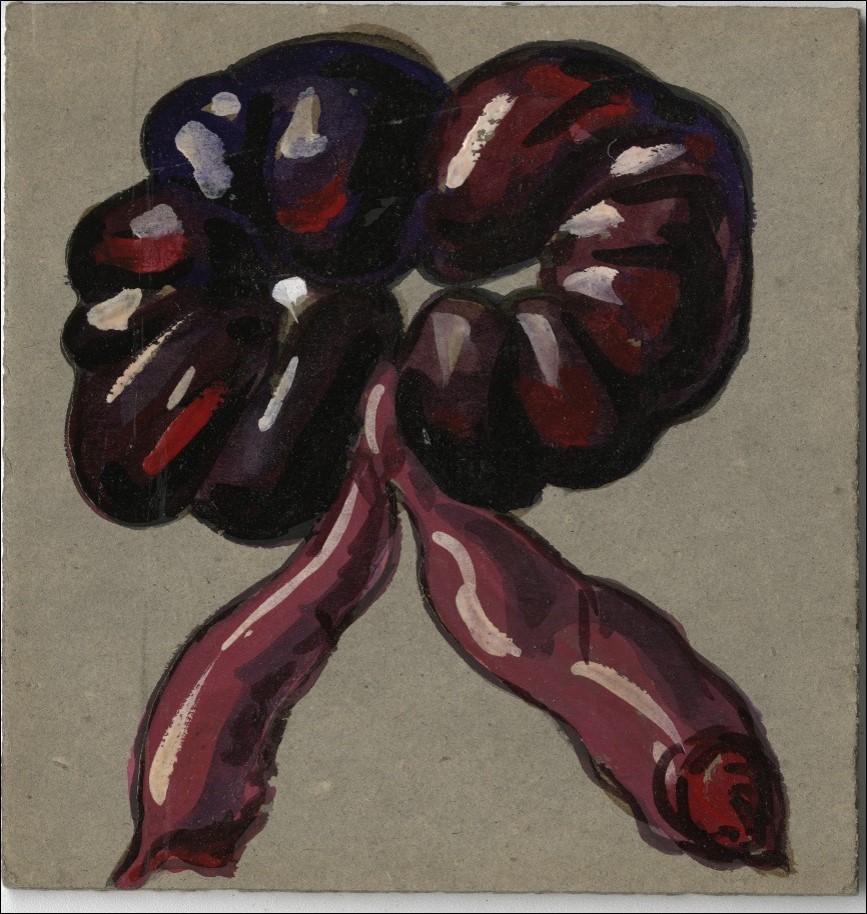
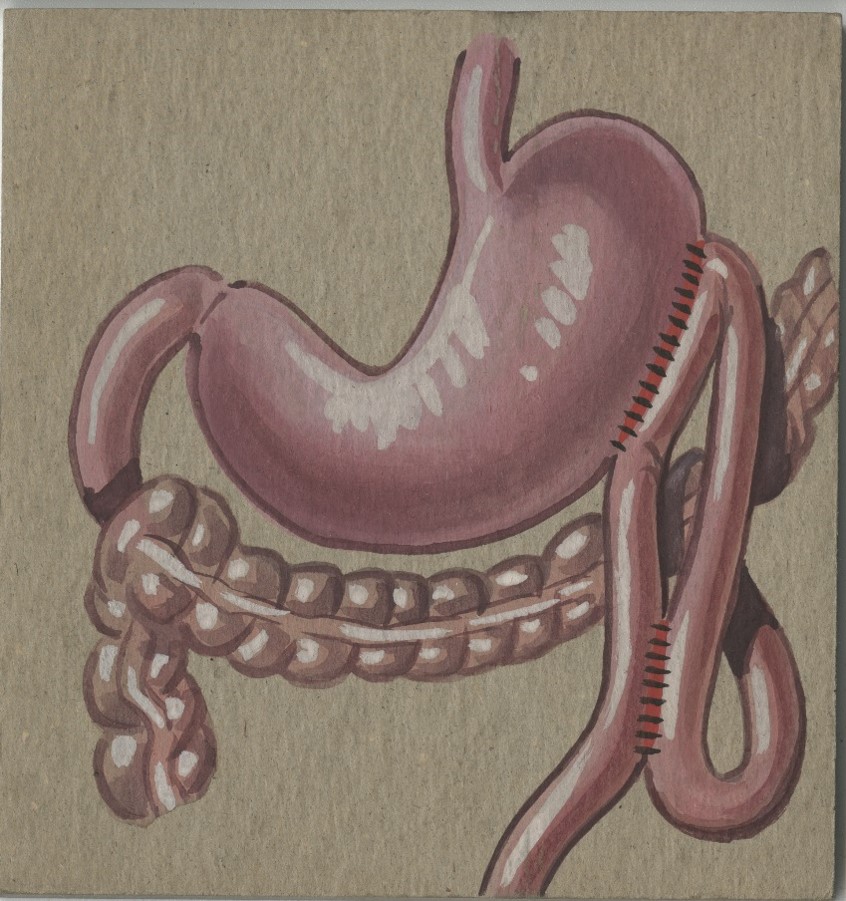
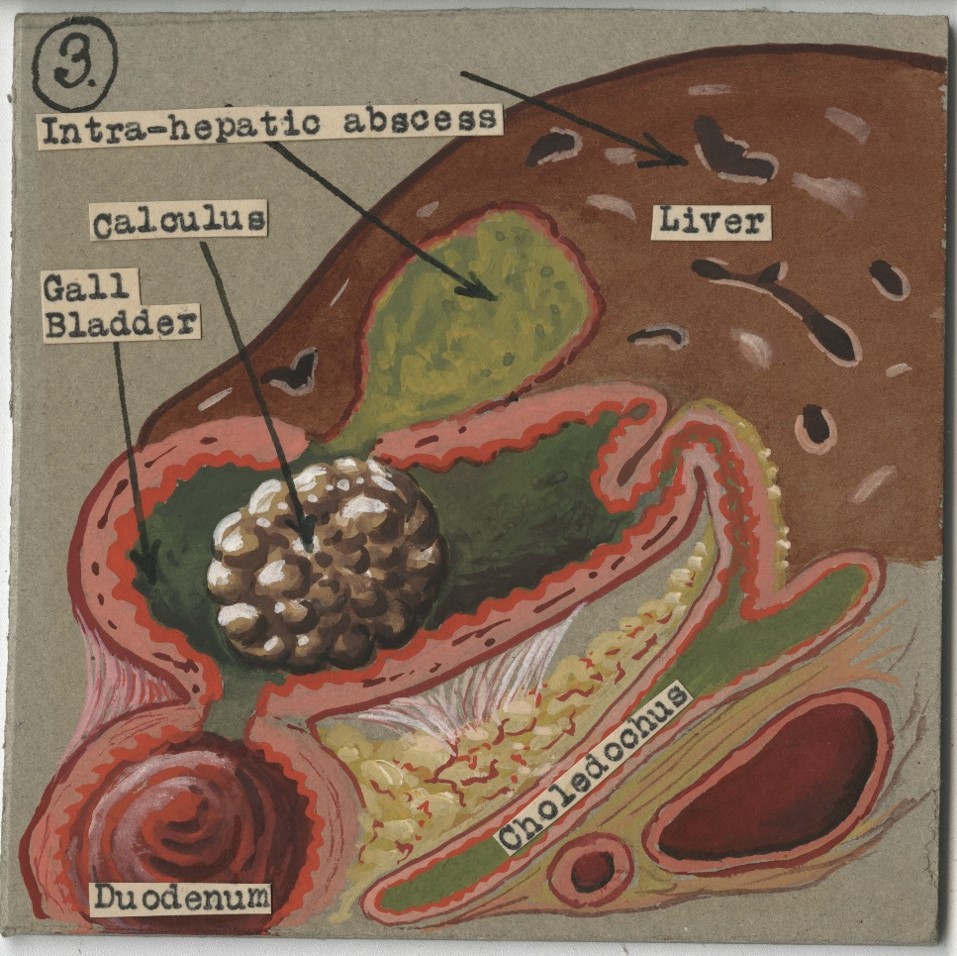
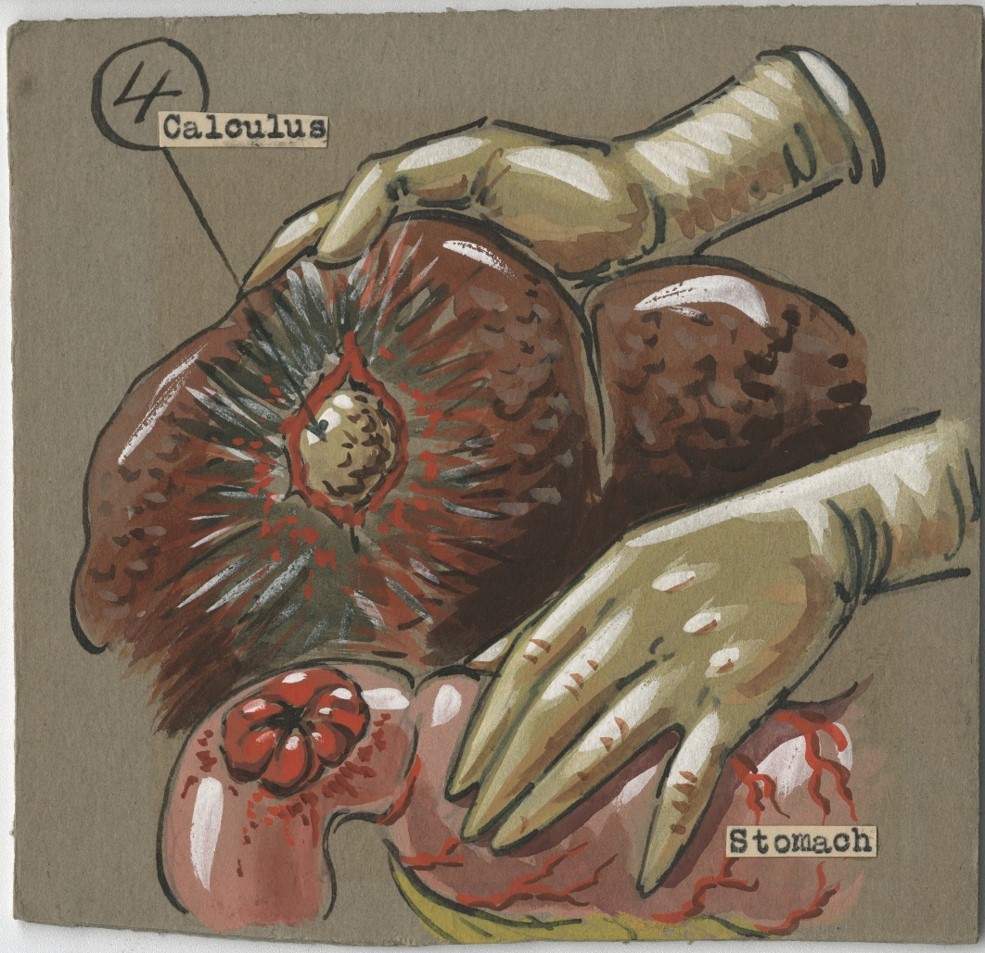
Not only was the meeting a series of three presentations about New Jersey medical history, it was also an art show. On display prior to the formal program were a selection of small paintings (mostly 4” x 4”) of surgical procedures and anatomical structures created by Dr. Edgar Burke (1890 – 1950). A longtime surgeon at the Jersey City Medical Center, Dr. Burke was also an artist of considerable skill. His realistic paintings of wildfowl, duck decoys, and fly fishing flies were published in several books in the 1930s and 1940s, and sell at auction to this day. Last spring, RBHS – Special Collections received a donation of over 800 previously unknown Burke medical artworks. These were the gift of Mr. and Mrs. James Neumeister, the son-in-law and daughter of Dr. Burke’s last surgical resident. While Dr. Burke undoubtedly used these paintings in teaching and in his own surgical practice, this Lunar Society event was likely their very first public exhibition.
In my presentation, I discussed Dr. Burke’s biography (such as is known – he seems to have been a rather private person), archival challenges in preserving and describing his artworks, and potential uses of this unique collection by medical and surgical historians, and perhaps even art historians.
I was followed by Dr. Theodore Eisenstat of Robert Wood Johnson Medical School, who provided a surgeon’s perspective on Dr. Burke’s paintings. Both of our presentations were enhanced by digitized images of Burke’s artwork, produced in the Digital Curation Research Center with the support of Isaiah Beard and James Hartstein.
The meeting’s final presentation was by Dr. Linda Whitfield Spinner, an authority on the history of medicine in Middlesex County. She discussed the role of women in the formation of two early New Brunswick hospitals. Founded in 1884 with support from Mrs. Grace Wells and other local women, the New Brunswick City Hospital became the John Wells Memorial Hospital, which later became Middlesex General Hospital and is now Robert Wood Johnson University Hospital. The Sisters of Charity of the Order of Grey Nuns of Montreal were instrumental in establishing St. Peter’s Hospital in 1907.
Following the presentations, many attendees enjoyed lunch and fine conversation at the Rutgers Club. The next meeting of the Medical History Society of New Jersey will be held in May, at the Nassau Club in Princeton.
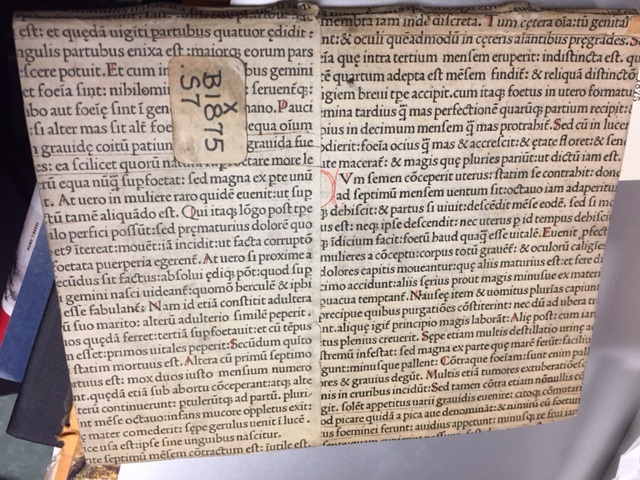
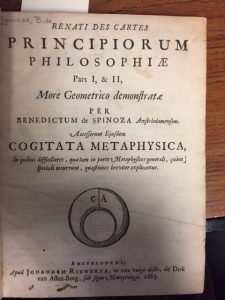
A request from the Spinoza Society sent us into the stacks in search of Baruch Spinoza’s René Descartes’ Principiorum Philosophiae. The Dutch philosopher’s response to René Descartes’ ontological arguments concerning substance (dualistic views that Spinoza, arguably a pantheist, sought to correct) was the first and only work of his to appear in print bearing his name, and Rutgers University Libraries’ copy, published in Amstelodami by Johannem Riewerts, is from the first edition. What particularly interested us was the binder’s waste on the covers, which clearly belonged to an early printed book.
It was a practice of book binders, dating back to the Medieval Period, to use whatever paper they had to hand to reinforce the strength of and to decorate a book’s covers. The paper covering the Libraries’ Principiorum Philosophiae included scribal marks (rubrications) and type that resembled the Roman types in other volumes in our rare book collection (specifically, in our copies of Nicolas Jenson’s Suetonius, and Vindelinus’s letters of Francesco Filelfo. It seemed highly possible that we had discovered leaves from an incunabulum we hadn’t recorded in our archives, but what we actually had proved to be even more exciting.
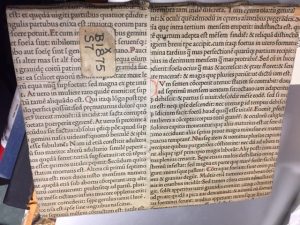
Working with our rare book cataloger, Silvana Notarmaso and Jeroen M.M. van de Ven, a postdoc researcher at Utrecht University in the Faculty of the Humanities, Department of Philosophy and Religious Studies, we determined that the leaves had once belonged to the editio princeps (first edition), of Aristotle’s De animalibus, a notable work in the history of Western philosophy inasmuch as it incorporates Aristotle’s thinking about the natural world, represents the first work on animal physiology, the first text on embryology, and includes a lengthy and quite graphic discussion on generation—with which Silvana notes our leaves are specifically concerned. Moreover, in identifying and classifying groups of animals and in explicating their functioning as a part of nature, Aristotle provided the basis for his philosophical analyses of relationships between structure, function, and purpose. De animalibus epitomizes Aristotle’s organizing principle.
Of course, we don’t know whether the binder of the Libraries’ copy of René Descartes’ Principiorum Philosophiae intended or even realized the intellectual connections he was drawing between cover and text (or the graphic nature of the reproductive passages), but Aristotle’s interest in relating natural specimens to a holistic system conceptually anticipates Spinoza’s central concern in his text, describing materiality and material objects as but modes of substance. Regardless of the binder’s intent or interests, we may claim that the Libraries’ Spinoza is one of those rare instances in which one can tell a book by its cover.
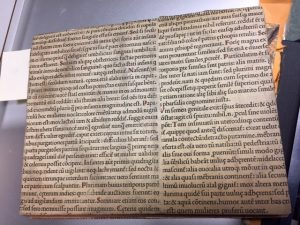
The Rutgers De animalibus (such as it was) was published in Venice by Johannes de Colonia and Johannes Manthen in 1476, a work translated by Theodorus Gaza and edited by Ludovicus Podocatharus. The printers Johannes de Colonia and Johannes Manthen were German merchants-turned-printers who acquired their printing material from Venice’s first printer (also a German immigrant), Vindelinus de Spira in 1473, during a slump in Venetian printing. Along with Nicolas Jenson, Colonia and Manthen dominated the highly-competitive Venetian printing business during the 1470s, producing 86 editions from 1474 to 1480, and merged their business with his in 1480. Intact copies of this edition of De animalibus are rare and highly valued. The last copy to go up to auction in 1998 sold for $96,000. While the Libraries own extraordinary samples of early Venetian printing in the form of intact works by Vindelinus, Jenson, and Aldus Manutius, these leaves are (as far as we know) the lone examples of work by Colonia and Manthem in our collection.
Note: The specific leaves covering the Libraries’ copy are from book 7, chapters 4 and 7 (sigs |1v, |2v, |3v and |4v).
In 2016, President Barchi asked the Libraries to pilot the OAT Project to address soaring textbook costs and to introduce more affordable materials into the classroom. The original plan was to provide 12 grants to faculty to incorporate low-cost course materials into their classes. Thanks to higher than expected faculty interest and the quality of their proposals, the Libraries quickly expanded the pilot program to 32 grants, impacting courses across the university in fields ranging from psychiatry, sociology, and public affairs to English, business, and physics. (For a complete list of grant recipients, please click here.)
Click here to read the news release, which includes reflections on the project from grant-winning professors Petros Levounis (Department of Psychiatry, Rutgers Biomedical and Health Sciences), Neil Sheflin (Department of Economics, Rutgers–New Brunswick), and Matthew Giobbi (Department of Psychology, Rutgers–Newark).
Kilmer Library Named in Honor of James Dickson Carr
This month, the Board of Governors voted to rename Kilmer Library in honor of James Dickson Carr, Rutgers’ first African American graduate. He completed his degree in 1892, was a member of the Phi Beta Kappa honor society, and went on to attend Columbia Law School.
Chancellor Richard Edwards told Rutgers Today that the library’s new name will be a fitting tribute to Carr, who was a noted scholar.
“Having Mr. Carr’s name on a building that is a core part of academic life where students go to study and where research is conducted is an important way to recognize his accomplishments,’’ he said.
Following graduation from Columbia Law School, Carr went on to become an assistant district attorney of New York County and held other offices in New York City government. To learn more about this accomplished Rutgers alumnus, please read this article from the Journal of the Rutgers University Libraries.
31st Annual Bishop Lecture: “Through the Eyes of a WWI Combat Engineer”
The 2017 Bishop Lecture will be presented by Dr. Virginia Dilkes, whose father served in WWI as a combat engineer.
Join Rutgers Special Collections and University Archives for the opening reception and the 31st annual Louis Faugères Bishop Lecture by Dr. Virginia A. Dilkes on the subject of “Through the Eyes of a WWI Combat Engineer,” at 6 p.m. on Thursday, March 9, 2017.
The lecture will also be the opening reception of the Rutgers University-New Brunswick Spring 2017 exhibition “Heaven, Hell, or Hoboken!”: New Jersey in the Great War. The exhibition, commemorating the Centennial of the Great War, will examine the storied history of our state during the Great War, showcasing one-of-a-kind documents, photographs, and artifacts from Rutgers University’s Special Collections and University Archives, the National Guard Militia Museum of New Jersey, and the Johnson & Johnson Archives.
Virginia Dilkes was born and raised in Iselin, New Jersey. She earned her doctoral degree from the University of Michigan. Her interest in World War I stems from her father, who was a combat engineer in WWI. She has edited and published her father’s World War I memoirs in the book Remembering World War I: An Engineer’s Diary of the War. She is a volunteer for the U.S. WWI Centennial Commemoration Commission.
Celebration of Scholarship Takes Place in March
The annual Celebration of Scholarship will take place this year from March 27 to March 31. There will be coordinated events and displays across the Libraries, a social media campaign, a website presence, and more.
We need your support in soliciting submissions from Rutgers faculty of works to include in our showcase. In a departure from years past, we are accepting projects of all different types, not just books.
The submission forms and event info for Camden, Newark/New Brunswick, and RBHS are all available on the Celebration of Scholarship webpage.
Dana Library to Participate in Women in Media-Newark’s Annual International Film Festival
From the Rutgers–Newark press release: “Women in Media-Newark will hold its eighth annual International Film Festival March 28 through April 6 in celebration of Women’s History Month. Working in conjunction with Rutgers University–Newark, their major partner, WIM-N will host film festival over nine days at six venues. All events are free and open to the public.
“On Mach 31 – April 1, a symposium on Tayari Jones’ acclaimed novel ‘Silver Sparrow’ will take place as part of the film festival, in collaboration with Rutgers University-Newark’ s John Cotton Dana Library, as part of the Essex County Library Directors ‘Big Read Film’ screenings. A natural hair care demonstration and panel discussions also will take place at this free event. Dr. Consuella Askew, director of the Dana Library, states, ‘The John Cotton Dana Library at RU-N is a proud partner of the WIM-N Film Festival and the Symposium on Dr. Jones’ novel ‘Silver Sparrow’. Libraries are by design culturally based organizations. We acquire and make accessible many resources – not just books – that foster an informed citizenry in an increasingly global world. By virtue of its mission, our partnership with the WIM-N organization helps us meet this objective by enabling us to connect with our community in an engaging and meaningful way. We look forward to strengthening our partnership with WIM-N in the future.’”
READ Club Meets at Rutgers Art Library
A recent news story in the Daily Targum highlighted the READ club–“Rutgers’ first and only book discussion group,” according to their website. This group meets each month to escape the rigors of textbook and classroom reading and discuss a work of fiction, ranging from contemporary novels and literary fiction to poetry and short story collections.
The club meets in the Art Library and will be discussing Selma, 1965: The March that Changed the South at its February meeting.
#WednesdayWisdom Rolls Out in March
Wednesday Wisdom kicks off in March with an inspirational quote by Greek writer Nikos Kazantzakis.
In response to a student’s suggestion on Instagram, we’re taking steps to add an inspirational flair to our library spaces and social media accounts. Each Wednesday starting on March 1, we will post a motivational quote to our social media channels using the popular hashtag #WednesdayWisdom. The quotes will also be provided in advance for posting throughout the libraries. Special thanks to Mary Hasaballa for the idea and to all the volunteers who are helping to bring a little positivity to the everyday lives of our students!
New Acquisitions in Special Collections and University Archives
The latest post on the What Exit? blog details acquisitions from fall 2016 to winter 2017. Highlights include titles such as The Mass Grave at the First Reformed Church, Scarlet and Black Volume 1: Slavery and Dispossession in Rutgers History, The Ironbound: An Illustrated History of Newark’s “Down Neck,” Runaway Dream: Born to Run and Bruce Springsteen’s American Vision, and The Southern Education of a Jersey Girl: Adventures in Life and Love in the Heart of Dixie.
University of Oklahoma Libraries Survey
The University of Oklahoma Libraries invite you to participate in a research study being conducted under the auspices of the University of Oklahoma Norman Campus, entitled “Faculty Status: The Next Generation,” IRB #654523.
The purpose of this study is to investigate whether faculty status and the opportunity to earn tenure are important considerations for recent graduates of MLS/MLIS programs who are seeking professional jobs in academic libraries.
If you received a master’s degree in library or information science in 2012 or later, you are eligible to participate in the study. The findings from this project will provide information that will shed light on the preferences of job seekers who are relatively new to the library and information profession.
Your participation will involve completion of an online survey and should take about 5 to 10 minutes of your time. Your involvement in the study is voluntary, and you may choose not to participate or to stop at any time. This survey is anonymous. No identifying information about you will be gathered.
If you have any questions about this research project, please feel free to call Karen Antell at 405-325-4142 or email kantell@ou.edu. Questions about your rights as a research participant or concerns about the project should be directed to the Institutional Review Board at the University of Oklahoma-Norman Campus by phone at 405-325-8110 or via email at irb@ou.edu.
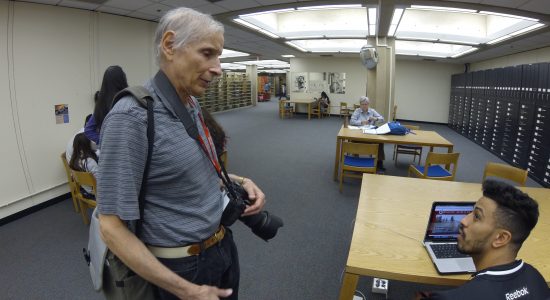
Ed conducted an annual Snapshot Day to document the people and activities of the library.
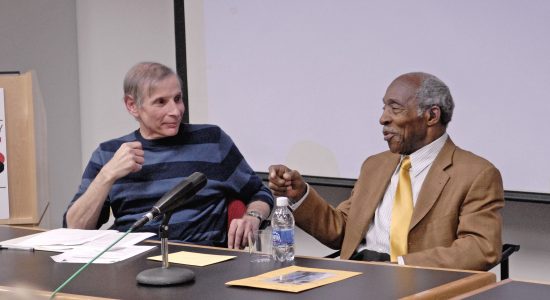
Ed and Joe Wilder participate in an IJS Roundtable in 2007.
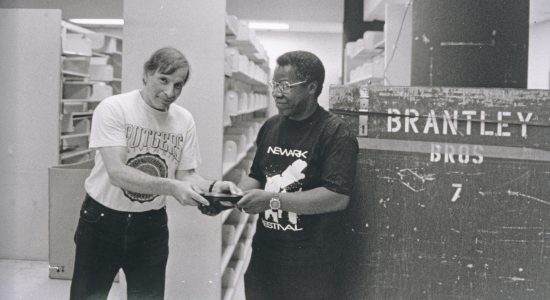
Ed (sporting some Rutgers gear!) and long-time colleague Vincent Pelote help move the IJS location in 1994.
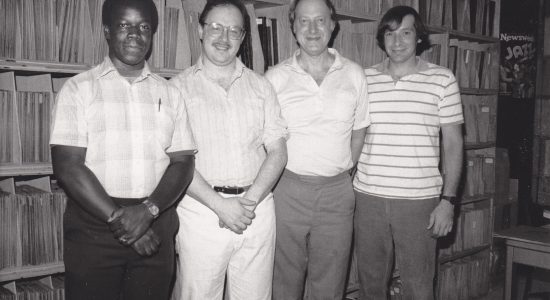
L-R: Vinny, Loren Schoenberg (of the National Jazz Museum in Harlem), Dan Morgenstern (former IJS Director), and Ed Berger, circa 1984.
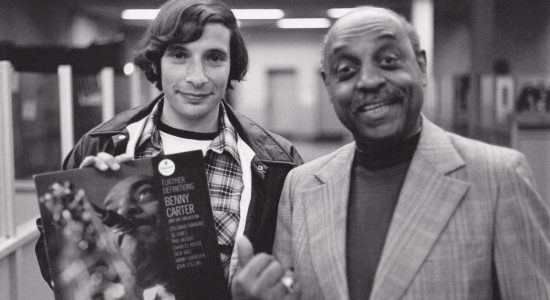
Throughout his time at IJS, Ed had a very close relationship with Benny Carter.
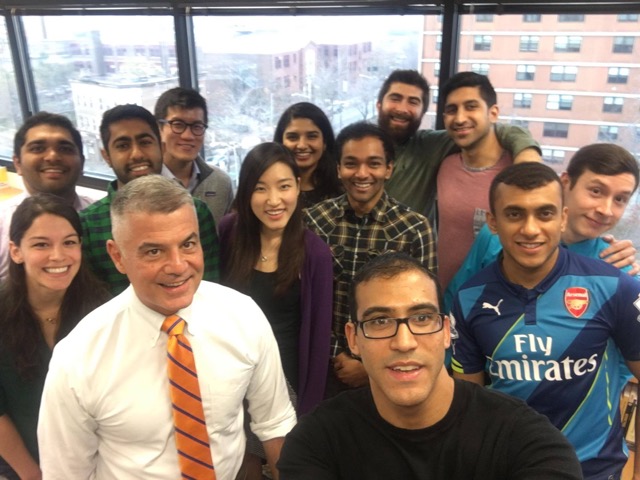
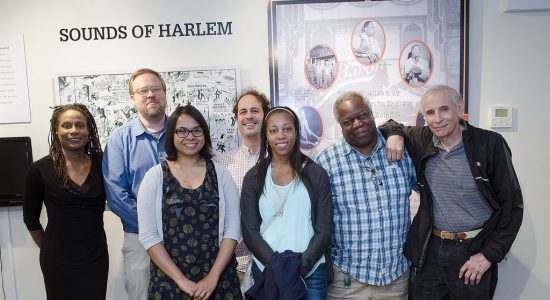
Ed poses with his colleagues and the 2016 Jazz Archives Fellows.
Recently Consuella Askew and Wayne Winborne sent around a note announcing that our colleague Ed Berger passed away suddenly and quite unexpectedly in January. Ed was a wonderful photographer and spent many hours documenting the spaces and faces of Dana Library and the Institute of Jazz Studies. Many of his photographs are posted on his Flickr site. Here, we take a moment to turn the camera back toward the photographer and offer a glimpse into his time and the people who he called colleagues and friends at the Institute of Jazz Studies.
Ed played a vital role in the growth and development of the Rutgers Institute of Jazz Studies where he filled a number of positions for nearly four decades. He was also an award-winning jazz writer and accomplished photographer, teacher, producer, and road manager.
A graduate of Indiana University with an M.L.S. from Rutgers, his most recent book was Softly, With Feeling: Joe Wilder and the Breaking of Barriers in American Music (Temple University Press, 2014), which received the Association for Recorded Sound Collections’ Award for Best Historical Research in Recorded Jazz in 2015. He was a frequent contributor to Jazz Times as writer and photographer and for many years served as co-editor of the Journal of Jazz Studies.
Berger taught at Jazz at Lincoln Center’s Swing University, and from 1979 to 2014 was co-host of Jazz from the Archives on WBGO-FM. He enjoyed a long association with jazz master Benny Carter, serving as Carter’s road manager for nearly two decades, as well as producing two Grammy-winning recordings for the saxophonist. Berger’s other publications include Free Verse and Photos in the Key of Jazz (2015, with Gloria Krolak); Benny Carter: A Life in American Music (2002, with Morroe Berger and James Patrick); Basically Speaking: An Oral History of George Duvivier (1993); and Reminiscing in Tempo: The Life and Times of a Jazz Hustler (1990, with Teddy Reig).
He was a beloved friend, colleague, mentor, raconteur, and a true lover of jazz and jazz musicians. His loss is devastating to all of us at the IJS and to the broader jazz community across the globe.
A public celebration of Ed’s life is being planned and will be announced at a later date.

 Back in November, we reported on the preliminary Rutgers Giving Day results and the news was good. Now the final numbers from the Rutgers Foundation are in, and we are proud to say that the news is even better!
 It’s Performance Appraisal time again! The program has two components: performance evaluation and merit increases.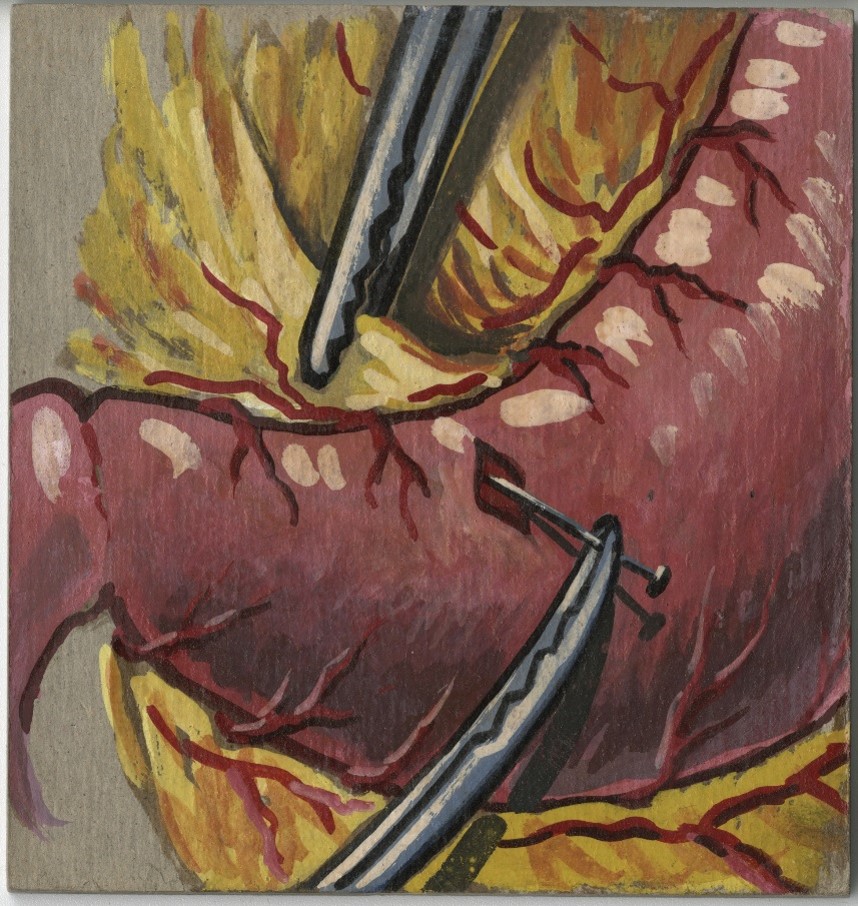
 A request from the Spinoza Society sent us into the stacks in search of Baruch Spinoza’s
  Moreover, in identifying and classifying groups of animals and in explicating their functioning as a part of nature, Aristotle provided the basis for his philosophical analyses of relationships between structure, function, and purpose. De animalibus epitomizes Aristotle’s organizing principle.
 The Rutgers De animalibus (such as it was) was published in Venice by Johannes de Colonia and Johannes Manthen in 1476, a work translated by Theodorus Gaza and edited by Ludovicus Podocatharus. The printers Johannes de Colonia and Johannes Manthen were German merchants-turned-printers who acquired their printing material from Venice’s first printer (also a German immigrant), Vindelinus de Spira in 1473, during a slump in Venetian printing. Along with Nicolas Jenson, Colonia and Manthen dominated the highly-competitive Venetian printing business during the 1470s, producing 86 editions from 1474 to 1480, and merged their business with his in 1480. Intact copies of this edition of De animalibus are rare and highly valued. The last copy to go up to auction in 1998 sold for $96,000. While the Libraries own extraordinary samples of early Venetian printing in the form of intact works by Vindelinus, Jenson, and Aldus Manutius, these leaves are (as far as we know) the lone examples of work by Colonia and Manthem in our collection.