Category: Articles

  • Toward a Hybrid Model of Organizational Structure

    The summer has been flying by! I can’t believe it is already August!

    In reviewing the past few issues of The Agenda, I realize that most of my posts have related to the structural changes within the university and changes that we are making within our organization to adapt. This month I would like to take a step back and look more broadly at organizational structures—especially those that are most effective in rapidly changing environments—and how these might apply to Rutgers University Libraries.

    Essentially every large organization today (including the Libraries) is structured according to principles developed by Max Weber’s industrial revolution-era organizational theory and management practices for running large organizations. Weber proposed a top-down structure in which each element of the structure (he called them offices, but today they more likely represent departments or divisions) has a specific role within the organization. These hierarchical structures are stable and predictable, but hierarchical organizations need robust communication—horizontal, vertical, and within units—to be effective.

    During periods of rapid change, hierarchical organizations often face communication challenges. Communication from the top, related to mission and strategies—vertical communication—can be slow to reach all parts of the organization. Also, the connections between the well-defined units within the hierarchy—horizontal communication—can be weak. The hierarchical organization places impossible demands on a unit head who must manage both horizontal and vertical communication while keeping abreast of the functional requirements and activities. With insufficient information about mission and strategy and in the absence of strong connections to other units, units can become internally focused and inadvertently act at cross-purposes with other parts of the organization.

    In recent years, organizations, including many academic libraries, have experimented with replacing hierarchies with more adaptive structures that circumvent these communication challenges. I spent five years working in the University of Arizona Libraries, an organization that pioneered a team-based approach for academic libraries. The goal of these experiments is to create organizations where all decisions were data-driven and could be made at any level. We hoped that the availability of good data could replace some of the communication necessary to be effective. The experiment at the UA Libraries—and, I believe in other academic libraries—eventually failed and they reorganized into a traditional hierarchical model. It seems that establishing reliable data sources is at least as complicated as improving communication.

    People are beginning to look at networked structures for organizations. Networked structures lack formal hierarchical relationships and units can freely communicate with other units. This is quite effective in small organizations; however, as organizations grow, the lack of structure can become a problem. I do not know of any large organization that relies solely on a network structure; however, the Occupy Wall Street movement is a useful case study of the pitfalls associated with a large organization that has strong vertical coordination but lacks structure. Although the movement might have had some impact on society, it essentially dissolved, possibly due to its lack of structure.

    Among these three organizational structures, it seems that hierarchical models are the best structure for large organizations. However, in order for organizations to adapt during periods of rapid change and to react accordingly, communication must be strengthened. While newsletters like this are important—as are agendas and minutes—in communicating activities and decisions, organizations need deeper communication to truly adapt in times of change. It is important for every individual to understand three interdependent things: the mission and strategies of the organization at large; their unit’s vertical and horizontal impact on the organization; and the effect of their workplace decisions on the organization.

    The structure of the Libraries is hierarchical, but we are drawing on lessons from these experiments and taking big strides to improve communication. In Cabinet, we spent the last few weeks developing charges for new groups to help manage our shared infrastructure. You can see a list of the issues that we are addressing in my post from last month. While these groups are being charged to address specific short-term priorities, most of them will eventually become cross-unit workgroups. It is through these workgroups that communication will be improved and the charges for these groups pave the way by including specific communication requirements.

    These workgroups have important work to do and the work includes rich bidirectional communication between the work groups and the functional units. We have spent some time at Cabinet discussing the communication responsibilities of Cabinet representatives, group members, and group chairs. The expectation is that Cabinet representatives act as conduits of information—providing two-way communication that includes direction from Cabinet-level discussions and boots-on-the-ground experiences from members of the workgroup to help guide the work of the group.

    Members of the group, including the group chair, are responsible for considering organizational goals and developing a deeper understanding of broader issues, but they also must act as representatives of their functional groups (most often, this is their department and/or university). In this representative role, they must clearly communicate issues, findings, and actions back to their functional units; develop mechanisms for gathering feedback from their constituents; and then report to the workgroup on how their functional unit will be impacted by the proposals of the workgroups. Group chairs bear an additional responsibility of making good communication a priority for the group by encouraging and using this multidirectional communication to improve outcomes.

    As we shift the loci of work to these shared workgroups, we know we need to be proactive to avoid communication and work silos. It is also important to acknowledge the impact on our workloads and our organization. Our new task force charges include a section on Timeline/Communications and an Appendix that explains members’ participation is a significant part of their primary job responsibilities and will be evaluated as such. What this means in practice is that meetings are not extra work, but an essential part of our organization. And good communication is not optional, it’s a priority.

    I know that activity never stops in the Libraries, but I hope that the slightly slower pace of summer is giving you some time to catch up, reflect, and rest. I look forward to working together to continue our progress in the academic year to come.
  • Tips for videography; promotional items inventory; new signage templates from the Communications Department

    Tips for videography; promotional items inventory; new signage templates from the Communications Department

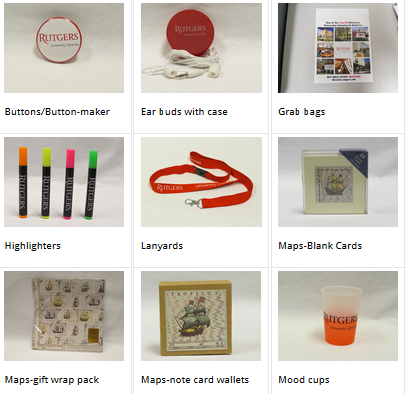
    promotional item samplesThe communications department has made some more useful items available on our website.

    A promotional item visual inventory. This website lists all the promotional items we currently have in stock. Many of these items are available in limited quantities, for Libraries events. To place a request, please send Ken Kuehl an email with the quantities, item names, what they will be used for, and an address for shipping.

    Helpful Hints for Videotaping Interviews. This Microsoft Word document contains some tips and tricks for planning for and improving the visuals of taped interviews. We hope this is helpful to anyone planning to record video for the Libraries. It is listed on the Communications Department website.

    New signage templates. On our signage template web page, you can download Word files that you can update with your library’s information (name of library, URL, specific text, images) and print in black and white or color. We will work on converting them to Powerpoint over the next month. We’ve added the following to the Shared Sign Library:


    • Allow Us to Reshelve Your Books
    • Please Do Not Reshelve Your Books
    • Keep Your Belongings Safe
    • Please Bring Your Own Change

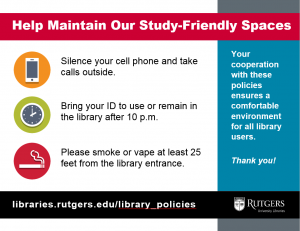
    sample policy sign imageWe’ve also added a Policy Signs and Toolkit. During our recent signage inventory, we saw lots of individual policy signs posted all over the libraries. These new Policy Signs and Toolkit will allow you to create signs that address multiple policies in a single page and hopefully eliminate the need for multiple single policy signs. The toolkit includes a vertical and horizontal version of this sign and a zip file of icons (hopefully live by the time this newsletter publishes) to use for signage.
    We have more signage templates on the way, including staff only and a replacement for the popular Can’t Find a Book signs. Stay tuned.


    Save

  • Social Media Summit 2017

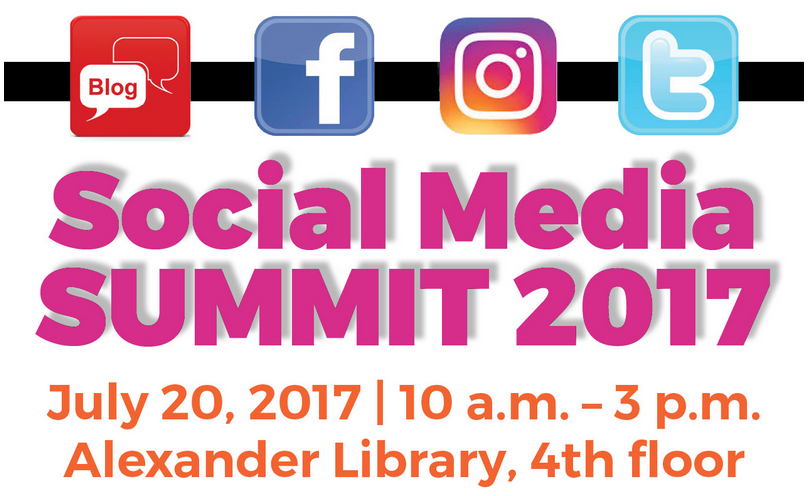
    Social Media Summit 2017

    Social Media Summit image

    10 a.m. Introductory Presentation. The Social Media Task Force will lead a discussion of their work over the last year and the resultant social media guidelines and process.
    11 a.m. – 12:30 p.m. Round Table Discussions. Share your thoughts and experience in small group discussions. Moderators will then present findings to entire summit. Table topics include “Using social media to promote research,” “Creative social media ideas for libraries,” “Resources and strategies for finding great content,” “Promoting library services & resources via social media,” and “Best practices for interacting with users.”
    12:30 – 1:15 p.m. Lunch. Network with your colleagues over sandwiches and salads (provided).
    1:30 – 2:15 p.m. Workshop. Dory Devlin, University News and Media Relations, will demonstrate how to manage multiple accounts using tools like Hootsuite and Tweetdeck.
    2:15 – 3:00 p.m. Panel Event. Social media managers from other university departments will describe challenges and opportunities in assessing, serving, and growing social media audiences. Panelists will include Stefanie Charles, Rutgers–Camden, Brice Hammack, Rutgers University Press, and other Rutgers communications specialists. Panel will be moderated by John Brennan.

    Open to faculty and staff of Rutgers University Libraries. RSVP: go.rutgers.edu/prax7fo0


    Save

  • Update on the Priorities Process

    An archive of Krisellen Maloney’s articles is available here.


    In March, just ahead of the first Cabinet retreat, I described the three-step process by which we are drafting priorities and related budget requests for the Libraries. Things have been moving along quickly, but I wanted to circle back and talk about the outcomes of the second retreat that we had in early June.

    As a recap, prior to the first retreat, the directors worked with their faculty and staff to develop lists of local priorities. At the same time, the infrastructure units conducted environmental scans to identify projects that are already in the works and ongoing work. In preparation for the second retreat in June, the infrastructure units were tasked with assigning “costs”—including staff time—to various activities. The idea here was to develop a deep understanding of local needs and the capacity available in the central infrastructure units to support those needs.

    When all was said and done, we had a daunting list of almost 200 priorities (or more accurately activities) that the local units want to undertake over the next 12 to 18 months. These activities ranged from renovating bathrooms and piloting 24/5 hours at the RBHS Libraries to implementing new information literacy tutorials and purchasing new ebook and journal packages. It was important to see the lists. In addition to conveying real needs, the sheer volume of items also conveyed the frustration people are feeling throughout the Libraries. Although I believe we have made some progress towards clarifying communication and decision-making, there is more to do.

    As the infrastructure units began the process of assigning costs to the priorities, some patterns began to emerge. Through a series of iterations between subsets of the infrastructure units (Tibor, Mary Beth, Jessica, Abbey, Rhonda, and Tao) and Cabinet, we identified clusters of priorities where improved infrastructure—both decision-making processes and systems—are needed. For example, the library directors identified numerous weeding projects (20 priorities worth) that require support from the holdings management unit. Members of Cabinet are not necessarily the people best positioned to make these operational decisions. In addition to overarching issues that Cabinet should be addressing, there are several rapidly changing operational factors that come into play. We decided that what we really need is a mechanism to prioritize weeding projects throughout the Libraries. As a result, we are charging a group to “recommend” a transparent process to prioritize collection management projects (weeding, moves, etc.) that takes into account the available staff.

    All together, we plan to charge 8 new groups that will, collectively, address 70 of the priorities:

    Priorities Category Group’s Charge # of Priorities Charges Due: Who Is Following Up
    Cataloging Develop a process to prioritize cataloging projects (ongoing) 11 July 11, 2017 Agnew, Askew
    Weeding Develop a process to prioritize collection management projects (ongoing) 20 July 18, 2017 Yang, Cohn
    Digital Projects Develop a template for routine digital projects (ongoing) 9 July 18, 2017 Marker, Anderson
    Digital Projects Develop a process to prioritize digital projects  included above October 2017 TBD
    Web Recommend improvements to the Web environment 4 July 11, 2017 Marker, Pellien
    Tutorials for Instruction Investigate new information literacy modules 21 July 11, 2017 Directors
    Special Collections Recommend system architecture for special collections 5 July 18, 2017 Agnew, Yang
    Special Collections Recommend standards, policies and procedures for special collections  included above October 2017 TBD

    We anticipate that another 9 priorities will be addressed by the implementation of a new ILS or will need to be rearticulated once the new ILS is in place. Now that the contract has been signed, we will be moving forward with new groups to guide the implementation.  We are working on scheduling a kick-off meeting where ExLibris will provide us with best practices related to the number of teams that should be formed for a successful implementation.

    Four priorities are already underway or even complete. We anticipate one priority will be passed to the Discovery Working Group to handle and one will be put to the reference team when they are in place.

    We also identified 81 priorities that rely primarily on local expertise and resources and do not require significant support from the central infrastructure units. The directors will prioritize these with their local units. The library directors will also meet with the director of communications to discuss 12 activities related to communications and marketing.

    After all of this whittling, what remained were 19 activities that required clarifications about the scope or the amount of support expected from infrastructure units. We discussed these at the June 20 Cabinet meeting and you can review the outcomes in the Cabinet meeting minutes.

    The overarching theme that emerged through this process is a need to continue to focus on building infrastructure, particularly in developing transparent processes for decision-making. This may seem to be highly bureaucratic, but in reality, it will push decisions closer to the work and enable people with the most relevant information to be part of the process.


  • Faculty and Staff Appreciation Luau

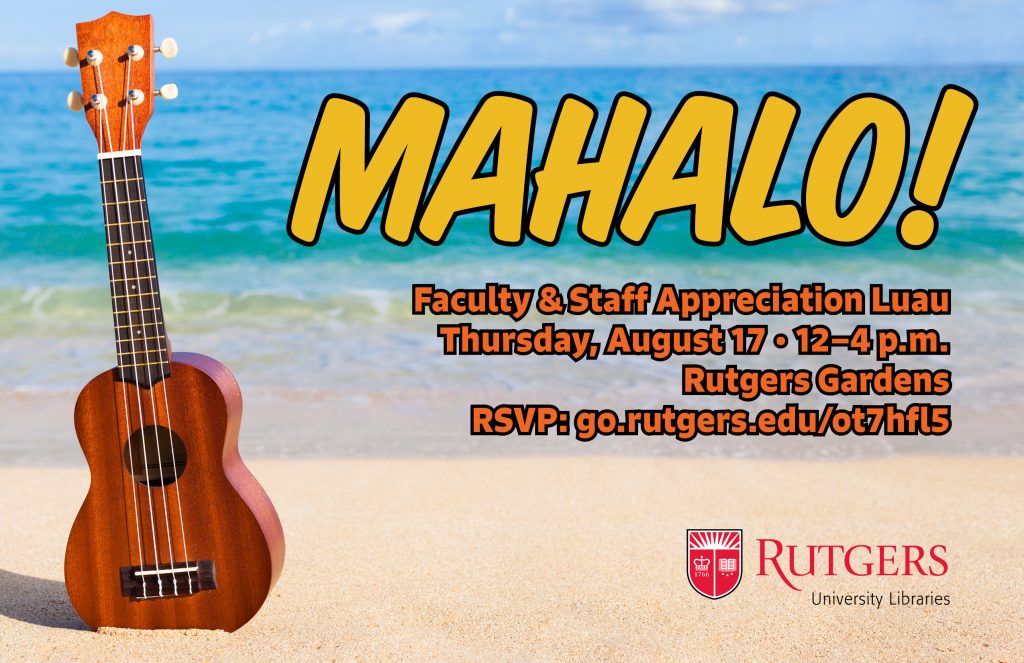
    This year’s Faculty and Staff Appreciation Picnic will be held on Thursday, August 17 from 12 to 4 p.m. at the Rutgers Gardens Log Cabin and Pavilion (140 Log Cabin Road, North Brunswick, NJ 08902). There will be fun and games, music, and a delicious BBQ-style menu (with plenty of healthy and vegan-friendly options). Best of all, this year’s picnic is luau themed, so get ready to celebrate Hawaiian style!

    Please RSVP here.

  • Rutgers Launches Rutgers Health – Here’s What It Means for the Libraries

    Rutgers Launches Rutgers Health – Here’s What It Means for the Libraries

    What is Rutgers Health?

    “Rutgers Health is the clinical arm of Rutgers–the areas of Rutgers Biomedical and Health Sciences and other Rutgers units devoted to caring for patients. A single brand for all of Rutgers’ patient care and services.” (from: www.rutgershealth.org/about-rutgers-health/rutgers-health-structure)

    The Rutgers Health Group will serve as a single faculty practice, unifying existing specialties and clinical practices, comprising approximately 1,000 Rutgers-employed health care professionals. Members of the faculty practice will be from New Jersey Medical School, Robert Wood Johnson Medical School, and other RBHS and Rutgers schools–dentists, nurses, pharmacists, social workers and psychologists, and other health care professionals working in clinical settings throughout New Jersey.

    The Rutgers Health Network will be an integrated network of Rutgers’ affiliated hospitals, community clinics, medical groups, wellness centers, and other affiliates collaborating to provide value-based care to patient populations across the state.

    How will the Rutgers University Libraries support Rutgers Health?

    There are two major user groups with full access to library resources–members of the RBHS faculty, students, and staff and members of the clinical (voluntary) faculty who oversee students and residents in affiliated hospitals and clinics throughout New Jersey.

    As Rutgers Health launches, it is challenging to predict how utilization and demand for libraries-licensed high quality clinical and patient care resources will grow. Should you encounter questions about Rutgers Health which impact the libraries, please contact your colleagues at the RBHS Libraries.


    Contributed by Judy Cohn and Victoria Wagner

    Judy CohnSave

    Save

    Save

    Save

  • Lessons from Town Hall – Connecting at the Local Level

    Lessons from Town Hall – Connecting at the Local Level

    Last week we tried something new with the Libraries Town Hall. We shifted our focus north to Rutgers University–Newark and spent some time looking at the relationship between the mission of the University and the planning and activities within the libraries.

    We were fortunate to have Sherri-Ann Butterfield, who will assume the position of executive vice chancellor and chief operating officer in July, provide us with an overview of the Rutgers–Newark initiatives where Dana Library plays a central role: the Honors Living-Learning Community (HLLC), Express Newark, and the P3 Collaboratory (Pedagogy, Professional Development, and Publicly-Engaged Scholarship). Dr. Butterfield gave us a whirlwind tour through these initiatives, highlighting the role of the library from teaching one of the foundation courses in the HLLC, to being one of the founding pillars of the P3 Collaboratory, to the amazing “Records at Play: The Institute of Jazz Studies @50” exhibit currently on display at Express Newark.

    Rutgers–Newark has made remarkable progress under the leadership of chancellor Nancy Cantor. In her short tenure, the university has achieved a distinct identity as an anchor institution in the community. Its focus on excellence in student inclusion and success and community-engaged scholarship is setting Rutgers–Newark as a national model. She has a robust and active strategic planning process as demonstrated by regular updates of the strategic plan, with the newest released in Spring 2017.

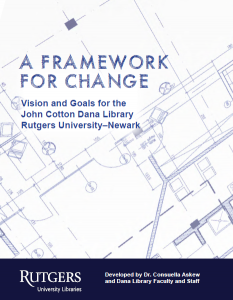
    Following Dr. Butterfield’s presentation, Consuella Askew and Adriana Cuervo gave us an overview of Dana Library’s year-long planning process and the resulting document, “Framework for Change: Vision and Goals for the John Cotton Dana Library.” The framework describes an evidence-based approach to the development of services, collections, and spaces that contribute to the success of the university’s students and faculty and to the perception of Dana Library as a valuable and active campus partner.

    As part of the annual RCM process, we have received new funding for a full-time archivist and the renovations necessary to develop an archive in Dana Library. In 2016 we also received $100,000 for renovations and new furniture in Dana Library and will receive another $100,000 in 2017. The chancellor has also acknowledged the work of librarians with seed grants to Adriana Cuervo for the Citizen Historian Project (2015), Bonnie Fong for Boot Camps for Graduate Students (2016) and Krista White for Digital Storytelling as 21st-Century Pedagogy (2017). Under Consuella’s leadership, Dana Library will house and be full partners in the P3 Collaboratory.

    The energy surrounding the Rutgers–Newark transition is contagious and the university is gaining national recognition for its innovation. What is best, however, is that the library is at the center of these important campus initiatives. Kudos to the efforts of our colleagues in Dana Library and the Institute of Jazz Studies.

    What does this mean for RUL? In the March Agenda, I talked about Rutgers University Libraries’ planning process. I would like to take some time now and talk about how the process that Consuella has undertaken in Newark fits within the library-wide planning environment. The risk of being first under the spotlight is that you become an example. However, if they are not in development now, each of our locations—Rutgers–Camden, Rutgers–New Brunswick, and RBHS—will all have plans or frameworks that describe how the libraries fit into the broader University environment. These efforts will directly tie us to the distinct missions of our campuses and provide the foundation for our planning.

    The challenge is that even at the very highest levels, our four university environments are different. For example, the Overarching Goals for Dana Library are to:

    • Innovate to support 21st-century library use.
    • Increase community engagement.
    • Increase operational excellence, efficiency, and fiscal sustainability.

    Short-term objectives include developing the Dana Archives and selective weeding of the collection to make space for study and collaboration. Longer-term objectives include enhanced educational technology, rethinking strategies related to Government Documents, and improved digital services (e.g., digital humanities). These goals and objectives are tailored to meet the needs of the Rutgers–Newark environment and mission, and we cannot simply transplant them to RBHS or Rutgers–New Brunswick. Simply put: unique university goals require unique library goals. In the February Agenda, I discussed the challenges that we face as we support the multiple unique missions of the University.

    As we go into Phase 2 of our planning, we will have to determine how to balance the finite central infrastructure to meet the needs of Rutgers–Newark, while continuing to advance the wider university. Ultimately, we will be most successful when we can find broad-based initiatives or areas of focus that support more than one campus. Those of us not in Dana know that there are needs in each of the campuses, including data management, research information management, digital humanities, improved instructional objects, improved collections, and Open Access initiatives. Internally, we know, for example, that we need improved support technology support for Special Collections, improved discovery, an improved website, improved ability to track internal policies and procedures, and improved collection assessment capacity. In our current environment, it is highly unlikely that we will receive increased funds for central services. Instead, we will need to create scalable, reusable infrastructure to extend our existing capacity.

    With three senior level interim positions, FY2018 will likely be another year of building infrastructure. It will also be a great time to step back and connect with our campuses to determine where our libraries fit and how we can become further integrated into campus needs and missions. Thanks to Consuella and Adriana’s presentation at Town Hall, we know this works. In Rutgers–Newark, we see that this is a great time for libraries. Through careful planning and collaboration with administrators, the expertise of the library is central to almost every aspect of research and education. We need to learn from this experience and find ways to replicate this success across four very different campus environments, while also maintaining the balance and economies of scale that our infrastructure units provide.

    Save

    Save

  • Summer AuthorTalks Return to Alexander Library

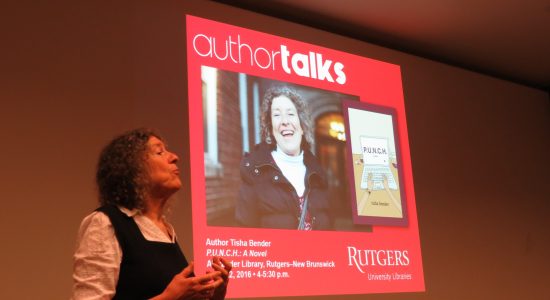
    • Tisha Bender P.U.N.C.H. AuthorTalk, June 2016

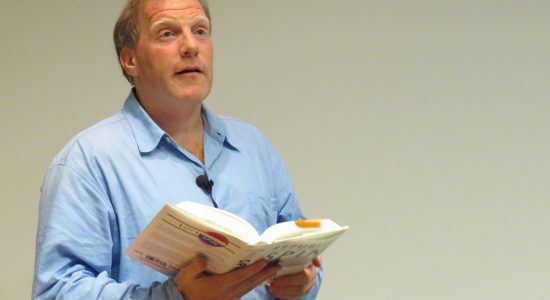
    We are happy to announce that the Libraries are once again collaborating with Rutgers’ Office of Summer and Winter Sessions to cosponsor a series of talks at Alexander Library this summer. Save the following dates and stay tuned to the Agenda and our website for more information on the talks as they approach. We hope you will share the word with colleagues and students and plan to join us yourselves!

    Azzan Yadin-Israel, Professor, Jewish Studies, Rutgers–New Brunswick
    The Grace of God and the Grace of Man: The Theologies of Bruce Springsteen
    (Lingua Press, July 2016)
    Thursday, June 29, 4–5:30 p.m.

    Bruce Springsteen’s words and music have been part of the American landscape for nearly half a century, and are today cherished by millions worldwide. Indeed, Springsteen has been known to inspire religious devotion among his fans, and his shows with the E Street Band are often compared to a revivalist congregation. However, there has not been a comprehensive scholarly study of the biblical and theological motifs in Springsteen’s lyrics until now. Reading Springsteen’s songs as one would a poem, The Grace of God and the Grace of Man sheds new light on Springsteen’s work.

    John Bader, Former Dean of Academic Advising and Undergraduate Academic Affairs, Johns Hopkins University
    Dean’s List: 10 Strategies for College Success
    (2nd ed., Johns Hopkins University Press, March 2017)
    Thursday, July 6, 4–5:30 p.m.

    Deans at America’s top institutions—including Harvard, Princeton, Stanford, Yale, and Columbia—join John Bader to tell students what they need to know to have a rich and rewarding college experience. A complete reworking, this second edition includes information on managing workloads and faculty relationships, as well as new material focused on first-generation challenges and international students. Dean’s List offers a thoughtful, commonsense approach to higher education that allows students to make the most of their four years on campus—and beyond.

    Third talk TBA. More information coming soon!

  • Year End Carryover Accrual Review For Employees Who Accrue Paid Time Each Month

    Employees that are eligible to accrue paid time off should review year-end carryover accruals and discuss with supervisors to use excess vacation time prior to the June 30, 2017 deadline.  Staff may carry over one year accrual plus the time accrued for the month of June. ARS Administrators are strongly encouraged to review and insure that absence records are up to date as we get close to year end. Prior to approving time off supervisors may want to confer with the unit ARS administrator to confirm the accuracy of employees accruals.

    In accordance with University Policy 60.3.14, all earned compensatory time must be used prior to the first pay period in June; comp time not used by the first pay period in June will be paid out as overtime by the end of the fiscal year.

    Depending on specific negotiated agreements and university policy, excess vacation may be donated to the Compassionate Leave Program or the Staff Leave Donation Program for legacy UMDNJ.

  • Celebration of Scholarship Digital Exhibit Now on View

    The 2017 Celebration of Scholarship digital exhibit can be viewed at libraries.rutgers.edu/celebration.

    The digital exhibit for the 2017 Celebration of Scholarship is now available for viewing. It features the works of 125 members of the Rutgers faculty in disciplines ranging from fine arts to pharmacology at Rutgers–Camden, Rutgers–Newark, Rutgers–New Brunswick, and Rutgers Biomedical and Health Sciences.

    Some highlights include:

    • A medical student didactic in which participants discuss episodes of Seinfeld through the lens of a psychiatrist;
    • The first-ever art history of video games;
    • A project to translate all 30,000 lines of extant Anglo-Saxon poetry into modern English verse;
    • A feature film about the life of the director’s grandfather, a 90-year-old Japanese-American widower living in Honolulu;
    • A blog presenting 20 years of research on eating, body image, and weight management so that it is accessible to a general audience;
    • A chapter celebrating the accomplishments of law librarians of color;
    • A book detailing research on mathematical models of vehicular traffic networks;
    • Histories of New Brunswick and Newark, as well as a look at life on the shore in the wake of Hurricane Sandy;
    • And many projects led by our colleagues, including Janet Brennan Croft, Bonnie Fong, Sarah Jewell, Marty Kesselman, Megan Lotts, Christie Lutz, and Judit Hajnal Ward.

    Learn more about these and other works by exploring the exhibit at libraries.rutgers.edu/celebration.