Category: News

  • Website Redesign Project Update – September 2020

    The website redesign project team is close to completing baseline usability testing, examining how student and faculty users complete common tasks on our site. Through this study, we’re gaining a better understanding of where usability problems lie and how we should prioritize and present various pieces of content on the site. Listening to users speak their thought process aloud is very enlightening, allowing us to learn a lot about their site usage and perceptions even beyond the steps they take to complete the assigned tasks. We’ve even learned a bit about what we’re doing right!

    As with the brand and messaging survey, we were happy to see a huge amount of interest in usability testing across units and user communities, and we’ve gathered a lot of valuable data that is steering how we move forward with the design of each site. We’ve also gathered a pool of people who were unable to participate in this study but are interested in being involved in future studies, which will make our next outreach efforts more streamlined.

    Local Library Owner groups are currently meeting with NewCity to workshop some prototype ideas, informed by analyses of all the discovery and audience research data gathered to date: stakeholder interviews, analytics, brand and messaging workshops and surveys, and usability/perception testing. These prototypes are just pen-and-paper outlines so far; NewCity will take a lot of inspiration and ideas from them, then will develop some more detailed and concrete options for us to explore. Over the course of the fall semester, we’ll get a real sense of how the sites are going to look and function, and content development will begin.

    We’ll be presenting at a central forum sometime early in the fall semester, so look out for an announcement about a date and time for that presentation.

    As always, you’re welcome to reach out anytime with questions or comments. Send us an email: webservices@libraries.rutgers.edu.
  • Web Redesign Project Team Update – March 2020

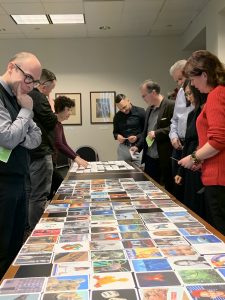
    Participants sort cards during NewCity’s on-site visit in February.

    The website redesign project has gotten underway. We are currently in the discovery phase, which has several objectives: to identify stakeholders and learn about their goals for the project; to uncover our needs as local communities delivering shared resources; to understand our technical infrastructure and plan for the future; and to strategize future engagement with our internal and external audiences.

    The project is being managed as a joint venture between Rutgers University Libraries and NewCity, a website design company experienced with higher education, large non-profits, and commercial companies.  The project team, which is co-led by Antonio Barrera (Library Applications and Development) and Amy Kimura (SUS), includes members from across RUL: Doug Allen, Matt Badessa, Megan Lotts, John Powell, Jonathan Torres, and Yini Zhu.

    On February 11 and 12, 2020, three members of the team from NewCity came for an on-site visit. They met with the project team, Cabinet, and additional faculty and staff representatives from across the campuses to lead a number of activities designed to explore the needs of our stakeholders, communities, and to reflect on each unit’s similarities and differences, while considering success measures for this project. One of the main goals was for NewCity to get to know us so they can be sure they’re capturing the authentic voices of the libraries.

    NewCity will use these conversations and stakeholder interviews, together with a wealth of other qualitative and quantitative data, to build a comprehensive Discovery Report that they will deliver in the coming weeks. This report will help inform our site’s design and content strategy. We’ll make it available on the project team’s website, where you can also find other key documents related to the project.

    We plan to launch the new sites in June 2021 in order to minimize mid-year disruption. That gives us ample time to build the sites, provide training, and populate the new spaces with helpful, up-to-date content that best fits the need of each location and supports streamlined delivery of our shared resources. We will continue to update our project team site as we make progress, so check back frequently.

  • Digital Exhibits Page

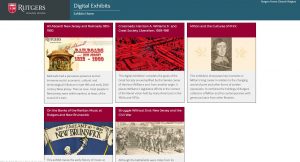
    Continuing the work of presenting our digital projects in a consistent arrangement, the Digital Exhibits page is available with its first five digital exhibitions. The page summarizes the completed projects and links to each online exhibition and its exhibit catalog. While the panels and web pages reflect the distinctiveness of the subjects, they share unified theming. They have consistent links back to the main Digital Exhibits page as well as the Libraries home page. Be sure to check back from time to time, as more are on the way in the months to come.

  • Digital Projects Status Page

    Over the past couple of years, the digital projects team in Shared User Services has been actively assisting campus libraries in organizing their work on digital collections, and making them available online. Thirty-one such projects are now publicly accessible through our digital collections page and span a variety of topics, from Inclusion and Diversity, to showcasing the research articles and presentations of our undergraduates. This list continues to grow, as new collections are proposed and some of our ongoing projects continue to be renewed and expanded upon.

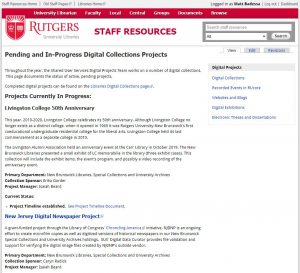
    But everyone wants to know what’s in the pipeline. In order to keep the RUL community up to date on the projects we’re working on, we’ve created a page for Pending and In-Progress Digital Projects that lists most of the digital collections and exhibits that are upcoming, along with their status and proposed work timelines. We hope you’ll visit our status page and keep abreast of our ever-growing digital collections work!

  • New Brunswick Libraries and the Google Book Project

    Google carts will arrive at Rutgers on March 2 for loading, with three quarters of them going to NBL.  Of the ca. 194,000 volumes listed on the Google candidates spreadsheet, roughly 86% were in the New Brunswick Libraries.

    Nearly 29% of the NBL Google candidates are in the Annex, and we’re beginning the process there.  The NBL Google Team made the decision to use the 1900 publication date as the cutoff for anticipating whether scanned material might eventually become freely available and would not need to return to RUL.  This date is a compromise and approximation; copyright findings are a complex process with later or earlier dates for American and non-American publications.  Stephanie Bartz arranged the Annex Google candidates in call number and (for the journals) title order, and I gave NBL selectors two months to decide for materials in their subjects whether to accept the “send–do not return” option for pre-1900 publications, or “opt out” and require materials be returned.  RUL will have search-only access in HathiTrust to scanned in-copyright publications, and we will retain the hard copy of these volumes after scanning.

    Many NBL subject specialists weighed in with their preferences by initialing the spreadsheets or expressing them in meetings and online.  The Annex candidates include many books and journals that saw the bulk of their circulation many decades ago and are now in poor condition, but available digitally or via interlibrary loan.  As we finalized the Annex spreadsheets, I made decisions where selectors had not based on their expressed preferences and a conservative interpretation of RUL’s Print Retention and Withdrawal Guidelines that permit withdrawal of last copies if we have perpetual digital access to the content or at least five copies in North American libraries.  Our current estimate is that of 54,115 volumes on the Google spreadsheet, 88% will be sent but returned, and 12% (mostly journals) will be sent but not returned with the prospect of both digital access and continued interlibrary loan access to the hard copies.  I believe we found a good procedure that observes RUL policy and values the expertise of our subject specialists while eventually gaining badly needed shelf space for our Annex.

  • Library Reading Lists Created within Multiple LMSs

    Students in electronic classroomThe Ex Libris Leganto Reading List Management tool is now available for use in Blackboard, Canvas, and Sakai. The reading list tool can help instructors create impactful resource lists using library content and integrate a variety of materials into one, easy-to-use list. The tool is accessible from inside the learning management system, so students can access the reading list, along with other course resources. Instructors and librarians can collaboratively create and process reading lists for students from all types of resources.

    Because the reading lists tool is integrated in Blackboard, Canvas, and Sakai, access to materials is easy and streamlined for students.

    Here are some of the key features:

    • Instructors can create reading lists from books, articles, streaming media, and other resources held by the Libraries or add their own content. Reading lists integrate with the saved favorites feature on QuickSearch and lists can be used for multiple sections of a course or copied into new courses.
    • Reading lists can be divided into sections, by chronology, or by citation type.
    • Instructors and students can view information about each citation such as availability and status.
    • Instructors can collaborate with peers to enrich reading lists and keep them up to date.
    • Instructors can access usage data about their reading lists.

    The tool is now available in the external tools sections of the learning management systems. For more information, or if you have any questions, contact me at maria.breger@rutgers.edu.

  • Ex Libris Implementation Project Update – November 2019

    quicksearch logoThe project to append Rutgers Law Libraries’ Koha Catalog data to our instance of Alma and QuickSearch is picking up the pace. During the summer the Implementation Team and its working groups met with our counterparts at Law to review Alma configuration options and best practices for data cleanup and loading records. Then in September and October, Law supplied configuration and mapping forms and exported their full catalog of bibs and patrons to Ex Libris.
    Below is the tentative schedule for the remainder of the Law Append project:

    October 2019

    • Ex Libris performs test load and builds test system
    • Law starts using our ILLiad and redirects their users to our ILLiad form

    November 2019

    • Law and Libraries review results of test load
    • Libraries provide Alma training
    • Law stops lending under NJRLL (Law Camden) and RULAW (Law Newark) symbols in ILLiad
    • Law Exports Koha Catalog Titles to OCLC
    • OCLC attaches NjR symbol to Law titles in WorldCat

    December 2019

    • Continue Alma Training

    January 3, 2020

    • Law provides final version of configuration forms and extracts to Ex Libris

    January 4-8, 2020

    • Technical Services and Fulfillment Activities are frozen
    • Ex Libris appends Law data to our instance of Alma and QuickSearch

    January 9, 2020

    • Law Goes Live with Alma and QuickSearch

    January 10, 2020

    • Load Offline Circulation transactions

    January 2020

    • OCLC removes NJRLL and RULAW symbols from existing Law titles in WorldCat
  • Reservations Accepted for One Button Studio

    One button studio at Alexander Library
    The One Button Studio at Alexander Library.

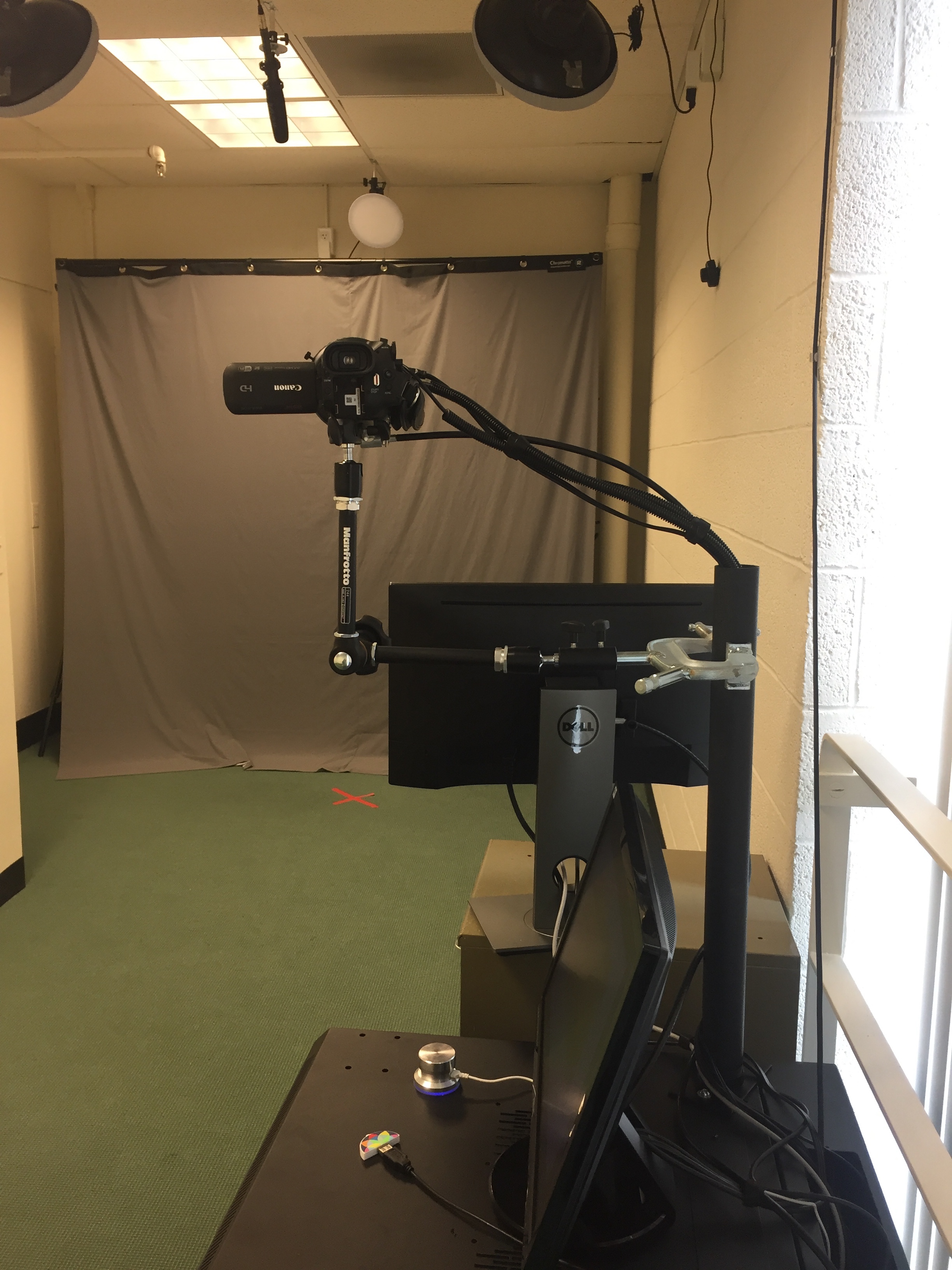
    Students, faculty, and staff now can reserve the One Button Studio in Alexander Library to create high-quality digital video recordings in a studio setting. The studio does not require users to have prior video production knowledge. Lighting, audio, and video configurations have been pre-set for ease of use.  With support and funding from Ben Sifuentes-Jáuregui, vice chancellor for Undergraduate Academic Affairs at Rutgers University–New Brunswick, this space will enable students to present their research as a high-quality video, an alternative to the more static conventions of the poster or long-form essay. The room is set up for one to three people to create a video with only a FAT formatted flash drive. It really is as simple as 1-2-3-4: insert your USB drive into the dock, press the large silver button to begin recording, press the button to stop recording, and remove your USB drive to deactivate the studio camera and lights. Shared User Services provided support to list the One Button Studio on the Group Study Rooms web page and link to a user guide/reservation page. Reserve the room online and visit the Circulation Desk in Alexander Library to check out the key with your Rutgers ID card.

  • Robert Moevs Audio Archive

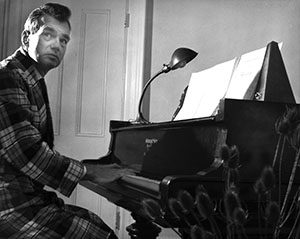
    Robert Moevs at piano
    Robert Moevs (1920–2007) served on the faculty of Rutgers University from 1964 to 1991, and as chair of the Music Department from 1974 to 1981.

    The Robert Moevs Audio Archive now features publicly available streaming clips of all of its 193 pieces and is one of the libraries’ featured Digital Collections. The audio was digitized from reel-to-reel and cassette tapes to preserve the material while making it more easily accessible. The metadata is visible to anyone, and the complete audio can be accessed from computers in Douglass Library.

    An accomplished composer and beloved teacher, Robert Moevs (1920–2007) served on the faculty of Rutgers University from 1964 to 1991, and as chair of the Music Department from 1974 to 1981. Accolades include fellowships, residencies, and awards from the American Academy in Rome, Guggenheim, the National Institute of Arts and Sciences, ASCAP, and the Stockhausen International Prize in Composition. The creator of a rich body of orchestral, chamber, vocal, and instrumental music, Moevs’s work received major performances by George Szell and the Cleveland Orchestra, Erich Leinsdorf and the Boston Symphony, and Leonard Bernstein and Symphony of the Air. He was also a revered professor whose students include Richard Wilson at Vassar College and Judith Shatin at the University of Virginia.

    The Robert Moevs Audio Archive ensures the preservation of the composer’s music and the style he represents for generations to come. Modernist composers sought to challenge and expand the horizons of the listener; as teachers, they significantly impacted the scholarly study of music. Digitization and metadata creation was possible thanks to the Moevs endowment, which generously supports conferences and concerts on 20th-century modernist music.

    I’d like to thank everyone who worked on this project, especially Kalaivani Ananthan, Marty Barnett, Isaiah Beard, Thomas Izbicki, Lila Kwederis, Rachael Lansang, Rhonda Marker, Sam McDonald, Janice Pilch, Geoffrey Wood, and Esther Zenzele.

  • Library Tutorials Made Available in Multiple LMSs

    The NimblyWise courses on Communication, Critical Thinking, and Information Literacy are now available for use in Blackboard, Canvas, and Sakai.  A new Credo Reference course – Health Science – is in the process of being set up and soon will be available in Canvas.  As an easy way to reference these courses while conveying the wide range of library instruction topics, we refer to them as Library Tutorials.

    The Library Tutorials are for use by Rutgers University instructors on all campuses.  Librarians will be interested to know that the lessons are mapped to instructional standards including the AAC&U (American Association of Colleges and Universities) VALUE Rubrics (Information Literacy and others), the ACRL Framework for Information Literacy, and the ACRL Visual Literacy Standards.

    Here are some of the ways that instructors may use these lessons:

    • In a first-year or transition class, to help students appreciate the overall importance of information literacy, strong research and evaluation, and communication skills.
    • As a flipped classroom, assigning students to view a video or work through a lesson before they attend a specialized library instruction class.
    • At various points during a scaffolded assignment, courses are broken down into individual lessons so that they may be deployed to students at various points in their process.
    • At the beginning of a class project, the multimedia lessons cover topics essential to success in research, from choosing a topic to evaluating sources.
    • At point of need, the lessons and videos provide just-in-time learning resources that are available to students throughout the semester.

    Instructors who have questions about the Library Tutorials content, or who want to supplement the online instruction with in-person or other modes of library instruction, are being directed to contact their library liaison.  Library liaisons can also help instructors select the most relevant lessons for their course.

    Librarian liaisons who need information about the tutorials may contact Maria Breger at maria.breger@rutgers.edu.