
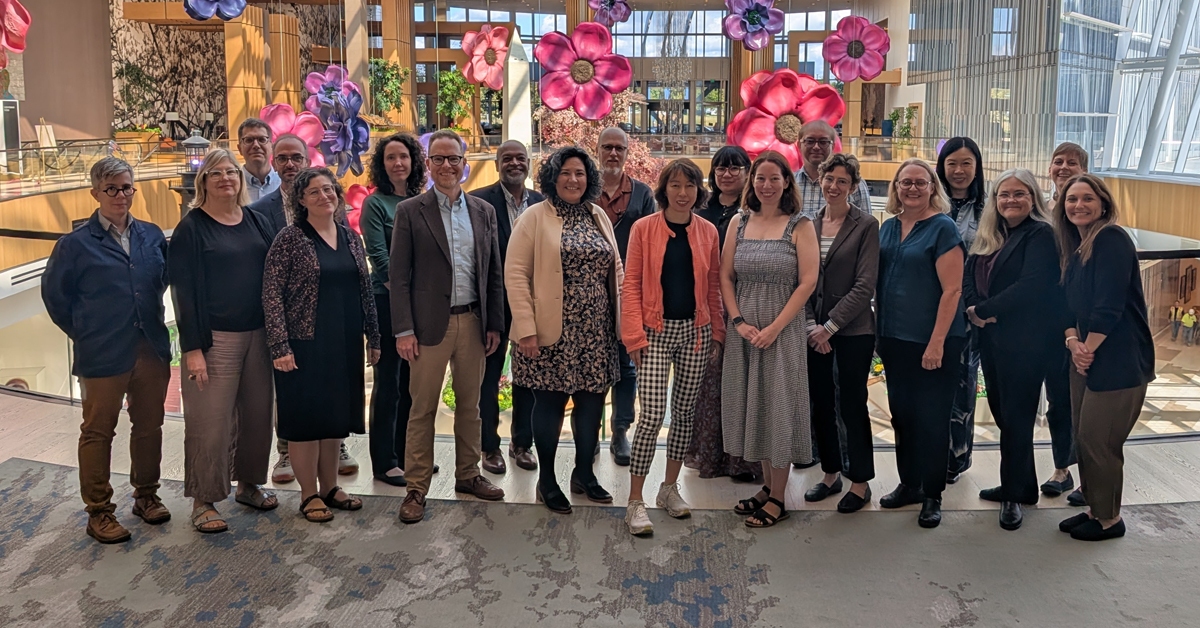
In 2025, I had the privilege to be accepted as a fellow for the Association of Research Libraries Intensive Learning Program. The ARL Intensive Learning Program is an eight-month hybrid experience that explores operational aspects of senior leader portfolios in research libraries and archives as well as responsibilities related to managing those portfolios.
The program was structured to provide 20 fellows with a space to explore topics preparing them for roles leading research libraries. Among the program’s many speakers were Melissa Just, the dean of USC Libraries who is now ARL president, and Rhea Ballard-Thrower, university librarian and dean of libraries at the University of Illinois Chicago and the ARL president during my fellowship. These leaders focused not only on their current roles and how they manage a variety of challenges, but also on their personal journeys and how we as future leaders might want to approach our journeys.
The fellowship included two in-person events: a site visit to the University of Minnesota and the ARL Association Meeting in fall 2025. The site visit provided us an opportunity to dig deeper into various aspects of leading a research library. Discussion topics included managing library donors and donations, building and sunsetting services, and managing projects. We also toured various facilities, including a 3D health sciences virtual learning environment and a makerspace.
The ARL Association meeting, which was attended by member representatives of ARL’s 125 member libraries, served as both a learning opportunity and a formal wrap-up of the fellowship program. Among the highlights were hearing former librarian of Congress Carla Hayden speak and networking with ARL leaders from across North America, who encouraged me to continue to grow my leadership skills and potential.
So, what did I gain from the program? It helped me develop confidence and further my skills for leadership. It enabled me to take a step away from my daily responsibilities within the library and see things from the perspective of leaders with a variety of non-technical portfolios. The program was titled “intensive” for a good reason; the readings and discussions were intensive in nature and depth. We delved into issues such as workplace culture and politics, and we learned from each other’s real-life challenges. Since the end of the program, I’ve been dedicating time to reviewing my notes and program materials, and in that way, the benefits are ongoing.
How did my participation in the program benefit the Libraries? I returned inspired to do more to further our mission, to embolden my colleagues, and to involve myself more broadly within the organization. As participants, we were asked to work on an action plan, and among my goals are to seek opportunities to participate on committees or projects that are not specific to my position, to ensure I highlight my and my team’s work, and to fill my gaps of knowledge and experience as a leader.
With this action plan in mind, I nominated myself to run for chair of the Staff Advisory Committee in order to focus on issues outside of my team, and hopefully, to benefit all staff members with my insight and desire to see their success. I dedicated myself to writing articles like this one. (Coming soon: articles about my team’s accessibility work and about a student-led captioning program.) I also reached out to the Rutgers Office of Information Technology (OIT) to consider our AI-based efforts to produce transcriptions, and OIT has drafted an article for their news page and possibly Rutgers Today.
The importance of recognizing and communicating the impact of my work and the contributions of the team I support was one of my most important takeaways from the ARL fellowship. The experience encouraged me to reflect on the value I bring to the Libraries and to consider how I can help increase awareness of the services, achievements, and opportunities the Libraries provide. It also reinforced the importance of valuing the diverse experiences and perspectives that individuals contribute to an organization. Through this reflection, I came to better appreciate that leadership can be demonstrated in any role through participation in projects, committees, daily responsibilities, and interactions that support and strengthen Rutgers University Libraries.