Category: Rutgers University–Newark

Faculty and staff news from the libraries at Rutgers University-Newark.

  • Ex Libris Implementation Project Update – January 2018

    Ex Libris Implementation Project Update – January 2018

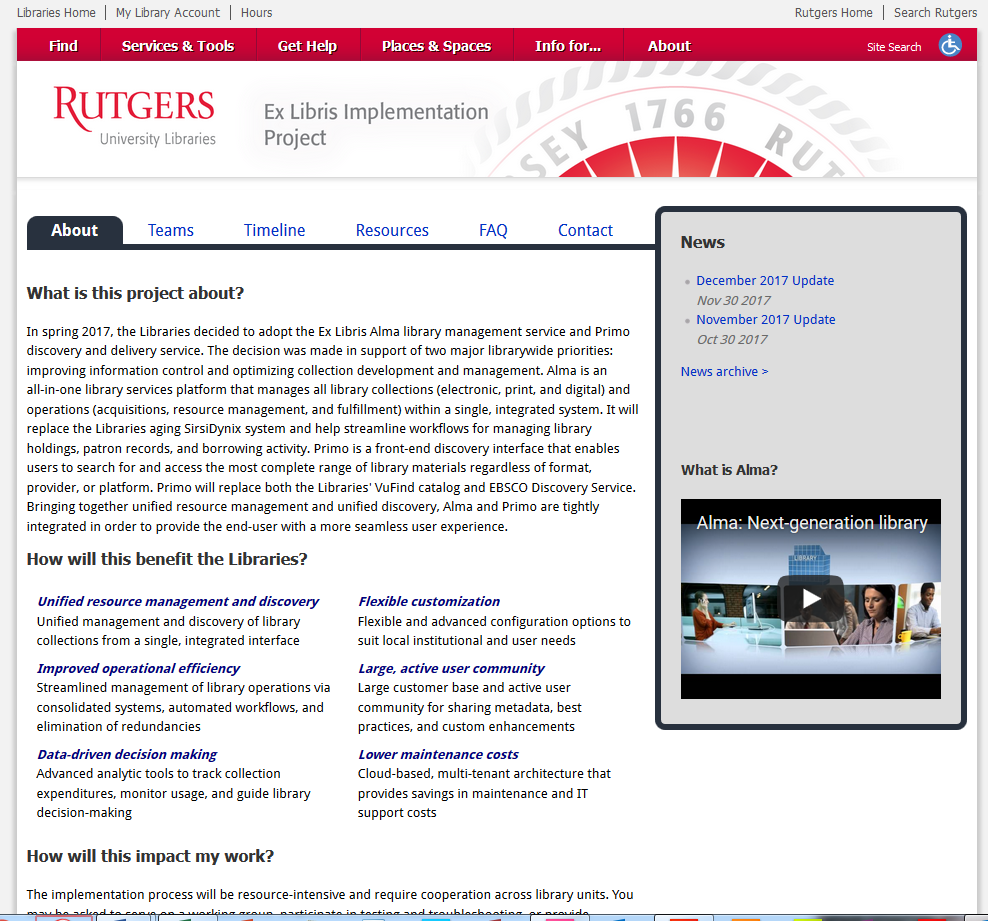
    Ex Libris website screenThe entire Ex Libris Implementation Team attended the State of the Libraries on December 6 and appreciated the opportunity to engage library faculty and staff there. We thank everyone who came to our table and talked to us about the project. Congratulations again to those lucky winners of prizes!

    This project update focuses on the major progress made in December. In our previous update, we described the three stages of implementing Alma and Primo–Define, Build, and Deploy. For the Libraries’ Implementation Team, the numerous tasks in those three stages generally fall into two categories: working on data migration and system integration in tandem with Ex Libris and developing two-way communication channels and training opportunities for the library (and eventually university) community. We are pleased to report that significant progress has been made on both fronts in December.

    Project Website

    In early December, we unveiled a new website for the Ex Libris Implementation Project, at http://exlibris.libraries.rutgers.edu. As the information hub for the project, the website includes the following pages:

    • About – Introduction to the project, benefits to the Libraries, and impact on library workers
    • Teams – Membership of the project team and responsibilities of the working groups
    • Timeline – Major milestones from the planning to the formal launch on June 1, 2018
    • Resources – Basic training resources, research & case studies, and team meeting minutes
    • FAQ – Answers to questions such as what is Alma and what is Primo
    • Contact – An online form for library faculty and staff to send questions and comments to the project team

    The site will grow significantly in scope and detail as the project progresses and more information becomes available. Please remember to check back from time to time to see what is new or use the contact form for questions and comments. We thank everyone who made this site possible, including members of the Implementation Team (especially Joseph Deodato and Chad Mills), Jessica Pellien, and the Web Team of IIS.

    Migration Forms

    As of this writing, the Implementation Team and several working groups are working tirelessly on completing the forms for Symphony (SIRSI) to Alma and EBSCO to Primo migrations. These lengthy forms define the test data load and take a lot of time and care to fill out. Our immediate objective is to turn in the forms on December 22 for our Ex Libris partners to review during the university’s holiday break. To meet this deadline, lately the Implementation Team has been meeting twice or three times a week on the forms. Some team members work late in the office and others take work home. We have also actively sought the input from colleagues in Access, Collection, and Technical Services, in addition to consulting with Ex Libris.

    The process of completing the migration forms exemplifies the spirit of teamwork. Besides two point persons for the forms—Chris Sterback and Gracemary Smulewitz, all the other team members have contributed time, energy, and expertise to the process. It is such an uplifting feeling to see colleagues from different departments of the Libraries working selflessly toward a common goal. We look forward to reporting new accomplishments from this wonderful team of colleagues in 2018.


    Tao Yang and Abbey DiPaolo
    Save

  • We Are Not Alone – Thoughts on the BTAA Meeting

    We Are Not Alone – Thoughts on the BTAA Meeting

    I know that we spend a lot of time focused on building infrastructure. Our top priorities involve undergraduate success and strengthening information control to ensure that our users have efficient, reliable access to information resources.

    I just got back from a Big10 meeting at Purdue. At the meeting, we reviewed the results of a survey of the BTAA library directors’ top priorities for future collaborative activities. Each director picked three areas of interest. The results:

    • Collection Management 54%
    • Student Success Measures 46%
    • OER 46%
    • Data Management/Curation 38%
    • Analytics/Assessment 38%
    • Open Access 15%

    The remaining four items: Special Collections, Professional Development, Digital Humanities, and Library Publishing all were 8%.

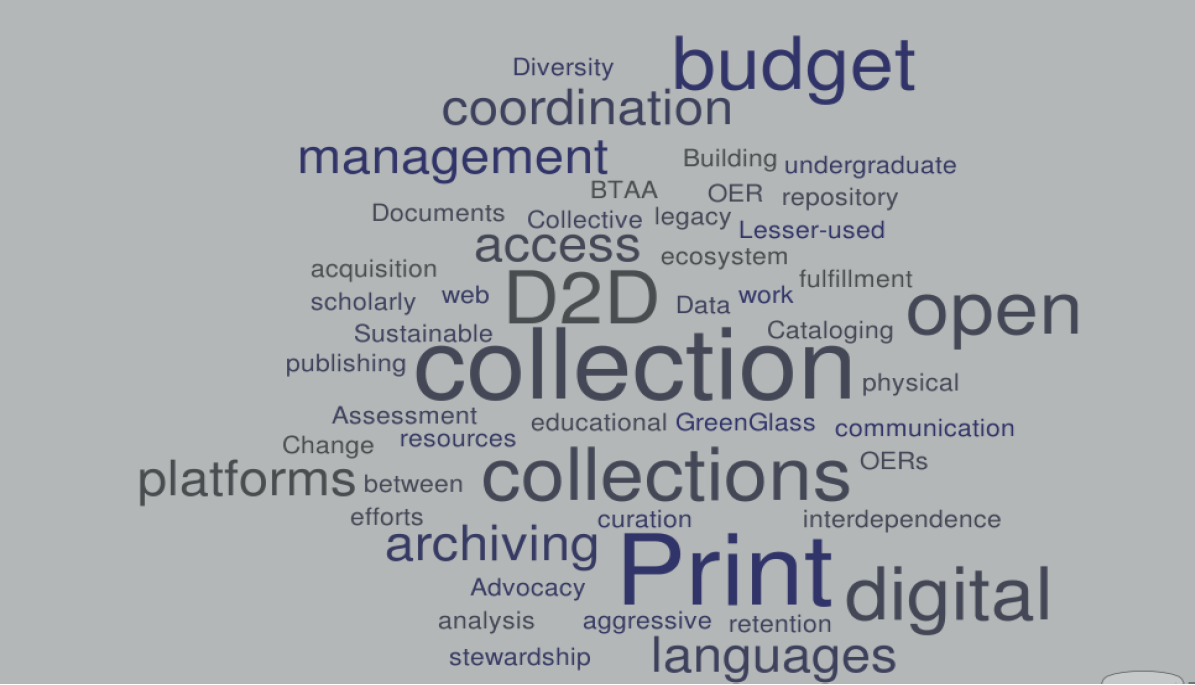
    In another part of the survey, the directors listed the most important BTAA initiatives as Discovery to Delivery, Collections Infrastructure and Management, and Student Success.

    Although these priorities and initiatives do not represent the most important work of the libraries, the selections do say something about initiatives that are most effective when done ‘at scale’ with the broader community. As I listened to my colleagues share their experiences and challenges, it struck me that we are not the only research library that is focusing on basics.

    In a meeting back here at Rutgers, Judy Cohn brought up the NMC Horizon Report: 2017 Library Edition. This report from the New Media Consortium looks at trends in libraries, technology, and education to imagine what is on the five-year horizon for academic and research libraries. It is produced in collaboration with University of Applied Sciences (HTW) Chur, Technische Informationsbibliothek (TIB), ETH Library, and the Association of College & Research Libraries (ACRL). It identifies trends, challenges, and developments in technology that will impact how libraries plan to meet the needs of their users, how we function day to day and year to year, and the services that will be in highest demand. The first of the top 10 highlights listed was:

    Libraries remain the gatekeepers to rich tapestries of information and knowledge. As the volume of we resources increases, libraries are charged with finding new ways to organize and disseminate research to make it easier to discover, digest, and track.

    It was surprised to see that improving ‘information control’ was featured so prominently in the report. It seems that academic and research libraries have a renewed focus on the fundamentals and are redesigning infrastructure so that it better meets the changes in the environment. I know there are times when we feel like we are behind; however, it appears that we are actually in sync with many of our peers.

    Over the next week, we will have meetings with Office of Information Technology and the Office of Research and Economic Development to discuss potential collaboration on research and digital humanities infrastructure. This will move us closer to another one of our priorities: identifying and communicating our role in the broader research environment of Rutgers. We are making progress!

    While we are moving fast, our activities continue to be guided by the expertise and research of our colleagues. There are several examples of this that come to mind, all with librarywide participation. The Discovery Working Group has offered a model of how to harness data and best practices to make impactful changes in how our users discover and access collections via our website. Their work continues to propel us forward, even as the Ex Libris Implementation Team works to create nimble and knowledgeable teams to accommodate the anticipated workload over the next 7 months. And the Website Improvement Team is rolling out an impressive, incremental website refresh derived from extensive user research and analytics. The work that we are doing now will pay off in the coming years with flexible and easy to manage systems. It is my hope that these changes will make it easier for you to do the important work that you do.

    As we move into the holiday season, I would like to thank you for your dedication and patience. It has been a difficult few years of change in response to the new environment, but, thanks to your efforts, these challenges continue to be met with creativity, hard work, and shared purpose. Your dedication to Rutgers, our students, and our faculty is impressive and collectively, we are creating libraries—digital and physical—that encourage learning and exploration and support to the success of our users. I am very grateful to count you all as my colleagues and I wish you and your families the happiest of holidays and all the best for the New Year!

    Save

    Save

  • What’s Happening around Rutgers? December 2017

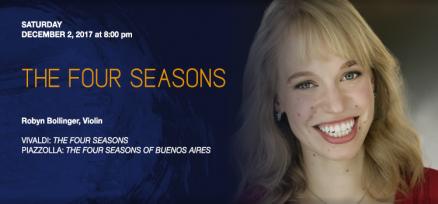
    Symphony in C will perform Vivaldi's Four Seasons at Rutgers–Camden on December 2.
    Symphony in C will perform two versions of the Four Seasons at Rutgers–Camden on December 2.
    Symphony in C Performs The Four Seasons

    Saturday, December 2
    8:00 p.m.
    Rutgers–Camden

    Symphony in C will perform Vivaldi’s The Four Seasons and Piazzolla’s The Four Seasons of Buenos Aires at Rutgers–Camden’s Walter K. Gordon Theater. Click here for more information and tickets.

    The Rutgers–Camden Campus Center transforms into a winter wonderland with family-friendly activities on December 9.
    The Rutgers–Camden Campus Center transforms into a winter wonderland with family-friendly activities on December 9.
    Winter Wonderland

    Saturday, December 9
    12:00 – 3:00 p.m.
    Rutgers–Camden

    The Campus Center will be transformed into a Winter Wonderland with pancakes, a hot cocoa bar, photos with Santa Claus, and fun, family-friendly activities. Attendance is free and open to the public. Presented by the Rutgers University–Camden Division of Student Affairs. Click here for more information.

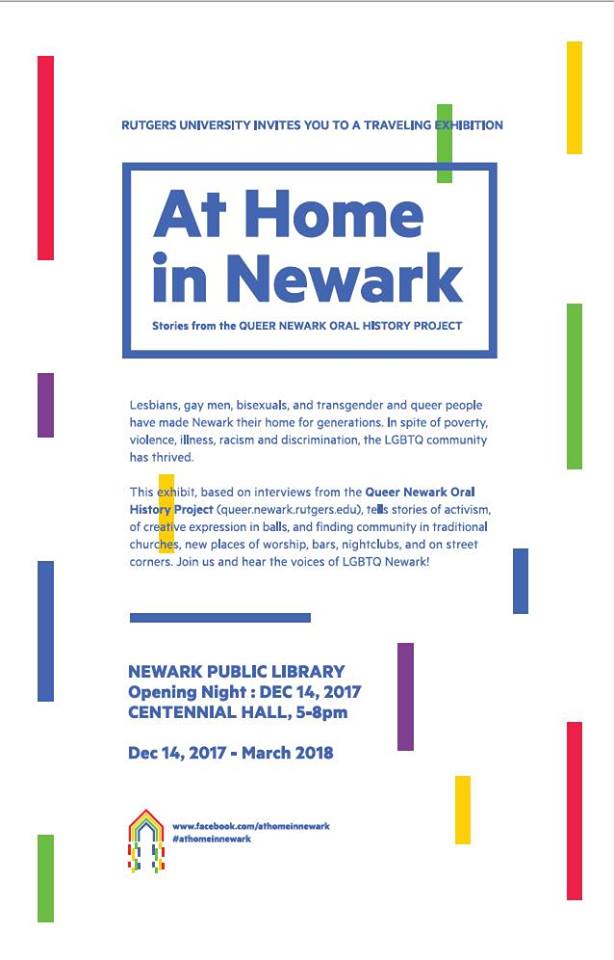
    An exhibition drawing upon the Queer Newark Oral History Project opens at Newark Public Library on December 14.
    An exhibition drawing upon the Queer Newark Oral History Project opens at Newark Public Library on December 14.
    At Home in Newark: Stories from the Queer Newark Oral History Project Opening Reception

    Thursday, December 14
    5:00 – 8:00 p.m.
    Newark Public Library

    At Home In Newark: Stories from the Queer Newark Oral History Project draws from this growing collection of life history interviews, called oral histories, to examine how LGBTQ Newarkers have claimed space for themselves in bars, balls, houses of worship, street corners, community centers, and artistic venues in the face of poverty, violence, illness, racism and discrimination. Through their activism, creative expression, and determination, they have made Newark their home. Click here for more information.

    Rutgers Gardens hosts a winter farm market on December 15.
    Rutgers Gardens hosts a winter farm market on December 15.
    Rutgers Gardens Winter Farm Market

    Friday, December 15
    11:00 a.m. – 3:00 p.m.
    Rutgers–New Brunswick

    The mission of the Rutgers Gardens Farmers Market is to provide the local community, including residents, students, university faculty and staff, University Dining, and restaurants the opportunity to experience and purchase fresh, locally grown and/or prepared food products. The following vendors will be here for the winter markets: Beechtree Farm, Chickadee Creek Farm, Gourmet Fruits and Nuts, Local 130 Seafood, Neil’s Sharpening Service (In December 12/15 only), Neshanic Valley Beekeepers, Pickle Licious, Romarsi, LLC, Silver Birch Kitchens, Spoon Me Soups, Stefan’s Pure Blends. Click here for more information.

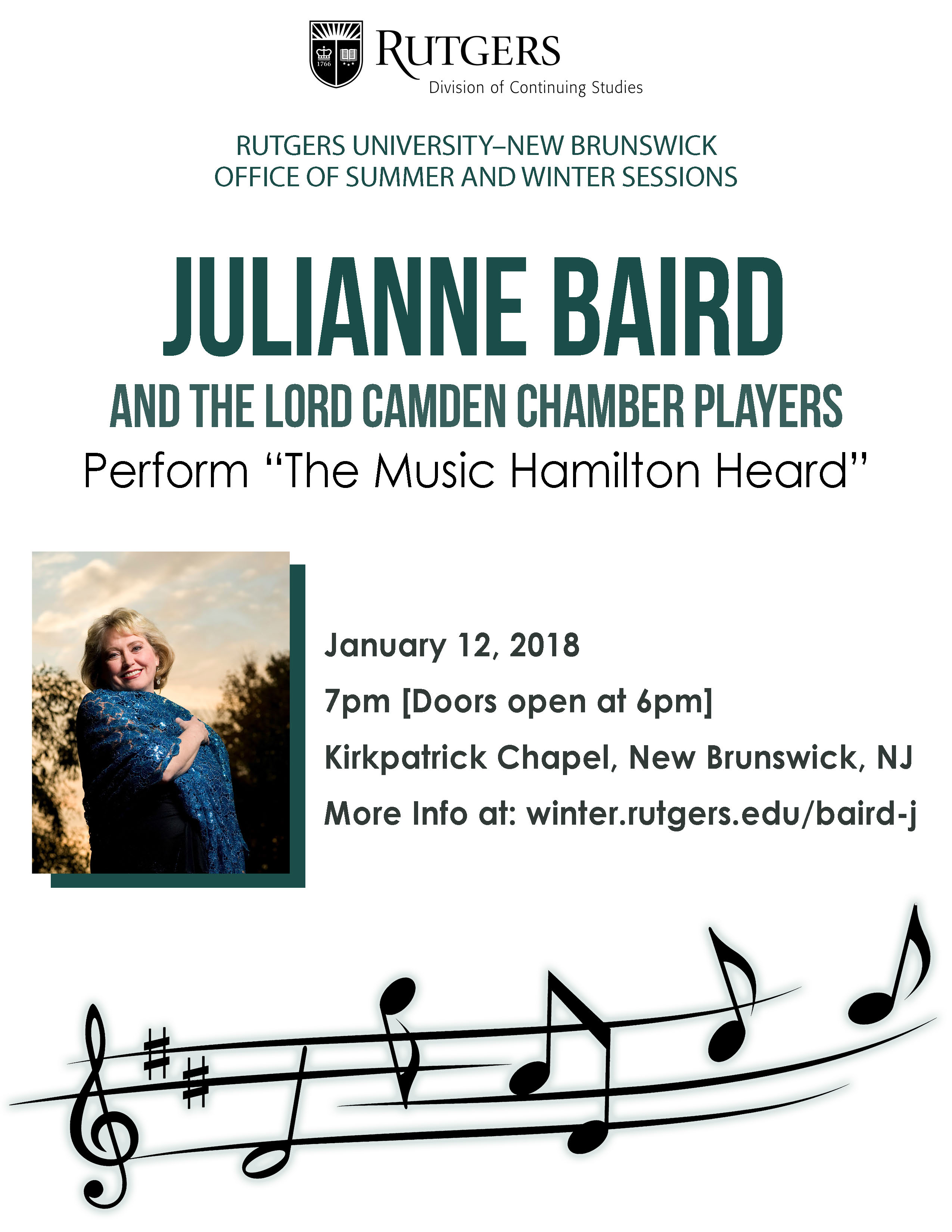
    Rutgers–Camden's Julianne Baird will lead a special performance of "The Music Hamilton Heard" at Kirkpatrick Chapel on January 12.
    Rutgers–Camden’s Julianne Baird will lead a special performance of “The Music Hamilton Heard” at Kirkpatrick Chapel on January 12.
    The Music Hamilton Heard

    Friday, January 12
    7:00 p.m.
    Rutgers–New Brunswick

    Join Rutgers’ Division of Continuing Studies at Kirkpatrick Chapel for a special concert with internationally renowned soprano and Rutgers–Camden Distinguished Professor of Music Julianne Baird and the Lord Camden Chamber Players as they perform the pieces enjoyed by the Founding Fathers of the United States.

    Led by Dr. Baird, the Lord Camden Chamber Players will perform the music that our great founder actually enjoyed. As the United States embarked on its first steps into the world of nations, its composers and artists began to express what Ben Franklin called, “the American Muse.”

    Tickets are $10 for Rutgers students, $15 for Rutgers faculty and staff, and $20 for the public. Click here for more information.

  • Web Improvement Team Update

    Web Improvement Team Update

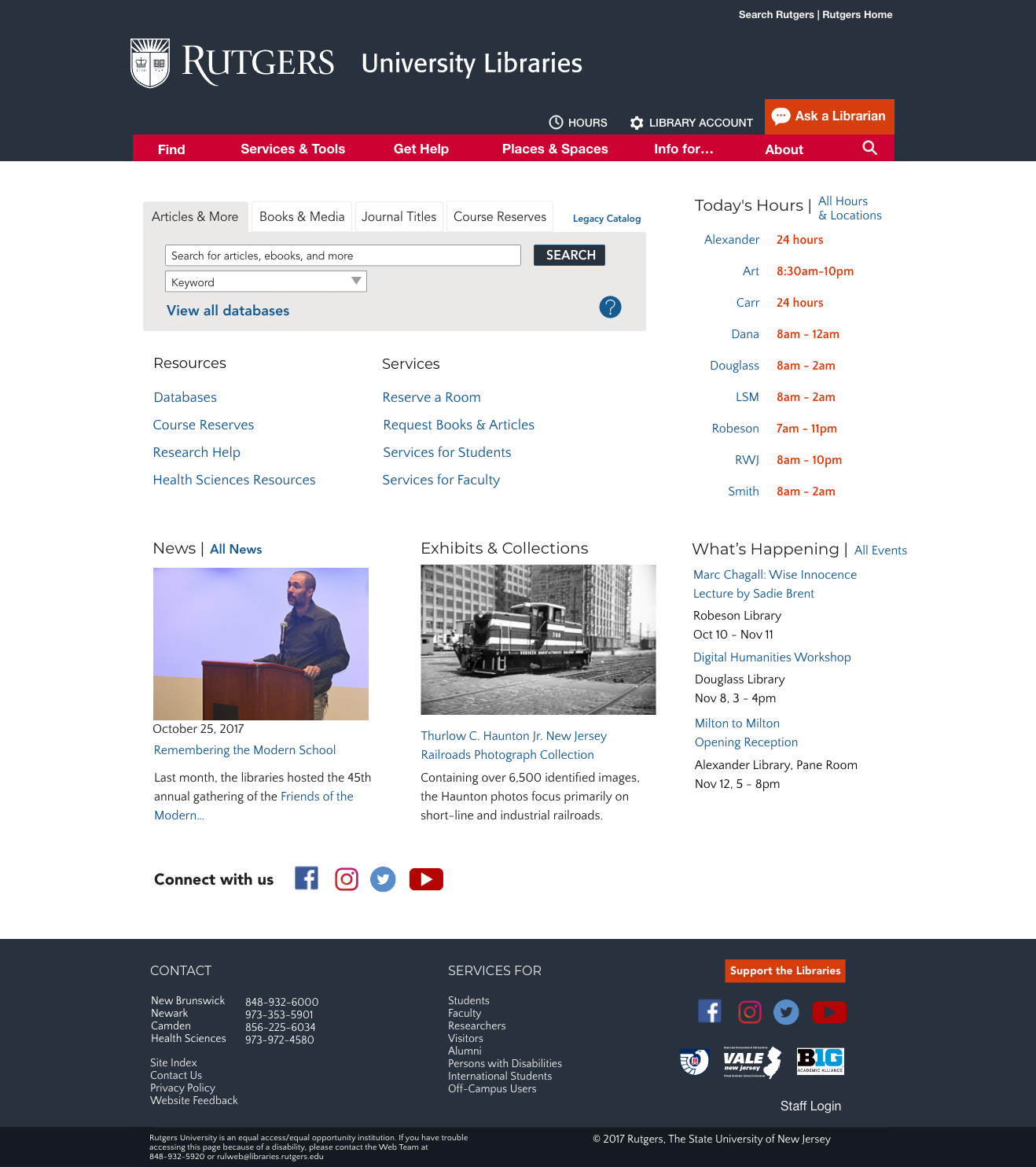
    sample of website refresh
    Click to view larger file.

    The Web Improvement Team (WIT) is excited to announce some changes coming soon to the Rutgers University Libraries website. Since September, we’ve been speaking with our users (students, faculty, and staff) and analyzing survey and usage data to determine how we can begin to improve our website user experience. We’ve been exploring best practices for user-centered design, content strategy, responsive design, and accessibility. Through one-on-one conversations, focus groups, and data analysis, we have learned more about our users’ essential tasks and resources, pain points in the current design, and user preferences.

    Here are some of the takeaways from our first round of user research:

    • Users are very task-oriented, and generally come to the site knowing what they want; the scope of their use is quite narrow
    • The current homepage was thought to be too busy and complex
    • Pages are hard to read, with small text and too much content
    • Users spend very little time on most pages, and rarely scroll below “the fold”
    • A relatively small number of resources are especially heavily used (hours, room booking, A-Z database list, ILL, library account)

    We based our first round of changes on these findings. Our goals became to:

    • Surface and prioritize the most frequently used resources and services
    • Freshen up the look and feel: reduce visual clutter on the homepage, enlarge fonts for sitewide readability
    • Refine the presentation and content for a few key pages
    • Minimize initial disruption to lower-level pages

    Our overall approach is one of incremental change over radical redesign. Making incremental modifications based on user data ensures that those modifications are genuine improvements (as opposed to change for the sake of change, or change based on guesses or assumptions). If we’re proven wrong, smaller changes are easily reversed or refined. Although change can be uncomfortable at times, a continuous cycle of improvement and evaluation builds a sustainable, usable website that delivers a positive user experience.

    You’ll also notice that a lot of things haven’t changed: the red navigation bar, most of the underlying content, the mobile presence. These, too, will change in time, but require considerable user research, usability testing, and content control. There will be opportunities for students, staff, and faculty to get involved in future research.

    The new website is expected to be in place by late December, in time to greet students in the new semester.

    Stop by our poster at the State of the Libraries if you want to learn more!

    Save

    Save

  • Ex Libris Implementation Project Update – December 2017

    Ex Libris Implementation Project Update – December 2017

    In this second update on the Ex Libris Implementation Project, we report on a major milestone achieved in November – the completion of organizational planning. In early December the project will transition from the pre-implementation to implementation stage, so this update also introduces the timeline from December to June, focusing on the three key phases of implementation – Define, Build, and Deploy.

    Completion of Organizational Planning

    Cabinet recently approved a proposal to form several working groups connected to the Implementation Team, marking the completion of organizational planning for the project. As reported last month, the Implementation Team was created in late September and includes seven members from the infrastructure units of the Libraries. Reporting directly to the University Librarian, the team functions as the coordinating body of the project. The working groups will provide expert input to the Implementation Team, organize workflow reviews, testing, and training in their focus areas, and involve library faculty and staff in the implementation process. The team appoints team members to liaise with the working groups to facilitate two-way communications.

    Here is a list of working groups and their membership:

    Working Group Implementation Team Liaison(s) Membership
    Acquisitions Abbey DiPaolo Dominique Dixon, Megan O’Connor/Kati Ritter, Cathy Pecoraro/Rita Wells, Gracemary Smulewitz, Lucy Vidal, Mary Beth Weber
    Data Migration and System Integration Chris Sterback & Chad Mills (co-liaisons) Fengzhi Fan, Dave Hoover, Bob Warwick
    Digital Chad Mills Isaiah Beard, Kalaivani Ananthan, Jane Otto
    Discovery Joseph Deodato Discovery Working Group*
    E-Resources Gracemary Smulewitz Michelle Best, Paul Cabelli, Cathy Pecoraro, Lucy Vidal, Geoff Wood, Tao Yang
    Fulfillment Chris Sterback Access Services Committee*
    Interlibrary Loan Gracemary Smulewitz Abbey DiPaolo, Orla Mejia, Glenn Sandberg
    Resource Management Mary Beth Weber Colin Bitter, Jamie Smith, Geoff Wood, Tao Yang

    (* indicating existing groups)

    The Discovery Working Group and Access Services Committee are existing groups, and the others are newly established. All of the groups have members from multiple departments or units of the Libraries.

    While approving the working groups, Cabinet also made two important points:

    1. The Ex Libris Implementation Project is a top priority that must be completed within the established timeframe. Members of the Implementation Team and working groups are taking on a significant amount of work, so it may be necessary for everyone to adjust the expectations for them in areas unrelated to implementation.
    2. Communicating with library users about potential service interruptions (and enhancements) is an essential component of the implementation project. The Implementation Team will work with the Director of Communications to develop an external communications plan.

    The Implementation Team has also made significant progress on creating a project website and performing data preparation and validation. We hope to describe them in more details at the poster session of the State of the Libraries or in the next monthly update.

    Overview of Implementation Timeline (December – June)

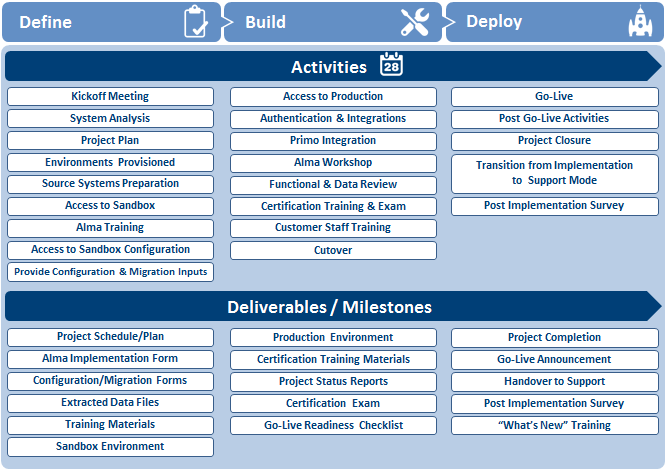
    Ex Libris divides the Alma/Primo implementation process into three phases: Define, Build, and Deploy. During the Define phase for Rutgers (December – early February), the Implementation Team gains access to the standard Alma sandbox environment including standard Ex Libris data and configuration, takes Alma training (including configuration training) via pre-recorded sessions, and then configures the sandbox environment. At the same time, the Libraries continue with data extraction and validation and deliver the data from source systems (Symphony and EDS) based on the Ex Libris specifications for migration to Alma. The Define phase ends with Ex Libris completing the configuration of the Alma production environment with the input from the Rutgers team and a test load of the migrated data.

    During the Build phase (late February – May), the Libraries receive access to both the Alma production environment and Primo environment for functionality review and data testing. Both environments use Rutgers data and configurations and we need to document any necessary modifications for the cutover data load. The Implementation Team works with Ex Libris to define a list of third-party integrations (such as the ILL and Central Authentication Systems). Ex Libris conducts onsite workshops to explain the workflows of the new system. The Implementation Team and working groups also prepare and perform internal staff training. This phase completes with a “freeze” of the source systems (Symphony and EDS). Ex Libris then performs the cutover data load.

    Alma and Primo are scheduled to go live at Rutgers on June 1, which is the Day 1 of the Deploy phase. From June to July, the Implementation Team works closely with Ex Libris to address any issues and support library faculty and staff through their first steps with Alma and Primo in production.

    Additional information about the three phases can be found in this chart published by Ex Libris:

    We look forward to the opportunities to discuss the project with you at the State of the Libraries and other venues. Please do not hesitate to contact us or other Implementation Team members if you have any questions or comments. Thank you!


    Tao Yang & Abbey DiPaolo

    Save

  • Retirement and YOU!

    Retirement and YOU!

    A new year is approaching! If you are thinking about retirement and what is involved in the process you should check out the important on-line links below that offer key information to help you prepare.
    ABP Retirement: Welcome to the Alternate Benefit Program Retirement Seminar Presentation [PDF].

    PERS Retirement: Welcome to the Public Employees’ Retirement System (PERS) Retirement Seminar Presentation [PDF].

    Additionally, UHR offers seminars to both ABP and PERS members contemplating retirement.  If you are interested in attending a seminar, please check the Learning and Development Course Registration System under Employee Benefit and Work-Life Programs managed by University Human Resources.

    Please note: Employees will need to submit an intent to retire letter to their supervisors to advise of the effective date of retirement once they have fully committed to retire.


    Save

    Save

    Save

    Save

  • What’s Happening around Rutgers?

    Sure, the Libraries play host to a slew of great events throughout the year—but so do other units across the university. Check out what’s in store from other departments in November.

    Rutgers Jewish Film Festival
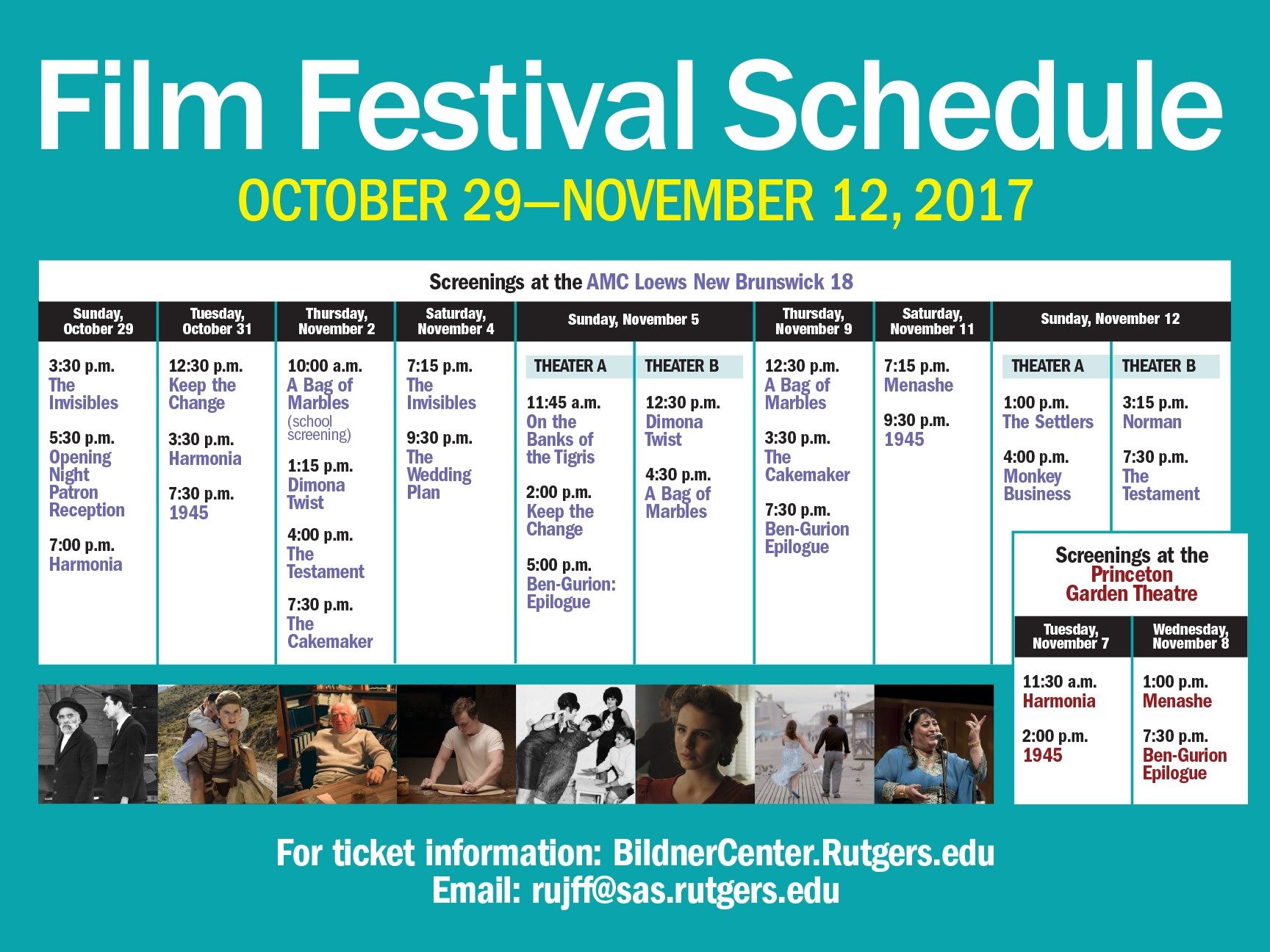
    The Rutgers Jewish Film Festival takes place October 29–November 12.
    The Rutgers Jewish Film Festival

    October 29–November 12
    Times and locations vary, Rutgers–New Brunswick

    The Rutgers New Jersey Jewish Film Festival showcases dramatic and documentary features from around the world, each of which offers unique insight about Jewish life.

    Click here for more information.

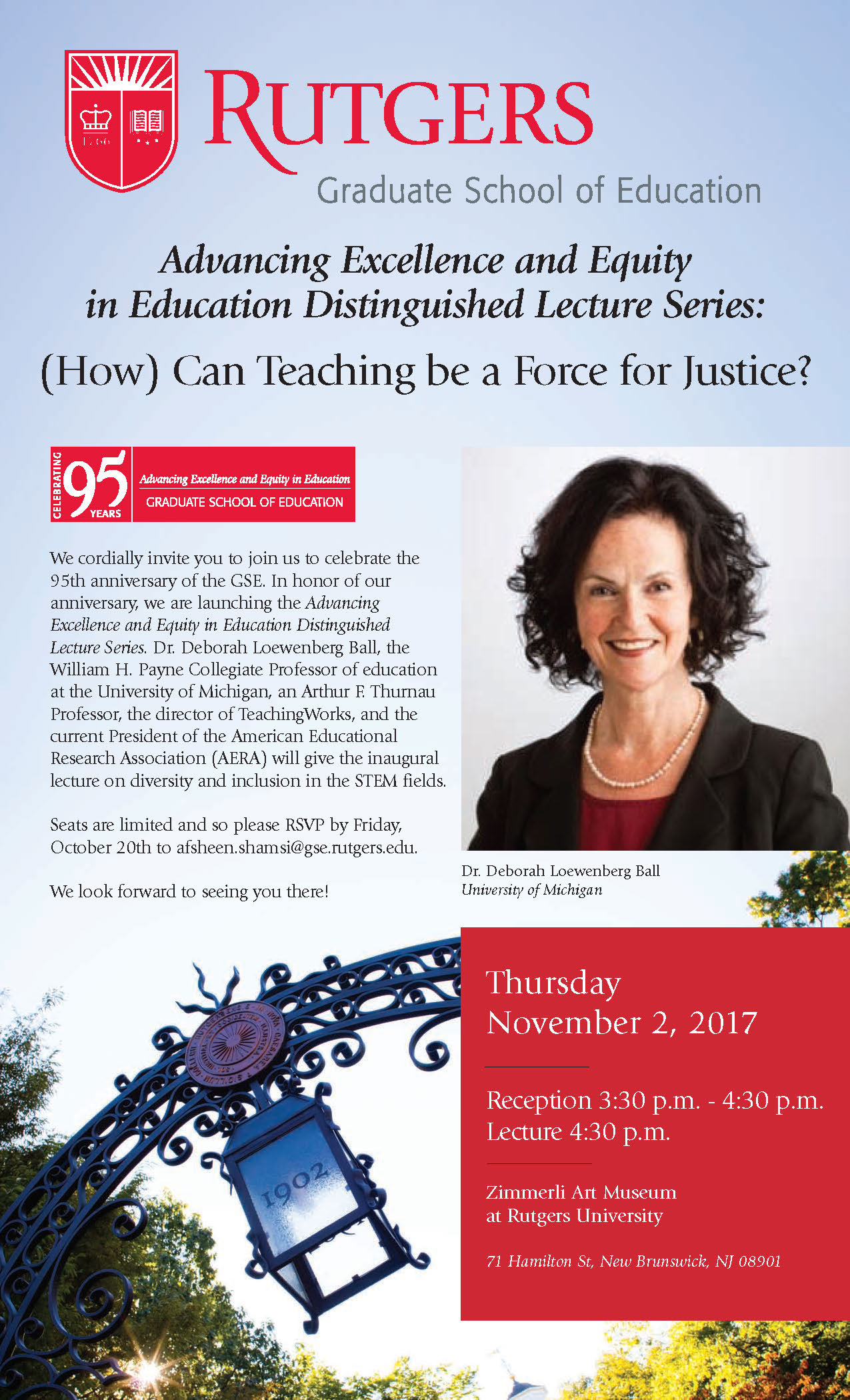
    (How) Can Teaching be a Force for Justice? presented by the GSE takes Place on November 2.
    (How) Can Teaching be a Force for Justice? presented by the GSE takes place on November 2.
    (How) Can Teaching be a Force for Justice?

    Thursday, November 2
    Reception 3:30 – 4:30 p.m.
    Lecture 4:30 p.m.
    Zimmerli Art Museum, Rutgers–New Brunswick

    The Graduate School of Education cordially invites you to join them to celebrate the 95th anniversary of the GSE. In honor of their anniversary, they are launching the Advancing Excellence and Equity in Education Distinguished Lecture Series. Dr. Deborah Loewenberg Ball, the Willi William H. Payne Collegiate Professor of education at the University of Michigan, and Arthur F. Thurnau Professor, the director of TeachingWorks and the current President of the American Educational Research Association (AERA) will give the inaugural lecture on diversity and inclusion in the STEM fields.

    Seats are limited so please RSVP to afsheen.shamsi@gse.rutgers.edu.

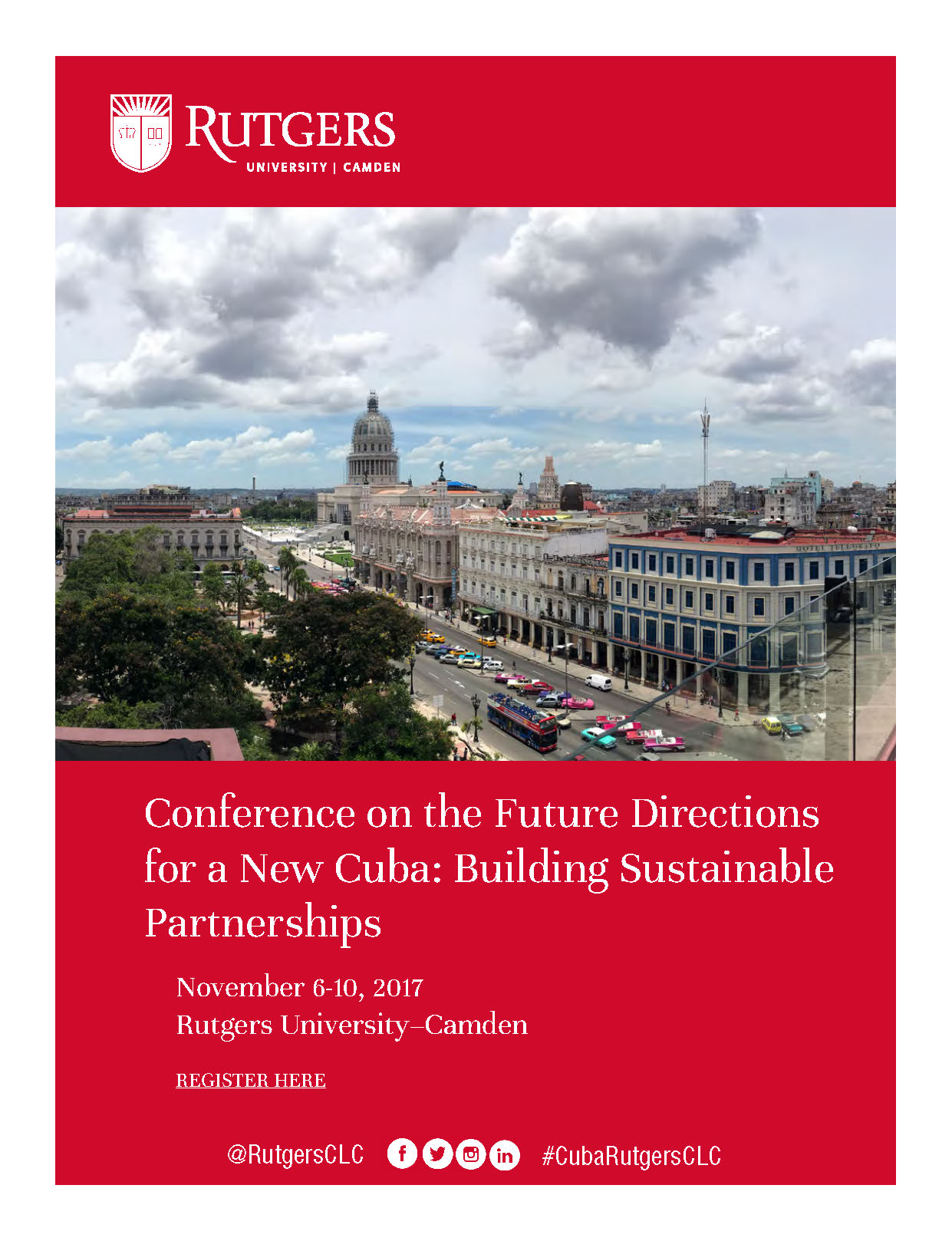
    Rutgers–Camden's Conference on Cuba will be open to the public on November 6.
    Rutgers–Camden’s Conference on Cuba will be open to the public on November 6.
    International Conference on Cuba

    Monday, November 6
    8:30 a.m. – 6:30 p.m.
    Campus Center, Rutgers–Camden

    Conference on the Future Directions for a New Cuba: Building Sustainable Partnerships will explore how institutions of higher learning build sustainable public-private partnerships for research and entrepreneurial programs in sustainable agriculture, education, the medical sciences, the arts, and community development. Dignitaries and leading scholars from the University of Havana, San Geronimo University, and the University of Medical Sciences of Havana will discuss research on effective strategies for increased development in Cuba as the country continues to normalize relations with the United States. The first day of this weeklong conference is open to the public, and will feature a 9:30 a.m. keynote address by Ambassador José Ramón Cabañas Rodríguez of the Cuban Mission to the United States.

    The Timeless Lessons of Wall Street’s Scandals

    Thursday, November 9
    5:30 – 7:30 p.m.
    15 Washington Street, Rutgers–Newark

    A timely talk by Diana B. Henriques, New York Times contributing writer and author of A First-Class Catastrophe: The Road to Black Monday in Wall Street History and The Wizard of Lies: Bernie Madoff and the Death of Trust.

    In May 2017, HBO released its film-length adaptation of The Wizard of Lies, with Robert De Niro starring in the title role and Ms. Henriques playing herself. The film was nominated for four Emmy awards, including “Best Picture.”

    Seating is limited and advance registration is required.

    The Rutgers Climate Institute's symposium will take place on November 15.
    The Rutgers Climate Institute’s symposium will be held on November 15.
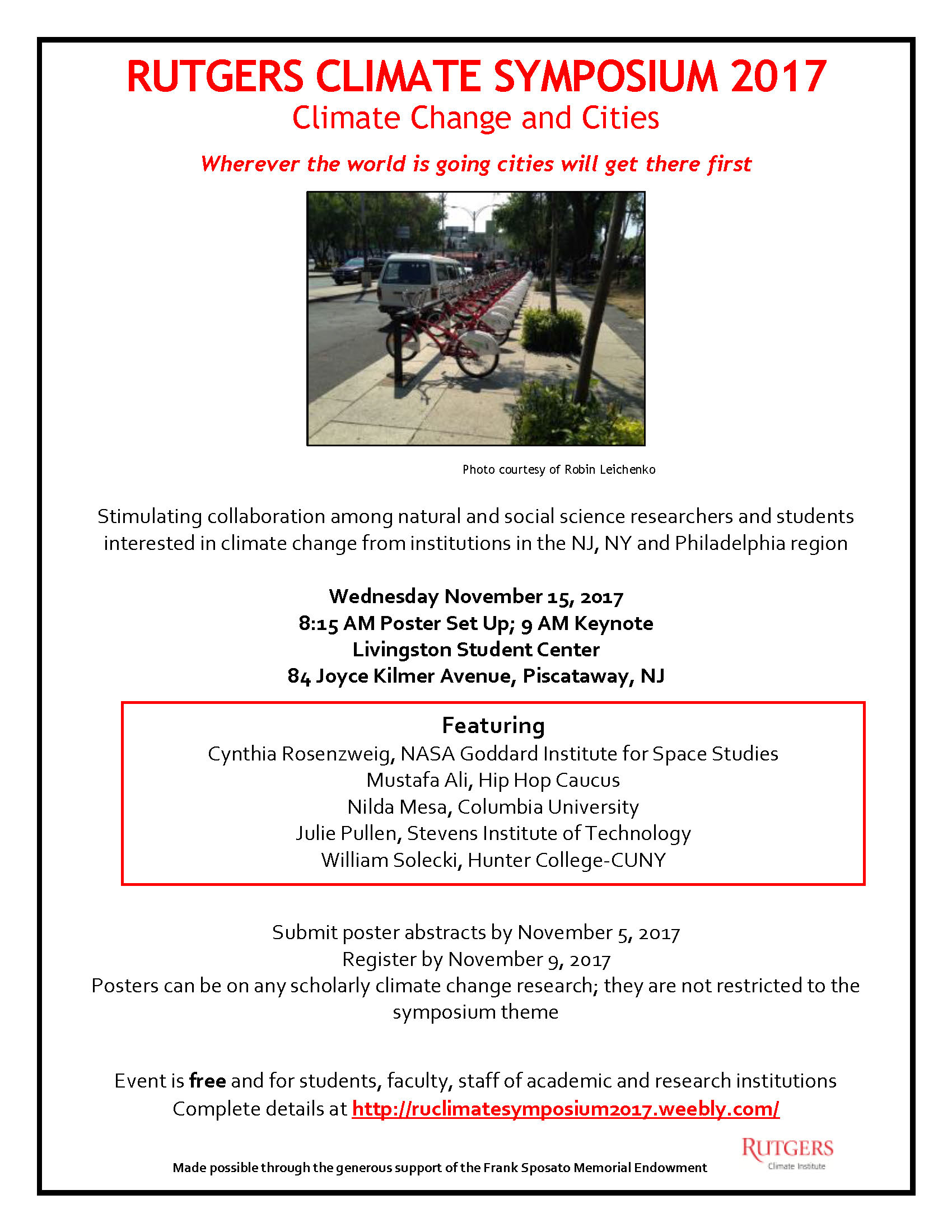
    Rutgers Climate Symposium 2017: Climate Change and Cities

    November 15, 2017
    8:15 a.m. – 3:00 p.m.
    Livingston Student Center, Rutgers–New Brunswick

    This one-day symposium is intended to stimulate interaction and collaboration among the community of natural and social science researchers and university students interested in climate change who are from institutions in the greater New Jersey, New York and Philadelphia region. Over 200 attendees representing more than 20 research institutions in our region participate annually. Talks are centered on the symposium theme. The poster session invites abstracts on climate change scholarship and are not restricted to the theme. There is no fee to attend but registration is required.

    R David Lankes presentation
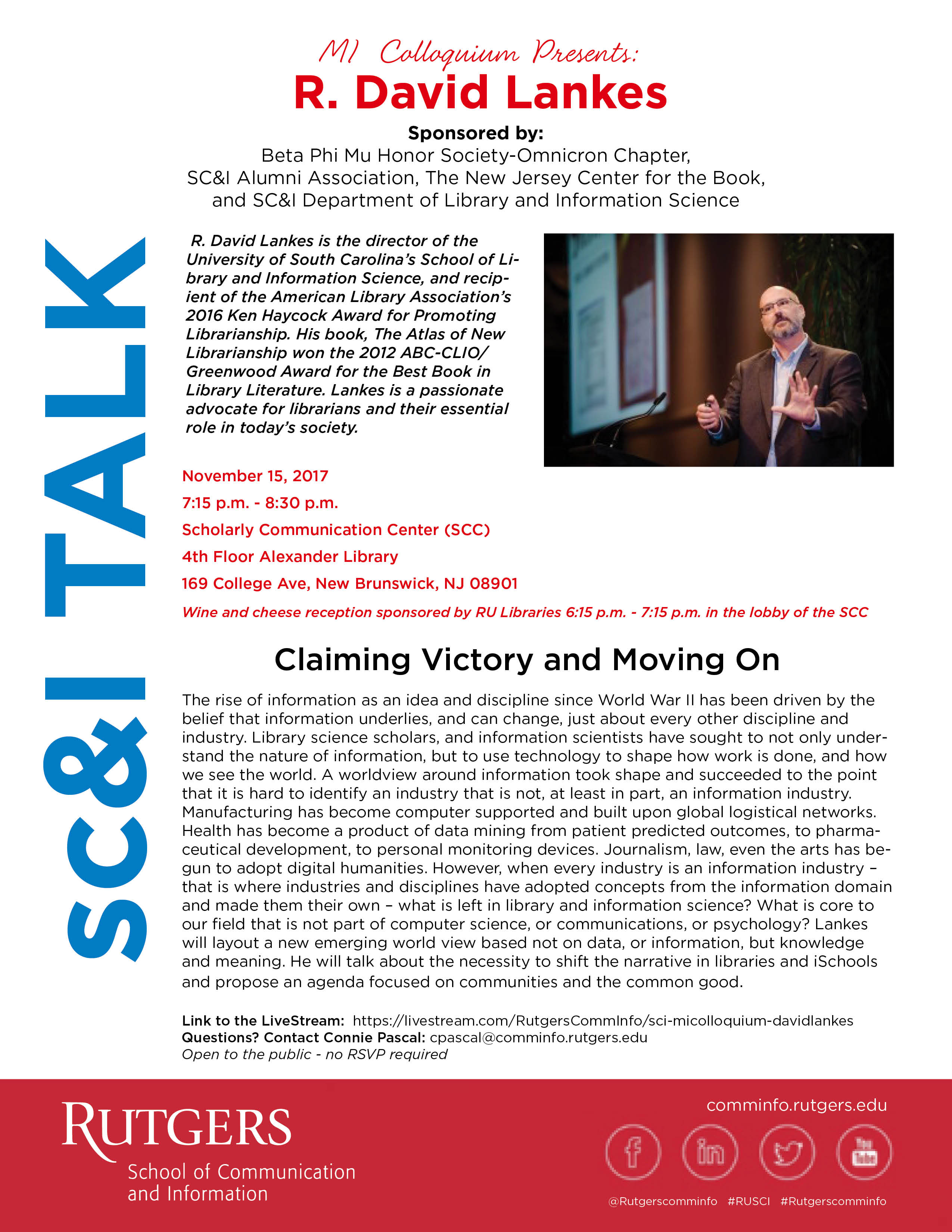
    R. David Lankes will present about the future of library and information science at Alexander Library (and online!) November 15.
    Claiming Victory and Moving On – MI Colloquium by R. David Lankes

    November 15, 2017
    7:15 – 8:30 p.m.
    Alexander Library, Rutgers–New Brunswick
    Live stream: https://livestream.com/RutgersCommInfo/sci-micolloquium-davidlankes

    The rise of information as an idea and discipline since World War II has been driven by the belief that information underlies, and can change, just about every other discipline and industry. When every industry is an information industry, what is left in library and information science? Lankes will lay out a new emerging world view based not on data, or information, but knowledge and meaning. He will talk about the necessity to shift the narrative in libraries and iSchools and propose an agenda focused on communities and the common good. Free and open to the public, no RSVP required.

    Imagining Research, Researching Imagination

    November 16, 2017
    4:30 – 6:30 p.m.
    Writers House, Rutgers–Camden

    Novelist Janet Benton, author of Lilli de Jong, and Janet Golden, professor of history, Rutgers–Camden, come together to explore the ways imagination and research inform the writing of both fiction and history, drawing on their mutual interest in the history of mothers and infants. Books will be for sale following the conversation. Admission is free but please RSVP.

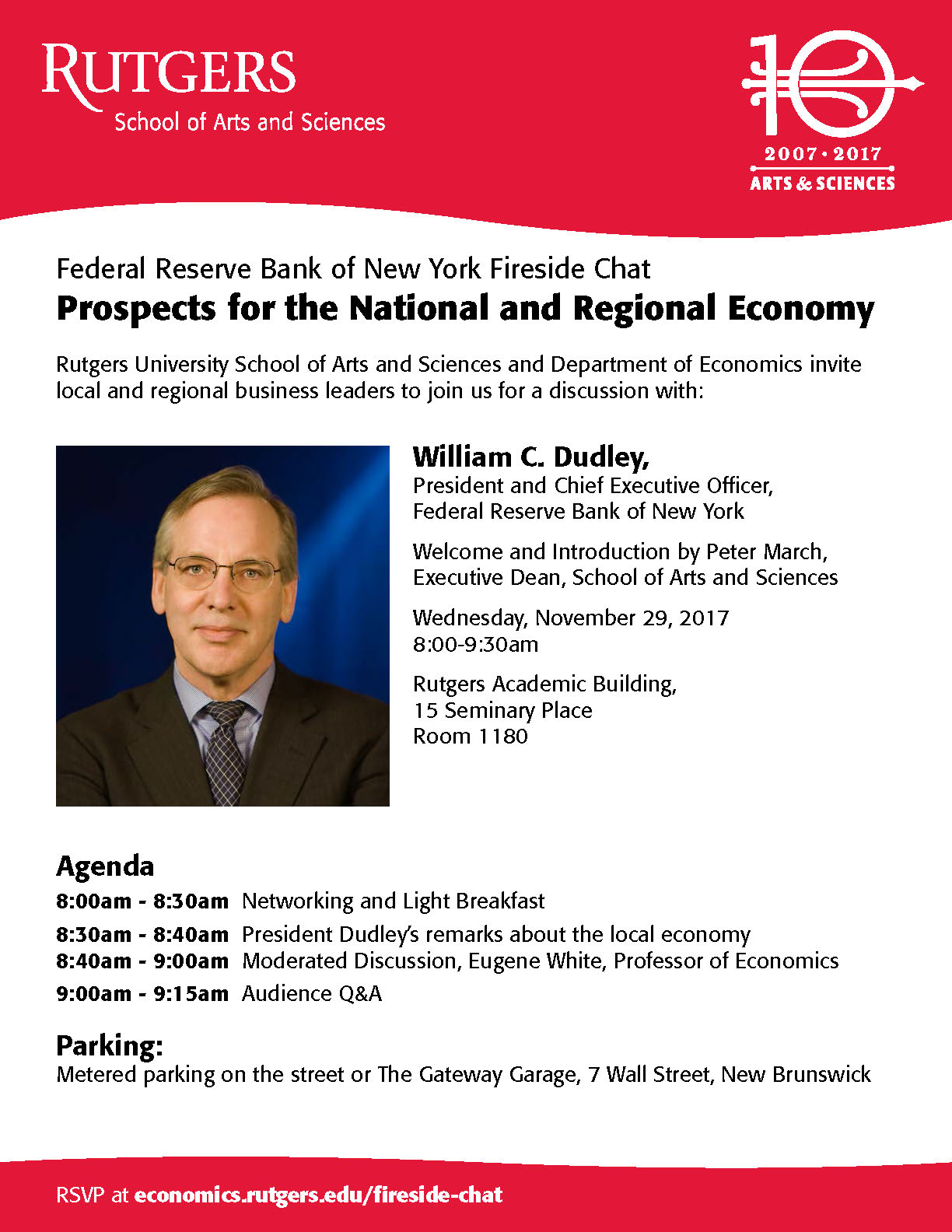
    Join president of the Federal Reserve Bank of NY for a special fireside chat on November 29.
    Join the president of the Federal Reserve Bank of NY for a special fireside chat on November 29.
    Prospects for the National and Regional Economy: Federal Reserve Bank of New York Fireside Chat

    November 29
    8:00 to 9:30 a.m.
    Rutgers Academic Building, Rutgers–New Brunswick
    RSVP by November 24: economics.rutgers.edu/fireside-chat

    Rutgers University School of Arts and Sciences and Department of Economics invites local and regional business leaders to join us for a discussion with William C. Dudley, president and chief executive officer of the Federal Reserve Bank of New York. Light breakfast, networking, presentation, discussion, and Q&A.

  • What does the “Academic Library Impact” report mean for us?

    Stephanie Mikitish is co-author, along with Lynn Silipigni Connaway, William Harvey, and Vanessa Kitzie, of “Academic Library Impact: Improving Practice and Essential Areas to Research,” a new report from The Association of College and Research Libraries. We asked her to provide an overview of the findings and what might be most applicable to Rutgers University Libraries. Enjoy!


    Educational stakeholders are increasingly calling upon academic libraries to document their impact, especially in the areas of student learning and success. The Association of College and Research Libraries (ACRL) commissioned OCLC to investigate how librarians and other library employees can define, measure, and communicate their contributions to these areas. As Rutgers University Libraries continue to adapt to responsibility centered management (RCM) with the rest of the university, librarians and other employees can utilize the report and tools developed by the project team and add to research on library contributions to student learning and success.

    RCM has remapped stakeholder groups into more defined units. The deans of the university’s schools now control more of their budget, and they will likely be more willing to fund resources and services that clearly and directly benefit their faculty and students. Currently, library faculty and staff collect and report numbers for entire groups of users, such as the number of books checked out by undergraduate students for the entire university, or for library location, such as the number of exits at Alexander Library or the number of reference questions answered at the Robeson Library reference desk. Some data are more school- and even department-centered, such as the number of bibliographic instruction classes taught for the Newark College of Arts & Sciences. Studies of student learning and success conducted at other RCM institutions can suggest future directions for the Libraries’ research in these areas. However, the quality of data collected is an important factor that librarians and other library employees must address.

    To facilitate future studies and reporting, library faculty and staff may need to rethink strategies for collecting relevant data in a more consistent manner with concern to individual user privacy. While some data, such as the exit gate count, is consistently taken at each library, other data, such as reference statistics, may be recorded using different units of measurement (e.g., time required to answer a question), even at the same location. Standardizing data collection is a large task, but research that documents and informs other librarians on how to go about this and how to use the data may be eligible for funding from ACRL.

    In order to promote research, ACRL will be offering grants to conduct and/or present research in the following 6 areas.

    1. Communicate the library’s contributions
    2. Match library assessment to institution’s mission
    3. Include library data in institutional data collection
    4. Quantify the library’s impact on student success
    5. Enhance teaching and learning
    6. Collaborate with educational stakeholders

    The project team identified the above areas based on literature on academic library impact on student learning and success and from interviews with librarians and provosts. Given the scope of the Libraries’ collections, spaces, and services, any work done to demonstrate our contribution to student learning and success would fall into one or more of the categories above. The components of the ACRL/OCLC project, which include a research agenda to guide future work on the topic and a literature search/visualization, can suggest what aspects of the Libraries’ resources are most relevant to Rutgers stakeholders, ways to measure reach and impact, and how to effectively communicate the results of such work.

  • Ex Libris Implementation Project Update – November 2017

    Ex Libris Implementation Project Update – November 2017

    In spring 2017, the Libraries decided to adopt the new library service platform (Alma and Primo) from Ex Libris. The decision was made in support of two major librarywide priorities: improving information control and optimizing collection development and management. What this means to the Libraries is that Alma will replace the current SirsiDynix system and Primo will replace both the EBSCO Discovery Service and VuFind catalog. Unlike our current configurations, Alma and Primo are fully integrated with each other. They also provide other important benefits: a unified interface to manage our entire collections of electronic and print resources, rich analytics for making better decisions about collections, the potential of improving the discovery experience of library users, and the opportunities to collaborate with other Alma/Primo libraries.

    The Ex Libris Implementation Project officially began at Rutgers in late September, when the Implementation Team was formed and met for the first time. The team includes seven members from the Libraries’ infrastructure units – Tao Yang, Abbey DiPaolo, Joseph Deodato, Chad Mills, Gracemary Smulewitz, Chris Sterback, and Mary Beth Weber, with Tao and Abbey as the co-leads. The team has had a busy and productive month: we completed and submitted to Ex Libris the Alma Implementation Form, which is the first step of the implementation process. We have also begun to work on the validation of SIRSI Symphony data extracts, creation of the project website, and development of internal goals, among other things. As a happy coincidence, the Ex Libris Northeast User Group held its annual meeting in Jersey City in mid-October, so all the team members and several other colleagues had an outing to Jersey City and learned the experiences of many libraries who have adopted Alma and Primo.

    Currently, the project is still at the pre-implementation phase, which is when the library team works with an Ex Libris consultant to get ready for the implementation. The project will kick into high gear in early December, when the implementation phase officially begins. The new system is expected to go live on June 1, 2018. Between early December and June, there will be many opportunities for library colleagues to get involved in the project and become familiar with the new system. Please stay tuned. Thank you!

    Tao Yang & Abbey DiPaolo


    Save

  • How Do We Handle New Requests in the Planning Process?

    How Do We Handle New Requests in the Planning Process?

    As busy as we all are, sometimes it can be difficult to see the tremendous progress we’ve made in the last couple of years—particularly with something as diffuse as the priorities planning process. Our most recent cabinet meeting provides a snapshot of how far we’ve come.

    As indicated in cabinet minutes, earlier this year cabinet produced a set of priorities to guide our activities over the next 18 months or so. These priorities have specific projects in mind and reflect the capacity of our central units. This planning document is intended to be the scaffolding for our collective work and, by definition, we must work within its bounds. While this may sound limiting—“We only do what’s on the list!”—when it is working well, the opposite is true. A good plan enables us to take advantage of unexpected opportunities as they arise. And in recent weeks, four such opportunities have been brought to the Libraries.

    These requests are for activities that are not currently part of our plan and must be weighed against our existing commitments. Our recent discussion at Cabinet illustrates the give and take negotiations that must take place when we consider new projects or services.

    Our shared list of priorities forms the foundation of purposeful discussions about tradeoffs and how best to shift priorities to new opportunities. For example, we have been asked to create space for a new OIT Lab in Alexander Library and to provide dedicated health sciences library services at LSM. Both of these requests stem from strategic initiatives within the university. We have also been approached about integrating ORCID into our journal platform and providing ETD support for honors undergraduate theses. Each of these is a reasonable request, but they require time and effort from the same central units that support our existing weeding projects, the implementation of ExLibris, and the development of digital projects templates, among other items identified through the planning process.

    Cabinet considered the source of the requests; the anticipated benefit to local users; staffing and capacity in the central Libraries units; the amount of development vs. coordination required; and more, before deciding which opportunities to pursue. The outcomes, communicated in the minutes, are to move forward with adding ORCID iDs to the Open Journal System workflow and to shift weeding priorities to accommodate the deadlines for the Alexander OIT Lab and the LSM renovations. We also decided to hold off on the development of honors ETDs process.

    This is not because including honors theses in RUCore is a bad idea—we simply don’t have capacity this year and we have other priorities to complete. But this is where the planning process kicks in. A local need has been identified, and while we don’t have capacity to follow through this year, the proposal will be moved forward to next year’s planning process for consideration.

    No doubt, there will be additional requests from the university and additional local needs identified throughout the year. In fact, I would argue that the level of attention we are receiving from the university is an indicator of the important role of the Libraries on campus. We are viewed as strong partners and collaborators, our spaces are appreciated student resources, and our services are recognized as key to student success.

    Thankfully, we now have a planning model that allows us to assess these opportunities in objective, realistic, and equitable ways that balance the needs of Camden, Newark, New Brunswick, and RBHS. We must continue to take on high priority projects for the university, but we must also make sure we have the capacity, technology, and resources to succeed. The only thing worse than saying “not now,” is saying “yes,” and not completing the task. These types of discussions are much easier to have when we have a shared understanding of priorities and capacity.