Category: Rutgers University–New Brunswick

Faculty and staff news from the libraries at Rutgers University-New Brunswick.

  • Banned Books Week in New Brunswick

    By Judit H. Ward and Nicholas Allred

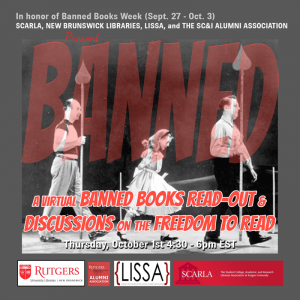
    New Brunswick Libraries partnered with the Student College, Academic, and Research Libraries Association (SCARLA), the Library and Information Science Student Association (LISSA), and the SC&I Alumni Association to host an online Banned Books Week event on October 1, 2020. The engaging event called Banned: a virtual read-out and discussion on the freedom to read featured read-outs of banned books from students and faculty, flash talks from SC&I and NBL faculty, a zine workshop, and trivia from LISSA. The 90-minute student-hosted event was extremely well received. It managed to connect a variety of audiences across Rutgers fostering a greater sense of community through sharing personal narratives and experiences. See a sample list of Banned Books we read at the event.

    The Books We Read team at Chang also documented the event with a page dedicated to Banned Books Week 2020, complemented with a collection of short essays inspired by the flash talks. In the Introduction to Banned Books Graduate Specialist Nicholas Allred poses the ultimate question “Why study censorship?” His perspective, based on his main interest in British literature, suggests that censorship can often provide a window into the anxieties of the censoring authorities. As an example, he mentions George Orwell’s Animal Farm, banned in the Soviet bloc, “because the allegory of a barnyard revolution hijacked by a regime of self-serving pigs who hollow out its utopian promises hit too close to home.”
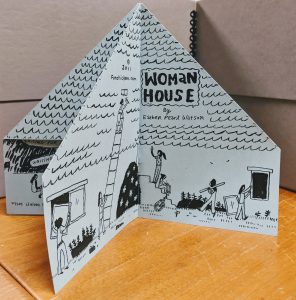
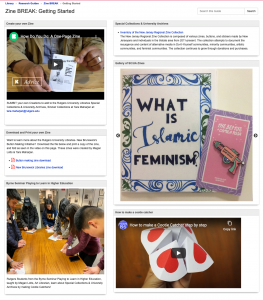
    Censorship has also shaped publishing and literary history, lending a thrill of the forbidden to challenged works and spurring DIY publication tactics like zines, the topic of Art Librarian Megan Lotts’ presentation entitled What is a Zine? In her definition, zines represent a unique subculture which has emerged around making and collecting as a powerful tool representing creative, low-cost, DIY means of self-expression and idea sharing. She recommended exploring zines in libraries not only as a creative way to learn about visual culture, open-access, visual literacy, and information but also as an engaging and non-threatening way to talk about issues around cultural appropriation, cultural sensitivity, and inclusivity.

    The Banned Books Week event also reminds us of what we have to lose. A flash talk by science librarian Judit Ward What is Samizdat? highlighted this term from the Cold War, referring to the underground publication and circulation of articles or books with political views in stark contrast to the party line. Samizdat editions were books that covered current political topics, written by foreign authors with political content, or new publications of blacklisted authors. Forbidden to publish, read, and circulate, these titles taught generations to reflect and read between lines for ever.

    “Censorship succeeds when no one talks about it”––NBL Special Projects Librarian and SC&I lecturer Nancy Kranich emphasized the importance of celebrating Banned Books Week in her flash talk entitled Ban No More. Focusing on the role of libraries and librarians, she also suggested that more banning would occur without librarians, teachers, journalists and others speaking out to defend the freedom to read. Although books in libraries are constantly challenged, i.e., someone tries to remove or restrict them based on their content, library policies and practices can ensure that (unlike during the Cold War in the Eastern Bloc) the freedom to read will prevail as one of the most basic freedoms of democracy.

    A large portion of challenged titles belongs to a genre called Young Adult (YA) literature. Challenged for their difficult topics related to gender, mental health, violence, or racism to protect the readers dealing with these problems in their everyday lives, many of these Banned Bestsellers can actually function conversely and assist processing the issue at hand instead, as suggested by Julie Rossano, Books We Read team member and graduate student in the course taught by Marc Aronson at SC&I.

    Banning books has been a long practice as a form of censorship for a great variety of reasons. Spearheaded by the American Library Association, Banned Books Week (September 27 – October 3, 2020) is an annual event celebrating the freedom to read. The Office for Intellectual Freedom (OIF) compiles lists of challenged books based on reports received from libraries, schools, and the media on attempts to ban books in the United States.
     

  • Ann D. Gordon to Give Presentation on Women’s Suffrage in New Jersey

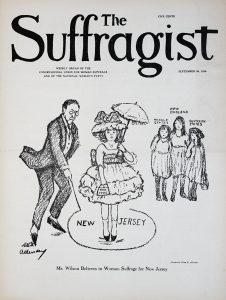
    2020 marks the 100th anniversary of the Nineteenth Amendment (1920) granting women the right to vote. In celebration of this milestone, Rutgers Research Professor Emerita of History Ann D. Gordon will give a presentation, “Bringing the Story Home: Agitating for Woman Suffrage in New Jersey,” on Thursday, September 24, 2020 at 4 p.m.
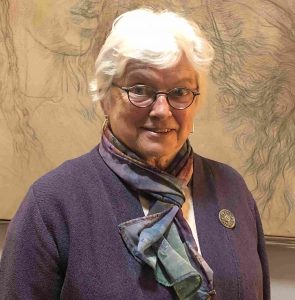
    Activists organizing for women to gain voting rights were everywhere across the United States, island territories included.  The struggle to win the right to vote is a national story chock full of local details, highlights of which will be explored in this presentation.

    Ann D. Gordon is Research Professor Emerita of History at Rutgers University. She has studied the movement for woman suffrage for nearly four decades as an author, editor, and lecturer. Her six-volume edition of the Selected Papers of Elizabeth Cady Stanton and Susan B. Anthony was published from 1997 to 2013. Toward celebrating woman suffrage at this centennial, her essay on the 19th Amendment appears in the National Park Service’s website publication, 19th Amendment and Women’s Access to the Vote Across America; she served as a historical advisor to the National Archives in preparing its suffrage centennial exhibit, Rightfully Hers; and, until the pandemic, she lectured often on the history of voting rights.
    This program marks the opening of the Special Collections and University Archives online exhibition, On Account of Sex: The Struggle for Women’s Suffrage in Middlesex County, New Jersey. More details about the exhibition will be forthcoming.

  • Rigged: The Voter Suppression Playbook

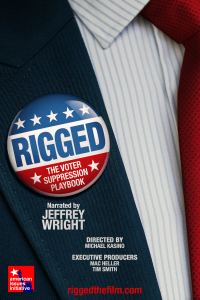
    Rutgers University Libraries to Screen Rigged: The Voter Suppression Playbook
    Followed by Panel of Experts
    National Voter Registration Day
    Tuesday, September 22, 7 pm – 8:30 pm

    “When you deprive people of the right to vote, the vote being the very fiber of this wonderful quilt we call a democracy…When you begin to tear away the threads, saying this person can’t vote, that person can’t vote…the next thing know, you will not have a democracy.” Rep. Elijah Cummings (D-MD)

    The Rutgers University Libraries (New Brunswick) are observing National Voter Registration Day, September 22, by airing the documentary film Rigged: The Voter Suppression Playbook, an award-winning documentary that exposes the nefarious tactics used to suppress the vote and serves to spark discussion on the actions needed to protect our democracy. This event is part of a fall series to encourage campus-wide dialogue about the 2020 election. The American Issues Institute, producer of the film, will host the RU screening via its Zoom Webinar platform for a week prior to the screening, then from 6 – 7 pm on September 22, followed by a panel discussion from 7 – 8:30 pm about the issues. We encourage students, faculty, staff and community members to join the conversation.

    Discussion panelists will include:

    • Mac Heller and Tim Smith, the film’s producers
    • Lorraine Minnite, Associate Professor of Public Policy and Department Chair at Rutgers Camden and expert on voting rights. Author of The Myth of Voter Fraud, and Keeping Down the Black Vote: Race and the Demobilization of American Voters
    • David Greenberg, Professor of Media Studies and History, Rutgers-New Brunswick and author of a forthcoming book on John Lewis
    • Christabel Cruz, director of NEW Leadership® at the Center for American Women and Politics.
    • Chenjerai Kumanyika, Assistant Professor, Journalism and Media Studies, Rutgers, Peabody winning producer of Uncivilpodcast and social justice advocate
    • David Goodman, Vice Chair, Andrew Goodman Foundation

    Following the event, the library will provide a link to a recording of the session and make it available to the Rutgers community.  It’s an opportunity for all of us to energize students, faculty and staff at this critical moment in our nation’s history when we’re isolated from each other but eager to join in discussions about the issues that will shape our collective future.

    Sherrilyn Ifill, President and Director-Counsel of the NAACP Legal Defense Fund, says of RIGGED, “I cannot think of a better moment for this powerful film. It reinforces the reality of voter suppression, which I think so many more Americans have begun to recognize and understand.”

    To register to watch the video and participate in the Zoom event, click here.

    To learn more about Election 2020, see the Library’s new LibGuide, produced by Sherri Farber and Nancy Kranich.

    For more information, contact Nancy Kranich, nancy.kranich@rutgers.edu

    RIGGED Trailer – 2 mins.
    https://vimeo.com/296045604 

    Rigged: The Voter Suppression Playbook – with Jeffrey Wright (NOV 2019)
    70 Minutes
    https://vimeo.com/371681258
    password: rigged

  • Dorothy Gillespie Papers Digitization Project

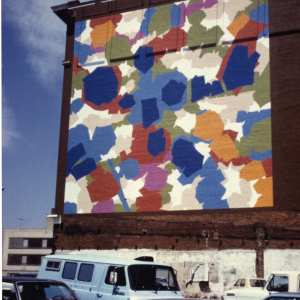
    Dorothy Gillespie papers, box 13 folder 12 (Site Specific, City Wall, Roanoke, 8 x 10″, 1979) https://doi.org/doi:10.7282/t3-kpk6-n764

    We are delighted to announce that the first phase of the Dorothy Gillespie Papers digitization project is now completed and ready to be used by researchers at https://collections.libraries.rutgers.edu/dorothy-gillespie-papers

    Dorothy Gillespie (1920-2012) was an abstract sculptor and painter whose archives are part of the Miriam Schapiro Archives on Women Artists at Special Collections and University Archives. Born in Roanoke, Virginia on June 29, she attended the Maryland Institute College of Art in Baltimore. Moving to New York City in 1943, she continued her studies at the Art Students League and at Atelier 17, a printmaking studio that emphasized experimentation. In 1946 she married Bernard Israel, and subsequently had three children. Soon afterwards, she began painting in a completely gestural style influenced by Abstract Expressionism. In the 1950s, she and her family moved to Miami, Florida, where she secured group exhibitions and a solo exhibition at the Miami Museum of Art in 1962. As a young married woman, Gillespie encountered discrimination in the art world, finding herself labeled a “housewife painter.” These early experiences helped raise her consciousness as a feminist.

    In the mid-1960s, Gillespie and her family moved back to New York City. Gillespie’s use of oil paint began to diminish as she experimented with paper, pastels, and acrylic. The Gillespies owned Gallery Champagne, a champagne nightclub located in Greenwich Village, which provided a space for Gillespie to display her art. In the 1970s, Gillespie became involved in the feminist art movement. She organized exhibitions, created a collection of women’s art, compiled statistics, and took part in protests against galleries. The bright and whimsical style of her sculptures created various public art opportunities for her in the 1980s. In the 1980s and 1990s, she donated many pieces from her own art collection, as well as her own artwork, to various universities in order to create university art collections.

    Since her death in 2012, her son Gary Israel has been dedicated to preserving her legacy. This digital project, which foregrounds a selection of images of Gillespie’s work, was made possible by a generous gift from the Dorothy M. Gillespie Foundation. The donation funded two students from the Douglass Residential College, Talia Lang and Ana Couto Barbosa, to scan and create metadata for the images in Summer 2019.

    Couto was inspired by the project to pursue a degree in library science: she will begin the Master of Information program at Rutgers in September. “During this experience, I learned about digitization, metadata, archival standards, and the importance of information organization. The internship opened my eyes to the vastness of library science and its career opportunities,” she said.

    The Dorothy Gillespie digitization project will resume next summer. We would like to express special thanks to Isaiah Beard, Geoffrey Wood, Marty Barnett, and Sam McDonald for helping make this project a reality.

  • Quick Takes on Events and News – May 2020

    NBL’s virtual stressbusters LibGuide.
    Real Stress, Virtual Busting

    In lieu of physical events this finals season, New Brunswick Libraries have developed a virtual stressbusters LibGuide. Visit it to check out their virtual escape rooms, puzzles, tours, crafting activities and much more! Kudos to Rose Barbalace for her work organizing this resource for our students during what is surely an extra stressful time.

    NBMSA Takes the Scene Online

    On their Facebook page, the New Brunswick Music Scene Archive will be featuring a series that invites donors and other supporters to share what music they’re listening to and/or performing during this time, what their favorite NBMSA item is, and if they wish, share a related photo. This is a way for us to stay connected with our community while SC/UA is closed and we can’t accept physical donations. Kicking off the series this week will be former SC/UA public history intern Rachel Ferrante, who as part of her internship helped maintain the NBMSA social media presence and solicited donations via her work at 90.3 The Core and involvement in the New Brunswick basement scene. She also designed the NBMSA Facebook page logo!

    Congrats Ying!

    Congratulations are in order for Yingting Zhang, who has been asked to serve on the Medical Library Association’s 2022 National Program Committee. Her three-year term begins June 1.

    Introducing New Jersey’s Historical Newspapers

    A round of applause to Jacob Paul for his work editing the New Jersey Digital Newspaper Project’s latest promotional video. Way to go, Jacob!

  • Uncovering Masks: Ritual, Fun, Transformation, and Protection

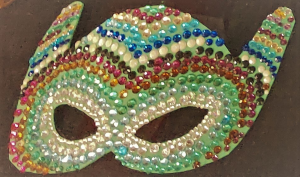
    A decorative mask crafted for the exhibit out of foam and beads.

    The Carr Library exhibit on masks was developed as a supplement to the Mid-Winter Mask Making student engagement event held on February 7, 2020 in partnership with the Friendship Fridays program organized by Rutgers Global. In the initial stages of development, masks were interpreted as objects from a more distant point of view. As the COVID-19 pandemic became a global health issue by March 2020 and began to impact day to day activities, masks quickly turned into a necessary and sought after object. The demand for masks as personal protective equipment skyrocketed and vendors continue to be overwhelmed with requests, and are unable to fulfill orders, or require an extended period of time for processing and shipping. This has also led to more creative and innovative outlets with people completing DIY masks and recycling different fabric materials to do so.  Masks are being made for personal use, as well as to donate to others in need to share this precautionary measure.

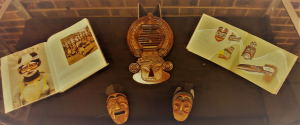
    The center case of the exhibit featured masks from India and Korea as well as books from the Libraries’ collection that revolved around the ritual and cultural uses of masks by different groups around the world.

    Requirements made by states throughout the U.S. for people to wear masks while out in public have also altered the way we prepare ourselves to leave our homes. There are new rituals of putting on gloves and a mask to help flatten the curve and prevent the spread of the virus. The way we see other people has changed, as eyes are the only facial features left exposed, and proper distance must be kept from others. Masks have now taken on a new meaning and significance, and will be enveloped into our attire and lifestyle for the foreseeable future.

    The exhibit explores the ways masks are constructed and how these objects serve larger purposes. Like the personal protective equipment masks made at home, masks can be made from nearby materials on hand. Whether these items are found in the natural environment such as wood, bone, and clay, or man-made products like plastic and beads. These materials are combined together to develop the structure of the mask and enhance the imagery of the object through design and decoration. Regardless of material type, masks are constructed with a use and purpose in mind.

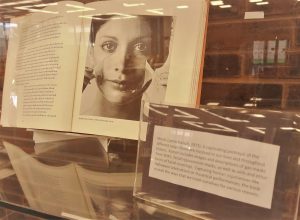
    The right-side case of the exhibit featured the book Masks by Jamie Shalleck–a captivating visual portrayal of the different ways masks are involved in our lives and throughout history.

    Widespread uses for masks were identified in the exhibit as relating to qualities of fun, ritual/culture, identity and protection. Most commonly, people associate masks with a form of costume or disguise. These celebrations make masks a fun accessory for Halloween or a masquerade and can allow the wearer to be creative with their appearance. The process of decorating the mask itself is entertaining and can be elaborately done to mimic something in nature, feature bold colors, or glisten with jewels and beads. The masks used in Mardi Gras parades and Venetian carnivals depict this celebratory nature of the objects and how they can be combined with an ensemble to develop a whole new appearance and costume.

    Masks have also been a prominent part of cultural and social rituals. These objects exist as ritual devices of transformation and storytelling. Whether it be part of an ensemble for a ritual dance, a way to connect religiously, or to initiate members into a group. The masks are made to follow a pattern set over time through ritualized experience. Masks not only add to the sense of excitement and theatrics, but also create a sense of solidarity and belonging through the group experience. The repetition of these rituals causes the masks to become a part of one’s identity as it relates to a culture’s way of life.

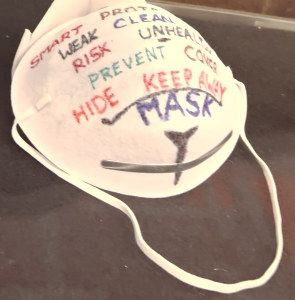
    A protective mask modified with associated words and expressions.

    In another sense, people can portray themselves a certain way to mask their identity and inner self from the outside world. Virtually, individuals can devise new identities and ways of representing themselves externally that differ from what lies behind their public profile. What kind of masks do we put on around others and how does this impact the way we view ourselves and others?

    Masks can serve people in these intangible ways, but also are physically important when implemented as tools of protection. Constructed of materials such as bone or metal, masks have been brought into warfare as a form of armor. Often-times masks feature important cultural symbols or meanings in the design and construction, which can act as social or political protection and power as well. Or in the case of recent events, masks are tools to fight against the spread of disease and illnesses by creating barriers between people and prevent contact. Giving the wearer protection from the external environment and a sense of security and safety.

    To expand on the ideas of the Masks exhibit, a libguide was created to offer a list of resources and other examples of how masks are present in society and used for various reasons. Books, articles, and images/videos related to the themes of fun, ritual/culture, identity, and protection are present on the page. Additionally, links to other exhibits on masks and how masks have been used in social movements and literary works are available. Discover more information about this topic in the libguide https://libguides.rutgers.edu/masks.

    Lauren Rossi and Triveni Kuchi


  • Rutgers Meets Japan

    The planned exhibit was converted to a digital exhibit, which will be mounted on the course website.

    In 1867, Kusakabe Tarō (1844-1870), a samurai from Fukui in the remote west of the country, left Japan to study at Rutgers. After his untimely death in 1870, his mentor and friend, William E. Griffis (1843-1928) of the Rutgers Class of 1869, was invited to teach Western-style education in rapidly modernizing Japan. Griffis would spend his life writing and speaking about Japan and collecting books and archival material. His collection came to Rutgers Special Collections and University Archives (SC/UA) after his death. This spring, Haruko Wakabayashi of the Department of Asian Languages and Cultures, is teaching “Rutgers Meets Japan: Revisiting Early U.S.-Japan Encounters,” an interdisciplinary honors seminar based on the Griffis Collection. This seminar examines this crucial moment of early U.S.-Japan relationship and cultural exchange as we commemorate the 150th year since William E. Griffis left for Japan. As curator of the William Elliot Griffis Collection at SC/UA, I am supporting the class through helping them access books, documents, and images from the collection. Assignments are based on primary sources and prints from the Griffis Collection and the Zimmerli Art Museum, which are posted on the course website. For the final project, students planned to curate an exhibition at the Alexander Library using materials from the Griffis Collection. The culmination of the course was meant to be a two-week field trip, “The Japan that Griffis Saw,” where the students along with Professor Wakabayashi and myself would visit in Fukui, Yokohama, and Tokyo.

    On March 10, the class visited SC/UA to use maps and city directories to try to envision what New Brunswick was like at the time Griffis and Kusakabe were students. When we learned the next day that all Rutgers courses were going online after spring break, we had to adapt quickly. The planned exhibit was converted to a digital exhibit, which will be mounted on the course website (https://sites.rutgers.edu/rutgers-meets-japan). The trip to Japan was postponed until January.

    Access to the Griffis Collection was an even more difficult problem. In 2000, the Griffis Collection was microfilmed through an agreement with Adam Matthew, a company in the U.K. In 2017, Rutgers contracted with Adam Matthew to digitize this material, with a stipulation that Rutgers would get free access. When it became apparent that we would have no physical access to the Libraries for the rest of the semester, I followed up with Adam Matthew Digital regarding the status of the project. Thanks to Jeff Carroll, Elizabeth York, and their teams, the digital version of the Griffis Collection is now available through the database Area Studies: Japan, enabling students to access digitized primary source documents from the collection. Class discussion now takes place on the Canvas site. According to student Raj Malhotra, SAS ’22, “The transition to this digital classroom environment has come with its expected difficulties, but has shown us how to stay connected through the vast digital libraries and resources available for class meetings and teachings.” All are looking forward to the trip, which we hope will still take place.

  • United We Stand against COVID-19

    Photo credit: New York Times.

    Since March 17, a few residents in Warren, Watchung, Green Brook, and Long Hills and I have organized a donation campaign and raised a total of $31,214.60 from the local Chinese American community to donate PPEs to Robert Wood Johnson Hospital and St. Peter’s Hospital in New Brunswick, Overlook Hospital in Summit, Somerset Medical Group in Somerset, and Morristown Medical Center in Morristown, as well as local EMT, police, and fire fighter units.

    I have worked many nights trying to allocate PPE resources in the United States. I used my online search skills and technical background to perform the due diligence process and verified all PPE sources for quality and safety based on ASTM standards and CDC/FDA guidelines. Up to April 6, the following PPEs have been purchased and sent to the above organizations:

    • 1,200 N95 masks
    • 1,400 KN95 masks
    • 8,800 surgical masks
    • 1,014 DuPont protection gowns
    • 472 3M safety googles
    • 6,400 gloves
    • 20 big boxes of wipes
    • 8 big bottles of hand sanitizer

    A few news media including the New York Times, Echoes-Sentinel, Bitpush News, and other local community newspapers have interviewed me and published articles about the effort.

    Editor’s note: Kudos to Connie on this amazing and inspiring work!!


  • Recapping State of the Libraries 2020

    Thanks to everyone who attended State of the Libraries on Wednesday. We had over 200 folks join the meeting, and I’m so glad you all found the time to be there even with the competing demands of work and home. It was no replacement for our traditional in-person gathering, but it was nice to feel a sense of togetherness despite the circumstances and our physical distance.

    If you haven’t had a chance to yet, I encourage you to view the poster presentations prepared by our colleagues from across the Libraries:

    It is so inspiring to view these and reflect on all the good work that has been done over the last year, as well as how we are preparing for the work that lies ahead. There will be no shortage of challenges in the year to come, but with all the creativity and dedication on display through these presentations, I know we are well-equipped to handle whatever comes our way.

    If you’d like to review them, you can view the slides from all the presentations on our staff resources site or a recording of the entire event on YouTube.

    As you might imagine, a lot of activity happened behind the scenes to make sure everything went smoothly. Special thanks to Kalaivani Ananthan, Matt Badessa, Tracey Meyer, Joann Parrone, Ed Smith, and the Major Events Committee—Elsa Alves, Matt Bridgeman, Ann Marie Latini, Erica Parin, Tonie Perkins, Jennifer Reiber, and Daphne Roberts—for their support.

    We also received some great actionable feedback that we will incorporate into our future virtual gatherings, so thanks to everyone who provided thoughtful comments via the feedback form.

    A theme that emerged from all of yesterday’s presentations was collaboration, and State of the Libraries was just another example of what we can accomplish when we all work together with a common goal and sense of purpose. I hope we can carry forth some of those lessons and apply them to our work moving forward. In the coming months, it’ll be more important than ever to identify the areas where we can leverage our shared interests and maximize our impact on the university community.

  • New Brunswick Libraries and the Google Book Project

    Google carts will arrive at Rutgers on March 2 for loading, with three quarters of them going to NBL.  Of the ca. 194,000 volumes listed on the Google candidates spreadsheet, roughly 86% were in the New Brunswick Libraries.

    Nearly 29% of the NBL Google candidates are in the Annex, and we’re beginning the process there.  The NBL Google Team made the decision to use the 1900 publication date as the cutoff for anticipating whether scanned material might eventually become freely available and would not need to return to RUL.  This date is a compromise and approximation; copyright findings are a complex process with later or earlier dates for American and non-American publications.  Stephanie Bartz arranged the Annex Google candidates in call number and (for the journals) title order, and I gave NBL selectors two months to decide for materials in their subjects whether to accept the “send–do not return” option for pre-1900 publications, or “opt out” and require materials be returned.  RUL will have search-only access in HathiTrust to scanned in-copyright publications, and we will retain the hard copy of these volumes after scanning.

    Many NBL subject specialists weighed in with their preferences by initialing the spreadsheets or expressing them in meetings and online.  The Annex candidates include many books and journals that saw the bulk of their circulation many decades ago and are now in poor condition, but available digitally or via interlibrary loan.  As we finalized the Annex spreadsheets, I made decisions where selectors had not based on their expressed preferences and a conservative interpretation of RUL’s Print Retention and Withdrawal Guidelines that permit withdrawal of last copies if we have perpetual digital access to the content or at least five copies in North American libraries.  Our current estimate is that of 54,115 volumes on the Google spreadsheet, 88% will be sent but returned, and 12% (mostly journals) will be sent but not returned with the prospect of both digital access and continued interlibrary loan access to the hard copies.  I believe we found a good procedure that observes RUL policy and values the expertise of our subject specialists while eventually gaining badly needed shelf space for our Annex.