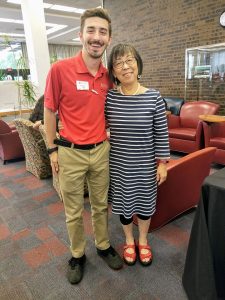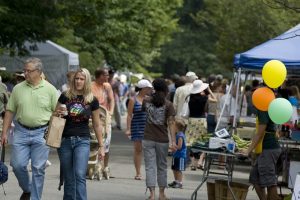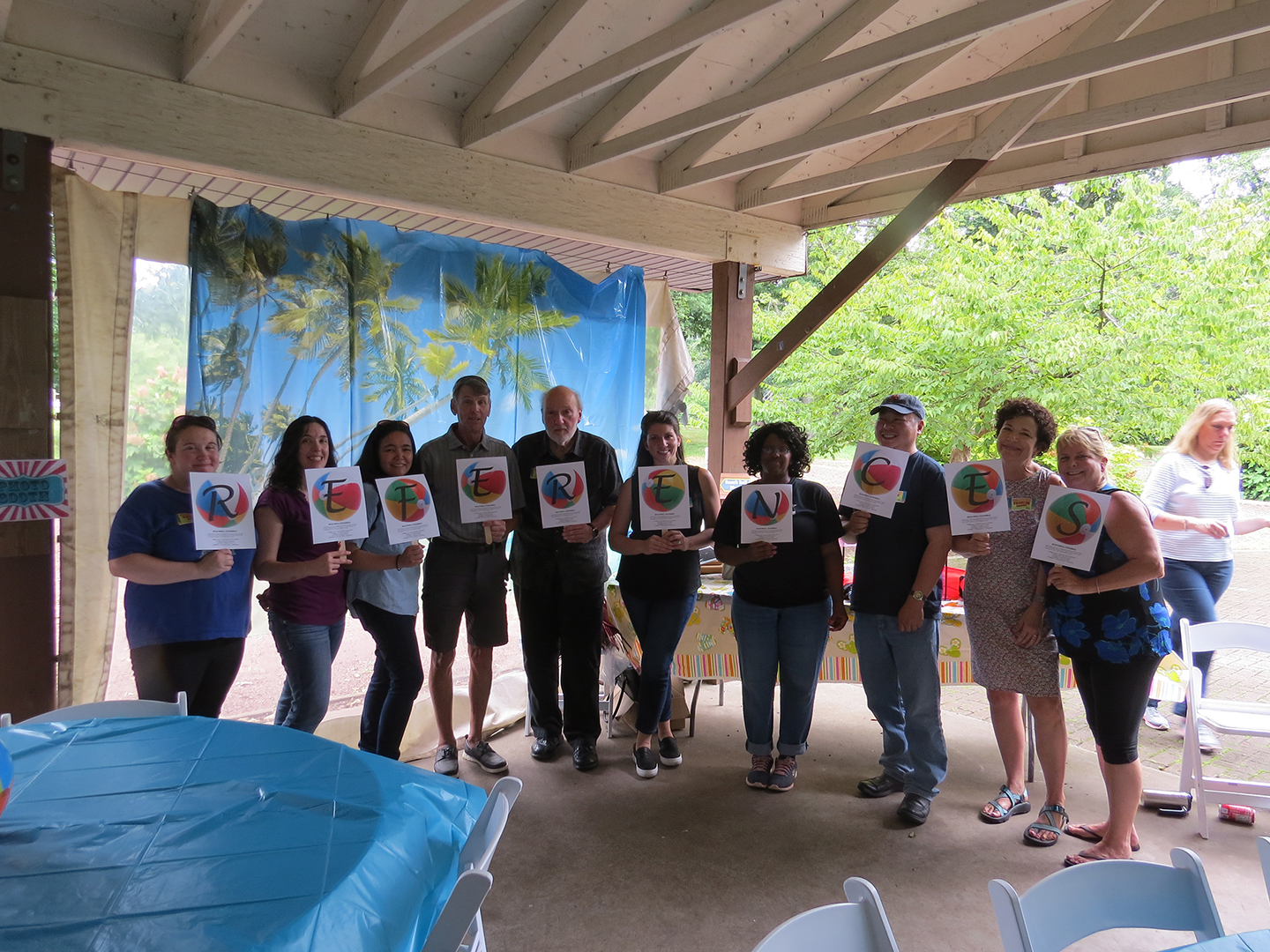
Save the date! The 2019 Faculty/Staff Appreciation Picnic will be held on Wednesday, August 21 from noon to 4 p.m. at Rutgers Gardens.
Stay tuned to RUL_everyone for more details and an RSVP form soon. We look forward to seeing you there!

Save the date! The 2019 Faculty/Staff Appreciation Picnic will be held on Wednesday, August 21 from noon to 4 p.m. at Rutgers Gardens.
Stay tuned to RUL_everyone for more details and an RSVP form soon. We look forward to seeing you there!
The Institute for Research Design in Librarianship is an IMLS-funded program “designed to bring together a diverse group of academic and research librarians who are motivated and enthusiastic about conducting research but need additional training and/or other support to perform the steps successfully.”
The institute started in 2014. My cohort (2019) is the last IMLS-funded year, but the creators will continue the project using a paid model in the future. Our cohort included 23 librarians from colleges and universities all over the country. Our interests, experiences, and areas of librarianship were varied.
The 2019 cohort kicked things off in June with a one-week research boot camp at Loyola Marymount University. In seven days, we received research instruction from Dr. Lili Luo and Dr. Greg Guest, as well as individual consultations with our instructors and the IRDL creators, Kris Brancolini and Marie Kennedy. We also relied on each other to get “fresh eyes” on our projects and to commiserate when our projects seemed bigger than we could handle!
After that first week, our cohort will continue working with Kris, Marie, and a research mentor (a previous IRDL scholar) throughout the coming academic year. We each committed to completing our research projects in that time. To stay on track, we have periodic check-ins with each other to update everyone on progress, ask questions, and get support. We also work with our mentors monthly to review our work and get feedback. Our cohort also created a Slack group for talking about the different research methods we are using and coordinating future meetups.
The boot camp covered sampling techniques, proper statistical measures, and strategies for doing qualitative analysis. This was especially useful because after we learned something in class, we could request a consultation with one of the instructors to see how we could best apply a technique to our research project. I found this incredibly helpful when considering what statistical tests I should use for my study. The goal of my project is to determine the effectiveness of augmented reality on students’ perception of the library and librarians when used as part of an orientation for incoming first-year students. I’ll be comparing pre and post-orientation questionnaires from a group of students taking an augmented reality orientation and a group participating in a traditional orientation.
IRDL has already had a major impact on my research design. The proposal I submitted to the Institute in January is much different from the one I will be submitting in July. My methodology, sampling technique, and survey instruments underwent a complete overhaul in the week I spent at the institute. My confidence as a researcher has also increased and I feel more comfortable making decisions about what and how I will research as a practicing librarian.
I’m looking forward to the coming year when I’ll be completing my research project and working closely with my cohort and mentor. One aspect of IRDL which the directors continually emphasize is that our fellow scholars are part of our lifelong research network. We can ask questions of each other, collaborate, generate ideas, and rely on each other for support as we research throughout our careers. This kind of support, along with the knowledge I gained at the institute, has been transformative by making me feel more confident in asking questions and making decisions.

Shared User Services has moved, both spatially and virtually. In June, virtually all (pun intended) of the SUS employees relocated. Our email addresses and phone numbers are the same, but for those who value a spatial identifier, here is where you can find us:
Technical Services Building
• Amy Kimura
• Cathy Pecoraro
• Elizabeth York
• Joseph Deodato
• Michele Best
Alexander Library 3rd floor (Library Admin suite)
• Isaiah Beard
• Marty Barnett
• NJEDL project staff and students
• Rhonda Marker
Alexander Library 4th floor
• Laura Costello
SUS has also moved their staff resources information to the “new” staff resources page. You can find information about a variety of digital projects, discovery services, electronic resources, virtual reference, and Web Improvement Team at https://staff.libraries.rutgers.edu/sus. We will soon be expanding our Teaching and Learning section here, too. We’re excited to be the first unit to officially move over to this new site.
I’d like to start my article this issue by thanking all of you who attended our State of the Libraries meeting in June. It was a great opportunity for us to network with colleagues we don’t often get to see in person, celebrate our collective accomplishments from the past year, and look forward to the challenges ahead. I hope you found it a useful and productive event.
For those of you who stayed behind, I invite you to review the slides from my presentation as well as the videos from the poster session below.
As I reflect back on Kathleen Fitzpatrick’s presentation about Generous Thinking, a key takeaway for me was the challenges inherent to developing academy-driven, community-supported infrastructure that provides open access to scholarly material in a sustainable manner. In order to realize this vision, academic institutions need to commit in earnest to the idea of collaboration, and take seriously a sense of shared responsibility to our collective enterprise.
Deep collaboration is difficult. It requires trading control and specialization for efficiency. In a recent short essay appropriately titled “Library Collaboration is Hard; Effective Collaboration is Harder,” Lorcan Dempsey summarizes his recent presentations and blog posts and ends with the recommendation that “There should be active, informed decision-making about what needs to be done locally and what would benefit from stronger coordination or consolidation within collaborative organizations.” At Rutgers, we collaborate all the time, every day, all day. Nearly every project that we undertake involves collaboration across separate parts of our complex organization. We have talked about the importance of a collaborative approach in other contexts as well, such as Dempsey’s notion of the collective collection and how the continuum of consolidation applies to the Libraries’ services framework.
Recently, we’ve seen the fruits of collaboration bear initiatives like CADRE, the shared big data gateway we’ve partnered with Indiana University and others to develop, which is further evidence of what is possible when institutions work together to address common needs. We are also exploring a transformative license agreement of Oxford Scholarship Online backfiles and frontlists, the terms of which were negotiated by PALCI. Even more opportunities, such as shared infrastructure for journal publishing, are on the horizon as well, thanks to our membership in the Big Ten Academic Alliance.
With these examples in mind, it becomes clear to me that forward-thinking academic institutions need to be open to participating in these new, cooperative models in order to maximize our impact. And I believe the way forward for all libraries—including our own—is to accept this challenge to collaborate deeply across institutional boundaries. As we know from experience, there are bound to be some tradeoffs, and compromises will have to be made. But only by committing to working together in a meaningful way can we truly advance our mission of contributing to the public good.
Congratulations to Fobazi Ettarth, who was one of the invited presentations at the annual ACRL conference in Cleveland, Ohio last month. Fobazi’s talk was titled “Becoming a ‘Bad Librarian’: Dismantling Vocational Awe in Librarianship” and you can view the slides below, courtesy of her blog:
The talk also spurred an interview with American Libraries magazine, which you can read here.
This month, Dominique Dixon got quite the unique tattoo on her wrist, featuring the call number for catalogers (Z682.4 .C38) along with her last name (D59). “I’m so enamored of cataloging that I essentially cataloged myself!” she said. Now how’s that for dedication to the job?
Have a HeartDr. Daniel Shindler of Robert Wood Johnson University Hospital, president of the NJ chapter of the American College of Cardiology, requested a 3D printed heart showing a vascular ring defect to be created on the 3D printer at Douglass Library. Files of the heart were obtained fro
m the NIH website at the 3D print exchange and printed by Stacey Carton. The model was presented to Congressman Frank Pallone of the 6th district in April as an example of surgeries being performed at RWJUH, and Stacey was invited to attend the presentation at RWJUH and meet the congressman. Congrats, Stacey!
Congratulations to Ermira Mitre, whose first book of poetry was published in Albania, her home country. Written in in Albanian, the title of the book is Soul’s Gravity. As if this accomplishment were not enough, Ermira is already working on another book of poetry in English. Kudos, Ermira—we’ll look forward to the next volume!
Opening the Schapiro PapersPlease join Special Collections and University Archives in New Brunswick on Tuesday, May 7 to celebrate the opening of the Miriam Schapiro Papers. The opening, which will take place from 4 to 6 p.m. on the 4th floor of the Alexander Library, will feature audio stations playing digitized cassette tapes of interviews with and by Miriam Schapiro and a few of her lectures. The event will also showcase a slideshow of digitized images from the archives, a display of the finding aid, and a small exhibit of items from the collection. Hors d’oeuvres and drinks will be served.
The latest addition to the Libraries’ Digital Collections page is the 2018 RBHS Scholarly Publishing Symposium. Here, Ela Sosnowska describes the event and reflects on lessons learned.

The symposium, held on March 14, 2018 in Newark and March 15, 2018 in New Brunswick was organized by the RBHS Provosts Office and Rutgers Libraries as a part of the RBHS Provosts Faculty Development Series.
The main goal of this event was to inform and educate RBHS faculty and graduate students about the complexities of the publishing process and to introduce them to the resources and services supporting scholarly publishing provided by Rutgers’ libraries. Topics covered included advice on preparing and submitting manuscripts, navigating the peer-review process, finding the right scholarly journals and publishers, and avoiding predatory publishers.
The symposium featured three lectures (I-III) and a panel discussion (IV):
Statistical highlights:
The overall evaluation of the symposium was very positive, with 95% of Newark and 96.3% of New Brunswick participants agreeing that the symposium was satisfactory or very satisfactory in providing value to their work.
The strength of both sessions was demonstrated further by very high marks given to all three presenters, where 92-97% for responders rated their presentations satisfactory or very satisfactory.
97.5% of attendees in Newark and 92.6% of participants in New Brunswick declared interest in attending future workshops/symposia on other scholarly topics.
The most popular topics identified for future sessions were:
Participation:
A total of 61 people attended the Newark session on March 14. Fifty-one of them were faculty representing the following RBHS schools: NJMS, RSDM, SHP, SON and RWJMS. Two NJMS and one GSBS students and 7 representatives from the Health Sciences Libraries and Elsevier also attended.
The New Brunswick session on March 15 attracted 50 attendees, 40 of whom were faculty members and two of whom were students from the following RBHS schools and centers: RWJMS, SPH, SHP, NJMS, Pharmacy, SON and EOSHI. Eight health sciences librarians and Elsevier representatives also participated.
The Chang Science Library hosted exciting events in the Spring ’19 semester. Partnering with University Career Services (UCS) for the current academic year, the library replaced Martin Hall as a location for the popular Career Meet-Ups and weekly Drop-in Resume Critique Hours on the Cook campus in both semesters. Students were lining up in front of the newly minted Chang Consultation Room Tuesday afternoons to benefit from experienced career development specialist Larry Jacobs, who represents the UCS Food & Agriculture and Environmental & Natural Resources Career Cluster.
A remarkable poster exhibit evolved from a new partnership between the NBL SEBS Team and the SEBS Office of Academic Programs, which had started with an experiment to include a library component in the course Academic Mentoring in the fall semester. In April, undergraduate students of another course, Portals to Academic Success, visited the library to take pride in their work submitted during the library session of their class. Dubbed Books We Read, the assignment called for finding their favorite book in QuickSearch and, based on templates provided by the librarian-instructor, creating a poster with basic bibliographic information and availability at the Libraries. Complemented with images and quotes from the book or by other authors (and proper credits), over 100 small posters are now on display in the Chang Science Library.
Striving to balance schoolwork and pleasure, the library also hosted fun events. Indicating another strong partnership on campus started in 2018, Chang was chosen as one of the locations (with RUL goodies) for the Cook Campus Easter Egg Hunt hosted by the SEBS International Office, which added some diversion from the special SEBS international orientations and workshops held earlier.
A new partner in the spring semester, the SEBS Governing Council brought new excitement to the library. As only a few people signed up in advance, the Open Mic and Rutgers Roast event seemed to get a bumpy start, but turned out to be a huge success. A talented student opened it with his hilarious stand-up comedy routine, roasting Rutgers only mildly. It was followed by a poem recital and some personal stories from the audience, which put everyone at ease. Two undergrads ran Vine prompts, which encouraged participation from everyone, even if some, admittedly, felt suddenly old! Photos can attest that the 25+ attendees had a fantastic time and the idea may have some followers in other libraries in the future.
These events are examples of an attempt at Chang to meet students’ needs and wishes discovered by undergraduates of the course Social and Cultural Aspects of Design in Spring ’18. Taught by Laura Lawson, professor and dean, and Holly Nelson, associate professor of practice, the semester-long class assignment assessed and redesigned the Chang Science Library. Students’ data collection and analyses suggest that students would like libraries to become a place that provides educational, entertaining, and competitive events and opportunities for them during their studies.

Mary Beth Fecko, Technical and Automated Services, has written Cataloging Nonbook Resources: A How-To-Do-It Manual for Librarians.
Cataloging is the starting point for access to nonbook materials, especially important for media which cannot be browsed in the manner of books. Cataloging Nonbook Resources offers the cataloger guidance and practice with nonbook materials. It covers the major formats: visual materials, sound recordings, maps, computer files, kits, and electronic resources. The text is meant to be used in conjunction with AACR2R. Each chapter includes examples of bibliographic records, examples of MARC tagging for various formats, and AACR2R rules for MARC tagged records along with Library of Congress Rule interpretations. This manual brings catalogers up to speed on “nontraditional” formats.
Congratulations, Mary Beth!
The Agenda 15, no. 9 (May 2, 1993)
The System and Database Management Department is scheduled for a major upgrade at the end of the summer. Because of the high interest in the upgrade the plans are as follows:
Holdings and Pieces Management is coming soon to our IRIS catalog. Why, you may ask, is Holdings and Pieces necessary? How will it affect our daily operations, and is the transition worth it?
Holdings and Pieces is Geac’s name for the software they developed to streamline management of individual items in the system, while retaining summary information. In this context, holdings refers to summary holdings, and pieces refers to the individual items.
Currently holdings information is kept in two separate sets of files: those for circulation and those for BPS. In the OPAC, information is drawn from both of these components. Holdings and Pieces Management (HPM) will integrate information that is now kept in separate files. For example, from either Circ or BPS, you will be able to determine circulation status and the date an item was added to the system. Staff will be able to change information in either function and will be able to record item-level notes.
The Agenda 15, no. 9 (May 2, 1993)
Patrons recalled 5,430 books from September to December, 1992. On average that’s 45 recalls placed per day!
The Agenda 15, no. 9 (May 2, 1993)
A special thank you is extended to all the volunteers from the library community who participated in the Annual Giving Phonothons for ’92 – ’93. By your volunteering to call alumni and parents you have helped to ensure the libraries continued growth as an intellectual resource for our Rutgers students.
| Treadwell Atkins | Alexander Library |
| Karen Barrella | Fiscal Control/Library Admin. |
| Ron L. Becker | Special Collections and Archives |
| Renza Chendak | Library Administration |
| Amos Danube | Library of Science and Medicine |
| Rose Deland | Technical and Automated Services |
| James Doele | Dana Library |
| Margie Epple | Library Administration |
| Delores Evans | Library Administration |
| Betty Fry | Technical and Automated Services |
| Jeanne Garrison | Robeson Library |
| Marianne Gaunt | Library Administration |
| Gary Golden | Robeson Library |
| Bonita Grant | Special Collections and Archives |
| Harriette Hemmasi | Music Library |
| Michael Joseph | Special Collections and Archives |
| Marty Kesselman | Library of Science and Medicine |
| Linda Langschied | Alexander Library |
| Bobbi Loeb | Library Administration |
| Jackie Mardikian | Library of Science and Medicine |
| Sondra Marsh | Robeson Library |
| Nita Mukherjee | Technical and Automated Services |
| Stan Nash | Alexander Library |
| Judy Odom | Robeson Library |
| Carol Paszamant | Alexander Library |
| Francoise Puniello | Douglass Library |
| Halina Rusak | Art Library |
| Charlene Shults | Alexander Library |
| Ruth Simmons | Special Collections and Archives |
| Jane Sloan | Douglass Library |
| Gracemary Smulewitz | Alexander Library |
| Peter Stern | Alexander Library |
| Marilyn Tankiewicz | Business Office/Library Admin. |
| Ryoko Toyama | Alexander Library |
| Nancy Wiencek | Library Administration |
| Myoung Wilson | Alexander Library |
| Carole Wolfe | Technical and Automated Services |
| Connie Wu | Library of Science and Medicine |
| Beth Ann Zambella | Kilmer Library |
The Agenda 15, no. 10 (May 16, 1993)

These are exciting times for Dana Library. Last month, we began a series of renovations that will address the highest priorities for improving the library that were identified through the Rutgers University–Newark strategic planning process several years ago. The changes will make the library more user friendly in numerous ways, including finally fitting out the third floor, which has been shell space since the construction of that wing decades ago.
The results of this project involve enhancements that will create new study and learning spaces for students, facilitate ease of access to the collections and departments within, and the construction of a new center to support teaching faculty:

Construction has already begun and is scheduled to be completed in April 2020. I’ll plan to deliver updates from time to time in the Agenda, but if you want the latest information as it’s available, head over to the Dana Library Transformation Project blog, where we post updates at least once a week after our meetings (and don’t forget to sign up for the email list to receive alerts when new posts are published).
Thank you for following along on this journey toward the future of Dana Library!

April 13 marked National Citizen Science Day for 2019, and all libraries in the country were encouraged to host events to celebrate the day. Because this year’s theme of Citizen Science Day was related to Alzheimer’s disease and target audiences were the general public, the Library of Science and Medicine worked with Piscataway Public Library to co-host an event titled Myths and Realities of Alzheimer’s Disease. The event was sponsored by the COPSA Institute for Alzheimer’s Disease and Related Disorders at Rutgers. This joint event by LSM, RBHS, and the local public library was well received by our audiences. Below are some remarks from the speaker, public library librarian, and a manager at one RBHS center: