Welcome to the newest regular feature of the Agenda. In “This Month in the Agenda,” we’ll explore highlights from this month in the history of Rutgers University Libraries. For the inaugural column, we’ll travel back in time 33 years to October 1984. What news was buzzing around the Libraries?
My, How the Times Have Changed
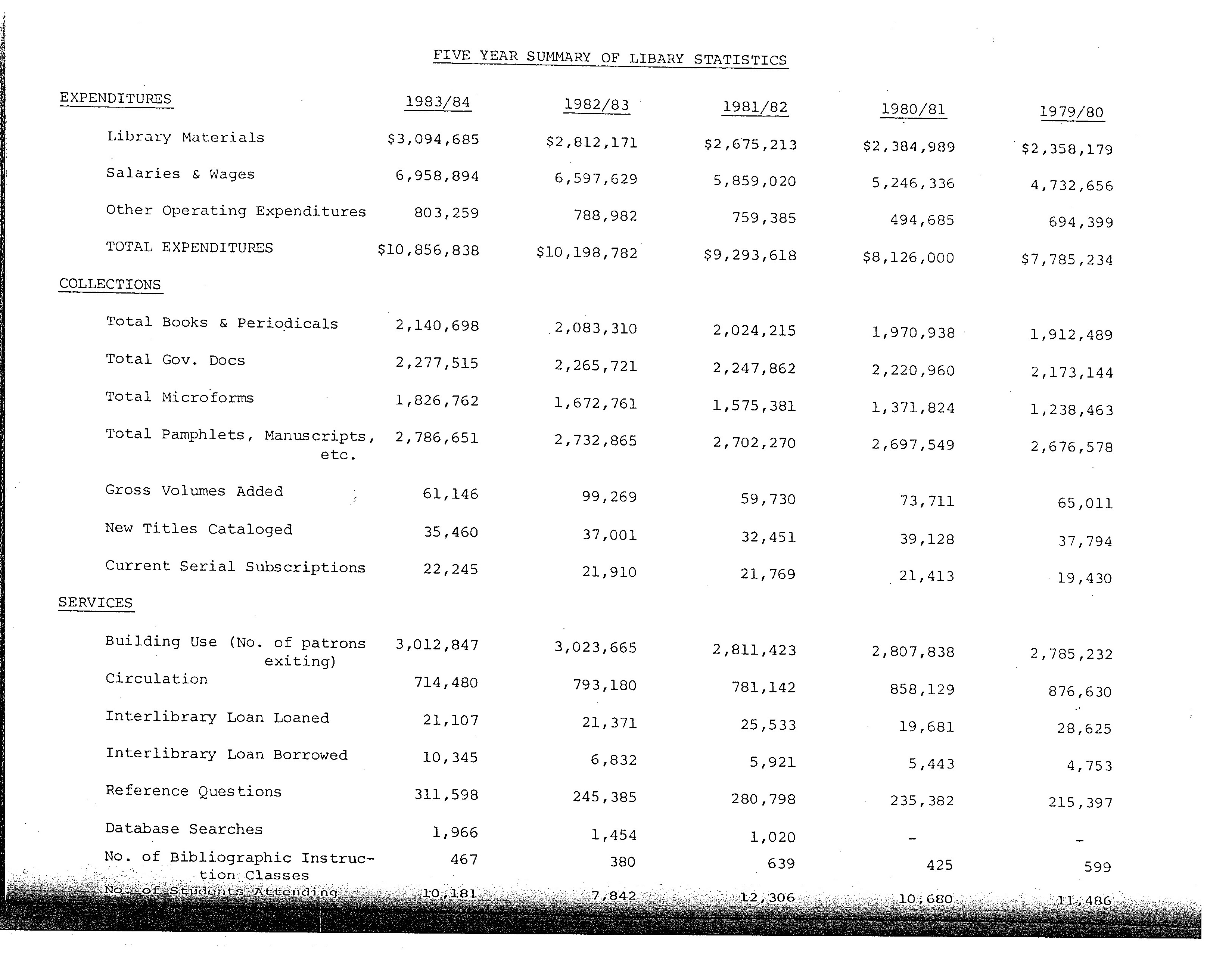
A five year summary of library statistics spanning FY 79/80 to FY 83/84.
East Asian Library Making Waves
The East Asian Library and the International Center have received $14,000 from the New Jersey Department of Higher Education to establish an in-house automated information and delivery service to support East Asian research and curriculum development at Rutgers and within the New Jersey State Colleges System.
–Weekly Agenda 6, no. 40 (October 1, 1984).
Dinner, Anyone?
Name the Libraries’ integrated system, commonly known as Geac, and win a dinner at The Frog and the Peach in New Brunswick.
The online system now includes cataloging and circulation elements, but the name should be flexible enough to cover all additional subsystems as well as the online catalog
Submit names to Kamala Truscott, Library Administration by October 31.
–Weekly Agenda 6, no. 41 (October 8, 1984).
The DeWitt Library Society of the Rutgers University Libraries invites you to share in the pleasure of an evening celebrating good books on Tuesday, November 13, 1984. The festivities celebrate the completion of a very successful year for our National Endowment for the Humanities Challenge Grant.
–Weekly Agenda 6, no. 43 (October 22, 1984).
Movin’ On Up
Changes in Position
Timothy Corlis, Library Assistant II, Central Technical Services
–Weekly Agenda 6, no. 41 (October 8, 1984).
Cabinet Report
Edelman: Working on Title II-C proposals in Special Collections: Consumer Archive, Latin American Archive, Afro-American Archive. Proposal deadline is November 1. Reported on meeting to be held regarding Performance Appraisals. Discussed METRO: G. Neely will attend meeting on 10/25. Senator Case’s furniture to leave the Librarian’s office; to be placed in Special Collections Seminar Room.
–Weekly Agenda 6, no. 43 (October 22, 1984).
Spam Filter Needed
Campus mail is designed to be used for University business between departments of the University. Campus mail should not be used for transport of personal mail, chain letters or other unauthorized uses. Employees who make unauthorized use of campus mail may be subject to reprimand.
–Weekly Agenda 6, no. 43 (October 22, 1984).
On Exhibit
Elizabeth Cady Stanton Materials, Mabel Smith Douglass Library
Through December 1 – “American Presidential Elections, 1904–1984,” Department of Special Collections, Archibald S. Alexander Library
Through November 7 – Wood Sculpture and Drawings by Jane Teller, Mabel Smith Douglass Library
–Weekly Agenda 6, no. 43 (October 22, 1984).
Hopefully you’ve enjoyed this glimpse into the Libraries’ past! Special thanks to Erica Parin for her idea to start this column.
Please send comments or suggestions about “This Month in the Agenda” to Matt Badessa.
Congratulations to Yingting Zhang whose application for the Association of Academic Health Sciences Libraries’ Data Scholarship has been accepted. The award will support Yingting’s participation in the Research Data Access and Preservation Summit next year in Chicago. We look forward to hearing Yingting’s report from the conference!
Fight the Flu. Get Your Shot!
Don’t forget that Occupational Health will be providing flu shots for employees on Wednesday, October 4 from 11 a.m. to noon in the Pane Room of Alexander Library.
It’s a Bird, It’s a Plane, It’s—The Artists’ Bookmobile!
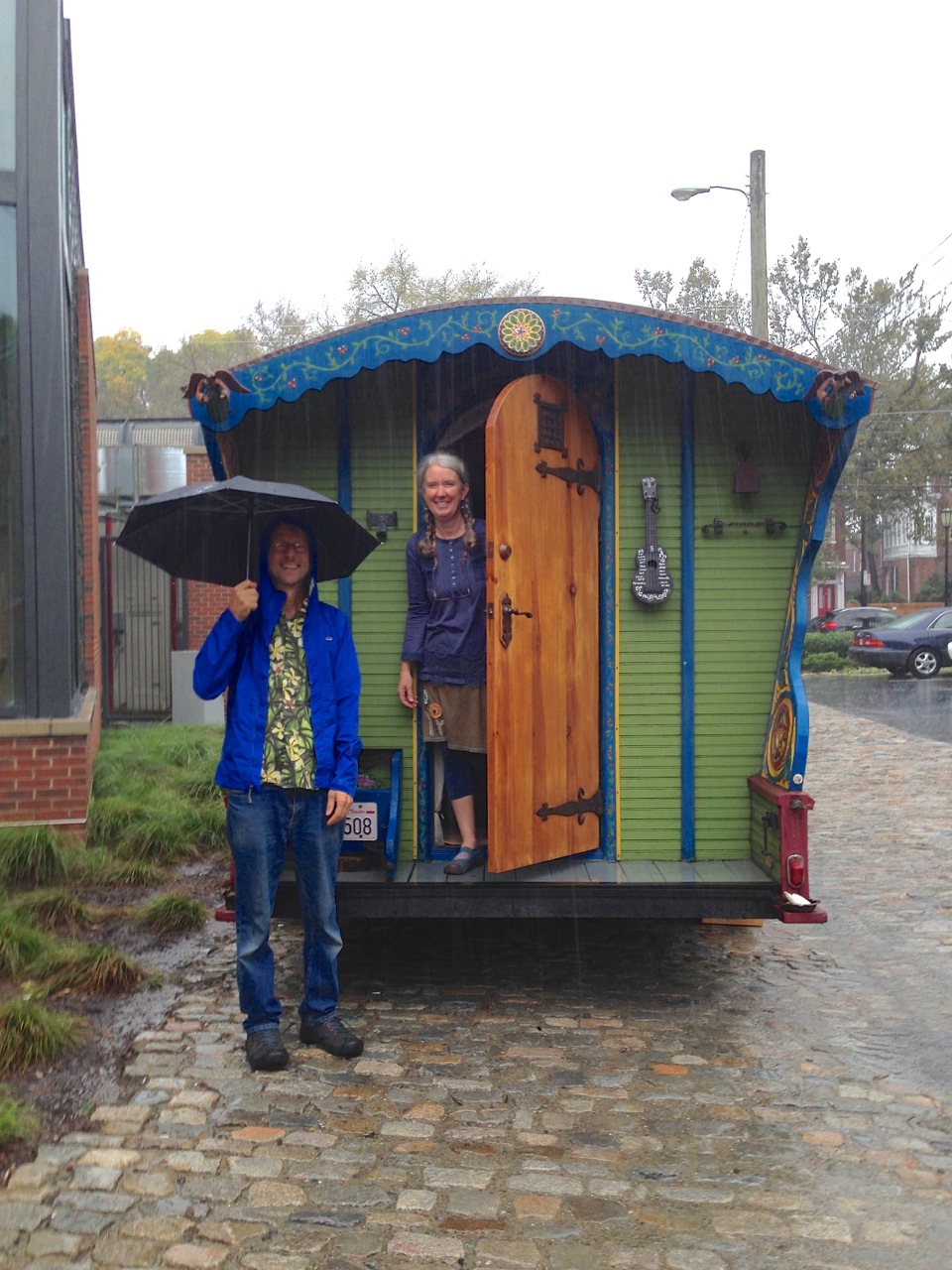
Peter and Donna Thomas return to Rutgers with their Artists’ Bookmobile on October 4.
Rutgers University Libraries and art librarian Megan Lotts are delighted to welcome Peter and Donna Thomas and their traveling Artists’ Bookmobile back to Rutgers. Peter and Donna are known for their workshops in paper and book arts. Visit the Artists’ Bookmobile—a self-contained exhibit of book arts—and learn how they make their books. Join in a book arts sing along at 3 p.m. featuring a ukulele book.
The Bookmobile will be parked outside Alexander Library on October 4 from 2 to 3:30 p.m. See you there!
Carr is Cutting the Ribbon
Join us on Tuesday, October 17 at 10 a.m. as we dedicate the James Dickson Carr Library in honor of Rutgers University’s first African American graduate. The program includes remarks by Rutgers–New Brunswick chancellor Debasish Dutta, an exhibit of materials about Carr and the history of the former Kilmer Library, as well as a reception. Please register to attend at https://www.eventbrite.com/e/carr-library-dedication-ceremony-registration-38281939311.
#RutgersDana50 Kicks Off on a High Note
Dana Library kicked off its 50th anniversary celebration with a birthday bash during Rutgers–Newark’s Fall Fest in September. The festivities included cupcakes and a live performance by hip-hop/jazz fusion band Nickel and Dime OPS. Check out a clip of the band courtesy of @RUNewark_Dana on Twitter.
Thomas V. Papathomas, director of the Rutgers Laboratory of Vision Research, visited the Library of Science and Medicine last week for a special presentation on optical illusions, how our minds process perspective, and even how illusions can be used as accurate measures of schizophrenia.
Aiding the Relief Effort in Puerto Rico
Alexander and Dana Libraries hosted open data editathons last week in response to the Red Cross’s request for geospatial data to help with their relief operations on the island. Participants mapped from pre-hurricane imagery to give those involved in the relief efforts an operating picture of the island before the storm made impact. Kudos to our colleagues Francesca Giannetti and Krista White for their part in bringing this program together so quickly!
Sherri Farber, reference assistant at the Paul Robeson Library, received the Outstanding Student Award at the School of Communication and Information Honors Day 2017 for her work in the Master of Information Program. She is also a recipient of the 2017–18 Distinguished Library and Information Science Department Scholarship. Congratulations, Sherri!
You’ve Been Accepted—Now What?
John Bader will answer this question when he visits Alexander Library on July 6 to talk about his book Dean’s List: 10 Strategies for College Success. This is sure to be a great program with lots of practical advice, so if you are working with high school or early start students this summer, be sure to encourage them to attend.
Visitors from Afar
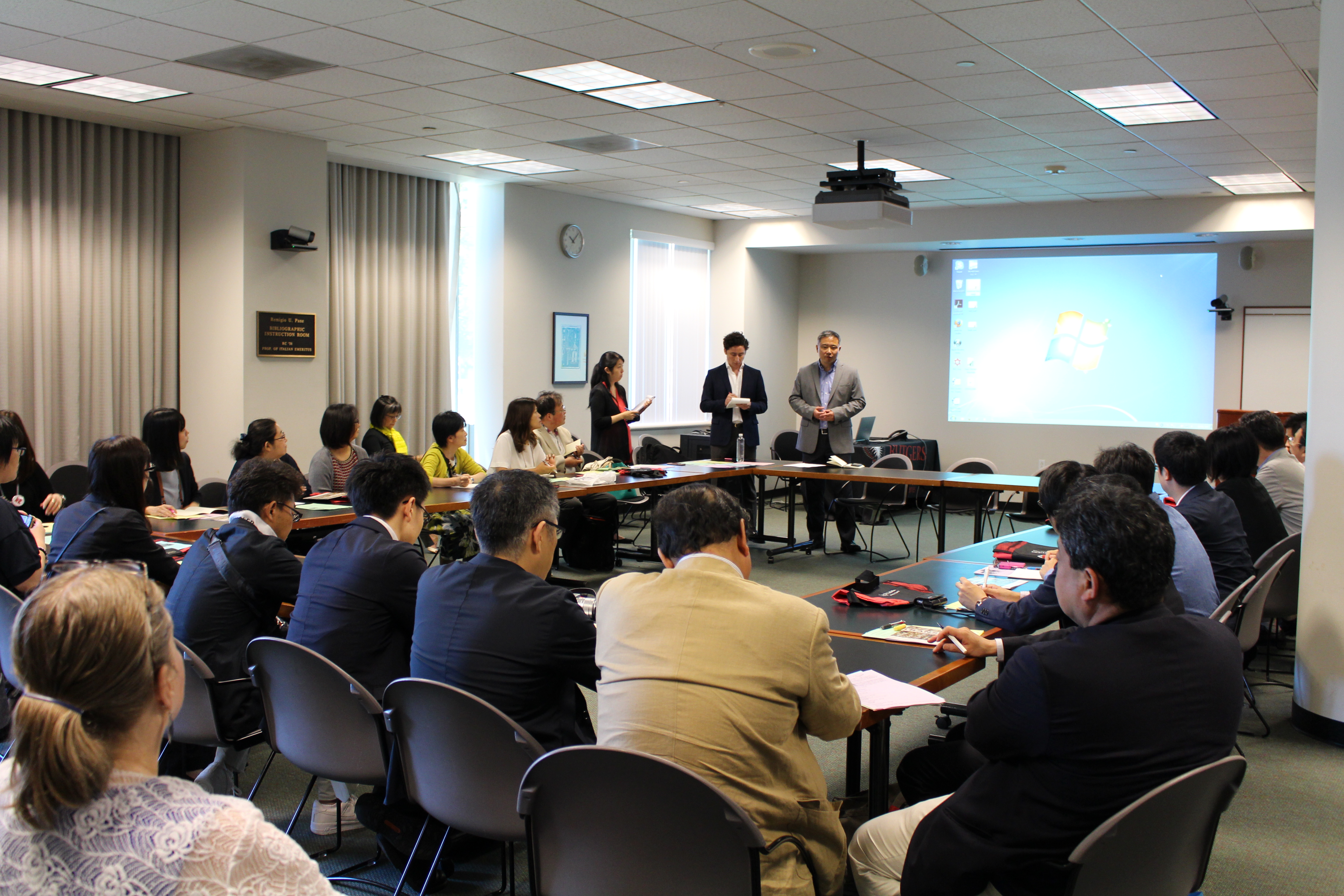
The Libraries welcomed a delegation of librarians and publishers from Japan in June. They enjoyed a tour of the Digital Curation Research Center and a pop-up display of the William Eliot Griffis Collection in Special Collections and University Archives, among other activities. Read the full recap of the day’s proceedings on our website.
Free People Read Freely
The Freedom to Read Foundation recently announced that the Rutgers Art Library is one of seven institutions that were selected to receive a grant in support of Banned Books Week events in September. The planning is well underway and there are lots of fun activities in store for our students come the fall. Congratulations to Megan Lotts for bringing this grant home for Rutgers!
OAT Project Receives RUSA Endorsement
The Rutgers University Student Assembly has issued a resolution endorsing the Open and Affordable Textbooks (OAT) Project. The resolution “supports the expansion of the Open and Affordable Textbooks Project to permit more grantees and the launch of additional Open Education Resource initiatives to supplement this grant program.” President Barchi takes RUSA resolutions seriously into consideration, so the assembly’s support is a major coup for the Libraries. Kudos to Lily Todorinova, who spearheads this project for us, and who is hard at work preparing to launch the second round of grants in the fall.
Celebrating Childhood Studies
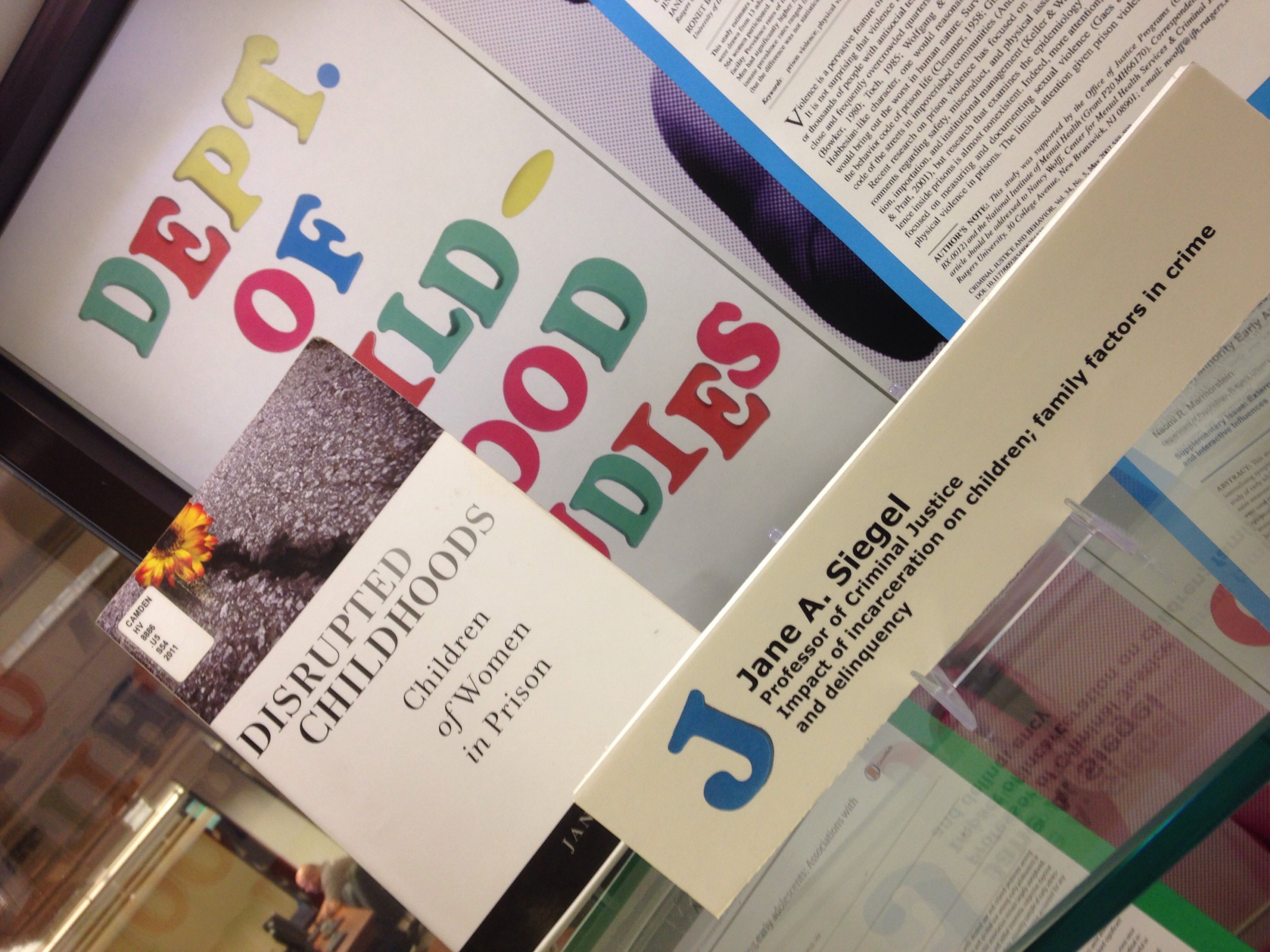
A new exhibit at Robeson Library features the work of the prestigious Childhood Studies Department at Rutgers–Camden. It was installed just in time for the Society for the History of Children and Youth Biennial Conference, which was held at Rutgers–Camden in June. The display looks fantastic thanks to the keen eye of John Powell, so stop by the library before July 31 to see for yourself.
A Parking Garage in the Lobby?
No, not exactly—but a new piece of art is slated for installation in the lobby of Robeson Library in August. Parking Garage is among several works by eminent American sculptor George Segal that were recently donated to Rutgers–Camden. Accompanied by several of Segal’s drawings, it will replace the Future Scholars mural currently in the lobby.
The Annual Louis Faugères Bishop III Bishop Lectures are named in memory of the son of Louis Faugères Bishop, Jr., a prominent cardiologist and book lover with close family ties to Rutgers and New Brunswick– for example, Bishop House and Bishop Place on the College Avenue Campus–even though he himself was an alumnus of Yale University. In his honor, the annual Bishop Lecture brings noted scholars and subject experts to Rutgers to offer their insights on diverse topics related to book and manuscript collecting, printing history, and the use of rare archival materials for research.
2017 Lecture:
Remembering World War I Through the Eyes of a WWI Combat Engineer—Charles Edward Dilkes
Virginia A. Dilkes
March 9, 2017 • 6:00 P.M.
In “Remembering World War I: Through the Eyes of a WWI Combat Engineer,” Dilkes will present the first-hand experiences of the War through the eyes of her father, Charles Edward Dilkes. Drawing on excerpts from his memoirs and pictures of his WWI artifacts, she will follow her father’s footsteps through the battlefields of France to his triumphant march through Luxembourg and his days in Germany serving in the U.S. Army of Occupation. Along the way, this personal history will wend from his birth in Philadelphia and childhood memories at the Jersey shore to work at Camp Dix, Camp Kilmer, and the Raritan Arsenal, from which he retired in 1958.
Recent Lectures:
Recent Bishop Lectures include, Roger L. Geiger, Pennsylvania State University history professor, on “Becoming a Modern Research University: the Postwar Challenges of Rutgers and Penn State, 1945-1965; film critic and Star-Ledger columnist Stephen Whitty on “Forbidden Words: Taboo Texts in Popular Literature and Cinema;” Dr. Karen Reeds on “Old Herbals, New Readers;” and James McPherson, Princeton University history professor, on “New Jersey and the Civil War.”
Past lecturers include Roger L. Geiger, Karen Reeds,Stephen Witty, and James McPherson, l to r.
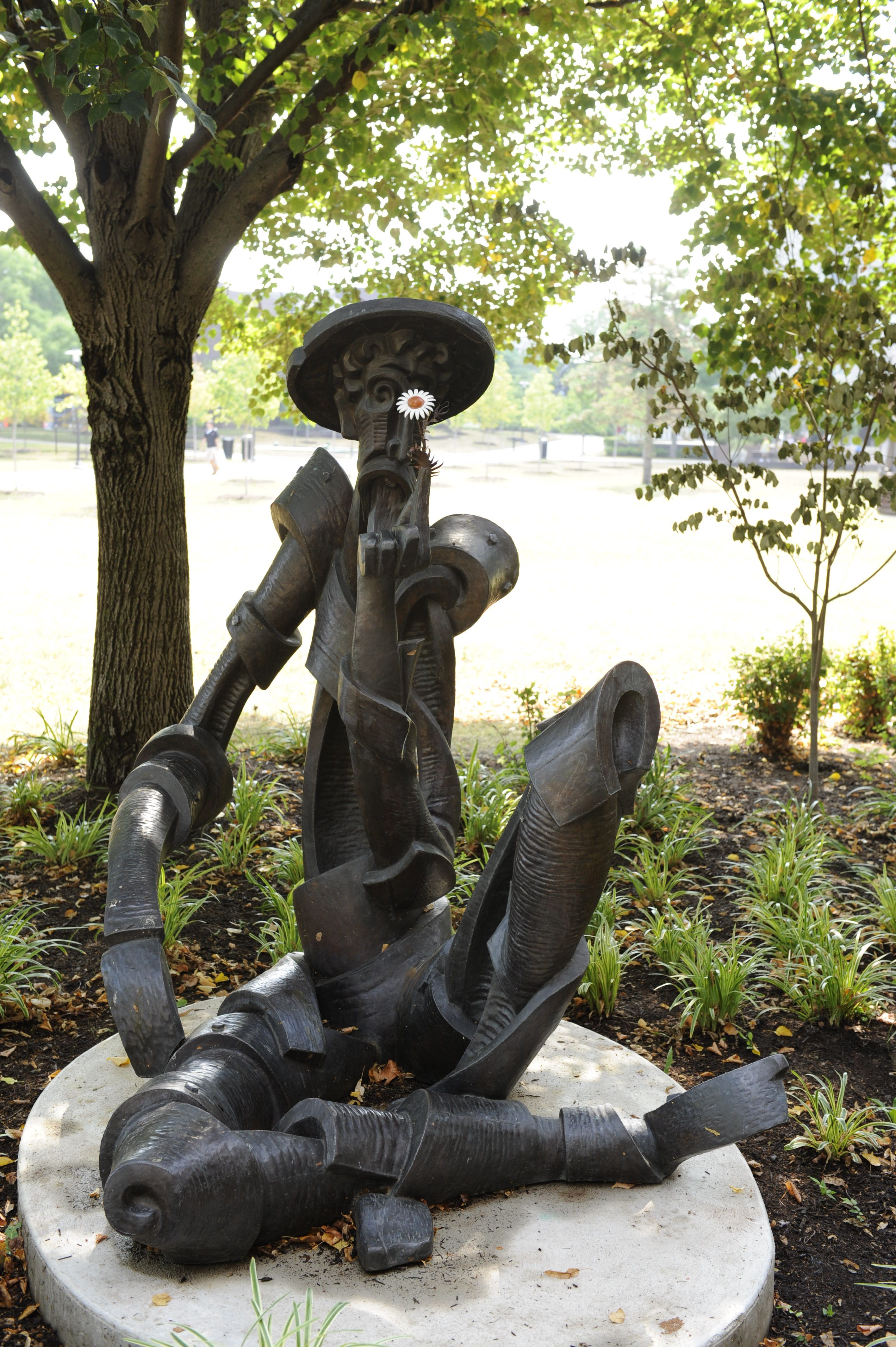
Last month, Carr Library received an unexpected visit from artist Katya Silis, whose father Nikolai is the sculptor of Don Quixote with a Flower, the statue that sits adjacent to the walkway leading to the entrance of the library. Katya, who traveled from New York with a friend just to see and photograph the sculpture, was delighted to see its prominent location on campus and expressed her gratitude to Carr Library associate Grace McGarty.
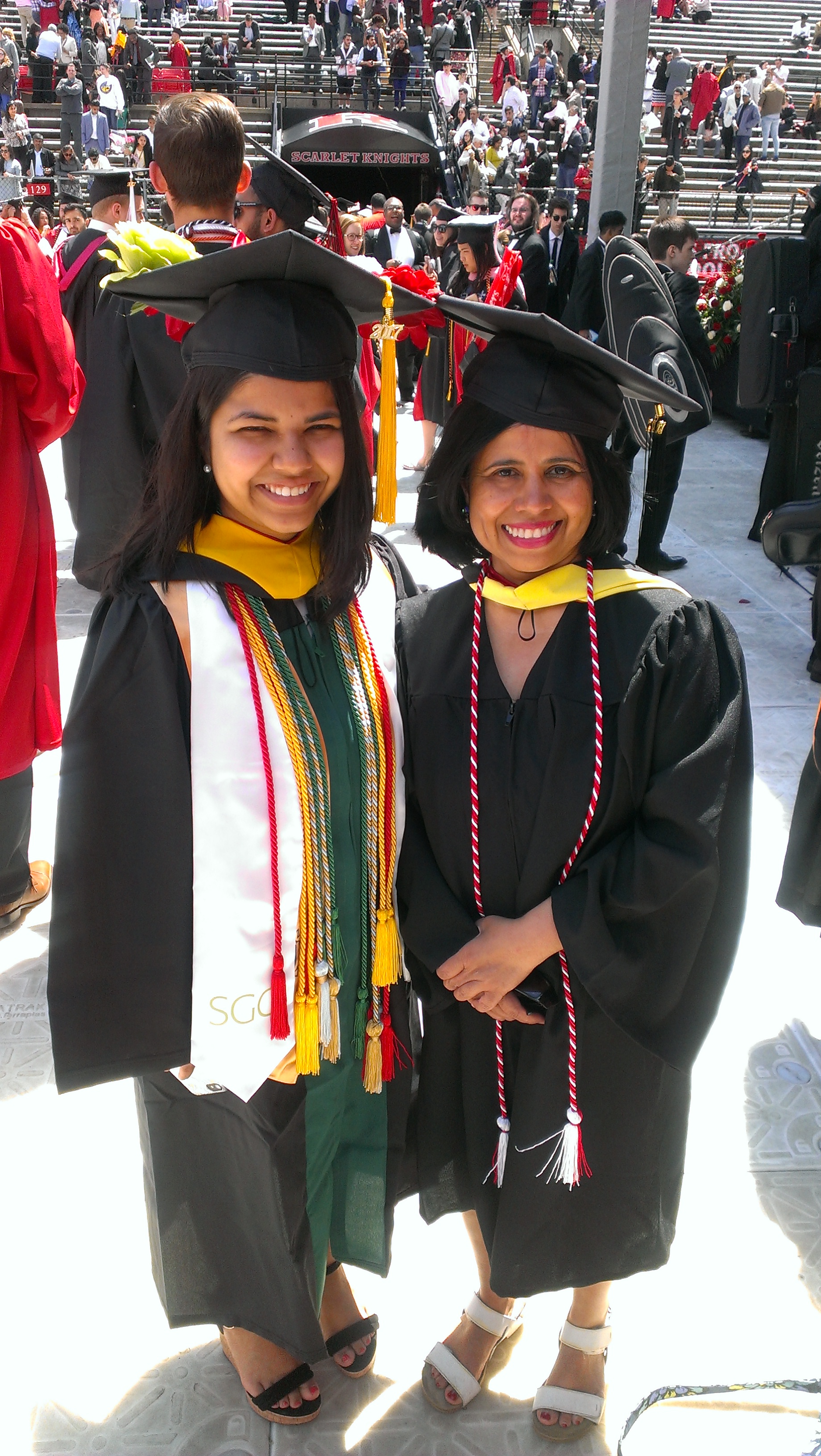
Ankita (l) and Bela (r) Gupta
Mother and Daughter: Both Graduates
Congratulations are in order for Bela Gupta, library associate in the Monographs Cataloging Section of Central Technical Services, and her daughter Ankita, who both graduated in May. Bela received her master’s degree summa cum laude in library and information science from the School of Communication and Information, while Ankita, who hopes to become a veterinarian, received her bachelor’s in animal science from the School of Environmental and Biological Sciences, where she was on the dean’s list and in the General Honors Program. The happy graduates were also featured in the latest issue of the SEBS Explorations magazine.
Exhibit in Memoriam of a Beloved Colleague
On May 24, Dana Library celebrated the opening of Art and Jazz: A Tribute to Ed Berger. The exhibit, curated by Joanne Leone, features the works of over 50 students at Arts High School in Newark who had worked with Leone to learn how to express the experience of listening to jazz in their art. Ed Berger, former Institute of Jazz Studies associate director and special projects librarian, had been planning the exhibition with Leone when he passed away suddenly earlier this year, and Leone carried on with the plans in his memory. The opening reception featured a performance by the Arts High Jazz Band as well as many touching remarks delivered by Ed’s friends and colleagues. The exhibition will remain in the Dana Room Gallery through August 26 with selected works remaining on view through the fall.
Arts High School Jazz Band Performs at Art and Jazz opening reception. Video: Nancy McMurrer.
Librarian of Congress Carla Hayden Visits Paul Robeson Library
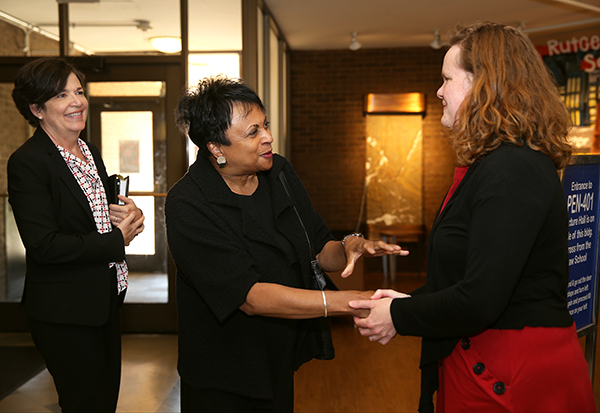
Dr. Carla Hayden meets Katie Anderson and Krisellen Maloney.
This year, Rutgers University–Camden welcomed Dr. Carla Hayden, Librarian of Congress, as their commencement speaker. Dr. Hayden has broken new ground as both the first woman and the first African American to hold this position. So, you can imagine how excited the faculty and staff at Paul Robeson Library were to meet her when she stopped by earlier this week before addressing our 2017 graduates and receiving an honorary Doctor of Humane Letters.
We were delighted to give her a tour of the Library and to present her with a tote bag full of Rutgers goodies.
SCUA Archivists to Talk Rutgers’ Slave-Holding History
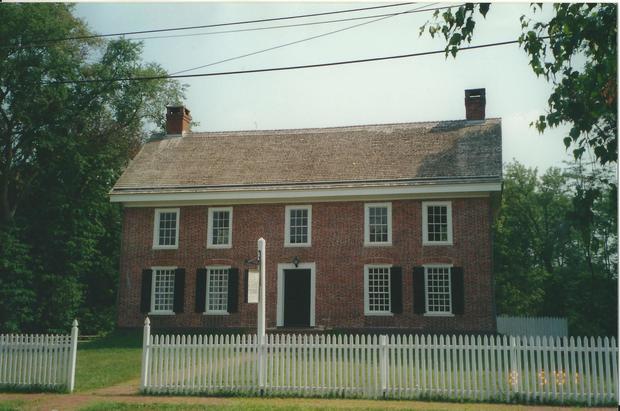
The Old Dutch Parsonage in Somerville. Photo: Hillary Murtha via NJ.com.
University archivist Tom Frusciano and public services and outreach archivist Helene Van Rossum will take part in a presentation on the slave-holding history of Rutgers’ founders at the Old Dutch Parsonage in Somerville on June 17 at 2:30 p.m. Topics to be explored include stories of early slave-holding leaders of Rutgers College–including the relationship between the Hardenbergh family and Sojourner Truth–and connections between Rutgers and the Dutch Reformed Church during the Revolutionary War years. There is a suggested donation of $5 and advance registration is recommended. Click here for more information on the program.
The Garden State through the Eyes of Its Beholders
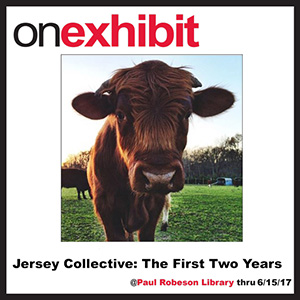
Jersey Collective: The First Two Years is on display at the Paul Robeson Library now through June 15.
Jersey Collective is a collaborative Instagram project that showcases the beauty of New Jersey and the talent of photographers who live here. Over 100 diverse people from all over the state have been featured, from as young as age 13 to over 50. Each week, a different person takes over the Instagram account, treating followers to their unique style and point of view while sharing their favorite parts of the Garden State.
The images displayed in the exhibit are a selection from the first and second years of the project, spanning from March 2014 to March 2016.
New Resources in Women’s and Gender Studies
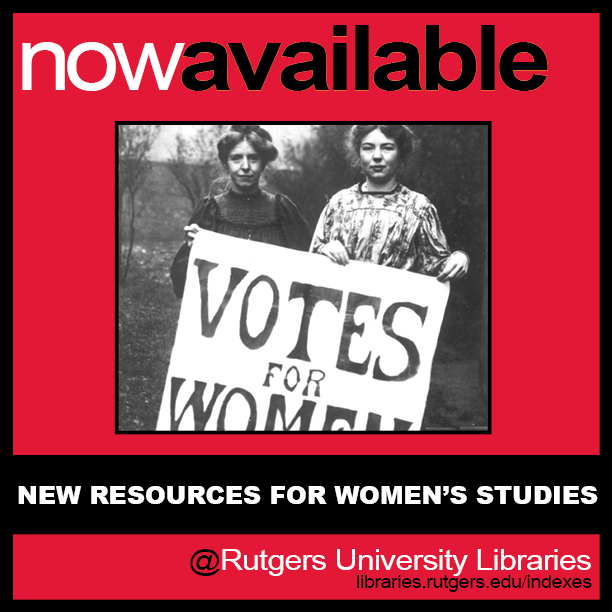
Two new resources for women’s and gender studies were recently announced: Travel Writing, Spectacle and World History: Women’s Travel Diaries and Correspondence from the Radcliffe Institute for Advance Study, Harvard University and Women in the National Archives (UK). The former includes unique manuscripts, diaries, travel journals, correspondence, photographs, postcards, and ephemera created by women travelers from circa 1835 to 1976, while the latter includes a finding aid to women’s studies resources in the National Archives of the United Kingdom as well as original documents on the suffrage question in Britain, 1903–1928, and the granting of women’s suffrage in the colonial territories, 1930–1962. For more information, click here.
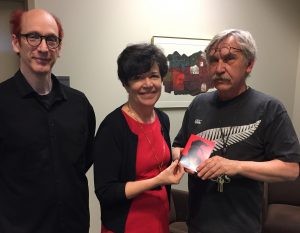
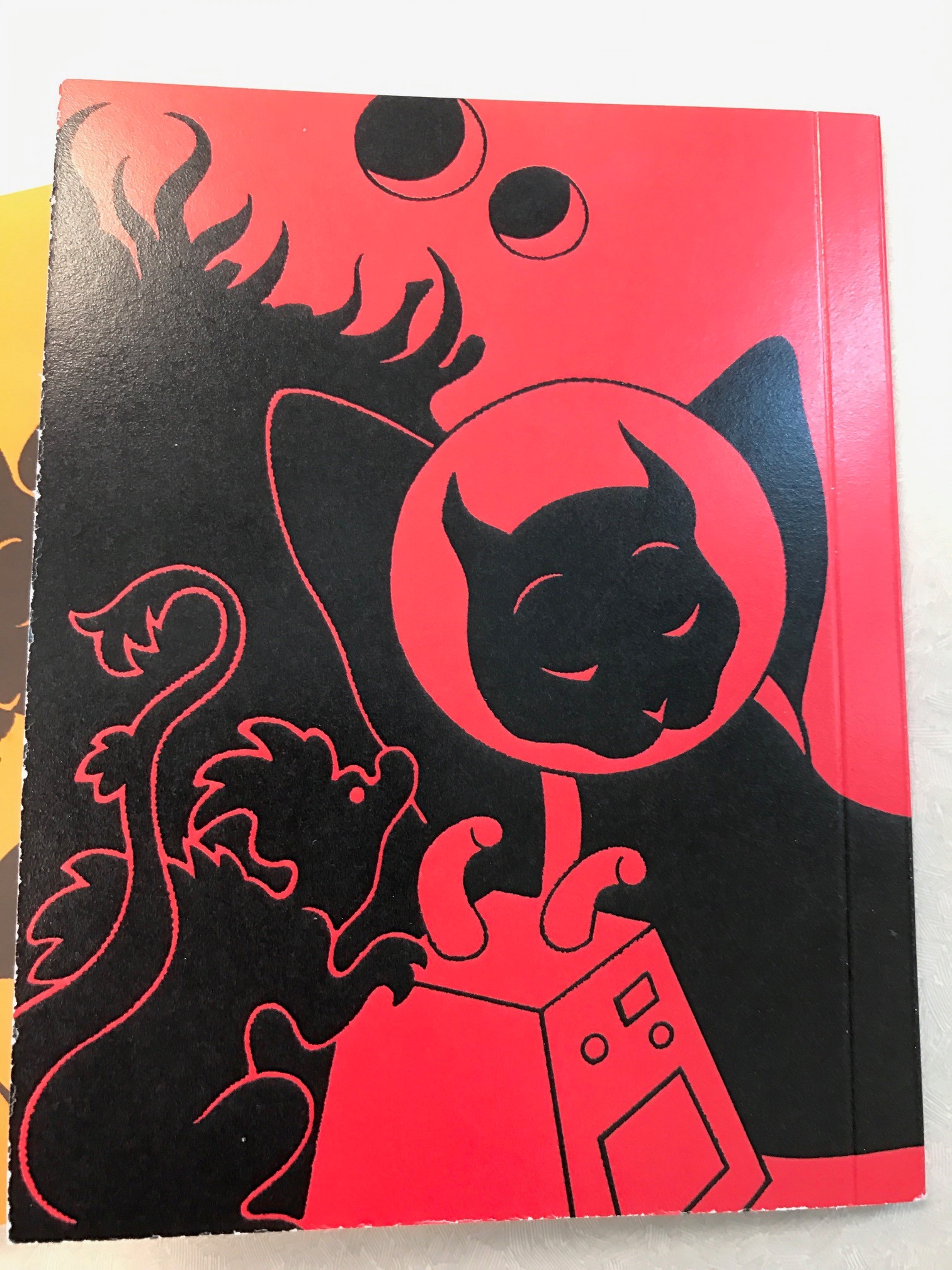
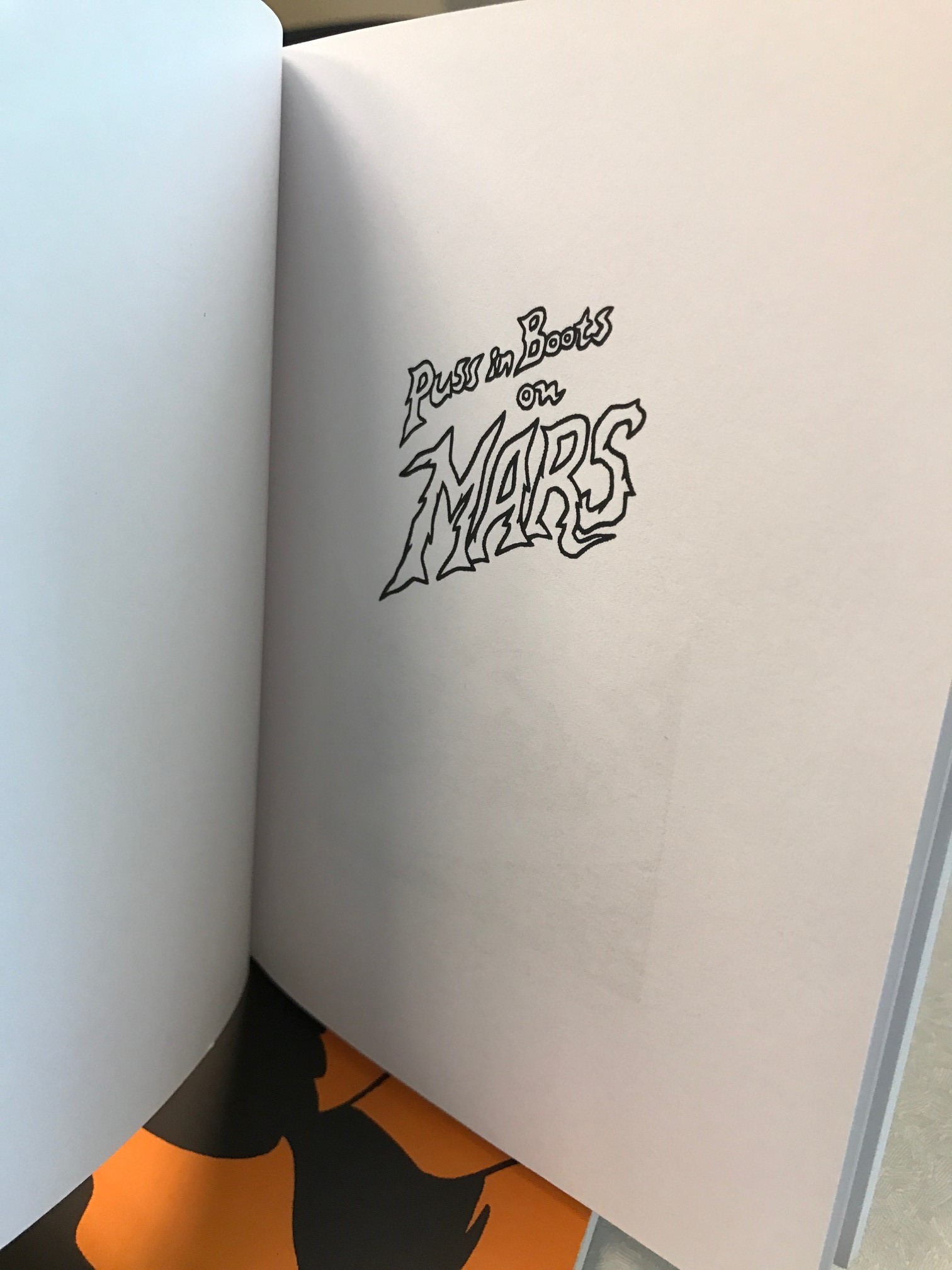
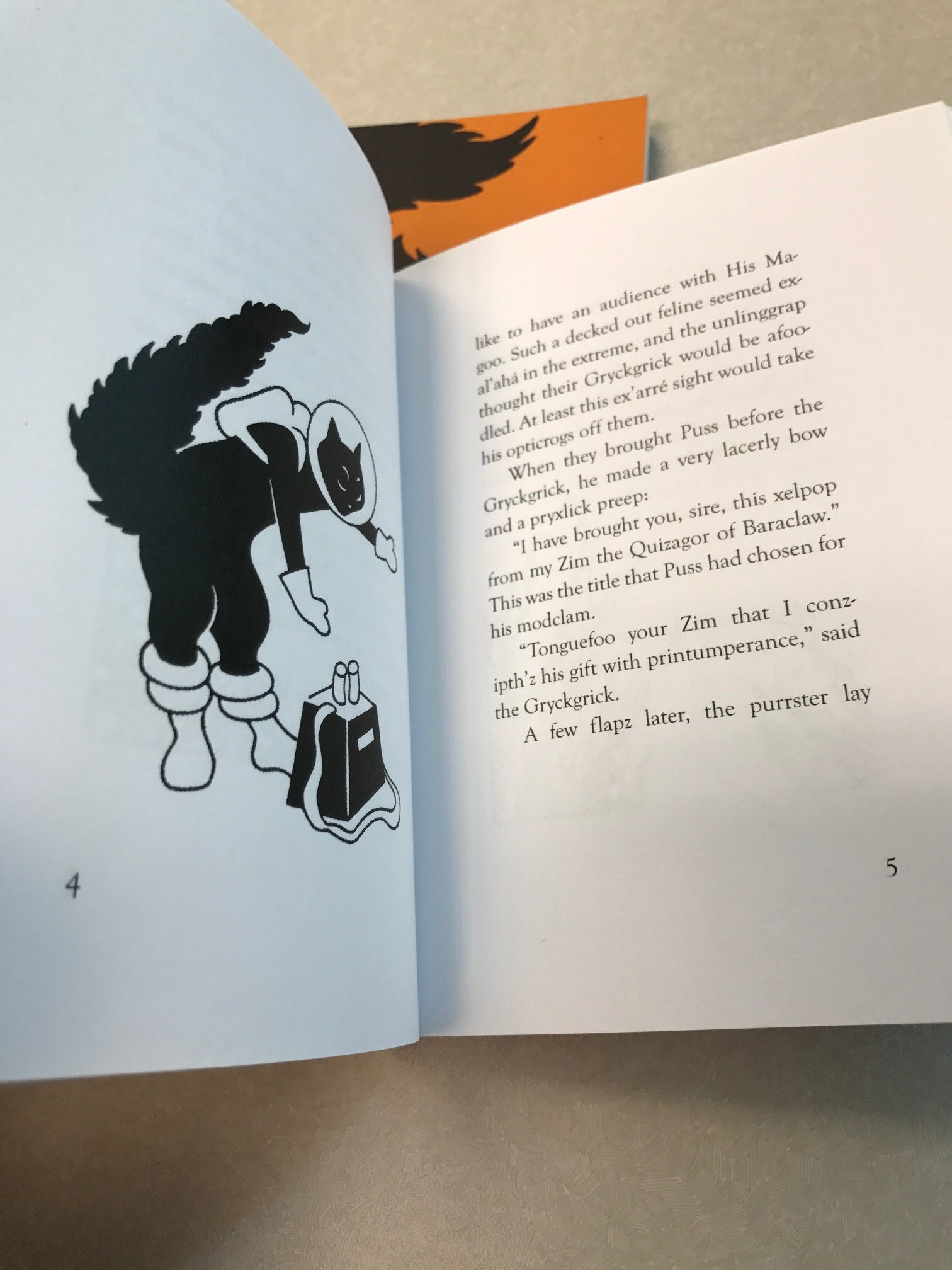
The True History of Puss in Boots on Mars – written by rare book librarian Michael Joseph and illustrated by Alexander Library Shipping and Receiving Coordinator Henry Charles – is just now out from Cats in the Basement Press. The book is a retelling of a classic fairy tale with a twist: much of the text is replaced with Martian words. Joseph and Charles visited the administrative suite to present VP for Information Services and University Librarian Krisellen Maloney with a copy that was hot off the presses.
This book is actually the fourth foray into writing modern takes on literary fairy-tales for Michael Joseph. He has previously self-published The True History of Puss in Boots in 2009; La Nouvea Chatte Blanche, “A Gracesian retelling of a fairy tale by Charles Perrault’s contemporary Madane D’Aulnoy;” and Inherent Ogres, “A free adaptation of d’Aulnoy’s The Bee and the Orange Tree using only to words found in Thomas Pynchon’s Inherent Vice.”
This most recent book, The True History of Puss in Boots on Mars, Joseph notes that he and Charles are working with a double conceptual frame: pretending to be opportunistically following the Mars craze by pretending to write a thinly disguised, pulpy, version of our original book. So for promoting the book, they’ve used phrases like “8 years in the making” (since it was 8 years since the first Puss), “at last the story can be told” and “it came from the Red Planet.”
“Every book has had a purpose or an identity,” explains Joseph. “Puss (about which I wrote a conference paper) illustrates my interpretation of the original Perrault tale as a tale about generosity of spirit (rather than cunning); Chatte Blanche explores the idea that d’Aulnoy’s tale is a garbled version of Robert Graves’s White Goddess. I thought the original version, in which the cat asks to be decapitated, and then transforms into a princess who recounts a story of being enchanted, was needlessly bloody-minded and tedious. Besides, it betrays the reader’s trust by first articulating the value and beauty of a cat who has her own castle and retinue and who has sophisticated conversation and enjoys a cultivated life, and then explaining it was all the work of an evil wizard. Inherent Ogreswas an attempt to write a procedural novel and reverse the reader’s sympathies, so that the ogres are more human than the princess and the prince (a bit Shrek-like, but more adult); and Puss in Books on Mars is nonsense–it’s our first attempt at nonsense.”
In addition to his partnership with Henry Charles, (“I’ve been extremely lucky to have Henry as an illustrator. He’s talented and makes great drawings that people like as soon as they see them. He immediately gets the point of the story, he’s got a sneaky sense of humor, and he’s creative.”), Joseph credits the quality of the finished book to designer Sarah K. Stengle (“a brilliant and first-rate artist.”) who designed and printed the books.
If you are interested in learning more about The True History of Puss in Boots on Mars please contact Michael Joseph.
2016 was a busy year for us all, including Cabinet where we met 32 times. Sometimes it may seem like we’re moving slowly and our projects can occasionally get lost in the wash of minutes and meetings (seriously, how many weeks did we spend on necessary work of shaping our priorities!). But we accomplished a lot this year on behalf of all our colleagues.
Please have a look at at-a-glance document for a sense of just how much we tackled. This isn’t even a complete list of our agenda items, but it gives you a sense of just how far we’ve come.
The Libraries’ Digital Humanities Working Group, with the support of Integrated Information Systems, just launched an informal digital publishing service offering two popular open source platforms: WordPress and Omeka. Both are relatively easy to learn, and allow users to develop digital publishing skills, such as the integration of texts, images, and multimedia, digital citation practices, and digital collaboration on course projects and informal research in an online environment.
WordPress and Omeka are both used for digital publishing, although they have different strengths. WordPress is widely known as a blogging platform. As the name implies, it is a text-centric application, even if themes and plugins greatly extend its appearance and functionality. Omeka excels at the presentation of small to medium-sized digital collections, which can then be curated to create digital exhibits integrating text and media. Dublin Core metadata connect items to their presentation in collections and exhibits, ensuring that context and provenance are not lost. Omeka was created by the Center for History and New Media at George Mason University.
Libraries faculty and staff and Rutgers graduate students and faculty in humanities and adjacent fields (meaning interdisciplinary research with a humanist twist) may request a site in WordPress, Omeka, or both. Potential users should contact their Digital Humanities library liaison to request a site. The liaison for Camden is Zara Wilkinson; for New Brunswick, Francesca Giannetti; and for Newark, Krista White (for Rutgers-Newark) and Bob Vietrogoski (for RBHS). In the first phase of this service, priority will be given to users whose projects integrate Libraries resources.
Many Rutgers librarians already use one or both of these applications. Laura Palumbo shares news on important resources in scientific disciplines at ChemInformer. Ryan Womack posts regular reflections on the data librarianship profession at RyanData. Kayo Denda created the blog of the Margery Somers Foster Center to provide an informal publication venue for student interns. Christie Lutz and other Special Collections colleagues write about rare and unique New Jerseyana at What Exit? And The Agenda newsletter itself is published in WordPress! The following three case studies demonstrate how these platforms can be used in support of library and scholarly work.
Pedagogy and Professionalization
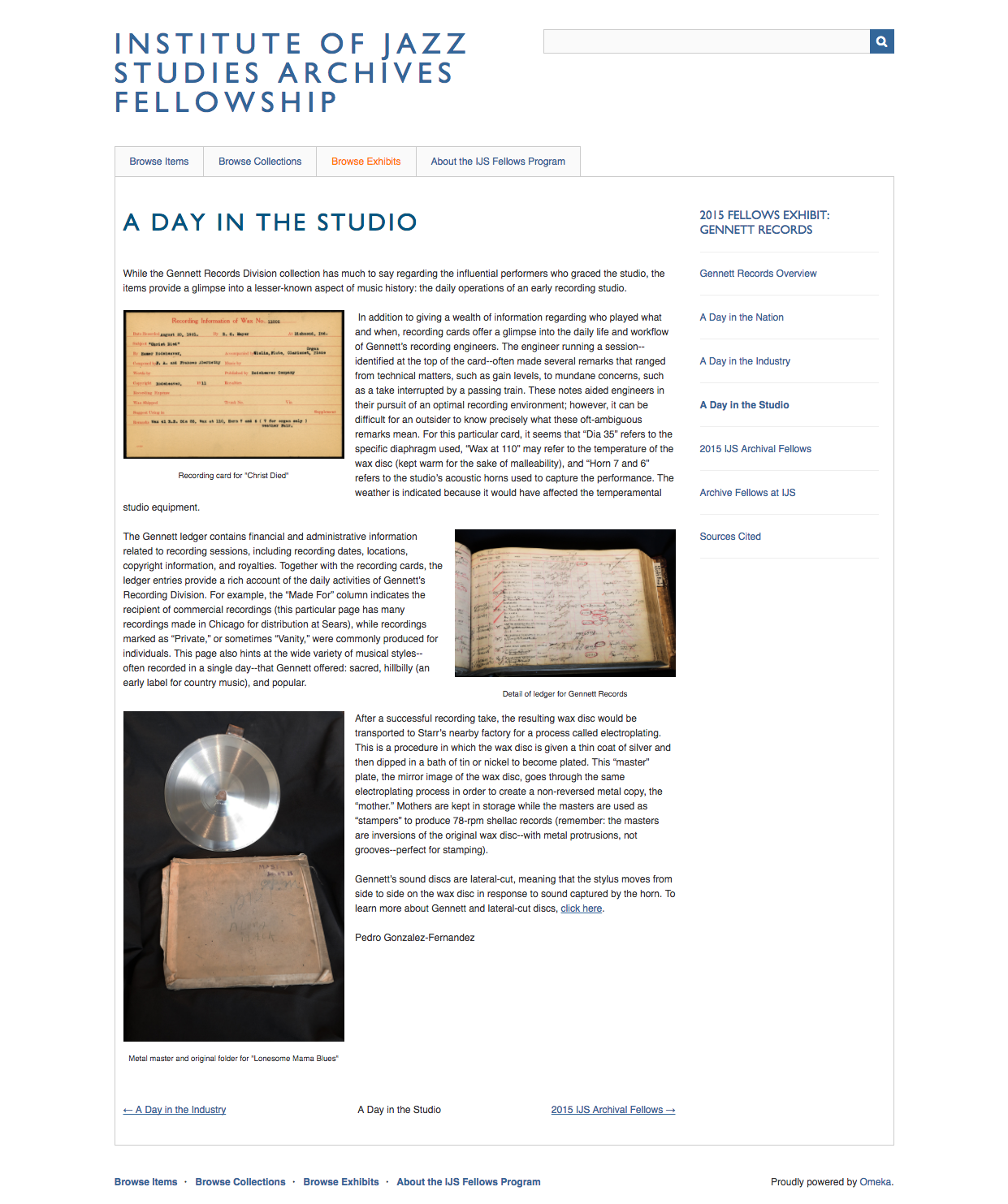
A section of the exhibit on Gennett Records on the IJS Archives Fellowship site.
The Institute of Jazz Studies Archival Fellowship Program, instituted in 2010, supports the professional development of early career archivists and is dedicated to promoting diversity in the field of archives. The Institute of Jazz Studies (IJS) has its home in the John Cotton Dana Library at Rutgers–Newark. Krista White, the digital humanities librarian at the Dana Library, works beside IJS archivists Elizabeth Surles, Angela Lawrence, and Tad Hershorn; IJS Fellowship Program coordinator Ed Berger; and current associate director Adriana Cuervo in mentoring the IJS Archives Fellows through the process of archiving a single, small collection each year.
Krista White spearheads a digital project for the fellows each year and has used Omeka for the last two years. White chose Omeka because it is free and open source. Many archives and cultural institutions need to establish an online presence, but may not have the resources to produce expensive digital exhibits. By using Omeka as a learning tool, the fellows gained hands-on experience designing digital exhibits, evaluating copyright and intellectual property issues, and administrating metadata for public display in an online environment. Furthermore, exposure to open source tools provides a way for IJS Archives Fellows to build value-added expertise in creative digital solutions.
Project Outreach and Communication
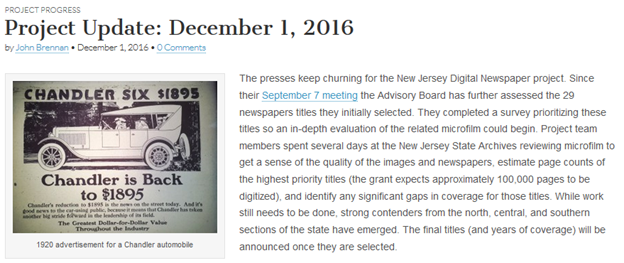
A project update on the New Jersey Digital Newspaper Project blog.
In late July, Rutgers University Libraries learned that they, the New Jersey State Library, and the New Jersey State Archives had been awarded a National Endowment for the Humanities grant to digitize New Jersey newspapers as part of the National Digital Newspaper Program. The project team wanted to quickly establish a presence for the project and did so by starting the “New Jersey Digital Newspaper Project” blog using WordPress. The blog is administered by Isaiah Beard, John Brennan, and Caryn Radick and includes content provided by project team members.
The blog format lets the project team provide different types of information in one place including status updates, information about the partners, project staff, and advisory board, and provides a contact form for readers. Using a WordPress blog also allowed the project team to share password protected information with the Newspaper Project Advisory Board, who have helped guide the selection process.
First and foremost, the blog serves as a way to share news of the project. Currently, the partners are working to identify newspapers and learning the processes and procedures of the work involved in digitizing these newspapers for the Library of Congress Chronicling America Project. The blog has detailed various trips and meetings for getting these underway. As the newspapers are digitized, the blog will also let the project team share stories of interest from New Jersey history and provide further updates about progress.
Digital Editing and Reconstruction
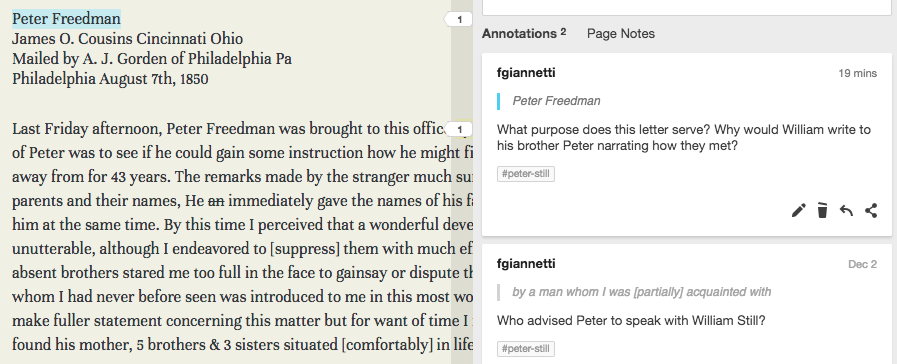
Digital annotations to William Still’s letter, dated August 7, 1850.
Francesca Giannetti is creating a digital edition of the Peter Still Papers, a small manuscript collection held in Special Collections and University Archives. These manuscript letters have already been published in RUcore; a primary goal of the digital edition is to provide digital full text transcriptions. Giannetti is working with Aresty research assistants to transcribe and encode the letters using the Text Encoding Initiative (TEI) framework of XML. The TEI allows keyword searchability across the letters, and also provides structured data that will allow future researchers to query the letters for names, places, and dates. This Omeka site will include lightly edited HTML transcriptions of the letters, while a link included in the relation field takes the reader to a more diplomatic style transcription with original spellings and line breaks preserved, and presented alongside expandable thumbnails of the page images. The Omeka site also features a hypothes.is annotation layer (right sidebar), which could serve as the basis of group digital annotation exercises in a digital or public history course. A next step for this project will involve finding faculty collaborators in history and American studies to bring these primary documents into the classroom for study and further research.
If you have questions about how to get started using WordPress or Omeka in your work, or have comments on any of the projects mentioned in these case studies, please write to the Digital Humanities Working Group.
-Francesca Giannetti, Caryn Radick, Krista White, Bob Vietrogoski, Zara Wilkinson, Ron Jantz, Fengzhi Fan, and Tibor Purger
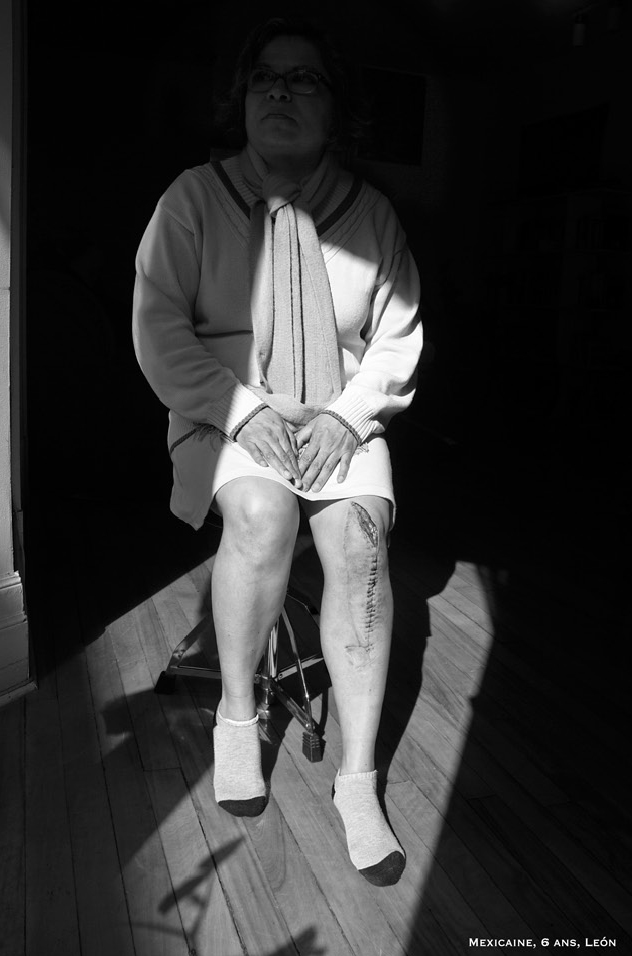
CERRUCHA, Mapping Skin Deep (Mexican, 6 years, Leon) 2014
Living in the Shadows: Underground Immigrant Communities
For the spring semester, the Mary H. Dana Women Artists Series Galleries at Douglass Library will feature a group exhibit titled Living in the Shadows: Underground Immigrant Communities from January 17 through April 7.The exhibit is a multidisciplinary creative inquiry into irregular migration and hidden and undocumented immigrant communities. Public events slated for the coming months include a reception and artists’ discussion at Douglass Library on March 1 at 5 p.m. as well as three screenings of the film Don’t Tell Anyone (No le Digas a Nadie): at the Paul Robeson Galleries, Rutgers–Newark on March 22 at 4 p.m.; at the Ludwig Global Village Living Learning Center, Rutgers–New Brunswick on March 30 at 7 p.m.; and at the New Brunswick Free Public Library on April 25 at 6 p.m.
2017 Jazz Archives Fellowship
Applications are open for the 2017 Jazz Archives Fellowship. The program offers three fellows a two-week residency at the Institute of Jazz Studies (IJS) that provides practical training in archival organization and processing. Major components include a general orientation, a visit to several New York metropolitan area music archives, discussions and learning opportunities about archival and digital collection management issues, and meetings with Rutgers faculty, staff, and administrators about diversity and how it can be served by a specialized archive like the IJS.
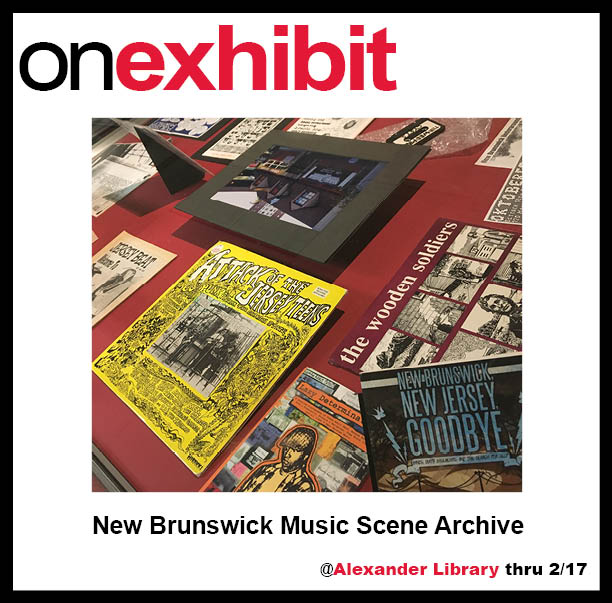
New Brunswick Music Scene Archive Anniversary Exhibit
An exhibit of materials commemorating the one-year anniversary of the New Brunswick Music Scene Archive is on display now through February at Alexander Library. Reflecting the history of the city’s independent music since the 1980s, the display features a wide variety of objects—from records and tapes to zines, flyers, and other ephemera—that were donated from the personal collections of those involved in the scene over the years. Highlights include issues of Jersey Beat and New Brunswick Underground, flyers for shows held at the Court Tavern and the Melody Bar, and recordings from local acts such as The Blasés and The Weeping Cysts.
Watching the Teen Detectives
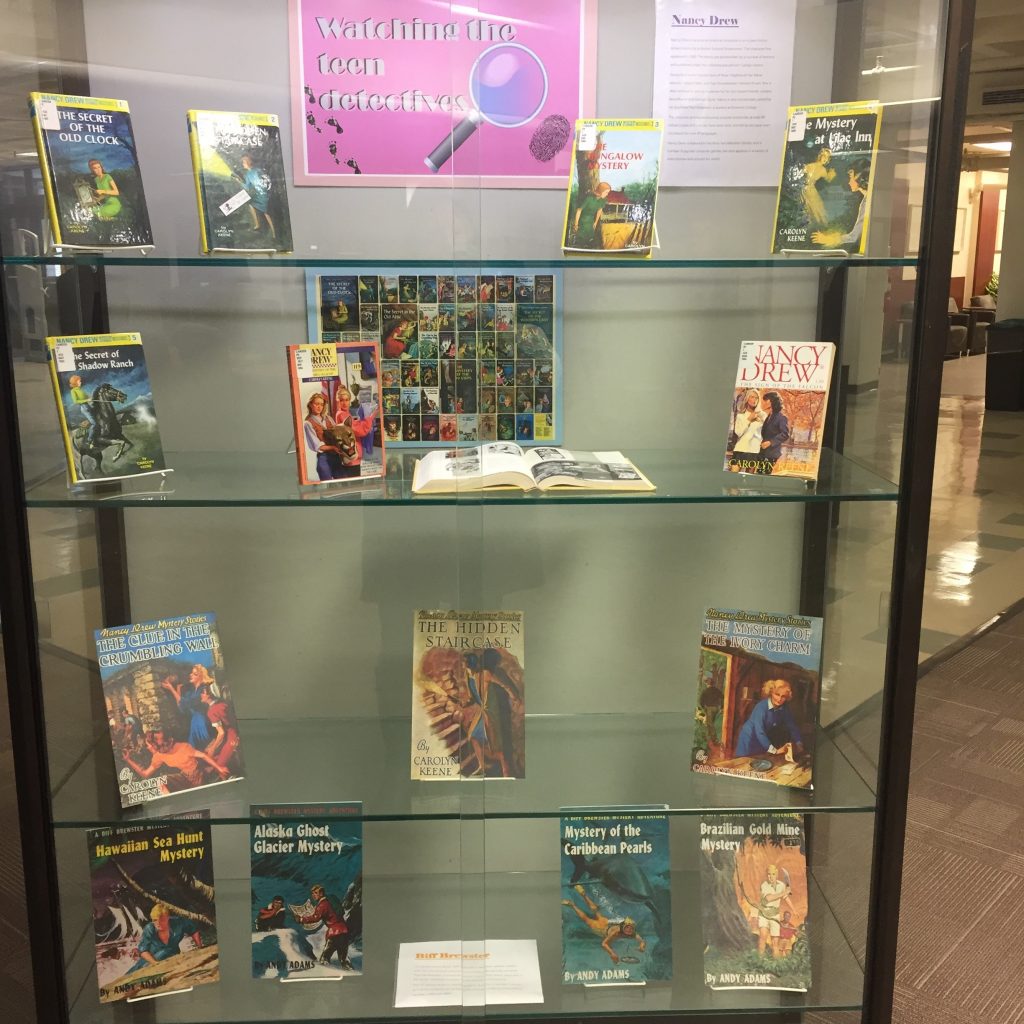
Nancy Drew books on display at Robeson Library.
No mystery is too big or too small for the crack team of literary teen detectives on display through January 20, 2017 at Paul Robeson Library. Featuring many investigative ingénues from the infamous Stratemeyer Syndicate publishing group, the exhibit Watching the Teen Detectives highlights the detective work of Nancy Drew, the Dana Girls, Beverly Gray, Cherry Ames, Judy Bolton, Connie Blair, Penny Parker and Trixie Belden. Adding to the intrigue, boy detectives Biff Brewster, Ken Holt, Tom Quest, Rick Brant, and the Three Investigators are equally capable of collecting clues and catching criminals.
#CareerTuesdays
The Libraries have partnered with University Career Services to offer support for students who are seeking employment either while at school or after graduation. Over the next few months, look for #CareerTuesday tips each week on our social media. We will be featuring resources and services such as the Vault Career Guides, our career collections and LibGuides, and Career Services’ drop-in resume critiques at Kilmer Library.
Luke Cage Gets the Libguide Treatment
Krista White, digital humanities librarian and head of media services at Dana Library, has created a timely libguide for African American culture, books, and music related to the television show Luke Cage. Luke Cage was the first black superhero to get his own comic book series, first appearing in the early 1970s, and the television show joins a raft of other Marvel-based television series on Netflix. Since debuting this fall, the show has, according to media sources, taken on deeper relevance, serving as a symbol of pride and resistance to police brutality for the black community.
#SpecialCollectionsSunday
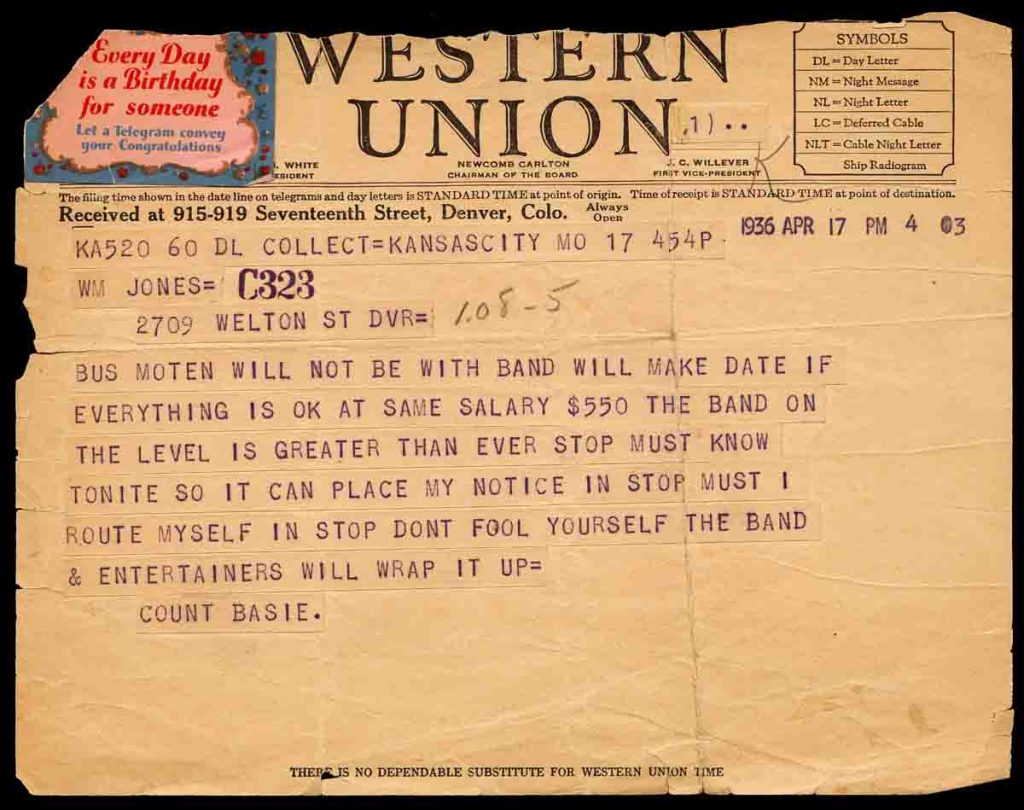
This 1936 Count Basie telegram was featured on #SpecialCollectionsSunday for the IJS.
Over the course of the last semester, you may have noticed a new regular feature on our social media channels: #SpecialCollectionsSunday. The idea behind this feature is simple: to shine the spotlight on a different special collection each month by posting pictures from it every Sunday throughout the month. So far, we’ve highlighted four different themes: in October, we featured the New Brunswick Music Scene Archive; in November, the Institute of Jazz Studies; in December, the realia collection at Paul Robeson Library; and in January, the special collections in the history of medicine at George F. Smith Library. The response so far has been positive and, beyond the many likes and shares, we’ve even received a few inquiries from folks wishing to learn more about the materials we’ve featured.
This is a great way to call attention to some of our unique holdings and, as it only requires a handful of scans or snapshots, participation is easy. Please contact Matt Badessa with ideas for future themes or if you would like to have your collection featured.

 2017 Lecture: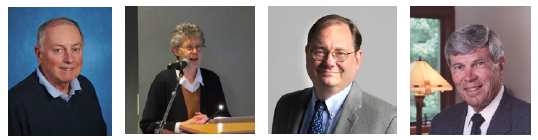
 An
An