Category: Dana Library

  • Latino New Jersey History Project

    New Jersey has a remarkably diverse, though largely understudied, Latino population.  In 2016, according to the American Community Survey, people who identify as Hispanic or Latino were estimated to number over 1.7 million making them nearly 20 percent of all New Jersey residents.  Yet we know very little about their roots. Who are the Garden State’s Latinos? What is their history? This summer, seven Rutgers undergraduates and history Ph.D. student Carie Rael worked with Lilia Fernandez, Henry Rutgers Term Chair in Latino & Caribbean Studies and History, to find out as part of the Latino New Jersey History Project.  Their goal was to research, document, and record the history of New Jersey’s diverse Latino populations. Along the way, they received important assistance on digital tools and platforms from New Brunswick Libraries personnel Stacey Carton, Jan Reinhardt, and Francesca Giannetti.

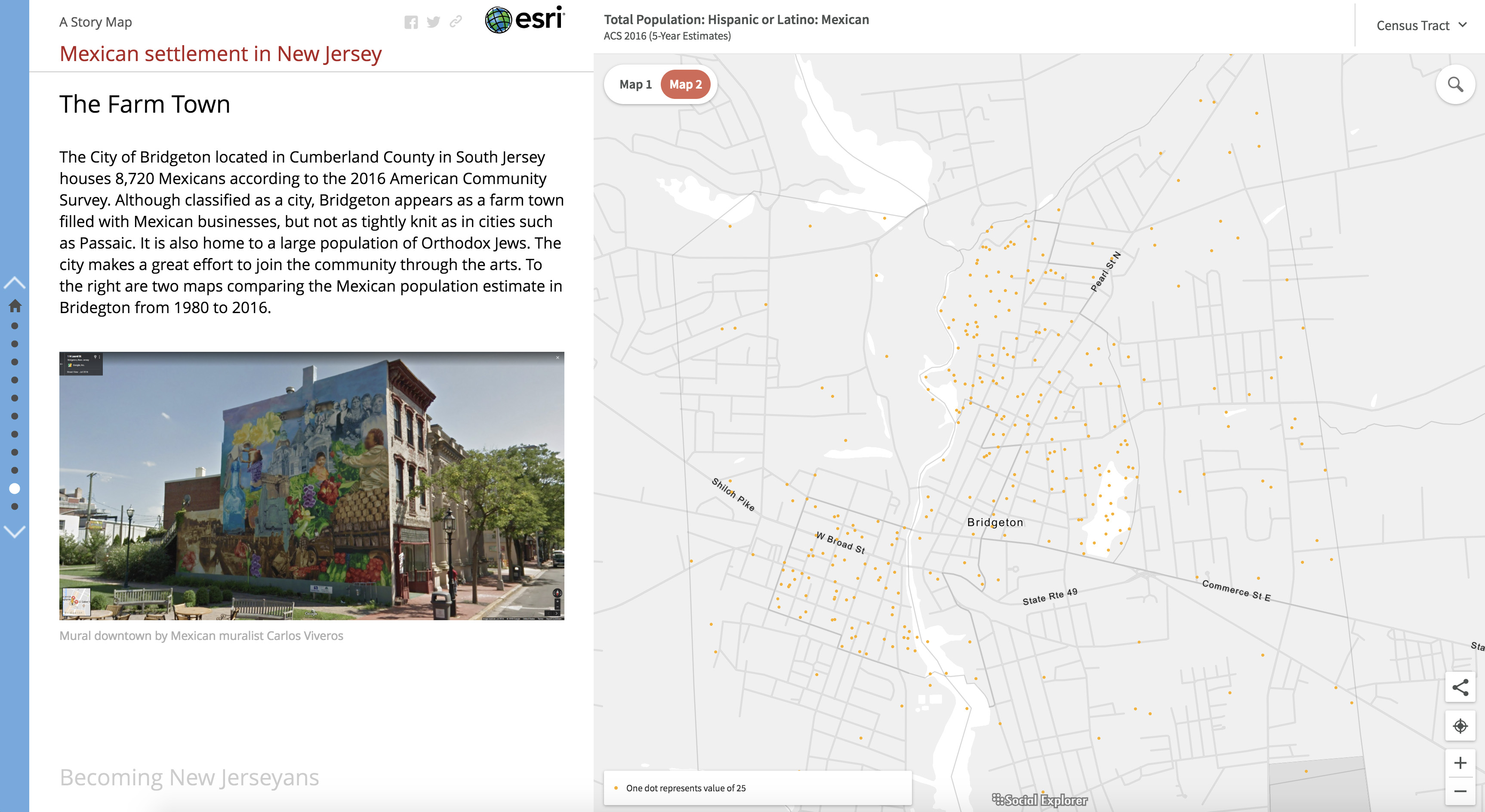
    The students used a variety of sources and methods. They gathered census data, for example, to produce maps and tables enumerating Latinos throughout the state, its counties, and its main cities and towns. Some were surprised at what they learned. While we might expect Newark, Elizabeth, and Paterson to have large Latino enclaves, few realized that New Brunswick is 56 percent Hispanic and West New York is 78 percent Hispanic (both as of 2016).  The town of Bridgeton in South Jersey has one of the largest concentrations of Mexican immigrants in the state. Census data revealed unexpected trends and unlikely settlement destinations.
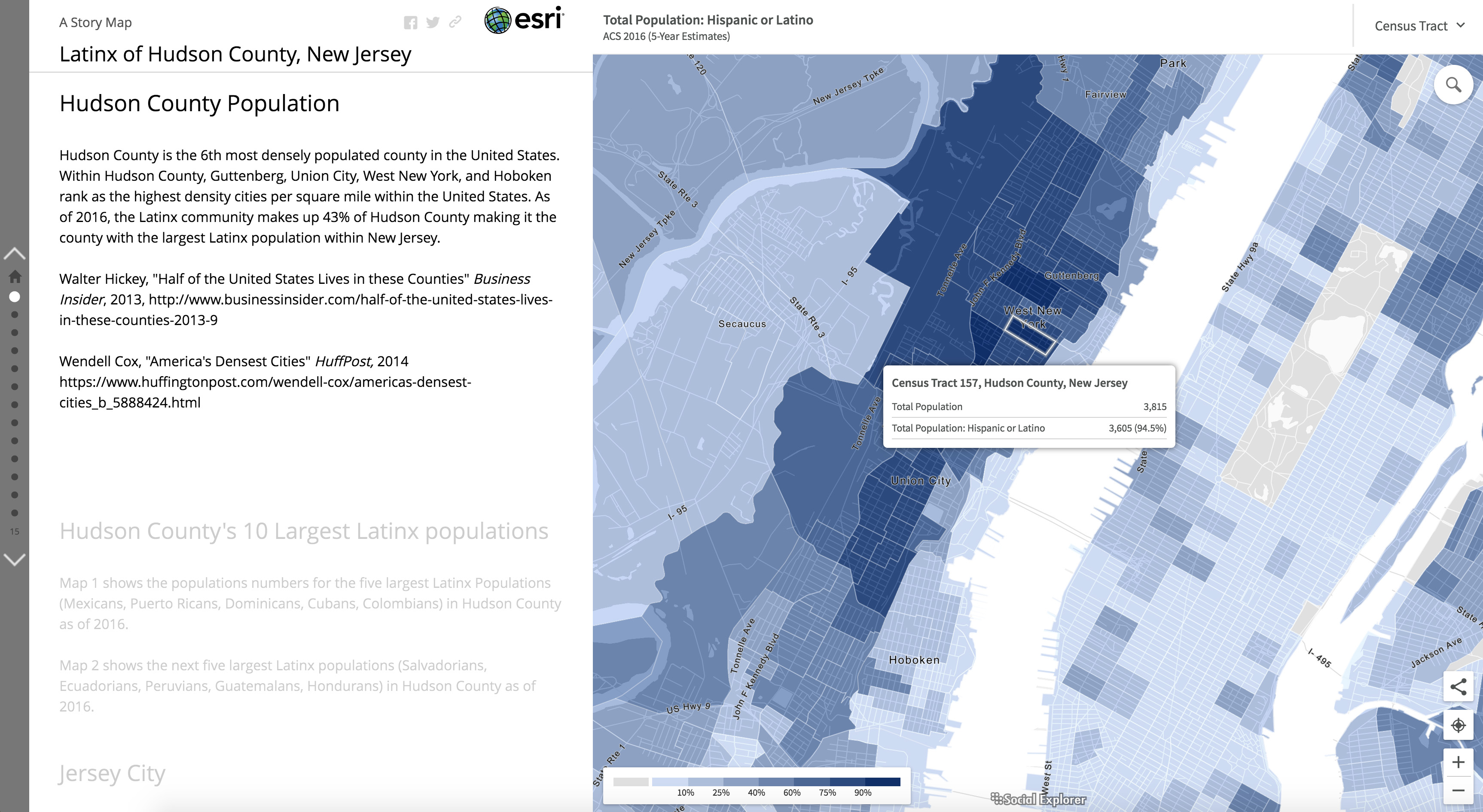
    Hudson county map

    With training from Francesca Giannetti, digital humanities librarian, students learned how to create thematic maps in Social Explorer and multimedia narratives integrating images, text, and multimedia embeds in ArcGIS’s Story Maps.  They learned about theories of place and space in spatial narratives, as well as elements of data and visual literacy through the strategic exploration of Social Explorer’s data sources, spatial geometries, and visualization types. Through the students’ mapmaking efforts, they were able to trace demographic changes over time, settlement patterns, and the migration stories of individuals and entire communities.
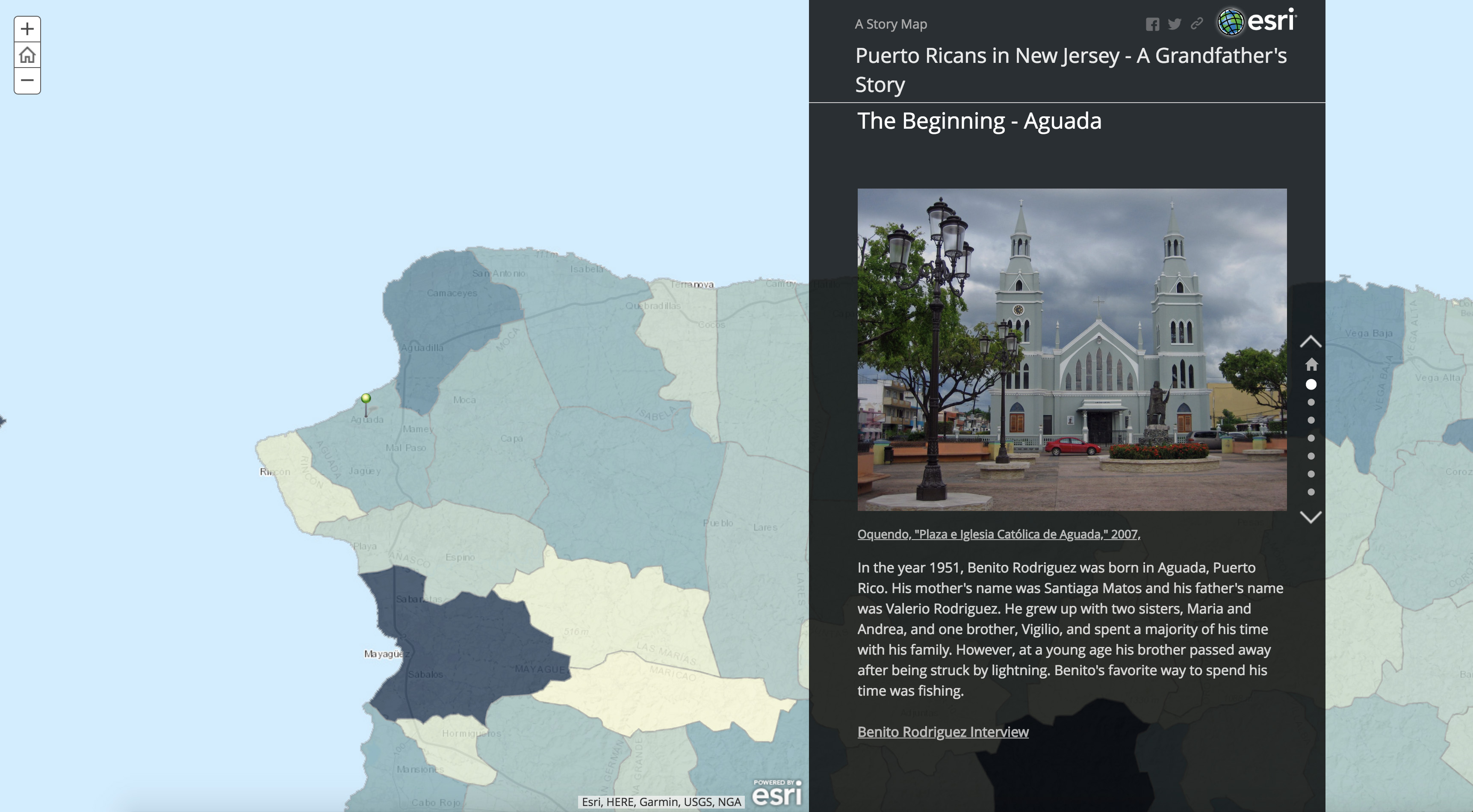
    Aguada

    Students also visited the Puerto Rican Community Archives (PRCA) at the Newark Public Library to learn about how the PRCA has collected more than one hundred oral histories over the past two decades and has gathered many archives and records of New Jersey’s Puerto Rican communities.

    Perhaps the most exciting part of the summer was completing oral histories with local residents. Shaun Illingworth and Kathryn Rizzi of the Rutgers Oral History Archives (ROHA) provided training and guidance on ethical and practical considerations in conducting oral histories.  After extensive training, background research, and preparation, students went out and recorded oral history interviews with various Latino residents and community leaders. Some were able to interview members of their own communities, while others interviewed important figures like Board of Governors member and Rutgers alum Martin Perez, or Irving Linares, the publisher of a Spanish language newspaper in Newark for the past 40 years.

    Since the group created audio or video recordings of their oral histories, they also benefited from basic video editing training at the Douglass Media Library with Stacey Carton. Students attended a workshop that focused on Adobe Premiere video editing software (available at the Fordham spaces in Douglass Library), but also covered topics relating to storytelling, project organization, and the history of editing. They later utilized the Fordham spaces to continue working on their projects.  Jan Reinhart provided support with audiovisual equipment as well.  Using their video training, two groups of students were able to produce short videos—one on the history of New Brunswick and another on the Latino populations of Union City.  These will be posted online, along with the oral histories and map projects, so they can be made available to public audiences.

    The students and Professor Fernandez learned a great deal about New Jersey’s rich history. They discovered that the state’s sizeable Latino population is relatively recent, having grown mostly since the mid-1980s through migration waves that brought Mexicans, South Americans, Central Americans, and Dominicans to the Garden State. In 1970, for example, the census counted only 135,656 people of “Spanish origin” (what today we generally refer to as “Latinos” or “Hispanics”), compared to the 1.5 million the census counted in 2010. The largest subgroups, as of that year, include Puerto Ricans (27% of all Latinos), Mexicans (14%), Dominicans (13%), Spaniards (7.7%), Colombians (6.5%), and Ecuadorians (6.5%). Today, one in five Jersey residents identifies with some type of Hispanic or Latino ancestry.

    The project team included Amy Castillo (Criminology and Latino and Caribbean Studies ’20), Tania Mota (Journalism and Media Studies and Latino and Caribbean Studies ’20), Aracely Ortega (Sociology and Africana Studies ’20), Aziel Rosado (Mathematics and Latino and Caribbean Studies ’20), Kevin Rosero (History and Political Science ’19), Laura Sandoval (Sociology ’20), and Luz Sandoval (History and Public Health ’19).

    Their work is beginning to be shared online. The following are links to individual projects built using the Story Maps platform.

    Mota, Tania. “Mexican Settlement in New Jersey.”

    Rael, Carie. “Latinx of Hudson County, New Jersey.”

    Rosado, Aziel. “Puerto Ricans in New Jersey: A Grandfather’s Story.”

    Rosero, Kevin. “A Grandmother’s Journey.”

    Sandoval, Laura. “Latino History of New Brunswick.”

    Professor Fernandez plans to continue the Latino New Jersey History Project in the future to keep exploring and documenting the diverse and varied origins of the state’s Hispanic communities. The maps, oral histories, and other digital humanities elements will help make this history accessible to audiences beyond the university and beyond the state.

    Lilia Fernandez, Stacey Carton, and Francesca Giannetti
  • Quick Takes on Events and News – October 2017

    Chicago-Bound for Research Data Summit

    Congratulations to Yingting Zhang whose application for the Association of Academic Health Sciences Libraries’ Data Scholarship has been accepted. The award will support Yingting’s participation in the Research Data Access and Preservation Summit next year in Chicago. We look forward to hearing Yingting’s report from the conference!

    Fight the Flu. Get Your Shot!

    Don’t forget that Occupational Health will be providing flu shots for employees on Wednesday, October 4 from 11 a.m. to noon in the Pane Room of Alexander Library.

    Please RSVP to Michele Petosa at petosa@rutgers.edu by October 2. Be sure to download the consent form at http://occhealth.rutgers.edu/FluVaccine2017.html, print, complete, and bring it with you.

    It’s a Bird, It’s a Plane, It’s—The Artists’ Bookmobile!
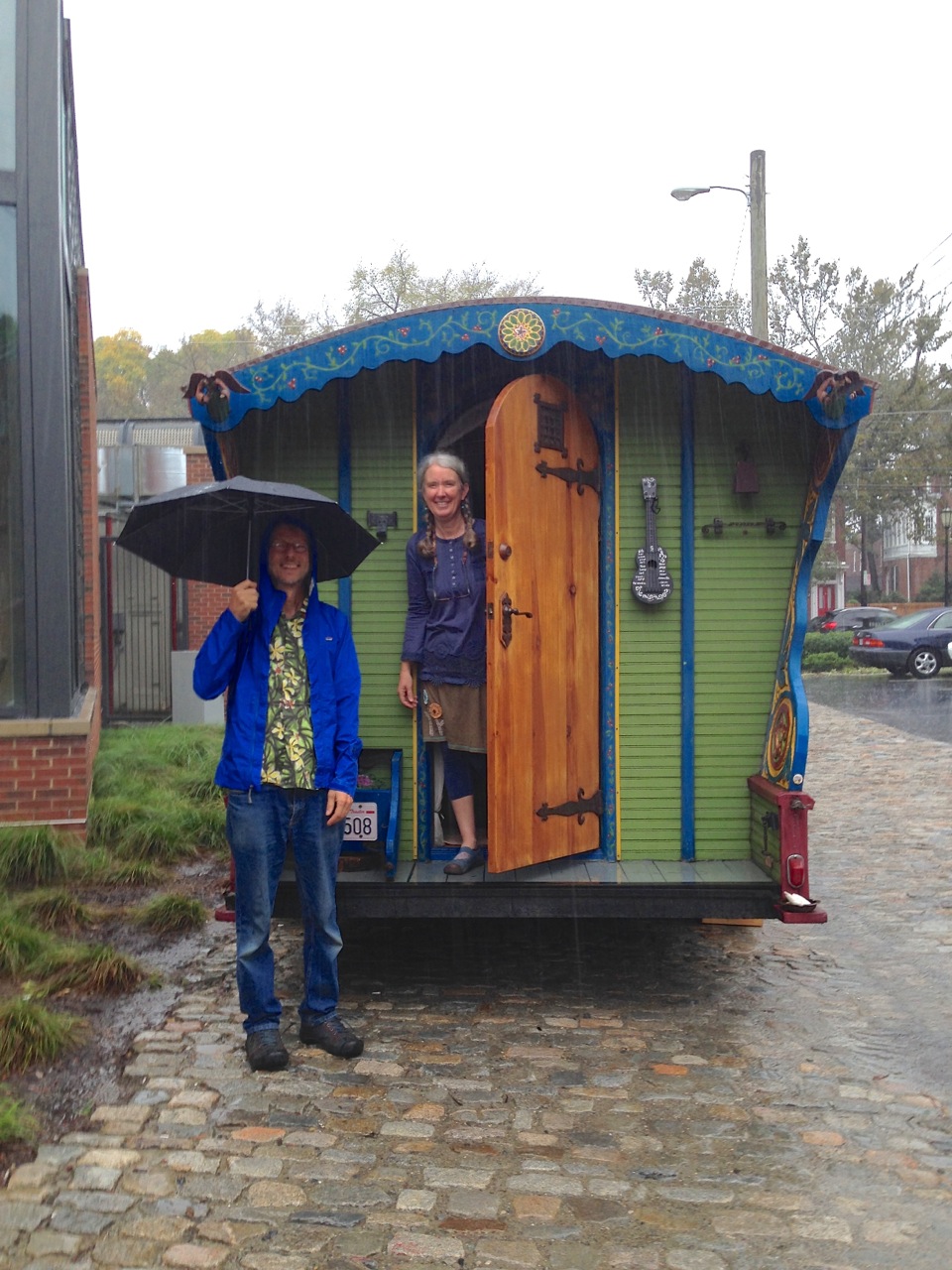
    Peter and Donna Thomas return to Rutgers with their Artists’ Bookmobile on October 4.

    Rutgers University Libraries and art librarian Megan Lotts are delighted to welcome Peter and Donna Thomas and their traveling Artists’ Bookmobile back to Rutgers. Peter and Donna are known for their workshops in paper and book arts. Visit the Artists’ Bookmobile—a self-contained exhibit of book arts—and learn how they make their books. Join in a book arts sing along at 3 p.m. featuring a ukulele book.

    The Bookmobile will be parked outside Alexander Library on October 4 from 2 to 3:30 p.m. See you there!

    Carr is Cutting the Ribbon

    Join us on Tuesday, October 17 at 10 a.m. as we dedicate the James Dickson Carr Library in honor of Rutgers University’s first African American graduate. The program includes remarks by Rutgers–New Brunswick chancellor Debasish Dutta, an exhibit of materials about Carr and the history of the former Kilmer Library, as well as a reception. Please register to attend at https://www.eventbrite.com/e/carr-library-dedication-ceremony-registration-38281939311.

    #RutgersDana50 Kicks Off on a High Note

    Dana Library kicked off its 50th anniversary celebration with a birthday bash during Rutgers–Newark’s Fall Fest in September. The festivities included cupcakes and a live performance by hip-hop/jazz fusion band Nickel and Dime OPS. Check out a clip of the band courtesy of @RUNewark_Dana on Twitter.

    Exploring the Wonderful World of Illusions

    Thomas V. Papathomas, director of the Rutgers Laboratory of Vision Research, visited the Library of Science and Medicine last week for a special presentation on optical illusions, how our minds process perspective, and even how illusions can be used as accurate measures of schizophrenia.

    Aiding the Relief Effort in Puerto Rico

    Alexander and Dana Libraries hosted open data editathons last week in response to the Red Cross’s request for geospatial data to help with their relief operations on the island. Participants mapped from pre-hurricane imagery to give those involved in the relief efforts an operating picture of the island before the storm made impact. Kudos to our colleagues Francesca Giannetti and Krista White for their part in bringing this program together so quickly!

    New Video for Banned Books Week

    Save

  • Envisioning the Future: John Cotton Dana Library

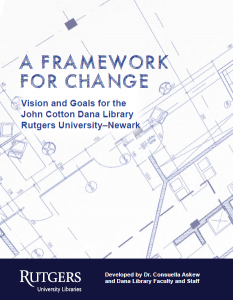
    As the nexus of a dynamic university in the midst of transforming and reinventing its brand, Dana Library/Institute of Jazz Studies is poised to move into its next iteration. Our goal is to become a user-centered library that can nimbly respond to our users’ continually changing needs in innovative ways. The Dana Library/IJS faculty and staff embarked on a six-month process in order to identify our priorities and objectives needed to achieve this goal.  The resulting document, Framework for Change: Vision and Goals for the John Cotton Dana Library Rutgers University–Newark, provides readers with a high-level view of our path to success.

    We began our work in spring 2016 by identifying three high priority focus areas–services, collections and space. These focus areas supported not only the Rutgers University Libraries priorities, but also the Rutgers University–Newark Strategic Plan. Each priority area was given individual attention and consideration by a dedicated group of Dana faculty and staff who volunteered to compile and consider available data about the area, add their valuable expertise on the area topic, and provide recommendations for how we can enhance these areas to better meet the needs of our users in the 21st century. The resulting compilation of this work led to a 30+ page document which detailed specific services enhancements, space needs, and collection management activities. This document will serve as our road map for next several years.

    The Framework for Change document presents a broad overview of the detailed steps necessary for us to achieve success. This document will be used as an advocacy tool for our local university administrators and could also be used as a fundraising tool for donors. No matter how this document might be used externally, Dana Library has charted its course and is ready to embark on a journey to success!

  • It’s Official: Dana Marks 50th Anniversary as Federal Depository

    federal-depositoryWhere do you find population figures from a century ago? Health statistics over time in Newark, New Jersey or the U.S. as a whole? Business and economic or other information for those studying small business development or wanting to go into business for themselves?

    Valuable information such as this can be summed up in two words: government publications.

    In December, Dana Library celebrates 50 years since it obtained its status as a Federal Depository Library for the 10th Congressional District of the State of New Jersey. It has been a boon to faculty, students, the general public and the business community. It promises to continue to be a major resource at Dana even as most of the government publications are now available online. Dana also serves as a depository for many, but not all, publications of the State of New Jersey.

    One enhancement that accompanies their presence at the libraries are classes in which library faculty reaches out to faculty and students to educate them on the use of publications distributed by the Government Publishing Office (GPO) and online resources issued by the Federal Government.

    “The subjects covered by government publications go from the general to the specific, essential for researchers as well as the general public. Most importantly, government publications are available to all users regardless of affiliation or age,” said Wen-Hua Ren, the documents librarian who supervises government publication collections at Dana.

    New Jersey is home to as many as 25 federal depositories. Each of Rutgers University campuses, including New Brunswick and Camden, has a designated federal depository library. RU-Newark has two, the other being the Law Library which receives depository materials that support legal research and study.

    Programs in recognition of the fiftieth anniversary will be held in December and possibly also in January 2017. In addition to a display, there will community instruction programs offered to educate the public on the usefulness of the collections and service.

  • Exhibit and Tours to Emphasize Modernist Aspects of Dana Library and Rutgers-Newark Campus

    docomomo-005
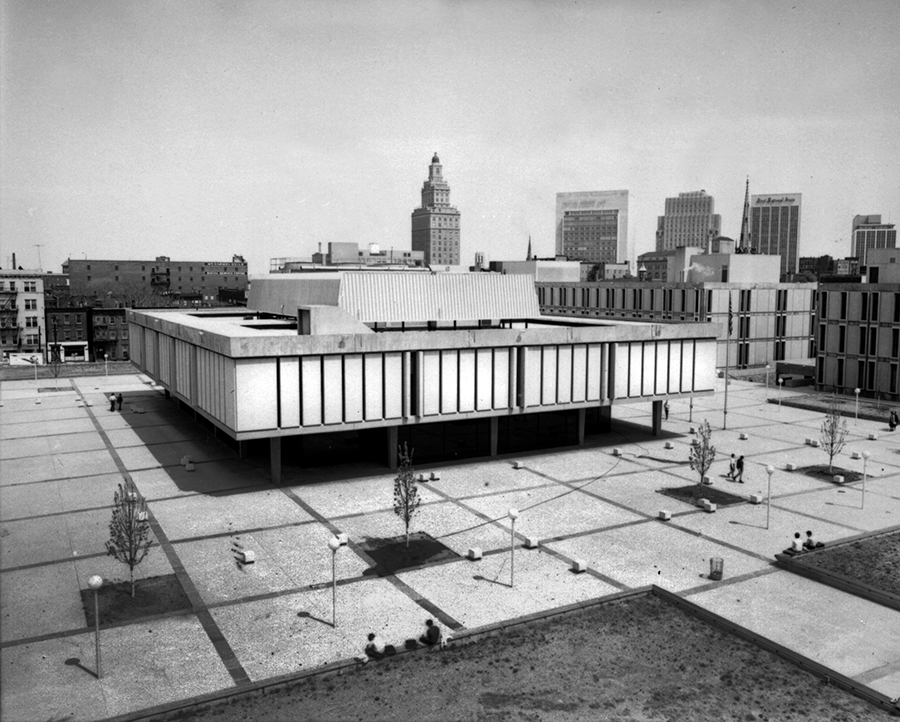
    Dana Library was the centerpiece for modernist buildings erected on the Rutgers University-Newark which are highlighted in an exhibit opening and tours at the library on October 15. Dana Library Archive.

    In 1959 Rutgers president Dr. Mason Gross fired a blunt shot across the bow in the pages of the New York Times in his quest to pass a $75 million bond issue. His plea was as much about expansion of the facilities as adding depth to the university’s core mission of education, culture, and social mobility for the burgeoning Baby Boom generation.

    Gross referred to New Jersey as educationally “impoverished” and culturally “almost bankrupt” in advocating Rutgers’ power to make a difference. The funding package passed and its impact on the Newark campus with construction of seven new buildings over the course of the 1960s was profound.

    Part of that legacy—the Newark campus’s inventory of significant modernist architecture and spatial concept—is the subject of an exhibit opening October 15 at the John Cotton Dana Library, Making a Place: Rutgers University-Newark as a Microcosm of 1960s America. Programming will also feature hour-long campus tours led by Newark-based architects, preservationists, and historians; in addition to tours of the world-renowned Institute of Jazz Studies, located on the fourth floor of the library. For additional details, see: http://docomomo-us.org/architecture_urbanism_rutgers_university_newark

    Cultural historian Dr. Eva Giloi, an associate professor of history at Rutgers University-Newark who is organizing the festivities, said Newark figured prominently in Gross’s plans.

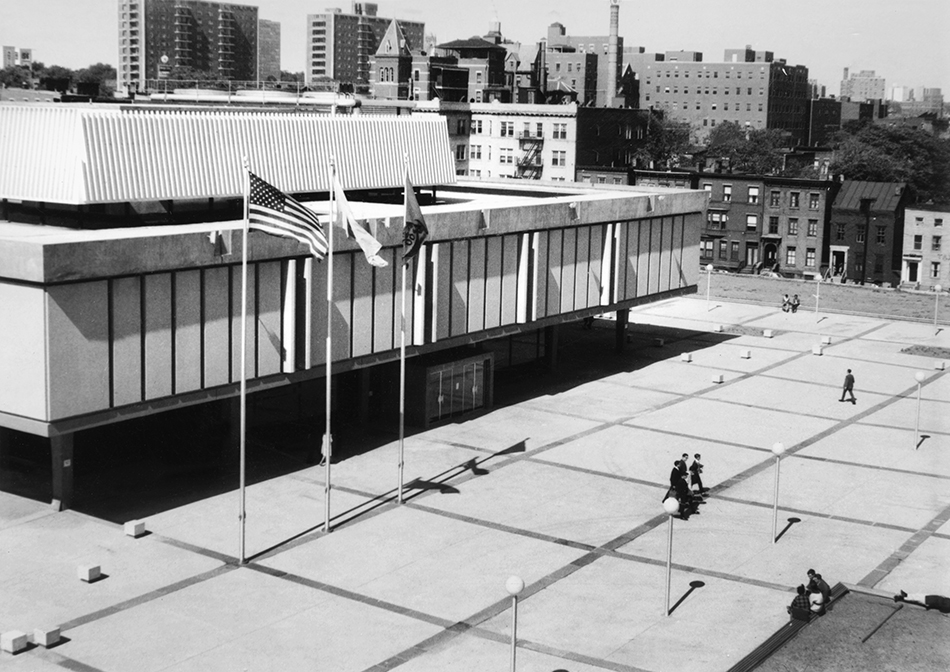
    “Buildings here were designed and situated on the campus as part of a coherent vision of modernist mid-century architecture, with Dana Library the center of student life and community involvement,” said Giloi. “It was a humanistic concept in the way it used open space.”

    dana-plaza-001
    October 15, 2016 has been designated a DOCOMOMO US Tour Day. Dana Library Archive.

    The project’s supporters go way beyond the Rutgers community. The campus will enter the registry of DOCOMOMO, the world’s leading modernist preservation organization located in Barcelona, Spain.

    Giloi describes the exhibit as a “multisensory exhibit about the campus history and architecture in Dana Library,” using original architectural blueprints, photographs, yearbooks, and other artifacts bearing on the campus and student life during socially tumultuous times.

    Dr. Askew, director of Dana Library, said of Giloi’s research, “The campus plan from 50 years ago all started with a library building. Therefore, it is befitting that Dana Library, in addition to being a stop along the tour, also has a central role in this event.”

    The exhibit and programs are sponsored by the Dana Library, the Institute of Jazz Studies, Rutgers University-Newark Department of History, The Clement A. Price Institute, and DOCOMOMO, which has designated the events as an official U.S. Tour Day.

    Activities this month will be amplified when the fiftieth anniversary of Dana Library gets underway next year.


    Save

    Save

  • Dana Library Transformation into 21st-Century Knowledge Center Heading from the Drawing Board into Reality by 2018

    Dana Library Transformation into 21st-Century Knowledge Center Heading from the Drawing Board into Reality by 2018

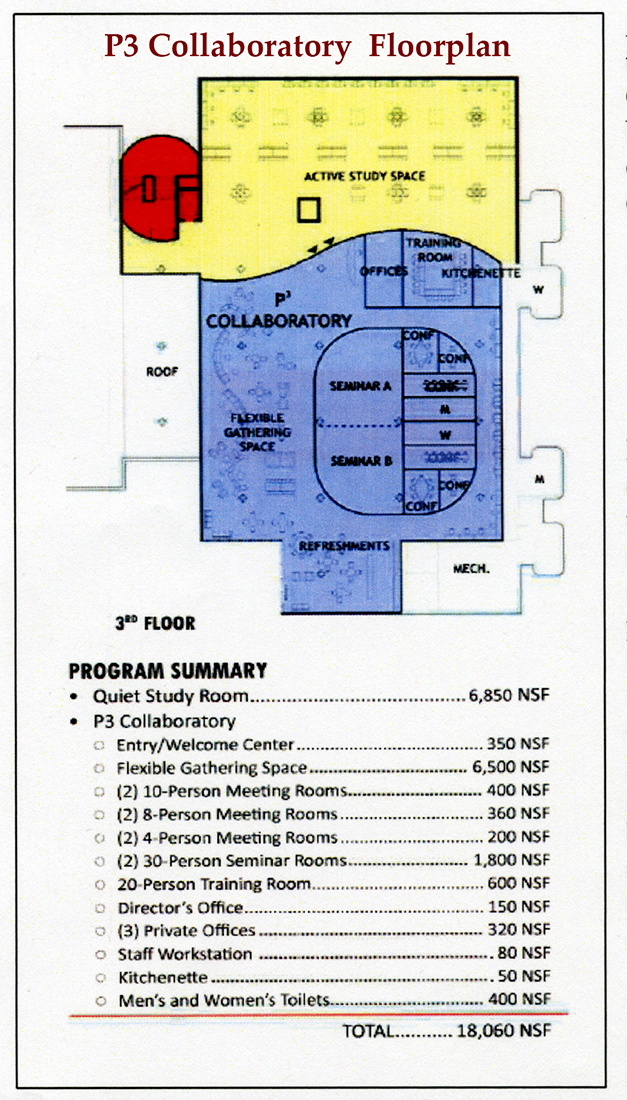
    Floor-plan of the P3 Collaboratory which is expected to be in operation on the third floor of Dana Library by 2018. Click to enlarge.
    Floor-plan of the P3 Collaboratory which is expected to be in operation on the third floor of Dana Library by 2018. Click to enlarge.

    Imminent plans to develop the third floor of the John Cotton Dana Library by 2018 are integrated with a farsighted and sweeping reconceptualization of the role of libraries at the juncture where 21st-century pedagogy and information delivery meet. These were among topics addressed in an initial report and recommendations released September 26 by the New Professoriate Study Group, co-chaired by Dr. Bonita Vesey, vice chancellor for planning and implementation, and Dr. Consuella Askew, director of Dana Library.

    The P3: A Collaboratory for Pedagogy, Professional Development and Publicly-Engaged Scholarship is designed to meet the needs of educators from preparation of graduate students for high impact, publicly engaged scholarship and leadership skills. Attracting promising scholars to a curriculum offering broad strategies for career-long activities in the world of academe and beyond holds the keys to success of the concept.

    Programming in support of the P3 Collaboratory is getting underway this fall with offices located on the second floor of the library. In addition, Rutgers-Newark chancellor Nancy Cantor is convening a two-day conference on the new professoriate October 28-29. The initiative is also the motivation behind $2 million in seed grants through the chancellor’s office to encourage creative cross-disciplinary, high impact, sustainable and innovative programs.

    Dr. Vesey said that while aspects of the P3 Collaboratory are not new, the combination and depth of the programs on the Rutgers-Newark campus is unusual and ideal for the diversity of students, faculty, and staff of Rutgers-Newark.

    “Under this plan, the library will be less of a repository of books, but the intellectual center of the campus, a role Dana Library already fulfills,” she said. “Consuella really understands and supports the mission of libraries in the 21st century.”

    Save

    Save

  • New Honors Living-Learning Community to Be Based at Dana Library

    Dana exterior sunny, credit Ed Berger
    Credit: Ed Berger.

    Rutgers University-Newark’s Honors Living-Learning Community (HLLC) is an initiative intended to go beyond high SAT scores or high school rankings. The goal is to identify and blend an international group of traditional and non-traditional students into a curriculum based on themes of “Local Citizenship in a Global World,” and focusing on academic, social, and personal development.

    Among the targeted student populations are high school graduates, first-generation college students, transfer students, veterans, older students, General Education Development (GED) recipients, student parents, and financially independent students. Dana librarians will be important liaisons in building the effort, according to Bobbie Tipton, the library’s point person who recently met with Marta Esquilin, the associate dean of HLLC and assistant professor of professional practice. HLLC will be divided into “cohorts,” each containing about ten students, which may be mentored by a librarian. The curriculum will be a mixture of core classes specific to HLLC, as well as a capstone project, filled in by required classes to earn an undergraduate degree.

    Among the areas of instruction librarians would provide to new and transfer students through workshops are finding their subject librarian; finding core databases in the subject area; using a citation manager; determining the correction citation style for the subject; and avoiding plagiarism.

    “This is intended to be a holistic learning experience with a strong emphasis on social justice and community,” Tipton said. “It is definitely an expanded definition of ‘honors’ that goes beyond academic performance. The intention is to educate movers and shakers in social engagement.”