Category: Articles

  • DEI Spotlight – December 2022

    December 2022 Spotlight

    The DEI Committee 2.0 was formed in late 2021 and comprises staff and faculty representing all Rutgers campuses. The committee’s mission is to:

    • respect and foster perspectives that reflect varying backgrounds, identities, roles, and their intersections;
    • create and support structures and behaviors that encourage equity, fairness, and justice; and
    • promote an environment of belonging, respect, opportunity, and empowerment.

    Reporting to the Vice President for University Libraries and University Librarian and the Libraries Leadership Team, the committee serves as an advisory body to the Libraries in support of RUL and university core DEI values and university priorities. In the past year, the committee worked with the RUL Human Resources department to review hiring practices and create a more inclusive work environment. The committee meets bimonthly and is currently working on its next charge, which will be announced soon.

    Read the DEI Committee’s November 2022 Meeting Minutes
    Read the DEI Committee’s October 2022 Meeting Minutes
    DEI Committee Members


    DEI Training and Events

    Participate in the following training and events to expand your DEI knowledge:
    STRIDE Workshop

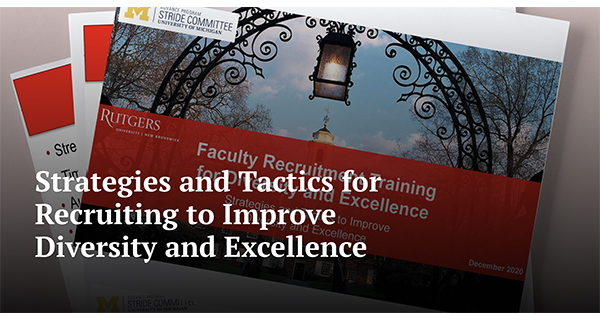
    Strategies and Tactics for Recruiting to Improve Diversity and Excellence (STRIDE) Workshop

    Date: Wednesday, December 14, 2022
    Time: 11:00 a.m.–1:00 p.m.

    This two-hour workshop reviews research-driven best practices to recruit for diversity and excellence across every stage in the search process and is designed to help faculty produce diverse candidate pools and run effective searches. STRIDE workshops are recommended for faculty members with key roles in faculty recruitment efforts (e.g., search committee chairs and members).

    Register for the Workshop

    Babs Siperstein Humanities and Medicine Seminars

    The Siperstein Seminars take an inclusive and intersectional approach to broaden the understanding of LGBTQIA+ issues to build healthcare workers’ capacity and knowledge base, thus increasing their ability to provide more comprehensive and holistic healthcare. To learn more about the seminars, please click this link.
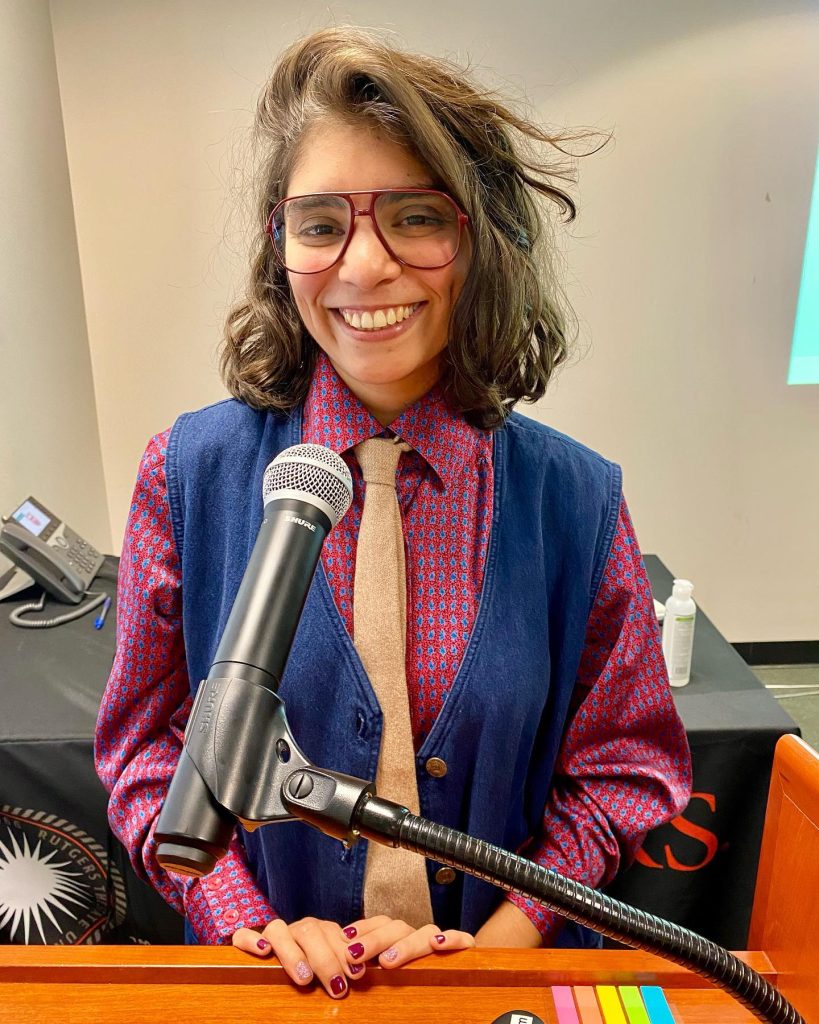
    Tara Madison Avery

    Seminar: Transgender and Nonbinary Representation in Comics
    Speaker: Tara Madison Avery
    Date: Monday, December 19, 2022
    Time: 6:00–7:00 p.m.

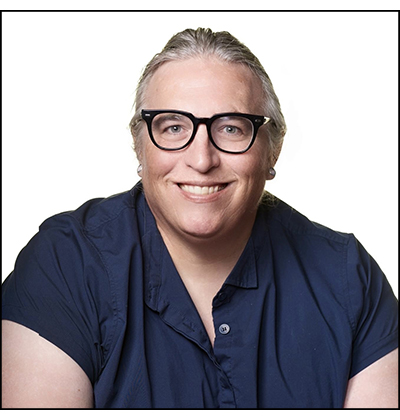
    Tara Madison Avery is a cartoonist, bi activist, and the publisher of Stacked Deck Press, an imprint devoted to comics of LGBTQAIU interest. As a cartoonist, Avery created the bi-themed webcomic Gooch and has published stories in several queer-themed comics anthologies, including We’re Still Here: An All-Trans Comics Anthology (which she co-edited and published), winner of the 2019 Ignatz Award for Outstanding Anthology. She was invited to the 2015 and 2016 Bisexual Community Briefings at the White House and was chair of the Los Angeles Bi Task Force from 2013 to 2015. Avery has also been a board member of Prism Comics, a nonprofit organization that promotes LGBTQ comics, comics creators, and fandom, since 2012. In her work with Prism Comics, she has moderated several LGBTQ-oriented panel discussions at comic conventions across the country, including the first all-transgender panel at San Diego Comic-Con in 2014.

    Thank you to Kayo Denda, Head of the Margery Somers Foster Center and Librarian for Women’s Gender And Sexuality Studies, for organizing and promoting wonderful events.
    Register for the Seminar

    World Braille Day 2023

    World Braille Day

    Date: Wednesday, January 4, 2023

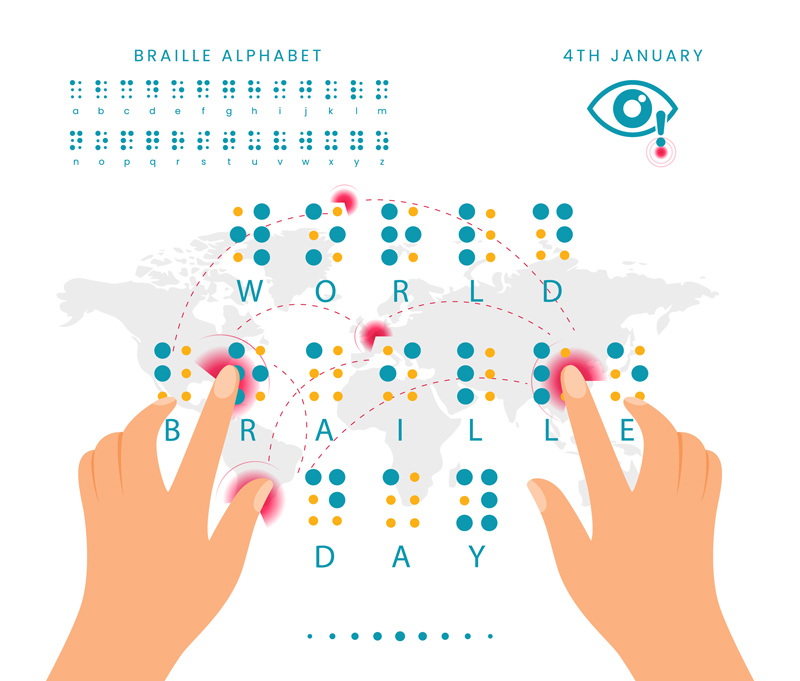
    World Braille Day is celebrated every year on January 4 to commemorate the birthday of Louis Braille, founder of the braille system. Braille is a tactile writing system used by people who are visually impaired.


    DEI Reads

    Check out what the DEI Committee is currently reading:
    The Art of Effective Facilitation


    DEI Resources

    People at computer.

    Explore these resources to learn more about DEI:


    DEI Spotlight Archive

  • Special Collections and University Archives Hosts Joe Pompeo Book Talk

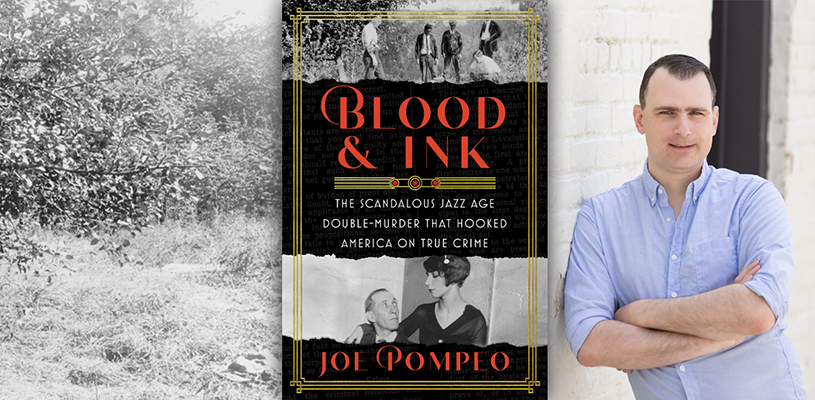
    Joe Pompeo, author of "Blood & Ink."

    On November 10, Special Collections and University Archives hosted a virtual book talk with Vanity Fair correspondent and Rutgers alumnus Joe Pompeo ’04. Pompeo spoke about his new book on the notorious Hall-Mills murders, Blood & Ink: The Scandalous Jazz Age Double Murder That Hooked America on True Crime.

    > Click here to watch the presentation.

    Blood & Ink explores the slayings of star-crossed New Jersey lovers and how the century-old cold case fed America’s obsession with true crime stories. While conducting his research for the book, Pompeo relied heavily on Special Collections and University Archives (SC/UA), which he says houses the definitive academic archive on the murders. Pompeo used SC/UA’s Hall-Mills Collection, Wallace Conover Papers, and Stevens family letters. This presentation forms part of SC/UA’s Research Salon series, which features researchers who have used SC/UA’s resources in their work. The series is co-sponsored by the New Jersey Studies Academic Alliance.

    Blood & Ink was published by William Morrow in September 2022, marking the 100th anniversary of the double murder of Reverend Edward Hall, rector of St. John the Evangelist Episcopal Church in New Brunswick, and Eleanor Mills, a singer in the church choir. The couple was reputedly having a scandalous affair, and their bodies were discovered artfully posed on a notorious lover’s lane on the border of New Brunswick and Somerset. Edward Hall’s wife, Frances, who was related to the wealthy Johnson family, and Eleanor Mills’ husband, Jim, were early suspects in the case. The bungled investigation by the police took years and failed to bring the criminals to justice. The trial featured eccentric characters such as Jane Gibson, a pig farmer who came forward with a purported eyewitness account of the murder and, at one point, testified from a stretcher brought into the courtroom. As well as investigating the fascinating details of the case, Pompeo shows how the rise of New York tabloid journalism and the resulting wars between papers of the 1920s kept the story alive. In an epilogue, Pompeo suggests his own theories on the still-unsolved case.

    Over the years, many authors have tried to solve the case, including famed attorney William Kunstler, whose The Minister and the Choir Singer: The Hall-Mills Murder Case (1964) attributed the murders to the Ku Klux Klan. Another theory was offered by former dean Mary S. Hartman, who lived in Frances Hall’s house, now the residence of the Douglass Dean, in “The Hall-Mills Murder Case: The Most Fascinating Un-solved Homicide in America,” The Journal of the Rutgers University Libraries, 1984. The case has also inspired novels and plays, most recently Thou Shall Not, performed at St. John the Evangelist Church by Thinkery & Verse. Blood & Ink is unique in placing the case in the context of the rise of tabloid journalism and the popularity of true crime in the 1920s.

    Read more about the book and author in “Looking Back at the Crime of the Century,” an article by Amy Vames for the Rutgers University Alumni Association.

  • Ex Libris Implementation Team Update – November 2022

    Library Mobile
    As of November 9, the app has 1,348 registered users. Contests for registrations and Quick Polls continue to be held. We also continue to hope that more local contests or initiatives to increase registrants can be held to increase awareness and registrations.
    Electronic Resources
    A public data dashboard is being built to provide easy, on-demand access to e-resource inventory and usage data to help inform collection development and management decisions.
    Rapido
    Work is underway to create a presentation regarding Rapido for LLT. The team will demonstrate the product and review the current status of the project and known issues. We hope that the presentation can occur in December.
    Esploro
    • SOAR’s integration with ORCID has been improved. This integration allows researchers to automatically push their research outputs in SOAR to their ORCID profile. Improvements include resending records that failed and updating ORCID with changes made to the SOAR record.
    • The Libraries are partnering with the Office for Research to offer training to Rutgers faculty on how to search for funding opportunities using Pivot-RP. It is hoped this collaboration will open the door to additional partnership opportunities in the delivery of university-wide research services.
    Post-Implementation Review
    As previously reported, the entire team is participating in and leading a post-implementation review process of Alma. The review will focus on identifying areas where improvements could lead to increased efficiency or enhanced internal backend services. Identified areas for improvement will be prioritized and addressed as time and resources permit. Examples of solutions may include redesigned workflows, additional training, technical customizations, changes to configurations, etc. Please be sure to speak to the appropriate team member regarding any suggestions you have regarding pain points or potential improvements to Alma workflows.
  • Special Collections and University Archives Hosts 28th Annual New Jersey Book Arts Symposium

    Sandra Fernández's artist presentation.
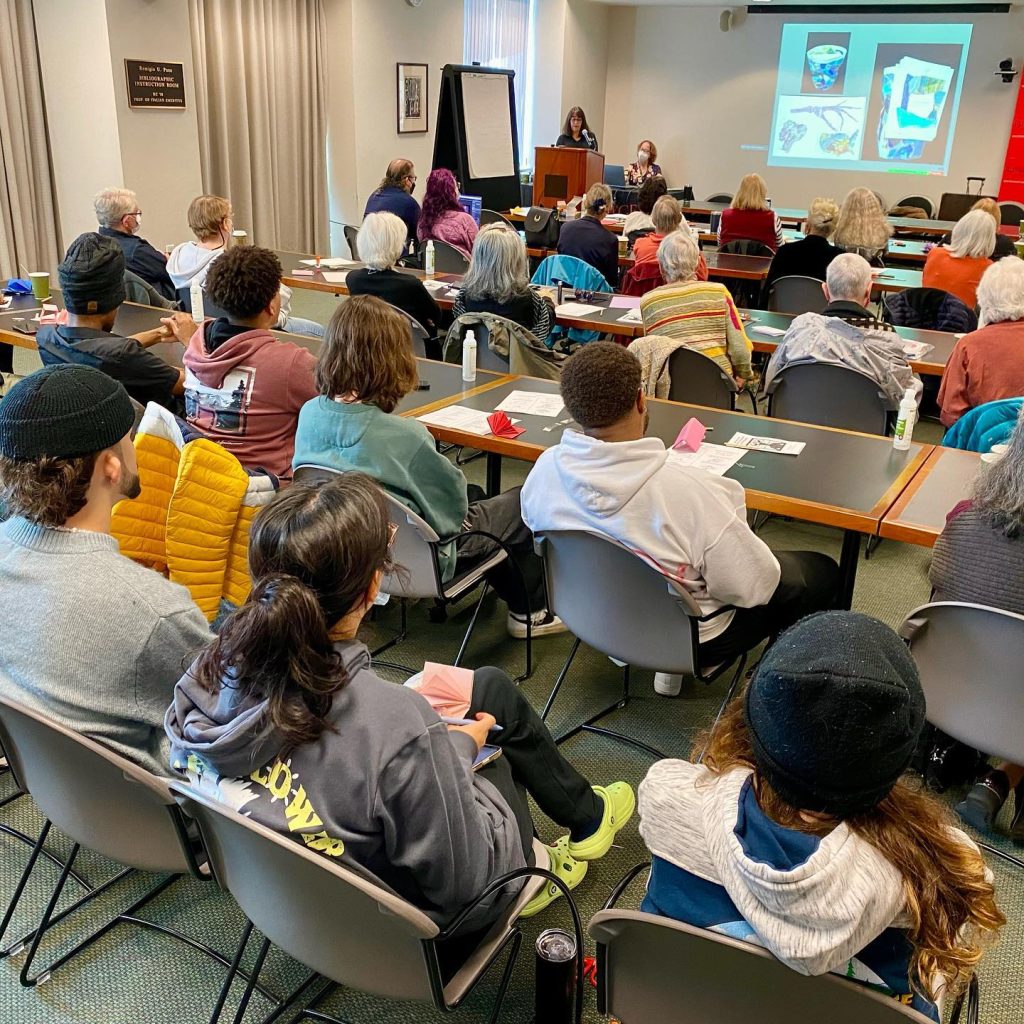
    Symposium attendees enjoy Sandra Fernández’s artist presentation.

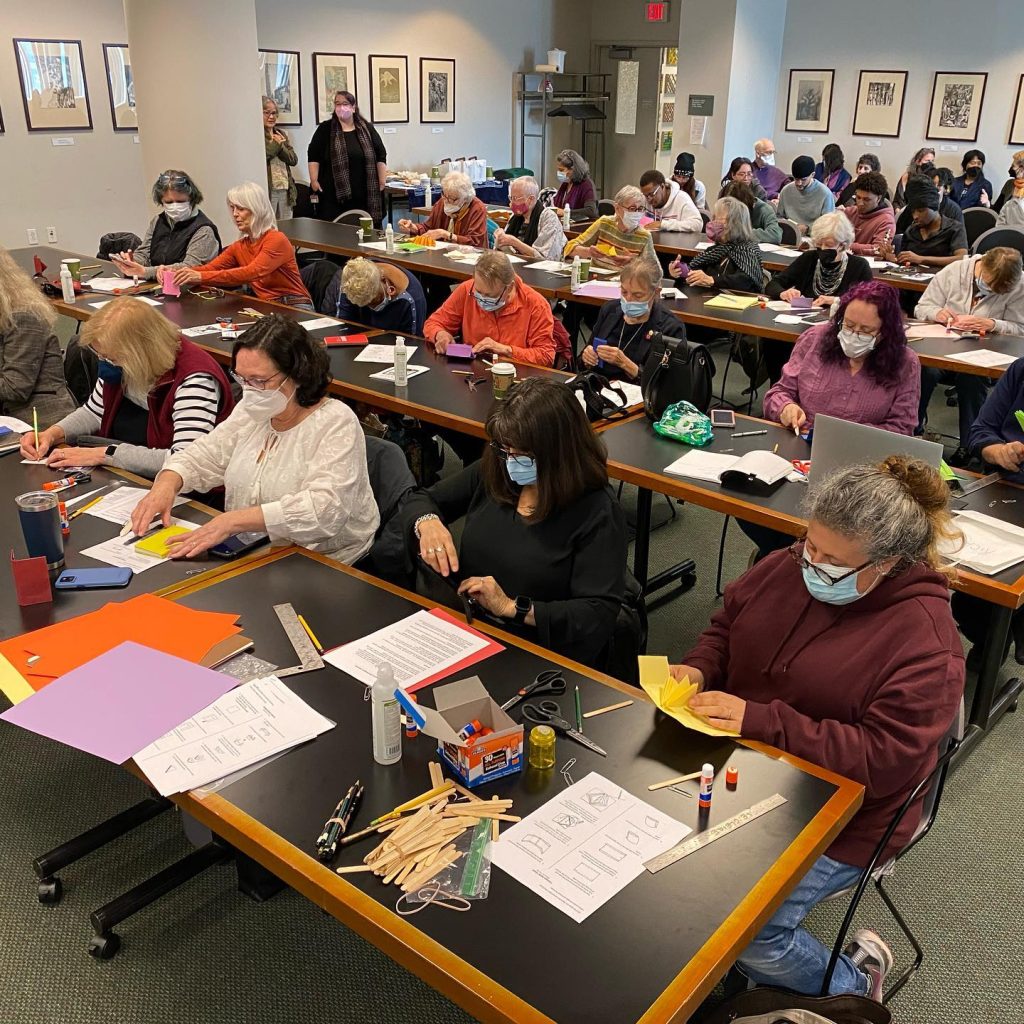
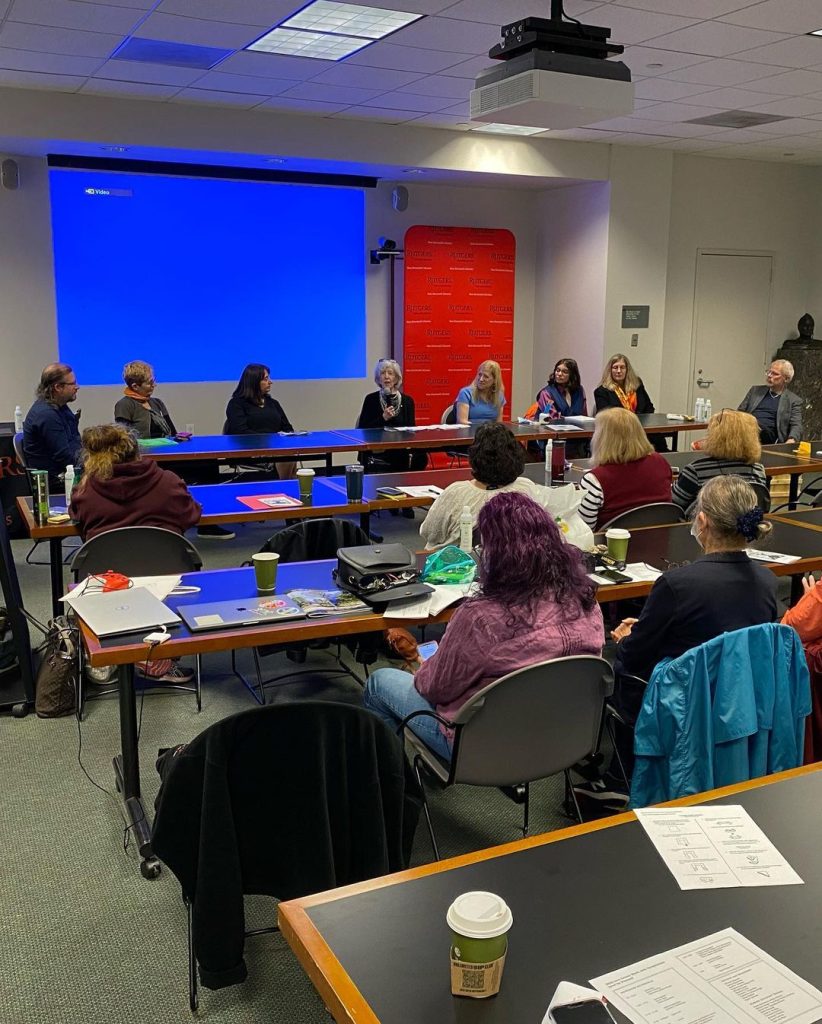
    Special Collections and University Archives (SC/UA) hosted the 28th Annual New Jersey Book Arts Symposium (NJBAS) on November 4. The free event drew a capacity crowd in Alexander Library’s Pane Room and featured a workshop, artist presentations, and a panel discussion conducted by notable artists, curators, historians, and technologists. The program included:

    To learn more about the NJBAS, please visit exhibits.libraries.rutgers.edu/nj-book-arts. Grant funding for the New Jersey Book Arts Symposium was provided by the Middlesex County Board of County Commissioners through a grant award from the Middlesex County Cultural and Arts Trust Fund. The NJBAS Advisory Board members are Karen Guancione, artistic director; Michael Joseph, founding director; Sonia Yaco, executive director; Martin Antonetti; Judith K. Brodsky; Fernanda Perrone; Amanda Thackray; Suzie Tuchman, and Kate Van Riper.

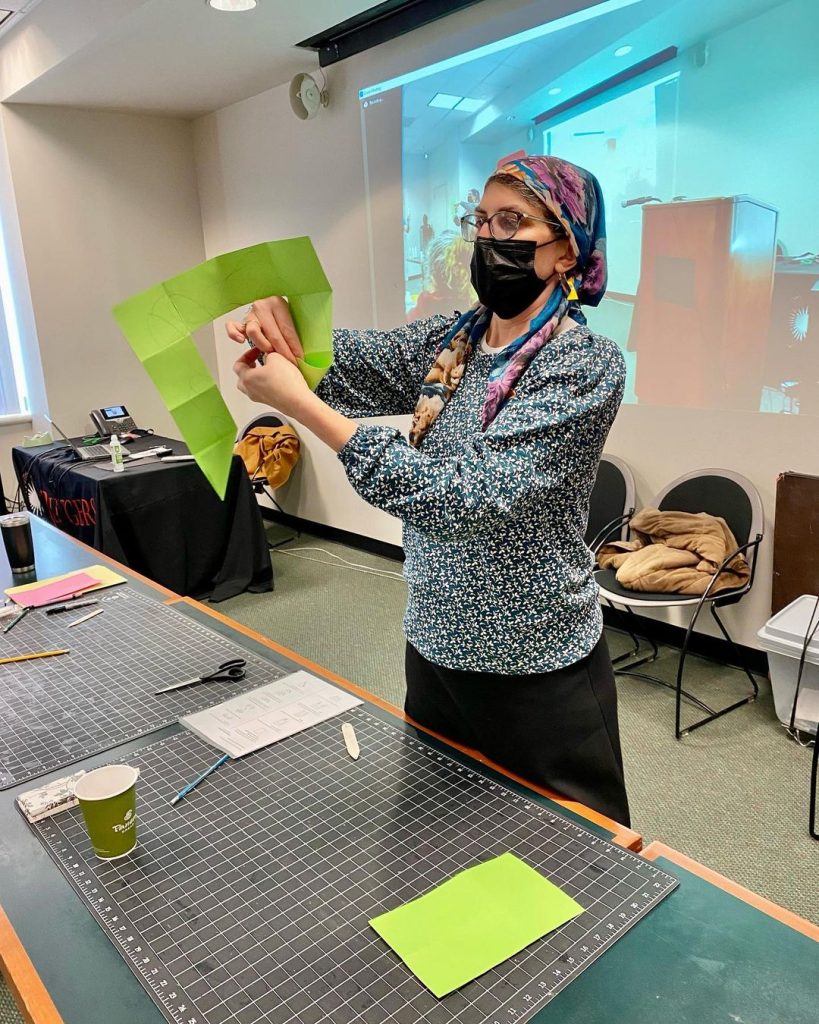
    Suzie Tuchman conducts the triangle book-making workshop.
    Suzie Tuchman conducts the triangle bookmaking workshop.
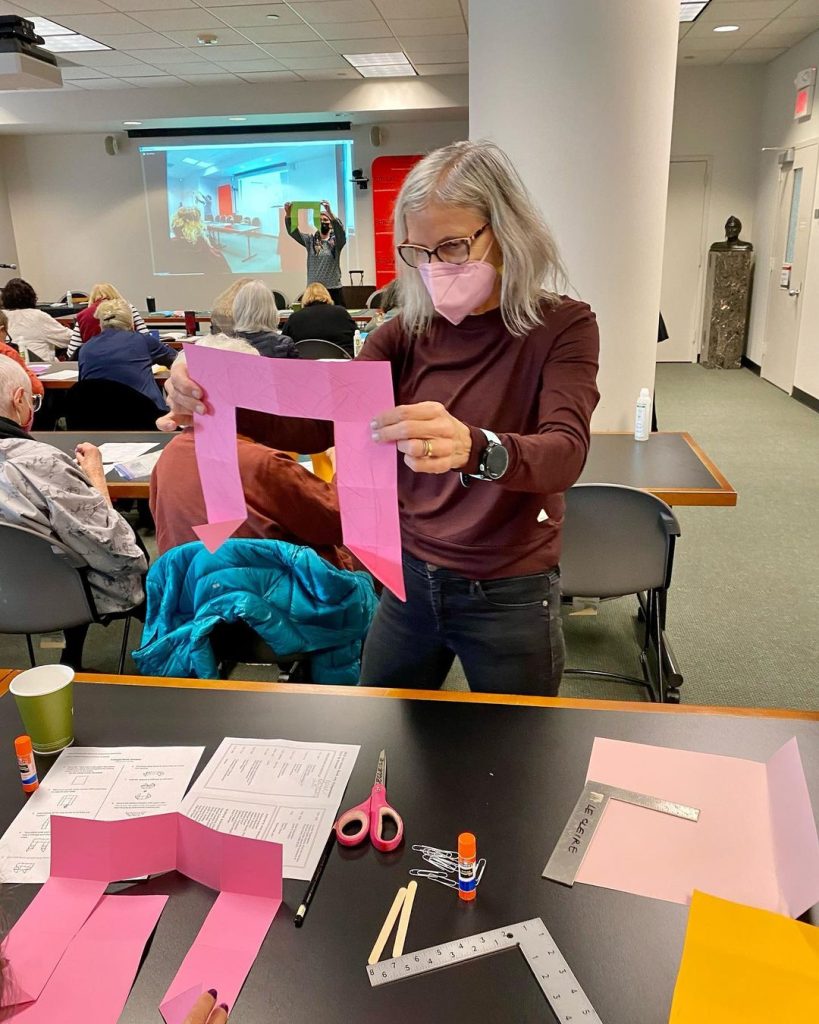
    Catherine LeCleire conducts the triangle book-making workshop.
    Catherine LeCleire Wright shows symposium attendees how to create a triangle book.
    Triangle book making workshop at the 28th Annual New Jersey Book Arts Symposium.
    NJBAS attendees make triangle books during the workshop.
    Artist Sandra C. Fernández.
    Artist Sandra C. Fernández delivered a moving presentation about her life and work. Fernández is an Ecuadorian American artist currently living in New Jersey. Her work is rooted in the transborder experiences of exile, dislocation, relocation, memory, and self-conscious identity construction/reconstruction.
    Béatrice Coron and Richard Anderson.
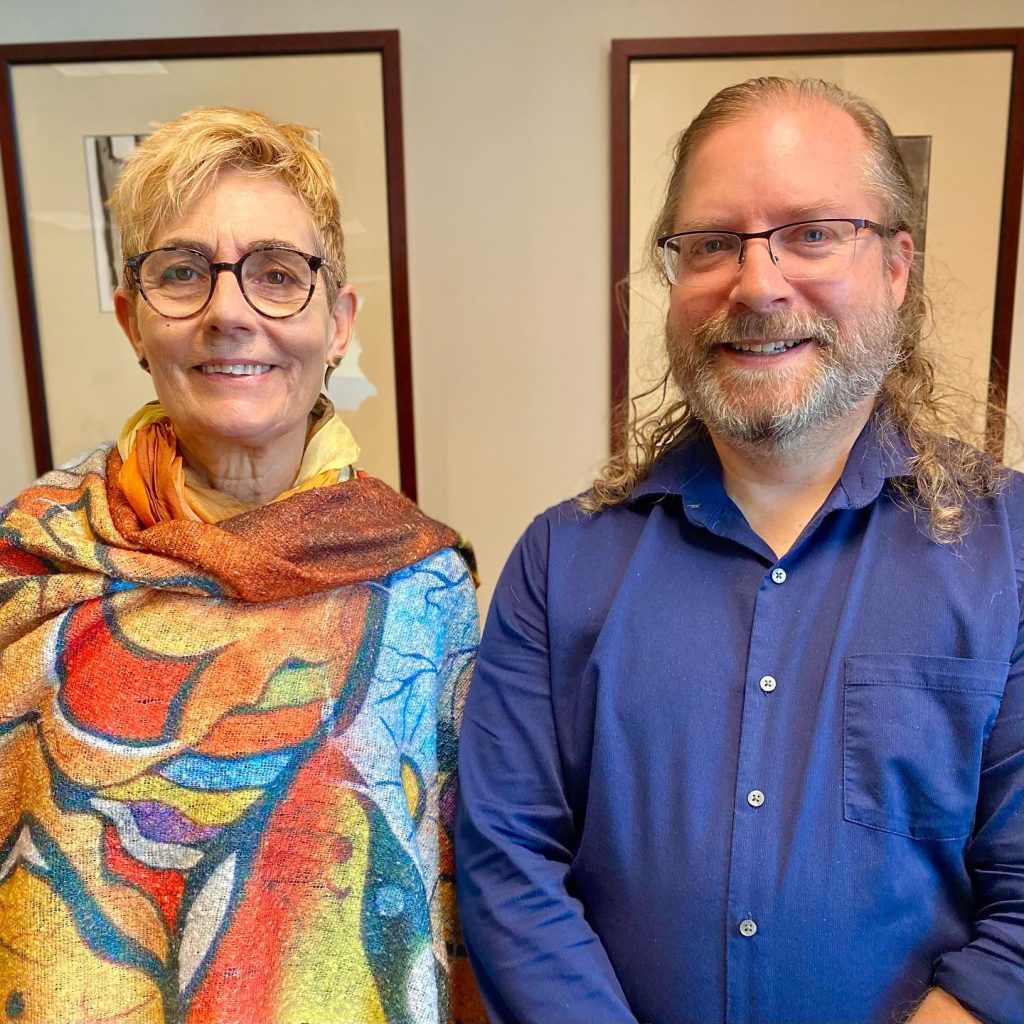
    Béatrice Coron, a renowned paper-cutting artist, and Rick Anderson, Director of Virtual Worlds at Rutgers, are collaborating on The Identity Project, an experiment both in form and content using technology to create an interactive artist book. This collaboration allows words and images to interact and behave in new and exciting ways. The Identity Project is presented by SC/UA. Learn more about the project at go.rutgers.edu/coron.
    Mixed-media and book artist Amee Pollack.
    Amee Pollack is a mixed-media and book artist and Senior Advisor and Student Success Counselor in the Department of Art & Design at the Mason Gross School of the Arts. She spoke about her art, which includes three-dimensional, fold-out book sculptures she had created with her artistic partner and close friend, Laurie Spitz, who passed away in 2017. Works by Spitz & Pollack, as their collaboration was known, are in the permanent collections of over 50 organizations, including the Brooklyn Museum, Cooper Hewitt Smithsonian Design Museum, New York Public Library Print Collection, and Yale University.
    Read more at masongross.rutgers.edu/why-i-made-this-amee-pollack and ameejpollack.com.
    Featured artist and historian Javiera Barrientos.
    Featured artist and historian Javiera Barrientos presented “A Personal Catalogue: Bookwork in Contemporary Latin America” and highlighted works by Carlos Oquendo, Maria Lucia Cattani, Francisca Prieto, Isol, Javiera Pintocanales, and Mariana Tocornal.
    Virginia Fabbri Butera and Michael Cooper.
    During her curator presentation, Virginia Fabbri Butera interviewed Michael Cooper about the late Rocco Scary’s bookwork. Rocco Scary (1960–2022) was a multidisciplinary artist whose work on paper, in sculpture, and with artist books explored the concept of the identifiers or “triggers” for memory. To learn more about Scary, please visit roccoscary.com. Butera is the director of the Therese A. Maloney Art Gallery. She is also chairperson of the art, dance, and music program and a tenured professor of art history at @saintelizabethuniversity. Cooper is the creative director at Altech Corporation and principal of Cooper Graphics and Cooper Art Works LLC. He has over 40 years of fine art and commercial art experience.
    Sonia Yaco and Judith Brodsky.
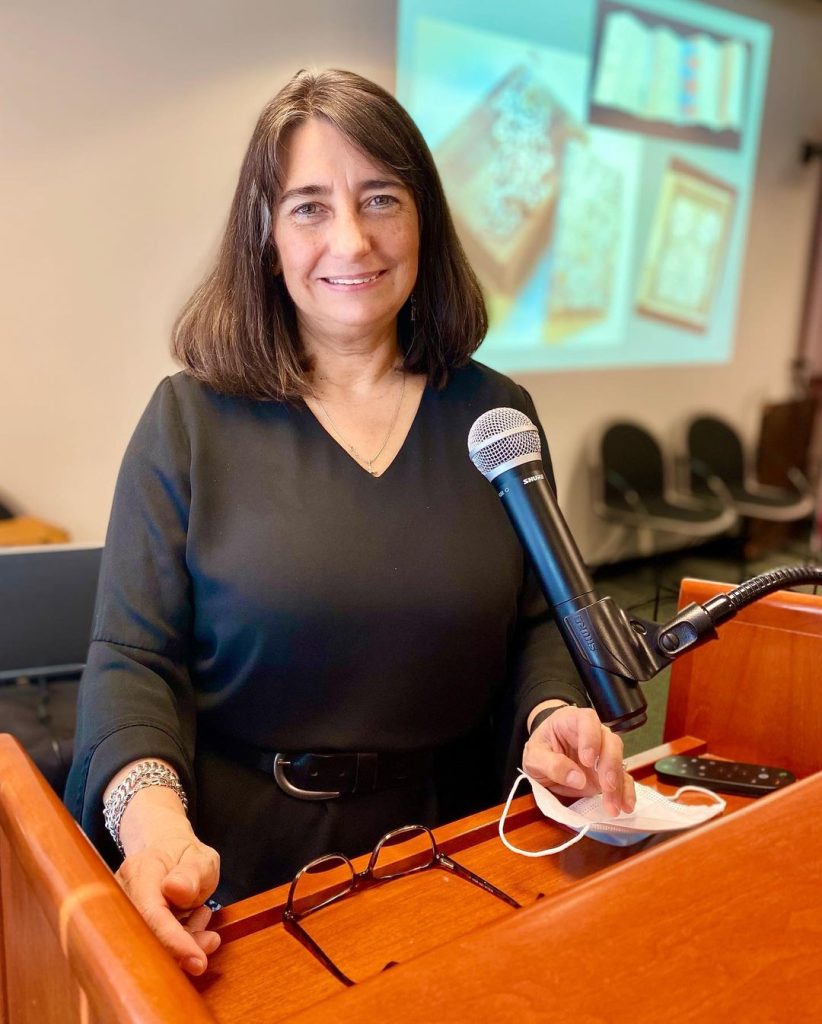
    NJBAS executive director Sonia Yaco (left) and noted artist and art educator Judith K. Brodsky. Brodsky led the engaging panel discussion that concluded the New Jersey Book Arts Symposium. The lively discussion offered attendees an opportunity to hear more from the guest artists and ask questions. Brodsky highlighted the commonalities between the topics, including technology, social issues, and a sense of play, and encouraged the artists to share their thoughts and processes and talk about the future of books and bookmaking. Brodsky is a Distinguished Professor Emerita in the Mason Gross School of the Arts Department of Visual Arts and the Founding Director of the Rutgers Center for Innovative Print and Paper, which was renamed the Brodsky Center in her honor in 2006 (now The Brodsky Center at PAFA).
    Judith K. Brodsky leads panel discussion.
    Panel discussion with the NJBAS’ guest speakers.
    Karen Guancione, Sandra Fernández, and Sonia Yaco.
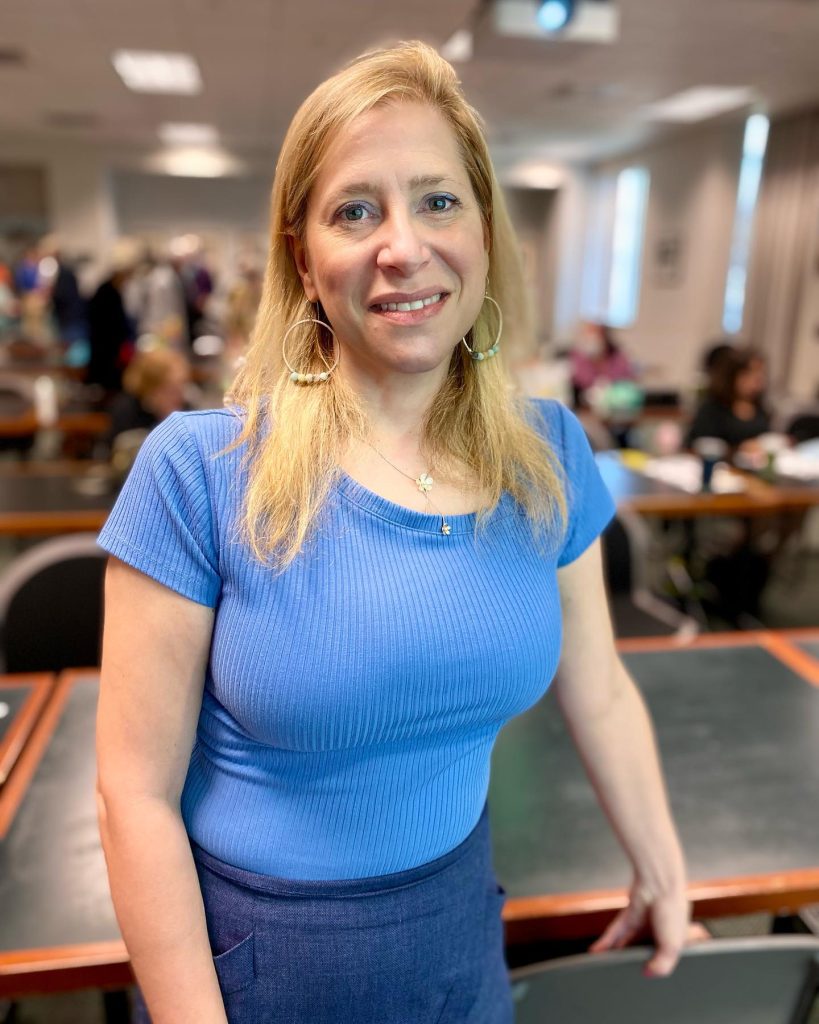
    From left: Karen Guancione, Sandra Fernández, and Sonia Yaco. Guancione is the NJBAS’ artistic director. She creates a vision of the symposium each year and moderates the event. Michael Joseph (below) is the founding director of the NJBAS. He and Karen guide the selection of the artists and help to shape the event. As executive director, Yaco coordinates the event, secures funding, and with Karen and Michael, connects with the New Jersey book arts community.
    Michael Joseph, founding director of the Symposium.
    Michael Joseph, founding director of the NJBAS.
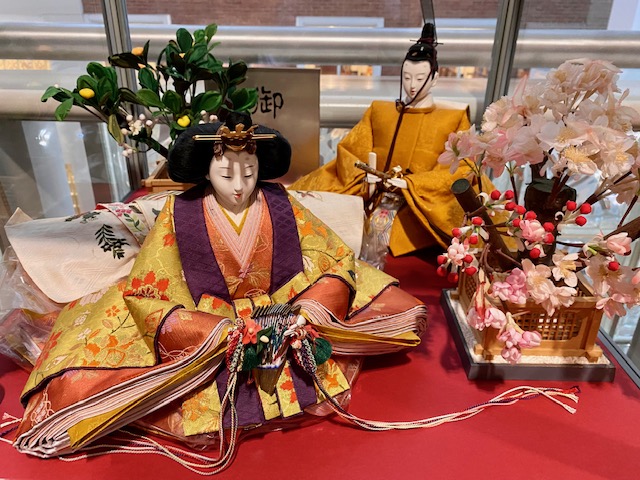
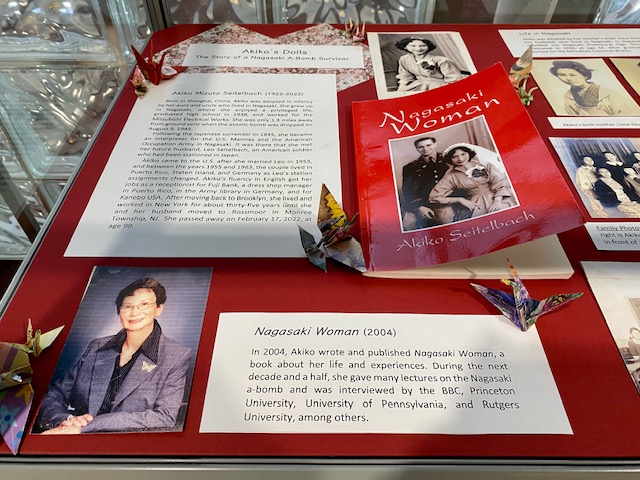
  • Now on View at the East Asian Library: “Akiko’s Dolls: The Story of a Nagasaki A-Bomb Survivor”

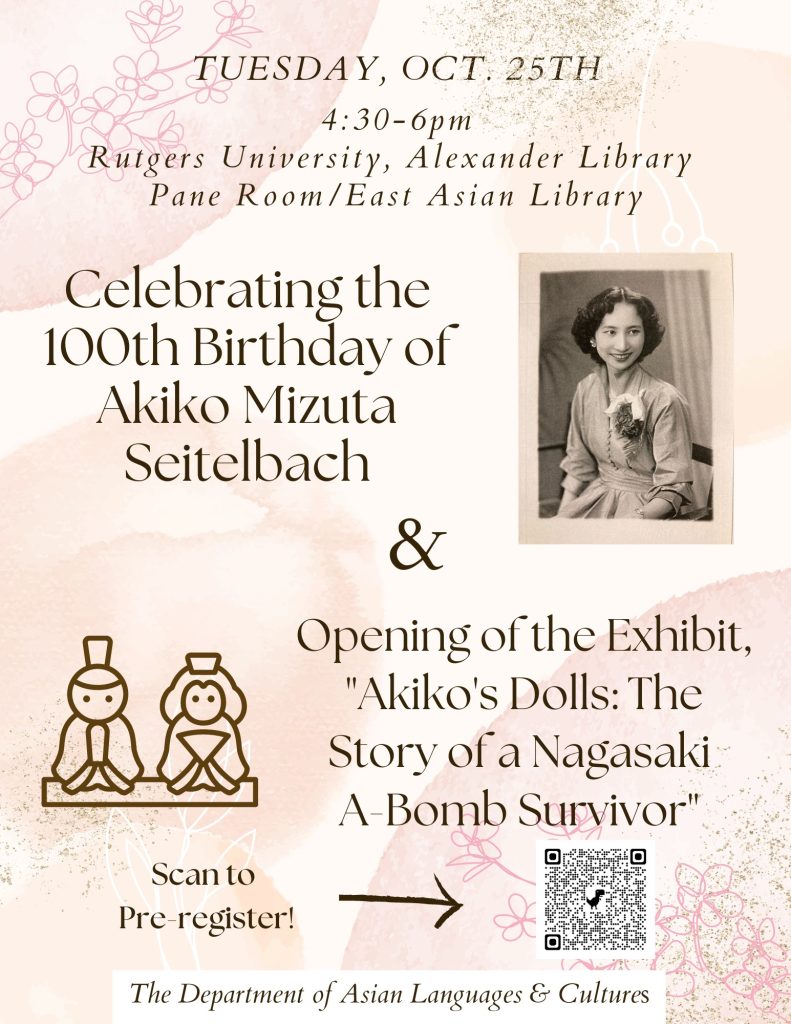
    Akiko’s Dolls: The Story of a Nagasaki A-Bomb Survivor is a special exhibition at the East Asian Library that will be displayed through February 2023. The exhibit features dolls, photos, and writings of Akiko Mizuta Seitelbach, a Japanese woman who survived the atomic bombing of Nagasaki. Please stay tuned for more East Asian Library exhibitions.

    Akiko's dolls.
    Dolls for Doll’s Day/Girls’ Day (Hinamatsuri), gift of Akiko Mizuta Seitelbach.

    Akiko Mizuta Seitelbach was born on October 25, 1922, in a section of Shanghai that, at the time, was a colony of Japan. Adopted by her aunt and uncle when she was just five months old, Akiko grew up in Nagasaki. She graduated high school in 1938, just as World War II started in Japan. During the war, she worked in the supply office of Mitsubishi Electrical Works. On August 9, 1945, when the atomic bomb was dropped, Akiko was about 1.3 miles from ground zero. She felt firsthand the destruction and desperation of the Japanese people in the days following and after the war ended.

    This slideshow requires JavaScript.

    Following the Japanese surrender in 1945, Akiko became an interpreter for the U.S. Marines and then the American Army of Occupation in Nagasaki. After marrying an American soldier of the 34th Infantry Regiment in 1953, she came to America and lived at an Army base in Fort Hamilton, Brooklyn. Between 1955 and 1963, Akiko resided in Puerto Rico, Staten Island, then Germany as her husband’s station assignments changed. She worked as a receptionist for Fuji Bank, a dress shop manager in Puerto Rico, in the Army library in Germany, and for Kanebo USA. Following the Cuban Missile Crisis, Akiko moved back to Brooklyn, where she lived and worked for about 35 years until she and her husband moved to Monroe Township, NJ. Akiko passed away aon February 17, 2022.

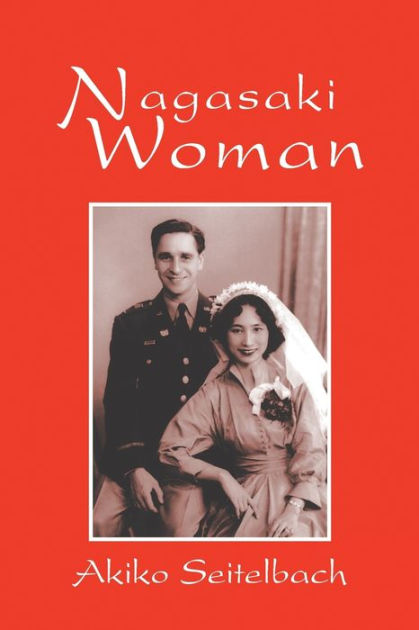
    "Nagasaki Woman" by Akiko Mizuta Seitelbach.

    Nagasaki Woman by Akiko Mizuta Seitelbach
    Rutgers Oral History Archives

    Read Akiko’s interviews with the Rutgers Oral History Archives at oralhistory.rutgers.edu.

    BBC Interviews
    Sponsors

    This exhibition is co-sponsored by the Rutgers School of Arts and Sciences’ Department of Asian Languages and Cultures and the East Asian Library.

    "Akiko's Dolls" exhibition poster.

  • New Brunswick Libraries’ Celebration of Scholarship 2022 a Resounding Success

    Rutgers–New Brunswick Libraries' Celebration of Scholarship 2022.
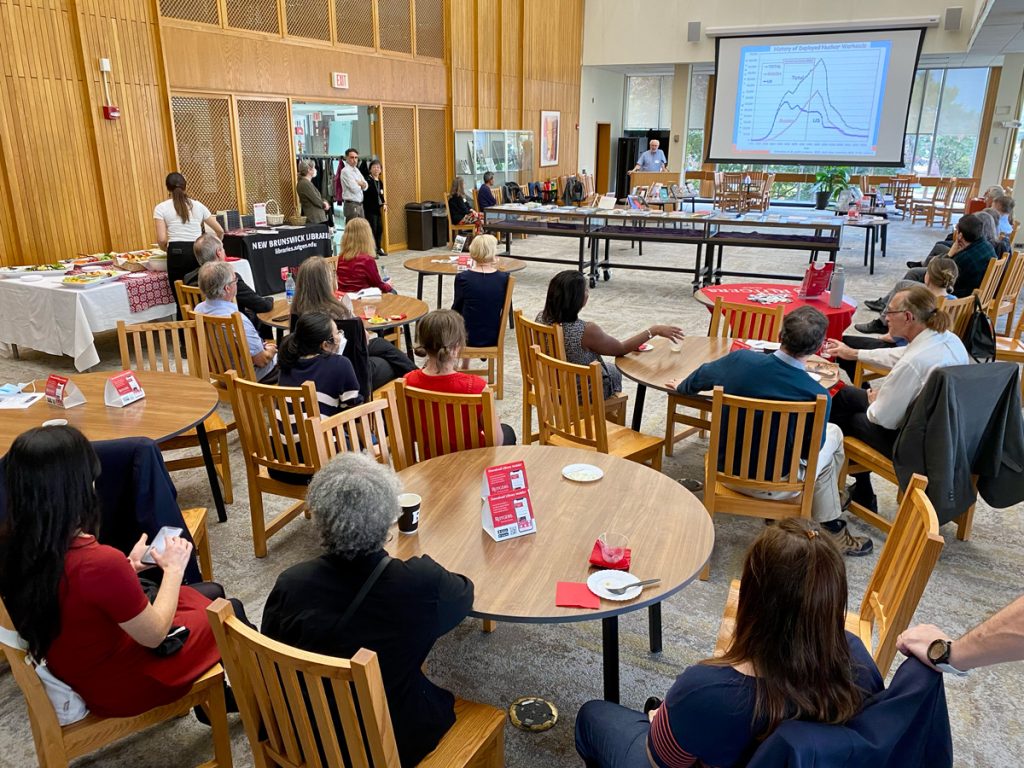
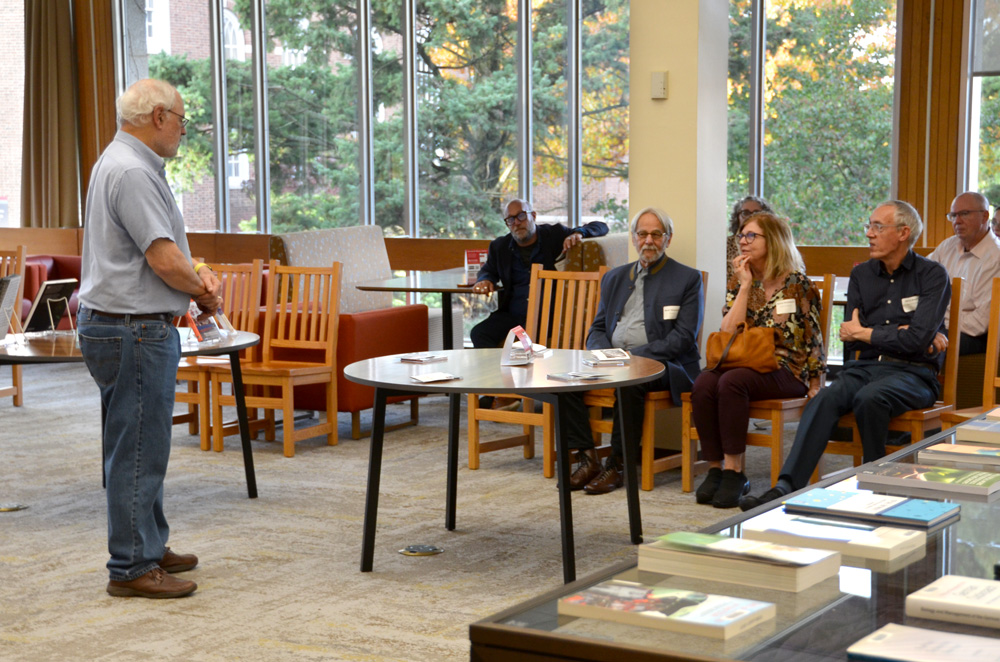
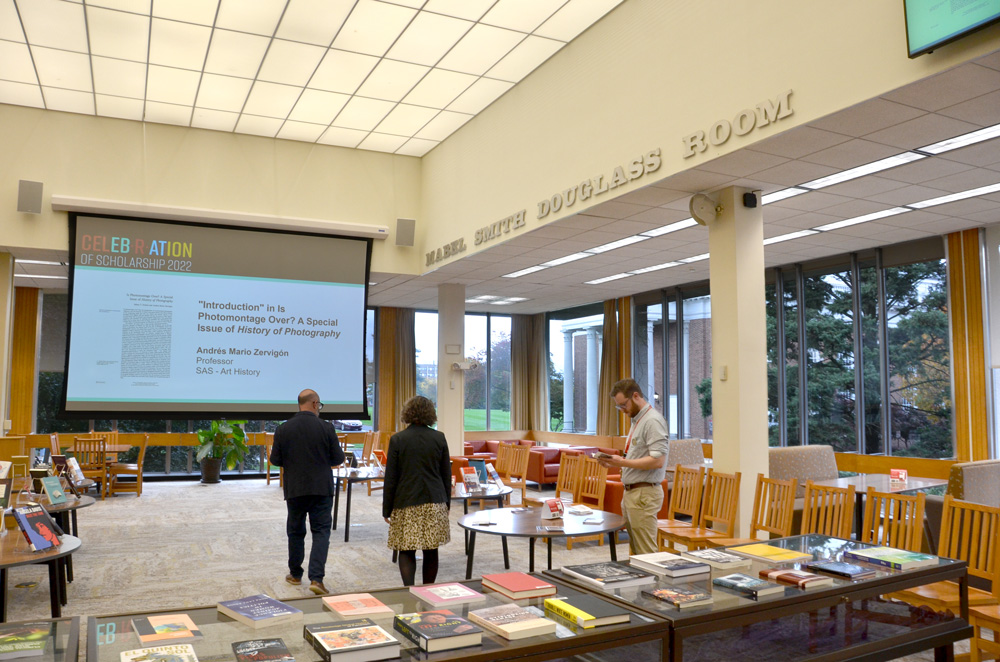
    NBL’s Celebration of Scholarship 2022 was held in the Mabel Smith Douglass Room at Douglass Library.

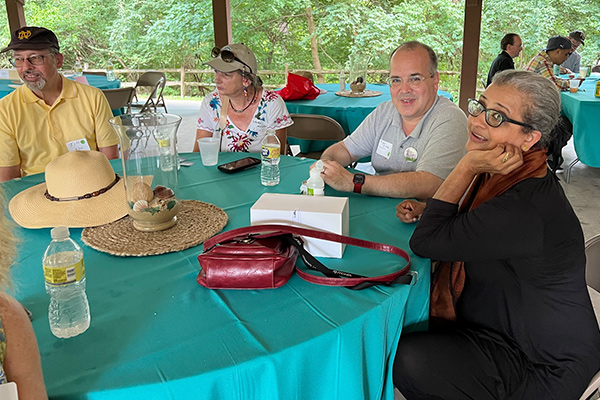
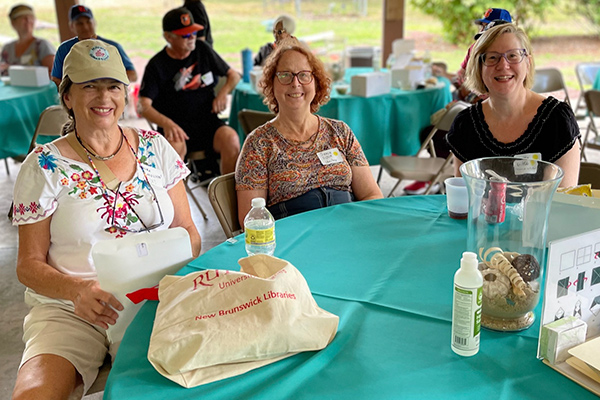
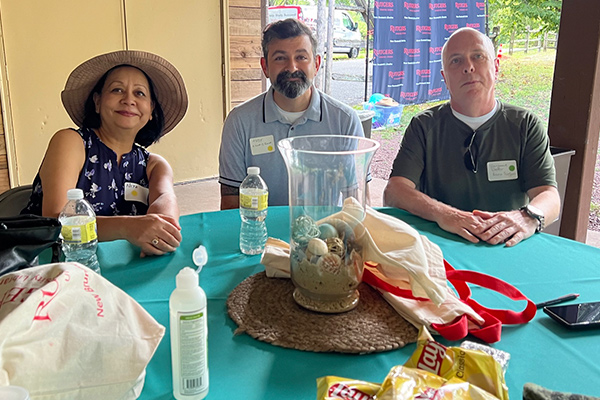
    On October 26, New Brunswick Libraries (NBL) hosted their annual Celebration of Scholarship (COS) at Douglass Library to highlight and recognize the scholarly accomplishments of authors and creators across the wide range of disciplines at Rutgers–New Brunswick. More than 60 guests attended the event, which was held in person for the first time since the pandemic.

    Rutgers–New Brunswick Libraries' Celebration of Scholarship 2022.
    Associate University Librarian for New Brunswick Libraries Dee Magnoni welcomes guests and introduces keynote speaker Dr. Alan Robock.

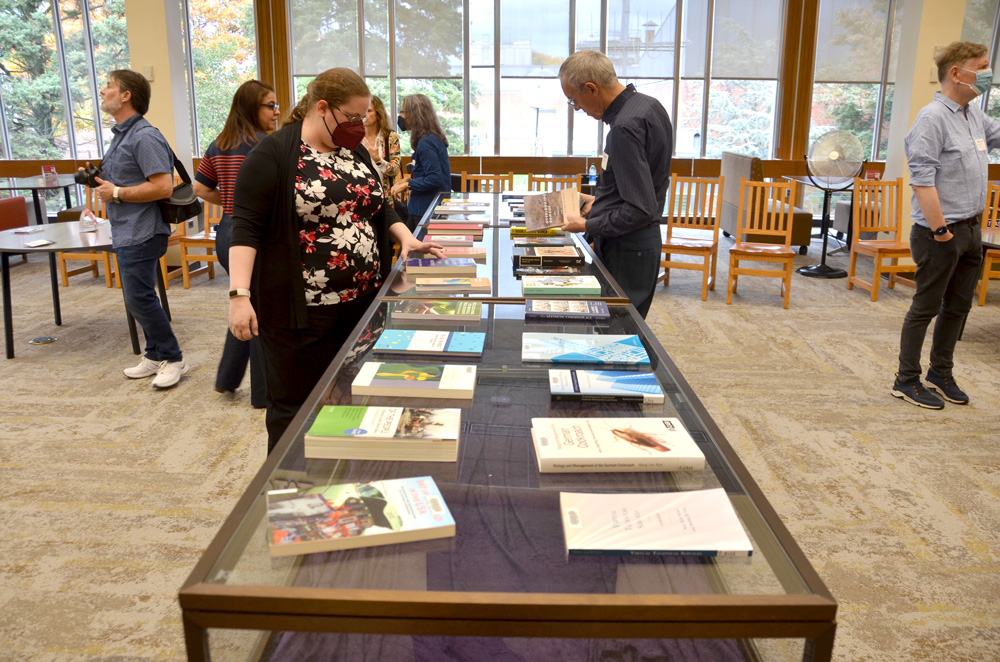
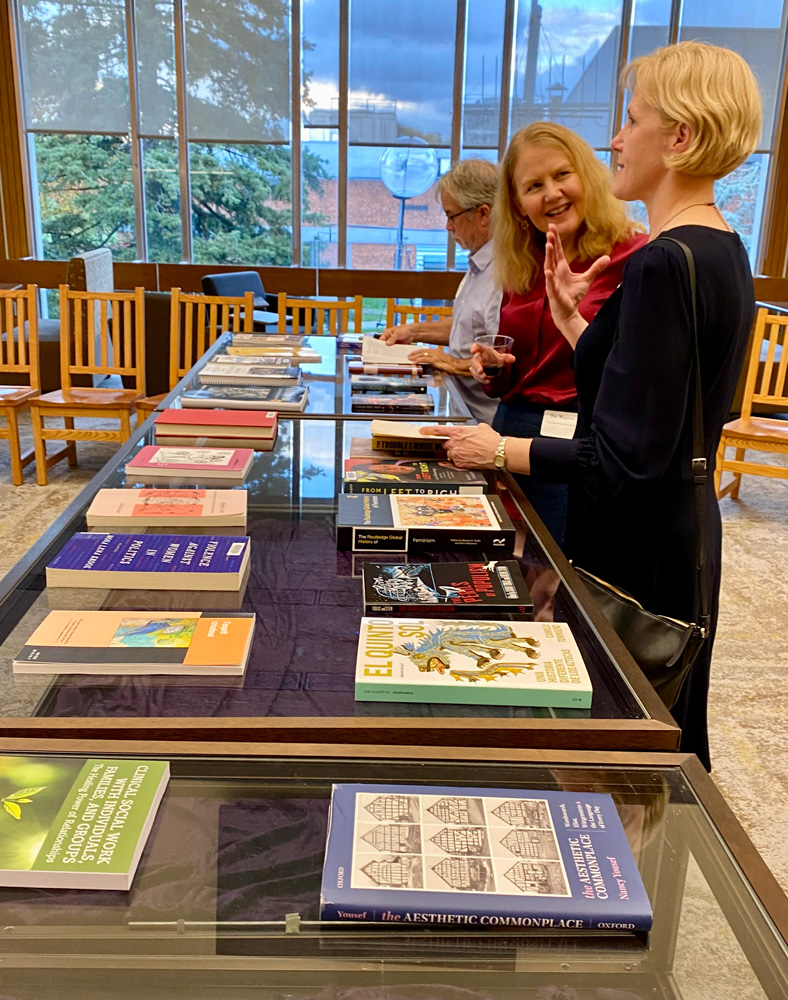
    COS 2022 highlighted 256 submissions from all Rutgers–New Brunswick schools, including 135 journal articles, 84 monographs/books, 29 book chapters, seven sound recordings, and one film. These works were displayed in physical and virtual spaces at the library. Follow this link to view the submissions.

    This slideshow requires JavaScript.

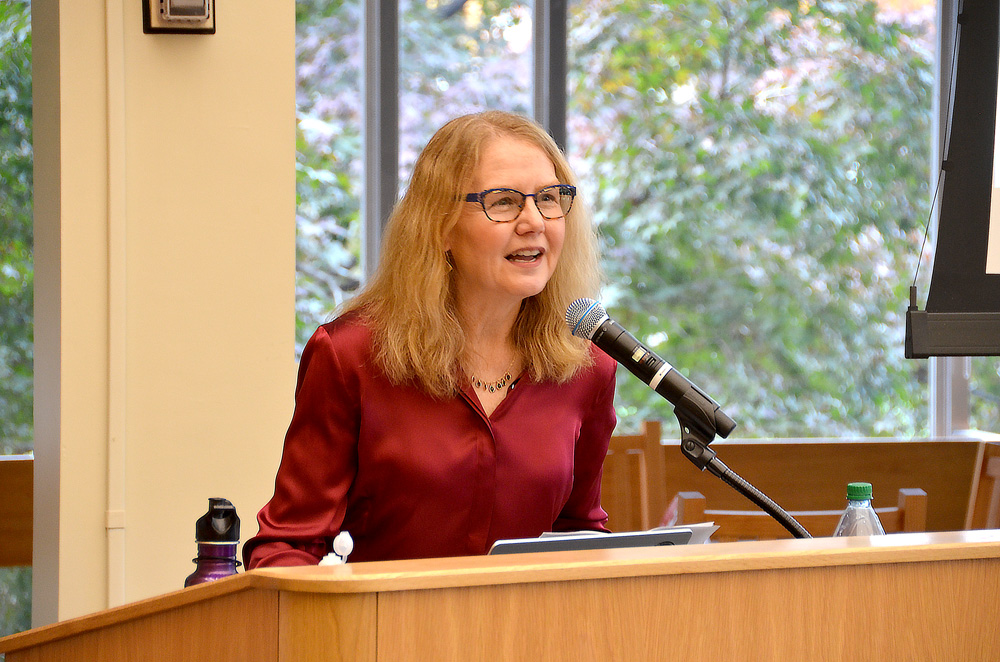
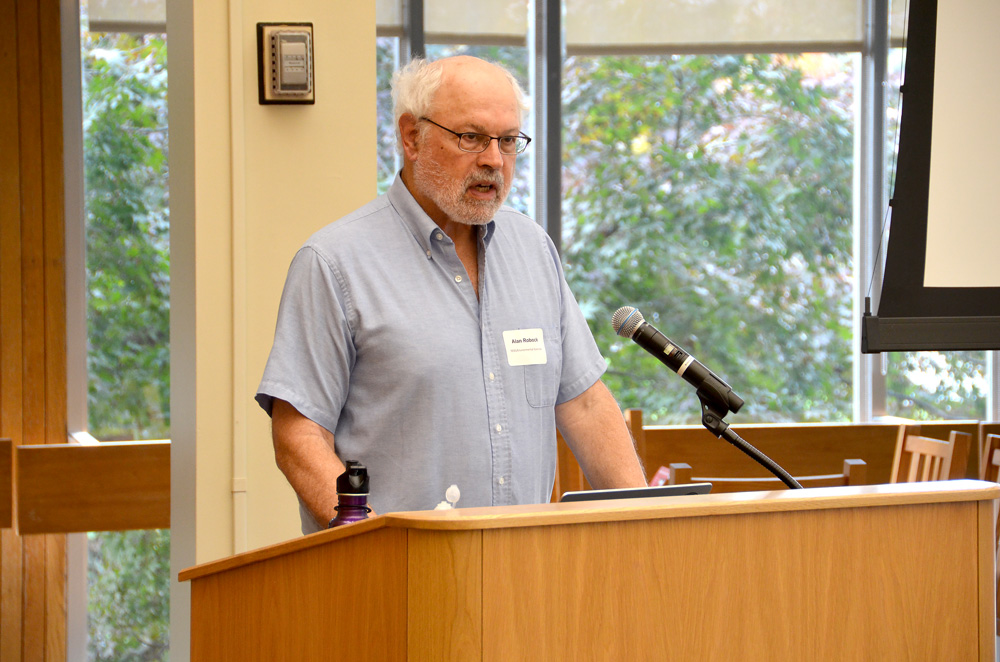
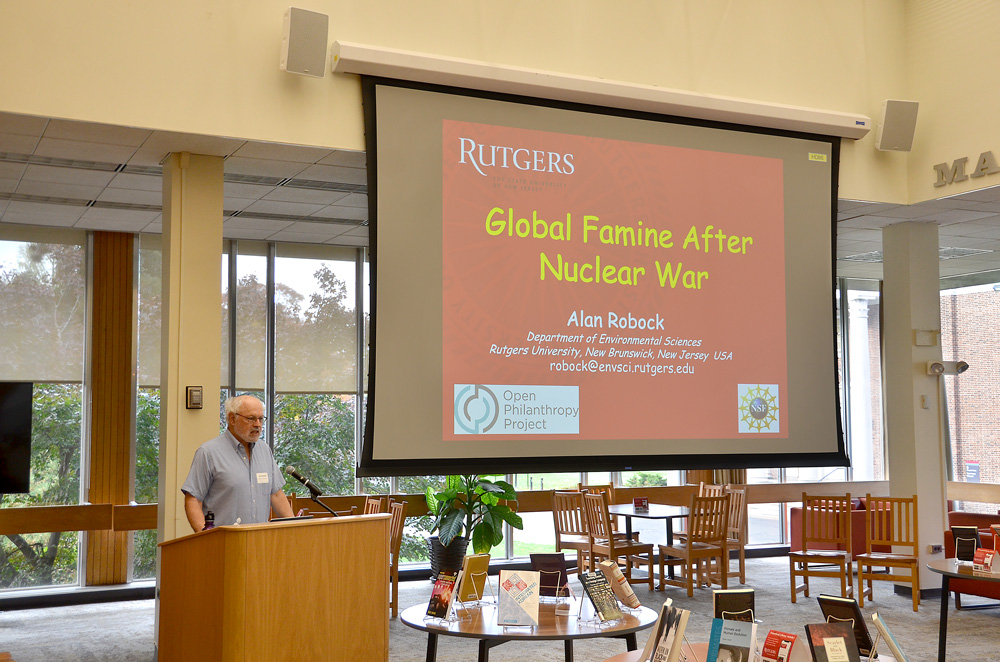
    This year’s keynote speaker was renowned climate scientist Alan Robock, a Distinguished Professor of climate science in the Department of Environmental Sciences at Rutgers’ School of Environmental and Biological Sciences. Dr. Robock presented “Global Famine After Nuclear War,” a thoughtful discussion about the catastrophic impact of nuclear war on food security, and then answered questions from the audience.

    Rutgers–New Brunswick Libraries' Celebration of Scholarship 2022.
    Dr. Robock at the lectern.
    Rutgers–New Brunswick Libraries' Celebration of Scholarship 2022.
    Dr. Robock presented “Global Famine After Nuclear War.”

    The co-sponsors who made this celebration possible are the Margery Somers Foster Center, Rutgers Global, and Rutgers University Press. To learn more, please visit the Celebration of Scholarship website.

    Rutgers–New Brunswick Libraries' Celebration of Scholarship 2022.
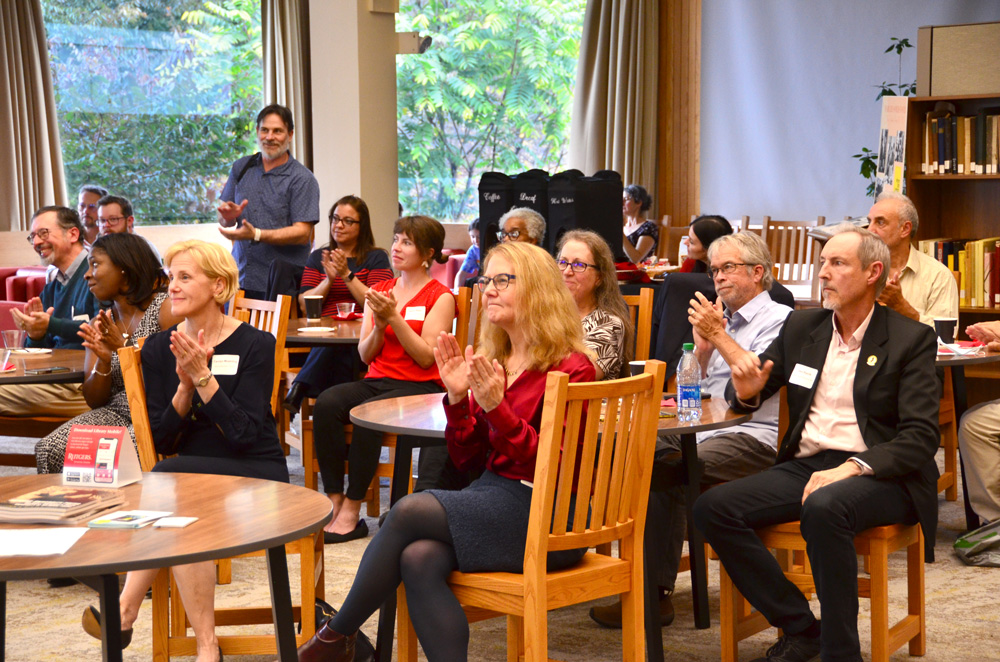
    The audience applauds after Dr. Robock’s keynote presentation.
    Rutgers–New Brunswick Libraries' Celebration of Scholarship 2022.
    Dr. Robock answers questions following his presentation.
    Rutgers–New Brunswick Libraries' Celebration of Scholarship 2022.
    NBL hosted its Celebration of Scholarship 2022 event at Douglass Library.
    Rutgers–New Brunswick Libraries' Celebration of Scholarship 2022.
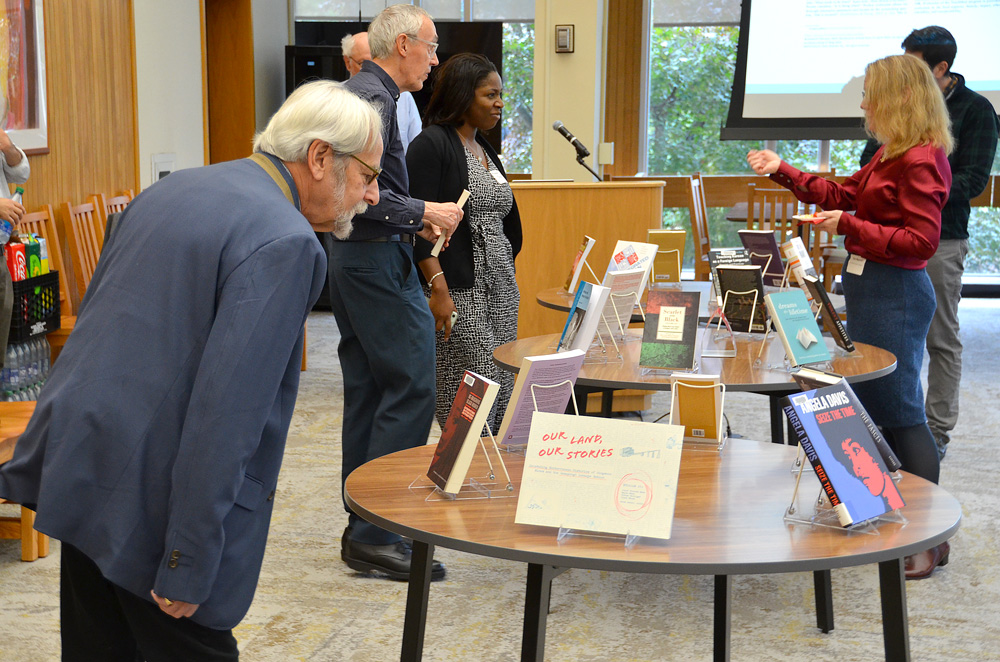
    Guests peruse the Celebration of Scholarship book submissions.
    Rutgers–New Brunswick Libraries' Celebration of Scholarship 2022.
    Magnoni with Rutgers’ Vice Provost for Undergraduate Education Carolyn Moehling.
    Rutgers–New Brunswick Libraries' Celebration of Scholarship 2022.
    Associate Professor Martin Gliserman of Rutgers’ School of Arts and Sciences looks over the book display at COS.
    Rutgers–New Brunswick Libraries' Celebration of Scholarship 2022.
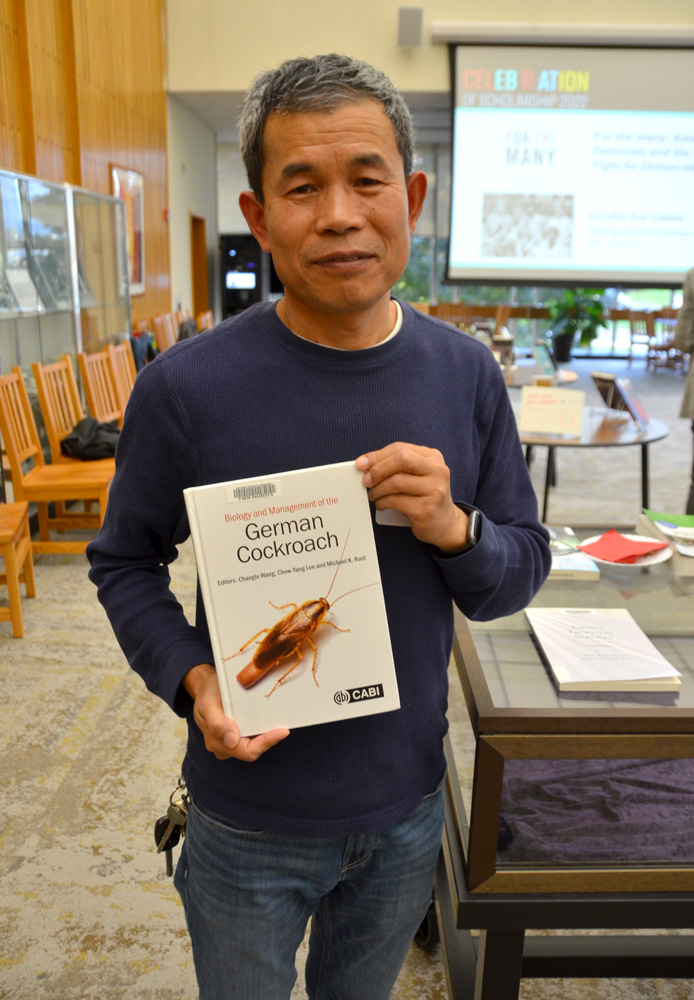
    Dr. Changlu Wang of Rutgers’ Department of Entomology with “Biology and Management of the German Cockroach,” a book he co-wrote with Chow-Yang Lee and Michael K. Rust.
  • EVPAA Meets with RUL

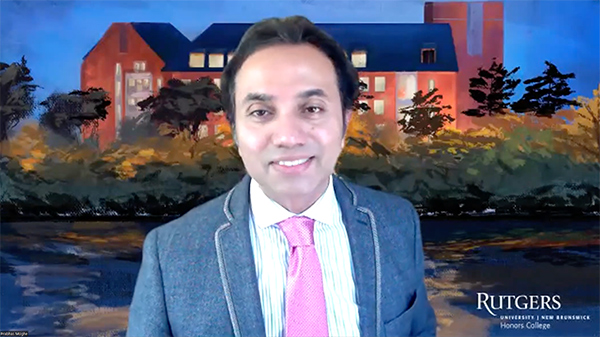
    On October 27, 2022, Prabhas Moghe, Executive Vice President for Academic Affairs (EVPAA), presented his vision and goals for the Office of the EVPAA (OEVPAA) to Rutgers University Libraries (RUL) staff and faculty. The information shared during this virtual meeting will be instrumental to RUL’s organizational strategies. To watch the presentation, please follow this link and click “EVPAA Meeting with RUL” under the Assessment, Reports & Communications section.

    EVPAA meeting with RUL on October 27, 2022.

  • Ex Libris Implementation Team Update – October 2022

    The Ex Libris Implementation Team continues to keep busy with a variety of initiatives, projects, and issues. Here are some highlights:

    Library Mobile

    Over 1,000 patrons have downloaded and registered their Library Mobile app as of mid-October. Weekly drawings are occurring to award swag and gift cards to students who register and respond to Quick Polls. Feedback has been overwhelmingly positive, and we are excited to grow our user base even more. Representatives from the Rutgers Library Mobile implementation team presented on the app and our implementation process at the Ex Libris Northeast User Group (ENUG) conference on October 21.

    Post Implementation Review

    Over the course of FY23, representatives from the Implementation Team will lead a post-implementation review of each of their functional areas. During this process, we will review current backend Alma workflows in an effort to identify areas where improvement is necessary or desired. Once identified, we will prioritize issues for deeper analysis and potential solution implementation. We encourage everyone working with Alma to participate in this process and to reach out to your Implementation Team Representative with any ideas for areas that could use improvement.

    Chosen Name

    Starting October 17, a chosen/preferred name provided by students, faculty, and staff began appearing in Alma patron records in place of the patron’s legal first name. The chosen name is being used in QuickSearch once a patron has signed in and in any email communication from the Ex Libris platform. For more information on managing your chosen name at Rutgers, please visit the University Inclusion and Equity site.

    ReShare Update

    The version updates performed by Index Data on October 2 resulted in many issues that continue to disrupt processes at all PALCI member institutions. While some bugs have been resolved, Index Data continues to address the outstanding issues. Most of the interruptions are specific to the staff interface, but we have been able to continue receiving items with manual intervention. However, patron notifications are currently suspended. As a result, patrons are not receiving emails confirming their request or notifying them of a failed request. We have requested that an alert be placed on the VuFind landing page so patrons are aware of this suspension. PALCI has done a good job of keeping all members informed with updates. We will continue to monitor progress and share updates as they are available.

    Esploro

    Q&A sessions were held for library faculty interested in learning more about Esploro’s researcher profiles. Researcher profiles gather and present information about faculty scholarship, activities, and achievements in order to showcase and promote faculty research, facilitate collaboration and identification of experts, attract external funders and industry partners, and enhance institutional reputation. As proof of concept, publication data was imported using Esploro’s smart harvesting technology, and profiles were created and temporarily activated for all library faculty. Q&A sessions were then held to show faculty how to edit and manage their profile and discuss potential benefits, use cases, and configuration options. Library faculty were also invited to take a brief survey to assess the completeness and accuracy of their profile, share feedback, and offer suggestions for improvement.

  • AvramCamp 2022: My Experience

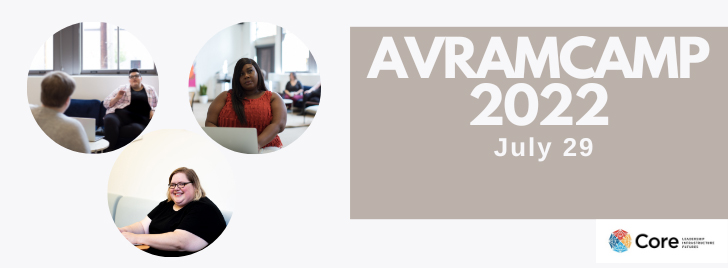
    AvramCamp 2022

    AvramCamp is a one-day preconference offered by Core, a division of American Library Association (ALA). The event is named in honor of Henriette Avram, the creator of MARC format. It was offered on July 29 as a virtual event. Core describes AvramCamp as “a safe and welcoming space for women and non-binary technology library workers to explore common challenges faced, learn strategies for dealing with them, and discuss specific tools to build confidence….” AvramCamp is open to anyone, and registrants don’t need to be ALA members. Attendance was limited to 60 participants, who were from a range of libraries and at different points in their careers.

    The event opened with a discussion of ALA’s code of conduct, an overview of a jamboard (a virtual bulletin board with virtual post-its), and a guided meditation. The meditation was led by Ginger Stevens, a certified meditation coach and certified life coach. It was the first event I’ve attended that began with a guided meditation!

    The meditation was followed by a keynote by Dr. Sharon Whitfield, Electronic Resources and User Access Librarian, Rider University. Dr. Whitfield is also a researcher, and her primary focus is gender and library technology. Her keynote was titled “Schrodinger’s Workplace: Existing in Multiple States of Being,” and focused on the impact of external departments and constant interruptions on our work. Whitfield stressed that we tend to make more mistakes when we’re fragmented. Other drivers include increased workloads due to post-COVID retirements and vacancies and an uncertain future. She discussed how we can take control in such circumstances.

    Attendees were asked to reflect on our workplace and the various roles in which we serve. Whitfield asked attendees to discuss how they felt fragmented, both at work and in their personal life at home. We discussed whether we felt successful at multitasking and if we were effective at decision-making amid numerous interruptions. Whitfield addressed fragmentation and Imposter Phenomenon. Fragmentation can lead one to feel like an imposter, and she asked participants to acknowledge if they had felt that way.

    The next topic was gendered fragmentation, a common part of the culture of academia. Women are often viewed as nurturers and take on more service. This is particularly true for BIPOC women. Women who are in technology fields often lack mentors. Whitfield noted that Imposter Phenomenon isn’t exclusive to women and reported that 70% of the general population have experienced imposter tendencies in relation to their work.

    Whitfield shared a working definition of Imposter Phenomenon, which is common to high achievers, who are unable to internalize and accept their success. They often attribute their success to luck and fear that they will be revealed as a fraud. Although men may also suffer from Imposter Phenomenon, Syndrome, Whitfield reported that they tend not to internalize their feelings.

    The discussion moved to an examination of the unintended consequences of fragmentation and Imposter Phenomenon, which include workplace mobbing (i.e., bullying), decision making that doesn’t balance short- and long-term consequences, toxic work environment, and burnout from taking on too much responsibility. Workplace mobbing is common in libraries due to lack of clear job descriptions and this results in people being pulled into different fragmented areas. Attendees were asked to consider what we might do to stop fragmentation and feelings of imposter phenomenon.

    The remainder of the day was devoted to two breakout sessions and a closing discussion. Participants were asked to use virtual sticky notes to suggest discussion topics for the two afternoon breakout sessions. The suggestions with the most votes were selected (imposter phenomenon and invisible disability/neurodiversity). Feedback from the Imposter Phenomenon session included:

    • Adopting the mindset that there’s no true emergency in the work we do.
    • Recognizing that we may be our own worst critic.
    • The phrase “just say no” isn’t just about drugs and may be used at work.

    Feedback from the invisible disability/neurodiversity discussion included:

    • Provide training tools and resources for student employees/co-workers based on how you wish you had been trained.
    • Disclose to co-workers; explain the things that you need to be successful at work to those who need to know.
    • Ask students at hiring if they need accommodations—mental/physical/religious accommodations.

    The session ended with a recap of the breakout sessions and an open discussion.