A new year is approaching! If you are thinking about retirement and what is involved in the process you should check out the important on-line links below that offer key information to help you prepare.
Additionally, UHR offers seminars to both ABP and PERS members contemplating retirement. If you are interested in attending a seminar, please check the Learning and Development Course Registration System under Employee Benefit and Work-Life Programs managed by University Human Resources.
Please note: Employees will need to submit an intent to retire letter to their supervisors to advise of the effective date of retirement once they have fully committed to retire.
Tom Frusciano accepts the 2017 Roger McDonough Librarianship Award from Bob Vietrogoski.
On October 24, at a meeting of the New Jersey Studies Academic Alliance, the 2017 Roger McDonough Librarianship Award was presented to Thomas J. Frusciano, the university archivist of Rutgers, The State University of New Jersey. This award is named for Roger H. McDonough, New Jersey state librarian from 1947 to 1975. Beginning in 2002, the New Jersey Studies Academic Alliance, together with the New Jersey Historical Commission, Mid-Atlantic Regional Archives Conference-New Jersey Caucus, and the New Jersey Library Association History & Preservation Section, has given this award annually to a librarian, archivist, or manuscript curator for excellence in service to the New Jersey history research community and/or the general public.
A New Jersey native, Tom Frusciano is a tenured member of the library staff at Rutgers University Libraries’ Special Collections and University Archives. He began his professional career as an archivist at Educational Testing Services in Princeton. He then became the first professionally trained university archivist at New York University, and later coauthored New York University and the City: An Illustrated History. At Rutgers since 1989, Frusciano has written or edited histories of the presidents of Rutgers, Douglass College, and the Rutgers Scarlet Knights football team, among many other subjects. In recent years, he played an integral role in the 2016 Rutgers 250th celebration, library exhibit, and commemorative historical volume entitled Rutgers: A 250th Anniversary Portrait. Starting in 2015, he also served on the Rutgers Committee on Enslaved and Disenfranchised Populations, which produced the report Scarlet and Black. This committee’s important work has led to the new naming of James Dickson Carr Library (formerly Kilmer Library), now named in honor of Rutgers’ first African American graduate.
Beyond Rutgers, Frusciano has long been professionally active, particularly in the Society of American Archivists (SAA) and in the Mid-Atlantic Regional Archives Conference (MARAC). He was elected to the SAA Council from 2009 to 2012, coedited the SAA manual Archival Arrangement and Description (2013), and was named an SAA Fellow in 2002. He has taught archival courses at both New York University’s Archival Management and Public History program, and the Rutgers School of Communication and Information. Some of his former students are now archivists and librarians at archives, libraries, and historical societies throughout New Jersey and elsewhere. He has also served on several editorial boards and coedited the Journal of Archival Organization.
Tom is the fourth recipient of the McDonough Award from Rutgers University Libraries’ Special Collections and University Archives, following Bonita Craft Grant (2011), Janet Riemer (2014), and Ron Becker (2015).
Bart Everts at Robeson Library has compiled a new research guide that aggregates on-campus DACA resources. It includes statements from Rutgers officials and the New Jersey and federal governments in addition to Rutgers-related DACA news. Kudos to Bart for tracking this important issue and its impact on Rutgers students.
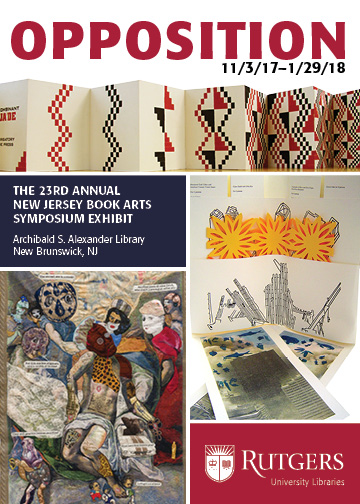
The 23rd annual NJ Book Arts Symposium takes place at Alexander Library on November 3.
Celebrating the Book Arts at Rutgers
Opposition, the 23rd annual New Jersey Book Arts Symposium, will take place at Alexander Library on November 3. The program features seven distinguished artists whose work opens up for discussion the presence and uses of opposition in the 21st-century artists’ book, and an Austrian bookseller who specializes in artists’ books. An exhibit will be on display through January 29. For more information or to register, visit libraries.rutgers.edu/bookarts.
Reading Big at Rutgers–Camden
Paul Robeson Library will partner with the Rutgers–Camden Center for the Arts to commemorate the Big Read with an exhibition of materials related to Claudia Rankine’s Citizen: An American Lyric (2014) beginning November 1. Described as a genre-defying convergence of poetry, visual art, and criticism, Citizen discusses racial aggressions in 21st-century life and media. It was awarded the 2014 National Book Critics Circle Award for poetry and was a finalist for the National Book Critics Circle Award in criticism the same year.
Opera @ the Art Library!
The Art Library will welcome Hub City Opera and Dance Company for a free concert and dance performance with excerpts from Carl Orff’s opera Der Mond (The Moon) on Sunday, November 12 at 5 p.m. Hope to see you there!
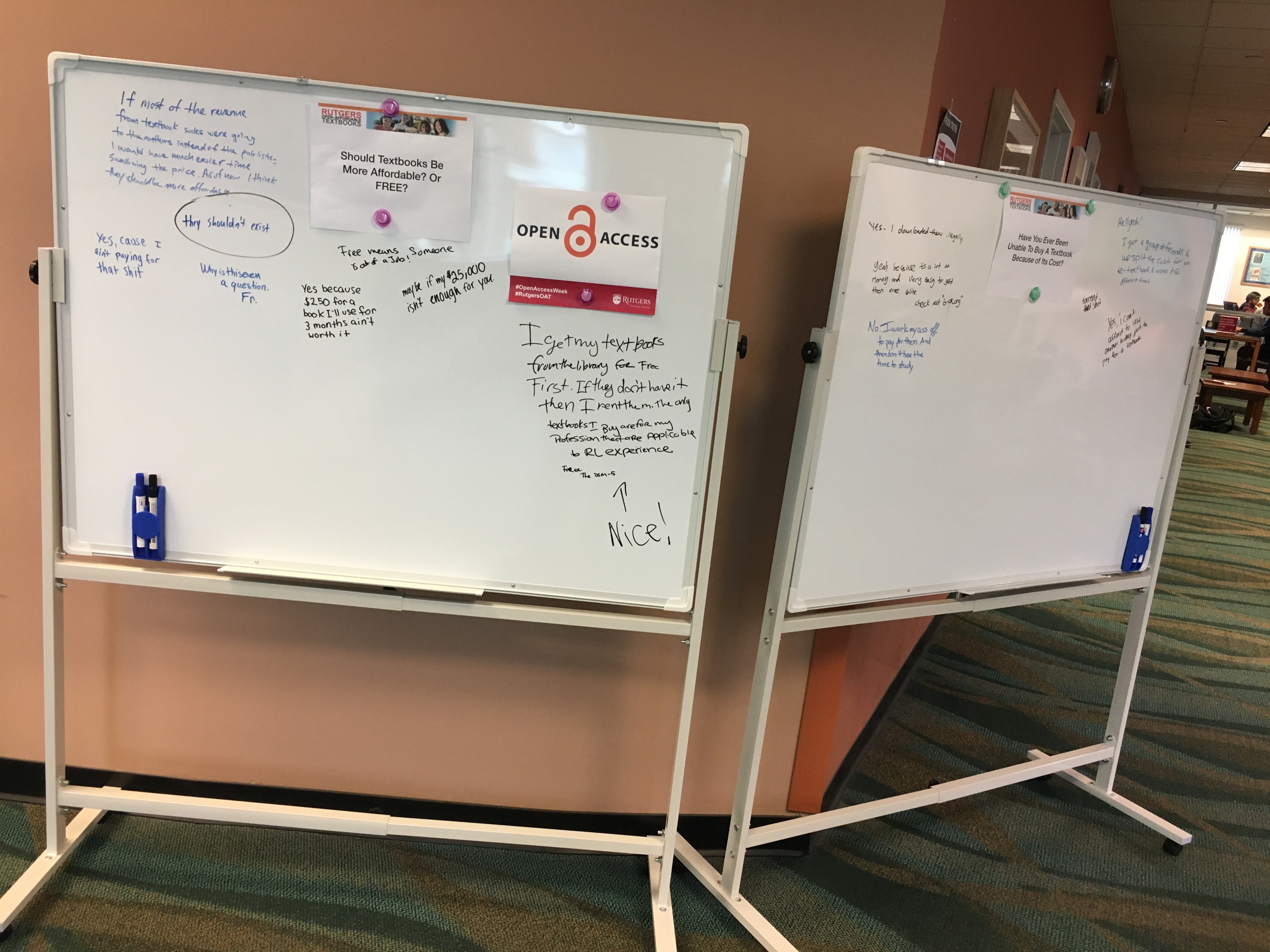
White boards in Alexander Library provided a forum for student voices during Open Access Week.
Shining the Spotlight on Open Access
Libraries and other institutions around the world celebrated Open Access Week from October 23 through October 29. The festivities at Rutgers included a #RutgersOAT social media campaign sharing statistics about open access and the impact of the Open and Affordable Program on Rutgers students. Whiteboards in Alexander Library asked students to respond to a number of prompts surrounding the issues of textbook affordability and open access, including “What does open access mean to you?” Perhaps our favorite response: “Empowering all to access information + use it to enact meaningful change.” Well said!
Imparting Wisdom on the Next Generation
The exhibition What I know Now That I Wish I Knew Then, on display at Douglass Library through November 15, presents a series of messages from the alumnae and friends of Douglass Residential College. Curated by sociology professor Caren Cerulo, the display highlights career advice and reflections from professional women.
Magnificent Miltons
Milton to Milton: The Legacy of J. Milton French, is on display at Alexander Library through February 28. The exhibition features highlights from the collection of Joseph Milton French, a former president of the Milton Society and professor and chair of the Department of English at Rutgers, where he taught from 1940 to 1960. The collection includes over 200 volumes published between 1600 and 1800, with rare first and early editions by John Milton, Ben Jonson, George Wither, Michael Drayton, John Suckling, and other iconic figures in the history of English literature.
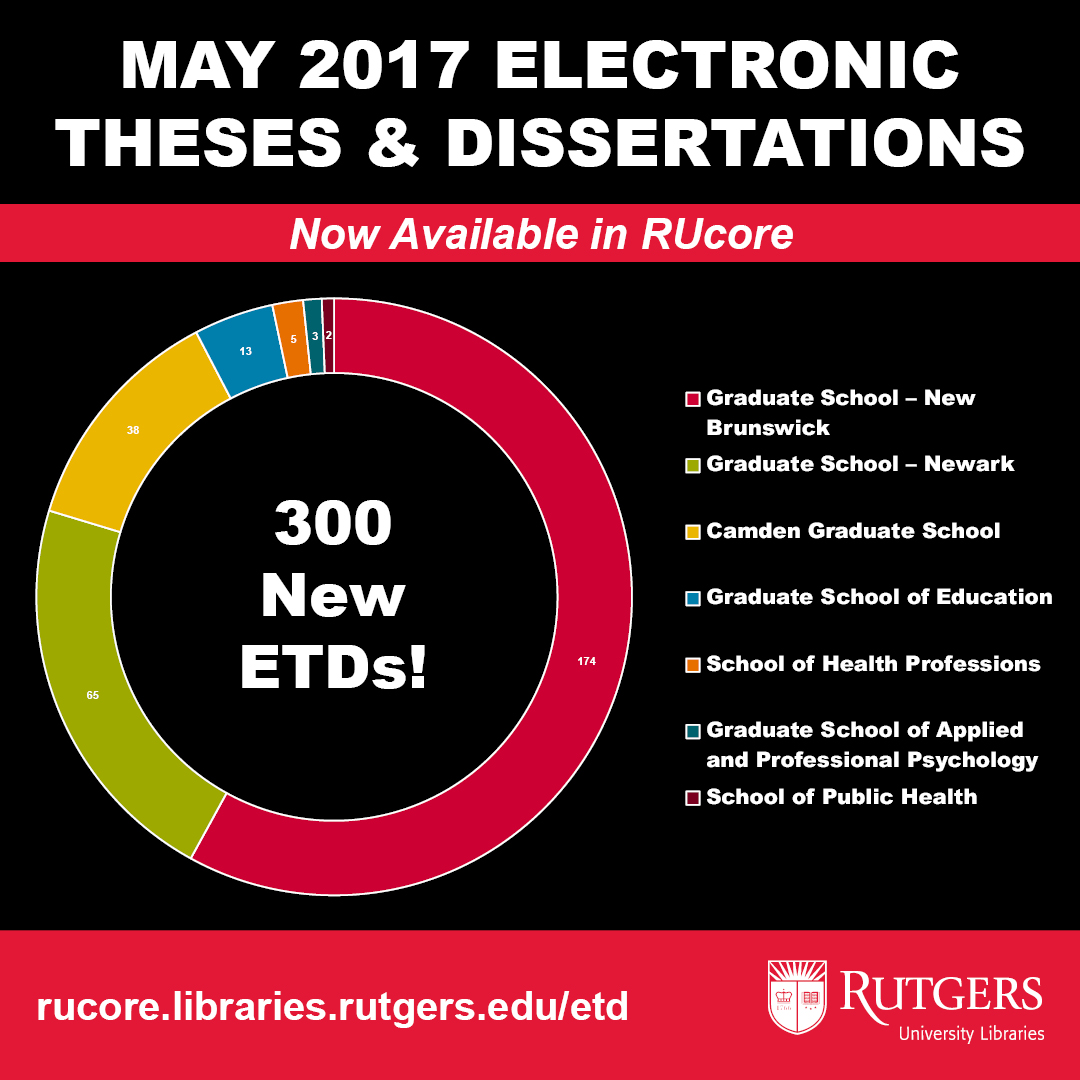
Three hundred new Rutgers electronic theses and dissertations were recently added to RUcore.
Making Grad Students’ Research Available to the World
Shared User Services reports that 300 new Rutgers electronic theses and dissertations from the May 2017 degree period have been added to RUcore: 174 from the Graduate School–New Brunswick, 65 from the Graduate School–Newark, 38 from the Camden Graduate School, 13 from the Graduate School of Education, 5 from the School of Health Professions, 3 from the Graduate School of Applied and Professional Psychology, and 2 from the School of Public Health.
Sure, the Libraries play host to a slew of great events throughout the year—but so do other units across the university. Check out what’s in store from other departments in November.
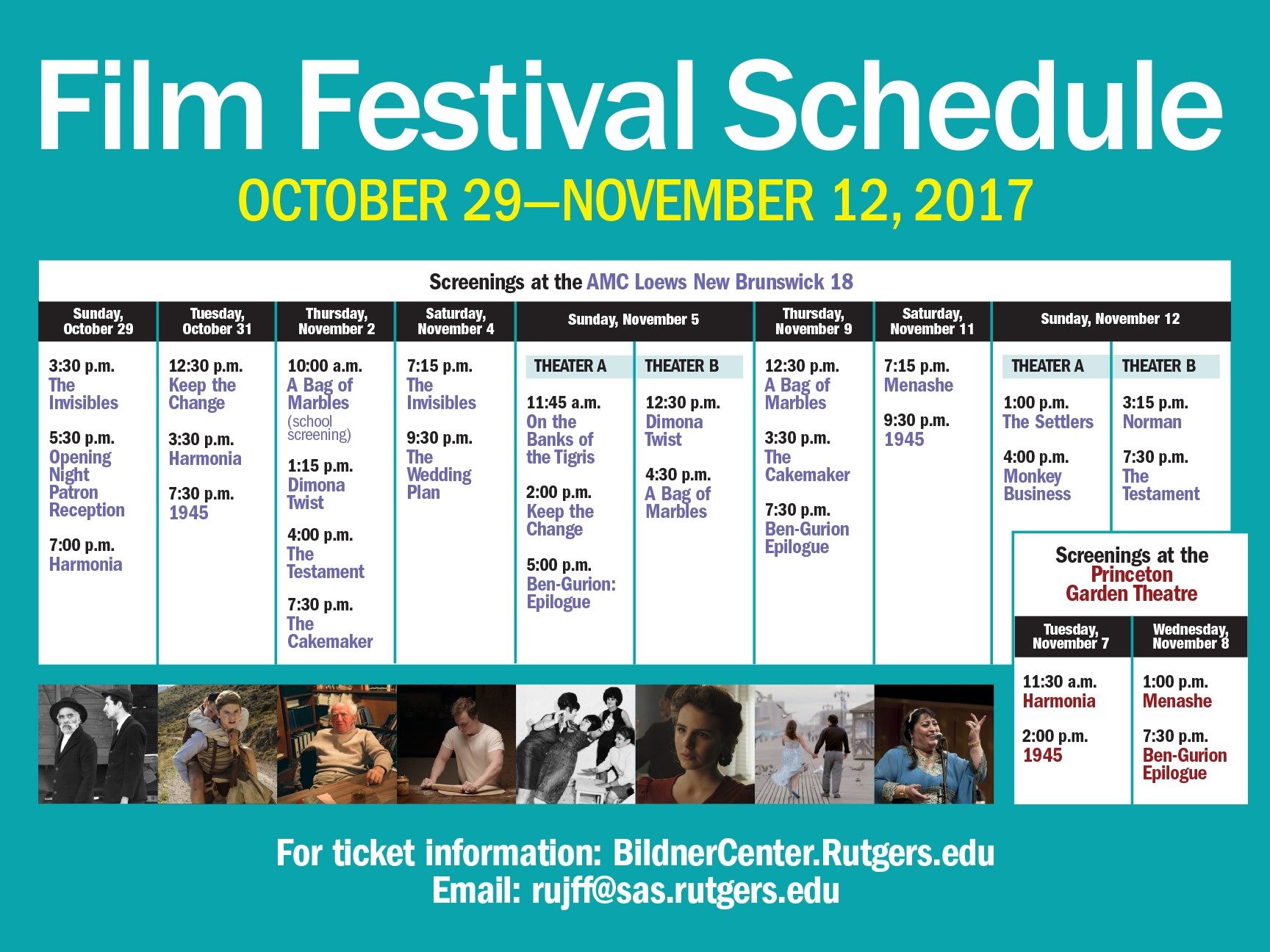
The Rutgers Jewish Film Festival takes place October 29–November 12.
The Rutgers Jewish Film Festival
October 29–November 12
Times and locations vary, Rutgers–New Brunswick
The Rutgers New Jersey Jewish Film Festival showcases dramatic and documentary features from around the world, each of which offers unique insight about Jewish life.
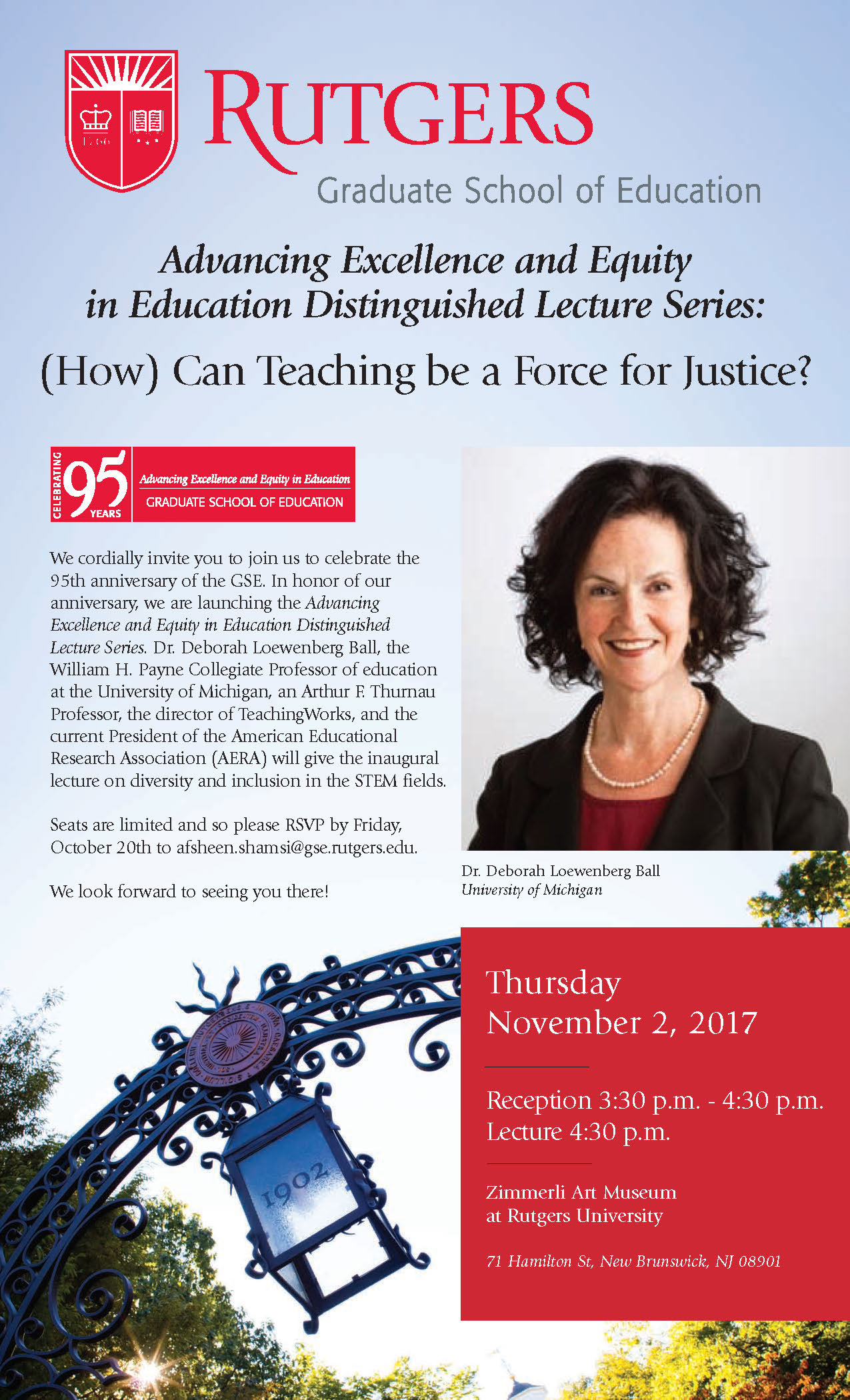
(How) Can Teaching be a Force for Justice? presented by the GSE takes place on November 2.
(How) Can Teaching be a Force for Justice?
Thursday, November 2
Reception 3:30 – 4:30 p.m.
Lecture 4:30 p.m.
Zimmerli Art Museum, Rutgers–New Brunswick
The Graduate School of Education cordially invites you to join them to celebrate the 95th anniversary of the GSE. In honor of their anniversary, they are launching the Advancing Excellence and Equity in Education Distinguished Lecture Series. Dr. Deborah Loewenberg Ball, the Willi William H. Payne Collegiate Professor of education at the University of Michigan, and Arthur F. Thurnau Professor, the director of TeachingWorks and the current President of the American Educational Research Association (AERA) will give the inaugural lecture on diversity and inclusion in the STEM fields.
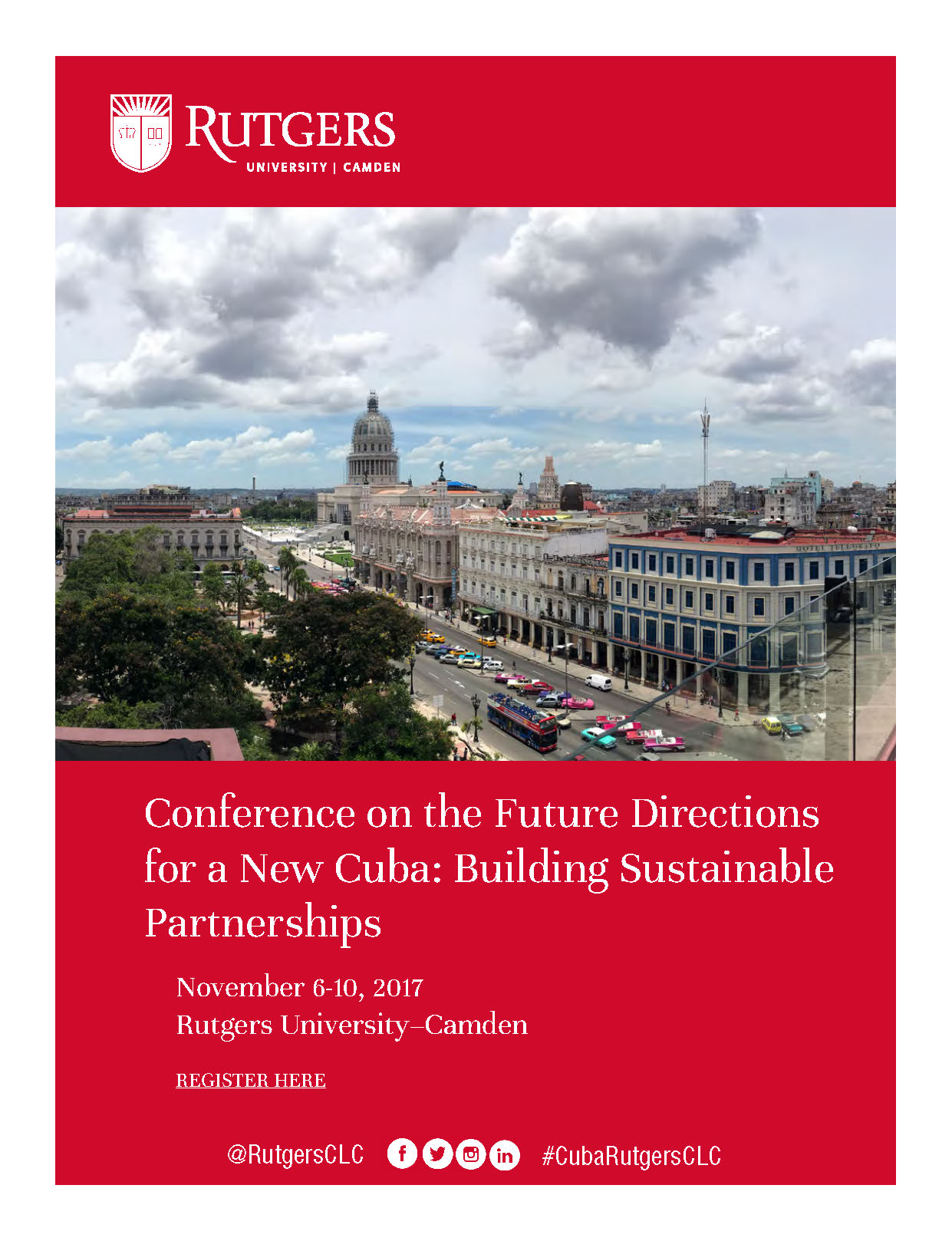
Rutgers–Camden’s Conference on Cuba will be open to the public on November 6.
International Conference on Cuba
Monday, November 6
8:30 a.m. – 6:30 p.m.
Campus Center, Rutgers–Camden
Conference on the Future Directions for a New Cuba: Building Sustainable Partnerships will explore how institutions of higher learning build sustainable public-private partnerships for research and entrepreneurial programs in sustainable agriculture, education, the medical sciences, the arts, and community development. Dignitaries and leading scholars from the University of Havana, San Geronimo University, and the University of Medical Sciences of Havana will discuss research on effective strategies for increased development in Cuba as the country continues to normalize relations with the United States. The first day of this weeklong conference is open to the public, and will feature a 9:30 a.m. keynote address by Ambassador José Ramón Cabañas Rodríguez of the Cuban Mission to the United States.
The Timeless Lessons of Wall Street’s Scandals
Thursday, November 9
5:30 – 7:30 p.m.
15 Washington Street, Rutgers–Newark
A timely talk by Diana B. Henriques, New York Times contributing writer and author of A First-Class Catastrophe: The Road to Black Monday in Wall Street Historyand The Wizard of Lies: Bernie Madoff and the Death of Trust.
In May 2017, HBO released its film-length adaptation of The Wizard of Lies, with Robert De Niro starring in the title role and Ms. Henriques playing herself. The film was nominated for four Emmy awards, including “Best Picture.”
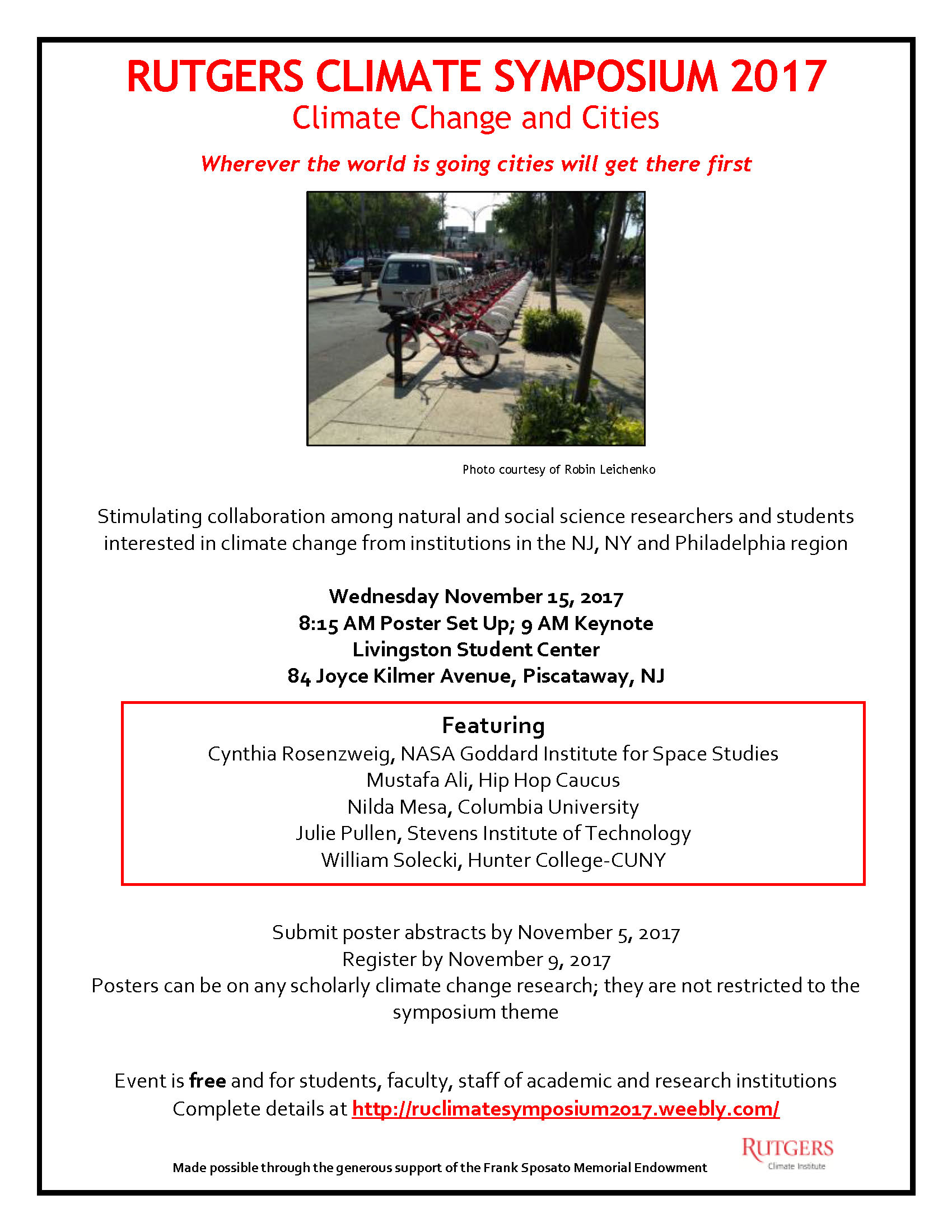
The Rutgers Climate Institute’s symposium will be held on November 15.
Rutgers Climate Symposium 2017: Climate Change and Cities
November 15, 2017
8:15 a.m. – 3:00 p.m.
Livingston Student Center, Rutgers–New Brunswick
This one-day symposium is intended to stimulate interaction and collaboration among the community of natural and social science researchers and university students interested in climate change who are from institutions in the greater New Jersey, New York and Philadelphia region. Over 200 attendees representing more than 20 research institutions in our region participate annually. Talks are centered on the symposium theme. The poster session invites abstracts on climate change scholarship and are not restricted to the theme. There is no fee to attend but registration is required.
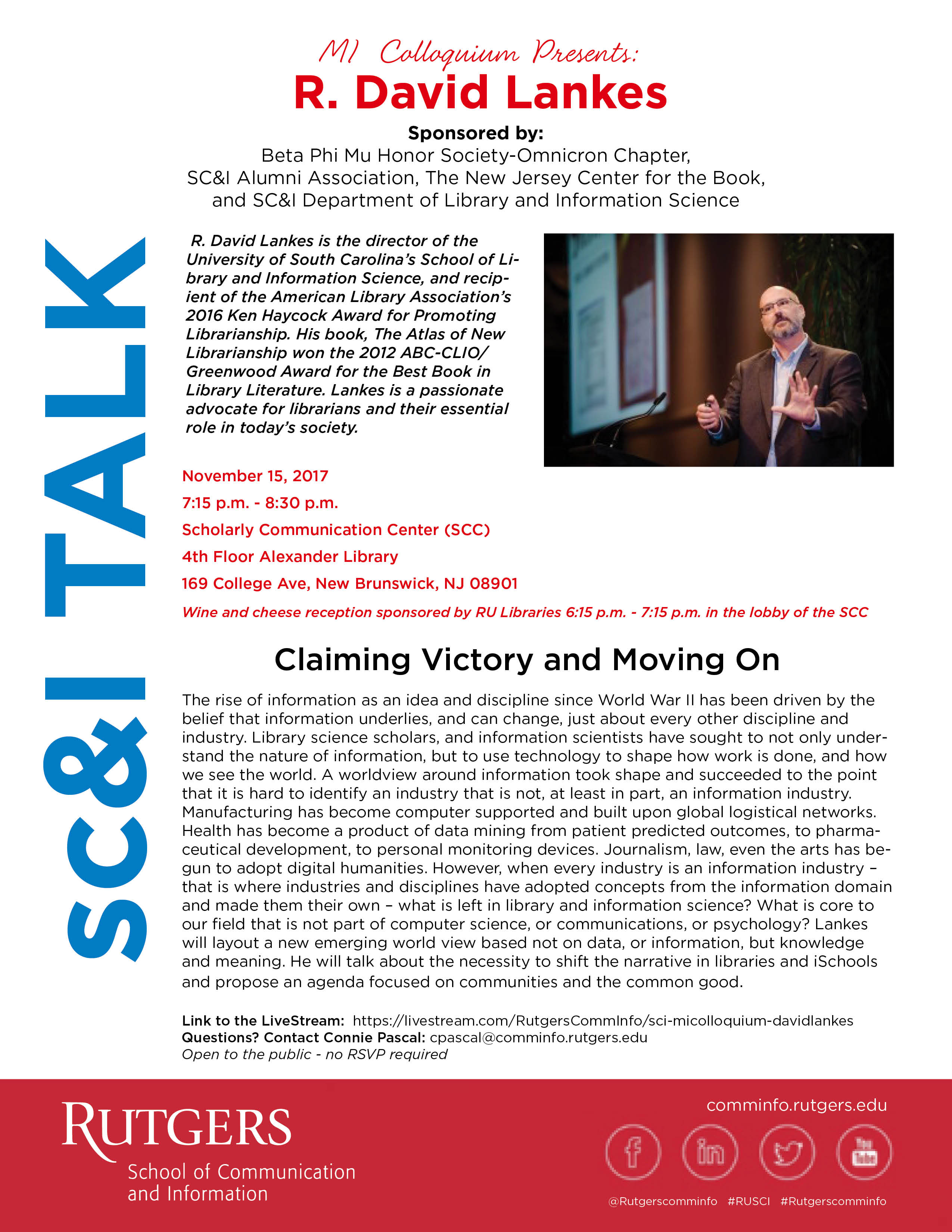
R. David Lankes will present about the future of library and information science at Alexander Library (and online!) November 15.
Claiming Victory and Moving On – MI Colloquium by R. David Lankes
The rise of information as an idea and discipline since World War II has been driven by the belief that information underlies, and can change, just about every other discipline and industry. When every industry is an information industry, what is left in library and information science? Lankes will lay out a new emerging world view based not on data, or information, but knowledge and meaning. He will talk about the necessity to shift the narrative in libraries and iSchools and propose an agenda focused on communities and the common good. Free and open to the public, no RSVP required.
Imagining Research, Researching Imagination
November 16, 2017
4:30 – 6:30 p.m.
Writers House, Rutgers–Camden
Novelist Janet Benton, author of Lilli de Jong, and Janet Golden, professor of history, Rutgers–Camden, come together to explore the ways imagination and research inform the writing of both fiction and history, drawing on their mutual interest in the history of mothers and infants. Books will be for sale following the conversation. Admission is free but please RSVP.
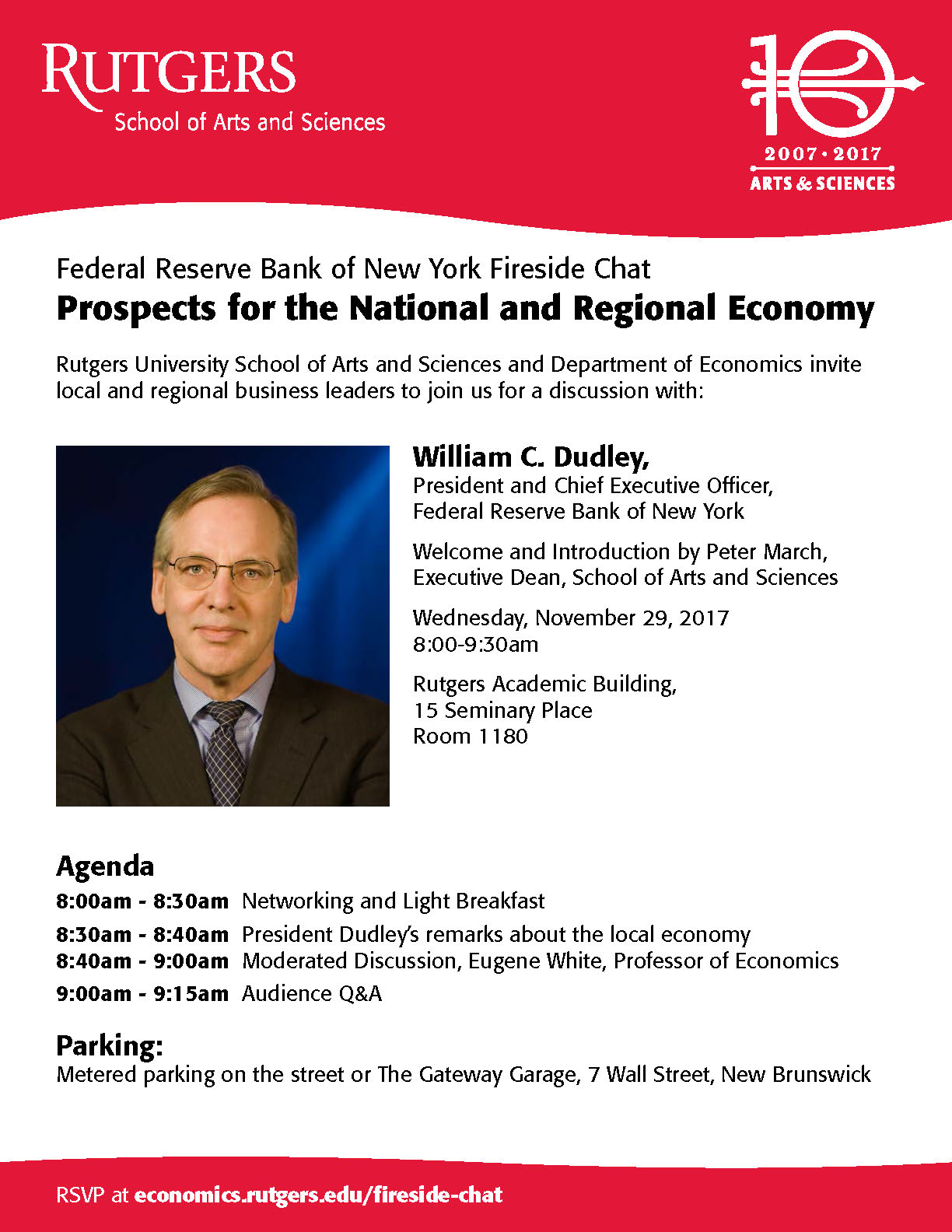
Join the president of the Federal Reserve Bank of NY for a special fireside chat on November 29.
Prospects for the National and Regional Economy: Federal Reserve Bank of New York Fireside Chat
Rutgers University School of Arts and Sciences and Department of Economics invites local and regional business leaders to join us for a discussion with William C. Dudley, president and chief executive officer of the Federal Reserve Bank of New York. Light breakfast, networking, presentation, discussion, and Q&A.
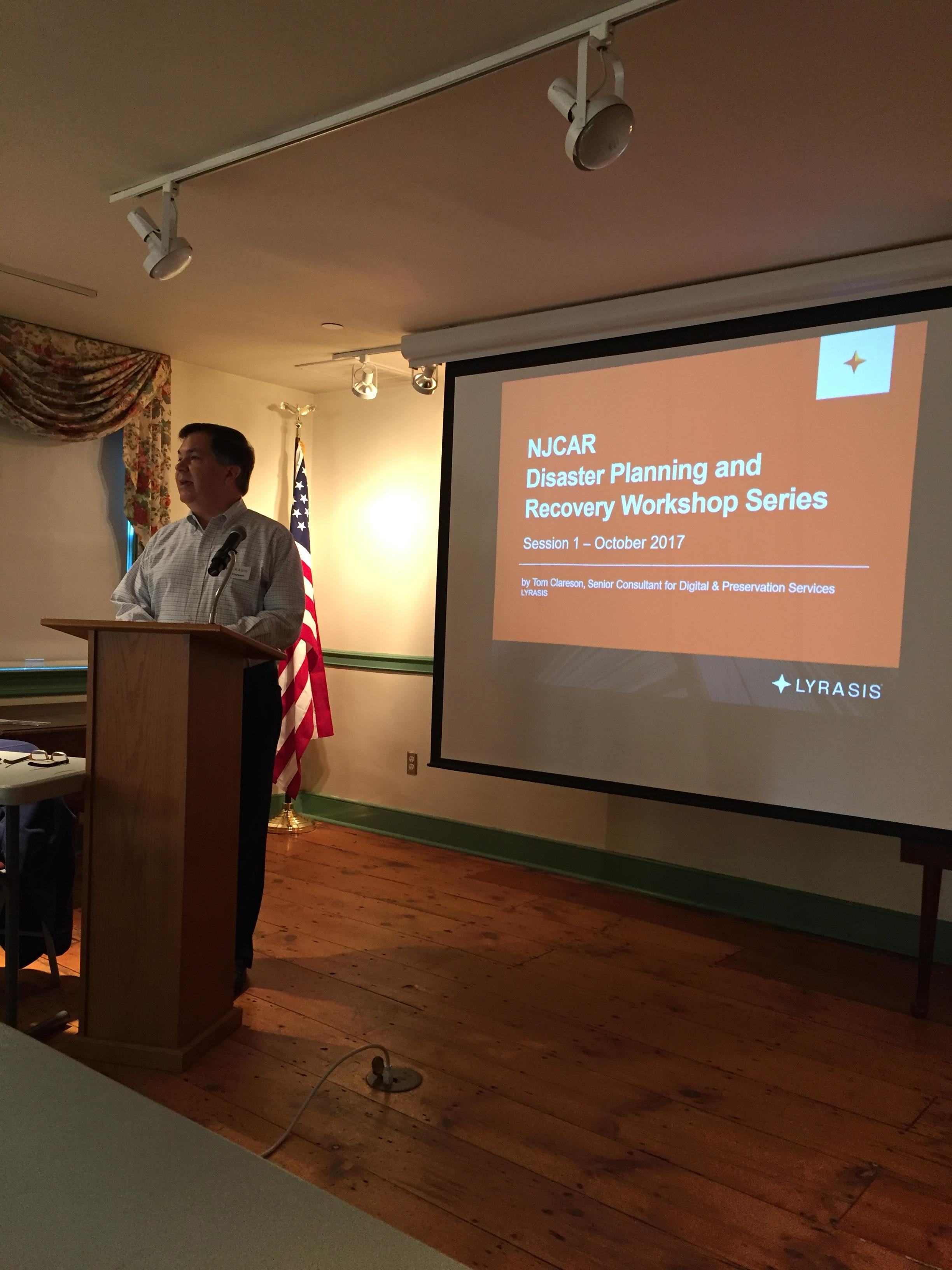
Tom Clareson, senior consultant for digital and preservation services at LYRASIS, presents at the Disaster Planning and Recovery Workshop.
On October 17, Anthony Timek and I attended part one of a two-part Disaster Planning and Recovery Workshop sponsored by the New Jersey Cultural Alliance for Response (NJCAR). NJCAR is a new alliance that is comprised of a network of organizations, associations, agencies, and individuals dedicated to safeguarding the State’s cultural heritage.
The full-day event was presented by Tom Clareson, senior consultant for digital and preservation services at LYRASIS, the nation’s largest library and cultural heritage network. He talked about the importance of evaluating collections ahead of time and generally knowing the types and value of the materials an organization owns. Clareson laid out a comprehensive disaster plan that includes:
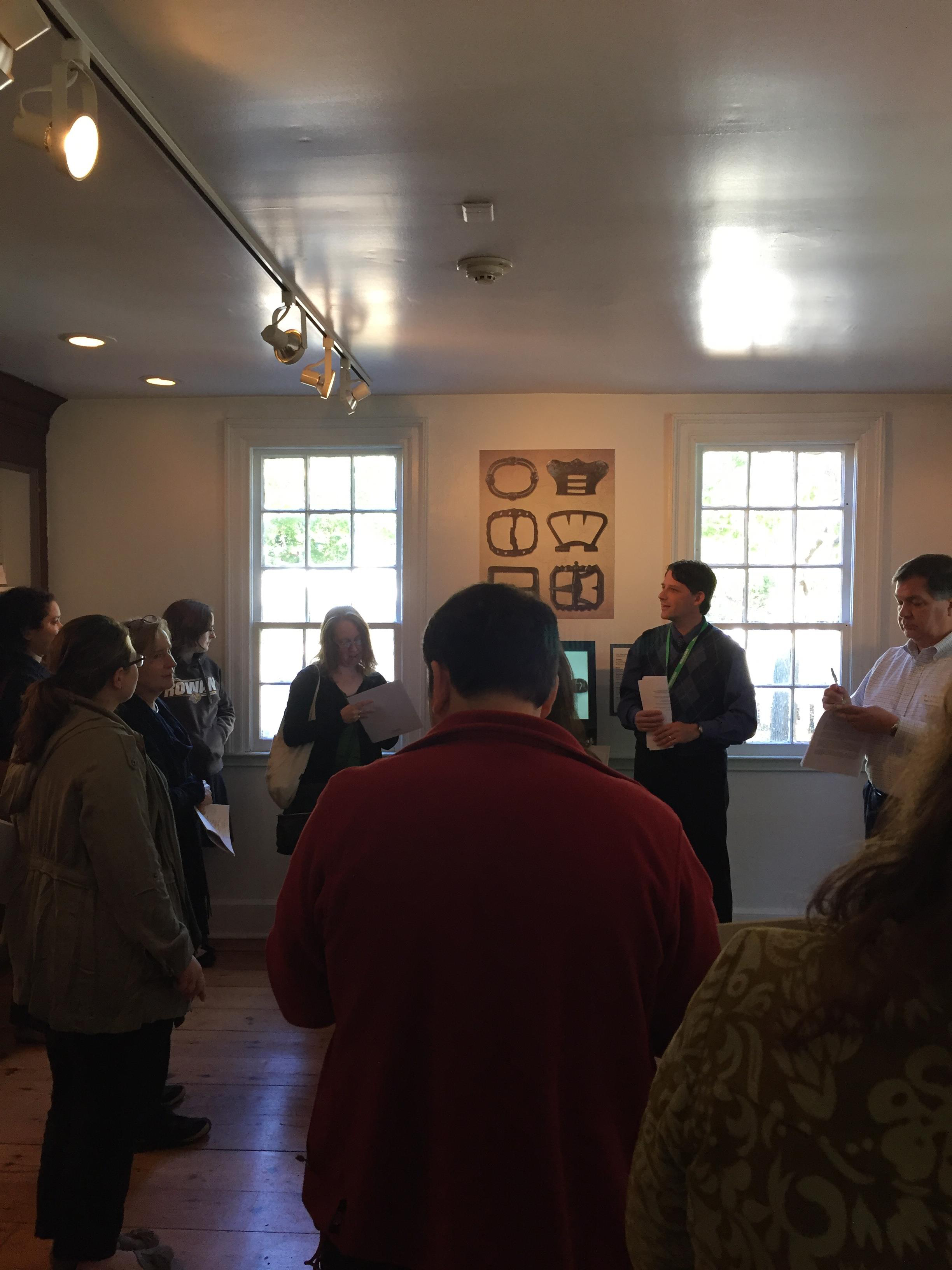
The group conducts a facilities assessment of Old Town Village.
A communication plan
Emergency procedures
Facilities plans
Resources lists
Holding priorities
Insurance information
Response procedures
Evacuation plans
As part of an exercise, the group completed a thorough facilities assessment of East Jersey’s Old Town Village, who hosted the event. This included evaluating major areas of the grounds including architecture, drainage, protection from fire and water, the HVAC system, security and more. This kind of assessment identifies vulnerabilities and proposes ways to mitigate them. Part two of the workshop will be held in late November and will cover recovery and hands-on training with damaged materials.
Many of you will have seen by now that this year’s State of the Libraries meeting on December 6 features special guest speaker Calvin K. Lai. (If you haven’t yet registered on Eventbrite, please take a moment to do so. Enter SOTL2017 when prompted for a password.) In advance of his visit to Rutgers, let’s learn a bit more about his research.
As director of research for Project Implicit, Lai explores implicit biases, or the tensions between our conscious experience and unconscious mind and the resultant disconnect between our thoughts and actions. These biases are evident when, for instance, our attitudes about particular groups of people (based on their gender, race, religion, weight, ability, and so on) are at odds with our explicitly stated values about those groups.
Lai’s research focuses on different approaches to changing our implicit biases and the question of whether changing these biases is actually the best approach for mitigating their effects on our behavior. He also offers lectures and workshops to organizations that discuss how unwanted influences can impair organizational performance.
If you simply can’t wait to learn more, visit the Project Implicit website to complete an Implicit Association Test on your own or check out Who, Me? Biased?, a video series on implicit bias from the New York Times that features Lai (above).
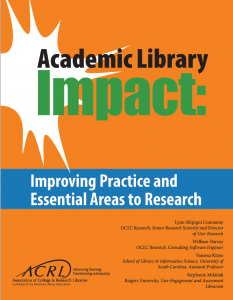
Stephanie Mikitish is co-author, along with Lynn Silipigni Connaway, William Harvey, and Vanessa Kitzie, of “Academic Library Impact: Improving Practice and Essential Areas to Research,” a new report from The Association of College and Research Libraries. We asked her to provide an overview of the findings and what might be most applicable to Rutgers University Libraries. Enjoy!
Educational stakeholders are increasingly calling upon academic libraries to document their impact, especially in the areas of student learning and success. The Association of College and Research Libraries (ACRL) commissioned OCLC to investigate how librarians and other library employees can define, measure, and communicate their contributions to these areas. As Rutgers University Libraries continue to adapt to responsibility centered management (RCM) with the rest of the university, librarians and other employees can utilize the report and tools developed by the project team and add to research on library contributions to student learning and success.
RCM has remapped stakeholder groups into more defined units. The deans of the university’s schools now control more of their budget, and they will likely be more willing to fund resources and services that clearly and directly benefit their faculty and students. Currently, library faculty and staff collect and report numbers for entire groups of users, such as the number of books checked out by undergraduate students for the entire university, or for library location, such as the number of exits at Alexander Library or the number of reference questions answered at the Robeson Library reference desk. Some data are more school- and even department-centered, such as the number of bibliographic instruction classes taught for the Newark College of Arts & Sciences. Studies of student learning and success conducted at other RCM institutions can suggest future directions for the Libraries’ research in these areas. However, the quality of data collected is an important factor that librarians and other library employees must address.
To facilitate future studies and reporting, library faculty and staff may need to rethink strategies for collecting relevant data in a more consistent manner with concern to individual user privacy. While some data, such as the exit gate count, is consistently taken at each library, other data, such as reference statistics, may be recorded using different units of measurement (e.g., time required to answer a question), even at the same location. Standardizing data collection is a large task, but research that documents and informs other librarians on how to go about this and how to use the data may be eligible for funding from ACRL.
In order to promote research, ACRL will be offering grants to conduct and/or present research in the following 6 areas.
Communicate the library’s contributions
Match library assessment to institution’s mission
Include library data in institutional data collection
Quantify the library’s impact on student success
Enhance teaching and learning
Collaborate with educational stakeholders
The project team identified the above areas based on literature on academic library impact on student learning and success and from interviews with librarians and provosts. Given the scope of the Libraries’ collections, spaces, and services, any work done to demonstrate our contribution to student learning and success would fall into one or more of the categories above. The components of the ACRL/OCLC project, which include a research agenda to guide future work on the topic and a literature search/visualization, can suggest what aspects of the Libraries’ resources are most relevant to Rutgers stakeholders, ways to measure reach and impact, and how to effectively communicate the results of such work.
In spring 2017, the Libraries decided to adopt the new library service platform (Alma and Primo) from Ex Libris. The decision was made in support of two major librarywide priorities: improving information control and optimizing collection development and management. What this means to the Libraries is that Alma will replace the current SirsiDynix system and Primo will replace both the EBSCO Discovery Service and VuFind catalog. Unlike our current configurations, Alma and Primo are fully integrated with each other. They also provide other important benefits: a unified interface to manage our entire collections of electronic and print resources, rich analytics for making better decisions about collections, the potential of improving the discovery experience of library users, and the opportunities to collaborate with other Alma/Primo libraries.
The Ex Libris Implementation Project officially began at Rutgers in late September, when the Implementation Team was formed and met for the first time. The team includes seven members from the Libraries’ infrastructure units – Tao Yang, Abbey DiPaolo, Joseph Deodato, Chad Mills, Gracemary Smulewitz, Chris Sterback, and Mary Beth Weber, with Tao and Abbey as the co-leads. The team has had a busy and productive month: we completed and submitted to Ex Libris the Alma Implementation Form, which is the first step of the implementation process. We have also begun to work on the validation of SIRSI Symphony data extracts, creation of the project website, and development of internal goals, among other things. As a happy coincidence, the Ex Libris Northeast User Group held its annual meeting in Jersey City in mid-October, so all the team members and several other colleagues had an outing to Jersey City and learned the experiences of many libraries who have adopted Alma and Primo.
Currently, the project is still at the pre-implementation phase, which is when the library team works with an Ex Libris consultant to get ready for the implementation. The project will kick into high gear in early December, when the implementation phase officially begins. The new system is expected to go live on June 1, 2018. Between early December and June, there will be many opportunities for library colleagues to get involved in the project and become familiar with the new system. Please stay tuned. Thank you!
I serve as the clinical medical librarian for the Internal Medicine department at Rutgers New Jersey Medical School in Newark. This means I attend the residents’ morning reports every Thursday and Friday at 8 a.m. as they discuss patient cases to help them learn how to diagnose and treat the patients they serve. When a question comes up which can be answered by an article, I look up the answer in the medical literature and the chief residents share the results with the others via Sakai. I also train the residents in searching techniques in various databases such as PubMed, Scopus, or VisualDx.
Dr. Mirela Feurdean, internal medicine residency program director at New Jersey Medical School, approached me in September 2017 about doing something a bit different with the residents. “I know you’re a poet,” she said to me. “Would you be interested in teaching a poetry workshop to the residents?” In my personal life, I’m a published poet who teaches a weekly workshop in Jersey City, and I just published my first chapbook this year. So of course, I said yes.
The first workshop was held at noon on September 22, alongside free pizza for the residents. The residents were a bit shy, but 11 (out of 20 or so) ended up participating. I shared handouts with them that included a poem written by an award-winning internal medicine doctor, Rafael Campo, as well as a patient. I also shared a couple articles about how to use metaphors effectively when explaining science to patients. For example, research has shown that breast cancer patients who use battle or war metaphors to describe their experience with cancer have a higher incidence of depression than those who use positive words like “challenge” or “journey.” The words we use matter. The residents wrote poems employing medical metaphors, and some even submitted their finished poems to Ars Literarium, the literary journal of Rutgers New Jersey Medical School and other RBHS Schools.
The chief residents asked me to return the following month, and on October 20, we focused on short poems, learning a bit about the form haiku. This time, virtually all 20 or so residents participated. Even if they weren’t writing themselves, they snapped their fingers or clapped their hands to celebrate each other’s work as they started to share their writing. Dr. Ahmad Al Turk was inspired to write a clever quatrain, Odgen Nash-style.
NSAIDs work for all Conditions that end with –itis, Summer, spring, or fall, But don’t get fooled with gastritis!
By Ahmad Al Turk, MD
The medical “joke” of the poem, for those without the medical background, is that NSAIDs (non-steroidal anti-inflammatory drugs like aspirin or ibuprofen) can irritate the stomach and cause gastritis.
However, not all the poems were strictly linked to medicine, and some of the doctors wrote about other aspects of their lives. One resident was inspired to share a rap he had previously written, and he nervously approached the front of the conference room. As he closed his rap, which shared a story about a patient who survived a dire medical situation, he encouraged his fellow doctors not to “go numb” as they continue their work as physicians. His fellow doctors cheered and clapped, and there were tears in the eyes of many.
I look forward to continuing these workshops to my residents, as I hope to help them de-stress during a hectic time of their lives.
As busy as we all are, sometimes it can be difficult to see the tremendous progress we’ve made in the last couple of years—particularly with something as diffuse as the priorities planning process. Our most recent cabinet meeting provides a snapshot of how far we’ve come.
As indicated in cabinet minutes, earlier this year cabinet produced a set of priorities to guide our activities over the next 18 months or so. These priorities have specific projects in mind and reflect the capacity of our central units. This planning document is intended to be the scaffolding for our collective work and, by definition, we must work within its bounds. While this may sound limiting—“We only do what’s on the list!”—when it is working well, the opposite is true. A good plan enables us to take advantage of unexpected opportunities as they arise. And in recent weeks, four such opportunities have been brought to the Libraries.
These requests are for activities that are not currently part of our plan and must be weighed against our existing commitments. Our recent discussion at Cabinet illustrates the give and take negotiations that must take place when we consider new projects or services.
Our shared list of priorities forms the foundation of purposeful discussions about tradeoffs and how best to shift priorities to new opportunities. For example, we have been asked to create space for a new OIT Lab in Alexander Library and to provide dedicated health sciences library services at LSM. Both of these requests stem from strategic initiatives within the university. We have also been approached about integrating ORCID into our journal platform and providing ETD support for honors undergraduate theses. Each of these is a reasonable request, but they require time and effort from the same central units that support our existing weeding projects, the implementation of ExLibris, and the development of digital projects templates, among other items identified through the planning process.
Cabinet considered the source of the requests; the anticipated benefit to local users; staffing and capacity in the central Libraries units; the amount of development vs. coordination required; and more, before deciding which opportunities to pursue. The outcomes, communicated in the minutes, are to move forward with adding ORCID iDs to the Open Journal System workflow and to shift weeding priorities to accommodate the deadlines for the Alexander OIT Lab and the LSM renovations. We also decided to hold off on the development of honors ETDs process.
This is not because including honors theses in RUCore is a bad idea—we simply don’t have capacity this year and we have other priorities to complete. But this is where the planning process kicks in. A local need has been identified, and while we don’t have capacity to follow through this year, the proposal will be moved forward to next year’s planning process for consideration.
No doubt, there will be additional requests from the university and additional local needs identified throughout the year. In fact, I would argue that the level of attention we are receiving from the university is an indicator of the important role of the Libraries on campus. We are viewed as strong partners and collaborators, our spaces are appreciated student resources, and our services are recognized as key to student success.
Thankfully, we now have a planning model that allows us to assess these opportunities in objective, realistic, and equitable ways that balance the needs of Camden, Newark, New Brunswick, and RBHS. We must continue to take on high priority projects for the university, but we must also make sure we have the capacity, technology, and resources to succeed. The only thing worse than saying “not now,” is saying “yes,” and not completing the task. These types of discussions are much easier to have when we have a shared understanding of priorities and capacity.


 A new year is approaching! If you are thinking about retirement and what is involved in the process you should check out the important on-line links below that offer key information to help you prepare.

 In spring 2017, the Libraries decided to adopt the new library service platform (Alma and Primo) from Ex Libris. The decision was made in support of two major librarywide priorities: improving information control and optimizing collection development and management. What this means to the Libraries is that Alma will replace the current SirsiDynix system and Primo will replace both the EBSCO Discovery Service and VuFind catalog. Unlike our current configurations, Alma and Primo are fully integrated with each other. They also provide other important benefits: a unified interface to manage our entire collections of electronic and print resources, rich analytics for making better decisions about collections, the potential of improving the discovery experience of library users, and the opportunities to collaborate with other Alma/Primo libraries.
 I serve as the clinical medical librarian for the Internal Medicine department at Rutgers New Jersey Medical School in Newark. This means I attend the residents’ morning reports every Thursday and Friday at 8 a.m. as they discuss patient cases to help them learn how to diagnose and treat the patients they serve. When a question comes up which can be answered by an article, I look up the answer in the medical literature and the chief residents share the results with the others via Sakai. I also train the residents in searching techniques in various databases such as PubMed, Scopus, or VisualDx.