Last month I introduced the idea of using Frameworks to describe our increasingly complex environment. As a reminder, Frameworks provide a way to divide complex processes into manageable chunks while retaining information about relationships and dependencies between the components. Developing a Service and Project Framework will give us a common vocabulary and a better understanding of the relationships and dependencies between local and central services.
Over the past two Cabinet meetings, we have worked to establish a Framework by using a matrix to describe components of a range of our services, including items like instruction, reference, or access to collections, and projects like ExLibris and OAT implementation. With each pass, we identified areas for improving the Framework and developed better ways to describe the work we do within our unique environment.
This matrix expands on the service categories outlined in the OCLC Research Library Partnership Reports on the Realities of Research Data Management—education, expertise, curation—to accommodate the full range of work done at Rutgers University Libraries. The matrix continues to evolve, but the important thing to note is that it breaks down our work into components related to Service Category or Project and Type of Support.
The best way to read this draft of the matrix is to start with a Service category and read down the column. Each of the cells describes one component of a service or project, with the lower cells describing the infrastructure required to deliver the service or complete the project.
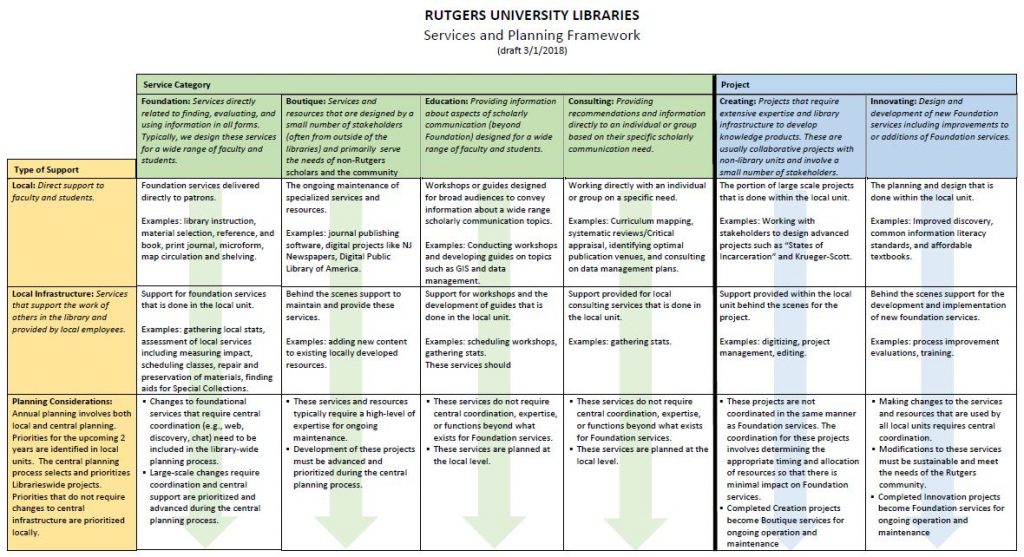
Click this image to download and view a PDF version of the matrix.
About Service Categories
There are many different ways that we could describe the categories of service that we provide, but based on our discussions, we found it most useful to group our services based roughly on the breadth of the audience; whether it serves mostly Rutgers faculty and students or external scholars and the public; and the number of stakeholders we work with to design of the service or resource. The Service Categories include:
Foundation:Services directly related to finding, evaluating, and using information in all forms. Typically, we design these services for a wide range of faculty and students. These are sometimes referred to as “core” library services.
Boutique: Focused services and resources that are designed by a small number of stakeholders (often outside of the Libraries) and that primarily serve a targeted audience within Rutgers, the needs of scholars outside of Rutgers, or the community.
Education: Providing information about aspects of scholarly communication (beyond Foundation instruction like information literacy) designed for a wide range of faculty and students.
Consulting:Providing specialized recommendations and information to an individual or group based on their specific scholarly communication need.
About Projects:
These projects are planned, intentional activities that span local and central units and expertise to change our infrastructure, create new services, or generate new information resources. Our central infrastructure has to support four unique missions, so we need to ensure that changes to our services and resources work to advance all of these goals.
Innovating: Projects that lead to the design and development of new Foundation services, including improvements to existing Foundation services. Upon completion, the long-term operation and maintenance of these projects shifts to the Foundation service category.
Creating:Projects that require extensive expertise and central and local infrastructure to develop Boutigue services and knowledge products. These are usually collaborative projects with non-library units and involve a small number of stakeholders. Upon completion, the long-term operation and maintenance of these projects shifts to the Boutique service category.
Local: Direct support to faculty and students. Examples include library instruction, material selection, and reference support.
Local Infrastructure: Services that support the work of others in the library and that are provided by local faculty and staff. Examples include gathering local statistics, scheduling classes, and the repair and preservation of materials.
So how does this impact the Planning Process?
The Framework will need refinement, but even the process of creating this matrix has resulted in important conversations and clarification of the work we do, the locus of responsibility for processes, and how we identify and distinguish between local-level and Libraries-wide priorities. Although I am asking library directors to provide a comprehensive list of priorities for the coming years, the central planning process will only focus on priorities that need central coordination or changes in the central infrastructure.
Foundation services represent the bulk of what we do. Ongoing work and even some improvements in these services can be completed at the local level, but changes that need support from central infrastructure—for example coding, non-routine digital projects, changes to a website, or programming—require coordination to ensure that they do not cause unexpected problems. Modifications that may seem small on the surface can have a big impact on the workflows in the central units. During the planning process we will distinguish between priorities that can be completed on the local level and those that require new Innovating projects to ensure that services are coordinated and effectively use the shared infrastructure.
Boutique services also come with their own quirks. Because these projects are expensive—they use a lot of expertise and library infrastructure to complete and to maintain—the bar is particularly high for new priorities. The consideration here will be how significant is the impact of this proposal? What audiences or needs does it address? During the planning process we will prioritize projects and assign resources to Creating projects to develop new services and resources.
There is a circular movement between Foundation services and Innovating projects—significant changes to Foundation services are accomplished via Innovating projects; and once complete, Innovating projects shift to Foundation services. This flow is also present in the movement between Boutique services and Creating projects.
By definition, Education and Consulting services are local and should only use existing shared infrastructure. There are many ideas for improvement—workshops for graduate students or consultations on data management—that are worthy initiatives and can be coordinated within the local units.
Next month, I will include the portions of the matrix that describe how central infrastructure, coordination, and expertise interacts with the other parts of the matrix. In the meantime, please explore the matrix (the best way, as I mentioned earlier is to read down the columns). Think about how your work would fit into these columns–which of our services would fit into each category? How are services delivered to our users at the local level? How are they supported by local infrastructure? Are there services that don’t fit into this matrix?
This is an evolving document and I encourage you to talk to your library director or AUL and to send in feedback and suggestions.
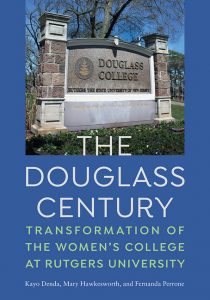
Kayo Denda and Fernanda Perrone have coauthored, with Mary Hawkesworth, The Douglass Century: Transformation of the Women’s College at Rutgers University. This book is part of the centennial celebrations planned at the University and is published by Rutgers University Press. Read a nice article from NJ.com about the book.
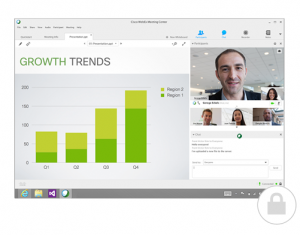
There are so many ways for video/web conferencing. Why should I use WebEx?
Who: All RUL faculty and staff can initiate a WebEx call to hold virtual meetings.
What: A WebEx meeting is an online meeting that allows you to meet and collaborate with other people. Attendees will need a computer, a laptop, a mobile device with Internet access, or even just a telephone to participate. For a full experience, use a webcam with a microphone. Videoconference endpoints can also be added to the meeting.
When: WebEx is recommended for use in formal, informal, or even ad hoc situations involving small groups or large audiences, with both Rutgers employees and external participants.
Where: WebEx can be used from any location with Internet, cellular, or telephone connectivity. Most of the RUL conference rooms are equipped to participate. When conference rooms are booked or when you would like to conference from your own office, or from the road, WebEx is the solution for you.
Why: WebEx is ideal for easily connecting with internal or external participants, since invitees do not have to have any special software beyond a browser. To compliment your collaboration, Through WebEx, you can share your screen and present applications, share lectures, or co-edit documents. Meetings can be recorded through the click of a button and made available later.
How: Request the use of one of RUL’s WebEx licenses by emailing webex@rulhelp.rutgers.edu or by creating an RULHelp ticket. Bookroom also integrates the option to request a WebEx meeting when scheduling your conference location. Your local UCS, or IIS staff will then create your WebEx meeting, supply you with directions for using WebEx, and provide you with email invitations to send out to your participants. We can also provide a hands-on training session for anyone in RUL.
Once the WebEx meeting is set up, you can join from any browser using a link found in the meeting invitation. In seconds, your browser will automatically download a plugin or app (if needed) after which you will be directly connected to the meeting. When joining by phone, call the WebEx number and enter the meeting number supplied in the meeting invitation.
Want to know more? Contact IIS or your local UCSs. We are here to help!
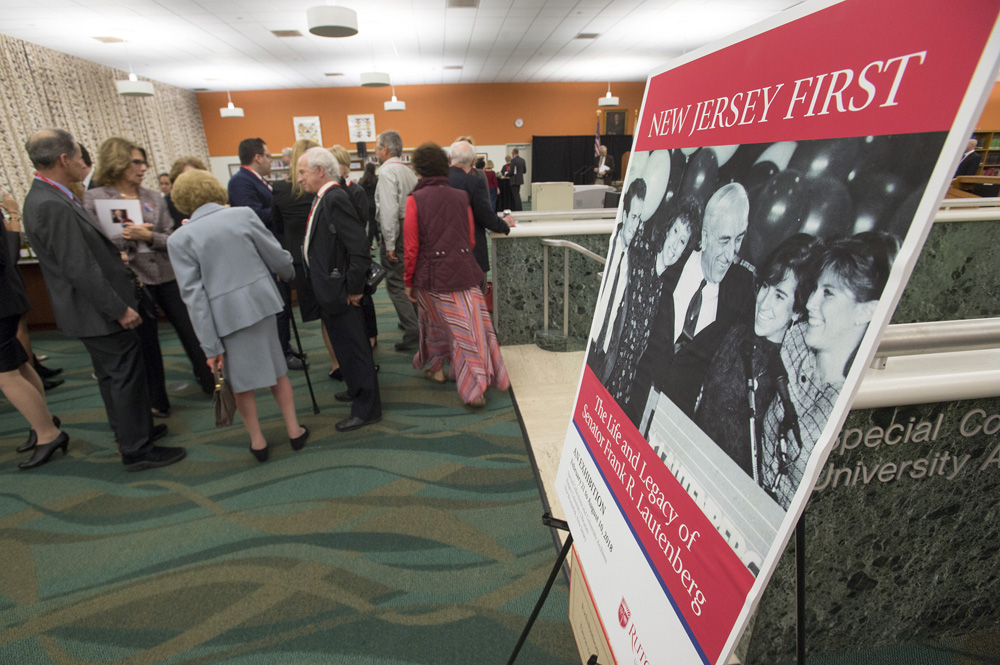
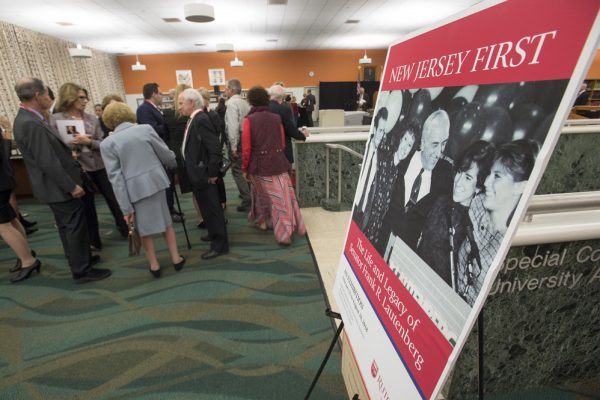
An opening reception was held for New Jersey First: The Life and Legacy of Senator Frank R. Lautenberg on February 21.
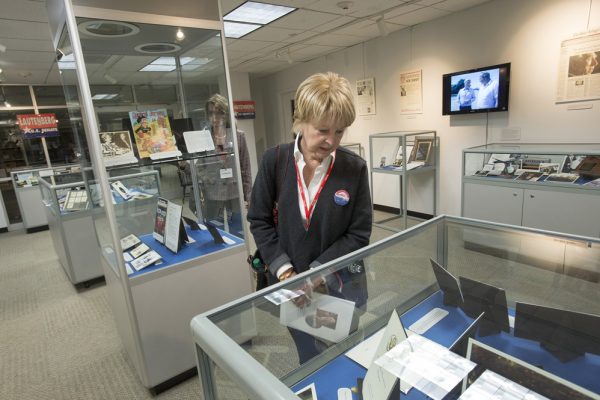
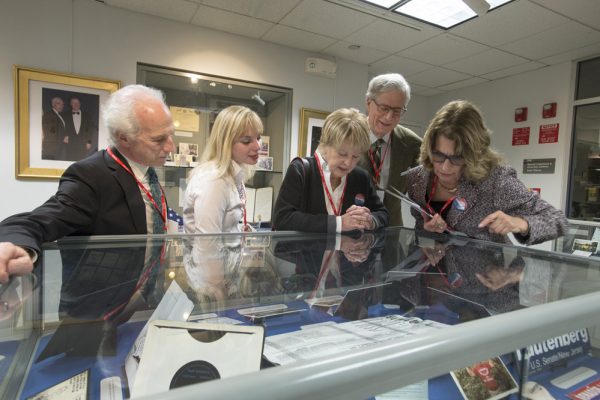
Attendees explored the new Senator Frank Lautenberg Papers exhibit in the SCUA Gallery.
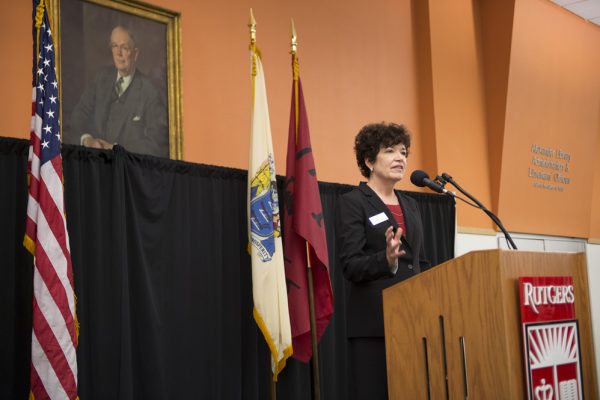
Dr. Krisellen Maloney welcomes attendees to the final briefing of the Senator Frank Lautenberg Papers reception
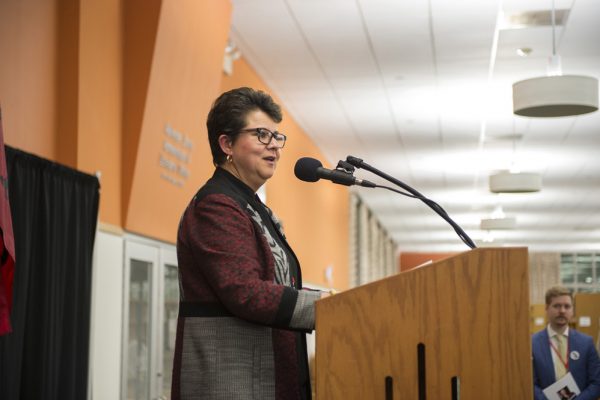
Rita Mitjans, Chief Diversity & Corporate Social Responsibility Officer for ADP, gives remarks about the collection and acknowledges Lautenberg scholarship recipients.
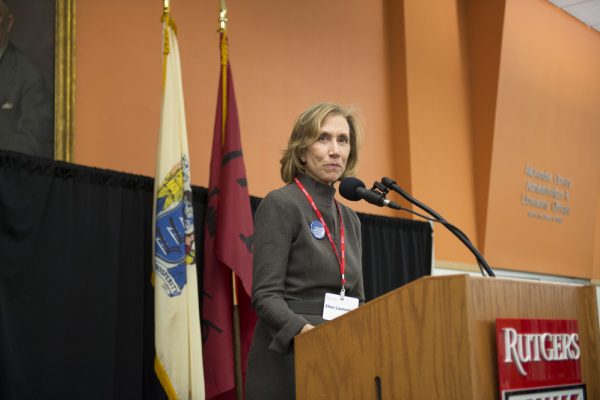
Ellen Lautenberg spoke on behalf of the Lautenberg family, describing how important it was to the Senator that his papers end up at Rutgers University because it is the state university of New Jersey.
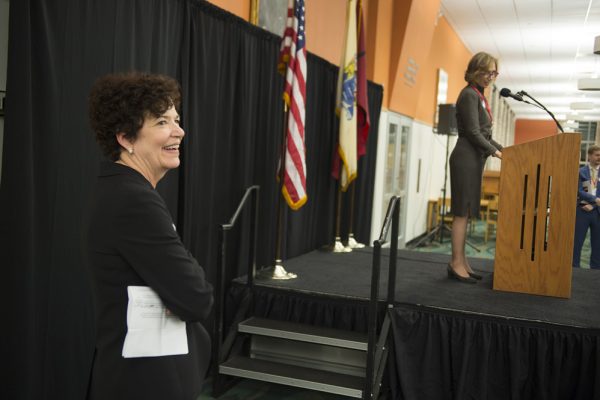
Krisellen Maloney looks on as Ellen Lautenberg speaks.
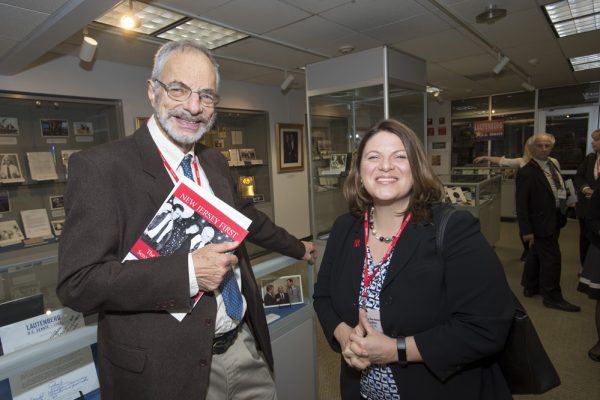
(l. to r.) Ronald Becker and Francine Newsome Pfeiffer RC’95 at the final briefing for the Senator Frank Lautenberg Papers exhibit
Attendees view the Senator Frank Lautenberg Papers exhibit prior to the event
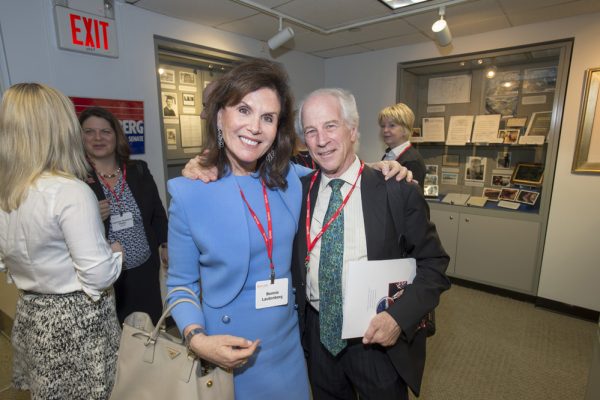
(l. to r.) Bonnie Lautenberg and Robert Cumins at the final briefing for the Senator Frank Lautenberg Papers exhibit
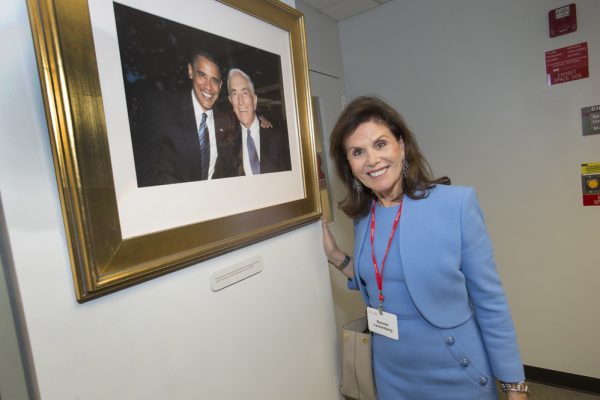
Bonnie Lautenberg at the final briefing for the Senator Frank Lautenberg Papers exhibit
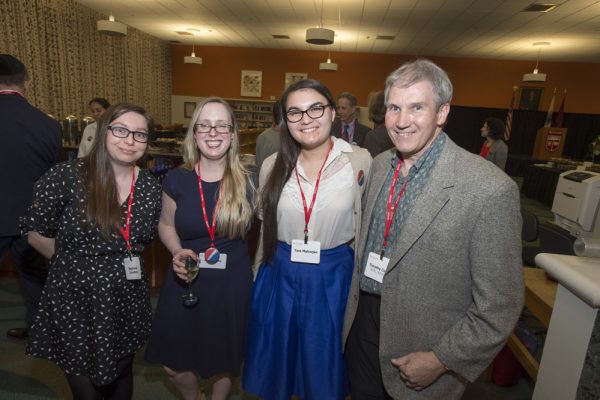
(l. to r.) Stephanie Crawford, Flora Boros, Tara Maharjan and Timothy Corlis RC’81 at the Senator Frank Lautenberg Papers reception
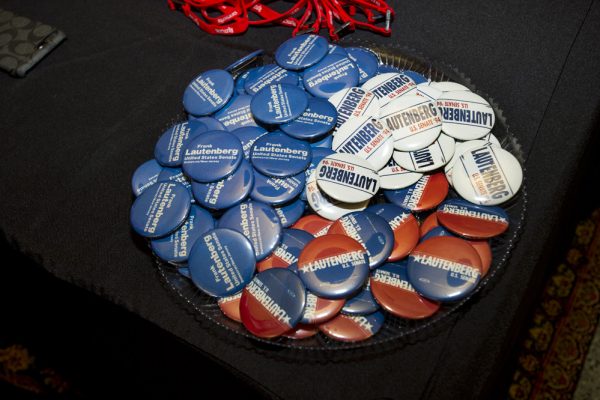
Senator Lautenberg campaign buttons for attendees at the Senator Frank Lautenberg Papers exhibit
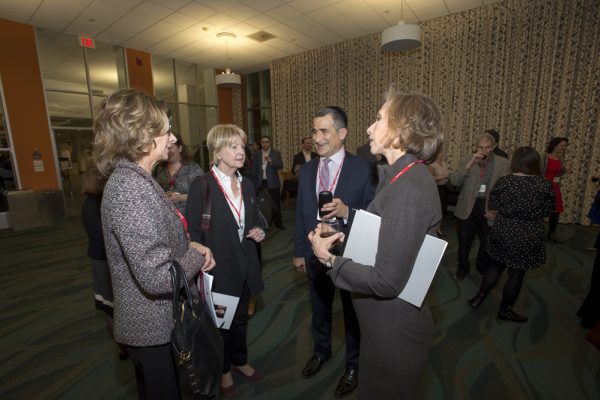
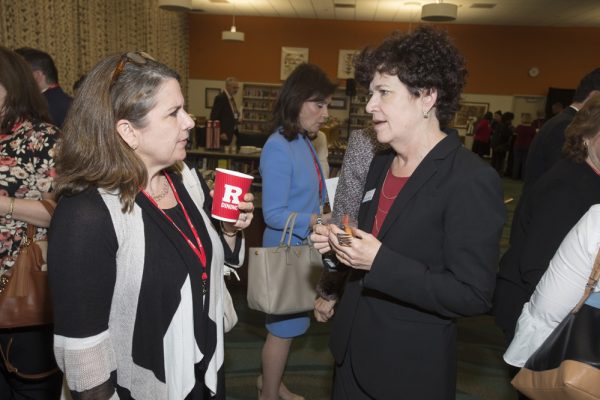
Guests chat at the Senator Frank Lautenberg Papers reception
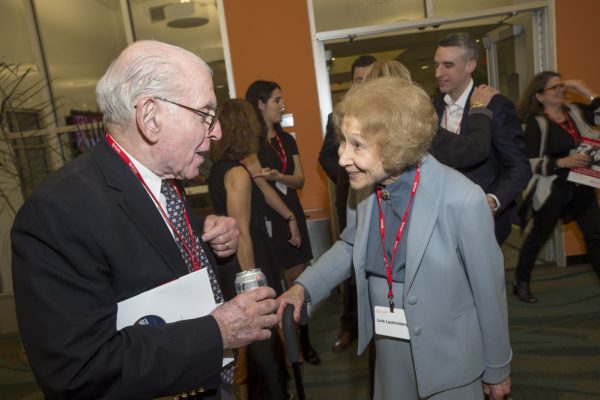
(l. to r.) UNKNOWN and Lois Lautenberg at the Senator Frank Lautenberg Papers reception
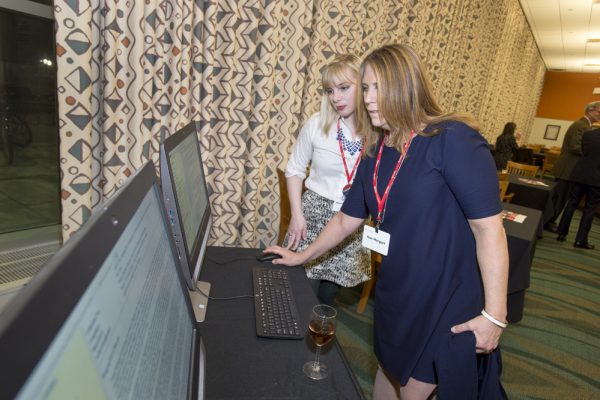
(l. to r.) Sheridan Sayles and Nan Morgart at the Senator Frank Lautenberg Papers reception
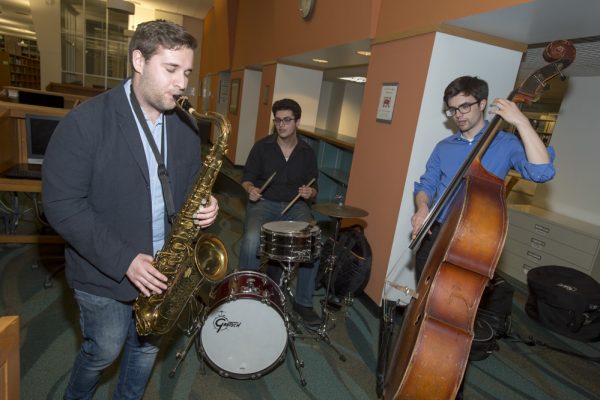
Live music entertainment provided by Mason Gross School of the Arts music students at the Senator Frank Lautenberg Papers reception
Guests arrive and talk about the Lautenberg Papers exhibit opening reception
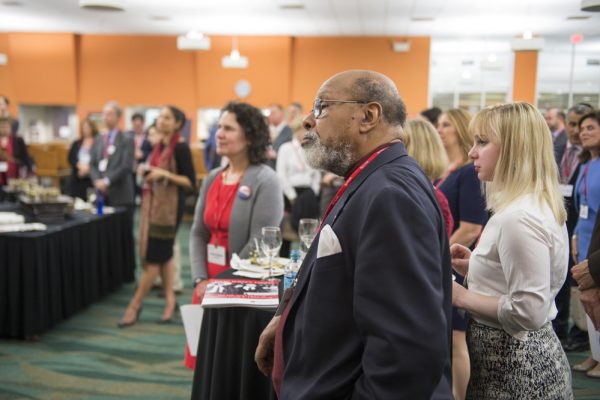
Attendees at the Senator Frank Lautenberg Papers reception listen to remarks
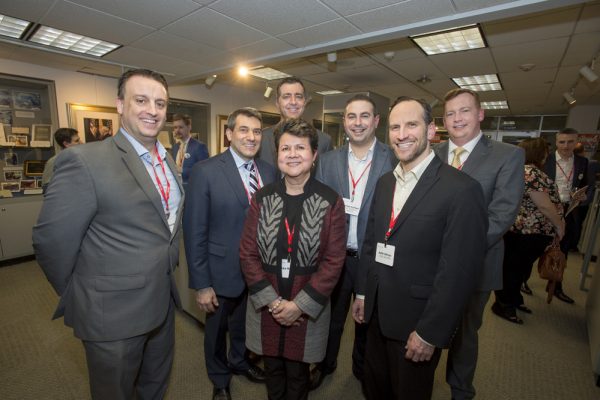
Members of the ADP group at the Senator Frank Lautenberg Papers exhibit
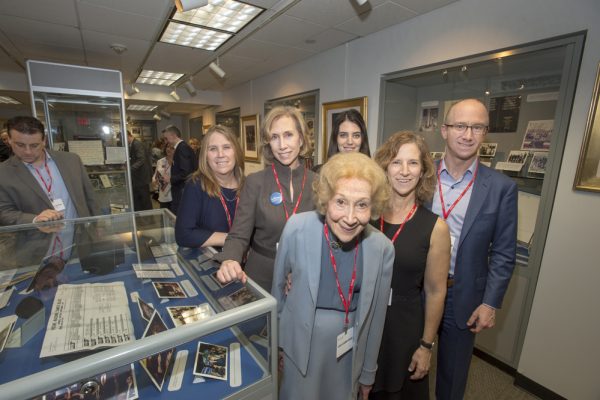
The Lautenberg family at the Senator Frank Lautenberg Papers exhibit
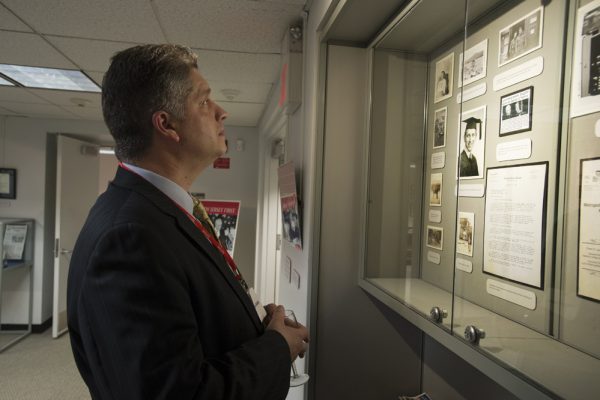
William Ayala looks at the Senator Frank Lautenberg exhibit
On February 21, the Libraries welcomed Senator Lautenberg’s family, friends, and colleagues to a special exhibit opening for New Jersey First: The Life and Legacy of Frank R. Lautenberg. The event was held in the reference room of Alexander Library and attendees could tour the exhibit in the downstairs gallery. Hosted in partnership with the Rutgers Foundation and Rutgers University Federal Relations, the event was appropriately celebratory and sentimental with Ellen Lautenberg remarking that her father “was very proud of Rutgers as a university. It was important to him that his papers were here at this university because it is the university of New Jersey and he really was a kid from New Jersey. I am glad that we were really able to see the project through.”
While the focus of this event was the launch of the exhibit, Lautenberg also expressed gratitude for the work that has gone into the papers project, thanking archivist Sheridan Sayles among others and noting, “He would really be very gratified that the collection is here. It looks amazing. So much hard work has gone into this. It will allow people to not just see some of the items that were associated with his service but also to do their research to get ahold of all the papers. It is really quite amazing what is now available to people for his almost thirty years in the Senate.”
Rita Mitjans, Chief Diversity & Corporate Social Responsibility Officer for ADP, spoke about the role of giving at ADP and the importance of supporting projects like the Lautenberg Papers. She also acknowledged the many Lautenberg scholarship recipients in the room, noting that the senator believed in the power of education to change lives.
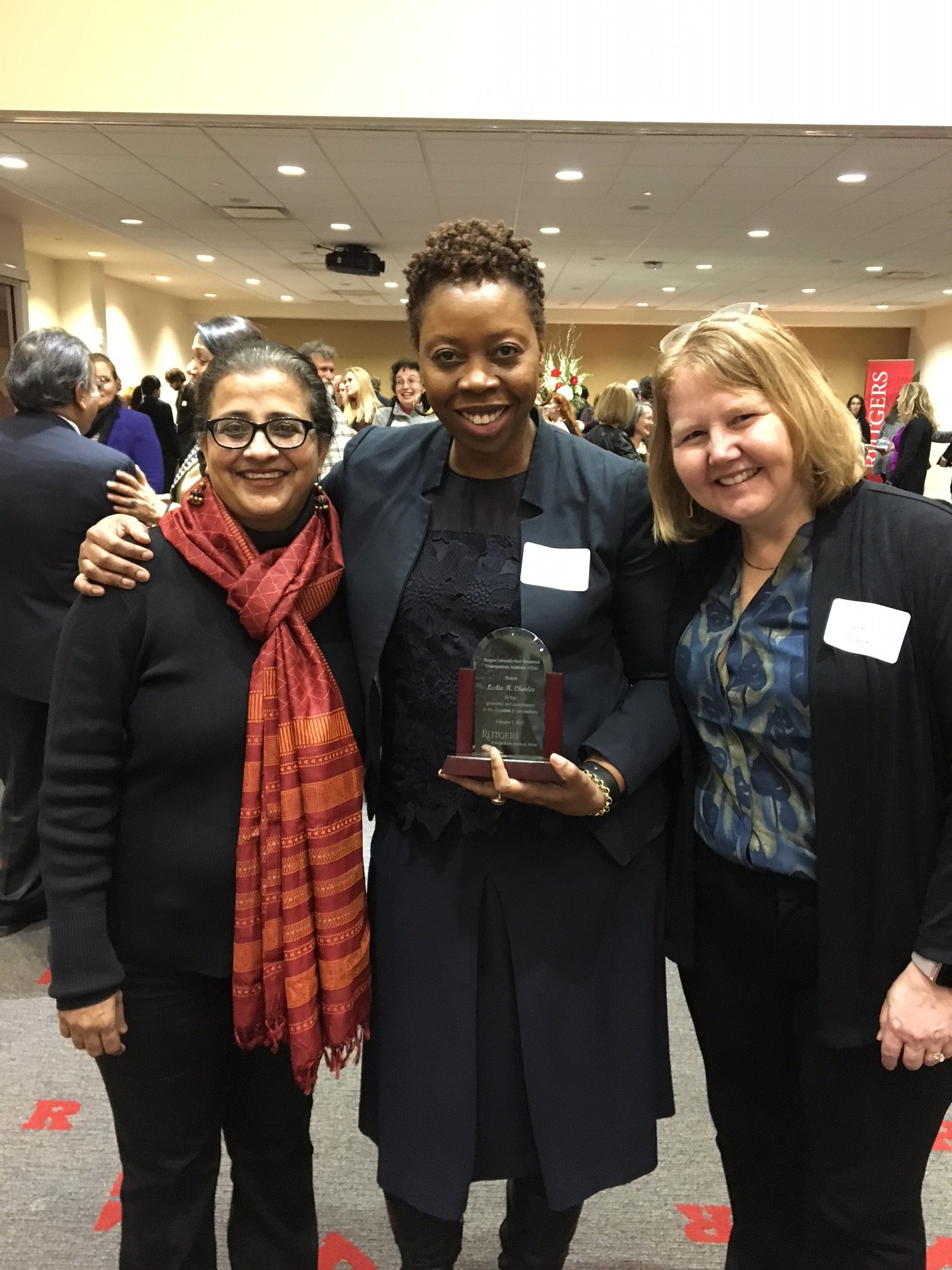
Leslin Charles receives an award from Undergraduate Academic Affairs.
Three Cheers for Leslin…
Instructional design librarian Leslin Charles last month received an award from Rutgers–New Brunswick’s Undergraduate Academic Affairs for generosity and commitment to the education of Rutgers students. As all of us at the Libraries who have worked with Leslin know, this recognition is well-deserved. Congratulations, Leslin!
…and for Julie and Zara!
We’ve just received word that reference/instruction librarians Julie Still and Zara Wilkinson will be recognized as Rutgers University–Camden Women of Excellence today in honor of Women’s History Month. This distinction, conferred by the Office of Student Involvement, the Office for Violence Prevention and Victim Assistance, the Women’s & Gender Studies Program, and the Division of Student Affairs, honors faculty and staff and celebrates mentorship. Congratulations, Julie and Zara!
An Unspecific Gift
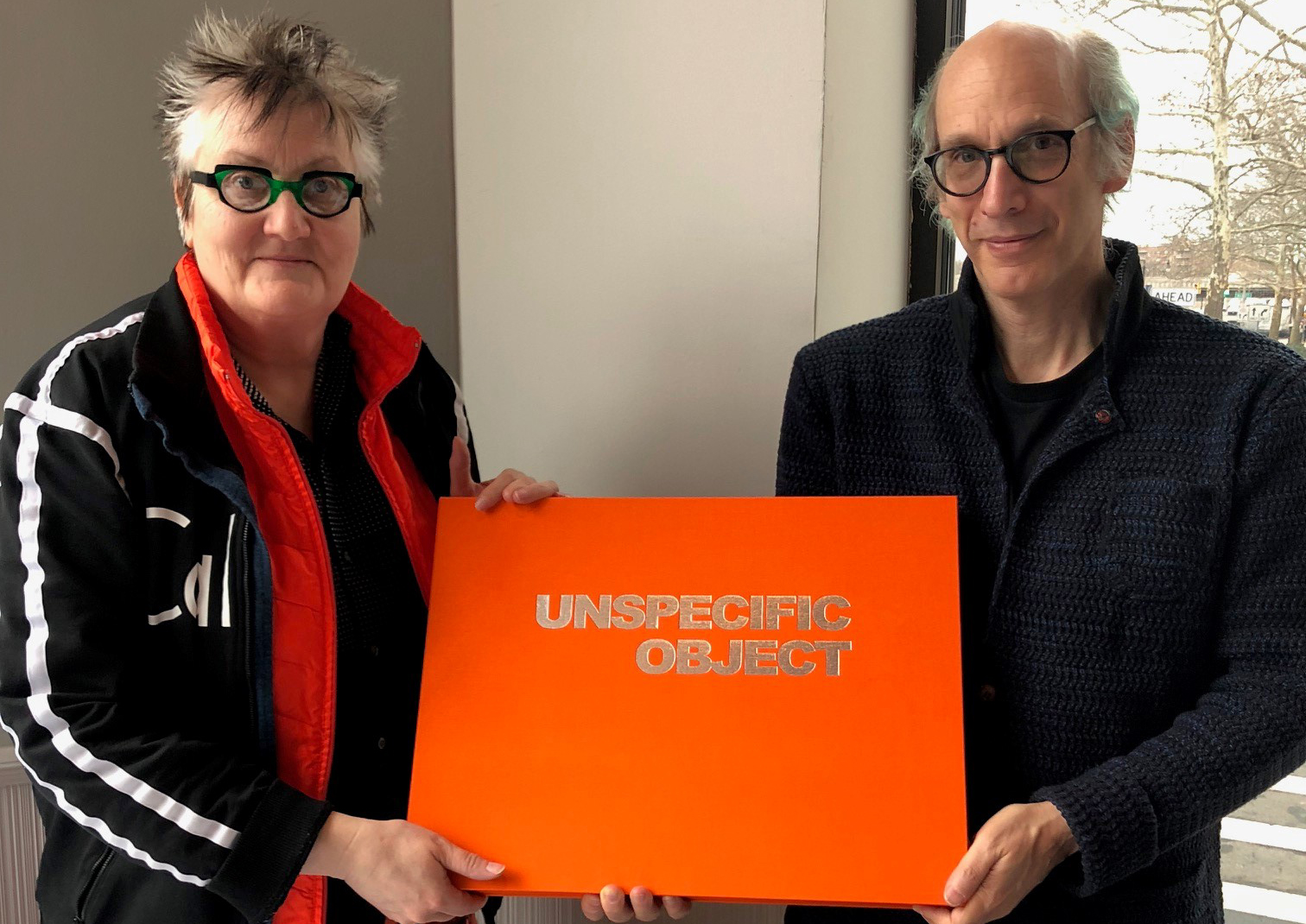
Barbara Madsen, associate professor in print at Mason Gross, presented a copy of Unspecific Object to rare books librarian Michael Joseph last month. Unspecific Object is an artists’ book containing 14 original photogravures and poems. For this work, people were invited to submit images of objects they collect past and present. Submissions ran the gamut from the sublime to the ridiculous.
Barbara Madsen presents Michael Joseph with Unspecific Object.
The winners were juried by Jared Ash, assistant museum librarian at the Metropolitan Museum of Art and Arezoo Moseni, senior art librarian at the New York Public Library. The material objects were sent to Barbara who created a photographic response. Ely Rosa Zamora, a Venezuelan poet, created her interpretation of the images in poetry. The limited edition of the artist book/portfolio was published by Choir Alley Press. Housed in an orange portfolio box, the edition size is 15 copies: the Rutgers copy is no. 8.
Saying Farewell to a Dear Colleague
Please join us for a cocktail reception celebrating the retirement of Jeanne Boyle, associate university librarian for planning and organizational research, on March 16 from 2 to 4 p.m. at Alexander Library. Contributions of $25 toward a gift (cash or checks made payable to Cash) can be sent with your response to Tonie Perkins at Alexander Library. Kindly RSVP by March 9.
Celebrate the completion of the Badian Roman Coins Project on March 23.
Celebrating a Classic Collection
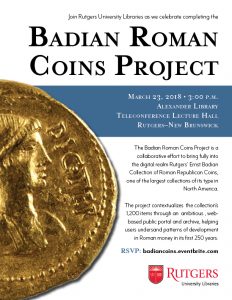
Celebrate the completion of the Badian Roman Coins Project at Alexander Library on March 23 at 3 p.m. The Badian Roman Coins Project is a collaborative effort to bring fully into the digital realm Rutgers’ Ernst Badian Collection of Roman Republican coins, one of the largest collections of its type in North America.
The project contextualizes the collection’s 1,200 items through an ambitious, web-based public portal and archive, helping users undersand patterns of development in Roman money in its first 250 years. RSVP to attend at badiancoins.eventbrite.com.
Physicians Assistants Exhibit on the Move
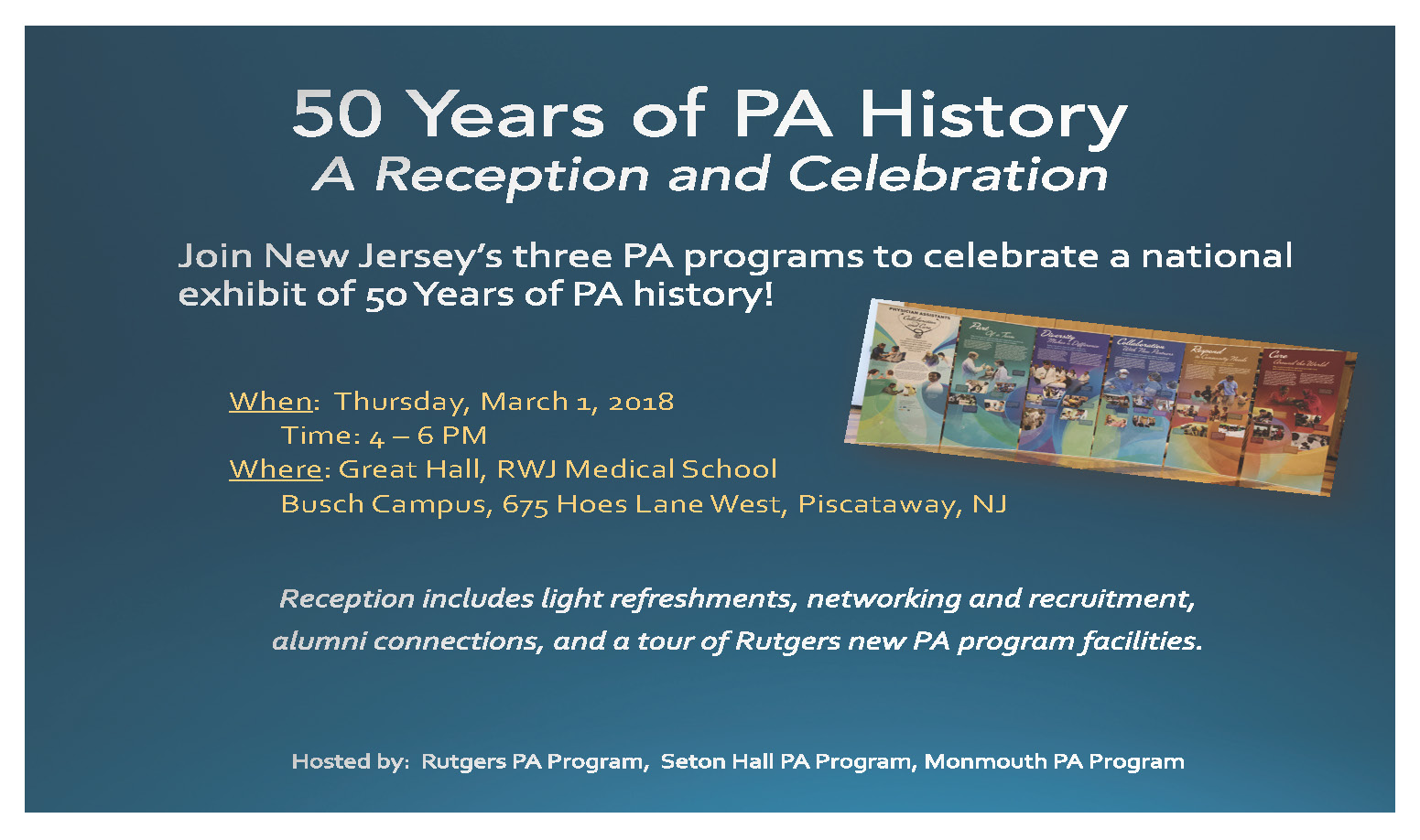
The traveling National Library of Medicine exhibit Physician Assistants: Collaboration and Care is making a stop in the Great Hall of Robert Wood Johnson Medical School from 4 to 6 p.m. on March 1, as a centerpiece of a reception and celebration of “50 years of PA History” hosted by the Rutgers Physician Assistant program.
The Physician Assistants exhibit will be on view at a PA Program reception on March 1.
The Rutgers PA program is part of the Rutgers School of Health Professions, and recently relocated to the sixth floor of the Robert Wood Johnson Research Tower. The March 1 event is a job fair for PA students and an open house for the PA Program. The event is cohosted by the PA programs at Seton Hall University and Monmouth University. Next up, the exhibit will move to the Library of Science and Medicine, where it will be on display through March 24.
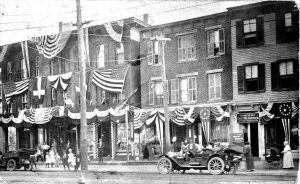
Main Street in Somerville, 1908.
New Additions to NJDH
The latest addition to the New Jersey Digital Highway offers a glimpse into 40 years of the history of central New Jersey.
“Somerville and its Environs: Images from Central Jersey History 1885–1925” was curated by Jim Sommerville, a former librarian at Somerville Library of the Somerset County Library System. The collection is the first batch of photographs from the library system’s holdings that will be digitized and made available in high-resolution scans for use by teachers, students, and the public via the immersive, online information portal.
The implementation project continued to move forward at a brisk pace. The Libraries’ Implementation Team finished the Alma configuration form and the Primo Central Index activation form. Ex Libris completed the Alma test data load and has released the Alma/Primo environments to us for data review and testing. Our Ex Libris consultants have given the library team very positive feedback: All of the tasks assigned to the Implementation Team have been completed on schedule or ahead of schedule. We are told that our data looks cleaner and has fewer problems than other libraries also migrating from Sirsi to Alma. The consultants are very confident about the successful launch of Alma and Primo on June 1st.
Training for the Team and Working Groups
In February, the Implementation Team continued the weekly training required by Ex Libris. All the working groups affiliated with the project were also engaged in extensive training in their functional areas. The considerable amount of time we are spending on internal training is paying off. Following a demo by two CTS staff on resource management at a training session, our Alma consultant remarked that she had never seen a client who could walk in at this stage of implementation and complete the tasks so smoothly!
New Staffing Need
As the implementation project progresses, we discovered an urgent need for an electronic resources librarian who has experience with Alma and Primo, so a new position was created and is being advertised. The new Electronic Resources Librarian will report to the Discovery Services Librarian and work closely with the CSRS staff responsible for licensing and renewing online journals and databases. In the past, we in the Libraries often talked about the need to increase staffing for e-resources management and support, since the library collections have shifted decisively from print to electronic. The new Electronic Resources Librarian position is an important step in that direction.
Upcoming Workshop on Alma Workflows
From March 13-15, an Ex Libris consultant will be onsite at Rutgers to conduct a three-day workshop on Alma. The primary goal of the workshop is to assist us with reviewing and defining major workflows using Alma. The format of the sessions will primarily be discussion as this is not a training exercise. The Implementation Team is working with Ex Libris to finalize the workshop agenda, which will likely include sessions on acquisitions, resource management, e-resources, and fulfillment. The working groups will decide who should attend the sessions in their respective areas.
Plan for All Staff Trainings
The Libraries’ working groups are also hard at work designing training and developing a related delivery plan to provide the training to our librarians and staff. As we reported last month, the all-staff training sessions will be conducted in person, by library staff, and with Rutgers data and configurations. Please stay tuned for more information about all staff training opportunities from the working groups.
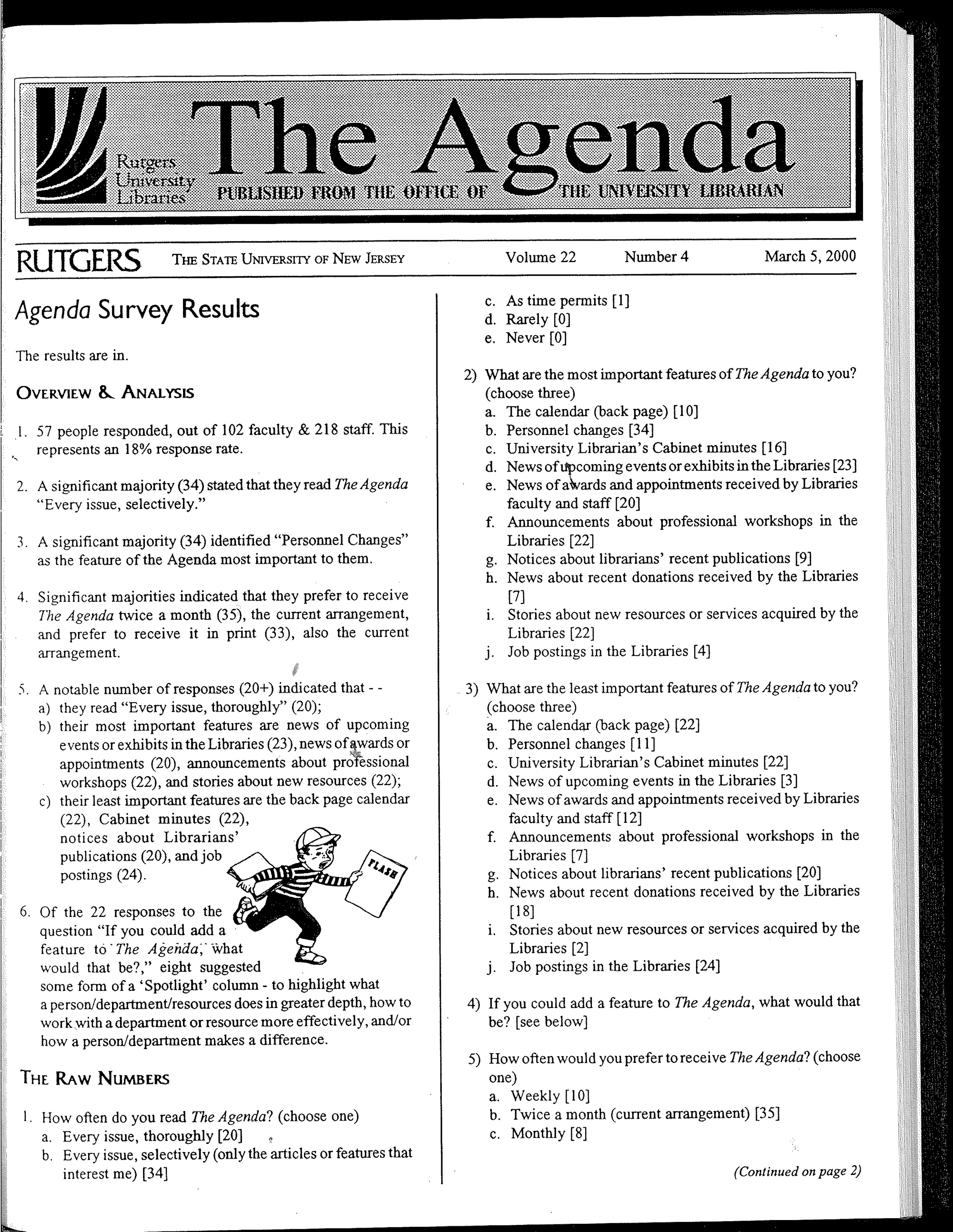
This month we take a look at the Agenda in the aughts. Is it just me, or does 2000 not feel like almost two decades ago?
Survey Says
Reader survey from the Agenda 22, no. 4 (March 5, 2000).
Systematic Thinking
MESSAGE FROM THE UNIVERSITY LIBRARIAN
At the last Cabinet meeting we discussed what it means to be a system. This might seem needless for an organization that has described itself as operating system-wide for many years, but it’s always useful to step back and take stock. This is especially important as we continue to develop our long-range plan, the Digital Library Initiative (DLI), and seek ways to be more effective.
Typically, a system shares the same vision, philosophy, and goals. It shares common infrastructure and operates with system-wide policies and practices. There is considerable interdependency among units and a heightened need for communication. There’s also a shift to systems thinking, where operations are examined across the system rather than just locally. This helps to improve and expand the entire system’s capabilities to be effective. Each unit is each other unit’s best customer and best supporter. Information and expertise are shared readily, so that everyone in the organization benefits.
…
As we implement the DLI we need to ensure that we are all working towards system-wide goals, using our resources effectively, thinking strategically, collaborating across units, and present a consistent, quality presence to our users. Communication and open discussion will be important as we gain new understandings in what it means to sustain and enhance a system in the digital environment.
The Agenda 22, no. 5 (March 19, 2000)
Getting Medieval
The Medieval Studies Program and the Friends of the
Rutgers University Libraries invite you to
The Dedication of the
Ernest McDonnell
Medieval Culture Seminar Room
in Alexander Library
featuring a talk by
Barbara Newman,
Professor of English and Religion
at Northwestern University
“You Can’t Speak To Men
Until You’ve Spoken With God:
Medieval Women And The Church”
Thursday, March 23, 2000
4:00–6:00 p.m.
Alexander Library
New Brunswick Libraries is inviting faculty from Rutgers University-New Brunswick to join their New Brunswick Faculty Author and Creator Event.
This year’s event will be an immersive experience, showcasing the full range of RU-NB intellectual output. We will create neighborhoods of content, featuring works such as monographs, journal articles, patents, startups, dances, musical scores, poems, stories, artworks…
Event details:
Date: Wednesday April 11, 2018
Time: 5-7 p.m.
Where: Alexander Library Reference Room, 169 College Avenue, New Brunswick
What: Neighborhoods of content, a panel discussion, faculty lightning talks and demonstrations
Wine and refreshments will be served.
All faculty are invited to attend the celebration — even if they have not submitted a work for display. Please share this information widely — we would love to see a big crowd.
Lots of new marketing materials available on the communications department website this month. Let us know if you have any other ideas for things that would be useful:
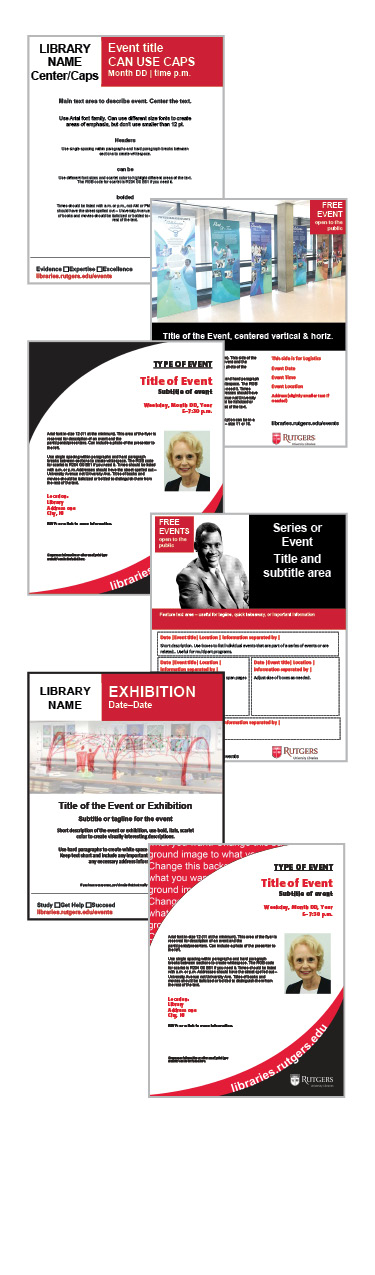
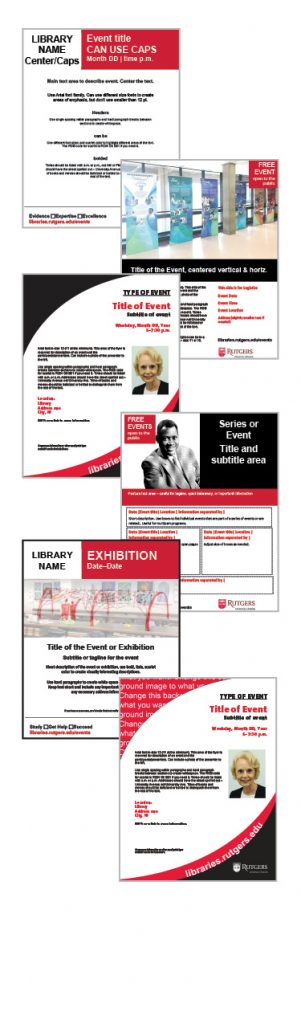
These flyer templates are available to local units to help promote their upcoming events and exhibits. The templates are available in Word and Powerpoint, so they require no special software. We’ve tried to provide enough options and variations to allow some personalization and tailoring for specific locations and events. If you would like me to conduct any training on how to use these materials, please let us know. We also welcome any feedback and/or requests for variants of these templates.
With the recent changes in how group study rooms are reserved, we have updated the signage templates with new QR codes. These are now available for libraries that are using the libcal service. If you have group study rooms that don’t use the libcal reservation system or other types of spaces that need signage, let us know. Scroll down on the Signage Templates page to find the new group study room signs.
Materials for Library Liaisons
There is a new section on the communications page for Project Outreach Materials. RASE-WG has provided materials for library liaisons who are doing outreach for the following projects. You can download presentations, flyers, and information sheets:
“Wouldn’t it be great if there was a space where people from the Libraries could post notices for one another if they have an item for sale or are selling Girl Scout Cookies or are playing a local gig with their band?” Yes– this would be great. Introducing the Rutgers University Libraries Bulletin Board. This is an open space where you can post any type of notice you would like to share with your colleagues. Thanks for the suggestion, Dee Magnoni!
This bulletin board is powered by Padlet. If you want to create a post, click on the + sign in the lower right of the bulletin board. You can create a Padlet account for free OR you can post anonymously (in which case, I’d recommend including your name at the bottom of the post so people know who the post is from).
You can access this bulletin board directly at https://padlet.com/rulibraries/bulletin (bookmark it!) or via the sidebar menu on The Agenda.

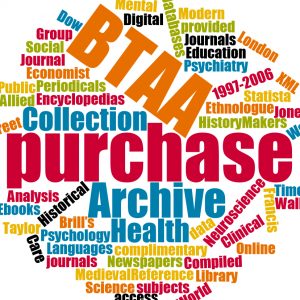 Compiled by the Collection Analysis Group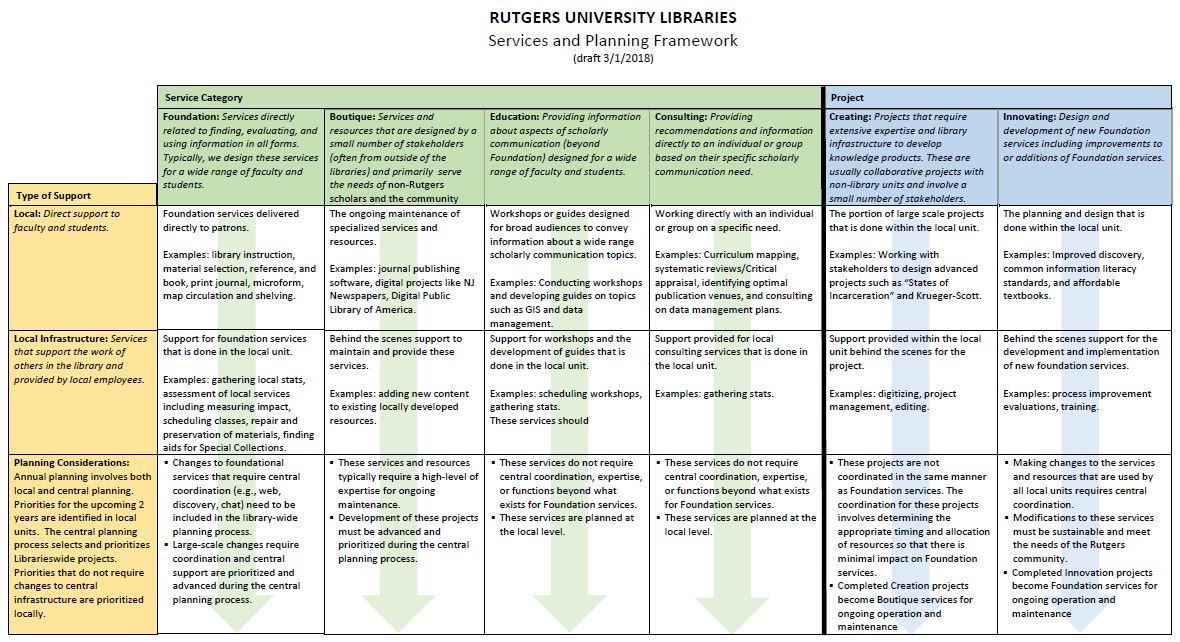
 Kayo Denda and Fernanda Perrone have coauthored, with Mary Hawkesworth, The Douglass Century: Transformation of the Women’s College at Rutgers University. This book is part of the centennial celebrations planned at the University and is published by Rutgers University Press.
 There are so many ways for video/web conferencing. Why should I use WebEx?