Category: Articles

  • This Month in the Agenda – September 2001

    Movers and shakers at the Libraries in September 2001. See any names you recognize?

    A lot of things can change in 17 years… but then again, some things never do. What was happening at the dawn of another fall semester for the Libraries in 2001?

    A Fall Greeting… and a New Colleague

    The Summer was not as quiet as usual – we implemented a new look for the Libraries’ home page; authority control was introduced into IRIS; circulation notices will now be sent via e-mail; and Media Services transferred responsibility for smart classrooms and equipment delivery in New Brunswick to the Teaching Excellence Center, and introduced web forms for requests across all campuses.

    We completed a successful recruitment for an AUL for Digital Library Systems and hired Grace Agnew, who will be joining us in January. This is an important position as we examine more closely how the Libraries technical infrastructure is organized and deployed to support the Digital Library Initiative…. We look forward to Grace’s leadership, and her participation in these discussions as we continue to move “aggressively, but intelligently towards the creation of a new library system.”

    Got Training?

    With the arrival of a system-wide Training and Learning Coordinator, Marilyn Wilt, the Libraries need to plan and coordinate on an ongoing basis an effective library human resource development program. With this goal in mind, Associate University Librarian for Administrative Services Samson Soong convened a new Training and Learning Advisory Committee…. Members thus far include Ann Montanaro, Ned Richards, Gracemary Smulewitz, and Julie Still.

    The Agenda 23, no. 18 (September 16, 2001)

  • Latino New Jersey History Project

    New Jersey has a remarkably diverse, though largely understudied, Latino population.  In 2016, according to the American Community Survey, people who identify as Hispanic or Latino were estimated to number over 1.7 million making them nearly 20 percent of all New Jersey residents.  Yet we know very little about their roots. Who are the Garden State’s Latinos? What is their history? This summer, seven Rutgers undergraduates and history Ph.D. student Carie Rael worked with Lilia Fernandez, Henry Rutgers Term Chair in Latino & Caribbean Studies and History, to find out as part of the Latino New Jersey History Project.  Their goal was to research, document, and record the history of New Jersey’s diverse Latino populations. Along the way, they received important assistance on digital tools and platforms from New Brunswick Libraries personnel Stacey Carton, Jan Reinhardt, and Francesca Giannetti.

    The students used a variety of sources and methods. They gathered census data, for example, to produce maps and tables enumerating Latinos throughout the state, its counties, and its main cities and towns. Some were surprised at what they learned. While we might expect Newark, Elizabeth, and Paterson to have large Latino enclaves, few realized that New Brunswick is 56 percent Hispanic and West New York is 78 percent Hispanic (both as of 2016).  The town of Bridgeton in South Jersey has one of the largest concentrations of Mexican immigrants in the state. Census data revealed unexpected trends and unlikely settlement destinations.

    Hudson county map

    With training from Francesca Giannetti, digital humanities librarian, students learned how to create thematic maps in Social Explorer and multimedia narratives integrating images, text, and multimedia embeds in ArcGIS’s Story Maps.  They learned about theories of place and space in spatial narratives, as well as elements of data and visual literacy through the strategic exploration of Social Explorer’s data sources, spatial geometries, and visualization types. Through the students’ mapmaking efforts, they were able to trace demographic changes over time, settlement patterns, and the migration stories of individuals and entire communities.

    Aguada

    Students also visited the Puerto Rican Community Archives (PRCA) at the Newark Public Library to learn about how the PRCA has collected more than one hundred oral histories over the past two decades and has gathered many archives and records of New Jersey’s Puerto Rican communities.

    Perhaps the most exciting part of the summer was completing oral histories with local residents. Shaun Illingworth and Kathryn Rizzi of the Rutgers Oral History Archives (ROHA) provided training and guidance on ethical and practical considerations in conducting oral histories.  After extensive training, background research, and preparation, students went out and recorded oral history interviews with various Latino residents and community leaders. Some were able to interview members of their own communities, while others interviewed important figures like Board of Governors member and Rutgers alum Martin Perez, or Irving Linares, the publisher of a Spanish language newspaper in Newark for the past 40 years.

    Since the group created audio or video recordings of their oral histories, they also benefited from basic video editing training at the Douglass Media Library with Stacey Carton. Students attended a workshop that focused on Adobe Premiere video editing software (available at the Fordham spaces in Douglass Library), but also covered topics relating to storytelling, project organization, and the history of editing. They later utilized the Fordham spaces to continue working on their projects.  Jan Reinhart provided support with audiovisual equipment as well.  Using their video training, two groups of students were able to produce short videos—one on the history of New Brunswick and another on the Latino populations of Union City.  These will be posted online, along with the oral histories and map projects, so they can be made available to public audiences.

    The students and Professor Fernandez learned a great deal about New Jersey’s rich history. They discovered that the state’s sizeable Latino population is relatively recent, having grown mostly since the mid-1980s through migration waves that brought Mexicans, South Americans, Central Americans, and Dominicans to the Garden State. In 1970, for example, the census counted only 135,656 people of “Spanish origin” (what today we generally refer to as “Latinos” or “Hispanics”), compared to the 1.5 million the census counted in 2010. The largest subgroups, as of that year, include Puerto Ricans (27% of all Latinos), Mexicans (14%), Dominicans (13%), Spaniards (7.7%), Colombians (6.5%), and Ecuadorians (6.5%). Today, one in five Jersey residents identifies with some type of Hispanic or Latino ancestry.

    The project team included Amy Castillo (Criminology and Latino and Caribbean Studies ’20), Tania Mota (Journalism and Media Studies and Latino and Caribbean Studies ’20), Aracely Ortega (Sociology and Africana Studies ’20), Aziel Rosado (Mathematics and Latino and Caribbean Studies ’20), Kevin Rosero (History and Political Science ’19), Laura Sandoval (Sociology ’20), and Luz Sandoval (History and Public Health ’19).

    Their work is beginning to be shared online. The following are links to individual projects built using the Story Maps platform.

    Mota, Tania. “Mexican Settlement in New Jersey.”

    Rael, Carie. “Latinx of Hudson County, New Jersey.”

    Rosado, Aziel. “Puerto Ricans in New Jersey: A Grandfather’s Story.”

    Rosero, Kevin. “A Grandmother’s Journey.”

    Sandoval, Laura. “Latino History of New Brunswick.”

    Professor Fernandez plans to continue the Latino New Jersey History Project in the future to keep exploring and documenting the diverse and varied origins of the state’s Hispanic communities. The maps, oral histories, and other digital humanities elements will help make this history accessible to audiences beyond the university and beyond the state.

    Lilia Fernandez, Stacey Carton, and Francesca Giannetti

  • Special Collections Librarians Take the Reins of NJSAA

    New Jersey Studies Academic Alliance logoFounded in 1992, the New Jersey Studies Academic Alliance (NJSAA) is a 501c3 educational organization promoting research and teaching in the multidisciplinary field of New Jersey studies. The NJSAA’s approximately 100 members include teachers (primary school through college), historians, geographers, museum and historical organization personnel, archivists, and librarians. Membership is open to anyone interested in the study of New Jersey, and membership dues are $5 annually. (Yes, $5.)

    The NJSAA regularly meets four times a year in Alexander Library’s Pane Room to hold business meetings, present awards, and hear presentations in New Jersey studies. Meetings are open to all.

    Among its central activities, the NJSAA recognizes notable work in New Jersey studies by presenting awards in the following categories:

    Starting on September 1, 2018, three Rutgers University special collections librarians will be assuming leadership roles in NJSAA for three-year terms. The incoming chair is Bob Vietrogoski, the special collections librarian for the history of medicine at George F. Smith Library in Newark. He currently serves as chair of the NJSAA’s Roger McDonough Librarianship Award. As chair, he is succeeding Maxine Lurie, professor emerita of history at Seton Hall University. Dr. Lurie is a co-founder of NJSAA and has served as chair or co-chair since NJSAA’s founding 26 years ago. She is the author and editor of several award-winning works in New Jersey studies, including New Jersey: A History of the Garden State (2012), and the Encyclopedia of New Jersey (2004).

    The incoming secretary is Christie Lutz, New Jersey regional studies librarian and head of public services for Special Collections and University Archives at Alexander Library in New Brunswick. She has been acting secretary for the past year, and is succeeding Marc Mappen, the former executive director of the New Jersey Historical Commission and a historian whose books include There’s More to New Jersey Than the Sopranos (2009) and Prohibition Gangsters: The Rise and Fall of a Bad Generation (2013).

    The incoming membership chair is Tara Maharjan, processing archivist for Special Collections and University Archives at Alexander Library. She currently serves as the NJSAA’s webmaster. As membership chair, she is succeeding Karl Niederer, the former director, state archivist, and chief records administrator in the former state Division of Archives and Records Management, and current coordinator of outreach and strategic partnerships at the New Jersey Historic Preservation Office.

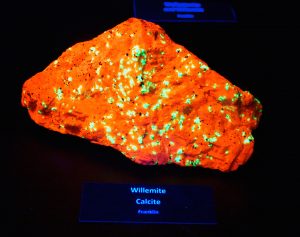
    The next NJSAA meeting will be held on Tuesday, October 16, 2018 in the Pane Room. The business meeting will begin at 3pm, and at 4:15pm, William Kroth, president of the Sterling Hill Mine Museum in Sussex County, will speak on the “Great Zinc Mines of Sussex County” and will have samples on hand to view.

    For more information about the NJSAA, see its website here, along with News of NJSAA’s recent activities and its Calendar of Events. The NJSAA is also on Facebook, and “likes” are strongly encouraged.

  • New Brunswick Libraries Acquire “The Big Book”

    Alcoholics Anonymous bookThe New Brunswick Libraries have acquired a first edition of “The Big Book,” the popular name for Alcoholics Anonymous: The Story of How More Than One Hundred Men Have Recovered from Alcoholism, written by the A.A. founder, Bill Wilson (or Bill W).

    Since it was first published in 1939, in an edition of 4,650 copies, “The Big Book” has sold over 30 million copies, making it one of the best-selling regularly updated books of all time. The Library of Congress named it one of the 88 “Books that Shaped America.” The fellowship, Alcoholics Anonymous, took its name from the book’s title.

    The Rutgers copy of “The Big Book,” so called for the thickness of the paper in the original edition, was probably the one reviewed by E.M. Jellinek through a project, also launched in 1939, funded by a Carnegie Corporation grant that essentially birthed the field of alcohol studies. As Jellinek reflected in a piece written for AA Today,

    One day that year, I found on my desk a book with a yellow and red dust cover. Its title was Alcoholics Anonymous. With a sigh, picked it up and said to myself: “some more crank stuff.” But I hardly read a few pages when I realized that I had one of the precious gems before me.

    After the Center of Alcohol Studies (CAS) moved from Yale to Rutgers in 1962, the book became part of the McCarthy Collection, named after Raymond McCarthy, the director of education and training at CAS. The annotations are believed to be in his hand.

    An unassuming trade book bound in red cloth, “The Big Book” hardly resembles the “precious gem” it is. From across the room, it might be mistaken for a copy of Webster’s Desk Dictionary. However, due to its historical significance, copies of the first edition regularly sell for five and even six figures. For comparison,  a copy of Webster’s A Compendious Dictionary of the English Language,  a first ed. of Webster’s first dictionary (1806), is priced at $4,063, a Babylonian clay tablet from Syria, ca. 1600-1500 BC, which provides a list of fish used for teaching purposes, is valued at $1,500-$2,500 and a Coptic-Greek glossary, written on vellum in Egypt in the sixth or seventh century, likely intended for use by a professional scribe in the civil service, is estimated at between $12,000 and $18,000. Moreover, the profound emotion “The Big Book” stirs in the A.A. fellowship surpasses the admiration of even the most devoted logophile.

    William Bejarano, former senior information specialist at CAS, recalls preparing for the center’s annual Summer School of Addiction Studies, which traditionally included an open Alcoholics Anonymous meeting. “John,” who was running the meeting, asked if the rumor that the center owned a copy of “The Big Book” was true, and if he might see it.

    “We were taken aback by his response — jaw agape, he treated the item almost as a sacred text, going so far as to kiss the cover and speak in hushed tones.”

    After being cataloged and preserved in a conservation housing, “The Big Book” will safely repose in Special Collections and University Archives, along with The King James Bible, and the editio princeps of Homer.

    Michael Joseph, Judit Ward

    Further reading:

    Bejarano, W., & Ward, J. (2015). AA and the Center of Alcohol Studies: Our story. SALIS News, 35(3), 10-12.

    Bejarano, W., 2015. CAS Archives: A First Edition of the AA “Big Book”. CAS Information Services Newsletter, 9(3) 6-10.

    Ward, J. H., Bejarano, W. & Allred, N. (2016). Reading for Recovery (R4R): Bibliotherapy for addictions. Substance Abuse Library and Information Studies, 3, 50-69.

  • Government Documents Repatriation Project

    Puerto Rican government documentAlexander Library’s collection of uncatalogued government documents from Puerto Rico has found a new home… in Puerto Rico. Along with a small amount of related material from the equivalent collection at the Library of Science & Medicine, similar groups of documents from states like Louisiana and Hawaii have also been offered to libraries in those states. I conceived of this repatriation project in response to the natural disasters that have affected libraries across the United States and its territories.

    Jane Canfield, a librarian at Puerto Rico’s Biblioteca Encarnación Valdés at Pontificia Universidad Católica, was the first name that came to mind when the project was considered. Canfield has given multiple presentations to the government documents community about the damages and conditions in Puerto Rico following Hurricane Maria in 2017. Her response to the initial contact about the project was enthusiastic, and she ultimately accepted all of the items that were offered. Ranging from a 1905 edition of the Register of Porto Rico to a 1990 Bibliografia fitopatologica Puertorriquena, 1878-1989, 178 individual items were sent.

    Louisiana government documentHurricane Katrina, the floods of 2016, and other storms made Louisiana the first candidate in the continental United States to be considered for the project. A list of material from Louisiana and New Orleans was shared with a librarian at the University of New Orleans (UNO), who in turn shared it with other Louisiana libraries. While not all of the documents found a new home, more than 78% of the publications were requested and subsequently sent to UNO for dissemination. The University of New Orleans, the University of Louisiana at Lafayette, Loyola University, Nicholls State University, and the State Library of Louisiana were all able to fill gaps in their collections.

    A final response from the library at the University of Hawaii in Manoa, which suffered major damage in a 2004 flood, is forthcoming. Additional states, including Texas and Florida, may be considered when time permits.

    Although the original source of the documents may be lost to history, many were likely obtained via mailing lists or gift and exchange programs. Returning them to their points of origin is a small effort to assist in the rebuilding of collections damaged by hurricanes, floods, and other disasters.

    Special thanks go to Tom Glynn for reviewing the historical material before it was offered; to Elena Schneider, and others in the Shipping & Receiving department, who investigated shipping options, packed the boxes, and delivered the materials to the university department that handles US postal mail; and to Dee Magnoni, who graciously agreed to fund the shipping costs.

    The forgotten collection of state documents is a little less forgotten. The hope is that we run out of disasters before we run out of documents.

  • 2018 Faculty Staff Picnic

    Before we get swept away in another fall semester, I’d like to take one last opportunity to thank everyone who attended the faculty/staff picnic in August. It was a fantastic event–dry despite the forecast of rain–and the catering, games, and decorations all came together beautifully to make it feel like we were really enjoying an afternoon spent down the Jersey shore.

    As I mentioned during the picnic, I’d had some remarks prepared but decided not to deliver them lest I distract too much from the festivities. So I thought that my contribution to the Agenda this month should include a brief list of the many achievements we’ve had cause to celebrate in the past year:

    • The successful implementation of QuickSearch, which was a true all-hands effort and impacted the work of just about everyone throughout the Libraries. I’m impressed with the way we came together to make the rollout happen and how diligently the Ex Libris Implementation Team has worked since then to make improvements in response to user feedback.
    • The OAT Program continued into its second year, bringing the total savings for Rutgers students up to $2.1 million.
    • The ORCID program exceeded its first year benchmark, facilitating over 1,800 ORCID connections at Rutgers.
    • We took major strides to bolster our collections, including the addition of the complete Elsevier
    • We began the extensive redesign of our website to make it more accessible and user friendly.
    • And there have been countless local programs and initiatives that made sure you were meeting the unique needs of your users. To name a few:
      • RBHS hosted traveling exhibits from the National Library of Medicine in Piscataway and Newark
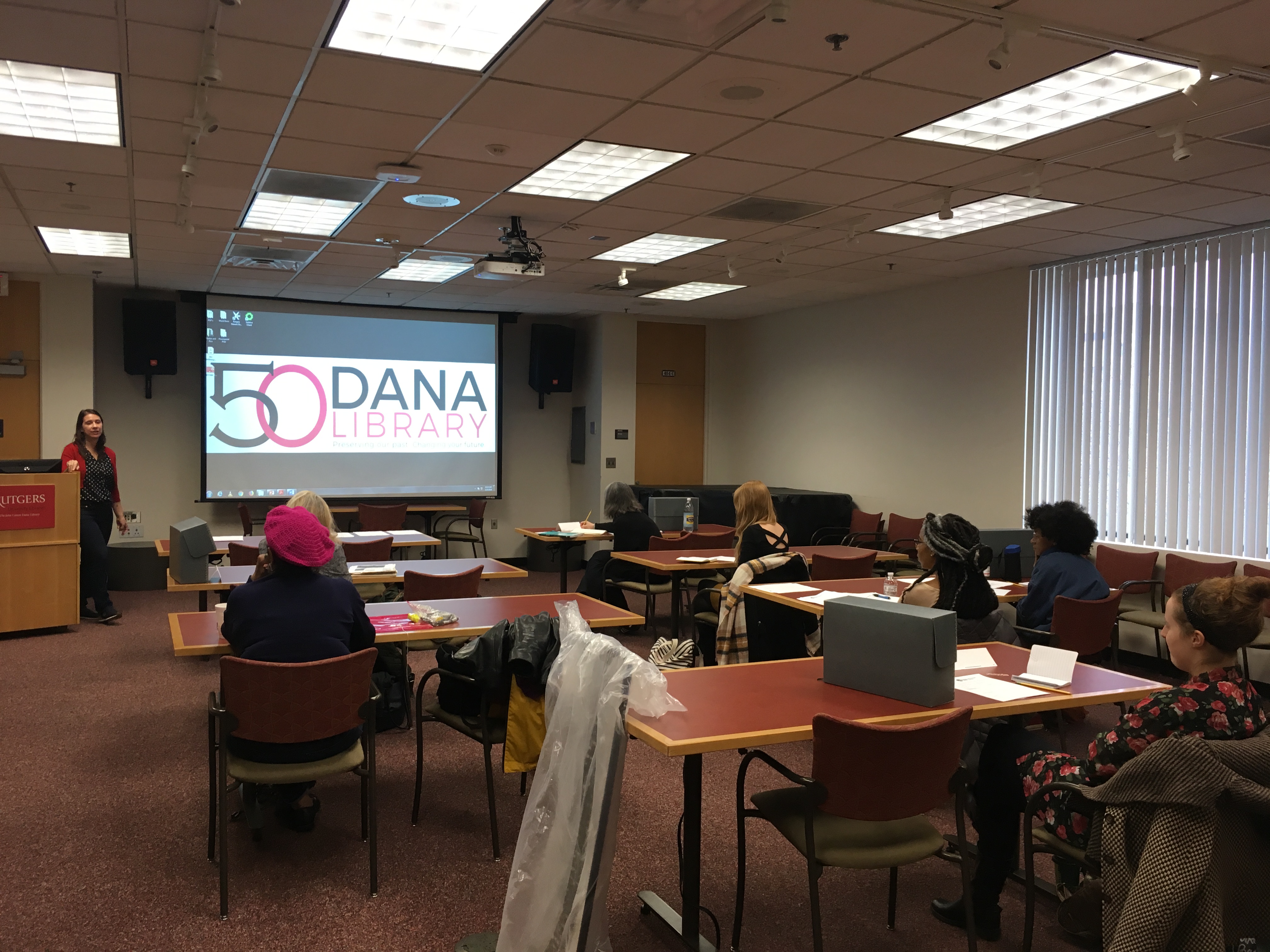
      • Dana held award-winning boot camps for graduate students and celebrated its 50th anniversary
      • The States of Incarceration conference and institute brought together partners from across Rutgers–New Brunswick and New Jersey
      • We spearheaded a campus-wide celebration of Paul Robeson’s 120th birthday in Camden
      • The IJS made the news with its acquisition of the Count Basie Collection, as did the New Brunswick Music Scene Archive, which earned an Innovative Archives Award from MARAC.

    Though they are really just the tip of the iceberg, these achievements are important not only because they support the local missions in Camden, New Brunswick, Newark, or RBHS, but because they also position the Libraries as a good collaborator on university-wide initiatives.

    I know there is plenty of work on the horizon—from improving QuickSearch and running a new round of OAT awards to enhancing our instructional technology support with the launch of products like Credo, Pressbooks, Leganto, and illumira—but we should be extremely proud of what we’ve accomplished together so far and excited about all that’s yet to come.

    Of course, the picnic would not have been possible without the thoughtful planning of the major events committee, so I’d like to recognize them all for their hard work and creativity—Matt Badessa, Matt Bridgeman, Janie Fultz, Chantel Harris, Tad Hershorn, Tara Kelley, Megan O’Connor, Erica Parin, Jessica Pellien, Antoinette Perkins, Daphne Roberts, and Rich Sandler—and thank all those who volunteered on the day of the event.

    Congratulations, Irina, on winning the desk duty prize!

    Last but not least, I want to acknowledge our colleagues who stayed behind to keep the libraries open while we enjoyed the party. As I mentioned in an earlier email, we held a special “desk duty” prize drawing this year, and I’m delighted to announce that Irina Loutchkina, library assistant at Alexander Library, was selected as our winner. Irina has received a prize pack including four football tickets from Rutgers Athletics, an RWJ Medical School tote bag, a beautiful hardbound Zimmerli exhibition catalog, a drink coozie and ID holder from the Division of Continuing Studies, a Libraries coffee mug, and more. Congratulations, Irina!

    Thanks again to each and every one of you for all that you do on behalf of the Libraries. I can’t wait to see what we can accomplish in the 2018–2019 academic year and beyond.

  • QuickSearch marketing materials for fall campaign

    For Fall 2018, we will have new marketing materials for QuickSearch. While our summer campaign was designed to raise awareness of the name of our search engine, this campaign will highlight the breadth of our collection and what QuickSearch enables users to do.

    The tag line is One Search Box, Millions of Resources. The images suggest the breadth of our resources and how they can be used for discovery and research. The search box terms also incorporate a soft approach to introducing advanced search technique using Boolean terms.

    This campaign is designed to be flexible — it will be used on posters, postcards, bookmarks, and social media. It also allows us to tailor the messaging to different disciplines. In addition to these materials, we will also have some new promotional items to distribute — pens, highlighters, and maybe even flashlights.

    Download copies of the finished materials as PDFs.

    We also hope you will send along additional suggestions for imagery that we should use for different disciplines. Matt Badessa and Mary Ann Koruth have contributed to this design and we owe a big thank you to Sarah Jewell for recommending the astronomy/universe image which helped us to conceptualize this campaign.

    Please send suggestions and comments to Jessica Pellien.

  • Creativity, Inc., Ex Libris Implementation, and Working without a Script

    Book coverIt has been more than a year (March 2017) since I wrote an Agenda post about one of my favorite books on organizational success, Creativity Inc.: Overcoming the Unseen Forces that Stand in the Way of True Inspiration by Ed Catmull and Amy Wallace. What impressed me most about the success of Pixar was the approach to planning and problem solving that they used. The animated movies didn’t begin with a script; they started with an idea, which I think maps well in our environment for the purpose of an initiative.

    It isn’t the release of The Incredibles 2 that has me thinking again about Pixar. (Although these hot, humid days of summer would be a perfect time to go to the movies.) What has me thinking about Pixar, and the creative process they use, is the release of our new library services platform.

    I watched the implementation process unfold and realized that it had a lot in common with the way Pixar made films. The Ex Libris Implementation Team was not given a script for the implementation.  They had a list of deliverables but were never given quite enough of the plot to decide what exactly to do. Primo/Alma is a platform, and configuration decisions vary depending on factors such as your current environment and the workflows you are trying to establish.

    We had an idea of what we wanted: integrated workflows for staff, improved ability to generate statistics and assess our collection, and the reduction of silos for our users. The problem is that there is no single right way to implement Primo/Alma. The decisions that the Ex Libris Implementation Team made along the way depended on the workflows and functions we were trying to support. We had some idea of what those would be but were not quite sure how they would fit together. To make matters more complicated, the timeline for implementation was only six months (by comparison, The Incredibles 2 was 12 years in the making!). Finally, the implementation team brought together people from different backgrounds.  Although each person has an area of specialty, no one person had the expertise to solve the problem alone.

    The group worked together to develop the plot and the script. I will say that, from the sidelines, there were times when it was stressful for the group members as they struggled to determine how best to move forward. Like the folks at Pixar, they worked together and solved problems quickly. In the words of Catmull, “…if you put your faith in slow, deliberative planning in the hopes it will spare you failure down the line—well, you’re deluding yourself.” The group planned, but at some point (perhaps much earlier than any of them wanted) they had to test their plans. There were definitely mistakes along the way but again, as Catmull says, “Mistakes aren’t a necessary evil. They aren’t evil at all. They are an inevitable consequence of doing something new.”

    The original group consisted of:

    Tao Yang (co-lead) Interim AUL for Collection Development and Management Resource Sharing
    Chad Mills Digital Library Architect Digital Collections, Data Migration & Systems Integration
    Abbey DiPaolo (co-lead) Director of Financial Planning and Business Operations Acquisitions
    Gracemary Smulewitz Head of Collection Services and Resources Sharing Electronic Resources
    Chris Sterback Integrated Information System Administrator Data Migration & Systems Integration
    Joseph Deodato Discovery Services Librarian Discovery
    Mary Beth Weber Head of Central Technical Services Resource Management

    Because of identified gaps, several other people were later added to the group.

    Laura Costello Virtual Reference Services Librarian Fulfillment
    Amy Kimura Web Services Librarian Website Design and Updates
    Jessica Pellien Director of Communications and Web Communications & Marketing

    I have to say that I am completely impressed by the team. The breadth and depth of knowledge in the group will provide the Libraries with a strong foundation for the future. They all know how the pieces fit together and how they can continue to make the system better. And each member of the team has worked with other groups to implement aspects of the platform, drawing on a broader range of expertise while exponentially increasing the reach of this knowledge. As an organization, we are not reliant on a few gurus with all of the answers.

    This is only the beginning. There are plenty of issues to address, some we know about and more that will be uncovered. Borrowing one last time from Catmull’s insights on Pixar, I like to think that what makes the Libraries special “is that we acknowledge we will always have problems, many of them hidden from our view; that we work hard to uncover these problems, even if doing so means making ourselves uncomfortable; and that, when we come across a problem, we marshal all of our energies to solve it.” This is the new world in which we live, and—thanks to the work of the Ex Libris Implementation Team and the lessons we’ve learned along the way—we are now better prepared to thrive in it.

  • Reflections on ALA 2018

    As I’m sure you’re all aware, the annual American Library Association conference was held last month in New Orleans, Louisiana. Rutgers was well represented, with plenty of posters and presentations being delivered by folks from the Libraries (check out our Faculty & Staff News page for more details). I reached out to our colleagues for their takeaways from the conference—here’s what they had to say.

    • poster presentation
      Tara Maharjan (l.) and Megan Lotts (r.) presented on using a button maker for outreach to students. Credit: Megan Lotts.

    Katie Anderson: I had the opportunity to learn more about ACRL’s Signature Initiative on Equity, Diversity, and Inclusion (EDI) during the ACRL Leadership meeting. Everyone is encouraged to take this quick poll (open until July 13, 2018) for feedback on priorities. Along with the many business meetings for my section (Anthropology and Sociology Section), a highlight of the conference was a program addressing equity, diversity, and inclusion in academic libraries. Three panelists presented an engaging and thought-provoking program to a packed room entitled “When to Speak Up, When to Listen: Allyship, Race, and Communication in the Academic Library”.

    Megan Lotts: What I enjoyed most about our poster session was learning more about what’s happening at other libraries, as well as sharing what we are up to at Rutgers. I also met a woman who is on a design team in Newark, I think within the libraries, and she was excited to take home a Rutgers button, so she could wear it to her next meeting. Kind of warmed my heart, total cheese, but true story. It was also great presenting at the same time as Jordan. I learned more about my RU colleague’s work, and we got to take pictures of each other!

    Christie Lutz: It’s tough to beat the food and architecture (and heat) in New Orleans, but at the Rare Books and Manuscripts Section (RBMS) conference I had a great experience presenting on the New Brunswick Music Scene Archive and chatting with people about music scenes and special collections. And I conducted some inadvertent collection development—I met a conference attendee from the University of Delaware who is married to a former Court Tavern bouncer, and she texted him right away about my presentation and it looks like he’ll be donating! I attended some thought-provoking sessions as well, in particular on challenges and new ways of thinking in archival collection management, and challenges and opportunities in working with underrepresented communities in developing their own archives.

    Tara Maharjan: What I took away from the conference was that a lot of people stopped by and mentioned that their institutions already had a button maker, but were not really using it.  People were surprised that we were using it to promote collections, talk about copyright, collaborate with departments, as well as a fun tool to engage with students. I also learned that I apparently talk with my hands in a lot of photos!

    Lily Todorinova: I am the incoming chair of the Emerging Technologies Section (ETS), which is part of the ALA Reference & User Services Association. As part of my section, I attended an interesting session regarding formal vs. informal project management, how to make a decision matrix, as well as “rightsizing” projects. It was super useful.

    Zara Wilkinson: My co-authors and I presented at the Library Research Round Table (LRRT) Research Forum. The forum had a total of four presentations, so we got to hear about a group of diverse research projects, from first generation college students’ experiences using the library to the resources and repertoire knowledge catalogers rely on in their day-to-day work. I enjoyed the breadth of topics and methodologies, especially in the context of our own project, which examined academic librarians’ experiences with research and their successful development of research skills and confidence.

  • Introducing the Rutgers Health Sciences Libraries on Social Media

    Facebook page
    The @RutgersHSL Facebook page.

    Matthew Bridgeman and Sarah Jewell are leading the teams behind the new Facebook and Instagram pages representing the Rutgers Health Sciences Libraries. Matthew Bridgeman, an information and education librarian at Robert Wood Johnson, has both professional and personal experiences with Instagram. He began the Instagram account at Middlesex County College. In two years he grew the library’s presence and even had a post shared by the New York Public Library. The NYPL also has a great article on creating Instagram posts to be engaging called 20 Ways to Make People Fall in Love with your Instagram. He sees Instagram as a way to begin a discussion with students and faculty with creative photography.

    Sarah Jewell, an information and education librarian at the George F. Smith Library of the Health Sciences, primarily has experience doing social media for organizations outside the professional sphere. In the past, she has volunteered to do Facebook, Instagram, and WordPress work with writing and meditation-based organizations. “I see social media as a great vehicle for expressing passion about important work,” Sarah says. “When you express enthusiasm through this media, it is contagious, and it gets others excited about the work to be done.”

    Instagram
    The @RutgersHSL Instagram page.

    Some resources that Sarah uses to guide her social media efforts include the Rutgers Libraries Social Media Resources (which she helped create) and Young and Rossmann’s book titled Using Social Media to Build Library Communities. As the Rutgers Health Sciences Libraries staff is just getting the Facebook and Instagram accounts off the ground, she has been reaching out to her regular contacts to spread the word about the new way to communicate with the libraries. She was thrilled to see the Rutgers School of Public Health post on both Facebook and Instagram a promotion of the Rutgers Health Sciences Libraries pages.

    The primary goals of the Facebook and Instagram accounts are to promote library resources, services, and events to the Rutgers University community and to engage with the students, faculty, and staff of the seven schools under RBHS. The new Rutgers Health Sciences Libraries Facebook and Instagram accounts are off to a running start. The accounts’ plans are to keep a constant scheduled flow of content celebrating the students, faculty, and libraries from the schools of Rutgers Biomedical and Health Sciences. If you have not already followed them, connect with them now as they begin this adventure.

    Matthew Bridgeman and Sarah Jewell