Category: Articles

  • Introducing the Clement Alexander Price Archive and Circulating Collection

    A long bookshelf against a wall with various artifacts displayed on top and tightly grouped framed images on the wall above.
    The Clement Alexander Price Archive and Circulating Collection was unveiled at Dana Library in October.

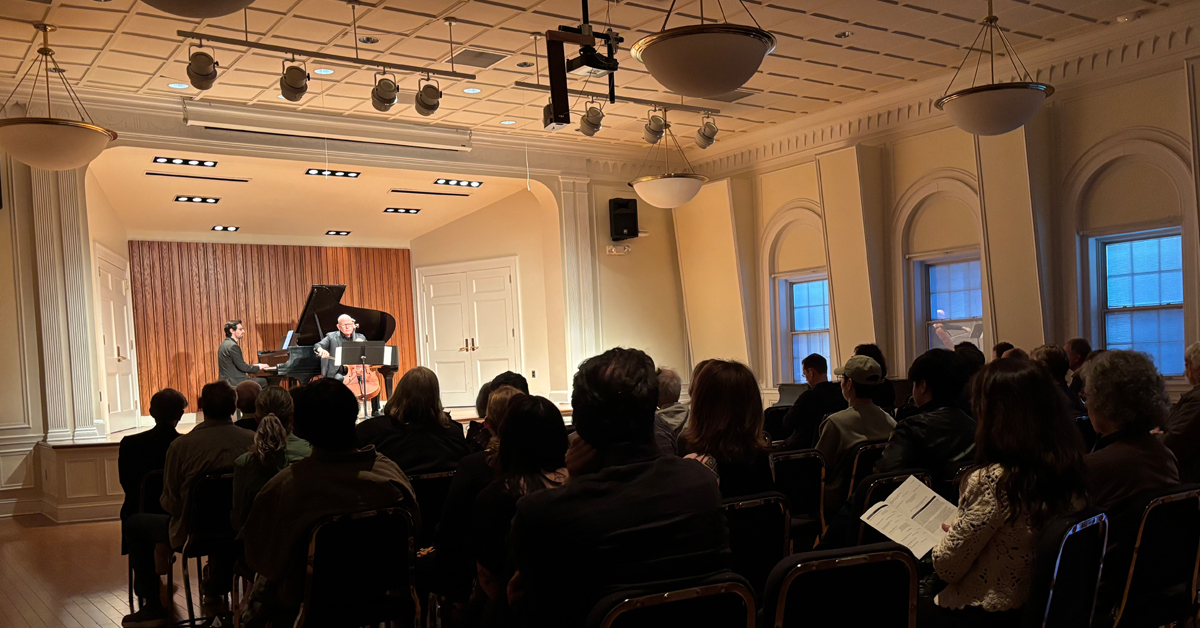
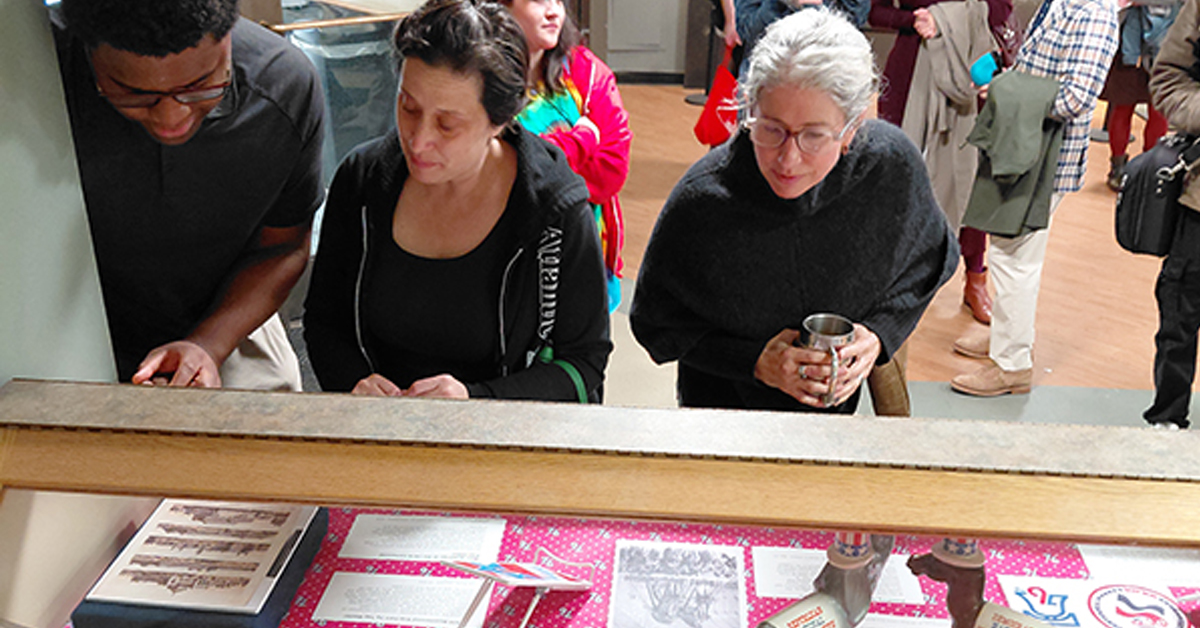
    On October 24, the John Cotton Dana Library hosted a reception for the grand opening of the Clement Alexander Price Archive and Circulating Collection. The event featured an exhibition of items from Price’s archival collection and personal library. It also kicked off a year of programming called Clement@80, which is taking place around what would have been the 80th year of Price’s life. Speakers at the event included Amanda Clay Powers, associate university librarian for Rutgers University–Newark; Mary Sue Sweeney Price, Clement’s wife and Director Emerita of the Newark Museum; and Spencer Crew, Robinson Professor of American History at George Mason University, who coauthored a book with Price.

    Price was an eminent professor, renowned scholar, and dedicated citizen. His influence can still be felt in the very fabric of Rutgers–Newark, the city of Newark, and the entire nation. He was the Board of Governors Distinguished Service Professor of History at Rutgers–Newark; the founding director of the Institute on Ethnicity, Culture, and the Modern Experience (now the Price Institute); the vice chair of President Barak Obama’s Advisory Council on Historic Preservation; the chair of Obama’s transition team for the National Endowment for the Humanities; a member of the Scholarly Advisory Committee of the Smithsonian’s National Museum of African American History and Culture; and a trustee of the National Trust for Historic Preservation. You can read more about his tremendous legacy in this story on the Rutgers website.

    The Dana Library faculty and staff are pleased and proud to make the Price archive and collection available. Special recognition goes to two former associate university librarians for Rutgers–Newark, Consuella Askew and Rhonda Marker, for the acquisition of the collection, and to Mary Sue Sweeney Price for making it available.

  • Staff Advisory Committee Town Hall: November 2025

    Andy Martinez, Chiaki Mills, and Corinne Suarez also contributed to this report.

    Powerpoint slide showing two silhouettes of human profiles, with the words, "Welcome. Purpose: Update, Engage, Listen. Responsibilities: Amplify staff voice, Advise leadership, Foster transparency.
    The Staff Advisory Committee Town Hall in November aimed to emphasize the importance of staff voices in shaping the committee’s initiatives.

    The Staff Advisory Committee (SAC) held a town hall on November 6. The purpose of the event was to emphasize the importance of staff voices in shaping the committee’s initiatives by encouraging participation from the Rutgers University Libraries staff. The committee hopes to amplify staff voices to advise leadership and foster transparency between the Libraries’ units.

    Report of the VPUL/UL

    Consuella Askew, vice president for university libraries and university librarian, began the meeting with an update on the Libraries’ strategic planning progress. She thanked Tony Nguyen and the faculty and staff who served on the Strategic Goal Writing Task Force for producing a comprehensive report and hosting a town hall. As a next step, the Libraries Leadership Team will take the task force’s recommendations and develop a more refined set of goals, objectives, and activities, along with an accompanying narrative to flesh out the strategic plan.

    Askew updated the group on the Libraries’ core services. A small group from the Libraries Leadership Team will develop documents that communicate these core services visually. The team will draft internal documents, which will be used to help inform operational decision-making, as well as external documents for advocacy to stakeholders.

    Mary Beth Weber’s work in her new role as coordinator for training and mentorship was also highlighted by Askew. Weber is working with a host of internal and external stakeholders, including SAC leadership, Planning Committee leadership, and the Libraries’ human resources manager, to create and deliver enrichment programming. She’s also charged with launching an internal leadership program, as well as externally focused educational programming that centers the Libraries as the intellectual hub of the university. The University Librarian’s Symposium Series on AI in Higher Education, launched on November 10, is a prime example of this external programming.

    Askew concluded her report with her thoughts on how the staff can demonstrate the Libraries’ contributions to the academic and research priorities of the university. She stressed how the SAC has played a vital role in building an inclusive work environment to further these goals.

    SAC Overview and Highlights

    John Gibson, SAC chair, gave an overview of SAC’s accomplishments for the year. He highlighted the development of the governance foundation, a staff resources page, and an anonymous feedback form. He also mentioned the group’s participation in workforce planning, DEI initiatives, and the AI task force. In addition, the committee is looking to launch mini-town halls, discuss enrichment proposals, and explore mentorship opportunities.

    Gibson also acknowledged the work of Secretary Roselyn Riley-Ryan and Ex Officio Hadiyah Sellers.

    Standing Committee Reports

    The standing committee chairs gave their group reports, highlighting each committee’s key contributions from the staff.

    The Governance Committee, led by Tracy Meyer, focused on bylaws, elections, and nomination cycles. The group is now preparing for Spring 2026 elections and is seeking new members to help with the committee.

    Andy Martinez of the Communications Committee reported on the workflow development of posting SAC minutes and the creation of a procedural manual. The group’s future goals include content writing and new stories published on the staff website and in The Agenda.

    The Enrichment Activities Committee, chaired by Andrew Ruggiero, reported on its goals of promoting wellness, leadership, and professional development. Current projects include safety training, tech learning, and staff recognition.

    Ruggiero concluded with some complimentary words for fellow committee member Grace McGarty. Ruggiero talked about how she brings out her best to serve others and that this was a guiding vision of the work of the Enrichment Activities Committee.

    Unit Representative Updates

    The town hall then moved on to some general updates from the individual units.

    Rutgers–Camden, represented by Jennifer Rieber (Robeson Library), asked if anyone with questions or feedback could please reach out to her as the unit representative.

    Isaiah Beard from Central acknowledged the work of retiring staff member Renee Clark. She has served in a range of roles in the Technical Services Building (TSB). Working for Rutgers since 1979, she had been in TSB making sure our materials reach our sites and the community we serve.

    Rutgers–New Brunswick, represented by Jamey Silverstein (Carr Library/Annex), acknowledged his fellow staff colleagues who, like him, are wearing many hats due to staffing shortages. He provided an update on Douglass Library, where work is in progress to renovate the Media Service Point for use by University Online Education Services.

    Video of the full town hall is accessible here:

    Staff Advisory Committee Town Hall – November 10, 2025


  • Realigning Library Services to Scale Research Support

    close-up of a hand holding research notes on top of a desk
    The Research Support Services group was formed to coordinate the development and delivery of library services that support research across the life cycle.

    In 2022, Rutgers University Libraries embarked on a comprehensive review of their organizational structure with the goal of improving operational efficiency, clarity, and communication. Part of this process involved the identification of service areas that could benefit from greater system-wide coordination and support. One of those areas was research support, which encompasses a broad range of specialized, high-touch services such as managing research data, conducting systematic reviews, and evaluating research impact.

    While traditional services like reference and borrowing have been centrally coordinated for years, research support evolved much more opportunistically in response to local needs, resources, and expertise as well as rapidly changing technologies, funding expectations, and modes of scholarship. While this approach allowed for the development of responsive and innovative services, it also led to inconsistencies in quality, coverage, and integration. It therefore became necessary to explore ways of scaling these services to meet growing demand across the university and ensure their sustainability.

    To help address this challenge, the Research Support Services (RSS) group was formed in the fall of 2025 to coordinate the development and delivery of library services that support research across the life cycle. Under the direction of the coordinator for research support services, this group is responsible for providing training, outreach, and support to researchers on topics such as:

    • Artificial intelligence
    • Copyright
    • Evidence synthesis
    • Open access
    • Research data
    • Researcher identity and impact
    • Scholarly publishing

    Reporting to the associate vice president for campus libraries, the goals of RSS are to:

    • Support researchers at all stages of the research life cycle, from project design to publication and beyond
    • Increase campus awareness and use of library research support services
    • Build capacity among library faculty to provide specialized research support
    • Foster a culture of open, ethical, and impactful scholarship
    • Continuously evaluate and adapt services to emerging research needs and trends

    RSS is composed of library specialists across the Libraries and organized in the following teams:

    Artificial Intelligence

    Members: Katie Anderson, Joanne Dera, Triveni Kuchi, Mei Ling Lo, Jonathan Torres, Sonia Yaco, Yingting Zhang

    Supports researchers in understanding how to use and responsibly integrate artificial intelligence (AI) tools into their research workflows, including guidance on:

    • Identifying and evaluating AI tools appropriate for research
    • Writing effective prompts, evaluating outputs, and documenting use of AI
    • Understanding the technical limitations and ethical implications of AI
    • Ensuring ethical and transparent AI use in compliance with academic integrity, intellectual property, and data privacy standards

    Evidence Synthesis

    Members: Matthew Bridgeman, Maria Deptula, Bart Everts, Mina Ghajar, Pam Hargwood, Samantha Kannegiser, Mei Ling Lo, John Maxymuk, Stephen Modica, Yingting Zhang

    Supports researchers in performing scoping, systematic, and other structured literature reviews, including guidance on:

    • Formulating a viable research question
    • Choosing an appropriate review methodology
    • Selecting relevant databases
    • Developing an effective search strategy

    Research Data

    Members: Francesca Giannetti, Triveni Kuchi, Laura Palumbo, Susan Oldenburg, Jonathan Torres, Ryan Womack, Sonia Yaco, Yingting Zhang

    Supports researchers in collecting, analyzing, documenting, and sharing research data, including guidance on:

    • Finding and accessing specialized datasets
    • Using data analysis and visualization tools
    • Creating data management plans
    • Selecting a repository for data sharing

    Researcher Identity and Impact

    Members: Joanne Dera, Mei Ling Lo, Jonathan Torres, Yingting Zhang

    Supports researchers in promoting their scholarly work and evaluating its reach, influence, and engagement, including guidance on:

    • Creating researcher profiles and identifiers
    • Interpreting bibliographic metrics like citation count, impact factor, and h-index
    • Using bibliographic tools to perform citation analyses
    • Using scholarly networking tools to promote their research and identify potential collaborators

    Scholarly Publishing, Open Access, and Copyright

    Members: Jeffrey Carroll, Maria Deptula, Rhonda Marker, Janice Pilch, Zara Wilkinson, Yingting Zhang

    Supports researchers in navigating the complex landscape of scholarly publishing, open access, and copyright, including guidance on:

    • Identifying reputable, high-impact journals for publication
    • Understanding author rights and negotiating publisher agreements
    • Identifying funding for article processing charges (APCs)
    • Ensuring compliance with funder and institutional open access policies
    • Navigating copyright and licensing issues

    Each team has a designated team representative who serves as a member of the RSS Steering Committee, which meets monthly to coordinate the delivery of research support services across libraries, develop standardized policies and best practices, and act as the primary decision-making and strategic advisory body for RSS. Additional information, including the group’s charter and meeting minutes, can be found on the staff website.

    To support this exciting work, a new Research queue has been created in LibAnswers. The queue can be used to direct questions on any of the aforementioned topics to the appropriate library specialists. Patrons can also send their questions directly to the queue by emailing ask_research@libraries.rutgers.edu.

    Library faculty and staff interested in learning more about the work of RSS are invited to attend an information session to be held in early spring. Details will be distributed via email. In the meantime, feel free to send any questions to me at jdeodato@rutgers.edu.


  • Promoting Well-Being Through Crocheting and Knitting

    Collage of images depicting people working with yarn and a close-up of a pumpkin craft
    Joyful Collégialité through Crocheting and Knitting, a monthly initiative at Smith Library, is funded by the Rutgers Health Joy at Work Mini-Grant Program.

    George F. Smith Library of the Health Sciences has successfully hosted four open crochet/knit gatherings in collaboration with the NJMS Crochet and Knitting Club, with a strong turnout of 36 participants, including New Jersey Medical School students, faculty, and staff. This monthly initiative, Joyful Collégialité through Crocheting and Knitting, is funded by the Rutgers Health Joy at Work Mini-Grant Program, which aims to promote a culture of well-being in the workplace, fostering belonging, human connection, and collegial support.

    Participation in the events has surpassed expectations, and the waiting list continues to grow. While the project is scheduled to conclude in March 2026, the Smith Library team remains committed to continuing the program well beyond the grant period.

    The workshops offer group and one-on-one skill-building opportunities for beginners and experienced crafters, creating an enthusiastic and engaging environment. Instructors Chun Yen Chen and Purvi Shakelly, both NJMS students, and Ermira Mitre, a library technician in Access Services at Smith Library, prepare pattern handouts and offer hands-on guidance. In addition, library technology, including OkidCam and SmartBoard, enhances live demonstrations of crocheting techniques through large-screen displays of stitching and pattern techniques, ensuring clear visual learning for all participants.

    The creative projects these workshops undertake are both joyful and skill building, ranging from seasonal items (e.g., pumpkins and holiday-themed coasters) to detailed, three-dimensional anatomical pieces (e.g., hearts and blood cells). The instructors also have incorporated a brief Emotional Freedom Technique (EFT) tapping practice to begin each session, sending calming signals to the nervous system and promoting a relaxing atmosphere for crocheting sessions.

    Survey responses highlight the program’s positive impact: reduced stress levels, increased joy through creative expression, and strengthened interpersonal connections. Participants consistently describe the workshops as restorative, uplifting, and community-building.

    Overall, this initiative has contributed to a more supportive campus environment and reflects the library’s ongoing commitment to promoting well-being, creativity, and collegial engagement across the Rutgers Health community.

  • Behind the Title: What I Really Do

    headshot of Rhonda Marker
    Rhonda Marker is head, open knowledge strategies, for Rutgers University Libraries.

    You’ve probably seen my job title—head, open knowledge strategies—and wondered what it means. My position is new, but it builds on work that many people in the Libraries have been doing for a long time. The short explanation is that my job touches on all things “open” at the Libraries to help our services thrive. Collaboration, leadership, and outreach are woven throughout all facets of my work.

    I have several distinct areas of responsibility. For each of these, I’ll summarize my role or give an example of what programs and services I’m responsible for.

    Rutgers’ Open Access Policy and Institutional Repository

    I’m responsible for increasing awareness of the university’s open access policy and institutional repository, Scholarly Open Access at Rutgers (SOAR). I keep our outreach materials up to date. Presentations and other resources on SOAR for use by library employees are available on the Staff Resources page under Project Outreach Materials. The latest addition is a single PowerPoint slide about SOAR that librarians can download and insert into their presentations about general library services.

    Open and Affordable Textbooks (OAT) Program

    I coordinate the OAT Program. So much is contained in that simple statement! Through OAT, the Libraries award research funds to Rutgers faculty who redesign their courses to use free or low-cost materials or who create a new open (and free) textbook.

    Open Access Publishing

    I advise current and potential journal editors and managing editors of the Libraries-hosted open access journals on best practices. All these journals are adding accessibility requirements and implementing workflows to ensure that articles are accessible. They have also begun to articulate their journals’ expectations of how editors, reviewers, and authors can use artificial intelligence tools.

    Transformative Agreements

    I lead outreach and promotion of open access publishing opportunities through the Libraries’ transformative agreements. I collaborate with others to report on the use of these agreements (e.g., Rutgers units and subject areas). Coming soon: a full presentation and a single slide about our transformative agreements.

    Electronic Theses and Dissertations

    I provide consultative guidance and programming to help our graduate programs uphold institutional policies and best practices. This year, the emphasis is on ensuring that all submitted electronic theses and dissertations comply with ADA Title II requirements for accessibility.

    Open Access Issues (access, ownership, and rights)

    I lead the planning of our annual Open Access Week programming. If you couldn’t attend October’s events, check out our recordings of the presentations.

    The best part of my work is the opportunity I have to collaborate with so many people. For SOAR, I get to work with Library Applications and Development and Cataloging and Metadata Services. For OAT, I team up with liaisons from all our chancellor-led units, Libraries central offices, and instructors across the university. I’ve included library liaisons in conversations with graduate programs about accessibility. By virtue of my position, I also participate in organizations such as the Big Ten Academic Alliance (with Jeff Carroll, I am a member of the BTAA’s Scholarly Publishing Peer Group), the Library Publishing Coalition, and SPARC’s Coalition of Open Access Policy Institutions (COAPI). Each of these groups is active and grappling with similar issues at our respective institutions.

    As the Libraries evolve, so will my role. I’m excited to keep learning and collaborating with you.

  • Letter to the Libraries

    When I wrote my previous message for The Agenda in August, we were just beginning to implement the results of our multiyear reorganizational process. 

    Now, as we settle into our new organizational structure, we are bringing into focus our strategic goals for the next three years. I cannot overstate the importance of this effort. Having a strategic plan will reinforce our ability to work as One Libraries and help us meaningfully assess and clearly demonstrate our impact. 

    I want to express my appreciation to Tony Nguyen, chair, and all the members of the Strategic Goal Writing Task Force, who have recommended goals in five key areas: 

    • Student Success  
    • Engagement and Outreach  
    • Research and Clinical Enterprise  
    • User Experience  
    • Employee Development  

    I also want to thank everyone who engaged in the recent town hall, which can be viewed on the UL Plan of Action Hub: Resetting the Rutgers University Libraries page of the staff resources site, and followed up with Tony providing feedback via Padlet or by email. As a reminder, Tony has asked for feedback by the end of the day on Friday, October 31. 

    I look forward to bringing our strategic plan to fruition in the coming months. With a shared vision for our future, we will all have greater clarity on what work to prioritize, what success looks like, and how effectively we are advancing our mission and the university’s priorities in education, research, health care, and public service. 

    Thank you all for your hard work each day, and for your ongoing commitment to our shared future.

  • New Media Recording Studio at Robeson Library

    a room with a green screen and video recording equipment
    Robeson Library now has a Media Recording Studio.

    In Fall 2025, under the leadership of Rutgers University–Camden’s executive vice chancellor for academic affairs and provost, Paul Robeson Library—along with the Office of University Online Education Services (UOES) and Rutgers–Camden IT—opened a Media Recording Studio on the second floor of the library (Room 290). This is the first recording studio of its kind at Rutgers–Camden.

    Current faculty and staff with a valid Rutgers NetID can use the studio to create video content for teaching and learning. Whether for short lectures, course introductions, updates, or hosting live sessions with students, the studio offers a simple and professional-quality production experience. No prior video experience is required—just bring your content and press a button.

    Individuals who need support can book a consultation with the Office of University Online Education Services (UOES). If no assistance is needed, the space can be reserved directly.

  • Virtual Poster Presentations from State of the Libraries 2025

    simple illustration showing video play, pause, and stop icons
    State of the Libraries 2025 included 10 virtual poster presentations.

    The annual State of the Libraries was held as a virtual event on August 13, 2025. The following virtual posters provided a glimpse into the diverse work of Rutgers University Libraries faculty and staff:

    An Automated Approach to Enhancing Legacy Library Catalog Records – Our library catalog contains numerous brief records lacking essential information, making it difficult to find items and creating accessibility challenges for users. Manually updating these records is labor-intensive and time-consuming. This poster presents an automated solution using Alma’s Analytics and batch-searching strategies. This innovative approach significantly improves cataloging efficiency, enabling updates of approximately 1,000 records monthly, a substantial increase from 1,000 annually. Presented by Li Sun and Neera Sondhi (Cataloging and Metadata Services).

    An Introduction to the Databases List – This poster provides a brief overview of the Rutgers University Libraries Databases List, including its searching and browsing options, the structure of each database list entry, and best practices for linking to databases. This overview will be helpful to those who are new to Rutgers University Libraries as well as longtime personnel who are interested in refreshing their knowledge. Presented by Elizabeth York (Collections & Digital Strategies).

    Assessing Film Condition: A Collaborative Approach to Preserving Jazz on Film – This poster presents a collaborative project between the Institute of Jazz Studies (IJS) at Rutgers–Newark and Special Collections and University Archives (SCUA) at Rutgers–New Brunswick to assess the condition of a unique collection of 16mm, 35mm, and 8mm films housed at IJS. It outlines the process developed to inspect the films, identify formats and lengths, and apply A-D Strips to test for acetate film degradation. The project highlights key preservation concerns and offers a practical workflow that others may adopt when evaluating similar audiovisual collections. Presented by Diane Biunno and Tara Kelley (Institute of Jazz Studies and Special Collections and University Archives).

    Bookable Spaces – The Libraries redesigned and improved the findability and information related to our bookable spaces. The student-forward effort was intended to provide more efficient access to one of the Libraries’ most used services. Presented by Antonio Barrera (Applications and Development).

    Highlights of Camden Special Collections – This poster highlights selections from Special Collections in Camden, including the Virgilio Papers, campus ephemera, and more. Presented by Bart Everts (Robeson Library).

    Migrating and Modernizing RUcore – This presentation will briefly cover the three-year journey the Libraries Applications and Development Team went through while migrating the RUcore repository and related services to new OIT-managed server environments. This includes upgrading out-of-date software, deploying the entire RUcore codebase via a change control system, and improving RUcore performance. Presented by Chad Mills and Yang Yu (Libraries Applications and Development).

    OAT Program Basics: What Everyone Should Know – This poster provides essential information about the Open and Affordable Textbooks (OAT) Program. This incentive program supports instructors in reducing course material costs for students through the adoption, adaptation, or creation of open and affordable course materials. Designed to help RUL employees confidently answer general questions from faculty and instructors, the poster outlines key program details, including award categories, evaluation criteria, and impact metrics such as student cost savings and the number of awards granted since the program’s launch in 2016. It will also list the OAT Team members who can provide more in-depth assistance with inquiries. Presented by Matthew Bridgeman, Naomi Gold, Rhonda Marker, Lily Todorinova, and Zara Wilkinson (OAT Team).

    Planning Committee – This poster presents a review of the activities of the committee during AY25 and a preview of the year to come. Presented by Melissa De Fino and Ryan Womack (Planning Committee).

    Server Migration Update – The Libraries have been engaged in a multiyear process to improve efficiency and maintenance for our servers. In this update, we will discuss the completion of the migration of 28 linux servers. Presented by Antonio Barrera and Ashwin Bijur (Applications and Development).

    Staff Advisory Committee – This poster includes highlights of the FY25 Staff Advisory Committee Annual Report and plans for FY26. Presented by Rose Barbalace and Jeff Teichmann (Staff Advisory Committee).

  • Let Me Reintroduce Myself: Coordinator for Training and Mentorship

    head shot of an adult
    As the inaugural Libraries-wide coordinator for training and mentorship, Mary Beth Weber has moved to a new office within Alexander Library.

    Much of my career at Rutgers University Libraries has been in technical services, primarily in resource description (aka cataloging), and I’ve collaborated with many colleagues regarding projects, gift collections, and related concerns. As part of our recent reorganization, I was offered a new role that’s different in many ways from the work I had been doing. While I don’t have direct reports, I’m managing projects and initiatives.  

    As the inaugural coordinator for training and mentorship, I’ve been charged by our vice president for university libraries (VPUL) to oversee the Libraries’ enrichment program and to implement strategies to maximize success and promote continuous learning. The intent is to foster a learning community and unify training initiatives across our organization. The primary goals of my position are: 

    • Collaborate with the Libraries Leadership Team, communications director, Libraries Human Resources, Staff Advisory Committee, and faculty Planning Committee to identify professional development needs and implement targeted enrichment activities that support library personnel. Partnerships are essential for success. Through our collective wisdom, we can meet the needs of our workforce through all stages of their careers. Learning never ends, and there will be new skills and standards that we’ll need to master and apply to our work. 
    • Expand the scope of the Mentoring Program to be more inclusive and available to all library personnel. This will be a big change that will require input from both faculty and staff. While there are some differences between employment requirements for faculty and staff, there are more things they have in common, such as the need for guidance and connection. The program traditionally paired new hires with experienced colleagues. That will continue, and I’d like to consider expanding the types of mentoring offered to include just-in-time assistance for a specific short-term need.  
    • Develop a leadership program for frontline supervisors, middle managers, and executive personnel. The VPUL has previously mentioned EmpowerU; the goal is to prepare leaders across the Libraries to effectively handle the challenges and changes that our organization is facing and to prepare for the future. Our leaders have various backgrounds, skills, and experience, and the intent is to develop and strengthen those skills. By fostering foundational leadership principles such as strategic thinking, communication, and talent development, participants will be empowered to lead proactively and innovatively.   
    • Develop a master calendar of professional development opportunities. This will help with planning new offerings and avoid the conflict of scheduling multiple programs at the same time. Additionally, I’d like to create a streamlined means to share continuing education and professional development activities with the entire organization. People have emailed items to me, and that’s been great. I want to strike a balance between overwhelming people with emails and ensuring that they get information in a timely manner. One way to handle this is through a regular column in The Agenda. Another is to post events to the staff site.

    Some recommended resources for continuing education and enrichment follow: 

    • WebJunction is provided by OCLC support. WebJunction is free and open to personnel from all types of libraries. Access is provided to courses and webinars. 
    • The Carterette Series is produced by the Georgia Library Association. These webinars are free and open to anyone. Past webinars, including recordings, slides and resource links are in the organization’s archives 
    • The Training Magazine Network requires users to create a free account to access webinars (upcoming and past), a calendar of events, and regular emails about training resources. 
    • The Insperity Blog provides resources on business management and leadership that are applicable to library work.  

    I’ve relocated from my long-term “home” in the Technical Services Building on Busch Campus to the administrative suite on the third floor of Alexander Library on the College Avenue Campus. Feel free to stop by to say hello. Have other ideas? You can also call me or book an appointment to speak with me.  

  • Turning the Page: Special Collections at Robeson Library

    Nesting dolls made to look like the Rutgers Scarlet Raptors mascot
    These Scarlet Raptors nesting dolls are part of the Special Collections at Robeson Library.

    After nearly 30 years, Julie Still retired from her role as a history liaison and special collections librarian. Following her retirement, I became the acting Paul Robeson Library liaison for history, world languages, and special collections. I am very excited to take on this role, and I am particularly looking forward to the work ahead in Robeson Special Collections as Rutgers University–Camden celebrates its centennial in 2026. Moreover, as an alum of the undergraduate history program (not quite a century ago!) I have both a personal and professional connection to Rutgers history.  

    The special collections housed at Robeson Library fall into three broad categories: ephemera and realia from campus history, campus publications, and collections from the Camden and South Jersey communities, including two haiku-related collections (Nick Virgilio Haiku Archive and the Pamela Miller Ness Fine Arts Haiku Collection). Since the campus was founded in 1926, we’ve had a number of student-produced newspapers, literary journals, and pamphlets, and the student newspapers are among my favorite items in the collection. These publications are a great primary source for campus history but also give insight into how the campus community responded to world events, including the civil rights movement and the Vietnam War. On a lighter note, I often find myself reading the features sections to see what music and movies were popular with students during a particular era.  

    Building on Julie’s work, I plan to use my time in this role to promote the collection to Rutgers–Camden and beyond. With that goal in mind, Robeson Library is participating in Archives Month Philly, an annual event showcasing collections from throughout Greater Philadelphia. I saw this as an opportunity to create a small exhibit featuring highlights from the past century to share beyond the Rutgers community.  

    As part of the Distinctive Collections team, I enjoy our discussions on special collections policy and challenges, as well as the opportunity to promote our collection beyond Rutgers–Camden in the context of One Libraries. I hope to move forward with some of the digitization projects in the works, including making the campus newspaper The Gleaner and our theater bills available online. I also plan to work on collections guidelines for Camden. Of course, I look forward to collaborating with the Research Support Services team, and with my fellow liaisons and Rutgers faculty members in history and world languages.