Category: Cabinet

  • Consuella Askew’s First Letter to the Libraries

    I am honored and excited to be appointed Rutgers’ 15th University Librarian. One of the most gratifying aspects of this role is the opportunity to witness your skills and talents in action at the Libraries. Your loyalty to RUL is admirable, and your determination to work with grace and dignity and in the university’s best interests is inspiring.

    This letter for The Agenda comes at a time of evolution and opportunity. We continue our initiatives designed to address your concerns about RUL’s organizational clarity, culture, and communication. The RUL Affirmation group has worked diligently to define our aspirations and reframe our mission statement. They are incorporating your input from their recent town halls into final statements that will provide a common framework from which we can springboard. We are close to formally establishing the Staff Advisory Committee (SAC), which will serve as a counterpart to the Faculty Planning Committee. Thanks to the stellar work of the SAC Planning Task Force, bylaws have been drafted and are undergoing final revisions. Once that is completed, the task force will focus on stewarding the adoption of the bylaws and conducting the committee’s initial elections process. The goal is to have the SAC up and running by year’s end. We are also reviewing the Libraries’ organizational structure and how our core services are best delivered. We want to ensure we offer comprehensive student and research support across the university’s broad footprint in the most efficient and responsive manner possible.

    We aspire to be the intellectual and creative center of the Rutgers community and recognized as essential to the university’s academic mission. It is a noble and obtainable goal. The future holds great promise if we continue to work smart, act with intent, listen to our colleagues and constituents, and pivot to meet the needs of today’s dynamic academic environment.

    Since my arrival at RUL, I have been impressed by your ability to imagine and implement creative solutions, often in the midst of change. While things continually evolve, I know your willingness and desire to collaborate and meet challenges with intelligence and good humor will serve us well. I look forward to us working together for the benefit of the faculty, students, and staff of Rutgers University and the broader New Jersey community.
  • Leading the Way into the Future

    It’s hard to believe that this is my last article for the Agenda. When I look back at all that we have accomplished since I arrived at Rutgers in 2015—from the implementation of our new library system and QuickSearch, to the repeated successes of our Open and Affordable Textbooks program, to our pivot to an online-centric model of service delivery in the face of COVID-19, to our redesigned website, to the countless other achievements that I don’t have space to mention here—I cannot help but feel an overwhelming sense of pride. Looking back at the work that we have been able to accomplish to advance teaching and learning at Rutgers in these six years leaves me feeling incredibly grateful and fortunate to have had the pleasure of leading such a hardworking, intelligent, and creative group of colleagues.

    But all things must come to an end, and before I leave you in the capable hands of Consuella, I thought I would take one last opportunity to orient us toward the future and encourage you all to continue down the path we’ve begun charting during my tenure as university librarian.

    As a new article in The Chronicle of Higher Education illustrates, libraries are well-situated to lead their universities into the new era of higher education—not only because of the expertise we developed as we nimbly pivoted our services online with the outbreak of the pandemic, but also because of the community-building, “front porch” role our physical spaces will serve as students and faculty begin to repopulate our campuses. Over time, we’ve gained the experience and developed the tools to be leaders in this moment, but it’s up to us to make sure we are ready to answer the call.

    Put simply, now is the time for libraries to shine. If the past year has taught us anything, it’s that libraries have the ability to be impressively flexible and inventive in the face of unforeseen challenges, with a sharp focus on meeting our users’ needs and maximizing the impact of our limited resources. With disruptive changes ongoing in the scholarly communication and higher education landscapes—from new transformative agreements to the emergence of the hybrid classroom—we will need to continue demonstrating such ingenuity for the foreseeable future.

    While I am stepping down from my position, I am not leaving Rutgers. I know the Libraries will do well under Consuella’s leadership, and I am certain that the next university librarian, whoever they may be, will be able to build on the significant momentum we’ve gained over the last six years. I look forward to the next chapter of the Libraries’ history, and I feel confident that we will realize our place, in the words of President Holloway, as the “heart of the university.”

    One last time, on behalf of all the Rutgers students and faculty that we serve: thank you for everything that you do.

  • Serving the Post-Pandemic University

    It has been eight months since the university moved online and it is still difficult to believe that it is real. The sudden change that we experienced is gradually transitioning to a new normal, along with the insight that it is unlikely that we will ever return to the operations that we left in April. We are beginning to understand that we have the opportunity to build a future that combines the best of the past with the elements of our current environment that work well.

    In a blog post related to the pandemic, Lorcan Dempsey writes about the ways in which the pandemic is accelerating changes in library collections that previously had been slowly evolving. Dempsey discusses three pandemic effects that have contributed to this acceleration and will shape our environment going forward:

    • Budget reductions and the possibility that recovery will not come quickly
    • The rapid shift to online learning and research that most likely will only be partially reversed
    • The need for libraries to visibly and proactively align their services with the mission of the university

    As we develop strategies, it is imperative that we continue to look closely at how these pandemic effects are changing both higher education in general and Rutgers in particular, to try to discern how we use our strengths in the new environment. Some collection-related trends that I believe will be most relevant for us include:

    • The need to advance undergraduate student success. Student success is a critical element for the future of Rutgers. We have seen that—perhaps surprisingly—certain courses like traditionally large lectures can actually work better in an online format, creating more opportunities for participation and engagement than would previously be possible. We also know that students and their families are facing unprecedented financial struggles because of the pandemic, and the economic ramifications of the virus are still not even fully understood. I expect that these factors will cause the delivery of some of the undergraduate curriculum to change, even after it is safe to return to classroom settings. Accordingly, we should expand our efforts to replace traditional textbooks with open and affordable information resources. We have been successful in this area with OAT and Leganto, but we should be asking ourselves what this could mean for how we develop our collections, offer instruction, and participate in shared activities moving forward.
    • The continued erosion of the scholarly communication system. Academic libraries have worked on multiple fronts to develop new models of scholarly communication that center the researcher and the scholarship rather than the publisher. Fueled by the success of the University of California system in breaking the Big Deal, for the first time libraries are seriously considering large-scale cancellation of packages as viable option. Publishers, in collaboration with libraries, have responded with transformative license agreements that may simply shift who pays for publications without solving the underlying problem of unsustainable costs. Library budgets have also supported other forms of academic publishing. Over the past few decades, libraries have systematically reduced the number of monographs purchased from university presses, creating—for all but a few large presses—the need for substantial university subsidies. Now scholarly associations are facing a similar future. Together, these changes represent substantial shifts in the scholarly communication environment and will require responses much broader than a single library. As such, we should join our institutional partners in continuing to advocate for a sustainable and open ecosystem of publication, one that recognizes and rebalances the contributions that authors, institutions, and publishers make.
    • The rise of multiple formats. Libraries have always dealt with multiple formats, and this trend only continues to grow. In addition to print and online journals and books, we also provide access to multiple forms of audio, video, data, and other media. Print continues to be an essential part of our collections; however, the rapid shift online has exposed the costs of acquiring and managing print collections and has changed the calculations that determine what format is optimal. Moving forward, we should look carefully at how we optimize the Libraries’ collection budget to provide access to content, balancing the diverse needs of the various disciplines with overall trends and preferences toward the use of digital media.

    Taken together, I see these trends pushing us further in the direction of interdependence and collaboration among libraries. For instance, the cancellation of “Big Deals” requires unprecedented levels of collaboration and reliance on borrowing networks. Strong and established partnerships with PALCI, BTAA, and VALE position us well in this environment, as do our membership with HathiTrust and leadership in the BTAA Collective Collection initiative. As we invest in these efforts, we will be forced to navigate the tradeoffs between local control versus participating in shared activities at the consortial level to achieve efficiencies of scale in purchasing, licensing, and sharing resources.

    At this moment, we have the opportunity to look more holistically at our collections, to ask important questions about our priorities and approach, and to begin charting a course forward that will help us address not only the difficulties we are facing in the immediate present, but also the shifting landscape of scholarly communication and higher education more broadly moving into the future. We have an informed and engaged library faculty who can share their insights and expertise with discipline-specific perspectives on these issues, as well as a faculty planning committee who are tasked with helping the Libraries develop a more focused long-term vision that will allow us to flourish in the face of the many challenges before us. It may be difficult, but with the willingness and flexibility to adapt to a rapidly changing environment, the courage to make bold decisions, and a genuine commitment to deep collaboration (both within the Libraries and across our many external partnerships), I am confident that we can position ourselves to provide excellent service to the post-pandemic university.

  • Collections Budget Statement for Fiscal Year 2021

    The public-facing document on the FY21 collections budget has now been posted to our website.

    You can view it here or by navigating to About > Mission, Vision, & Strategic Plan from the homepage.

  • Staying Visible on Campus: Robeson Library’s Virtual Initiatives

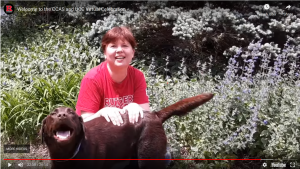
    Regina and her dog from the CCAS and UCC Virtual Celebration
    Regina and her dog from the CCAS and UCC Virtual Celebration

    Now that library services have moved online, the faculty and staff of Paul Robeson Library continue to stay visible on campus by contributing to various virtual initiatives at Rutgers University–Camden.

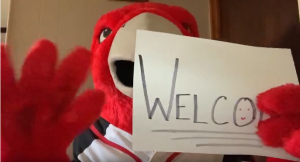
    During the spring semester, reference and instruction librarian Zara Wilkinson partnered with the Communications Office to share helpful tips on using the library with the campus community (Student Tips for Navigating Online Research Resources and Services) and prepared a video to be provided to newly-admitted students via the Admissions Office. Samantha Kannegiser, student success librarian, John Gibson, instructional technology specialist, and Regina Koury, library director, joined other Rutgers–Camden faculty and staff in a virtual welcome sent to incoming students in honor of National Decision Day and a video congratulating the Camden Colleges of Arts and Sciences and University College–Camden Class of 2020 graduating students during virtual commencement.

    The Scarlet Raptor in a virtual welcome in honor of National Decision Day
    The Scarlet Raptor in a virtual welcome in honor of National Decision Day

    Library support for virtual campus initiatives will continue into the summer. Raptor Welcome, the annual new student orientation, is moving online and will include a video starring Reference Librarian John Powell, which was created in 2019 in conjunction with the Student Success Coach Office. Samantha Kannegiser has also created an online orientation for students in the Summer 2020 Educational Opportunity Fund Summer Institute and is working on library instruction videos for summer classes that cannot meet in person.

    All these efforts help to build new and strengthen existing campus and community partnerships to market and promote library services, resources, and events.

  • The New PubMed

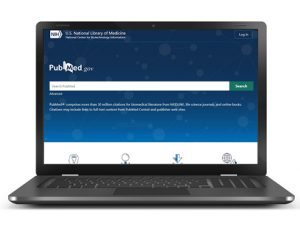
    PubMed comprises more than 30 million citations for biomedical literature from MEDLINE, life science journals, and online books.

    The National Library of Medicine (NLM) is replacing the current version of the PubMed database with its newly re-designed version. The new PubMed version will become our default interface on March 16.

    Until then, when you visit PubMed you will see a blue banner inviting you to try the new PubMed. Switching to new PubMed using this banner will allow you to try new PubMed, but “Get it @ R” links may not appear. To see “Get it @ R” links in new PubMed, please access new PubMed directly through the following URL: https://pubmed.ncbi.nlm.nih.gov/?otool=njrutulib.

    Beginning March 16, when new PubMed becomes our default interface, “Get It @ R” links will appear in new PubMed by default.

    Some of the big changes between legacy PubMed and new PubMed are:

    • A more modern-looking search interface
    • Search results sorted by a “best match” ranking by default not by the “most recent” ranking.
    • Citation creation tools: formats citations for an article in AMA, MLA, APA, or NLM style.

    The new PubMed is richly featured, including advanced search, search details, search history, filters, My NCBI, links from MeSH, and more. It boasts some great new display, navigation, and output features in a truly responsive design that facilitates mobile access, including links to the full text when available from the publisher, PMC, or Rutgers University Libraries (via the “Get it @ R” button).

    Improvements to retrieval include enhanced synonymy, addition of plural forms, better British/American translations, and unlimited truncation.

    Here’s a link to the New PubMed Trainer’s Toolkit which includes annotated slide decks,  handouts, and

    quick tours, to be used in workshops and sessions as the new interface rolls out.

  • OAT Program Launches January 27

    The next cycle of the Open and Affordable Textbook Program will launch on January 27 and run through March 30, 2020. We’re excited to get started, but could use your help in spreading the word.

    How can you get involved?

    Thank you in advance for your help! We look forward to making this the best year yet. If you have any questions or suggestions about the OAT Program, please let me or your local team member know.

  • Looking Forward to 2020

    Welcome back! I hope you’re all feeling rested and rejuvenated from a well-deserved winter break.
    As I mentioned in my holiday email last month, I am so impressed by the amount of work we were able to accomplish last year. None of the achievements I chose to highlight was the result of a cookie-cutter project. Each of them required hard work, creative problem solving, and deep collaboration across the library system and with local campus partners. I know it isn’t always easy, but when these things come together, the impact is felt by students and faculty across the university. Thank you again for all your good work in 2019.

    As we turn our collective attention to 2020, I’d like to kick off the New Year by sharing some fantastic news. We have received our official FY21 budget awards and I am happy to report that we have received full support for salary increases and collection inflation, exceeding our expectations for funding in both these areas. Moreover, this funding is not representative of what was awarded to other cost pool units across the university. Simply put, this means that all our hard work is paying off. It’s a strong vote of confidence for the Libraries and the direction in which we’re headed, and I’m proud that we’ve received this recognition of our importance to Rutgers students and faculty.

    I’m glad that we will continue this momentum and hit the ground running this year with several impactful, large-scale projects. One such undertaking is the redesign of our website. While this project is still in its early stages, we have contracted with a vendor that will be performing the work. A web group is being convened to manage the project internally, establishing a timeline and benchmarks and communicating progress with the rest of our colleagues. The first step of the redesign is a discovery phase that includes surveying site visitors to learn more about their goals and experiences. This is another project that will draw on the expertise of many of us across the Libraries, and I look forward to following its progress as we continue to cater our services to meet the unique needs of our local communities.

    Another important project for us is Esploro. One of the priorities that arose from our last planning cycle was to implement an information management solution that will allow us to support the university’s open access policy in a sustainable manner, and Esploro represents a huge step toward meeting that goal. Esploro automates the management of research output—including capture and direct deposit—and helps streamline the process of depositing the results of scholarship into SOAR. It integrates directly with our library system and leverages one of the largest indexes of scholarly research available in order to ensure the broadest possible capture. Because it automatically harvests scholarly work done by Rutgers faculty, Esploro should give us a more comprehensive repository of Rutgers scholarship than we have with our current, purely manual deposit process. It will also help us better partner with the Office of Research & Economic Development by providing them with data on faculty output and productivity that can be used when pursuing research grants or steering potential industry partners toward relevant faculty experts. With projects like this, is it encouraging for me to see how the foundations we’ve laid over the last several years open up new possibilities for us moving forward. Adding a tool like Esploro builds on the work that groups like the Ex Libris Implementation Team have done in the past, and allows us to deliver value-added services that uplift the entire Rutgers community.

    Of course these are only a couple examples of the many exciting projects we have slated for 2020, but I hope they serve as compelling illustrations of all the progress we’re making. I look forward to another productive year ahead!

  • Our Commitment to Diversity, Equity and Inclusion

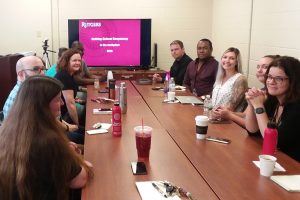
    Robeson Library’s cultural sensitivity and diversity training in August.

    Diversity, equity, and inclusion are acknowledged as being fundamental values of the American Library Association and its members, and diversity is listed as one of ALA’s key action areas. The Libraries’ philosophy is that “as the intellectual commons of one the most diverse universities in the nation, Rutgers University Libraries advance and promote diversity in all its forms. We believe the Libraries are stronger and can more effectively support the mission of Rutgers when we are inclusive and equitable.”

    Paul Robeson Library has reaffirmed its commitment to diversity, equity, and inclusion by creating a comprehensive action plan with strategic FY20-21 priorities. One of the initiatives from the Robeson priorities led to an all-staff, day-long training session in August on cultural sensitivity and diversity with Baseemah Ismail. Ismail is a senior human resources generalist, with experience in an array of HR functions including diversity strategy, training, talent acquisition and retention, and organizational development and design; a certified Development Dimensions International learning systems facilitator, as well as a DiSC Communication Styles and Myers-Briggs Type Indicator practitioner. The training addressed understanding cultural differences, awareness of biases, enhancing sensitivity to cultural sensitivities, and differences and strategies for fostering a cohesive workplace.

  • Where in the World is SUS?

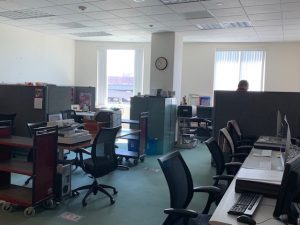
    The new SUS space on the third floor of Alexander Library.

    Shared User Services has moved, both spatially and virtually. In June, virtually all (pun intended) of the SUS employees relocated. Our email addresses and phone numbers are the same, but for those who value a spatial identifier, here is where you can find us:

    Technical Services Building
    • Amy Kimura
    • Cathy Pecoraro
    • Elizabeth York
    • Joseph Deodato
    • Michele Best

    Alexander Library 3rd floor (Library Admin suite)
    • Isaiah Beard
    • Marty Barnett
    • NJEDL project staff and students
    • Rhonda Marker

    Alexander Library 4th floor
    • Laura Costello

    SUS has also moved their staff resources information to the “new” staff resources page. You can find information about a variety of digital projects, discovery services, electronic resources, virtual reference, and Web Improvement Team at https://staff.libraries.rutgers.edu/sus. We will soon be expanding our Teaching and Learning section here, too. We’re excited to be the first unit to officially move over to this new site.