Tag: Workshop

  • Special Collections and University Archives Hosts 28th Annual New Jersey Book Arts Symposium

    Sandra Fernández's artist presentation.
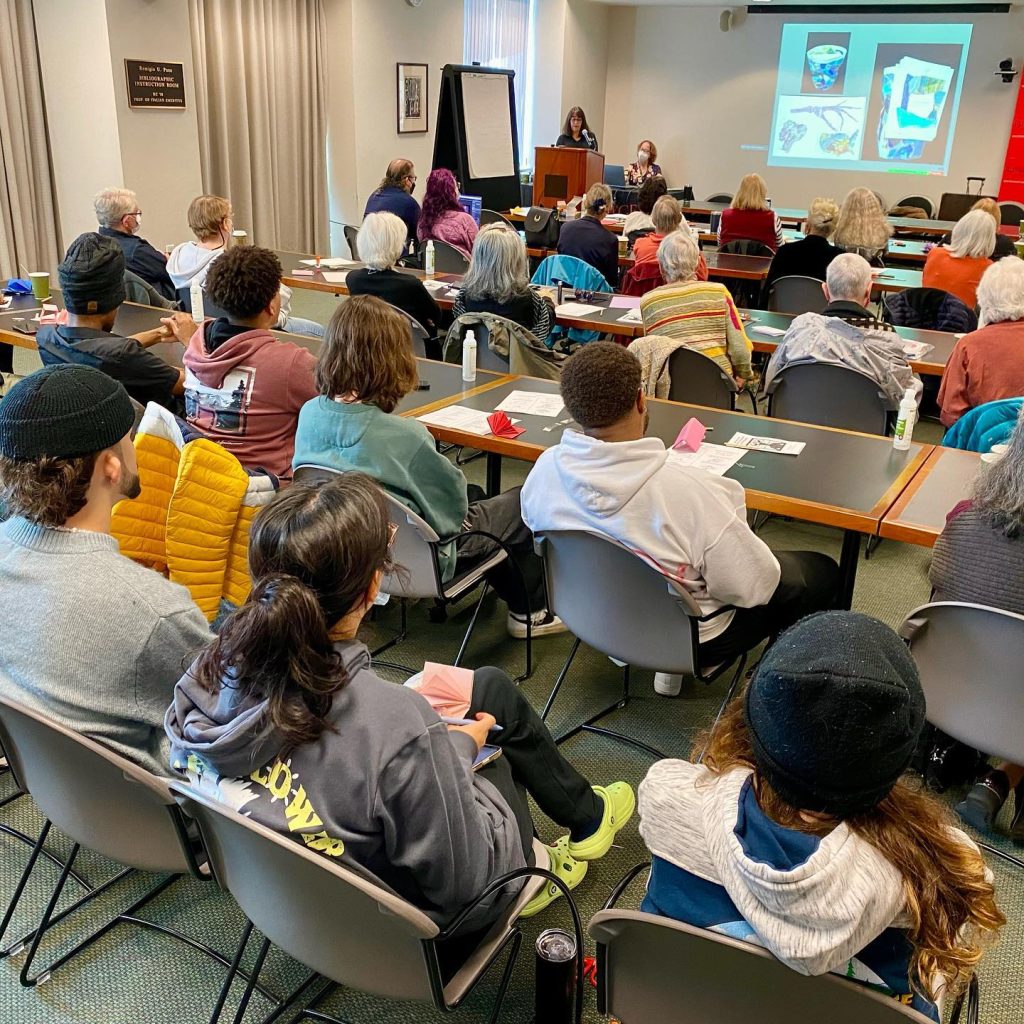
    Symposium attendees enjoy Sandra Fernández’s artist presentation.

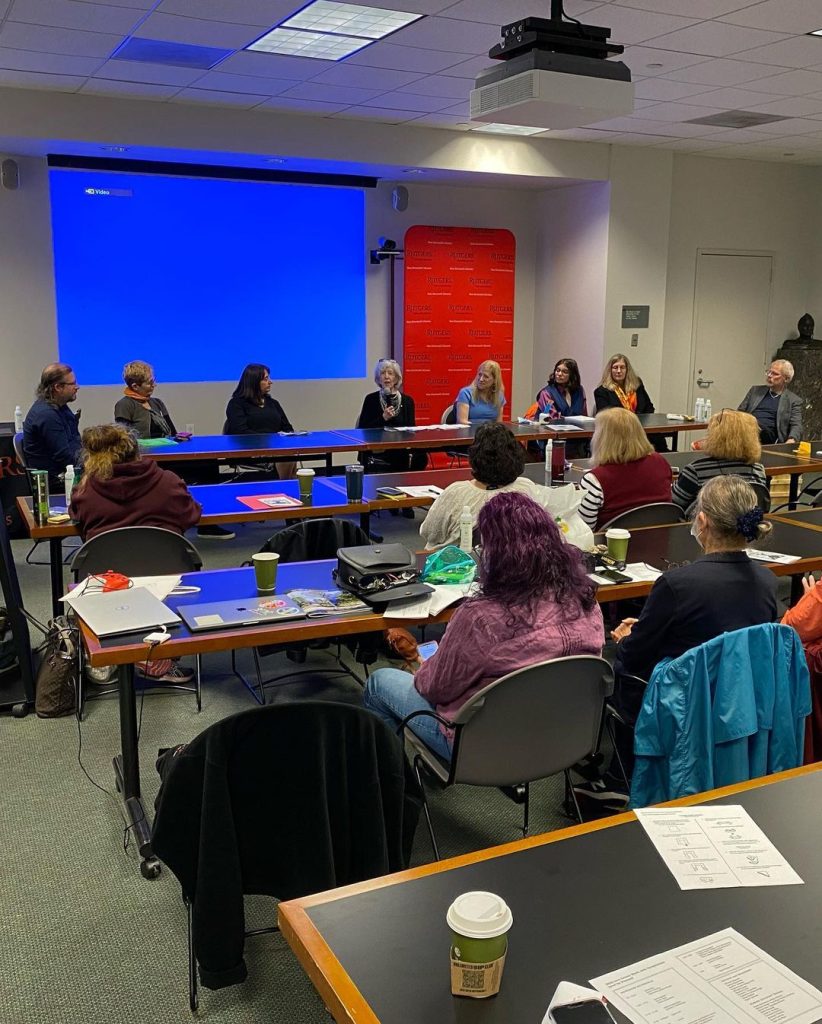
    Special Collections and University Archives (SC/UA) hosted the 28th Annual New Jersey Book Arts Symposium (NJBAS) on November 4. The free event drew a capacity crowd in Alexander Library’s Pane Room and featured a workshop, artist presentations, and a panel discussion conducted by notable artists, curators, historians, and technologists. The program included:

    To learn more about the NJBAS, please visit exhibits.libraries.rutgers.edu/nj-book-arts. Grant funding for the New Jersey Book Arts Symposium was provided by the Middlesex County Board of County Commissioners through a grant award from the Middlesex County Cultural and Arts Trust Fund. The NJBAS Advisory Board members are Karen Guancione, artistic director; Michael Joseph, founding director; Sonia Yaco, executive director; Martin Antonetti; Judith K. Brodsky; Fernanda Perrone; Amanda Thackray; Suzie Tuchman, and Kate Van Riper.
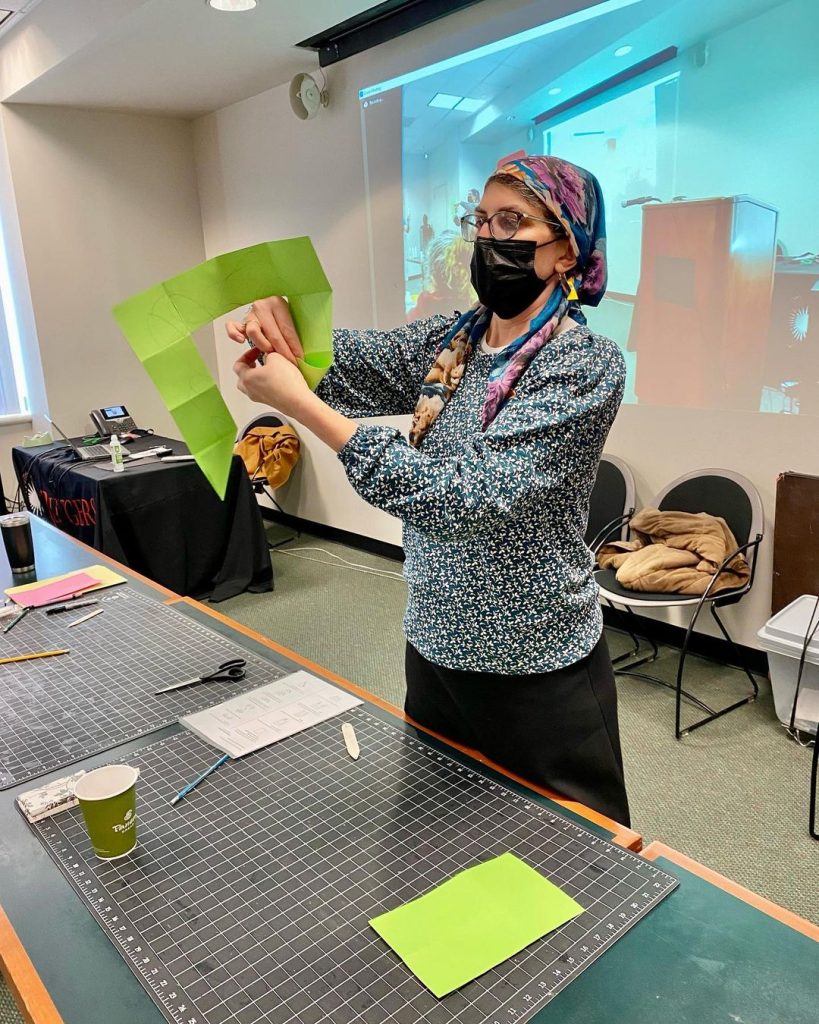
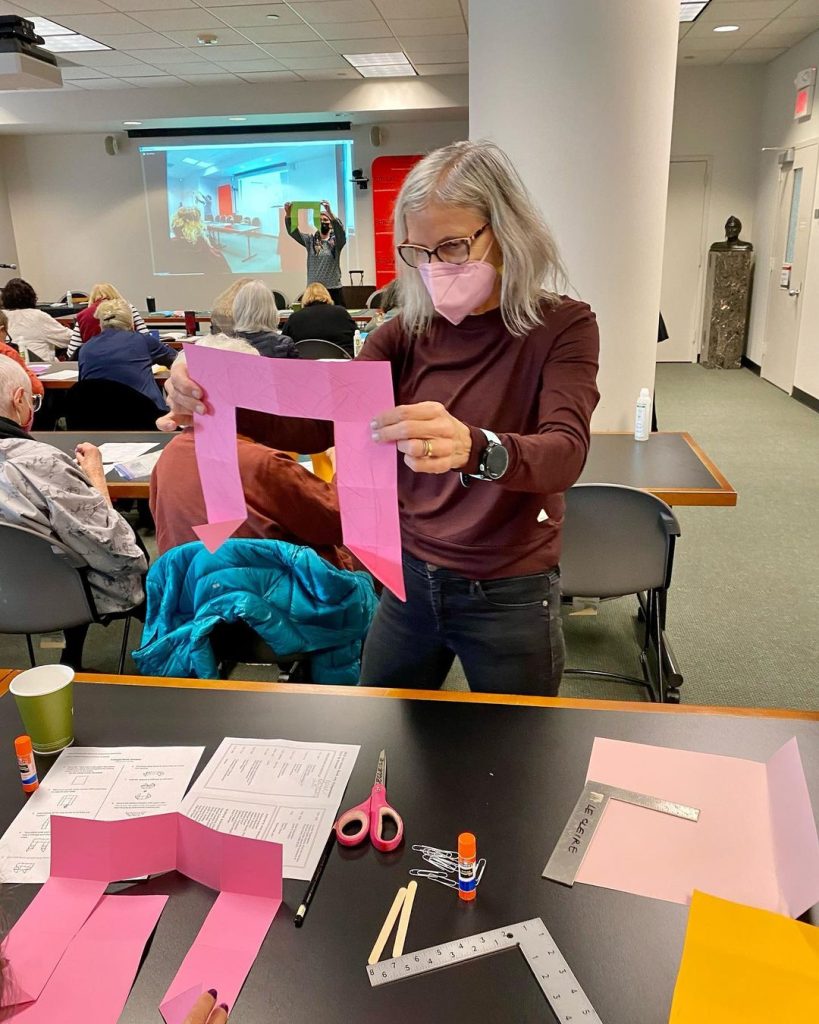
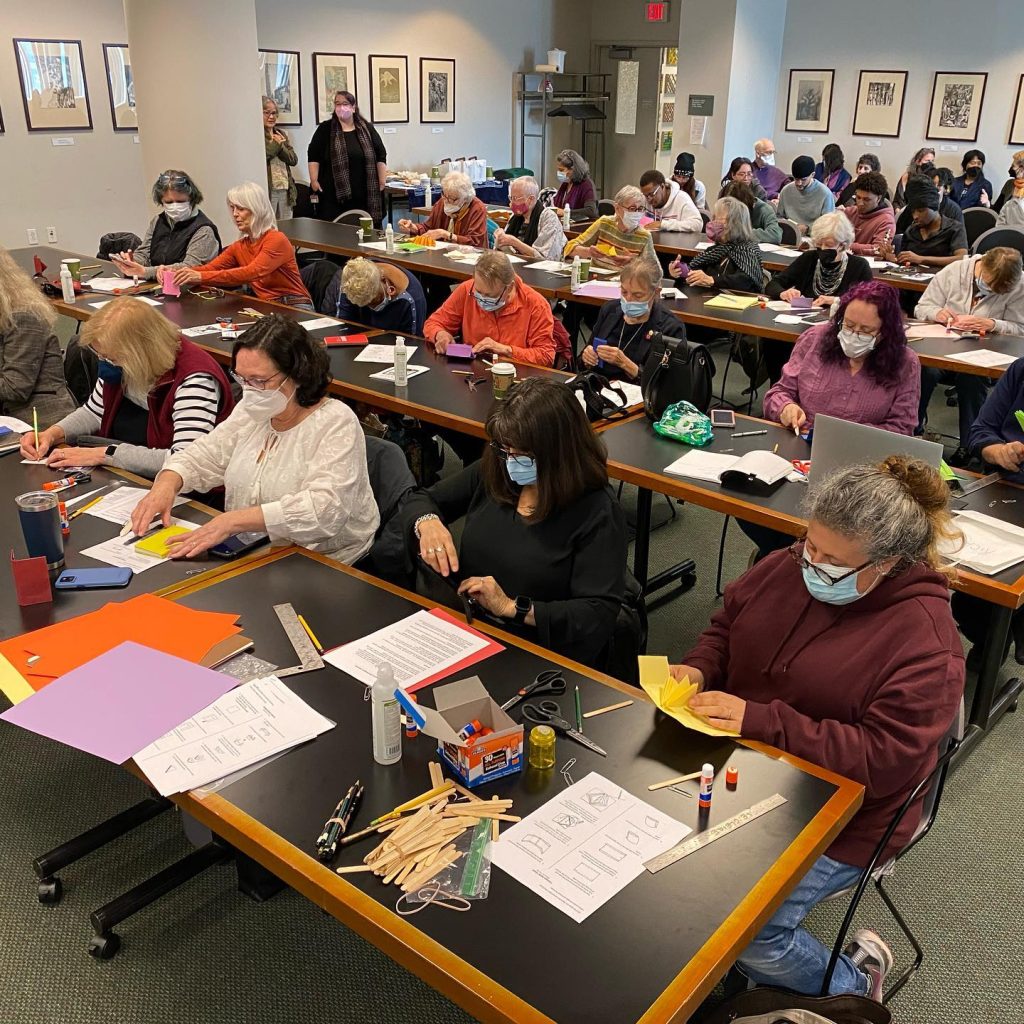
    Suzie Tuchman conducts the triangle book-making workshop.
    Suzie Tuchman conducts the triangle bookmaking workshop.
    Catherine LeCleire conducts the triangle book-making workshop.
    Catherine LeCleire Wright shows symposium attendees how to create a triangle book.
    Triangle book making workshop at the 28th Annual New Jersey Book Arts Symposium.
    NJBAS attendees make triangle books during the workshop.
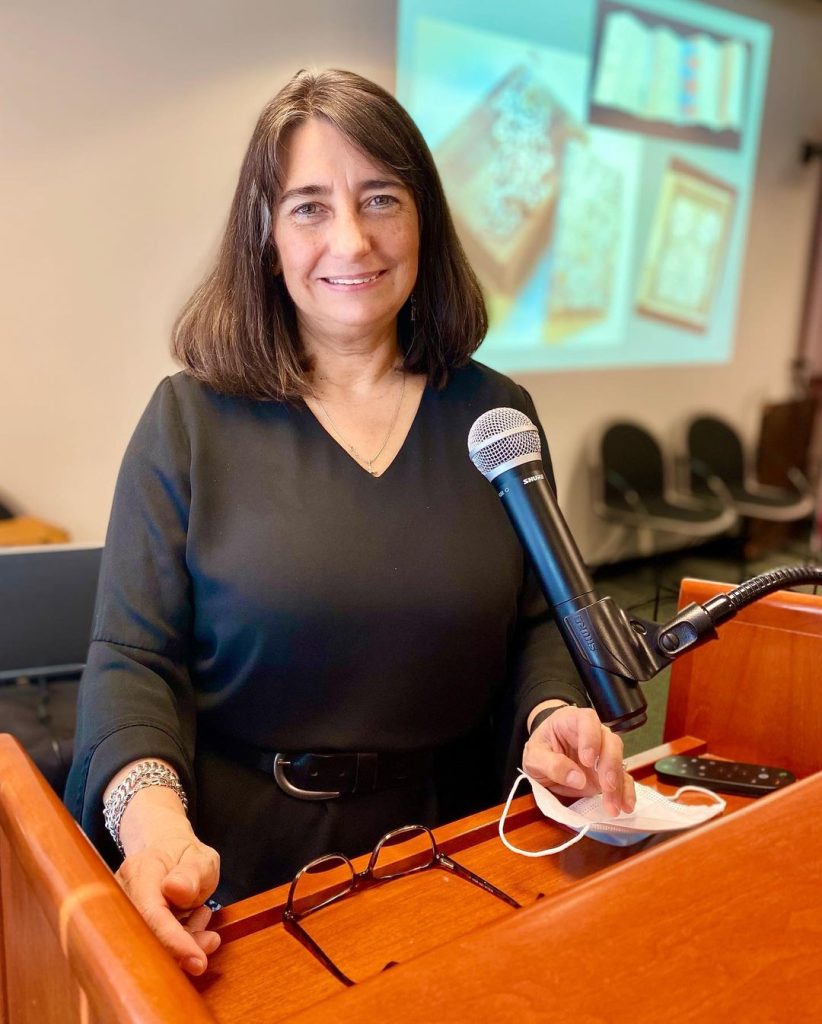
    Artist Sandra C. Fernández.
    Artist Sandra C. Fernández delivered a moving presentation about her life and work. Fernández is an Ecuadorian American artist currently living in New Jersey. Her work is rooted in the transborder experiences of exile, dislocation, relocation, memory, and self-conscious identity construction/reconstruction.
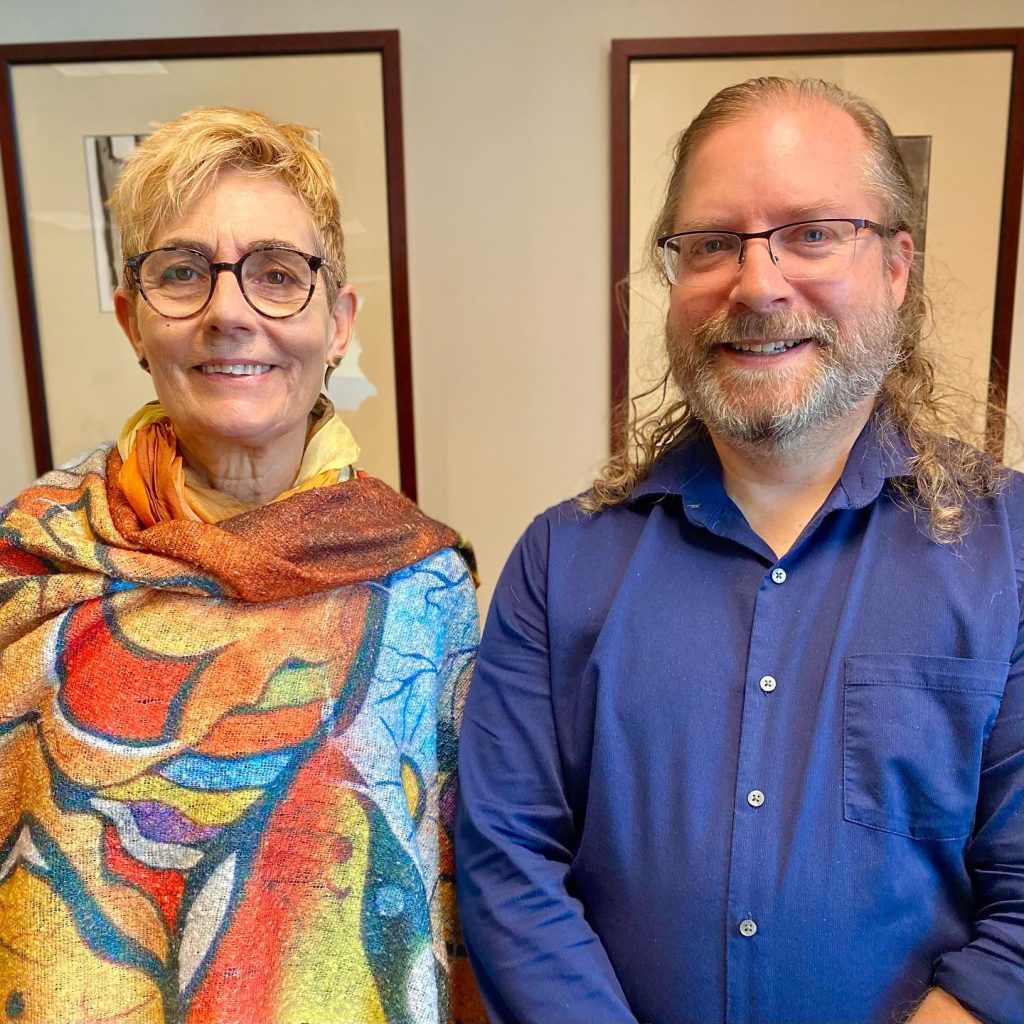
    Béatrice Coron and Richard Anderson.
    Béatrice Coron, a renowned paper-cutting artist, and Rick Anderson, Director of Virtual Worlds at Rutgers, are collaborating on The Identity Project, an experiment both in form and content using technology to create an interactive artist book. This collaboration allows words and images to interact and behave in new and exciting ways. The Identity Project is presented by SC/UA. Learn more about the project at go.rutgers.edu/coron.
    Mixed-media and book artist Amee Pollack.
    Amee Pollack is a mixed-media and book artist and Senior Advisor and Student Success Counselor in the Department of Art & Design at the Mason Gross School of the Arts. She spoke about her art, which includes three-dimensional, fold-out book sculptures she had created with her artistic partner and close friend, Laurie Spitz, who passed away in 2017. Works by Spitz & Pollack, as their collaboration was known, are in the permanent collections of over 50 organizations, including the Brooklyn Museum, Cooper Hewitt Smithsonian Design Museum, New York Public Library Print Collection, and Yale University.
    Read more at masongross.rutgers.edu/why-i-made-this-amee-pollack and ameejpollack.com.
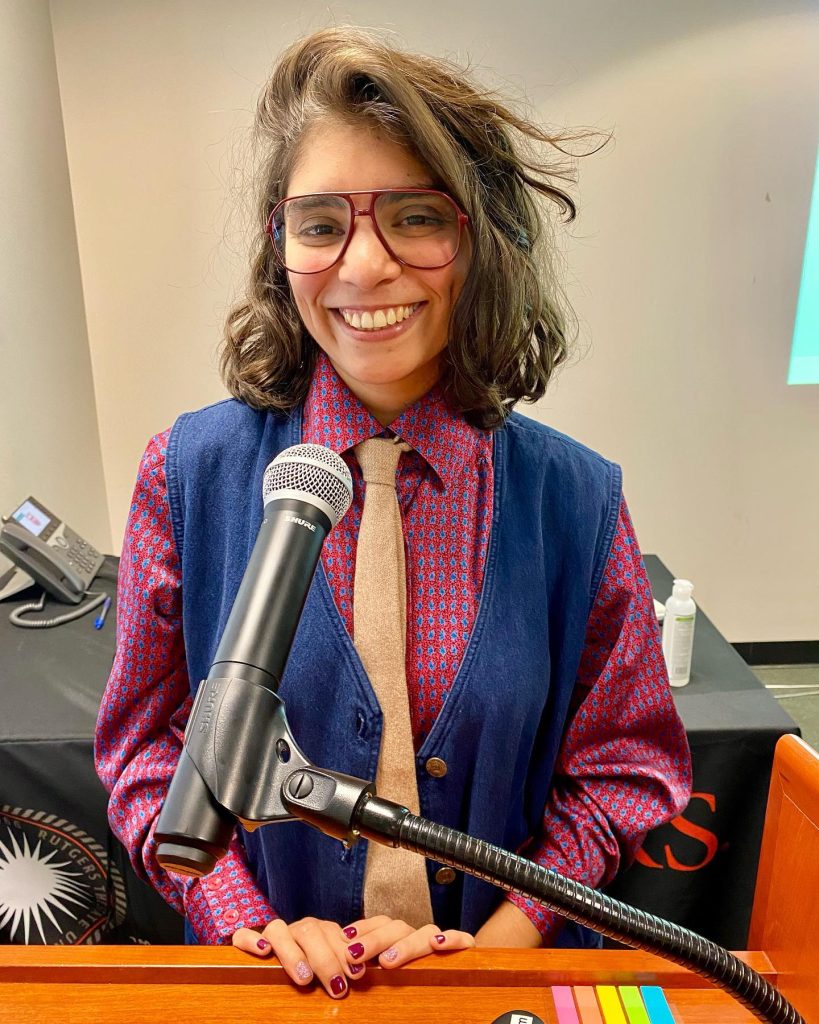
    Featured artist and historian Javiera Barrientos.
    Featured artist and historian Javiera Barrientos presented “A Personal Catalogue: Bookwork in Contemporary Latin America” and highlighted works by Carlos Oquendo, Maria Lucia Cattani, Francisca Prieto, Isol, Javiera Pintocanales, and Mariana Tocornal.
    Virginia Fabbri Butera and Michael Cooper.
    During her curator presentation, Virginia Fabbri Butera interviewed Michael Cooper about the late Rocco Scary’s bookwork. Rocco Scary (1960–2022) was a multidisciplinary artist whose work on paper, in sculpture, and with artist books explored the concept of the identifiers or “triggers” for memory. To learn more about Scary, please visit roccoscary.com. Butera is the director of the Therese A. Maloney Art Gallery. She is also chairperson of the art, dance, and music program and a tenured professor of art history at @saintelizabethuniversity. Cooper is the creative director at Altech Corporation and principal of Cooper Graphics and Cooper Art Works LLC. He has over 40 years of fine art and commercial art experience.
    Sonia Yaco and Judith Brodsky.
    NJBAS executive director Sonia Yaco (left) and noted artist and art educator Judith K. Brodsky. Brodsky led the engaging panel discussion that concluded the New Jersey Book Arts Symposium. The lively discussion offered attendees an opportunity to hear more from the guest artists and ask questions. Brodsky highlighted the commonalities between the topics, including technology, social issues, and a sense of play, and encouraged the artists to share their thoughts and processes and talk about the future of books and bookmaking. Brodsky is a Distinguished Professor Emerita in the Mason Gross School of the Arts Department of Visual Arts and the Founding Director of the Rutgers Center for Innovative Print and Paper, which was renamed the Brodsky Center in her honor in 2006 (now The Brodsky Center at PAFA).
    Judith K. Brodsky leads panel discussion.
    Panel discussion with the NJBAS’ guest speakers.
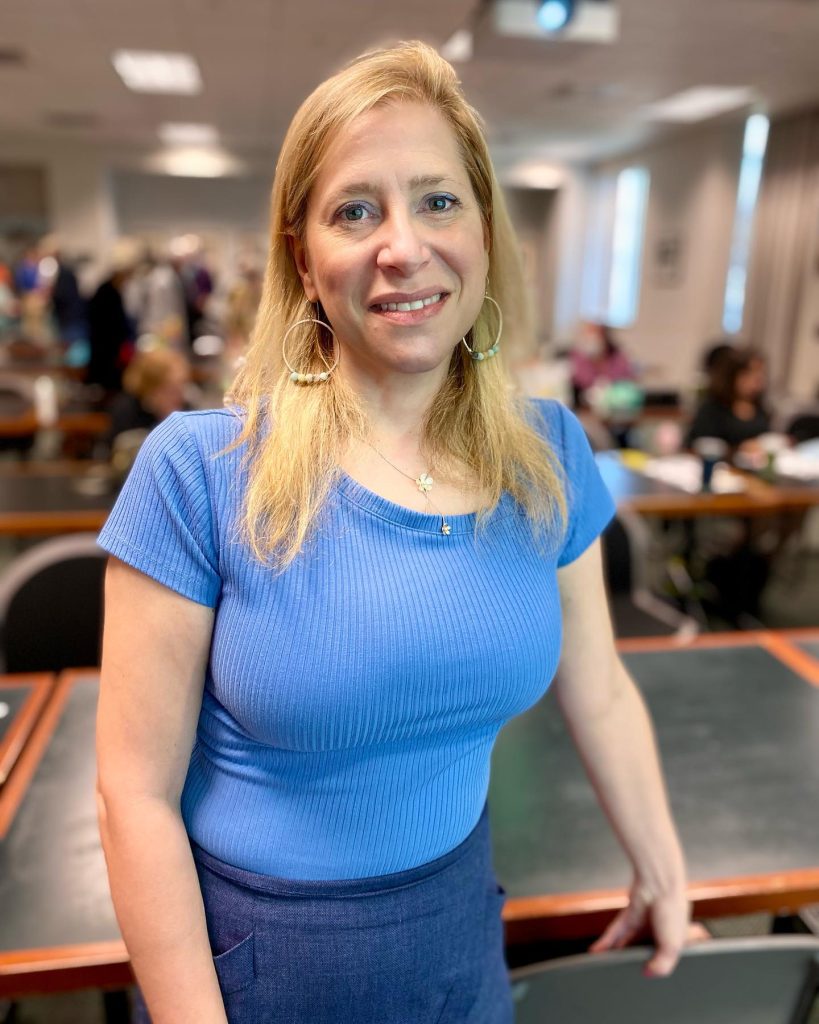
    Karen Guancione, Sandra Fernández, and Sonia Yaco.
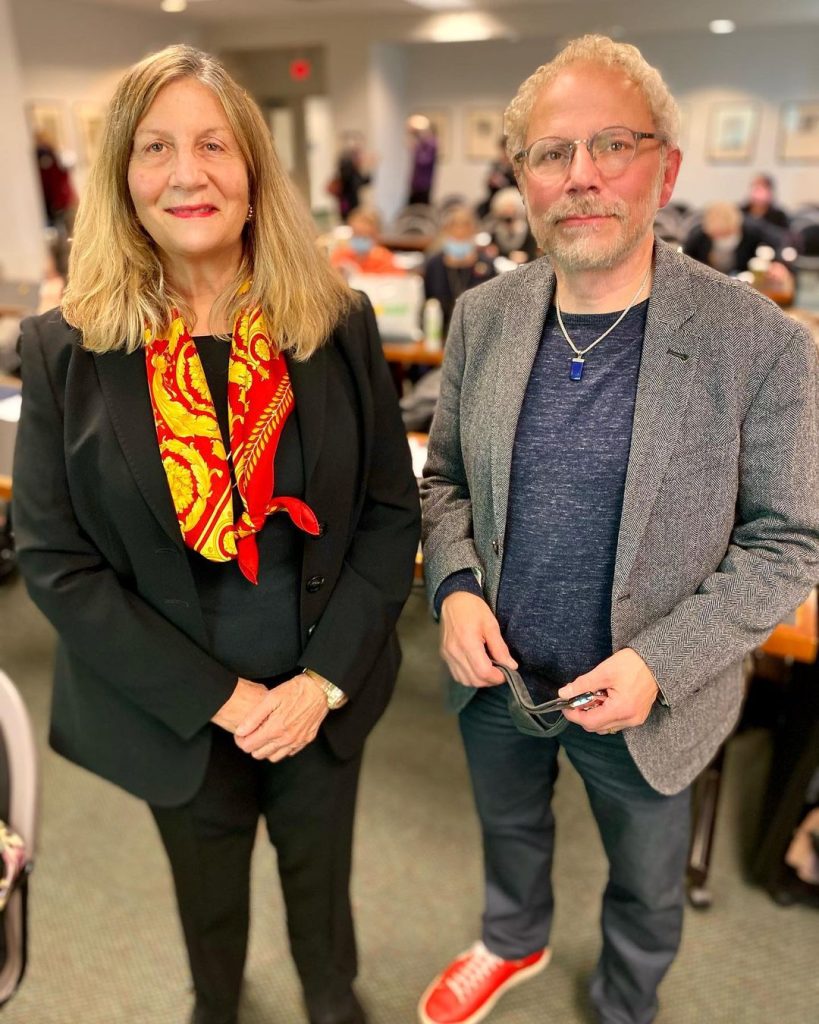
    From left: Karen Guancione, Sandra Fernández, and Sonia Yaco. Guancione is the NJBAS’ artistic director. She creates a vision of the symposium each year and moderates the event. Michael Joseph (below) is the founding director of the NJBAS. He and Karen guide the selection of the artists and help to shape the event. As executive director, Yaco coordinates the event, secures funding, and with Karen and Michael, connects with the New Jersey book arts community.
    Michael Joseph, founding director of the Symposium.
    Michael Joseph, founding director of the NJBAS.
  • Disaster Planning and Recovery Workshop: Part 2

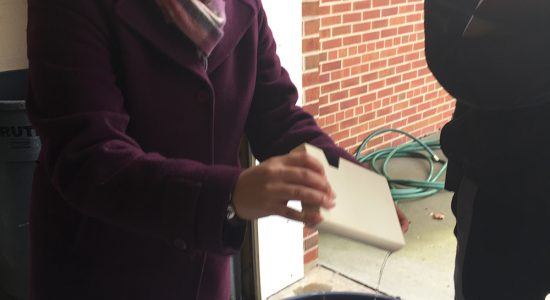
    • Tom Clareson demonstrates how to dry photos using fishing line. (All photos credit: Irina Radeva.)

    On November 30, Anthony Timek and I attended the final session of a two-part Disaster Planning and Recovery Workshop sponsored by the New Jersey Cultural Alliance for Response (NJCAR), of which Rutgers is a member institution. You can read my report on the first part of the workshop in the November issue of the Agenda.

    This session was held at the Wall Township Police Headquarters and focused on recovery. Presenter Tom Clareson, senior consultant for digital and preservation services at LYRASIS, covered the stages of disaster, with a particular focus on the last three:

    • Planning
    • Mitigation
    • Immediate Response
    • Recovery
    • Long-Term Recovery

    In the first part of the day, we learned about creating a comprehensive communication plan, appointing a recovery team, formulating salvage priorities, and assigning duties. The second part of the day consisted of an indoor demonstration by Clareson of how to treat waterlogged items. Afterwards, the group went outside and we plunged our hands into freezing water in an attempt to recover wet books, periodicals, microfilm, VHS tapes, DVDs, and more. At one point we even had an entire microfilm unspooled and drying in the cold November wind. Overall, the exercise was very valuable, especially for those who were lucky enough not to have experienced a water emergency in their facility.

    One significant takeaway from the workshop was for each institution to establish a relationship with first responders ahead of a disaster and familiarize them with the building and the disaster plan. Another was to create partnerships with similar institutions who may be able to assist each other during and after a disaster. In the spirit of the latter, Rutgers University Libraries shared our Water Emergency Presentation and Mold Identification Tutorial with the New Jersey State Library, who posted the materials on their website along with similar resources on disaster planning and preservation. Check out an article about this workshop on the NJ State Library’s website here.

  • Disaster Planning and Recovery Workshop Report

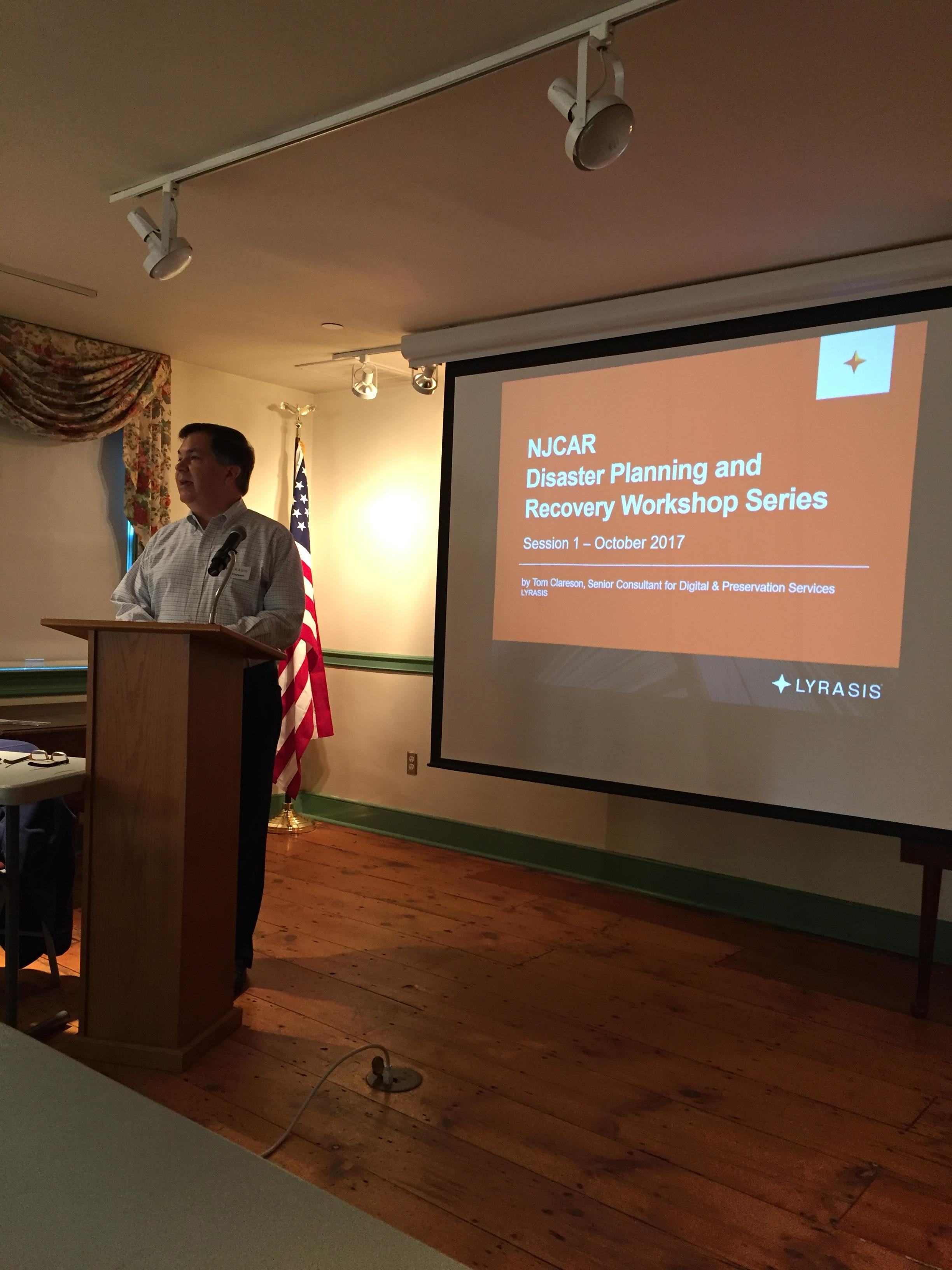
    Tom Clareson, senior consultant for digital and preservation services at LYRASIS, presents at the Disaster Planning and Recovery Workshop.
    Tom Clareson, senior consultant for digital and preservation services at LYRASIS, presents at the Disaster Planning and Recovery Workshop.

    On October 17, Anthony Timek and I attended part one of a two-part Disaster Planning and Recovery Workshop sponsored by the New Jersey Cultural Alliance for Response (NJCAR). NJCAR is a new alliance that is comprised of a network of organizations, associations, agencies, and individuals dedicated to safeguarding the State’s cultural heritage.

    The full-day event was presented by Tom Clareson, senior consultant for digital and preservation services at LYRASIS, the nation’s largest library and cultural heritage network. He talked about the importance of evaluating collections ahead of time and generally knowing the types and value of the materials an organization owns. Clareson laid out a comprehensive disaster plan that includes:

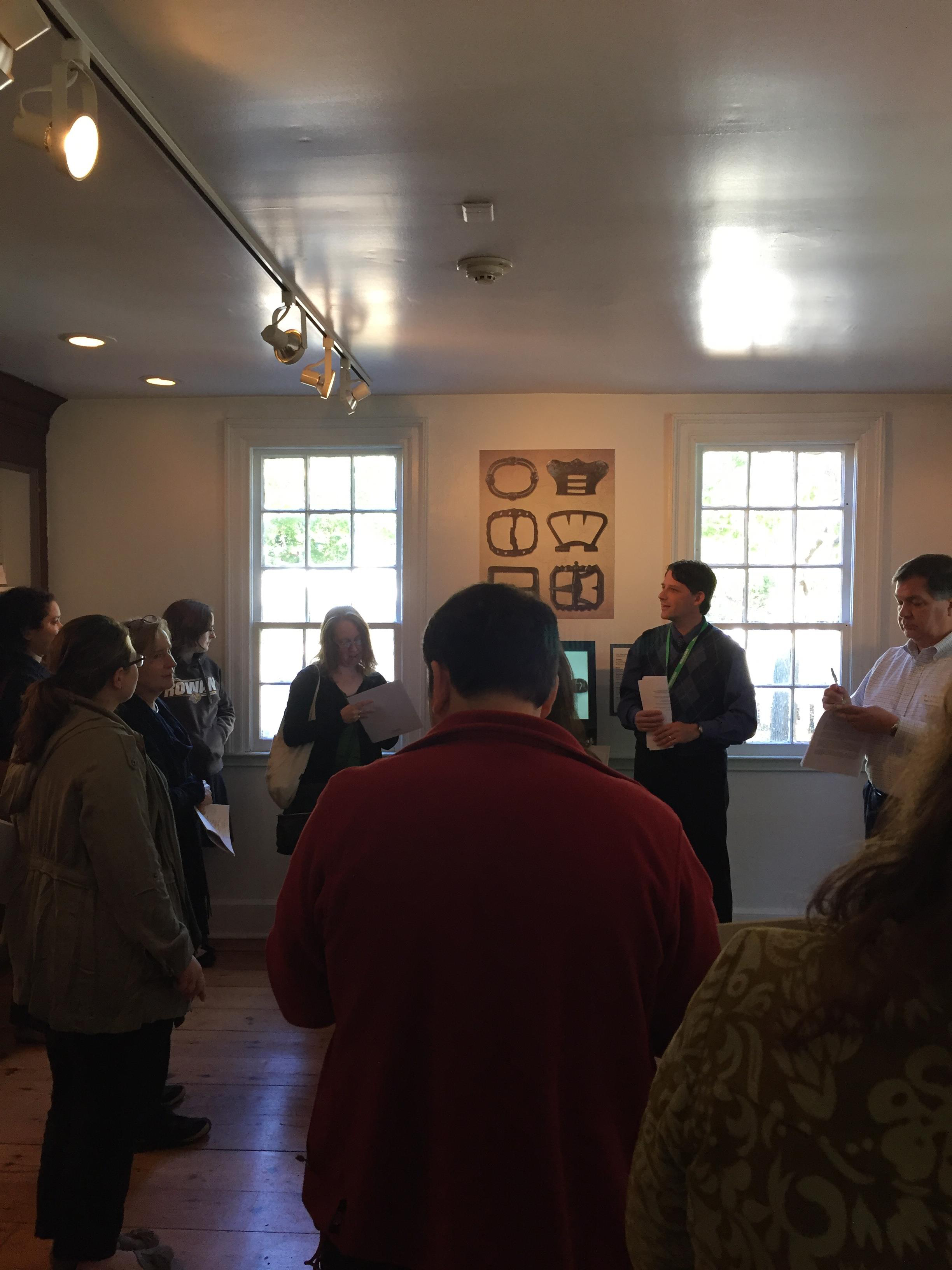
    The group conducts a facilities assessment of Old Town Village.
    The group conducts a facilities assessment of Old Town Village.
    • A communication plan
    • Emergency procedures
    • Facilities plans
    • Resources lists
    • Holding priorities
    • Insurance information
    • Response procedures
    • Evacuation plans

    As part of an exercise, the group completed a thorough facilities assessment of East Jersey’s Old Town Village, who hosted the event. This included evaluating major areas of the grounds including architecture, drainage, protection from fire and water, the HVAC system, security and more. This kind of assessment identifies vulnerabilities and proposes ways to mitigate them. Part two of the workshop will be held in late November and will cover recovery and hands-on training with damaged materials.