Tag: university librarian

  • UL Letter to the Libraries – January–February 2023

    As we continue settling into 2023, I am excited to reiterate our three-phase plan for the Libraries’ organizational realignment, what we have accomplished to date, and the work that lies ahead of us. During Phase I, we agreed upon a new leadership structure to best position us for success. This decision was informed by the October 2022 town halls, where many of you shared your ideas and perspectives and when the online voting results were revealed. This process established two Libraries administrative positions: Assistant Vice President for Research and Learning Services and Associate Vice President for Campus Libraries. We have engaged the executive search firm Isaacson, Miller to lead our recruitment efforts and will shortly embark on a nationwide search for this critical position. The person in this role will provide focused day-to-day support for the AULs and work directly with them to identify synergies across the Libraries’ large and diverse geographical footprint.

    Phase II will focus on determining the functional areas and services reporting up through each AVP position. As one example, additional conversations are needed to identify where RUL’s distinctive collections and archives most appropriately fit under this leadership hierarchy. As always, our priority is to ensure our services directly align with and are nimble enough to meet the evolving needs of our users across the university. Phase III will follow and emphasize our workforce organization across the Libraries system. We expect to complete Phase III in early 2024.

    The realignment process requires careful deliberation, along with your steady engagement. By maximizing and leveraging our considerable human, intellectual, digital, and physical resources as one Libraries, we can more efficiently provide the vital and dynamic services expected of a 21st-century academic library. As we move into the next phases of this process, I encourage you to continue sharing your thoughts by contacting me directly or through the VP/UL anonymous comment form.
  • UL Letter to the Libraries – December 2022

    Another semester has come and gone. Despite the many challenges, I am incredibly proud of what RUL staff, faculty, and students have accomplished this year. From expanding our resources and services to opening innovative new spaces, we have much to celebrate. Thank you for your hard work and dedication. I wish you and your families a safe, peaceful, and joyous holiday season and all the best for the new year!

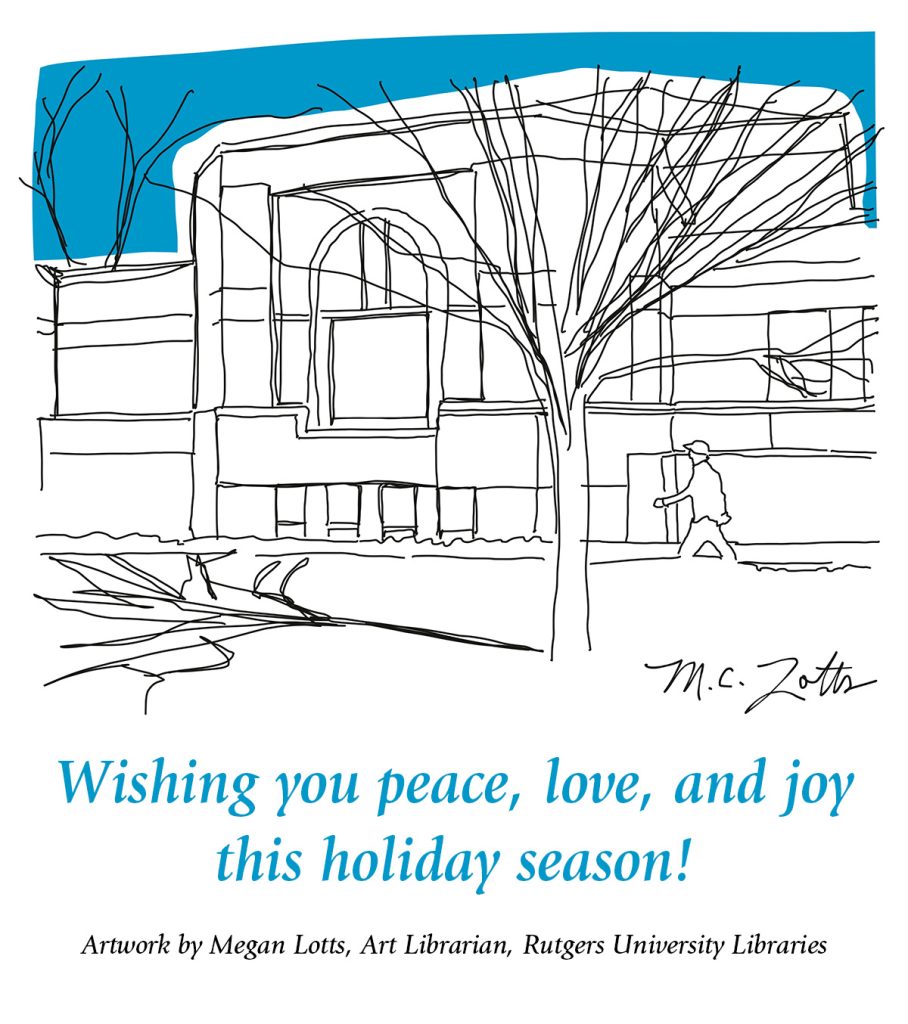
    Art Library by Megan Lotts.

  • UL Letter to the Libraries – November 2022

    Although the Thanksgiving holiday is behind us, expressing thanks does not have a time limit. I want to express my gratitude for your extraordinary dedication, perseverance, and hard work. In a year filled with change, your commitment to delivering exceptional service to our users remained constant. On behalf of the Libraries Leadership Team, I thank each of you for your service.

    I also want to thank you for the thoughtful discussions and incisive feedback received regarding our organizational restructure. We are moving forward with option 2 as it resonated with many of you and best positions us to address the evolving expectations and priorities of our university community. Although we have much work in front of us, this decision marks an exciting milestone in this three-phase process.

    In Phase I of the organizational restructure, the immediate next steps will be filling new leadership roles, particularly the AVP for Campus and Special Libraries. (These are currently working titles and may slightly change as we think through the details of these roles.) It is important to highlight that the AVP for Campus and Special Libraries will provide focused day-to-day support for the AULs. Additionally, this position will work directly with the AULs to identify synergies across our local libraries to leverage resources that can lead to increased efficiencies. The intent is to have this position filled and solidified by the end of spring 2023, so they can serve as part of the transition team during Phase II.

    Phase II will focus on the functional areas and services reporting up through each AVP. We must ensure the services the Libraries offer directly align with the university’s needs and priorities. Phase III will focus on the organization of our workforce across the system.

    The restructure will be a long and deliberate process that will take us the better part of 18 months. During this critical juncture for the Libraries, your continued contributions and support throughout this process are deeply appreciated.

    I am very pleased to announce the revised RUL Mission Statement and RUL Aspirations Statement were overwhelmingly approved and will be formally adopted (view them on the Libraries’ website at this link). They will serve as our North Star as we move forward with our organizational structure and strategic planning process. As we get further into both those efforts, we may need to revisit and tweak the statements to ensure they fully reflect the work we are doing and aspire to do. I want to thank the RUL Affirmation Group (Isaiah Beard, Laura Costello, Joseph Deodato, Bart Everts, Francesca Giannetti, John Gibson, Tom Glynn, Naomi Gold, Krista Haviland, Amy Joyner, Nancy Kranich, Triveni Kuchi, Barry Lipinski, Mei Ling Lo, Yan Lu, Christie Lutz, Orla Mejia, Tracey Meyer, Ermira Mitre, Sue Oldenburg, Cathy Pecoraro, Michele Petosa, Ayesha Salim, Elizabeth Surles, Roberta Tipton [retired], Bob Vietrogoski, Victoria Wagner, Mary Beth Weber, Zara Wilkinson, Drue Williamson, and Phil Wilson) for their diligence and thoughtfulness as they worked through the process for the last eight months or so, which resulted in these statements. I also appreciate your taking the time to vote and share your thoughts about these statements.

    Lastly, we have added a new section to The Agenda to reinforce our commitment to diversity, equity, and inclusion in the workplace. The DEI Spotlight highlights the vital work of the DEI Committee, upcoming training and events, DEI resources, and more. I encourage you to explore the Spotlight and the resources highlighted (see the link in the top navigation bar).

  • Consuella Askew’s First Letter to the Libraries

    I am honored and excited to be appointed Rutgers’ 15th University Librarian. One of the most gratifying aspects of this role is the opportunity to witness your skills and talents in action at the Libraries. Your loyalty to RUL is admirable, and your determination to work with grace and dignity and in the university’s best interests is inspiring.

    This letter for The Agenda comes at a time of evolution and opportunity. We continue our initiatives designed to address your concerns about RUL’s organizational clarity, culture, and communication. The RUL Affirmation group has worked diligently to define our aspirations and reframe our mission statement. They are incorporating your input from their recent town halls into final statements that will provide a common framework from which we can springboard. We are close to formally establishing the Staff Advisory Committee (SAC), which will serve as a counterpart to the Faculty Planning Committee. Thanks to the stellar work of the SAC Planning Task Force, bylaws have been drafted and are undergoing final revisions. Once that is completed, the task force will focus on stewarding the adoption of the bylaws and conducting the committee’s initial elections process. The goal is to have the SAC up and running by year’s end. We are also reviewing the Libraries’ organizational structure and how our core services are best delivered. We want to ensure we offer comprehensive student and research support across the university’s broad footprint in the most efficient and responsive manner possible.

    We aspire to be the intellectual and creative center of the Rutgers community and recognized as essential to the university’s academic mission. It is a noble and obtainable goal. The future holds great promise if we continue to work smart, act with intent, listen to our colleagues and constituents, and pivot to meet the needs of today’s dynamic academic environment.

    Since my arrival at RUL, I have been impressed by your ability to imagine and implement creative solutions, often in the midst of change. While things continually evolve, I know your willingness and desire to collaborate and meet challenges with intelligence and good humor will serve us well. I look forward to us working together for the benefit of the faculty, students, and staff of Rutgers University and the broader New Jersey community.

  • Dr. Consuella Askew Named Vice President for University Libraries and University Librarian

    Dr. Consuella Askew Named Vice President for University Libraries and University Librarian

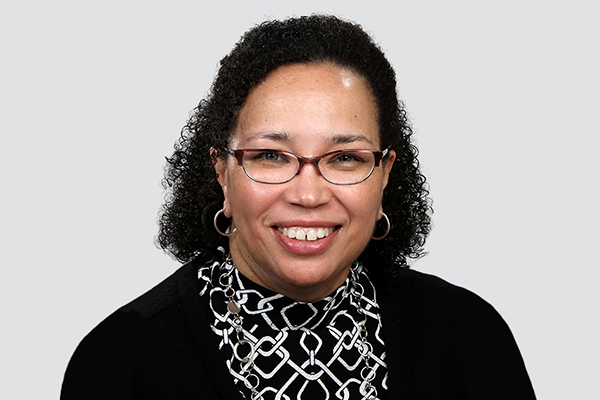
    Consuella Askew

    President Jonathan Holloway and Executive Vice President Prabhas Moghe make historic appointment for new leader of Rutgers University Libraries

    Rutgers University has selected Dr. Consuella Askew as its new Vice President for University Libraries and University Librarian. On July 18, 2022, she became Rutgers’ 15th University Librarian and the first person of color in the institution’s 256-year history to hold the position.

    “President Holloway and I believe that under Dr. Askew’s leadership, Rutgers is well suited to chart a strategic direction for Rutgers University Libraries, especially with a view to closely aligning the libraries to enhance the goals of academic units,” Executive Vice President for Academic Affairs Prabhas Moghe said. “A part of this work will involve centering the Libraries at the heart of our community and our commitment to diversity, equity, inclusion, and belonging; optimizing the Libraries’ collections, personnel, and services to enrich the teaching, learning, and research that occur across the University; establishing organizational coherence across the Libraries; and developing a strategic plan—all values that President Holloway has articulated.”

    Rutgers University Libraries is a core component of the University’s academic mission. The Libraries’ faculty and staff provide access to vast and unique resources, archives, and expertise to foster interdisciplinary collaboration, advance faculty and student teaching and research, and empower student success. Rutgers University Libraries rank among the nation’s top research libraries with more than five million volumes, over one million digital resources, and 26 integrated libraries, centers, and reading rooms throughout Rutgers campuses and chancellor-led units.

    Leading the Way to Library Excellence

    Askew brings to Rutgers a rich set of experiences and a library career that spans nearly 30 years. She is a forward-looking academician who has served as Interim Vice President for University Libraries and University Librarian since May 2021. In her previous role as the Associate University Librarian for Rutgers–Newark, Askew led Dana Library through a strategic planning process, a multimillion-dollar renovation, and an organizational restructuring to encourage innovation, community engagement, and operational excellence.

    A Commitment to Higher Education

    Prior to Rutgers, Askew worked in various educational settings, such as public schools, Historically Black Colleges and Universities (HBCUs), Hispanic Serving Institutions (HSIs), community colleges, and private and public institutions. Askew served as the Associate Dean for Public Services at Florida International University Libraries and held leadership positions at the City University of New York (CUNY), where she was appointed the inaugural Chief Librarian for the CUNY Graduate School of Journalism. She was also a member of the research and development team that created LibQUAL+ for the Association of Research Libraries. This industry-standard tool is used to assess user perceptions of library service quality and has been adopted by over 1,300 libraries worldwide, including Rutgers. An active contributor to the academic libraries profession, Askew serves on the executive board of the HBCU Libraries Alliance and the editorial board for the award-winning journal portal: Libraries and the Academy. Askew has published and presented widely on cultivating library leadership, developing a culture of library assessment, and adapting library services to meet evolving user needs.

    Askew holds a bachelor’s degree in English from Spelman College and a master’s degree in library and information studies from the University of North Carolina. She earned her doctoral degree in higher education from Florida International University. She is also an alumna of multiple prestigious library leadership programs, including UCLA’s Library Senior Fellows Program, the longest-standing formal leadership development program for librarians in the country.

  • Resetting the Libraries

    As promised, my contribution to the Agenda this month focuses on our action plan for the current fiscal year. Please view the PDF to read the plan, titled Resetting the Rutgers University Libraries, in its entirety.

    Inside, you will find further discussion about our focus areas for the year to come—communications, organizational structure, and organizational clarity—as well as the next steps for moving us forward in all of these areas. These activities will help lay a strong foundation for the next University Librarian and allow us to better align ourselves with President Holloway’s vision for Rutgers.

    I want to take this opportunity to thank everyone who has participated in our information gathering activities thus far. Whether through the faculty/staff climate survey, the EHE conversations, or the various listening sessions I’ve conducted throughout the Libraries, your input was invaluable and helped give shape to this plan.

    Please read the document carefully and let me know if you have any questions or concerns. I look forward to continuing my work with you all as we carry out the steps detailed in the plan.

  • Turning the Page: The Next Chapter of Rutgers University Libraries

    I want to take one last opportunity to thank you all for making me feel so welcome at my first State of the Libraries meeting as your University Librarian. Though we were again unable to meet face-to-face as is our tradition, I appreciated the level of participation and engagement that you all brought to the meeting despite what was a very lengthy and packed agenda.

    If you were not able to attend, please do take some time to review the State of the Libraries staff resources site. There you will find a recording of the entire event as well as links to all the presentations that were offered.

    That said, I thought it would be important to review once more the takeaways from my listening sessions with colleagues across the Libraries, as they are the pillars that are going to inform my work in the months ahead:

    • Improve communications. Increasing transparency for decision making at all levels in the organization and improving the flow of internal and external communications.
    • Change organizational culture. Breaking down our organizational hierarchies and rebuilding trust within. It also involves creating a culture of recognition within the Libraries, where we celebrate our faculty and staff’s successes and provide opportunities for upward mobility.
    • Enhance organizational clarity. Creating a unifying mission for the Libraries, one that emphasizes the notion of “one Library” and will center the Libraries within President Holloway’s vision for the university.

    As we discovered during our word cloud exercise at State of the Libraries, there are a wide variety of reasons why our faculty and staff decided to come to work at Rutgers University Libraries, ranging from the promise of lifelong learning to the opportunity to work with our diverse students and faculty. Whatever those reasons may be, it’s my goal to bring us together, to chart our path forward, and move us in a unified and purposeful direction. I hope you will join me in the weeks and months to come as we work toward shared understanding and move the organization toward more common goals.

    To that end, please save the date of Wednesday, July 28 for our continuing work with the Center for Organizational Leadership and its Excellence in Higher Education Framework, Community Conversations: Focused and Facilitated Conversations with Colleagues from across Rutgers Libraries regarding Organizational Strengths and Areas for Potential Improvement. There are two identical sessions scheduled, one from 9:00 to 11:30 a.m. and the other from 12:30 to 3:00 p.m. Please feel free to attend whichever works best for your schedule.

    As Dr. Moghe said in his address to us at State of the Libraries, “Nothing represents the university coming together as vividly as the Libraries coming together.” I look forward to working with you all as we embark on this work of coming together and as we turn the page to start our next chapter so that we may better serve the entire Rutgers community.

  • Leading the Way into the Future

    It’s hard to believe that this is my last article for the Agenda. When I look back at all that we have accomplished since I arrived at Rutgers in 2015—from the implementation of our new library system and QuickSearch, to the repeated successes of our Open and Affordable Textbooks program, to our pivot to an online-centric model of service delivery in the face of COVID-19, to our redesigned website, to the countless other achievements that I don’t have space to mention here—I cannot help but feel an overwhelming sense of pride. Looking back at the work that we have been able to accomplish to advance teaching and learning at Rutgers in these six years leaves me feeling incredibly grateful and fortunate to have had the pleasure of leading such a hardworking, intelligent, and creative group of colleagues.

    But all things must come to an end, and before I leave you in the capable hands of Consuella, I thought I would take one last opportunity to orient us toward the future and encourage you all to continue down the path we’ve begun charting during my tenure as university librarian.

    As a new article in The Chronicle of Higher Education illustrates, libraries are well-situated to lead their universities into the new era of higher education—not only because of the expertise we developed as we nimbly pivoted our services online with the outbreak of the pandemic, but also because of the community-building, “front porch” role our physical spaces will serve as students and faculty begin to repopulate our campuses. Over time, we’ve gained the experience and developed the tools to be leaders in this moment, but it’s up to us to make sure we are ready to answer the call.

    Put simply, now is the time for libraries to shine. If the past year has taught us anything, it’s that libraries have the ability to be impressively flexible and inventive in the face of unforeseen challenges, with a sharp focus on meeting our users’ needs and maximizing the impact of our limited resources. With disruptive changes ongoing in the scholarly communication and higher education landscapes—from new transformative agreements to the emergence of the hybrid classroom—we will need to continue demonstrating such ingenuity for the foreseeable future.

    While I am stepping down from my position, I am not leaving Rutgers. I know the Libraries will do well under Consuella’s leadership, and I am certain that the next university librarian, whoever they may be, will be able to build on the significant momentum we’ve gained over the last six years. I look forward to the next chapter of the Libraries’ history, and I feel confident that we will realize our place, in the words of President Holloway, as the “heart of the university.”

    One last time, on behalf of all the Rutgers students and faculty that we serve: thank you for everything that you do.

  • The BIG Convenings: Why Now?

    As you may already have seen elsewhere in this issue of the Agenda, the BTAA has scheduled a series of BIG Collection Convenings for all faculty and staff of member libraries. This series of keynotes will focus on generating broad community engagement with the vision, themes, and practical direction for the BIG Collection.

    As a member of the BIG Collection Steering Committee, I invite you all to register to attend. But further, I thought I’d use this month’s column to give a bit of additional context about these events and discuss why now is a great time for us to be engaging in these conversations as a community.

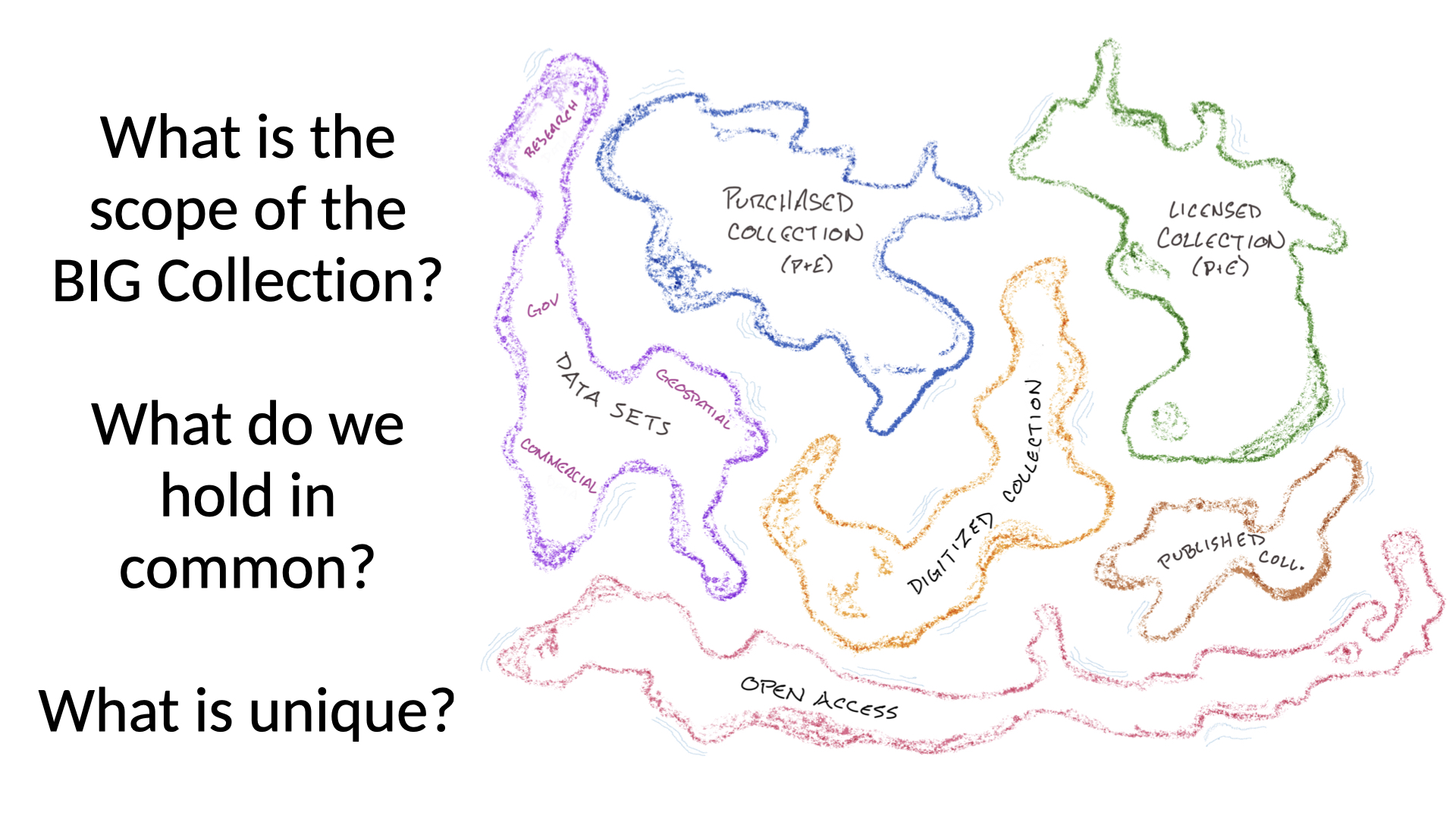
    In a recent presentation, BTAA’s director of library initiatives Maurice York described our current operating environment as a sort of “Pangea,” with each of the self-contained land masses representing a distinct element of the member libraries’ collections and operations—our purchased collections versus our licensed collections, for instance, or the material we digitize from our physical holdings versus that which we make available as part of our various publishing initiatives.

    From my perspective as a member of the Steering Committee, the issue with the way this landscape has developed over time is that each area has grown in isolation from the others. Until very recently, no one had taken a step back to survey the environment holistically, to consider these elements as interconnected and interdependent, and to imagine the possibilities that can emerge when treating our Pangea not as a loosely related set of activities, but as a single entity with a unified purpose.

    The Convenings are our first step toward getting the people on all these separate land masses to see a common future—of moving us closer toward that unified purpose. They are also a way for us to hear from representatives of all these different groups, to understand them better and learn both what they can offer the BIG Collection and what they might need from the BIG Collection to be successful.

    As I have written several times over the last number of months, the scholarly communication landscape is evolving, precipitated in part by changes brought about by the pandemic and the shift to an online-centric model of teaching and research. At the same time as our users’ expectations shift to demanding access to materials “at the speed of now,” pressure is being put on academic libraries across the country to maximize their budgets and achieve efficiencies of scale. Set against this backdrop, how do we align resources and activities across BTAA libraries to work toward a “knowledge commons” and maximize our impact? How can we work together—leveraging shared services, infrastructure, and strategy—to better serve all our communities? These are the questions that we will begin to explore throughout the BIG Convenings. I hope you will plan to join us!

  • University Librarian’s Report – January 2021

    Welcome back, everyone—I hope you all had a restful winter break and are feeling energized and ready to tackle the challenges of a new semester.

    Before we look forward to what the new year has in store, I wanted to take one last opportunity to thank you for all your excellent work in 2020. If you haven’t yet had a chance to do so, I’d like to encourage you to review our 2020 annual report. While the items collected there only begin to scratch the surface of what we took on in the last year, they do serve as a reminder of how we were able to rise to the challenges that were presented to us—particularly in light of the pandemic and all of the changes that it necessitated to the ways in which we work. I know that when the university looks back on this unique moment in its history, the Libraries will be remembered as a key contributor in the transition to online education and as an essential component in the successful continuation of research and teaching despite the turbulent times—so we should take pride in what we were able to accomplish on behalf of the Rutgers community and in support of the university’s mission.

    Turning the page on 2020, there is plenty more exciting work coming down the pike in 2021. As you know, last week we launched our revamped SOAR website, built on the infrastructure provided by Ex Libris’s Esploro product. While additional enhancements are planned over the course of the year to come, you can begin working with your departments to bring them up to speed on the changes. To that end, a toolkit of materials has been developed to support your outreach, so I hope you will take advantage of it and help raise awareness about this important service we provide to the university community.

    Changes are also well underway in our transition to Leganto for course reserves and our overall reimagining of course reserves workflows. Earlier this week, the course reserves scope in QuickSearch was formally removed and changes were made to our website reflecting this change. In addition to these more technical elements, we are moving in a direction with our overall course reserves strategy that will be more collaborative and better leverage the expertise of our subject specialists. I know that there may be some discomfort as we adjust to new workflows and processes in this area, but we should be encouraged that ultimately, we are making these changes to provide a more streamlined, consistent, and convenient experience to all our users. As we move forward with our explorations of tools like Alma Digital and Rapido, we should also remember that a user-centered philosophy is one of our core principles as an organization, and doing what we can to advance and uphold this ideal will always be a worthy endeavor—even if it challenges us to step outside our comfort zones temporarily as we adjust to changes in our day-to-day work.

    Finally, I’d like to touch on our ongoing website redesign. We have entered an exciting phase of the project as design elements are being approved and our partners at NewCity move into the front-end development work that will bring life to the layouts. In the coming weeks, we will also start turning our attention to content development and governance modeling. There is too much to go over in detail here, so I will encourage you to save the date for next Wednesday, January 27 at 4:00 p.m., when project co-leads Amy Kimura and Antonio Barrera will be leading a Central Forum to provide an update on the website redesign. I hope you will plan to join us then and bring any questions you may have.

    Again, these are just a few snapshots from among all the good work that is going on across the Libraries, but I hope they will serve as sufficient indication that we have plenty to be excited for heading into the new year. Thanks for everything you are doing, and I can’t wait to see what we will accomplish together in 2021.