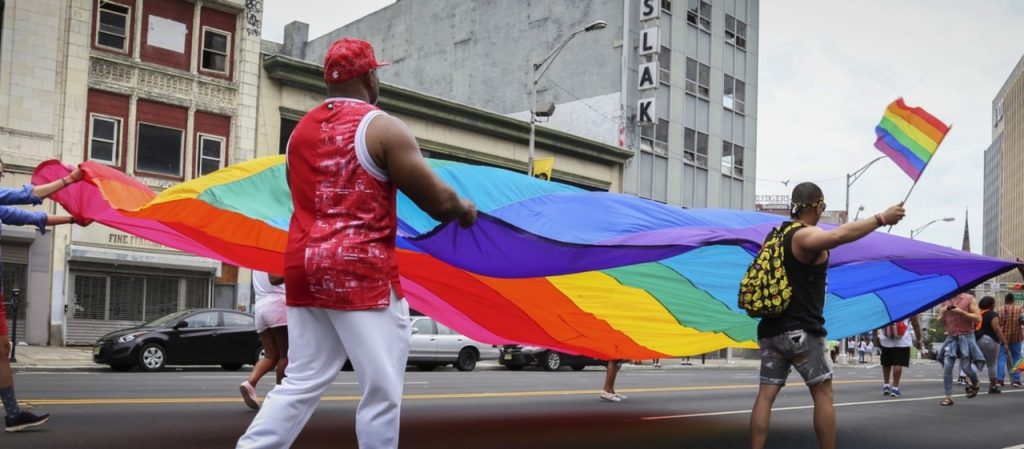
Rutgers University Libraries is pleased to announce the launch of the Queer Newark Oral History Project (QNOHP). QNOHP is a community-based and community-directed interdisciplinary initiative supported by Rutgers University–Newark. Queer Newark interviews LGBTQ and gender non-conforming people in Newark. We collect, catalog, and transcribe these oral histories to make their stories accessible to everyone, including researchers, students, and artists. Queer Newark also digitizes and preserves papers and artifacts about Newark’s LGBTQ history at Rutgers–Newark. Please visit this link to browse this collection.
Work on the project took place over the spring and summer of 2022 in a collaboration between staff at Dana Library and the Libraries’ Central Applications and Development Team. QNOHP involved a partnership with the Department of History at Rutgers–Newark and received a grant from the New Jersey Historical Commission to complete the work of transcribing and editing recorded oral histories. At their outset, the QNOHP and Newark Black Newspapers Collection projects were supported greatly by work performed by the late Krista White, digital scholarship and pedagogies librarian at Dana Library.
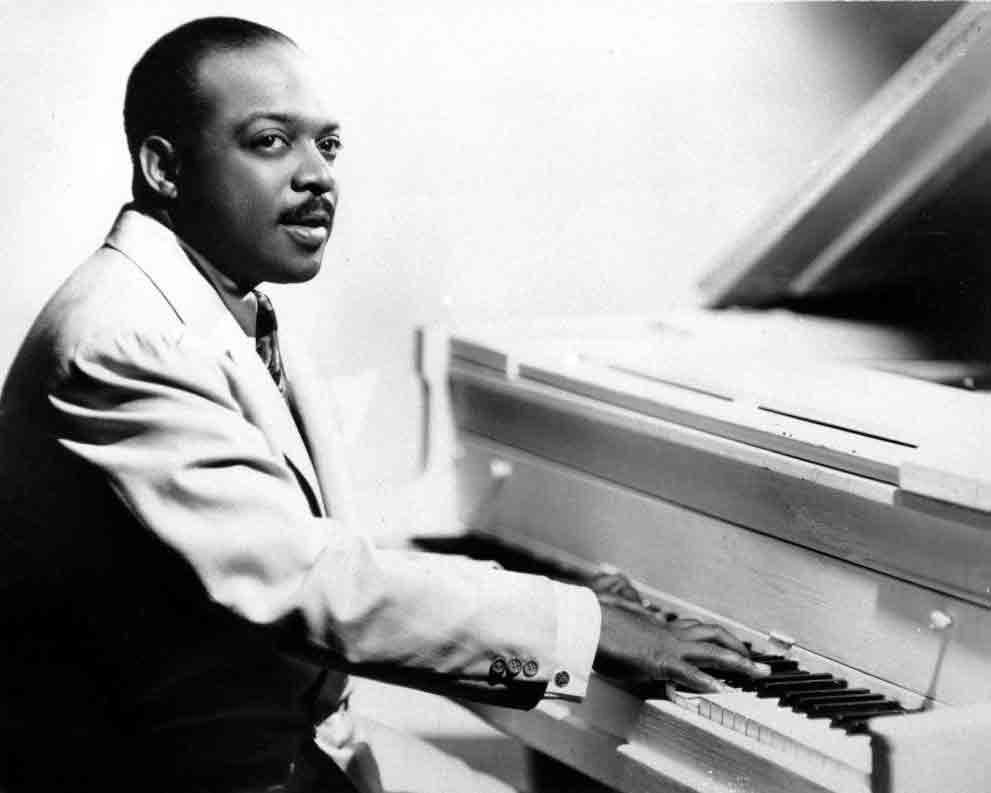
A native of Red Bank, New Jersey, William James “Count” Basie (1904–1984) was one of the giants of jazz, a global icon, and still one of the most influential, popular, and recognized figures in American music. The Institute acquired Basie’s papers and artifacts in 2018 and is responsible for ensuring its long-term preservation. The roughly 200-cubic-foot collection, consisting of more than 1,000 items, is unparalleled in its size and thorough documentation of Basie’s life and career, as well as those of his wife, Catherine, and daughter, Diane.
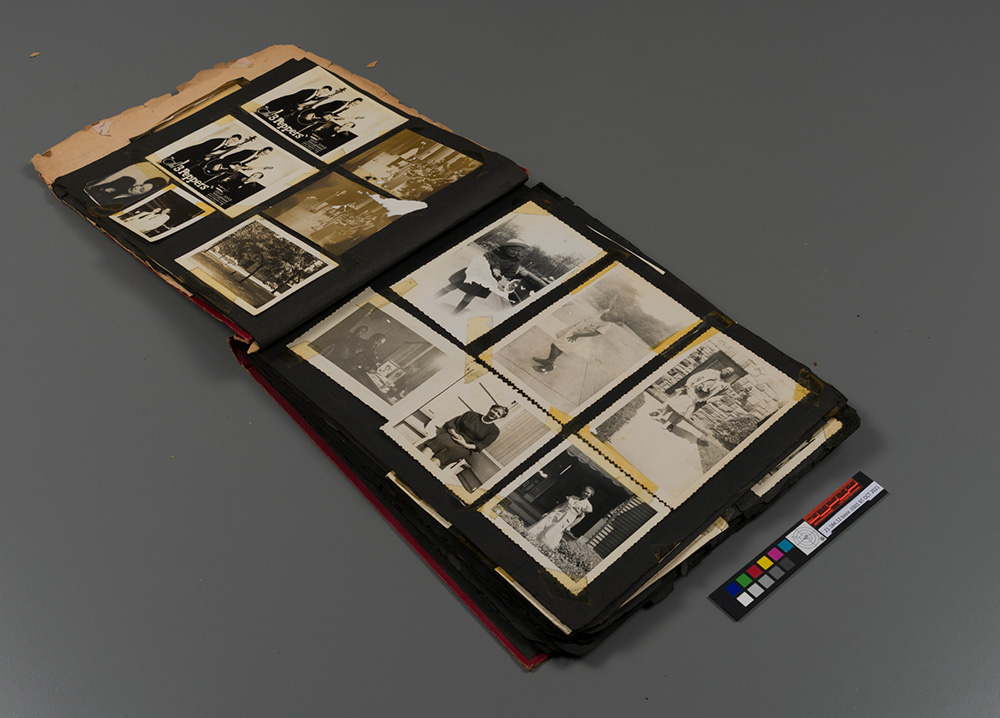
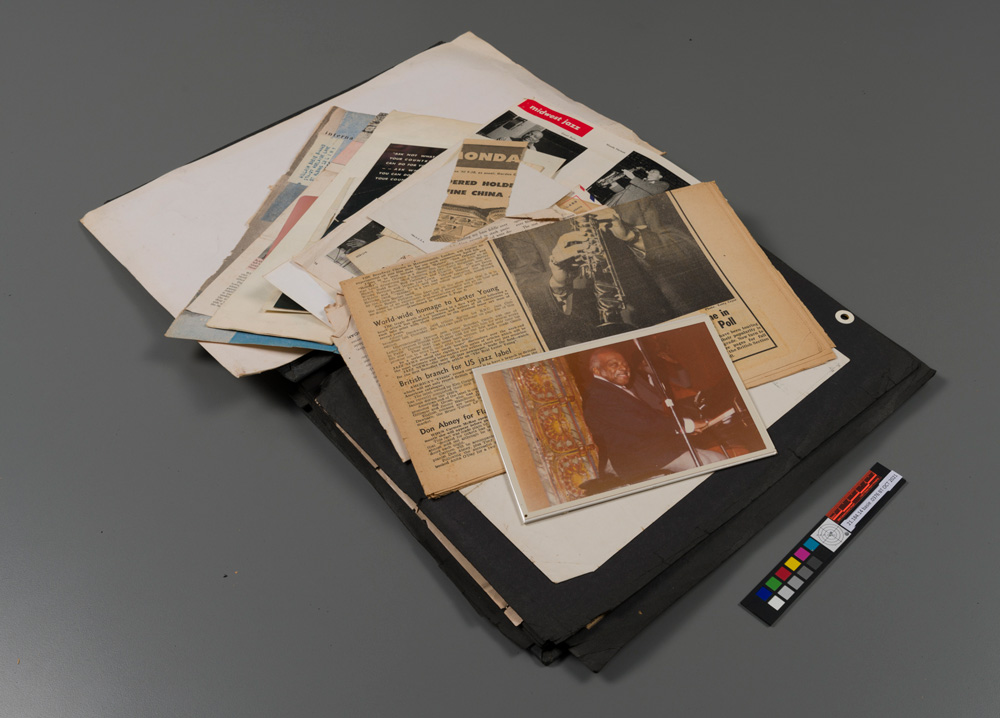
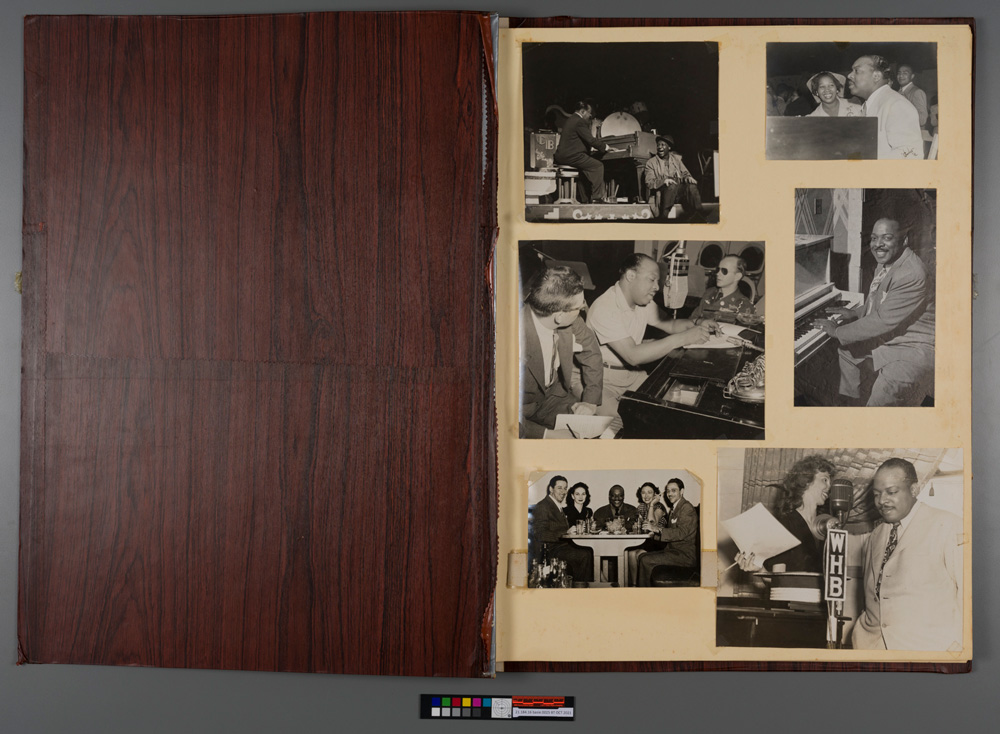
Basie family photo album (photo courtesy of the Conservation Center for Art & Historic Artifacts).Basie news clippings album (photo courtesy of the Conservation Center for Art & Historic Artifacts).Basie photo album with musical performance pictures (photo courtesy of the Conservation Center for Art & Historic Artifacts).
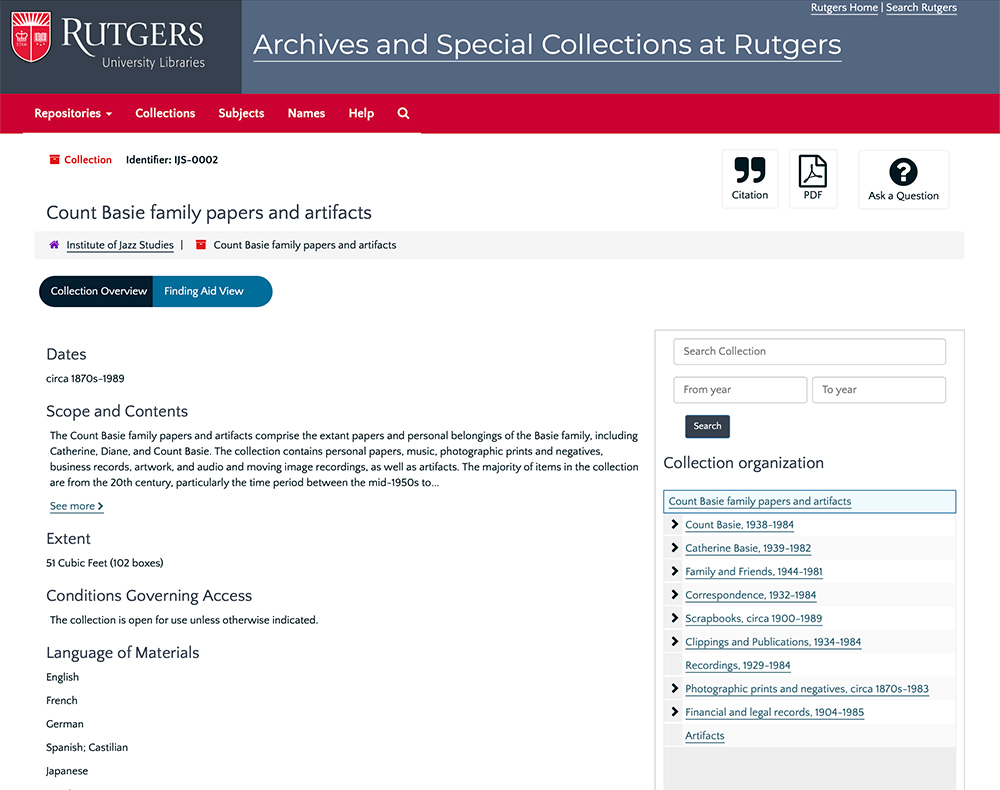
The papers portion of his collection is now available to the public for research and enjoyment. The artifacts and the remainder of the collection will be accessible in mid-2023. Please visit libraries.rutgers.edu/basie to access the finding aid.
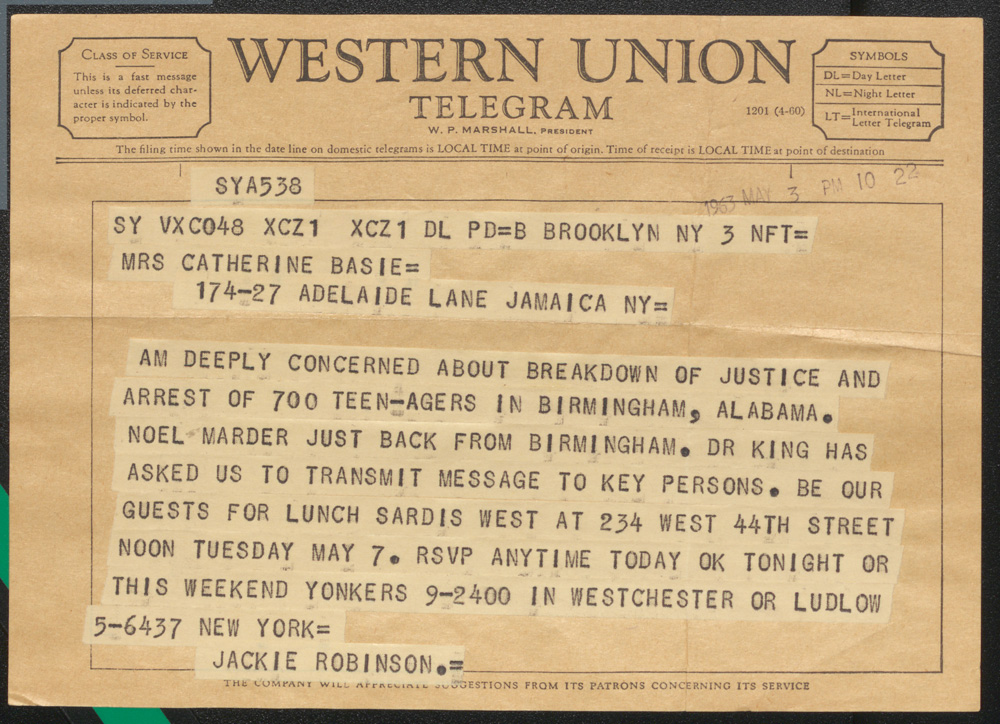
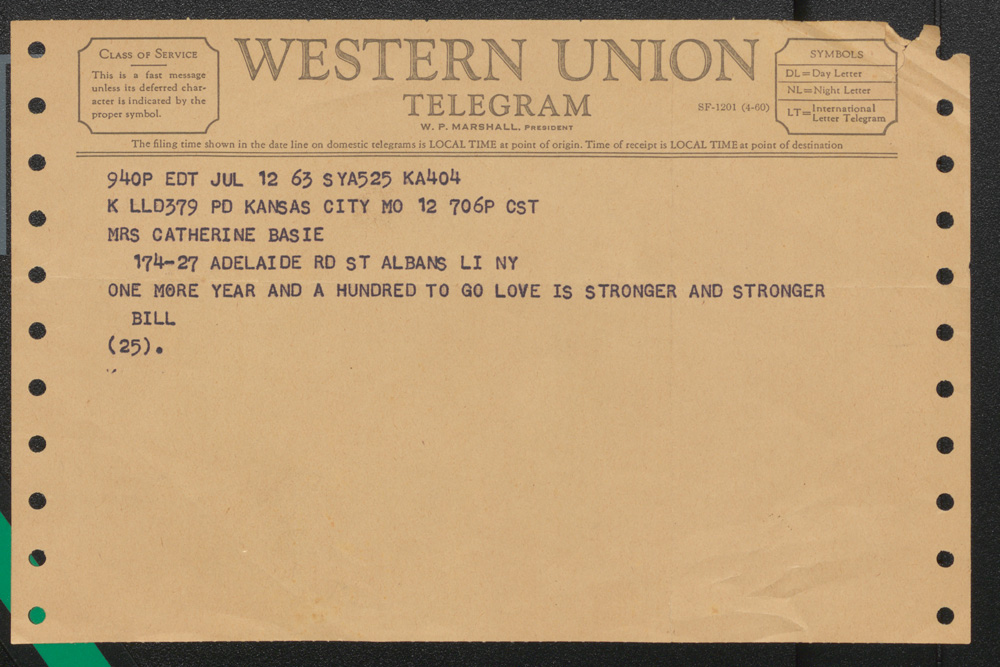
Martin Luther King Jr.’s telegram to Catherine Basie, 1962.Baseball great Jackie Robinson’s telegram to Catherine Basie, 1963.Count Basie’s telegram to Catherine Basie on their anniversary (signed “Bill”; 1963).
About the Collection
The Basie Family Papers and Artifacts document the vast impact of Count Basie’s enduring and storied career in jazz and American history and provide an unparalleled view of his family and private life. The collection is an essential resource for researchers in jazz, music, post-war American history, and American culture, especially black American culture. It is also critical for scholars, educators, writers, filmmakers, students, and the general public because of its breadth and depth.
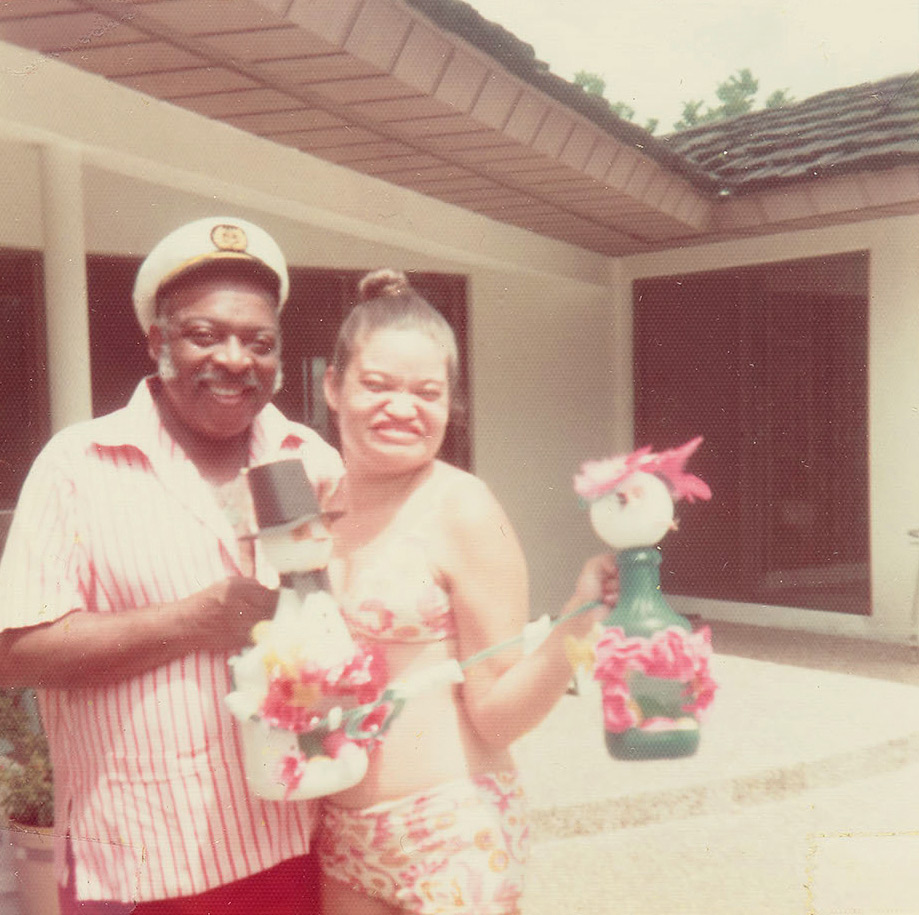
Count Basie with his daughter, Diane.
The collection contains extensive primary sources and objects ranging from Basie’s earliest years in Kansas City until his death. One-of-a-kind artifacts comprise approximately half of the items, including Basie’s piano and organ, select home furnishings, artwork, apparel, and accessories. Although the materials cover the entirety of Basie’s lifetime, the artifacts represent the latter years of his life and career particularly well, including many accolades, awards, honorary degrees, and proclamations he received during that period. Unique archival materials never before available to researchers comprise about one-third of the collection, including personal papers, business records, photographs, clippings, scrapbooks, ephemera, correspondence, and audio and moving image recordings.
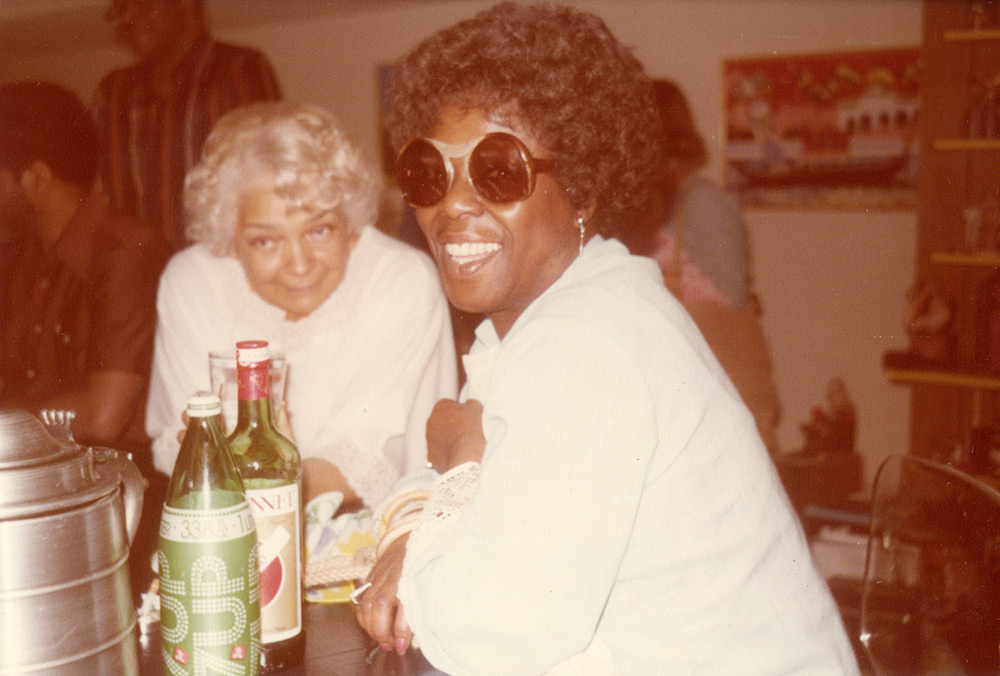
Catherine Basie (left) with legendary jazz singer Sarah Vaughan.
Catherine Basie’s life and accomplishments are also well documented in the collection, including her extensive civic and charity work (for which she was recognized by the major leaders of the day), her background as a dancer and singer, her social network, and the centrality of family in her home life.
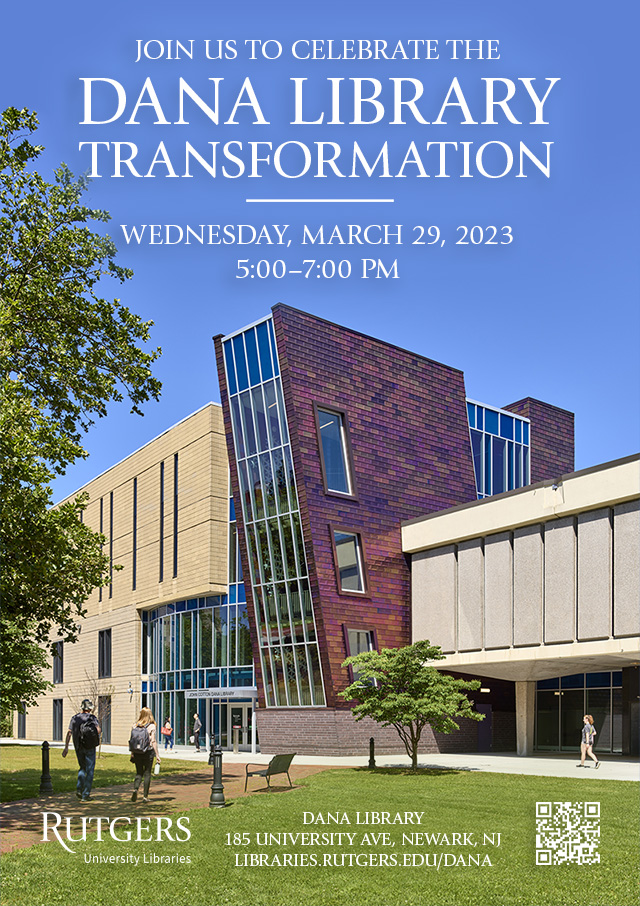
The Institute of Jazz Studies is the world’s foremost archives and research library exclusively dedicated to jazz, an American art form that has transformed the world. Founded in 1952 by pioneer jazz scholar Marshall Stearns (1908–1966), IJS has been a leading institution in the preservation and access of jazz heritage. The Institute relocated from Stearns’ apartment to Rutgers University–Newark in 1966 and is part of the Rutgers University Libraries. In 1994, IJS moved to spacious new quarters on the fourth floor of the John Cotton Dana Library at Rutgers–Newark.