Tag: ExLibris

  • Ex Libris Implementation Team Update – September 2021

    On August 12 all PALCI institutions moved to ReShare as the new platform to process and manage EZBorrow requests. We are so pleased to report that this transition has been successful and I would like to personally thank everyone for their patience and assistance over the past couple of months. Along with our partner institutions, we continue to provide feedback to developers to help make this new platform even better.  In the first week we have already made several improvements, including one, patron searches. Clicking on the EZBorrow button in QuickSearch will now automatically search the PALCI shared index and present related results. Patrons no longer have to manually repeat their search in the EZBorrow interface.

    EZBorrow patrons have received their final reminder regarding requests placed prior to the ReShare implementation. Access to these requests will not be possible after August 31. All users were provided with instructions on how to download a report of their requests from the old system prior to its retirement.

    Thank you for the support you have provided during this transitional phase. Please feel free to contact me if you have any questions regarding ReShare.

  • E-ZBorrow Transitioning to ReShare

    ReShare, the new platform for managing E-ZBorrow requests, is now in the final stage of implementation. ReShare will provide our patrons with consortial discovery, offering real-time availability. Additionally, ReShare supports batch processing which will allow staff to process multiple requests quickly.

    In the coming weeks we will be adding configurations, creating staff user accounts, and training staff on processing requests in ReShare. Staff at all PALCI partner libraries will be spending the first two weeks of July working with test requests and fine-tuning the process. PALCI is anticipating this testing phase to be completed by  mid-July, at which point all partner libraries would enable patron discovery and go live on the new platform on the same day.

    Relais, the platform we currently use, will remain available for the completion of current requests until August 31. Requests will not be migrated to the new platform. Patrons who have used the E-ZBorrow service in the past two years will receive a notification with instructions on how to export a list of their requests. The first of these notifications will be sent on July 7 and two reminders will be sent before the August 31 deadline.

    More information about Project ReShare can be found here.

  • Ex Libris Implementation Team Update – May 2021

    Ex Libris Datacenter Migration and Outage

    During Memorial Day weekend Ex Libris will migrate our cloud platform which includes Alma, QuickSearch(Primo VE), Leganto, and Esploro to a new datacenter.  From 9:00 PM on Saturday, May 29th until 09:00 PM Sunday, May 30th we expect the entire platform to be unavailable due to this migration activity.  The Ex Libris Implementation Team will be updating the libraries as the date approaches with more details.

    Rialto

    The technical implementation of Rialto is progressing well. The firm order buying cycle configuration is complete and work on transitioning the DDA from Oasis to Rialto will finalize soon. We hope to train Selectors on the use of Rialto over this coming summer.

    Transition to ReShare

    User request history in EzBorrow will not be migrated to ReShare. Instructions are being developed for users who wish to export this data in advance of the transition and will be shared in the near future.

  • Ex Libris Implementation Team Update: March 2021

    As we approach the anniversary of the COVID-19 pandemic and our move to online instruction, we are taking a moment to reflect on the past year in reserves. Throughout this year, we have made the leap from primarily physical reserves to a fully digital workflow that is solidly grounded in Alma processes and provided to users through Leganto. This effort included almost everyone in the libraries and was possible only through the hard work of our reserves units, public-facing staff and librarians, directors, and nearly every central unit.

    Over the summer, Cabinet approved the Redesigning Reserves proposal to begin this transition. A few highlights from the completed work on this proposal include:

    • Modifying reserves workflows to make use of new metadata fields in Alma to manage evolving reading list and citation statuses added through Leganto
    • Moving and suppressing physical reserves items and the implementation of a chapter scanning workflow in QuickSearch to provide access to portions of these materials to users
    • Adding the Reading Lists tool to the default course shell in Canvas and integrating a Canvas course load into Alma to facilitate the connection between these two systems
    • Developing a focus group centered on improving fulfillment workflow processes, which reviewed the course reserves workflows and suggested modifications to improve efficiency and user experience
    • Forming a copyright queue to address internal course reserves copyright approvals
    • Changing the reserve workflow to center user communications in the local units and include liaisons and selectors at the correct points in the process
    • Sunsetting the course reserves scope, which was centered around print reserves discovery, in favor of the reading lists tool and the Leganto Search, which includes reserves materials in all formats

    While we are now successfully providing fully digital reserves for instructors and students, there are still ongoing changes. Some projects in process include:

    • The Fulfillment Working Group and volunteer reserves units from Camden, Newark, and New Brunswick Douglass are testing a new reports strategy in Alma to help reserves units manage reading list and citation statuses.
    • The Instructional Support Group is working on developing new documentation to help instructors create and populate their own reading lists and roll over their existing reading lists each semester to new courses.
    • The Alma Digital Steering Group is creating an outline for how we might implement Alma Digital. This tool would change the reserves process in several important ways including integrated digitization processes, a move away from local server storage for reserves materials, the opportunity to review our reserves content for accessibility, and the potential to provide controlled digital lending.
    • Cabinet will be reviewing a proposal focusing on student usage data collection in Leganto.

    Thanks to all the work across the organization on reserves this year, we have not only successfully transitioned the course reserves process to digital instruction, but have improved on it in many significant ways. Though this was a year full of uncertainty and change, we have been able to build new connections across Rutgers and continue our mission to support teaching and learning through course reserves.

  • Ex Libris Implementation Team Update – January 2021

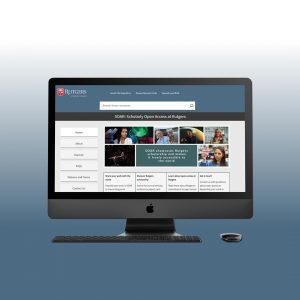
    The new SOAR platform improves the capture and discovery of Rutgers research outputs.

    The new SOAR research portal, powered by Esploro, is now live and can be accessed at soar.libraries.rutgers.edu. Esploro helps advance SOAR’s mission to promote Rutgers scholarship by improving and extending our ability to collect and manage institutional research outputs.

    Benefits of the new platform include:

    • Simple, streamlined deposit of research outputs
    • Integrated workflows for reviewing, approving, and managing deposits
    • Support for over 50 resource types including articles, book chapters, conference proceedings, presentations, datasets, and creative works
    • Automated capture of metadata from major scholarly publishers and indexes
    • Automatic DOI registration for persistent identification and access
    • Powerful analytics for tracking and measuring research impact
    • A robust global infrastructure to ensure reliable and continuous availability

    Additional enhancements are planned over the course of the next year that will further augment SOAR’s ability to capture publication data and provide a richer, more comprehensive picture of research activity at the university.

    Please help us spread the word about SOAR to the Rutgers community. To facilitate this process, an outreach toolkit has been prepared and is available for download on the Staff Resources website at staff.libraries.rutgers.edu/communications/soar-esploro-outreach-materials. Inside, you will find resources including an email template, slide deck, flyers, known issues list, and other materials to help you communicate this change to your local users and stakeholders. For a brief introduction, watch Getting Started with SOAR.

    Please note that all previously deposited assets have been migrated to the new platform and remain accessible via their assigned DOI. The following services previously offered through SOAR have been discontinued:

    • “My Bibliography Link” – a shareable link to your personal collection of deposited works in SOAR
    • “Faculty Survey Portal” – a custom portal allowing researchers to search your collection of works in SOAR

    Last, but not least, I’d like to acknowledge the tireless work and dedication of the Esploro Working Group for getting this project off the ground (Kalaivani Ananthan, Marty Barnett, Abbey DiPaolo, Rhonda Marker, Chad Mills, and Geoffrey Wood) as well as the various colleagues who provided guidance and support along the way (Laura Mullen, Yingting Zhang, Amy Kimura, Sam McDonald, Dave Hoover, and Matt Badessa).

    Please take some time to check out the new SOAR site and send any questions or comments to soar@rutgers.libanswers.com.

  • Ex Libris Implementation Team Update – November 2020

    Alma Analytics Upgrade

    Alma Analytics will be upgraded the week of November 1. Users who want to retain their personal reports in My Folders after the upgrade will need to save a copy in the Analytics shared folder’s Migration directory by October 31. Instructions to save your reports for the upgrade can be found here.

    New Alma Layout

    Ex Libris has introduced a new layout for Alma and items such as the main menu and persistent search box have moved to new locations on the screen. The new layout is currently in a testing phase. Users who want to familiarize themselves with the new layout can toggle it on themselves by following the instructions found here. The new layout becomes the default on November 1.

    Esploro Update

    The Esploro implementation is proceeding apace. All of our research assets have now been migrated from RUcore to Esploro. Next steps will include data cleanup, system and UI configuration, staff and user training, and integration with the library website. The Esploro research portal is scheduled to be released in January 2021. The rollout will be accompanied by the creation of a new support channel in LibAnswers to answer inquiries related to using the repository, depositing works, and the open access policy.

    Chapter Delivery Button

    The Chapter Delivery button is now available on many monograph collections in QuickSearch. At a time when access is limited, the addition of button raises awareness of this service and provides our patrons with expedient access to our monograph collection. These requests are being brokered by ILLiad and filled electronically via Document Delivery.  Patrons can also continue to access the Book Chapter Request form via their ILLiad account to place requests.

    Click and Collect Statistics

    Click and Collect usage rose from an average of 211 items per week during the summer to an average of 320 items per week during the semester. The week with the most requests so far was the first week of the semester (August 31-September 6) with 368 requests completed. Graduate students are the most frequent users of Click and Collect at 48% followed by faculty and staff at 36% and undergraduates at 17%. Thanks to the work of our onsite fulfillment teams we have circulated over 3,000 items to users via Click and Collect since the program began on August 3rd.

    Fulfillment Workflow Review and Redesign

    Efforts to review and redesign workflows supporting Course Reserves, Chapter and Article Delivery, ILL, etc. have begun. High level process mapping is being completed along with preparation for the impending switch to Leganto. Meetings with each campus will be scheduled to discuss the efforts and potential new workflows in more detail. Be on the lookout for more info!

  • Ex Libris Implementation Team Update – September 2020

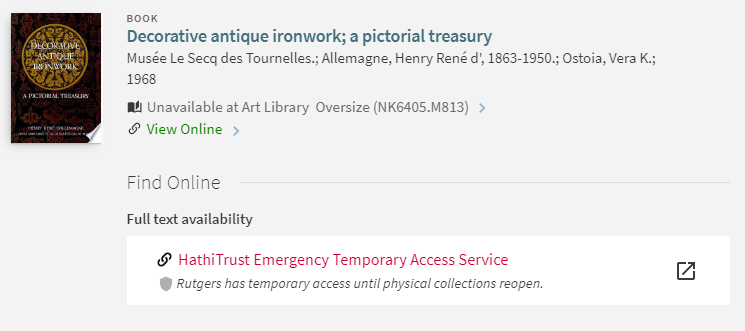
    The HathiTrust Emergency Temporary Access Service (ETAS) provides digital access to a significant portion of our titles held in print during temporary and involuntary disruptions to normal library collections services. The COVID-19 pandemic has changed how patrons access and use library collections; to align with state recommendations and promote public safety in our library spaces, users are currently unable to freely browse and borrow from our physical collections. These restrictions allow us to offer a digital replacement for our print copies from the HathiTrust repository. Access to these titles is based on our print holdings and because the digital access offered by HathiTrust is provided in lieu of our print items, we cannot circulate both “copies” simultaneously to comply with copyright. For this reason, personal delivery and click and collect request options are not available for items with full text electronic access.

    Compliance with copyright also informs some of the features of the HathiTrust ETAS reading experience. Users must “check out” the digital copy for a short period of time to access. This provides a controlled experience that restricts the number of simultaneous users. When users are done browsing the item, they have the option to return the item right away to free it up for other users or to retain the checkout for a period of time. The material will automatically renew during active use and expire after 12 hours of inactivity. After an hour of inactivity, the title becomes eligible for new checkouts but will continue to default to the initial user if there are no checkout requests from other users. Users cannot print or download from materials held in the HathiTrust ETAS, but these items are eligible for chapter scanning and interlibrary loan.

    HathiTrust ETAS provides safe and immediate access to many of our print titles during our temporary service disruptions. Rutgers is periodically reevaluated for access to the HathiTrust ETAS and we will no longer be eligible for this service once users are able to freely access services and collections.

    HathiTrust provides detailed information about the ETAS on their website (https://www.hathitrust.org/ETAS-Description) including an information page that is specifically aimed at user questions (https://www.hathitrust.org/ETAS-User-Information#FAQ).

  • Did You Know? The Ex Libris Enhancement Process

    Ex Libris updates its products every month with enhancements recommended by customers and other users. There are two primary ways customers can suggest development enhancements. The Idea Exchange platform (http://ideas.exlibrisgroup.com/) is a system that anyone can use at any time during the year. This open platform allows all Ex Libris users to submit ideas for development and vote on their favorite ideas. The Ex Libris project management teams monitor this system and considers these ideas for their development cycle.

    The other primary way that users can influence Ex Libris development is through the formal product enhancement process offered through the official user groups ELUNA (Ex Libris Users of North America) and IGeLU (International Group of Ex Libris Users). This process is offered every year for each product and members can submit enhancement requests through NERS (New Enhancement Request System). These requests are monitored by the customer product interest groups to ensure there are no duplicates before voting and reviewed by Ex Libris. Each member site in the user group is provided with a points allocation for voting on enhancement ideas. At Rutgers, the Ex Libris Team solicits feedback from relevant groups such as the Fulfillment Working Group to help understand which enhancements will have the most beneficial impact on our workflow. Once the votes are collected, Ex Libris makes a commitment to implement the top enhancements that fit into their designated development budget for the year.

    The monthly releases for each product are available in the knowledge center (https://knowledge.exlibrisgroup.com/) or via the release highlights emails available through the product email lists (https://exlibrisusers.org/listinfo). The Ex Libris Team minutes (https://apps.libraries.rutgers.edu/ex-libris/resources) are also a good way to monitor the voting process and monthly enhancements that may impact our workflow.

  • Ex Libris Implementation Team Update – May 2020

    Rutgers students, faculty, and staff can now access over a million digitized texts available through HathiTrust’s Emergency Temporary Access Service (ETAS). In response to the current public health crisis, HathiTrust is providing member libraries with temporary access to digital versions of print titles that would otherwise be inaccessible due to library closures. As a result, the Rutgers community now has online access to over 1.2 million volumes previously only available in print. This is in addition to the more than 6 million public domain and Creative Commons-licensed works already accessible through HathiTrust.

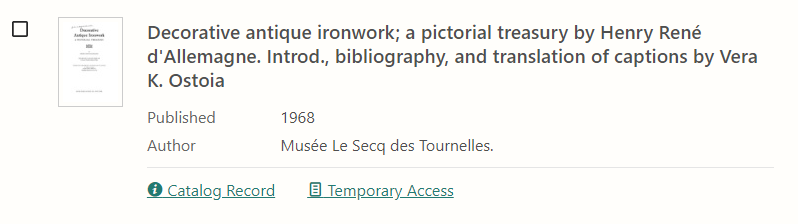
    Rutgers users can search for these titles in QuickSearch or the HathiTrust Digital Library. Books available through ETAS include a note indicating temporary access.

    View in QuickSearch.
    View in HathiTrust.

    Terms of service

    • “Temporary Access” books require NetID login and can only be accessed by Rutgers students, staff, and faculty.
    • “Temporary Access” books can be read online only. Unlike “Full View” books in HathiTrust, they cannot be downloaded for offline reading.
    • “Temporary Access” books can be checked out for one hour. The banner at the top of the browser informs you how long the book is checked out to you. Your access to the book will automatically renew as long as you are actively reading it.
    • If the book you want is currently checked out, a message will display letting you know that the book is in use. Check back later to see if the book has been returned. Unfortunately, it is not possible to request or place a hold on a book. Because access is limited, users are encouraged to return books as soon as they are done using them.
    • “Temporary Access” books will only be available online until access to the Libraries’ print collection is restored.

    For more information, including instructions for accessing ETAS books on your mobile device, see https://www.hathitrust.org/ETAS-How-To


  • Ex Libris Implementation Team Update – March 2020

    New Central Index Coming to QuickSearch

    In Spring 2020, Ex Libris will release its new Central Discovery Index (CDI), an expanded search index with an upgraded infrastructure that will replace the current Primo Central Index (PCI). The central index is a collection of records describing hundreds of millions of scholarly resources, including articles, books, conference papers, and audiovisual recordings harvested from publishers, aggregators, and open-access repositories. The new index will offer several improvements, including:

    • Expanded content coverage
    • Faster content updates
    • Merged records instead of record groups
    • New and more granular resource types
    • Streamlined activation process

    Although the transition to CDI is expected to be seamless, users may notice the following changes:

    • More search results
    • CDI leverages the combined assets of Primo and Summon, which means users will have access to more content than before
    • Changes to retrieval and ranking
    • CDI uses a different search algorithm impacting the way results are retrieved and ranked
    • Merged records
    • Duplicate results within the central index are merged into a single record instead of grouped together
    • New and more granular resource types
    • CDI will offer new resource types (e.g., archival material, market research, dataset, standard) and more granular categorization (audiovisual will be separated into audio and video)
    • Broken permalinks
    • The majority of permalinks will continue to work but Ex Libris estimates that ~10% could not be mapped and will break

    To minimize disruption, the new index will be activated after the spring semester ends on May 18th, 2020. If you have any questions, please contact exlibris@rutgers.libanswers.com.

    Law Libraries – By the Numbers

    The Law Libraries Append Project added a large number of physical and electronic resources to Alma and QuickSearch in January 2020. For physical, 188,572 titles and 463,395 items were added. For electronic, 95,216 titles representing 117,237 electronic resources were added. Also, 3,042 user records were loaded containing 1,451 new user records and 1,591 updated records and 3,583 checkout records attached to these users were loaded.

    Leganto in Action – Spring 2020

    Sixty-two unique course sections are actively using Leganto for Spring 2020. This includes at least one course from every campus and courses that span eight Rutgers schools and colleges. The School of Social Work in New Brunswick’s online and hybrid courses have continued to make active use of the Reading List tool, but there are also notable numbers from the College of Arts and Sciences in Camden and the School of Nursing at RBHS.

    Introducing Esploro

    Rutgers University Libraries have contracted with Ex Libris to integrate Esploro, an institutional repository platform for collecting, managing, and showcasing the university’s research output. Esploro offers a variety of useful features including:

    • Support for over 50 asset types including pre-prints, publications, data sets, audiovisual media, and creative works
    • Direct and mediated deposit as well as automatic capture of assets from external sources such as indexes, national repositories, and disciplinary repositories
    • Researcher profiles allowing for easier identification of domain experts and potential research collaborators
    • Integration with Pivot, a global funding database that helps match researchers with potential funding opportunities
    • Robust analytics for measuring research performance and impact

    Integration of Esploro into our Alma environment begins March 2020 and will be carried out in two phases. The first phase will focus on data migration and system configuration and is expected to be completed by the end of summer. The second phase will focus on education, promotion, and campus engagement. Stay tuned for further updates as the project unfolds.