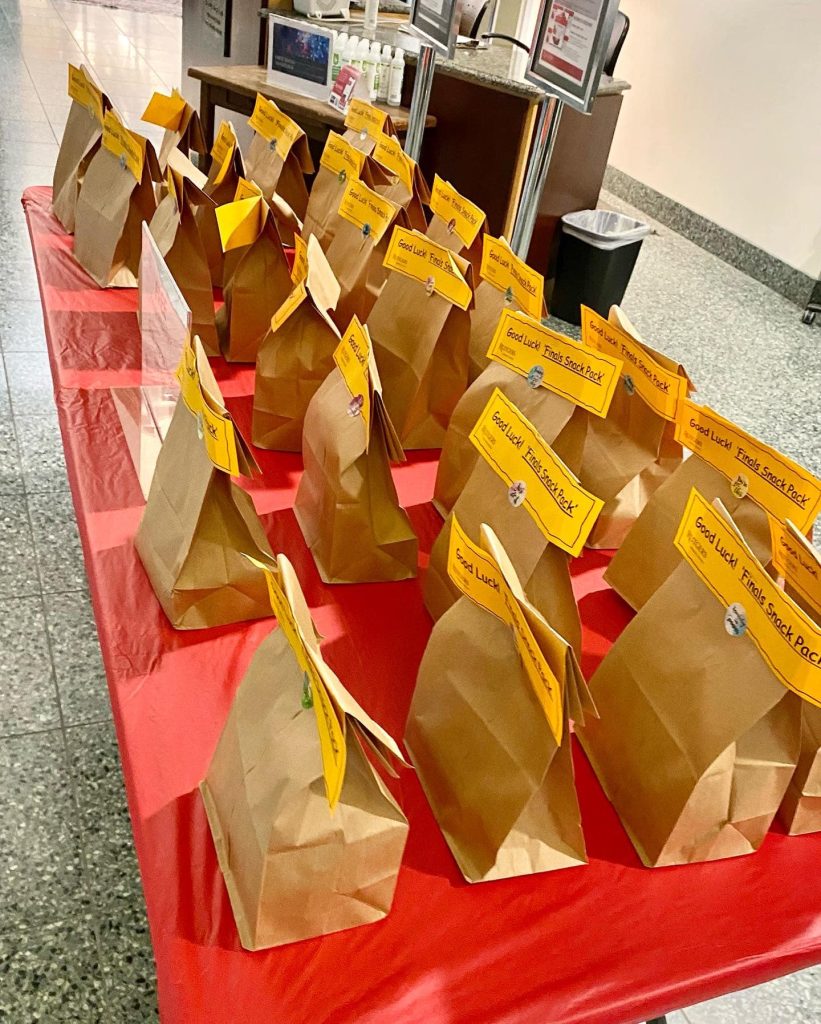
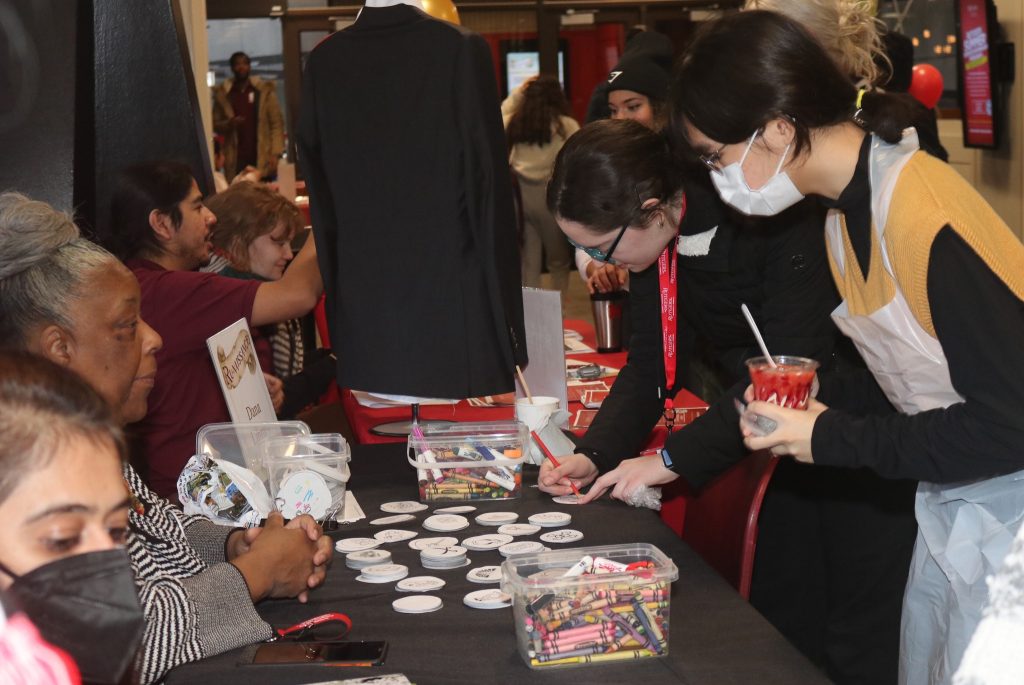
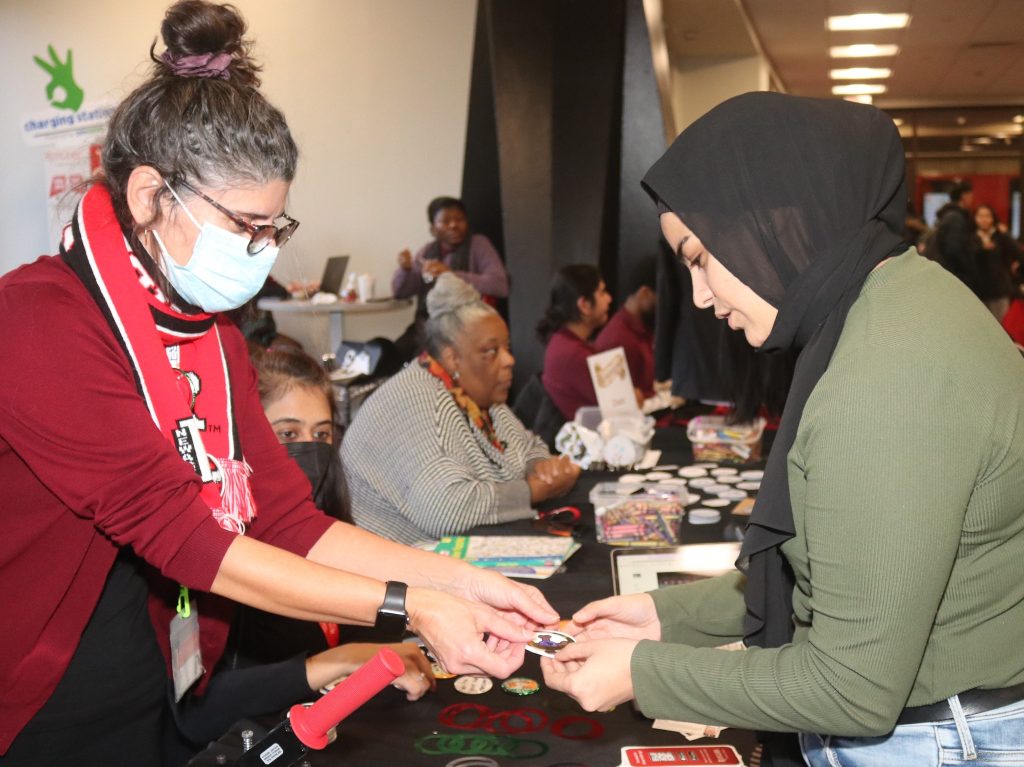
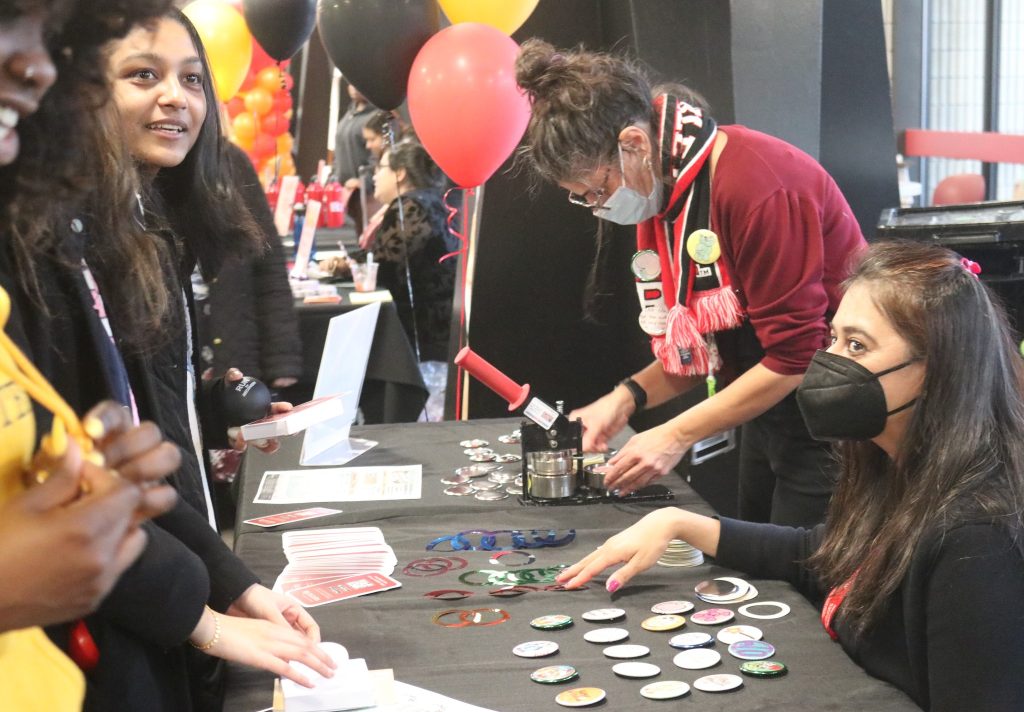
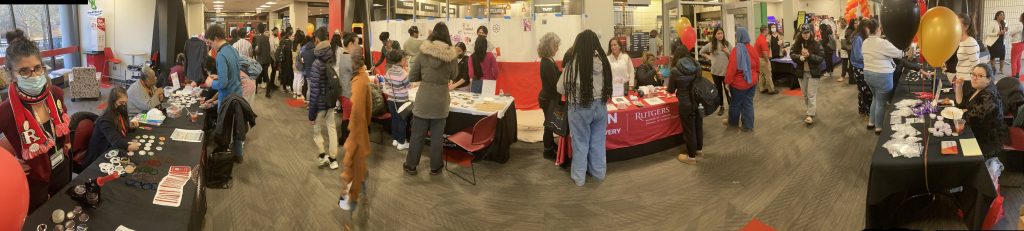
Rutgers University Libraries hosted numerous stressbuster events to help students destress during finals week. Students enjoyed copious free snacks and activities during their study breaks.
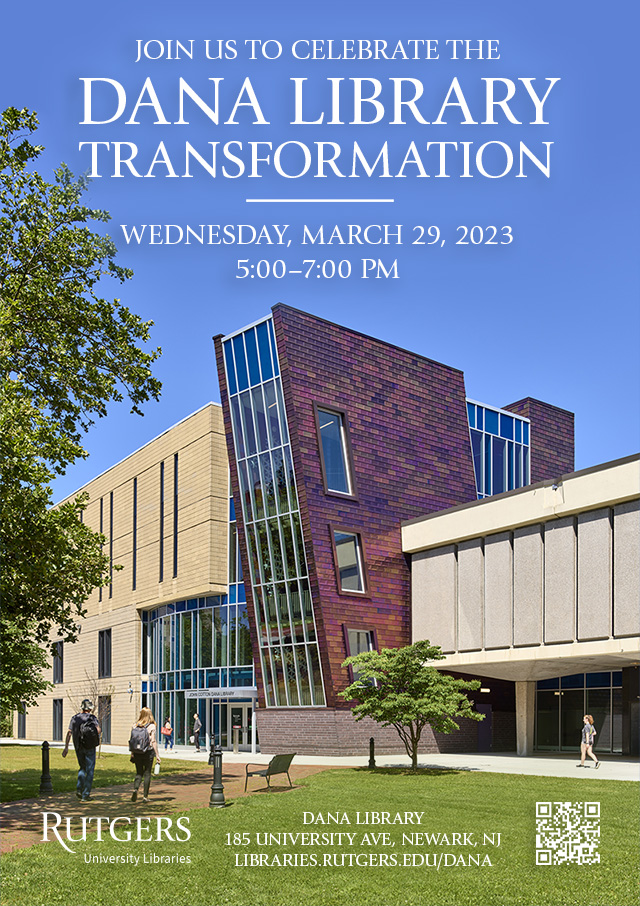
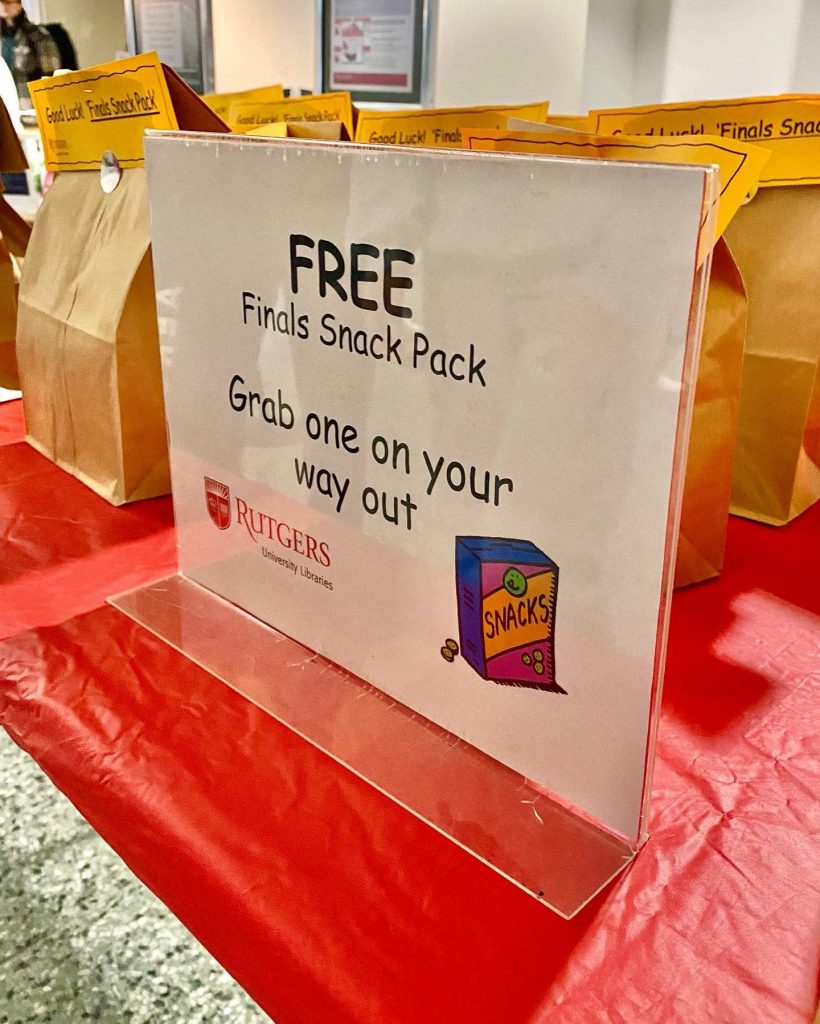
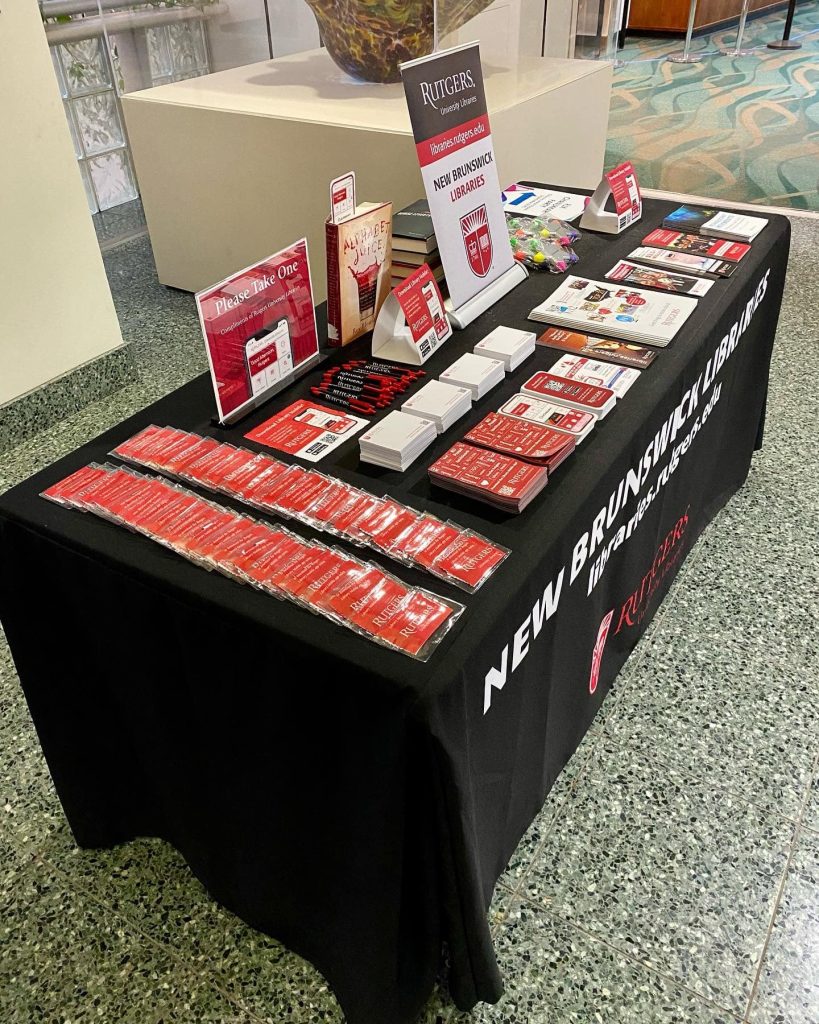
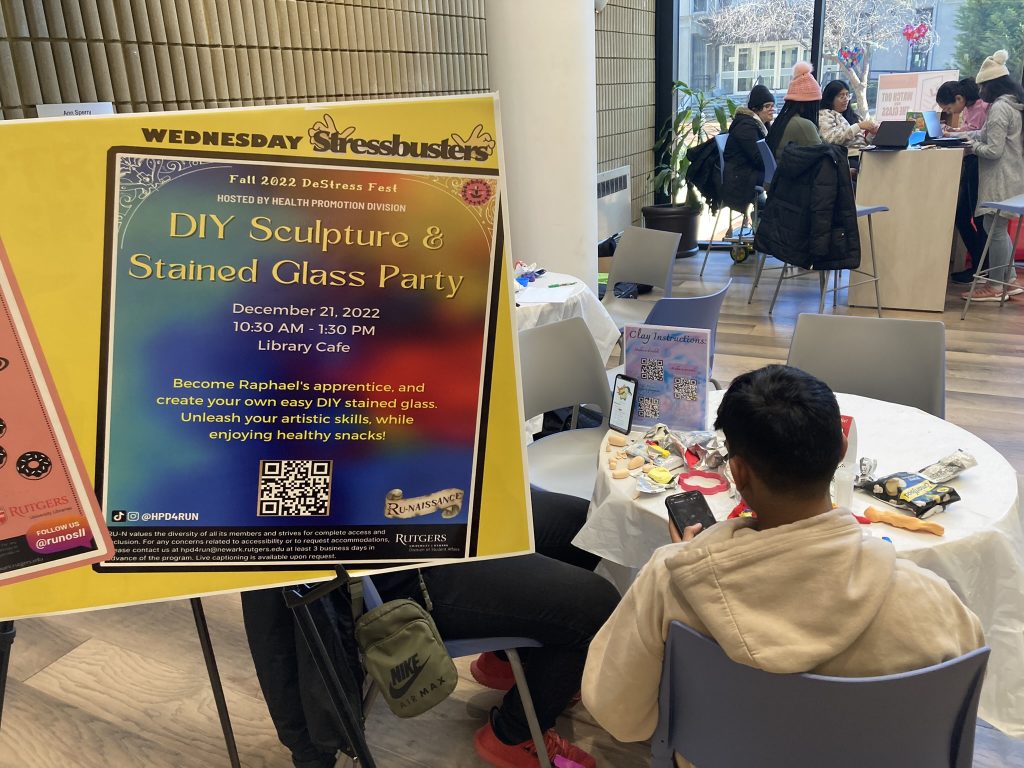
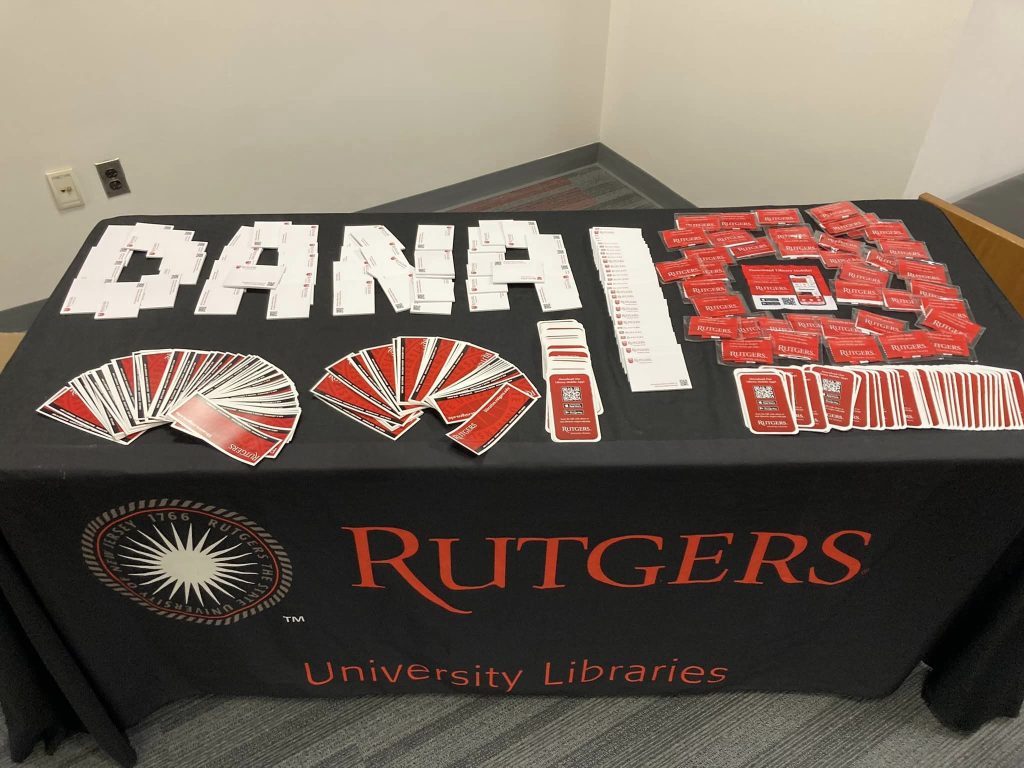
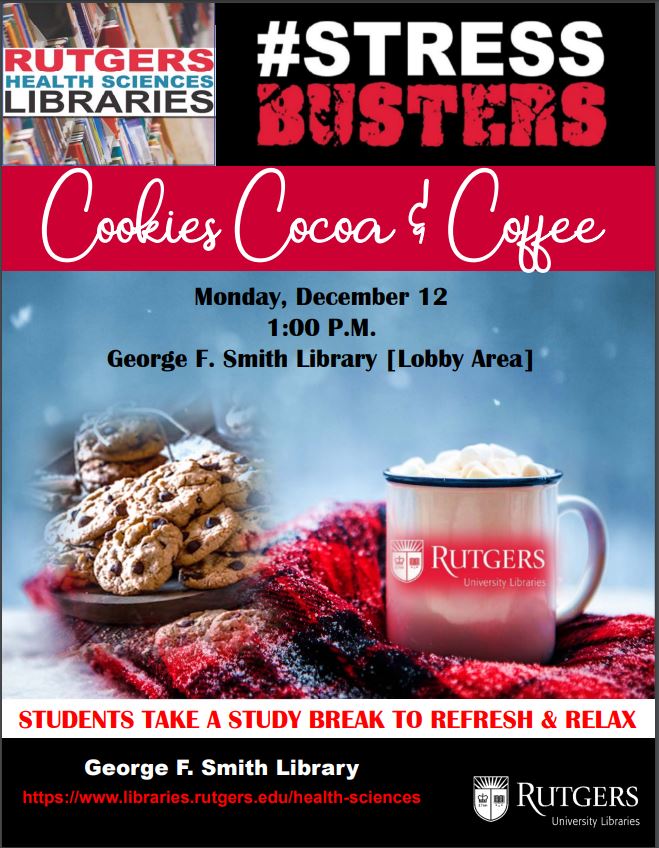
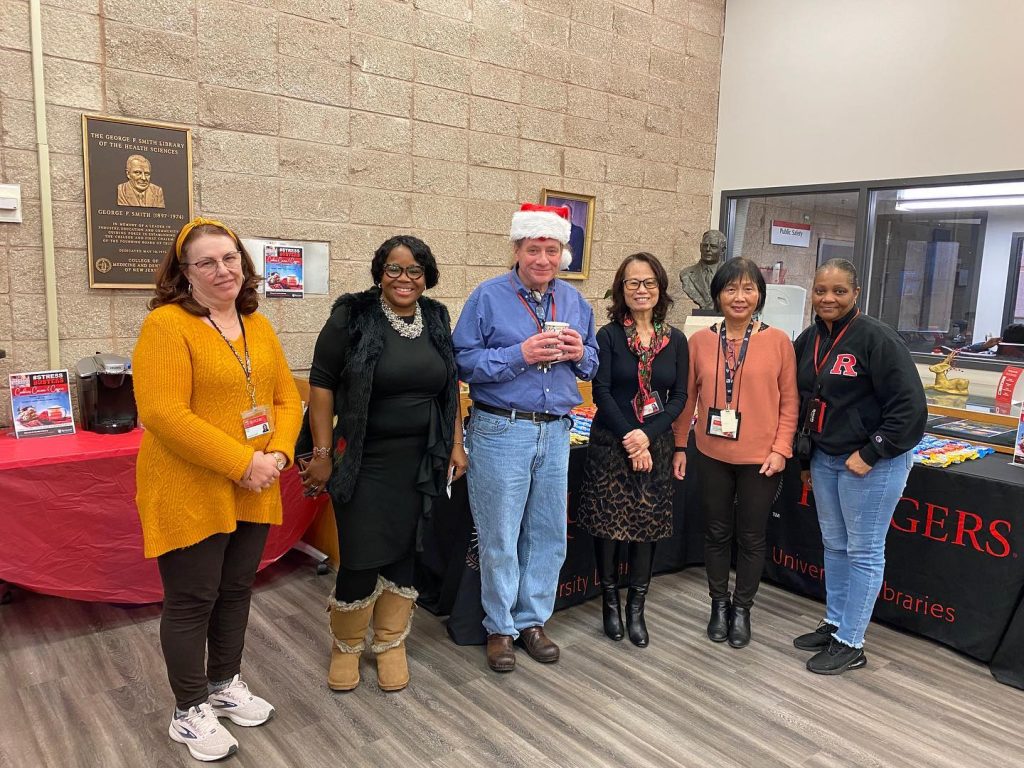
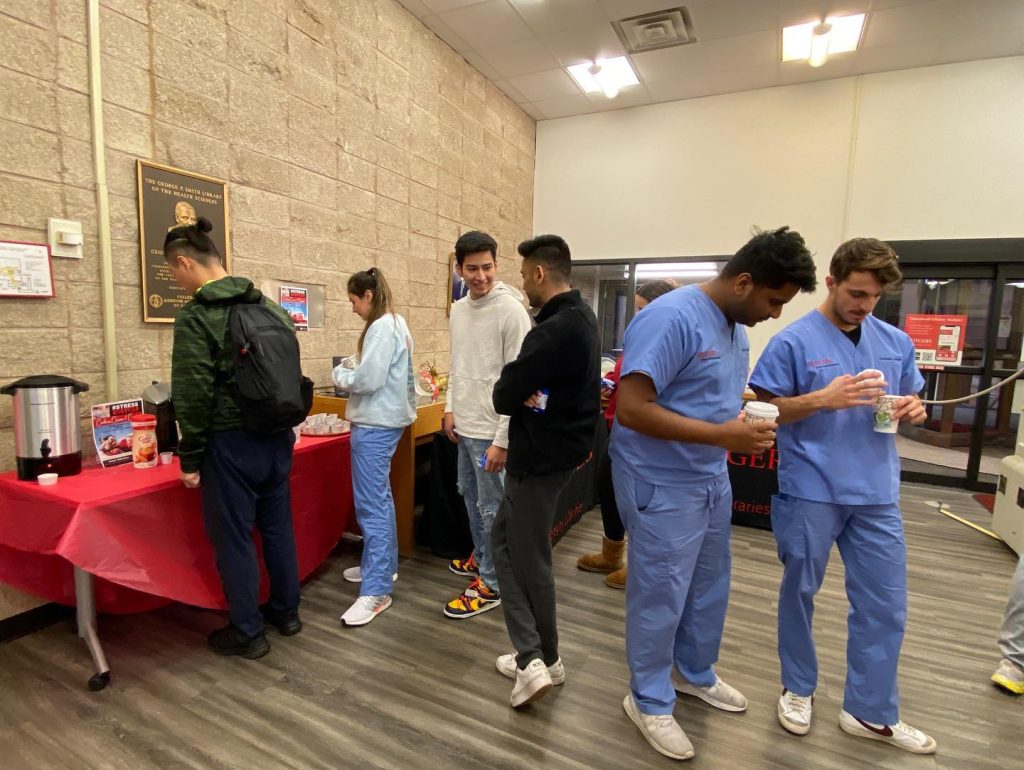
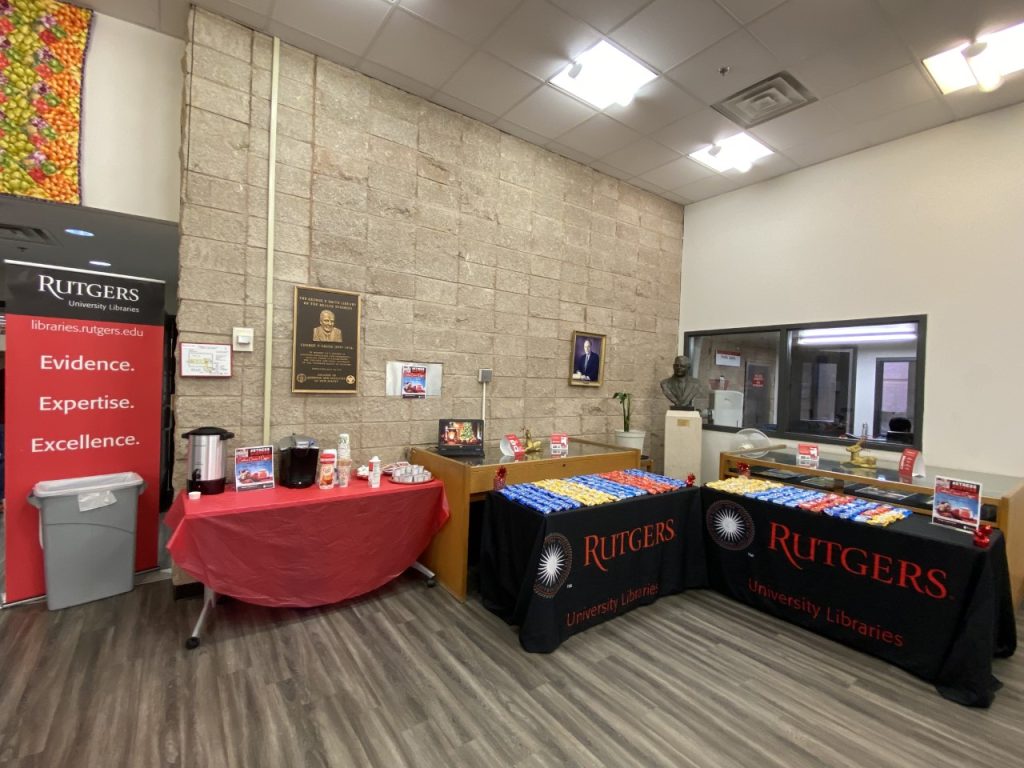
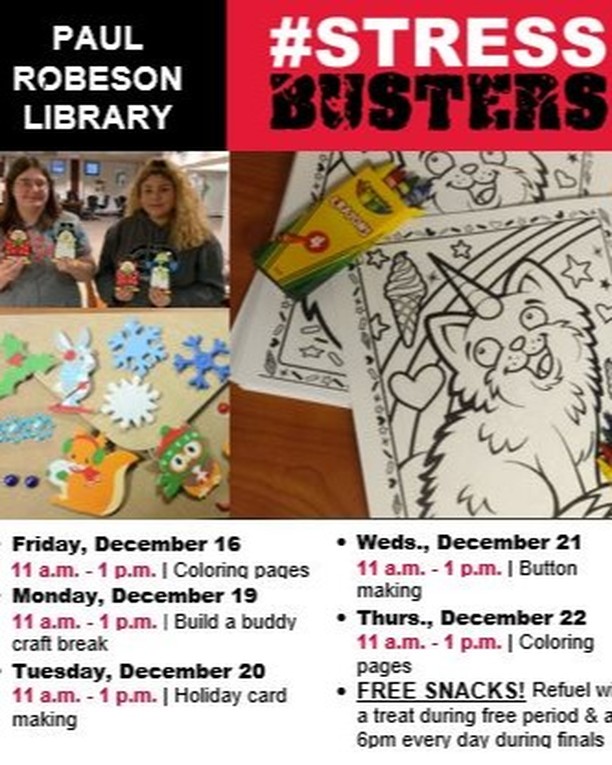
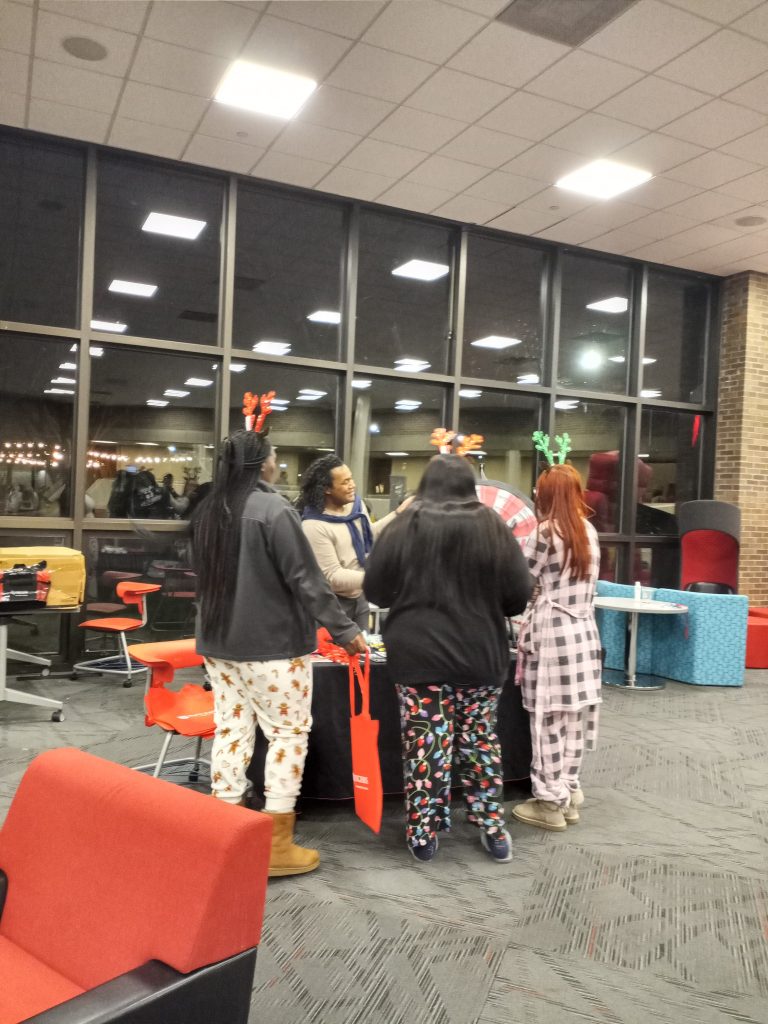
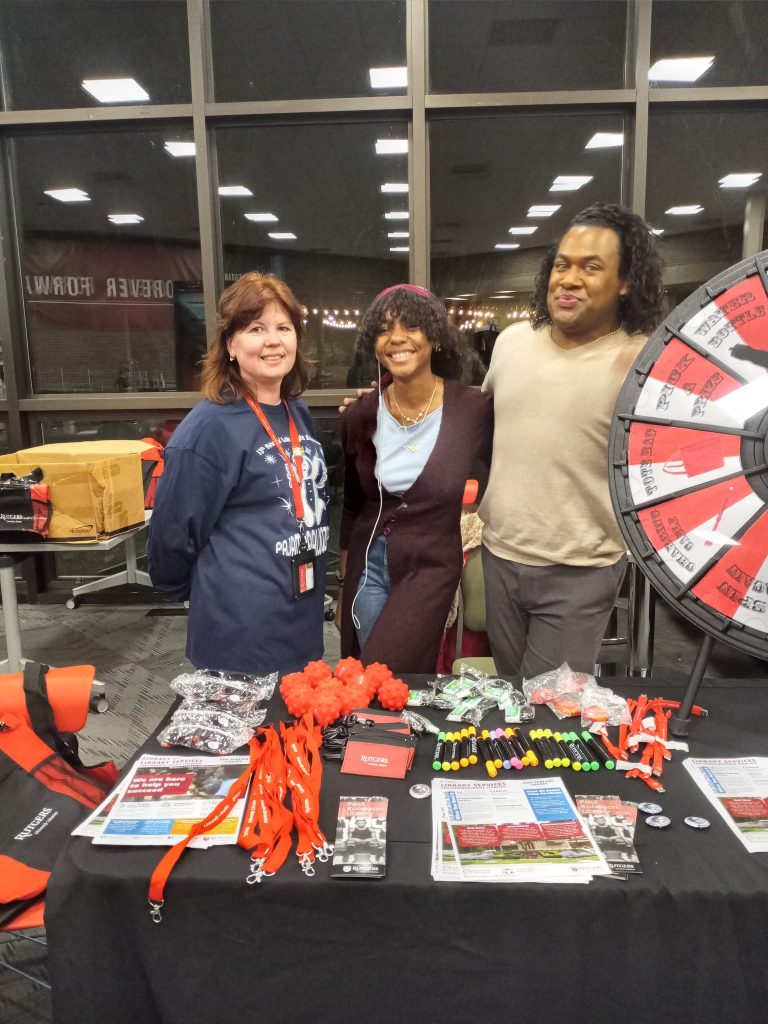
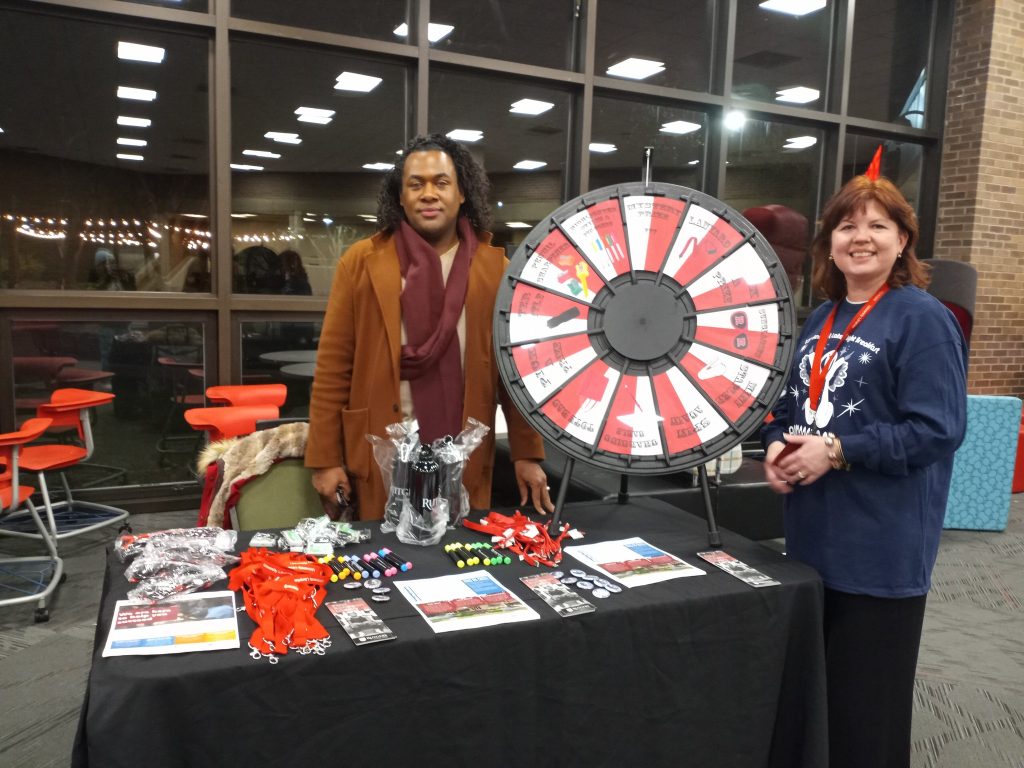
Finals week stressbusters promotional graphic.Bags with delicious treats were given away at Alexander Library throughout finals week.Free snack packs sign.Library Mobile swag on the Alexander Library lobby table during finals week.Dana Library participated in Rutgers–Newark’s annual Destress Fest at the Paul Robeson Campus Center.Students engage with Dana Library staff during RU–N’s Destress Fest.Dana Library staff offered button-making activities at RU–N’s Destress Fest.Dana Library staff make buttons at RU–N’s Destress Fest.A panoramic view of RU–N’s Destress Fest in the Paul Robeson Campus Center.Students gather in the Dana Libary Café for stressbuster activities.Students enjoy stressbuster activities in the Dana Libary Café.Sign for the DIY Sculpture and Stained Glass Party at Dana Library.Library Mobile swag table at Dana Library.Health Sciences Libraries’ “Cookies, Cocoa, and Coffee” stressbuster promotional graphic.Health Sciences Libraries staff await students at the “Cookies, Cocoa, and Coffee” stressbuster at Smith Library.Health Sciences students enjoy the “Cookies, Cocoa, and Coffee” stressbuster at Smith Library.The “Cookies, Cocoa, and Coffee” stressbuster setup.Robeson Library stressbuster ad.Robeson Library’s “Pajamapalooza” stressbuster.
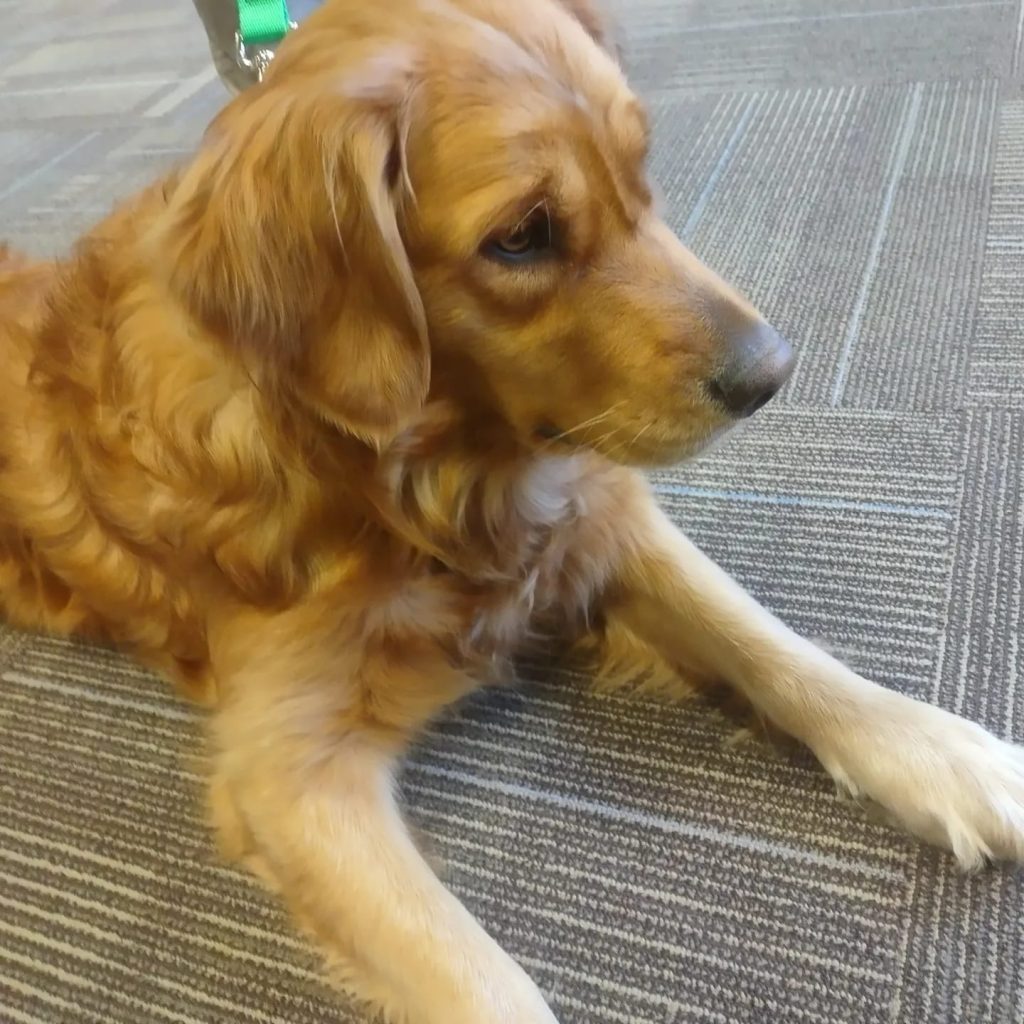
Robeson Library staff at their table for the “Pajamapalooza” stressbuster.Robeson Library staff with the prize wheel at the “Pajamapalooza” stressbuster.Gizmo dresses up as a reindeer during Robeson Library’s “Woof Wednesday” event.Marly helps students destress during Robeson Library’s “Woof Wednesday” event.
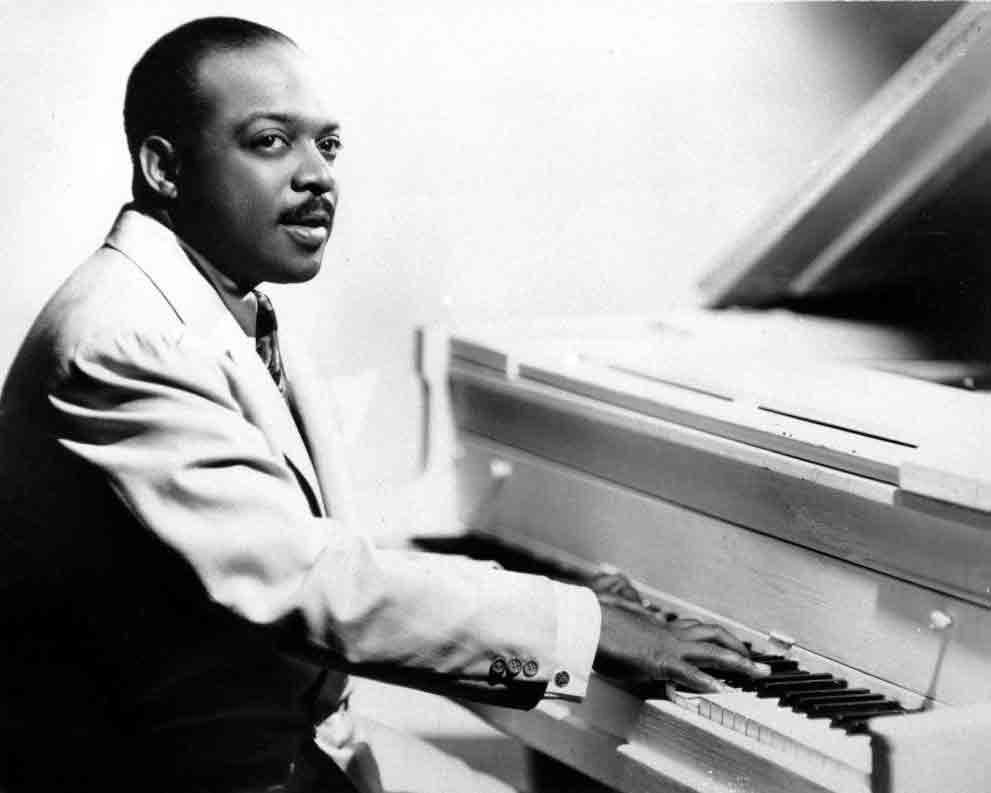
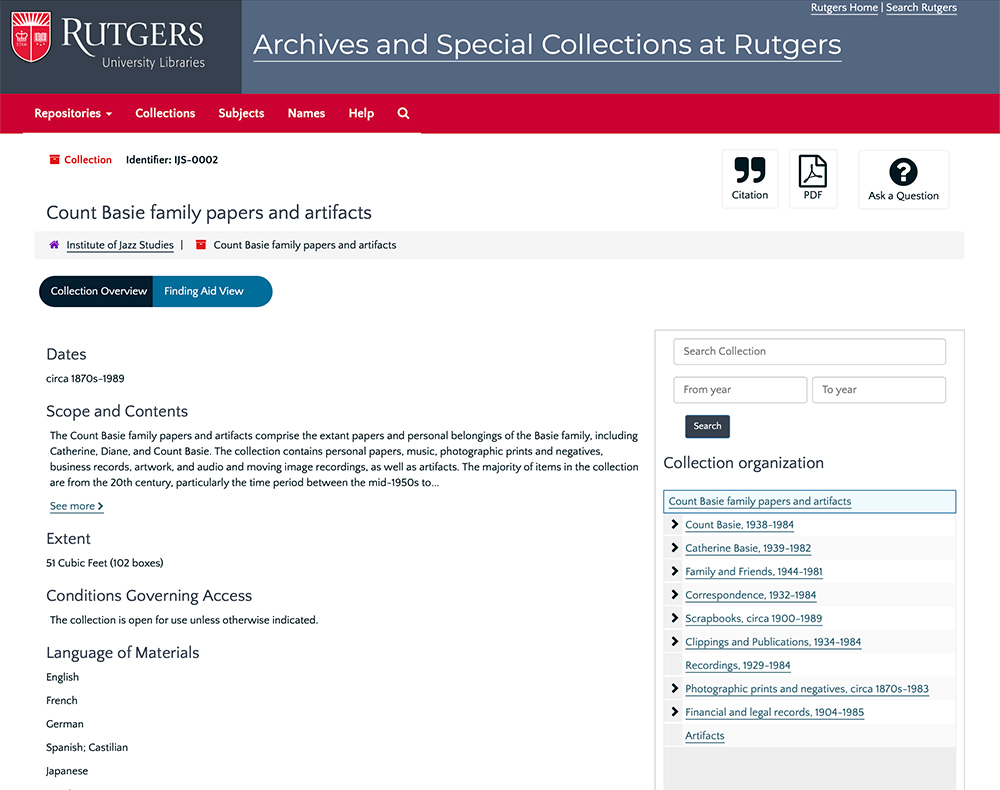
A native of Red Bank, New Jersey, William James “Count” Basie (1904–1984) was one of the giants of jazz, a global icon, and still one of the most influential, popular, and recognized figures in American music. The Institute acquired Basie’s papers and artifacts in 2018 and is responsible for ensuring its long-term preservation. The roughly 200-cubic-foot collection, consisting of more than 1,000 items, is unparalleled in its size and thorough documentation of Basie’s life and career, as well as those of his wife, Catherine, and daughter, Diane.
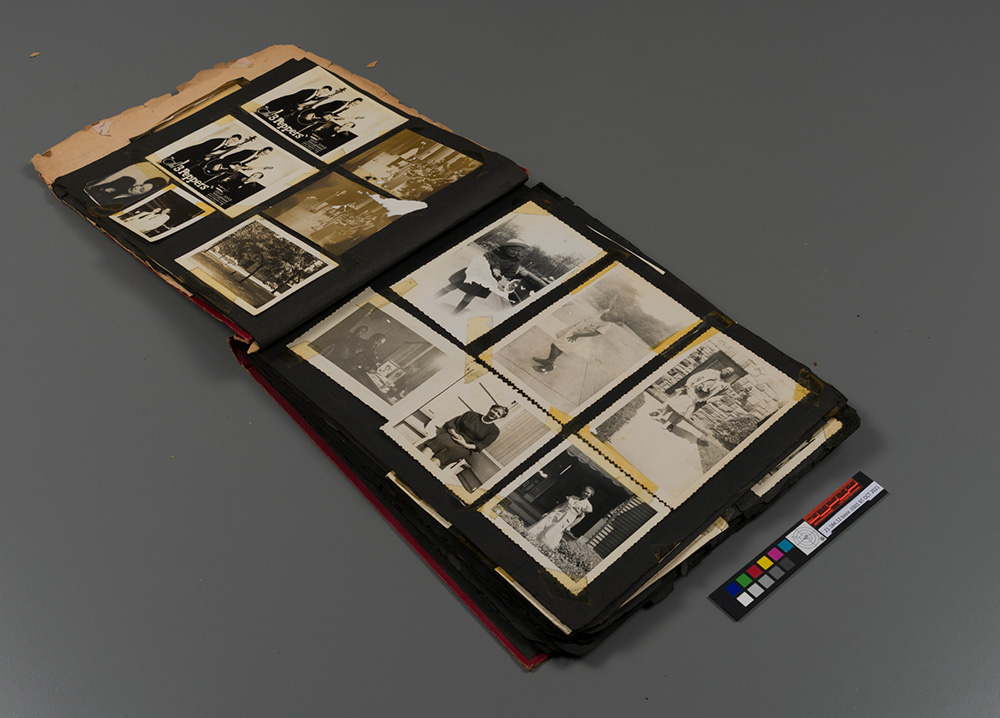
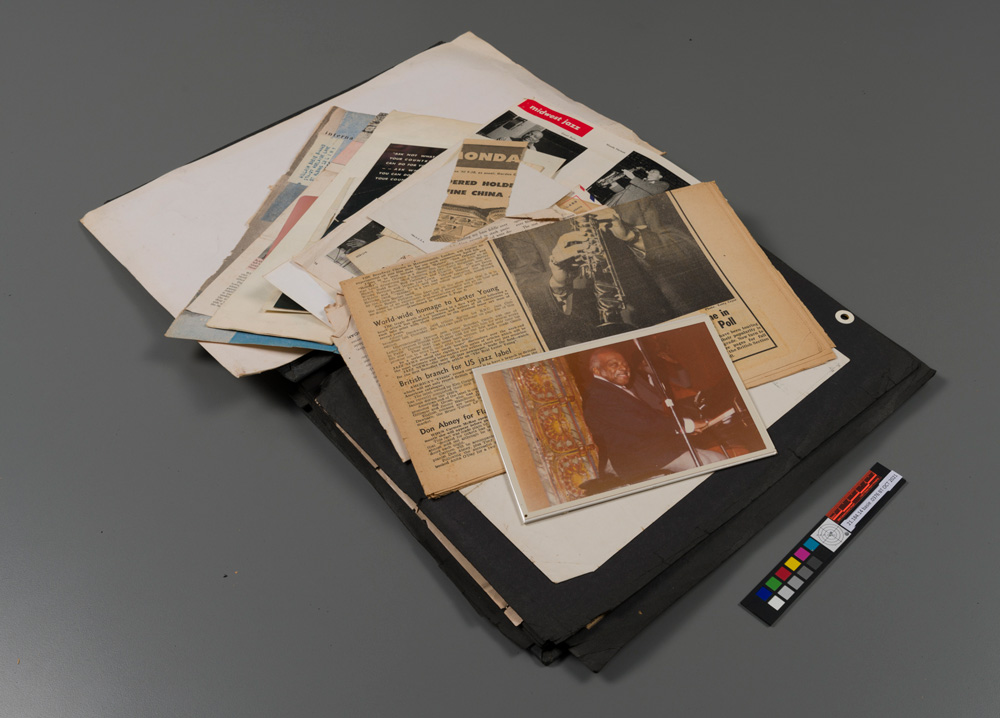
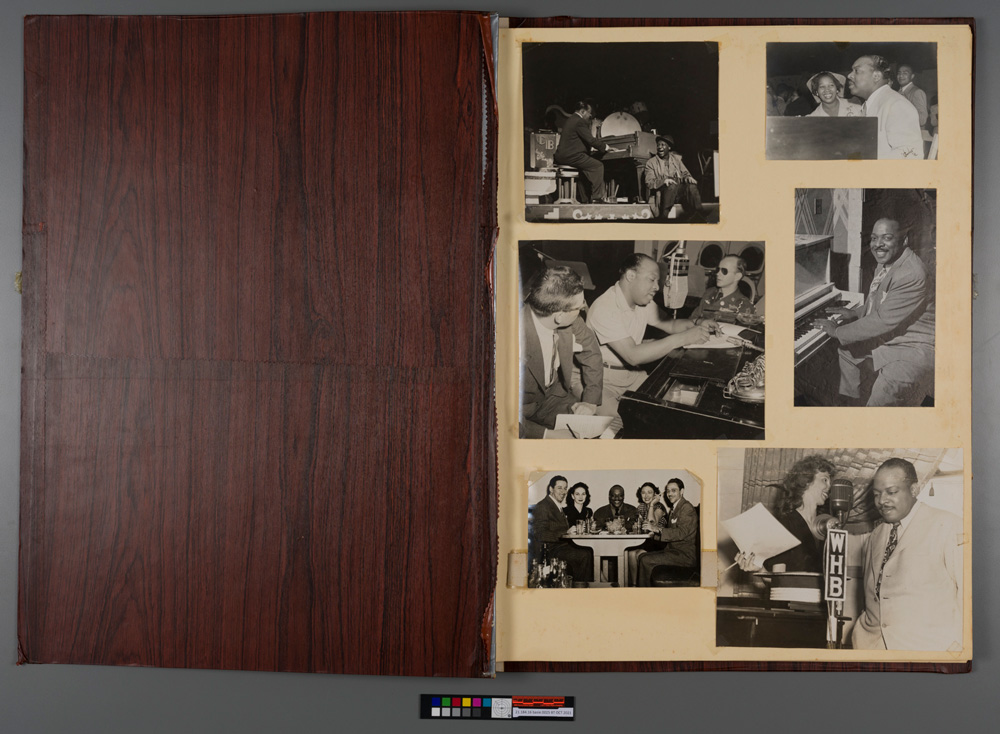
Basie family photo album (photo courtesy of the Conservation Center for Art & Historic Artifacts).Basie news clippings album (photo courtesy of the Conservation Center for Art & Historic Artifacts).Basie photo album with musical performance pictures (photo courtesy of the Conservation Center for Art & Historic Artifacts).
The papers portion of his collection is now available to the public for research and enjoyment. The artifacts and the remainder of the collection will be accessible in mid-2023. Please visit libraries.rutgers.edu/basie to access the finding aid.
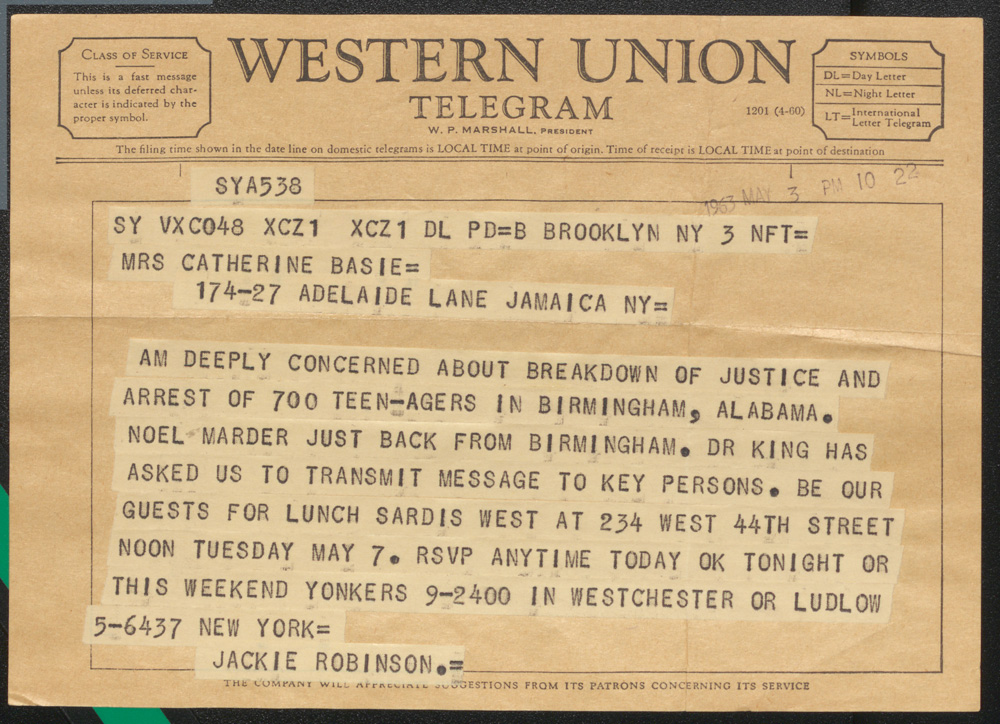
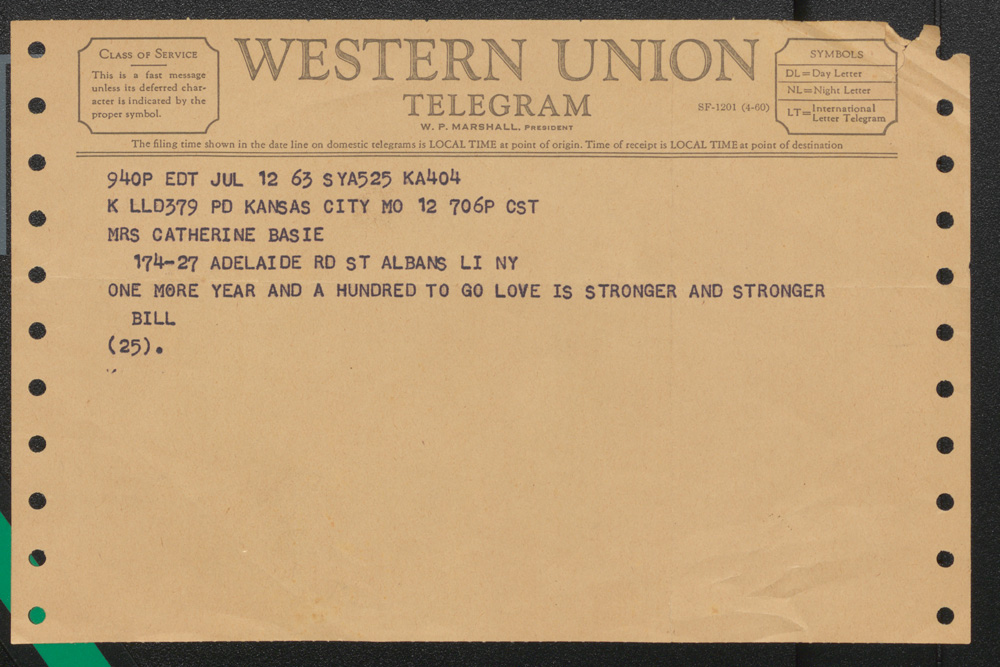
Martin Luther King Jr.’s telegram to Catherine Basie, 1962.Baseball great Jackie Robinson’s telegram to Catherine Basie, 1963.Count Basie’s telegram to Catherine Basie on their anniversary (signed “Bill”; 1963).
About the Collection
The Basie Family Papers and Artifacts document the vast impact of Count Basie’s enduring and storied career in jazz and American history and provide an unparalleled view of his family and private life. The collection is an essential resource for researchers in jazz, music, post-war American history, and American culture, especially black American culture. It is also critical for scholars, educators, writers, filmmakers, students, and the general public because of its breadth and depth.
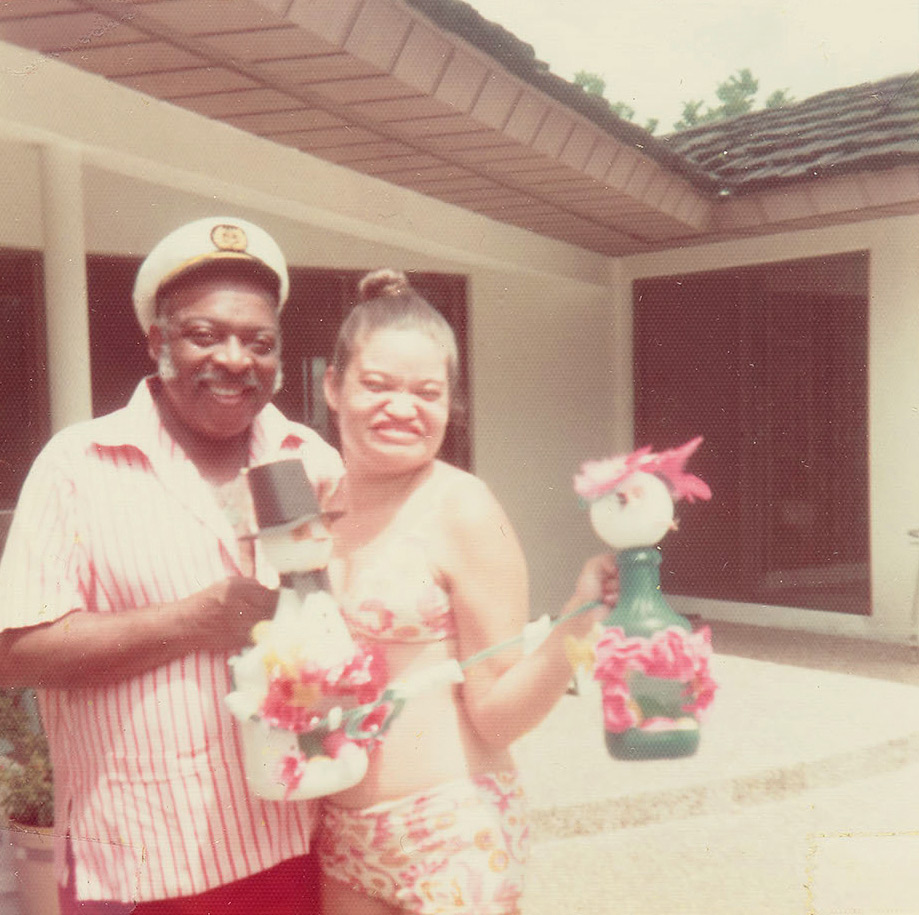
Count Basie with his daughter, Diane.
The collection contains extensive primary sources and objects ranging from Basie’s earliest years in Kansas City until his death. One-of-a-kind artifacts comprise approximately half of the items, including Basie’s piano and organ, select home furnishings, artwork, apparel, and accessories. Although the materials cover the entirety of Basie’s lifetime, the artifacts represent the latter years of his life and career particularly well, including many accolades, awards, honorary degrees, and proclamations he received during that period. Unique archival materials never before available to researchers comprise about one-third of the collection, including personal papers, business records, photographs, clippings, scrapbooks, ephemera, correspondence, and audio and moving image recordings.
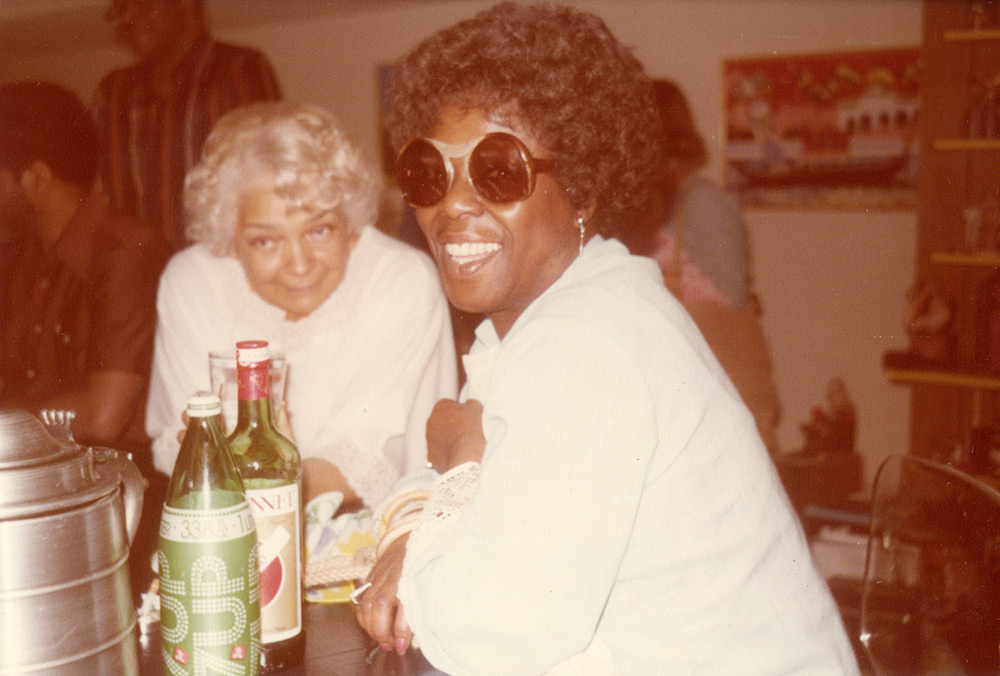
Catherine Basie (left) with legendary jazz singer Sarah Vaughan.
Catherine Basie’s life and accomplishments are also well documented in the collection, including her extensive civic and charity work (for which she was recognized by the major leaders of the day), her background as a dancer and singer, her social network, and the centrality of family in her home life.
The Institute of Jazz Studies is the world’s foremost archives and research library exclusively dedicated to jazz, an American art form that has transformed the world. Founded in 1952 by pioneer jazz scholar Marshall Stearns (1908–1966), IJS has been a leading institution in the preservation and access of jazz heritage. The Institute relocated from Stearns’ apartment to Rutgers University–Newark in 1966 and is part of the Rutgers University Libraries. In 1994, IJS moved to spacious new quarters on the fourth floor of the John Cotton Dana Library at Rutgers–Newark.
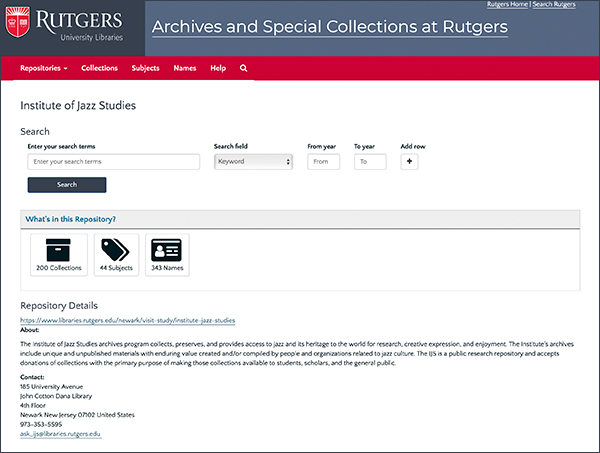
The Institute of Jazz Studies (IJS) is excited to announce that it published its 200th finding aid on the Archives and Special Collections at Rutgers website. For many decades, the IJS’s world-renowned collections had many access tools and inventories ranging from spreadsheets to typed lists on binders, reflecting the evolution of archival description over the past 60 years. Since installing ArchivesSpace (the engine behind the website) and having a central location for finding aids on the website, Rutgers University Libraries is moving towards facilitating researchers’ use of all the unique collections that make our libraries shine. This tool allows the user to search across all finding aids within the Institute.
“A long time in the making, publishing the 200th finding aid to ArchivesSpace is a great milestone for the Institute,” said IJS Metadata Archivist Diane Biunno, who works behind the scenes to update the finding aids. “I am proud to have been part of the collaborative effort at IJS to improve the discoverability of and access to our archival holdings.”
These access tools are a mix of some legacy “old-fashioned” finding aids and newly created ones. The work that went into making this happen was a team effort first started by IJS Archivist Elizabeth Surles. In 2014, she developed and led a collections-wide survey to ascertain the collections’ provenance and pin down exact locations for different materials. Building on this work, the IJS now has intellectual and physical control of the collections under its care and is looking ahead to growing our descriptive footprint. These 200 finding aids are only the tip of the iceberg, as the IJS continues to create access tools for holdings such as the William “Count” Basie and Mary Lou Williams papers, two of its most robust and extensive collections.
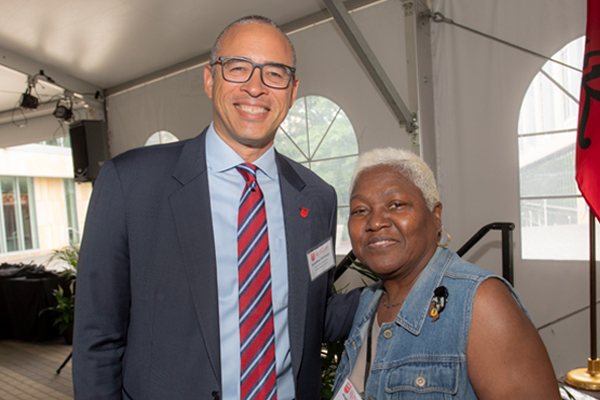
Rutgers President Jonathan Holloway with Maggie Harris-Clark at the 2022 Rutgers Staff Service Recognition Reception in the President’s Tent on Bishop Place (photo by Nick Romanenko/Rutgers University)
After an extraordinary 50 years of service to the John Cotton Dana Library, Maggie Harris-Clark retired on July 1, 2022.
Maggie began working at Rutgers University in January 1972. It was a cold and clear day. The temperature eventually climbed to 34 degrees, from a low of 10 degrees. William T. Cahill was governor of New Jersey, and Kenneth A. Gibson was Mayor of Newark, the first African American Mayor of Newark. Edward Bloustein was president of Rutgers University, and Horace Depodwin was Acting Provost, succeeded by James Young, the first Provost of Rutgers-Newark. Thomas Shaughnessy was the director of Dana Library. Maggie would work with several more directors: Eugene Neely (1981), Lynn Mullins (1987), Mark Winston (2008), and Consuella Askew (2015), as well as several interim directors (most recently, Jeanne Boyle and Rhonda Marker). Maggie also served under 10 University Librarians/Interim University Librarians.
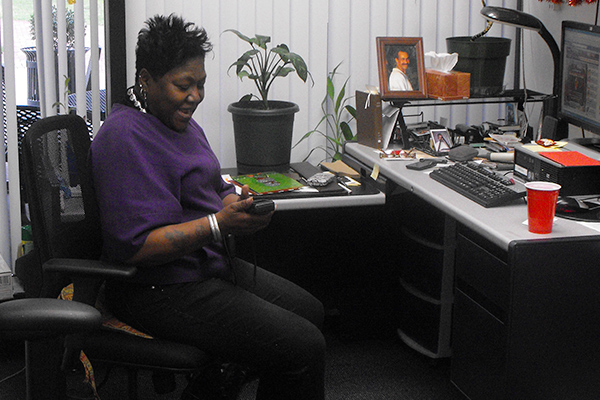
Maggie in her Dana Library office, ca. 2009
Initially, Maggie worked at the Rutgers Law Library (Newark) in the Government Documents Department in a grant-funded position for six months. She then spent another six months at Dana Library in the Technical Services Department before Dr. Shaughnessy hired Maggie full time. Maggie worked for another long-time Dana Library employee, Madeline DeSantis, to maintain the card catalog and the shelf list. At that time, the library was using physical library cards to charge out books, but progress took over and advanced to using keypunch cards. Maggie transferred to the Circulation Department to work in course reserves for almost 10 years under the supervision of Mrs. Mann. About 20 years ago, Maggie was promoted to a Library Supervisor position in Circulation. Maggie is retiring as the head of Access Services at Dana Library. She has successfully navigated many changes from implementing the first automated circulation system through our current Ex Libris products. She has represented Dana Library on many cross-campus groups, including the Fulfillment Working Group.
Although Maggie spent all her years at Rutgers on the Newark campus, she could be counted on to participate in Libraries-wide events. She has many friends throughout the Libraries who will miss her irrepressible optimism and kindness.
Reflecting on her five decades at the university, Maggie fondly said, “Rutgers was my home away from home. I enjoyed working with my colleagues to advance the Libraries’ mission and to ensure our faculty and students received excellent service.”
Maggie in the Dana Library’s new third-floor open study space, June 2022 (photo by Dennis Mark/Rutgers University Libraries)
This past June, President Jonathan Holloway and the university honored Maggie at the Rutgers Staff Service Recognition Reception. “I very much appreciated the recognition and respect,” Maggie remarked. “It’s wonderful knowing that I made a difference in the Rutgers community.”
In retirement, Maggie plans to continue being active in her church and the Eastern Star. Her pastor has already announced her expanded role to the congregation. She has many plans for volunteer work and is looking forward to doing more at home. She is especially looking forward to the birth of her first great-grandchild in August. As busy as she will be, Maggie promises to keep up with her friends at Rutgers.
We wish Maggie a long and happy retirement and express our warmest appreciation for her many years of steadfast service to Dana Library and Rutgers University.
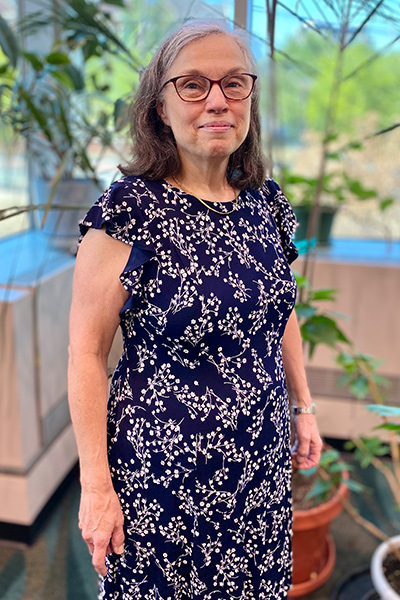
Bobbie Tipton in Alexander Library, August 2022 (photo by Dennis Mark/Rutgers University Libraries)
Roberta “Bobbie” Tipton retired from her position as business librarian at Dana Library, effective July 1, 2022.
Bobbie started at Dana Library in 1985, hired as a reference librarian (business). Before coming to Rutgers, she began her library career as a medical librarian at John F. Kennedy Medical Center in Edison, New Jersey, and as a corporate librarian at the Hayden Publishing Company. She is that rare breed that maintained her core responsibility to business librarianship throughout her 37-year career at Rutgers. In 1994, Bobbie added liaison responsibilities for the School of Public Affairs and Administration. Following Ann Watkins’ retirement, she provided library support for Rutgers University–Newark’s nursing program. She is a co-liaison to the Honors Living-Learning Community. She added to her business credentials by earning her MBA from the Graduate School of Management (Rutgers–Newark) in 1993.
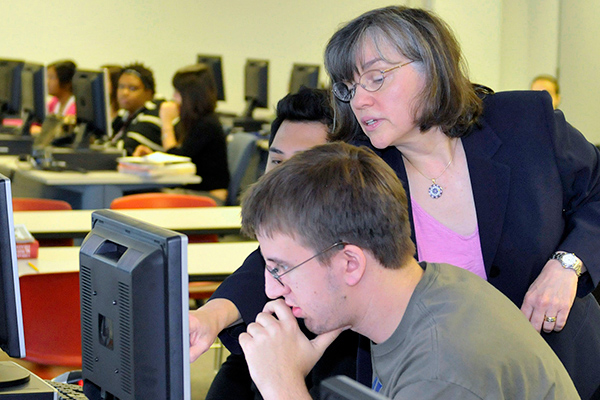
Bobbie Tipton assisting a student.
Over the years, Bobbie mentored and worked alongside business librarian colleagues Ka-Neng Au, Wen-Hua Ren, and Jonathan Torres. She has authored and co-authored numerous articles and book chapters. Her latest article, “Statewide Access to Business Databases: States, Libraries and Support for Small Business,” co-authored with Ka-Neng Au, was published in Journal of Business and Finance Librarianship in August 2021. She has been a frequent presenter at various conferences, including Virtual Academic Library Environment (VALE), New Jersey Library Association (NJLA), and Special Libraries Association. At the last in-person NJLA conference in 2019, Bobbie presented as part of a panel along with two other Dana colleagues on the topic, “Focusing Student Engagement with Graded Assignments,” She received the NJLA/College and University Section Research Award twice, once in 1991 and again in 2018.
Bobbie has served in state and national professional associations and others, including the boldly named BRASS (Business Reference and Services Section) of the American Library Association, where she is currently a member of the Business Information Sources Committee. Her service to Rutgers includes faculty committees, campus committees (Newark Pandemic Flu Planning Committee, 2007–2009), and search committees. She is a member of the Collections Strategy Task Force and, until recently, served on the Advisory Committee on Appointments and Promotions. It is only coincidental—but in keeping with her dedication—that Bobbie’s last day in the office was spent interviewing a library faculty candidate as a search committee member for the Criminal Justice Librarian position.
From left: Bobbie Tipton, Bonnie Fong, the late Krista White, and Minglu Wang celebrate their New Jersey Library Association Research Award in April 2017.
Above all else, Bobbie thrives when she helps students and faculty. She is the author of many research guides—and the heir to almost as many; the count is up to 145 active LibGuides. She produced short videos to introduce and guide users through some of these videos. She has been a regular presence at the Dana Library Reference Desk and on the Ask a Librarian schedule. She provided uncounted instruction sessions to Rutgers Business School and School of Public Affairs and Administration (SPAA) classes and the Writing Program at Rutgers–Newark.
Bobbie’s delightful humor brightened our libraries and meeting rooms. It will not surprise many that she compiled “Humor and Work: A Selected Bibliography” for The U*N*A*B*A*S*H*E*D* Librarian (1994). She has been an indefatigable librarian, devoted to student success, and generous to her colleagues. Bobbie will bring all these qualities to her continued work with learners of English as a second language in her community.