Category: Universitywide

  • Designing Storage Architectures for Digital Collections

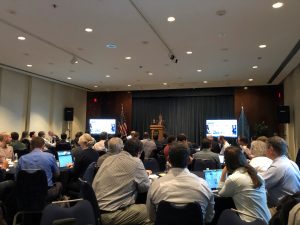
    Digital storage meeting at the Library of CongressStoring and preserving digital content continues to be a significant expectation of libraries and cultural centers around the country. To better understand these needs, as well to see what digital archivists around the country are doing to meet this challenge, the Library of Congress holds an annual meeting called “Designing Storage Architectures for Digital Collections.” The DSA meeting brings together technical and industry experts, IT and subject matter experts, government specialists with an interest in preservation, decision-makers from a wide range of organizations with digital preservation requirements, and recognized authorities and practitioners of digital preservation. The meeting is by invitation only, and for the past two years Rutgers has been invited to take part in the conversation. The most recent meeting was held on September 17 and 18.
    The first thing glaringly clear from our discussions was the increasing need for digital storage across all of our peers. From the few terabytes of data that Rutgers Libraries store in our repository, to the dozen or so petabytes stored by the Library of Congress, our digital collections continue to grow, and the demands for storage increase. This is driven by an increasing appetite for digital data from our patrons, but is also the effect of researchers and artists having greater access to digital authoring tools. We are now in the age where smartphones and tablets already in the hands of our user base can capture images, documents, and video in stunning quality—but with a cost in terms of larger file sizes.

    To meet this challenge, storage makers continue in the short term to refine the technologies we are already familiar with. Reasonably-priced tablets and laptops are now shipping with solid state drives reaching a terabyte in capacity. Fourteen-TB traditional hard drives are now hitting the market. And for long-term backups, tape continues to rule, with 30TB tape cartridges costing about $200 each. At the institutional level, libraries are beginning to cooperate and pool resources to distribute their storage needs across multiple datacenters, for redundancy and additional capacity.

    The not-too-distant future holds some different approaches, as well. In particular, research is ongoing to move beyond hard drives and tapes, and to begin storing data at the molecular level, using polymer chains. Even DNA sequencing is showing significant promise as a long-term method for archiving and preserving data.

  • Service and Emotional Support Animals in the Library

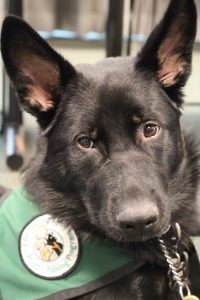
    Service dogAt Robeson Library, we recently had an experience that called attention to the guidelines for having service animals on campus, so I thought this would be a good opportunity to remind everyone at the Libraries about the relevant university policies and procedures.

    The Office of Disability Services website does a great job of describing the different types of animals you may see on campus, where they are allowed to accompany students, and what questions faculty and staff are permitted by law to ask about these companions:

    What’s the difference between a service animal and an emotional support animal?

    Service animals are defined as dogs that are individually trained to do work or perform tasks for people with disabilities. A service animal is considered a working animal, rather than a pet.

    An emotional support animal (ESA) is different from a service animal. An ESA provides support and comfort to individuals with a documented disability that would require such support. ESAs are not required to go through training and are not limited to dogs.

    Where are service animals and emotional support animals permitted on campus?

    Service animals can accompany their handlers in any area where the public is normally allowed to go. This includes residence halls, classrooms, student centers, libraries, dining halls, etc.

    Emotional support animals are permitted only in the student’s assigned living space. Emotional support animals are not permitted in public spaces such as classrooms, student centers, dining halls, or libraries.

    Animals affiliated with the Companion Animal Club and the Seeing-Eye Puppy Club are permitted in most public spaces as well, but students must ask for their professor’s permission before bringing the animal to class.

    How can I identify whether an animal is a service animal or an emotional support animal?

    Service animals and ESAs are not required to wear a special harness or garment that identifies them as a service or support animal.

    When in doubt, faculty and staff members may ask a student only two questions about the animal:

    • Is the dog a service animal required because of a disability?
    • What work or task has the dog been trained to perform?

    Faculty and staff cannot inquire about the person’s disability, request medical documentation or training documentation, or request to see the dog demonstrate its ability to perform a specific task.

    For more information, visit the Office of Disability Services’s column about on-campus animals or view their extended FAQ, which cover topics including allergies, disruptive behavior, and fear of animals.

  • Rutgers Environmental Health and Safety Accident Database

    safety firstAll accidents or injuries to staff, faculty, or library student employees during working hours must be reported through the Rutgers Environmental Health and Safety (REHS) Accident Database immediately or by the end of the work shift at the latest. Each unit has personnel who have been designated to create accident reports in the online system. The university also works with specific health care facilities to assist any injured Rutgers employee. All reports will be reviewed by the appropriate unit director, senior HR manager Barbara Weldon, and additional authorized university personnel for processing and required reporting purposes.


    The following personnel have been assigned to assist employees in accident reporting. If they are not available, please contact the creator at the closest location or Libraries HR to enter the report.

    Alexander Library:  Rose Barbalace, Zohreh Bonianian, John Brennan, David Kuzma, Erica Parin, Michele Petosa, William Puglisi, Elena Schneider, Lorraine Slavik, Brian Stubbs, Jeffrey Teichmann, John Brennan, Sonia Yaco

    Annex:  Dean Meister

    Art Library: Roselyn Riley, Jacquelyn Tasker

    Carr Library:  Joseph Asaro, Barry Lipinski, Jill Morrow, Paul Young

    Chang LIbrary:  Nita Mukherjee

    Dana Library:  Timothy Domick, Ayesha Salim, La-Tira Shaw

    Douglass Library:  Andres Martinez, Ramon Negron, Kelly Worth

    LSM:  Laura Friday, Holly Muller, Anthony Timek, Michele Tokar, Edward Suarez

    Math Library:  L. Melanie Miller

    Robeson Library:  Regina Koury, John Powell

    RWJ Library:  Victoria Wagner, Philip Wilson

    Smith Library:  Corisa Mobley

    TAS:  Kalaivani Ananthan, Joan Hendershot

  • Ex Libris Implementation Project Update – November 2018

    quicksearch logoAs we reach the midpoint of the semester, the focus of the Ex Libris project has begun to shift from planning and implementation to maintenance and support. Since its formation, the team has received close to 700 questions, comments, and suggestions on issues ranging from access and authentication to resource management and user interface design. Approximately 75% of tickets were answered in under 12 hours (40% were answered in under 10 minutes!). Thanks to feedback from library users and staff, the team has continued to make improvements to QuickSearch. Some highlights since the last update include:

    Improved journal searching
    Relevance ranking of one-word journal titles (Nature, Science, Cell, etc.) has been improved, making these publications easier to locate using the Journal Search option

    Browse options restored
    The ability to browse library materials by title, author, and subject has been restored. (These options were disabled at the start of the semester due to a software bug.)

    Can’t find what you’re looking for?
    Suggestions have been added to the bottom of the search results page to help users improve or expand their search. Suggestions vary depending on the type of search performed and include links to external borrowing services such as E-ZBorrow and Interlibrary Loan.

    System alerts
    System alerts have been added to allow for improved communication of service disruptions and outages.

    Improved facet and summary holdings display
    The formatting of long facets and summary holdings statements has been improved by allowing them to wrap to the next line instead of truncating them.

    Next/previous record
    When viewing a record, users can navigate to the next or previous record without having to return to the search results page.

    Translation of foreign language serial titles
    English translations of foreign language serial titles now appear in the main title entry of the brief and full record display.

    Firefox bug fix
    There was a bug in Firefox that produced different results depending on whether a search was executed by clicking the search button or pressing enter. This has been fixed.

    Since going live in June, QuickSearch has clocked over 470,000 sessions and handled roughly 850,000 queries. Though transaction logs are useful for measuring usage, they don’t tell us how well a product meets the needs of its users. That’s why, in November, we’ll be conducting a universitywide usability study to learn more about how library patrons use QuickSearch. Students and faculty from all four campuses have been invited to participate and share their thoughts on the new interface. Findings from the study will be used to guide further enhancements to QuickSearch and improve the overall user experience.

  • Libraries and Open Science

    Open science by designAs you probably know, last week was International Open Access Week, a time when trends and issues related to open access are on the minds of many in the academic community. I was no exception, and found myself thinking back to Open Science by Design: Realizing a Vision for 21st Century Research, a report published over the summer by the National Academies of Sciences, Engineering, and Medicine.

    According to the report, real progress has been made toward open science in the last number of years, and we are beginning to see the benefits of researchers having free access to the latest publications, data, and other research products in their fields. Open science encourages cross-disciplinary collaboration, accelerates the dissemination of knowledge, achieves efficiencies in the use of resources, and much more.

    That said, the research community still faces a number of challenges, both economic and cultural. Many of the most prestigious venues adhere to traditional, closed publishing models, and it is difficult for academic institutions to adequately incentivize and reward open science practices. Moreover, significant cost and infrastructure barriers remain.

    In response to this ecosystem, the authors of the report propose a framework for open science by design. They lay out a series of practices and principles aimed at helping researchers share and collaborate more effectively, contributing to and benefitting from open science at each stage of the research process.

    But what does this mean for us here at the Libraries?

    As the report notes, libraries are a key stakeholder in the scholarly communication process. We have a responsibility to facilitate open science, from training researchers in best practices such as compliance with FAIR data principles to ensuring the long-term preservation and stewardship of research products.

    At Rutgers, we have established a reputation on campus as being at the forefront of open access, playing leadership roles in establishing the university’s Open Access Policy, publishing and providing a platform for gold open access journals, spearheading the university’s ORCID initiative, and managing SOAR, the university’s green open access repository.

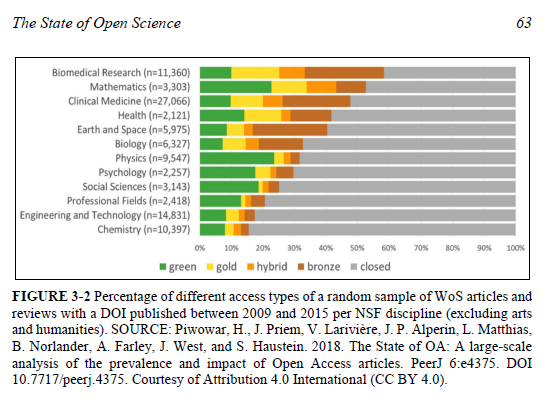
    Of particular interest to us, however, is the report’s discussion of the high cost related to green open access repositories. While they are a useful first step in the move toward a fully open system, green repositories are costly to build and maintain, present ongoing challenges in terms of content storage, and are impacted by continuing discussions about bibliographic metrics. Moreover, “compliance involving deposits in a repository requires time, which necessitates education, assistance, and incentives,” the authors write. And so it is unsurprising to see that comparatively little of the scholarly literature is available through these avenues.While we are well-positioned at Rutgers to effect change in this area, clearly we can’t do it alone. In order for us to be successful, we need to canvass key partners on campus for their support and promote a unified approach to open access. We have to scale up and develop new methods to acquire content. And we must use the findings of reports like Open Science by Design as guidance to ensure we are facilitating open scholarship in an effective and sustainable way that realizes the vision articulated by the National Academies.

  • Help Us Help You Better!

    New technology and better solutions keep coming, as we all know. By joining the University’s central Rutgers Active Directory as the Libraries’ Windows domain, we are expanding the ability to log in anywhere with a single username. But it obviously comes with new issues as many have noticed.

    IIS is inviting everyone in the Libraries to submit such issues and any other computing concerns and requests using the RULhelp trouble ticket system. It is the best way to keep track of issues, make sure that every one of them is addressed in a timely manner, and develop our knowledge base to speed up resolution. Instead of emailing or calling UCSs or other IIS staff, please use this address to submit a ticket: support@rulhelp.rutgers.edu It will be automatically channeled to the IT support closest to you.

    IIS is working on transforming the RULhelp database to use NetIDs (instead of old Windows usernames) just like most other platforms. Soon, you will be able to log into the trouble ticket system with your NetID to check the status of your issue.

  • Ex Libris Implementation Project Update – September 2018

    quicksearch logoThe fall semester has started, and September 5 marks the third month of Alma and QuickSearch implementation. We have focused on rectifying known problems in preparation for the new school year, and have made many improvements to the system and the services it provides. Thanks to feedback from users and library staff, we are continually making improvements to the system. We encourage and welcome your input and questions—submit them by visiting https://apps.libraries.rutgers.edu/ex-libris/contact.

    As reported in the July update, the Implementation Team visited all four campuses in August. During those meetings, the team reported on the respective working groups and held discussions with library personnel. We appreciate the fact that people took the time to participate in these sessions and provided thoughtful feedback and questions. The discussions were lively and productive.

    The Implementation Team would like to take this opportunity to share the following updates:

    • A QuickSearch tutorial has been created and will be available this fall. An announcement is forthcoming.
    • The library names facet in Primo has been revised to reflect abbreviated and more commonly known library names, making it more usable for patrons. For example, Archibald S. Alexander Library will now display as “Alexander Library”.
    • 856 links to finding aids and other materials are now available in the “Links” section of QuickSearch records.
    • Sign in has been improved to allow users to sign in with fewer actions and to more easily access account options such as loans, requests, and favorites.
    • Database lookup has been enabled so that users who enter database names (PubMed, JSTOR, Factiva) in the search box get a direct link to that resource at the top of their search results.
    • An open access filter is now available in QuickSearch, enabling users to limit results to content published in open access publications.
    • A number of fields are now available in QuickSearch record displays, including uniform title, language, identifier, related work, and several local note fields (e.g., general, bound with, performer, production credits, donor, and finding aid). Additionally, the donor note is now searchable, making it easier to identify specific gift collections and to retrieve records for items in those collections.
    • Harvard has been added to the list of citation options and MLA has been updated to the 8th edition.
    • Users can now save records to Zotero.
    • Users are now able to pick up materials from off-site delivery locations, such as the law libraries.
    • A new marketing campaign for QuickSearch will be unveiled this fall.

    The Implementation Team’s website is available at https://apps.libraries.rutgers.edu/ex-libris. It includes the various teams and working groups associated with the implementation, a timeline for the project, resources, an FAQ, and a list of known issues for Alma and QuickSearch (alias Primo). The team is working through both lists of issues, and the lists are updated as progress is made and issues are resolved.

    We are fully aware that our experience with QuickSearch and Alma is one of learning and trial and error. The Implementation Team values input and collaboration from the Libraries as well as our user community to continually refine and improve this service.

  • What’s Happening around Rutgers? September 2018

    New Exhibits at the Zimmerli

    On September 1, the exhibition Self-Confessed! The Inappropriately Intimate Comics of Alison Bechdel, which encompasses the decades-long career of the illustrious cartoonist and graphic memoirist, opens at the Zimmerli Art Museum at Rutgers. It explores Bechdel’s work as a writer, an artist, and an archivist of the self, someone who constantly mines and shares her own experiences as a way to communicate something vitally human: the quest for love, acceptance, community, and social justice. Bechdel will speak at Rutgers on October 10.

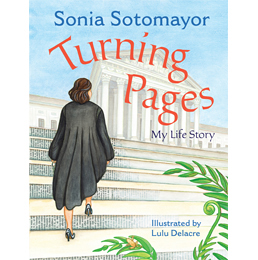
    In conjunction with U. S. Supreme Court Justice Sonia Sotomayor’s first memoir for young people, the Zimmerli Art Museum at Rutgers is pleased to announce the opening of The Art of Turning Pages: Illustrations by Lulu Delacre for Sonia Sotomayor’s Life Story on September 15. Justice Sotomayor shares her inspiring story about growing up and her deep love of reading inTurning Pages: My Life Story, which will be published by Philomel Books on September 4, along with a Spanish version, Pasando páginas: La historia de mi vida. The exhibition features nearly 30 objects on loan from award-winning children’s author and illustrator Lulu Delacre, including her oil and collage art, preparatory drawings, and research material, on public view for the first time. Bilingual labels, in English and Spanish, accompany the works. Ms. Delacre will speak at Art After Hours: First Tuesdays on October 2.

    Halsey Fest
    Thursday, Septebmer 6, 4 p.m.
    Halsey Street, Downtown Newark

    We’re shutting down Halsey from Central to New Streets with tons of activities, arts, games, food, drinks, mascots and more! Come one, come all, bring a friend, and enjoy a night and get a taste of why everyone is buzzing about Newark! This is going to be epic! Rain date: September 13. For more information, click here.

    Panel Discussion: Child Separations at the Border
    Thursday, September 13, 12:45 to 1:45 p.m.
    401 Penn Classroom, Rutgers–Camden

    This free, public panel discussion will address the topic of children being separated from their parents at the United States-Mexico border. Panelists are: Ann Adalist-Estrin, director of the National Resource Center on Children and Families of the Incarcerated at Rutgers–Camden; Joanne Gottesman, clinical professor and director of the Immigrant Justice Clinic at Rutgers Law School; Lorrin Thomas, professor of history and chair of the Department of History; and John Wall, professor of religion and childhood studies and chair of the Department of Philosophy and Religion. For more information, click here.

    Fall Fest
    Saturday, September 22, 10 a.m. to 3 p.m.
    Woodward Lawn, Rutgers–Newark

    Come out and enjoy food, games, and activities on the Woodward Lawn with the rest of your fellow Rutgers University-Newark students. For more information, click here.

    Finding and Facing Facts in Campaigns and Government w/ Eugene Kiely
    Monday, September 24, 7 to 8:30 p.m.
    Eagleton Institute, Rutgers–New Brunswick

    Eagleton Institute of Politics presents its 2018 Arthur J. Holland Program on Ethics in Government lecture, “Finding and Facing Facts in Campaigns and Government” with Eugene Kiely, director of FactCheck.org and Rutgers alumnus. Monday, September 24 at 7:00 PM. Free, but registration is required. Click here to RSVP. For more information, click here.

    An Evening with Colson Whitehead
    Wednesday, September 26, 7 p.m.
    Walter K. Gordon Theater, Rutgers–Camden

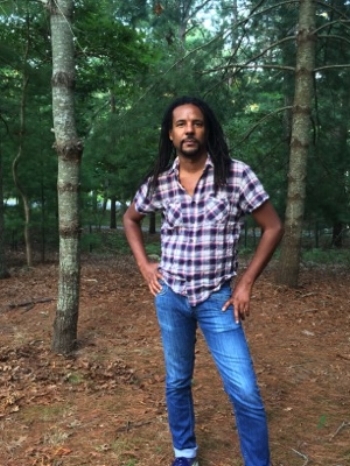
    Colson Whitehead, author of the New York Times bestselling novel The Underground Railroad, will give a free, public lecture. His novel is the 2018 selection for the Rutgers Reads program, which introduces incoming first-year students to academic life at Rutgers–Camden by reading and discussing one designated book. Register for this free event to reserve your seat. Email Rutgers Reads to be placed on a mailing list for more information, or click here.

  • This Month in the Agenda – September 2001

    Movers and shakers at the Libraries in September 2001. See any names you recognize?

    A lot of things can change in 17 years… but then again, some things never do. What was happening at the dawn of another fall semester for the Libraries in 2001?

    A Fall Greeting… and a New Colleague

    The Summer was not as quiet as usual – we implemented a new look for the Libraries’ home page; authority control was introduced into IRIS; circulation notices will now be sent via e-mail; and Media Services transferred responsibility for smart classrooms and equipment delivery in New Brunswick to the Teaching Excellence Center, and introduced web forms for requests across all campuses.

    We completed a successful recruitment for an AUL for Digital Library Systems and hired Grace Agnew, who will be joining us in January. This is an important position as we examine more closely how the Libraries technical infrastructure is organized and deployed to support the Digital Library Initiative…. We look forward to Grace’s leadership, and her participation in these discussions as we continue to move “aggressively, but intelligently towards the creation of a new library system.”

    Got Training?

    With the arrival of a system-wide Training and Learning Coordinator, Marilyn Wilt, the Libraries need to plan and coordinate on an ongoing basis an effective library human resource development program. With this goal in mind, Associate University Librarian for Administrative Services Samson Soong convened a new Training and Learning Advisory Committee…. Members thus far include Ann Montanaro, Ned Richards, Gracemary Smulewitz, and Julie Still.

    The Agenda 23, no. 18 (September 16, 2001)

  • 2018 Faculty Staff Picnic

    Before we get swept away in another fall semester, I’d like to take one last opportunity to thank everyone who attended the faculty/staff picnic in August. It was a fantastic event–dry despite the forecast of rain–and the catering, games, and decorations all came together beautifully to make it feel like we were really enjoying an afternoon spent down the Jersey shore.

    As I mentioned during the picnic, I’d had some remarks prepared but decided not to deliver them lest I distract too much from the festivities. So I thought that my contribution to the Agenda this month should include a brief list of the many achievements we’ve had cause to celebrate in the past year:

    • The successful implementation of QuickSearch, which was a true all-hands effort and impacted the work of just about everyone throughout the Libraries. I’m impressed with the way we came together to make the rollout happen and how diligently the Ex Libris Implementation Team has worked since then to make improvements in response to user feedback.
    • The OAT Program continued into its second year, bringing the total savings for Rutgers students up to $2.1 million.
    • The ORCID program exceeded its first year benchmark, facilitating over 1,800 ORCID connections at Rutgers.
    • We took major strides to bolster our collections, including the addition of the complete Elsevier
    • We began the extensive redesign of our website to make it more accessible and user friendly.
    • And there have been countless local programs and initiatives that made sure you were meeting the unique needs of your users. To name a few:
      • RBHS hosted traveling exhibits from the National Library of Medicine in Piscataway and Newark
      • Dana held award-winning boot camps for graduate students and celebrated its 50th anniversary
      • The States of Incarceration conference and institute brought together partners from across Rutgers–New Brunswick and New Jersey
      • We spearheaded a campus-wide celebration of Paul Robeson’s 120th birthday in Camden
      • The IJS made the news with its acquisition of the Count Basie Collection, as did the New Brunswick Music Scene Archive, which earned an Innovative Archives Award from MARAC.

    Though they are really just the tip of the iceberg, these achievements are important not only because they support the local missions in Camden, New Brunswick, Newark, or RBHS, but because they also position the Libraries as a good collaborator on university-wide initiatives.

    I know there is plenty of work on the horizon—from improving QuickSearch and running a new round of OAT awards to enhancing our instructional technology support with the launch of products like Credo, Pressbooks, Leganto, and illumira—but we should be extremely proud of what we’ve accomplished together so far and excited about all that’s yet to come.

    Of course, the picnic would not have been possible without the thoughtful planning of the major events committee, so I’d like to recognize them all for their hard work and creativity—Matt Badessa, Matt Bridgeman, Janie Fultz, Chantel Harris, Tad Hershorn, Tara Kelley, Megan O’Connor, Erica Parin, Jessica Pellien, Antoinette Perkins, Daphne Roberts, and Rich Sandler—and thank all those who volunteered on the day of the event.

    Congratulations, Irina, on winning the desk duty prize!

    Last but not least, I want to acknowledge our colleagues who stayed behind to keep the libraries open while we enjoyed the party. As I mentioned in an earlier email, we held a special “desk duty” prize drawing this year, and I’m delighted to announce that Irina Loutchkina, library assistant at Alexander Library, was selected as our winner. Irina has received a prize pack including four football tickets from Rutgers Athletics, an RWJ Medical School tote bag, a beautiful hardbound Zimmerli exhibition catalog, a drink coozie and ID holder from the Division of Continuing Studies, a Libraries coffee mug, and more. Congratulations, Irina!

    Thanks again to each and every one of you for all that you do on behalf of the Libraries. I can’t wait to see what we can accomplish in the 2018–2019 academic year and beyond.