Category: Department

  • Introducing the Clement Alexander Price Archive and Circulating Collection

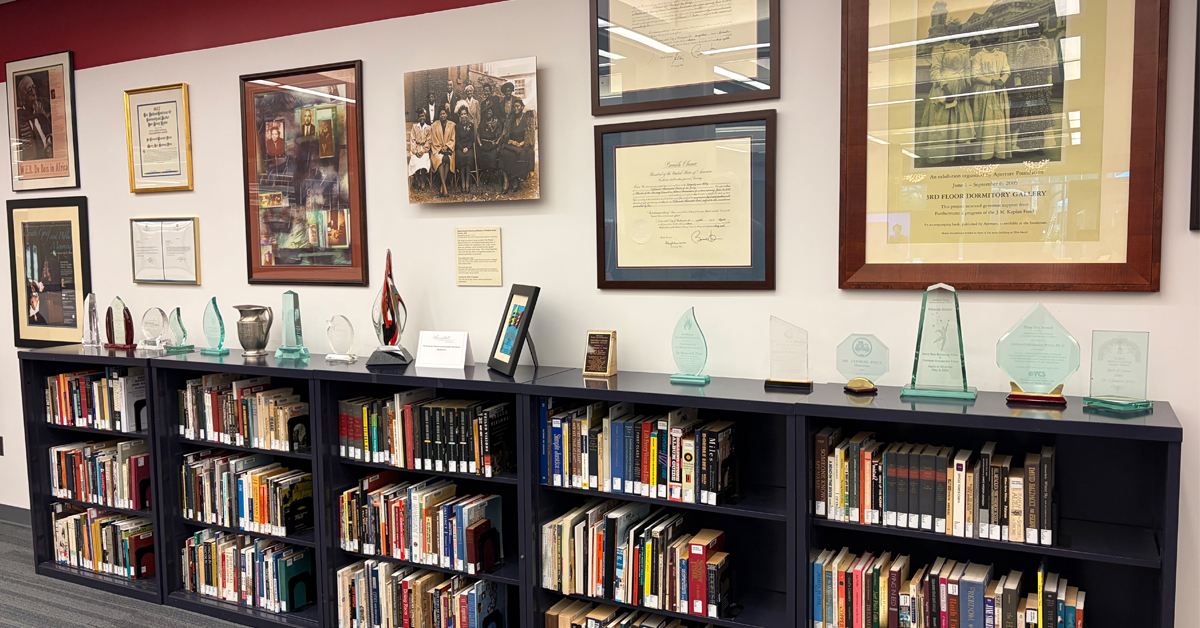
    A long bookshelf against a wall with various artifacts displayed on top and tightly grouped framed images on the wall above.
    The Clement Alexander Price Archive and Circulating Collection was unveiled at Dana Library in October.

    On October 24, the John Cotton Dana Library hosted a reception for the grand opening of the Clement Alexander Price Archive and Circulating Collection. The event featured an exhibition of items from Price’s archival collection and personal library. It also kicked off a year of programming called Clement@80, which is taking place around what would have been the 80th year of Price’s life. Speakers at the event included Amanda Clay Powers, associate university librarian for Rutgers University–Newark; Mary Sue Sweeney Price, Clement’s wife and Director Emerita of the Newark Museum; and Spencer Crew, Robinson Professor of American History at George Mason University, who coauthored a book with Price.

    Price was an eminent professor, renowned scholar, and dedicated citizen. His influence can still be felt in the very fabric of Rutgers–Newark, the city of Newark, and the entire nation. He was the Board of Governors Distinguished Service Professor of History at Rutgers–Newark; the founding director of the Institute on Ethnicity, Culture, and the Modern Experience (now the Price Institute); the vice chair of President Barak Obama’s Advisory Council on Historic Preservation; the chair of Obama’s transition team for the National Endowment for the Humanities; a member of the Scholarly Advisory Committee of the Smithsonian’s National Museum of African American History and Culture; and a trustee of the National Trust for Historic Preservation. You can read more about his tremendous legacy in this story on the Rutgers website.

    The Dana Library faculty and staff are pleased and proud to make the Price archive and collection available. Special recognition goes to two former associate university librarians for Rutgers–Newark, Consuella Askew and Rhonda Marker, for the acquisition of the collection, and to Mary Sue Sweeney Price for making it available.

  • Promoting Well-Being Through Crocheting and Knitting

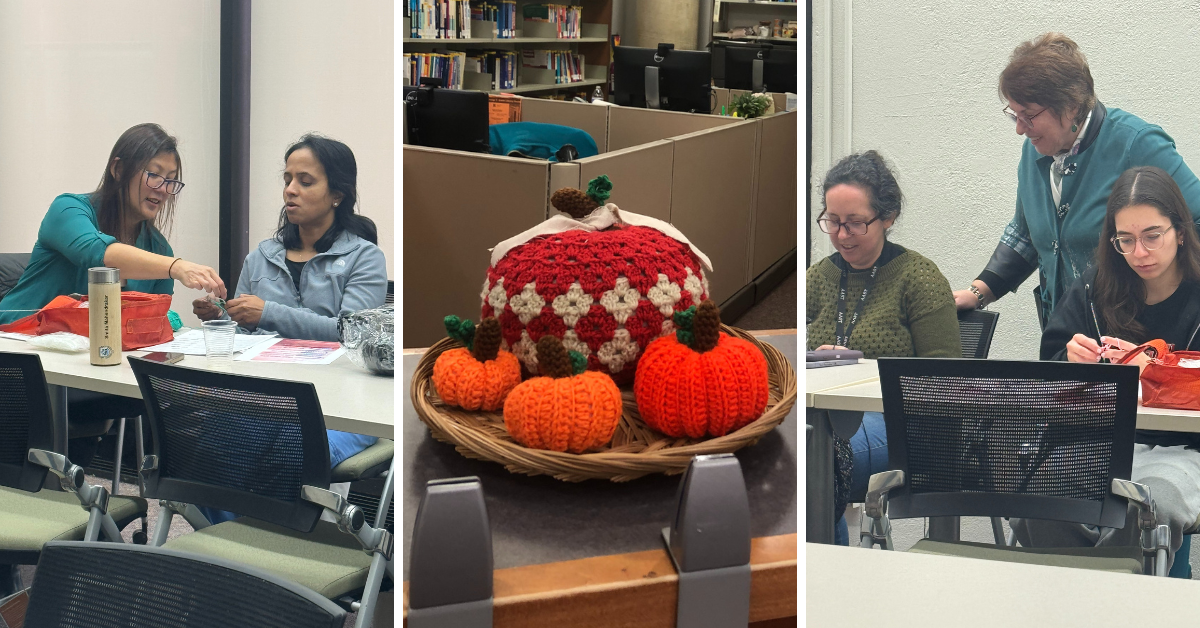
    Collage of images depicting people working with yarn and a close-up of a pumpkin craft
    Joyful Collégialité through Crocheting and Knitting, a monthly initiative at Smith Library, is funded by the Rutgers Health Joy at Work Mini-Grant Program.

    George F. Smith Library of the Health Sciences has successfully hosted four open crochet/knit gatherings in collaboration with the NJMS Crochet and Knitting Club, with a strong turnout of 36 participants, including New Jersey Medical School students, faculty, and staff. This monthly initiative, Joyful Collégialité through Crocheting and Knitting, is funded by the Rutgers Health Joy at Work Mini-Grant Program, which aims to promote a culture of well-being in the workplace, fostering belonging, human connection, and collegial support.

    Participation in the events has surpassed expectations, and the waiting list continues to grow. While the project is scheduled to conclude in March 2026, the Smith Library team remains committed to continuing the program well beyond the grant period.

    The workshops offer group and one-on-one skill-building opportunities for beginners and experienced crafters, creating an enthusiastic and engaging environment. Instructors Chun Yen Chen and Purvi Shakelly, both NJMS students, and Ermira Mitre, a library technician in Access Services at Smith Library, prepare pattern handouts and offer hands-on guidance. In addition, library technology, including OkidCam and SmartBoard, enhances live demonstrations of crocheting techniques through large-screen displays of stitching and pattern techniques, ensuring clear visual learning for all participants.

    The creative projects these workshops undertake are both joyful and skill building, ranging from seasonal items (e.g., pumpkins and holiday-themed coasters) to detailed, three-dimensional anatomical pieces (e.g., hearts and blood cells). The instructors also have incorporated a brief Emotional Freedom Technique (EFT) tapping practice to begin each session, sending calming signals to the nervous system and promoting a relaxing atmosphere for crocheting sessions.

    Survey responses highlight the program’s positive impact: reduced stress levels, increased joy through creative expression, and strengthened interpersonal connections. Participants consistently describe the workshops as restorative, uplifting, and community-building.

    Overall, this initiative has contributed to a more supportive campus environment and reflects the library’s ongoing commitment to promoting well-being, creativity, and collegial engagement across the Rutgers Health community.

  • New Media Recording Studio at Robeson Library

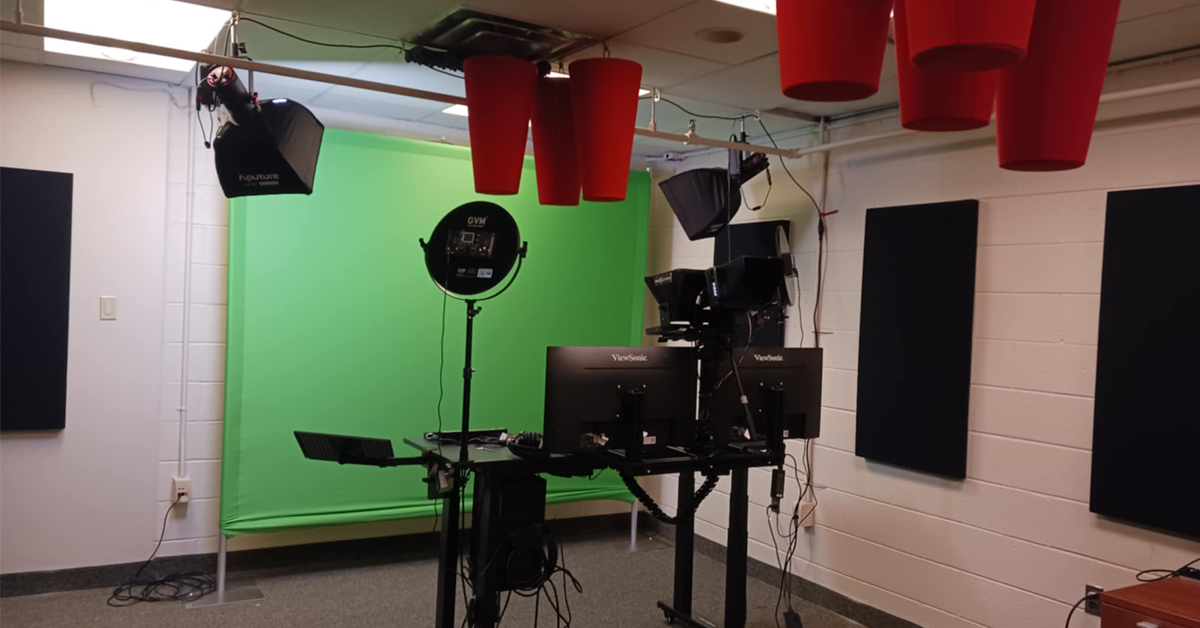
    a room with a green screen and video recording equipment
    Robeson Library now has a Media Recording Studio.

    In Fall 2025, under the leadership of Rutgers University–Camden’s executive vice chancellor for academic affairs and provost, Paul Robeson Library—along with the Office of University Online Education Services (UOES) and Rutgers–Camden IT—opened a Media Recording Studio on the second floor of the library (Room 290). This is the first recording studio of its kind at Rutgers–Camden.

    Current faculty and staff with a valid Rutgers NetID can use the studio to create video content for teaching and learning. Whether for short lectures, course introductions, updates, or hosting live sessions with students, the studio offers a simple and professional-quality production experience. No prior video experience is required—just bring your content and press a button.

    Individuals who need support can book a consultation with the Office of University Online Education Services (UOES). If no assistance is needed, the space can be reserved directly.

  • Turning the Page: Special Collections at Robeson Library

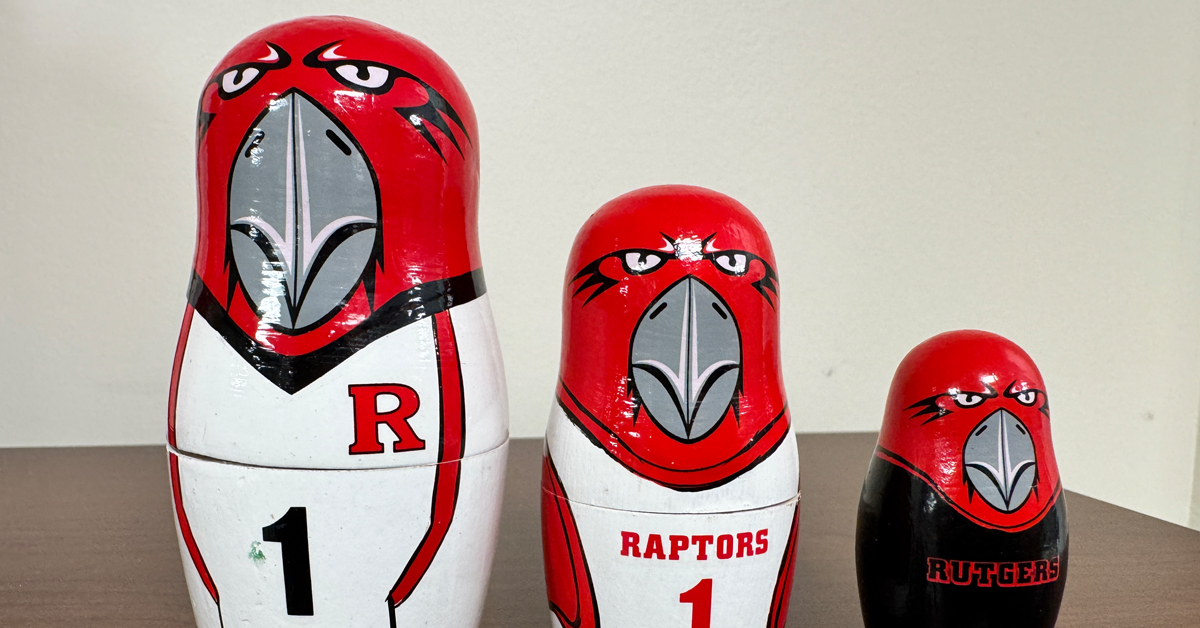
    Nesting dolls made to look like the Rutgers Scarlet Raptors mascot
    These Scarlet Raptors nesting dolls are part of the Special Collections at Robeson Library.

    After nearly 30 years, Julie Still retired from her role as a history liaison and special collections librarian. Following her retirement, I became the acting Paul Robeson Library liaison for history, world languages, and special collections. I am very excited to take on this role, and I am particularly looking forward to the work ahead in Robeson Special Collections as Rutgers University–Camden celebrates its centennial in 2026. Moreover, as an alum of the undergraduate history program (not quite a century ago!) I have both a personal and professional connection to Rutgers history.  

    The special collections housed at Robeson Library fall into three broad categories: ephemera and realia from campus history, campus publications, and collections from the Camden and South Jersey communities, including two haiku-related collections (Nick Virgilio Haiku Archive and the Pamela Miller Ness Fine Arts Haiku Collection). Since the campus was founded in 1926, we’ve had a number of student-produced newspapers, literary journals, and pamphlets, and the student newspapers are among my favorite items in the collection. These publications are a great primary source for campus history but also give insight into how the campus community responded to world events, including the civil rights movement and the Vietnam War. On a lighter note, I often find myself reading the features sections to see what music and movies were popular with students during a particular era.  

    Building on Julie’s work, I plan to use my time in this role to promote the collection to Rutgers–Camden and beyond. With that goal in mind, Robeson Library is participating in Archives Month Philly, an annual event showcasing collections from throughout Greater Philadelphia. I saw this as an opportunity to create a small exhibit featuring highlights from the past century to share beyond the Rutgers community.  

    As part of the Distinctive Collections team, I enjoy our discussions on special collections policy and challenges, as well as the opportunity to promote our collection beyond Rutgers–Camden in the context of One Libraries. I hope to move forward with some of the digitization projects in the works, including making the campus newspaper The Gleaner and our theater bills available online. I also plan to work on collections guidelines for Camden. Of course, I look forward to collaborating with the Research Support Services team, and with my fellow liaisons and Rutgers faculty members in history and world languages.   

  • Digitizing Jazz from the Archives

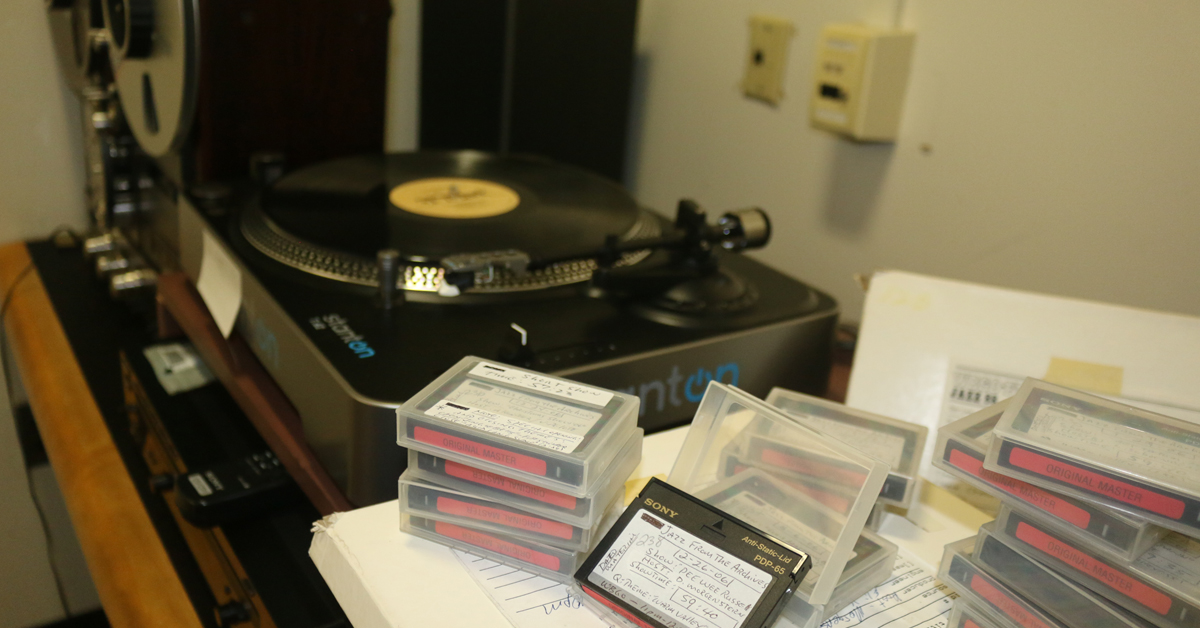
    Audio reels and digital audiotapes lying on a table in front of a record player
    Audio reels and digital audio tapes from the Jazz from the Archives collection will soon be digitized to support teaching, learning, and research at Rutgers.

    The Institute of Jazz Studies, Rutgers University Libraries, began work this fall on a grant-funded project to digitize the Jazz from the Archives collection. This vital work is possible through a $36,837 Recordings at Risk grant from the Council on Library and Information Resources (CLIR).

    Spanning 1979–2006, the Jazz from the Archives collection includes approximately 650 open reels and digital audio tapes (DATs) produced by Newark’s WBGO-FM and co-produced by the Institute of Jazz Studies.

    These recordings capture rare alternate takes and feature in-depth interviews with renowned musicians, bandleaders, producers, and managers. Far more than a typical radio program, Jazz from the Archives offered a rich educational experience, making it a vital resource for Rutgers students and faculty, as well as scholars worldwide, students of all ages, and the public.

    The collection has broad research value for those studying jazz, music, civil rights, American history, and the history of radio. Digitization will both preserve this at-risk material and expand access, ensuring that it can continue to inform teaching, learning, and scholarship for years to come. The digitized radio programs will be accessible through the Rutgers University Libraries digital repository (RUcore).

  • From Idea to Reality: Rutgers University Libraries Roll Out 24/7 Lockers

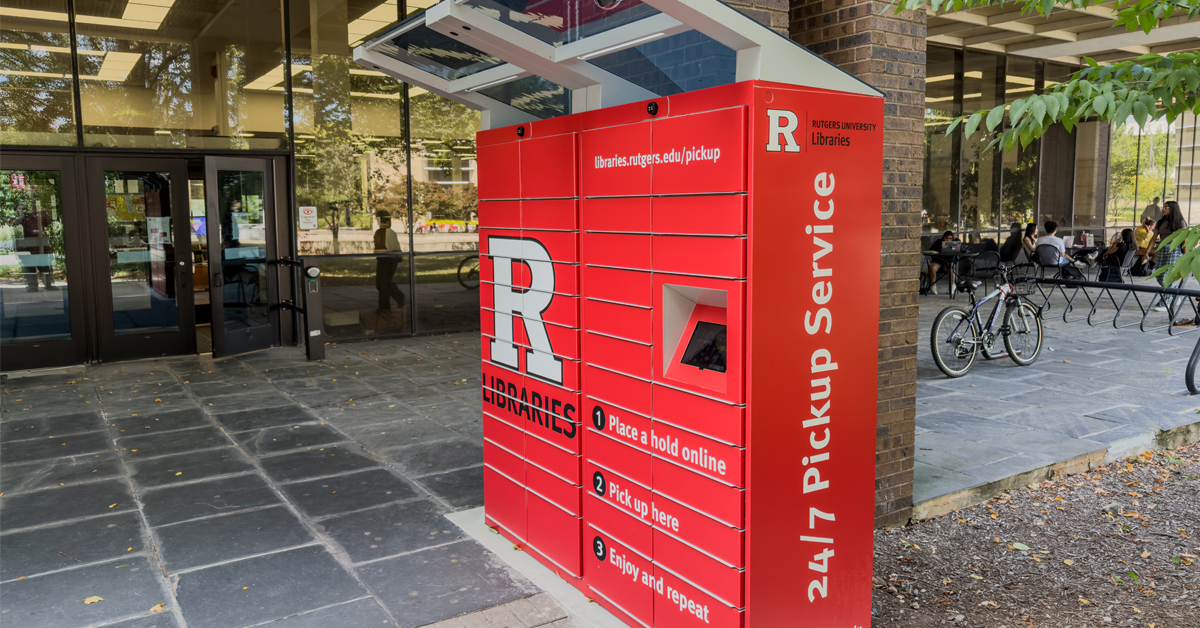
    Bright red locker shown outside a building
    Carr Library is among the most recent locations to have 24/7 pickup lockers installed.

    A key aspect of my role within Rutgers University Libraries is the centralized coordination of fulfillment activities across the library system. In this context, “fulfillment” encompasses the processes that ensure users receive the materials or services they request. I also serve as chair of the Fulfillment Working Group, represent fulfillment on the Library Services Platform Management Team, and contribute to additional strategic initiatives. 

    In 2023, I was invited to collaborate with a small team to assess market solutions for pickup lockers compatible with Alma. Our evaluation involved conducting interviews with peer institutions and locker vendors to collect technical specifications, pricing details, and user feedback. Based on our research, we recommended piloting LuxerOne pickup lockers—a proposal that received full support from Libraries Leadership. Following this endorsement, I was appointed to lead the project and partnered with the Fulfillment Working Group, recognizing their critical role in driving the initiative forward. And so, the journey began! 

    In early 2024, we began Phase I of a three-phase locker implementation plan. Mabel Smith Douglass Library (Rutgers University–New Brunswick) and Paul Robeson Library (Rutgers University–Camden) were selected as pilot locations. This project introduced me to university departments I had rarely interacted with before, including Institutional Planning and Operations, Facilities, Office of Information Technology, University Communications and Marketing, and University Procurement Services, along with numerous external contractors and vendors. The project involved many complex components, ranging from electrical and ethernet upgrades to site preparation, system integration, configuration, workflow development, and assessment. Each installation also required extensive collaboration with the vendor and its subcontractors to ensure successful execution. 

    As a team, different Rutgers University Libraries units also brought their expertise to the table, including the Business Office, Library IT Services, Library Applications and Development, and Access Services. The team leads at Robeson and Douglass Libraries, Ann Marie Latini and Andy Martinez, were instrumental throughout all three phases, assisting with workflow development, creating training documentation, and becoming our resident experts for the later phases. 


    A Phased Approach to Success 

    Phase I officially went live in June 2024. By the start of the fall semester, the lockers were in full swing, with patrons picking up their materials in less than three days on average. 

    Phase II brought lockers to Newark, with lockers at the Dana Library (Rutgers University–Newark) and the George F. Smith Library (Rutgers Health) both becoming operational in February 2025. 

    Phase III introduced lockers to five more locations across Rutgers–New Brunswick: Archibald S. Alexander Library and Art Library on the College Avenue campus, James Dickson Carr Library on Livingston campus, and the Library of Science and Medicine and Mathematical Sciences and Physics Library on Busch campus. All five of these locations were up and running by September 2, 2025. 

    These shiny red lockers are now located outside the front entrance of nine libraries. The placement ensures patrons can easily pick up their materials at any time, on any day, as the lockers are fully accessible 24 hours a day, seven days a week. To date, over 1,500 different patrons have used lockers to pick up library materials. Staff have made over 5,000 deliveries to the lockers, and on average, 14 percent of items are picked up outside of library operating hours.  

    The work does not stop here. We continue to fine-tune our processes, evaluate patron needs, and identify ways to optimize this service to better serve our community.  

  • AADC Reunion Visit to Douglass Library

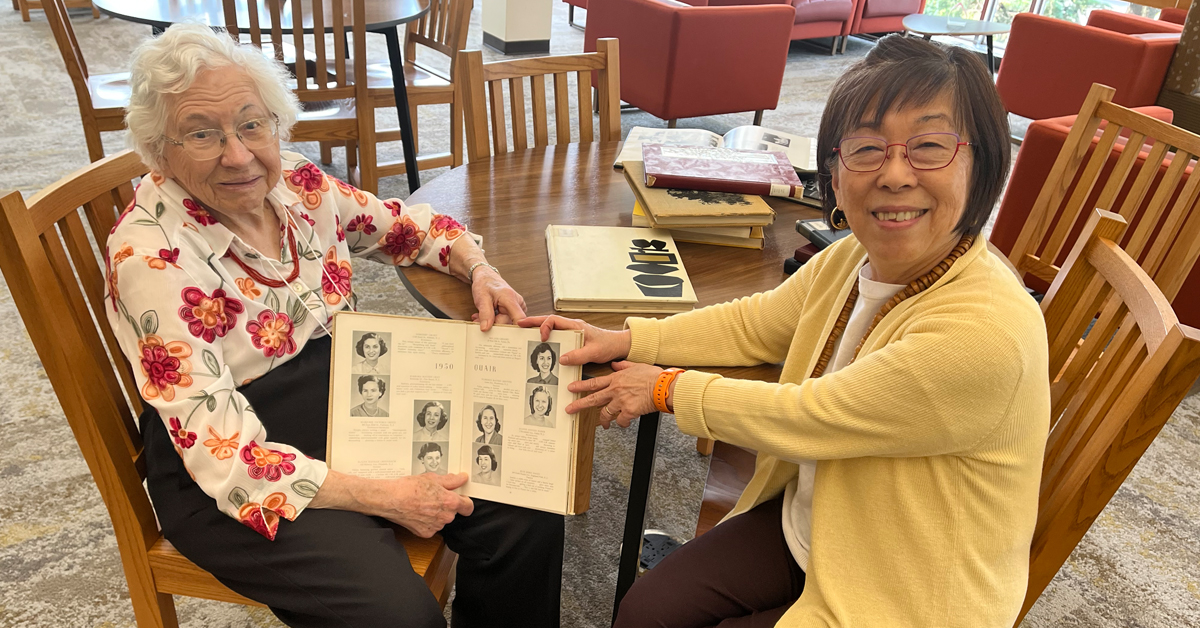
    Two people sit at a table, smiling and holding an open yearbook.
    Barbara Gray Nicholson, a 1950 graduate of the New Jersey College for Women, with Kayo Denda at Douglass Library.

    On June 6, during the Associate Alumnae of Douglass College reunion, multiple alumnae visited Douglass Library. As an indication of the meaning Douglass Library holds for Douglass alumnae, the library is consistently an option on the reunion’s list of activities.  

    The highlight of this year’s visit was Barbara Gray Nicholson, a 1950 graduate of the New Jersey College for Women (NJC), which later became Douglass College. While at NJC, she met her husband, a Rutgers College of Agriculture student, also from the class of 1950. They married after graduation, settling in North Carolina, where she lived from 1956 to 2019, studied library science, and worked in a small public library. For the last five years, she has lived in Nebraska, close to her son.

    Nicholson talked about visiting the library, then located in the basement of Recitation Hall (now Ruth Adams Hall, having been renamed in honor of a former Douglass College dean), and about the professors she admired. They include renowned English constitutional law historian Margaret Judson and seeds specialist Jessie Gladys Fiske, who later became chair of the Department of Biological Sciences. She had fond memories of the dances on campus, through which she met her husband, and the old Packing Box gym next to Voorhees Chapel with an open floor furnace. The students in the mandatory modern dance class had to dance gingerly, navigating around the metal fence surrounding the opening, to avoid getting burns. 

  • Fernanda Perrone to Be Inducted as SAA Fellow

    Headshot of Fernanda Perrone
    Fernanda Perrone’s career has been marked by significant contributions to the archival profession, particularly in documenting underrepresented groups, mentoring emerging archivists, and fostering international collaborations.

    Fernanda Perrone, archivist and head of the exhibitions program for Special Collections and University Archives, will be inducted later this month as a Fellow of the Society of American Archivists (SAA) during an awards ceremony at the 89th Annual Meeting of the Society of American Archivists in Anaheim, California. The distinction of Fellow is the highest honor bestowed on individuals by the SAA and is awarded for outstanding contributions to the archives profession.

    A distinguished archivist with over 30 years of experience, Perrone earned a PhD from Oxford University, where she focused her research on women’s education. This laid the groundwork for her professional focus on women’s history throughout her career. She has spent her decades-long career at Rutgers University Libraries, beginning as an assistant in the manuscript department at SCUA and eventually earning a full professorship. Since 2003, she has served in her current role of archivist and head of the exhibitions program.

    Perrone’s career has been marked by significant contributions to the archival profession, particularly in documenting underrepresented groups, mentoring emerging archivists, and fostering international collaborations. In her position at Rutgers, she has developed diverse subject expertise in women’s history, gender studies, the history of Rutgers, and the history of westerners in Japan during the late 19th and early 20th centuries.

    Her work curating and promoting the William Elliot Griffis Collection, which documents the experience of Westerners in Japan during the late 19th and early 20th centuries, has led to the development of international partnerships. Through her outreach, a group of scholars who studied Korean materials in the Rutgers collections discovered a set of unique photographs. Due to the destruction of many rare historical objects during the Korean War, photos like these represent an important cultural recovery. This discovery led to a collaboration with the National Archives of Korea to digitize the recovered photographs. Currently, Perrone is co-authoring an edited volume entitled Rutgers Meets Japan: A Trans-Pacific Network of the Late Nineteenth Century. For the book, coming out from Rutgers University Press this year, she invited scholars in art, history, and Asian studies to analyze the early transnational relationship between Rutgers University and Japan.

    Perrone is particularly recognized as an expert on the archives of women’s religious communities. Her scholarly output includes numerous publications on women’s religious education, state-level voting rights history, and women artists’ archives, with notable works such as The Douglass Century: Transformation of the Women’s College at Rutgers University and On Account of Sex: Women’s Suffrage in Middlesex County, New Jersey. In 2013, she contributed a chapter to Perspectives on Women’s Archives (SAA). Her chapter, as well as the book, has spanned disciplines to reach historians, librarians, and other scholars thinking about the effect and importance of women’s archives. Her broad impact is also evident through her international and interdisciplinary speaking engagements: from New Jersey and Texas state and regional historical associations to MARAC and SAA to the Universities of Keio and Rikkyo in Tokyo, Japan.

    Speaking about Perrone’s work, one supporter wrote that she has an “unwavering dedication to researching, preserving, and advocating for the archival record of women. She has remained steadfast in her commitment to ensuring that SAA recognizes and includes women’s experiences in the historical record.” Another supporter remarked, “Dr. Fernanda Perrone represents the best that the archival profession has to offer. She is a leading figure who unselfishly gives her time and energy to promote her profession.”

  • Robeson Library Undergraduate Research Awards for 2025

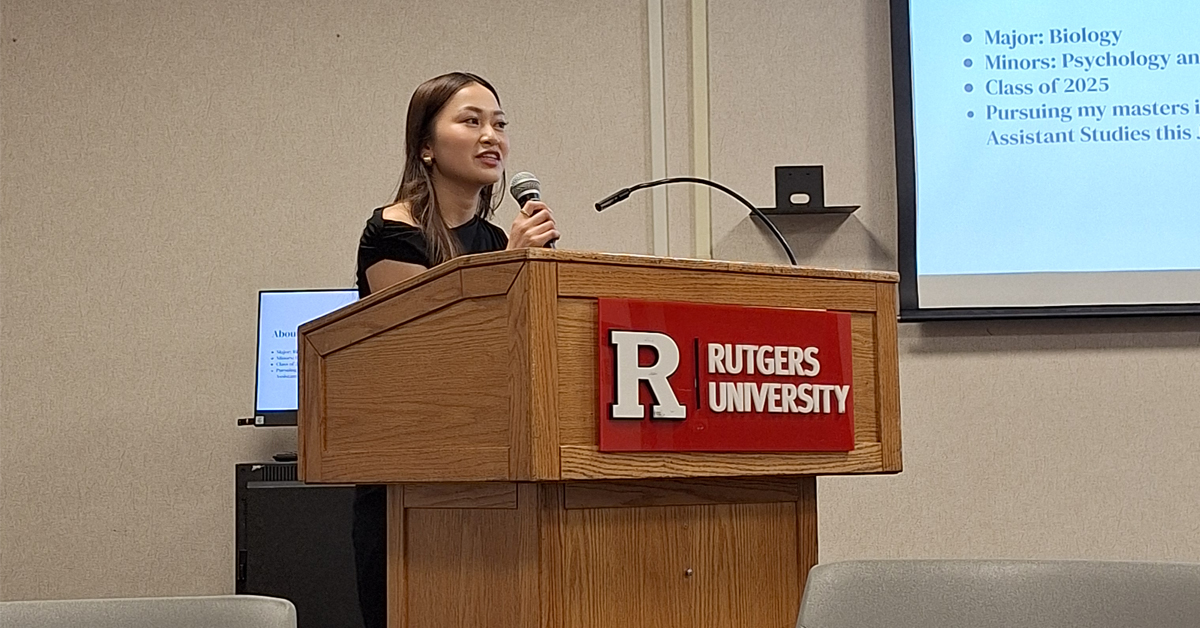
    Cindy Do won an award for her research project, “Chronic Stress Elevates the Risk of Parkinson’s Disease.”

    The Paul Robeson Library Undergraduate Research Award recognizes excellence in undergraduate research projects that make use of a range of library resources, collections, and services and show evidence of critical thinking, originality, and creativity. 

    All winners have their papers added to our digital collection in RUCore and presented lightning talks at the award ceremony held on April 8 as part of Rutgers University–Camden’s reimagined Research Week, now known as SPARK! 


    The award winners for 2025 were: 

    First Place 

    Shaan Mody, “Theta/Beta-Ratio Neurofeedback Training: A Better Long-Term Solution for Attention-Deficit/Hyperactivity Disorder” 

    Second Place 

    Cindy Do, “Chronic Stress Elevates the Risk of Parkinson’s Disease” 

    Jordyn Smith, “The Natural Antimicrobial Effects of Honey, Yogurt, and Pickle Juice on Escherichia coli B, Escherichia coli K-12, Staphylococcus epidermidis, and Pseudomonas fluorescens” 

    New Researcher (limited to first-year students) 

    Kruthy Takkala, “Islamophobia and Why it is Harmful” 


    The evaluation committee included Ophelia Hostetter, associate professor of English; Samantha Kannegiser, student success librarian; John Powell, reference and instruction librarian; Shauna Shames, associate professor of political science; and Zara Wilkinson, reference and instruction librarian. 

  • Generative AI Features in Major Databases and Platforms

    Conceptual AI illustration featuring a computerized profile of a human head
    A new LibGuide provides information about generative AI features that are available to users within the Libraries’ major databases and platforms.

    Several platform providers have recently added generative AI features to Rutgers University Libraries’ e-resources. To bring this information together, we created a LibGuide: Generative AI Features in Major Databases & Platforms. This new guide provides information about generative AI features that are available to Rutgers University Libraries users within the Libraries’ major databases and platforms.  

    The guide is written at a general introductory level and may be used by librarians, students, staff, and faculty. Though it cannot exhaustively cover every aspect of each feature, it gives users the basic information they need to get started. Where possible, it includes links to more extensive tool documentation provided by the platforms. As new features are released and updated, the guide will be updated accordingly. In addition, future announcements about new features and updates will link to the guide. 

    This is a focused guide that introduces generative AI features currently available within our major databases and platforms; it is intended to be manageable in scope and useful to a broad audience. It does not cover AI features that are unavailable to Rutgers University Libraries users or AI tools that are located outside of the Libraries’ major e-resources. In this changing environment, the guide will be reviewed periodically to ensure the information is accurate and to confirm that this is still the best way of sharing this information. 

    Rutgers University Libraries faculty and staff are encouraged to familiarize themselves with this guide, consider incorporating these new AI features into their instruction and research, and share it with a broader audience.