Category: Institute of Jazz Studies

  • Friends Toast the Life of Ed Berger

    Ed Berger by Joe Wilder - 2001e
    Ed Berger, 2001. Photograph by Joe Wilder. Berger’s biography of trumpeter and fellow photographer Joe Wilder, Softly with Feeling, was published in 2014.

    Tears and laughter punctuated remembrances of longtime Institute of Jazz Studies associate director Ed Berger, during a celebration of his life on August 18 at the Dana Library.

    Berger, who died of heart failure January 21 at his home in Princeton Junction, joined the staff of the Institute in 1975. He filled many roles with uniform excellence: administrator, librarian, educator, discographer, scholar, editor, photographer, author, record producer, and label owner. He was known by those who met him in casual encounters and others who interacted with him over decades for his dedication to disseminating jazz history and for his compassion, modesty, and quiet killer wit.

    Among those taking the podium in the Dana Room included Institute colleagues: former director Dan Morgenstern; director of operations Vincent Pelote; executive director Wayne Winborne; associate director Adriana Cuervo; archivists Elizabeth Surles, Angela Lawrence, and Tad Hershorn; public service associate Joe Peterson; and collections manager Elsa Alves. Morgenstern, who led the Institute for 36 years, stressed his admiration for Berger’s expertise and many talents that, along with the efforts of Pelote, positioned the Institute to extend its international reputation.
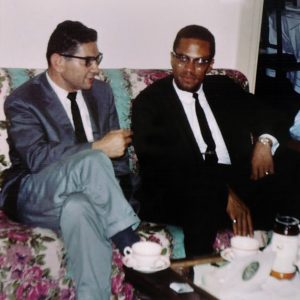
    Morroe Berger and Malcolm X listen to jazz records. photo credit: Ed Berger.
    Morroe Berger and Malcolm X listen to jazz records in the Bergers’ apartment in Cairo in 1964. Photograph by Ed Berger

    Hershorn produced a slide show of images of Berger’s life and photography, entitled “Triumph of the Quiet Man,” which focused on his family, jazz photography, and years at the Institute. (Among the photos was one of his father Morroe Berger, a famous Princeton sociologist, whose work took him to the Middle East in the 1950s and 1960s. Ed’s picture shows his father with Malcolm X in the living room of the Bergers’ Cairo apartment in 1964 listening to recordings of Louis Armstrong and Ella Fitzgerald.)

    Other guests included vice president for information services and university librarian Krisellen Maloney and Tom Frusciano and Erika Gorder from Special Collections and University Archives.
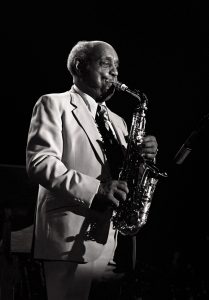
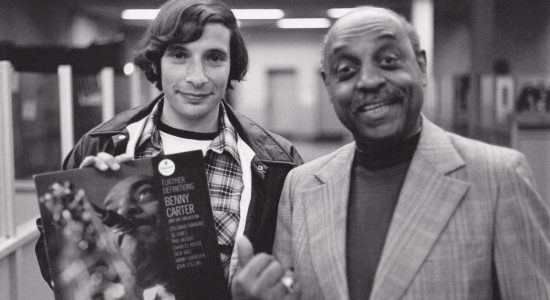
    Benny Carter, credit: Ed Berger
    The long association between the Benny Carter and the Berger families, which went on from the early 1970s until Berger’s death in January, was one their most fruitful associations. Photograph by Ed Berger, 1989.

    Musical tributes were offered by Newark veteran tenor saxophonist Leo Johnson and New York singer and pianist Daryl Sherman, both of whose CD covers were graced by the work of Berger (gratis, of course). Drummer Kenny Washington, one of the busiest drummers in New York and a frequent Institute patron, said Berger was one of the go-to guys to answer questions on the history and the music, as did Scott Wenzel, a 30-year veteran of Mosaic Records, jazz’s premiere reissue label.

    Berger’s younger brother Ken, also of Princeton Junction, who–along with another brother Larry of San Francisco–provided images for the slide show, represented the family at the event at Dana Library.

    Another gathering in Berger’s honor will take place between 3-5:30 on Sunday, September 24 at Jazz at Lincoln Center, where Berger taught courses as part of Jazz at Lincoln Center’s Swing University. Please RSVP by September 1 by contacting Larry Berger at rsvp@lpb.com.

    The Berger-Carter Jazz Research Fund at the Institute, memorializing the relationship between the Berger family and jazz great Benny Carter, will soon be renamed to include Ed’s name.
    Save

    Save

  • Fellows Learn Jazz and Archives in Institute Program

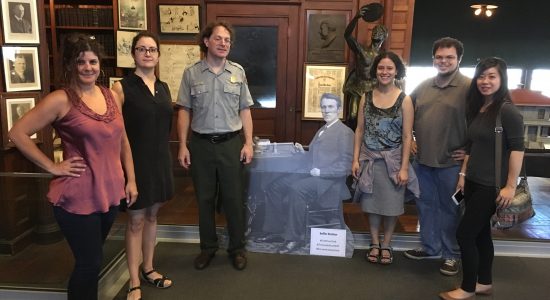
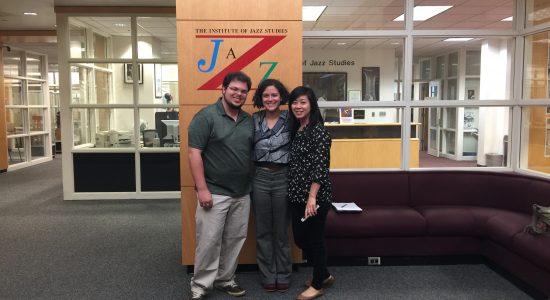
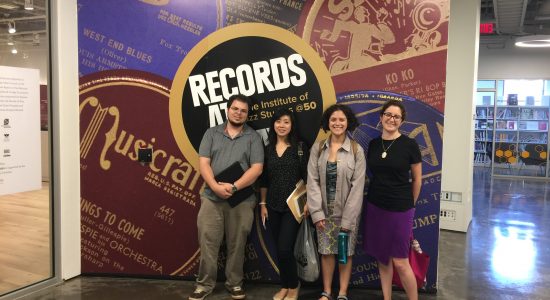
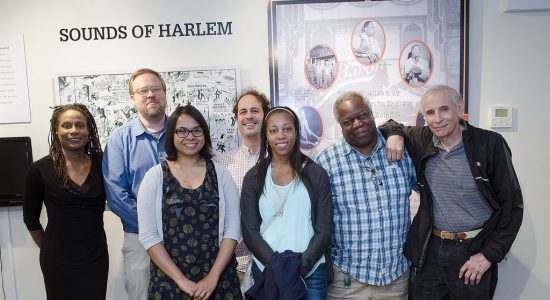
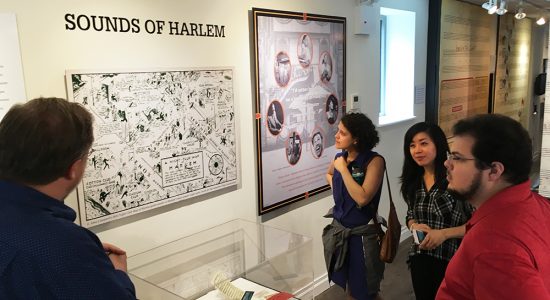
    • 2017 Institute of Jazz Studies Fellows, from left, Ana Niño, Jeannie Chen and Adam Berkowitz, tour an exhibit at the National Jazz Museum in Harlem. Leading them through Harlem jazz history is Ryan Maloney, a former employee of the Institute and director of education and programs at the Museum.

    Three archives students from across the country, each with strong musical backgrounds, undertook to learn jazz as a second language as they burnished their archival credentials from the classroom in an intensive two-week program at the Institute of Jazz Studies (IJS) this past June. They were the fifth class of Jazz Archival Fellows, a program underwritten by Jon Van Rens, a longtime IJS supporter and administered until earlier this year by the late Ed Berger, the previous IJS associate director.

    The selected candidates who came to Rutgers University-Newark were:

    • Ana Niño, a student at the University of North Texas who works in a Dallas-area library and plays guitar in an all-female rock band.
    • Jeannie Chen, a student at UCLA who has a background in classical piano that propelled her into international piano competition
    • Adam Berkowitz, a MLIS student at University of South Florida in Tampa who is also a professional percussionist interested in jazz and classical music and music educator with a special interest in Jewish musicians and composers.

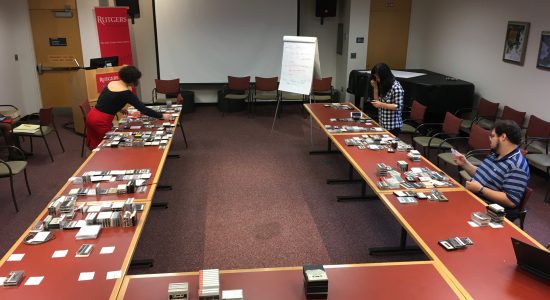
    During their time at IJS, they arranged, described, and produced a finding aid for over 400 taped interviews with jazz musicians and other figures on the jazz scene designated as the Institute of Jazz Studies Collection of Jazz Oral Sound Recordings. Materials in the collection were made between 1956 and 2007 and include mostly audiocassettes and some reel-to-reel tapes.

    Field trips afforded the fellows a glimpse of how other area repositories and museums conduct their work. These trips have proven to be one of the more popular features of the fellowship experience, and this year was no exception. The fellows visited the Louis Armstrong House/Archive, the National Jazz Museum in Harlem, the New York Philharmonic Archives, the Carnegie Hall Archives, and the Thomas Edison National Park in West Orange.

    In addition, Niño, Chen, and Berkowitz received an overview of issues in managing oral history collections from Dana Library’s digital humanities librarian Krista White. Archivist Elizabeth Surles spoke on rudiments of Encoded Archival Description (EAD), a program utilized to post archival finding aids on the web. IJS archivist Angela Lawrence also worked closely with the students as they processed the interviews.

  • Quick Takes on Events and News — May 2017

    StressbustersThe New Brunswick Libraries announced their schedule of #Stressbusters events for the spring exam period. Highlights include a photo booth at the Math/Physics Library, button making at the Art Library, and pet therapy sessions at Alexander, Douglass, Kilmer, and LSM.


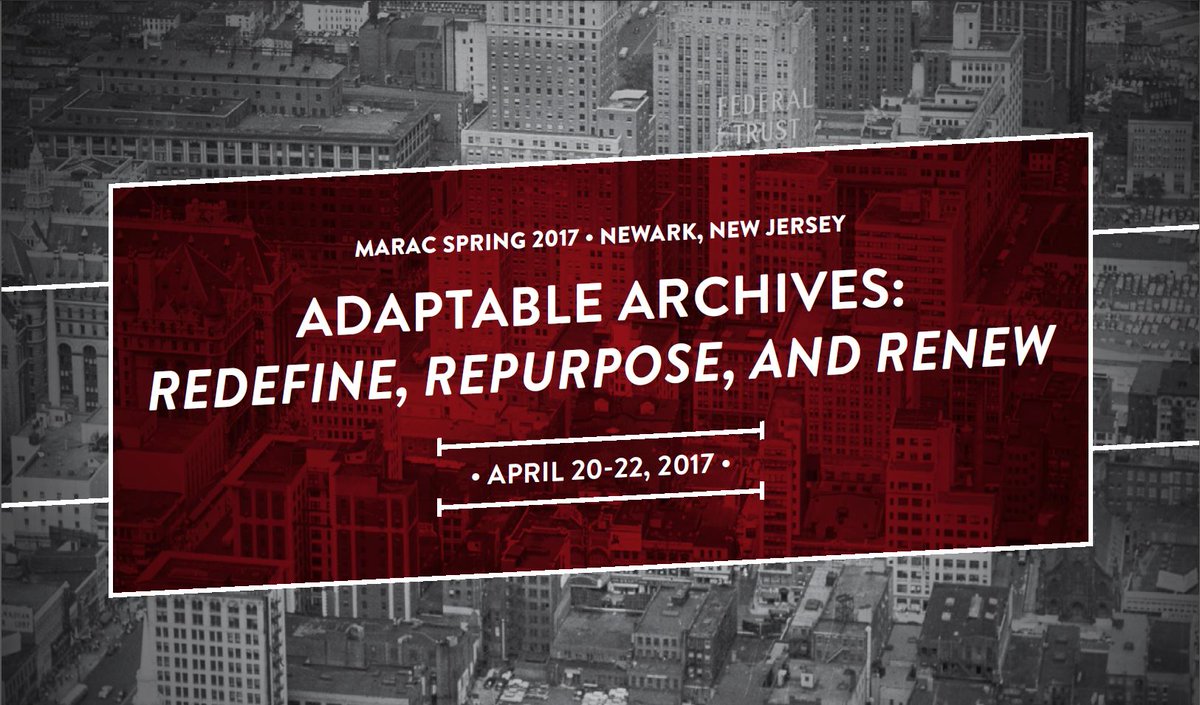
    MARAC Spring 2017 was held April 20–22 in Newark.

    Don’t despair if you happened to miss out on the recent Mid Atlantic Regional Archives Conference in Newark, as Tara Maharjan put together a comprehensive Storify of the event (titled Adaptable Archives: Redefine, Repurpose, and Renew) that’s the next best thing to having been there in person.


    Several new exhibits opened across the Libraries this past month:

    At the Art Library, a display of undergraduate student work from the Environmental Planning Studio of the Department of Landscape Architecture will be on view through May 31. Students in the studio were challenged to create a master plan for the Bergen County park system, and the exhibit communicates their creative solutions and work through large-scale posters.

    There's a Run in My Tights

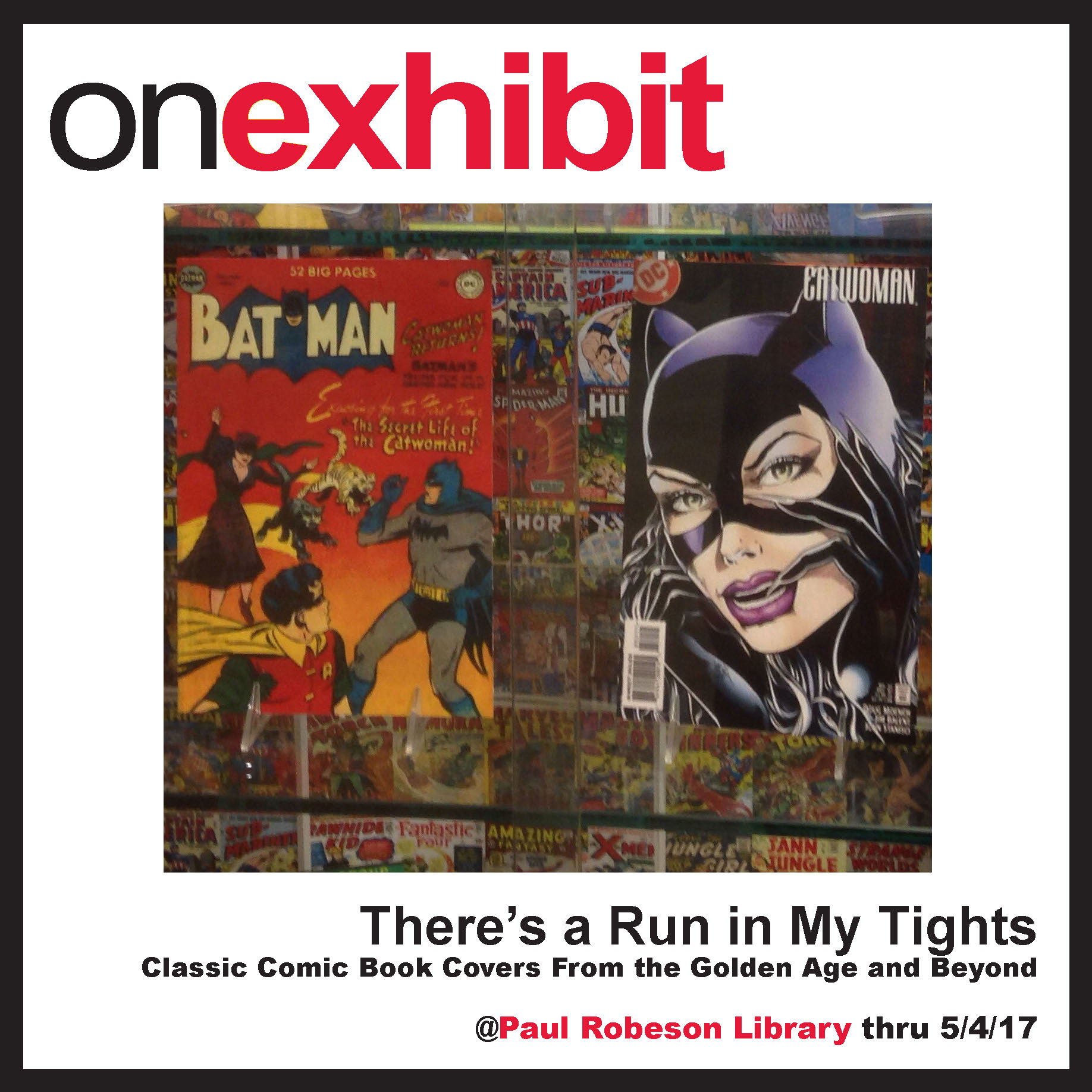
    At Paul Robeson Library, There’s a Run in My Tights: Classic Comic Book Covers from the Golden Age and Beyond is on display through May 4. This display, which opened in advance of the 2017 Camden Comic Con, highlights superheroes such as Bat Girl, Aquaman, Luke Cage and the X-Men, as well as villains like Cat Woman and misunderstood monsters like Werewolf By Night.

    A group exhibition of works by students in the Women, Gender, and Creativity House of Douglass Residential College is on display now at Douglass Library. Students in this community explore topics of gender, sexuality, identity, creativity, perception, and visual communication of women in the arts. The exhibition highlights the self-portraits, sculptures, video performances, and written works produced by the student artists during the course of the academic year. It closes on May 1, so be sure to check this one out while you can.


    Finally, many new resources were announced in April:

    • The Andrew Hill Collection at the Institute of Jazz Studies contains the papers, music, and audiovisual recordings of acclaimed pianist, composer, bandleader, and educator Andrew Hill (1931–2007). The collection was processed as part of the 2016 Jazz Archives Fellows residency.
    • Attitude Check - Independent voices
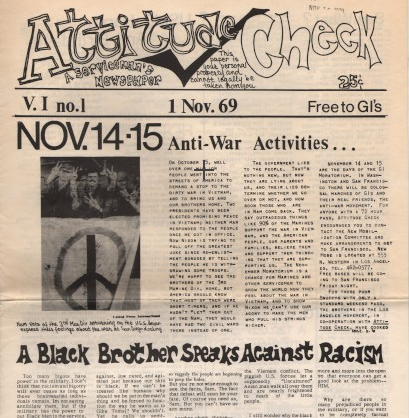
      Attitude Check (vol. 1 no. 1, 1969) via Independent Voices.

      JAMAevidence provides guides to the systematic consideration of validity, importance, and applicability of problems and outcomes in health care. It consists of three textbooks, user tools, and forms useful to the critical appraisal process. See more in our deep dive.

    • Academic Video Online Premium provides access to over 50,000 videos from reputable producers such as BBC and PBS, mostly on the subjects of social sciences, American history/American studies, music and performing arts, science and engineering, and health sciences.
    • Independent Voices is a full-text database of alternative press periodicals published in the U.S. in the second half of the 20th century. It includes publications like Aegis (1978-87), Death Ship Times (Fat Albert’s) (1972-74), The Feminist Voice (1971-72), Meatball (1969-71), Off Our Backs (1970-76), The People’s Voice (1980-1983), San Francisco Good Times (1969-72), Up from the Bottom (1971-74), Where It’s At (1968-70), the Yardbird Reader (1972-76), and Zeitgeist (1965-69), among dozens of others.

    Save

  • In Memoriam – Ed Berger

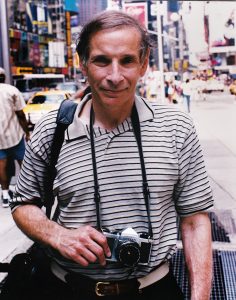
    • Ed captured this self-portrait last year.

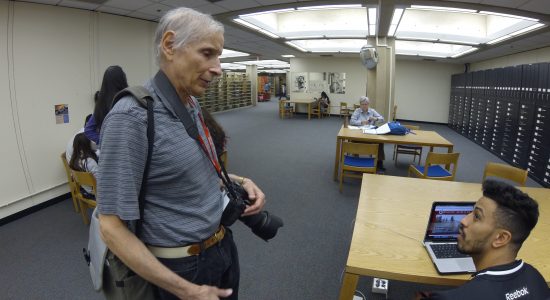
    Recently Consuella Askew and Wayne Winborne sent around a note announcing that our colleague Ed Berger passed away suddenly and quite unexpectedly in January. Ed was a wonderful photographer and spent many hours documenting the spaces and faces of Dana Library and the Institute of Jazz Studies. Many of his photographs are posted on his Flickr site. Here, we take a moment to turn the camera back toward the photographer and offer a glimpse into his time and the people who he called colleagues and friends at the Institute of Jazz Studies.


    Ed played a vital role in the growth and development of the Rutgers Institute of Jazz Studies where he filled a number of positions for nearly four decades.  He was also an award-winning jazz writer and accomplished photographer, teacher, producer, and road manager.

    A graduate of Indiana University with an M.L.S. from Rutgers, his most recent book was Softly, With Feeling: Joe Wilder and the Breaking of Barriers in American Music (Temple University Press, 2014), which received the Association for Recorded Sound Collections’ Award for Best Historical Research in Recorded Jazz in 2015.  He was a frequent contributor to Jazz Times as writer and photographer and for many years served as co-editor of the Journal of Jazz Studies.

    Berger taught at Jazz at Lincoln Center’s Swing University, and from 1979 to 2014 was co-host of Jazz from the Archives on WBGO-FM. He enjoyed a long association with jazz master Benny Carter, serving as Carter’s road manager for nearly two decades, as well as producing two Grammy-winning recordings for the saxophonist.  Berger’s other publications include Free Verse and Photos in the Key of Jazz (2015, with Gloria Krolak); Benny Carter: A Life in American Music (2002, with Morroe Berger and James Patrick); Basically Speaking: An Oral History of George Duvivier (1993); and Reminiscing in Tempo: The Life and Times of a Jazz Hustler (1990, with Teddy Reig).

    He was a beloved friend, colleague, mentor, raconteur, and a true lover of jazz and jazz musicians. His loss is devastating to all of us at the IJS and to the broader jazz community across the globe.

    A public celebration of Ed’s life is being planned and will be announced at a later date.


    Save

    Save

    Save

    Save

    Save

    Save

    Save

  • Digitization Project at IJS Part of International Effort to Preserve Music Journals

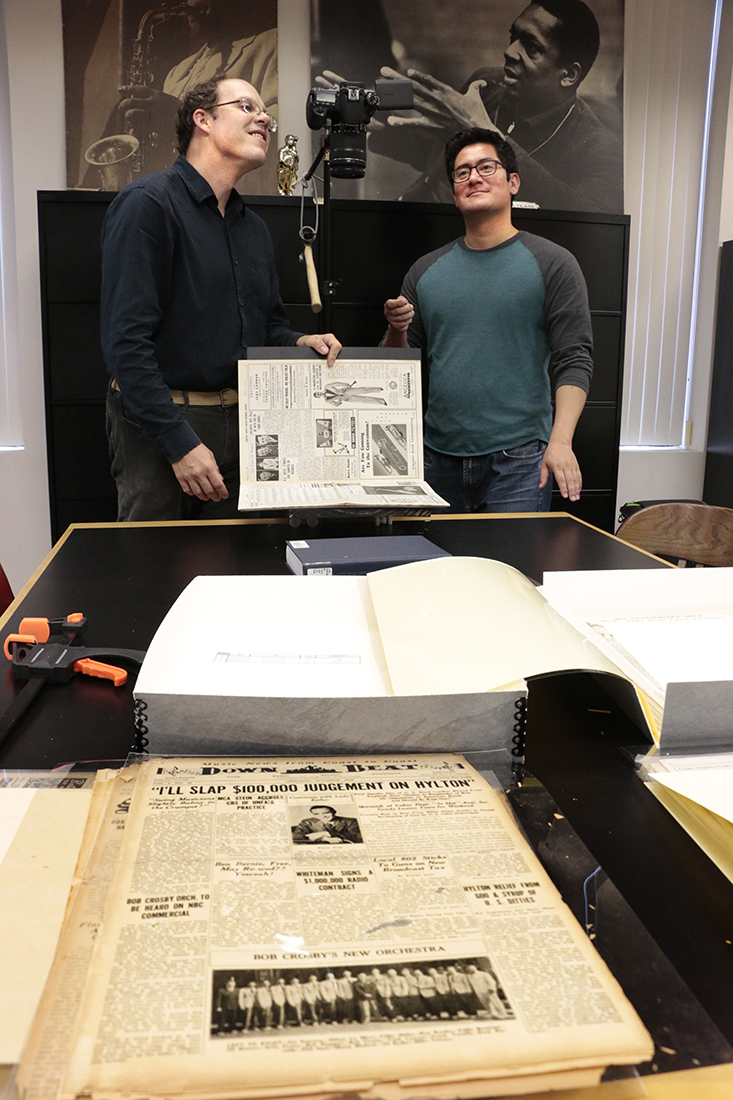
    Ben Knysak, left, of RIPM and assistant Gabriel Caballero scanning 1930s issues of Down Beat in October. The effort at IJS is part of an international project to digitize music publications going back to the eighteenth century. Photograph by Mark Papianni.
    Ben Knysak, left, of RIPM and assistant Gabriel Caballero scanning 1930s issues of Down Beat in October. The effort at IJS is part of an international project to digitize music publications going back to the eighteenth century. Photograph by Mark Papianni.

    For two weeks in October, the Baltimore-based research center RIPM set up a scanner in the reading room of the Institute of Jazz Studies. The main objective was scanning the first few years of the venerated magazine Down Beat and a few others of the hundreds of jazz, pop and related periodicals and journals collected by IJS since its founding in 1952.

    RIPM (Retrospective Index to Music Periodicals) was founded in 1980 by H. Robert Cohen at the behest of the International Association of Music Libraries (IAML) and the International Musicological Society (IMS). The goal was access to some 5,000 international music journals and publications published from 1760 through the 1960s.

    “The goal was to create access to journals both for historians and lovers of music,” said Benjamin Knysak, managing associate director of RIPM. “Through these publications, people can put themselves in places where music history happened.”

    Knysak said digitizing jazz periodicals face some of the same issues as other periodicals. Some issues are more unique to jazz, such as relative scarcity.

    “Many jazz journals are very rare sources of documentation,” he said. “They may have been printed in the limited numbers and had limited distribution because they were not published by large corporations. Many were published by individuals: musicians, aficionados, critics and collectors.”

    In many cases, RIPM has tracked down those solo publishers or their heirs who he said have been uniformly thrilled to have their labors of love preserved for posterity.

    The Jazz Database will be online in 2017. It will provide fully searchable text and photos based on technology developed by RIPM.

    Knysak hopes the relationship between RIPM and the Institute will continue for many years.

    “IJS is amazing, simply amazing,” Knysak said. “The breadth and depth of publications held there is unique. We are honored to work with the collection and wonderful colleagues.”

    “For many years jazz researchers have been dreaming of having the kind of access to the jazz periodical literature that RIPM will be providing,” said IJS director of operations Vincent Pelote. “I am both proud and happy to have had a part in making that happen.”

    In addition to Pelote, associate director Adriana Cuervo and collections manager Elsa Alves are coordinating the project on behalf of the Institute.

    Save

  • Visit of Cape Town Mayor presents international opportunities for Institute of Jazz Studies

    img_2723-100
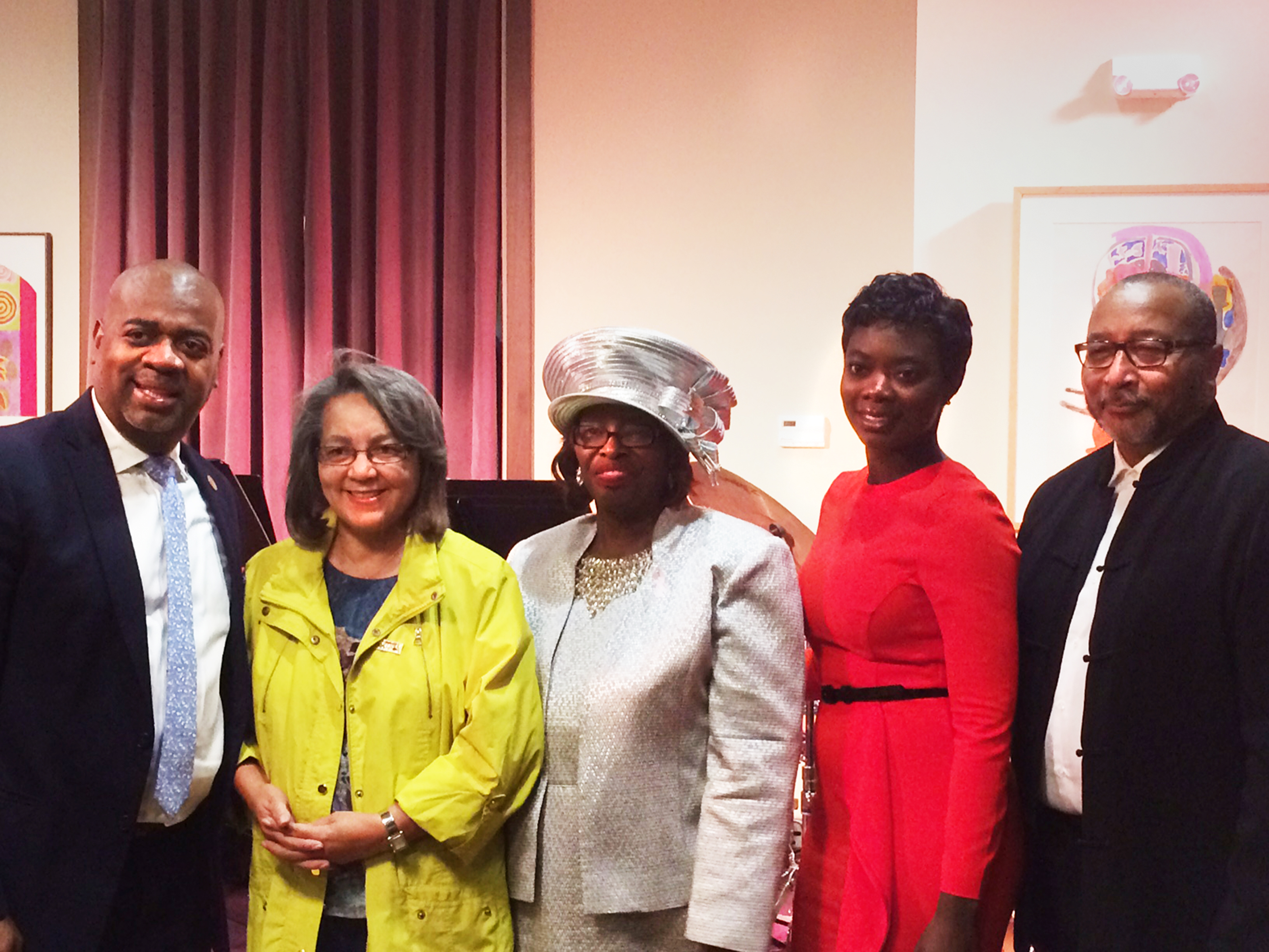
    On October 9, Capetown Mayor Patricia de Lille was feted during a reception at Clement’s Place, a new jazz venue operated by the Institute of Jazz Studies and the Office of the Chancellor of Rutgers University-Newark. From are Newark Mayor Raz Baraka, de Lille, City Council President Mildred Crump, Linda Juma, and IJS Executive Director Wayne Winborne. Photograph by Bronwyn Douman.

    The recent visit of Cape Town, South Africa Mayor Patricia de Lille furthers a relationship to the Institute of Jazz Studies that began in June when IJS Executive Director Wayne Winborne paid a two-week visit to the city.

    De Lille arrived in Newark on October 9 and went immediately to a dinner reception held at Clement’s Place. There she was greeted by city officials–led by Mayor Raz Baraka and City Council President Mildred Crump–and Rutgers-Newark Chancellor Nancy Cantor. Music was provided by a sextet led by drummer T.S. Monk, son of the legendary pianist and composer Thelonious Monk. The following morning de Lille attended a breakfast in the Special Collections Room at the Dana Library.

    Winborne said de Lille’s visit to Newark was one stop in a tour that also included New York, Los Angeles, and Atlanta. Among the topics of discussion were democratic institutions, civil society, and jazz.

    On his trip to Cape Town, Winborne was dazzled by the diverse music scene he encountered. He visited such local clubs as The Crypt, The Drawing Room, and Straight No Chaser, and met with musicians, students and educators at the University of Cape Town and the University of Western Cape Town.

    “I heard everything from straight ahead jazz to South African to pop-oriented fusion,” said Winborne. He also pointed to the success of the Cape Town International Jazz Festival which has brought in such mainstays on the American jazz scene as pianists Chick Corea and Herbie Hancock and saxophonist Gary Bartz as well as well-known local and regional musicians.

    Winborne might return to Cape Town as early as January to meet with the mayor, as well as the regional minister of culture to set up some exchange programs between IJS and the city. He predicts IJS will host performances of South African musicians.

    Cape Town jazz enthusiasts have already spoken to him about their interest in establishing an archives there to preserve the history of the music. This may result in workshops given by IJS staff members to help get the project off the ground.

    “I think this idea has huge potential,” Winborne concluded.

    Save

  • Exhibit and Tours to Emphasize Modernist Aspects of Dana Library and Rutgers-Newark Campus

    docomomo-005
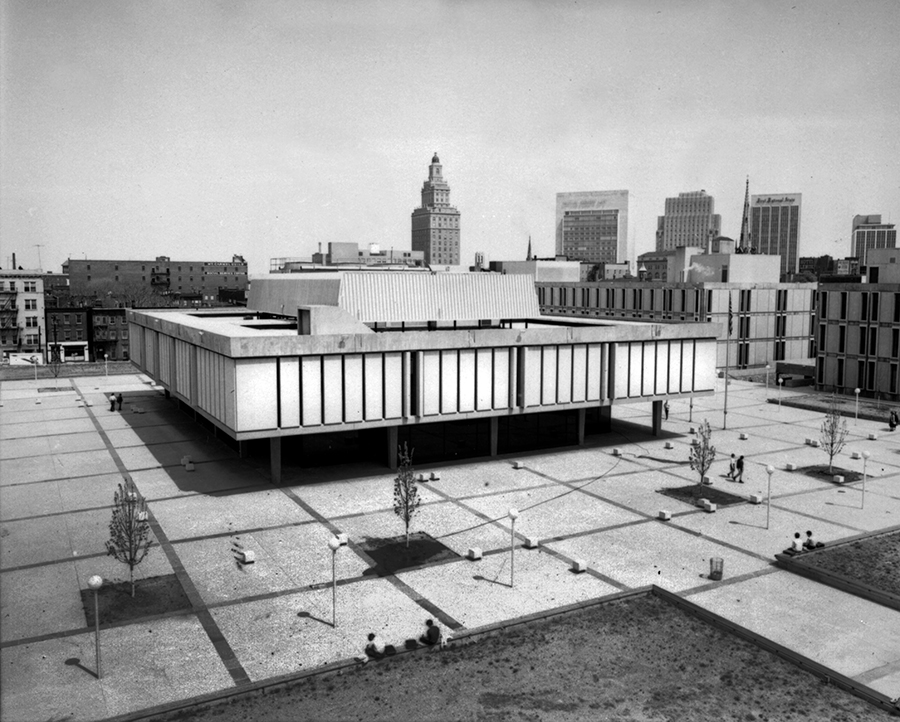
    Dana Library was the centerpiece for modernist buildings erected on the Rutgers University-Newark which are highlighted in an exhibit opening and tours at the library on October 15. Dana Library Archive.

    In 1959 Rutgers president Dr. Mason Gross fired a blunt shot across the bow in the pages of the New York Times in his quest to pass a $75 million bond issue. His plea was as much about expansion of the facilities as adding depth to the university’s core mission of education, culture, and social mobility for the burgeoning Baby Boom generation.

    Gross referred to New Jersey as educationally “impoverished” and culturally “almost bankrupt” in advocating Rutgers’ power to make a difference. The funding package passed and its impact on the Newark campus with construction of seven new buildings over the course of the 1960s was profound.

    Part of that legacy—the Newark campus’s inventory of significant modernist architecture and spatial concept—is the subject of an exhibit opening October 15 at the John Cotton Dana Library, Making a Place: Rutgers University-Newark as a Microcosm of 1960s America. Programming will also feature hour-long campus tours led by Newark-based architects, preservationists, and historians; in addition to tours of the world-renowned Institute of Jazz Studies, located on the fourth floor of the library. For additional details, see: http://docomomo-us.org/architecture_urbanism_rutgers_university_newark

    Cultural historian Dr. Eva Giloi, an associate professor of history at Rutgers University-Newark who is organizing the festivities, said Newark figured prominently in Gross’s plans.

    “Buildings here were designed and situated on the campus as part of a coherent vision of modernist mid-century architecture, with Dana Library the center of student life and community involvement,” said Giloi. “It was a humanistic concept in the way it used open space.”

    dana-plaza-001
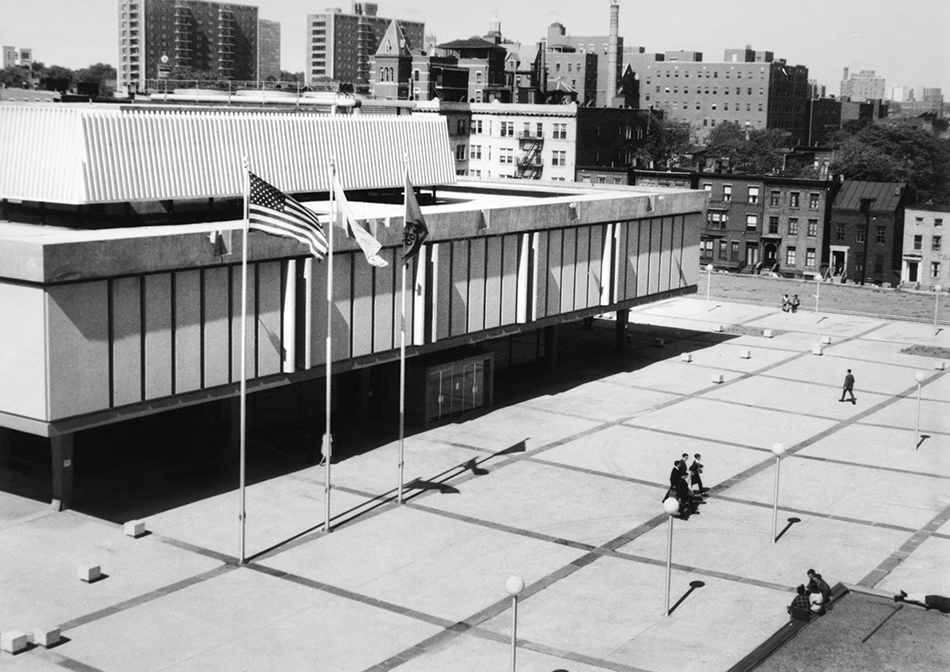
    October 15, 2016 has been designated a DOCOMOMO US Tour Day. Dana Library Archive.

    The project’s supporters go way beyond the Rutgers community. The campus will enter the registry of DOCOMOMO, the world’s leading modernist preservation organization located in Barcelona, Spain.

    Giloi describes the exhibit as a “multisensory exhibit about the campus history and architecture in Dana Library,” using original architectural blueprints, photographs, yearbooks, and other artifacts bearing on the campus and student life during socially tumultuous times.

    Dr. Askew, director of Dana Library, said of Giloi’s research, “The campus plan from 50 years ago all started with a library building. Therefore, it is befitting that Dana Library, in addition to being a stop along the tour, also has a central role in this event.”

    The exhibit and programs are sponsored by the Dana Library, the Institute of Jazz Studies, Rutgers University-Newark Department of History, The Clement A. Price Institute, and DOCOMOMO, which has designated the events as an official U.S. Tour Day.

    Activities this month will be amplified when the fiftieth anniversary of Dana Library gets underway next year.


    Save

    Save

  • Now Open for Research: The Andrew Hill Papers, Music, and Audiovisual Recordings

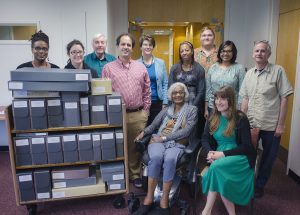
    2016 Jazz Archives Fellows and Institute of Jazz Studies and Dana Library faculty and staff pose with Joanne Robinson Hill and the processed Andrew Hill collection.  Pictured (L-R) Angela Lawrence, Adriana Cuervo, Bob Nahory, Brad San Martin, Krista White, Joanne Robinson Hill, Veronica Johnson, Max Dienemann, Treshani Perera, Elizabeth Surles, and Tad Hershorn.  Photo by Ed Berger, some rights reserved.
    2016 Jazz Archives Fellows and Institute of Jazz Studies and Dana Library faculty and staff pose with Joanne Robinson Hill and the processed Andrew Hill collection. Pictured (L-R) Angela Lawrence, Adriana Cuervo, Bob Nahory, Brad San Martin, Krista White, Joanne Robinson Hill, Veronica Johnson, Max Dienemann, Treshani Perera, Elizabeth Surles, and Tad Hershorn. Photo by Ed Berger, some rights reserved.

    The Institute of Jazz Studies (IJS) is pleased to announce the availability of the Andrew Hill papers, music and audiovisual recordings, 1956–2011. Hill (1931–2007) was an influential and acclaimed jazz pianist, composer, band leader, educator, and winner of numerous prestigious jazz accolades, including the National Endowment for the Arts Jazz Master award in 2008, among the highest honors in jazz in the United States. The extensive collection, generously donated in 2015 by Hill’s widow, Joanne Robinson Hill, includes materials ranging from his musical compositions, sound recordings, correspondence, and awards, to press kits and even one of his favorite hats.

    The collection was processed as part of the 2016 Jazz Archives Fellows residency, with IJS archivists Angela Lawrence, Tad Hershorn, and Elizabeth Surles working in tandem with jazz fellows Veronica Johnson, Brad San Martin, and Treshani Perera and intern Max Dienemann to arrange, describe, and rehouse the collection and create an EAD finding aid for the materials. The (IJS) started the Jazz Archives Fellows program in 2012 with two purposes in mind: to improve diversity in the archives profession and to provide a meaningful professional development opportunity for early career archivists and for students in graduate programs who intend to become archivists. In addition, the IJS benefits directly from the fellows’ work to process a collection. To see firsthand the fellows’ work and learn more about the collection and Andrew Hill, please explore the online finding aid at http://www2.scc.rutgers.edu/ead/ijs/hillf.html.

    The processing of the collection is timely. While it has only been open to researchers for a couple of months (before being announced publicly), the collection has already been used to produce a series of Andrew Hill legacy concerts at the Jazz Standard in New York City to celebrate what would have been Hill’s 85th birthday, as well as supported research by scholars visiting the Institute.

  • Clement’s Place: A New and Intimate Home for Jazz at Rutgers–Newark

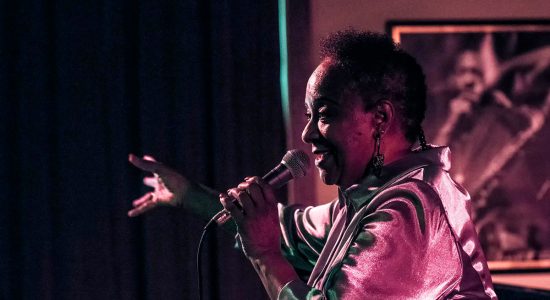
    • Newark favorite Carrie Jackson, NC 350 performance, 9/9/16, credit Ed Berger.

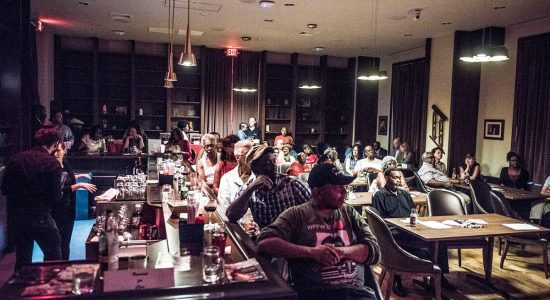
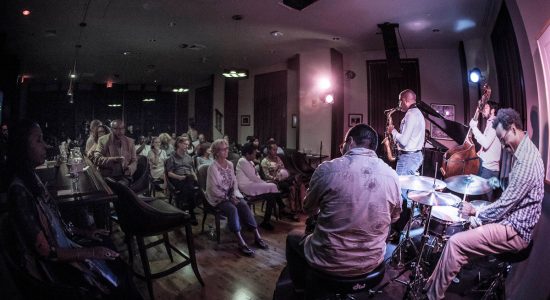
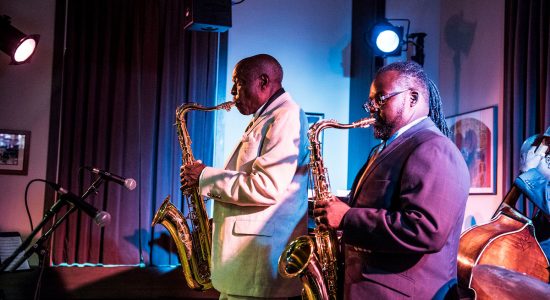
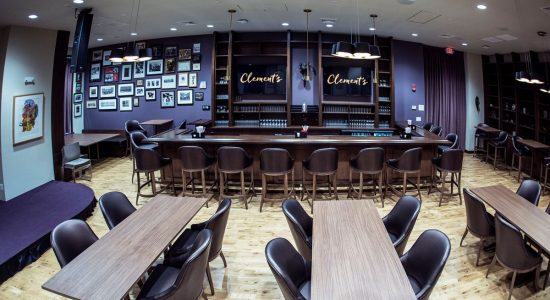
    The Institute of Jazz Studies is partnering with NJPAC and the Newark 350 Celebration Committee to bring two series of jazz performances to Clement’s Place, a new venue located in the iconic 15 Washington Street building, located next to the Newark Museum. Clement’s Place, which looks like a classic jazz club, honors the memory of the late Dr. Clement Price, a beloved professor of history at Rutgers–Newark and official historian of the city of Newark.

    The NC350 Series

    The NC350 series, which is free and open to the public, takes place the second Friday of each month. To date, performers have included groups led by Newark legends saxophonist Leo Johnson and vocalist Carrie Jackson.

    The NJPAC “Jazz Jam” Series

    The NJPAC “Jazz Jam” series, coordinated by pianist James Austin, Jr., features a mix of younger and more seasoned performers in the time-honored, informal jam session tradition.

    Among his wide-ranging interests, Dr. Price was a serious student of jazz and a longtime supporter of the Institute of Jazz Studies. Jazz-related art and artifacts from Dr. Price’s personal collection adorn the walls of Clement’s Place.

    IJS excutive director Wayne Winborne, oversees the programming and management of the space, which mixes top jazz musicians from the Newark area with world renowned artists. Spoken, salsa, classical, and other related musical performances will be presented in the space, as well as a series of curated listening sessions, hosted by IJS staff members.

    Upcoming Events

    10/7, 5:30-7 p.m. IJS Curated Listening Session: Early Louis Armstrong
    10/8, 4-6 p.m. IJS Occasional Film Series: Stepping Up: Stories of Jazz & Caregiving (screening at the Newark Museum)
    10/14, 6-8 p.m. NC350 Series: Bobby Sanabria Quartet
    10/15, (time TBD) Joe Louis: Am Opera by Count Basie (in the Great Hall, 15 Washington Street)
    10/20, 7-9:30 p.m. NJPAC Jazz Jam with James Austin
    10/21, 7-9 p.m. IJS Concert Series: Randy Sandke Quartet
    10/27, 5:30-8 p.m. Salsa Night (free lessons begin at 5:30; music at 6:30)
    11/1, 7-9:30 p.m. NJPAC Jazz Jam with James Austin
    11/4, 5:30-7:30 p.m. IJS Curated Listening Session: After Bitches Brew: the 1970s
    11/11, 6-8 p.m. NC350 Series: Return to the Source Reunion
    11/17, 7-9:30 p.m. NJPAC Jazz Jam with James Austin
    12/1, 5:30-8 p.m. Salsa Night (free lessons begin at 5:30; music at 6:30)
    12/9, 6-8 p.m. NC350 Series: Houston Person
    12/15, 7-9:30 p.m. NJPAC Jazz Jam with James Austin


  • Quick Takes on Events & News – September 2016

    Making Rowan University and Camden County College Students Feel Welcome

    Through a partnership agreement, Paul Robeson Library is now the campus library for Rowan University and Camden County College students. Bart Everts is the library liaison for these students and has started a new Facebook page to share information about their library privileges and resources. The agreement allows students to access the library, use library databases, and check out books using their student ID cards. Robeson also has computers reserved for their use.


    Morroe Berger 200Morroe Berger–Benny Carter Jazz Research Fund

    Each year the Institute of Jazz Studies (IJS) awards up to ten grants of $1,000 each to assist jazz researchers. Half of the awards are designated for students in the Rutgers University-Newark Master’s Program in Jazz History and Research and half are awarded to scholars from other institutions or unaffiliated researchers to enable them to visit IJS in conjunction with their projects. To date, we have given more than 70 awards to scholars and students worldwide working in a variety of disciplines, including jazz history, musicology, bibliography, and discography.

    Applications for the 2017 grants are due October 21, 2016. Awards will be announced by November 14.


    “Homecoming! Some Highlights from the Library of J. Milton French” at Alexander Library

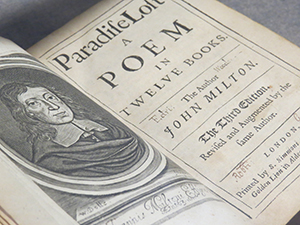
    Homecoming! Some Highlights from the Library of J. Milton French is on display now in the Scholarly Communication Center at Alexander Library. This case exhibit features a selection of volumes recently donated to Rutgers by the family of J. Milton French (1895–1962), a Milton scholar and professor of English at the university from 1940 to 1960.

    The books on display include rare first and early editions of works by John Harington, Richard Barckley, Michael Drayton, Ben Jonson, John Suckling, George Wither, William Wollaston, and John Milton.


    New Brunswick Music Scene ArchiveNew Brunswick Music Scene Symposium Planned for October 27, 2016

    Save the date. Special Collections and University Archives will hold the next New Brunswick Music Scene Archive symposium on October 27, 6 p.m. in the Teleconference Lecture Hall at Alexander Library. Stay tuned for more information, including the participants. In the meantime, here’s a look back at the 2015 symposium, featuring a who’s who of New Jersey music (http://www.libraries.rutgers.edu/news/symposium-local-notables-inaugurate-new-brunswick-music-scene-archive).


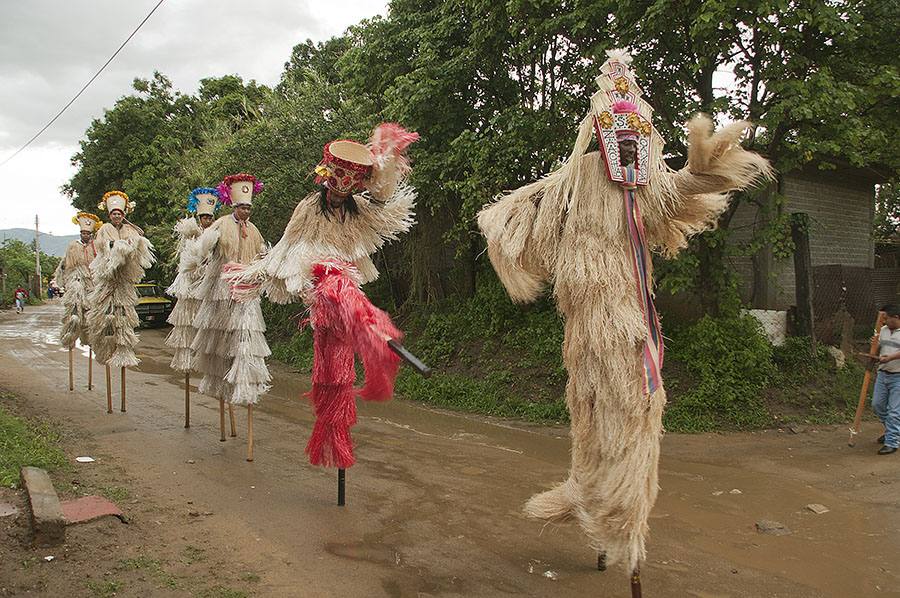
    Mary H. Dana Women Artists Series Galleries at Douglass Library is hosting Laura Anderson Barbata: Collaborations Beyond Borders through December 16. Credit: Laura Anderson Barbata.
    Credit: Laura Anderson Barbata.

    Mary H. Dana Women Artists Series Galleries Welcomes “Laura Anderson Barbata: Collaborations beyond Borders”

    This fall, the Mary H. Dana Women Artists Series Galleries in the Mabel Smith Douglass Library will welcome the 2016-17 Estelle Lebowitz Endowed Visiting Artist Exhibition, Laura Anderson Barbata: Collaborations Beyond Borders. The exhibit contains selected highlights of textile, sculptural, 2-dimensional, and video works from the traveling exhibition Transcommunality.


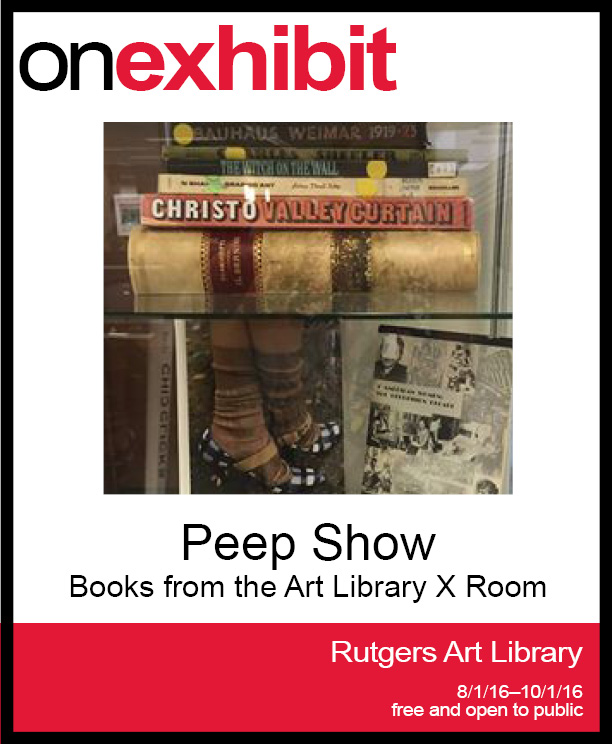
    Peep Show large image“Peep Show: Books from the Art Library X Room” Exhibit at Rutgers Art Library

    Megan Lotts has raided the X Room to put on a case display of beautiful, surprising, amusing, and impressive books.

    Stop by to get a taste of the treasures that reside in the Rutgers Art Library’s archives.

    Location: Rutgers Art Library


    Save

    Save

    Save

    Save

    Save

    Save

    Save

    Save

    Save

    Save

    Save