Category: Alexander Library

  • Rutgers University Libraries Welcome Dr. Tajah Ebram as Black Studies Librarian

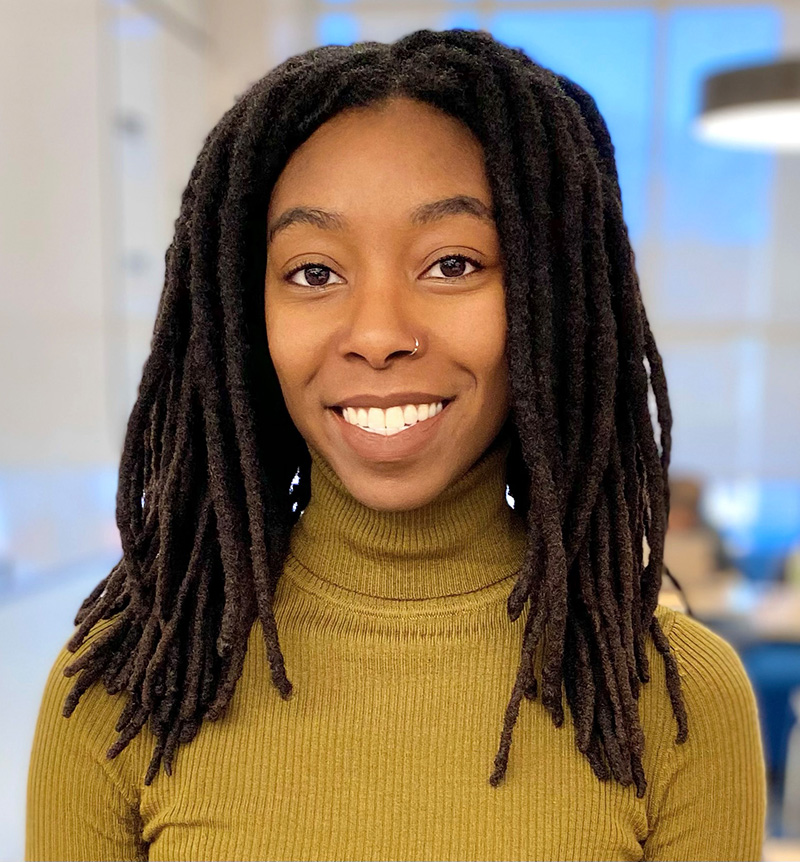
    Tajah Ebram
    Dr. Tajah Ebram

    Rutgers University Libraries and the Black Bibliography Project (BBP) are delighted to announce the appointment of Dr. Tajah Ebram as Black Studies Librarian. In addition to supporting faculty and students working in Black studies, Dr. Ebram will serve as the Rutgers lead for the BBP, which seeks to revitalize the practice of bibliography for African American literary and cultural studies. She will be based in Alexander Library, collaborating across the campus and with BBP colleagues at Yale University.

    Dr. Ebram received her PhD in 2020 from the University of Pennsylvania, specializing in 20th-century Black literary and cultural studies, with a focus on Black radicalisms. Her dissertation was an interdisciplinary cultural history of the MOVE Organization. Dr. Ebram comes to us from Haverford College, where she taught courses on Black Philadelphia, race and ecology, and Black feminisms and the carceral state. She brings additional expertise in cultural geography, public humanities, and digital humanities.

    Please join us in welcoming Dr. Ebram to the Rutgers community.

  • NBL Shipping, Logistics, and IT Departments Holiday Party

    On December 9, the New Brunswick Libraries’ Shipping, Logistics, and IT departments held their annual holiday party and white elephant gift exchange. Guests enjoyed pizza, snacks, refreshments, and dessert in Alexander Library’s break room. The always-entertaining gift exchange featured many amusing and unusual items, encouraging much wheeling, dealing, and stealing. A good time was had by all!

    Shipping, logistics, and IT departments holiday party.
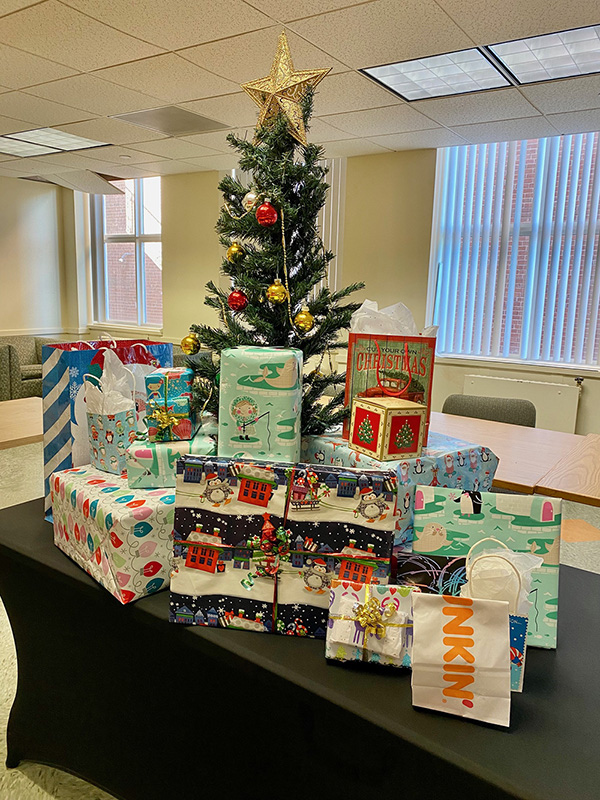
    White elephant gifts of many shapes and sizes surround the festive holiday tree.
    Shipping, logistics, and IT departments holiday party.
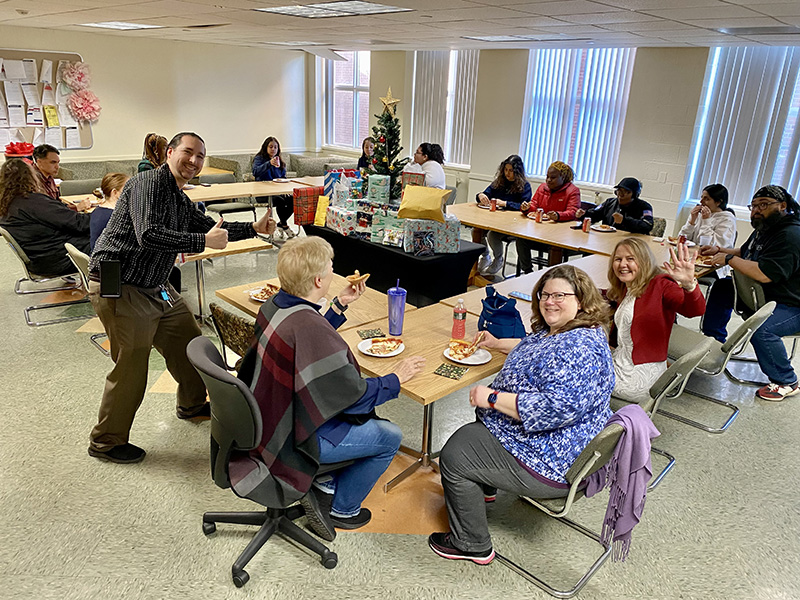
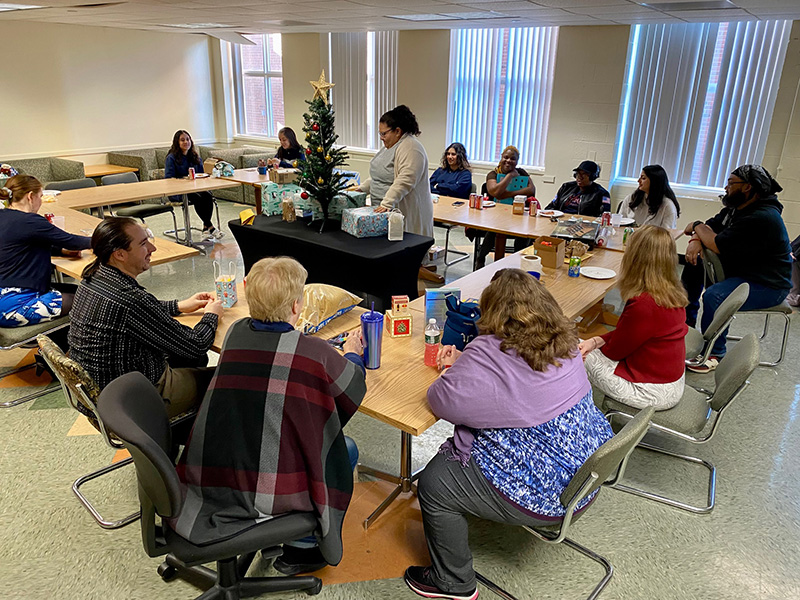
    Guests enjoy pizza, snacks, and refreshments before the white elephant gift exchange.
    Shipping, logistics, and IT departments holiday party.
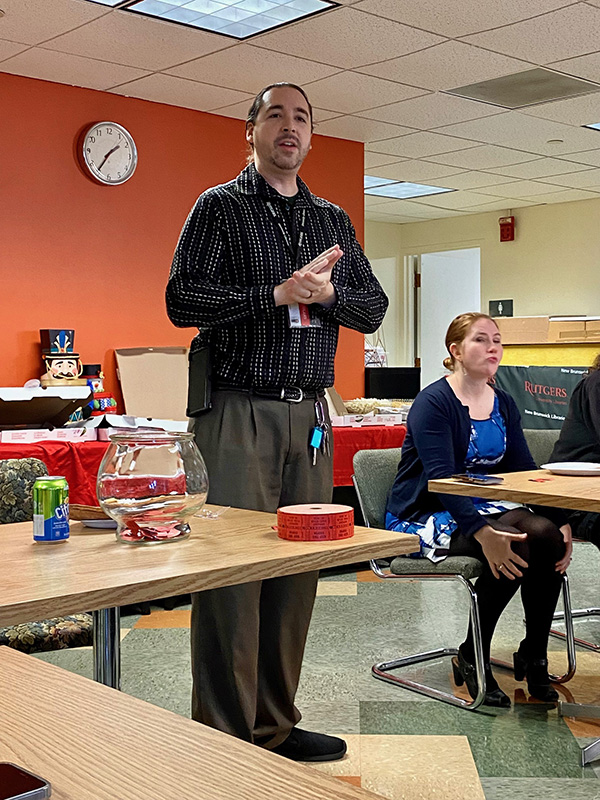
    Luke Sangiamo, coordinator of shipping and receiving, explains the white elephant gift exchange rules.
    Shipping, logistics, and IT departments holiday party.
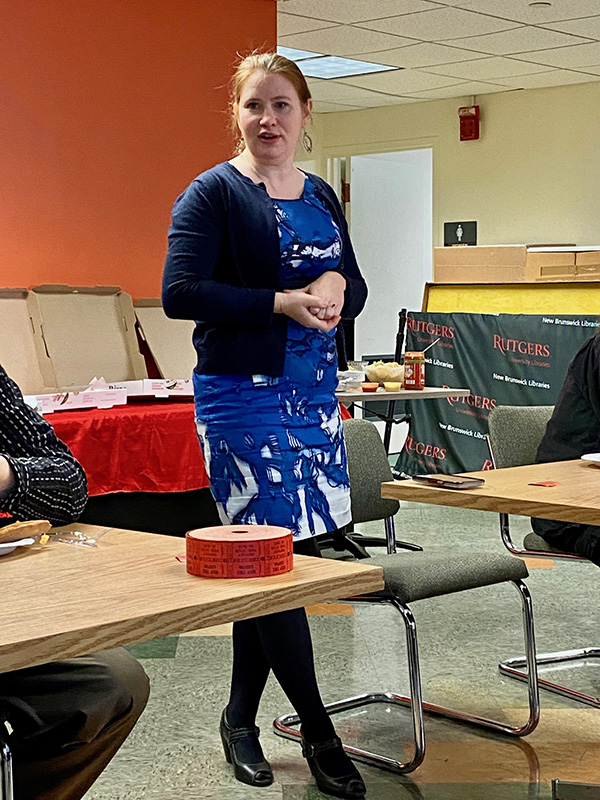
    Elena Schneider, events and program manager, thanks guests for attending the holiday party.
    Shipping, logistics, and IT departments holiday party.
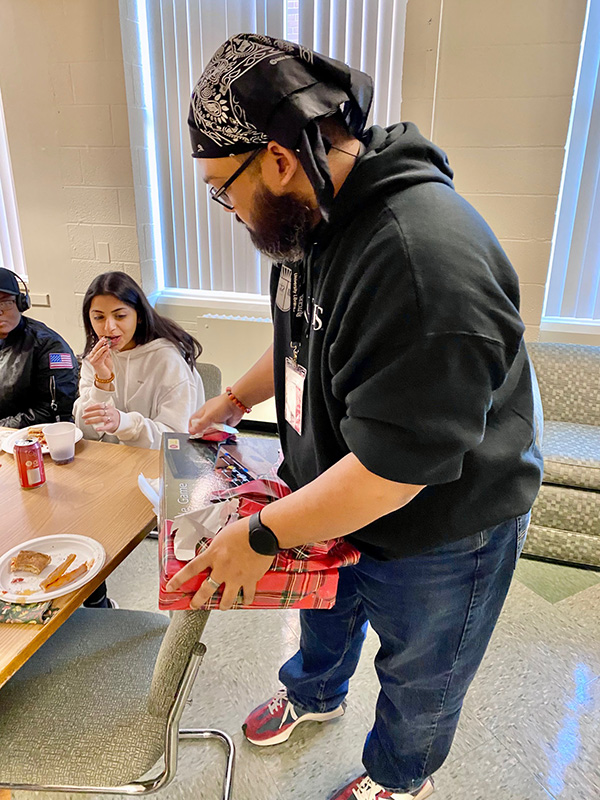
    Ray George, shipping assistant, unwraps his gift.
    Shipping, logistics, and IT departments holiday party.
    Guests eagerly await their turn to choose or steal a white elephant gift.
  • NBL’s 2022 Finals Week and Stressbuster Events Schedule

    Stressbuster.

    Stop by the following NBL locations for finals week/stressbuster events:

    Alexander Library
    • Thursday, December 15, to Friday, December 23
    • Stop by Alexander Library for a treat during finals week! At various times, Stressbuster Grab n’ Go snack bags will be placed in the lobby (while supplies last).
    Art Library
    • Thursday, December 15, to Friday, December 23
    • Visit the Art Library during finals week for a Stressbuster Grab n’ Go snack bag (while supplies last).
    Carr Library
    • Thursday, December 15, 3–4 p.m.
    • Tuesday, December 20, 3–4 p.m.
    • Visit Carr Library during finals week for Stressbuster Grab N’ Go snack bags (while supplies last).
    Chang Library
    • Thursday, December 15, 11 a.m.
    • Take a study break at Chang Library and refuel for finals with delicious snacks (while supplies last).
    Douglass Library
    • Thursday, December 15, noon–2 p.m.
    • Monday, December 19, 10 a.m.–noon
    • Wednesday, December 21, noon–2 p.m.
    • Thursday, December 22, 10 a.m.–noon
    • Stop by Douglass Library for snacks and water bottles (while supplies last).
    Math and Physics Library
    • Thursday, December 15, 1–4 p.m.
    • Friday, December 16, 1–4 p.m.
    • Warm up at Math and Physics Library with coffee, cocoa, or apple cider (while supplies last).
    LSM
    • Thursday, December 15, 11 a.m.
    • Good luck with finals! Stop by LSM for a snack break and games.
  • Stephanie Bartz Retires after More than 30 Years of Service

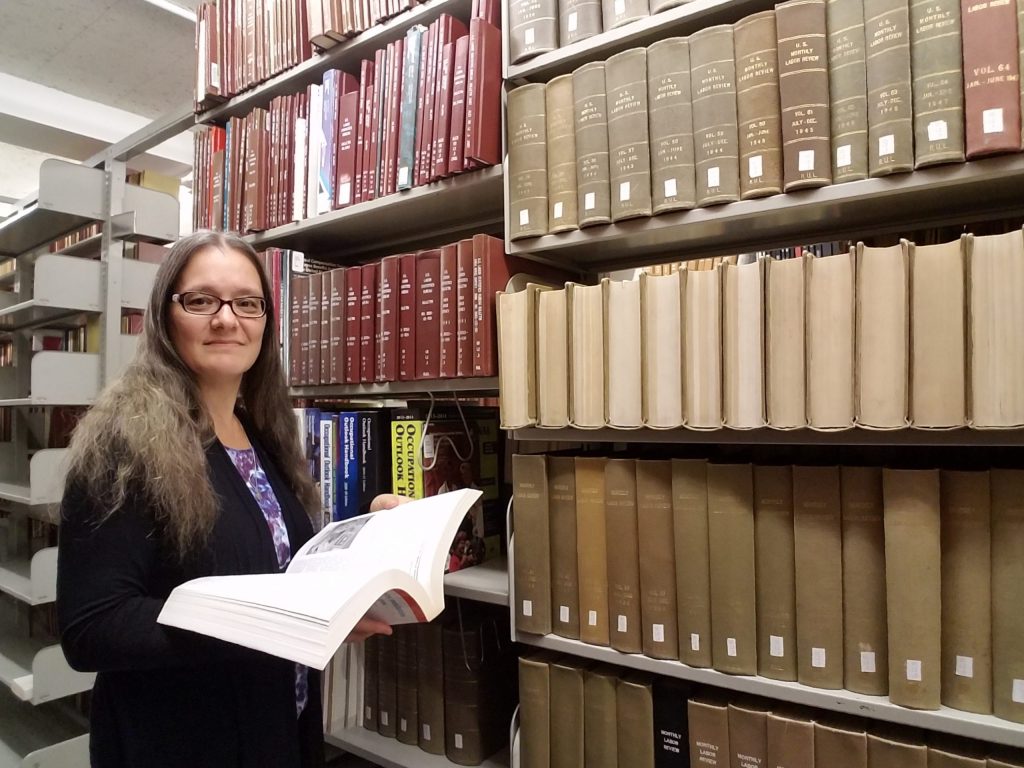
    Stephanie Bartz

    Stephanie Bartz, Government Resources and Information Services Librarian at Rutgers University–New Brunswick Libraries, retired after more than 30 years of service to the university.

    Stephanie started at Alexander Library as a Reference Assistant in 1983 while a student at the School of Communication, Information, and Library Studies (SCILS) and continued in various capacities until 1989 (when she resigned). Her responsibilities included working at the reference desk and helping to maintain the print reference collection (much larger and more heavily used in those days).

    Stephanie was asked to return in a part-time capacity in 1994 and began working full-time in 1996 to assume responsibility for government resources while another librarian was on leave. When that same librarian retired in June 2015, Stephanie took over the bulk of the government documents duties for Alexander Library. In January 2016, she also assumed responsibilities for the government documents and maps collections at the Library of Science and Medicine and began splitting her time between the two locations.

    Stephanie quickly became an indispensable member of the reference department at Alexander and then of the larger New Brunswick Libraries (NBL). She often helped to preserve the sanity of more technologically challenged colleagues by fixing minor and not-so-minor computer problems. While Stephanie frequently disclaimed being a tech person, she provided a high level of computer support for Alexander Library colleagues and served as an informal interpreter between librarians and staff in the Systems Office. Her willingness to take on additional responsibilities during leaves or job vacancies played a key role in sustaining the library’s support for faculty and students. One measure of her readiness to pitch in was her participation in LibGuides. She created and/or maintained more than 30 reference, government publications, and general interest guides. Moreover, she became the local LibGuides expert providing assistance and training, coordinating the transfer of guides caused by personnel changes, and updating/babysitting orphaned guides. Beyond that, she was a silent partner on other guides, helping librarians design and maintain their subject guides.

    Stephanie also contributed enormously to a dizzying array of committees, task forces, working groups, and councils. She served on the Rutgers University Libraries (RUL) PC Working Group from 1997 until 2016 and as the NBL PC Coordination Team leader from 2001 until 2014. She provided tech support, allocated computers, coordinated computer and related equipment purchases, and maintained the NBL website, among other tasks.

    She served on the Library Catalog Committee from 1999 to 2018 and chaired the group from 2005 until 2018. From 2016 to 2019, she was a member of the Discovery Working Group, which essentially replaced the Library Catalog Committee.

    Stephanie served multiple terms on the Rules of Procedure Committee, co-chairing the group for several years. She created the first RUL electronic ballot, became the local expert on bylaws, and maintained an archive of bylaws editions and drafts.

    She assumed responsibility for NBL chat coordination in 2020 and handled the complicated process of scheduling as many as 34 librarian and graduate student chatters.

    Stephanie joined the NBL Web Content Team when preparations for the new RUL website were being finalized in 2021 and assumed responsibility for creating and maintaining NBL’s content. She also managed NBL’s pages on the staff website.

    She maintained many mailing lists/groups, including the retirees list that we hope will be continued after her retirement.

    Stephanie helped coordinate the Digital Learning Commons, Hatchery, Google Books, and Alexander bound periodicals weeding projects for NBL. Simply listing this coordinator role can give no sense of the tireless and scrupulously careful detail work involved, one of Stephanie’s many strengths, and her remarkable ability to work collaboratively across departmental and unit boundaries.

    Stephanie’s life outside the libraries manifests a similarly high level of participation and willingness to take on both leadership roles and the often unsung, behind-the-scenes work that sustains organizations. For example, she served more than 40 years as a volunteer for the Middlesex County Fair.

    For more than 20 years, Stephanie has been deeply involved in the South River Historical & Preservation Society in capacities ranging from secretary, newsletter editor, webmaster, and archivist. One result of that work was the Images of America book on South River.

    No listing of tasks and accomplishments can adequately capture Stephanie’s contributions to NBL and RUL as a whole. She has been an invaluable librarian and a highly respected colleague. Judit Ward captures many of our sentiments: “Stephanie Bartz is an exceptional colleague. Stephanie is my friend. How many of us think of her just like that? Always there for us with answers and solutions, the much-needed gentle reminders—that’s the Stephanie I know. She has always held herself to the highest professional standards at RUL. Because she cares. Competent and fair, authentic and trustworthy—these are precious and rare qualities. That’s Stephanie. I am honored to call her my friend. Hope I can still call her my friend in the future.”

    For many of us, it is hard to imagine the Libraries without her. I have turned to Stephanie for guidance, wisdom, and help across a range of initiatives and projects. I appreciate her sense of humor and her dedication to the community. Whether the community is our own faculty and staff, our retirees and alumni, the larger Rutgers landscape, the citizens of NJ, or other states who could benefit from our government documents, Stephanie is there.

    Stephanie, you have brought humanity and dedication to your role. Thank you for your service, and may your next chapter be fulfilling with just the right amount of peace. You will be deeply missed.

  • Reservations Accepted for One Button Studio

    One button studio at Alexander Library
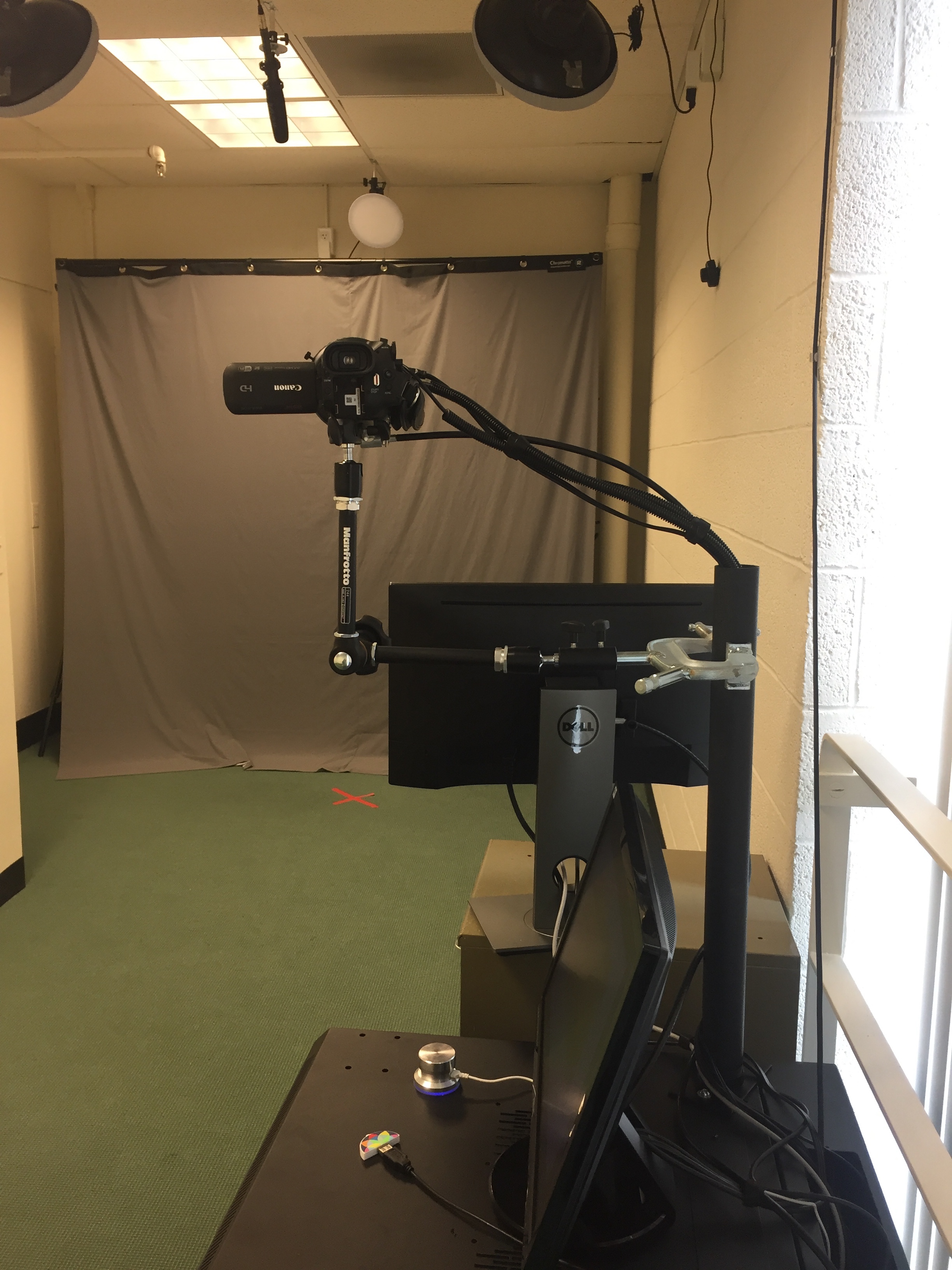
    The One Button Studio at Alexander Library.

    Students, faculty, and staff now can reserve the One Button Studio in Alexander Library to create high-quality digital video recordings in a studio setting. The studio does not require users to have prior video production knowledge. Lighting, audio, and video configurations have been pre-set for ease of use.  With support and funding from Ben Sifuentes-Jáuregui, vice chancellor for Undergraduate Academic Affairs at Rutgers University–New Brunswick, this space will enable students to present their research as a high-quality video, an alternative to the more static conventions of the poster or long-form essay. The room is set up for one to three people to create a video with only a FAT formatted flash drive. It really is as simple as 1-2-3-4: insert your USB drive into the dock, press the large silver button to begin recording, press the button to stop recording, and remove your USB drive to deactivate the studio camera and lights. Shared User Services provided support to list the One Button Studio on the Group Study Rooms web page and link to a user guide/reservation page. Reserve the room online and visit the Circulation Desk in Alexander Library to check out the key with your Rutgers ID card.

  • Making Room for (Space) Improvement

    Last month the Central unit completed a series of relocation projects within Alexander Library and the Libraries Technical Services Building in order to maximize the efficient use of space and prepare for future improvement projects.

    We were pleased to welcome Communications, Shared User Services and Digital Projects to the administrative offices on the third floor at Alexander: Matt Badessa, Rhonda Marker, Marty Barnett, and Isaiah Beard are now located at 169 College Avenue, and may be reached at their same telephone lines. Business Operations, including Abigail DiPaolo, Amanda Presler and Jodi Costeira, have relocated within the administrative suite, so their address and telephone lines will not change.

    We are also excited to welcome Gracemary Smulewitz to the SCC space on the fourth floor of Alexander. Web services librarian Amy Kimura and discovery services librarian Joseph Deodato have now relocated to TSB, near to their frequent collaborators in IIS and TAS, and can be reached at their same telephone lines at 47 Davidson Road.

    These new arrangements are partly the result of achieving certain goals and priorities for FY2019, namely, the addition of Jeffrey Carroll, our new AVP of scholarly communications and collections, who joins Rutgers on July 15. In the coming year, both Alexander Library and TSB will undergo limited renovation projects to include more collaborative space for staff and students, and to co-locate School of Communication and Information faculty in Alexander Library.

    The Libraries are accustomed to the strengths and challenges of working together across 16 buildings and three campuses, and effective workspace is always in demand. More news about ongoing space improvements will follow as we work on the functionality and use of the Technical Services Building. We look forward to the next phase of enhancements!

    Want more exciting news about spaces and places at RUL? Read about the Dana Library Transformation Project and track its progress on its dedicated blog.

  • Libraries Add 300 Volumes to the JSTOR Print Archive

    I recently read in the email newsletter of the Center for Research Libraries about the JSTOR Print Archive at CRL. This is a fallback collection of the print volumes whose digital surrogates are available in the JSTOR database. Surprisingly, the archive at CRL is only 57% complete; they are seeking donations. So I contacted CRL with the list of the bound periodical titles that we are withdrawing from Alexander Library (to gain collections space) because they have become superfluous because of our secure access to digital backfiles in JSTOR for these titles. It turned out that CRL was interested in parts (mostly all) of our holdings for 23 titles. We counted the approximate number of volumes (our electronic holdings information was incomplete) and it amounted to roughly 300 volumes. CRL provided us with a UPS code for mailing of the volumes. With the help of a few librarian colleagues, I pulled the volumes from the bound periodicals section and packed them into 26 boxes. The shipping department applied the shipping labels, and the Libraries’ contribution to the JSTOR Print Archive is on its way to Chicago.
  • Ninja Warrior Report

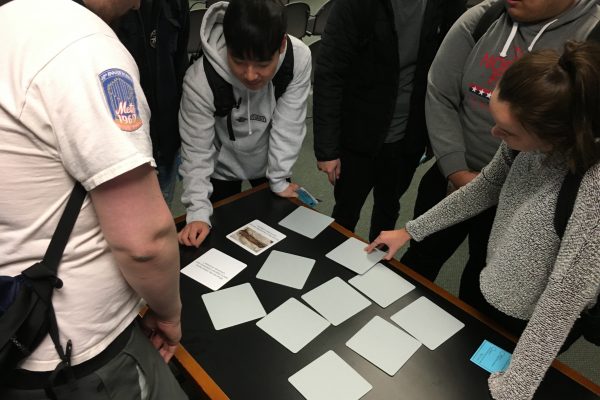
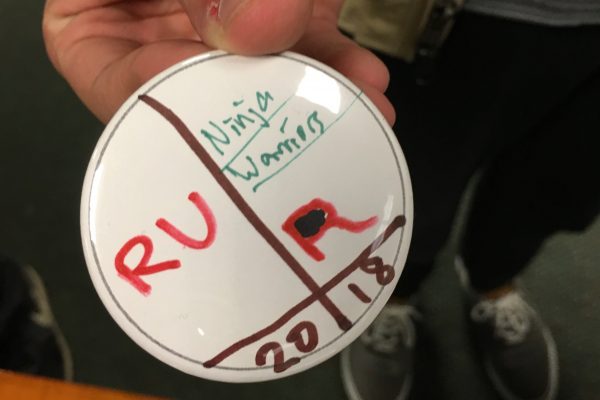
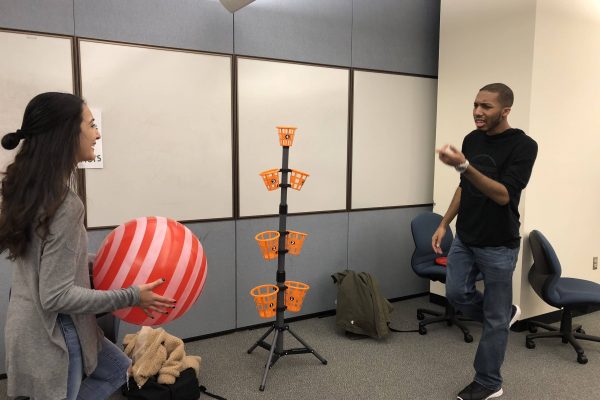
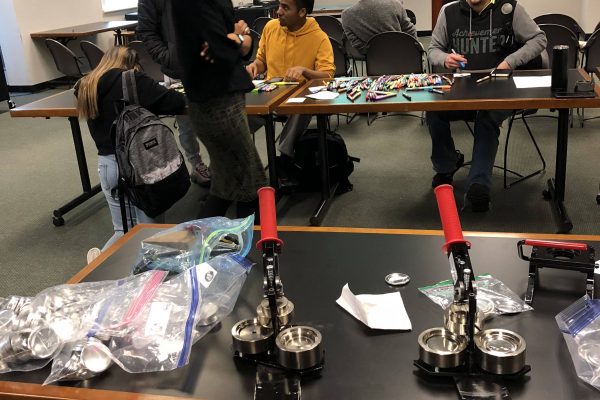
    Participants in this program, from the School of Arts and Sciences’ Students in Transition Seminar, were walked through a series of library related activities including five minutes of copyright, playing a memory game to learn about Special Collections & University Archives (SCUA), making a button to learn more about copyright and SCUA, playing a game to learn about what is available for check out at the circulation desk, how to find an article and a PDF, and more. Over 160 transfer students participated in this project and 105 assessment surveys were collected.

    From a quick analysis of the assessment spreadsheet, each activity was mentioned more than once as a positive experience. Many students enjoyed button making, copyright, finding a PDF, and the unique items found in SCUA. Many students liked the overall feel of this interactive experience.  Also, it was noted multiple times that many students’ favorite aspect of the library was the people who work there. Last but not least, many students—including the passport stamper from the STS program—expressed during the event that the library event was the best so far and many participants thanked us for the opportunity to learn while having fun.

    Should you have further questions about this event, please contact Mei-Ling Lo mlo@rutgers.edu or Megan Lotts megan.lotts@rutgers.edu.

  • Government Documents Repatriation Project

    Puerto Rican government documentAlexander Library’s collection of uncatalogued government documents from Puerto Rico has found a new home… in Puerto Rico. Along with a small amount of related material from the equivalent collection at the Library of Science & Medicine, similar groups of documents from states like Louisiana and Hawaii have also been offered to libraries in those states. I conceived of this repatriation project in response to the natural disasters that have affected libraries across the United States and its territories.

    Jane Canfield, a librarian at Puerto Rico’s Biblioteca Encarnación Valdés at Pontificia Universidad Católica, was the first name that came to mind when the project was considered. Canfield has given multiple presentations to the government documents community about the damages and conditions in Puerto Rico following Hurricane Maria in 2017. Her response to the initial contact about the project was enthusiastic, and she ultimately accepted all of the items that were offered. Ranging from a 1905 edition of the Register of Porto Rico to a 1990 Bibliografia fitopatologica Puertorriquena, 1878-1989, 178 individual items were sent.

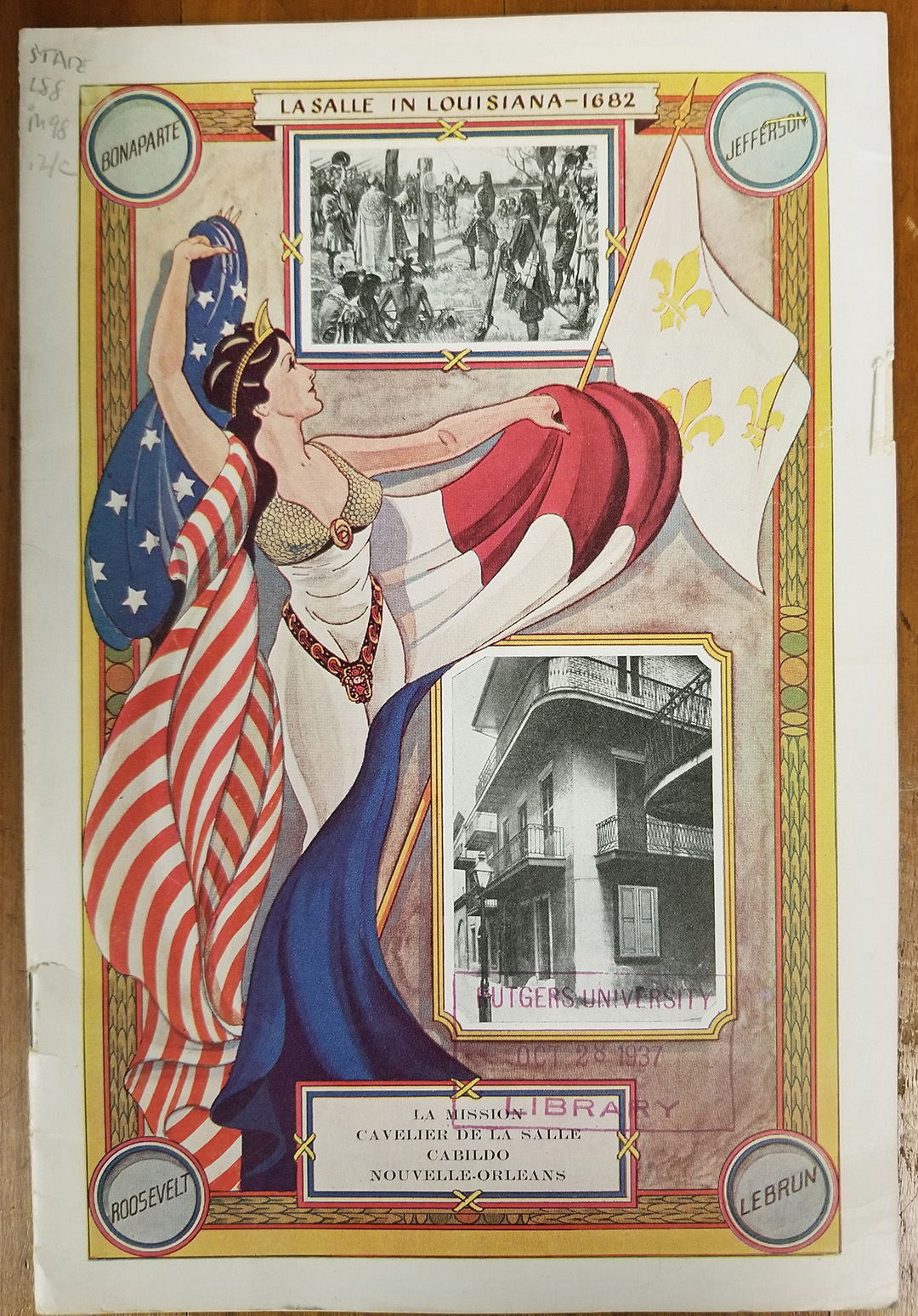
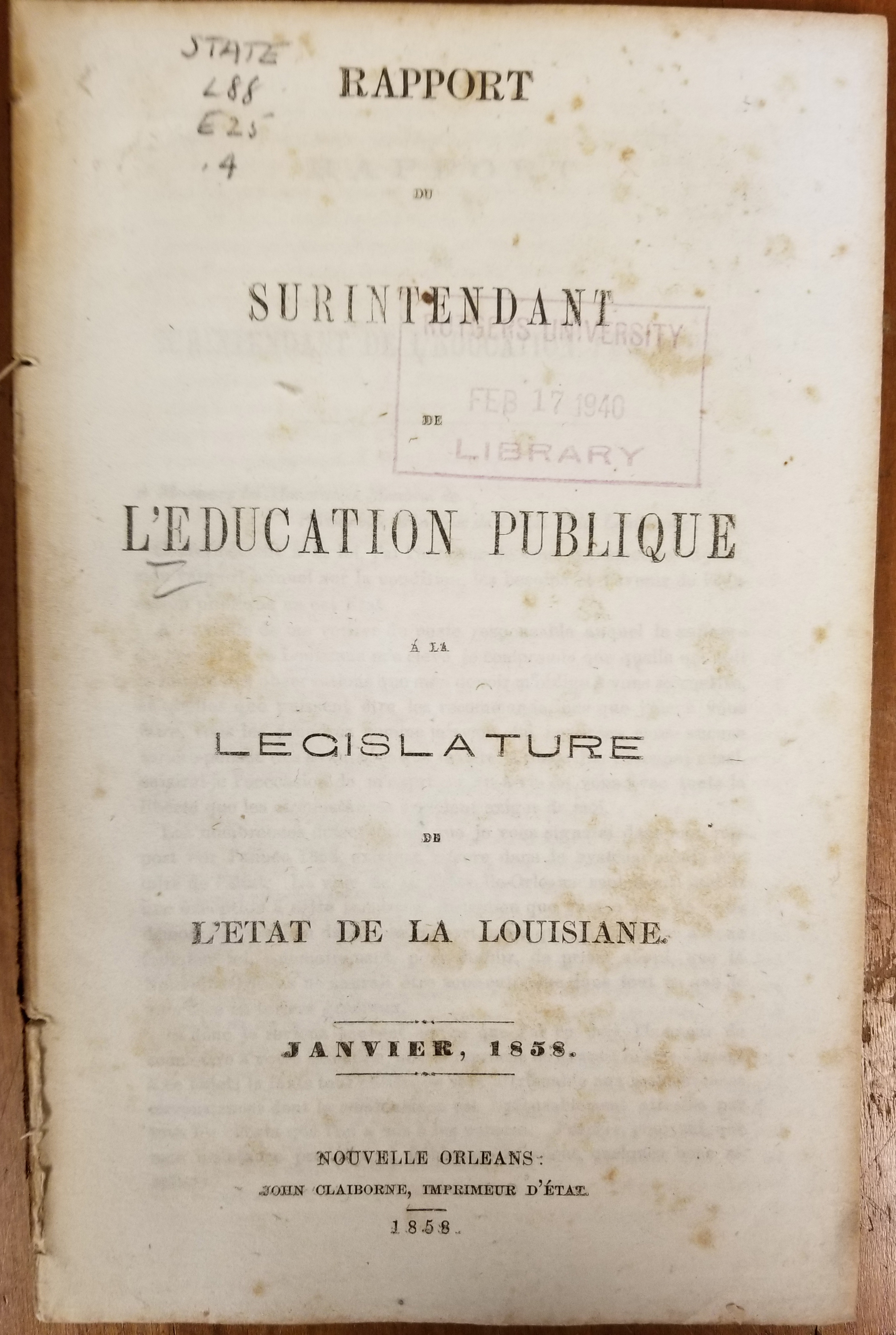
    Louisiana government documentHurricane Katrina, the floods of 2016, and other storms made Louisiana the first candidate in the continental United States to be considered for the project. A list of material from Louisiana and New Orleans was shared with a librarian at the University of New Orleans (UNO), who in turn shared it with other Louisiana libraries. While not all of the documents found a new home, more than 78% of the publications were requested and subsequently sent to UNO for dissemination. The University of New Orleans, the University of Louisiana at Lafayette, Loyola University, Nicholls State University, and the State Library of Louisiana were all able to fill gaps in their collections.

    A final response from the library at the University of Hawaii in Manoa, which suffered major damage in a 2004 flood, is forthcoming. Additional states, including Texas and Florida, may be considered when time permits.

    Although the original source of the documents may be lost to history, many were likely obtained via mailing lists or gift and exchange programs. Returning them to their points of origin is a small effort to assist in the rebuilding of collections damaged by hurricanes, floods, and other disasters.

    Special thanks go to Tom Glynn for reviewing the historical material before it was offered; to Elena Schneider, and others in the Shipping & Receiving department, who investigated shipping options, packed the boxes, and delivered the materials to the university department that handles US postal mail; and to Dee Magnoni, who graciously agreed to fund the shipping costs.

    The forgotten collection of state documents is a little less forgotten. The hope is that we run out of disasters before we run out of documents.

  • This Month in the Agenda: March 2000

    This month we take a look at the Agenda in the aughts. Is it just me, or does 2000 not feel like almost two decades ago?

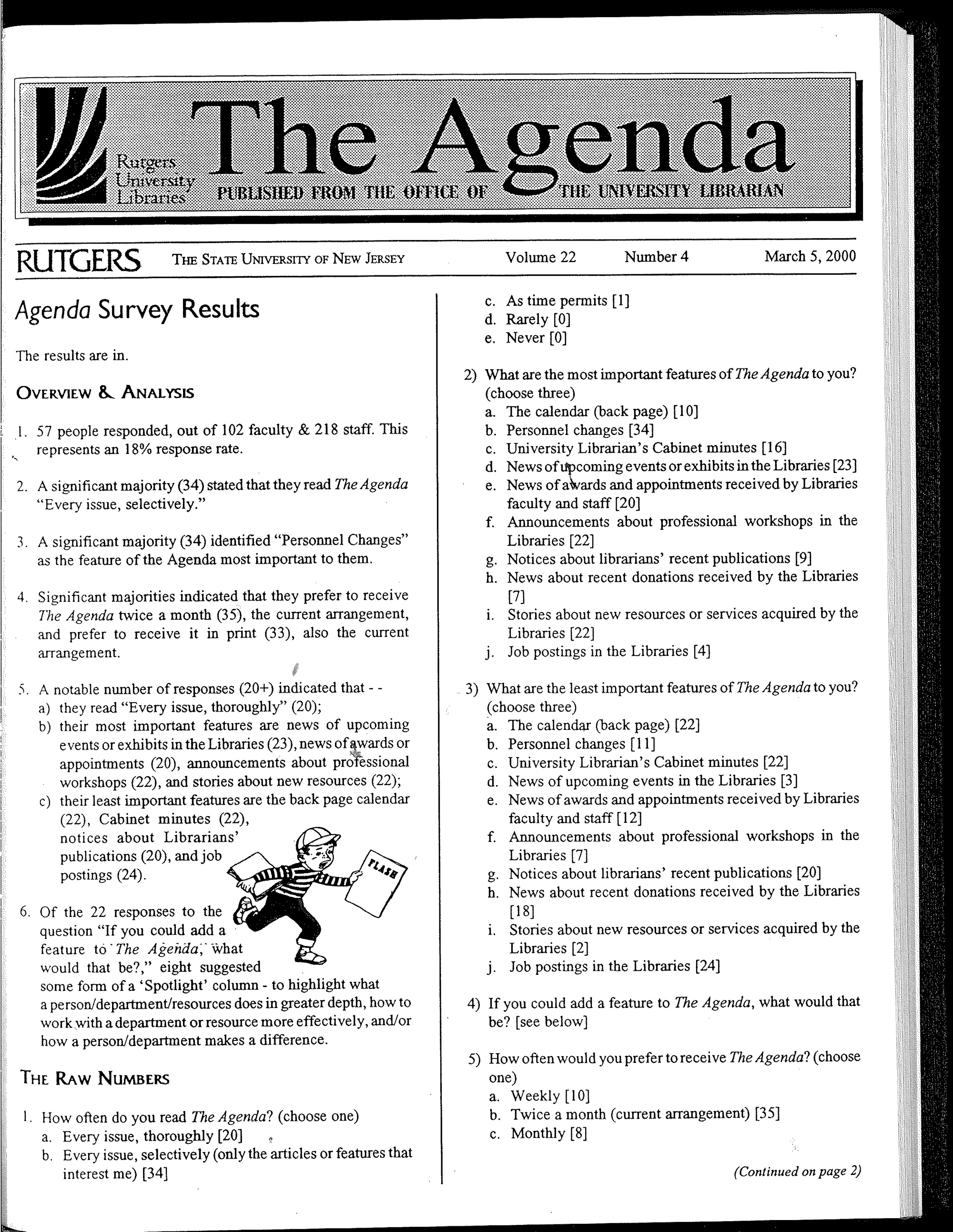
    Survey Says
    The Agenda 22, no. 4 (March 5, 2000)
    Reader survey from the Agenda 22, no. 4 (March 5, 2000).
    Systematic Thinking

    MESSAGE FROM THE UNIVERSITY LIBRARIAN

    At the last Cabinet meeting we discussed what it means to be a system. This might seem needless for an organization that has described itself as operating system-wide for many years, but it’s always useful to step back and take stock. This is especially important as we continue to develop our long-range plan, the Digital Library Initiative (DLI), and seek ways to be more effective.

    Typically, a system shares the same vision, philosophy, and goals. It shares common infrastructure and operates with system-wide policies and practices. There is considerable interdependency among units and a heightened need for communication. There’s also a shift to systems thinking, where operations are examined across the system rather than just locally. This helps to improve and expand the entire system’s capabilities to be effective. Each unit is each other unit’s best customer and best supporter. Information and expertise are shared readily, so that everyone in the organization benefits.

    As we implement the DLI we need to ensure that we are all working towards system-wide goals, using our resources effectively, thinking strategically, collaborating across units, and present a consistent, quality presence to our users. Communication and open discussion will be important as we gain new understandings in what it means to sustain and enhance a system in the digital environment.

    The Agenda 22, no. 5 (March 19, 2000)

    Getting Medieval

    The Medieval Studies Program and the Friends of the
    Rutgers University Libraries invite you to

    The Dedication of the
    Ernest McDonnell
    Medieval Culture Seminar Room
    in Alexander Library

    featuring a talk by
    Barbara Newman,
    Professor of English and Religion
    at Northwestern University

    “You Can’t Speak To Men
    Until You’ve Spoken With God:
    Medieval Women And The Church”

    Thursday, March 23, 2000
    4:00–6:00 p.m.
    Alexander Library

    The Agenda 22, no. 4 (March 5, 2000)