Category: Professional Development

  • ‘One Libraries’ Engagement Day Focused on Well-Being

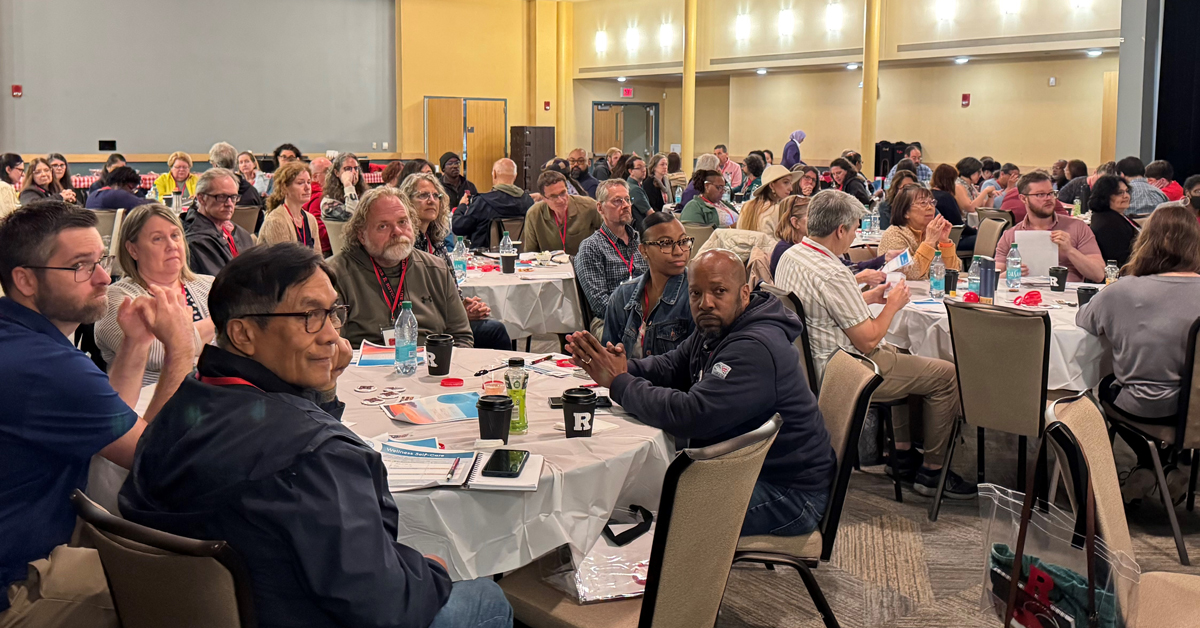
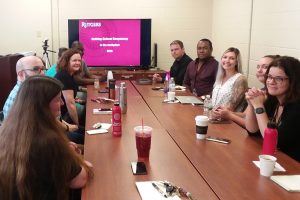
    A large room full of people seated at round tables
    Engagement Day was held on May 30 at Livingston Student Center.

    On Friday, May 30, more than 100 Rutgers University Libraries faculty and staff gathered for the Libraries’ first organization-wide Engagement Day. The full-day, in-person event was held at Rutgers University–New Brunswick’s Livingston Student Center. All library locations were closed for the day. 


    Professional Development Focused on Well-being 

    Engagement Day featured two professional development sessions focused on emotional and psychological well-being. The first was held virtually, earlier in the week. On May 27, Ralph Gigliotti, assistant vice president for organizational leadership in University Academic Affairs, led a virtual talk framed by his book, Post-Crisis Leadership: Resilience, Renewal, and Reinvention in the Aftermath of Disruption.  

    Then, the morning of May 30 featured an interactive two-hour wellness session provided by ScarletWell, a holistic wellness initiative dedicated to bolstering the health and wellness of Rutgers–New Brunswick students, faculty, and staff. The session introduced participants to the Pause, Breathe, Move, and Nourish framework—an accessible approach to integrating self-care into daily life. Components of the session included guided meditation, reflective activities, group discussion, and movement. The presenters were Dr. Amy B. Spagnolo, senior program coordinator for ScarletWell and former associate professor in the Department of Psychiatric Rehabilitation and Counseling at Rutgers School of Health Professions; psychologist and mindfulness expert Patrick Connelly; and Peggy Swarbrick,director of ScarletWell and a professor in the Rutgers Graduate School of Applied and Professional Psychology’s Applied Psychology Department and director of ScarletWell. 


    Afternoon of Team Building 

    The afternoon of Engagement Day featured a variety of team building options. Hourly Tai Chi lessons on Livingston Lawn were offered by John Gaddy of John Gaddy’s Karate and Boxing Studio in High Bridge. Inside, the Rutgers University Libraries Major Events Committee provided both organized and self-paced activities, including Bingo, balloon race games, trivia, raffles, giant Jenga, Tetris Tumble, board games, and coloring.

    Game prizes were generously donated by the Rutgers University Libraries unit heads: Consuella Askew, Abbey DiPaolo, Regina Koury, Caroline Muglia, Tony Nguyen, and Amanda Clay Powers. 

    Raffle prizes were a variety of Rutgers swag items provided by units from throughout the university. 

  • Rutgers University Libraries Mentoring Program Committee Hosts Authors and Editors Panel Discussions

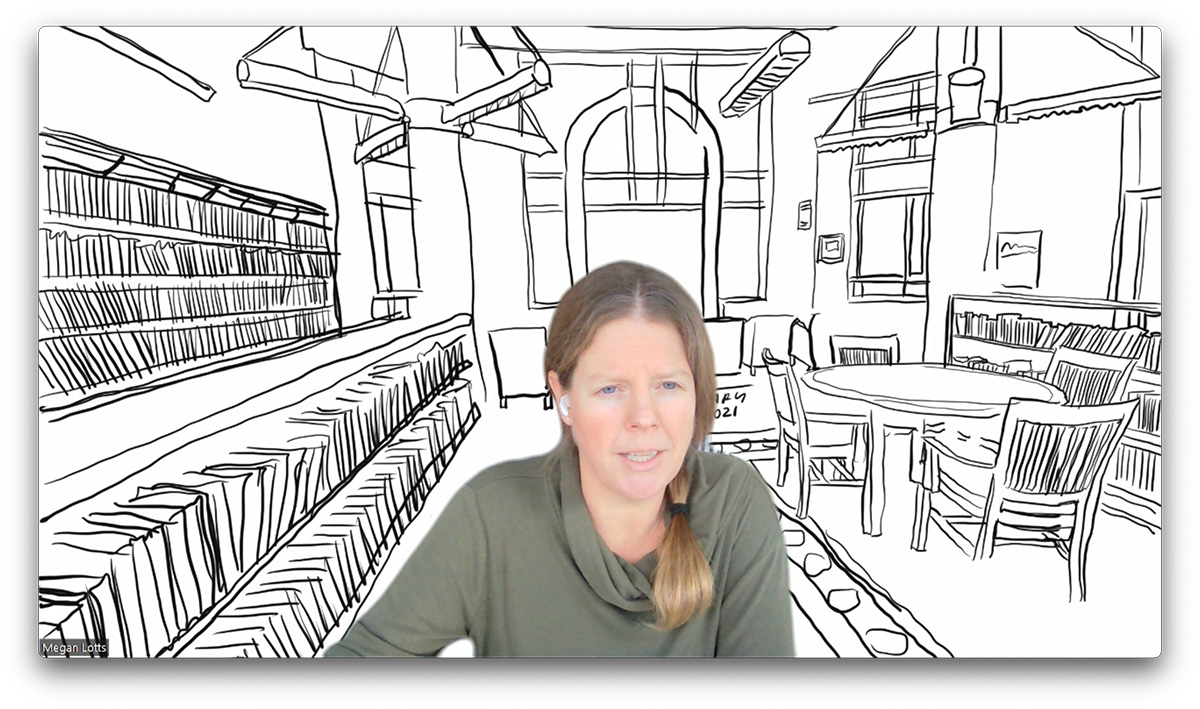
    RUL Mentoring Program Committee Authors Panel.

    In November 2022, the Rutgers University Libraries Mentoring Program Committee hosted a two-part program to give authors insight and confidence to share their ideas and expertise through publishing: “Part 1: Editors Panel” (November 2) and “Part 2: Authors Panel” (November 17).

    Experienced editors and authors discussed the fundamentals of research, writing, and publishing. They addressed topics such as turning an idea into a publication, dealing with deadlines and writer’s block, and collaborating with co-authors.

    For more information about the Mentoring Program Committee, please visit staff.libraries.rutgers.edu/faculty-mentoring.

    Authors Panel Panelists

    Laura Costello is the director for strategic planning and assessment for Rutgers University Libraries. Laura has authored and co-authored three books, seven book chapters, and over 20 peer-reviewed articles and other publications. Her research focuses on assessment in diverse areas of the library, including reference and user services, collections, and library spaces. She serves as a regular peer reviewer for the open-access journal Evidence Based Library and Information Practice (EBLIP). Her most recent publication is a co-authored article on the impact of the COVID-19 pandemic on virtual reference services published in The Journal of the Association for Information Science and Technology (JASIST).

    Melissa De Fino is the special collections and formats metadata librarian for Rutgers University Libraries. Melissa is the co-author of the recently published book Virtual Technical Services: A Handbook, which stemmed from her experiences during the COVID-19 quarantine period and has led to conference presentations and an interview invitation for the Lucidea “Think Clearly” blog. She served as the editor of the Technical Services Quarterly column “Tech Services on the Web” for five years. Melissa has published peer-reviewed articles about the changing nature of technical services librarianship and has served as a peer reviewer for several articles. Melissa was an ALA Emerging Leader in 2008 and was RUL’s first Emerging Leader.

    Megan Lotts is the art librarian at the Art Library of Rutgers University Libraries. Megan teaches research workshops, builds collections, facilitates programming and events, and closely engages with students and faculty researching in the arts. She has presented her research nationally and internationally and published articles in portal: the Libraries and the Academy, Art Documentation, Journal of Library Administration, College and Research Libraries News, and more. In 2021, the American Libraries Association published her book Advancing a Culture of Creativity in Libraries: Programming and Engagement. Her research interests include creativity, outreach and engagement, makerspaces, play, and the work of library liaisons. She is known for her work in implementing LEGO® play, creating a culture of creativity, and curating the exhibition spaces at the Rutgers University Art Library. She also teaches a semester-long seminar, “Playing to Learn in Higher Education.”

    Caryn Radick is the digital archivist for Special Collections and University Archives of Rutgers University Libraries. Caryn was a Special Collections and University Archives processing archivist from 2004 until 2011, when she assumed her current role. She oversees the New Jersey Digital Newspaper Project, which provides digitized historic newspapers. Her research interests include the intersection of archives and fiction and surfacing mysteries and puzzles found in archives. She has published articles in The American Archivist, Archivaria, and Nursing-Clio. Caryn served as an associate editor for the Journal of Archival Organization and the Journal of the Rutgers University Libraries. She is the 2021 recipient of the New Jersey Studies Academic Alliance’s Teaching Award for her Byrne Seminar class “Only in New Jersey! New Jersey’s History in Newspapers.”

    Yingting Zhang is the research services librarian at the Robert Wood Johnson (RWJ) Library of the Health Sciences of Rutgers University Libraries and an adjunct assistant professor in the RWJ Medical School Department of Medicine, Rutgers University. Yingting also serves as the liaison librarian to the School of Public Health and the Cancer Institute of New Jersey. She is a Distinguished Member of the Academy of Health Information Professionals. She serves on the Rutgers Health Sciences Institutional Review Board (IRB) and the Executive IRB. Yingting has authored and co-authored 14 peer-reviewed journal articles and six non-peer-reviewed papers. She is currently working on a book chapter related to research on digital identity and writing an article on her experience providing systematic reviews for the past seven years.

    Editors Panel Panelists

    Marianne Ryan is the dean of University Libraries at Loyola University Chicago. Since 2015, Marianne has served as the editor of portal: Libraries and the Academy, published by Johns Hopkins University Press and part of its Project Muse collection. Marianne also served as the Management column editor of Reference and User Services Quarterly and on the editorial board of Library Leadership & Management. She has published numerous articles, including “How to Get Your Article Published: Twenty Tips from Two Editors.”

    Ken Varnum is the senior program manager and discovery strategist at the University of Michigan Library. Ken’s research and professional interests include discovery systems, library analytics, and technology in the library setting. He has been the editor of Information Technology and Libraries (ITAL) since 2017 and has edited five books, the most recent being New Top Technologies Every Librarian Needs to Know, published in 2019. ITAL is one of ALA Core’s three official journals and is open access.

    Adriana Cuervo is the head of Archival Collections and Services at the Institute of Jazz Studies in the John Cotton Dana Library, Rutgers University–Newark. Adriana oversees the day-to-day operations of the Institute of Jazz Studies—the world’s largest and most comprehensive jazz research facility. She has had a long career in music and performing arts special collections and previously worked at the Sousa Archives and Center for American Music at the University of Illinois at Urbana-Champaign. She enjoys working in the preservation, access, and promotion of cultural heritage and has published several articles. Adriana served on the editorial board of American Archivist for four years.

    Nancy Kranich teaches at the Rutgers University School of Communication and Information and conducts special projects for Rutgers University Libraries. She served as President of the American Library Association in 2000–2001, focusing on the role of libraries in democracies. Nancy is currently editing a special issue on reimagining the civic role of libraries for Library Quarterly. She serves on the editorial boards of Library Quarterly: Information, Community and Policy and the Journal of Information Policy. She is also a frequent pre-publication peer reviewer for several scholarly journals. She has published countless articles and has served as editor and contributor to Libraries and Democracy for ALA Editions.

  • DEI Spotlight – December 2022

    December 2022 Spotlight

    The DEI Committee 2.0 was formed in late 2021 and comprises staff and faculty representing all Rutgers campuses. The committee’s mission is to:

    • respect and foster perspectives that reflect varying backgrounds, identities, roles, and their intersections;
    • create and support structures and behaviors that encourage equity, fairness, and justice; and
    • promote an environment of belonging, respect, opportunity, and empowerment.

    Reporting to the Vice President for University Libraries and University Librarian and the Libraries Leadership Team, the committee serves as an advisory body to the Libraries in support of RUL and university core DEI values and university priorities. In the past year, the committee worked with the RUL Human Resources department to review hiring practices and create a more inclusive work environment. The committee meets bimonthly and is currently working on its next charge, which will be announced soon.

    Read the DEI Committee’s November 2022 Meeting Minutes
    Read the DEI Committee’s October 2022 Meeting Minutes
    DEI Committee Members


    DEI Training and Events

    Participate in the following training and events to expand your DEI knowledge:

    STRIDE Workshop

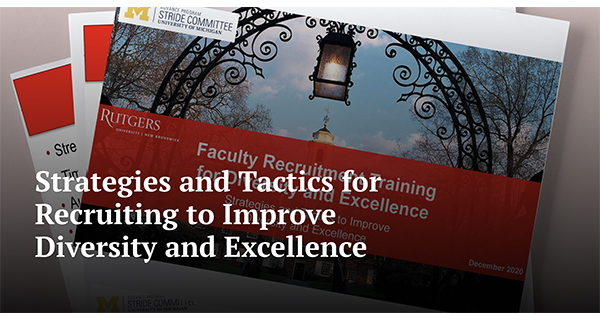
    Strategies and Tactics for Recruiting to Improve Diversity and Excellence (STRIDE) Workshop

    Date: Wednesday, December 14, 2022
    Time: 11:00 a.m.–1:00 p.m.

    This two-hour workshop reviews research-driven best practices to recruit for diversity and excellence across every stage in the search process and is designed to help faculty produce diverse candidate pools and run effective searches. STRIDE workshops are recommended for faculty members with key roles in faculty recruitment efforts (e.g., search committee chairs and members).

    Register for the Workshop

    Babs Siperstein Humanities and Medicine Seminars

    The Siperstein Seminars take an inclusive and intersectional approach to broaden the understanding of LGBTQIA+ issues to build healthcare workers’ capacity and knowledge base, thus increasing their ability to provide more comprehensive and holistic healthcare. To learn more about the seminars, please click this link.

    Tara Madison Avery

    Seminar: Transgender and Nonbinary Representation in Comics
    Speaker: Tara Madison Avery
    Date: Monday, December 19, 2022
    Time: 6:00–7:00 p.m.

    Tara Madison Avery is a cartoonist, bi activist, and the publisher of Stacked Deck Press, an imprint devoted to comics of LGBTQAIU interest. As a cartoonist, Avery created the bi-themed webcomic Gooch and has published stories in several queer-themed comics anthologies, including We’re Still Here: An All-Trans Comics Anthology (which she co-edited and published), winner of the 2019 Ignatz Award for Outstanding Anthology. She was invited to the 2015 and 2016 Bisexual Community Briefings at the White House and was chair of the Los Angeles Bi Task Force from 2013 to 2015. Avery has also been a board member of Prism Comics, a nonprofit organization that promotes LGBTQ comics, comics creators, and fandom, since 2012. In her work with Prism Comics, she has moderated several LGBTQ-oriented panel discussions at comic conventions across the country, including the first all-transgender panel at San Diego Comic-Con in 2014.

    Thank you to Kayo Denda, Head of the Margery Somers Foster Center and Librarian for Women’s Gender And Sexuality Studies, for organizing and promoting wonderful events.

    Register for the Seminar

    World Braille Day 2023

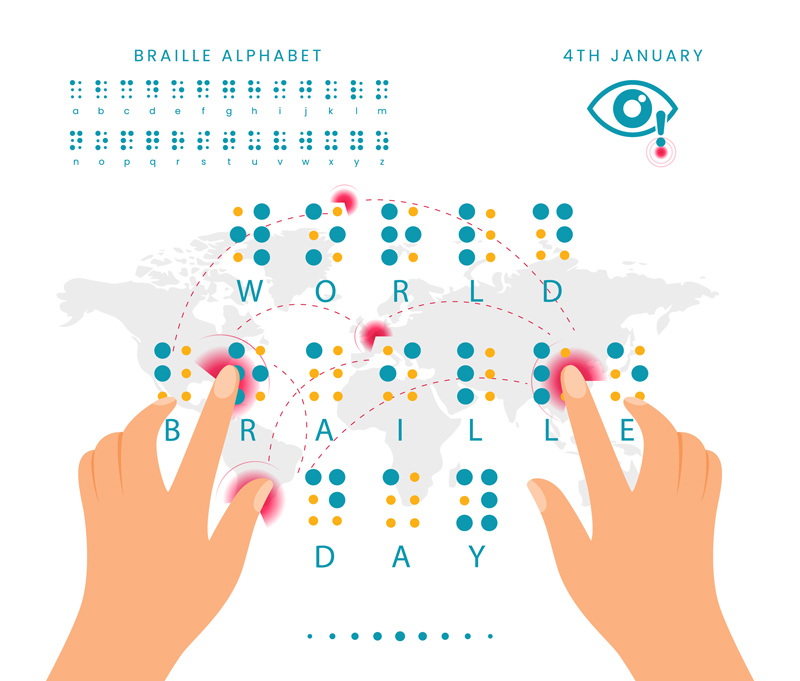
    World Braille Day

    Date: Wednesday, January 4, 2023

    World Braille Day is celebrated every year on January 4 to commemorate the birthday of Louis Braille, founder of the braille system. Braille is a tactile writing system used by people who are visually impaired.


    DEI Reads

    Check out what the DEI Committee is currently reading:

    The Art of Effective Facilitation


    DEI Resources

    People at computer.

    Explore these resources to learn more about DEI:


    DEI Spotlight Archive

  • Our Commitment to Diversity, Equity and Inclusion

    Robeson Library’s cultural sensitivity and diversity training in August.

    Diversity, equity, and inclusion are acknowledged as being fundamental values of the American Library Association and its members, and diversity is listed as one of ALA’s key action areas. The Libraries’ philosophy is that “as the intellectual commons of one the most diverse universities in the nation, Rutgers University Libraries advance and promote diversity in all its forms. We believe the Libraries are stronger and can more effectively support the mission of Rutgers when we are inclusive and equitable.”

    Paul Robeson Library has reaffirmed its commitment to diversity, equity, and inclusion by creating a comprehensive action plan with strategic FY20-21 priorities. One of the initiatives from the Robeson priorities led to an all-staff, day-long training session in August on cultural sensitivity and diversity with Baseemah Ismail. Ismail is a senior human resources generalist, with experience in an array of HR functions including diversity strategy, training, talent acquisition and retention, and organizational development and design; a certified Development Dimensions International learning systems facilitator, as well as a DiSC Communication Styles and Myers-Briggs Type Indicator practitioner. The training addressed understanding cultural differences, awareness of biases, enhancing sensitivity to cultural sensitivities, and differences and strategies for fostering a cohesive workplace.

  • The URA-AFT Performance Appraisals Are Due April 30

    The URA-AFT Performance Appraisals Are Due April 30

    URA-AFT Performance Appraisal Process is upcoming with the appraisal period running from 5/1/2017 – 4/30/2018.

    Appraisals must be completed by 4/30/2018.

    Please feel free to contact Libraries HR with any questions!

  • Retirement and YOU!

    Retirement and YOU!

    A new year is approaching! If you are thinking about retirement and what is involved in the process you should check out the important on-line links below that offer key information to help you prepare.

    ABP Retirement: Welcome to the Alternate Benefit Program Retirement Seminar Presentation [PDF].

    PERS Retirement: Welcome to the Public Employees’ Retirement System (PERS) Retirement Seminar Presentation [PDF].

    Additionally, UHR offers seminars to both ABP and PERS members contemplating retirement.  If you are interested in attending a seminar, please check the Learning and Development Course Registration System under Employee Benefit and Work-Life Programs managed by University Human Resources.

    Please note: Employees will need to submit an intent to retire letter to their supervisors to advise of the effective date of retirement once they have fully committed to retire.


    Save

    Save

    Save

    Save

  • Year End Carryover Accrual Review For Employees Who Accrue Paid Time Each Month

    Employees that are eligible to accrue paid time off should review year-end carryover accruals and discuss with supervisors to use excess vacation time prior to the June 30, 2017 deadline.  Staff may carry over one year accrual plus the time accrued for the month of June. ARS Administrators are strongly encouraged to review and insure that absence records are up to date as we get close to year end. Prior to approving time off supervisors may want to confer with the unit ARS administrator to confirm the accuracy of employees accruals.

    In accordance with University Policy 60.3.14, all earned compensatory time must be used prior to the first pay period in June; comp time not used by the first pay period in June will be paid out as overtime by the end of the fiscal year.

    Depending on specific negotiated agreements and university policy, excess vacation may be donated to the Compassionate Leave Program or the Staff Leave Donation Program for legacy UMDNJ.

  • Performance Appraisals for URA-AFT Employees Are Due April 30

    It’s Performance Appraisal time again! The program has two components: performance evaluation and merit increases.

    In anticipation of an announcement from University Human Resources regarding the performance appraisal program for URA-AFT employees, managers and supervisors should remind their URA-AFT employees to begin a self-appraisal. To be eligible for the Staff Compensation Program (SCP), URA-AFT employees must be in a program-eligible title on or before January 1, 2017 and remain employed in a URA position through the payment date of the merit increase. The SCP runs from May 1, 2016 through April 30, 2017. Self-appraisals should be completed by April 15, 2017. Managers and supervisors must complete performance evaluations and notify eligible employees of the appraisal by April 30, 2017 and provide the employee an opportunity to comment in writing by June 1. Any employee comments are attached to the appraisal.

    Staff are evaluated against performance standards that were established during the previous evaluation process and include any additions or modifications that have been communicated to the employee during the year. The two rating categories are Meets Standards and Does Not Meet Standards. At the completion of the evaluation, supervisors establish standards for the next year’s evaluation process and discuss with each employee.

    Please note: For RBHS staff, evaluations for CWA Local 1031 are due in November. HPAE Local 5094 and Teamsters Local 97 evaluations are due in the anniversary month.

    Additional information will be forwarded when the official appraisal and merit programs are announced.

    Below are links to the UHR webpage to assist you in the process.

    If you have any questions, please do not hesitate to contact Libraries HR.

    Save

  • New Preprint Database from University of Pittsburgh Health Sciences Library Available Now

    The University of Pittsburgh Health Sciences Library has introduced a new federated search engine that enables users to simultaneously search a number of databases which allow for the deposit and peer review of prepublication article manuscripts. Researchers can access articles on the most current topics prior to their final publication. The resource has blog-like features which allow others to discuss the article prior to its submission to a publisher, resulting in a thread of scholarly communication between the author and members of the scientific community. The database, bioPreprint, may be found at http://www.hsls.pitt.edu/resources/preprint.

    A preprint database offers open access to articles with authors who want to “make their findings immediately available to the scientific community and receive feedback on draft manuscripts before they are submitted to journals.” Articles which appear in these databases are not copy edited but are scanned for plagiarism, offensive language, etc.

    bioPreprint includes articles from the following:

    • arXiv (pronounced “archive,” it covers mainly quantitative biology), physics, mathematics, computer sciende, nonlinear sciences, and statistics from 1991 forward
    • bioRxiv (pronounced “bio-archive”) information includes ranges from animal behavior and cognition to clinical trials, from neuroscience to zoology
    • F1000Research This database includes posters and slides, each of which receives a digital object identifier. Articles with source data are published within one week; they are indexed by Scopus, PubMed, and Goofle Scholar.
    • PeerJ Preprints covers biological, medical, and computer sciences. Their aim is to reduce publishing costs borne by authors while at the same time publishing innovative research.

    Each database is linked from the home page of bioPreprint and may be searched separately or simultaneously. The bioPreprint database is easy to search. It is word or phrase searched, with words in a phrase surround by quotes or literals. Terminology is typed into the textbox provided on the home page. Results take a few minutes to gather. For users who want to narrow their results, the database allows limiting; in the lower left corner of the results is displayed a tally of the top results, followed by phrases and article counts, e.g. human brain development (10) under “zika virus.”. These phrases may be clicked and will yield a second set of results specific to the limited topic focus. Users can click on the title of each article displayed as a result and are taken to the original database where the article was deposited. There, it is possible to view the draft article, as well as reader comments.

    The database provides users with directions on how to cite these preprint publications. For those who are performing a systematic review of a topic, bioPreprint may be an important source of information.

    Users are also encouraged to download the “bookmarklet.” This integrates text from any web page, such as a meeting web site seamlessly. Users download this into their web browsers. It is possible to use the bookmarklet as a pop-up search engine to look for unpublished manuscripts by word or phrase within the online contents. Further information on the bioPreprint bookmarklet, along with directions on downloading and searching, are available on the database’s home page.

    Those who are interested in specific academic journal policies with respect to preprint publication should go here: https://en.wikipedia.org/wiki/List_of_academic_journals_by_preprint_policy.

    Save

    Save

    Save

  • Video Conferencing Best Practices

    We’re all attending lots of videoconferences and there are ways to make the experience better for both the host and remote sites. Here are some tips to insure everyone can see, hear, and participate regardless of where they are.

    Courtesy and empathy are the key factors of a successful video conference. Hosts and participants at the host site are responsible for removing all barriers to participation for remote attendees. Remote attendees need to be engaged and inform the host if they encounter any difficulties in their abilities to participate.

    Host:

    • Please share any documents remotely at least one day before the scheduled meeting. All participants need to have all documents that will be discussed and it can disenfranchise participants at a remote location to hand out and discuss materials only to those physically present in the room.
    • A few minutes before the meeting starts do an audio-visual check with participants at the remote sites.
    • Check the placement of the furniture and positions of the participants at the host site. Everyone should be facing the screen and should be able to be seen and heard by the Video conferencing attendees.
    • Host should begin the meeting by going around the table and clearly identifying the people in the room of the host location. Host should also greet teleconferencing participants.
    • Check with the remote attendees throughout the meeting to see if they have questions or comments.
    • If “pushing screens” make sure to return to room view ASAP so that remote attendees can once again see their colleagues and join the discussion. If during a presentation a lengthy discussion ensues switch back to room view to bring the remote attendees back into the conversation.

    Attendees at Host Sites:

    • Speak clearly and audibly. Be aware of the position of the microphones in the room.
    • Be aware of the line of sight of remote colleagues.
    • Refrain from noise near the microphones such as tapping and paper shuffling.

    Attendees at Remote Sites:

    • Arrive several minutes early for an audio-visual check and to confirm connection.
    • Alert the host ASAP to any audio-visual problems.
    • Mute the microphone when not speaking to diminish distracting noise.
    • Upon leaving take leave of the host and the other participants.
    • If unable to attend, let the host know ASAP so as the meeting is not broadcast into an empty room.

    Sources:

    Lifesize “Video Conferencing Best Practices.” 2016. Available: https://www.lifesize.com/~/media/Documents/Related%20Resources/Briefs/Video%20Conferencing%20Best%20Practices.ashx.

    Richardson, Nicole Marie. Inc. “11 Dos & Don’ts of Video Conferencing Etiquette.” January 13, 2011. Available http://www.inc.com/ss/video-conferencing-best-practices.