Category: Articles

  • Library Tutorials Made Available in Multiple LMSs

    The NimblyWise courses on Communication, Critical Thinking, and Information Literacy are now available for use in Blackboard, Canvas, and Sakai.  A new Credo Reference course – Health Science – is in the process of being set up and soon will be available in Canvas.  As an easy way to reference these courses while conveying the wide range of library instruction topics, we refer to them as Library Tutorials.

    The Library Tutorials are for use by Rutgers University instructors on all campuses.  Librarians will be interested to know that the lessons are mapped to instructional standards including the AAC&U (American Association of Colleges and Universities) VALUE Rubrics (Information Literacy and others), the ACRL Framework for Information Literacy, and the ACRL Visual Literacy Standards.

    Here are some of the ways that instructors may use these lessons:

    • In a first-year or transition class, to help students appreciate the overall importance of information literacy, strong research and evaluation, and communication skills.
    • As a flipped classroom, assigning students to view a video or work through a lesson before they attend a specialized library instruction class.
    • At various points during a scaffolded assignment, courses are broken down into individual lessons so that they may be deployed to students at various points in their process.
    • At the beginning of a class project, the multimedia lessons cover topics essential to success in research, from choosing a topic to evaluating sources.
    • At point of need, the lessons and videos provide just-in-time learning resources that are available to students throughout the semester.

    Instructors who have questions about the Library Tutorials content, or who want to supplement the online instruction with in-person or other modes of library instruction, are being directed to contact their library liaison.  Library liaisons can also help instructors select the most relevant lessons for their course.

    Librarian liaisons who need information about the tutorials may contact Maria Breger at maria.breger@rutgers.edu.

  • Making Room for (Space) Improvement

    Last month the Central unit completed a series of relocation projects within Alexander Library and the Libraries Technical Services Building in order to maximize the efficient use of space and prepare for future improvement projects.

    We were pleased to welcome Communications, Shared User Services and Digital Projects to the administrative offices on the third floor at Alexander: Matt Badessa, Rhonda Marker, Marty Barnett, and Isaiah Beard are now located at 169 College Avenue, and may be reached at their same telephone lines. Business Operations, including Abigail DiPaolo, Amanda Presler and Jodi Costeira, have relocated within the administrative suite, so their address and telephone lines will not change.

    We are also excited to welcome Gracemary Smulewitz to the SCC space on the fourth floor of Alexander. Web services librarian Amy Kimura and discovery services librarian Joseph Deodato have now relocated to TSB, near to their frequent collaborators in IIS and TAS, and can be reached at their same telephone lines at 47 Davidson Road.

    These new arrangements are partly the result of achieving certain goals and priorities for FY2019, namely, the addition of Jeffrey Carroll, our new AVP of scholarly communications and collections, who joins Rutgers on July 15. In the coming year, both Alexander Library and TSB will undergo limited renovation projects to include more collaborative space for staff and students, and to co-locate School of Communication and Information faculty in Alexander Library.

    The Libraries are accustomed to the strengths and challenges of working together across 16 buildings and three campuses, and effective workspace is always in demand. More news about ongoing space improvements will follow as we work on the functionality and use of the Technical Services Building. We look forward to the next phase of enhancements!

    Want more exciting news about spaces and places at RUL? Read about the Dana Library Transformation Project and track its progress on its dedicated blog.

  • Quick Takes on Events and News – July 2019

    An Important Message for Faculty and Staff from the Center on Violence against Women and Children

    Better Late than Never?

    Stephanie Bartz reports on an amusing development: “We recently received a piece of mail for Donald F. Cameron. In case you don’t know, we have the Donald F. Cameron Reference Reading Room at Alexander, so his portrait is on the wall. Cameron was once the University Librarian. He retired in 1966. Just goes to show that mailing lists never die. Once you’re on one, your name has been recorded for posterity!”

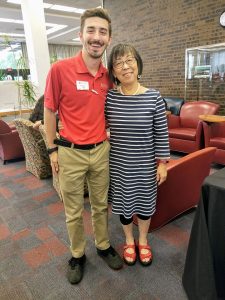
    Mina Ghajar.
    Kudos for Mina

    Congratulations are in order for Mina Ghajar, who received an acknowledgment in one of her nutrition students’ recently published articles, “Early Childhood Obesity Prevention Efforts through A Life Course Health Development Perspective: A Scoping Review.” You can read the article and view the acknowledgment here. Way to go, Mina!

  • What’s Happening around Rutgers – July 2019

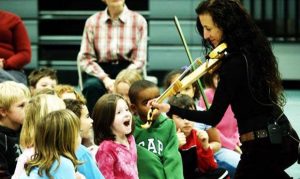
    Bach 2 Rock: The Science of Sound

    Thursday, July 11 | 10 a.m.
    Walter K. Gordon Theater

    This multimedia presentation by Caryn Lin transforms sound with a five-string electric violin and a myriad of modern technology. Students journey from the classical days of Bach to today’s techno-wonders. Part of the Summer Arts at RCCA program. Performances are open to everyone, but are especially recommended for Camden City youth ages 4-18. Group size is generally limited to approximately 125 per performance. A supervisor is required for every ten students.

    Newark Gay Pride Festival and Flag Raising
    Sunday, July 14 | Line up at 11 a.m. | March begins at noon
    Lincoln Park at the intersection of Broad St. and Clinton Ave.

    March with RUN faculty, staff, students and alumni to show your pride and support for the LGBTQ community! Be sure to wear comfortable shoes, light clothing, and a hat or sunglasses (and Rutgers gear if you have it). RSVP at https://tinyurl.com/RUNNWKPrideMarch.

    Summer Fest

    Saturday, July 27 | 3 p.m. – 7 p.m.
    Rutgers Gardens

    Our annual Summer Fest, run by our Summer Interns, showcases all the Gardens has to offer! The festival celebrates Rutgers agricultural research and development. Join us for tours, tastings, games, and more! Find more information at https://rutgersgardens.rutgers.edu/event/summer-fest/.

  • This Month in the Agenda – July 1980

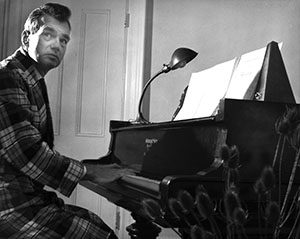
    Movers and shakers around the Libraries, July 1980.
    Play ball!

    RULSA is sponsoring a baseball trip on Sunday, July 20 for the Yankees vs. Kansas City game. The cost of the trip ($13.00 for RULSA members and their families, $13.50 for non-members and their families) will include the bus trip and box seats. The bus will leave the Alexander Library at 11:45 a.m. You may purchase your tickets form Eileen Barron, Douglass Library, extension 9411. The deadline for full payment is Thursday, July 10.

    The Agenda 2, no. 27 (July 7, 1980)

    Database Searching… Online!

    Upon the request of the University Librarian Hendrik Edelman, Pat Piermatti convened a meeting of the Ad Hoc Group for Online Database Searching to discuss the issues involved in providing system-wide online database searching, heretofore offered by LSM and the Camden Law
    Library alone….

    Evelyn Greenberg presented Alexander Library’s proposal for the provision of online services beginning September 2, 1980. Initially Lockheed Information Systems DIALOG will be accessed for its social sciences and humanities databases. The fee structure and publicity materials must still be decided upon. Debbie Ludwig reviewed the Dana Library Task Force Preliminary Report for the Provision of Online Searching. Dana anticipates the commencement of their online service sometime after January 1, 1981. Debbie will have responsibility for the science databases, while Christine Demidowich will be responsible for the social sciences and humanities databases. The Bibliographic Retrieval Service and DIALOG will be the first two systems accessed.

    The Agenda 2, no. 29 (July 21, 1980)

  • Save the Date!

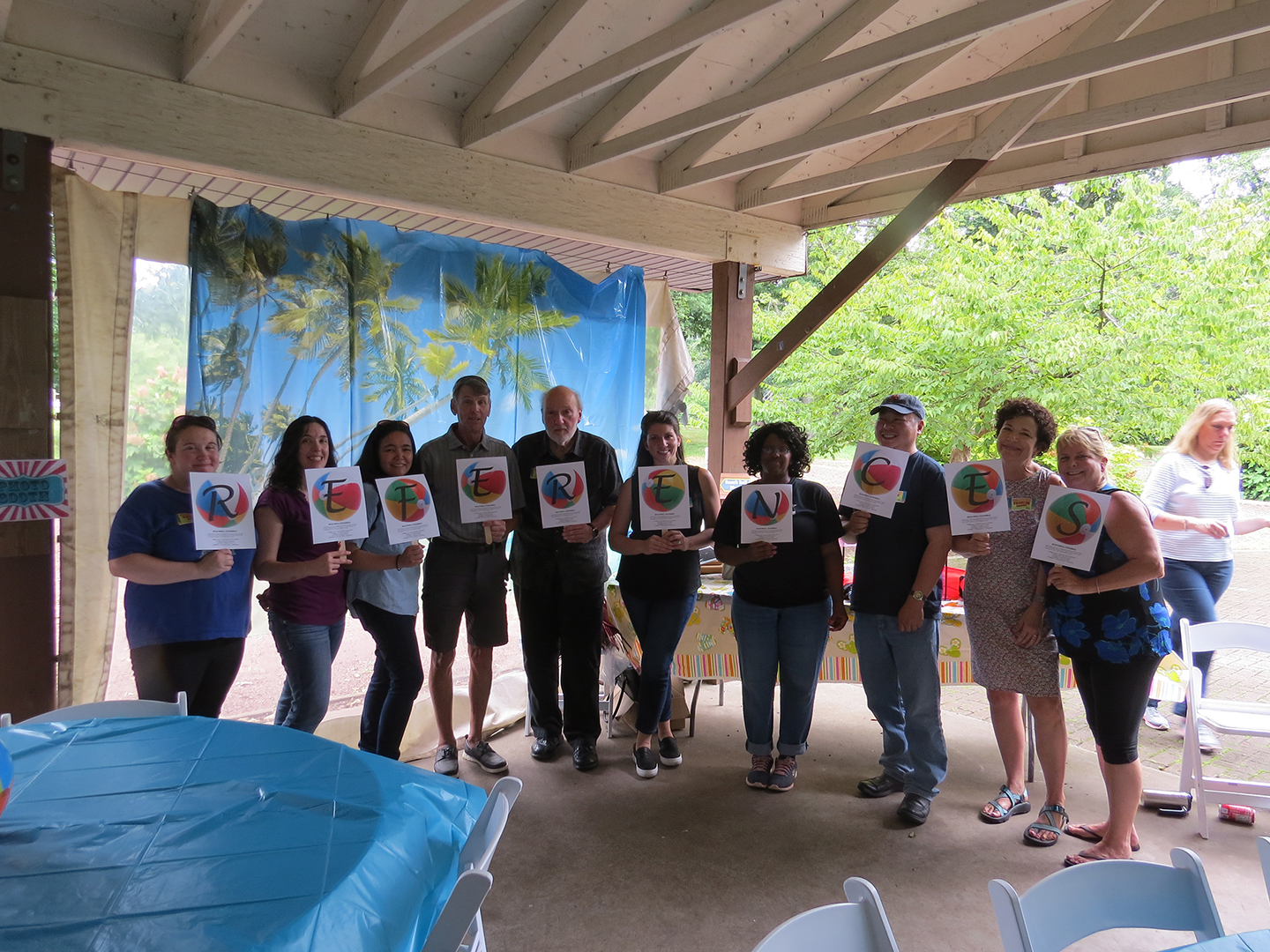
    Last year’s Jersey Shore-themed picnic featured a fun game of beach ball scrabble.

    Save the date! The 2019 Faculty/Staff Appreciation Picnic will be held on Wednesday, August 21 from noon to 4 p.m. at Rutgers Gardens.

    Stay tuned to RUL_everyone for more details and an RSVP form soon. We look forward to seeing you there!

  • Institute for Research Design in Librarianship 2019

    The Institute for Research Design in Librarianship is an IMLS-funded program “designed to bring together a diverse group of academic and research librarians who are motivated and enthusiastic about conducting research but need additional training and/or other support to perform the steps successfully.”

    The institute started in 2014. My cohort (2019) is the last IMLS-funded year, but the creators will continue the project using a paid model in the future. Our cohort included 23 librarians from colleges and universities all over the country. Our interests, experiences, and areas of librarianship were varied.

    The 2019 cohort kicked things off in June with a one-week research boot camp at Loyola Marymount University. In seven days, we received research instruction from Dr. Lili Luo and Dr. Greg Guest, as well as individual consultations with our instructors and the IRDL creators, Kris Brancolini and Marie Kennedy. We also relied on each other to get “fresh eyes” on our projects and to commiserate when our projects seemed bigger than we could handle!

    After that first week, our cohort will continue working with Kris, Marie, and a research mentor (a previous IRDL scholar) throughout the coming academic year. We each committed to completing our research projects in that time. To stay on track, we have periodic check-ins with each other to update everyone on progress, ask questions, and get support. We also work with our mentors monthly to review our work and get feedback. Our cohort also created a Slack group for talking about the different research methods we are using and coordinating future meetups.

    The boot camp covered sampling techniques, proper statistical measures, and strategies for doing qualitative analysis. This was especially useful because after we learned something in class, we could request a consultation with one of the instructors to see how we could best apply a technique to our research project. I found this incredibly helpful when considering what statistical tests I should use for my study. The goal of my project is to determine the effectiveness of augmented reality on students’ perception of the library and librarians when used as part of an orientation for incoming first-year students. I’ll be comparing pre and post-orientation questionnaires from a group of students taking an augmented reality orientation and a group participating in a traditional orientation.

    IRDL has already had a major impact on my research design. The proposal I submitted to the Institute in January is much different from the one I will be submitting in July. My methodology, sampling technique, and survey instruments underwent a complete overhaul in the week I spent at the institute. My confidence as a researcher has also increased and I feel more comfortable making decisions about what and how I will research as a practicing librarian.

    I’m looking forward to the coming year when I’ll be completing my research project and working closely with my cohort and mentor. One aspect of IRDL which the directors continually emphasize is that our fellow scholars are part of our lifelong research network. We can ask questions of each other, collaborate, generate ideas, and rely on each other for support as we research throughout our careers. This kind of support, along with the knowledge I gained at the institute, has been transformative by making me feel more confident in asking questions and making decisions.

  • Ex Libris Implementation Project Update – July 2019

    quicksearch logoHappy Birthday QuickSearch!

    It’s hard to believe that we’ve been using Alma and Primo for over a year! Please check out our presentation from the State of the Libraries if you’d like to see some statistics about what we’ve accomplished together since last June. It’s thanks to all of you that this launch has been so successful and we are incredibly grateful for all of your hard work and support.

    As we continue to dig deeper into the impact QuickSearch has had and to explore where further improvement is necessary, we would like to hear from you. The implementation team will hold another round of open question and answer sessions on each campus (details below). We sincerely hope that you will attend a session and share any feedback or questions you might have about Alma and Primo.

    • Tuesday July 30, 10 a.m. – 12 p.m. Alexander Library 4th floor Lecture Hall
    • Tuesday August 6, 10 a.m. – 12 p.m. Smith Library – Newark, E Classroom M906
    • Tuesday August 6, 1:30 p.m. – 3:30 p.m. Dana Library – Newark, Room TBD
    • Wednesday August 7, 10 a.m. – 12 p.m. Robeson Library – Staff Room 290
  • Where in the World is SUS?

    The new SUS space on the third floor of Alexander Library.

    Shared User Services has moved, both spatially and virtually. In June, virtually all (pun intended) of the SUS employees relocated. Our email addresses and phone numbers are the same, but for those who value a spatial identifier, here is where you can find us:

    Technical Services Building
    • Amy Kimura
    • Cathy Pecoraro
    • Elizabeth York
    • Joseph Deodato
    • Michele Best

    Alexander Library 3rd floor (Library Admin suite)
    • Isaiah Beard
    • Marty Barnett
    • NJEDL project staff and students
    • Rhonda Marker

    Alexander Library 4th floor
    • Laura Costello

    SUS has also moved their staff resources information to the “new” staff resources page. You can find information about a variety of digital projects, discovery services, electronic resources, virtual reference, and Web Improvement Team at https://staff.libraries.rutgers.edu/sus. We will soon be expanding our Teaching and Learning section here, too. We’re excited to be the first unit to officially move over to this new site.

  • University Librarian’s Report – July 2019

    I’d like to start my article this issue by thanking all of you who attended our State of the Libraries meeting in June. It was a great opportunity for us to network with colleagues we don’t often get to see in person, celebrate our collective accomplishments from the past year, and look forward to the challenges ahead. I hope you found it a useful and productive event.

    For those of you who stayed behind, I invite you to review the slides from my presentation as well as the videos from the poster session below.

    As I reflect back on Kathleen Fitzpatrick’s presentation about Generous Thinking, a key takeaway for me was the challenges inherent to developing academy-driven, community-supported infrastructure that provides open access to scholarly material in a sustainable manner. In order to realize this vision, academic institutions need to commit in earnest to the idea of collaboration, and take seriously a sense of shared responsibility to our collective enterprise.

    Deep collaboration is difficult. It requires trading control and specialization for efficiency. In a recent short essay appropriately titled “Library Collaboration is Hard; Effective Collaboration is Harder,” Lorcan Dempsey summarizes his recent presentations and blog posts and ends with the recommendation that “There should be active, informed decision-making about what needs to be done locally and what would benefit from stronger coordination or consolidation within collaborative organizations.” At Rutgers, we collaborate all the time, every day, all day. Nearly every project that we undertake involves collaboration across separate parts of our complex organization. We have talked about the importance of a collaborative approach in other contexts as well, such as Dempsey’s notion of the collective collection and how the continuum of consolidation applies to the Libraries’ services framework.

    Recently, we’ve seen the fruits of collaboration bear initiatives like CADRE, the shared big data gateway we’ve partnered with Indiana University and others to develop, which is further evidence of what is possible when institutions work together to address common needs. We are also exploring a transformative license agreement of Oxford Scholarship Online backfiles and frontlists, the terms of which were negotiated by PALCI. Even more opportunities, such as shared infrastructure for journal publishing, are on the horizon as well, thanks to our membership in the Big Ten Academic Alliance.

    With these examples in mind, it becomes clear to me that forward-thinking academic institutions need to be open to participating in these new, cooperative models in order to maximize our impact. And I believe the way forward for all libraries—including our own—is to accept this challenge to collaborate deeply across institutional boundaries. As we know from experience, there are bound to be some tradeoffs, and compromises will have to be made. But only by committing to working together in a meaningful way can we truly advance our mission of contributing to the public good.